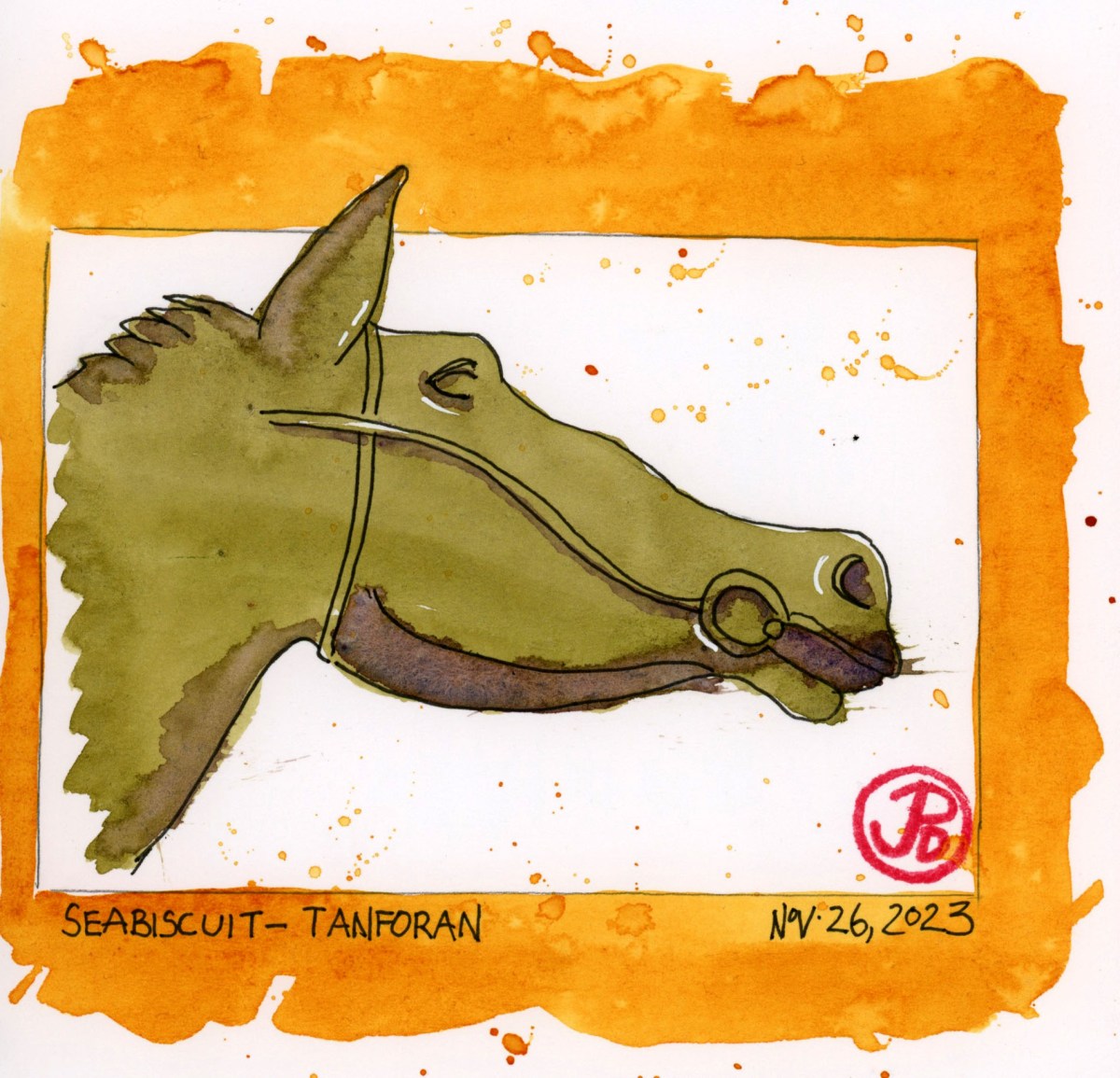
I’m not really into horse racing and a few of the racing tracks in the Bay Area are now closed. Golden Gate Fields will become a caption to a photo like Tanforan and Bay Meadows before. The recent reports of horse deaths have put a pall over the sport in days of waning interest in horse racing.
What I am into is California history and there is no denying the story of a thoroughbred horse named Seabiscuit with a deep California connections is a great story.
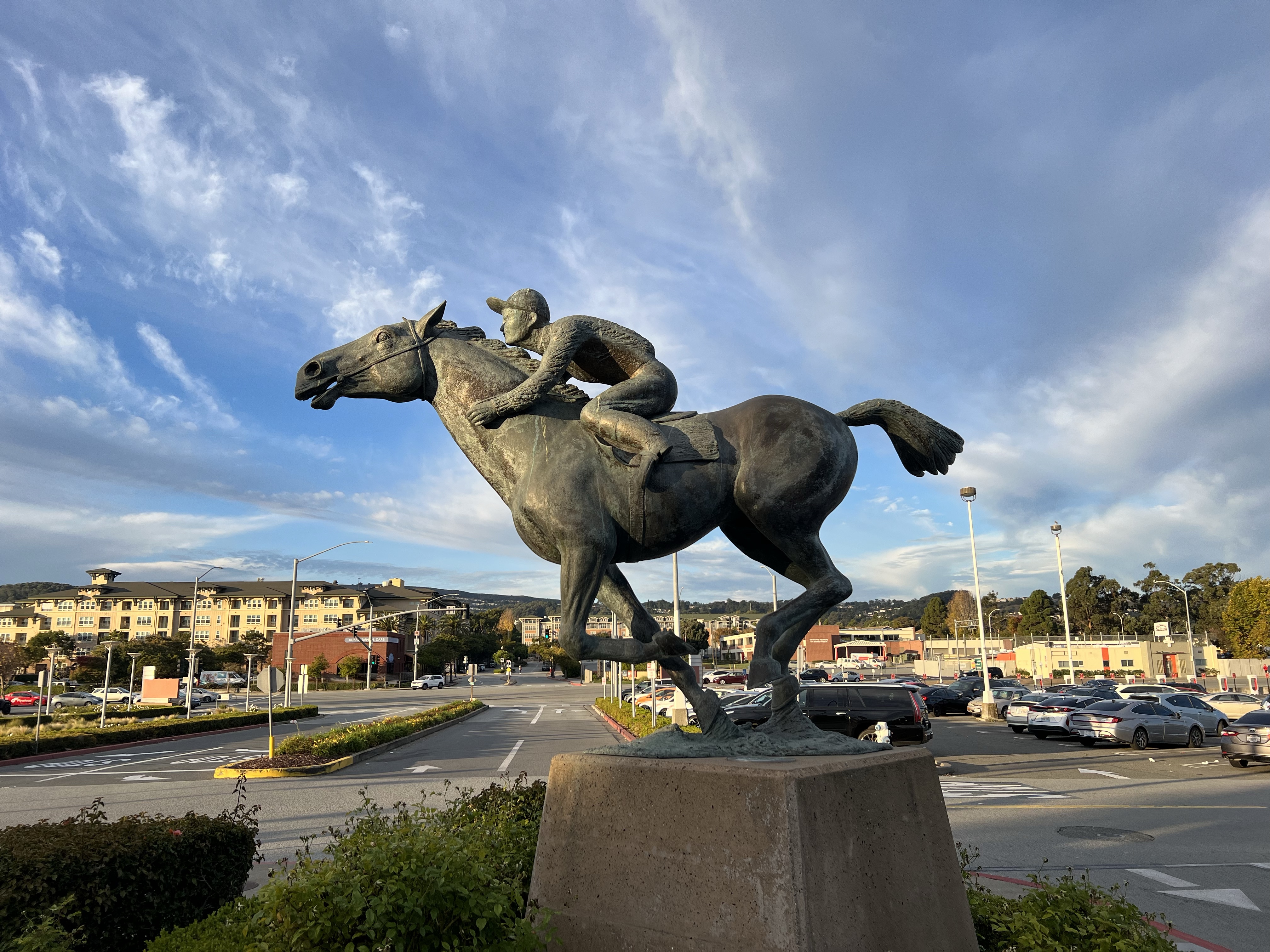
I know Seabiscuit from a statue at the entrance to Tanforan Mall. Seems such an odd place for a horse and rider sculpture but when you know that from 1899 to 1964 the location used to be a racetrack. Tanforan Racetrack featured many of the best thoroughbreds in racing history. The grandstands burned down by suspected arson and then leveled to make way for a mall which opened in 1971.
Tanforan also has a more dubious history as a processing center for Japanese Americans during 1942, then known as the Tanforan Assembly Center. Around 7,800 Japanese Americans were rounded up here and lived in horse stalls for about eight months. They were then sent on to other interment centers across the west.
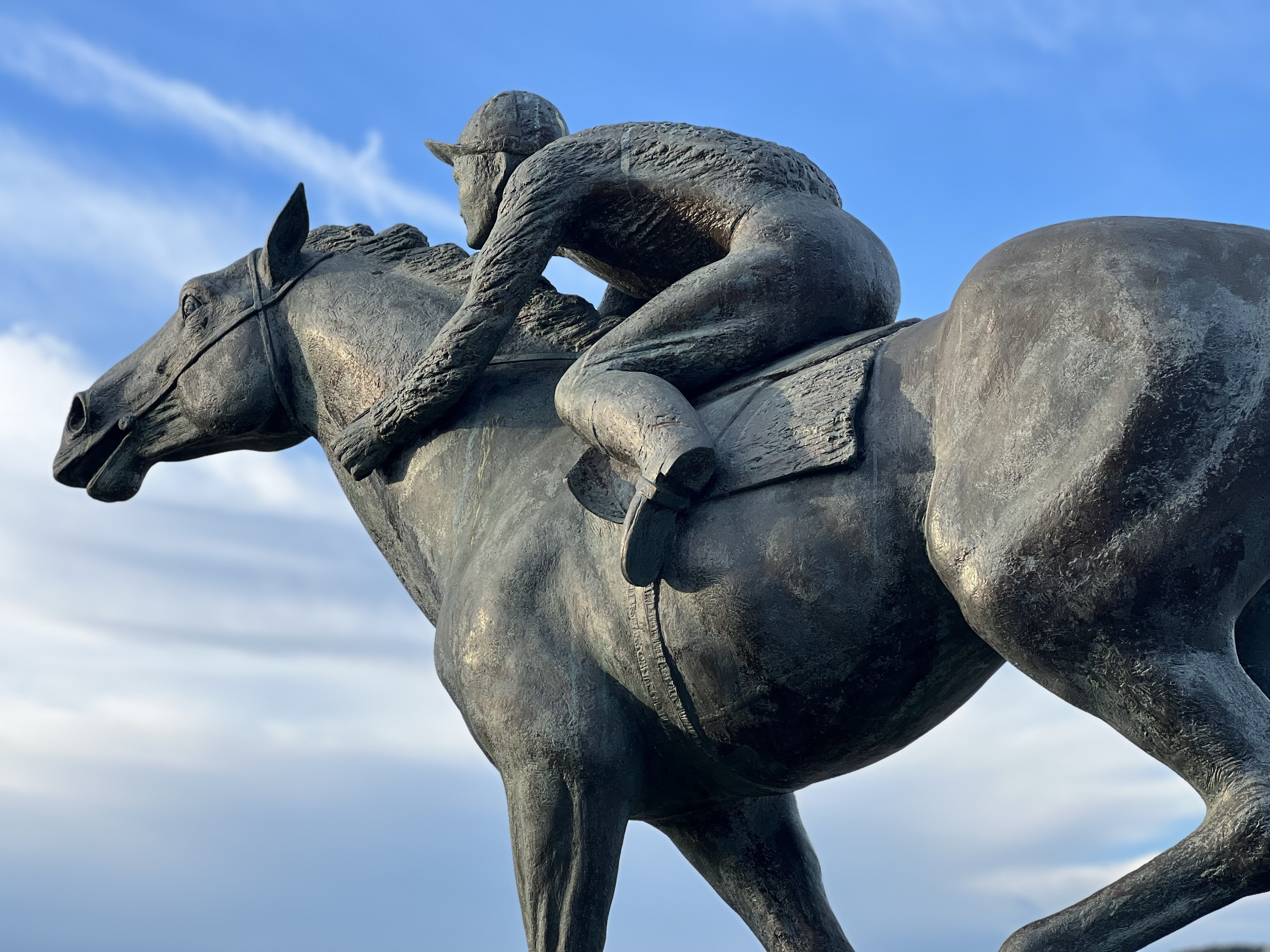
The plaque under the statue reads: “Seabiscuit Born 1933, Sired by Hark Tack- out of Swing On, Owner- Charles S Howard, jockeys Red Pollard-George Woolf, World Champion Money Winner to 1938.”
Seabiscuit was stabled at Tanforan for a time and ran races here. In 1939 the horse left Tanforan by train when Seabiscuit journeyed east to race War Admiral.
Another bit of Seabiscuit history can be found just north of Tanforan in the sleepy town of Colma. At the Cypress Lawn Memorial Park rests Charles S. Howard.
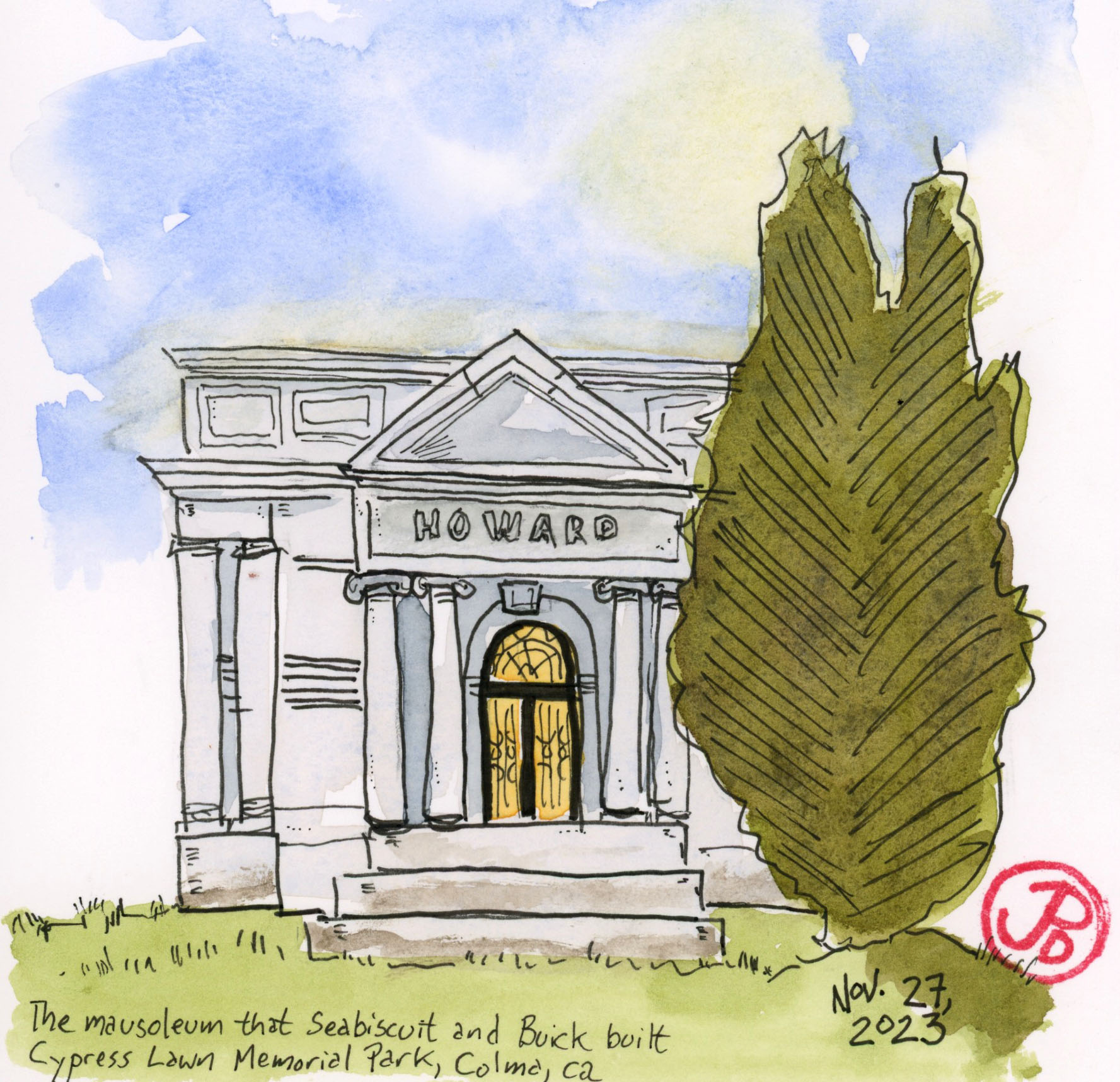
Howard was Seabiscuit’s owner. The multimillionaire was responsible for Seabiscuit’s success by finding the perfect combination of horse, trainer (Tom Smith), and jockey (Red Pollard).
 Corvid Sketcher