Image

Lifer on a Dirt Road

On the first day of my WINGS ten day birding tour of Iceland, we headed out from Kelavik International Airport and birded a dirt road between the airport the capital of Reykjavik.

We were birding from our Mercedes Bird Mobile and it served as a moving blind, allowing us to get close to the birds, including the hundreds of Arctic terns that were roosting on the road.
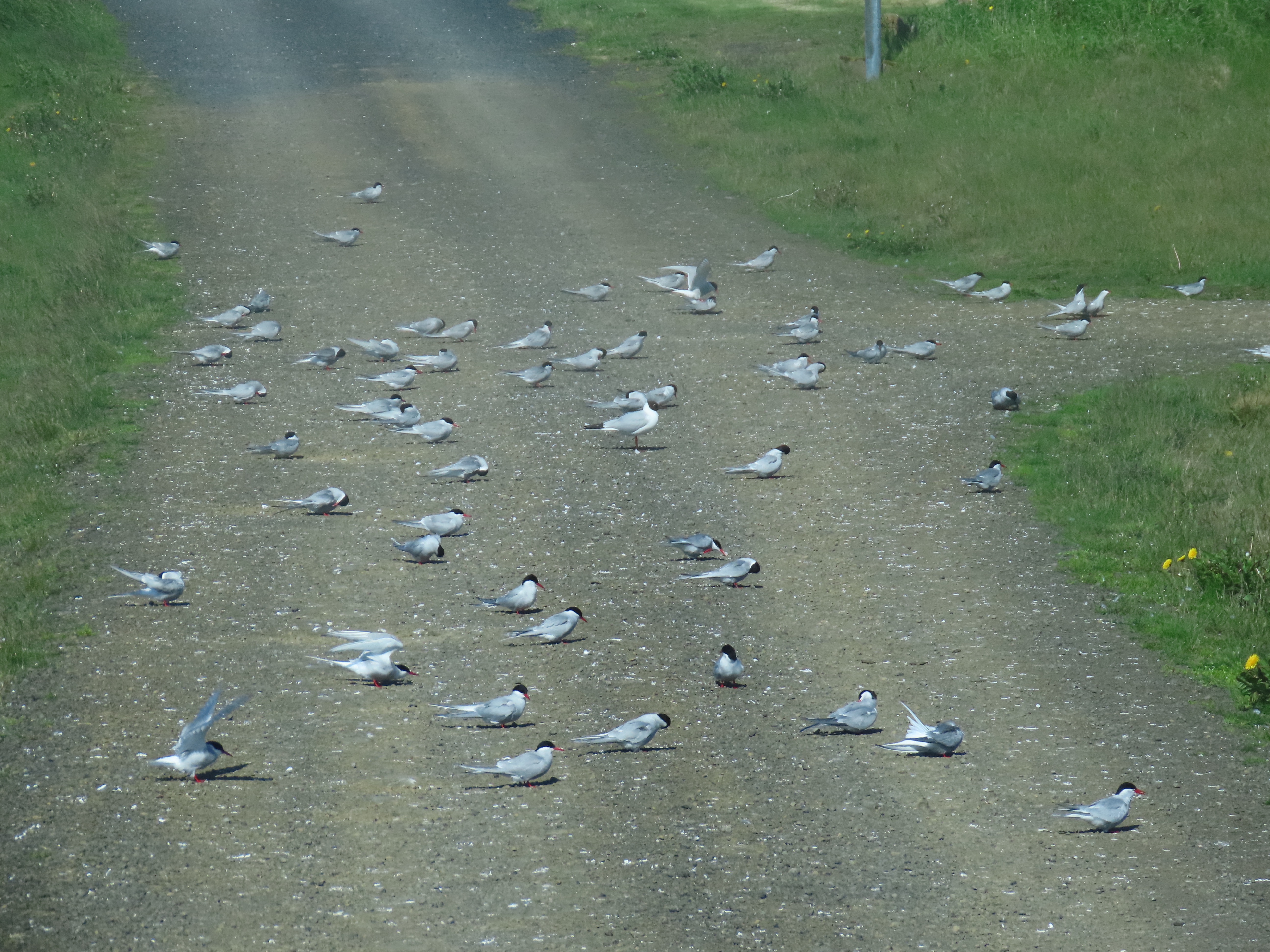
One of these birds is not like the others. A black-headed gull amongst the Arctic terns.

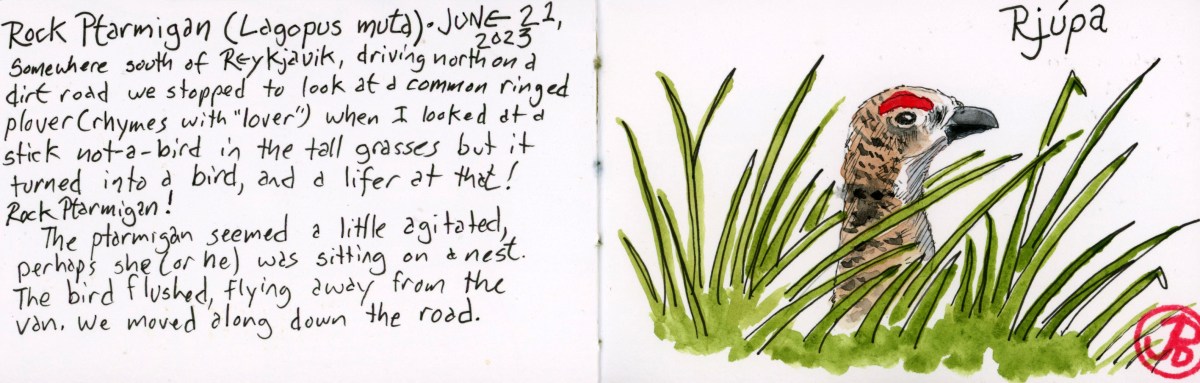
As we where driving north on the dirt road, we stopped to look at a common ringed plover (rhymes with “lover”) when I looked off to my right at what appeared to be a feathered periscope poking out of the green grasses. I put binoculars on the object and it turned into a lifer, the first one of the tour! A rock ptarmigan (Lagopus muta).
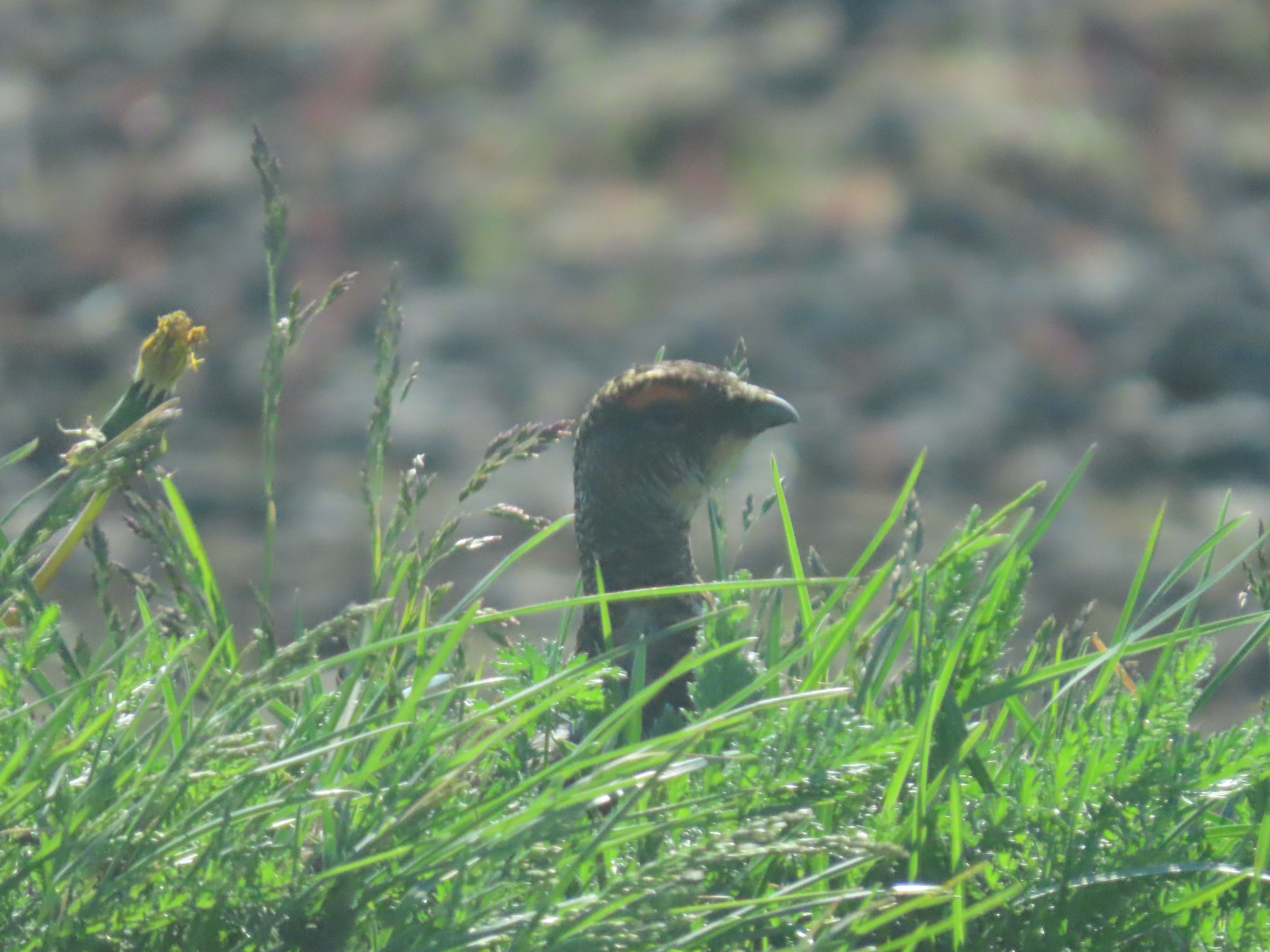
The ptarmigan seemed a little agitated by our presence. Perhaps the bird was on some eggs. The ptarmigan flushed, flying away from our van so we move off down the road.

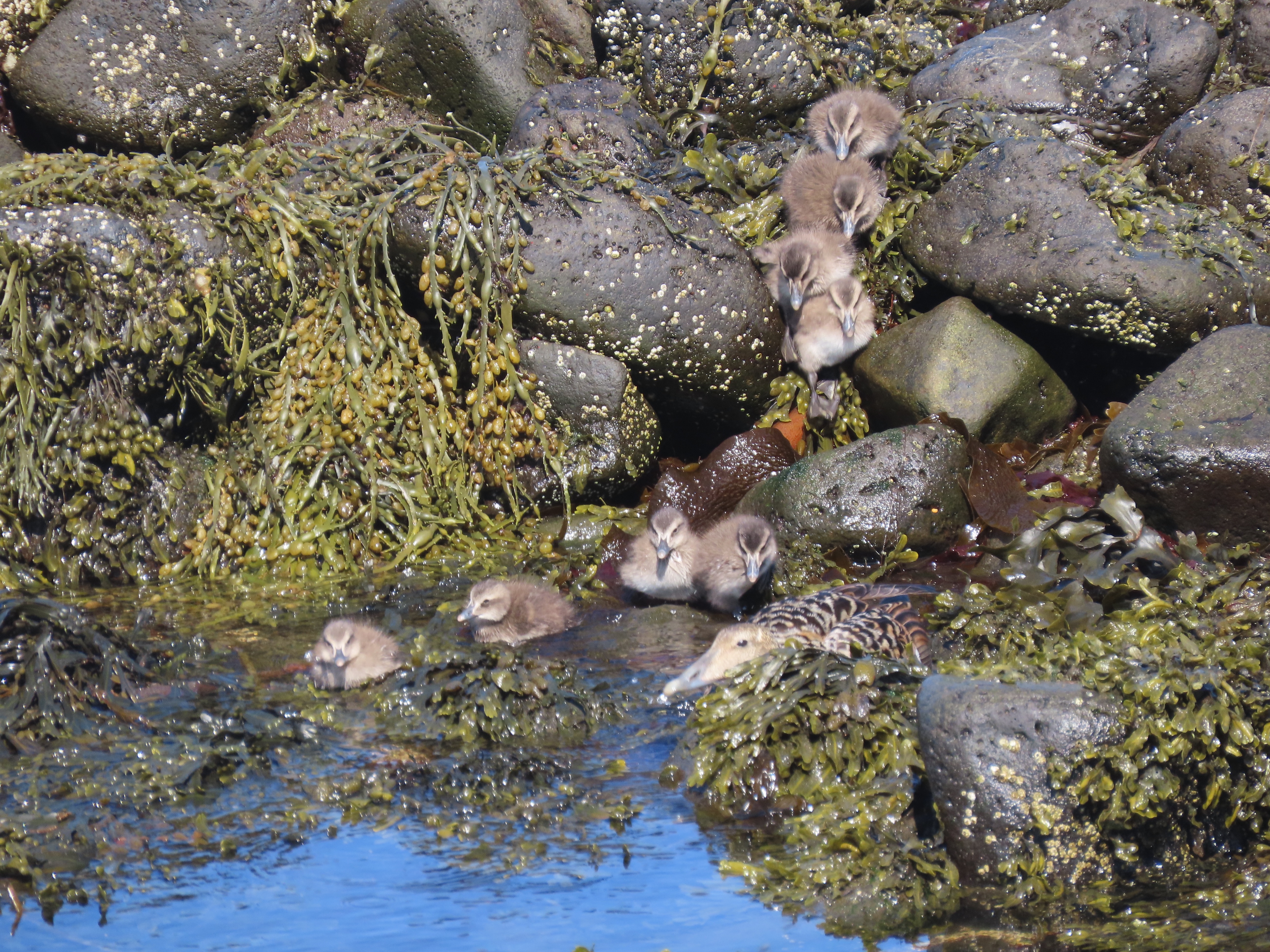
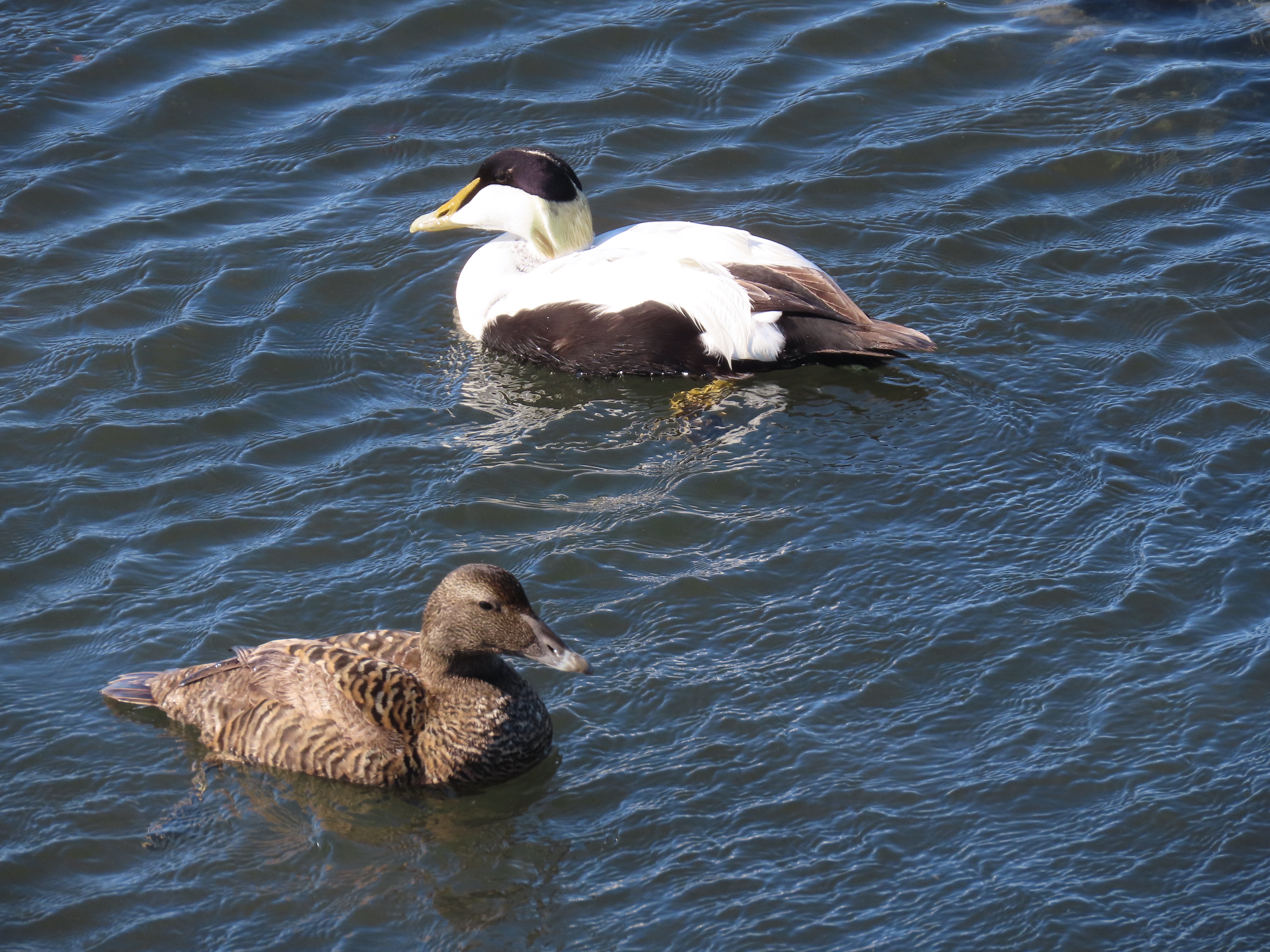
We stopped at Garðskagi Lighthouse where I saw more black-footed kittiwakes (perhaps 1,000) than I have ever seen before and just below us we had amazingly close looks at common eider both males and females with their newly hatched chicks.
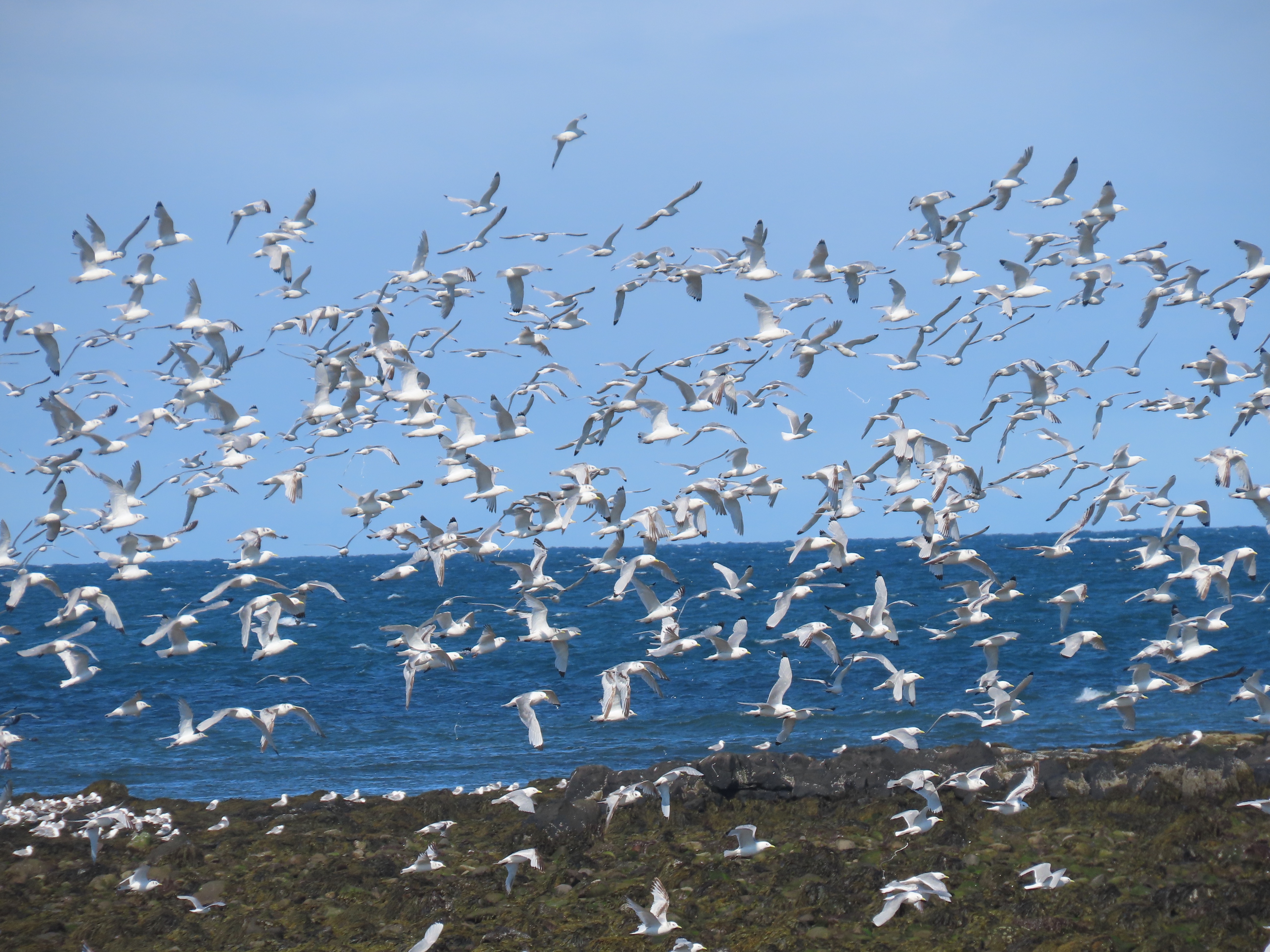
Now that’s a lot of kittiwakes! On the California coast I occasionally see a lone individual roosting with other gulls in the winter. This was something amazing. And kittiwakes were in breeding plumage.
The beautiful male and female common eider, the most common duck seen in coastal Iceland.
A mother eider leading her perhaps newly hatched ducklings down to the water for the first time.
Image

SFO to SEA, SEA to KEF

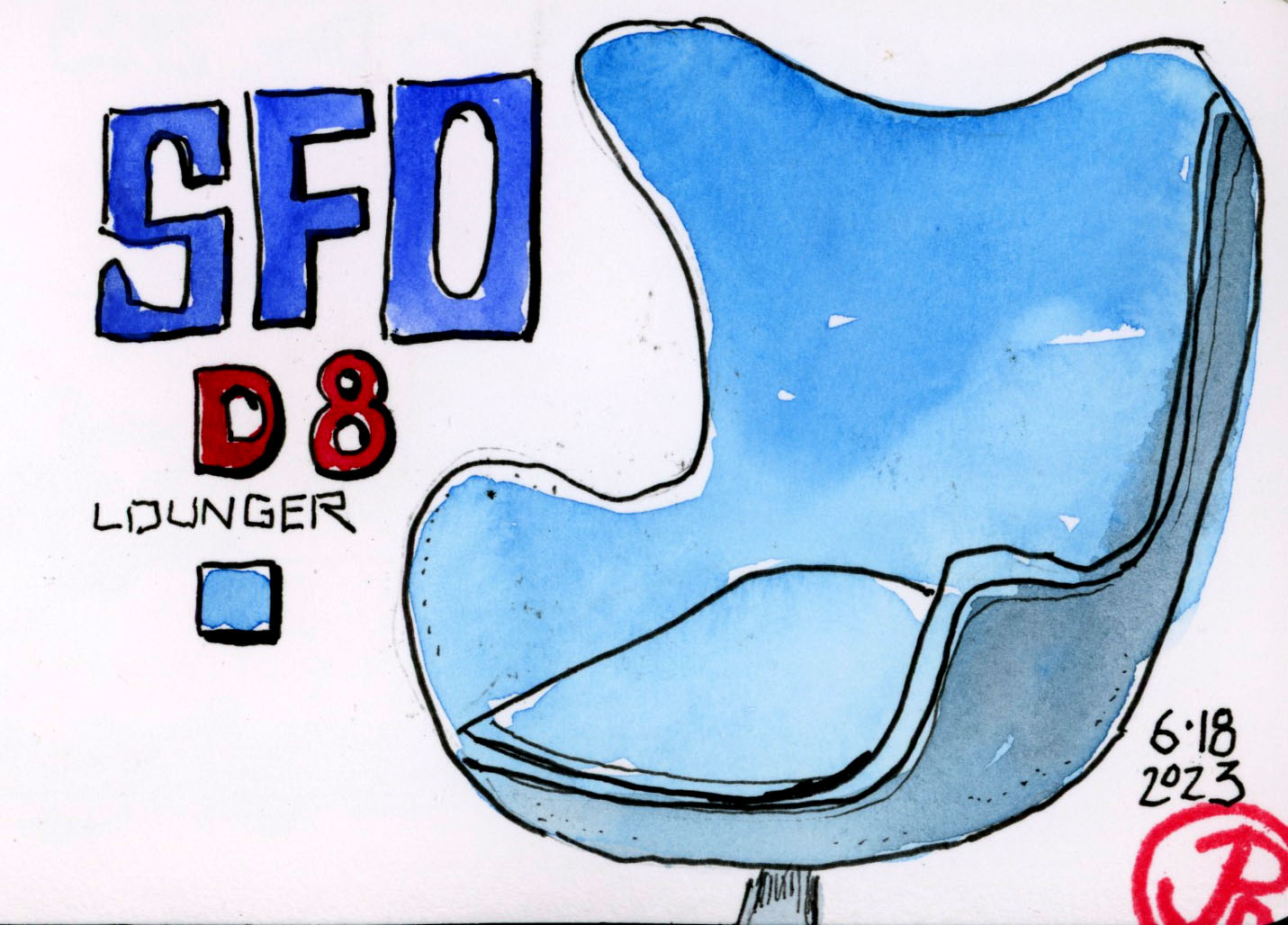
In previous SFO airport sketches I have drawn airplanes as they waited at gates. But this time I drew a swivel lounge chair. These are always prime real-estate at the airport and I found one to sit and swivel on and an empty chair to sketch.

I was pleased to know, after a bit of research, that my home international airport is highly rated amongst other airports. I guess it comes down to some simple details like where you park your butt on while you wait for your flight, and being able to swivel around to people watch.

Once on my flight to Seattle (SEA) I had a window seat in aisle 11, right in front of the starboard engine.

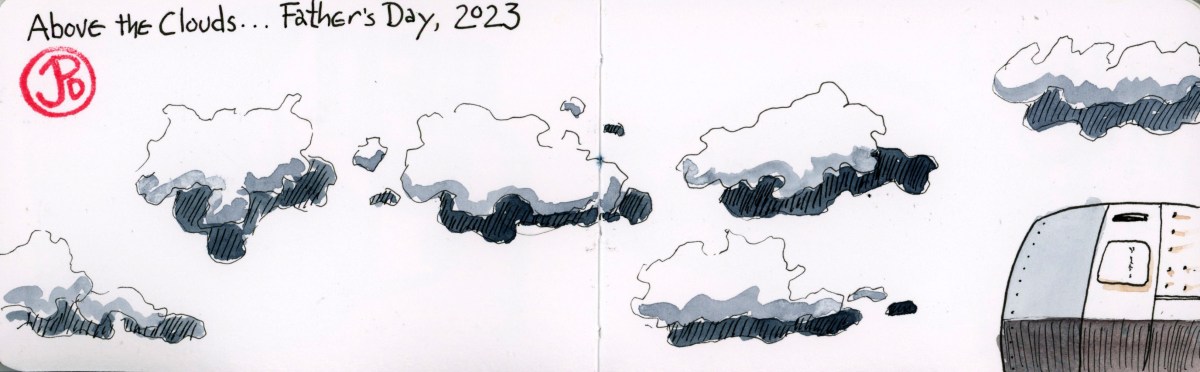
We were somewhere above Oregon or Washington, high above the clouds at our cruising altitude and I watched the clouds play across the landscape and the cloud’s shadows, well, shadowing it on the ground.

I did a sketch with my smaller panoramic journal, drawing in the starboard engine as a point of reference (featured sketch). Did I draw every cloud in my window view? We no, I used a bit of sketcher’s shorthand to sketch the most sketchable clouds.

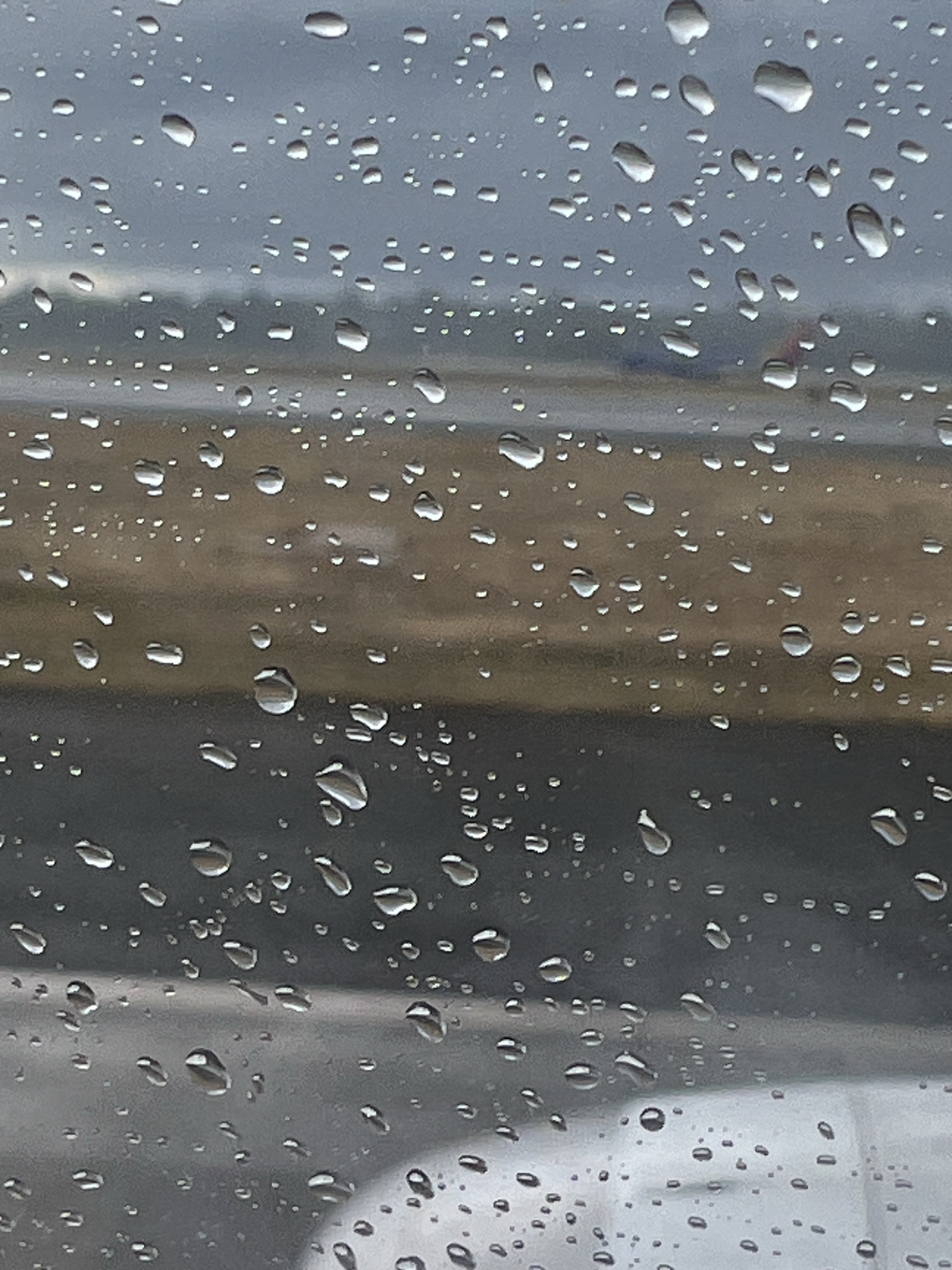
At SEA, where it was raining of course, I transferred to my Icelandair flight to the Land of Fire and Ice.

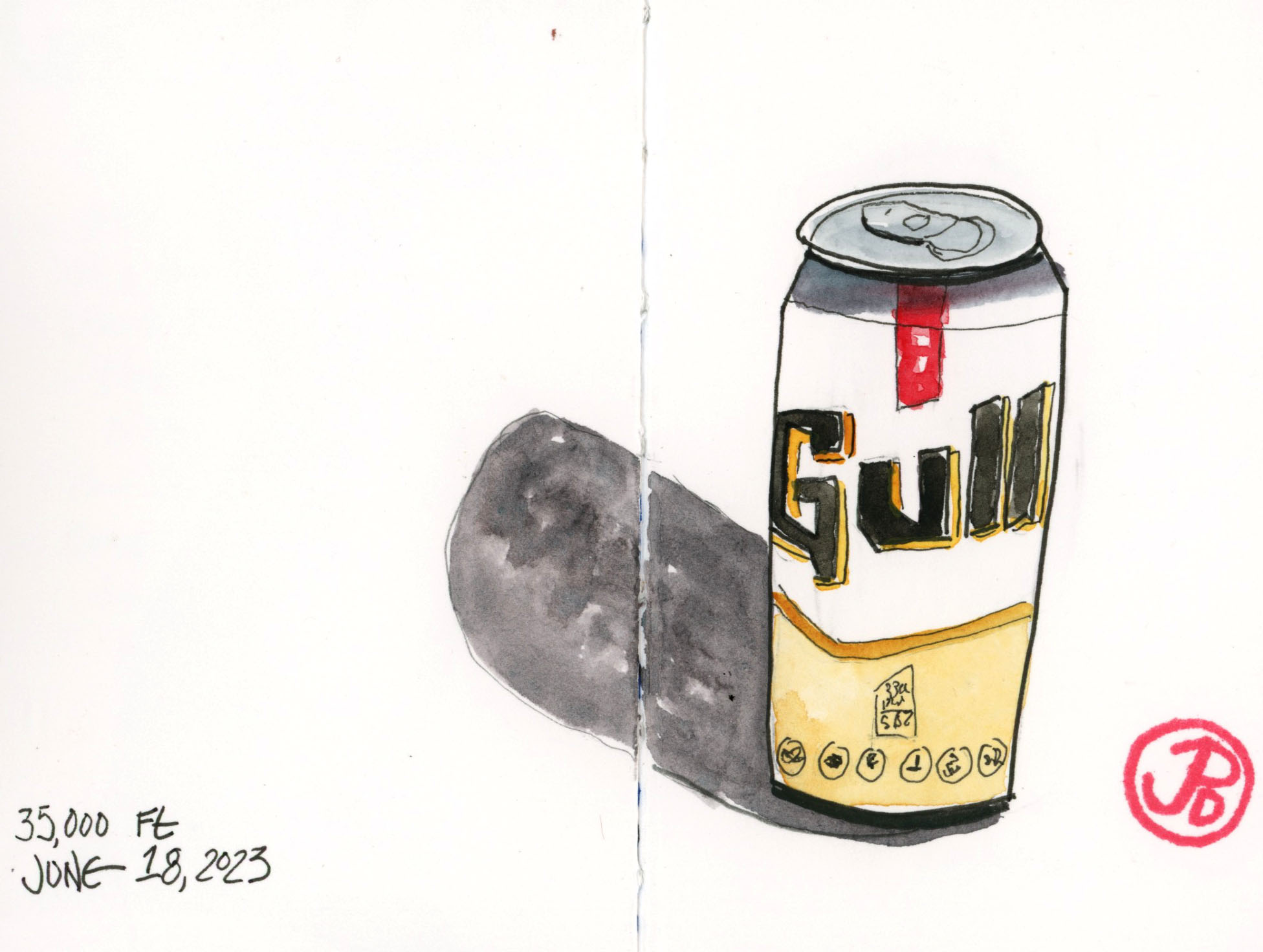
On this flight I was glad to see some Icelandic beers onboard. Being a bird nerd, I ordered a Gull Lager. It met my expectations and I did a sketch to pass the time.

Skal!

I couldn’t wait to set foot in Iceland and add more ink and paint to my journals.

Image

Reykjavik Sketches

The capital of Iceland is very walkable and sketchable.

From my apartment, a few blocks from the Hallgrimskirkja, I could easily explore Reykjavik on foot with my sketching kit in my pack. I kept my sketchbooks, paint palette, and Escoda travel brushes in a Sea to Summit dry bag, rain and watercolor doesn’t always go well together.

In this post I had included a few of my sketches I did on my Reykjavik walk-abouts.

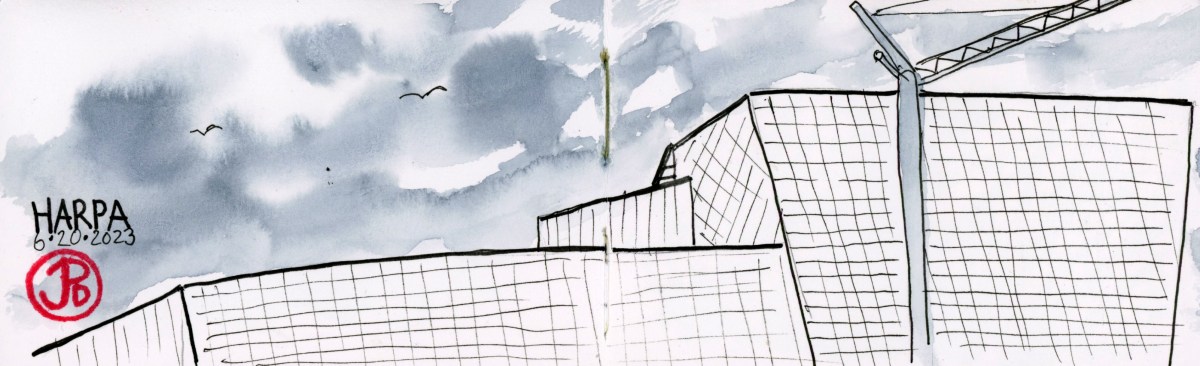
The featured sketch is the music venue Harpa, which I sketched from the hill at Arnarhóll. Harpa is the most important musical venue in Iceland. This is the home of the Iceland Symphony Orchestra and the Reykjavik Big Band. The modernistic music hall was designed by Olafur Eliasson and Harpa helped revitalized the harbor area.

Iceland does not have a great public transportation system. Buses can take you places but you really need a car to get around. The country has no rail but in 1919 the locomotive Minor was the apex of Icelandic rail. She is a diminutive 0-4-0 and is now on display in the Old Harbor, so I had to sketch it. I added steam rising from the stack which is purely artist whimsy.

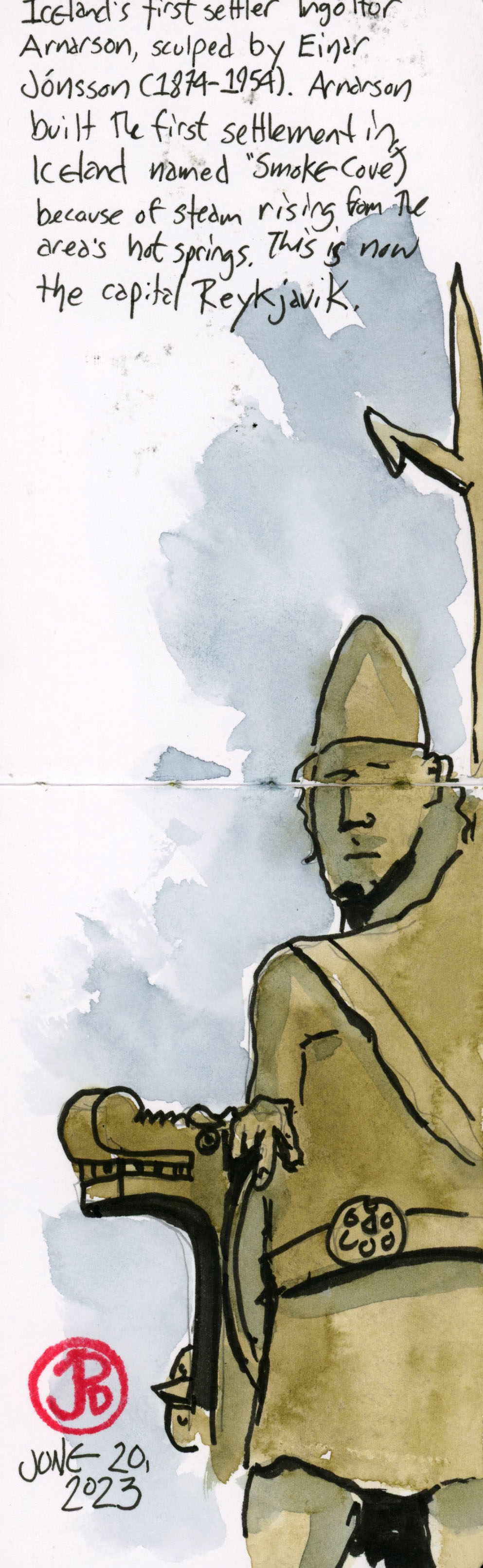
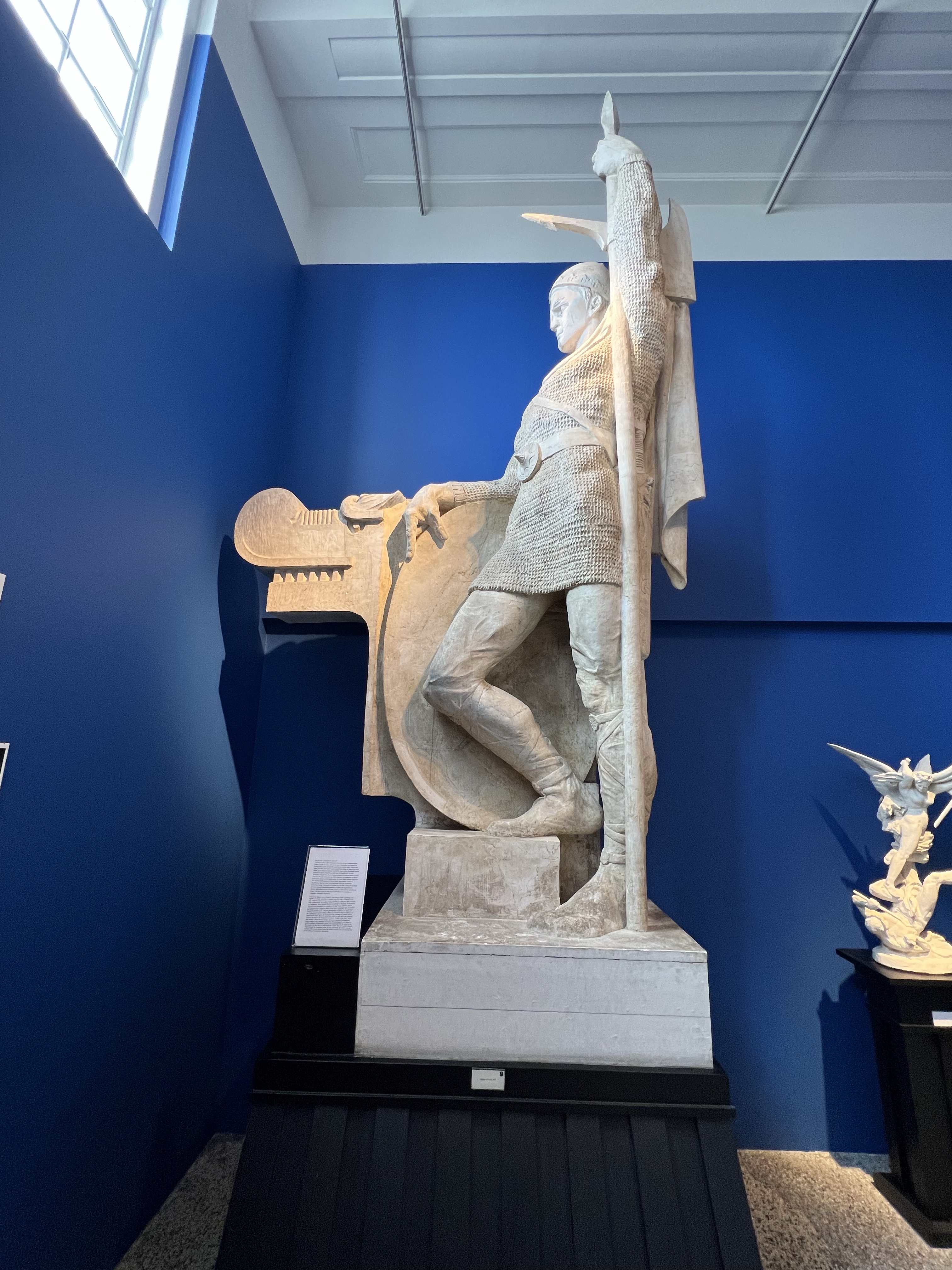
I have always loved sketching statues because they don’t move and they really tell you about the values and culture of a nation. So I sketched the Iceland’s first settler, Ingolfor Arnarson sculpted by Einar Jonsson. Arnarson noticed steam rising from the area’s hot springs and gave name to Reykjavik meaning “Smoke Cove”.

I visited Einar Jonsson’s house and museum, which is across the street from Hallgrimskirkja. This early prototype of the Ingolfor Arnarson statue that now is a much photographed icon of Reykjavik and Iceland.
Image

Europe’s Largest Eagle

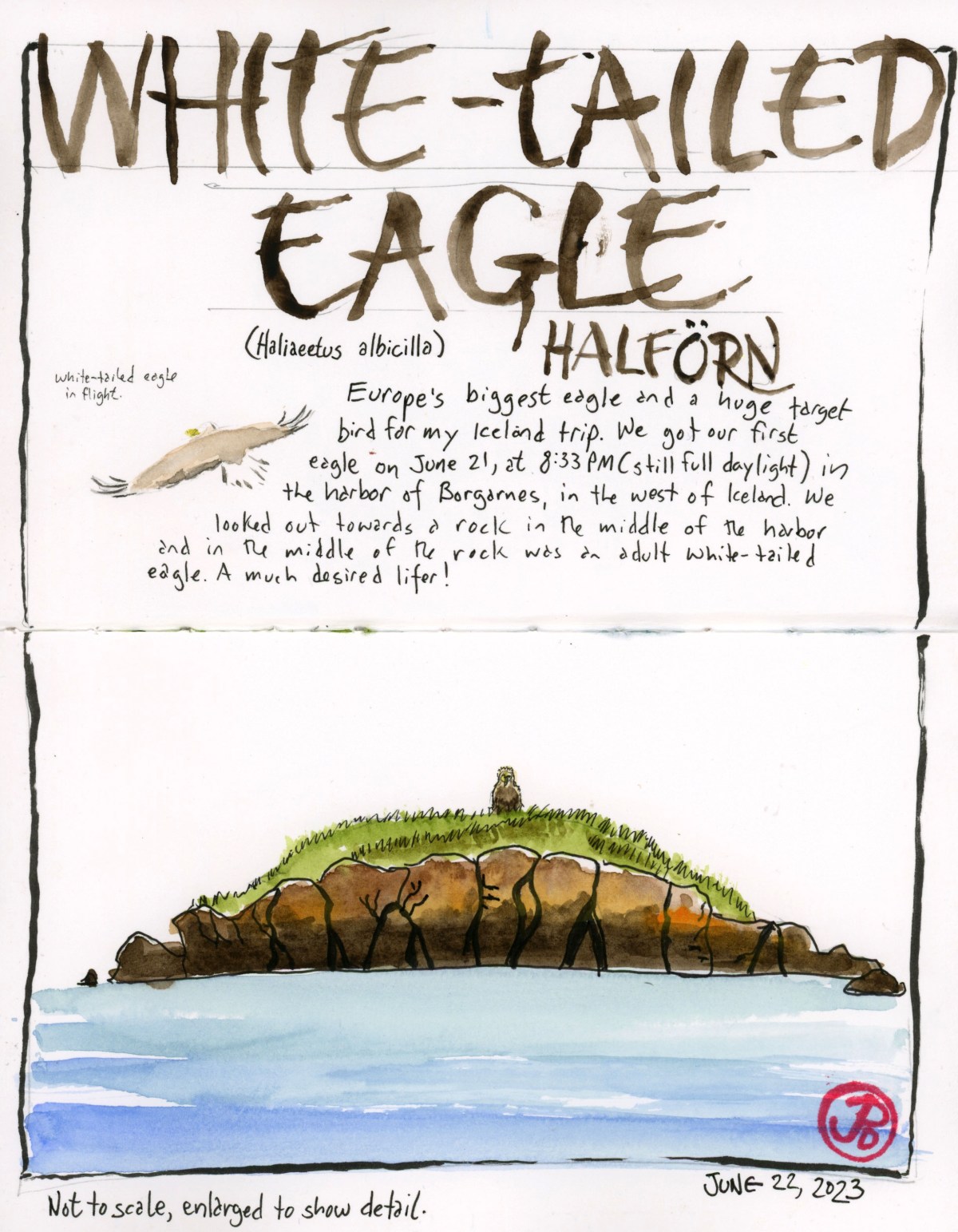
High on my wishlist was Iceland’s and Europe’s largest eagle: the white-tailed eagle.

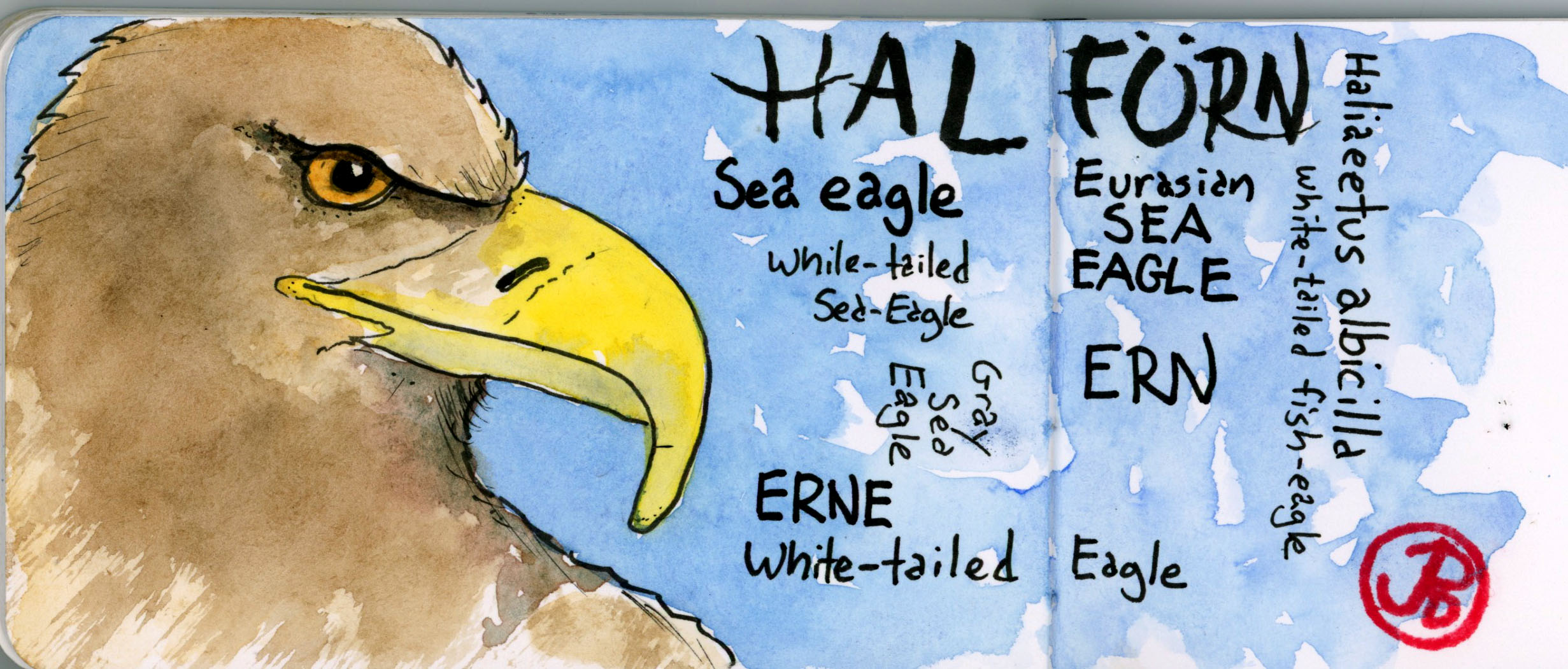
This eagle is a sea eagle and is slightly larger than the bald or golden eagle found in North America. The white-tailed is both an apex predator and a scavenger and fills a similar niche as the bald eagle in North America.

The eagle has become rare or extinct in parts of its Eurasian range because of human and other causes.

According to a recent BBC article, white-tailed eagles has been hit hard by the avian flu. The eagle has shown declines in Scotland over the past few years. The avian flu has also caused declines in birth rates of seabirds such as gannets and skuas.

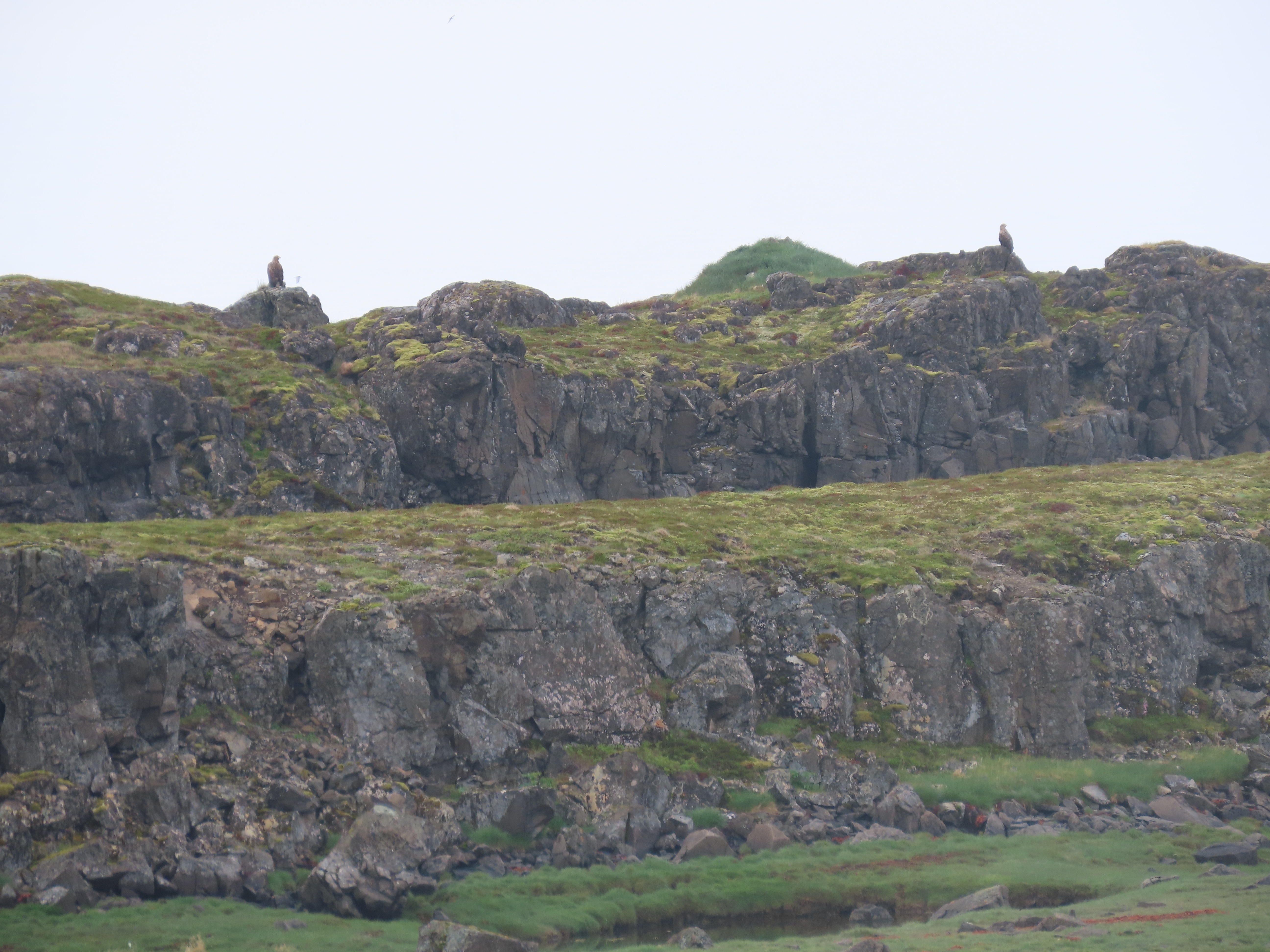
In total we saw seven individuals in the Westfjords of Iceland. Most were far off, best seen through a scope. But there was one that I first I spotted flying parallel to the road, just below us along the shore of a fjord being pursued by two territorial redshanks. It was amazing to see this sea eagle in flight with the naked eye.

Two white-tailed eagles with eaglets (not visible in photo).