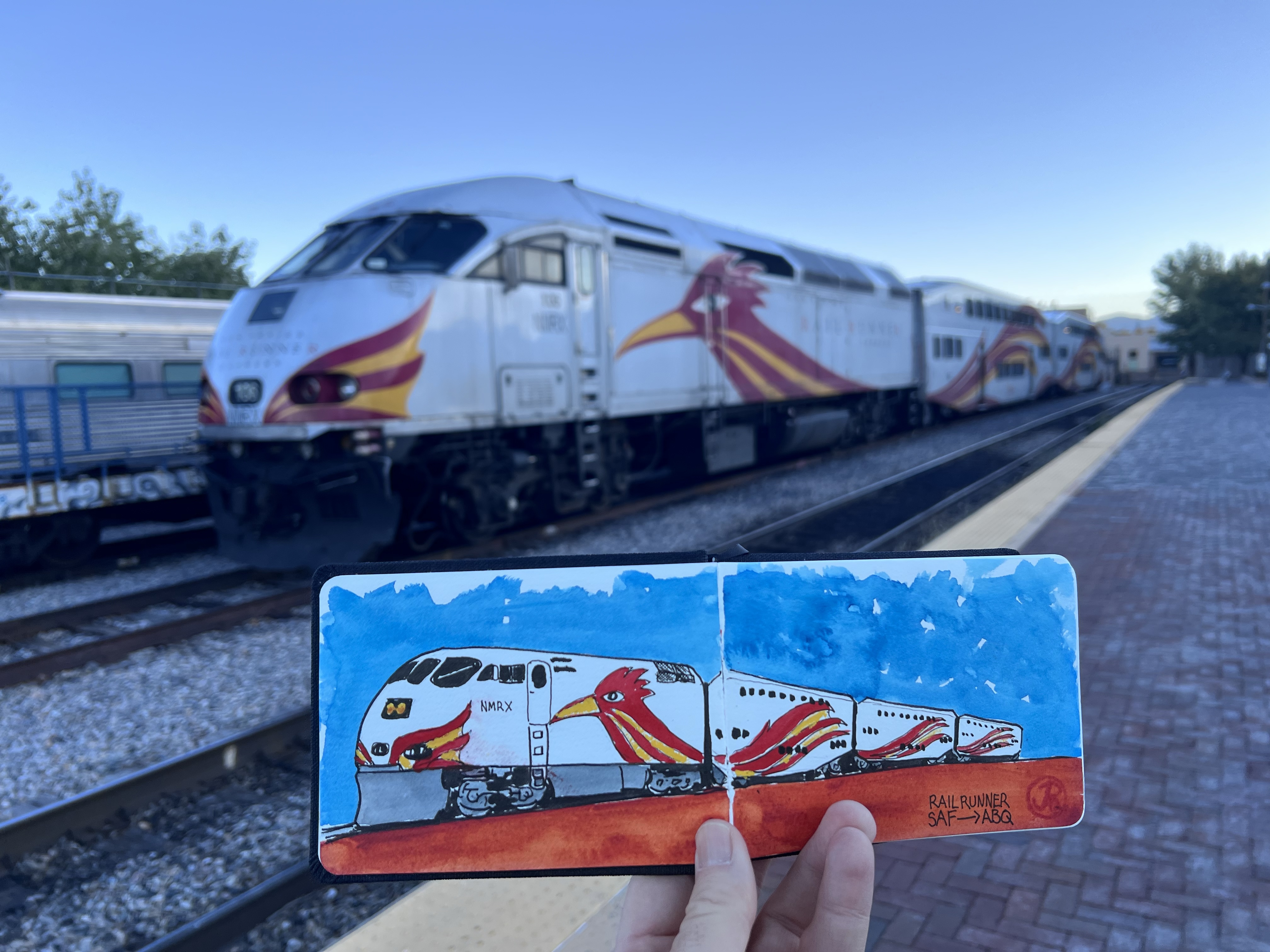
I saw a picture of a commuter train set of the Railrunner in a diesel locomotive field guide a MotivePower MPI MP36PH-3C in fact.
What stood out was the stunning paint job on the locomotive and cars. This New Mexico train travels between the state capital of Santa Fe to Albuquerque.
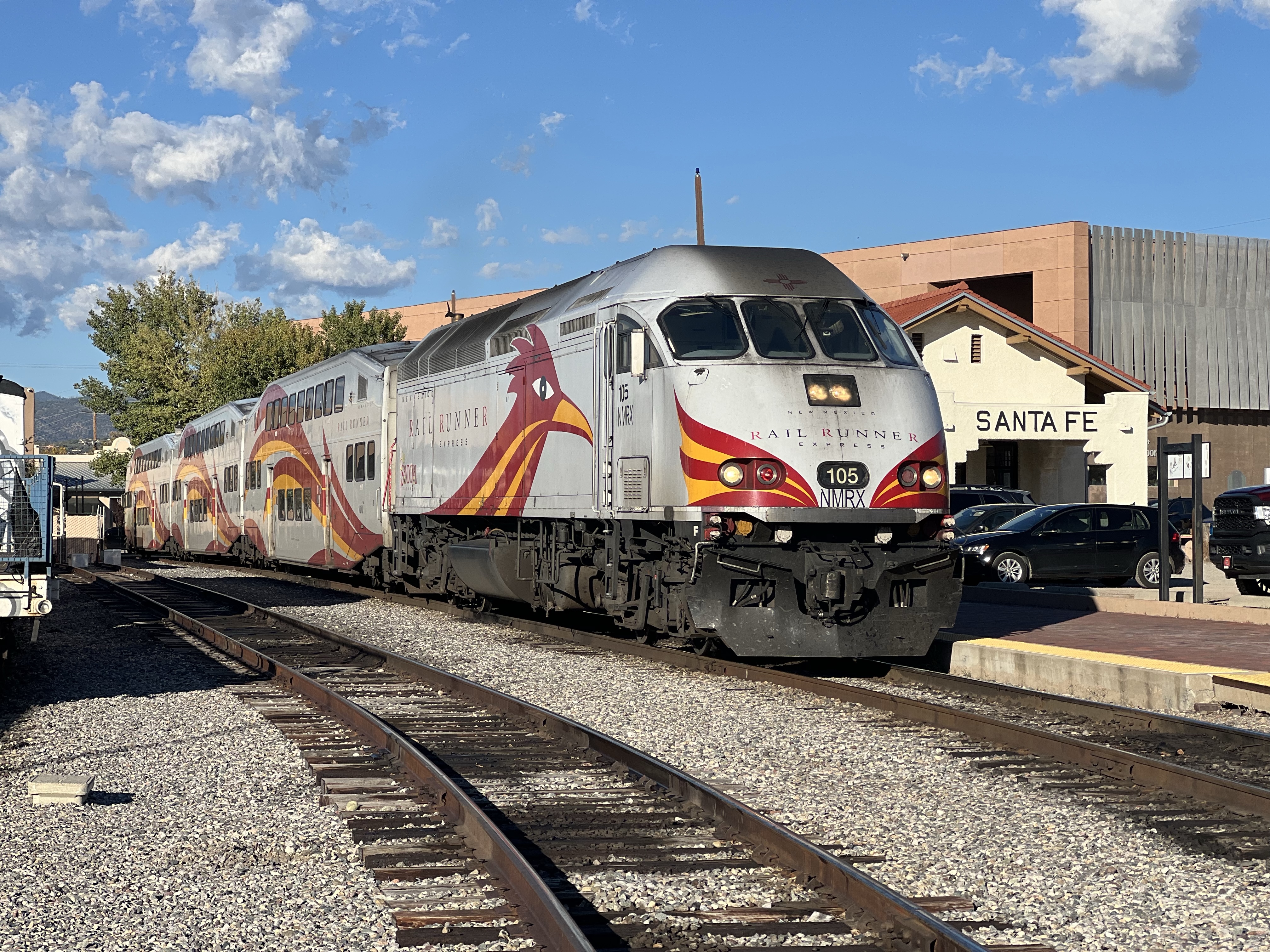
A Railrunner at the Santa Fe Depot.
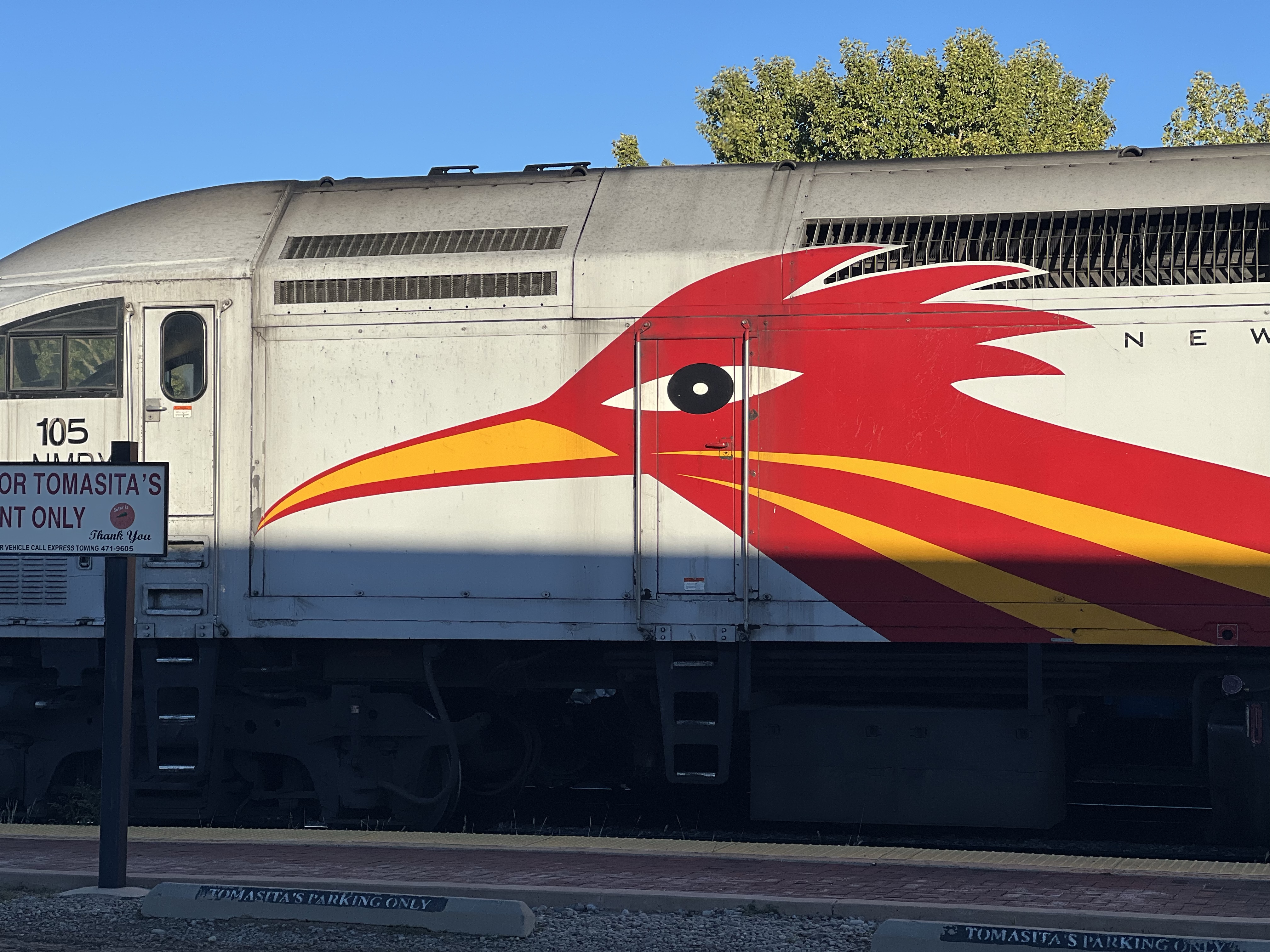
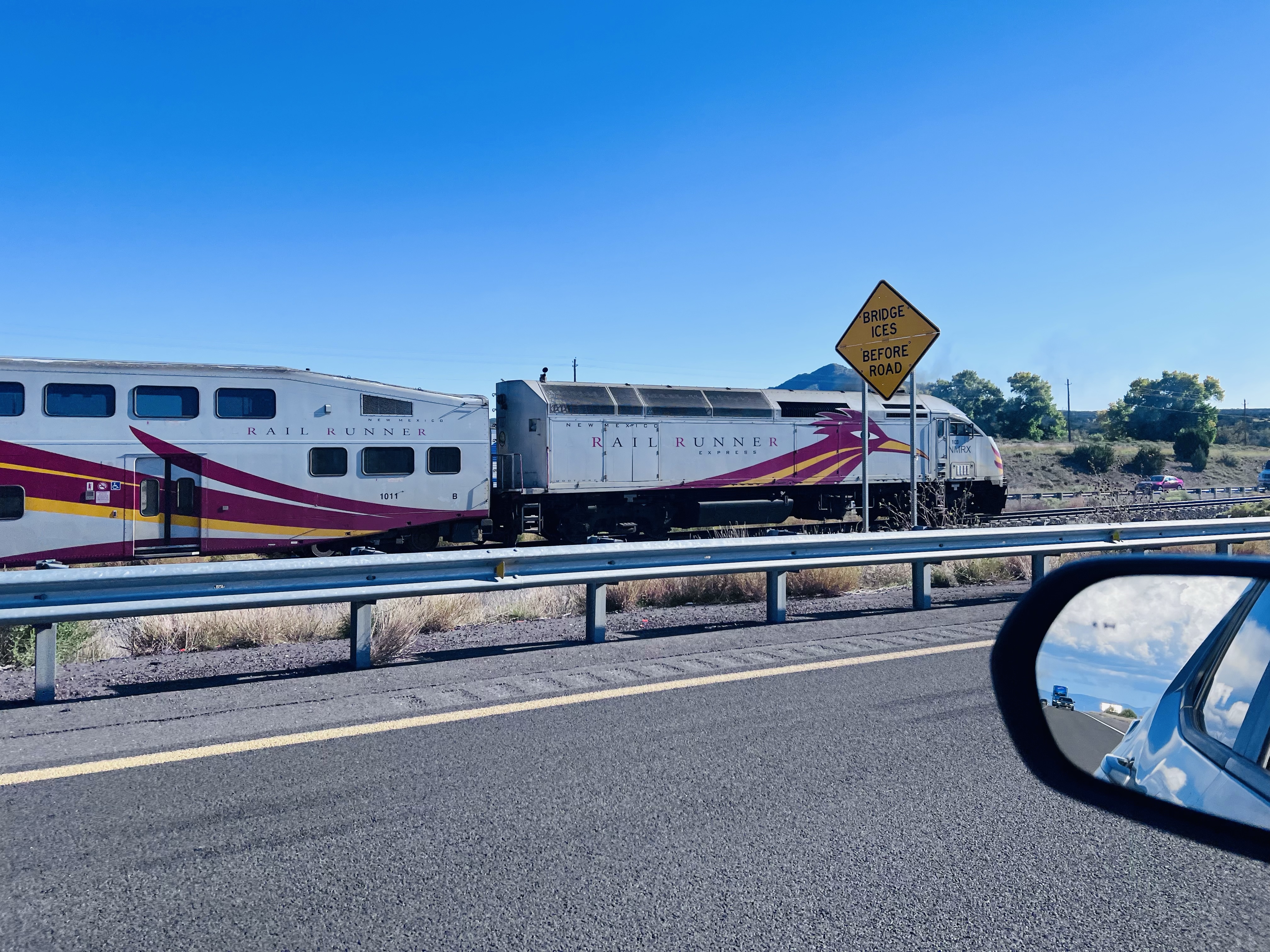
The locomotive and three cars are painted a light silver with a tribal (southwestern) red and yellow roadrunner blazed on its sides, its tail continuing on through the cars. (Locals give the train the moniker the Snailrunner).
The paragon of diesel passenger service livery has to be Santa Fe’s Super Chief’s Warbonnet paint scheme (covered in a previous post). The red and yellow of the Railrunner reaches back to this iconic paint scheme.
Once I pulled into my Santa Fe digs, I quickly unpacked and headed to the Railyard District which was a ten minute walk.
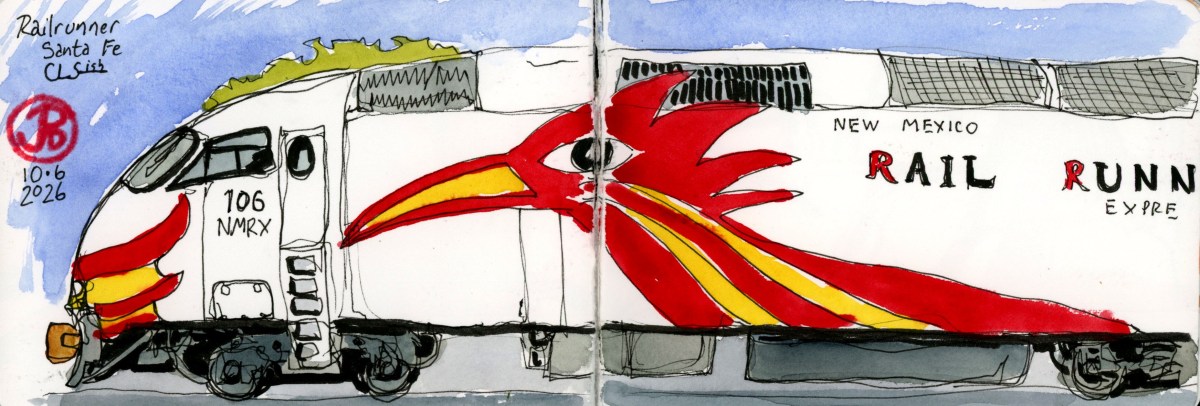
I wanted to get some dinner and sketch the Railrunner at the historic Santa Fe Depot.
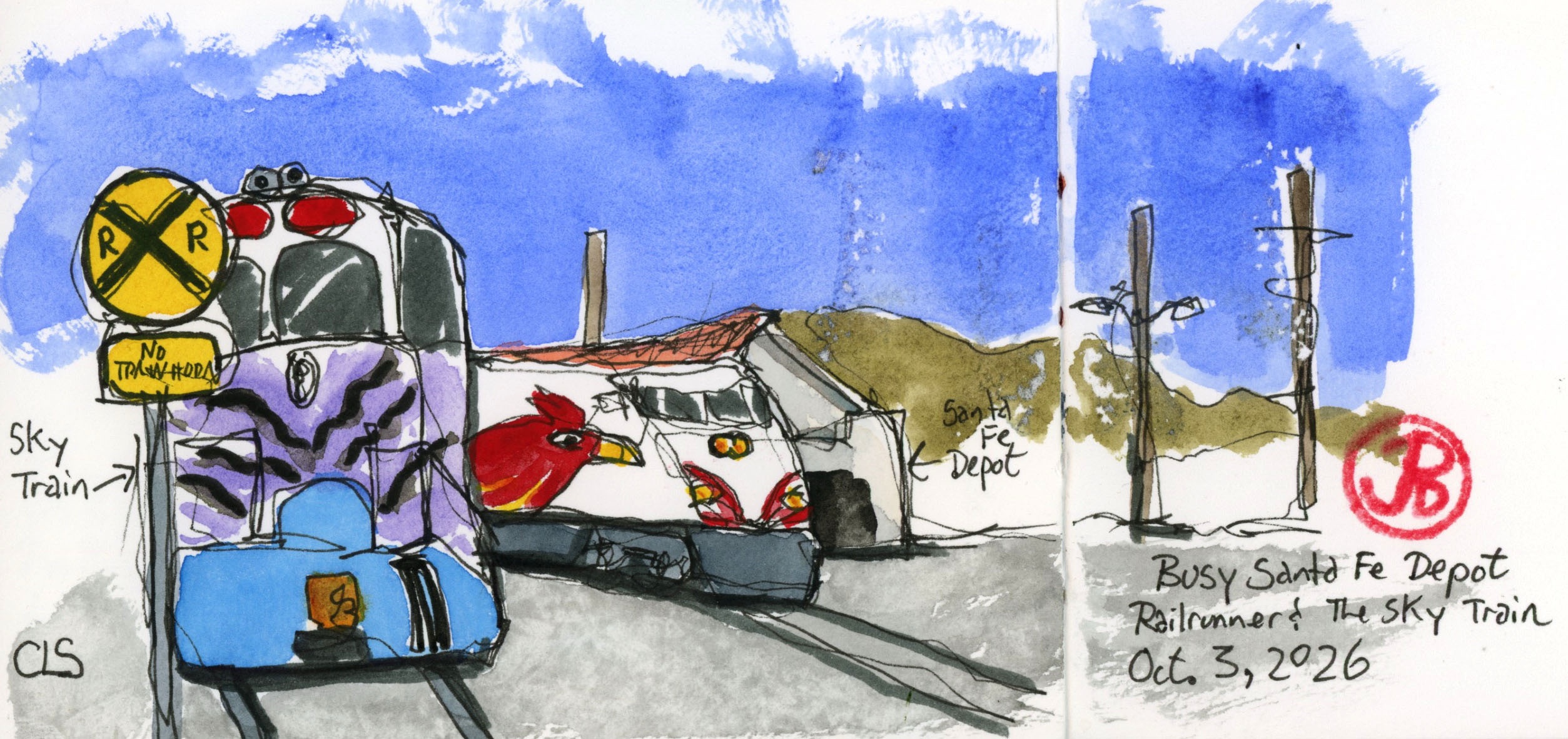
As an extra bonus the Sky Train was getting ready to back into its six car consist.
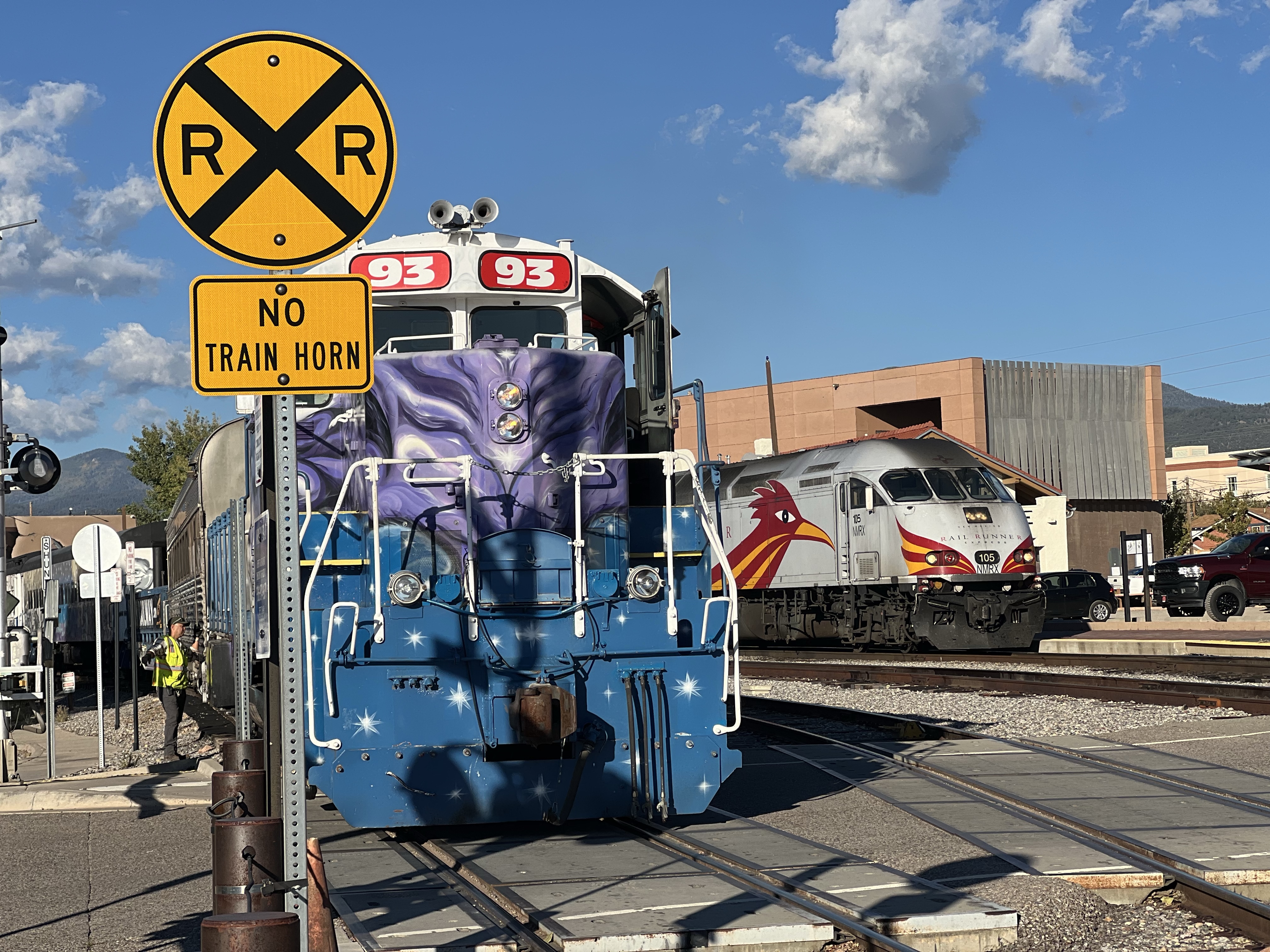
Sky Trail on the left with the Railrunner to the right, in front of the Santa Fe Depot. The livery looks stunning in the Santa Fe morning light. I did a continuous-line sketch of the locomotive with the road runner (featured sketch).A pre-trip sketch and the real deal.My last encounter of the trip with the Railrunner, on my way from Chama to Albuquerque. The line parallels Highway 25 for a bit. This train is heading to Santa Fe. It actually traveling the opposite direction.
In Santa Fe I stayed a 10 minute walk from the vibrant Railyard District.
This area includes the Santa Fe Depot where the Railrunner to Albuquerque as well as the Sky Train which goes to Lamy departs.
A continuous-line sketch of the Sky Train (left) and the Railrunner (right) at the Santa Fe depot.
The Sky Train is funded by local author George R. R. Martin (Game of Thrones). The train is a sunset, murder mystery train that is more about the journey than going anywhere.
In the Railyard are restaurants, breweries, art shops, a farmer’s market, a bookshop, and two cinemas.
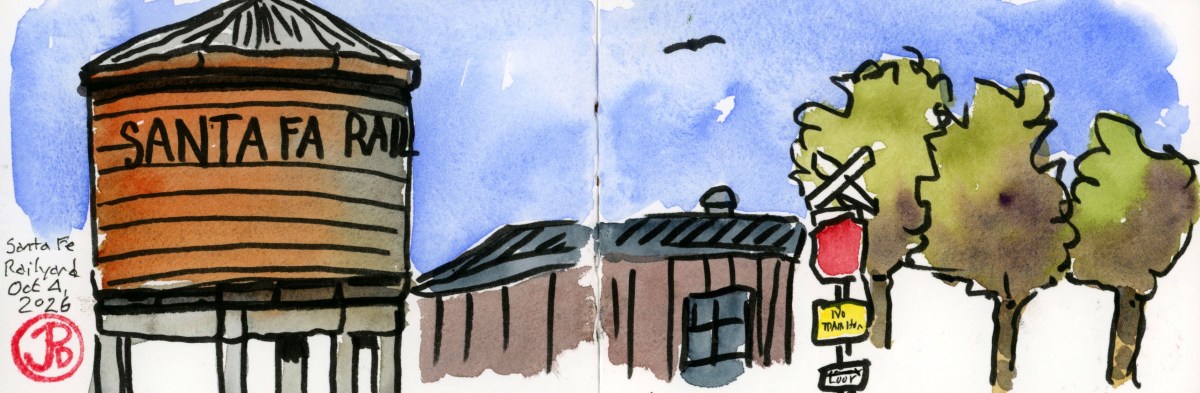
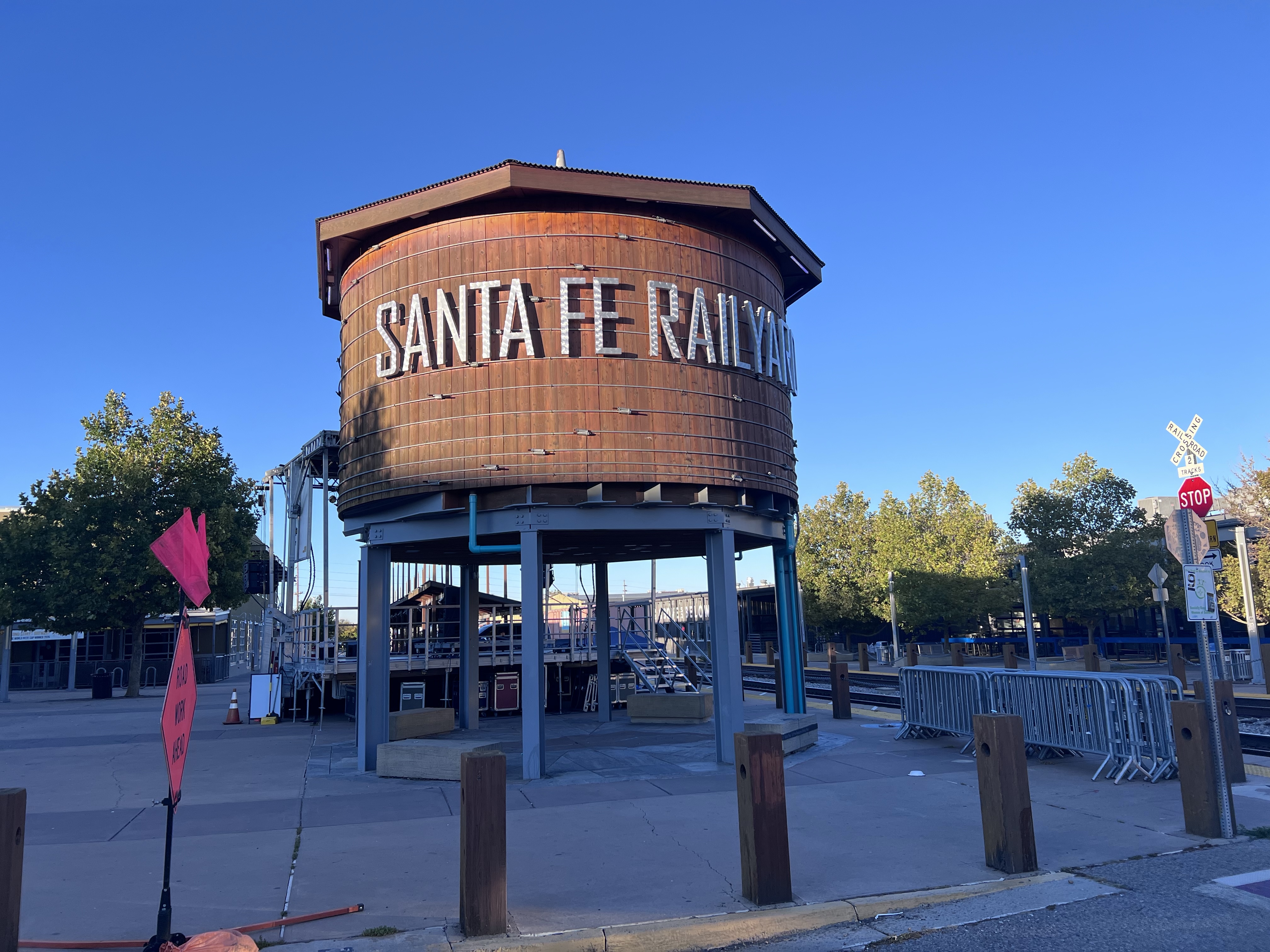
The symbolic water tower, reflecting back to the days of steam at the Railyard.
I had breakfast at Sky Coffee and sketched the view before me of the watertower which is the symbol of the Railyard. This water tower is a replica of a real water tower used in the days of steam. I don’t think is served a purpose other than being a rounded billboard for the “Santa Fe Railyard”.
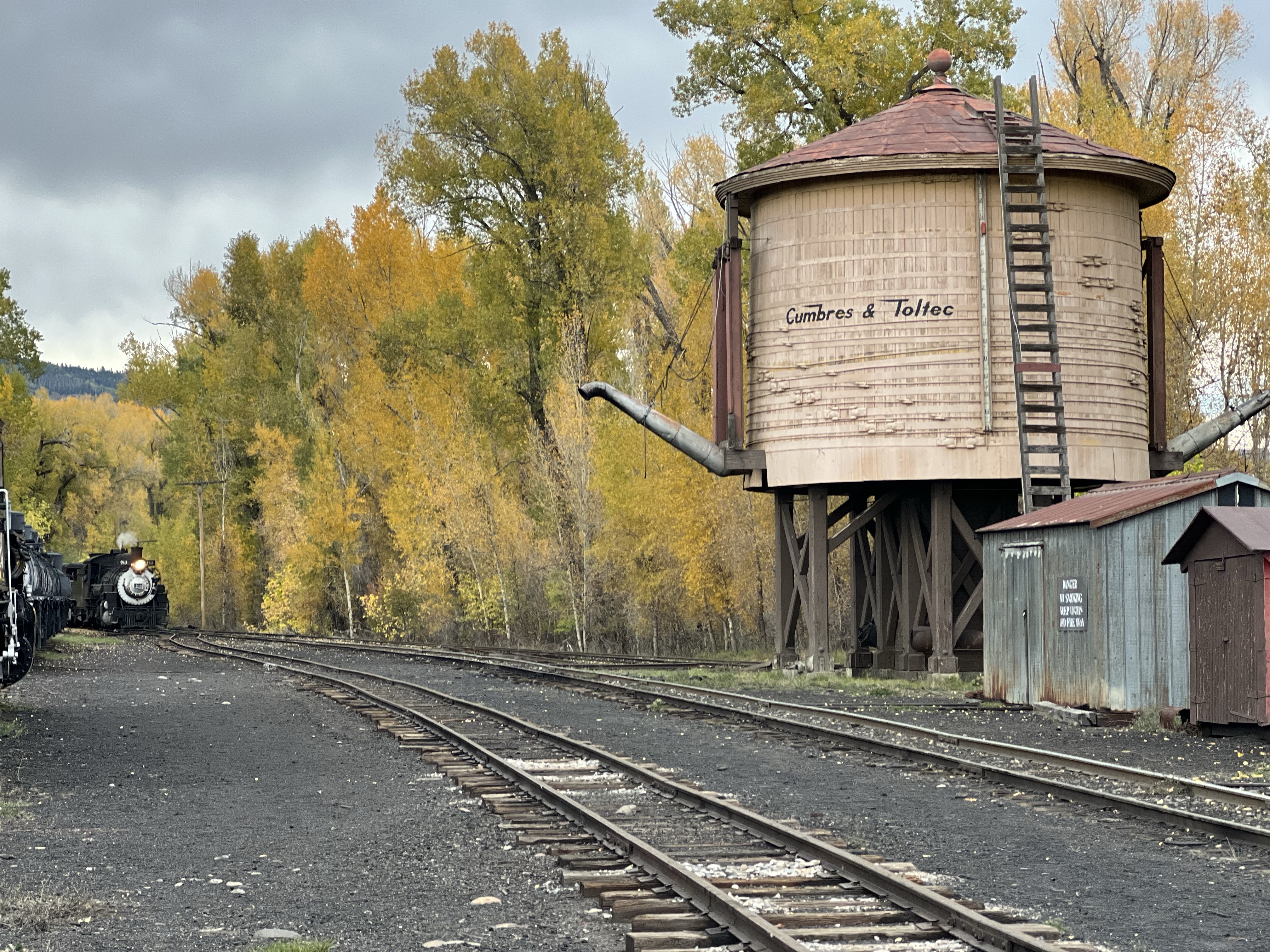
Here’s a real watertower on the Cumbres & Toltec Scenic Railroad in the Chama Railyard (more about the C&TSRR in other posts).
As I sketched and sipped artisans were setting up an art bazaar behind the tower. This city is full of art and artists like no other.
While I was going through security at SFO on my way to Albuquerque via Denver, I heard someone call out, “Mr. Perry!”
Now when someone applies Mister to my last name it usually means it’s a student, a former student, or a parent of a student.
I looked over from whence the voice came and I spotted a former student, now an eighth grader, standing with other students and she was waving at me with a big smile on her face. She is also a big fan of Mr. Perry!
Turns out she was with other students from our feeder middle school and these eighth graders were about to catch a flight to Washington DC.
After making my way through security I joined the group for some hellos, hugs (one from a chaperone whom I’m still trying to identify), and selfies.
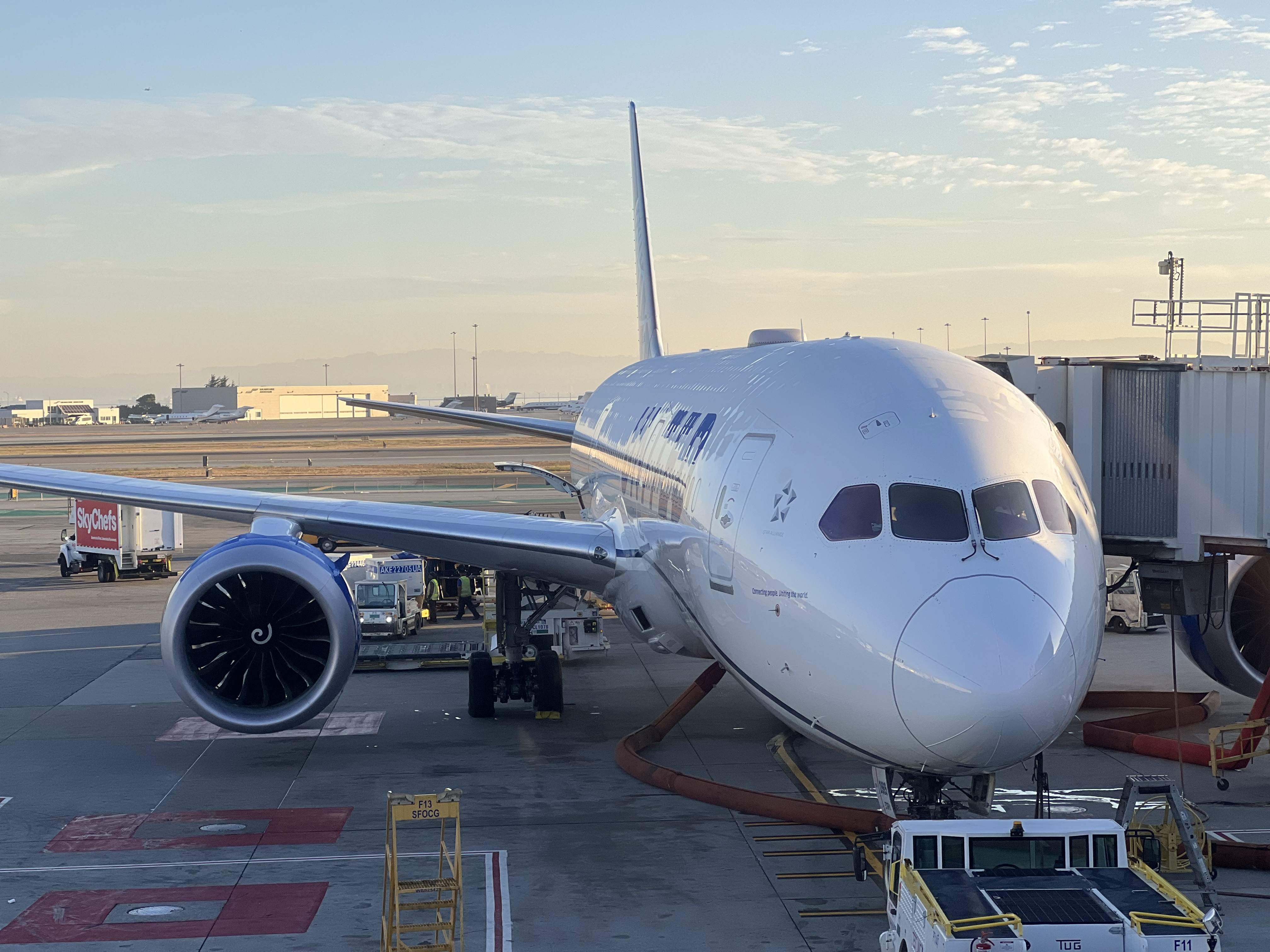
This was a very good start to my Fall Break and I watched some of my former students make their way onto their United flight to Washington Dulles International Airport (IAD).
Off to the Capital. Are there any future presidents aboard?
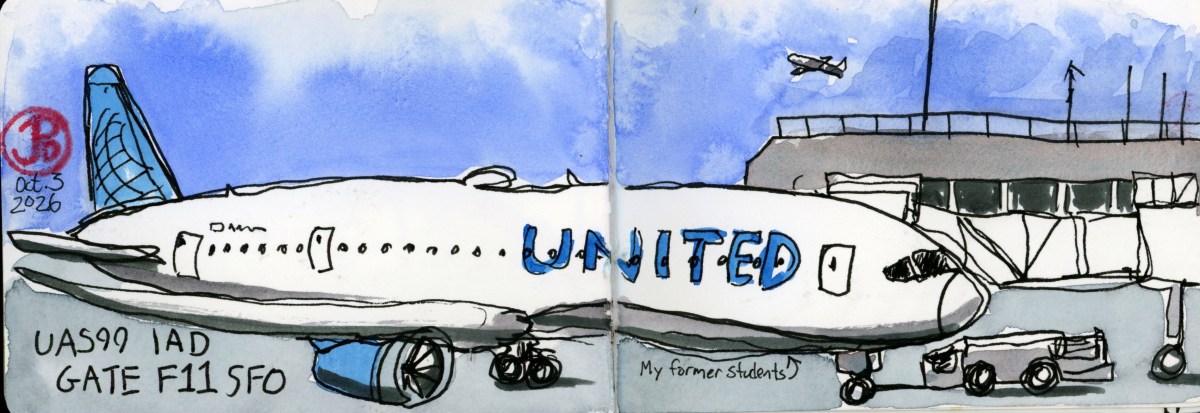
While the United flight was loading I sketched the plane at Gate F11 with the note: “My former Students” and an arrow pointing up to the fuselage.
My flight to Denver (then a transfer to Albuquerque) wouldn’t be boarding for another 45 minutes.
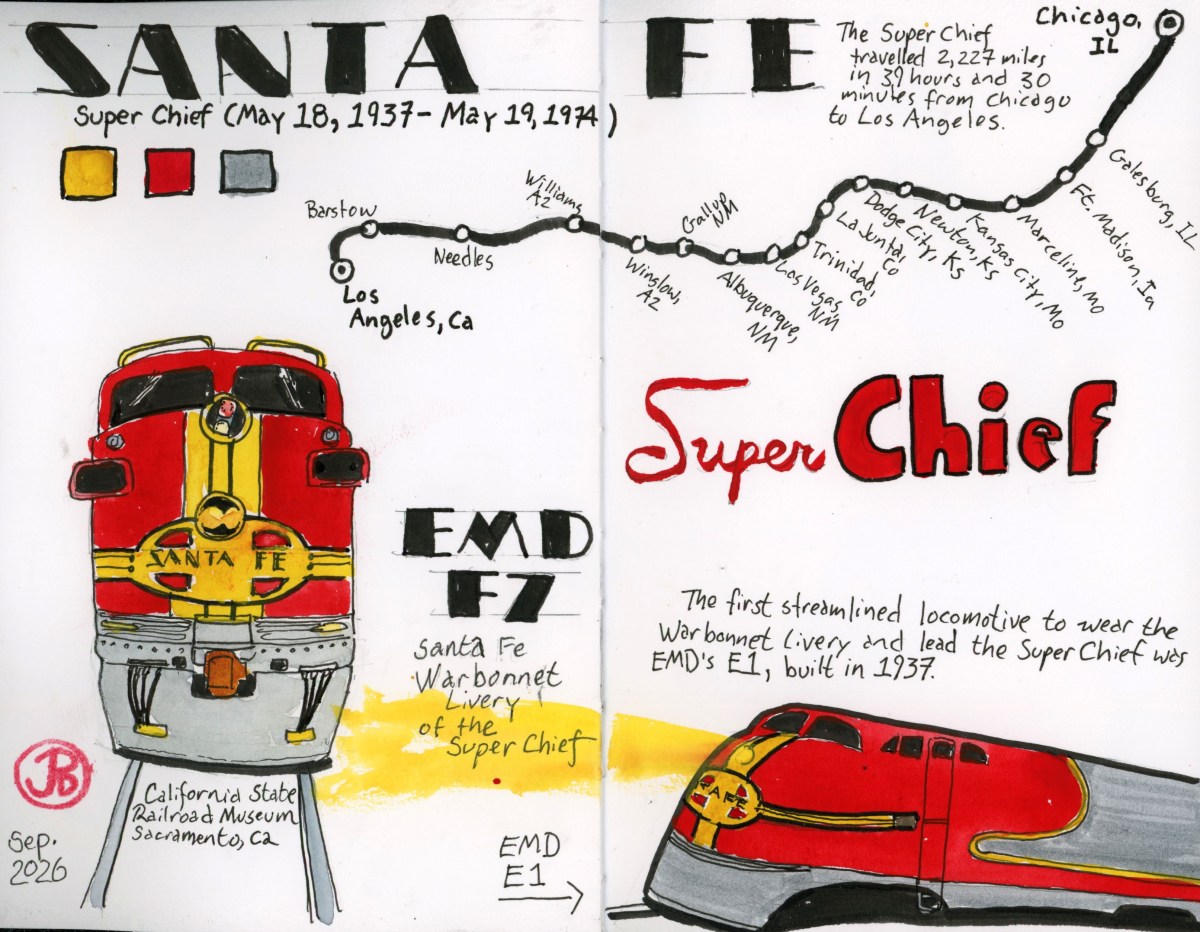
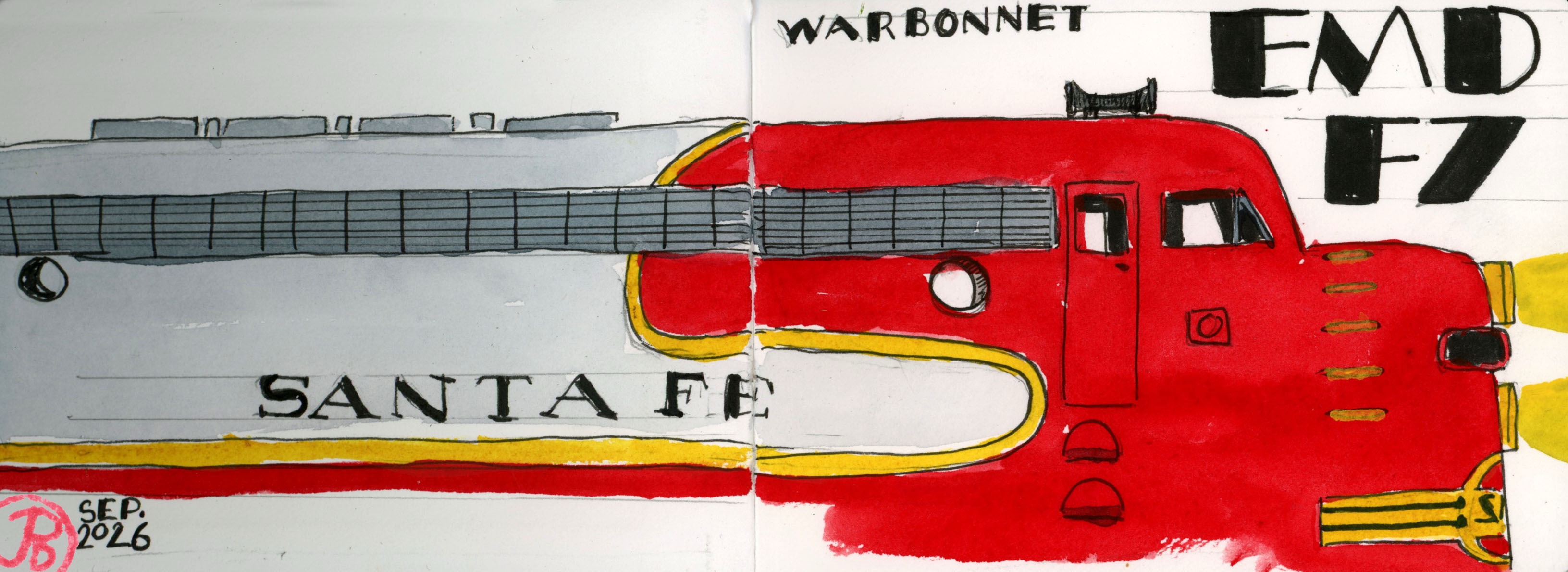
My first HO locomotive, given to me by my father at Christmas was a EMD F7 painted in Santa Fe’s iconic red, yellow, and silver “Warbonnet” paint scheme. This paint scheme, with its Native American atheistic, has “Southwest” written all over it.
The Super Chief was a passenger route that travelled 2,227 miles in 39 hours and 30 minutes between Chicago, Illinois and Los Angeles, California. Its first run was on May 18, 1937 and it’s last was May 19, 1974.
This was the first all diesel powered streamlined passenger service with an EMC E1 on point. The route was such a success that F7s were ordered (EMD’s most successful passenger locomotive).
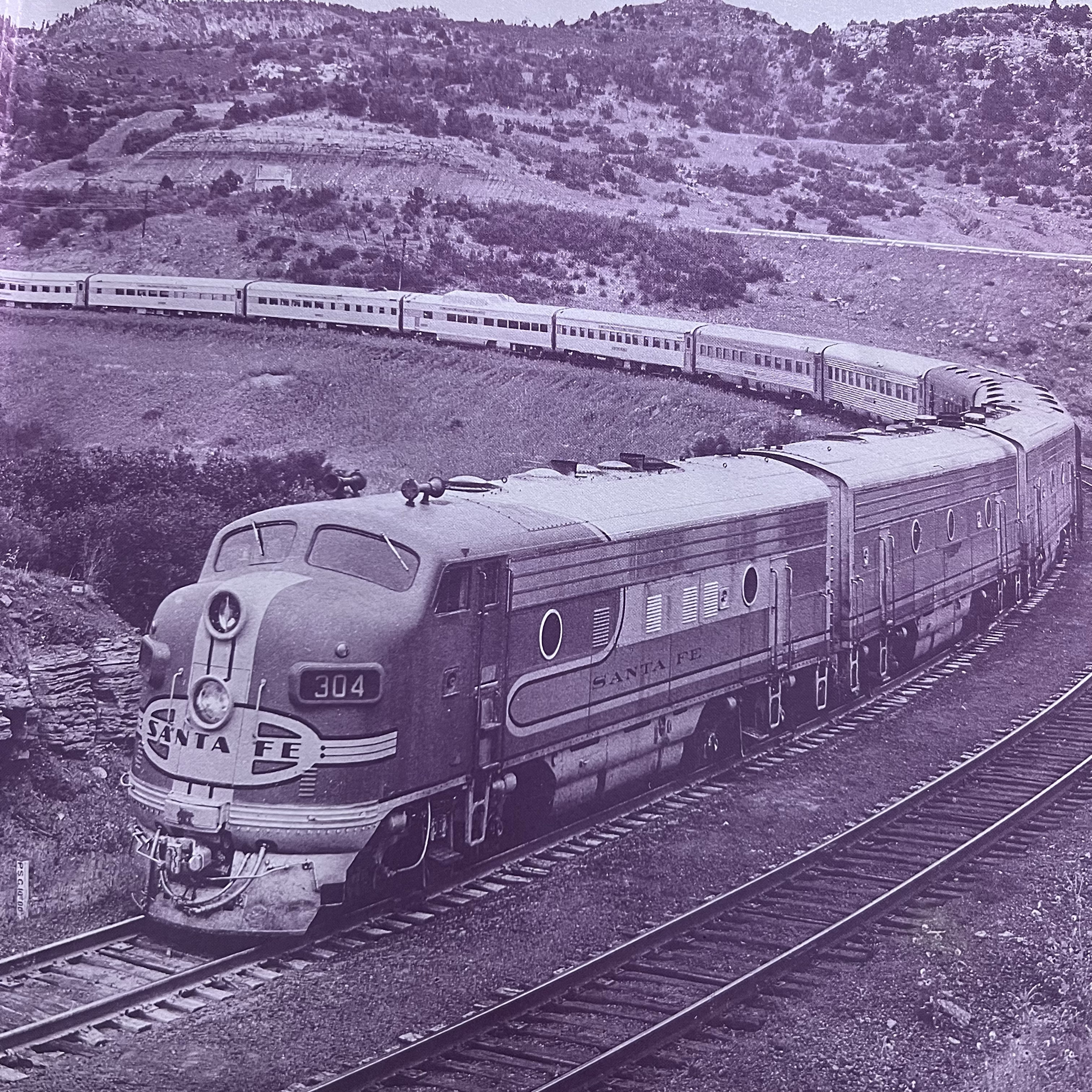
This is such an iconic diesel and paint scheme that it was replicated in many scale models (like my HO locomotive) and in my favorite childhood railroad book The Illustrated Encyclopedia of North American Locomotives by Brian Hollingsworth. The first picture on the first page is a wonderful photograph of the Super Chief headed by the Warbonnet F7 A Unit and it’s silver consist curving behind:
The Super Chief was the paragon of overnight train travel in the United States. The pinnacle of the romance on the rails, the Super Chief consist featured a passenger lounge, roomette, double bedrooms, a dining car, drawing rooms, a barbershop, a cocktail lounge, and a rounded observation car.
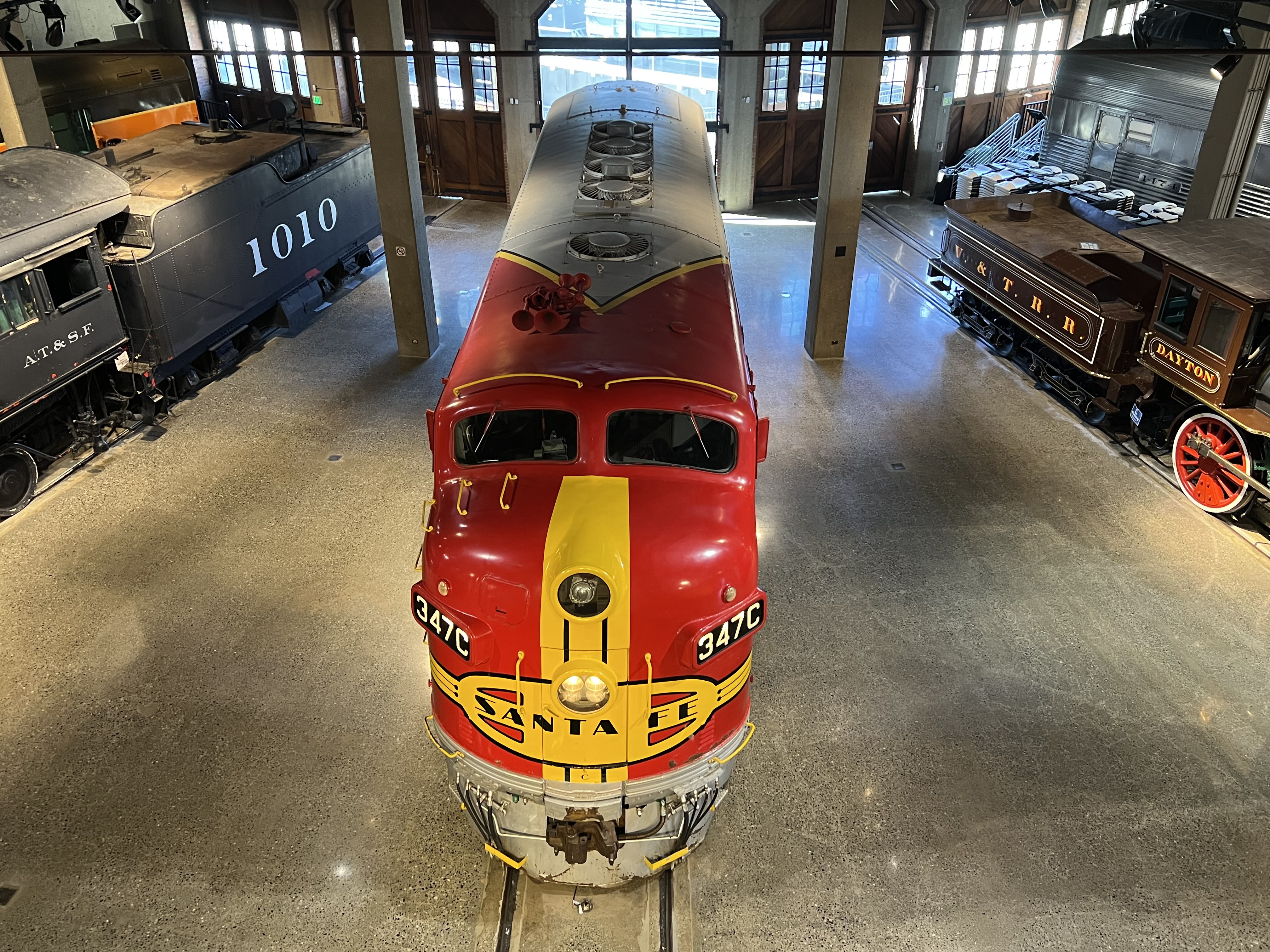
My HO F7 at full scale at the California State Railroad Museum in Sacramento. This one really took me back.
For my early October fall break I decided to spend the week in New Mexico.
The last time I set foot in the state, or lay down in it, was a visit to Four Corners on a road trip with my family. So my last and only visit was fleeting.
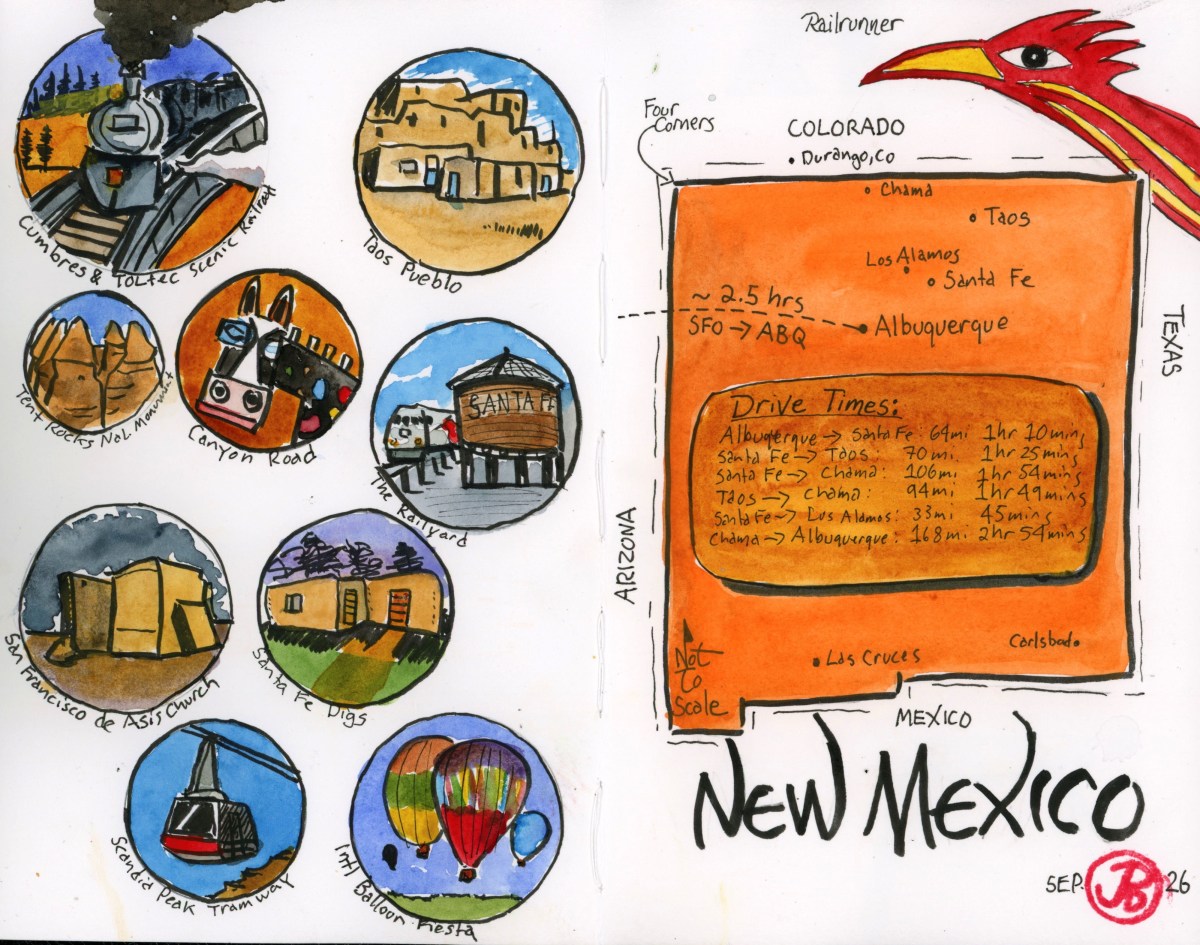
As is my usual routine I sketch a map of the state with my intended travel destinations with round vignettes of sight I hoped to see and sketch (featured sketch).
These include the Taos Pueblo, the Cumbres &Toltec Scenic Railroad, the Railyard District in Santa Fe, Canyon Road arts district also in Santa Fe, San Francisco de Asis Church in Taos, my digs in Santa Fe, Tent Rocks National Monument, Scandinavia Peak Tramway, and the Albuquerque Balloon Fiesta.
Side view of the famous Santa Fe F7 Super Chief in its Warbonnet (red, yellow, and silver) livery.
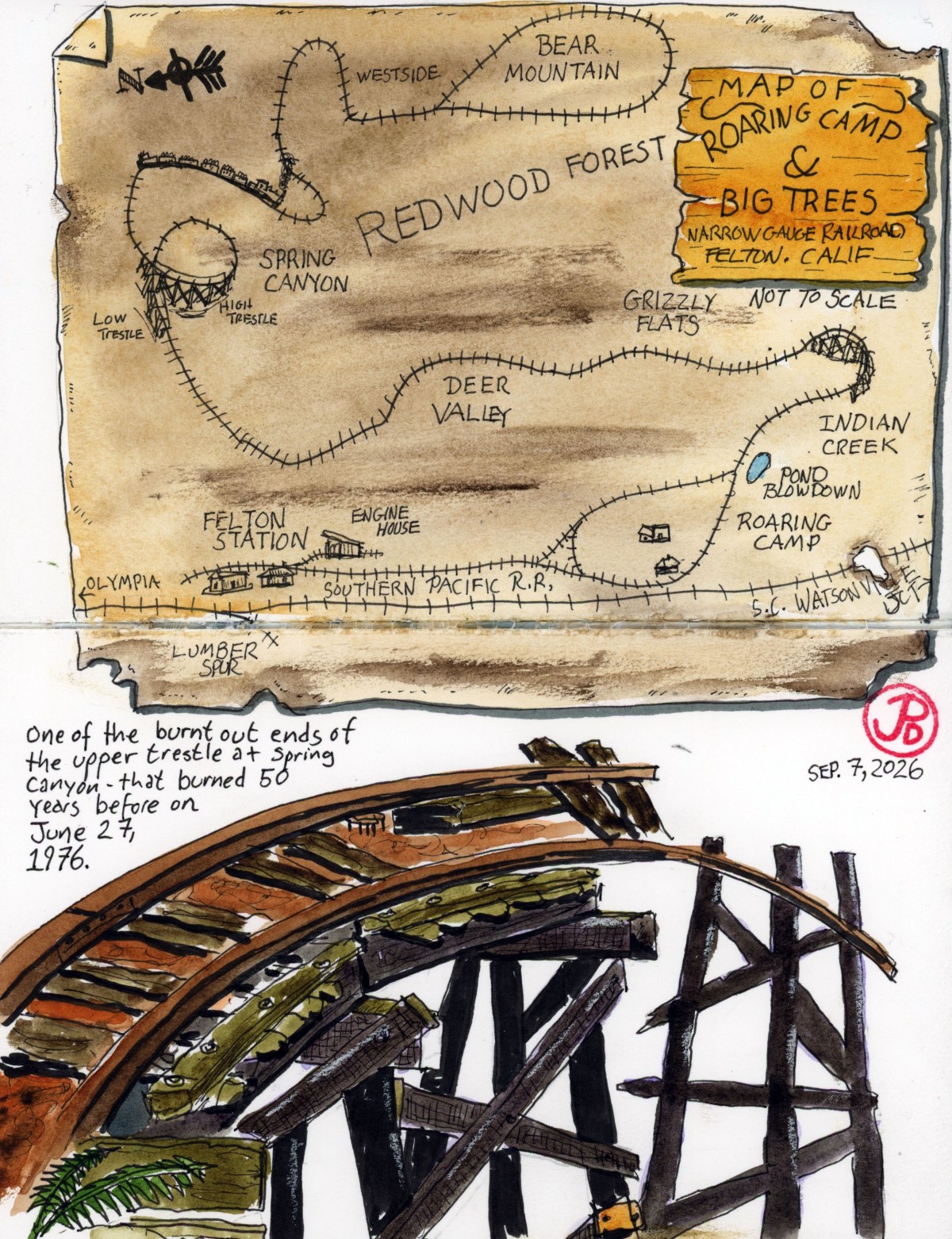
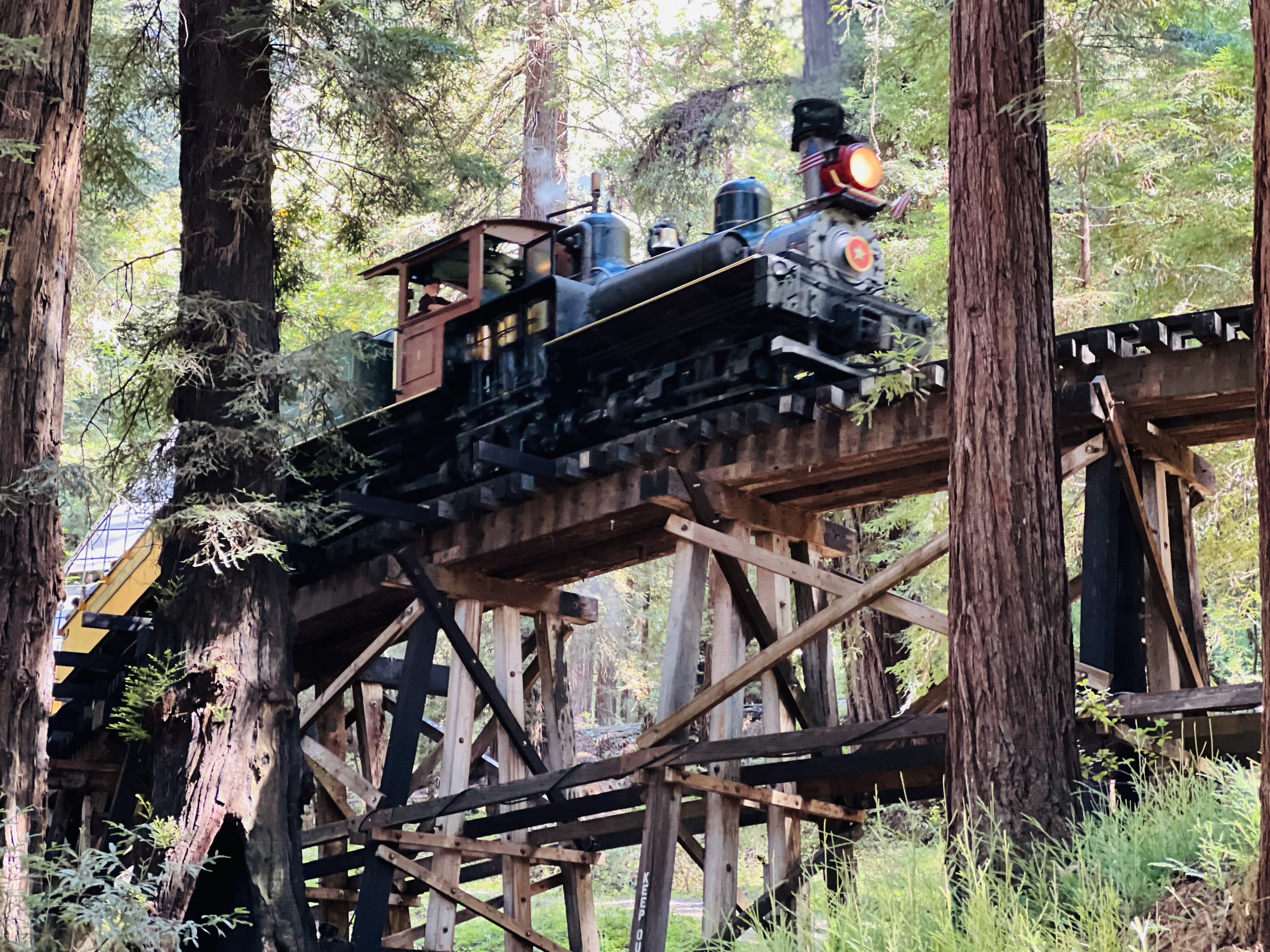
In the previous post I highlighted the tightest turning trestle in the United States, the Indian Creek Trestle on the Roaring Camp & Big Trees Narrow Gauge Railroad. While this is impressive, the Spring Canyon Trestles are even more impressive.
The trestles includes a lower trestle and an upper trestle. The uphill tracks passed under the upper trestle on the lower trestle, corkscrewed around and then crossing over the lower on the upper. The upper trestle railbed was 80 feet off the ground.
The two trestles were built in 1966 and the first train of passengers crossed the trestles in the same year.
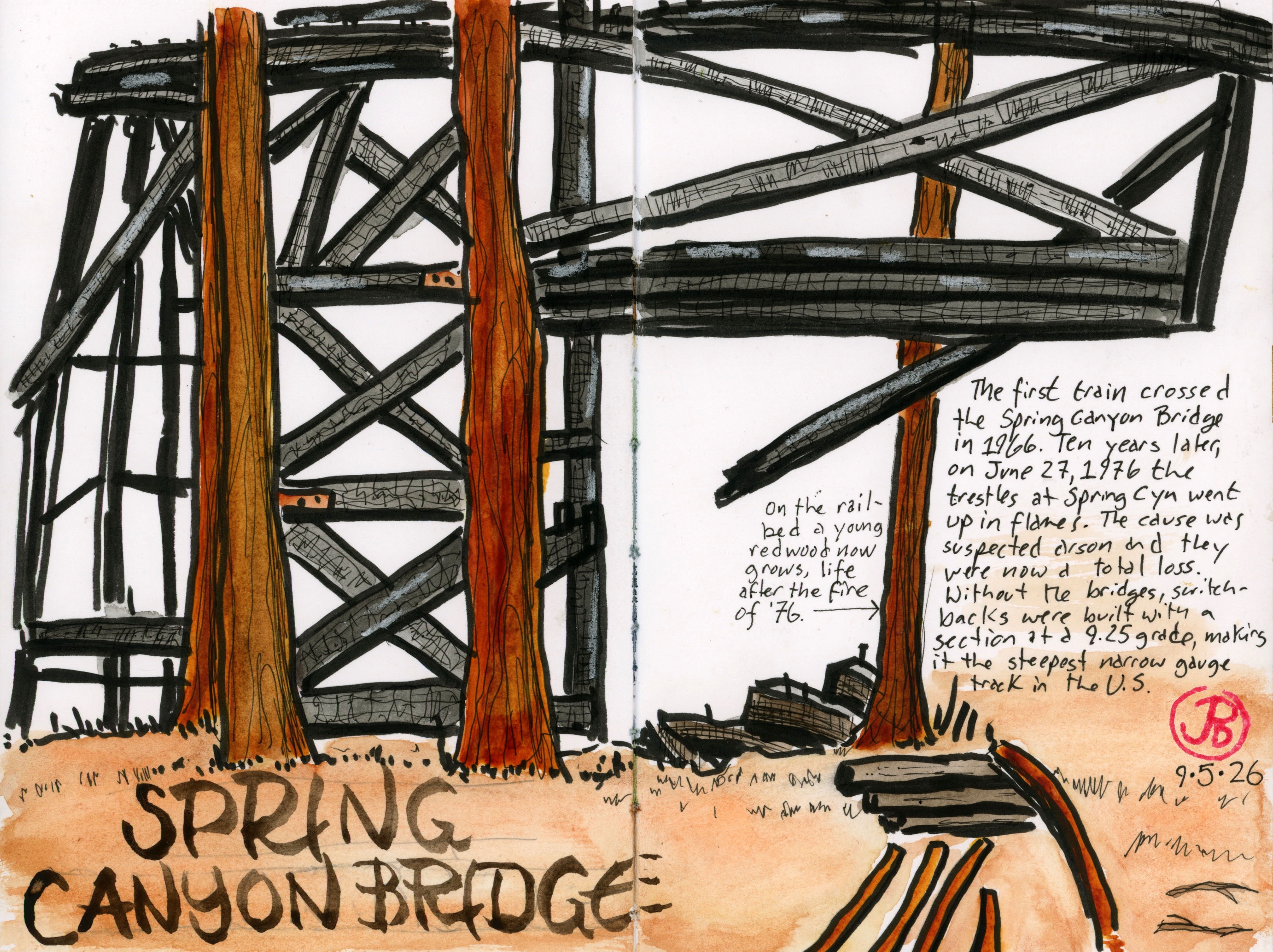
50 years ago, on June 27, 1976, at approximately 6:30 PM, the trestles went up in flames. The work of ten years before was a total loss.
Locals reported hearing a loud explosion shortly before the fire started. It was suspected that the cause was arson, either from an environmentalist destroying the trestles to prevent logging (the railroad was a tourist attraction and never a logging operation) or a disgruntled employee. Neither theory has been proven and fire of 1976 is shrouded in mystery.
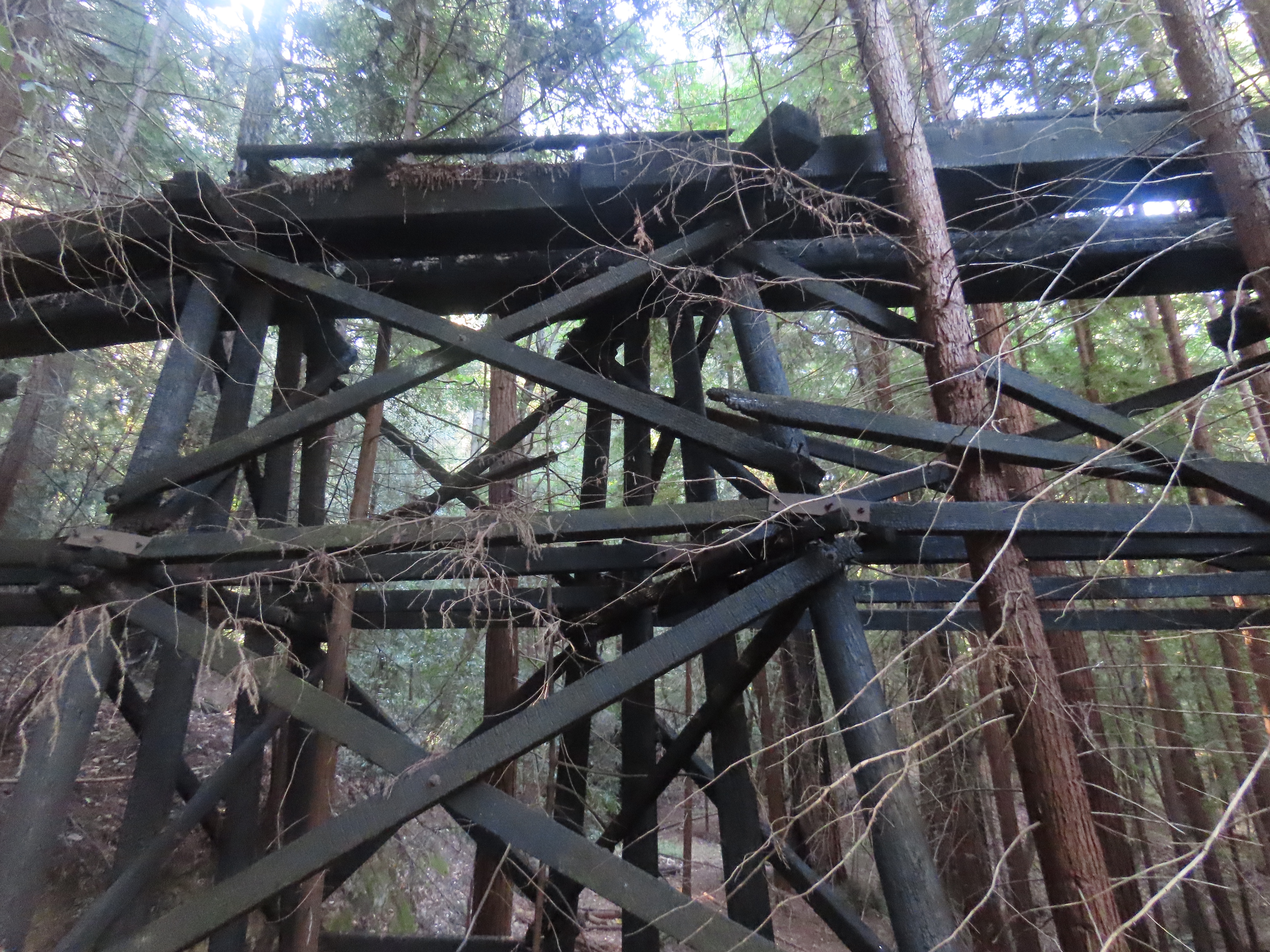
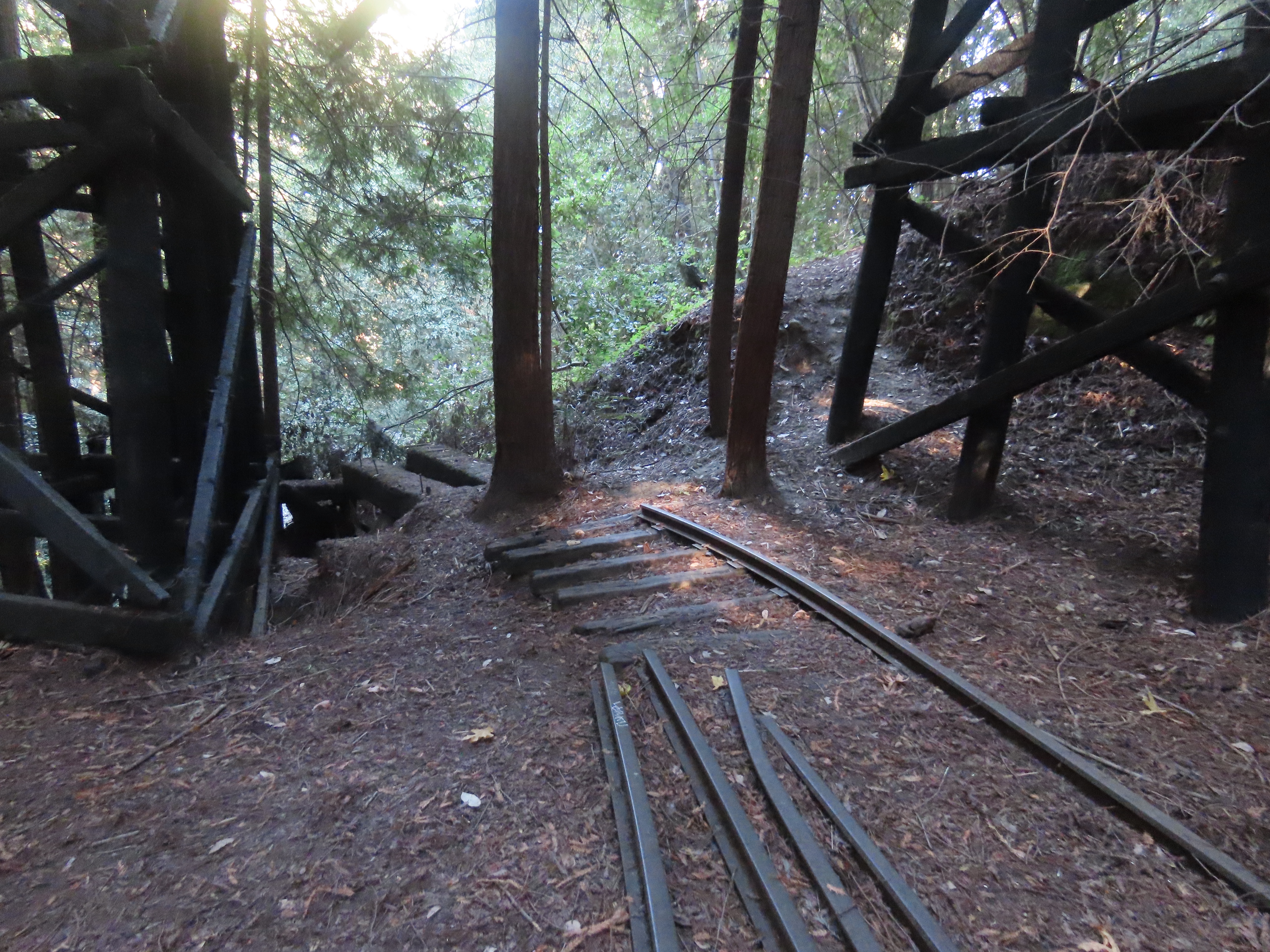
The ghosts of the past still remain at Roaring Camp in the charred black beams of the Spring Valley Trestles.
And I was here to see them and sketch the standing remains of the Spring Canyon Trestles.
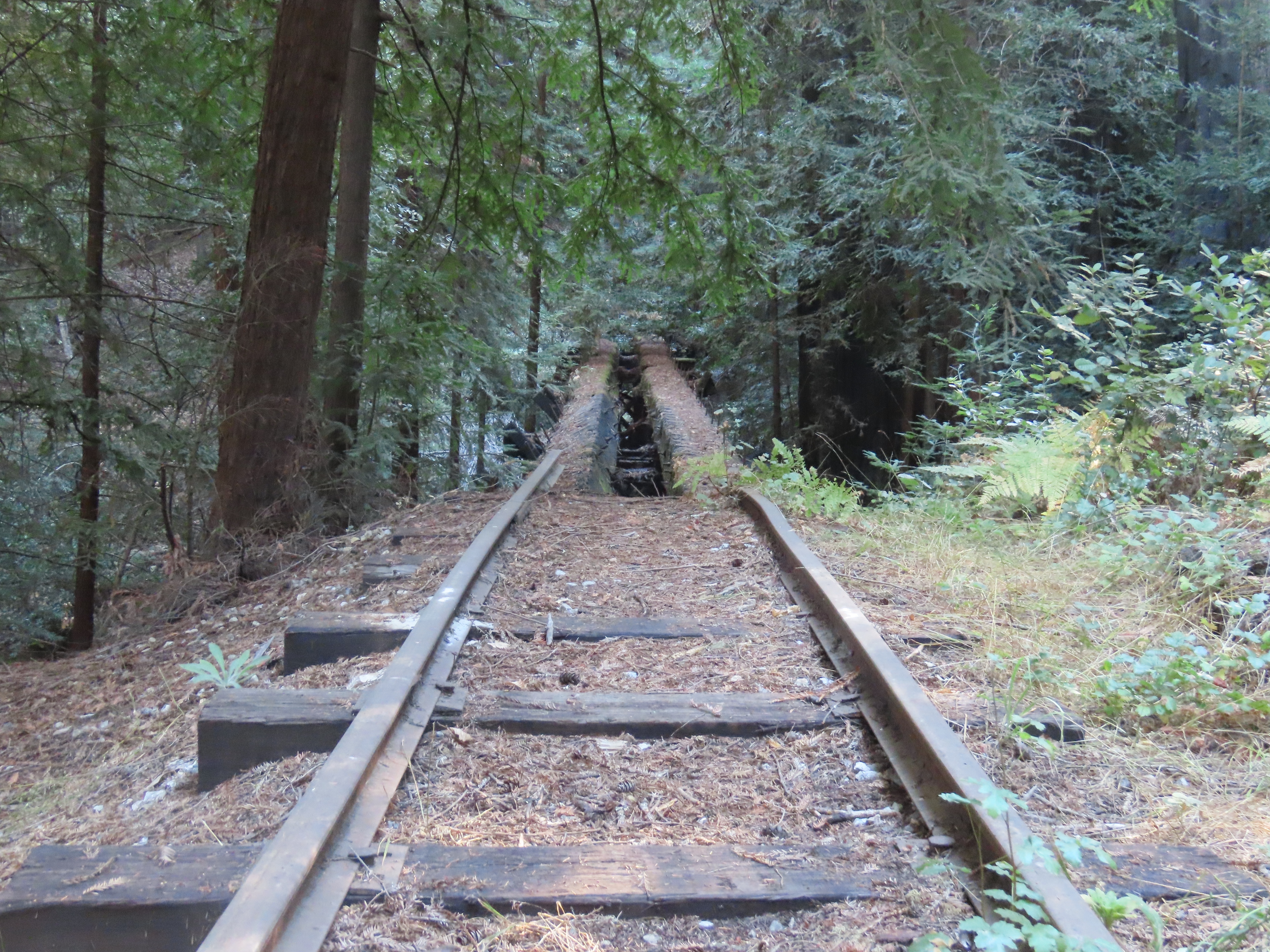
The remains of the high or upper trestle. 50 years later and the redwood forest is slowly reclaiming the trestle.The rusted rails leading to the lower trestle. This is where trains coming from Roaring Camp entered the trestle complex.A young redwood stands in the middle of the railbed at the other end of the lower trestle as it passes under the upper trestle.
The Roaring Camp’s founder and owner Norman Clark wanted to rebuild the trestle but the insurance company would not allow another wooden trestle to be built, instead they preferred steel but this did not fit in with Clark’s vision for historical accuracy for a logging railroad.
My field sketch of the upper and end of the lower trestle.
Instead of rebuilding the two trestles (which would also be expensive) a fix was planned and engineered to take the railroad up and out of Spring Canyon without the trestles.
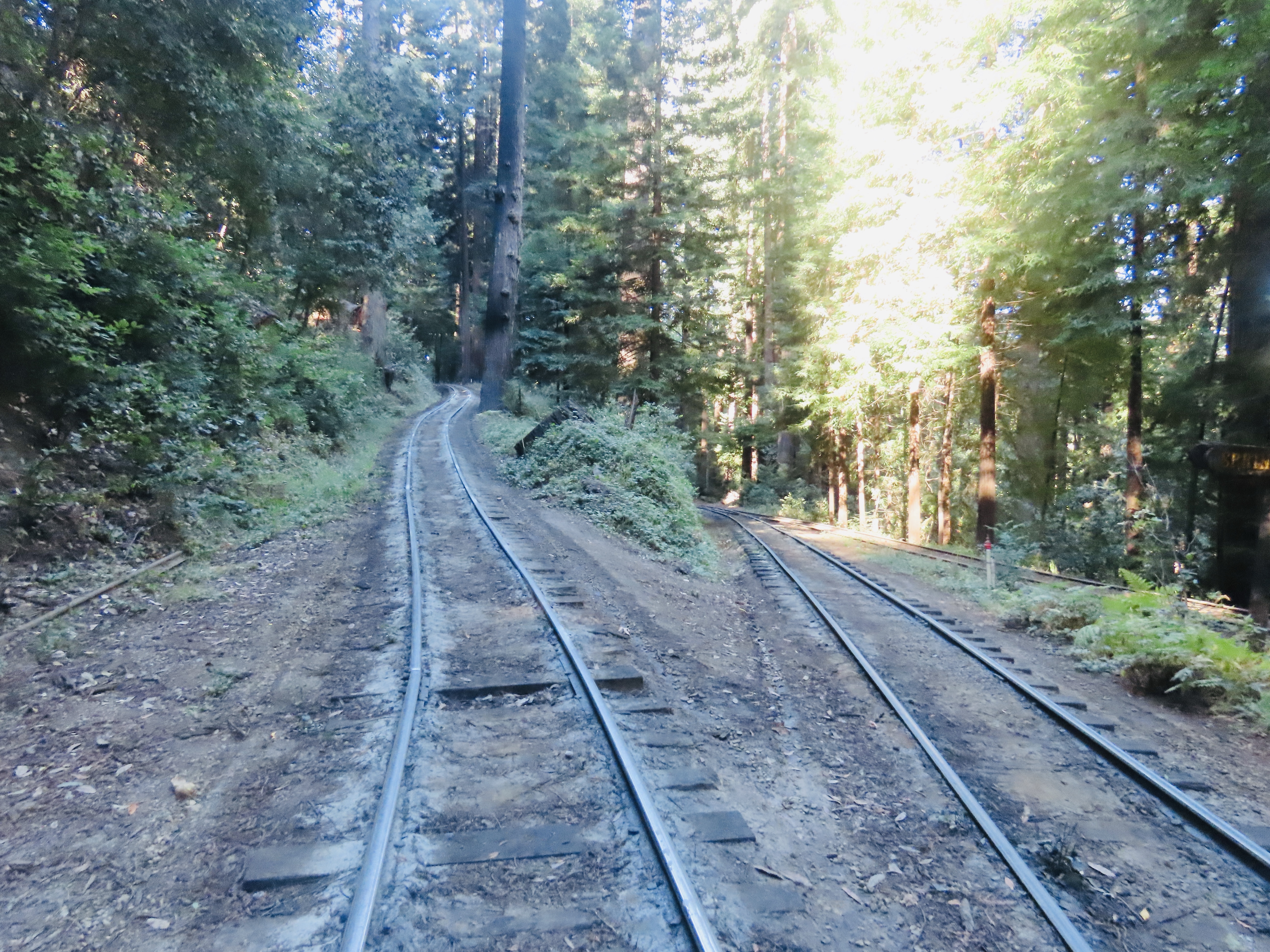
The first section of the switchback heading up the hill (left track) at the steepest grade in any narrow gauge railroad (9.5%). The train comes up the hill on the center track and after passing the switch, backs up the steep grade. On the far right the rusted track the led to the lower trestle can be seen.
A series of switchbacks was constructed in the space of just four months and these switchbacks are still in use 50 years later.
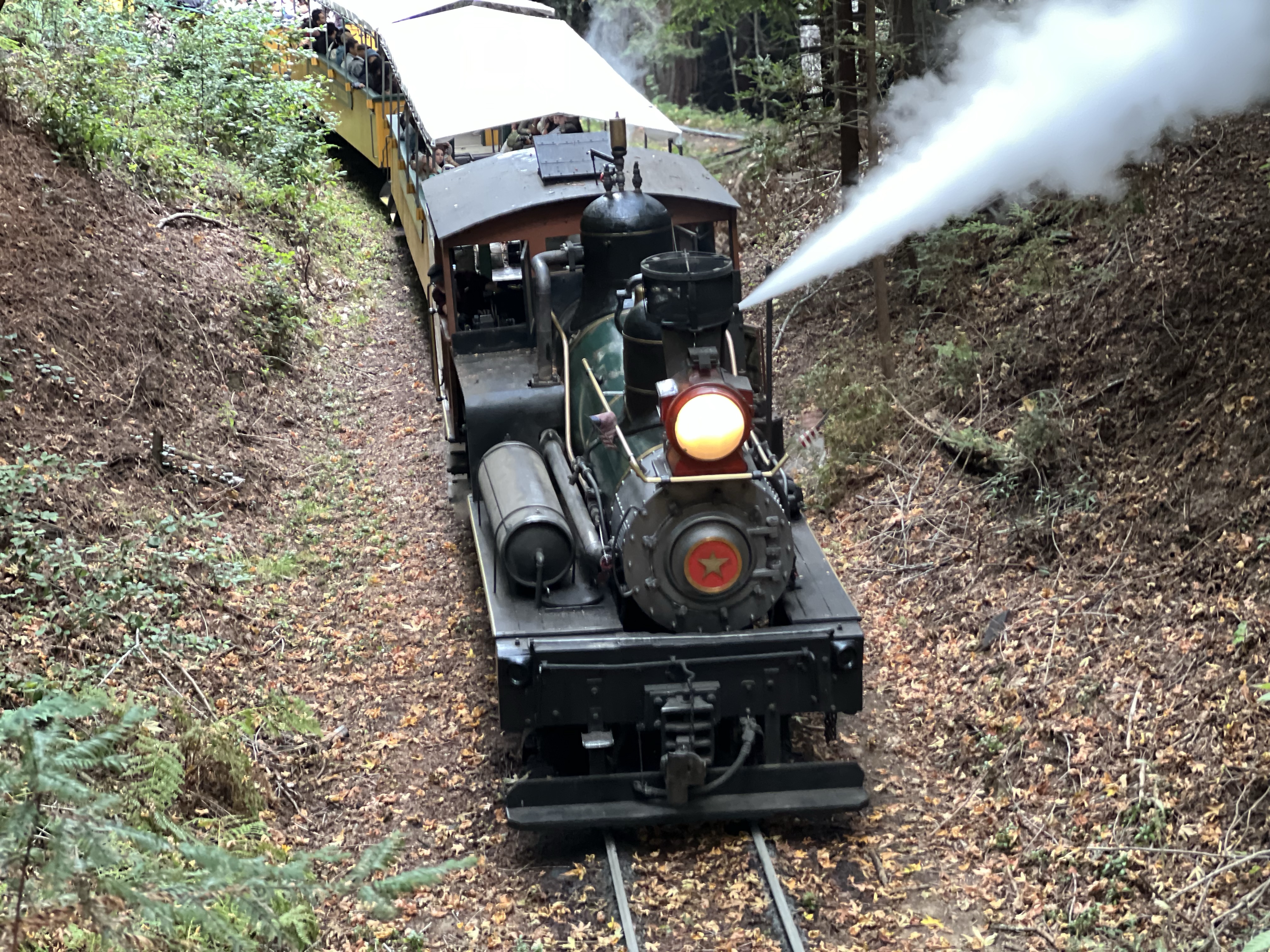
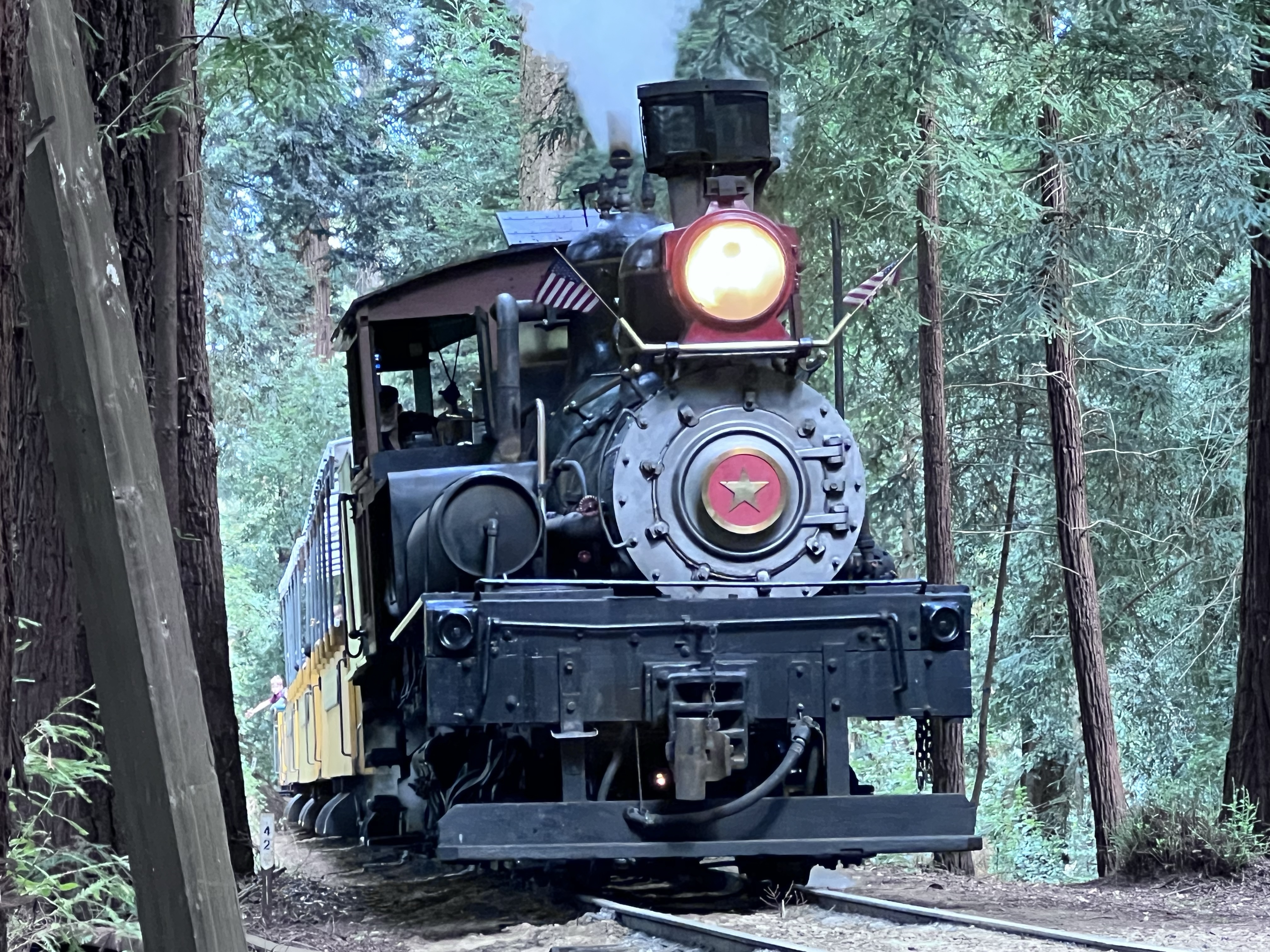
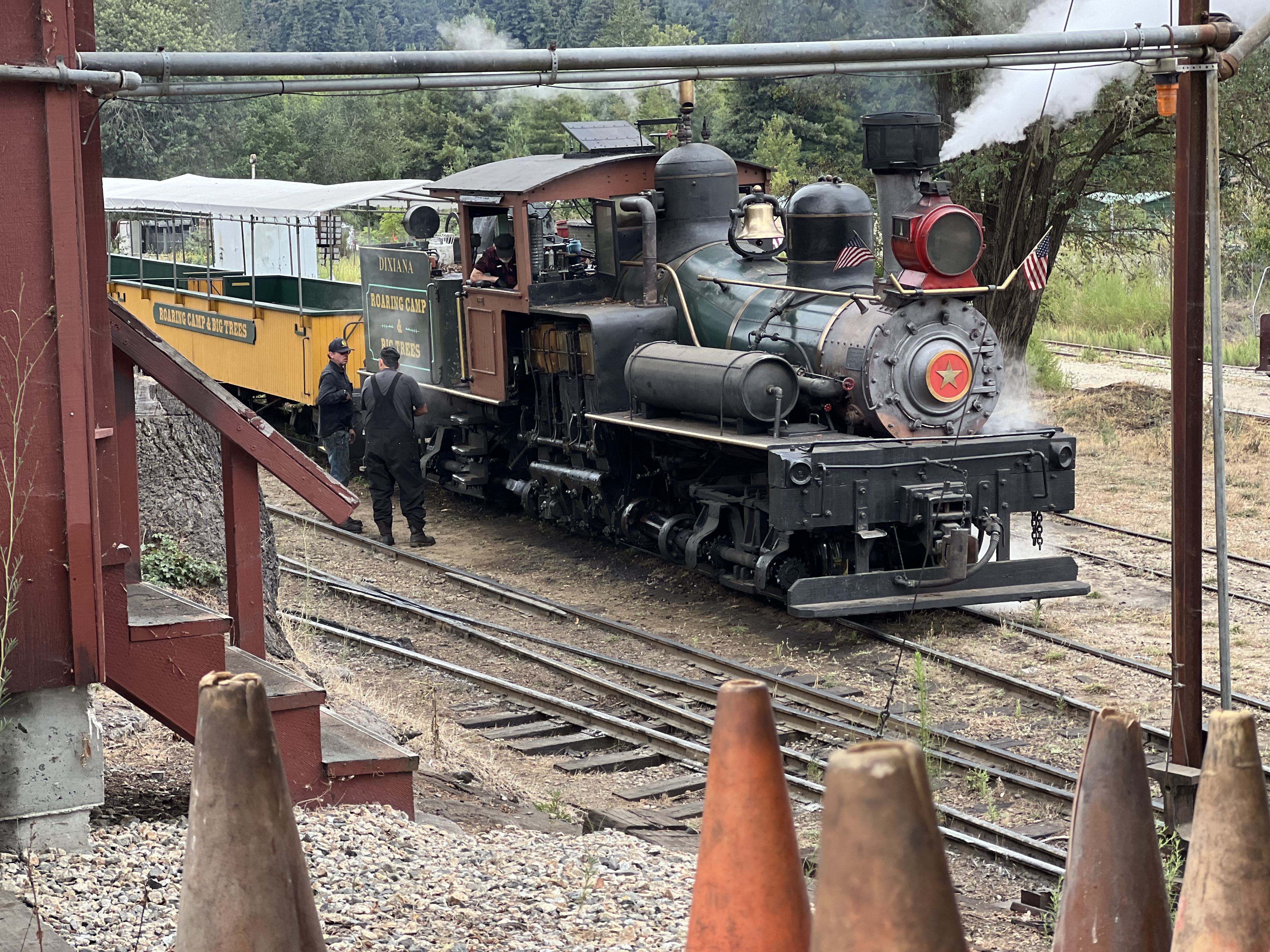
No. 1 pulls past the switch and waits for the conductor to flip the switch so the train can back up the 9.5% grade on the first leg of the switchback. This is the most work the Dixiana will encounter on the way to Bear Mountain. No. 1 heading out of the switchbacks on her way to Bear Mountain. The engineer lays on the whistle to blow the grade crossing at the fire road.
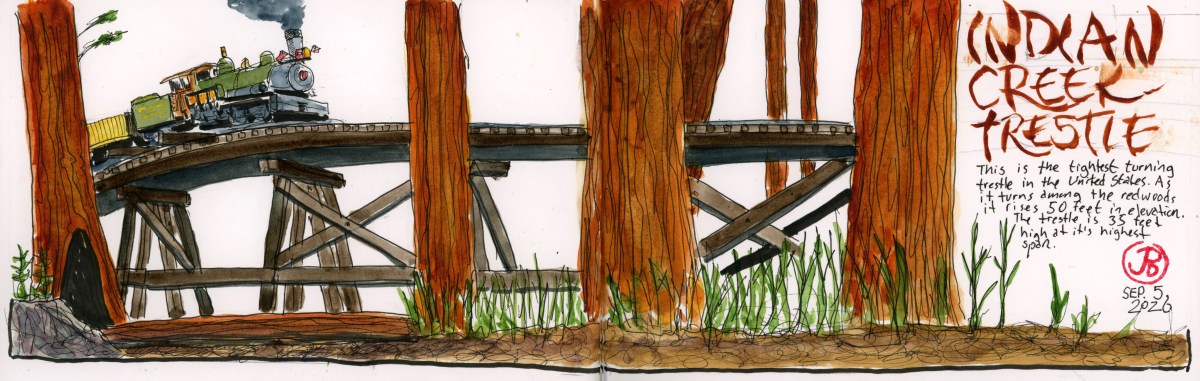
The trestle that spans Indian Creek at Roaring Camp in Felton, Ca. is one of the engineering marvels at the Roaring Camp & Big Trees Narrow Gauge Railroad.
The wooden trestle rises to a height of 35 feet as it climbs a total of 50 feet as it winds around. It is the tightest turning trestle in the United States.
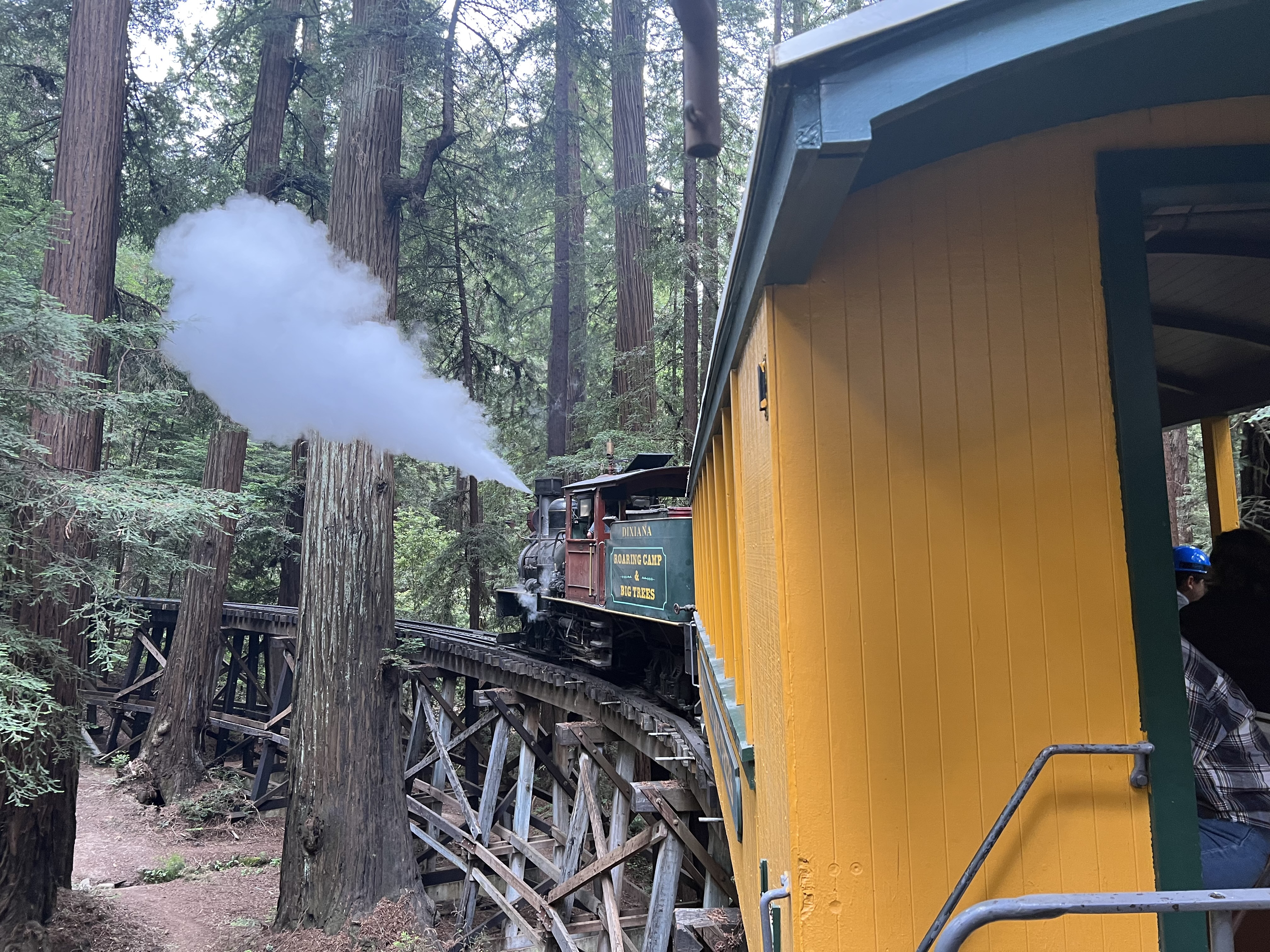
The tight curve of the tightest curving trestle in the United States gives you good views of the locomotive and redwoods.
To sketch the trestle I hiked up from Henry Cowell State Park and stood on a fire road that parallels the beginning of the trestle. When the railroad was being built in the early to mid 1960s efforts were made to build around the existing redwood and Douglas-fir trees instead of removing them.
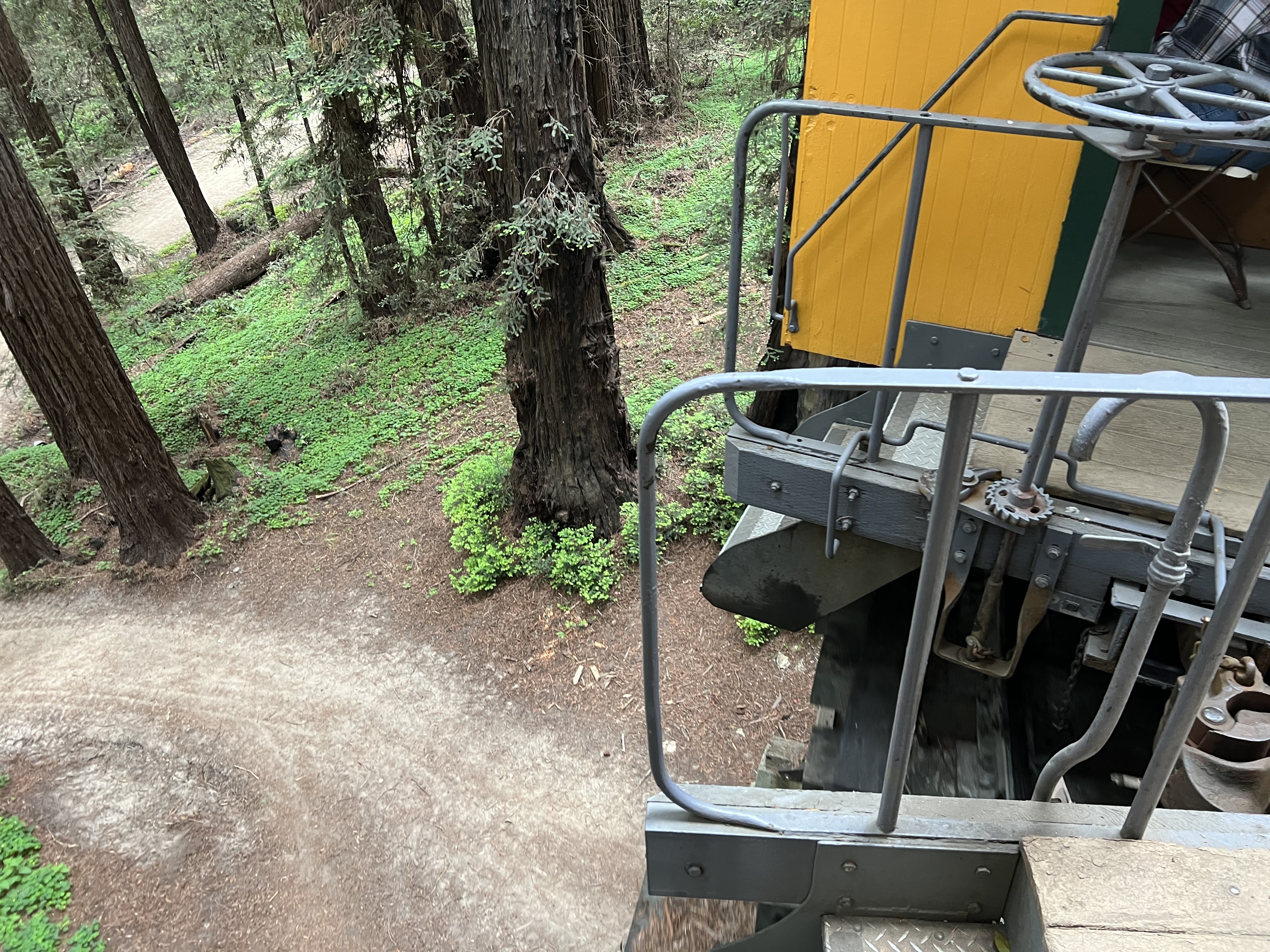
Looking down from the Indian Creek Trestle makes you feel like you’re flying!No. 1 “Dixiana” climbs up the curve of the Indian Creek Trestle.
I remember the excitement of the up and coming passenger service returning to the former Southern Pacific branch line from Santa Cruz to Felton.
The time was the mid-80s but my dad remembered the days when stream locomotives labored up the grade above our cabin. The drivers would slip on the wet morning rails (every foamer loves a bit of wheel slip) and they would back down the grade, sanding the rails as they went to have another go.
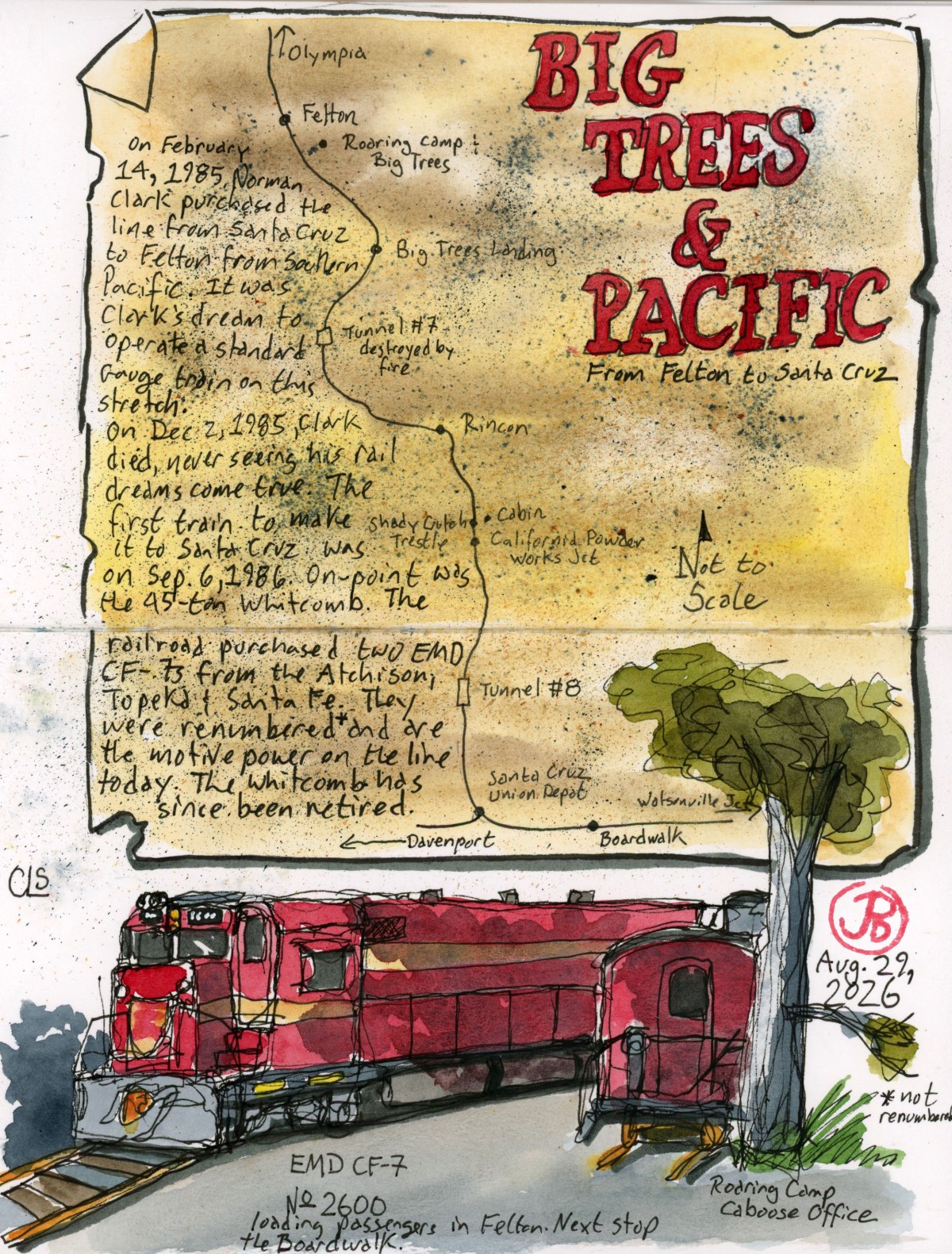
It was Norman Clark’s dream to one day purchase the line and operate a passenger train on the standard gauge rails to Santa Cruz. Clark was the founder of the narrow gauge railroad at Roaring Camp.
Unfortunately Clark died before seeing his dream come to fruition.
My dad was certainly excited to see this rail dream come true. It would be exciting to again hear the sounds of trains crossing the trestle at Shady Gulch, just up hill from my cabin and hearing the engineer blow the grade crossing on Highway 9.
I remember visiting the yard in Felton with my dad and looking at the Big Trees & Pacific’s first locomotive, a 45 ton Whitcomb diesel. My dad was always taking pictures.
We rode the train during the first few years of its existence. It only went as far as the old Santa Cruz Depot. The train now stops outside the Boardwalk.
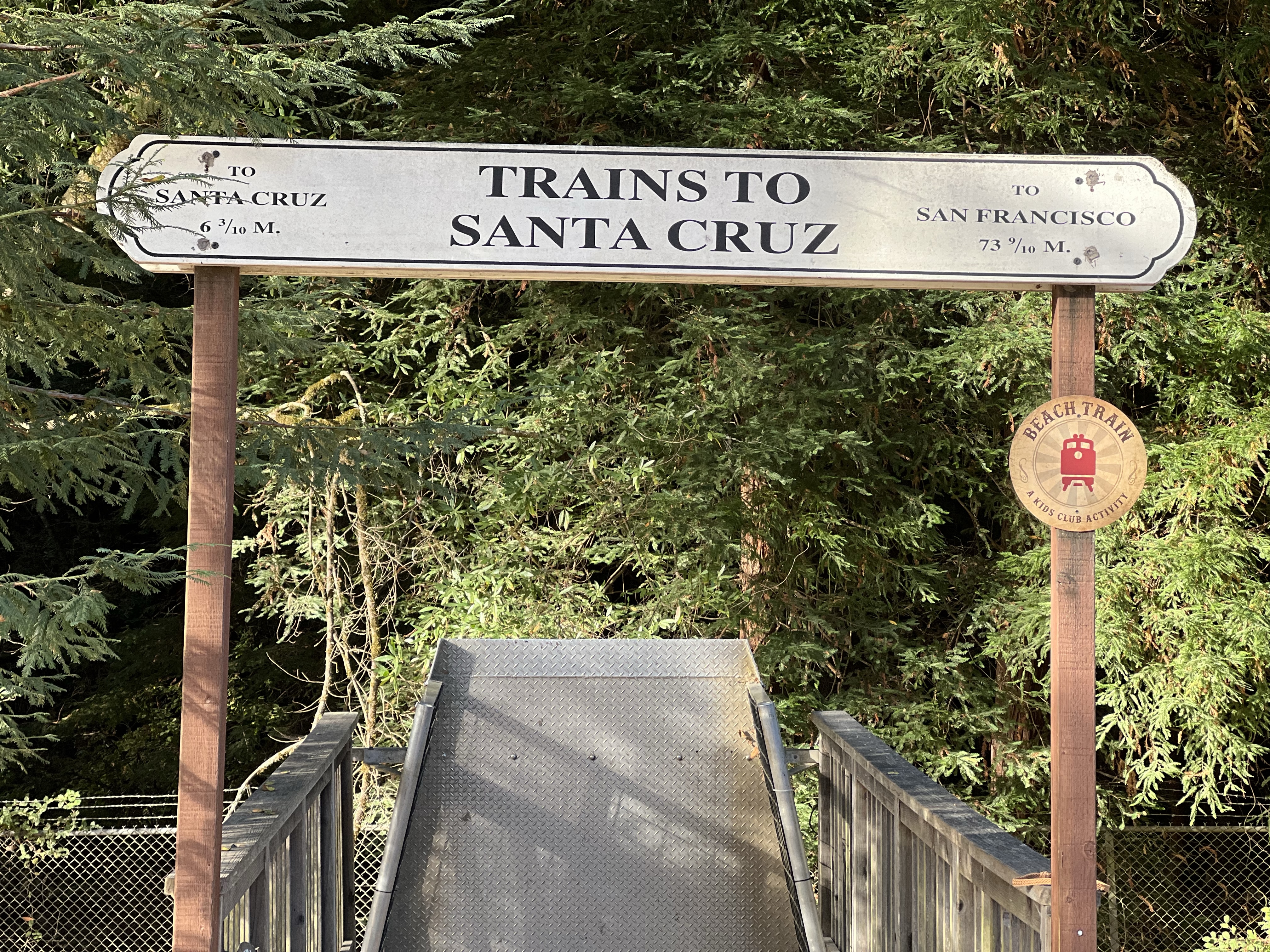
It was a long time ago when you could travel from Santa Cruz over the mountains to San Francisco by train.
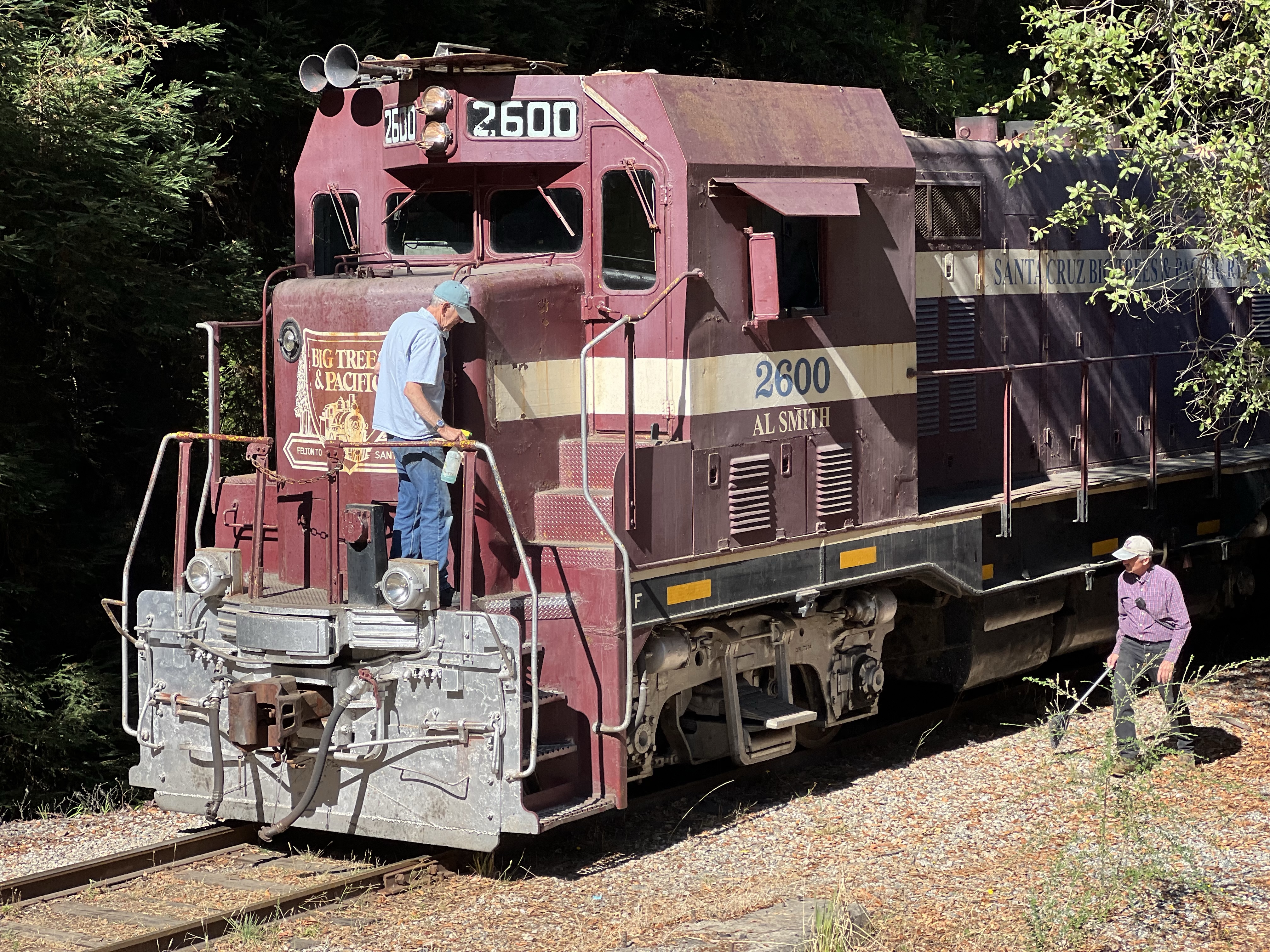
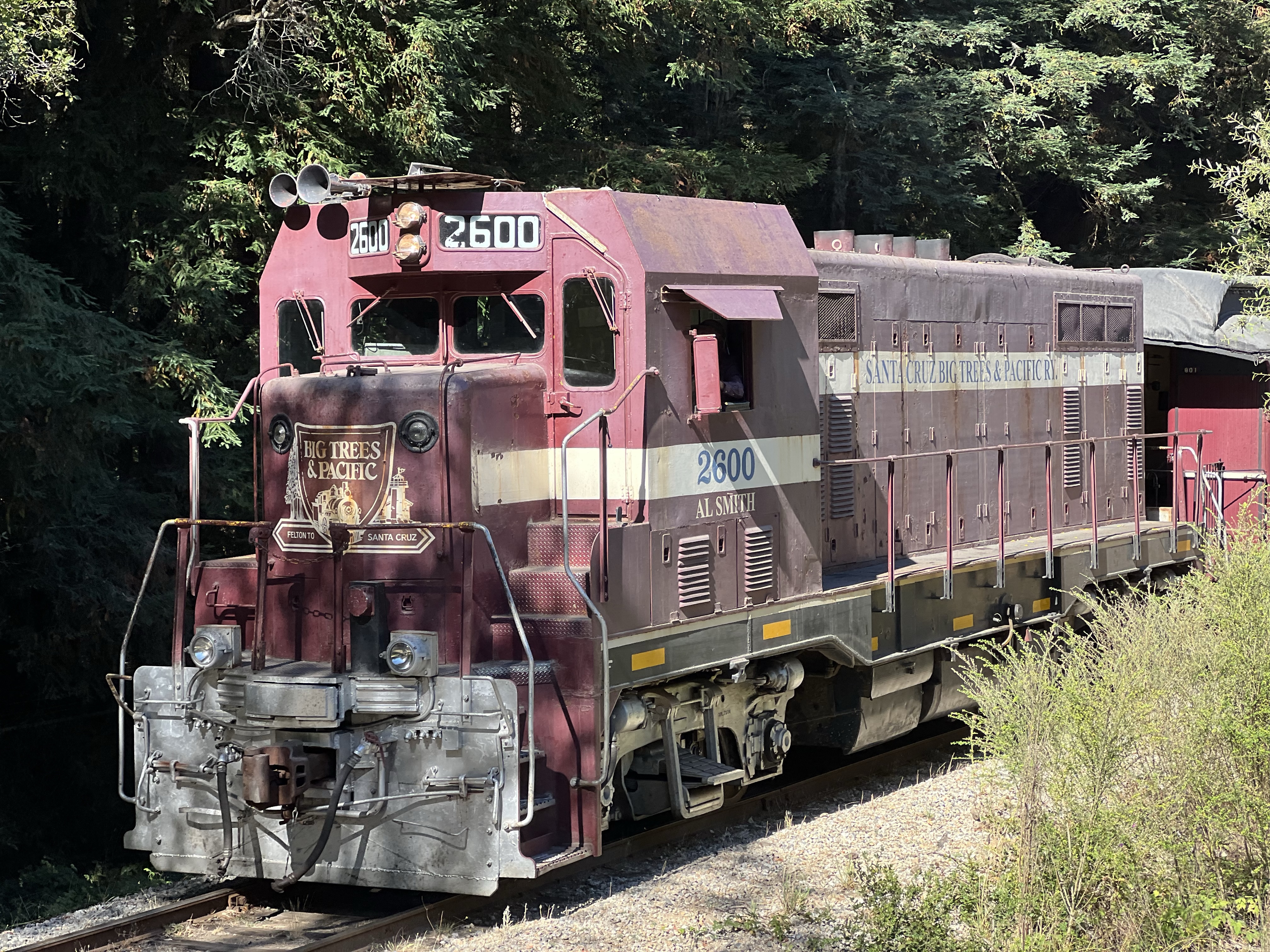
Since the first run, the railroad has purchased two former Atchison, Topeka, & Santa Fe EMD CF-7s and rolling stock from back east. For the first part of the loco’s service they bore the livery of the blue and gold of Santa Fe. They are now painted redwood red.
The crew prepares the EMD CF7 2600 for her eight mile run to Santa Cruz. Gotta keep the windows clean.Locomotive 2600 starting out from Felton on its way to Santa Cruz. The train runs along the boundary of Henry Cowell State Park.
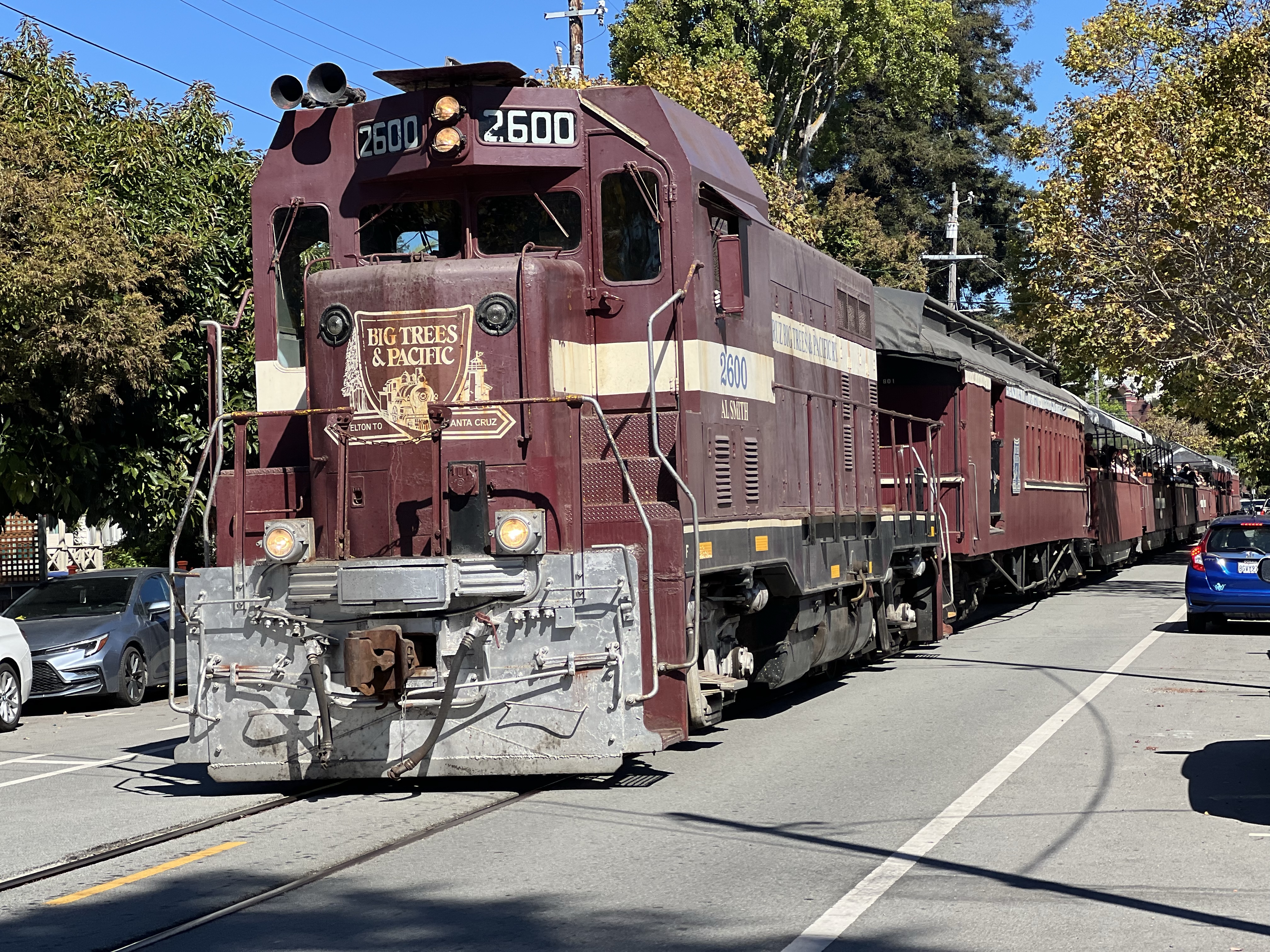
What is unusual on a tourist railroad is the amount of street running the railroad covers in Santa Cruz. Street running is where the trains runs on the same right of way as cars. The trains runs along Chestnut Street and Beach Street.
2600 with a nine car consist running along Chestnut Street. Note the blue car on the far right yielding to the train, good idea!
To really understand something, more than just taking a photograph in a fraction of a second, you should take the time to draw the object you hope to understand.
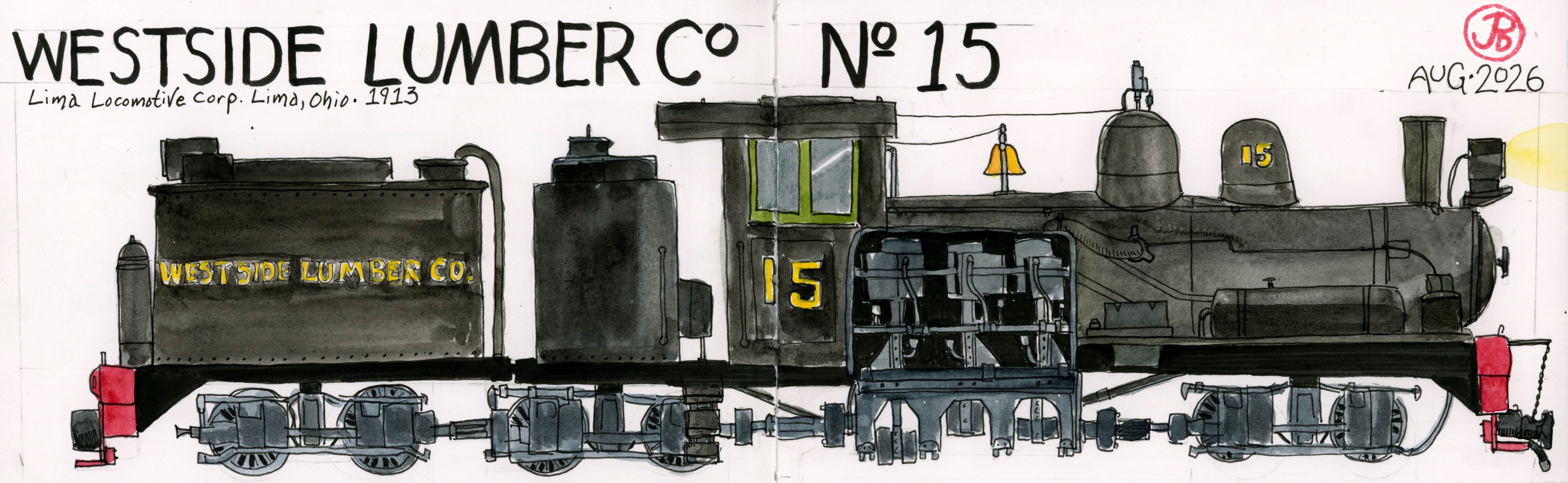
I wanted to understand the design and engineering of a Shay geared locomotive. I knew that at the end of the drawing, I would know a Shay so much better. My subject was the Westside Lumber Company three truck Shay No. 15 (this is a sister to the new Roaring Camp No. 14).
I was copying a picture from one of my favorite books when I was a kid: The Illustrated Encyclopedia of North American Locomotives by Brian Hollingsworth.
This was not a sketch but a drawing and it was very much more involved, meaning I was taking lots of measurements and applying them to my sketchbook, focusing on proportions and details. The drawing was done over a series of evenings. This was the opposite of a loose continuous-line sketch. I liked the process but it was taxing. I was wearing the hat of a draftsman not a sketcher.
My finished drawing.
After drawing a Shay in great detail, I wanted to sketch a real live Shay under steam, in a continuous-line way.
That’s easily done from my Santa Cruz digs by driving 15 minutes up Highway 9 to Roaring Camp & Big Trees Railroads.
I originally wanted to sketch the Shay and Heisler lined up next to each other at the engine shed. At the front gate I learned the difference of asking for permission and asking for forgiveness.
Now it was time for Plan B: sketching the Dixiana at the depot. I had sketched the locomotive from the same perspective before, but this time I wanted to render the scene in a continuous-line sketch. I knew that I would only have about 10 minutes to sketch the scene before the train departed for Bear Mountain.
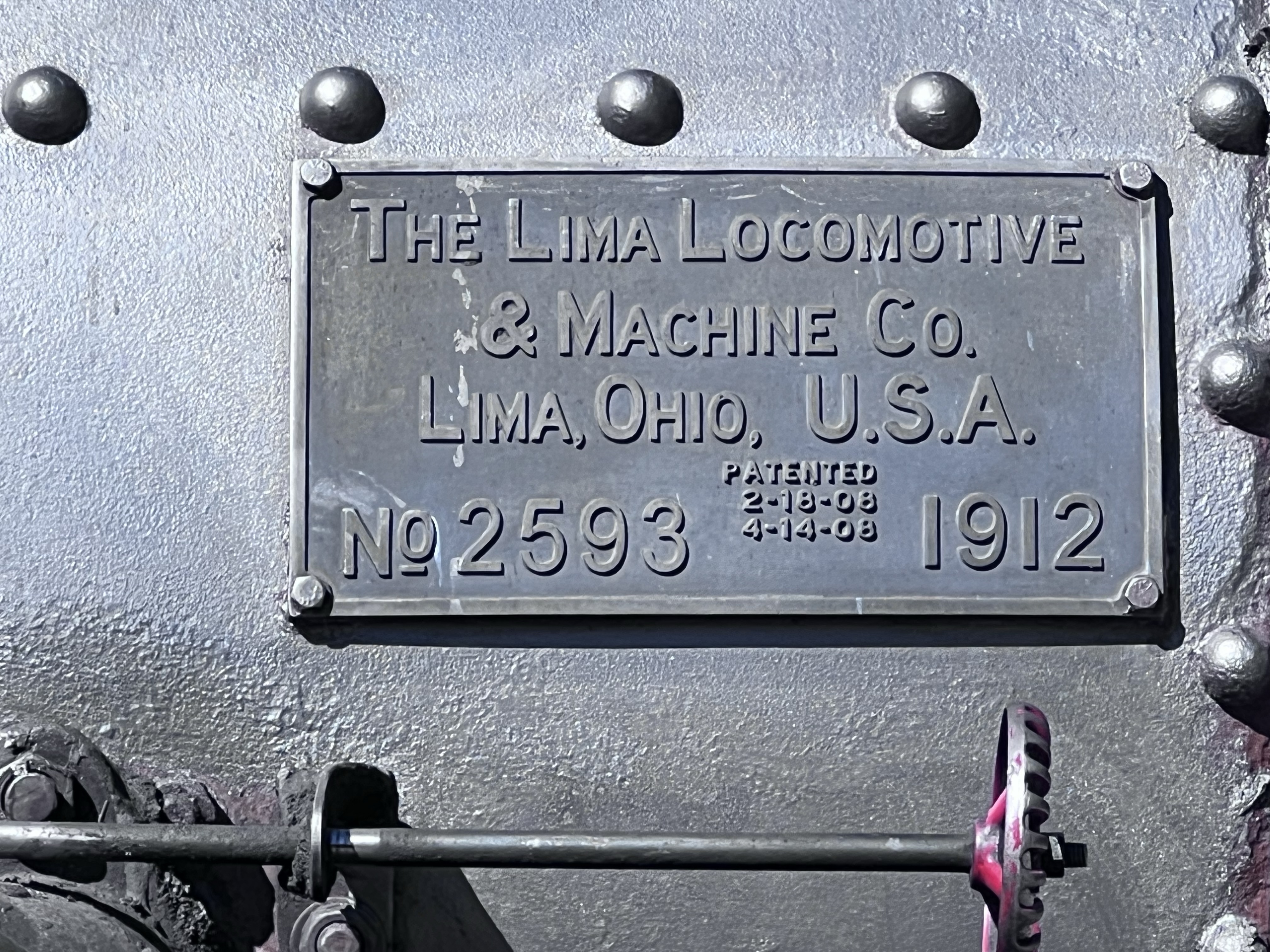
The builder’s plate on No. 1’s boiler.
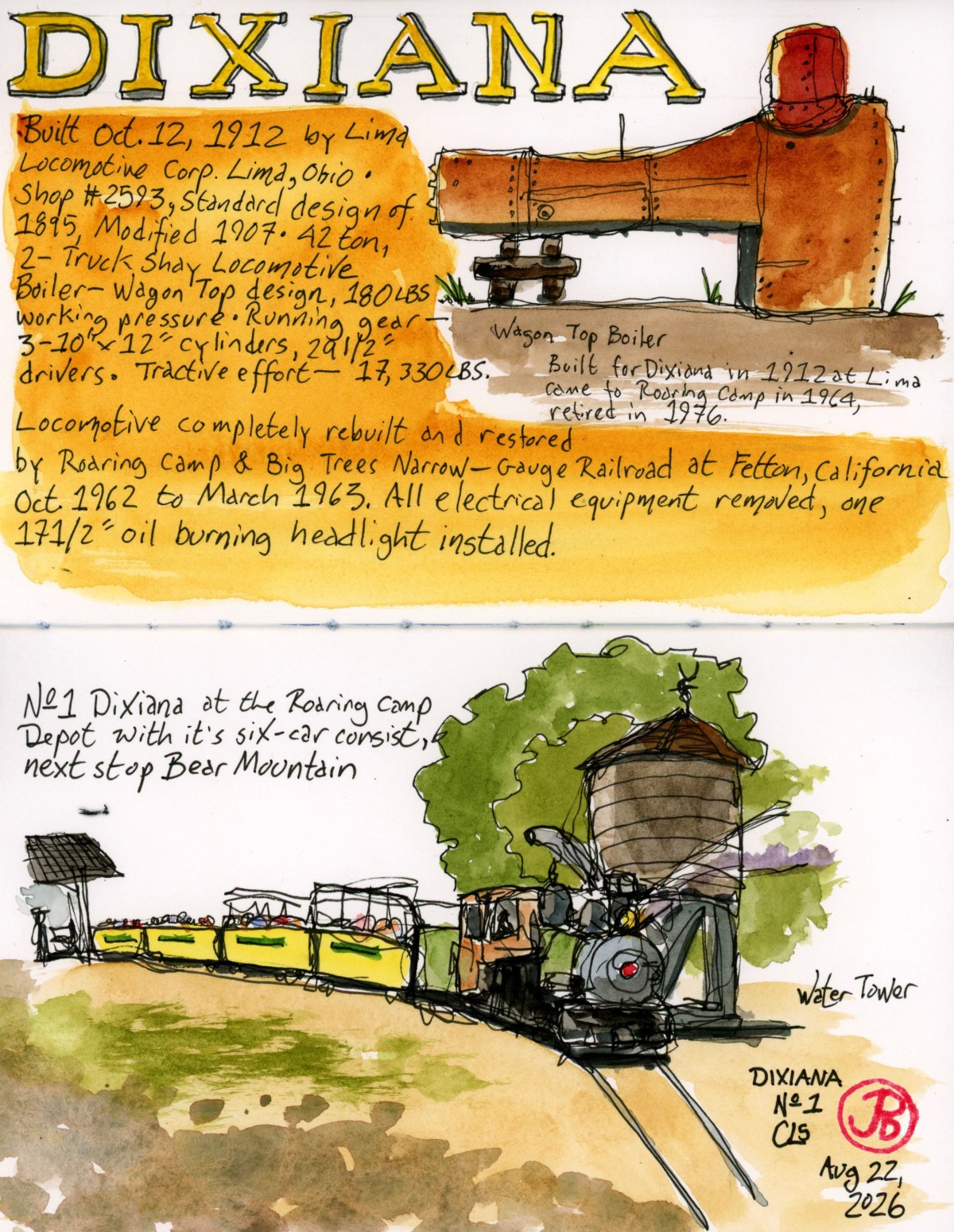
Before the train arrived, I sketched the old rusted wagon top boiler on display in the grounds. It was built by Lima in 1912 and used on the No. 1 until it was retired in 1976.
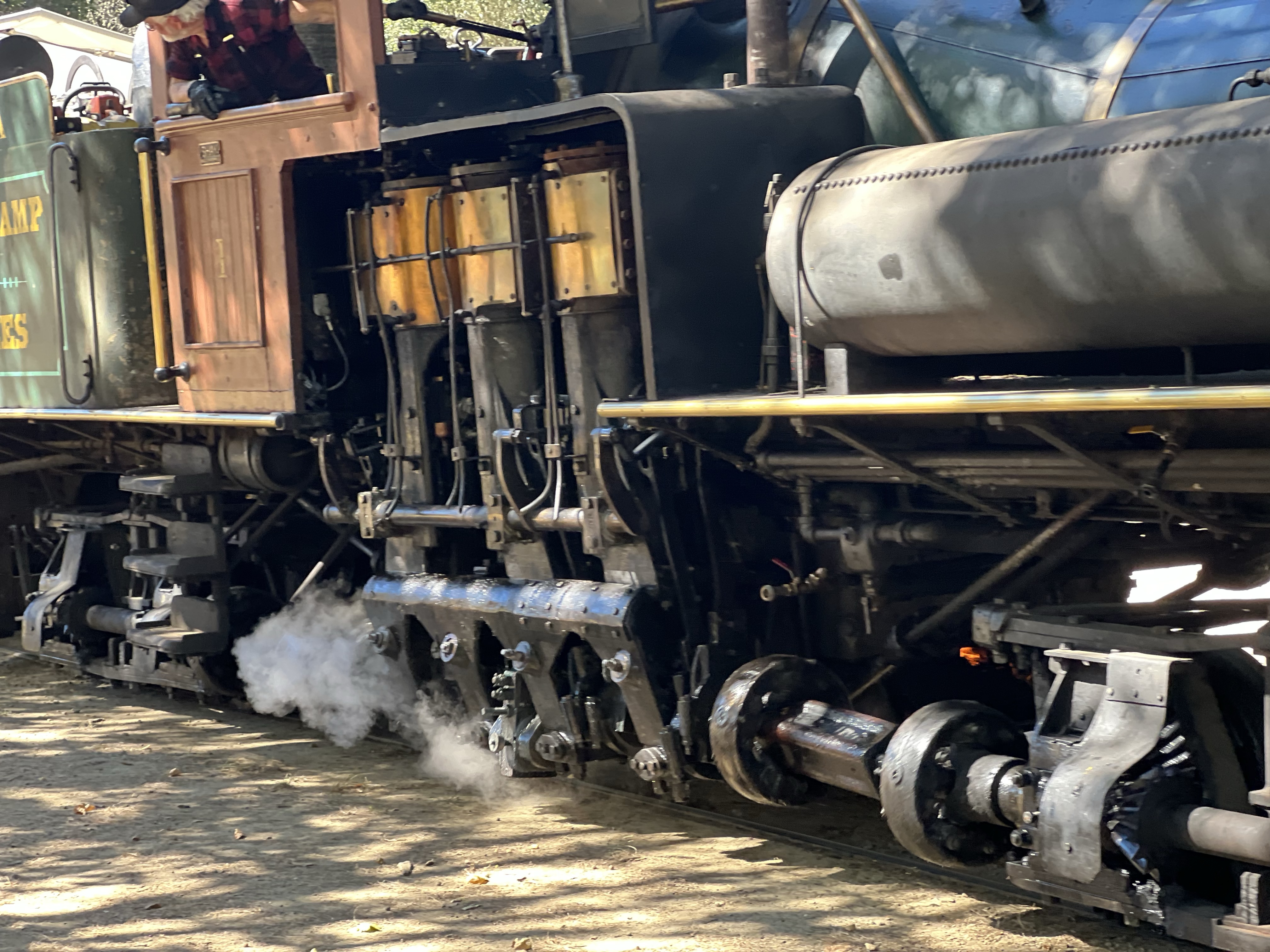
No. 1 passing by on its way to the depot. Here you can see why a Shay is called a geared locomotive.
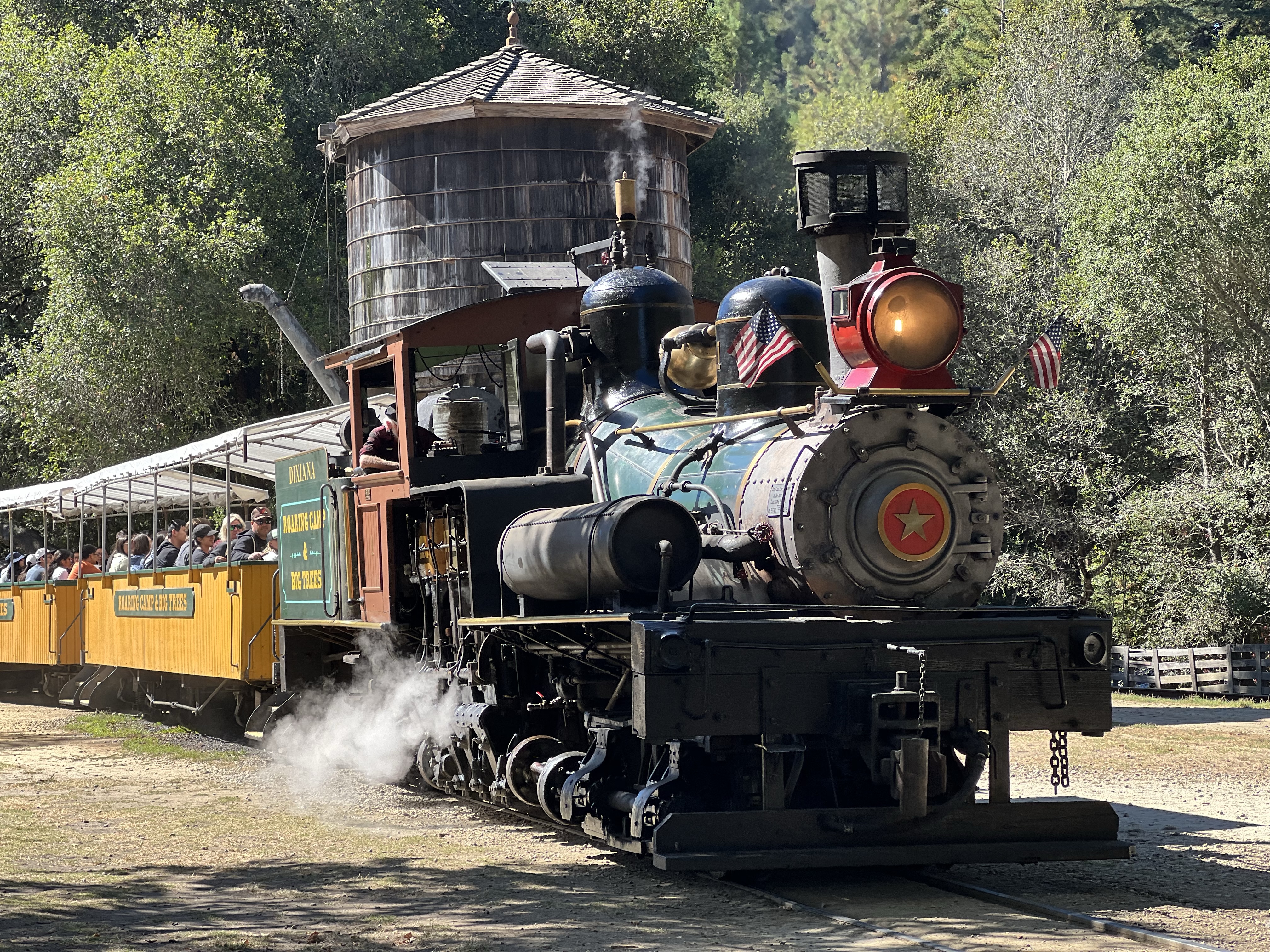
The two truck Shay backed into the depot from the engine house with her six car consist. Now it was time to sketch. The looser the better (featured sketch).
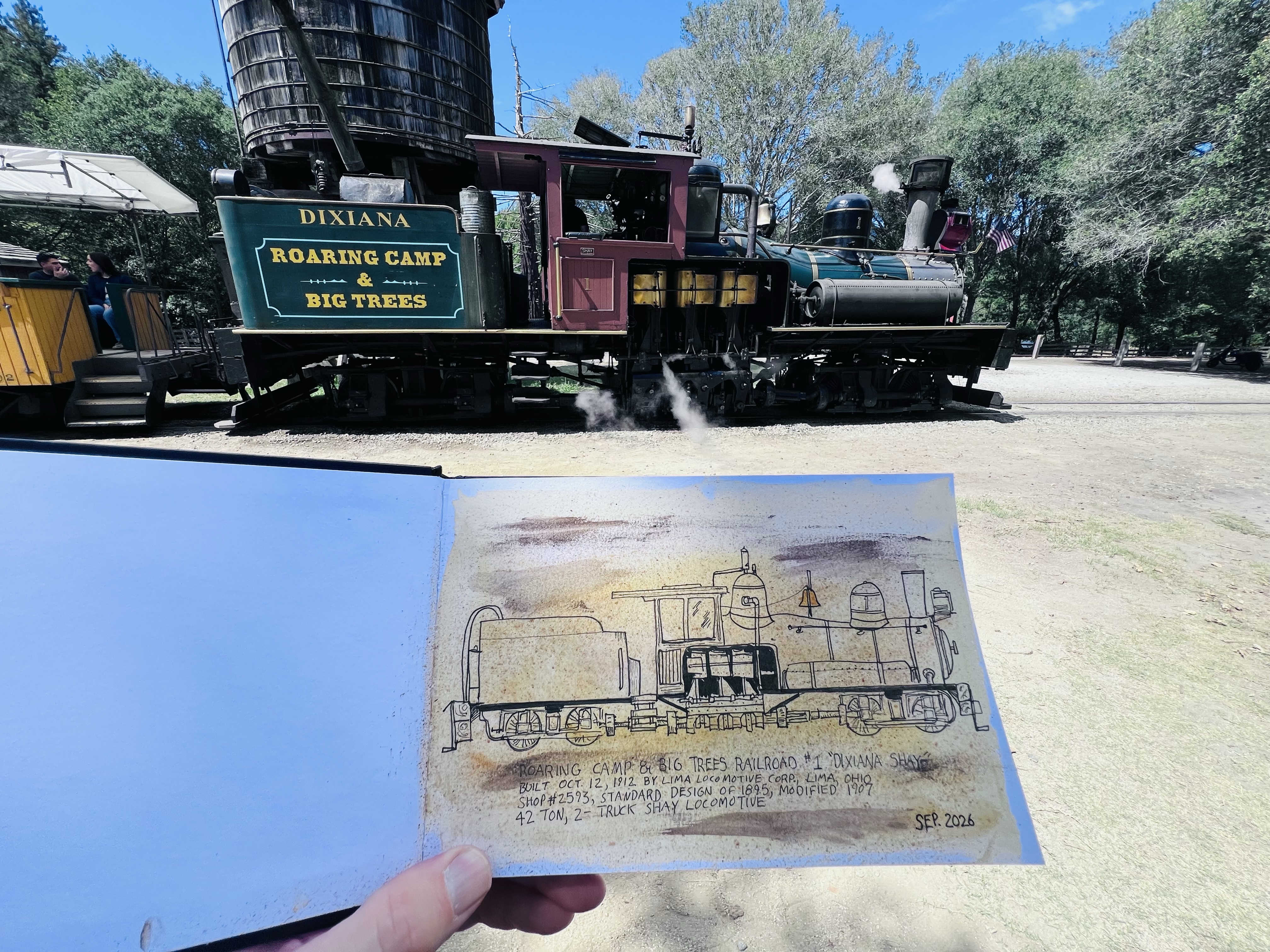
No. 1 Dixiana pulls out from the depot on the way up to Bear Mountain. A sketch of Dixiana on the first page of my new panoramic journal with the real deal in the background.
From my redwood cabin deck I love to hear the steam whistle from the No. 1 Shay “Dixiana” echoing down the San Lorenzo Valley from Roaring Camp and Big Trees Narrow Gauge Railroad in Felton.
I will be hearing a new whistle coming down the valley in the near (or not so near) future.
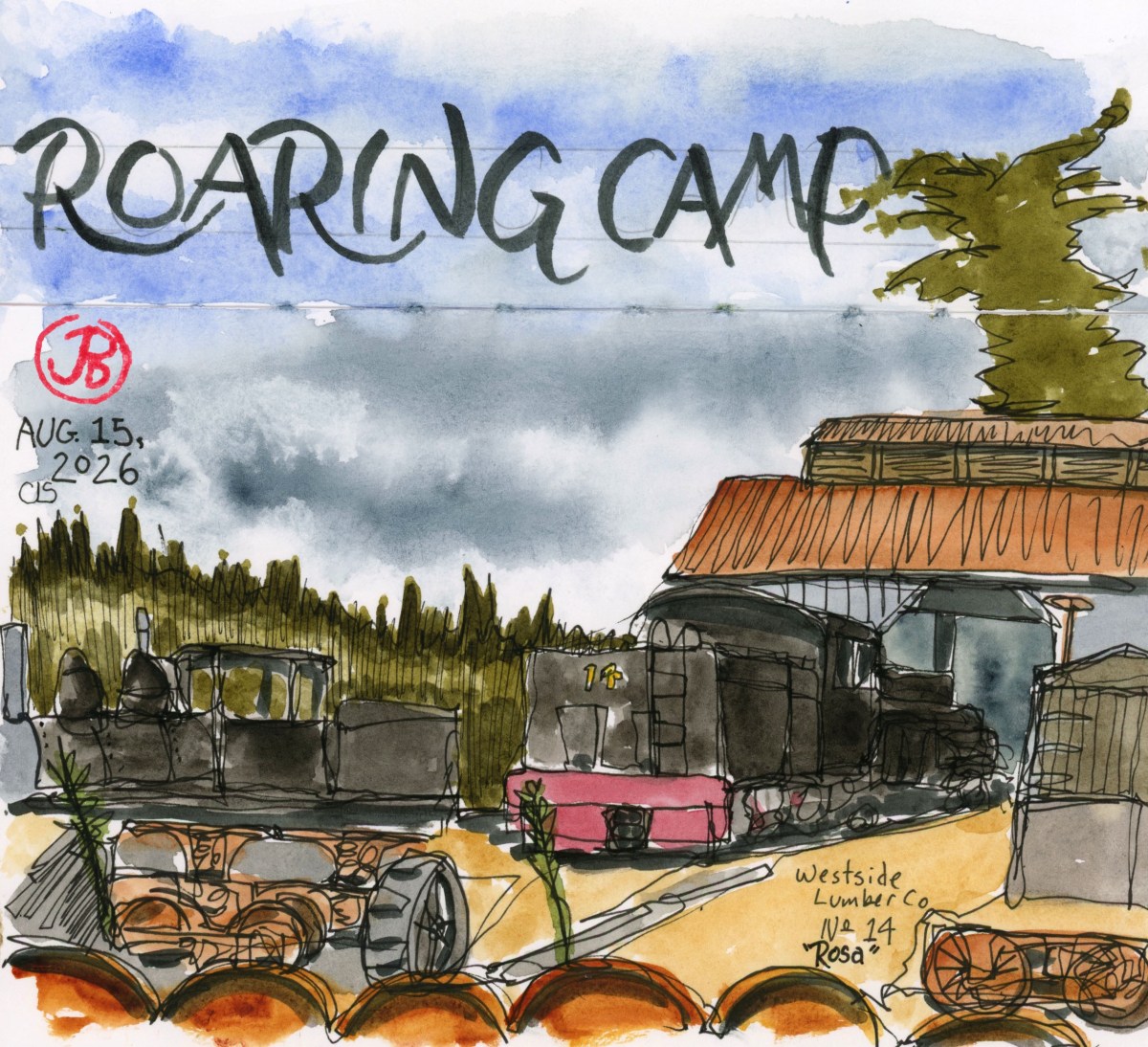
On August 9, 2026, Westside Lumber Co. No. 14 was delivered to Felton.
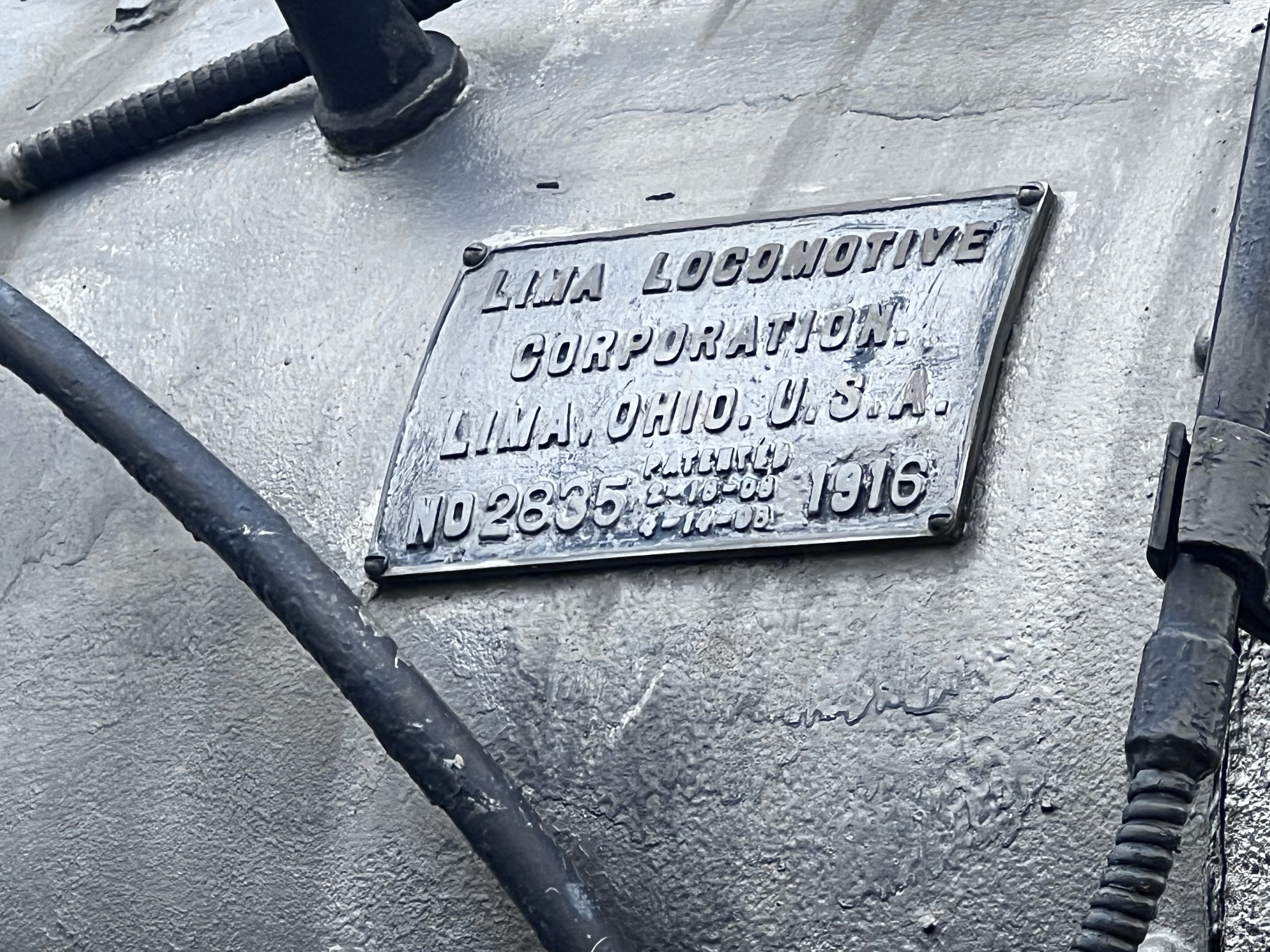
No. 14 is a three tuck Shay built by the Lima Locomotive Works in Lima, Ohio in 1916. Shays are geared locomotives designed to tackle steep grades (up to 9%) on lumber railroads. What they lack in speed they have in power and torque in spades. Between 1880 and 1944, Lima built 2,770 Shays.
No. 14 was originally built for the Sierra Nevada Wood & Lumber Company. In 1937 the company went bankrupt and the Shay made its way to the Westside Lumber Company in 1939. The locomotive was in service there until the mill shut down in 1961.
No. 14 moved around to other museums and railroads before finally making her way to Roaring Camp.
No. 14’s builder’s plate.
On Saturday morning I headed up to Felton to see the 110 year old new kid on the block.
Roaring Camp and Big Trees was founded by Norman Clark in 1962 as a narrow gauge (36 inches) steam tourist railroad.
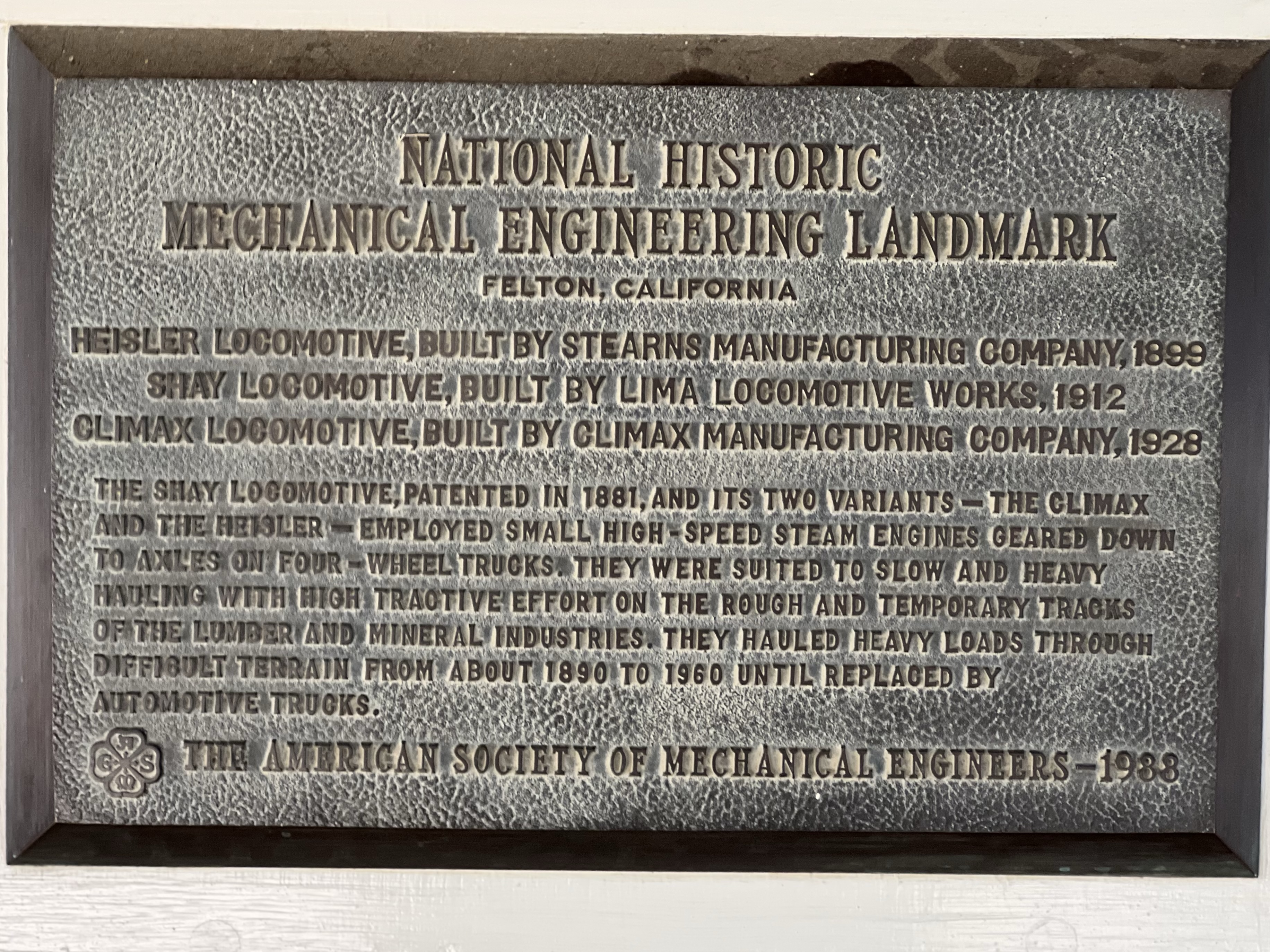
The railroad has such a historic collection of geared steam logging locomotives that the American Society of Mechanical Engineers designated three of the railroad’s locomotives as Historic Mechanical Landmark #134 in 1988.
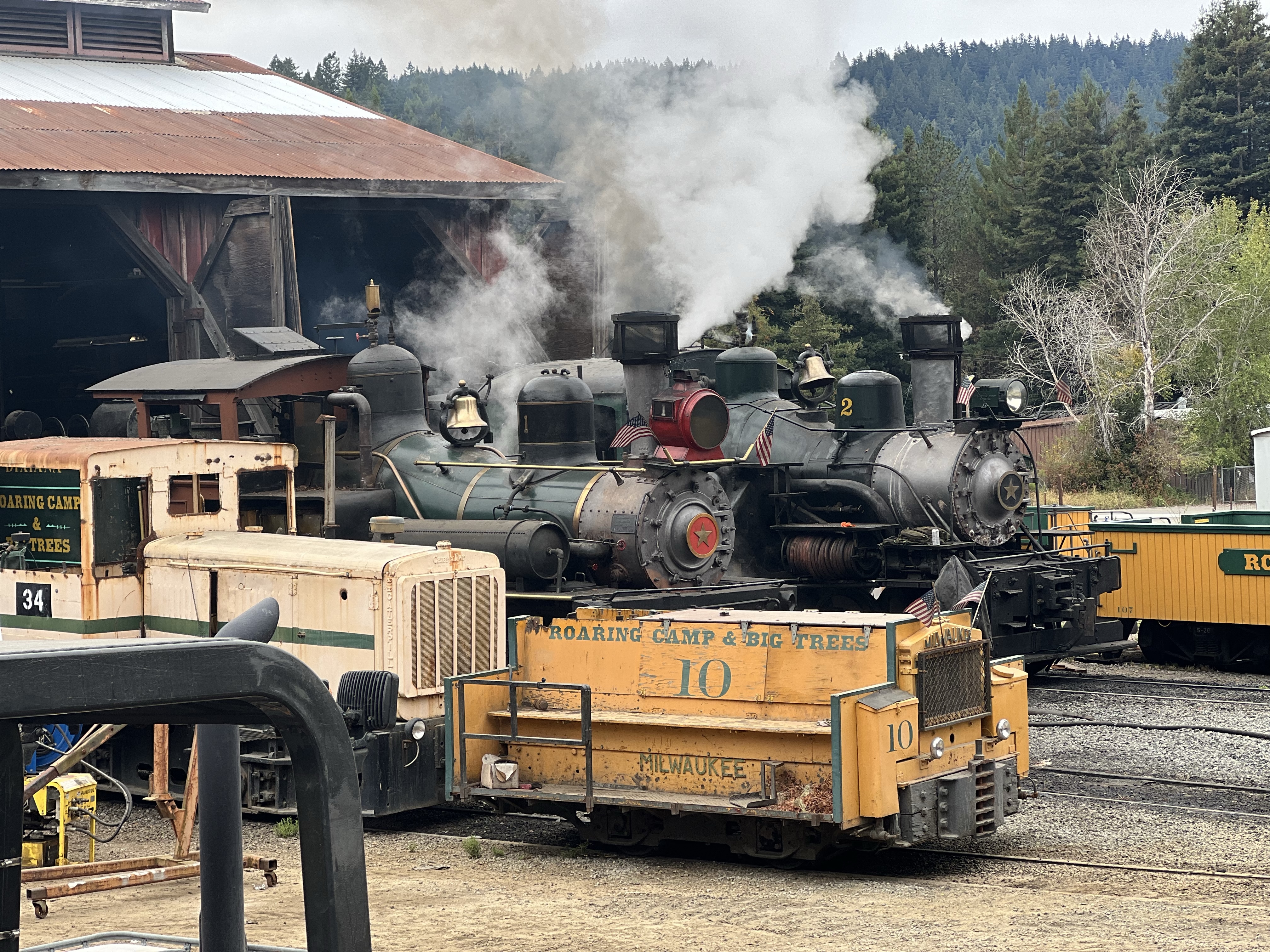
The historic landmark marker on the depot.Two of Roaring Camp’s Mechanical Landmarks: Shay No. 1 “Dixiana” and Heisler No. 2 “Tuolumne” steamed up and getting ready for the day at the locomotive shed.
I walked around the shops and No. 14 was on a track leading into the locomotive shed. I pulled out my sketchbook and started a continuous-line sketch of the newly acquired three truck Shay (featured sketch).
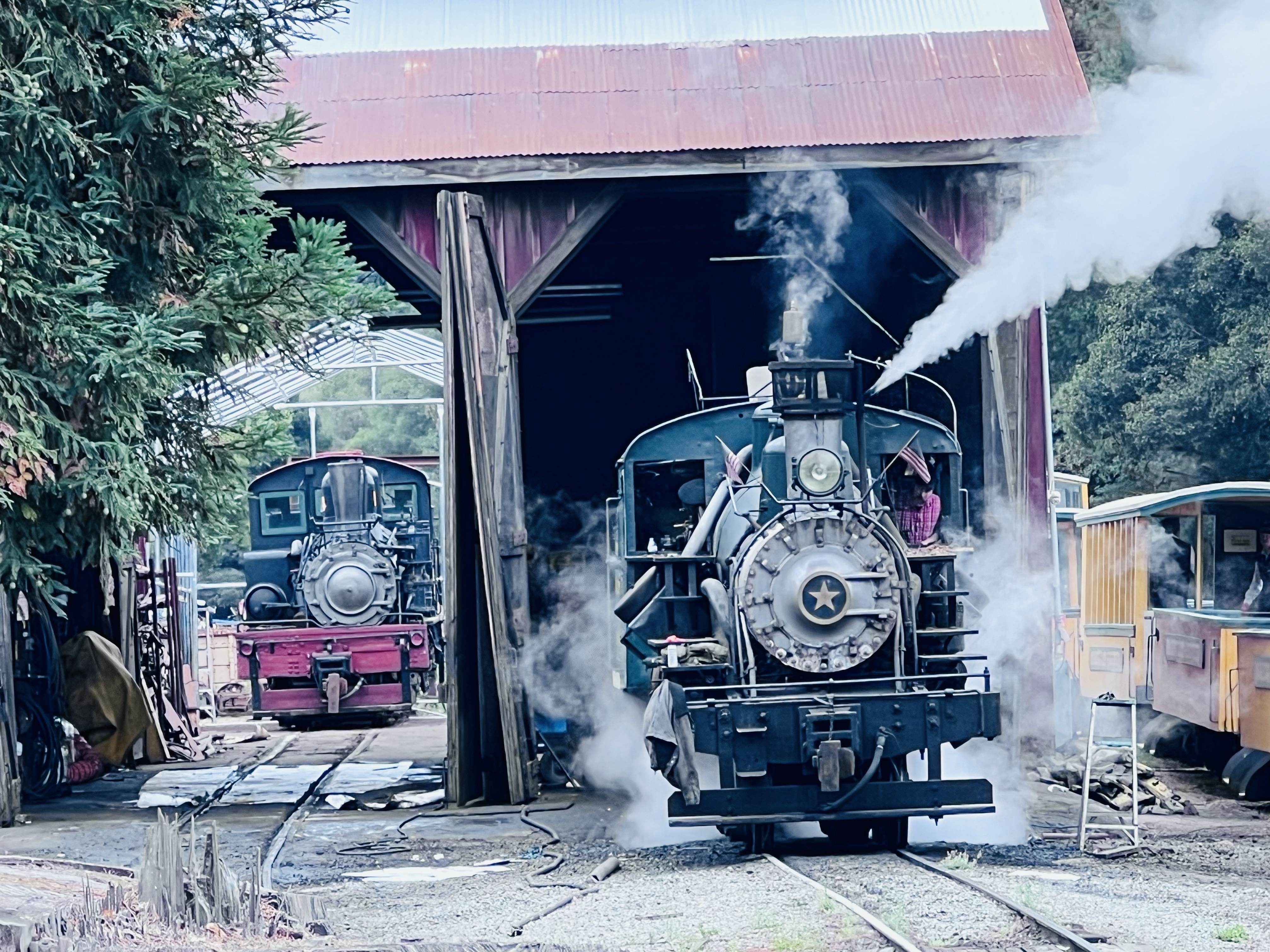
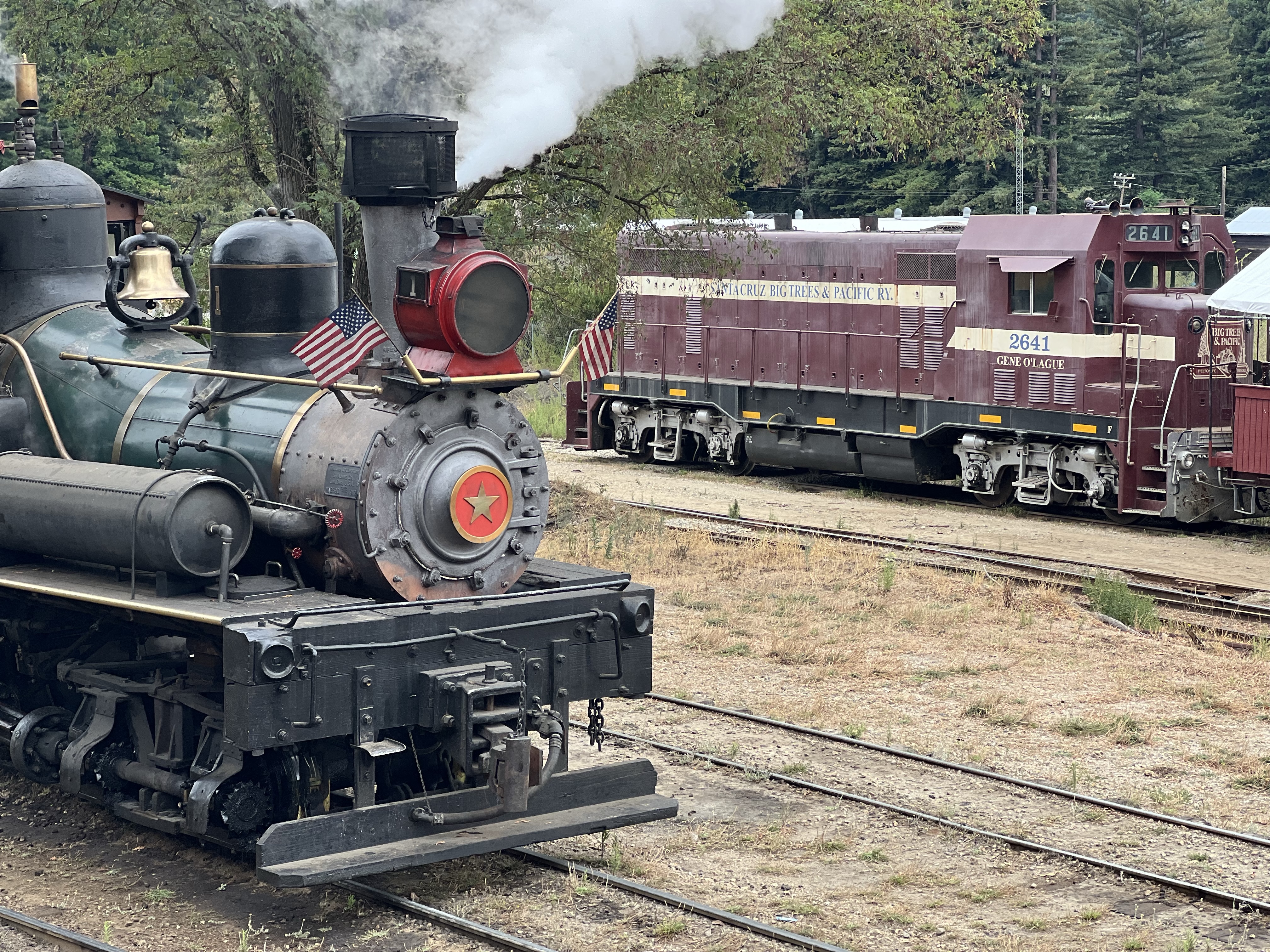
On the right is the No. 2 Heisler under steam waiting to pull out and connect with her five car consist. On the left, No. 14 can be seen through the shed. The locomotive had arrived just six days before.The star of the show and the real workhorse of the railroad. The first Shay of Roaring Camp, No. 1 “Dixiana” coupled with her six car consist. The two railroads in one shot. In the foreground is the steam narrow gauge railroad and in the background is the standard gauge Big Trees & Pacific which runs down to the Santa Cruz Beach Boardwalk, as well as passing right above my cabin.