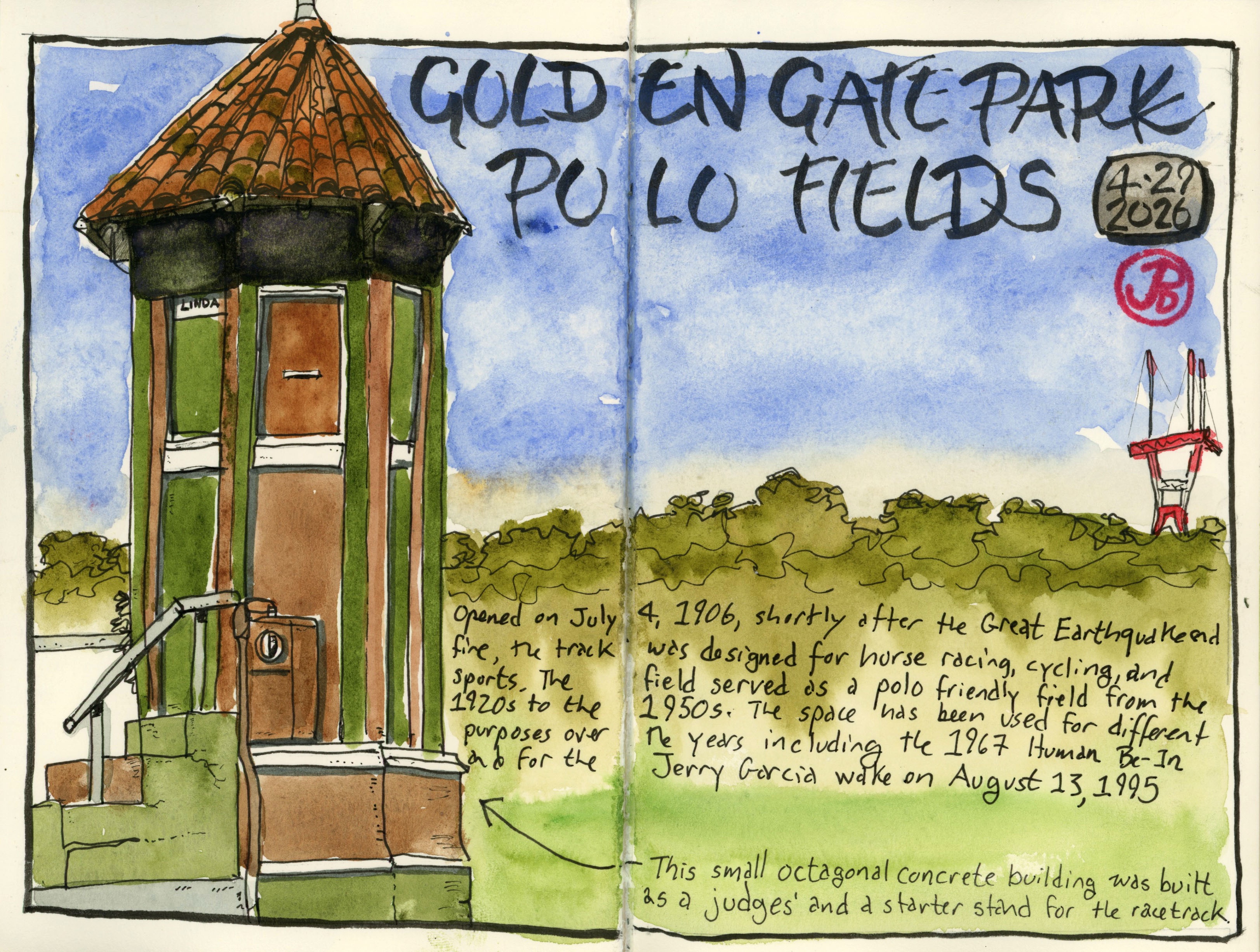
One of my walking routes takes me around the Polo Fields in Golden Gate Park.
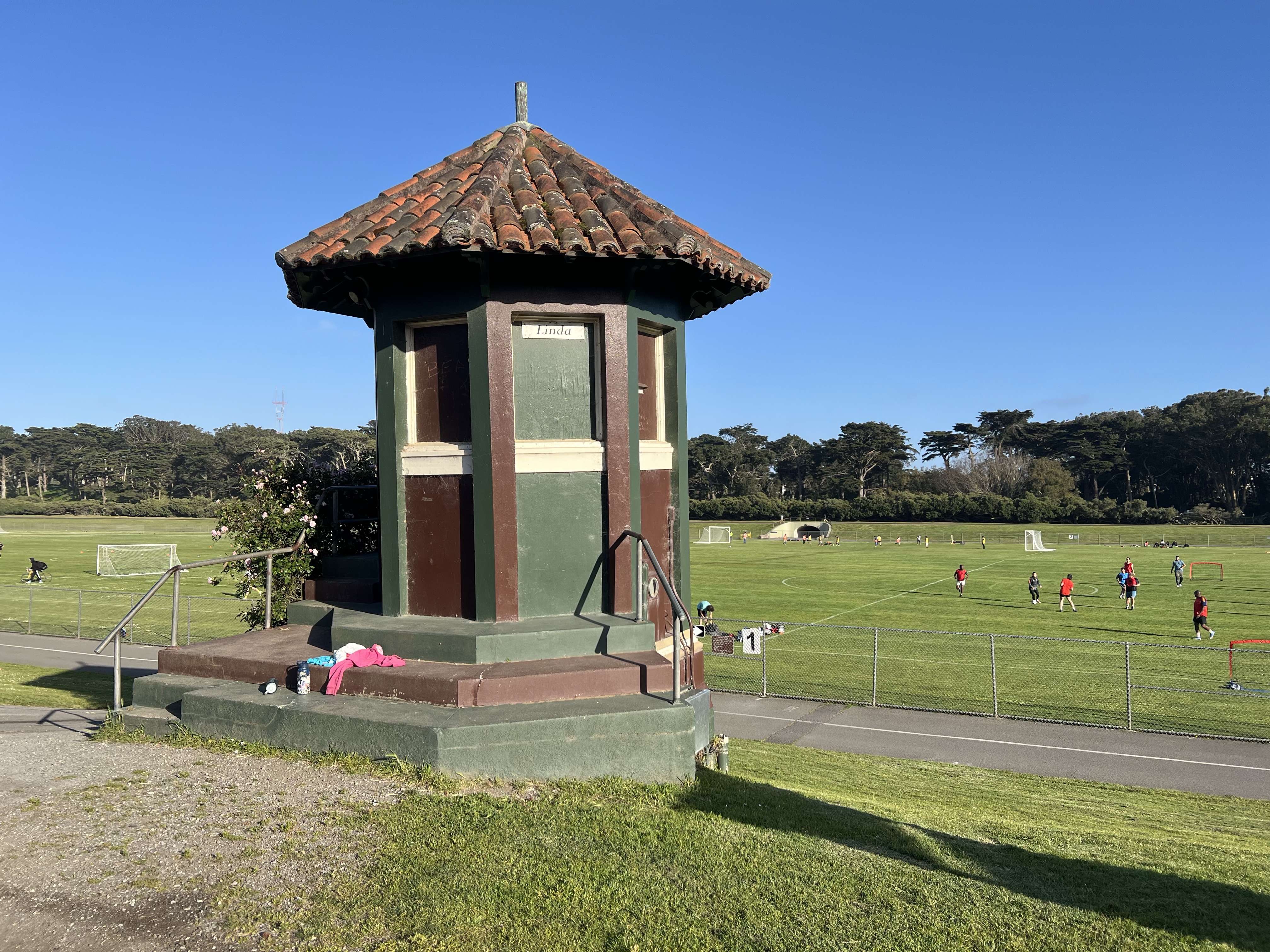
While navigating the dirt walking track I pass a small octagonal brown and green small shack. I’ve always wondered what it was. Was it a concession stand for polo matches or some type of observation platform? Where was the historical marker that explained? It was absent.
The Polo Fields are many used for the Beautiful Game nowadays.
The Polo Fields has served many purposes over the years.
Shortly after the San Francisco 1906 Earthquake and Fire the grounds opened on July 4, 1906. It was originally designed for horse racing, cycling, and other sports. Polo was played here from the 1920s through the 1950s.
The octagonal build was used as a judge’s observation kiosk for races around the track. I’m not sure that this building has been used for many years.
In the 1960s the venue became part of the Summer of Love in 1967 with the Be In Festival.
Jerry Garcia’s wake was held here in August of 1995. Now the Polo Field is used for soccer and ultimate frisbee.
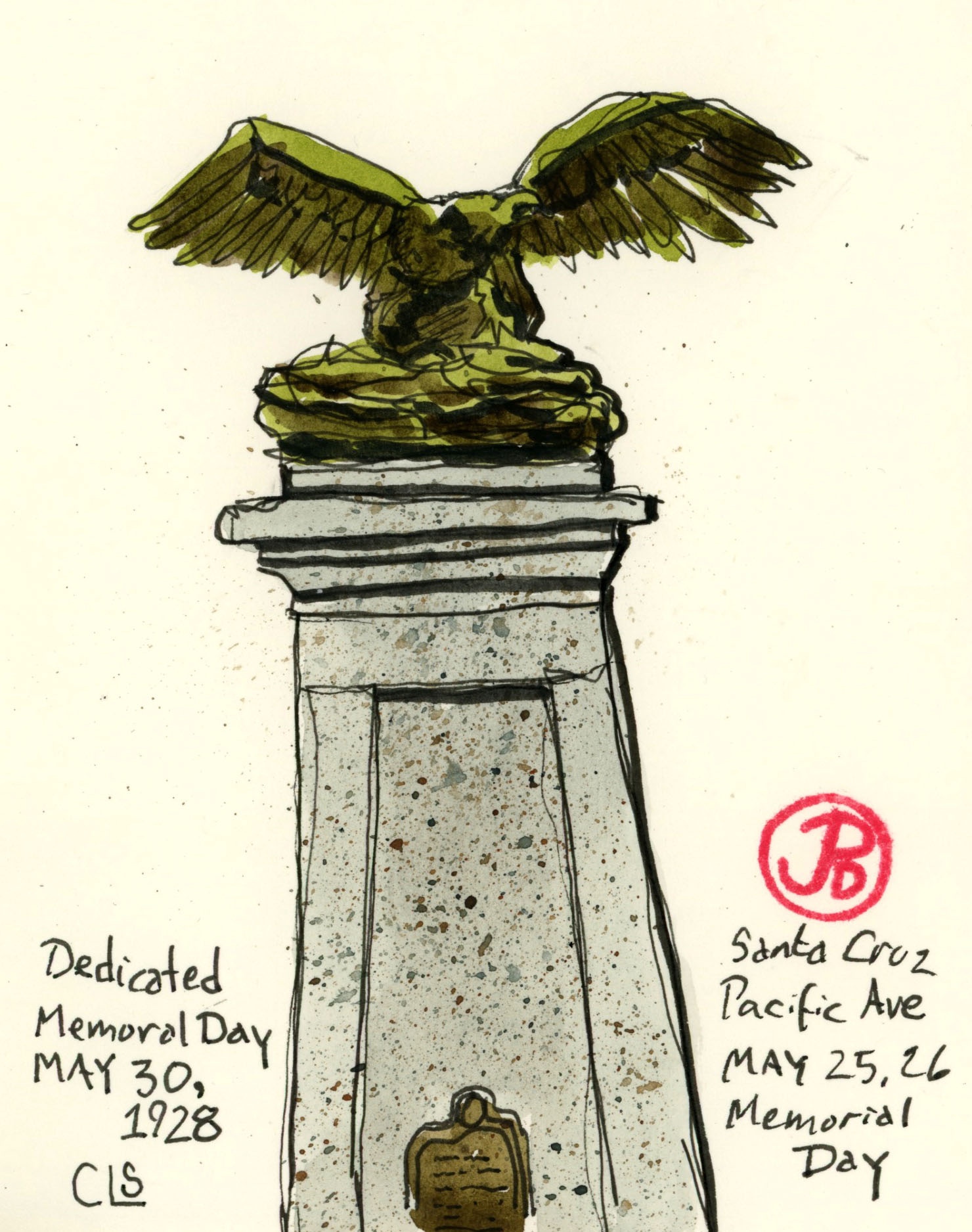
This post is my Memorial Day Continuous-Line Sketch from downtown Santa Cruz.
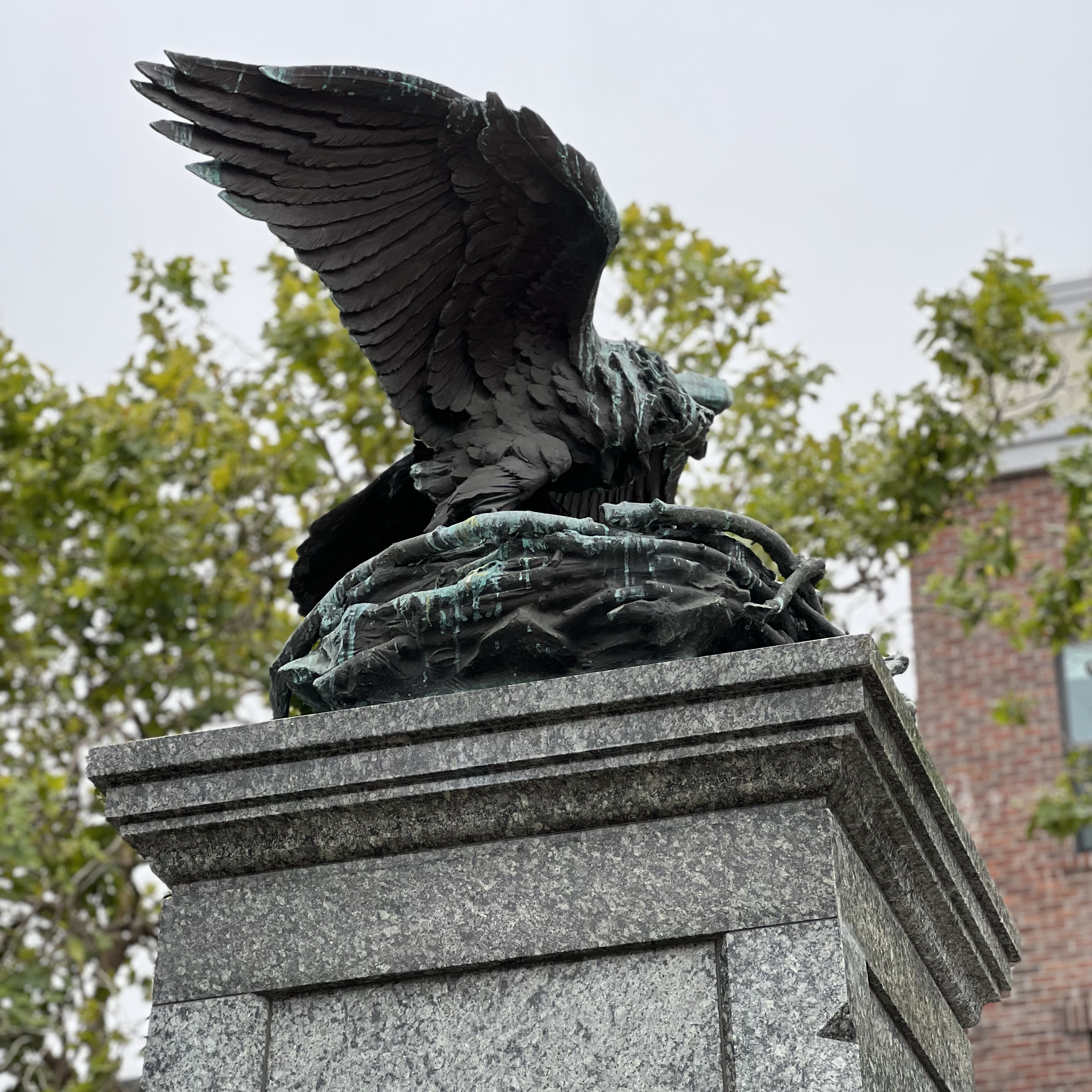
The World War I monument was dedicated on Memorial Day 1928. This monument of an eagle on a nest is at the start of Pacific Avenue near the Veterans Memorial Building.
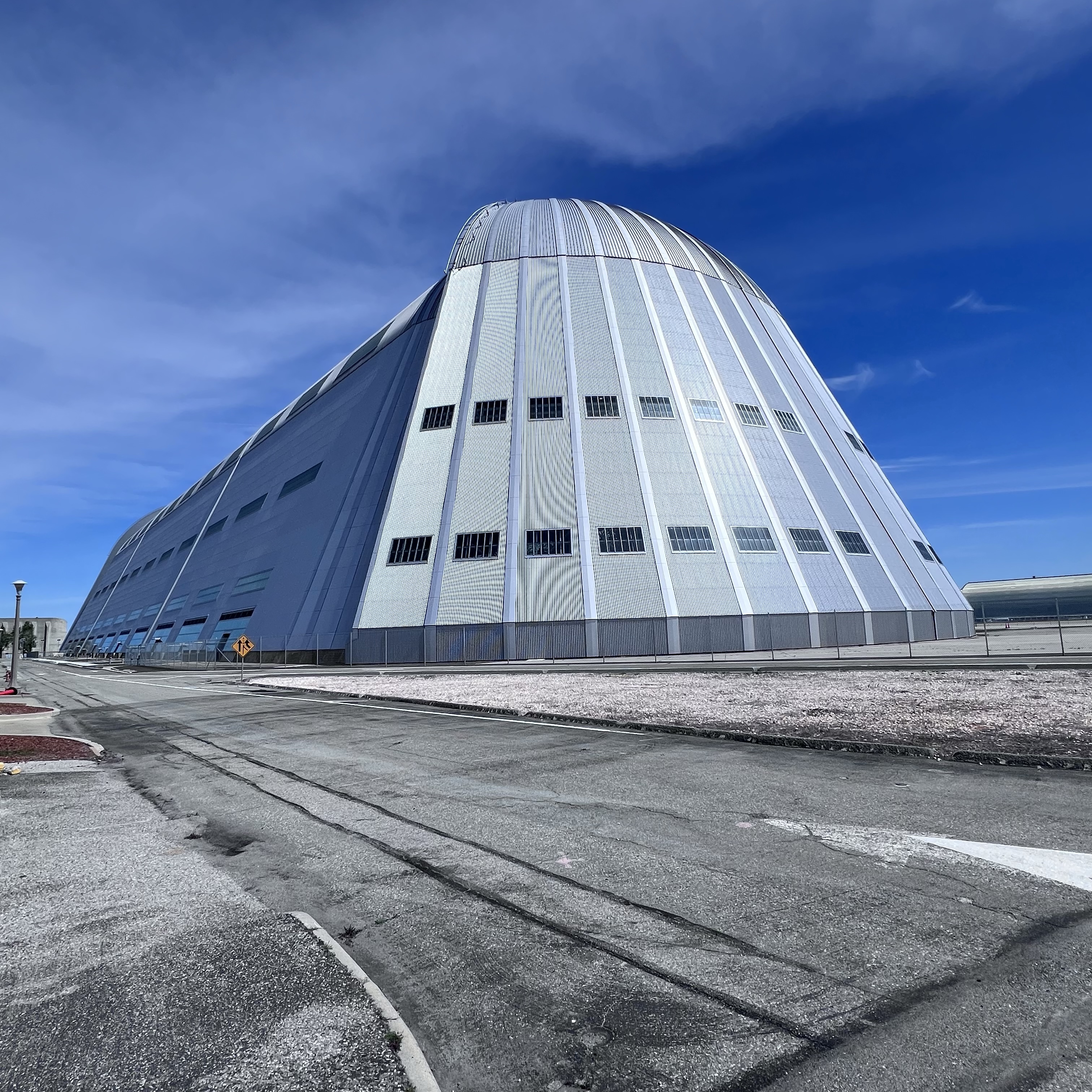
The last time I sketched Hanger 1 at Moffett Field near Sunnyvale, the side panels had been removed leaving the skeletal supports. The massive hangar was in the process of being restored.
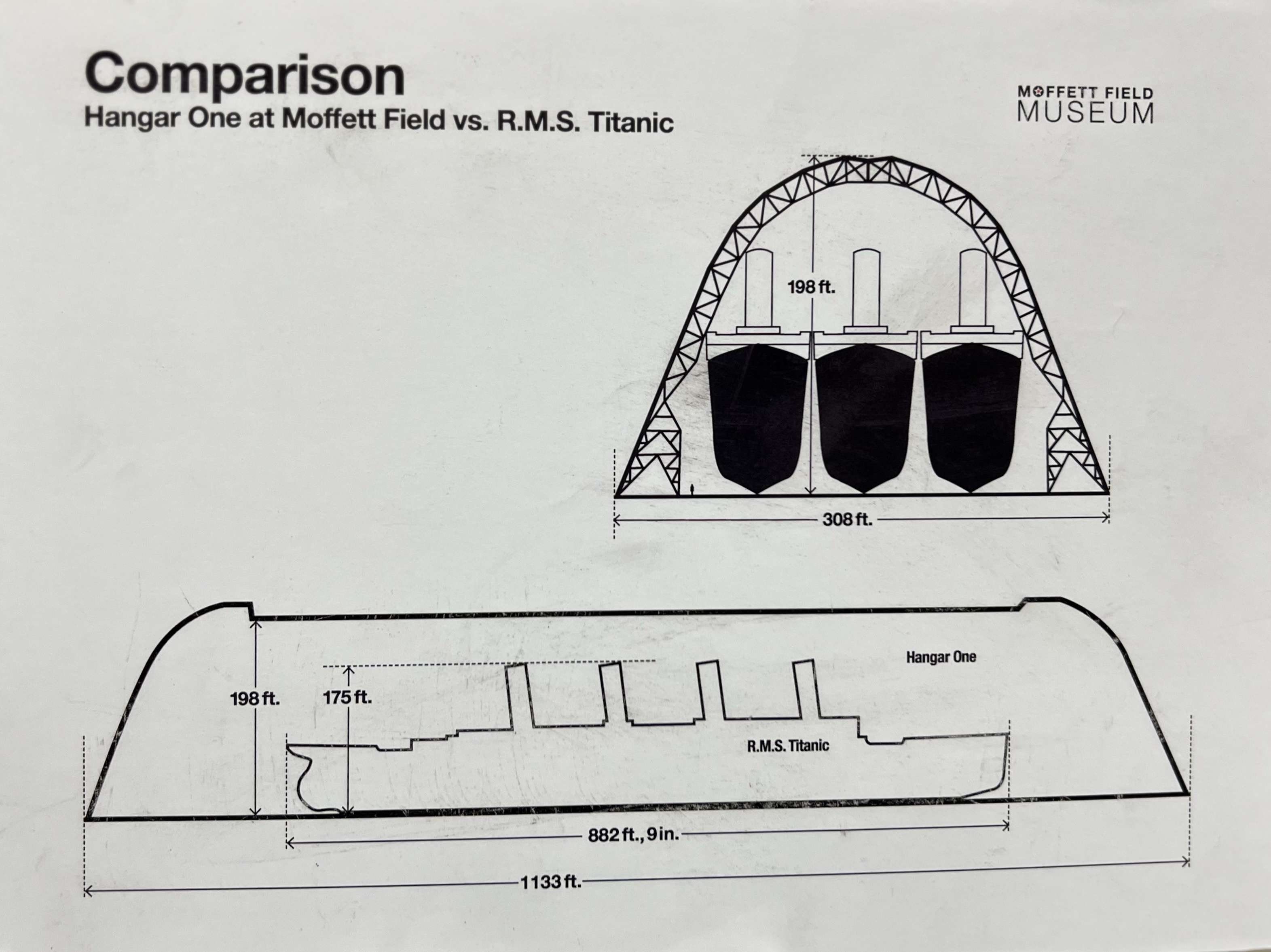
The hangar was built in 1933 to house the dirigible USS Macon. It covers eight acres of floor space. It is one of the largest freestanding structures in the world.
The hangar size comparison with the RMS Titanic at the Moffett Field Museum.
After Moffett was decommissioned as a Naval Airbase, the hangar sat unused. Eventually Google agreed to restore the hanger to the tune of $33 million. This would be my first time sketching the hanger reborn.
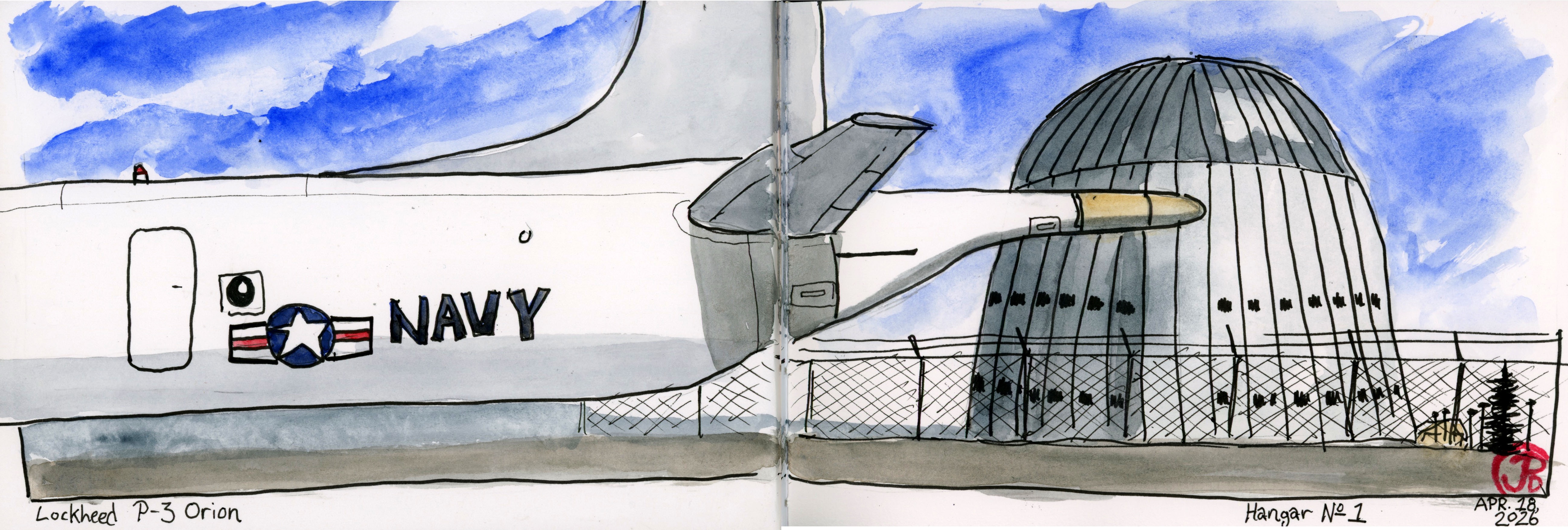
To enter the former Naval base you have to show an id at the front gate. This morning it was manned by four policemen. I was a little early for the opening of the Moffett Field Museum but I figured I would get a sketch in of Hangar 1 with the P-3 Orion in the foreground.
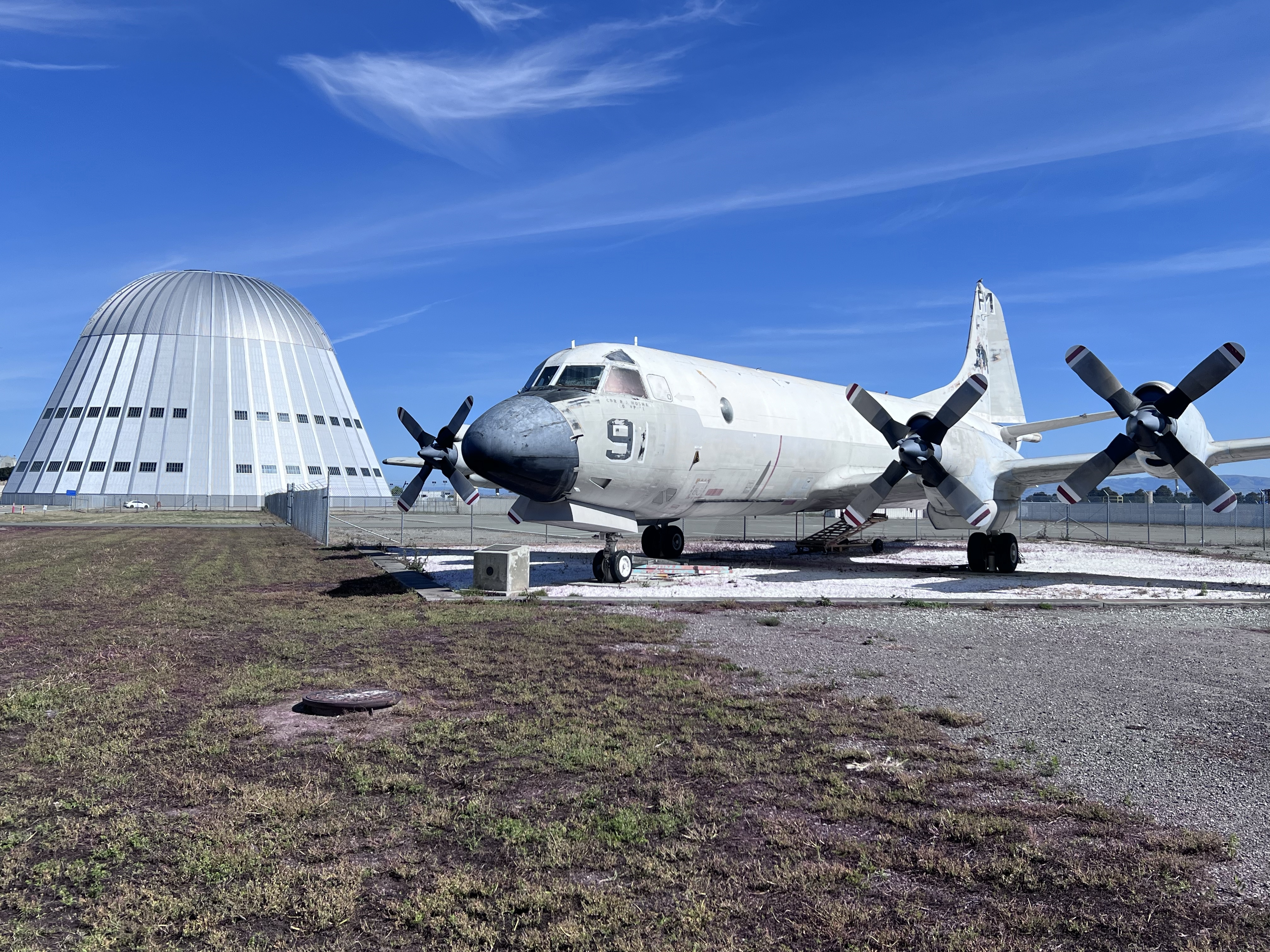
The newly restored Hangar 1 and the aircraft of my youth: the P-3 Orion.
I picked a spot in the shade and set up my sketching chair. I planned to sketch and paint the scene before me.
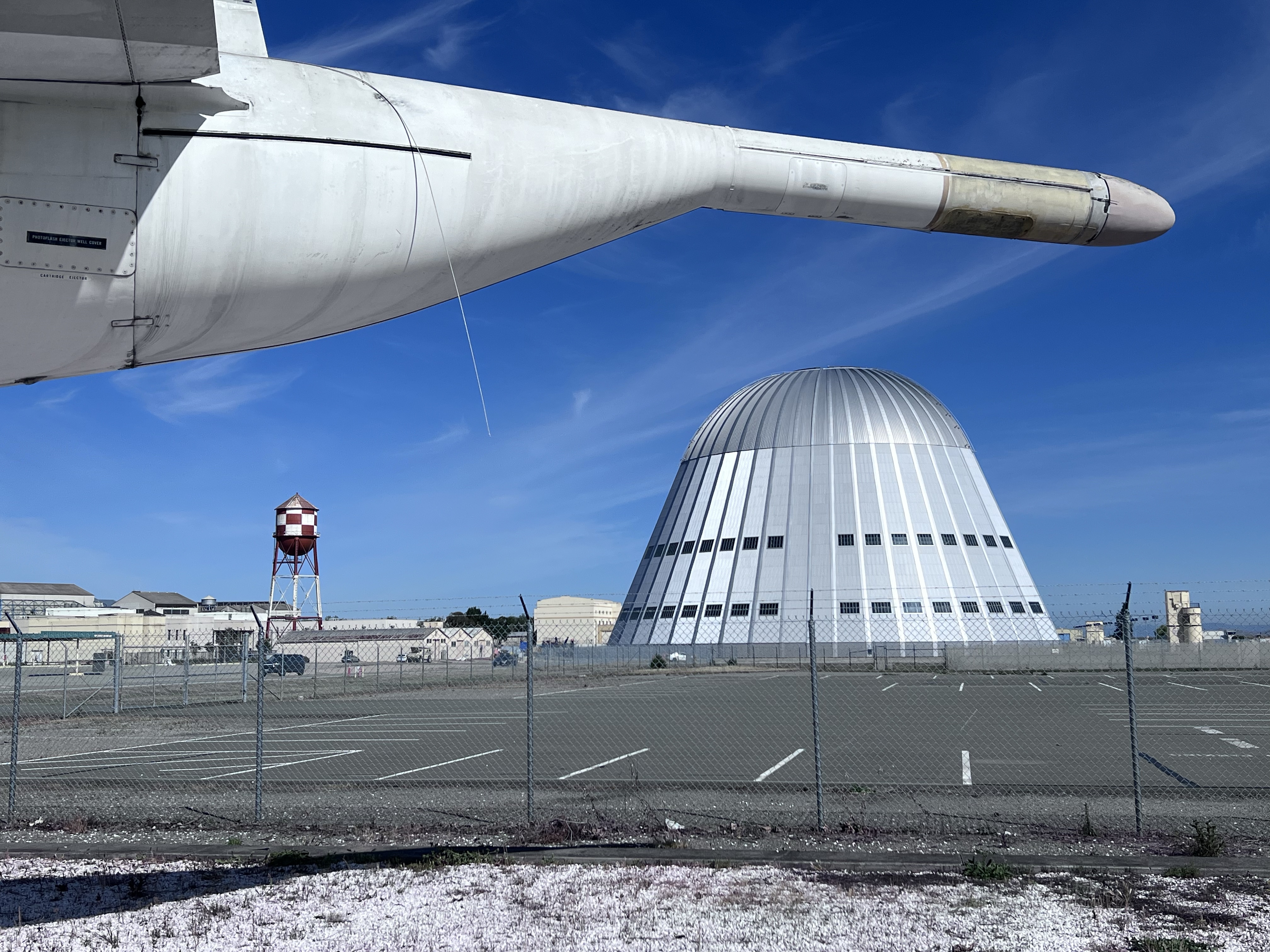
Hanger 1 and the distinctive MAD boom or stinger tail of the P-3A.
For this sketch I first penciled in the shapes in my panoramic sketchbook and then laid in washes. When the washes dried, I tied the scene together with pen work.
Around this time I noticed some movement behind me over my right shoulder. I turned to see a young police officer approaching me.
Oh no, here we go!
He asked me what I was doing and I told him that I was drawing the refurbished hangar and the P-3. He said he saw me photographing the airplane and (in his head), I might be photographing classified equipment on a military plane (that wasn’t there) on the tarmac.
The young officer was soon joined by three other squad cars. This was clearly the most exciting thing that has happened all week!
At this point a more senior officer took over the questioning. Perhaps to see if I had any dangerous weapons about me like a mechanical pencil or a soft eraser.
I told him that I was drawing the hangar and the Orion (at which point he complemented my work) and that I grew up in Sunnyvale and the P-3 was the plane that flew past my bedroom window. With this explanation and the evidence of my field sketch, I think he realized I was not a threat to National Security and perhaps his young officer had overreacted a bit.
The officers retreated to their vehicles and talked shop as if they were reluctant to leave me to my sketch. They eventually left, I finish my sketch, and then headed over to the museum.
This is one massive building. The structure is so large it generates its own weather system inside usually in the form of fog.
When I visited the museum I related my encounter with the police to a docent who was retired Navy and was also very opinionated. He said their behavior was chicken sh*t and that was one reason he left the Navy.
I talked to another docent at the museum about what Google planned to do with the new and improved hangar and no one seems to know. Mysterious.
After work I headed to do a San Francisco neighborhood to sketch a portal to the past.
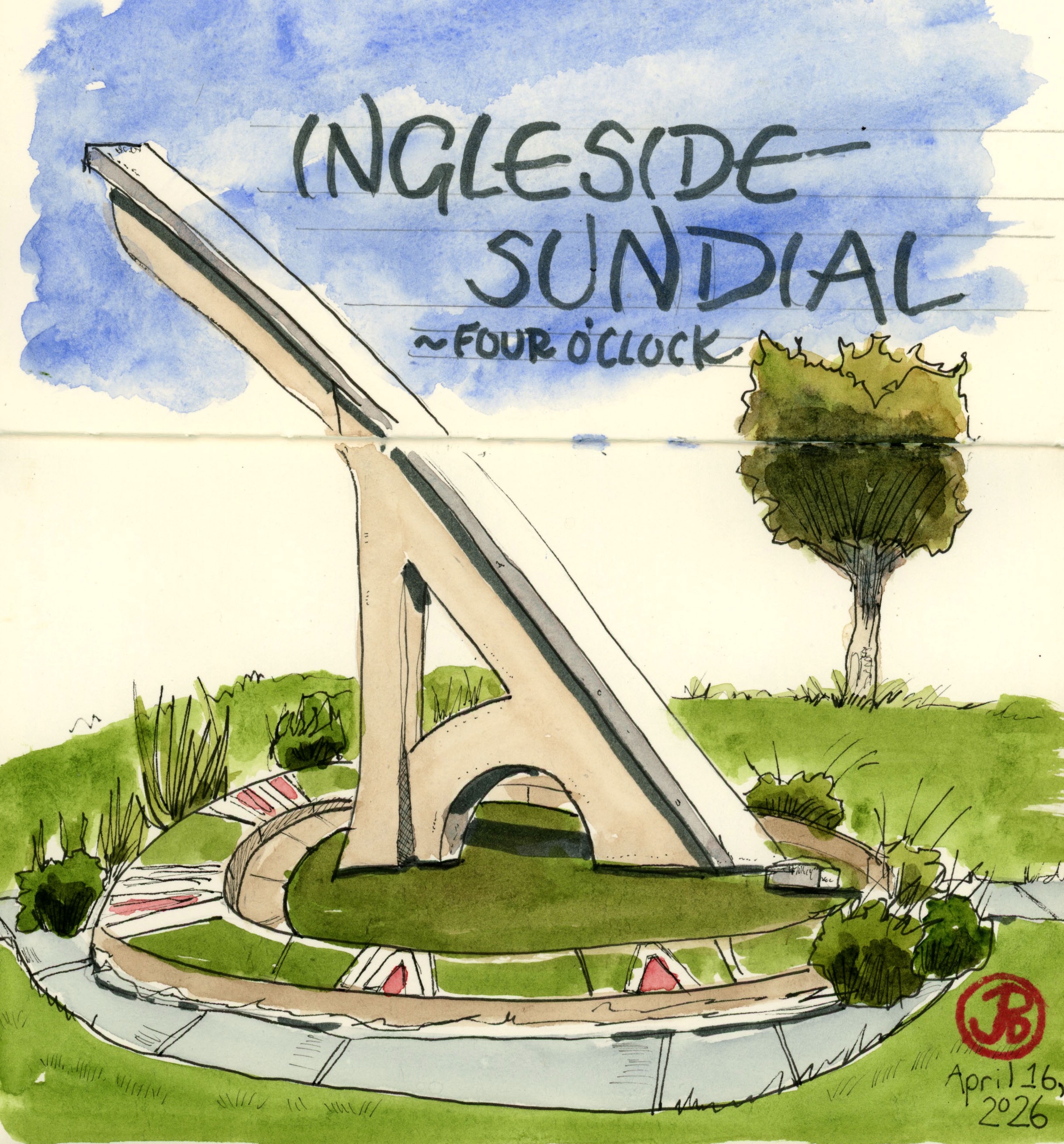
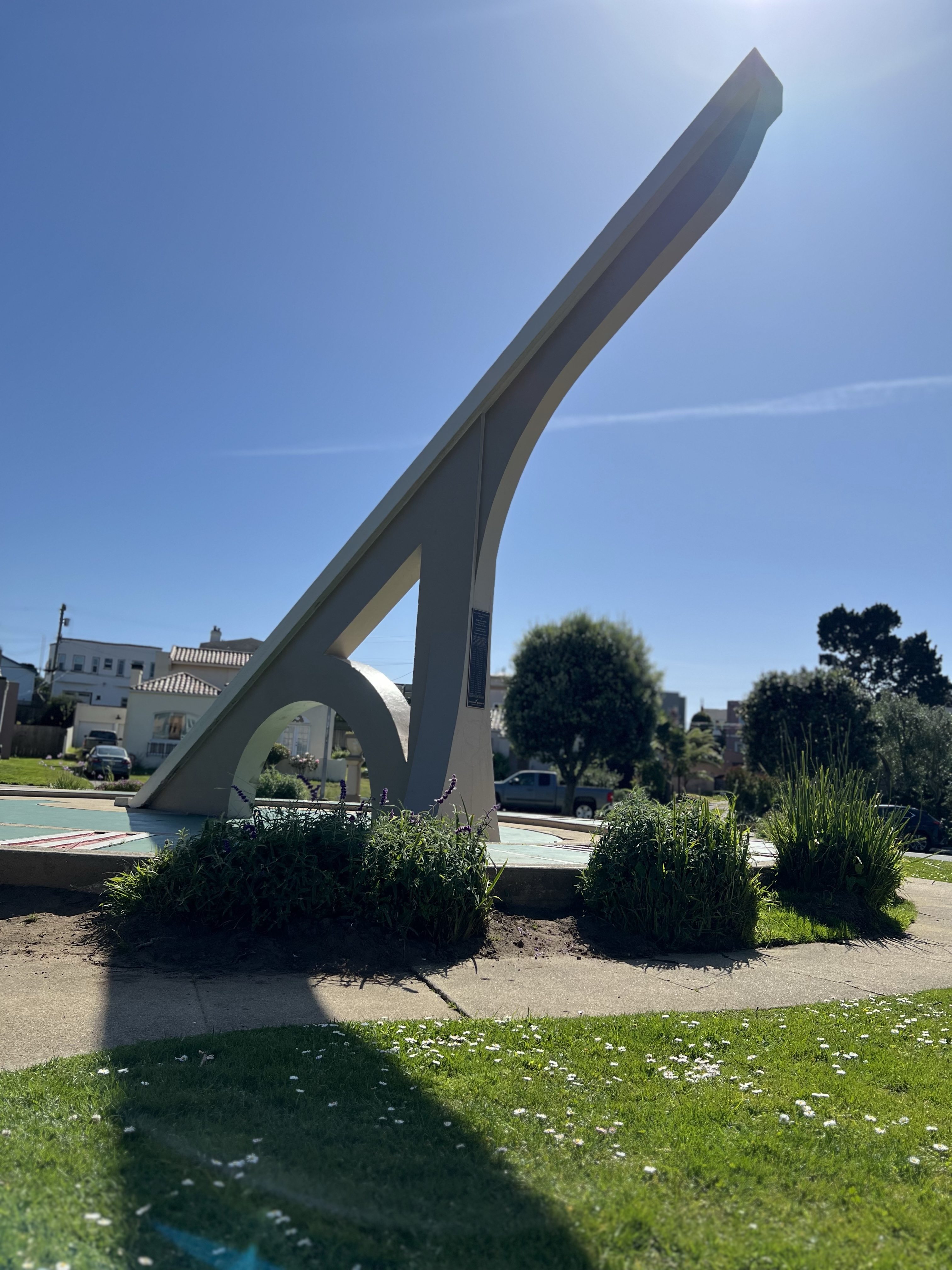
I was in the Ingleside neighborhood and my sketching subject was a large timepiece.
This timepiece was dedicated on October 10, 1913. The irony is that this massive sun dial is in an area of San Francisco known for fog.
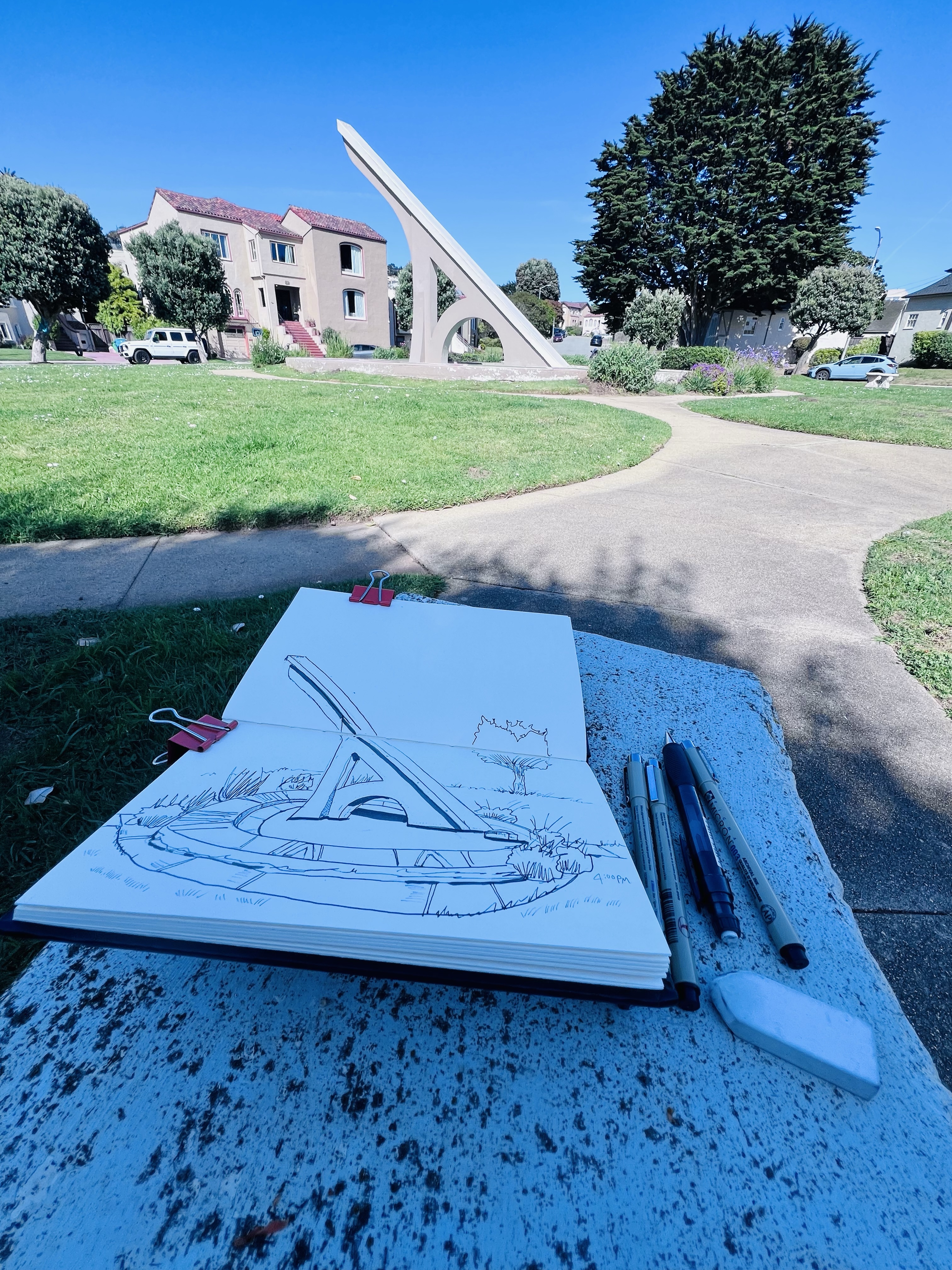
I see by the sun dial that it is almost 4. The skies were uncommonly sunny.
I sat on a bench and started to sketch.
The sundial was built as the centerpiece of the Ingleside neighborhood that was being developed in the early twentieth century.
The area was formerly a racetrack first opened in 1895 for horse racing. Horse racing at the track proved to be so popular that Southern Pacific Railroad built a branch line to the entrance of the track.
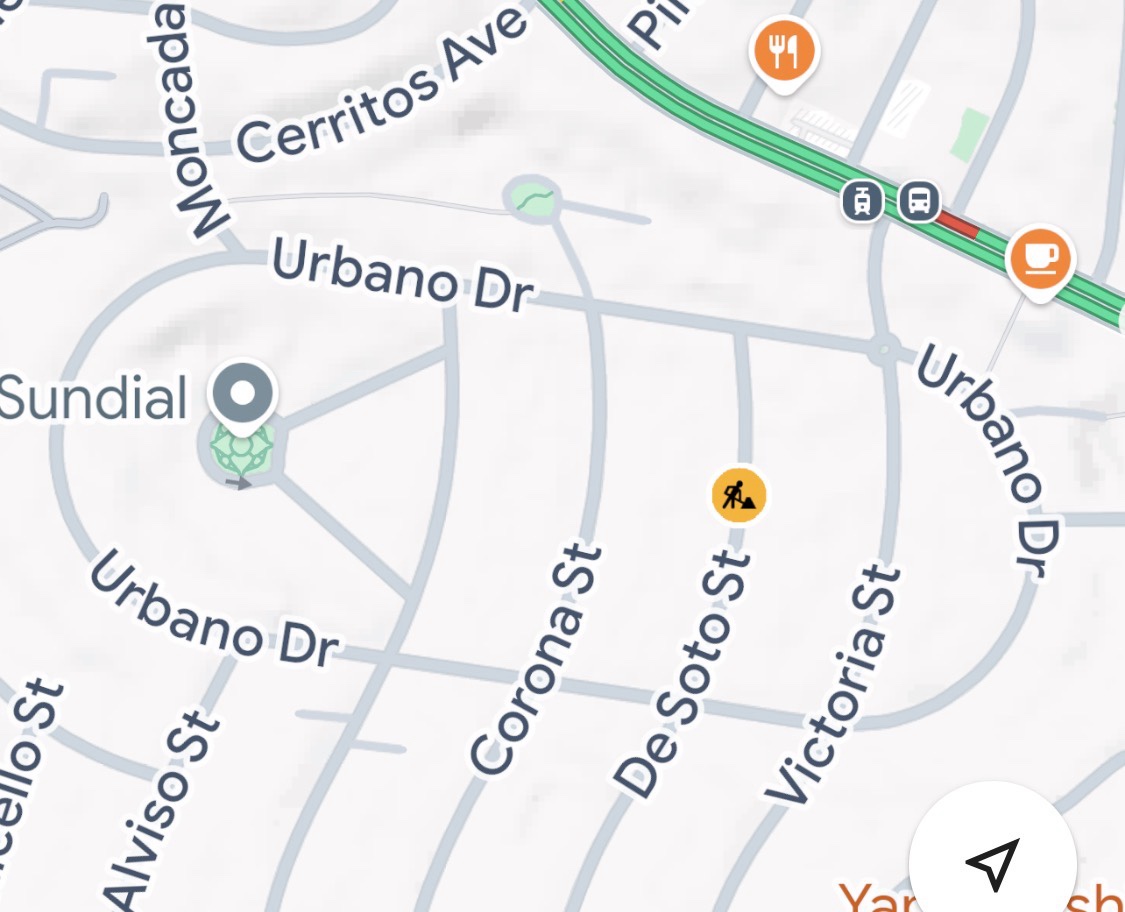
From this Google map, the oval of the race track is still intact. The sundial on the western side of the oval.
The track later featured early auto races. Businesses slowly declined and the last race at the track was held on December 30, 1905.
The site was later developed as the Ingleside neighborhood.
In this post are a few miscellaneous sketches from my five days in the Old Pueblo. Kind of like the random aircraft at the Pima Air & Space Museum that don’t fit neatly into the category of fighter, bomber, cargo, or reconnaissance aircraft.
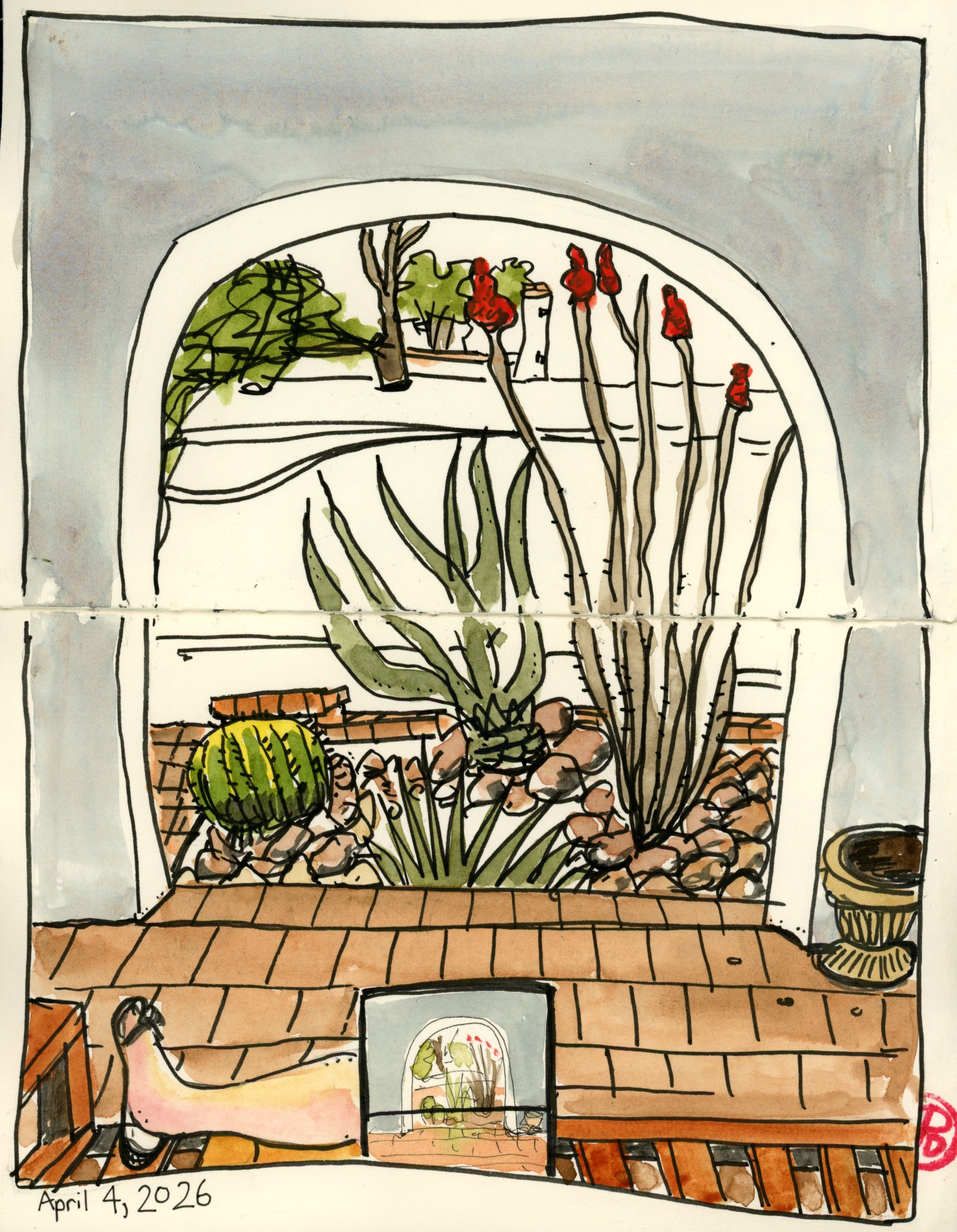
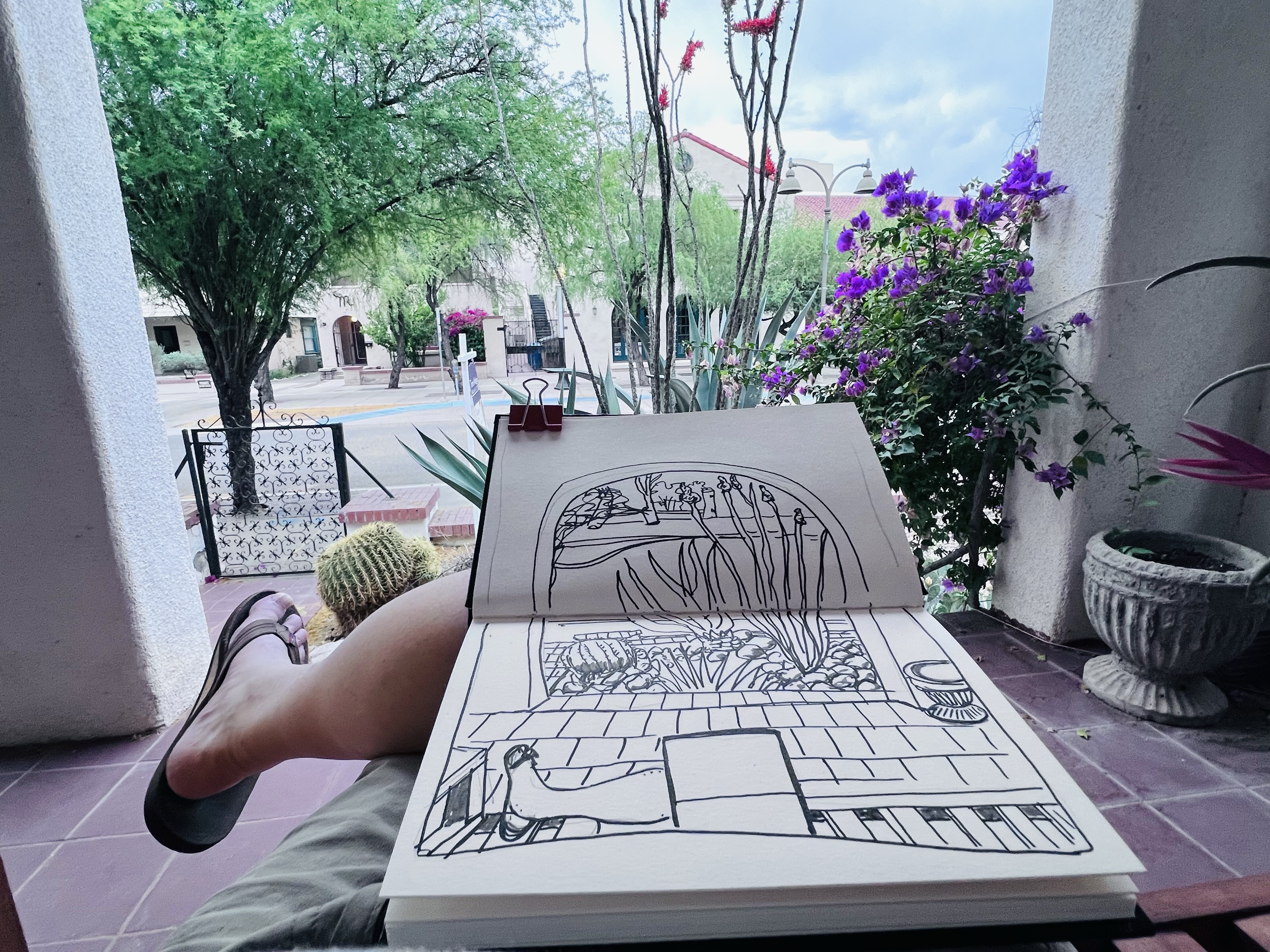
The first sketch was a self portrait from the front veranda facing out to Scott Street. This was a great place to sit in the late afternoon to read, write, sketch, and people watch. On one afternoon a rain storm passed through and it was a great vantage point to hear the sounds of rain drumming on drainpipes.
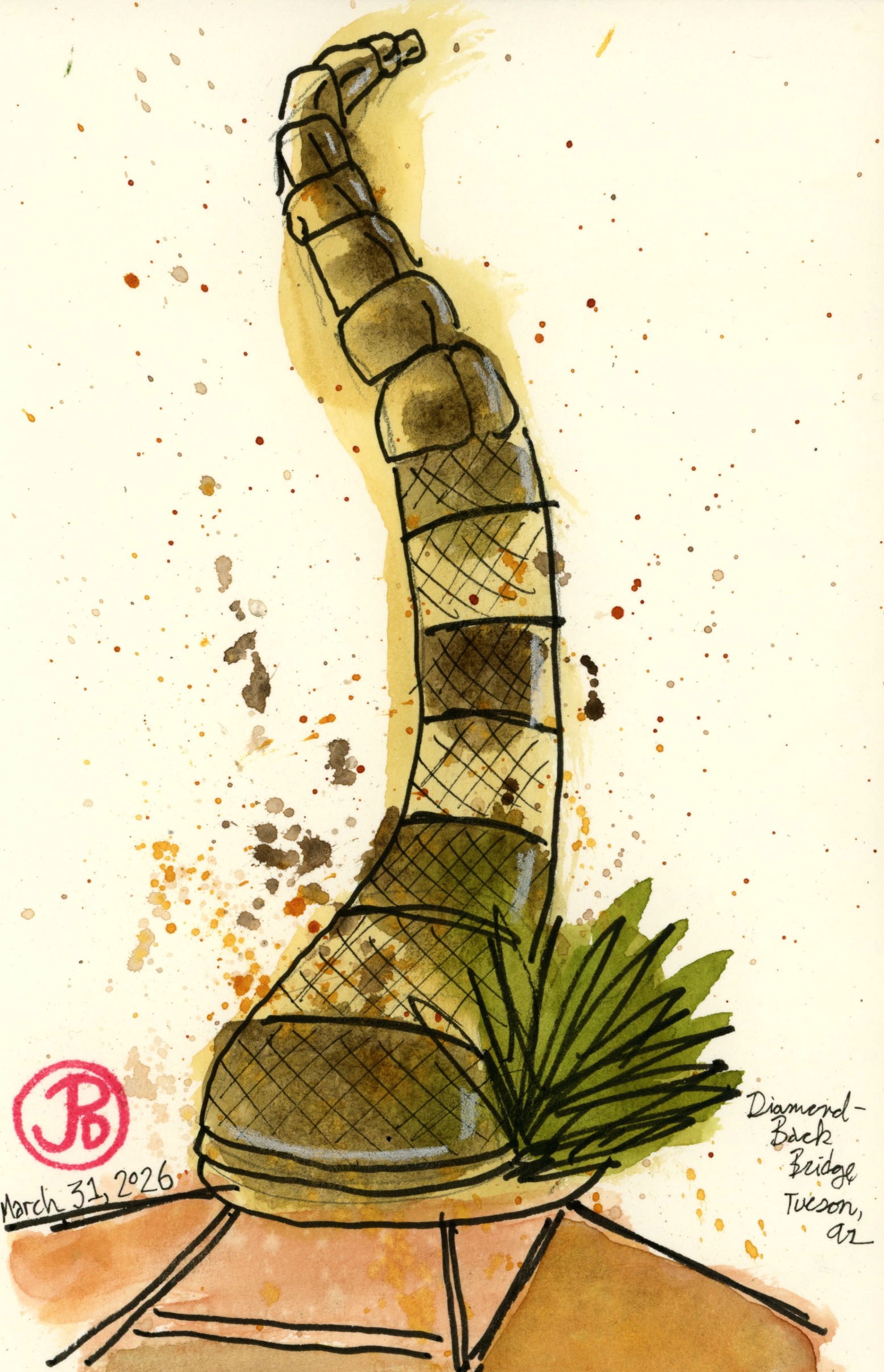
Another Tucson site I wanted to add to my sketchbook was the Diamondback Bridge, the pedestrian entryway to downtown.
The fenced bridge is designed to look like a long diamondback rattlesnake with a head towards the downtown end and a rattle on the other end. I sketched the rattle.
This sketch seemed to want some paint splatter.
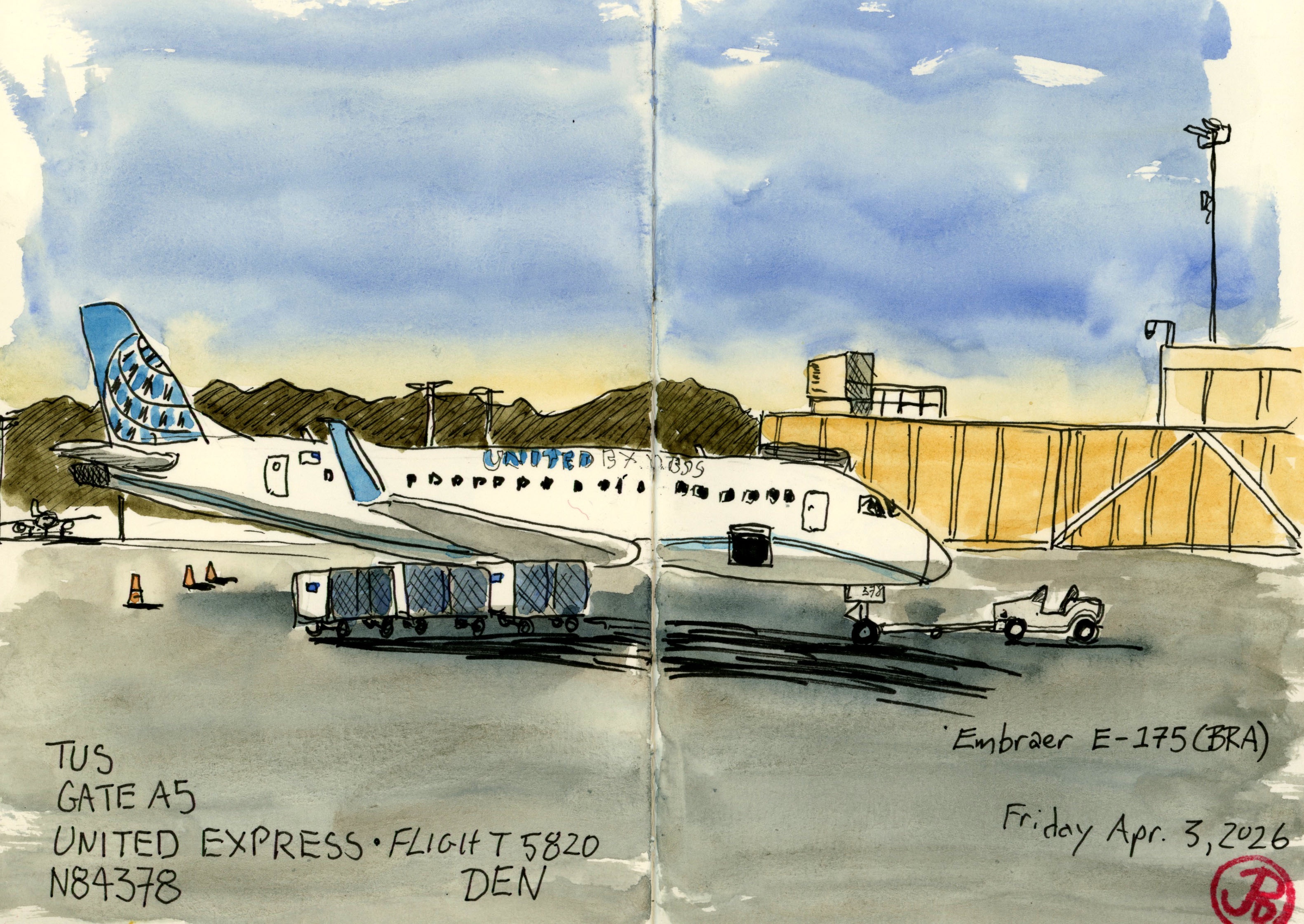
What do you do when you arrive early to the airport for your return flight home and you find out that your flight has been delayed by and hour and a half? Sketch of course!
I often sketch looking directly head on to planes at the gate. I don’t often get a change to sketch a side view.
This is a United Express jet, an Embraer 175, a common regional aircraft built by the Brazilian manufacturer Embraer. I could certainly understand why such a regional jet was built in Brazil, because you really can’t get around South America’s largest country without flying.