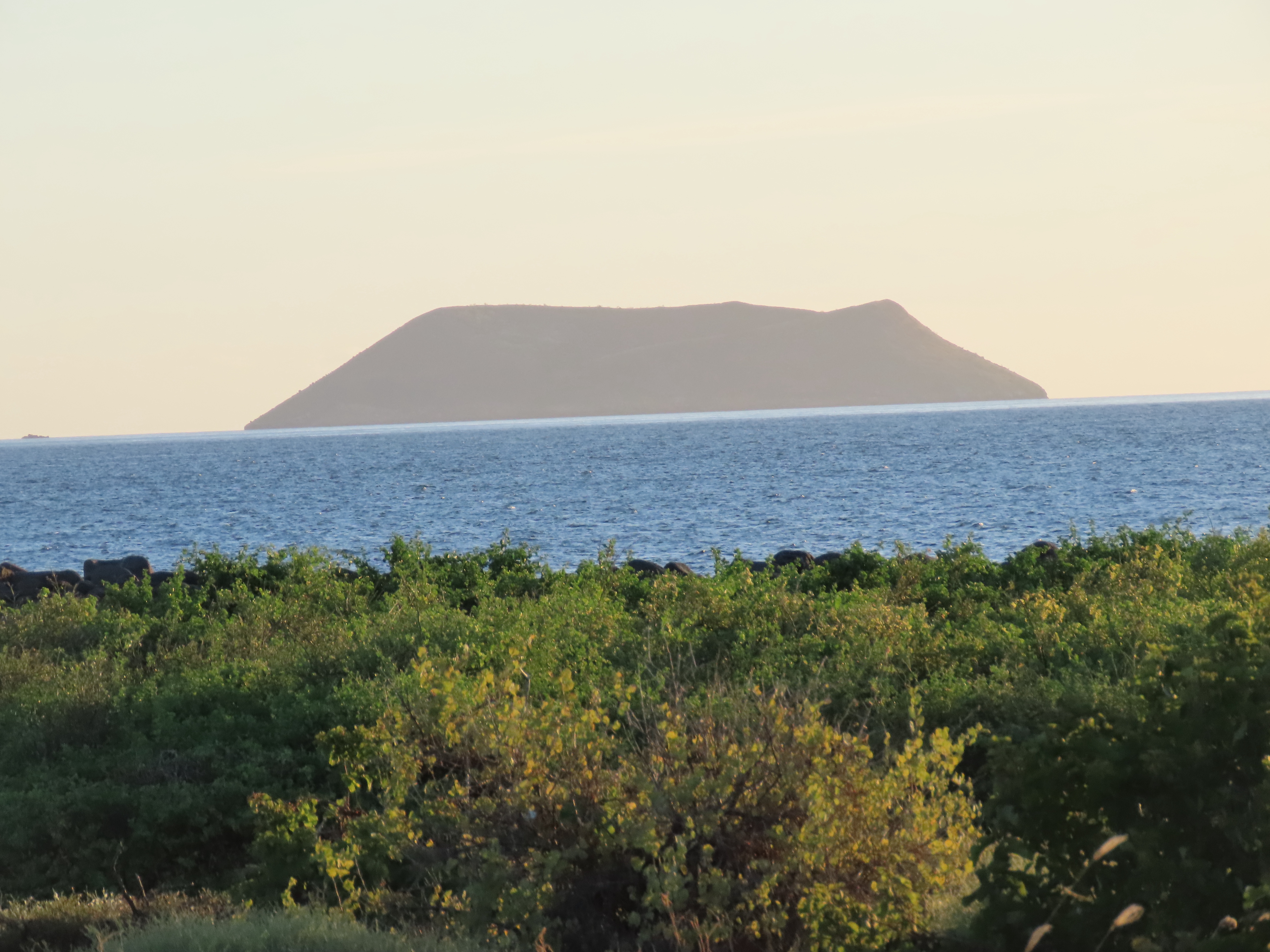
While the Nemo III was anchored off the small Galapagos island of Santa Fe I sat at the stern and panted the landscape before me with the panga in the foreground.
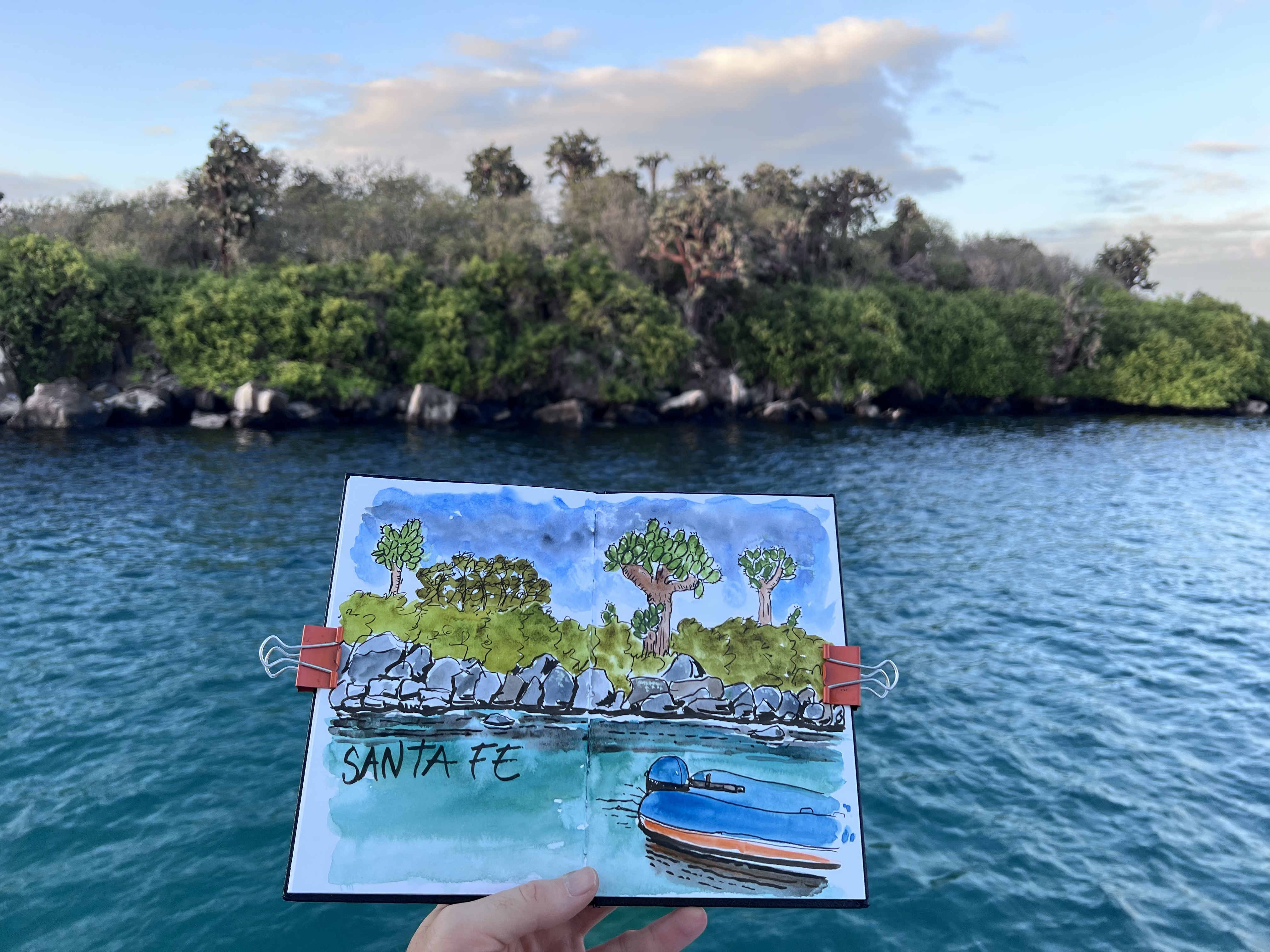
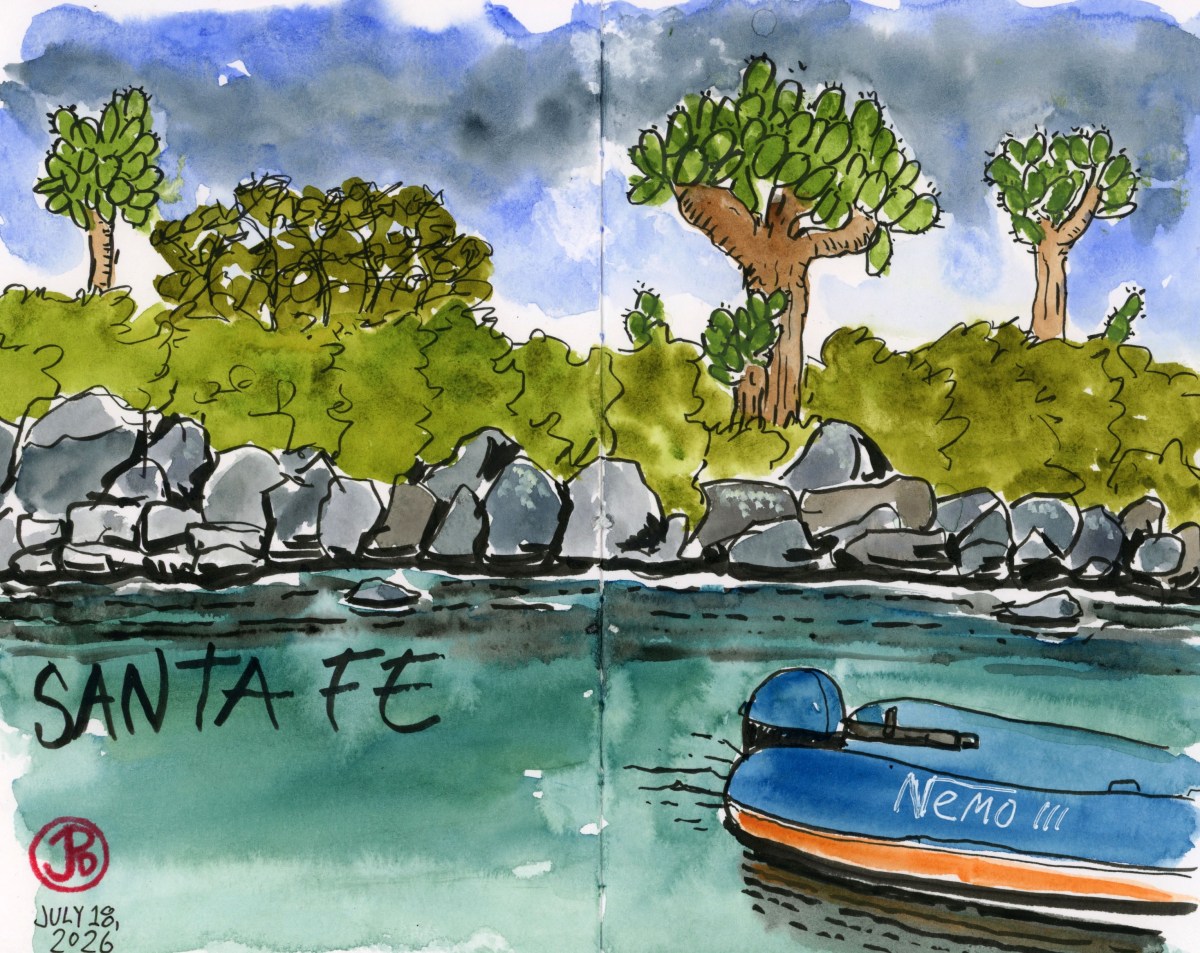
While the Nemo III was anchored off the small Galapagos island of Santa Fe I sat at the stern and panted the landscape before me with the panga in the foreground.
And where is the place of understanding?
It is hid from the eyes of all living;
And concealed from the birds of the air.
–Job 28:20-21
The Galápagos is famous for its very drab but diverse (in beak size) finches. They are rather mistakenly called Darwin’s Finches.
In 1835, Darwin famously only spent five weeks in the Galápagos visiting only four of the islands (I visited nine).
“Darwin’s finches” was never a phrase coined by Darwin himself but his writings in the Voyage of the Beagle and Origin of Species really put the Galápagos and it’s finches on the scientific map.
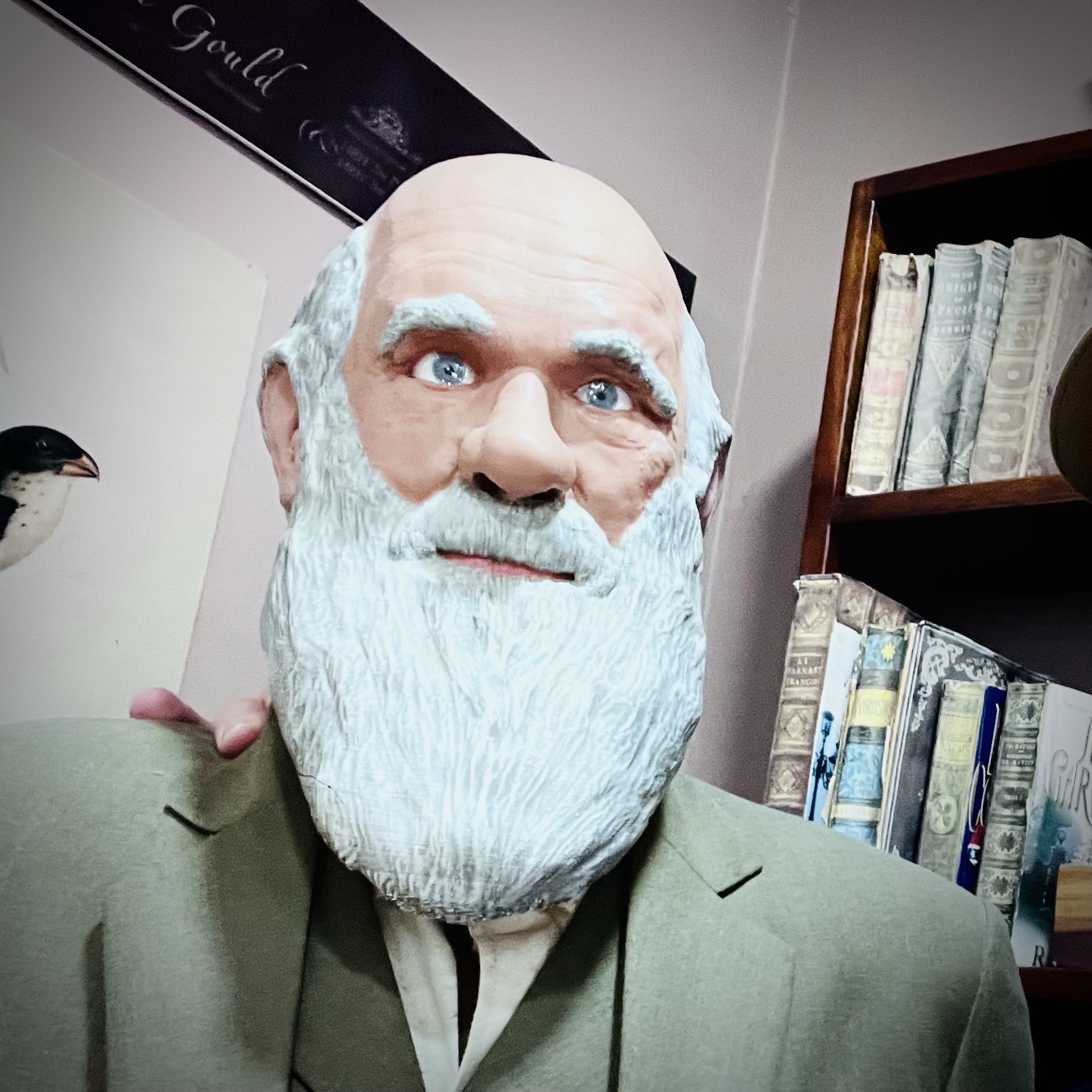
Throughout the islands you will see many statues or paintings of Charles Darwin in many ages of his life. He was in his mid twenties when he visited the Galápagos.
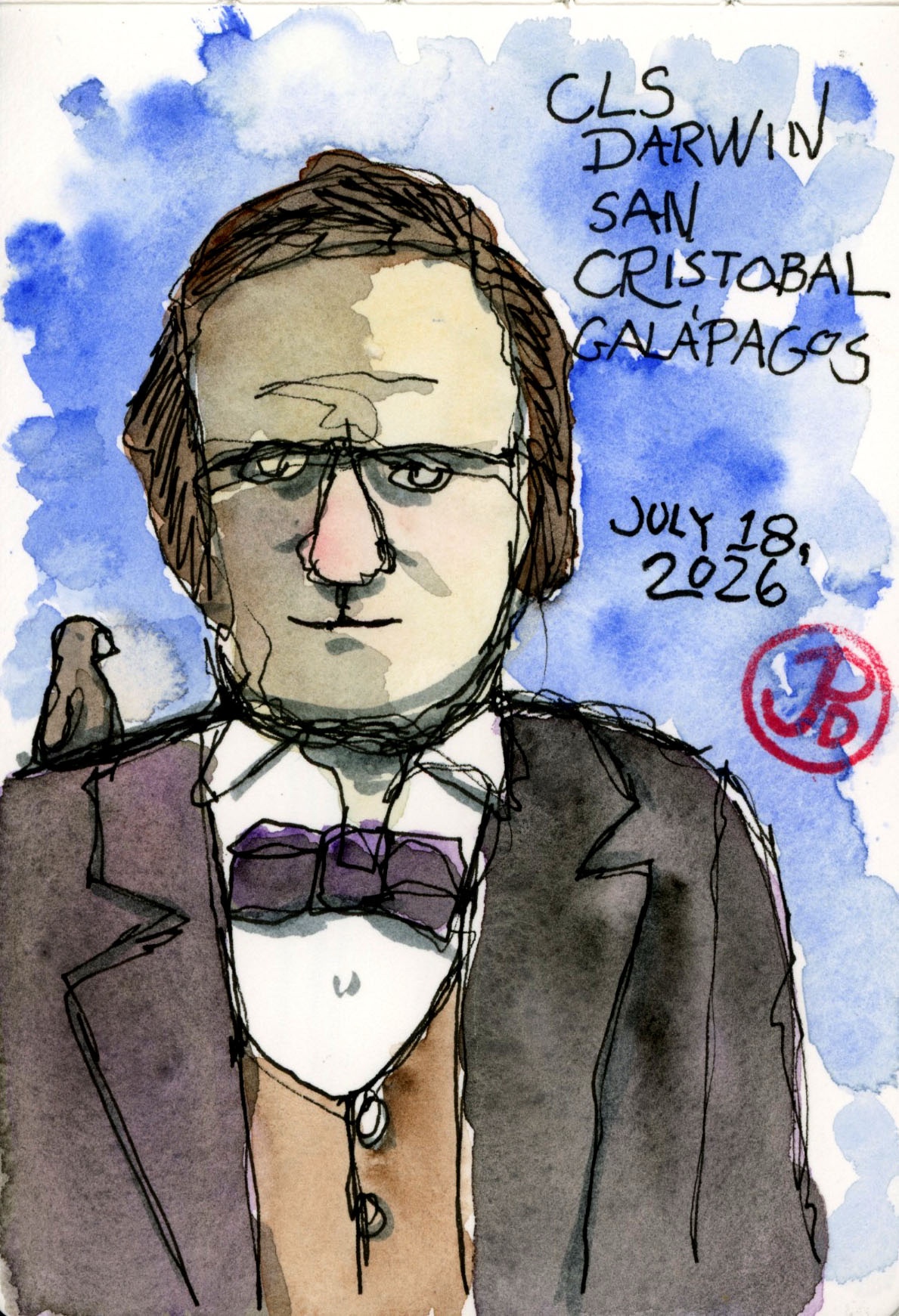
I did a continuous line sketch of one of the statues in San Cristobal with a finch on his shoulder. (The finch was not real but part of the statue.) The statue stands with hand extended as if he is offering to shake your hand. Behind him is a model of the Beagle, looking more like a play structure you might find in a fast food restaurant.
In the excellent Pulitzer Prizewinning book The Beak of the Finch by Jonathan Weiner, the author tells the story of Peter and Rosemary Grant and the long term study of the finches of a small Galápagos island. Through their multi-decade research (measuring finch beak size) they are able to witness evolution in action.
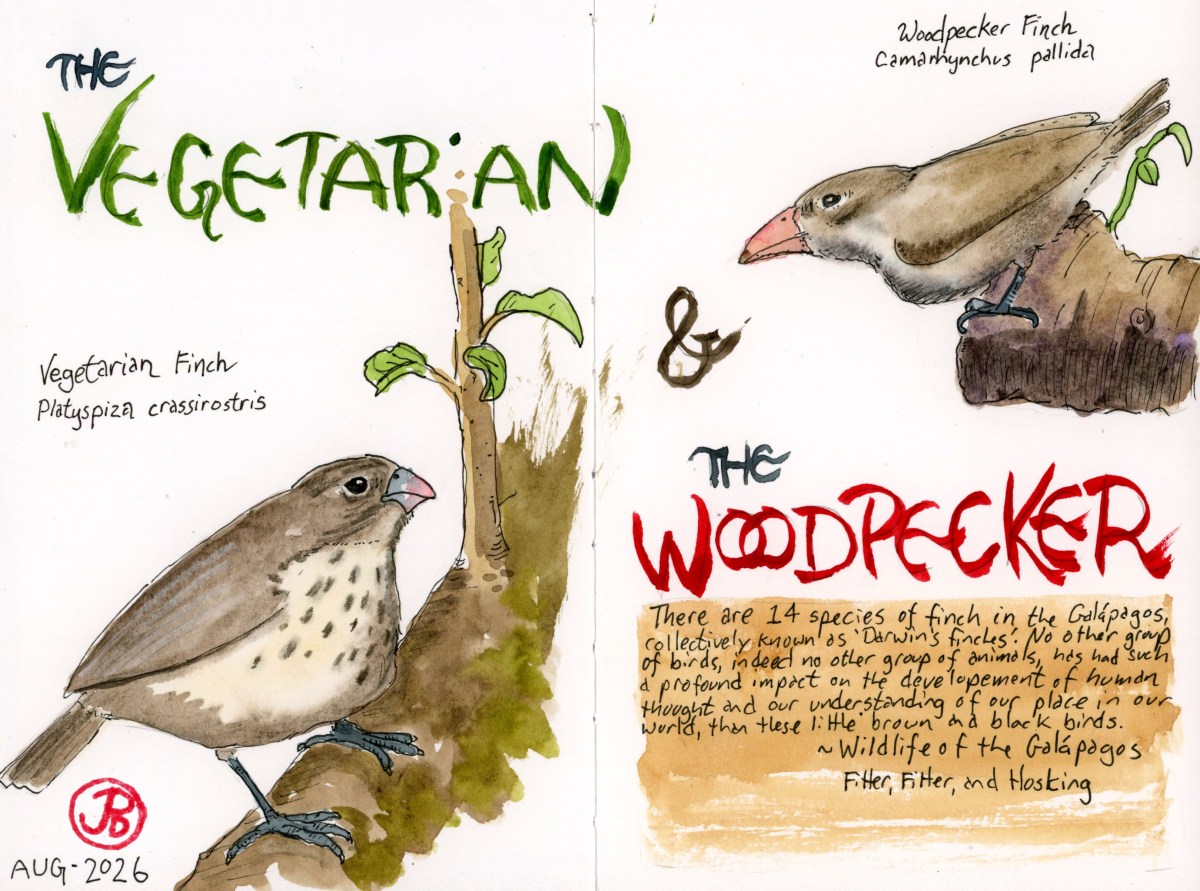
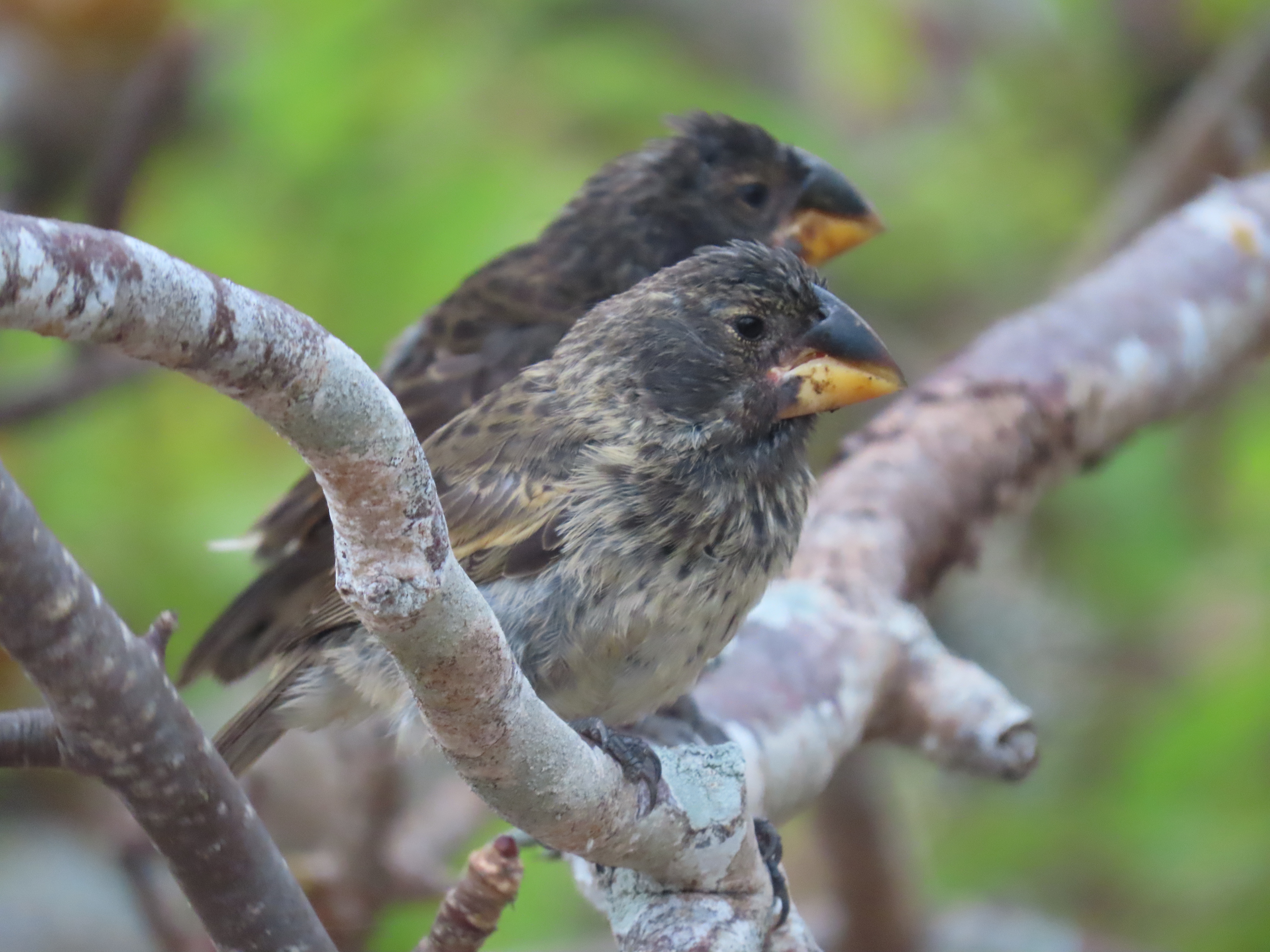
For my spread of the finches, I sketched two of my favorites: the vegetarian and the tool using woodpecker finch. Both sketches are based on my photos.
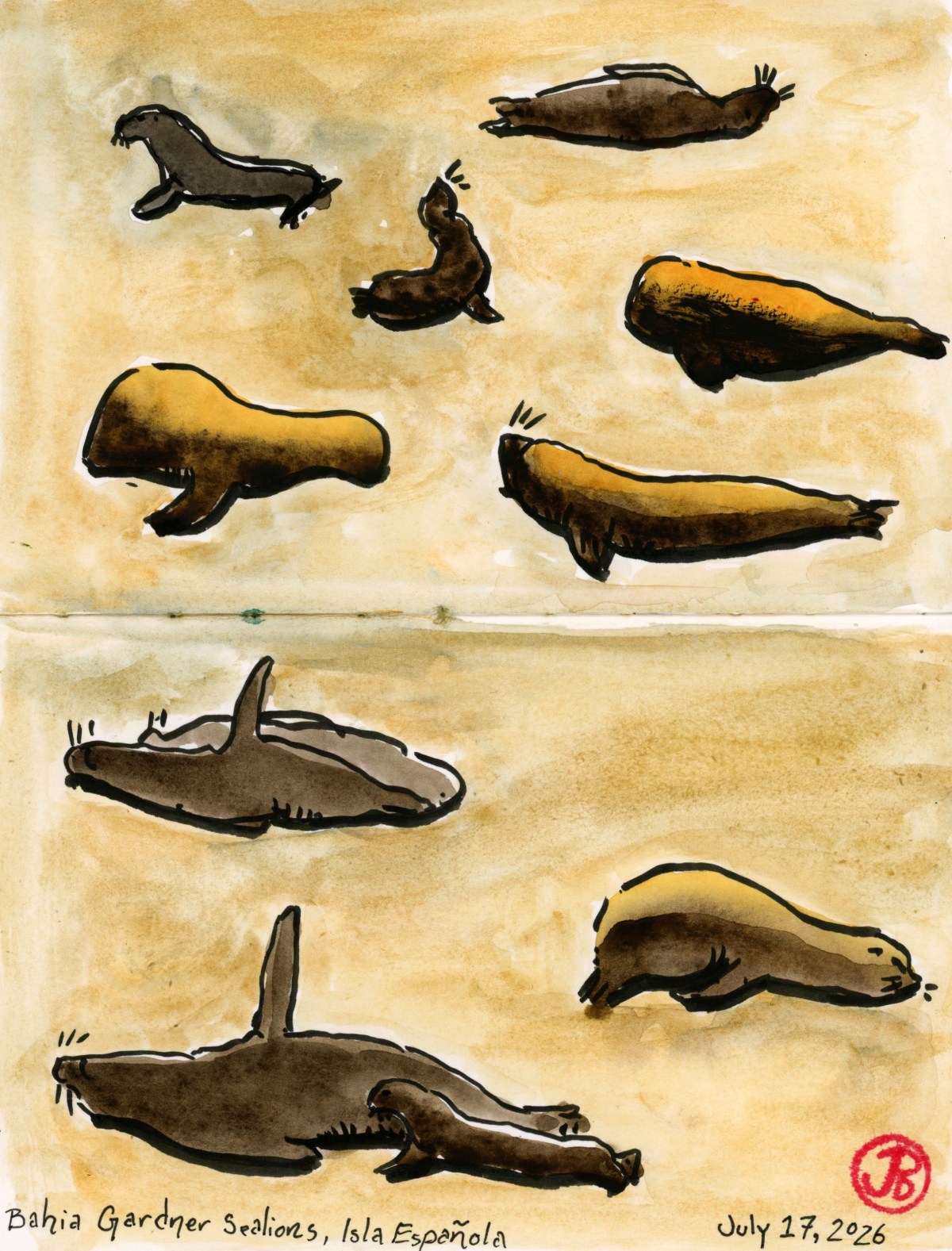
On a Friday morning we visited one of the most pristine beaches in all the Galapagos: Bahia Gardner.
As our panga arrived, we were greeted by a seal lion in the surf who was between us and our chosen landing site. Here sealions rule the beach!
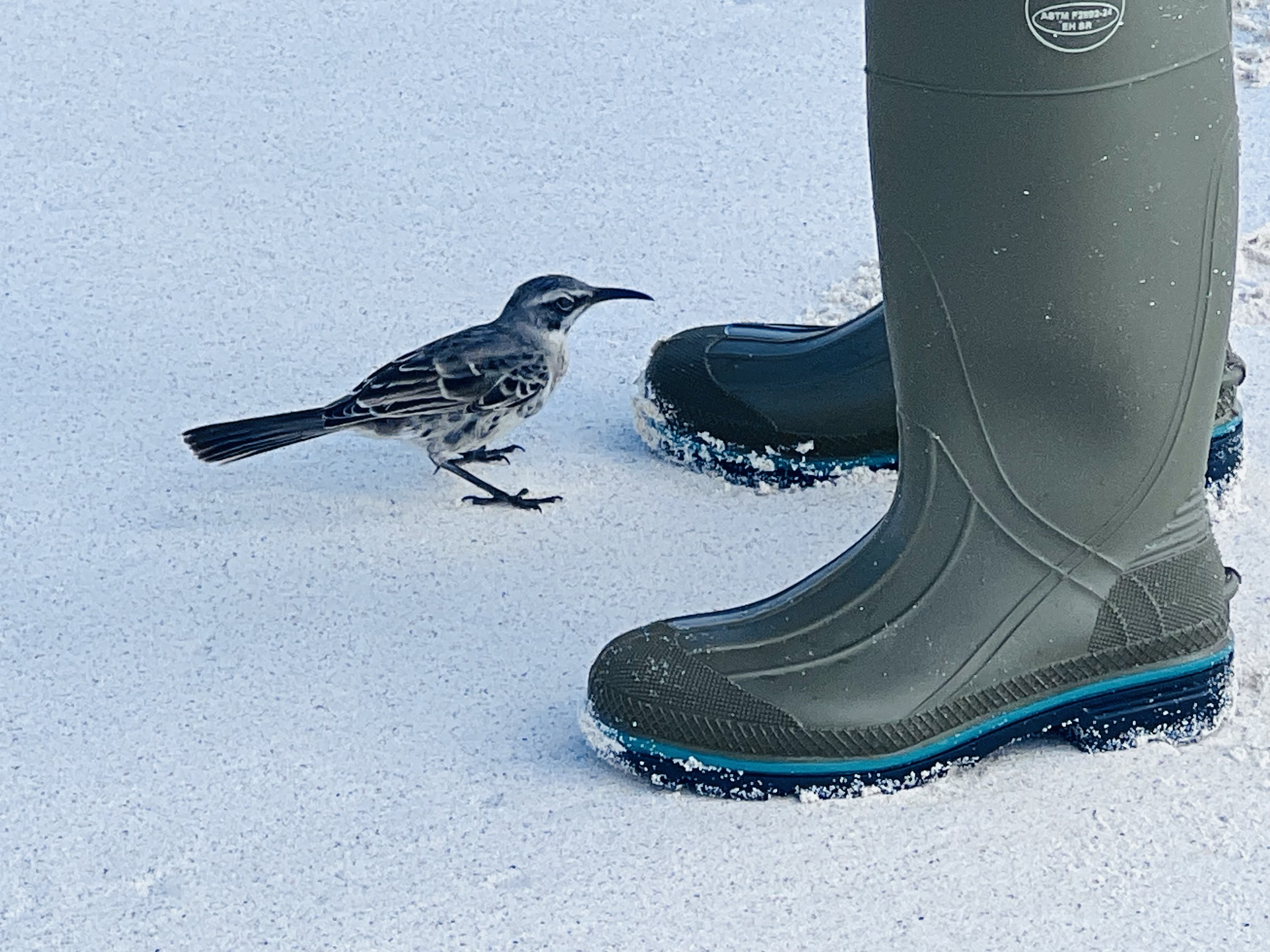
We walked up the beach and were greeted by the other ambassadors of Bahia Gardener: the Espanola mockingbird.
These mockingbirds aren’t hard to find because they find you. They readily approach beach visitors, inspecting your shoes or sandals. If you set your pack down it will be surrounded by mockingbirds, pecking at pockets and straps.
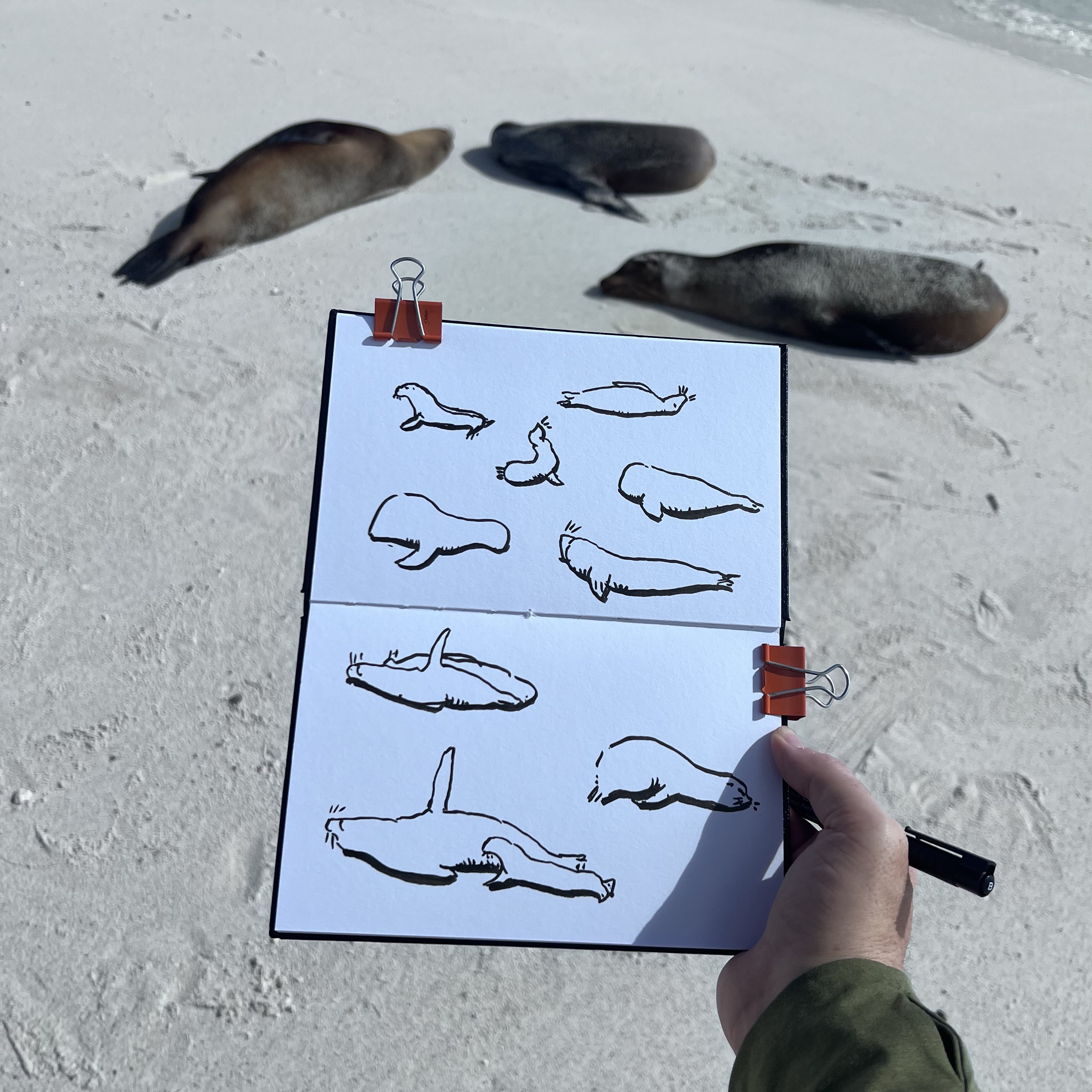
There were a fair number of Galapagos sea lions hauled out on the beach. Plenty of relatively stable subjects in repose to sketch.
I walked the beach adding sea lions to my spread (featured sketch).
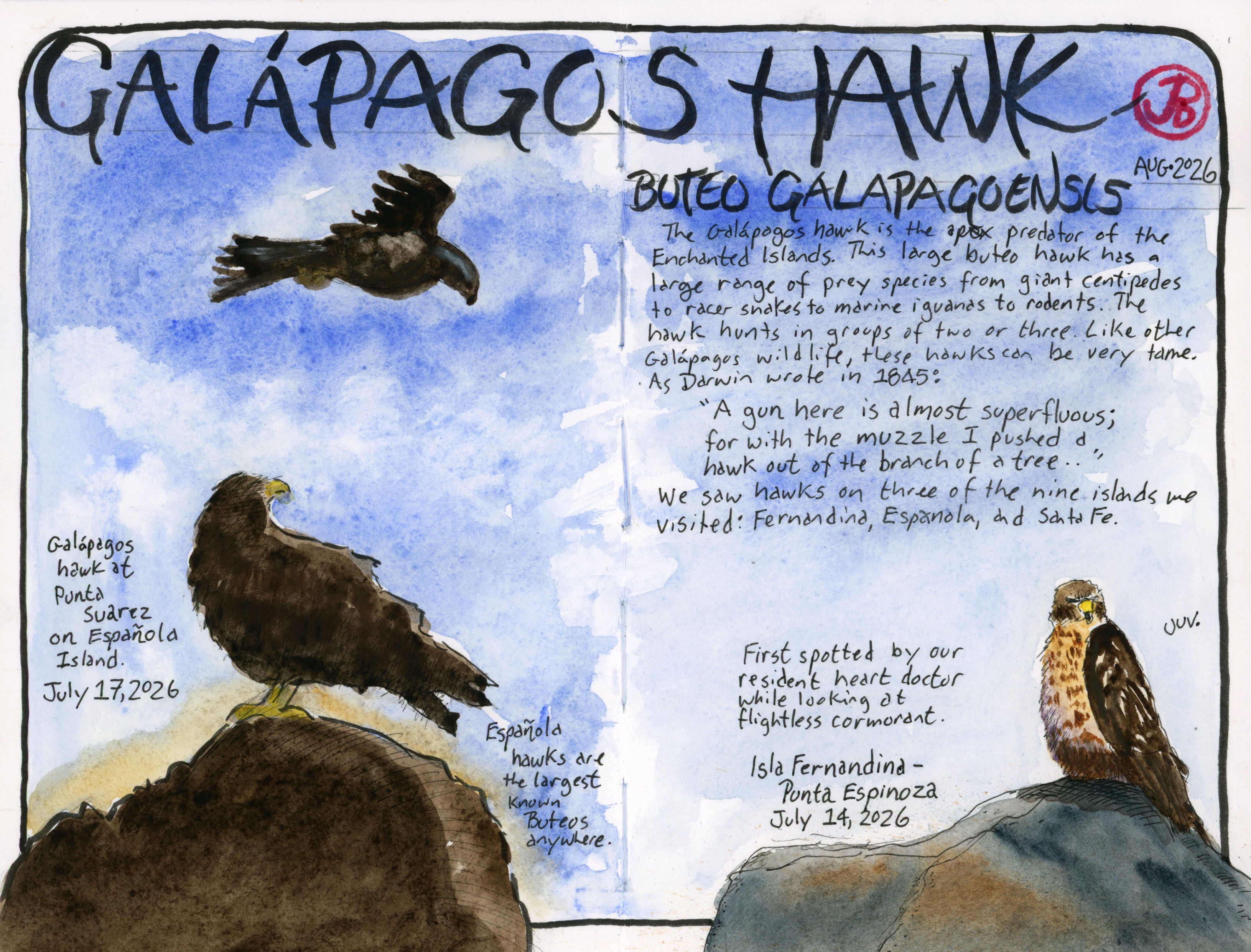
When you think of apex predators some iconic animals come to mind: Tyrannosaurus rex, African lion, orca, great white shark, polar bear, jaguar, saltwater crocodile, and harpy eagle.
The apex terrestrial predator of the Galápagos is not a mammal or a reptile but a raptor.
This is one of the larger buteo (broad winged) hawks in the world: the aptly named endemic Galápagos hawk.
The hawk is found on most of the major islands and preys on a wide variety of the island’s fauna, from giant centipedes to booby nestlings to marine iguanas.
On our journey around nine of the islands we saw hawks on three: Fernandina, Espanola, and Santa Fe.
In 1835, Darwin notes how tame the local hawks were as he writes in the Voyage of the Beagle:
“Extreme tameness…is common to all the terrestrial species…A gun is here superfluous; for with the muzzle I pushed a hawk off the branch of a tree.”
We did not get near close enough to knock a hawk out of a tree but we did have some good looks at the Enchanted Island’s top predator.
Our first look was at Punta Espinoza at the northwest tip of Fernandina Island. Our non-birder heart surgeon first spotted a juvenile on a cliff from the panga.
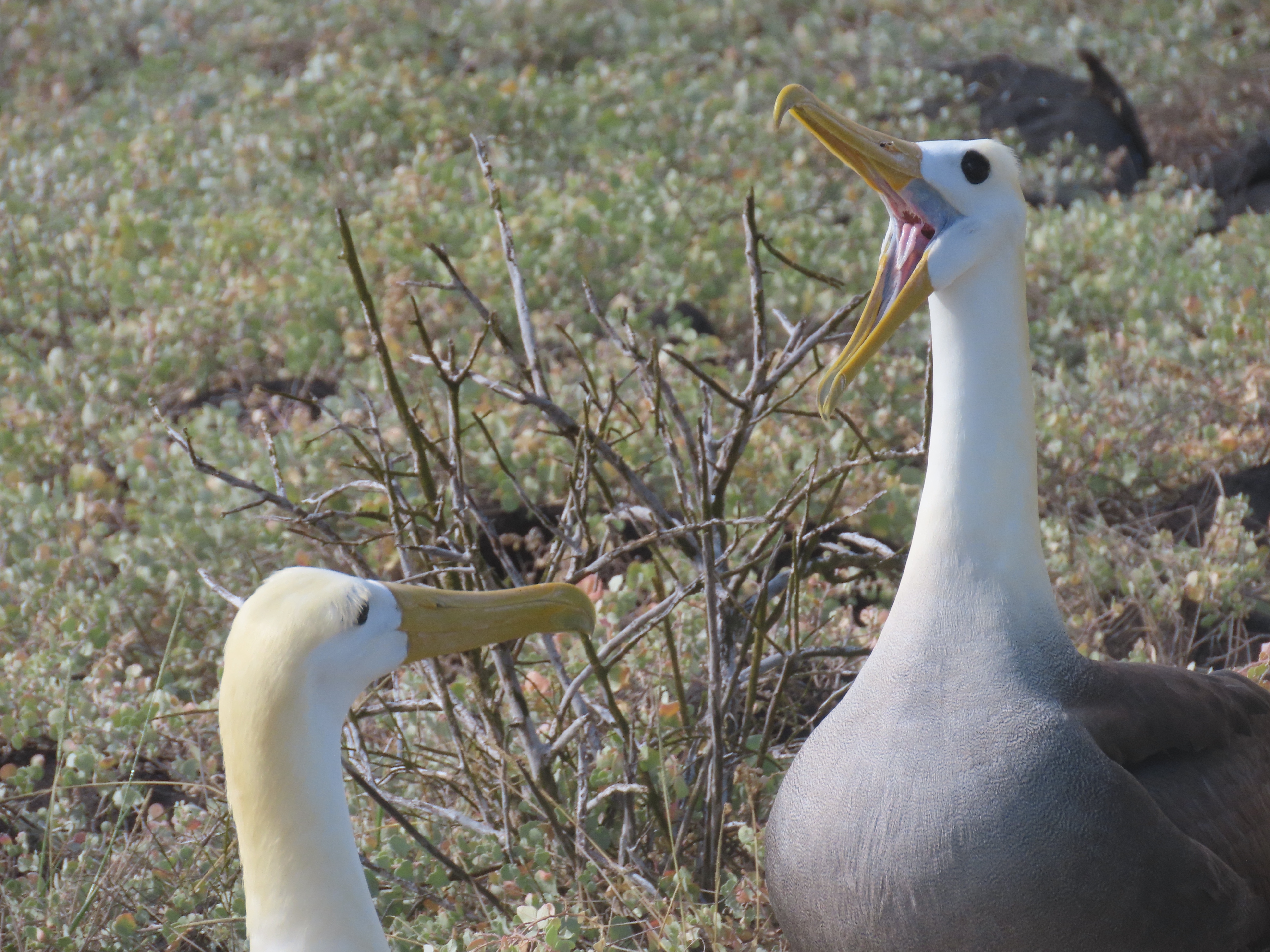
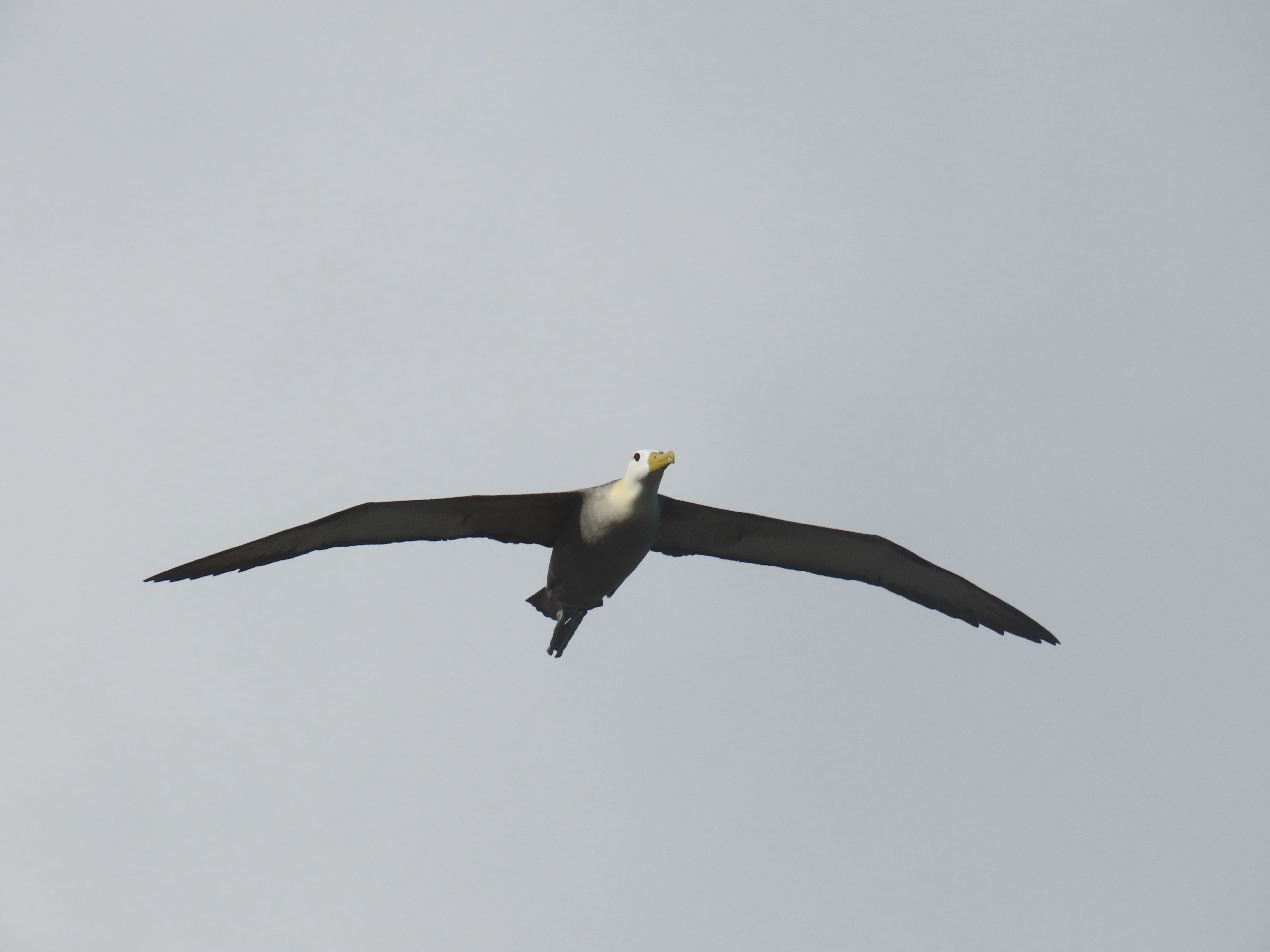
We later encountered the Galápagos’ top predator while looking at waved albatross on Espanola.
On Espanola, we saw an adult soaring on the same updrafts as the albatross.
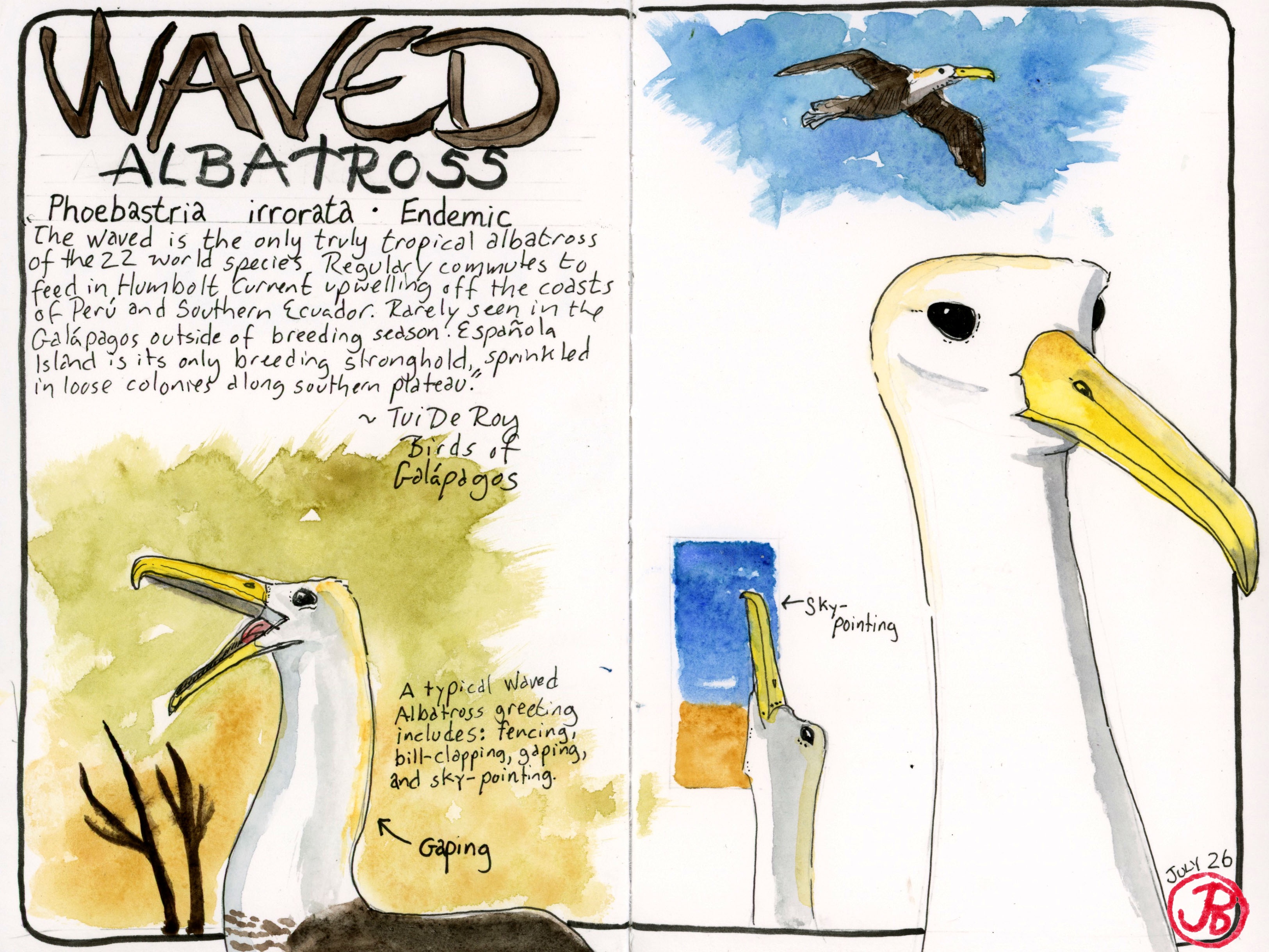
There is something mystic about an albatross (think Rime of the Ancient Mariner) and seeing one is always special.
Most of my sightings have been from the deck during a pelagic boat trip. Sometimes the sightings aren’t quality as the bird appears and disappears among the swells. Fleeting and always leaving you wanting more.
On the island of Espanola, I was about to have one of the closest encounters with albatrosses anywhere.
As with the boobies, the albatross were tame and we often had to walk around them as they sat in the trails.
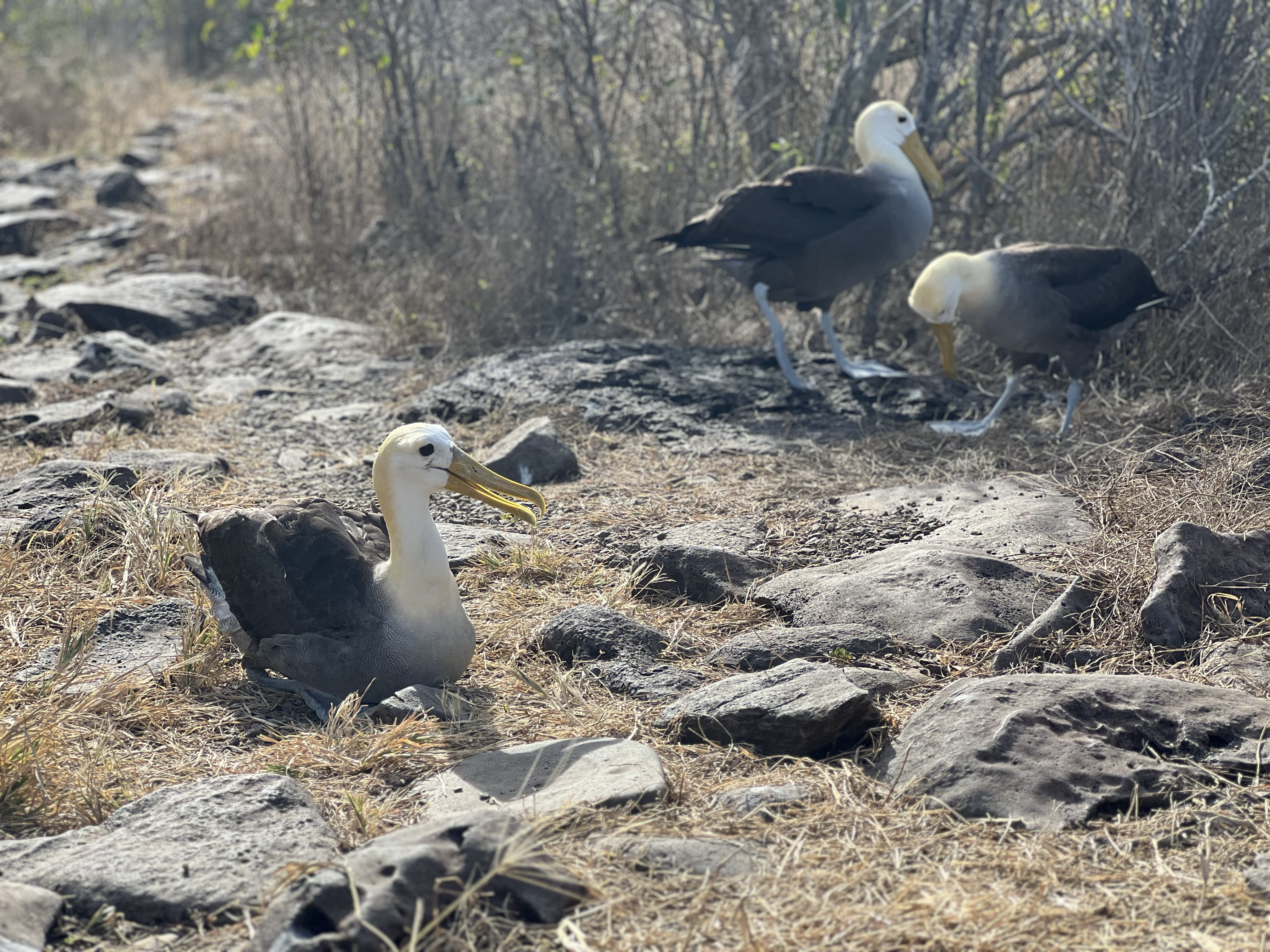
As we headed to Punta Suarez, an albatross dropped out of the air and made a rough landing. The male greeted his partner with head swerving, skypointing, bill-gapping, and bill fencing. Watching this from such close range made me feel like I was in a BBC documentary. Now all we need was Sir David Attenborough to narrate the behavior.
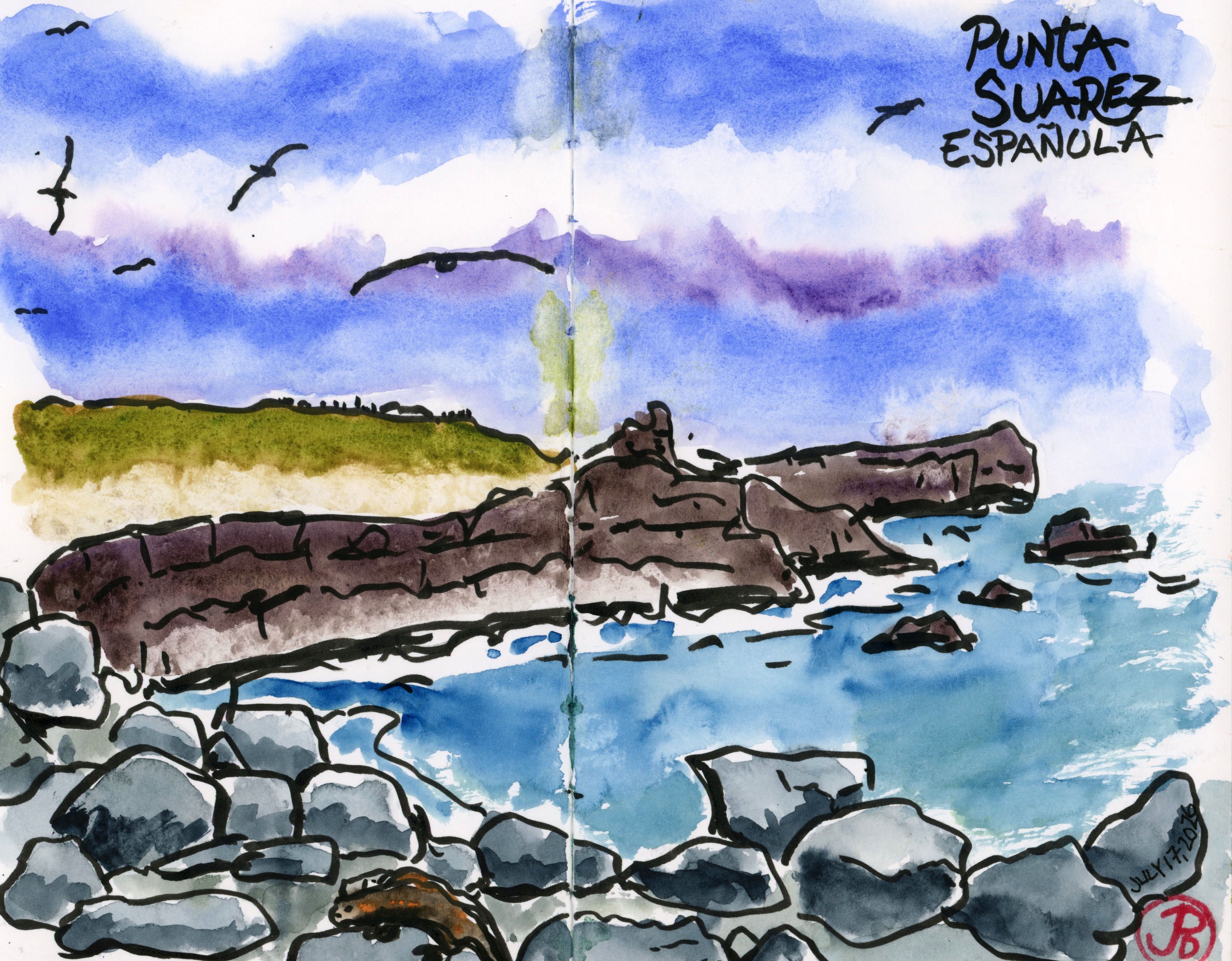
At Punta Suarez we paused to take in the sights and I had time to sketch the scene before me.
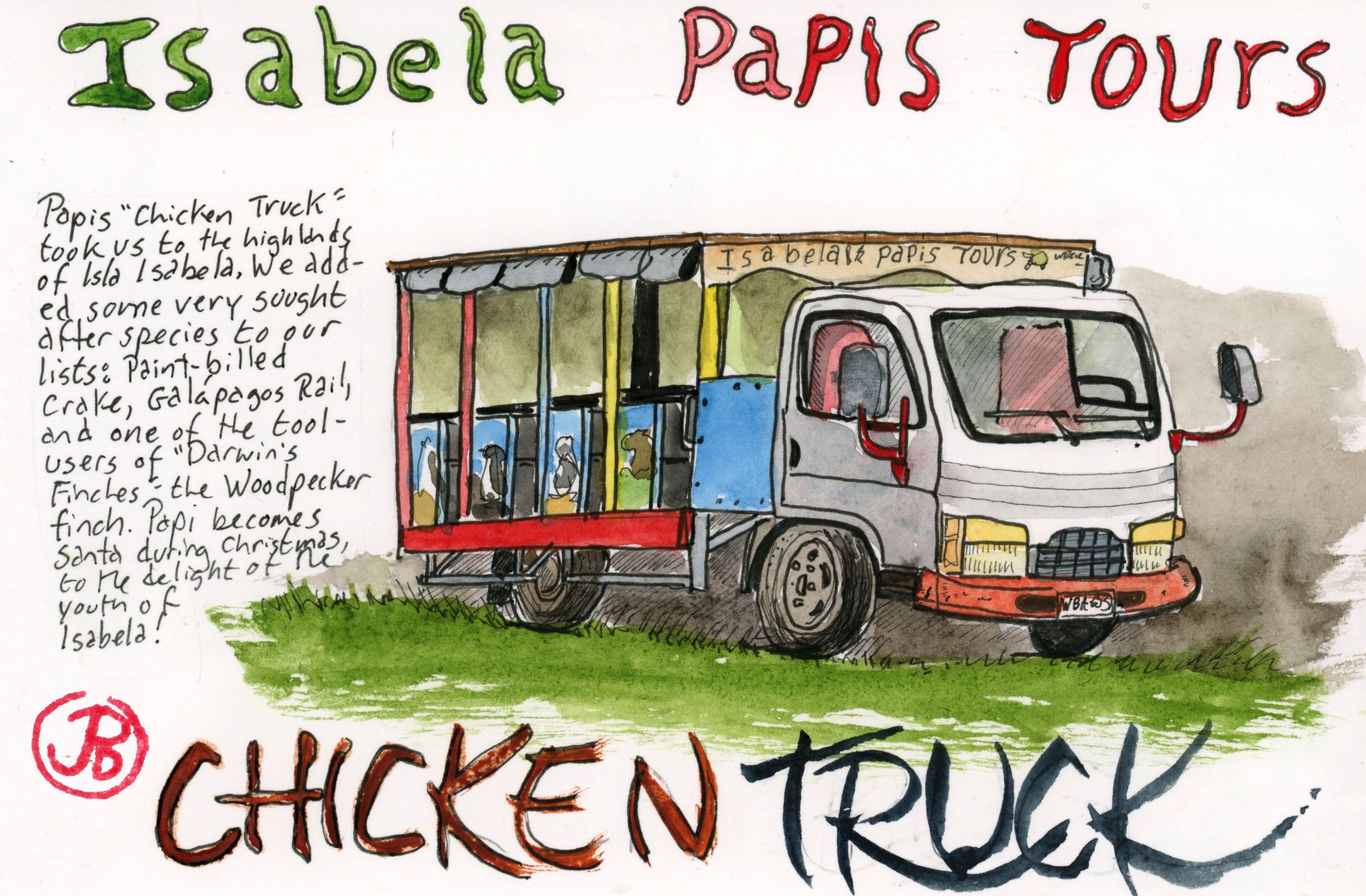
While visiting the largest island of the Galápagos, Isabela. At 1,771 square miles, it is larger than all the other islands of the Galápagos combined. The population of Isabela is about 2,000.
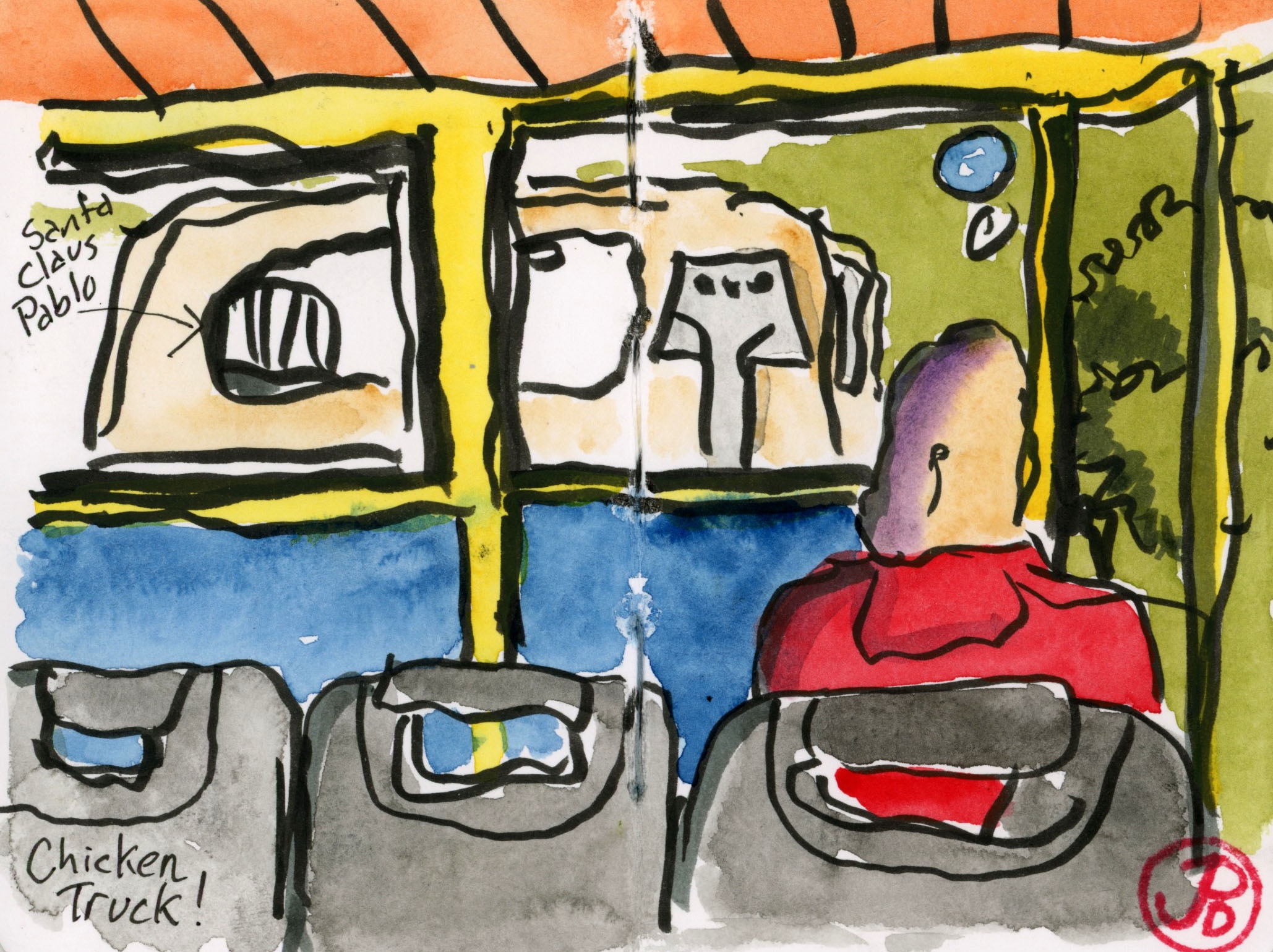
We took the Panga to the dock at busy Puerto Villamil but we needed transportation to get up to the wet highlands to look for some Galápagos specialties.
Enter Papi and his painted “Chicken Truck”. Papi is a jovial man with a striking resemblance to St. Nick (come Christmas, he dresses up as Santa Claus to the delight of the youth of Isabela).
On the eight side panels he painted some of the fauna of the island: pelican, penguin, marine iguana, boobies, sea turtle,sealion, and tortoise.
We flew from Quito to get to the Galápagos. But how did birds get to the islands?
We guess that some flew, some swam, and others arrived on rafts of vegetation pushed to the Galápagos by the cold Humboldt Current.
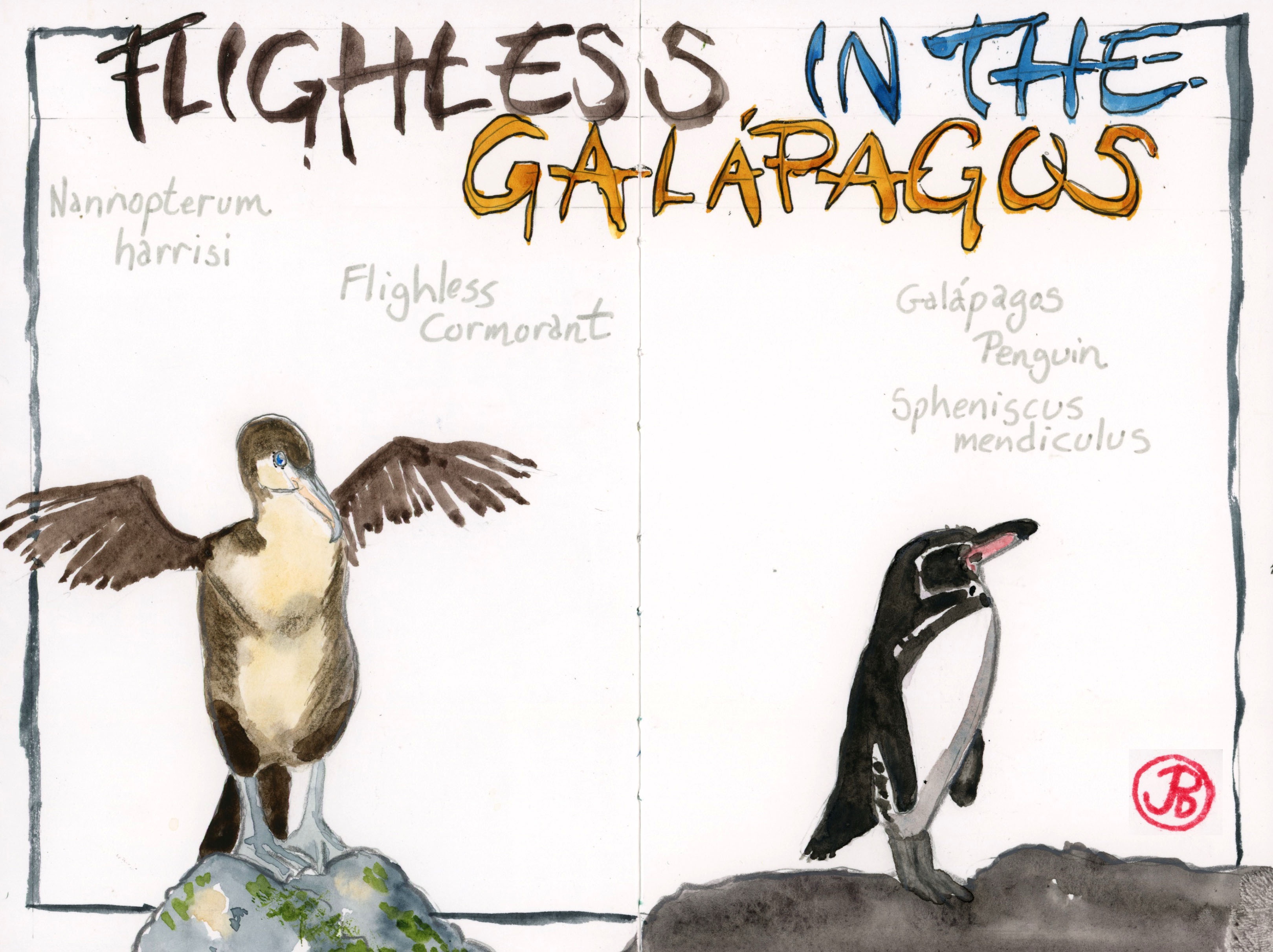
There were two flightless birds I was very much looking forward to seeing and both are found nowhere else in the world. The Galápagos are truly the Enchanted Islands when it comes to endemic species.
I grew up on a street named Cormorant Court so these aquatic fish-hunters have always fascinated me. On the California coast we have three species of flighted cormorants: Brandt’s, double-crested, and pelagic. And the cormorant I really wanted to see is the truly ocean dependent flightless cormorant.
We woke up on near the “seahorse’s mouth” on Isla Isabela. As the night turned to day from the deck of the Nemo III, vertical dark “rocks” turned into roosting flightless cormorants.
After an early breakfast at six, we were boarding the panga by 6:40 to get a closer look at the cormorants.
This is the world’s largest cormorant. I guess you can evolve to be bigger when you don’t need to fly. This is the only flightless cormorant and it is only found around the Galápagos islands of Fernandina and Isabela.

Around the “Seahorse’s Mouth” we had some quality panga time with this amazing endemic, both preening on the rocks and swimming in the bay.

After spending time with the cormorants, we boarded the Nemo III and headed over to Fernandina Island to look for another flightless endemic.
We would be birding from the deck of the catamaran, looking for a vertical black and white rock we were hoping to turn into a Galápagos penguin.
This small penguin is the only penguin found north of the equator (but just barely). It is certainly the most northerly or southerly if in the northern hemisphere, penguin as well as the only tropical penguin.
Before long our guide Willy spotted a lone penguin roosting in the rocks with two brown noddies.
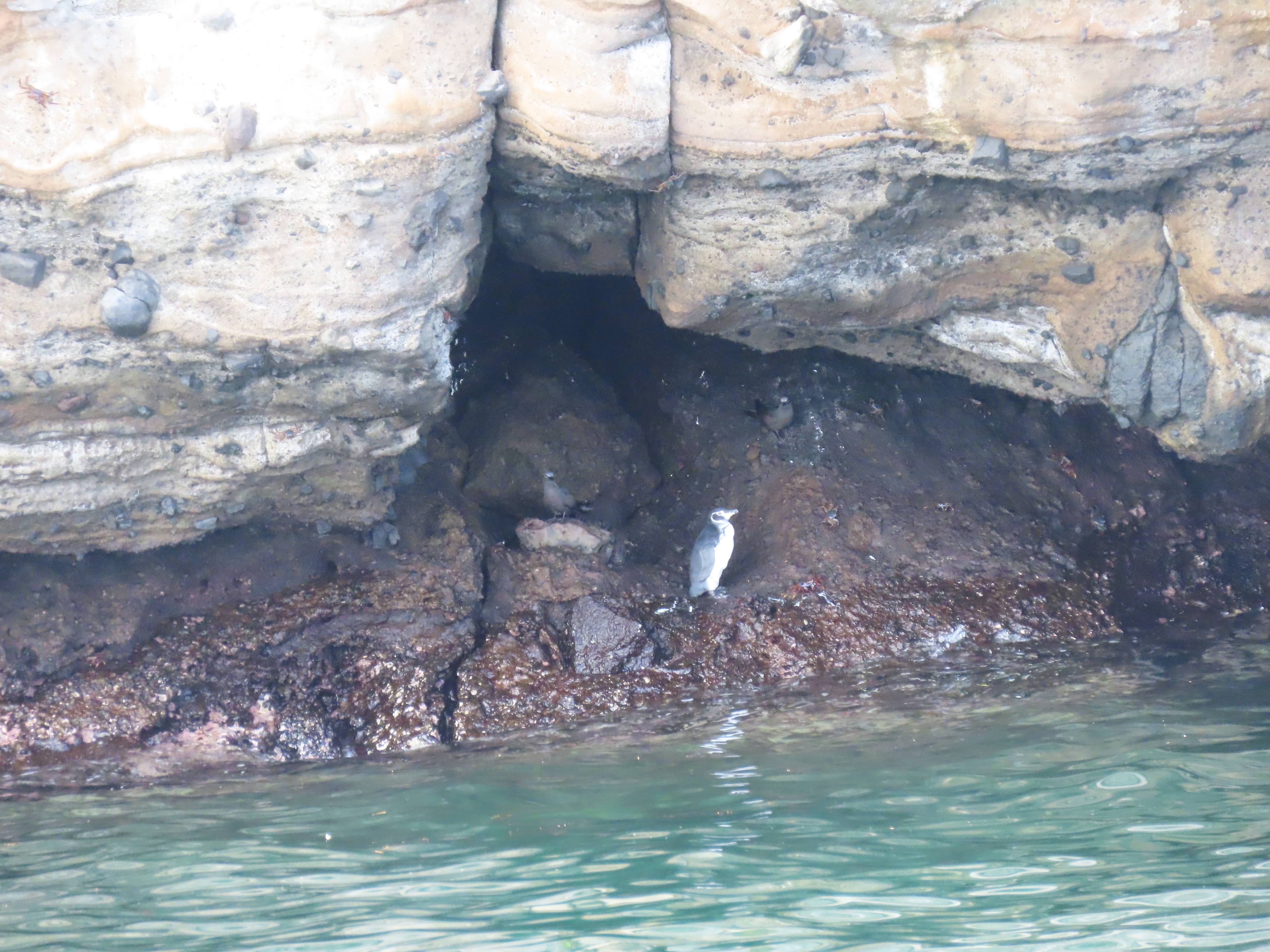
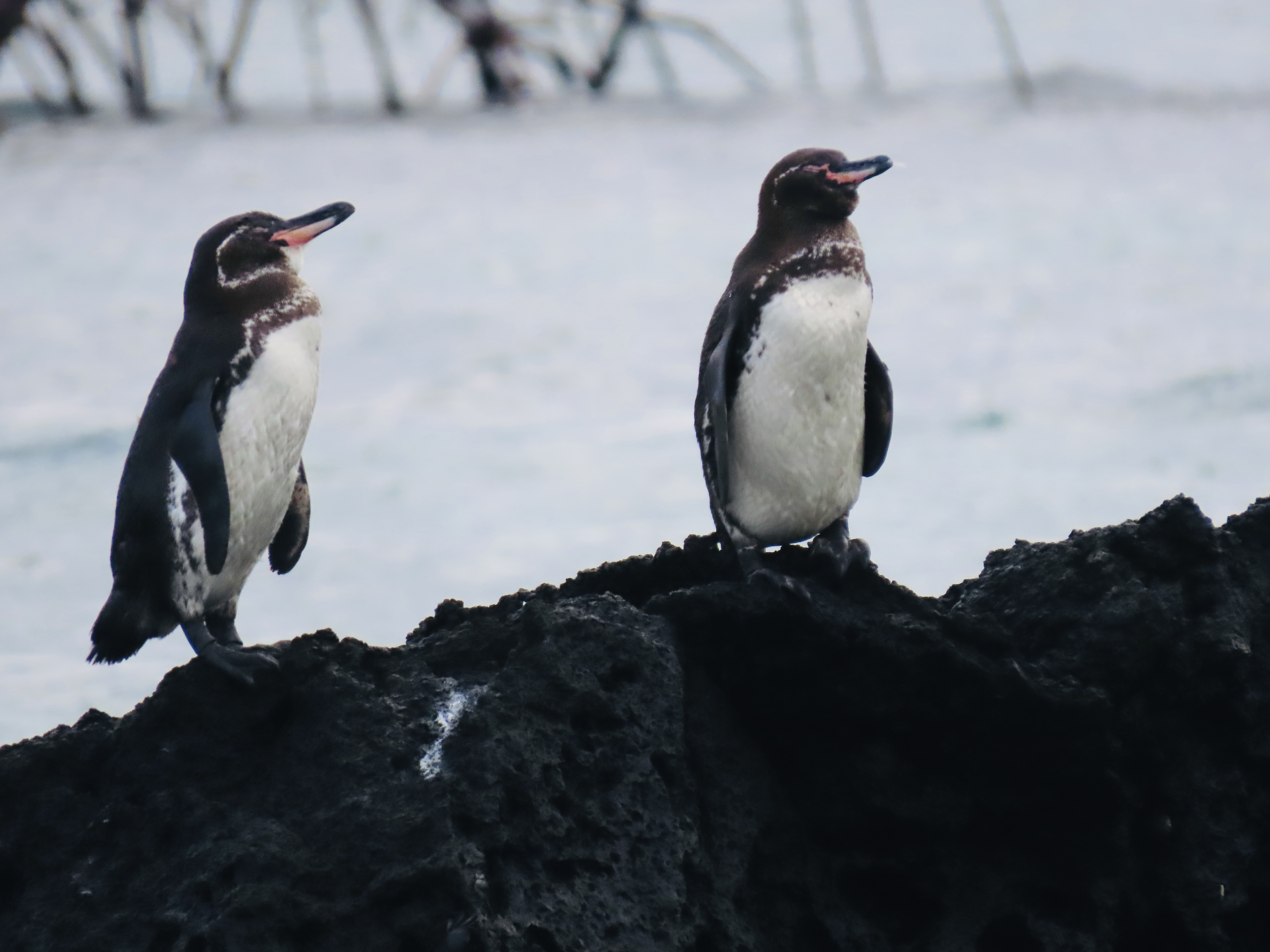
We had much better views on Islabela. Some were roosting and preening while others were swimming and foraging.
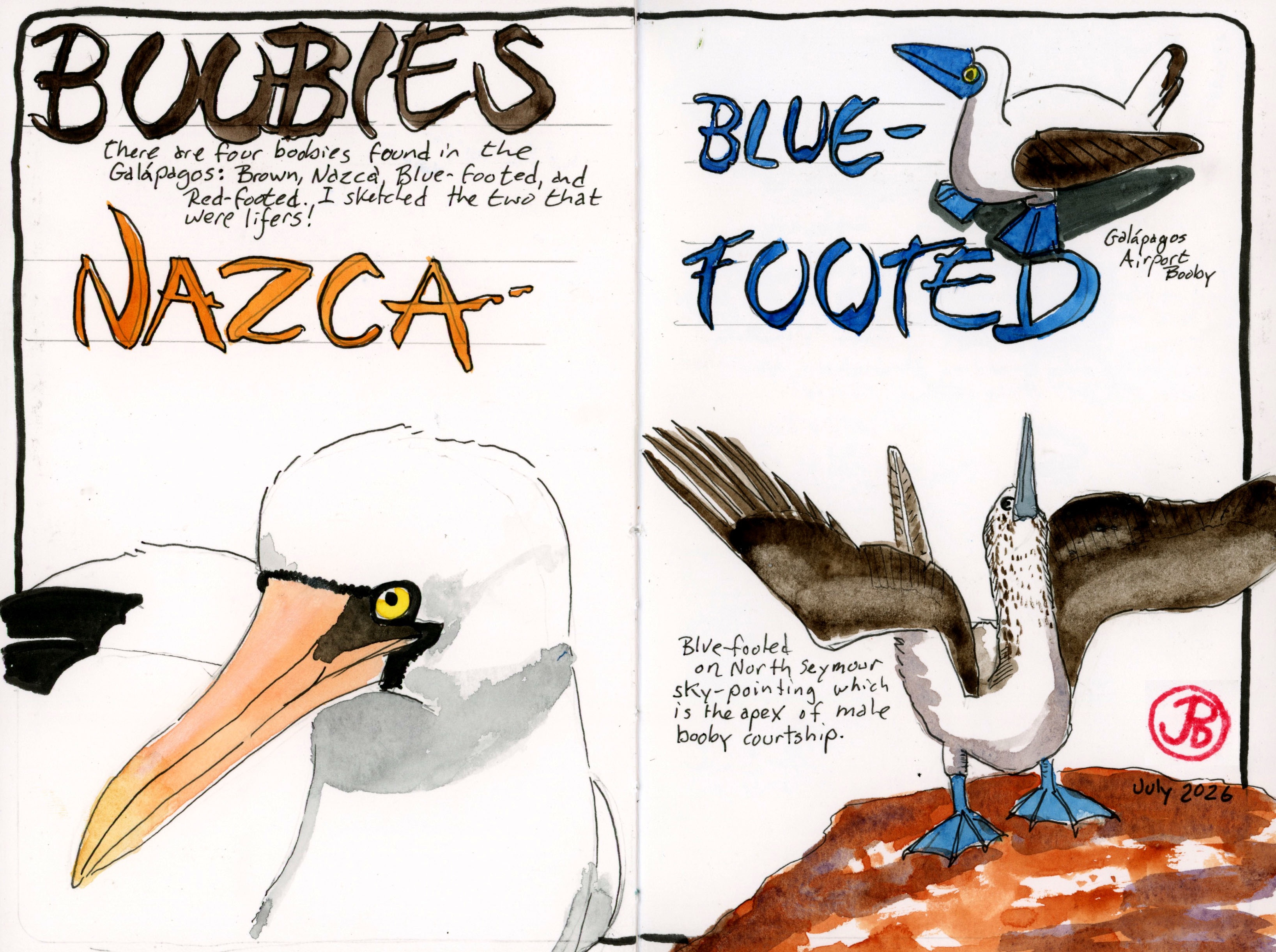
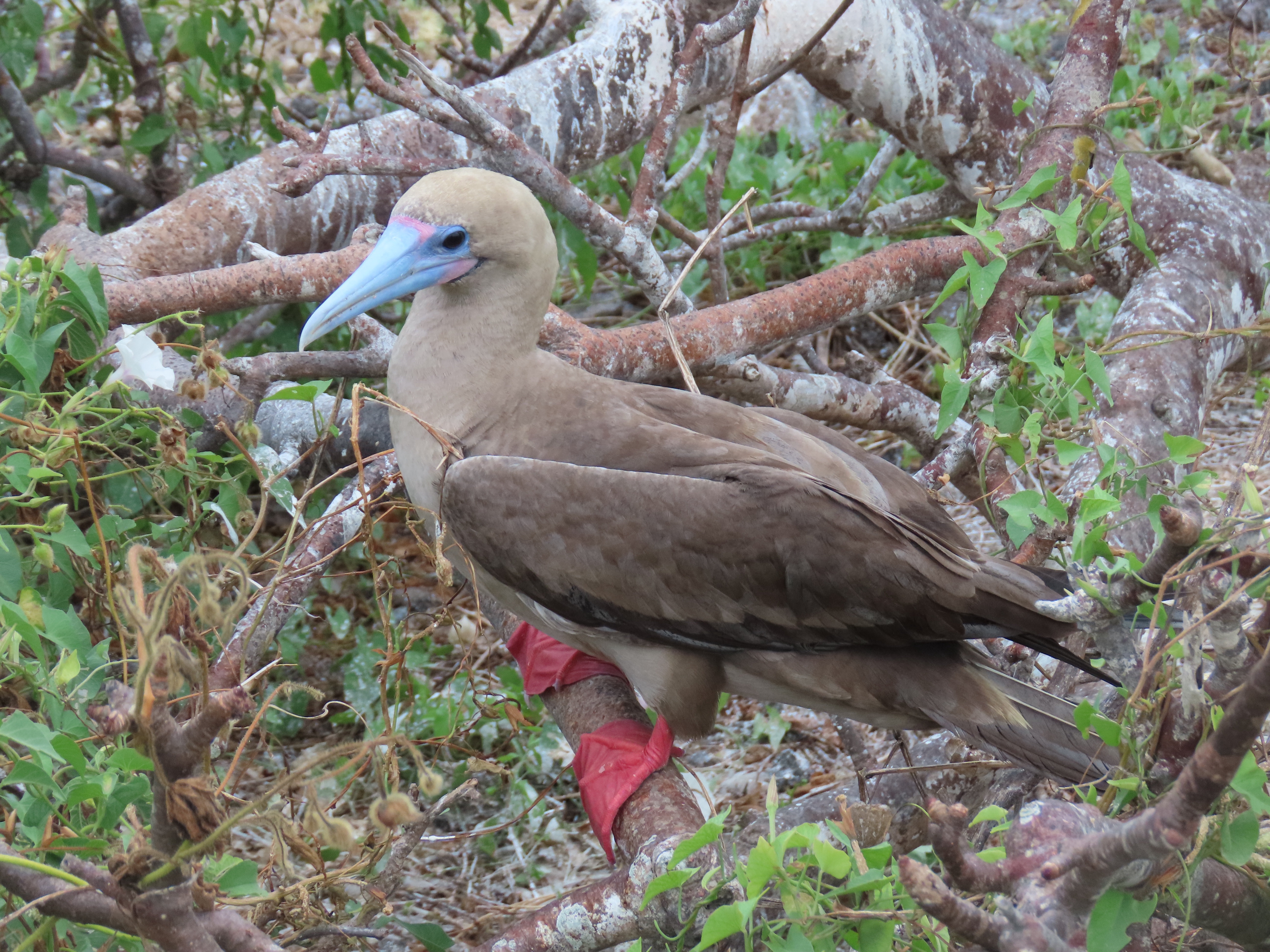
I had seen the red-footed booby before on the coast of California and brown booby is also an infrequent visitor to the coast of the Golden State. But now I was about to see the red-footed really close as well as two other boobies, which would be lifers.
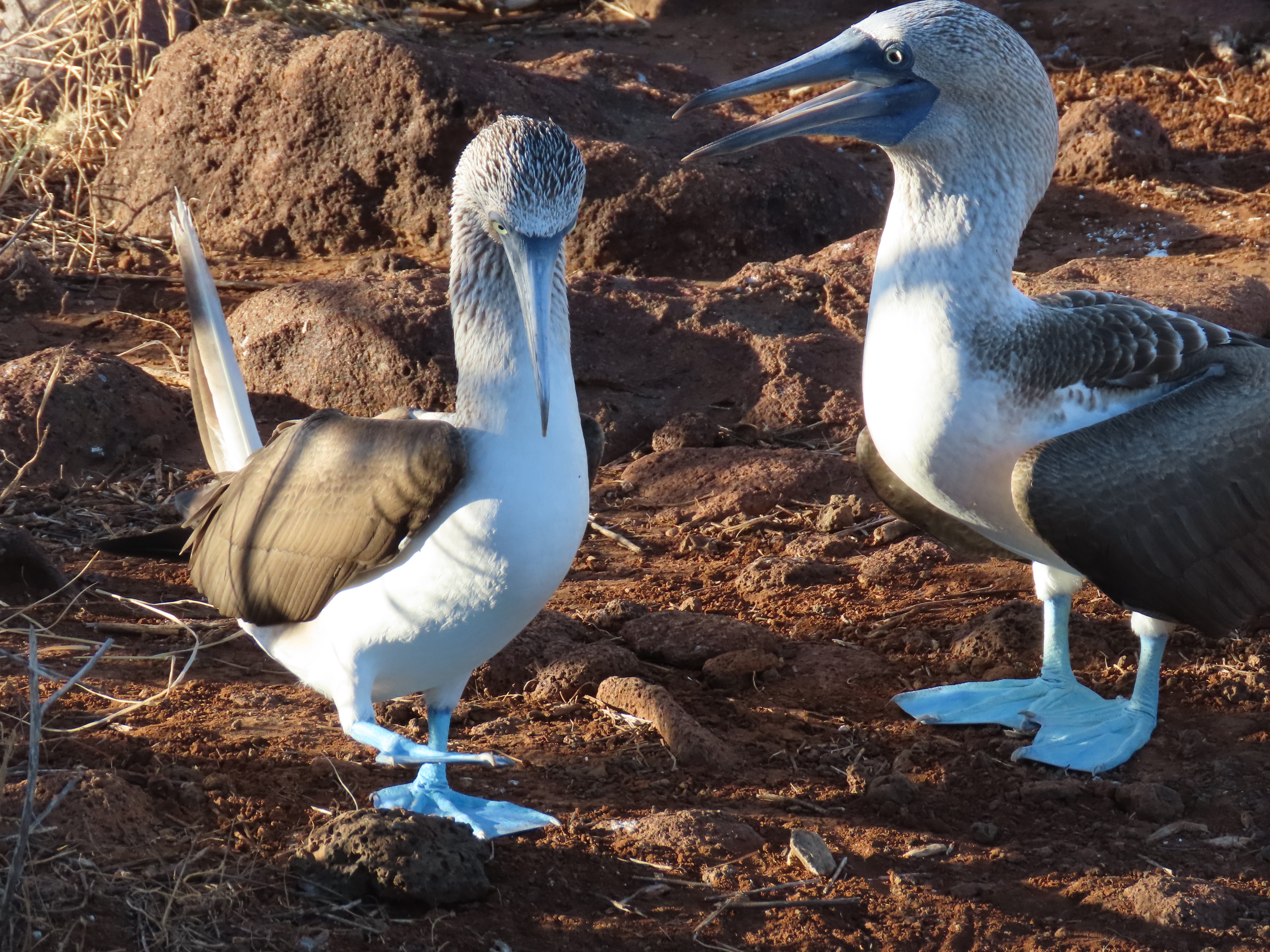
One of these boobies is the poster bird of the Enchanted Islands: the blue-footed booby (Sula nebouxii).
You will find this booby on t-shirts, posters, signs, carved figurines, and other tourist detritus in the gifts shops.
After landing at Baltra and transferring to our catamaran, the Nemo III, our first stop was North Seymour Island.
North Seymour has a large population of blue-footed boobies and swallow-tailed gulls.
At our landing site we were greeted by a sleeping Galápagos sealion and a preening swallow-tailed gull.
What is amazing about the Galápagos is that the wildlife seems to have little fear of humans. We experienced this over and over again.
The word booby is derived from the Spanish word “bobo”, meaning stupid. Perhaps because of the bird’s tame behavior made them easy to catch by hungry sailors.
At North Seymour, the blue-footeds were in the middle of the trail in the midst of skypointing and wing displays which are their mating rituals. Watching these boobies made me feel like I was in a BBC nature documentary and Sir David Attenborough would step out from a nearby bush at any moment!
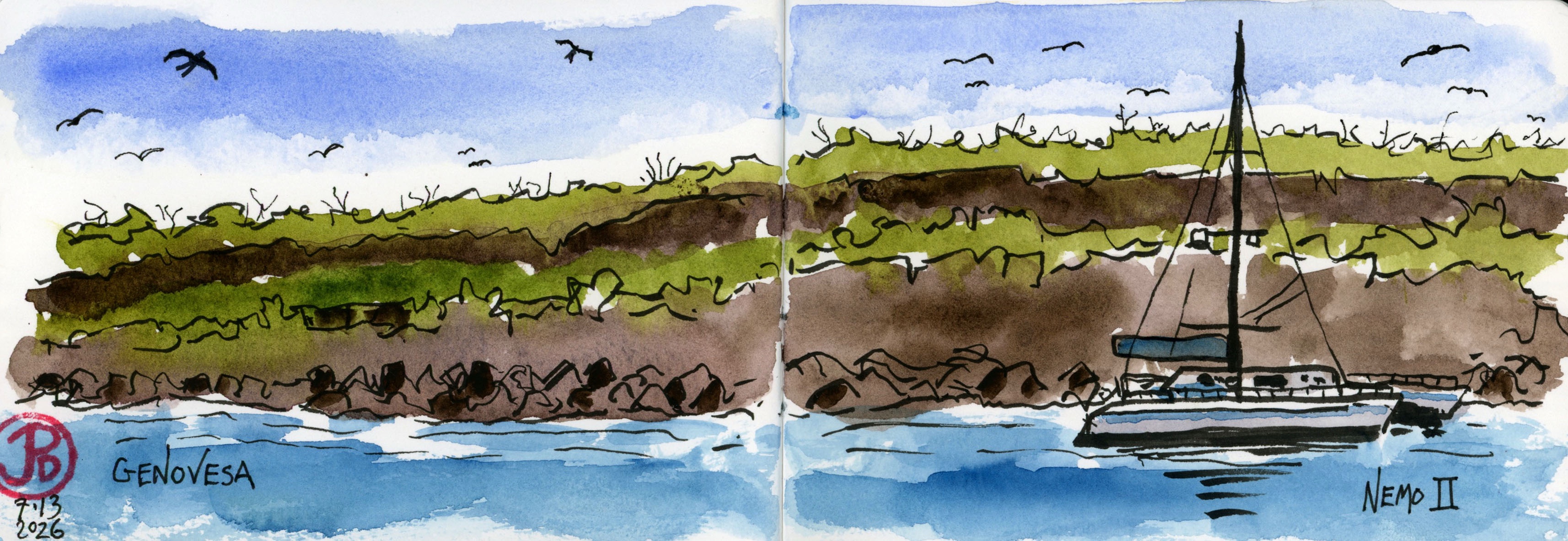
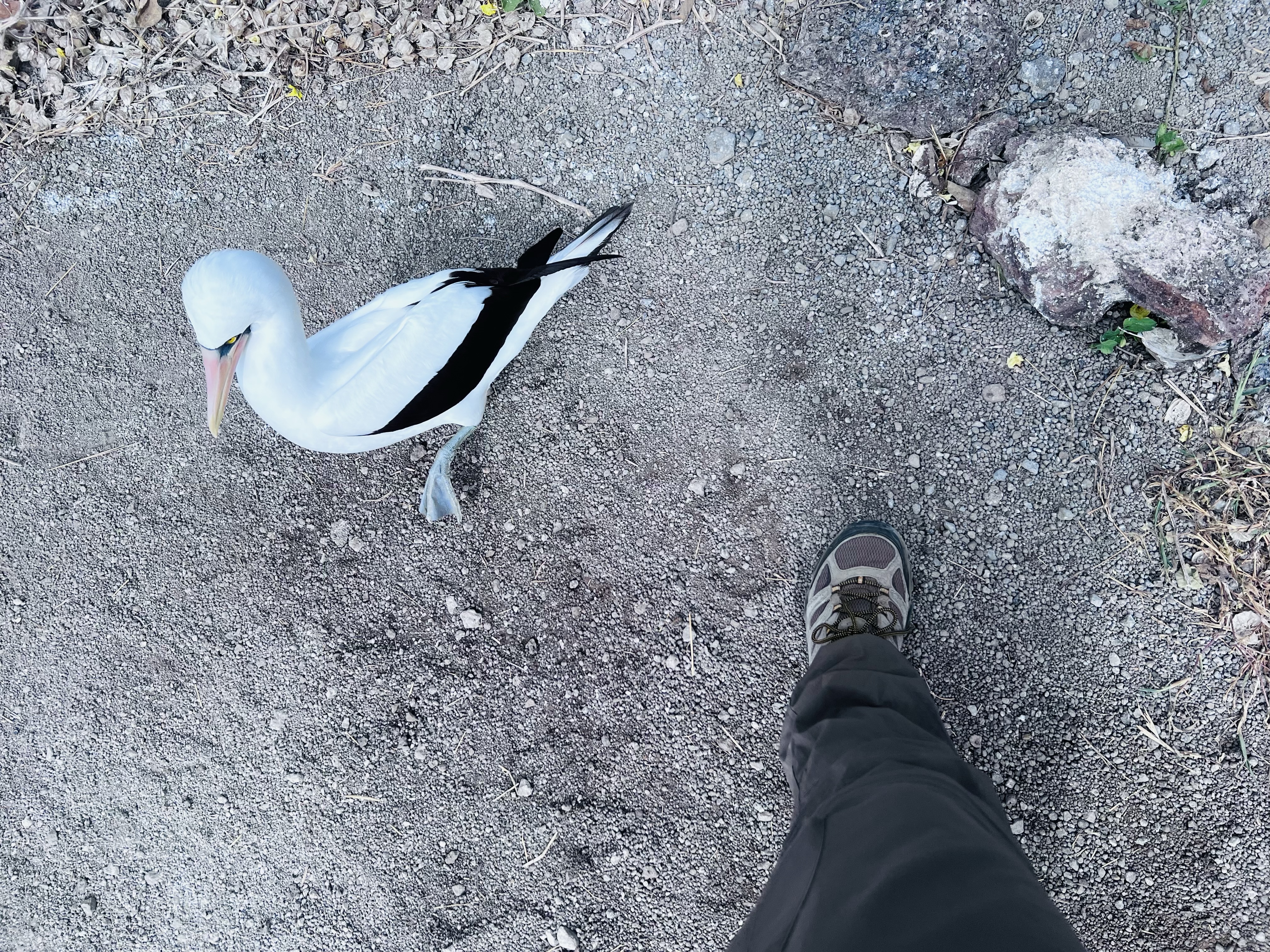
On the following day we had more booby encounters. This time at the island of Genovesa at the Prince Phillip’s Steps. The most common trailside booby was the Nazca booby (Sula granti), another lifer, with red-footeds also in the trees.
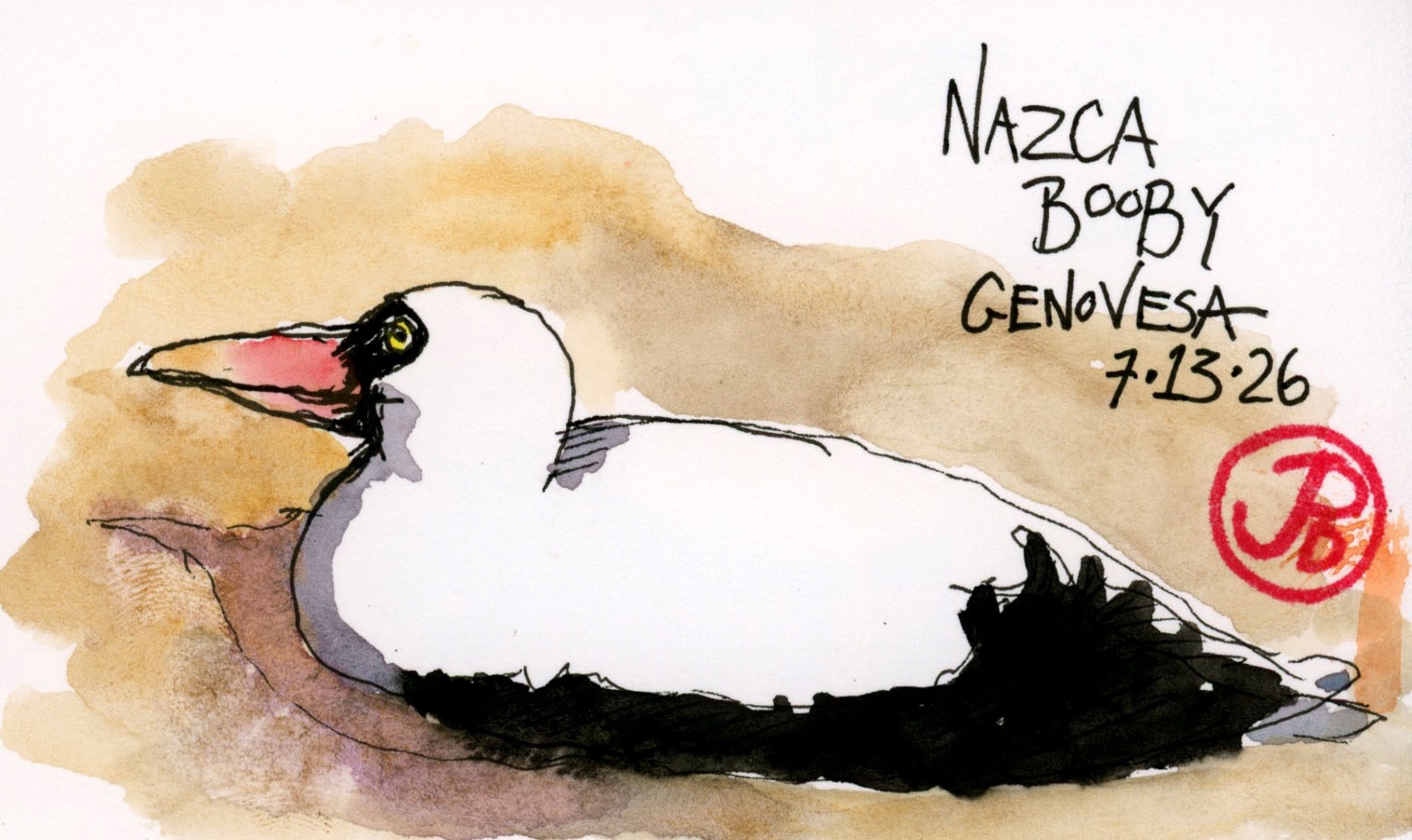
The Nazca is one of the largest boobies of the Galápagos. They are mainly white with a black mask (they were once called masked boobies until they were later split). Out of the three boobies that occurs in the Galápagos, the Nazca flies further out that the blue-footed to forage.
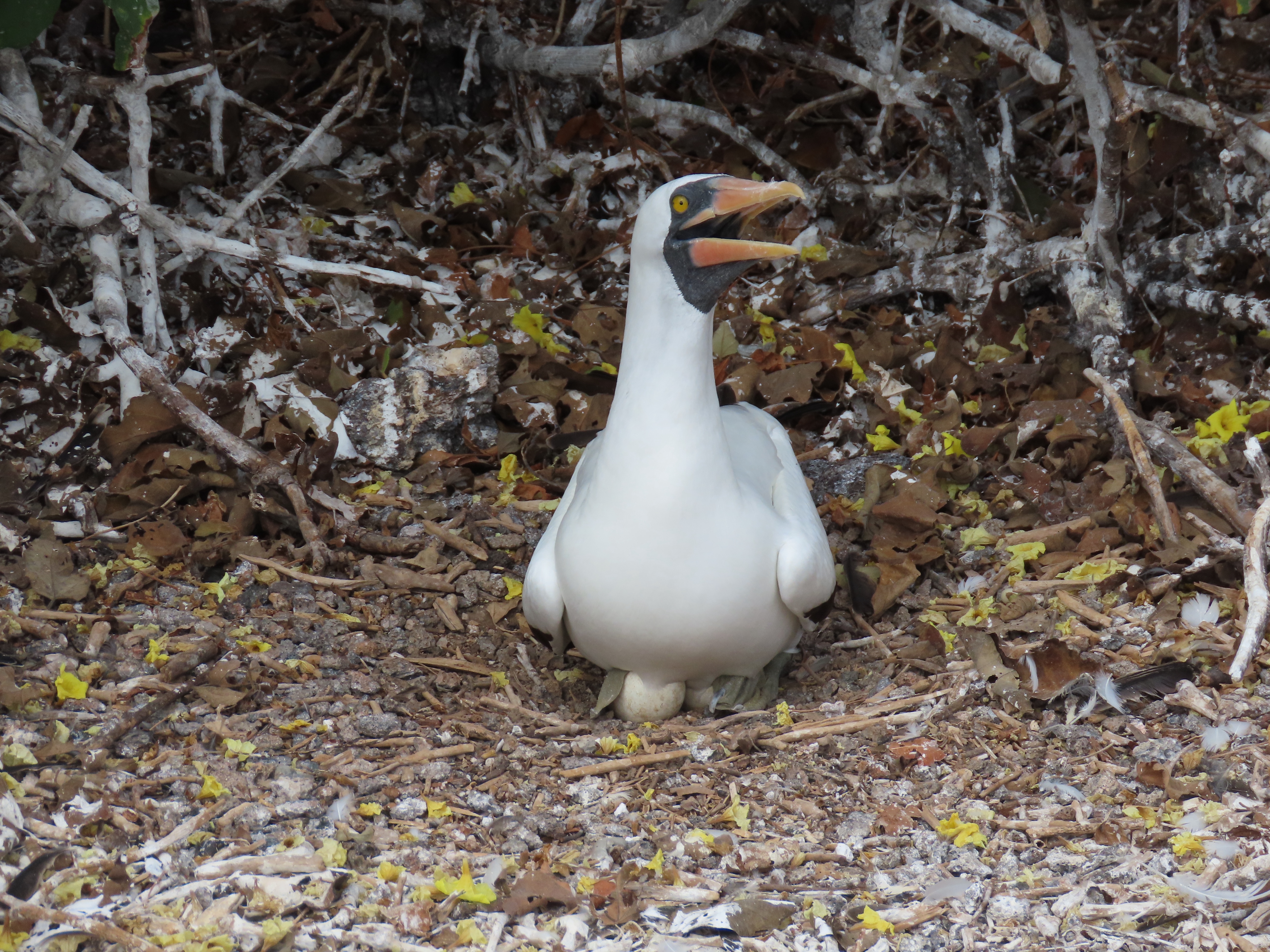
Among the sand and leaf litter, in a circle of non-guano, Nazcas were nesting on the ground. Nazcas always lay two eggs. Usually only one bird survives, the first hatched, which outcompetes its younger sibling.
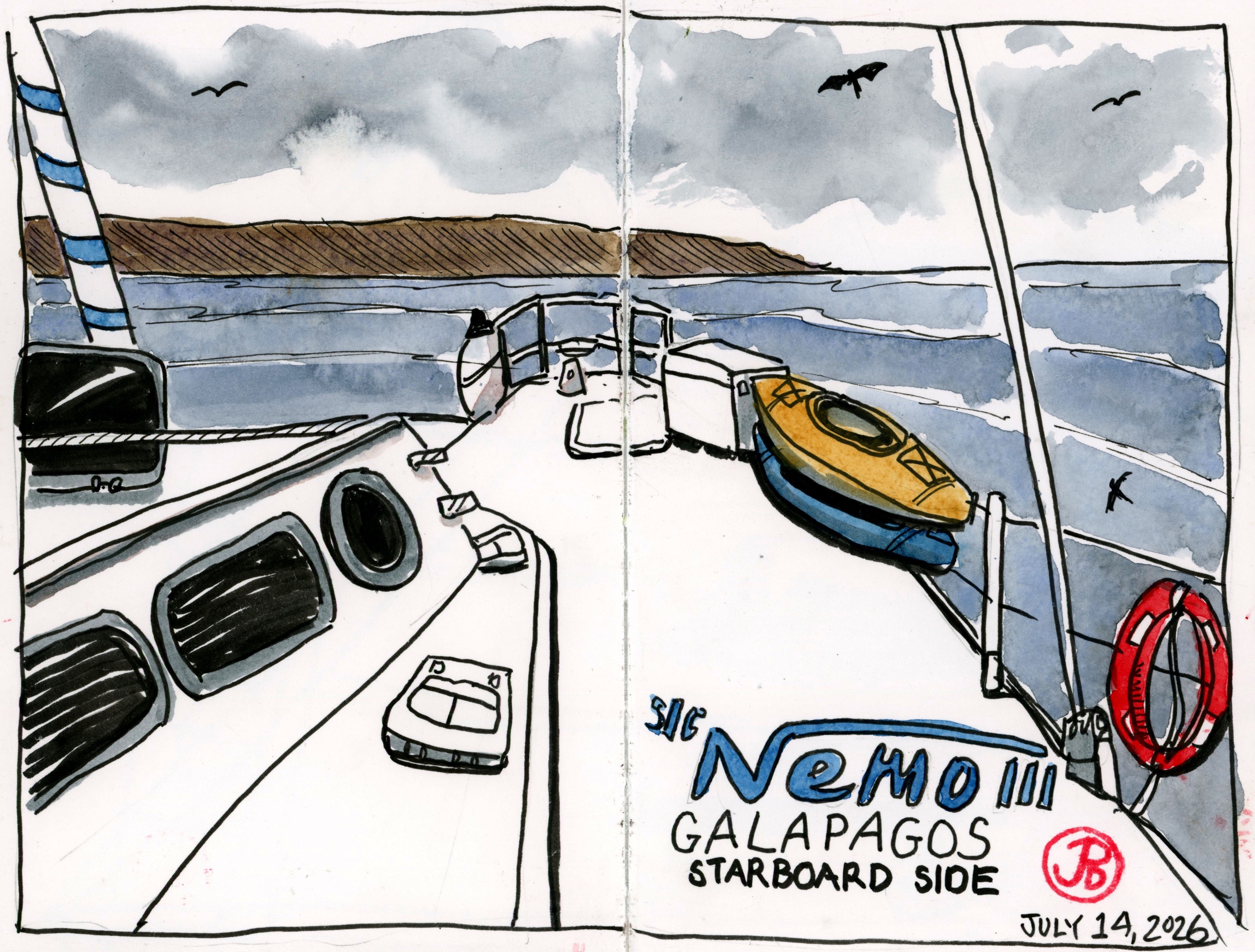
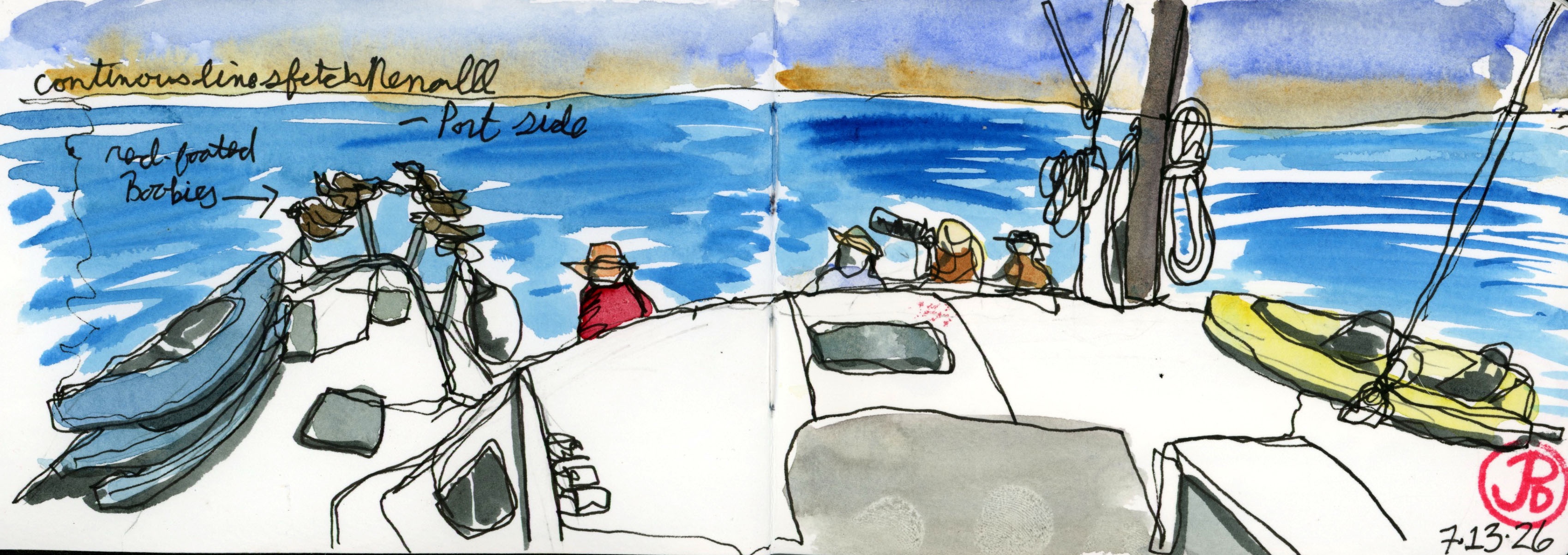
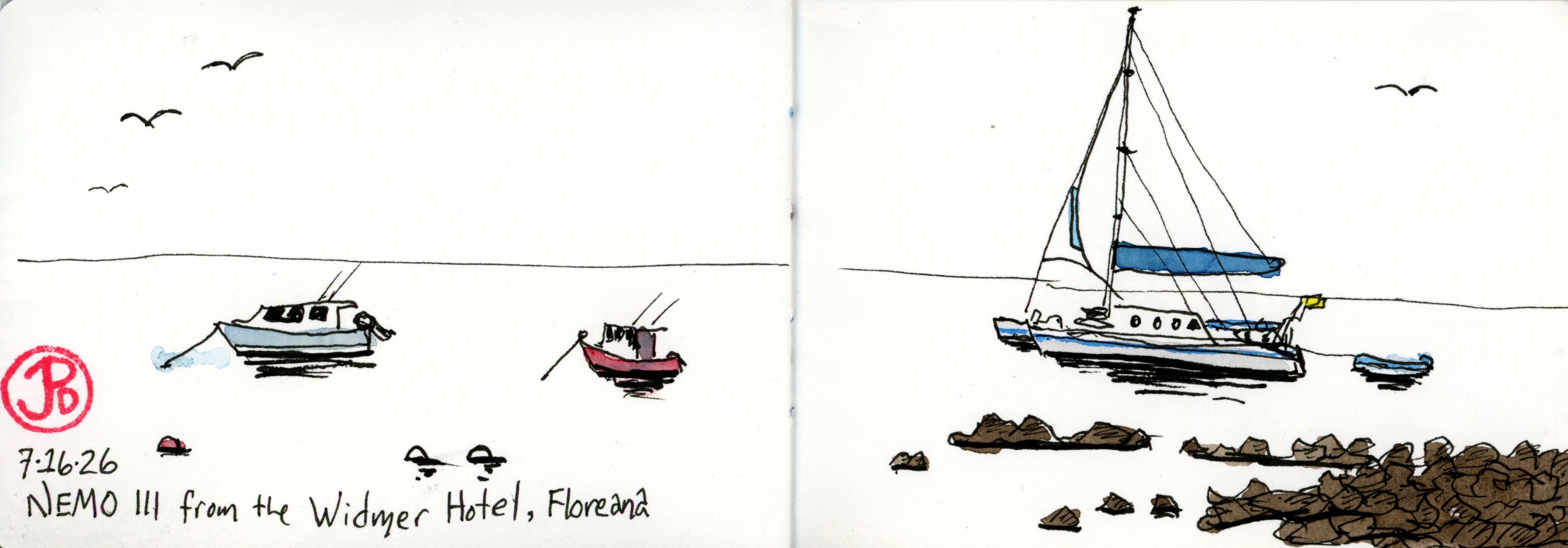
Our vessel for the Galápagos cruise was the catamaran the Nemo III.
It held all thirteen passenger (about half were birders), two guides, and a crew of six. This is like a cruise ship at a smaller scale.
The boat can accommodate 16 passengers in eight cabins. The small galley produced three hearty meals a day which was much appreciated after a day of birding and island exploring.
This catamaran would be our home away from home for eight wonderful days.
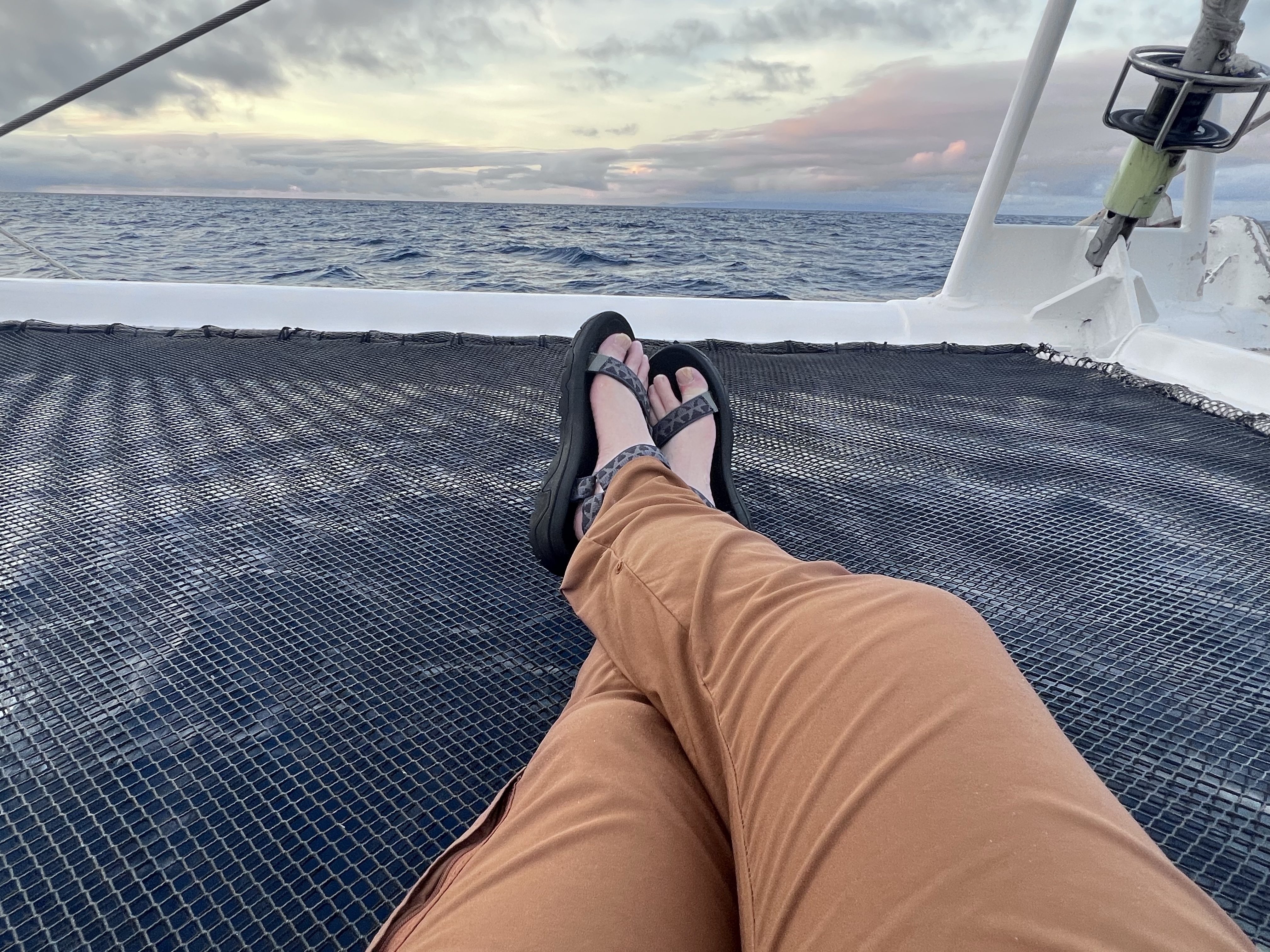
Over our ten day cruise visiting nine of the Enchanted Islands I sketched from the Nemo III as well as a few sketches of the catamaran from the shore.