And where is the place of understanding?
It is hid from the eyes of all living;
And concealed from the birds of the air.
–Job 28:20-21
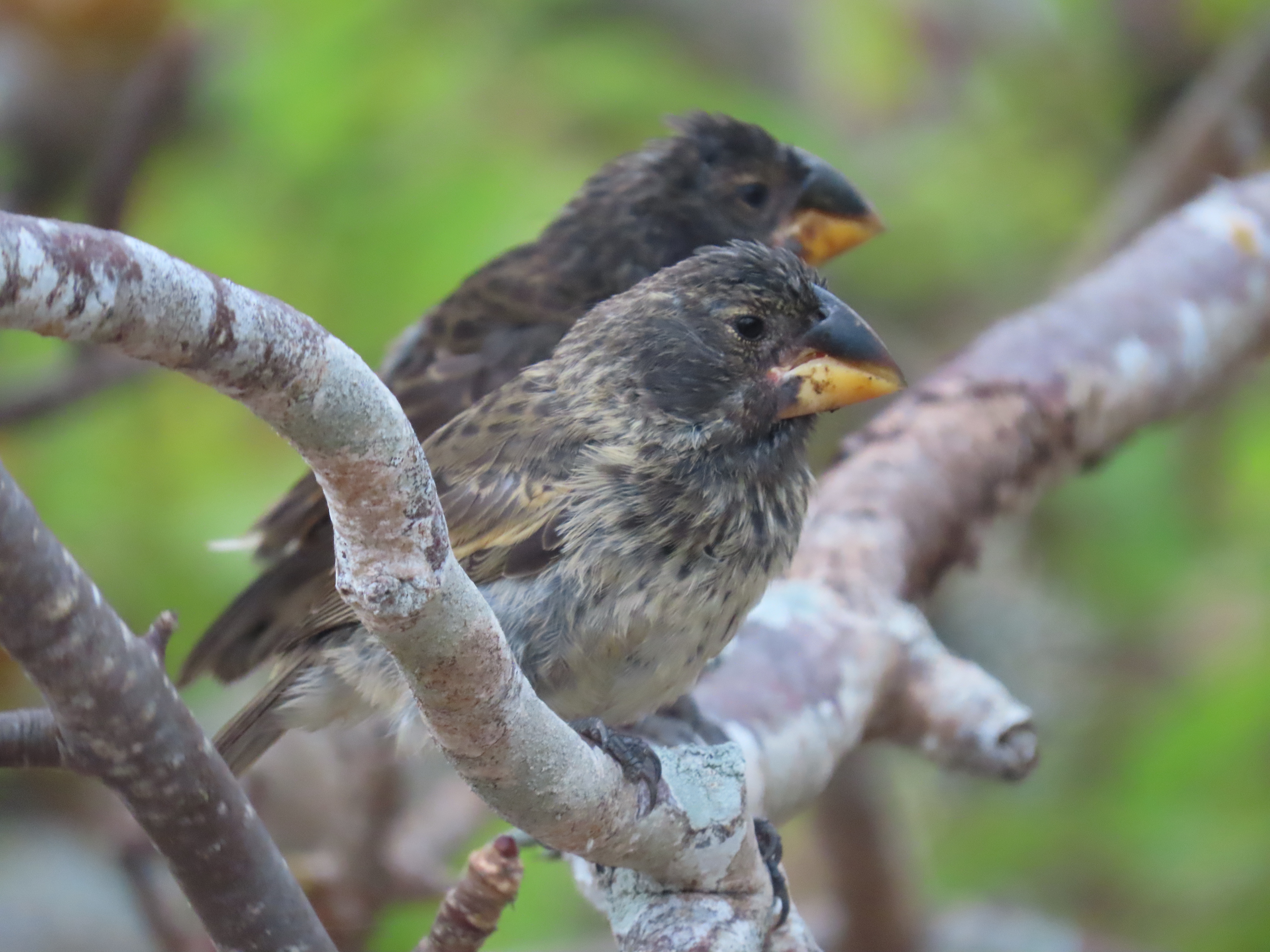
The Galápagos is famous for its very drab but diverse (in beak size) finches. They are rather mistakenly called Darwin’s Finches.
In 1835, Darwin famously only spent five weeks in the Galápagos visiting only four of the islands (I visited nine).
“Darwin’s finches” was never a phrase coined by Darwin himself but his writings in the Voyage of the Beagle and Origin of Species really put the Galápagos and it’s finches on the scientific map.
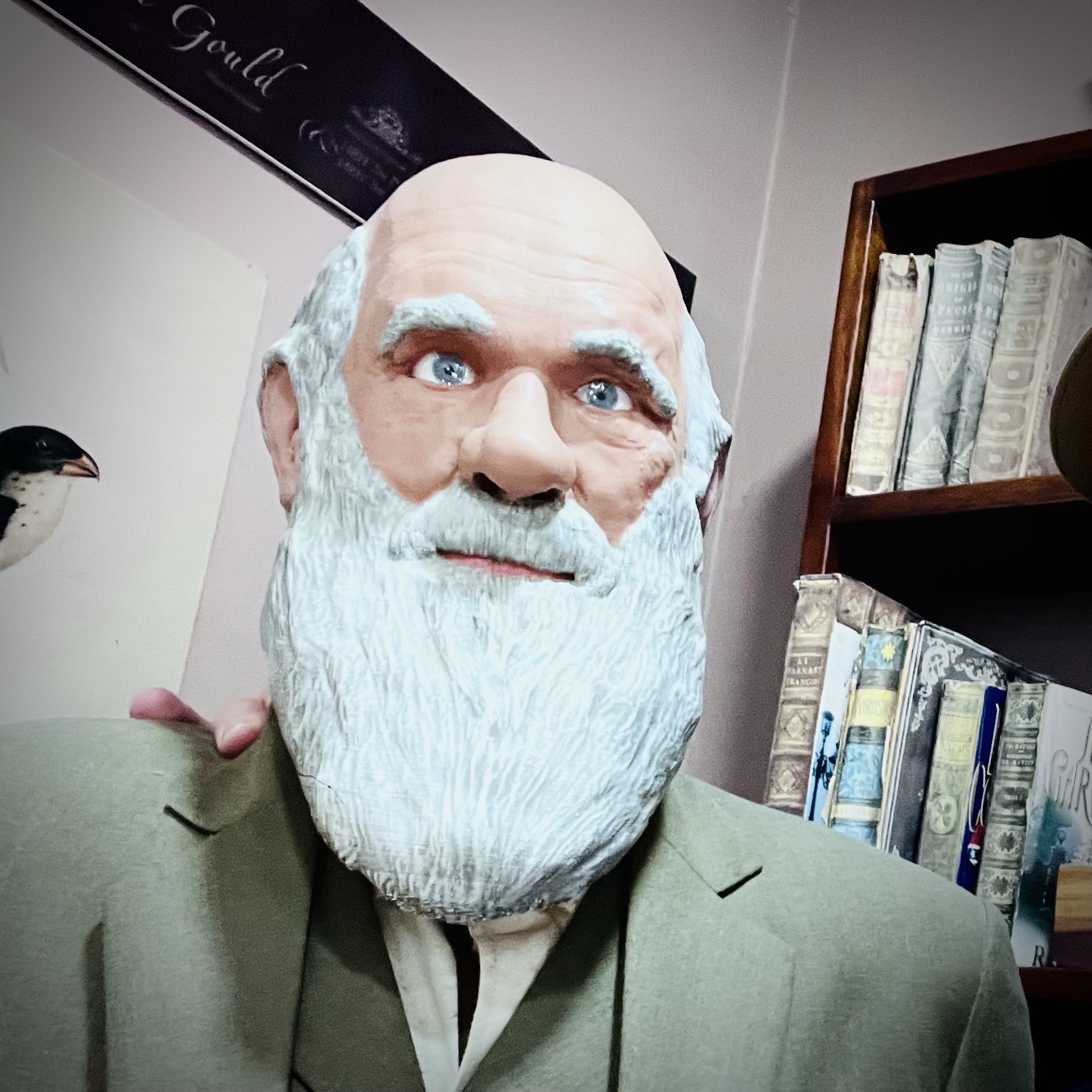
Throughout the islands you will see many statues or paintings of Charles Darwin in many ages of his life. He was in his mid twenties when he visited the Galápagos.
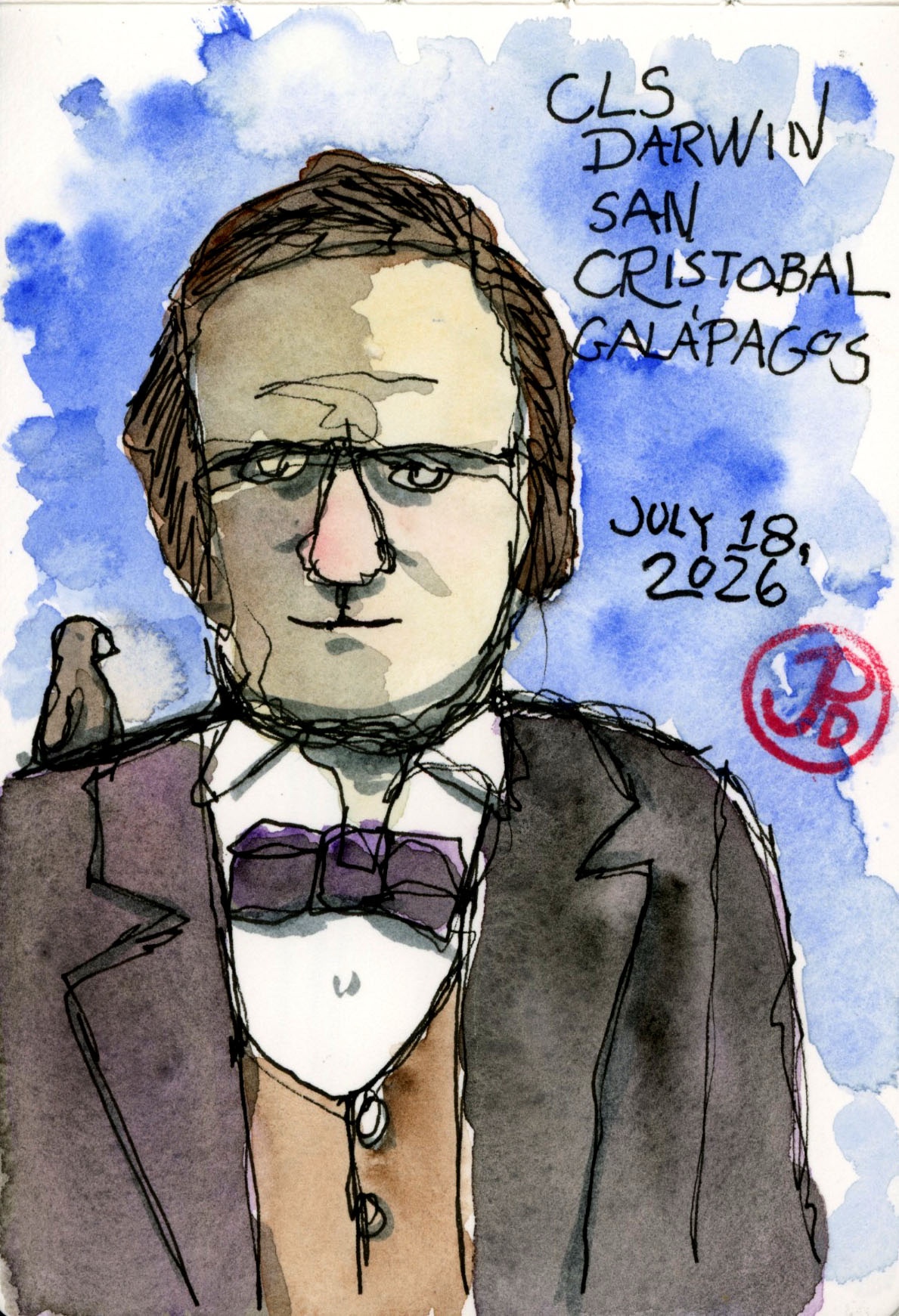
I did a continuous line sketch of one of the statues in San Cristobal with a finch on his shoulder. (The finch was not real but part of the statue.) The statue stands with hand extended as if he is offering to shake your hand. Behind him is a model of the Beagle, looking more like a play structure you might find in a fast food restaurant.
In the excellent Pulitzer Prizewinning book The Beak of the Finch by Jonathan Weiner, the author tells the story of Peter and Rosemary Grant and the long term study of the finches of a small Galápagos island. Through their multi-decade research (measuring finch beak size) they are able to witness evolution in action.
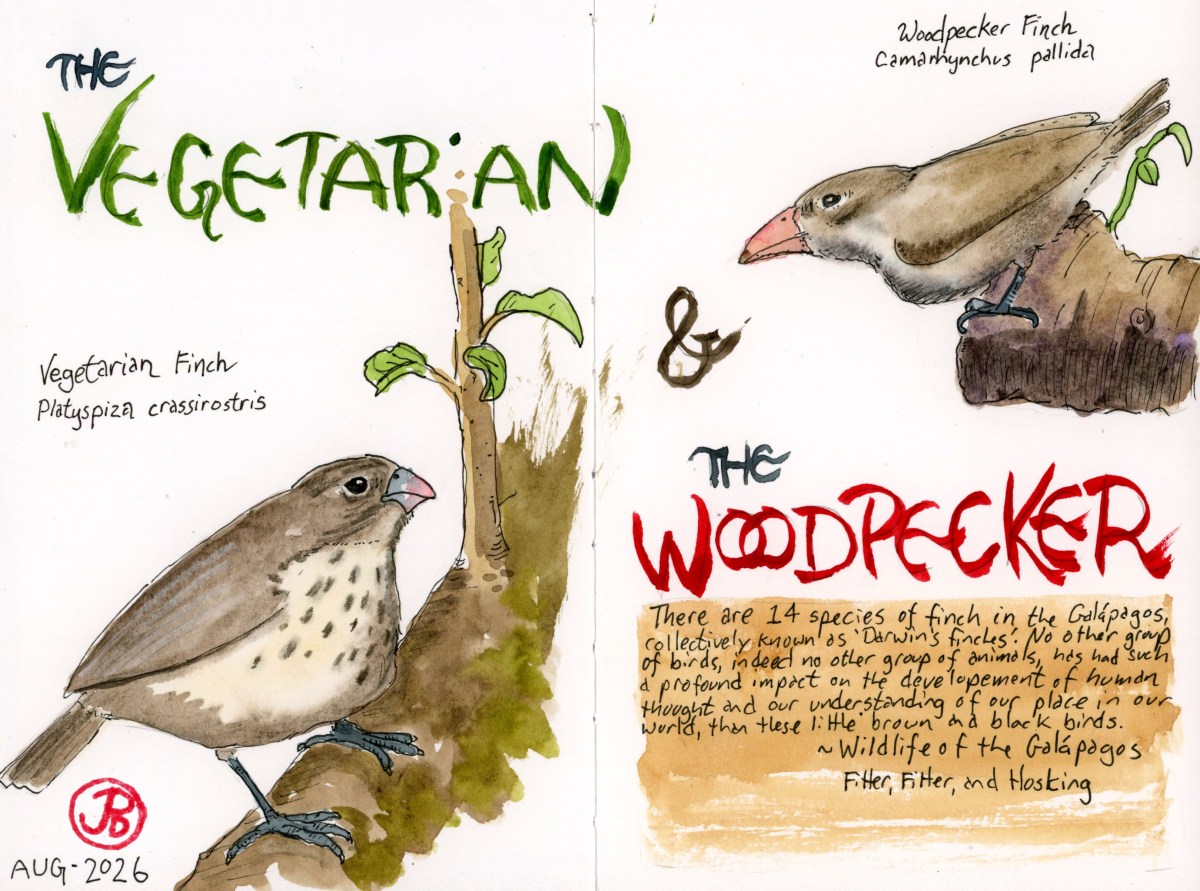
For my spread of the finches, I sketched two of my favorites: the vegetarian and the tool using woodpecker finch. Both sketches are based on my photos.

