Image

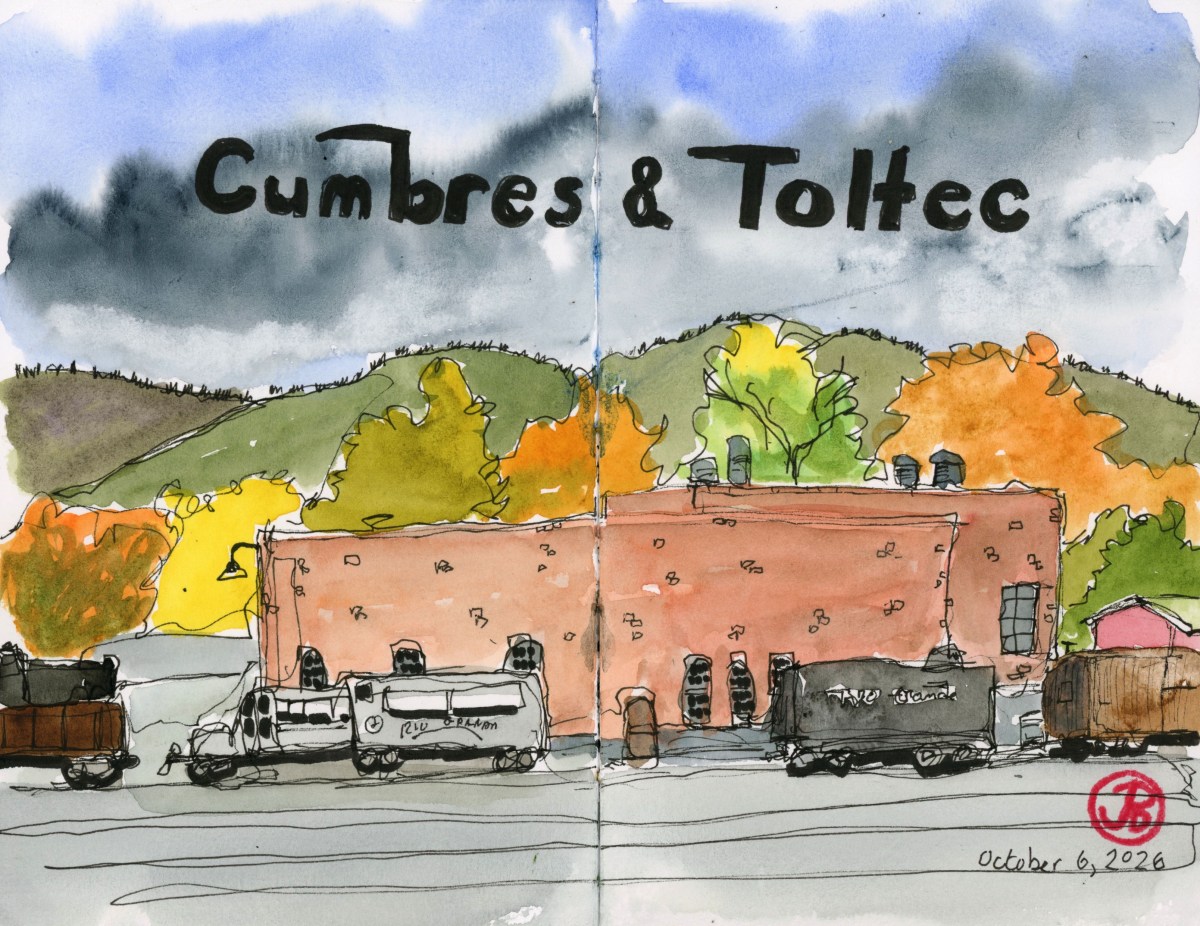
Chama Yard

I really planned my New Mexico trip around the Cumbres & Toltec Scenic Railroad, the railroad my best friend’s dad ran, as it’s director, from 1970 to 1980.

This 68 mile route is the longest and highest tourist narrow gauge railroad in the country. It has also won awards for being the most scenic in the United States.

I arrived in Chama in the afternoon and after I checked into my old school, threadbare hotel, I headed to the depot and railyard.

The Cumbres & Toltec is an open history book and you are open to explore the yard, its stock, and facilities.
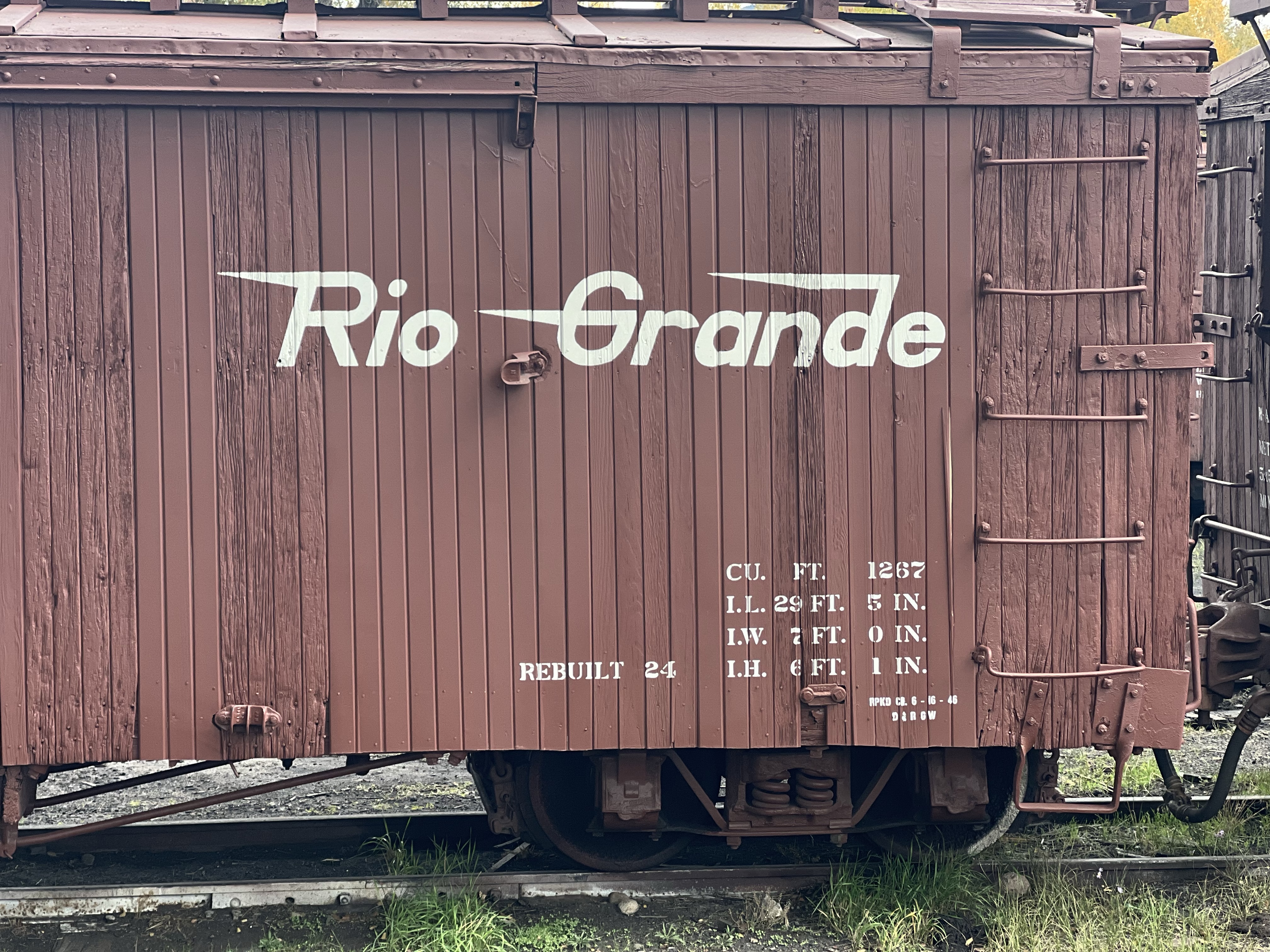
This railroad was once part of the Denver & Rio Grande and they have lots of freight cars.

The railroad was once connected to Durango (which is also preserved as the Durango and Silverton Railroad). When business in the area mines fell, the railroad ripped up the tracks, isolating the narrow gauge line from other parts of the rail network.

In the early 1970’s the railroad was purchased by the states of Colorado and New Mexico and my best friend’s father, Bob Keller ran the scenic railroad from Chama, New Mexico to Antonio, Colorado.
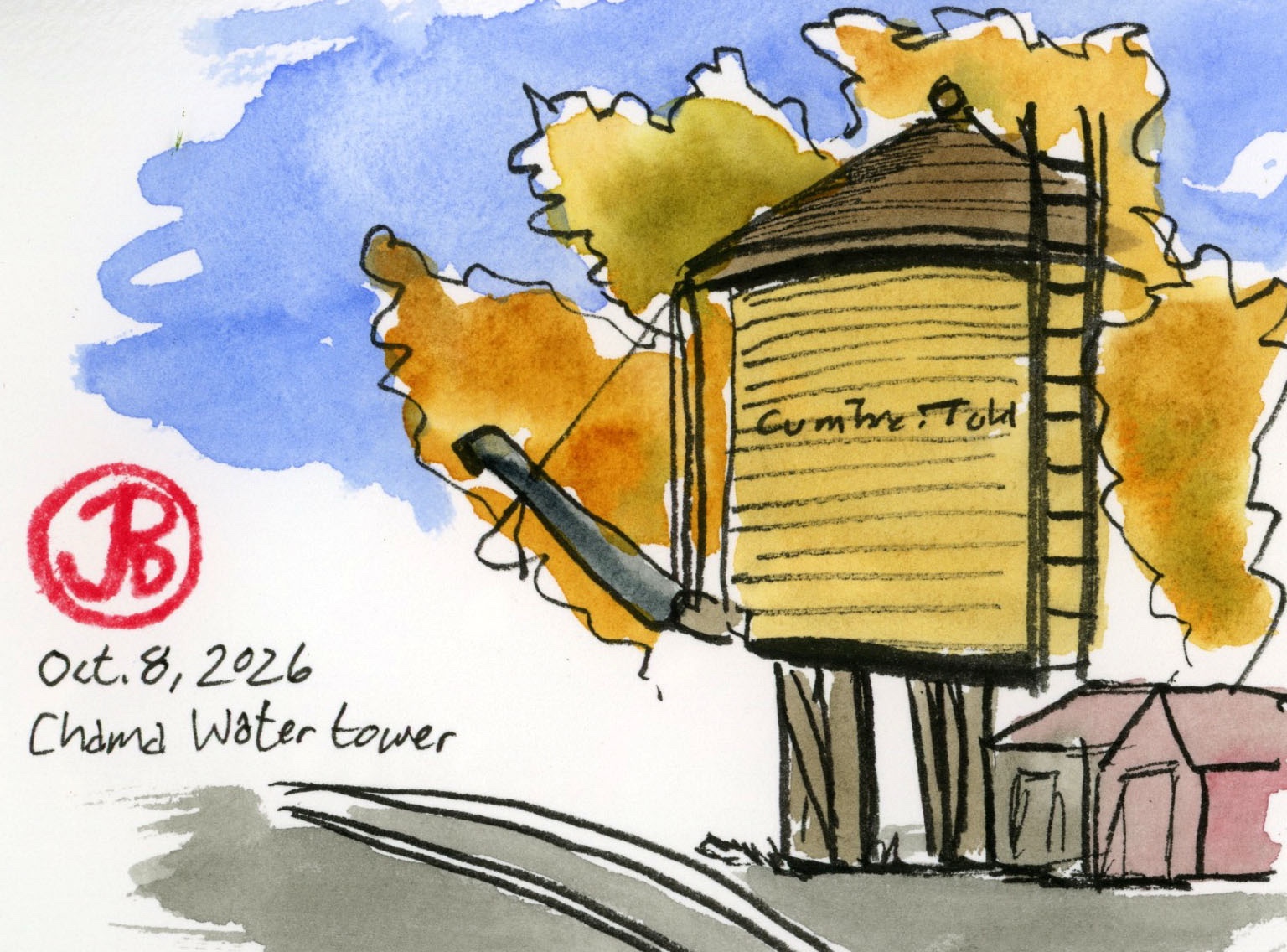
The Chama water tower holds 50,000 gallons of water. This tower has two spouts on both sides of the tracks.

The yard at Chama includes steam locomotives, a diesel, rolling stock (both freight and passenger), a water tower, a coal tipple, engine shops, and a passenger depot,
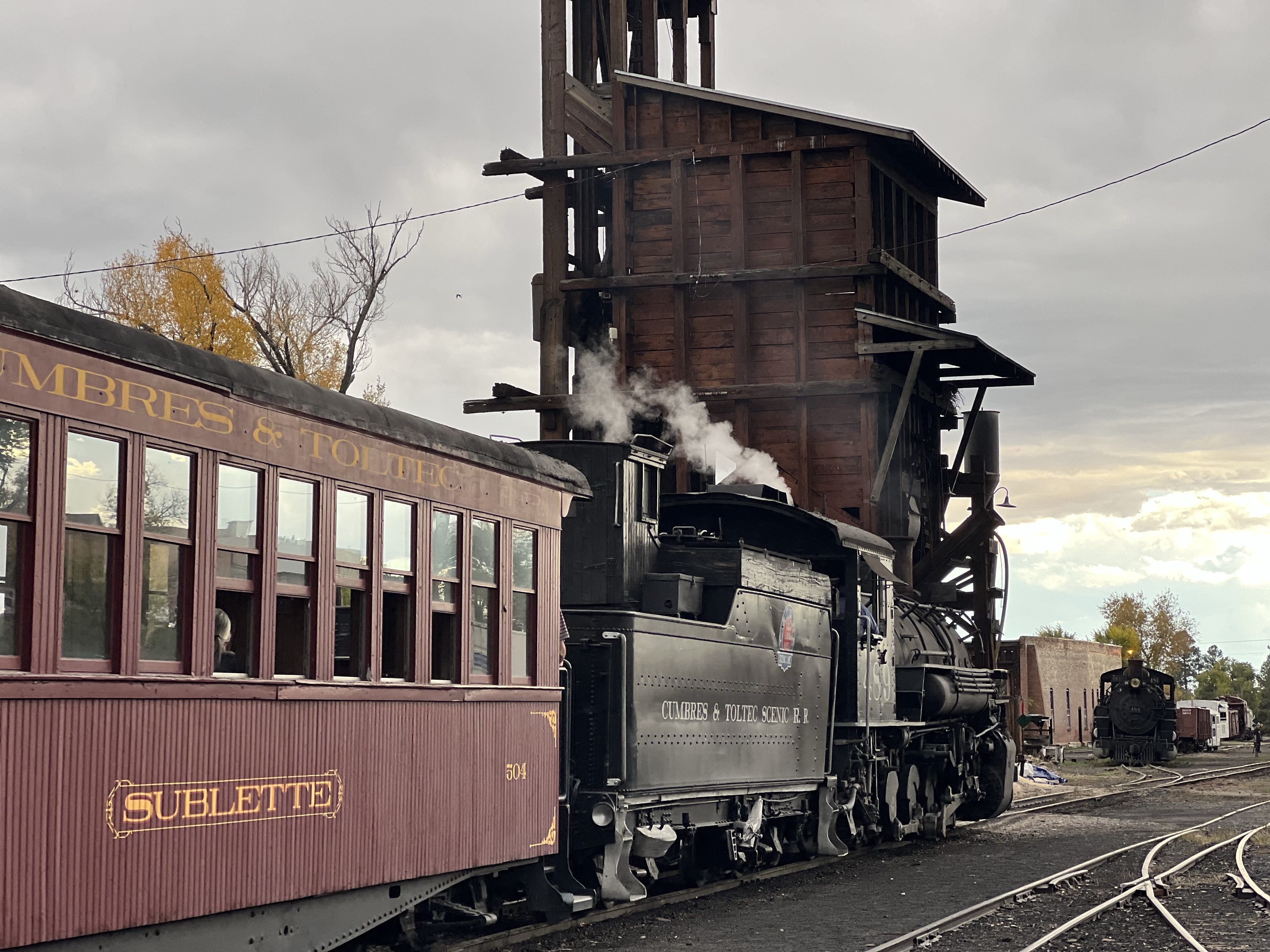
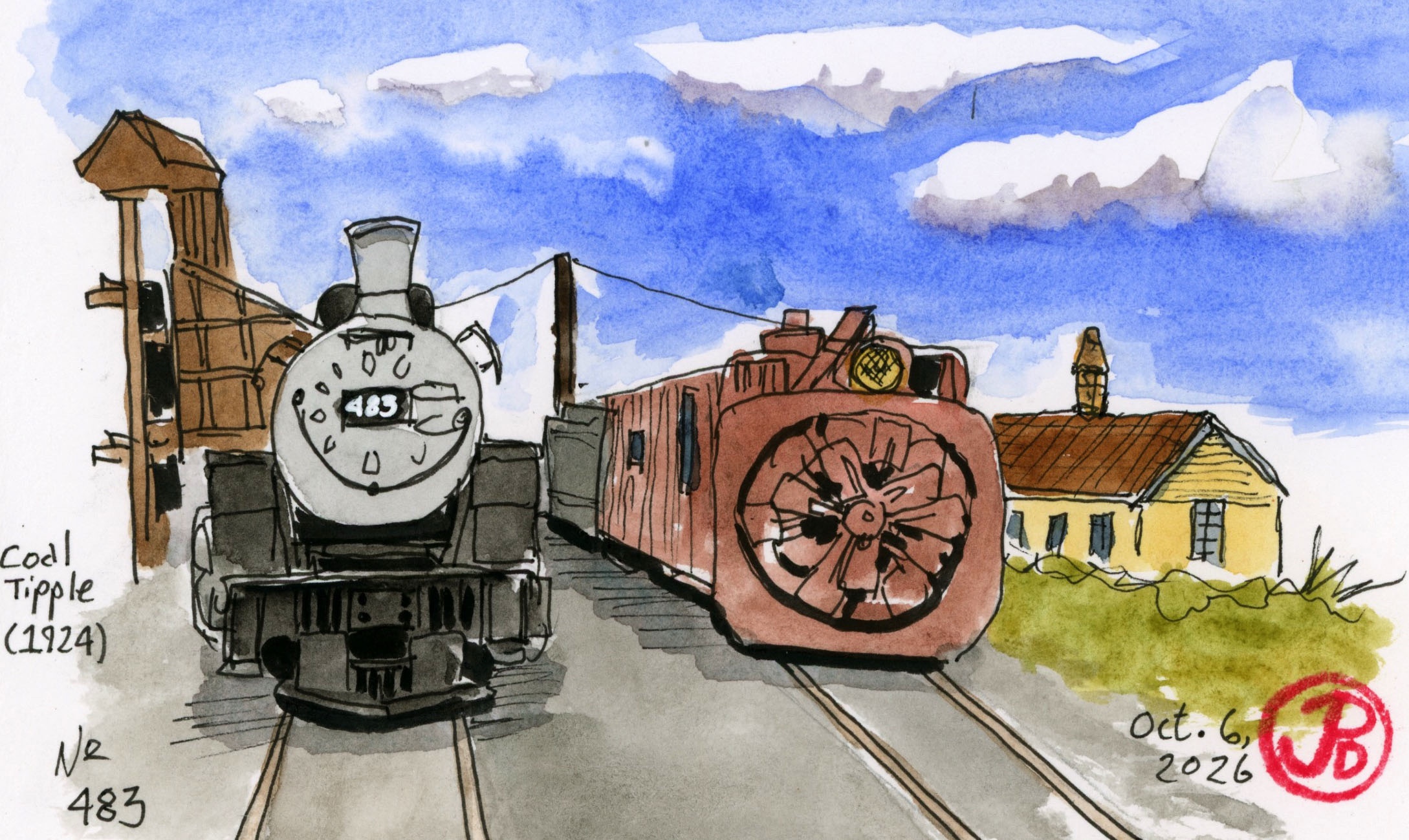
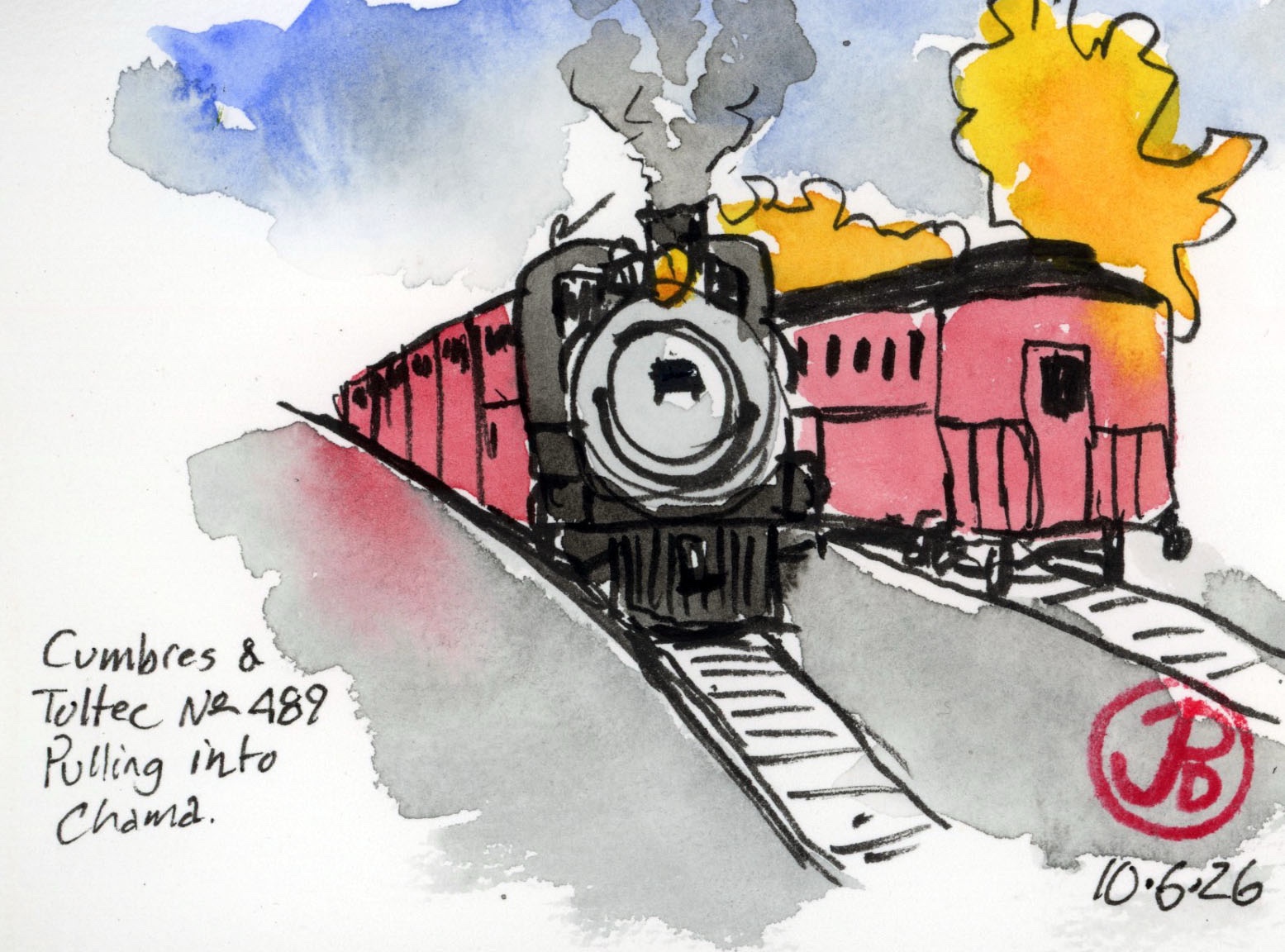
In the afternoon, No 489 returns through the Chama Yard and past the historic coal tipple, built in 1924. No. 489 is now an oil burner.
The K-36 No. 483 is now on display and used for parts. On the right is one of two rotary snowplows (OM) at Chama.
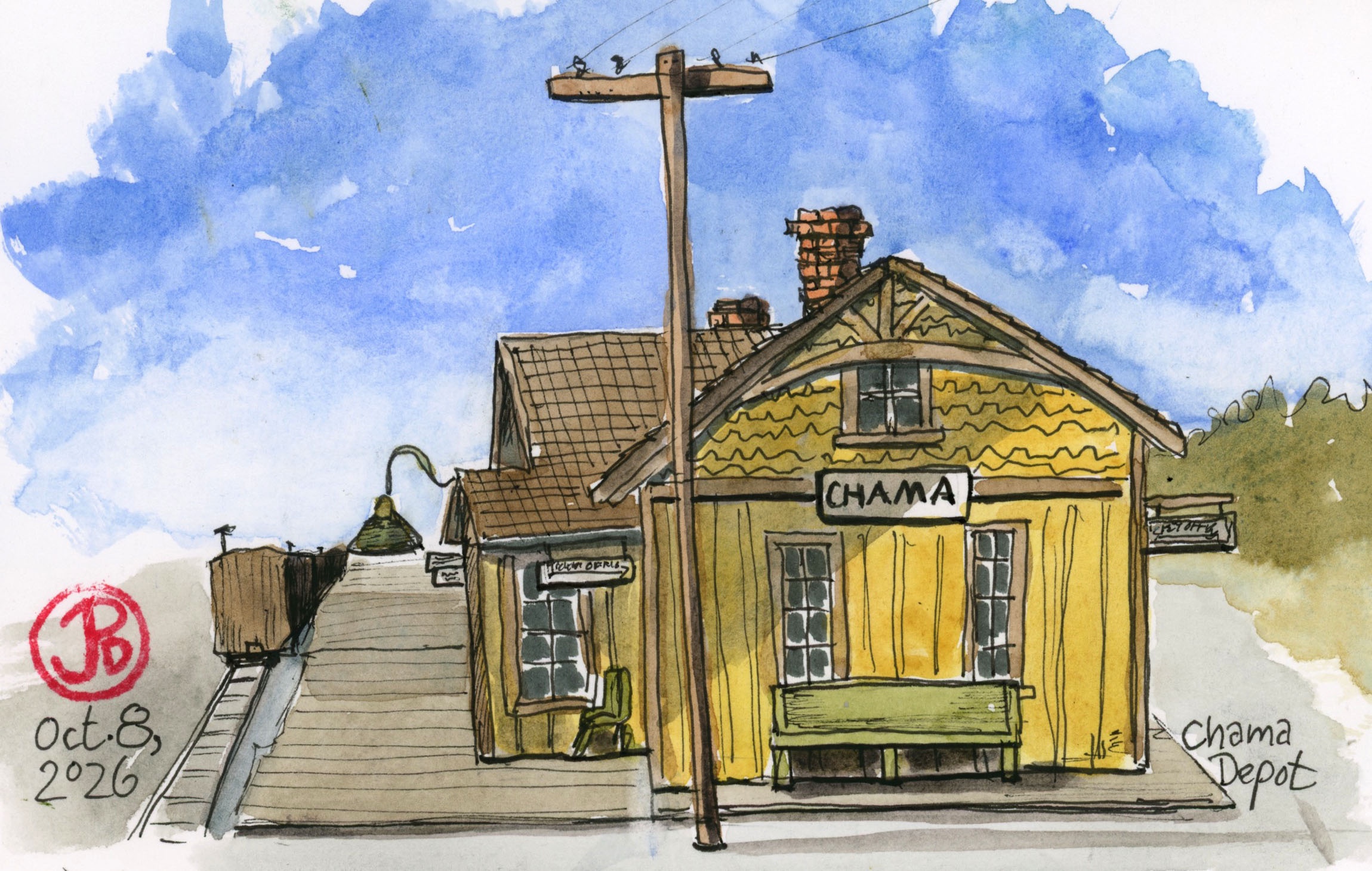
The historic passenger depot at Chama built for the Denver & Rio Grande in 1899.
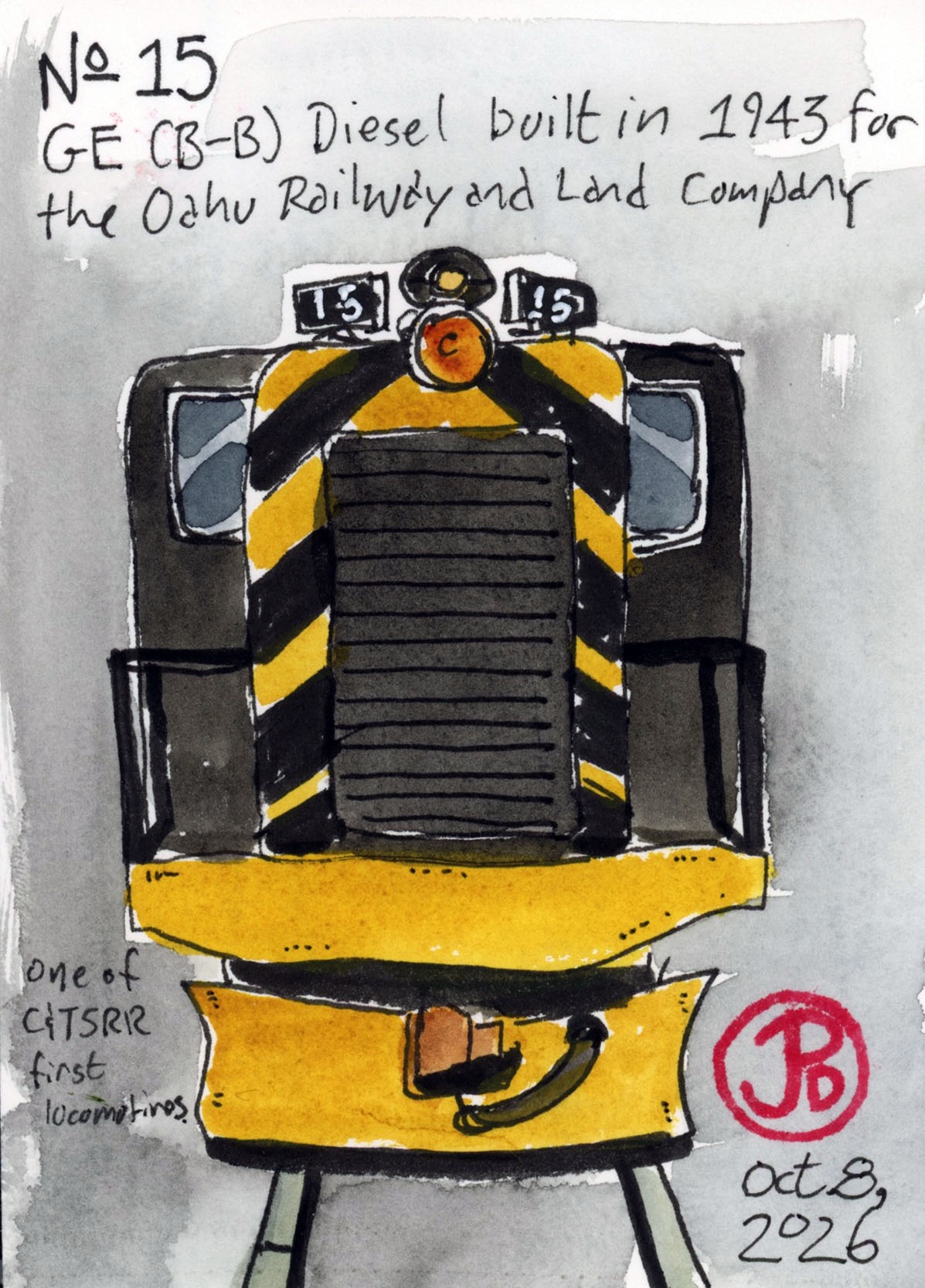
This is one of two narrow gauge diesels bought from the Oahu Railway and Land Company. My best friend remembers his dad’s involvement in the locomotive’s move from Oahu to California.
Image

Denver & Rio Grande’s K-36s

The Denver & Rio Grande needed upgrades to their narrow gauge motive power and they turned to Baldwin Locomotive Works for a solution.

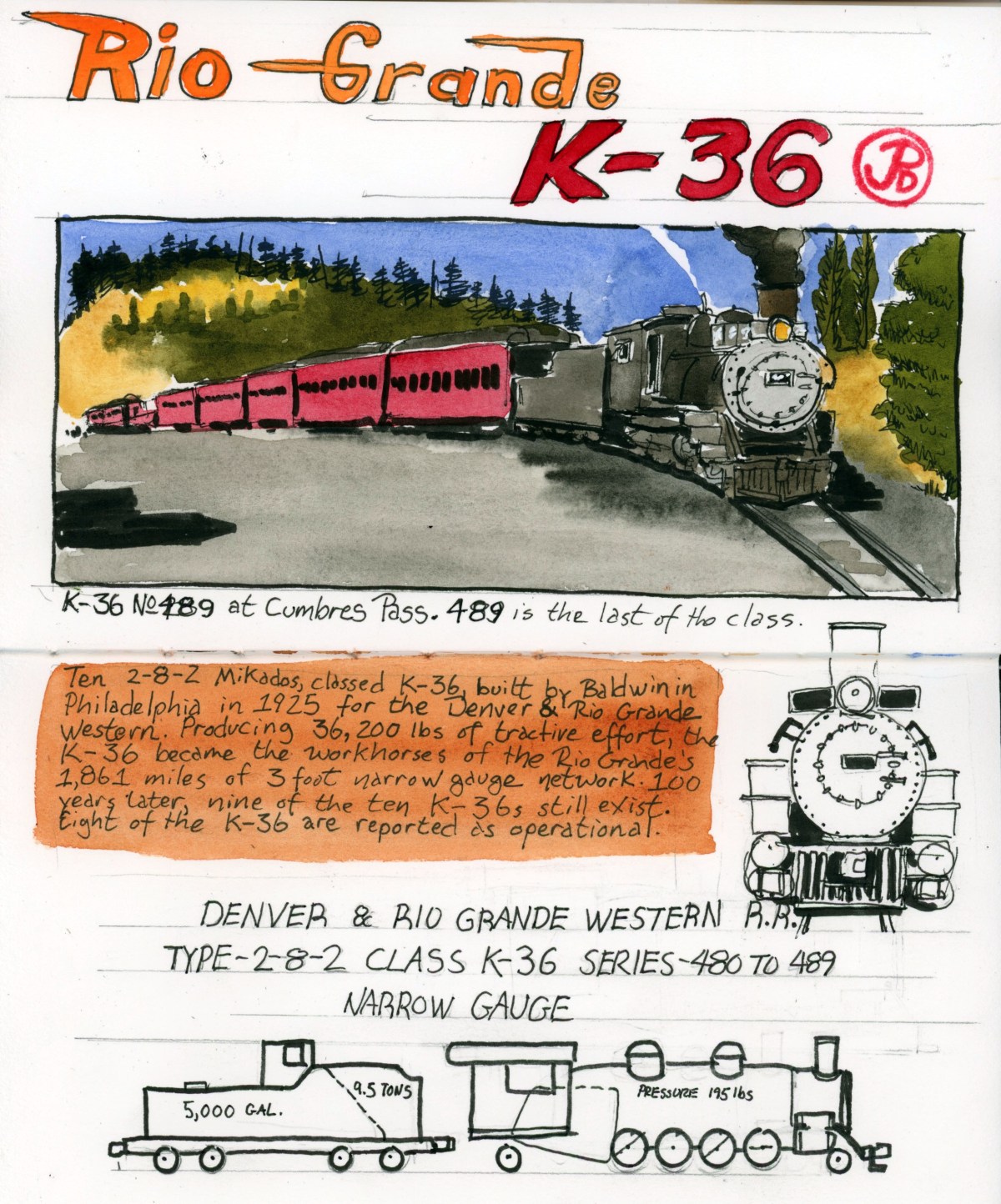
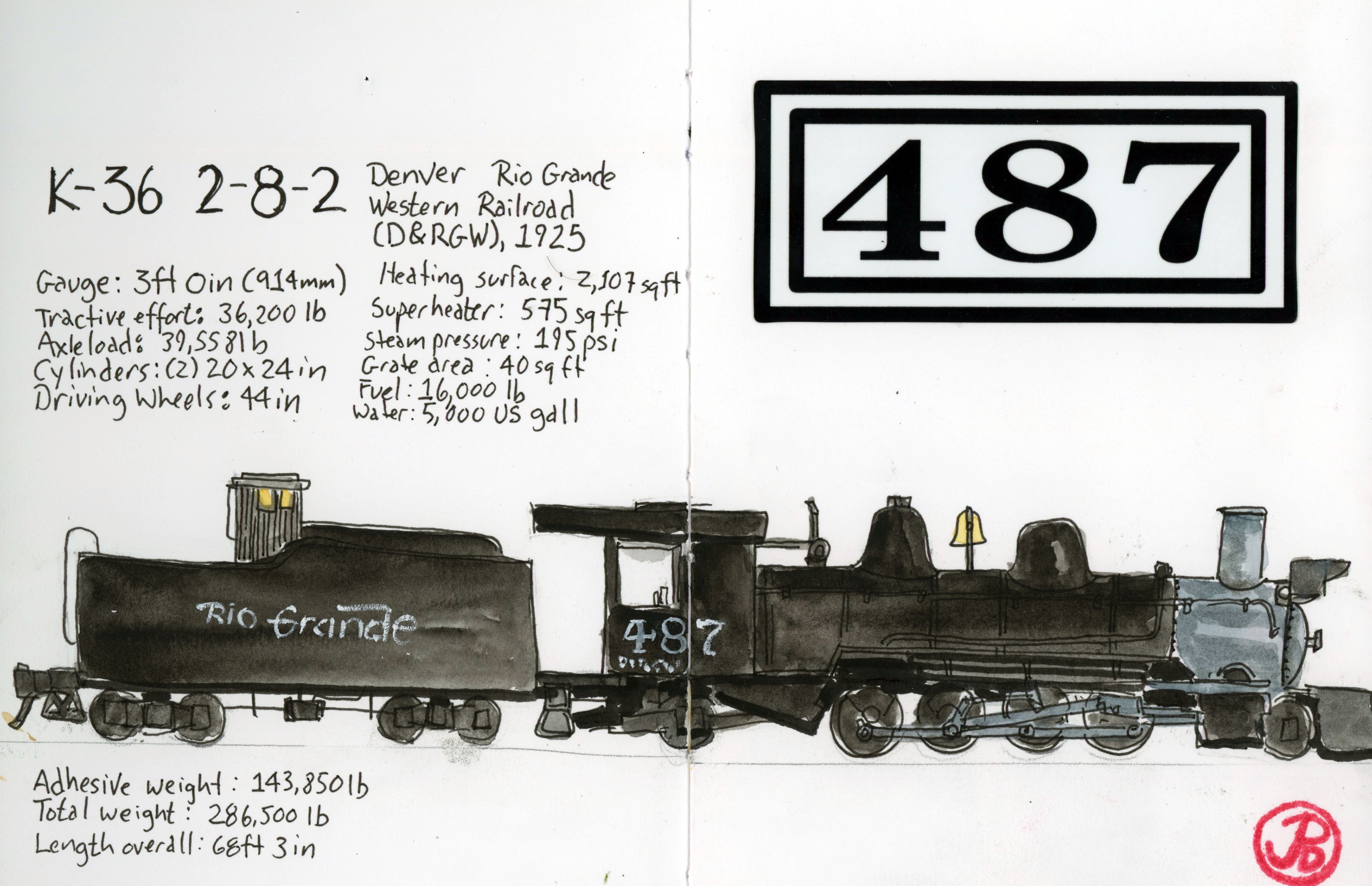
In Baldwin’s Philadelphia shops they built ten Mikado locomotives with the 2-8-2 wheel arrangement (oOOOOo). The locomotives were classed by the railroad as K-36s. K for the 2-8-2 wheel arrangement and 36 for the tractive effort the locomotives produced (36,200 pounds).

They were made to run on the Rio Grande’s narrow gauge line, 3 feet from rail to rail. They were primarily designed to haul freight although they also worked passenger trains. At one point the D&RG operated the largest network of narrow-gauge in the United States with 1,861 miles of track.

Quick sketch of K-36 No. 489 at Chama.

What is astonishing is that out of the ten locomotives built in this class, nine still exist and six are still operational. Even more so that these locomotives were built in 1925 making them 101 years old.

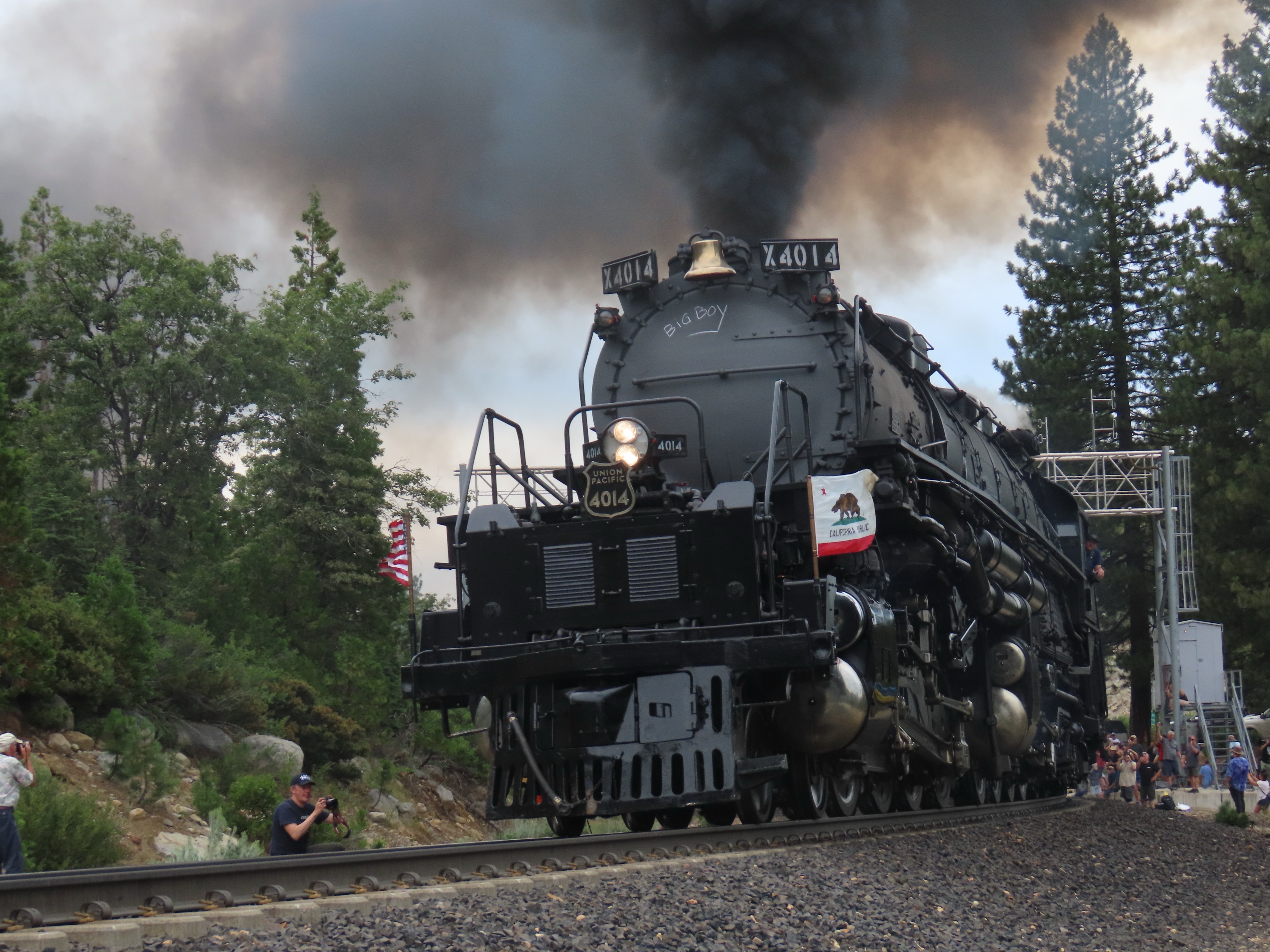
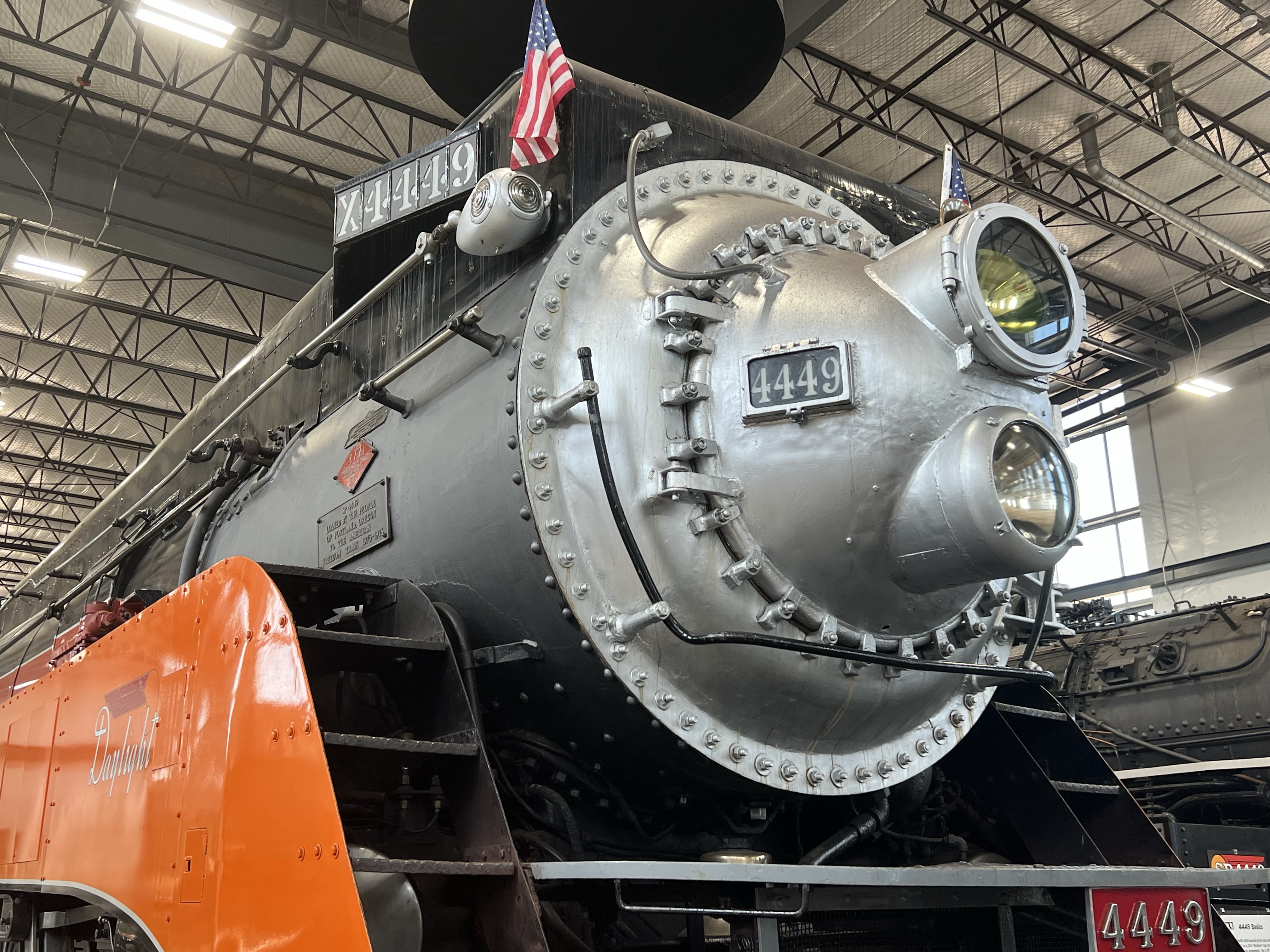
Compare this to Southern Pacific’s GS class locomotives. 94 were built and now only two survive, No. 4449 and 4460, and only 4449 is operational. It’s a bit better with Union Pacific’s 4000 class, the Big Boys. Out of the 25 built, only eight survive with one operational, No. 4014.

Big Boy No. 4014 climbing up towards Donner Pass for the first time in the Summer of 2024. I took this shot at Yuba Pass.
SP’s 4449 will always be by favorite steam locomotive.
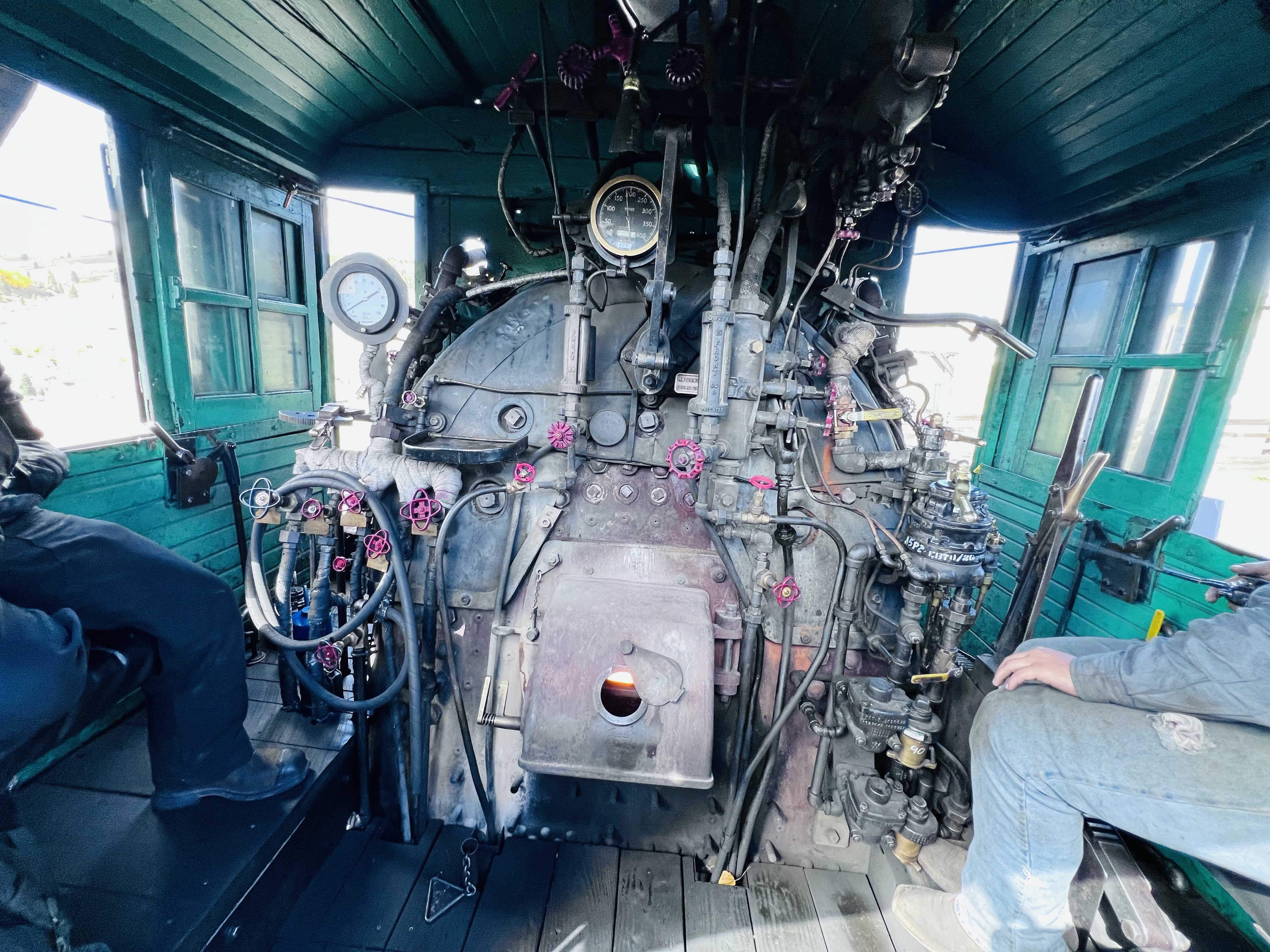
A cab view of K-36 No. 489. The Cumbres is such an open book that I was allowed to climb up into the cab for look-see during our lunch at Osier.

The K-36s now operate in tourist railroads on remnants of the narrow gauge network. The Durango & Silverton owns four and the Cumbres & Toltec owns five.

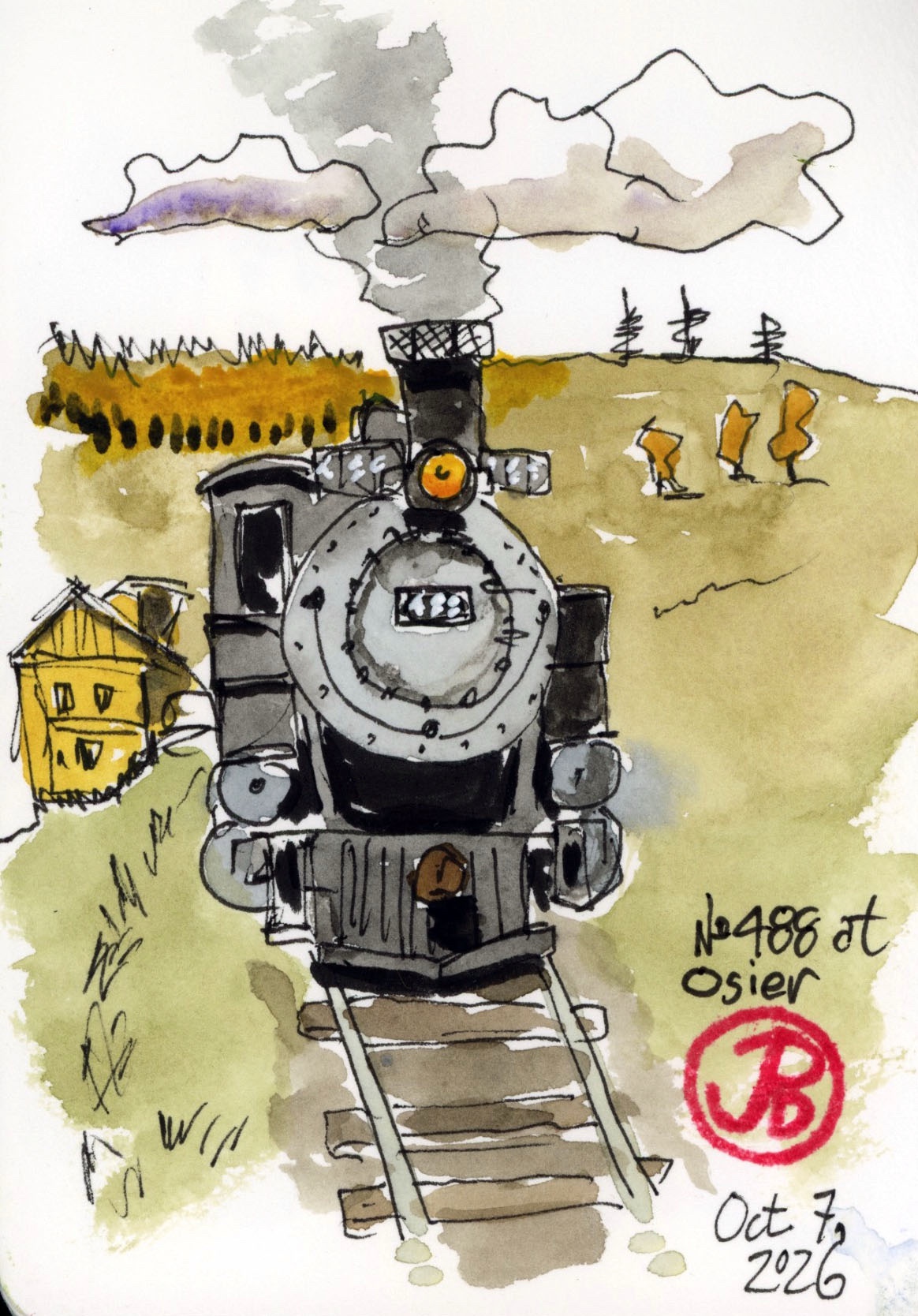
An after lunch sketch of 488 at Osier. 488 is a coal burner, while 489 has been converted to an oil burner.
This is the spread that opens my New Mexico sketchbook. It is a side view of No. 487 from Hollingsworth’s book.
Image

Taos Pueblo

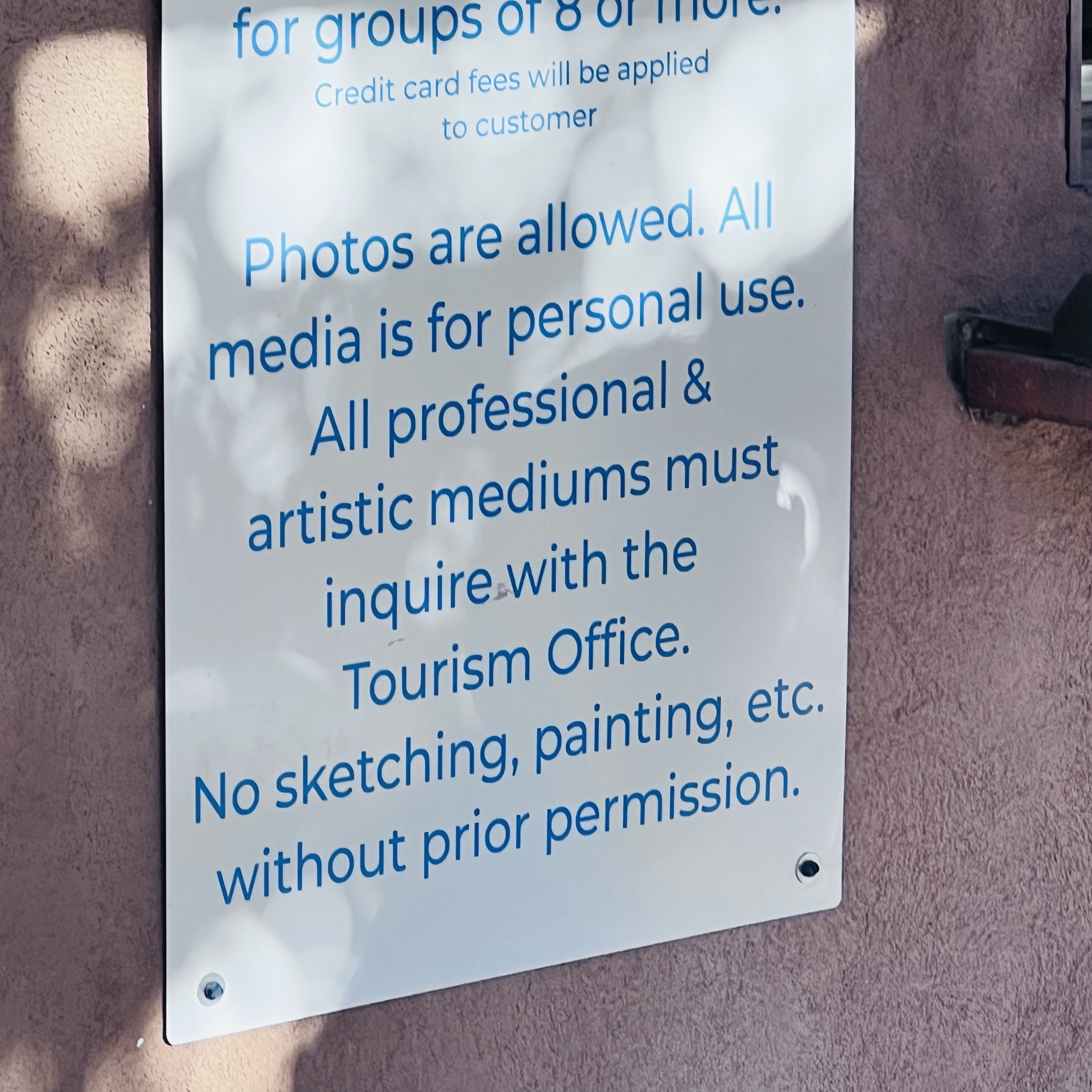
While waiting in the admissions line for the Taos Pueblo I saw a sign next to the admissions window that left me crestfallen:

“No sketching, painting, etc. without prior permission”. The one location I really looked forward to sketching was the Taos Pueblo and now, because I didn’t have prior permission, my sketchbook and pens would remain idle in my bag.

I thought it odd that you could take all the photographs with your phone (which I did) but you couldn’t render the Pueblo with paper and pen. The Pueblo is a private and sovereign community but this still doesn’t explain why the cultural paparazzi are allowed to photograph to their heart’s content yet sketching is forbidden.

So I took lots of photographs to sketch from. (I know it’s cheating by Urban Sketchers’ standards).

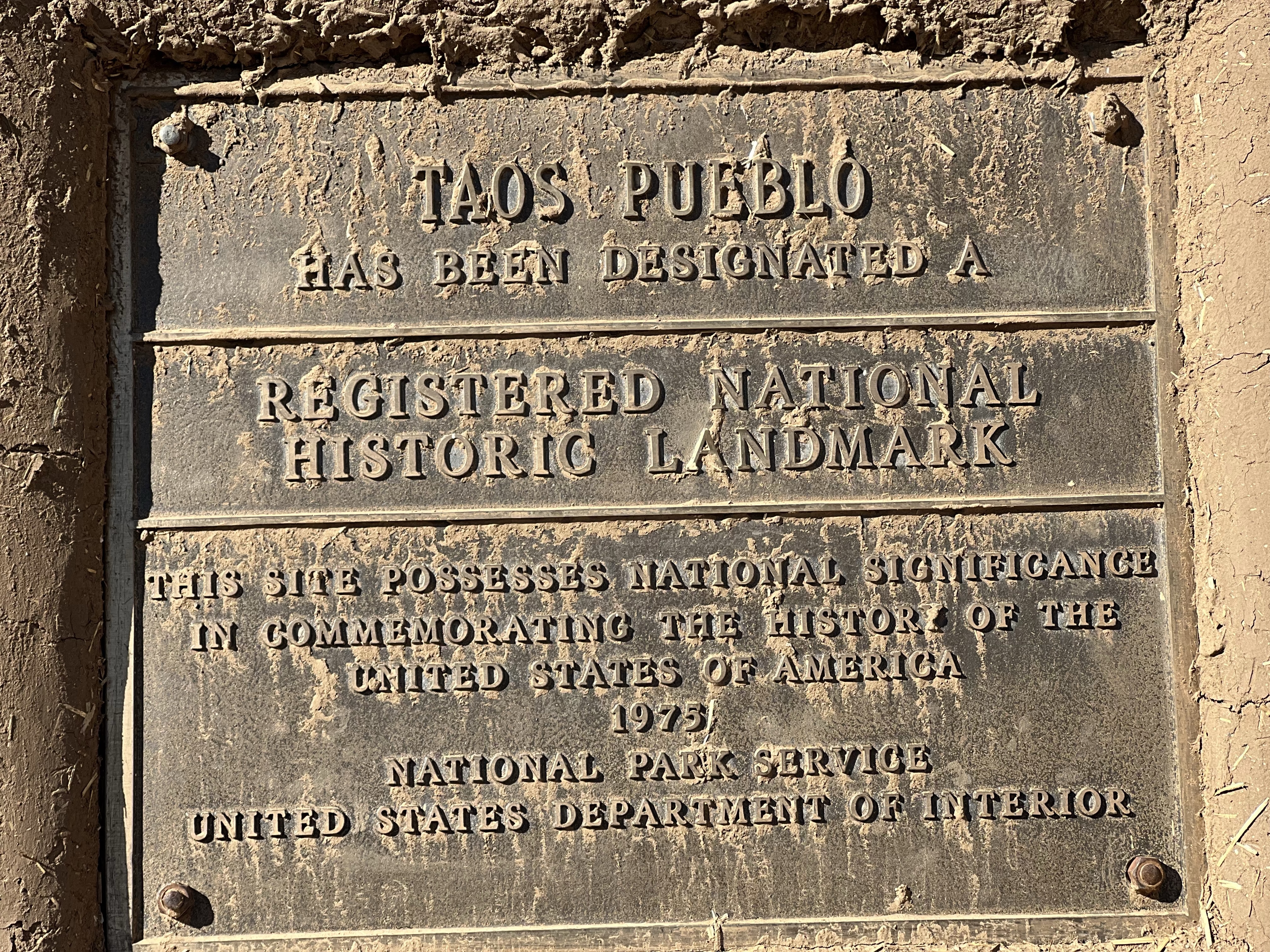
The Pueblo is the oldest continuously habited structures or communities in the United States. It is the only United States Heritage site where people live. As such, visiting the Pueblo feeling like being a voyeur or evesdropper.

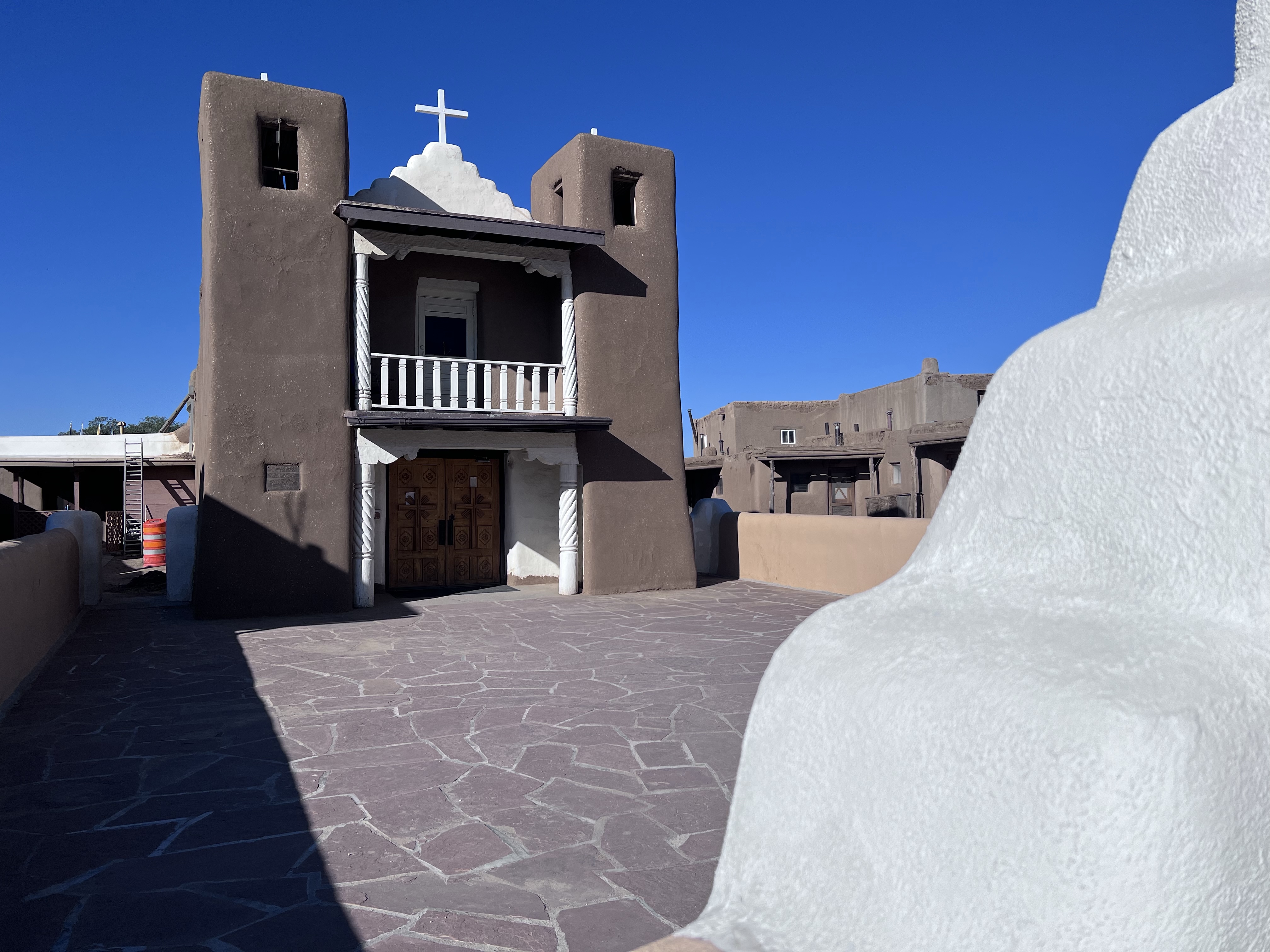
The church of St. Jerome was the site of a violent and bloody siege during the 1847 Taos Revolt.

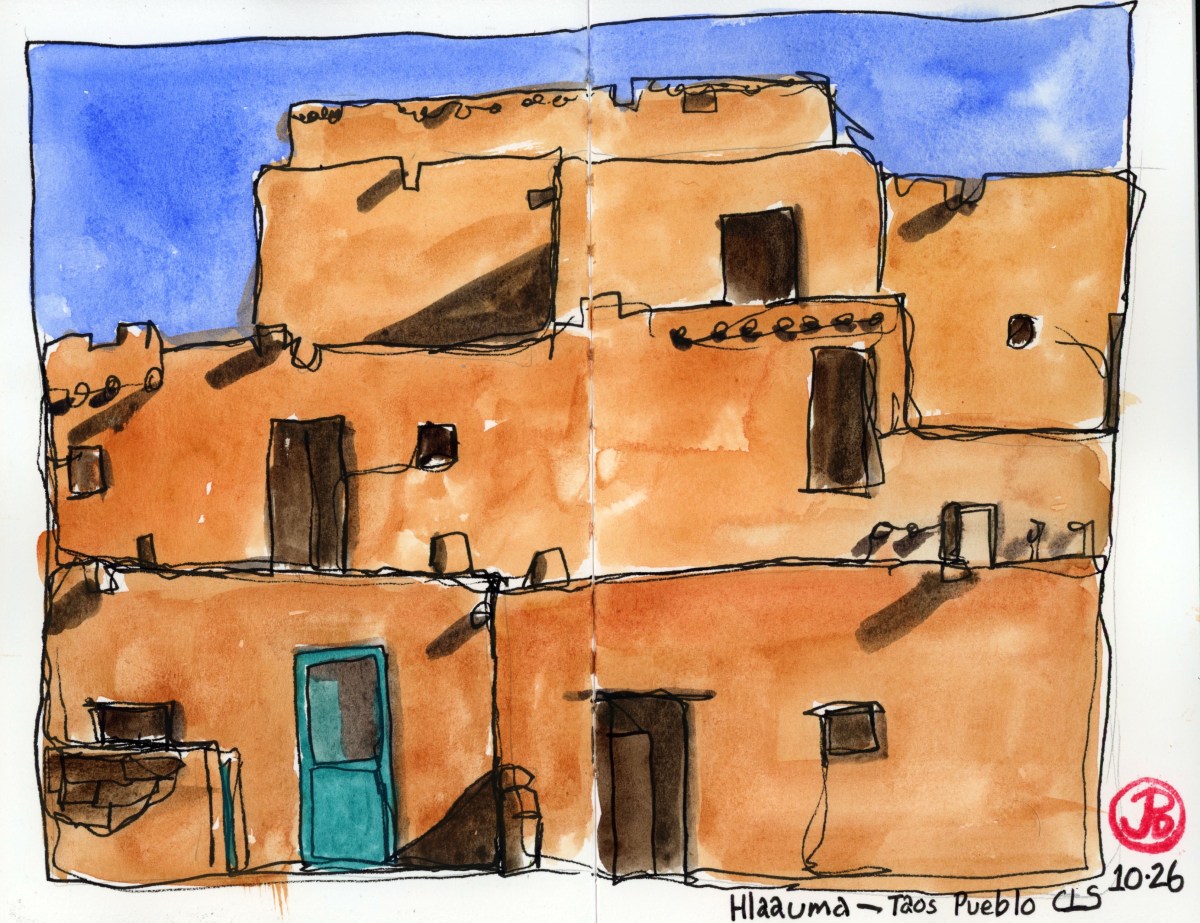
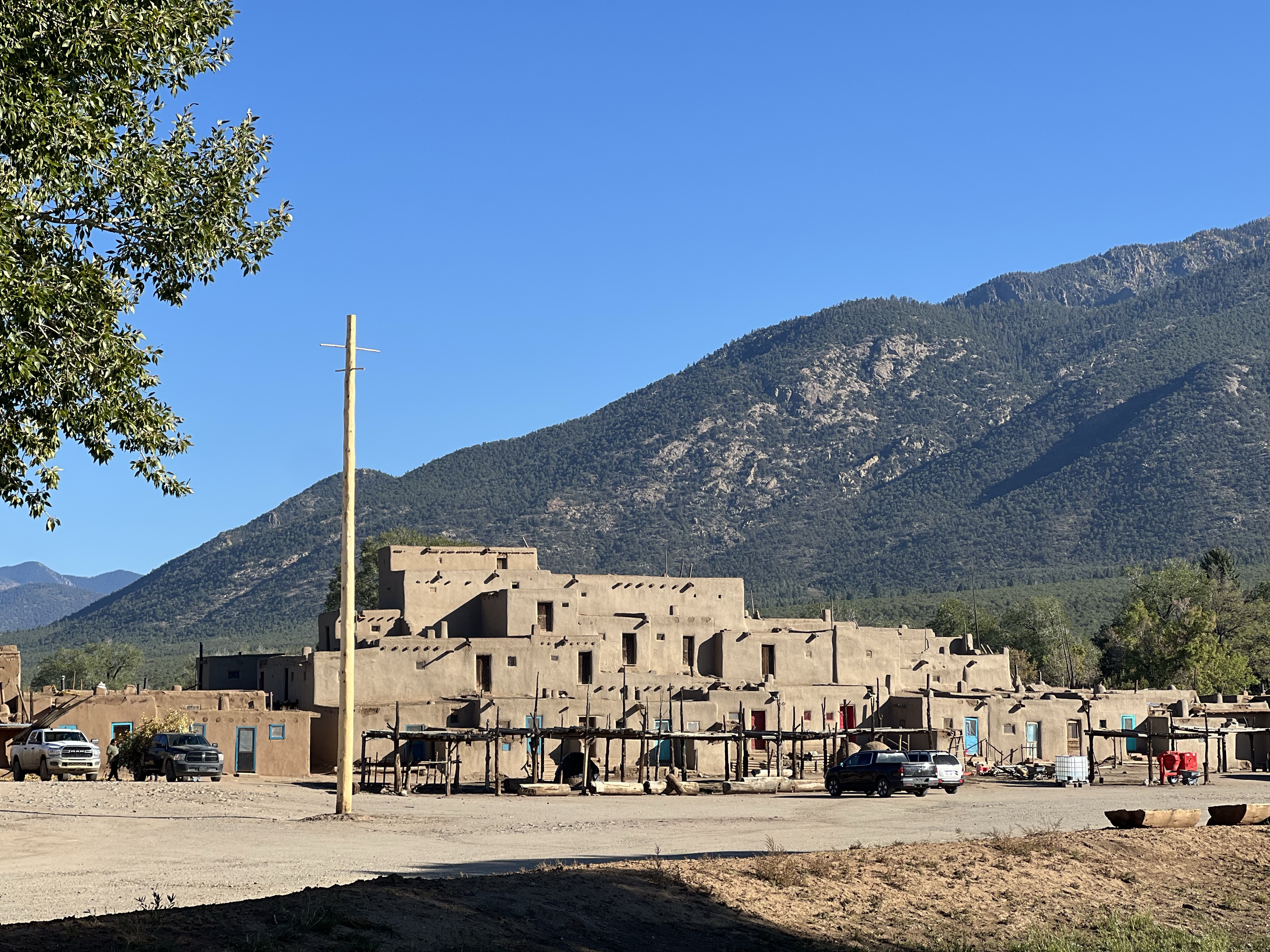
When I arrived, residents were clearing off roofs and making repairs. There was a stark contrast between the ancient north side multistory adobe and modern trucks and cars parked in front.

Modern cars and the ancient north section.

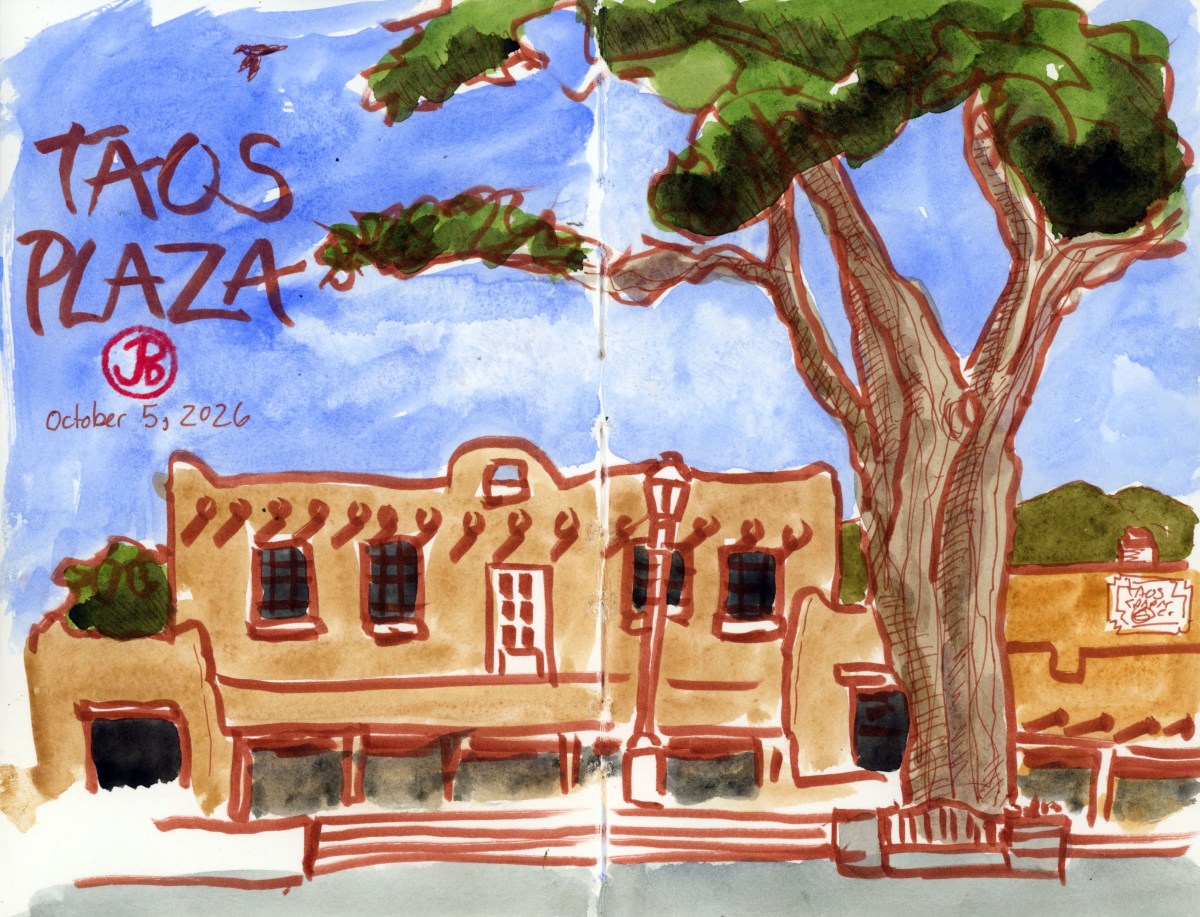
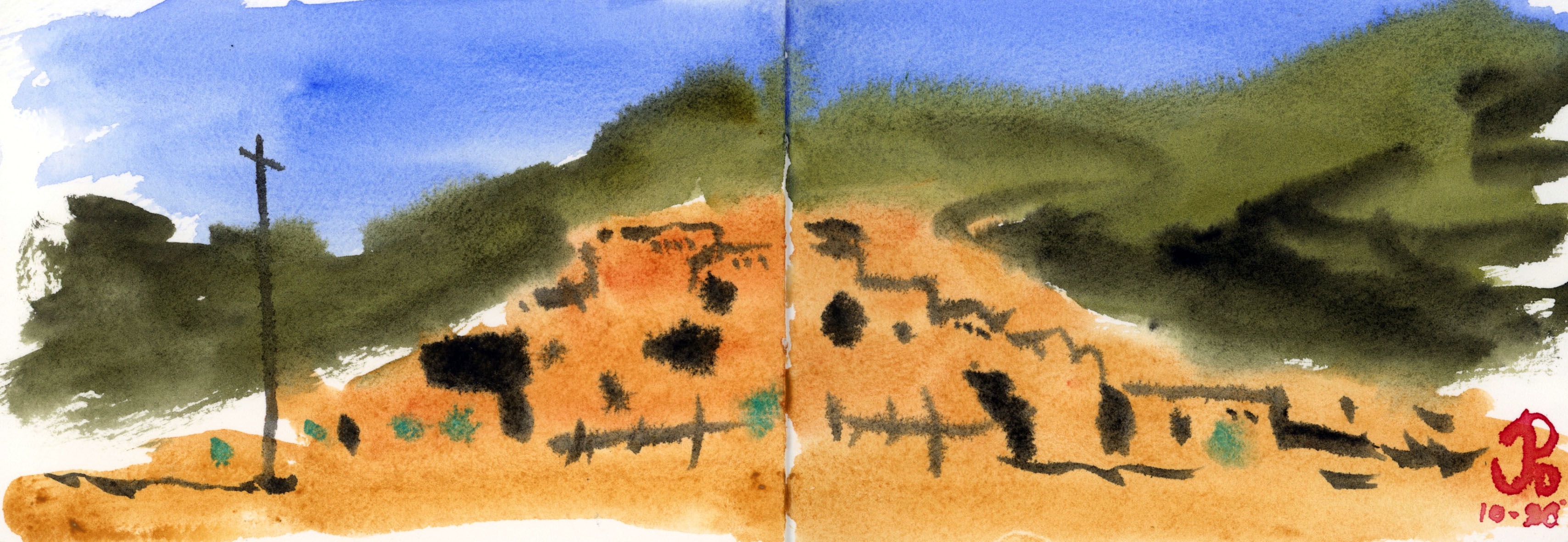
While I was back home I added two post trip sketches based on my paparazzi pictures. The featured sketched is a continuous-line sketch of the north building.

In my 100% cotton panoramic journal I did a gestural painting and let the paint on the paper tell the story:

Image

San Francisco de Asis Church, Taos

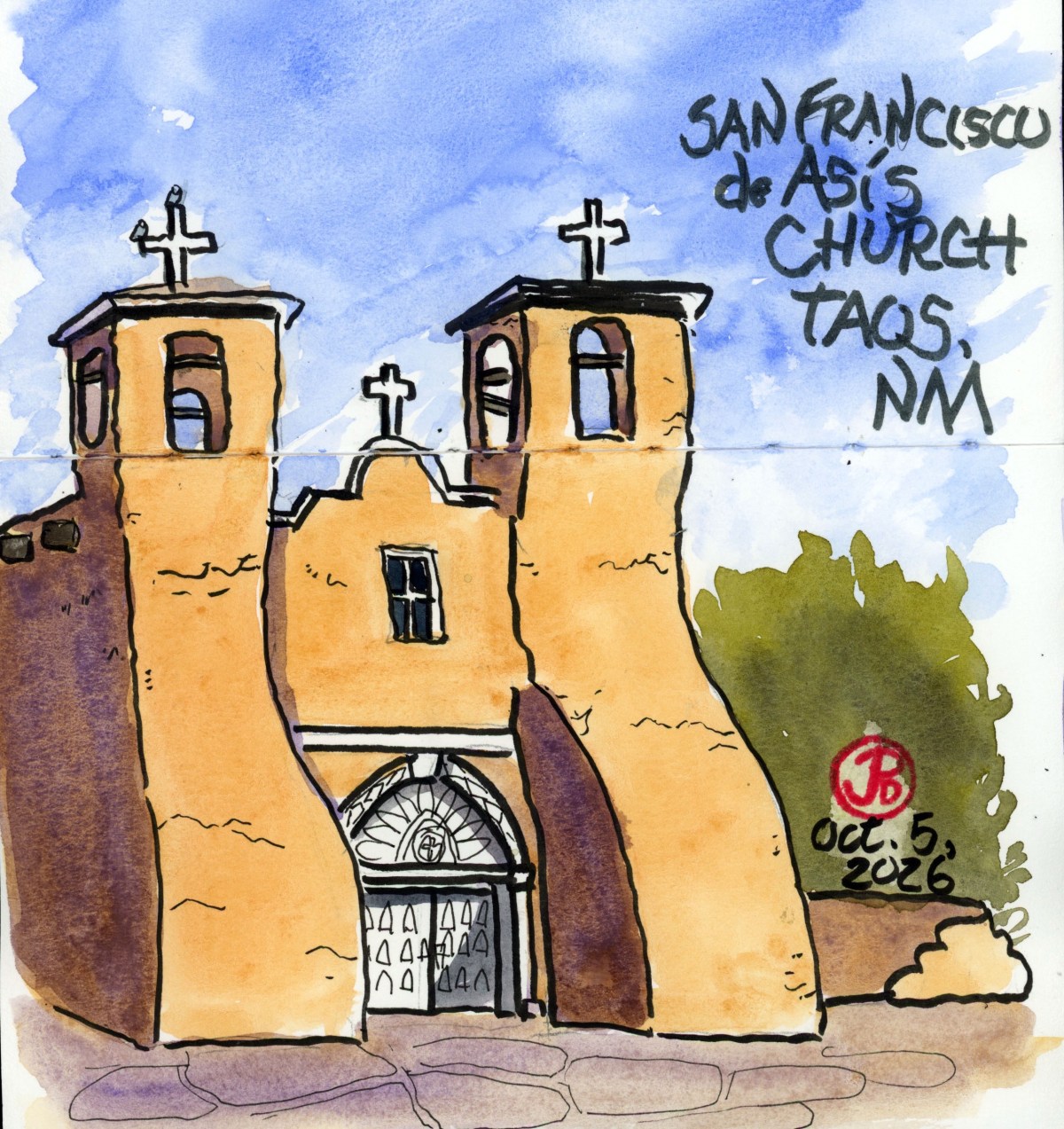
One iconic southwestern church that is on my sketchlist is the San Francisco de Asis Church in Taos. This is not only a paragon of southwestern church architecture and aesthetic but is a paragon for any structure period (the other being Taos Pueblo, featured in another post).

This is reportedly the most photographed church in North America. Its likeness has been captured by Ansel Adams and Georgia O’Keeffe.

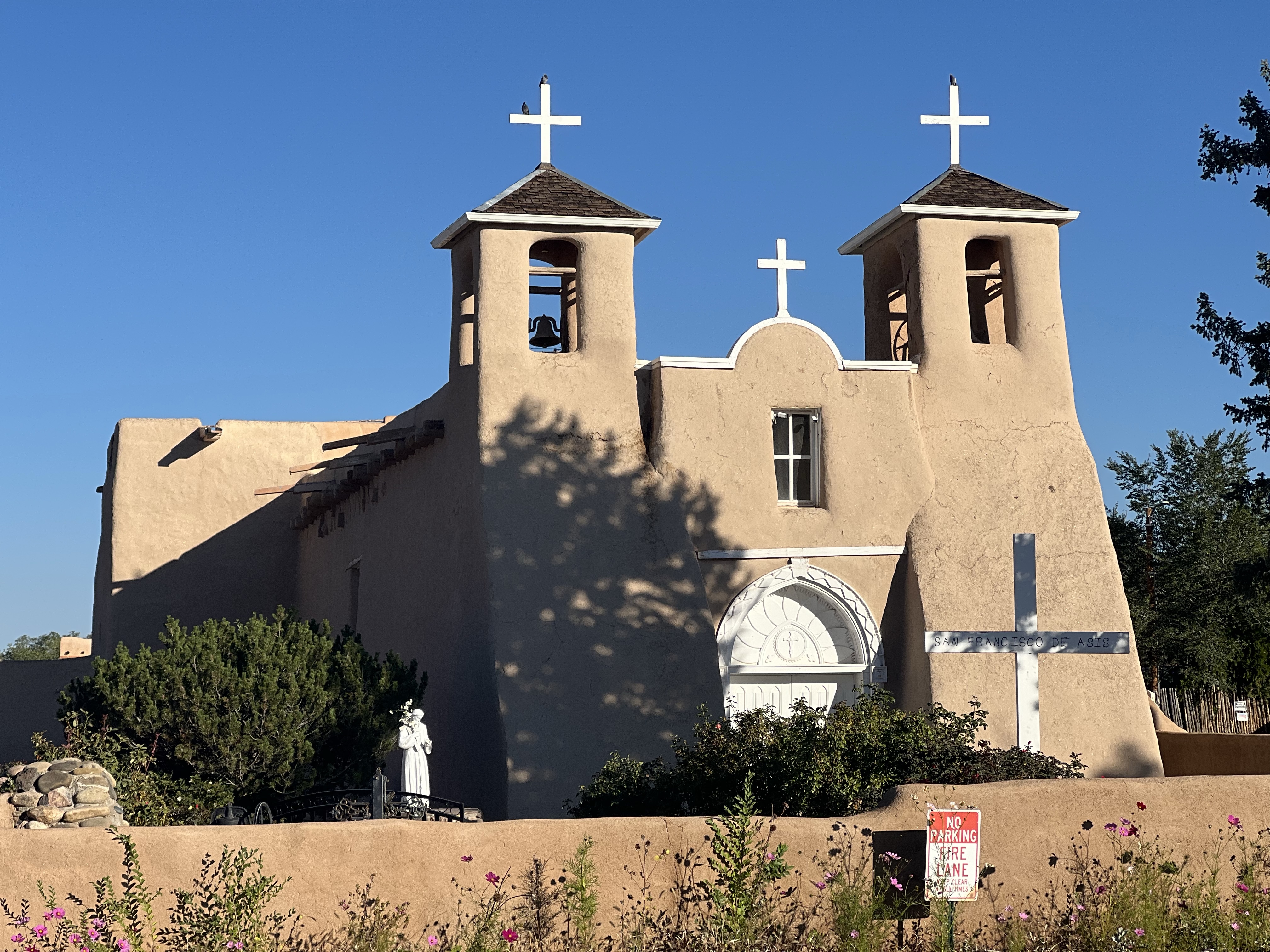
Yet another photo of San Francisco de Asis.

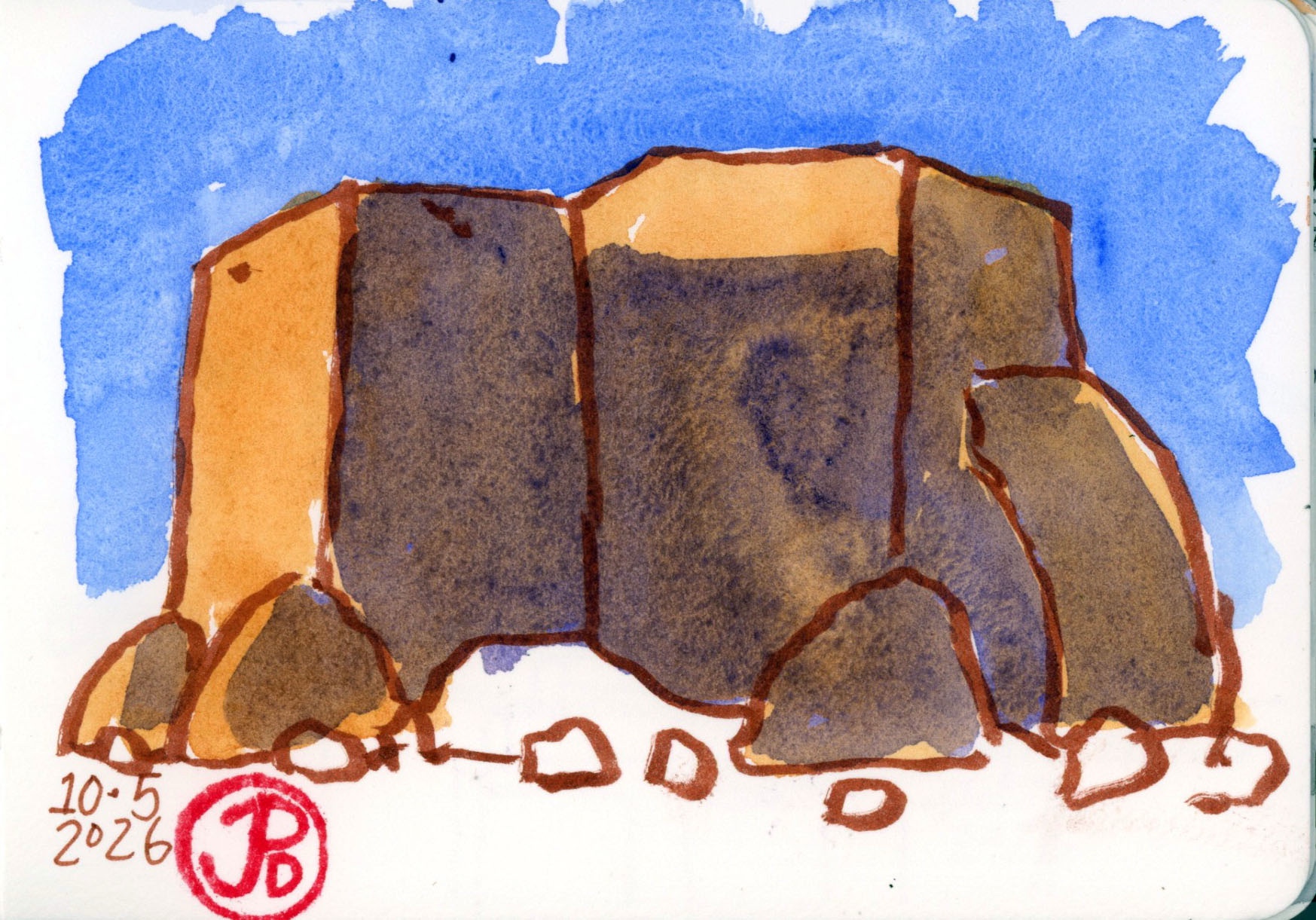
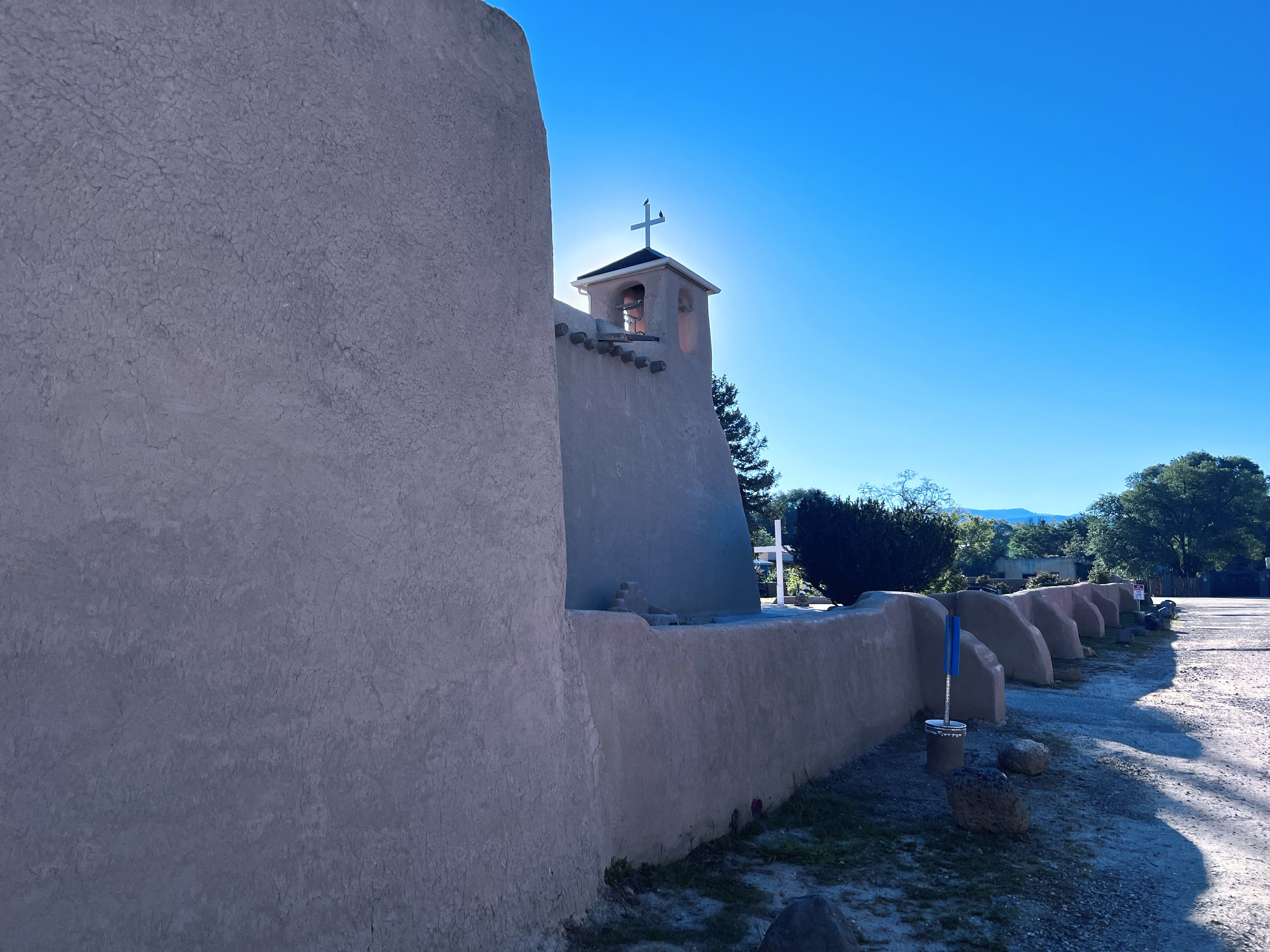
My first stop before I got into Taos was the church. As soon as you pull off the highway you are confronted with the earthen form of the back of the church, captured in O’Keeffe’s famous painting. I did my own on a much smaller scale and with much less talent.

My sketch of the back of the church, à la O’Keeffe and Adams.

I moved around to the front, found a bench, and sketched the rounded, earthen buttresses and the twin bell towers (featured sketch).

The reward for making an early start is having the church to myself.

This was a great way to start my Taos morning, sketching a wonderful piece of architecture with the soundtrack of the local birds (flicker and scrub-jay) filling the air.