Pima Air & Space Museum Part 2

In this post I included a few of my favorite aircraft. This time they were not the giants such as the Boeing 747 or the B-52.

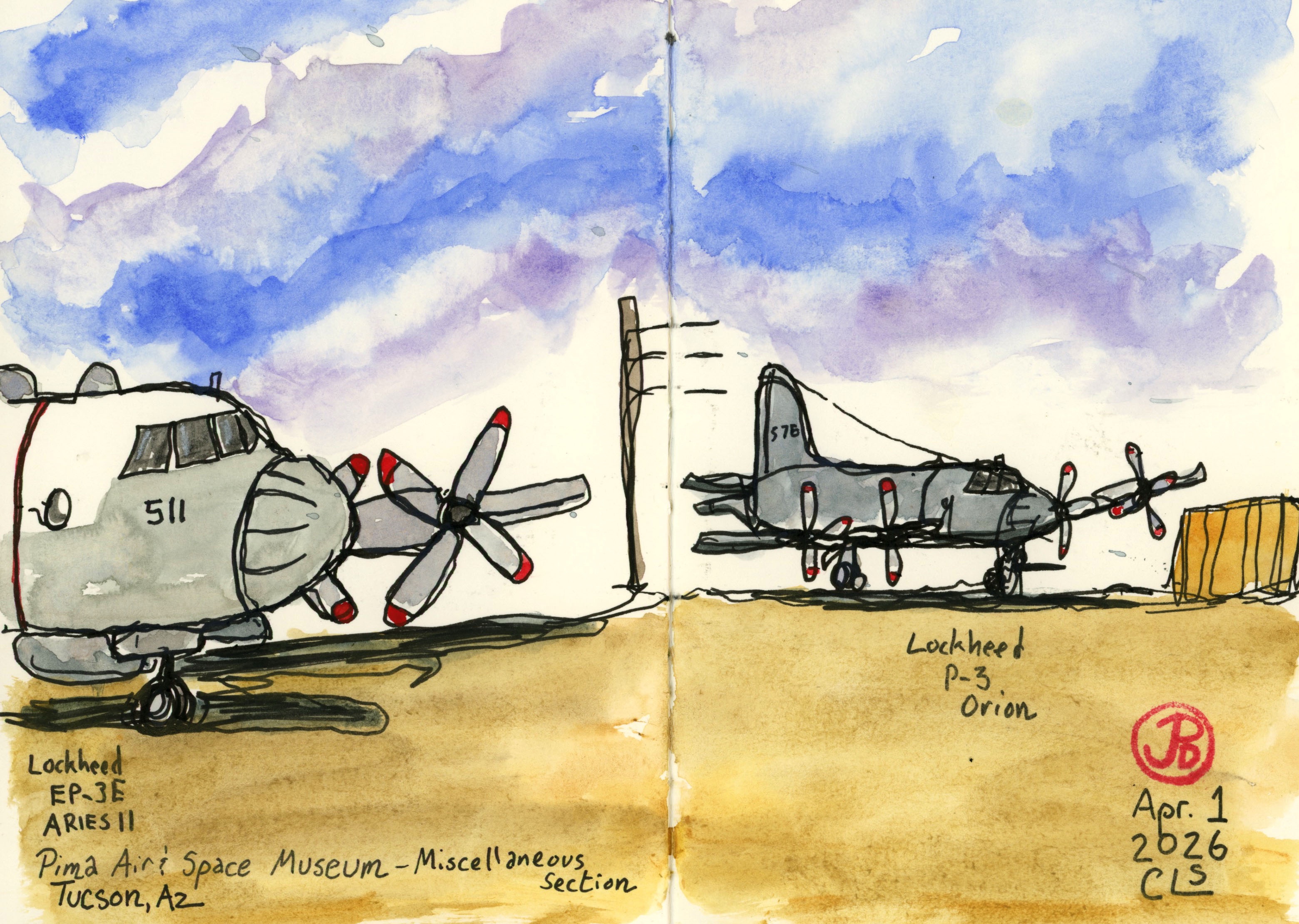
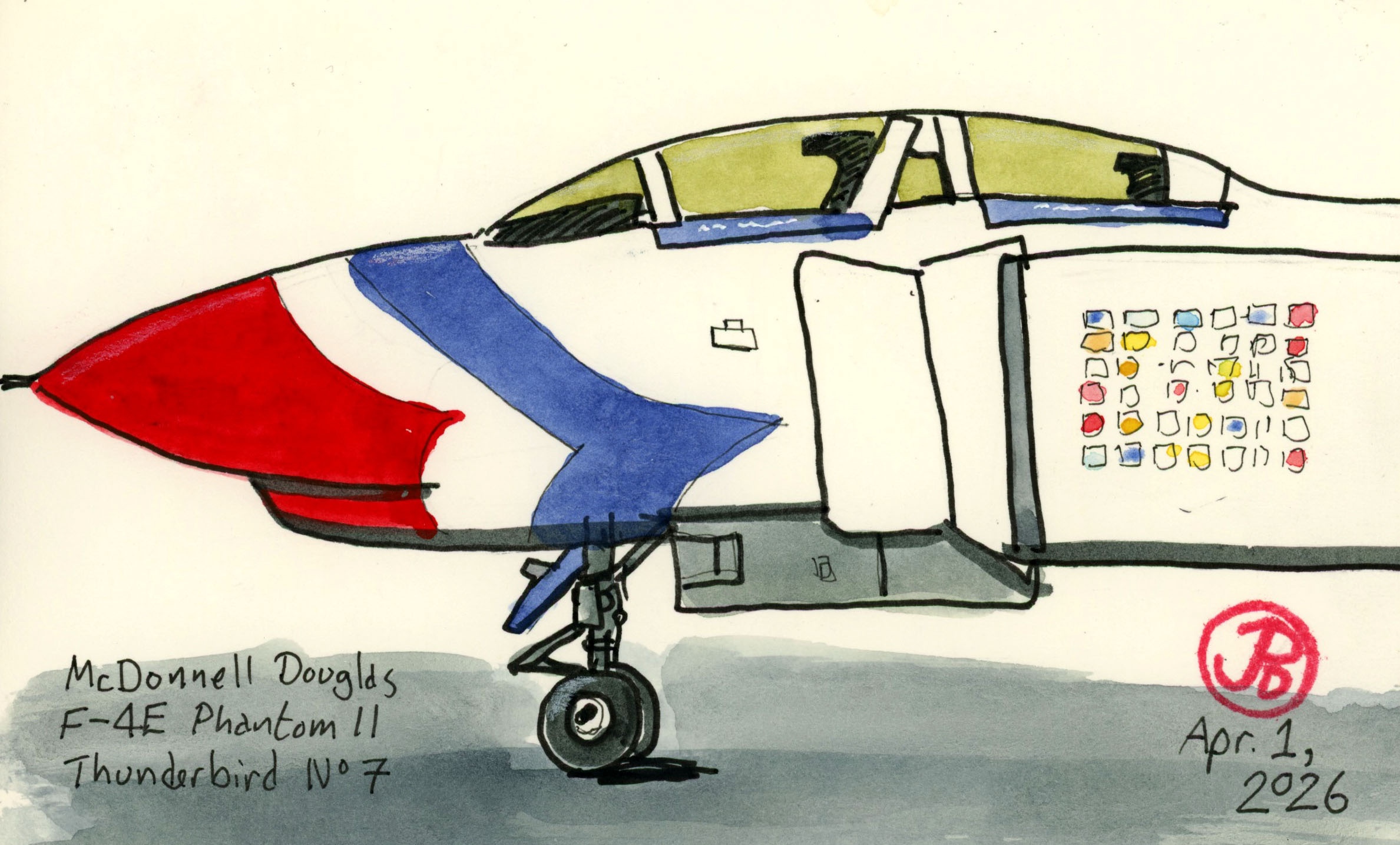
They were the McDonnell-Douglas F-4 Phantom II and the Lockheed P-3 Orion.

The F-4 is only aircraft flown by both the Navy’s Blue Angels and the Air Force’s Thunderbirds. One of the museum’s F-4s is painted in the Thunderbird red, white, and blue livery and is No. 7.

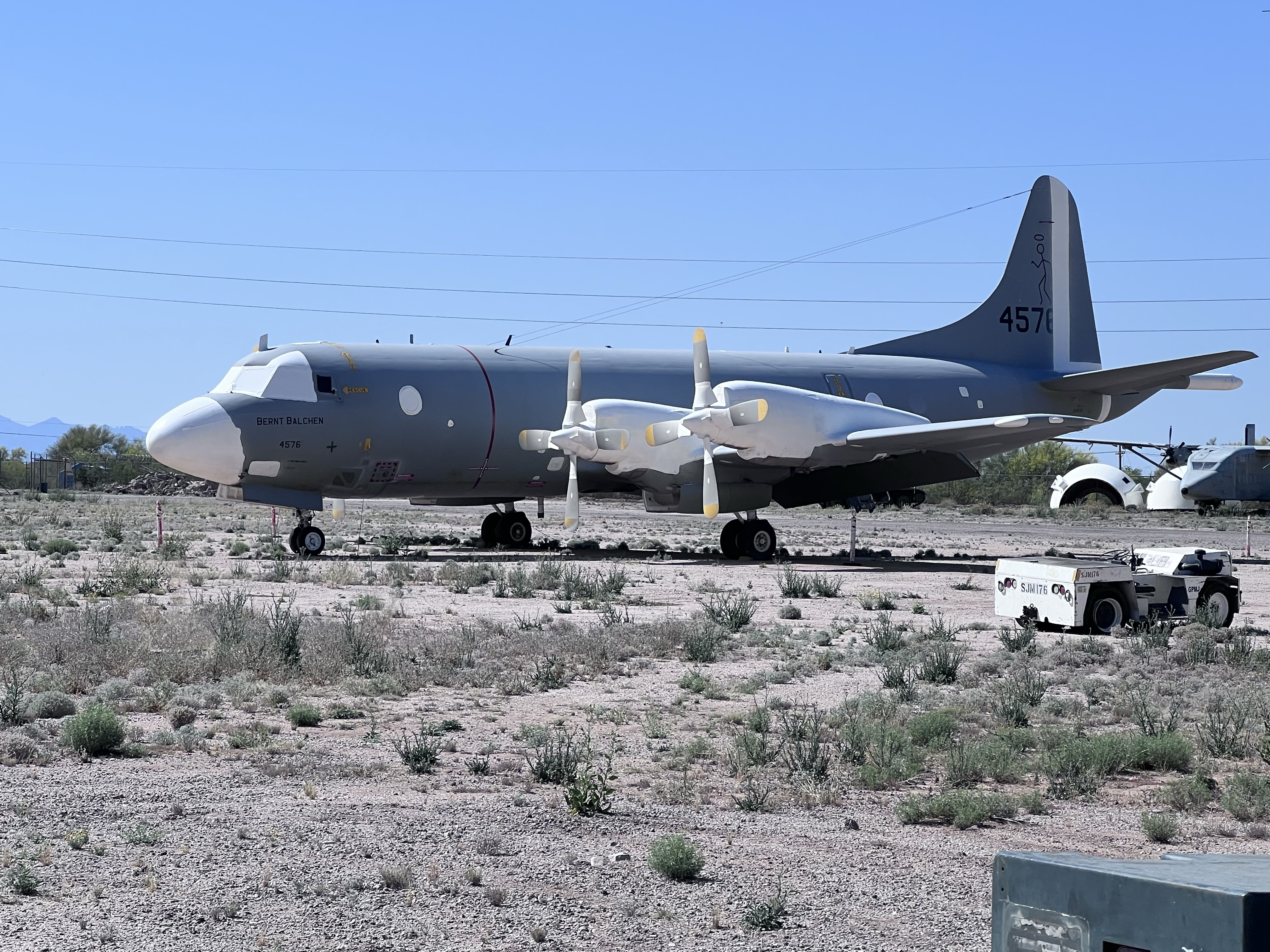
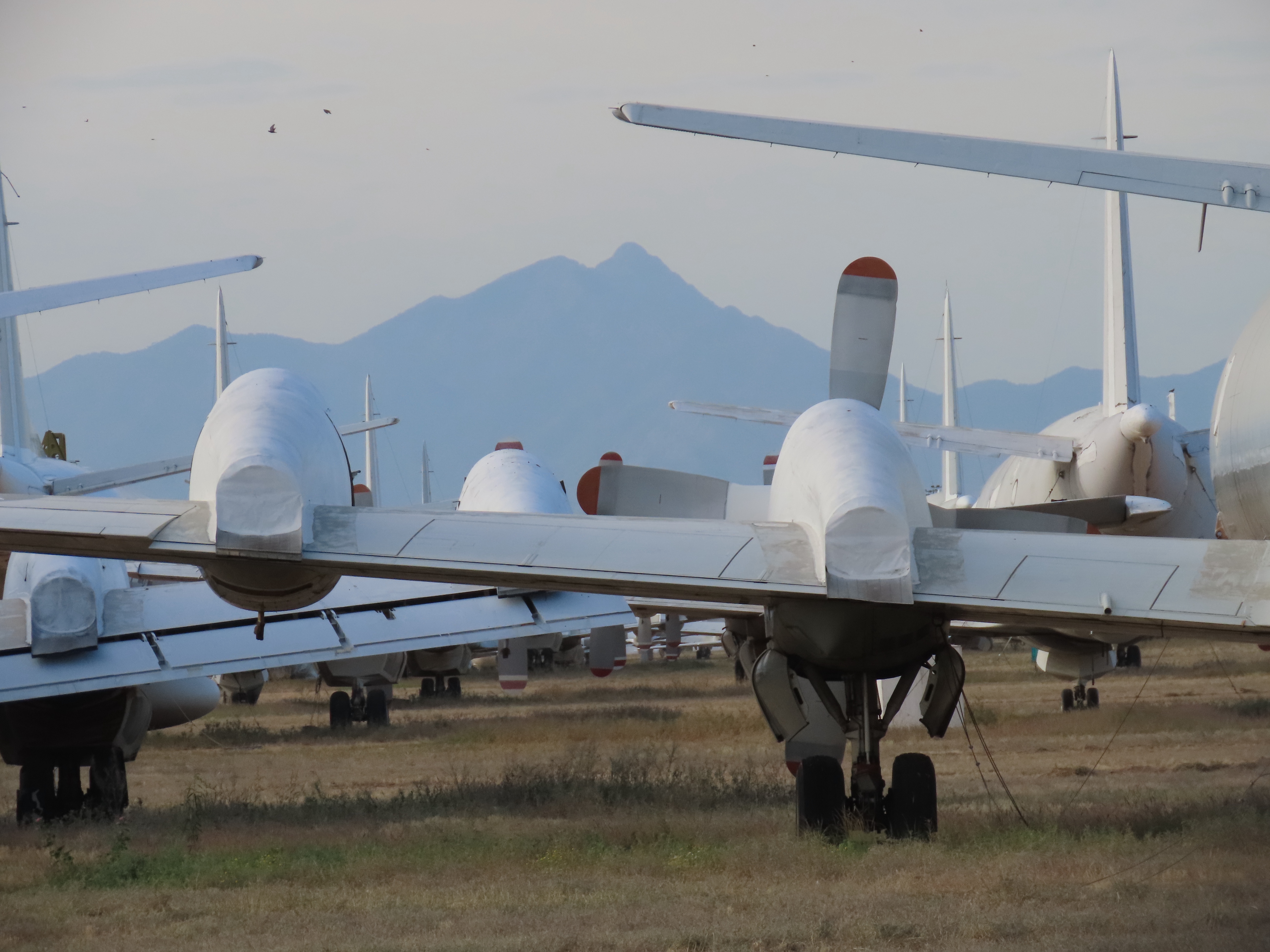
This P-3 looks like it just came from the Boneyard and is now in the museum’s maintenance area waiting restoration work.

I have sketched and written about the Hunter: P-3 Orion. This was the airplane of my youth and I knew it by site and sound.

I was glad that the museum had a few of these wonderful aircrafts on display.

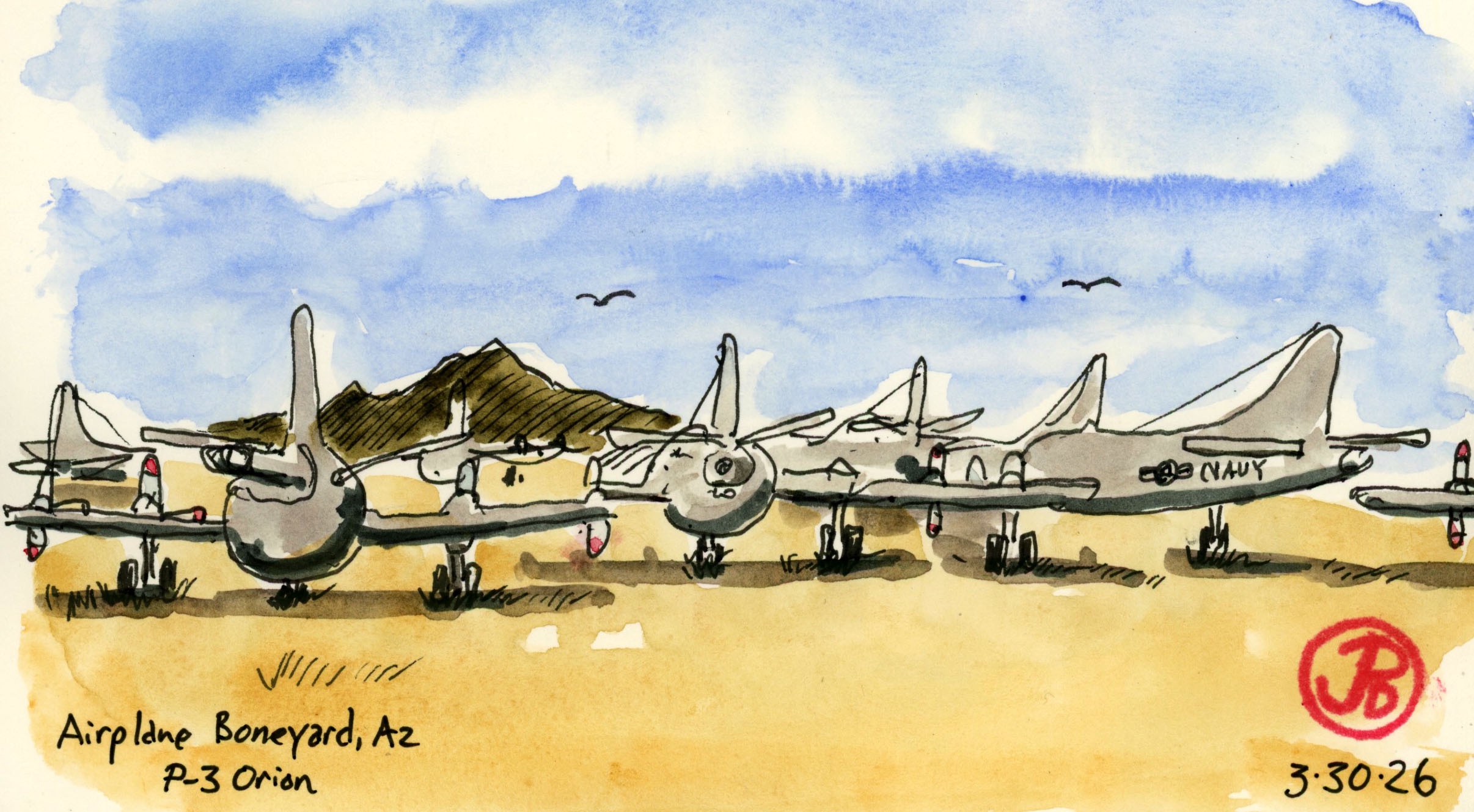
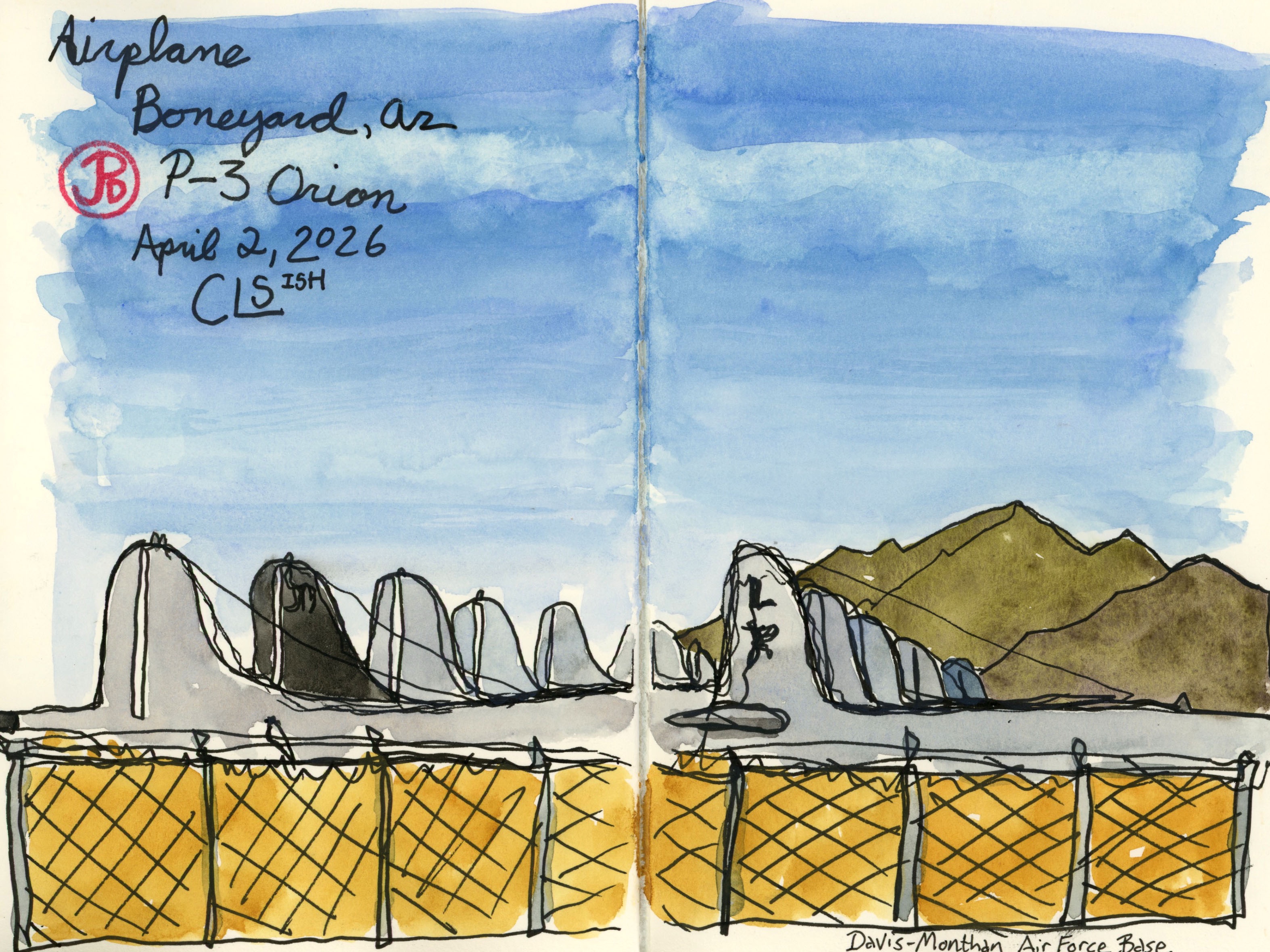
I found a bit of shade a sketch two versions of the Orion: the EP-3E Aries II and the P-3 awaiting restoration. I rendered the planes in a continuous-line sketch (featured sketch).

Pima Air & Space Museum, Part 1

While in Tucson, I wanted to visit and sketch one of the best and biggest air museums in the west if not the entire United States, the Pima Air & Space Museum. This place is epic!

Now where to start?

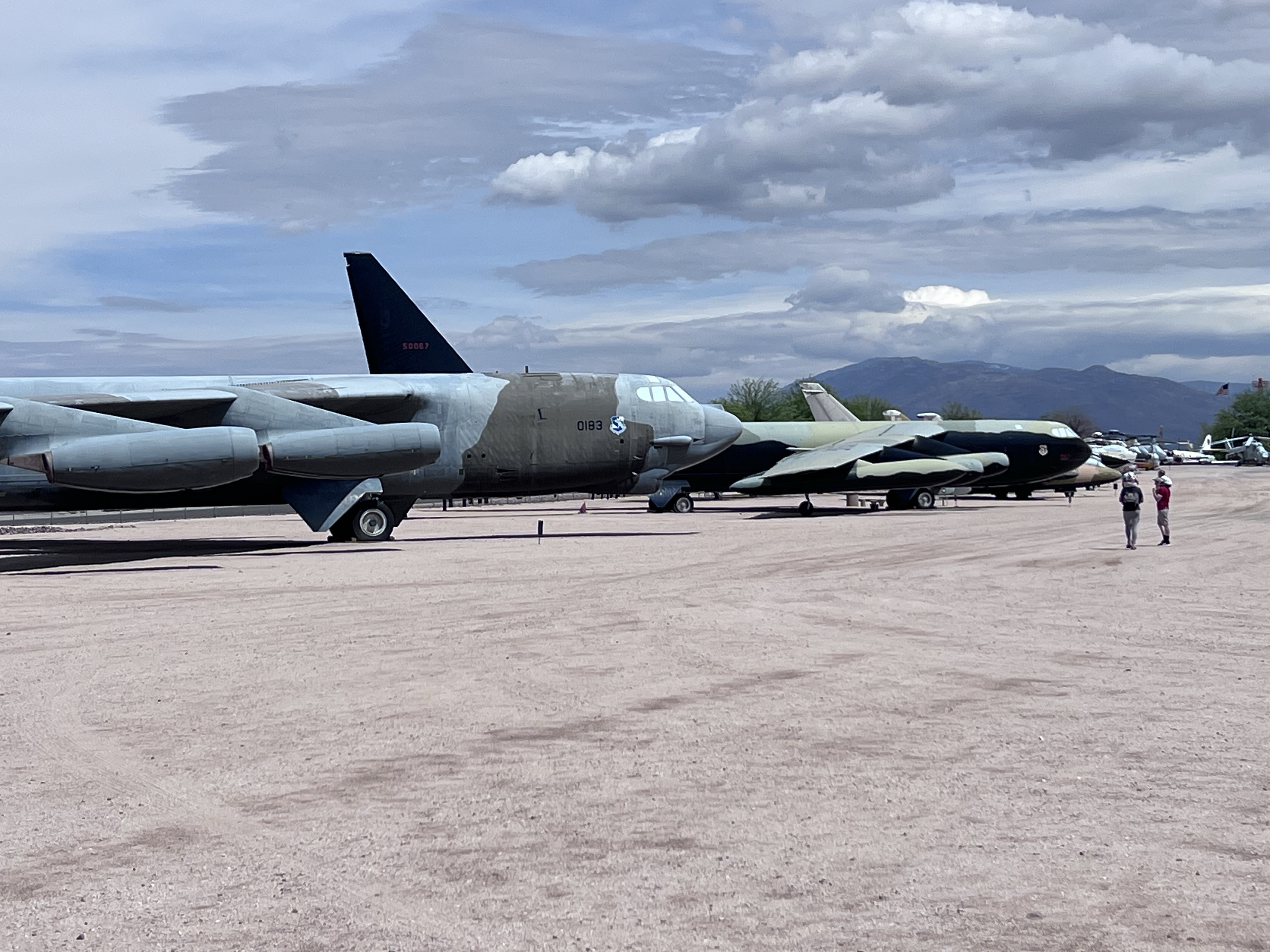
What is impressive about the museum is the sheer size of the collection, not just in the number of aircraft in their collection (over 400) but the massive size of the planes including three B-52s, two B-29s, and two 747s. You need a lot of real estate to display these massive machines and they have it.

Two of the three B-52s in the museum’s collection.

What I also liked about the size and scale of the museum, unlike others I have visited, is that you actually have space to stand back and take in the whole aircraft and walk around them for a 360 degree view and they weren’t crowded in with tons of other aircraft, making sketching or plane viewing, rather difficult.

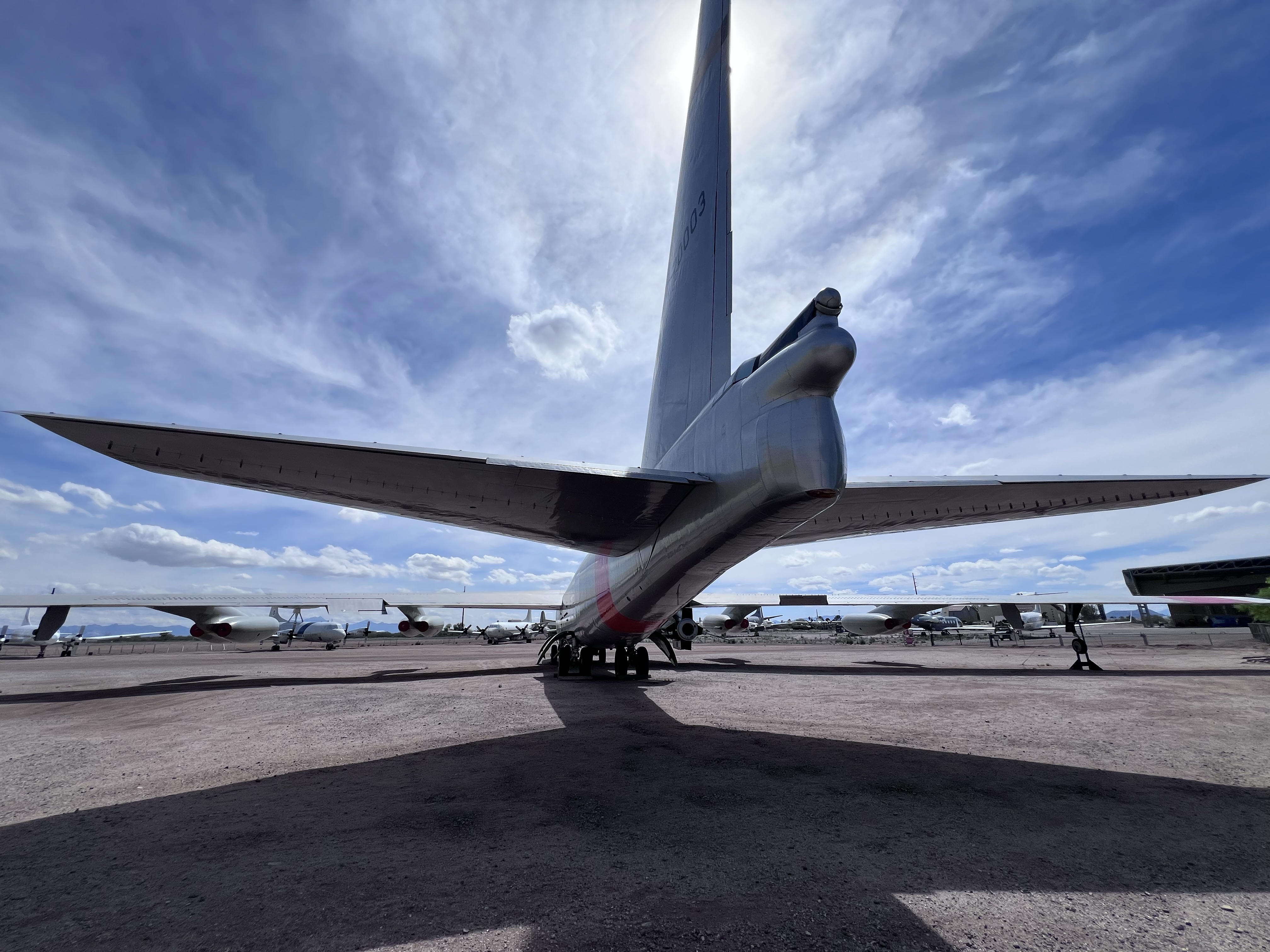
Getting a 360 view of the massive end of a Boeing B-52 (and they have three).

Some of the aircraft is displayed in hangers but the majority of the collection is outside under the desert sun.

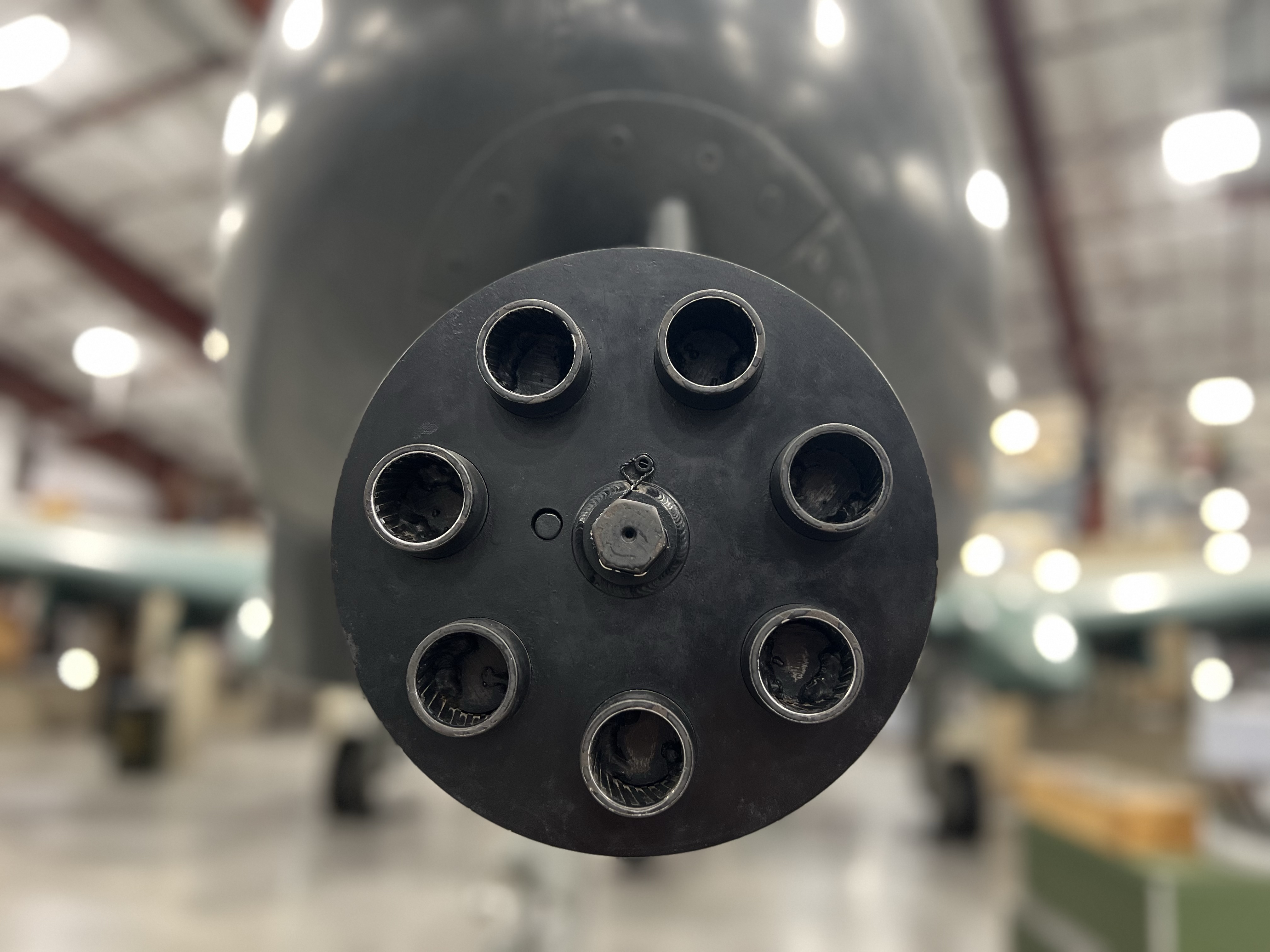
The business end of an A-10 Warthog. This maybe one of the only museums where you can see this static plane, step outside and see one taking off at the adjacent Air Force Base.

Sketching outside was going to be a challenge in the desert sun for my coastal constitution and fair skin. I employed 45 SPF sunscreen, long sleeves, a buff, and a wide brimmed hat.

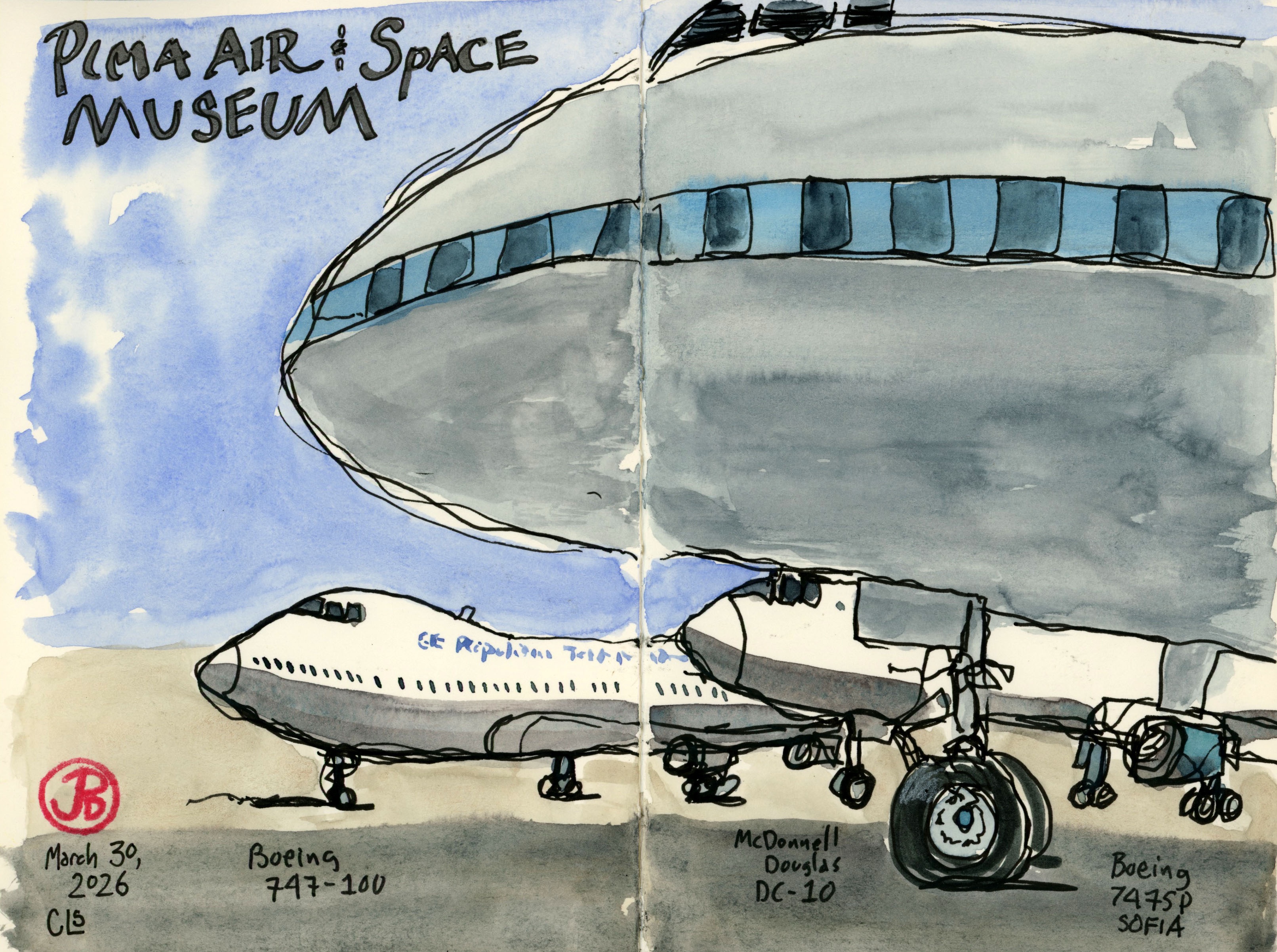
While sketching a line of some of the museum’s largest aircraft, two 747s, a DC-10, and a triple 7, I looked for shade in my sketching positions.

Luckily a Boeing 747 provides quite a bit of shade to sketch under. I rendered the scene with a continuous-line sketch (featured sketch).

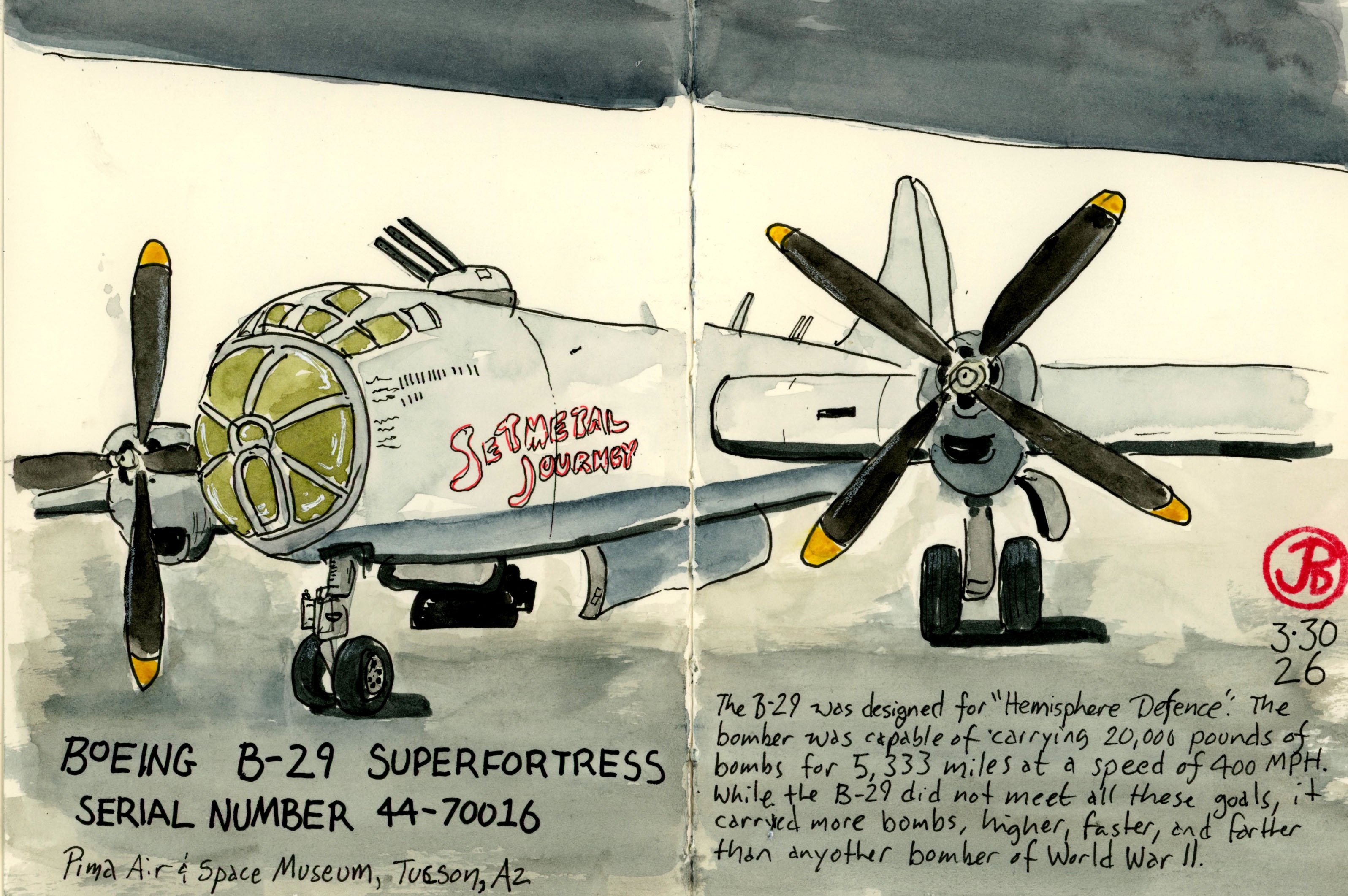
In this post I included sketches of some of the museum’s largest planes, they all happen to be made by Boeing: the B-29 Superfortress, the B-52 Stratofortress and the 747, the world’s first jumbo jet.

While the B-52s and the 747s were outside, the heavy World War Two bomber, the Boeing B-29 Superfortress was indoors.

The Boeing B-29 Superfortress is known for the destruction it wreaked on Japan during WW II with the dropping of incendiary bombs on Japan’s wooden cities and also dropping the two atomic bombs on Hiroshima and Nagasaki that virtually ending the war in the Pacific Theater.

The Airplane Boneyard

High on my Tucson sketch list was the Airplane Boneyard east of downtown.

From the Pima Air & Space Museum’s website I learned that tours of the Boneyard had been discontinued since Covid (it is an active military base) and the only way to view the aircraft was from perimeter roads.

The Boneyard at Tucson is part of Davis–Monthan Air Force Base and contains over 4,400 aircraft on 2,600 acres. They use these retired aircraft for parts and also restore some back to service. This is the perfect spot for aircraft in the desert climate because the dry atmosphere does not induce rust or corrosion.

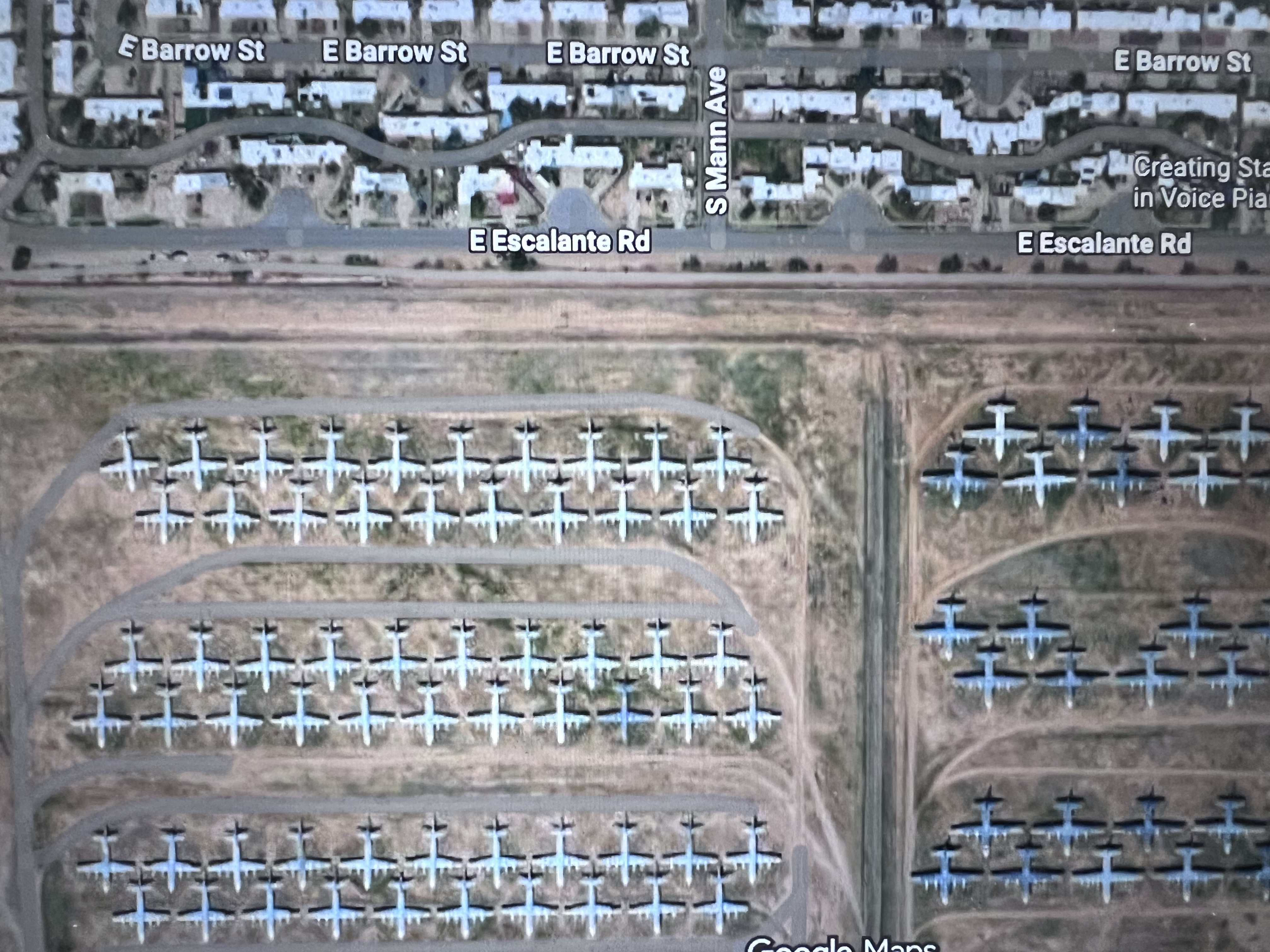
Using Google Maps I thought East Escalante Road would be a good place to start. I chose this road for two reasons: it ran parallel to the perimeter fence and it was close to one of my favorite airplanes: the Lockheed P-3 Orion.

This was the four turbo prop submarine hunter that was stationed at Moffat Field in my hometown of Sunnyvale, California. The plane that passed my bedroom window on final approach to the Naval Base. I can still hear the mighty roar of the turbo prop engines. The soundtrack of my childhood.

Apparently E. Escalante is one of those long Tucson streets and Google Maps led me not too close to the Boneyard. I closed Google Maps and found the location with instinct, cunning, and eyes.

After a short search I found the street and the location. I pulled off on a side street near a backyard with two very protective dogs in the yard. Now it was time to find a good sketching location.

P-3s use the same engines as the C-130 but the props of the Orion are rounded.

Escalante was a busy street even at 7:45 in the morning. I crossed the road like a roadrunner and walked along a parallel bike path to a picnic shelter.

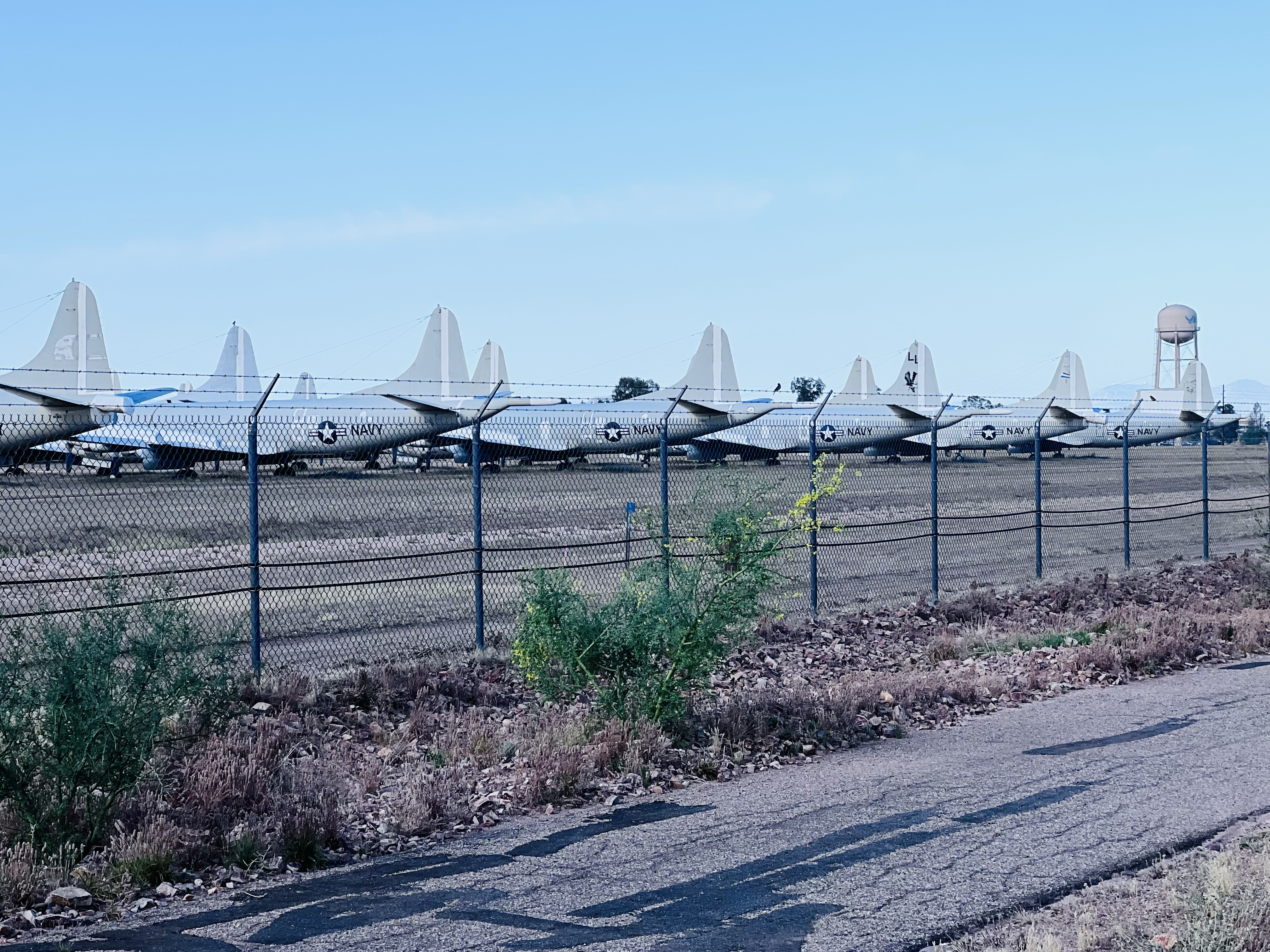
The bike path and fence with more P-3s than I have ever seen in one place.

I sat on a table and started my sketch. There was a lot going on in front of me! I chose to not include the chain link perimeter fence in front of me.

In the foreground are rows and rows of P-3s all parked with military precision with purple peaks in the background. This is the most P-3s I’ve ever seen in one location and I wondered if any of them were stationed at Moffett. The answer: very probable.

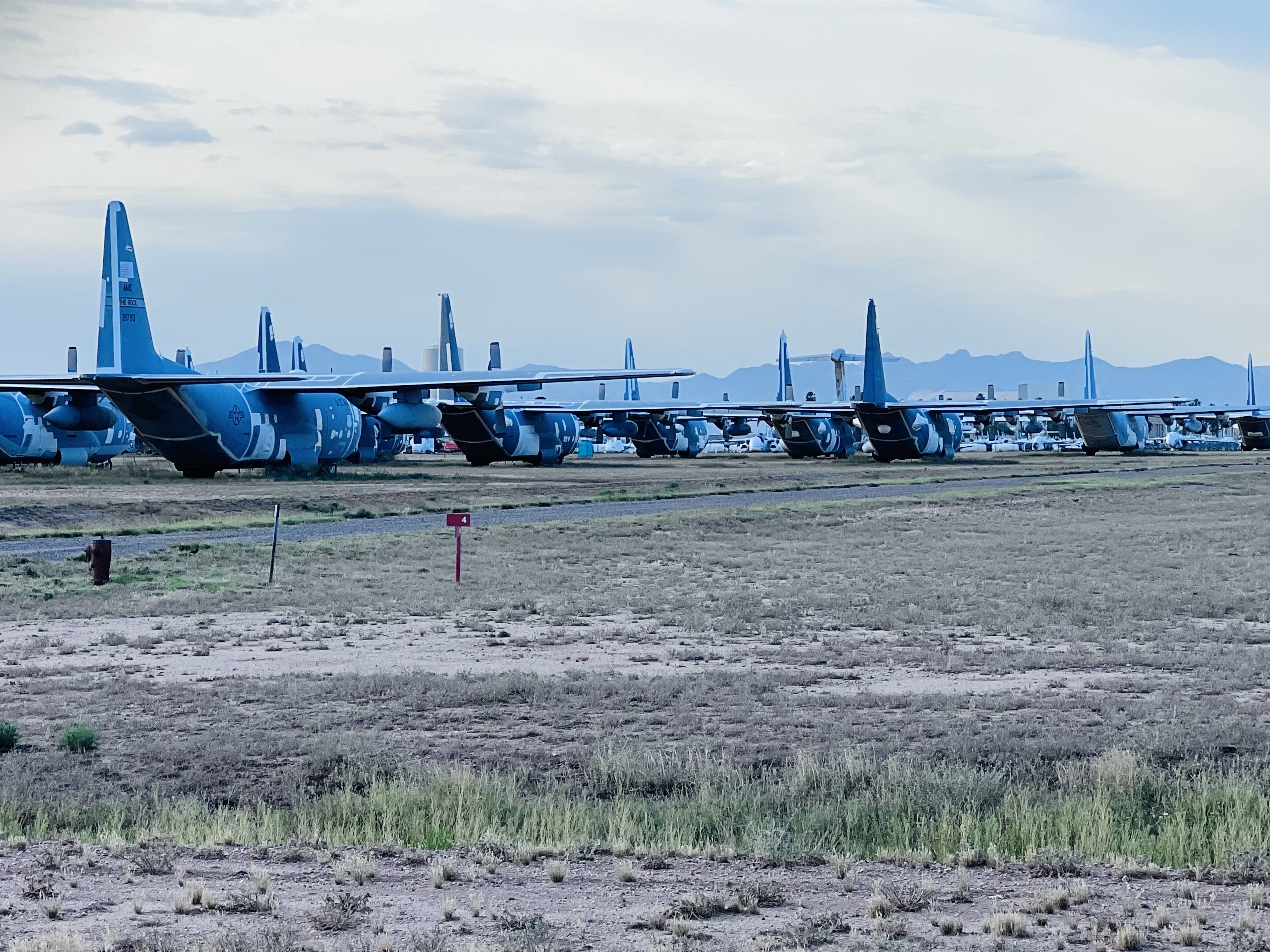
Rows and rows of Lockheed’s C-130s.

I returned to a different part of the Boneyard a few days later on my way to Saguaro National Park. This time the road that paralleled the Boneyard was East Irvington Road.

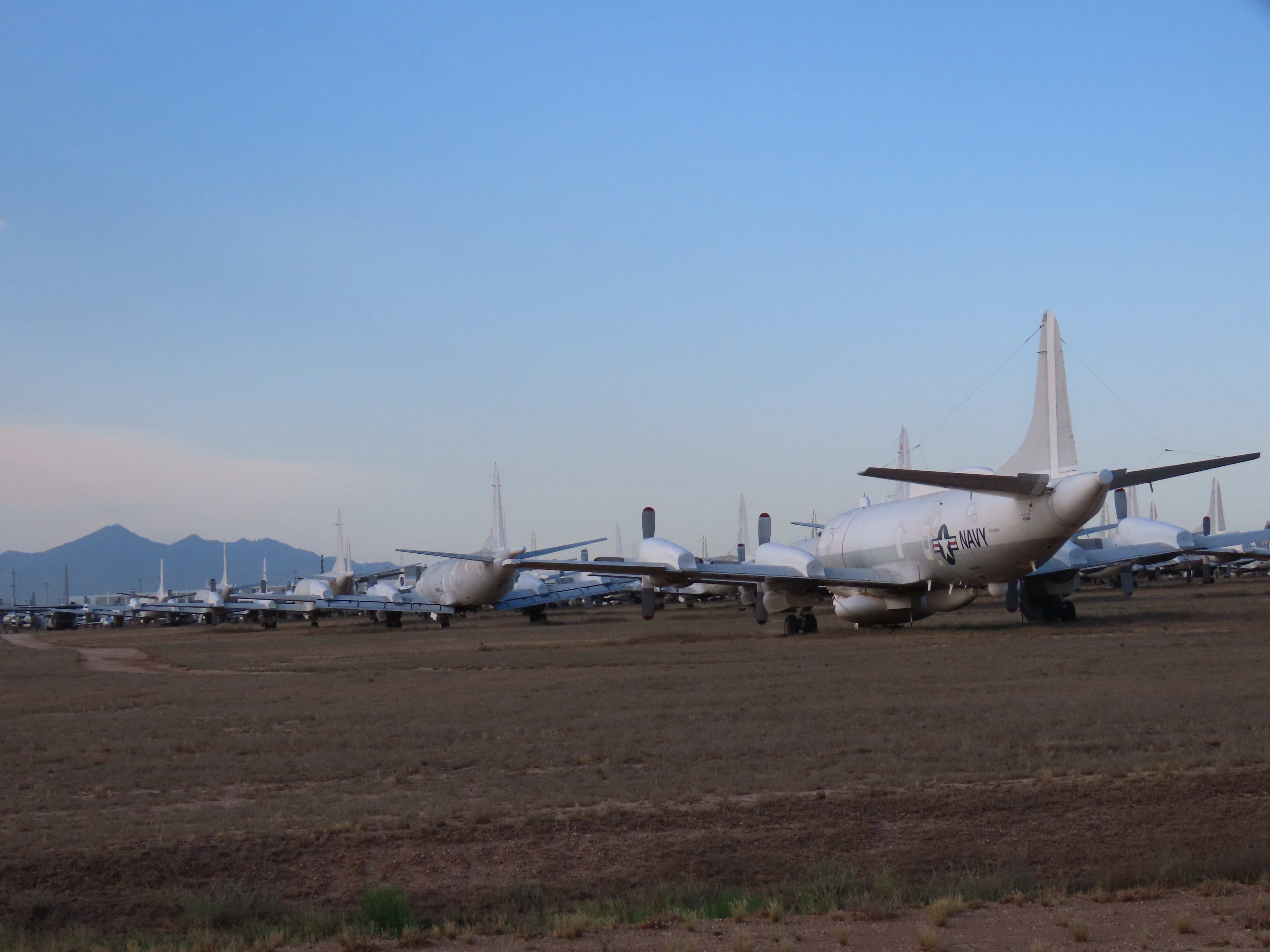
There are a lot of P-3s here. The plane closest is actually an EP-3 Aries II.

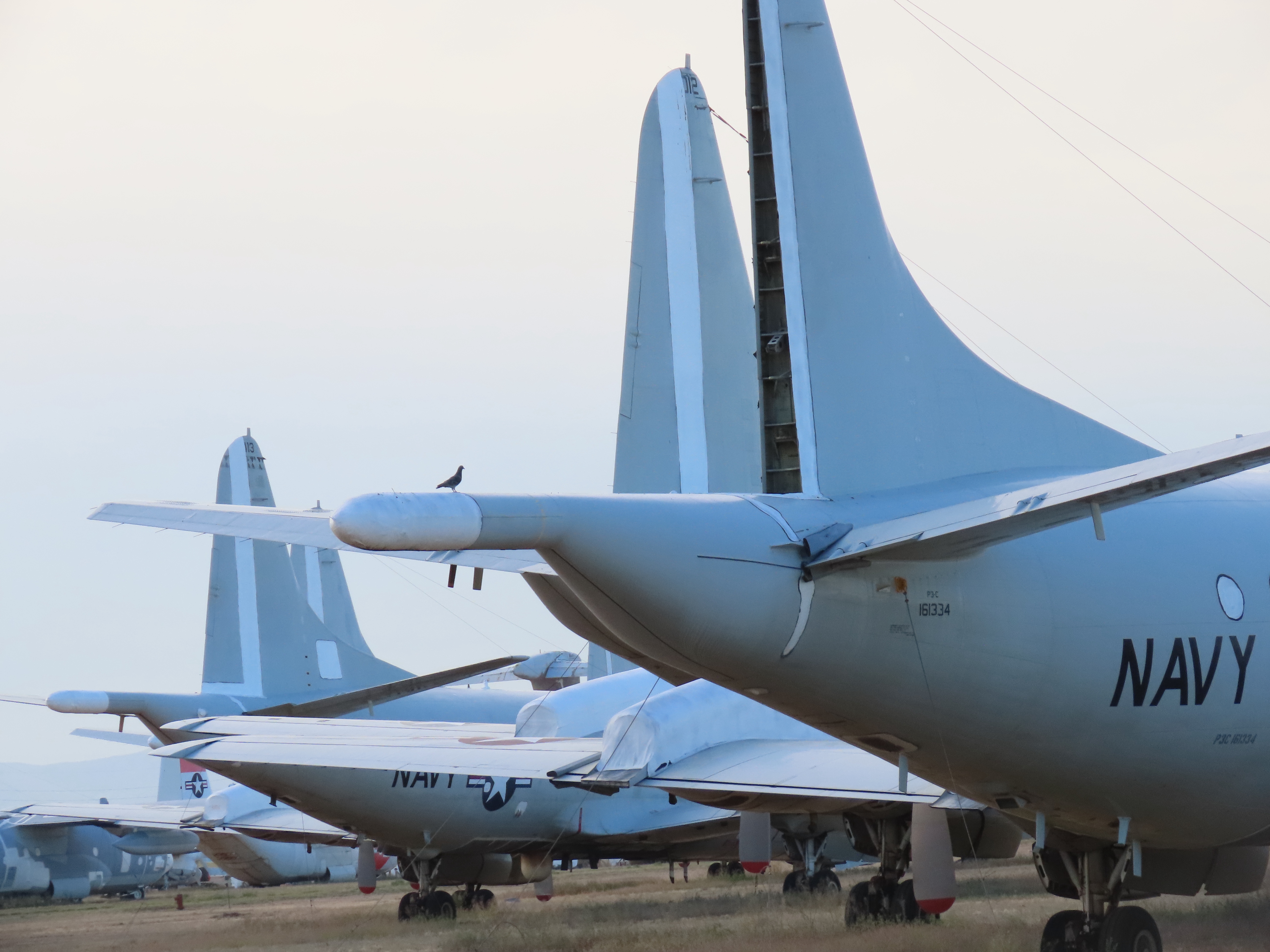
At this location, the aircraft were parked parallel to the fence and the tails receded into the distance towards the mountains in the horizon. This would be good for a sketch. The two types of aircraft near the fence were the Lockheed C-130 and P-3. Both of these turboprop planes had long years of service both in the United States and around the world. These planes are still flown today.

Now some of these planes are just expensive pigeon perches.

For this sketch I sketched across the gutter with a continuous-line sketch. And on this spread I did sketch in the fence.

Southern Arizona Transportation Museum

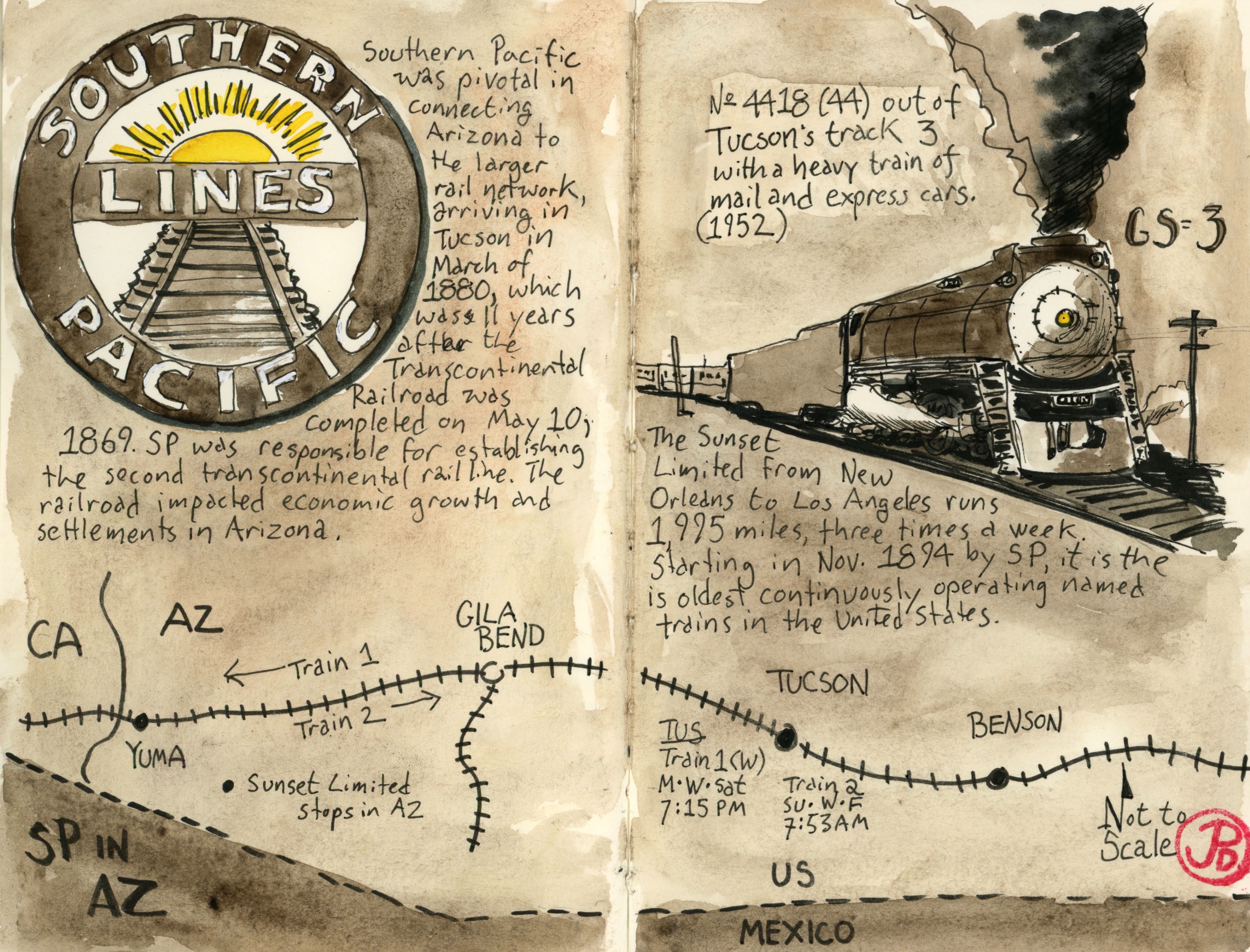
Arizona would not be what it is today without transportation, specifically the Southern Pacific Railroad.

The once mighty Southern Pacific was bought by Union Pacific in 1996 and ceased to be.

The railroad left towns in its wake and brought different cultures and loads of people to the Southwest.

There is a small museum (admission free) near the historic Tucson Station, now a stop on the AMTRAK Sunset Limit route.

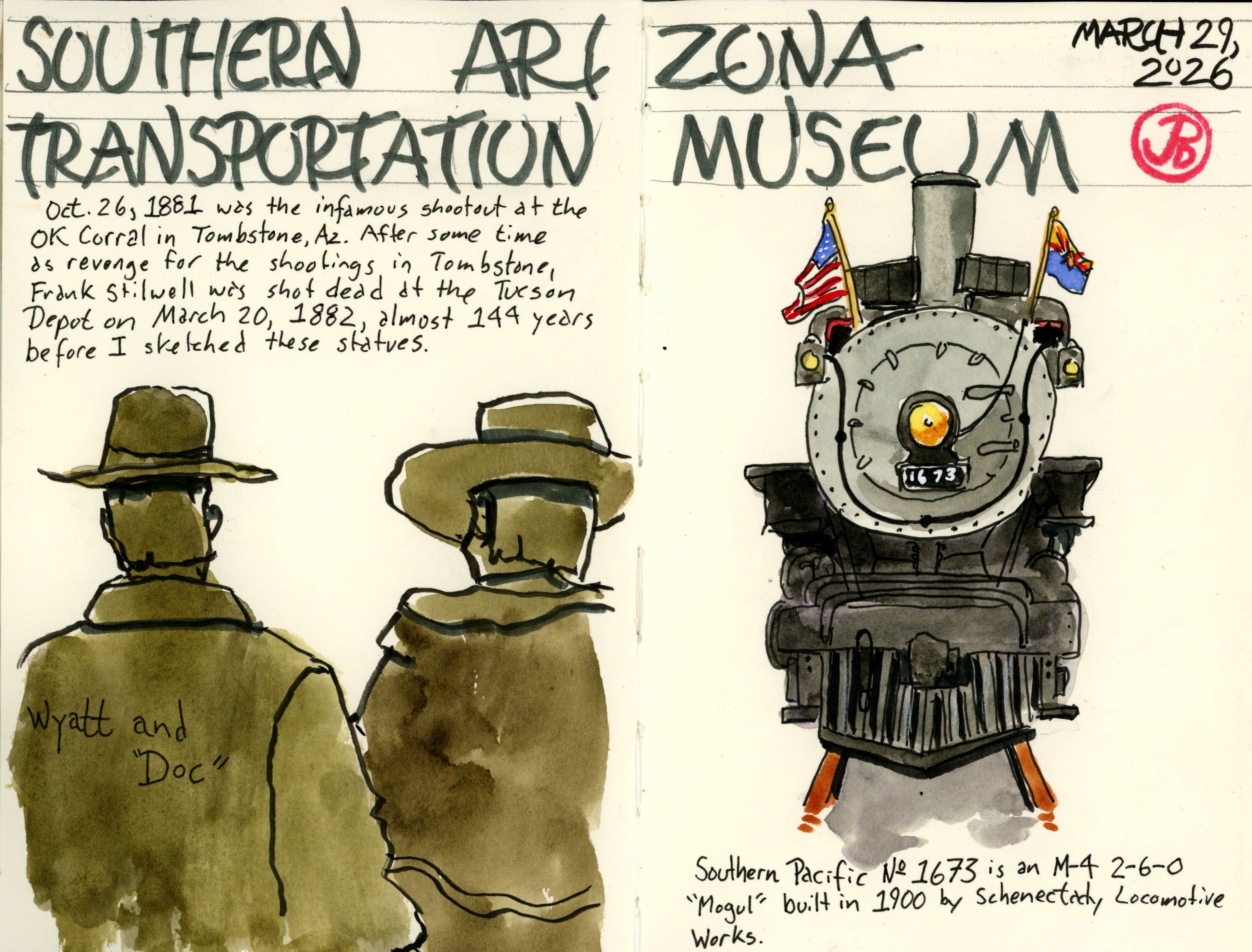
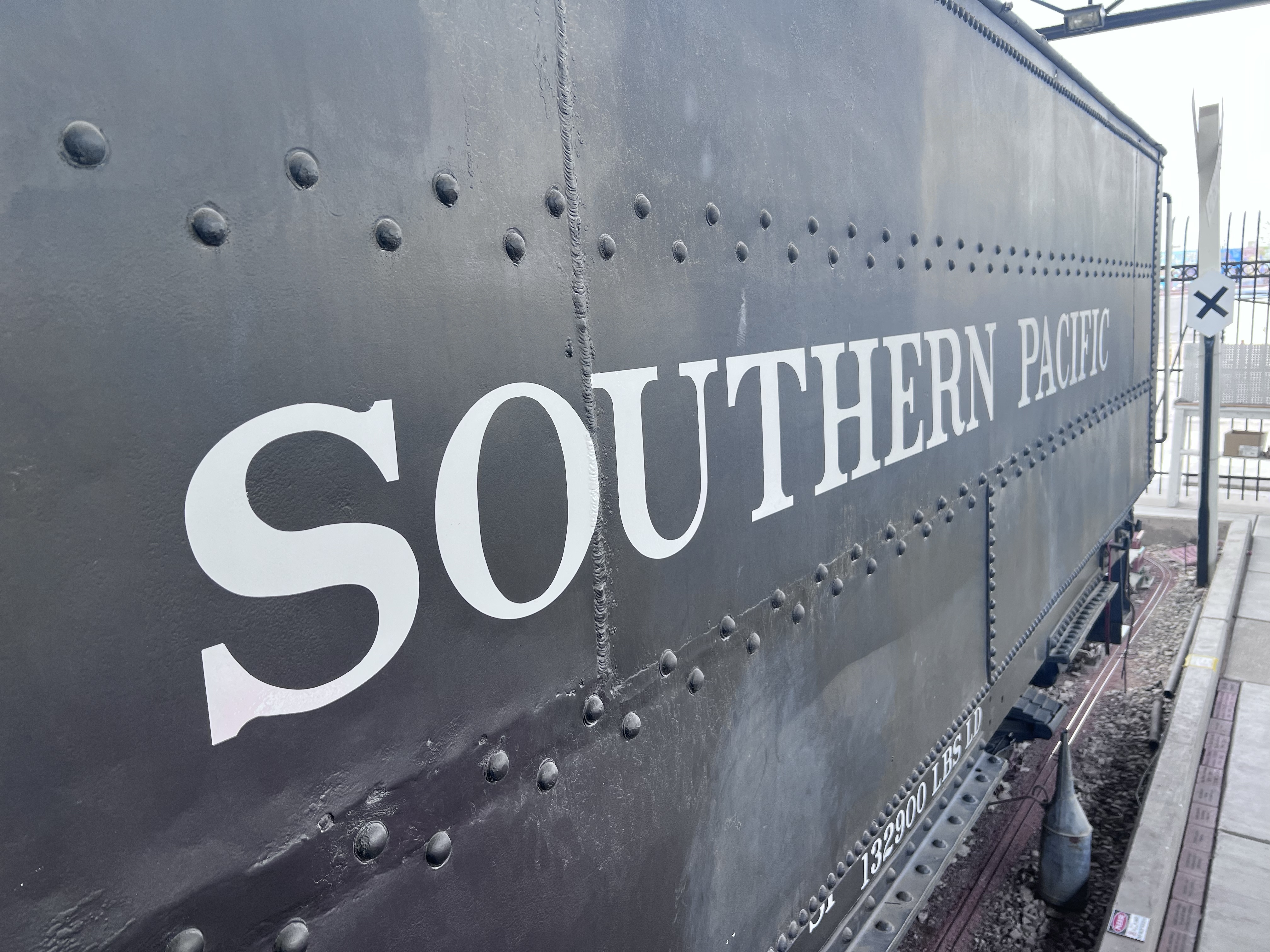
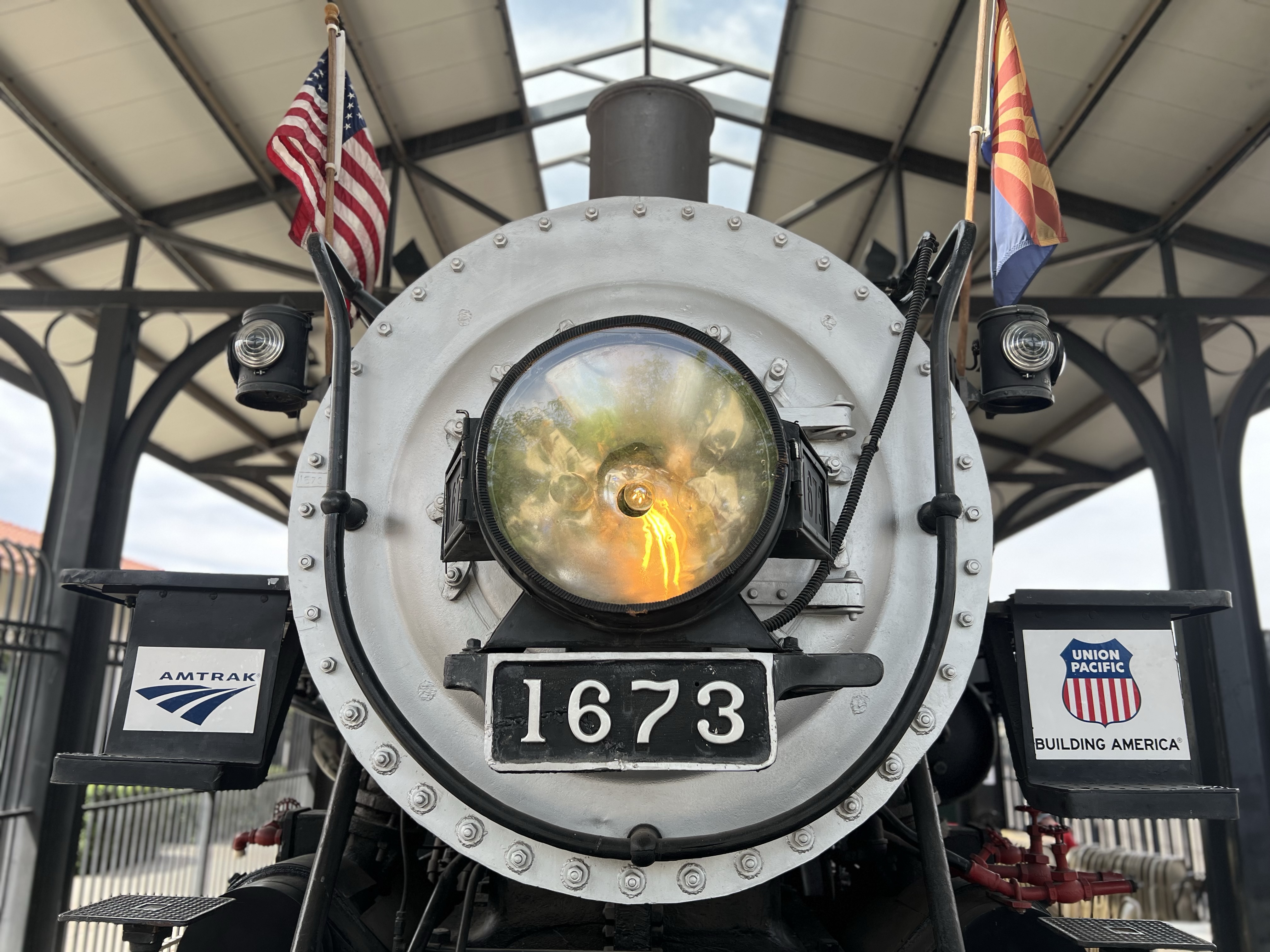
The big draw for me was a 2-6-0 Mongel Southern Pacific locomotive No. 1673. The locomotive was built at the Schenectady Locomotive Works in 1900.

The locomotive was in service in Southern Arizona but was later relegated to switching duty towards the end of steam. It was featured in the 1955 film Oklahoma. This appearance may be the reason she was saved from the scrapyard.

There is also a bit of Wild West history here at the Tucson Depot.

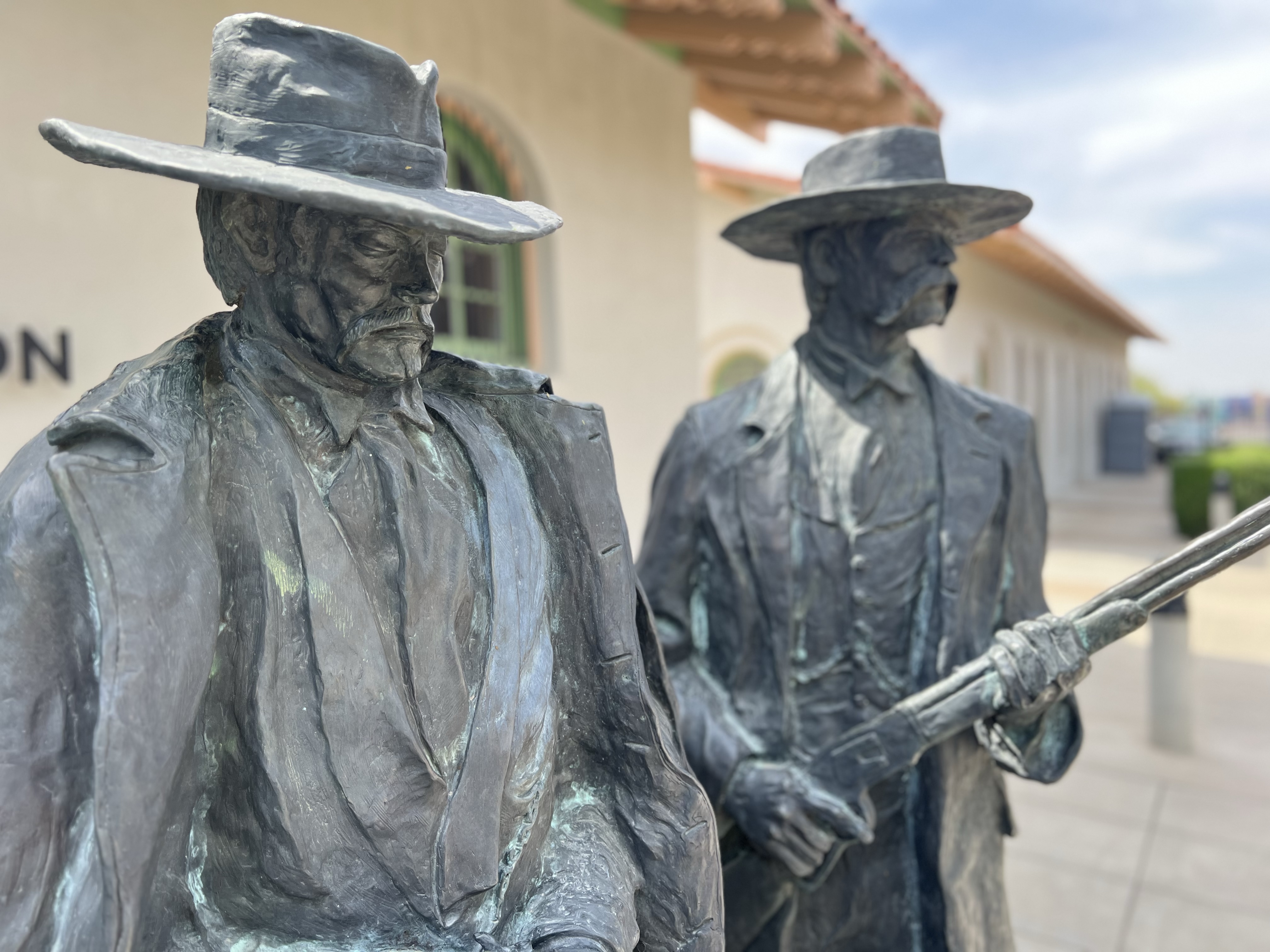
It was at the Depot that Wyatt Earp shot Frank Stilwell. And there is a statue of Earp and Doc near the museum.

I did two sketched at the museum on one spread. One of locomotive No. 1673 and another of the statues (featured sketch).

A little pre trip spread about Southern Pacific in Southern Arizona. I sketched a GS-3 in Tucson from a photo.

Tucson Dreaming

For my spring break I am heading to my neighbor to the southeast: Tucson, Arizona.

I have been to the Old Pueblo a handful of times but mainly for birding, which is excellent.

I planned to do some birding and a lot of field sketching. For this short trip I opted to bring a Stillman & Birn Delta Journal.

This 5.5 X 8.5 inch journal offers a lot of flexibility on quality ivory watercolor paper. It’s small enough to be carried in a sling bag or large pocket yet big enough for most of my stretching subjects. And throughout my travels I know that with a smaller sketchbook, you sketch more.

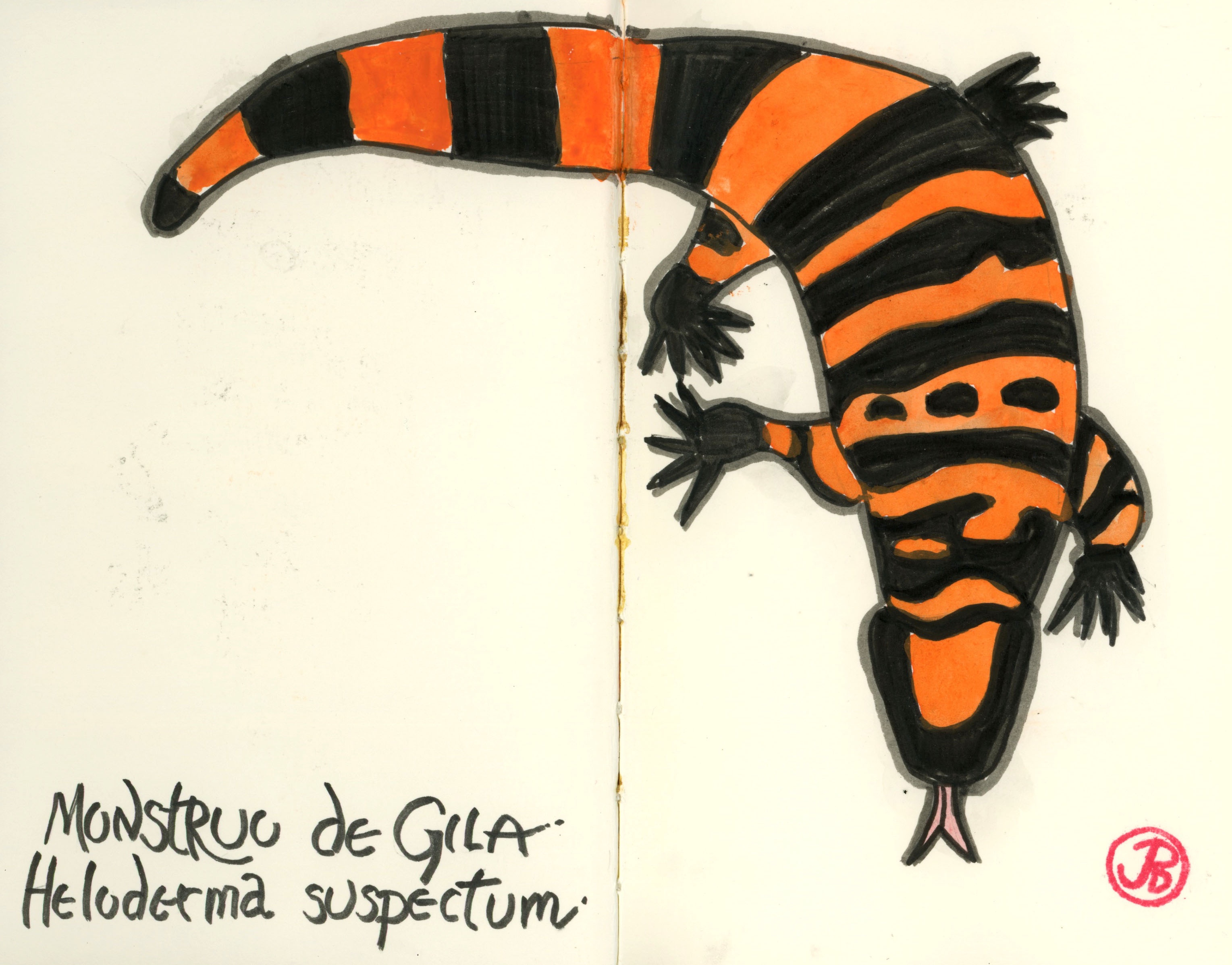
Before my journey I did a few pre-trip sketches. On my opening spread I sketched one of the largest and only venomous lizards in the United States, the Gila monster. I would love to see one in the wild!

My sketching style was influenced by the opening of the animated classic Watership Down (1978) where the animals were rendered in an aboriginal style. In my Gila monster sketch, I wasn’t going for reality, but more of a figurative and stylized version of the lizard.

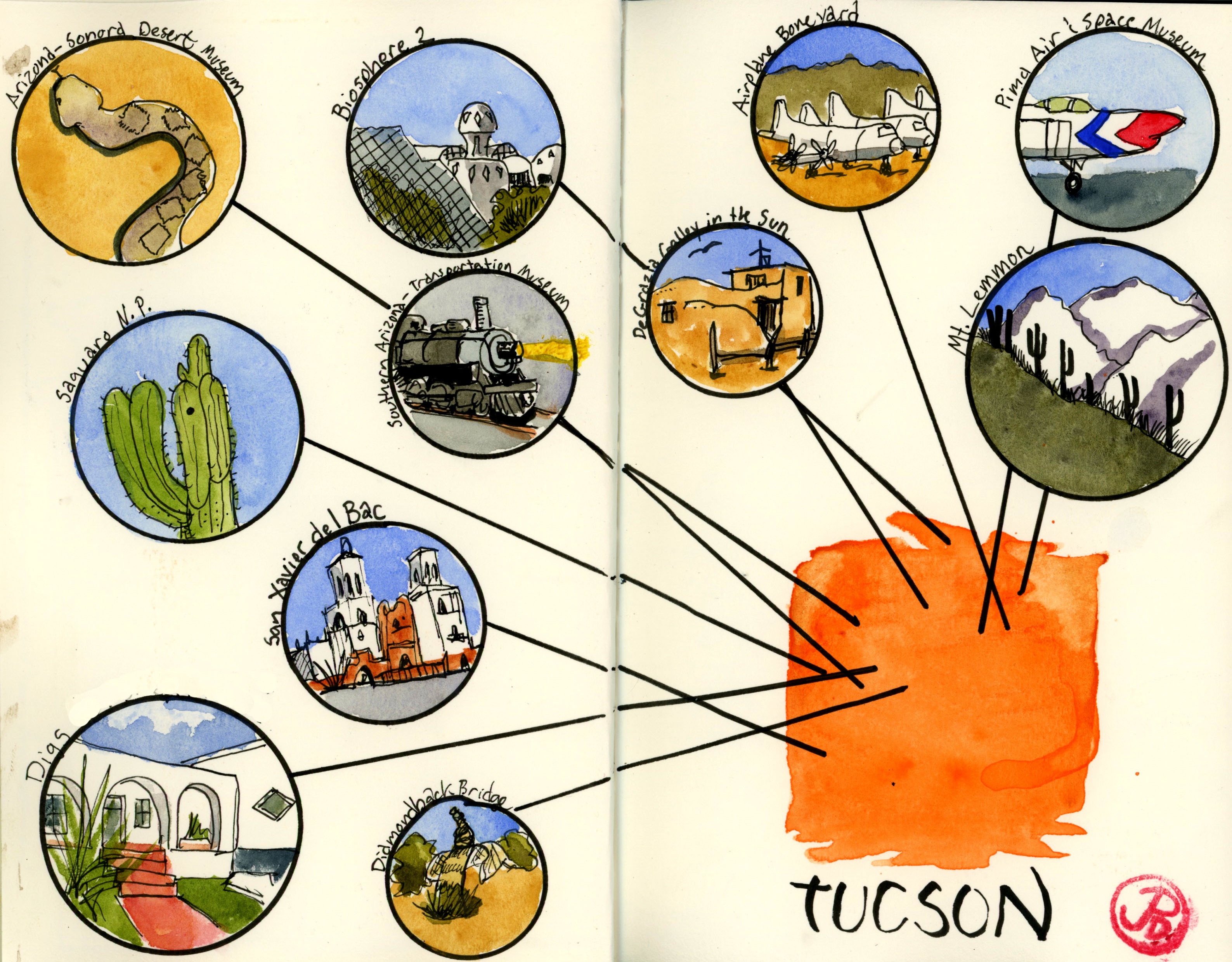
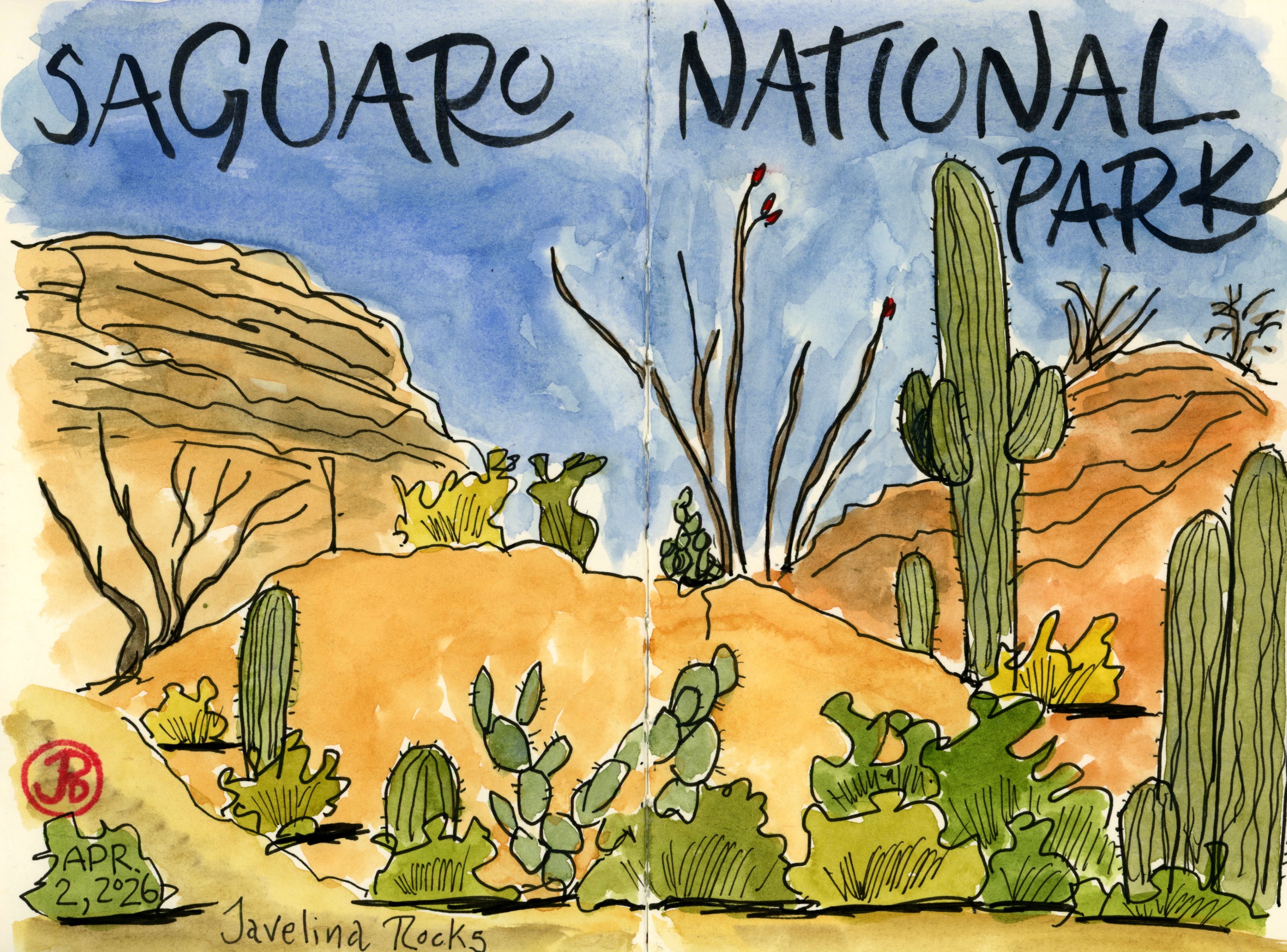
Another spread includes some sketching targets in and around Tucson including Mt. Lemmon, Saguaro National Park, the Pima Air & Space Museum, the Airplane Boneyard, the Southern Arizona Transportation Museum, the Arizona-Sonora Desert Museum, and others.

Does this sketch make sense? Not really. It is not accurate or to scale and Tucson is rendered as a rough orange square.

I don’t care but I like it!

The Bigfoot Discovery Museum

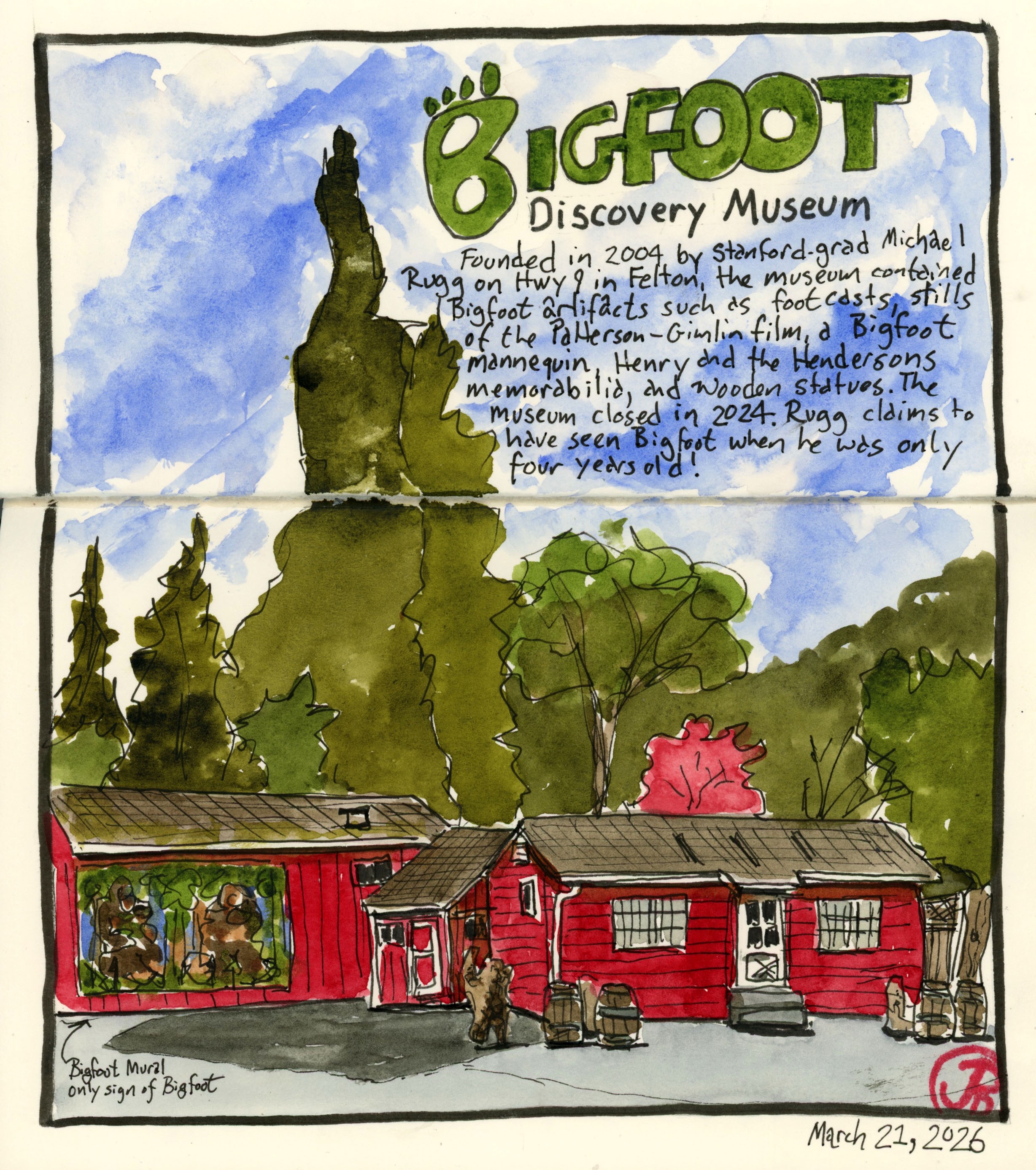
In 2026, the Bigfoot Discovery Museum in Felton, California is about as hard to find as the Sasquatch itself.

I always love curious roadside attractions and it seems when you combine a highway (Highway 9) with coast redwoods, you are bound to find a Bigfoot museum.

The museum was founded by Stanford grad Michael Rugg in 2004. At the age of four, Rugg saw Bigfoot and claimed to have locked eyes with the mysterious being. He later worked in Silicon Valley during the dot com boom and the eventual bust. After the bust he opened the museum.

A friend and I visited the museum, just up the highway from my cabin, about 15 years ago.

The museum contains a curious mix of artifacts including plaster foot casts, Harry and the Hendersons memorabilia, a picture of Chewbacca, supposed Bigfoot scat, and a section about the famous Patterson-Gimlin film.

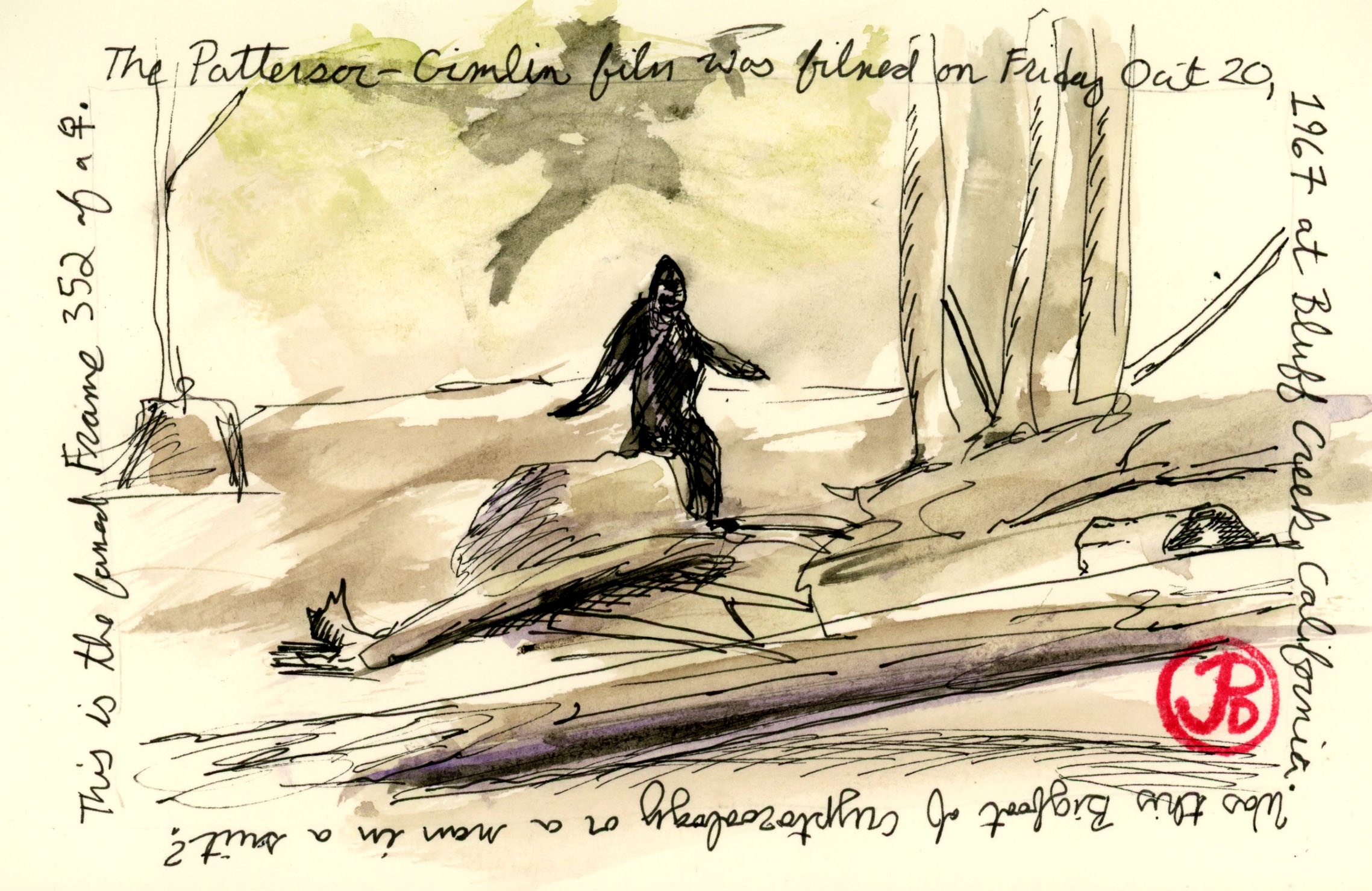
The famous frame 352 of the Patterson-Gimlin Film. Should the fact the it was filmed at Bluff Creek be an inside joke? The jury is still out if this is indeed a hoax.

My friend thought the museum was creepy and we didn’t stay long. In truth you could see the entire small museum in less than 15 minutes.

This museum is very reminiscent of many private museums on highways; they are a mixture of hard science (cryptozoology), cheesy gift shop, and the really ridiculous.

The cheesy, ridiculous side seems to undermine the main purpose of the museum: proving the existence of Bigfoot.

In 2025, there was a fire in a cabin behind the museum but the museum and its collection was spared. Maybe the blaze was set by Sasquatch, to destroy evidence of his existence.

After 20 years in business in the San Lorenzo Valley (not really known as a hotspot for Bigfoot sightings) the museum closed with Rugg’s retirement.

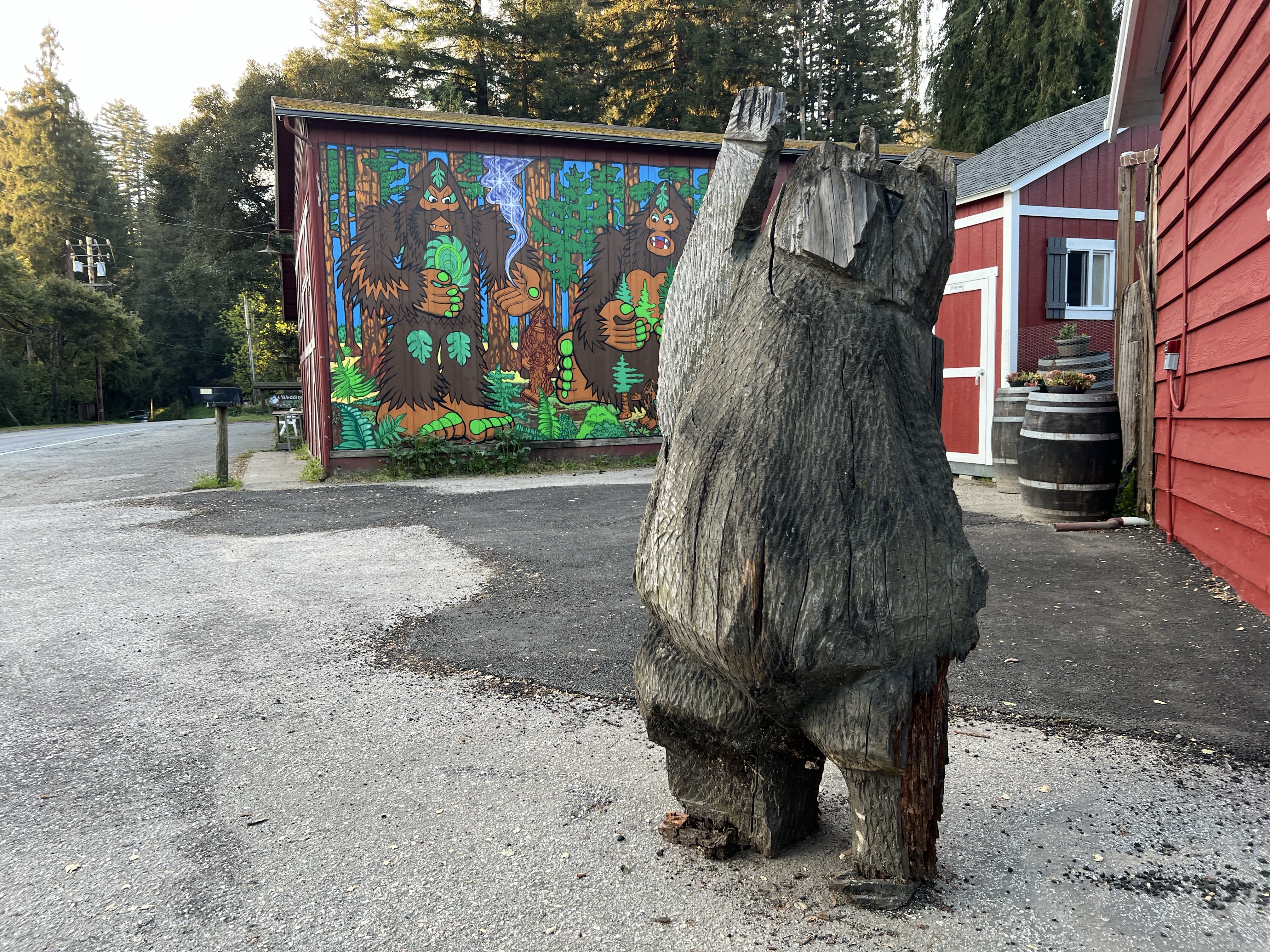
An odd carved bear has replaced the wooden Bigfoot carvings. The statues were definitely cheesy including an adult with a young one on its shoulders.

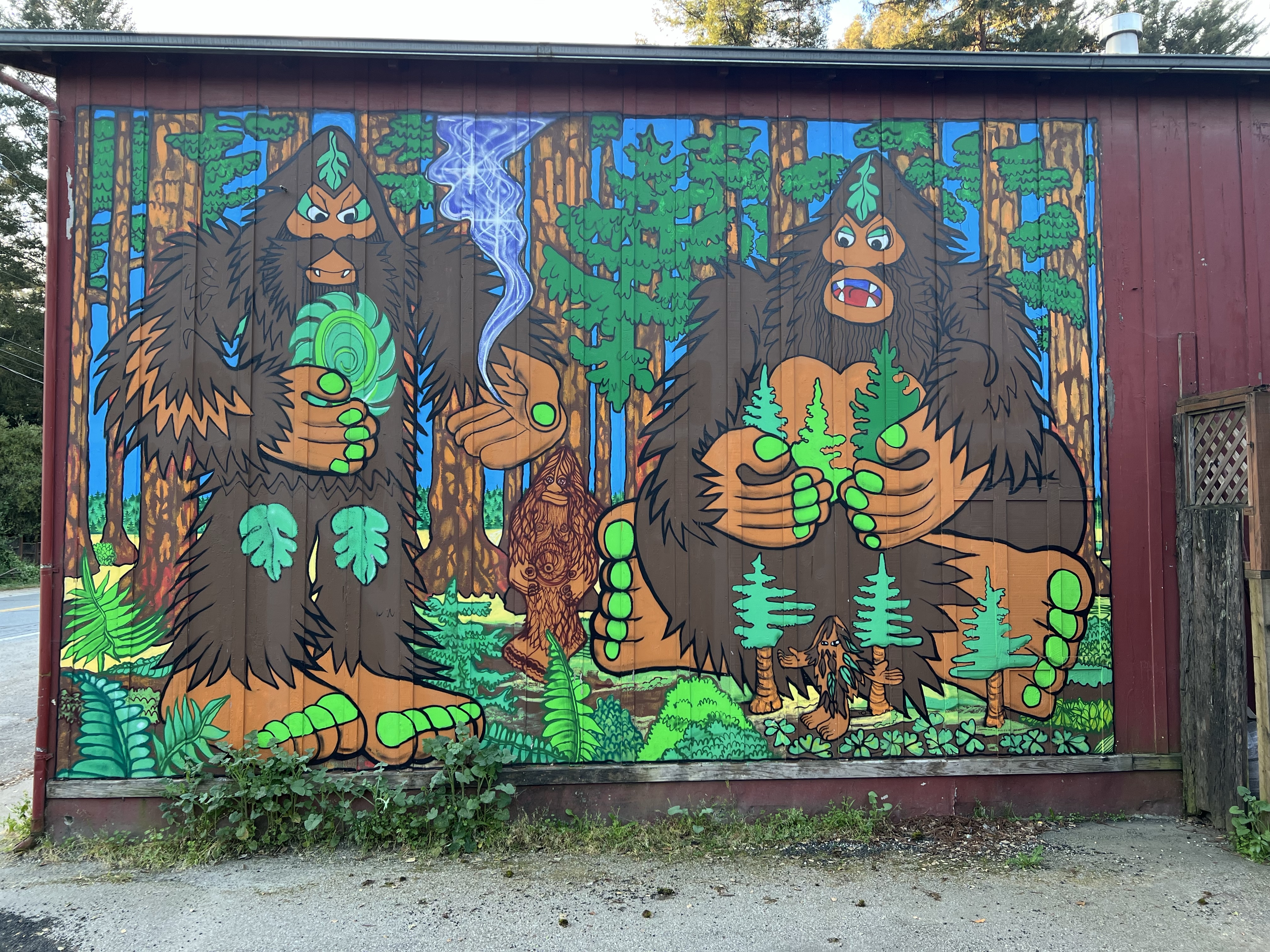
By the time I sketched the former museum, the only evidence left that this was a building dedicated to the search for hidden life was the mural painted on the side of the red barn.

I would firmly put this mural in the cheesy, ridiculous column.