Pima Air & Space Museum, Part 1

While in Tucson, I wanted to visit and sketch one of the best and biggest air museums in the west if not the entire United States, the Pima Air & Space Museum. This place is epic!

Now where to start?

What is impressive about the museum is the sheer size of the collection, not just in the number of aircraft in their collection (over 400) but the massive size of the planes including three B-52s, two B-29s, and two 747s. You need a lot of real estate to display these massive machines and they have it.
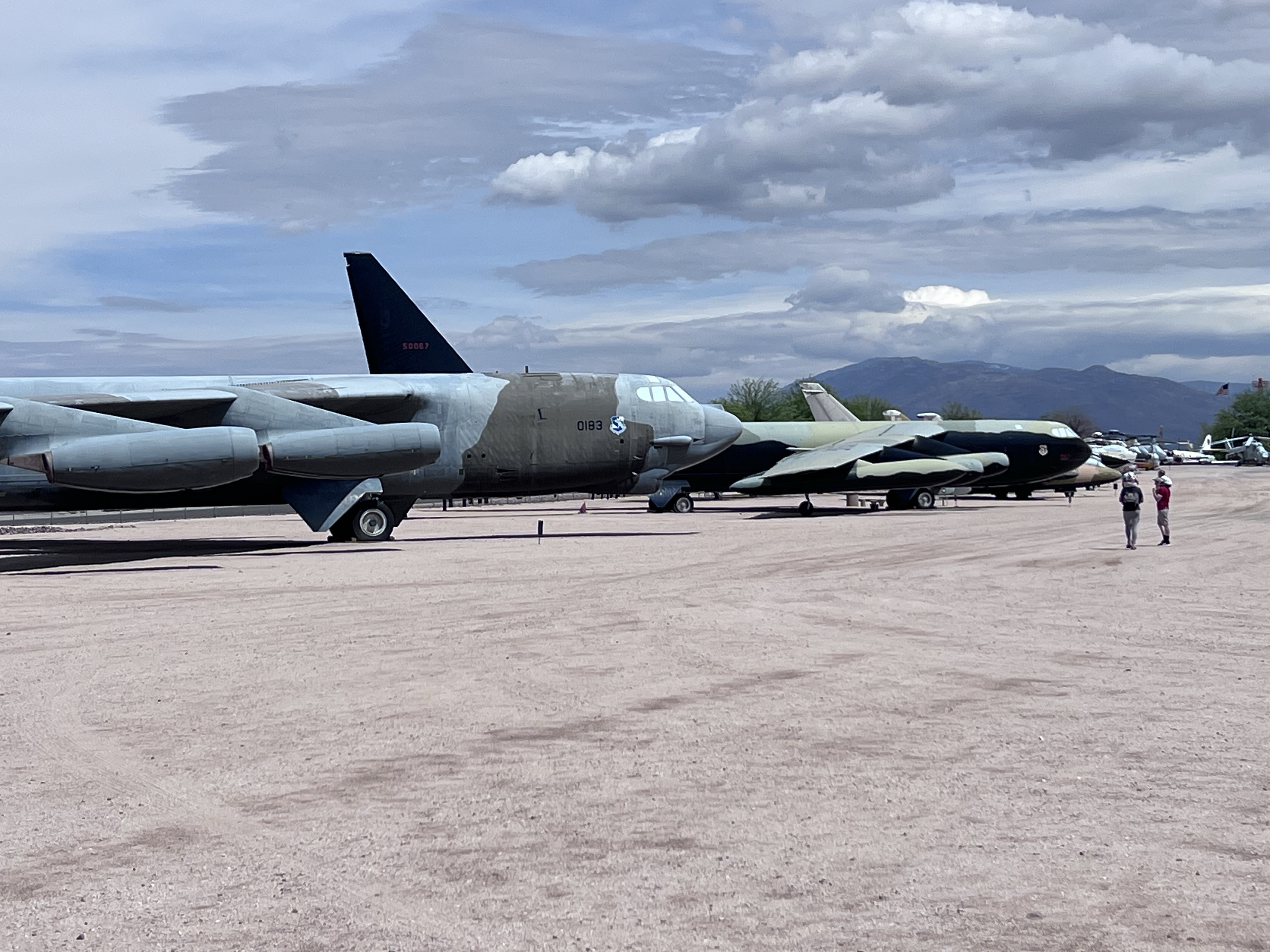
Two of the three B-52s in the museum’s collection.

What I also liked about the size and scale of the museum, unlike others I have visited, is that you actually have space to stand back and take in the whole aircraft and walk around them for a 360 degree view and they weren’t crowded in with tons of other aircraft, making sketching or plane viewing, rather difficult.
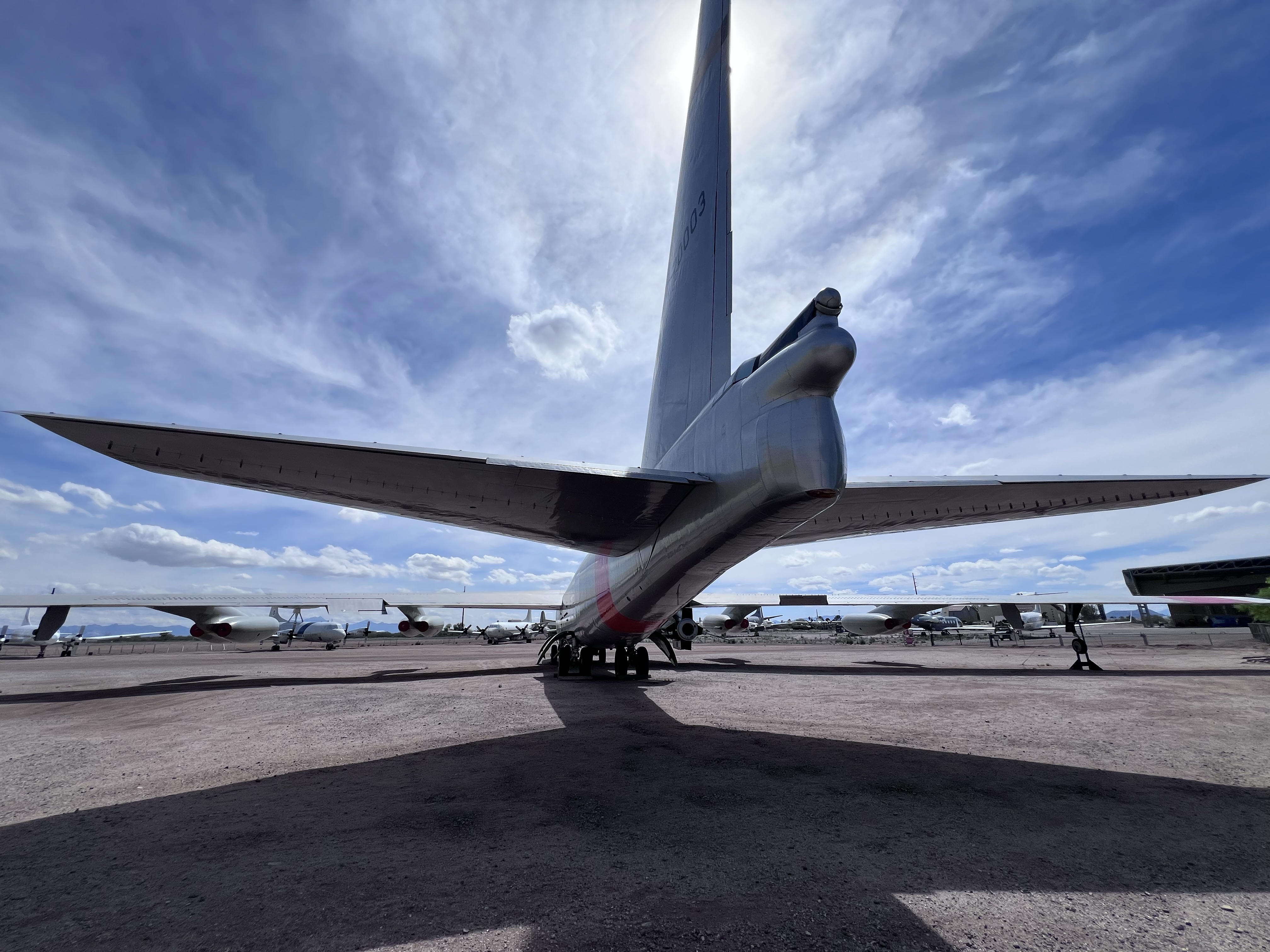
Getting a 360 view of the massive end of a Boeing B-52 (and they have three).

Some of the aircraft is displayed in hangers but the majority of the collection is outside under the desert sun.
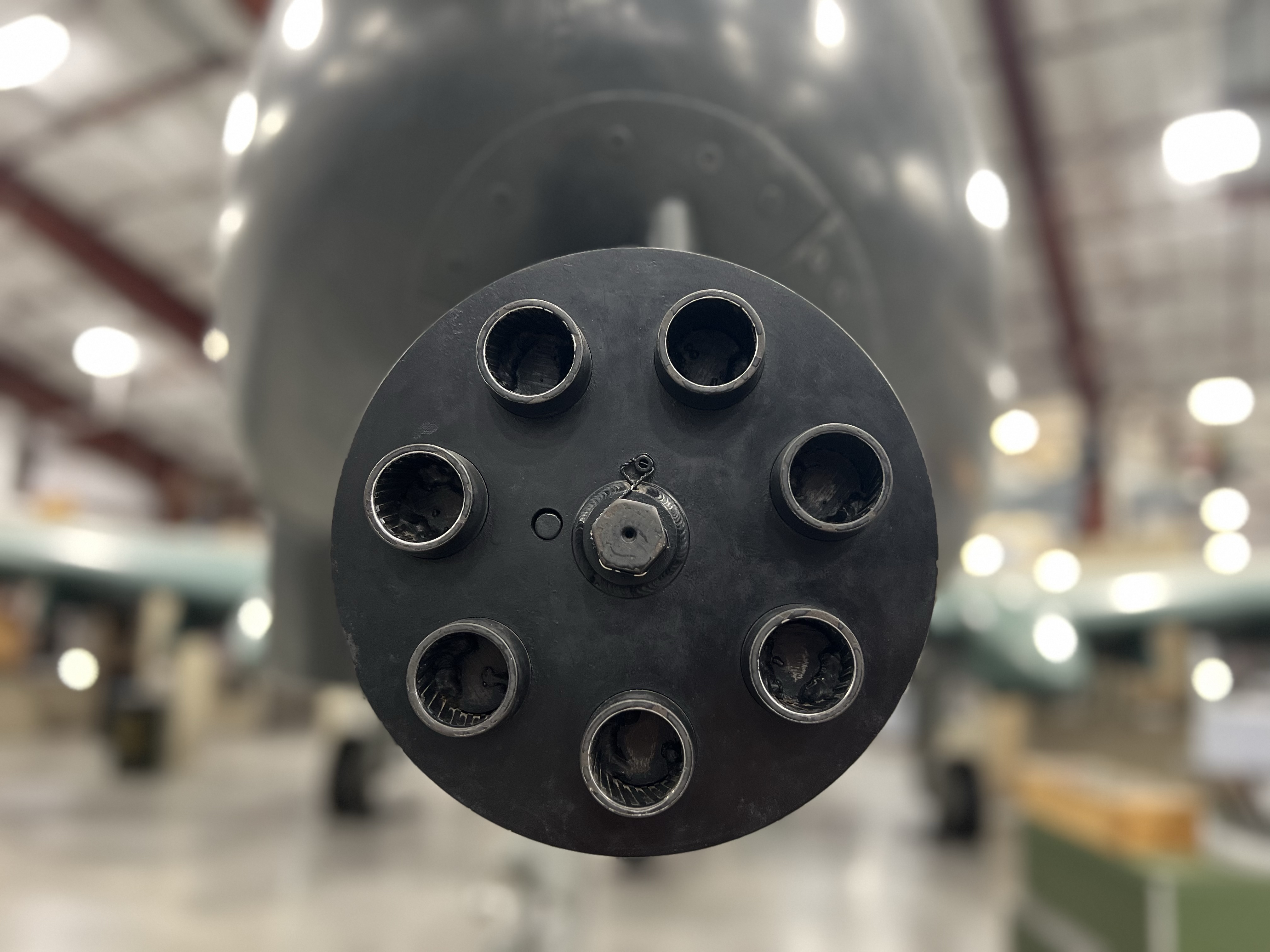
The business end of an A-10 Warthog. This maybe one of the only museums where you can see this static plane, step outside and see one taking off at the adjacent Air Force Base.

Sketching outside was going to be a challenge in the desert sun for my coastal constitution and fair skin. I employed 45 SPF sunscreen, long sleeves, a buff, and a wide brimmed hat.

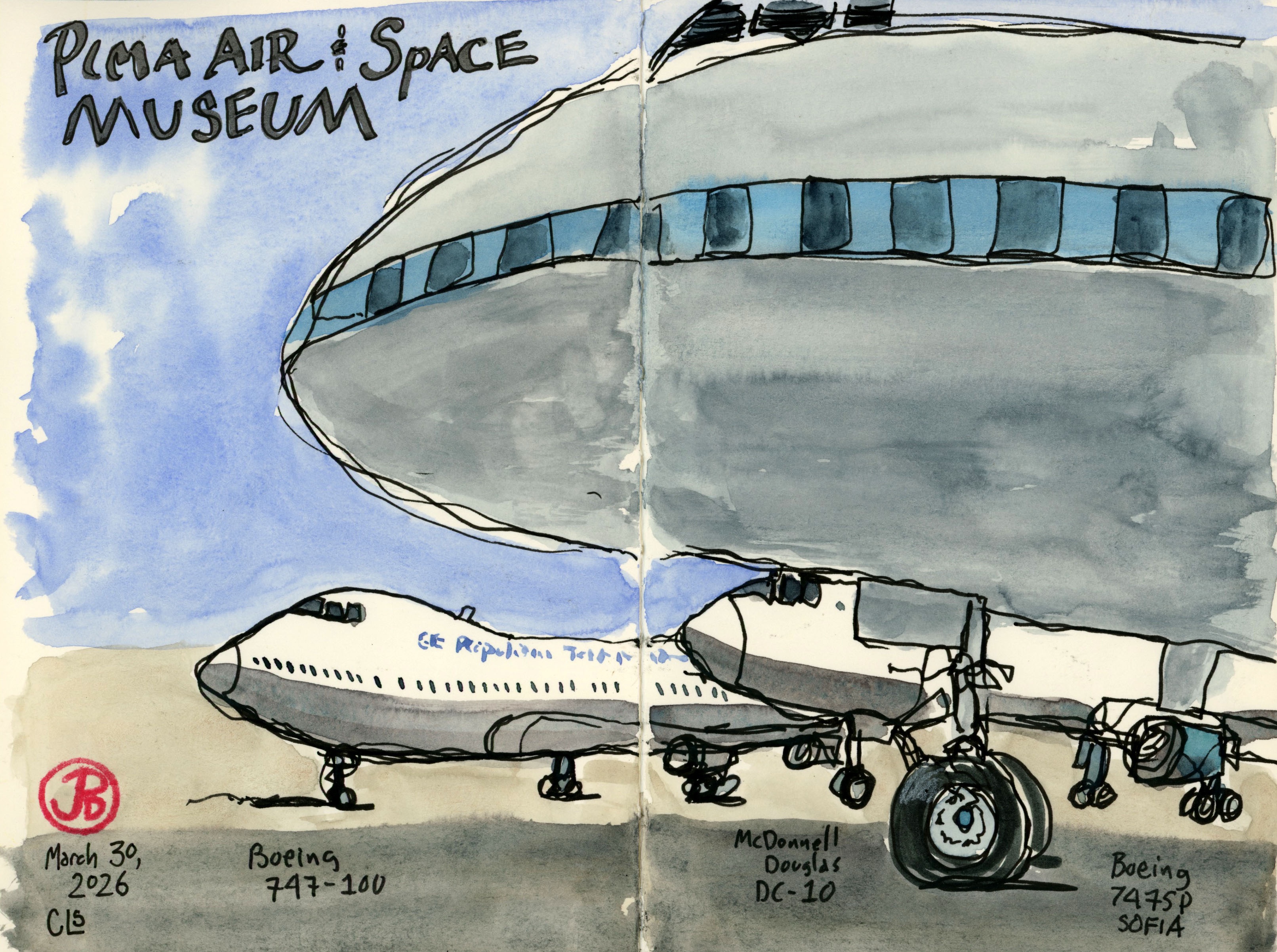
While sketching a line of some of the museum’s largest aircraft, two 747s, a DC-10, and a triple 7, I looked for shade in my sketching positions.

Luckily a Boeing 747 provides quite a bit of shade to sketch under. I rendered the scene with a continuous-line sketch (featured sketch).

In this post I included sketches of some of the museum’s largest planes, they all happen to be made by Boeing: the B-29 Superfortress, the B-52 Stratofortress and the 747, the world’s first jumbo jet.

While the B-52s and the 747s were outside, the heavy World War Two bomber, the Boeing B-29 Superfortress was indoors.

The Boeing B-29 Superfortress is known for the destruction it wreaked on Japan during WW II with the dropping of incendiary bombs on Japan’s wooden cities and also dropping the two atomic bombs on Hiroshima and Nagasaki that virtually ending the war in the Pacific Theater.
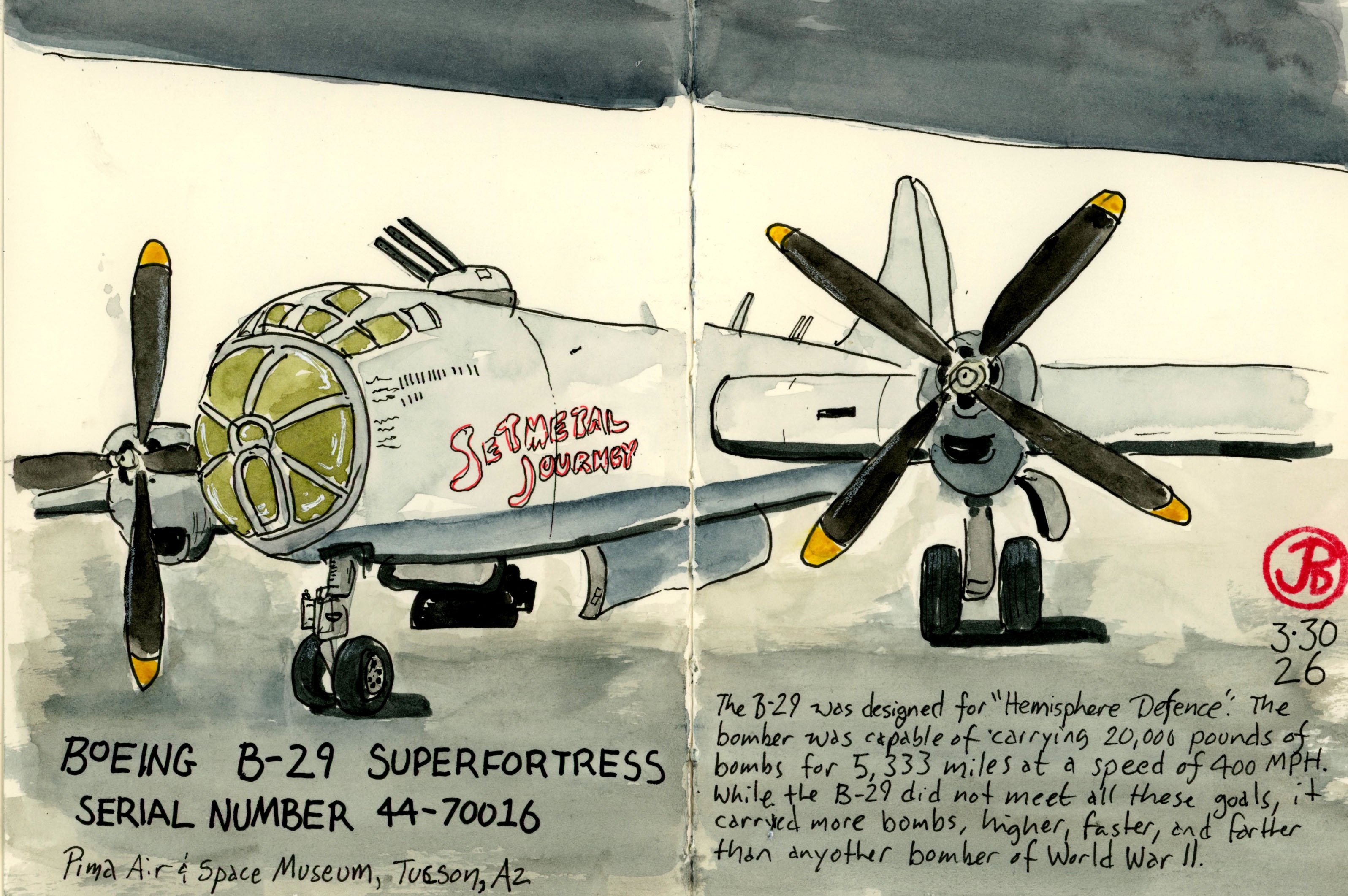
Image

DIY Airplane Fieldguide

I have wanted to buy an airplane field guide to help me identify the different commercial airplanes I see at airports or flying north up the Pacific Coast. Telling an Airbus A380 from a Boeing 747 is an easy identification but what about other aircraft?

Where I grew up in Sunnyvale is on the flight path to Moffett Field Navel Base. By bedroom window faced the many military planes approaching the runway at Moffett.

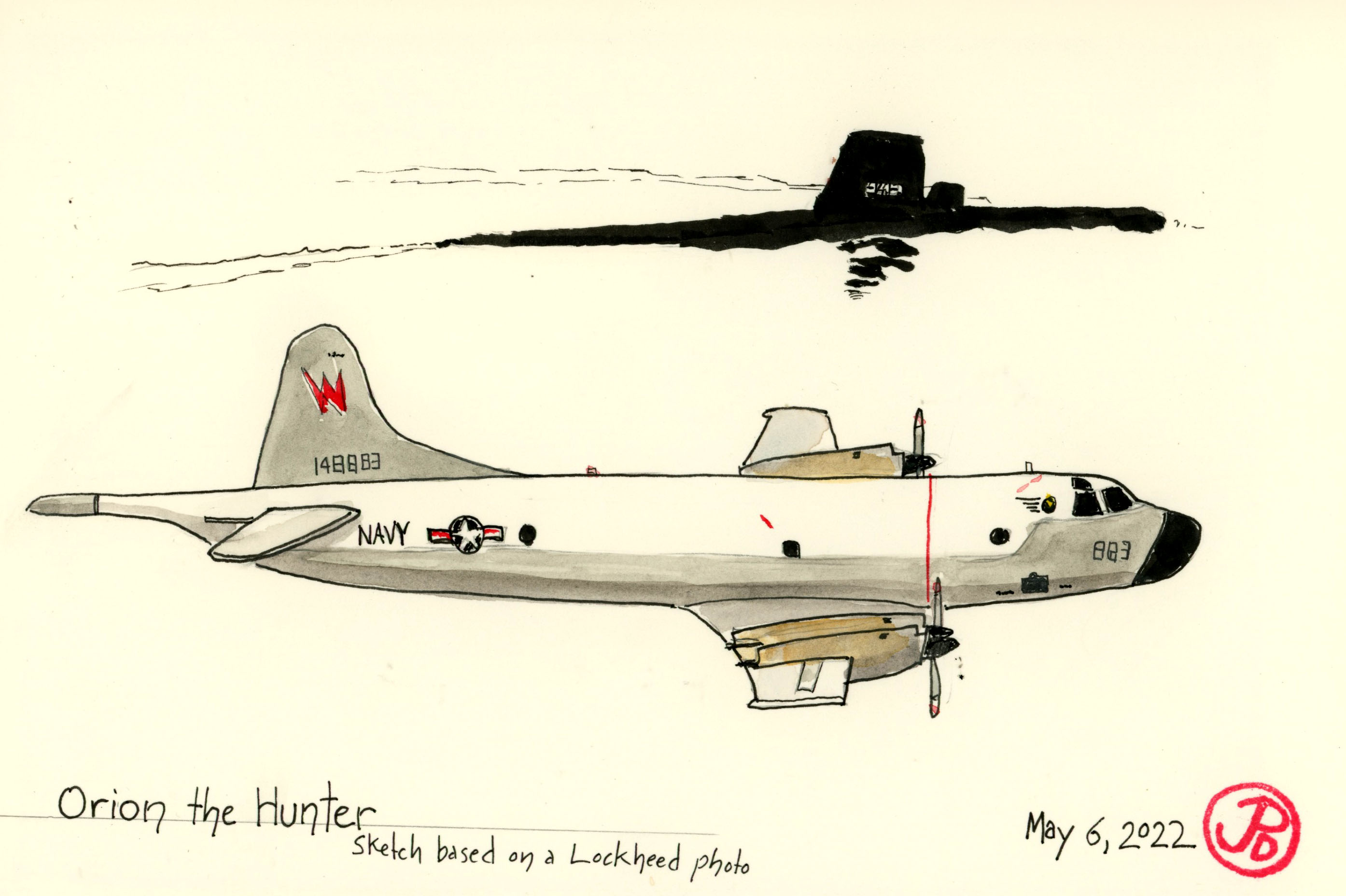
A 2022 sketch of Orion the Hunter.

Like birds, I learned to identify the common Lockheed P-3 Orion, the submarine hunter. But I also could identify other aircraft: C-130 Hercules, C-5 Galaxy, F-16 Falcon, the Blue Angels with their A-4 Skyhawks and later F-18 Hornets as well as other aircraft.

As I hobby I built model airplanes which I hung from the ceiling with dental floss and push pins. Some of my favorites was an F-4 Phantom hand painted in camouflage and a KC-135 refueling a B-52.

These airplanes were easy to identify but when it comes to commercial jets, it is a bit more tricky.

Commercial jets can be broken down to the two major manufacturers: Airbus and Boeing.

Boeing is an American manufacturer founded in 1916. It has produced such iconic passenger planes as the 314 Clipper, the 377 Stratocruiser, the 707, 737, the Triple 7, and the renowned 747.

Airbus on the other hand is a consolidation of different European companies formed in 1970. Iconic aircraft on its roster are: the A220, A320, A330, A350, and the largest passenger plane in the air the A380.

To internalize the simple differences between the two manufacturers I created a short DIY field guide to aircraft, a sort of cheat sheet to use while at the airport (featured sketch).

I guess plane spotting from an airport terminal is a bit like birding in a mount museum, the planes are sitting on the tarmac giving you time for prolonged study. And planes don’t flush easy like spooked birds. Well neither do taxidermy birds!

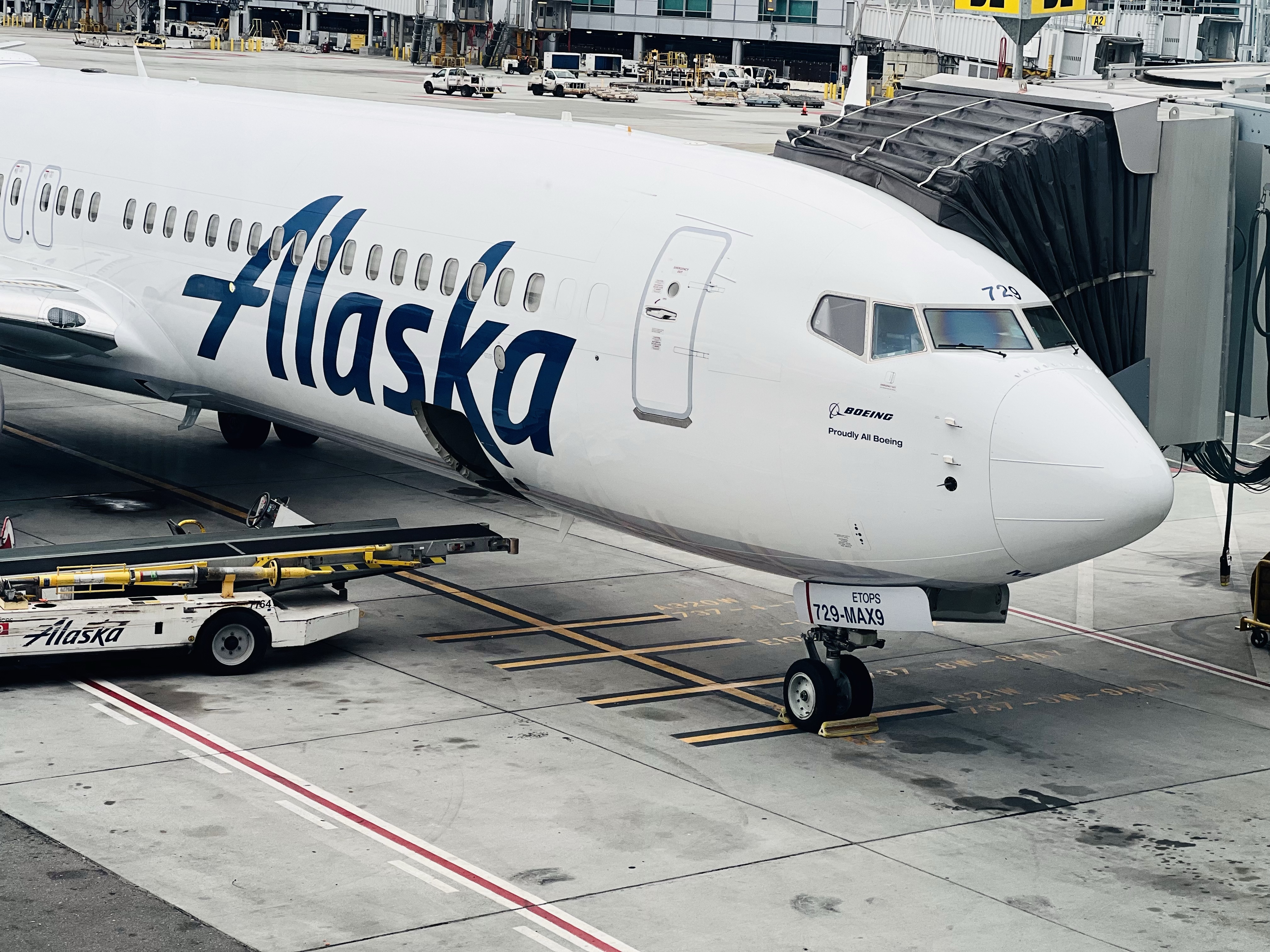
Plane spotting at SFO. This plane has a pointed nose and the side windows form a “V” instead of a straight line. It also helps that it says: “Boeing. Proudly All Boeing” just under the window!
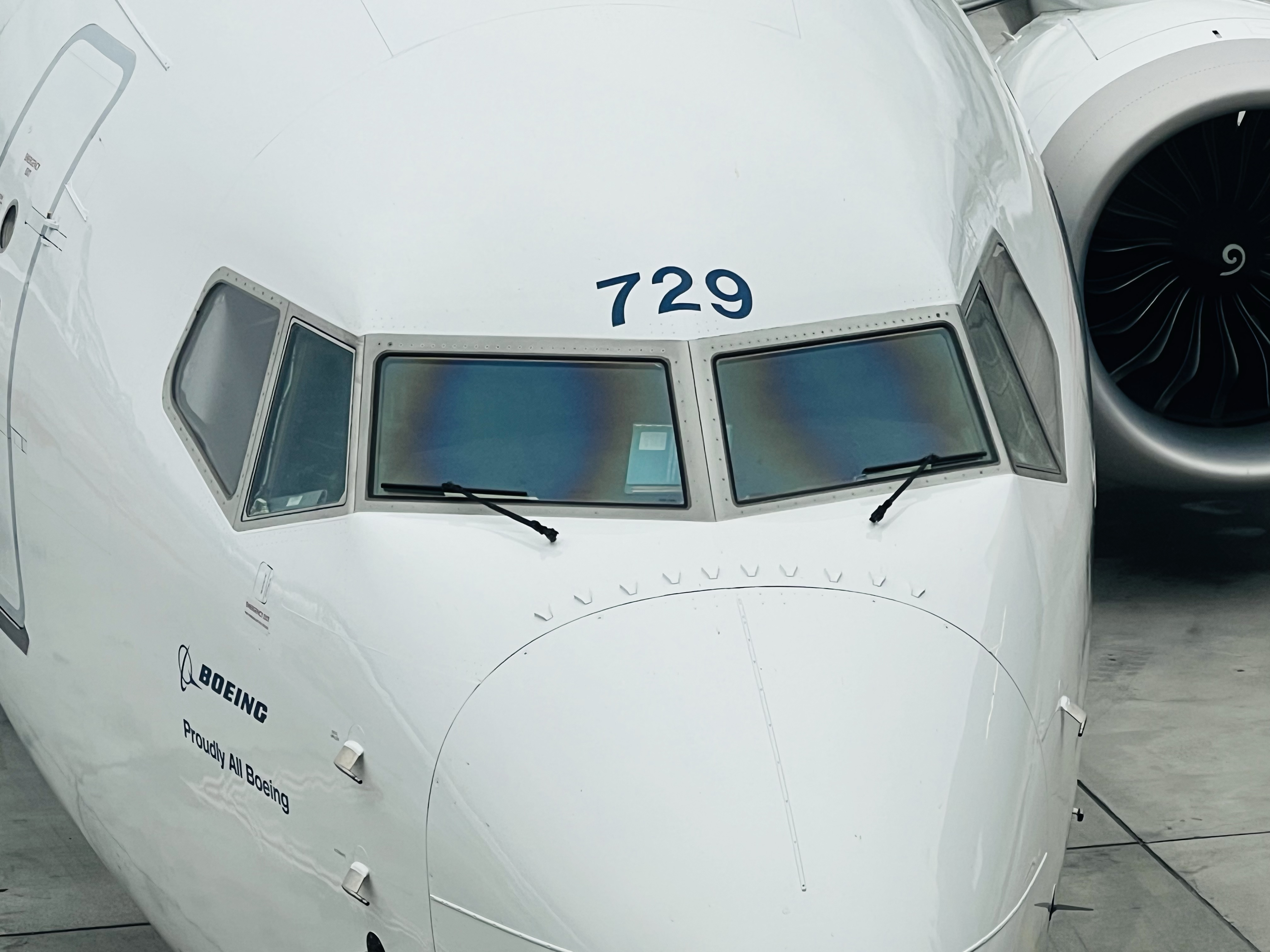
Closer detail of the side windows of a Boeing. I believe this is a Boeing 737-9 MAX.
Could I identify my plane that would take me to Honolulu? Straight side windows with a notch in the top corner. The nose is rounded and less pointy than a Boeing. This is an Airbus A330-200. It also helps that it’s labeled below the windows.
My winged chariot to Hawaii. Another view of the Airbus A330 and the diagnostic cockpit window shape. Not seen in this photo but where the tail meets the fuselage, it is rounded with no extra angle like the Boeing’s tail.

While waiting to board my flight I found a comfy swivel chair and sketched the view before me of the B Gates of Terminal 1 (no pencil required). In the foreground is an Alaska Airlines jet and in the background is a Hawaiian Airlines plane at Gate 11. This was the plane that would be flying me to Honolulu.

I sketched the Alaskan Boeing before it pushed out to the taxiway leading to runways 1 (Left and Right). This left me time to add details to the Hawaiian Airbus and the jumbles of the surrounding scene at SFO.