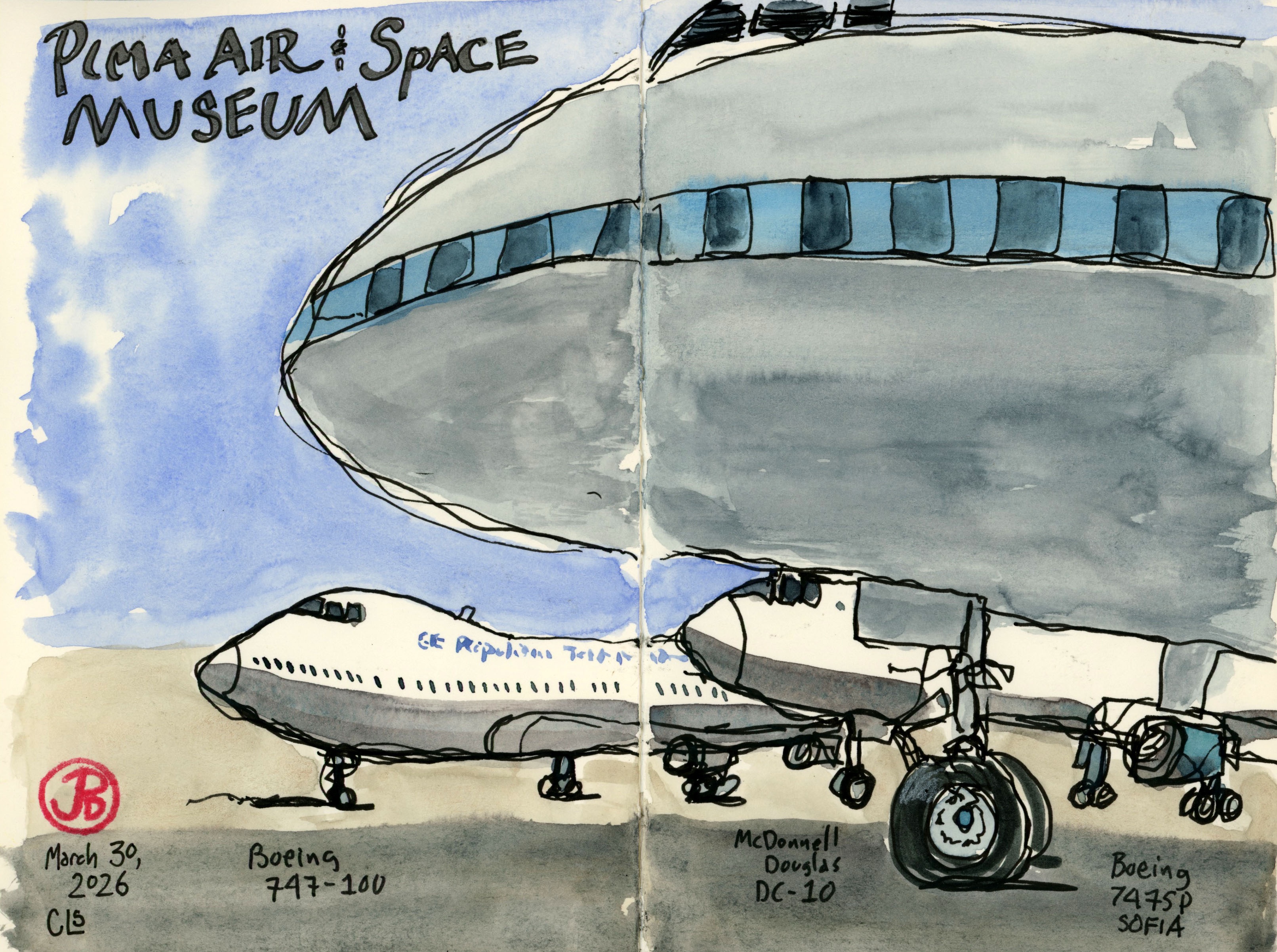
While in Tucson, I wanted to visit and sketch one of the best and biggest air museums in the west if not the entire United States, the Pima Air & Space Museum. This place is epic!
Now where to start?
What is impressive about the museum is the sheer size of the collection, not just in the number of aircraft in their collection (over 400) but the massive size of the planes including three B-52s, two B-29s, and two 747s. You need a lot of real estate to display these massive machines and they have it.
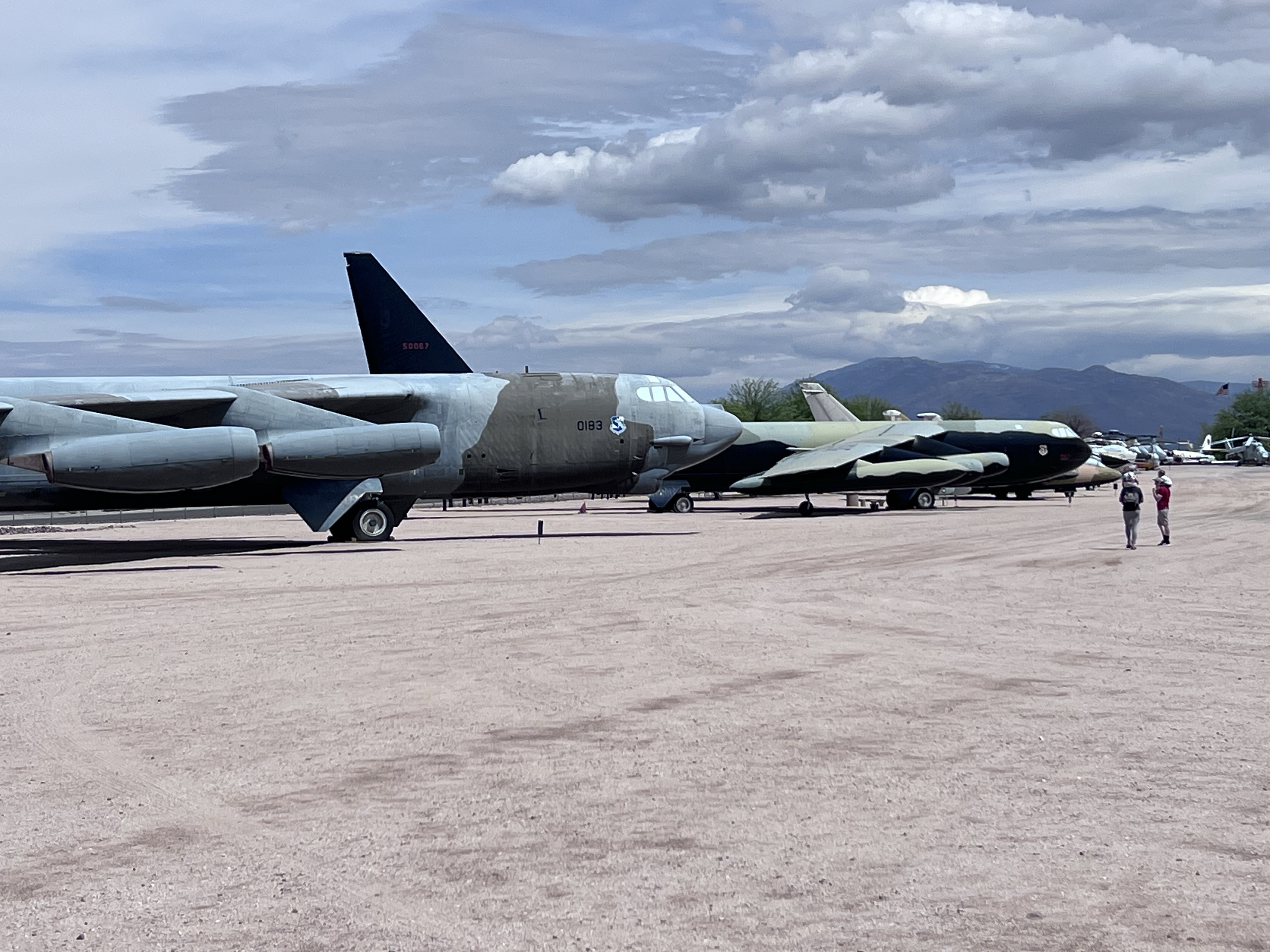
What I also liked about the size and scale of the museum, unlike others I have visited, is that you actually have space to stand back and take in the whole aircraft and walk around them for a 360 degree view and they weren’t crowded in with tons of other aircraft, making sketching or plane viewing, rather difficult.
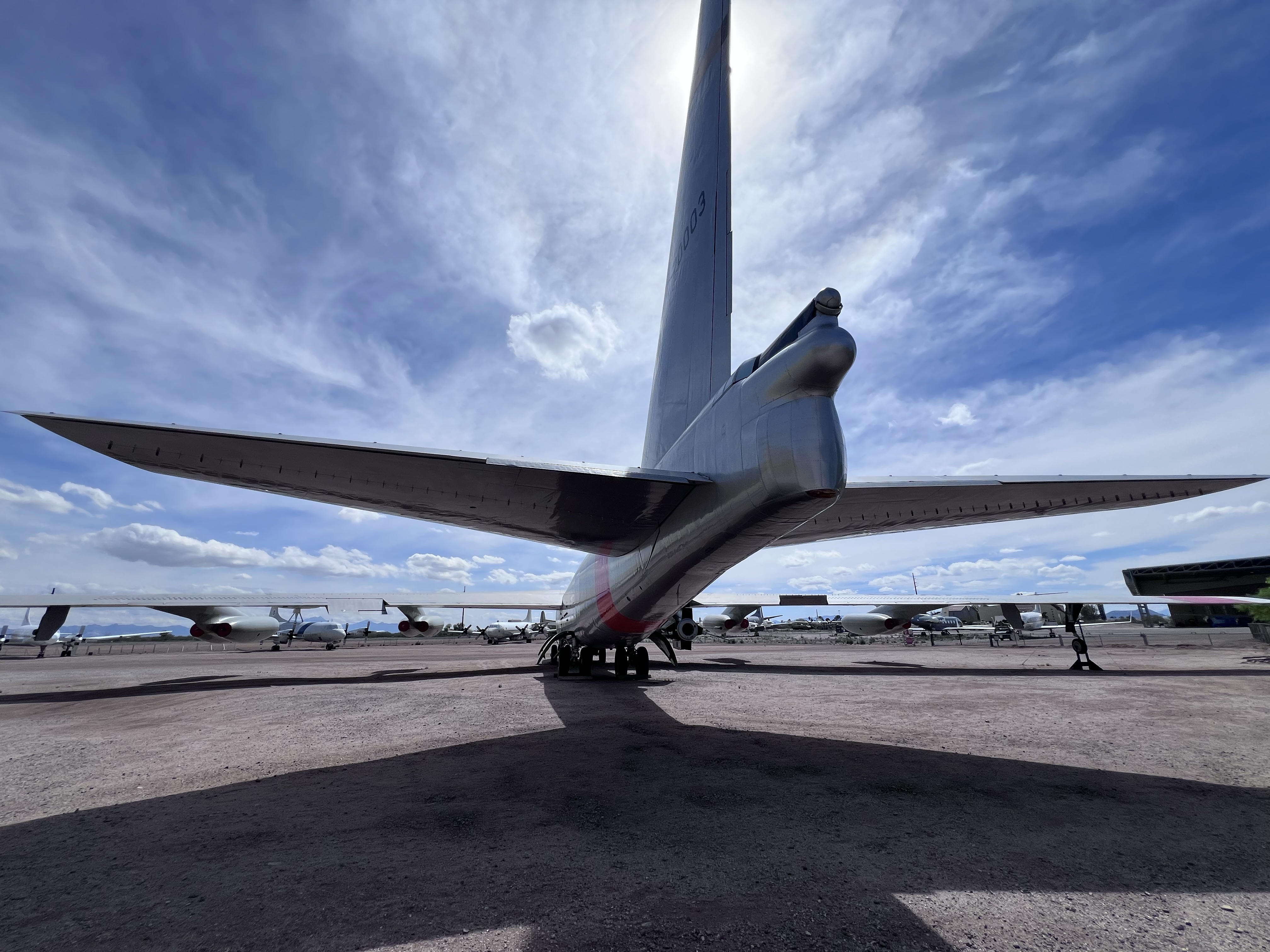
Some of the aircraft is displayed in hangers but the majority of the collection is outside under the desert sun.
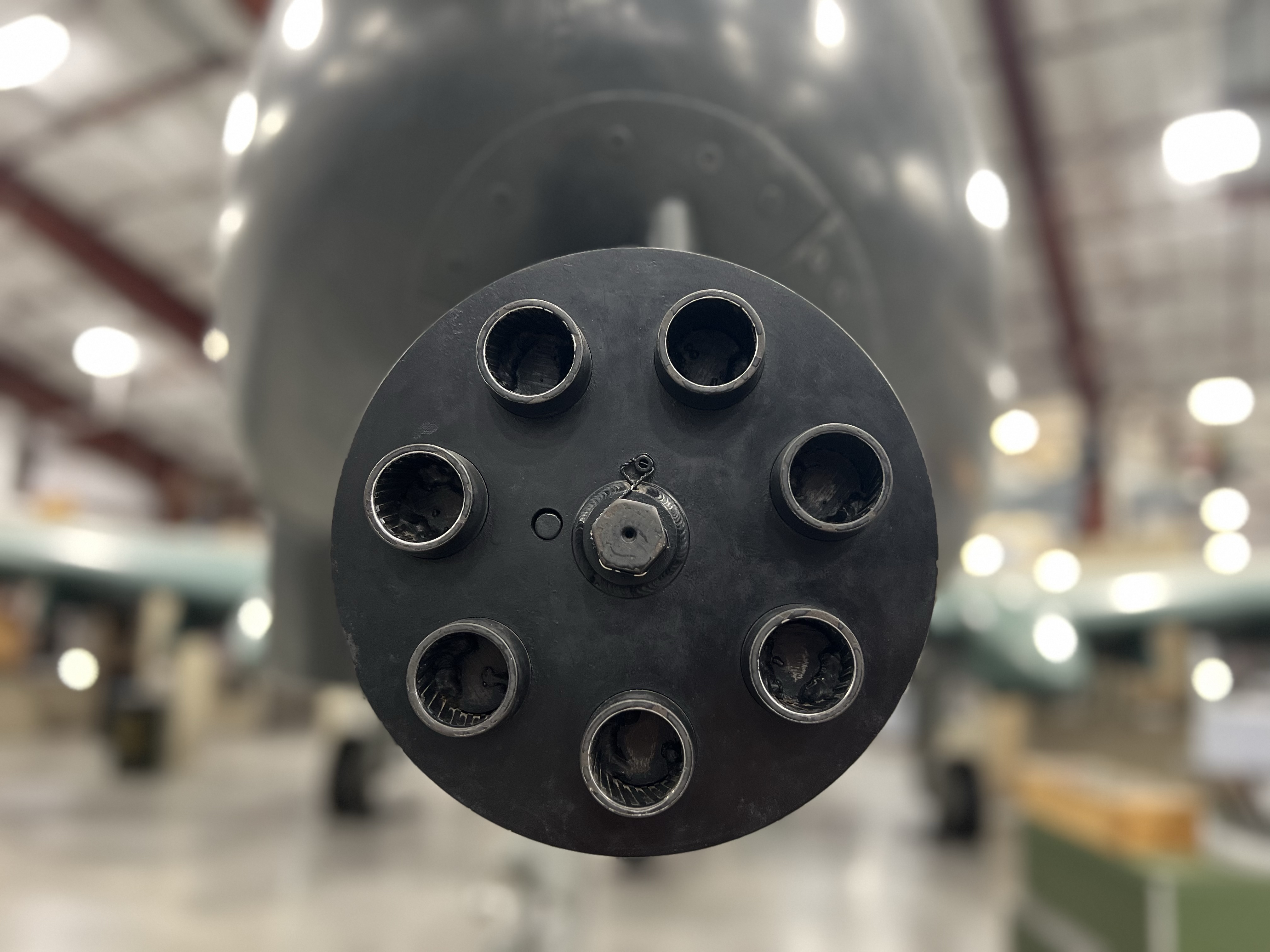
Sketching outside was going to be a challenge in the desert sun for my coastal constitution and fair skin. I employed 45 SPF sunscreen, long sleeves, a buff, and a wide brimmed hat.
While sketching a line of some of the museum’s largest aircraft, two 747s, a DC-10, and a triple 7, I looked for shade in my sketching positions.
Luckily a Boeing 747 provides quite a bit of shade to sketch under. I rendered the scene with a continuous-line sketch (featured sketch).
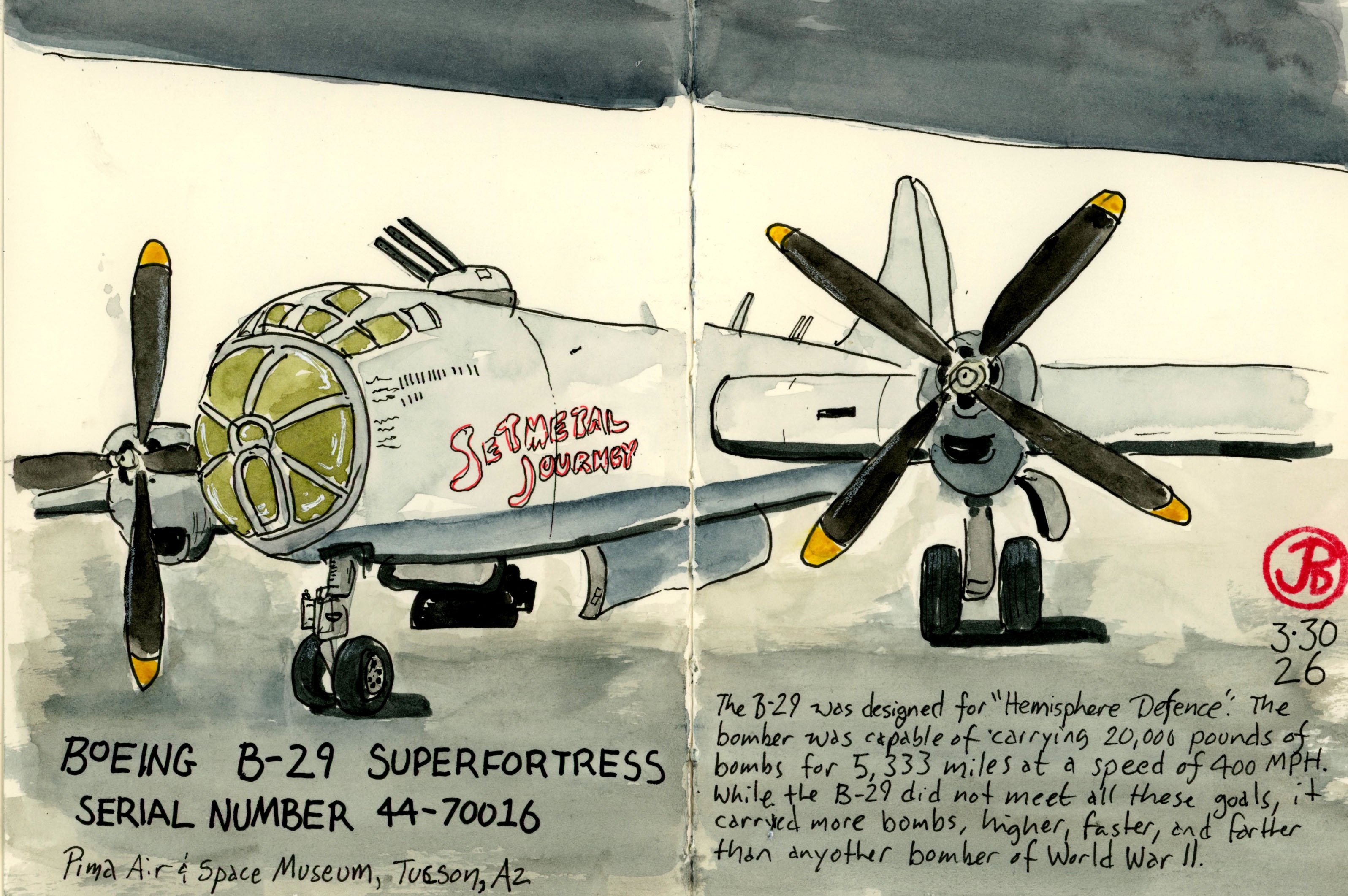
In this post I included sketches of some of the museum’s largest planes, they all happen to be made by Boeing: the B-29 Superfortress, the B-52 Stratofortress and the 747, the world’s first jumbo jet.
While the B-52s and the 747s were outside, the heavy World War Two bomber, the Boeing B-29 Superfortress was indoors.
The Boeing B-29 Superfortress is known for the destruction it wreaked on Japan during WW II with the dropping of incendiary bombs on Japan’s wooden cities and also dropping the two atomic bombs on Hiroshima and Nagasaki that virtually ending the war in the Pacific Theater.
 Corvid Sketcher