When I arrived at the Rose Canyon turn off at a quarter to eight, the entrance was barred.
Turns out that the campgrounds and picnic areas would not be open for another 15 days.
I parked at a lot to the right of the entrance and there was only one car in the lot. Could they be birders of anglers?
One huge draw of driving up to 7,000 feet above sea level is that it is much cooler than in Tucson. The temps were in the high 50s as I walked down the road towards Rose Canyon Lake.
I had two key species I was listening and looking for: olive warbler and greater pewee. I had birded southern Arizona on four occasions but somehow I hadn’t seen these high elevation conifer-loving species. Now is the time to go to a good hotspot at Mount Lemmon, which is the road I was now on in Rose Canyon.
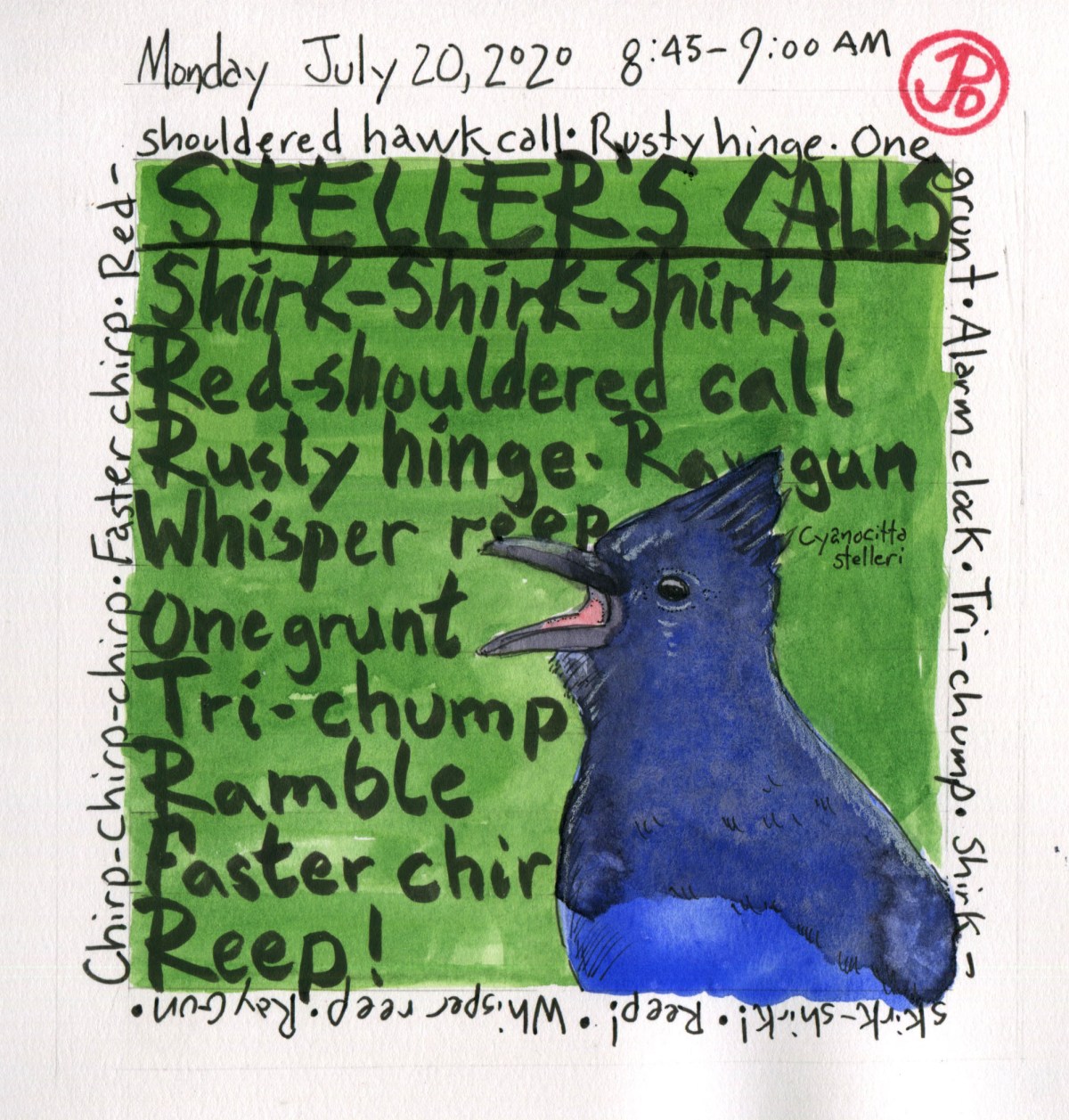
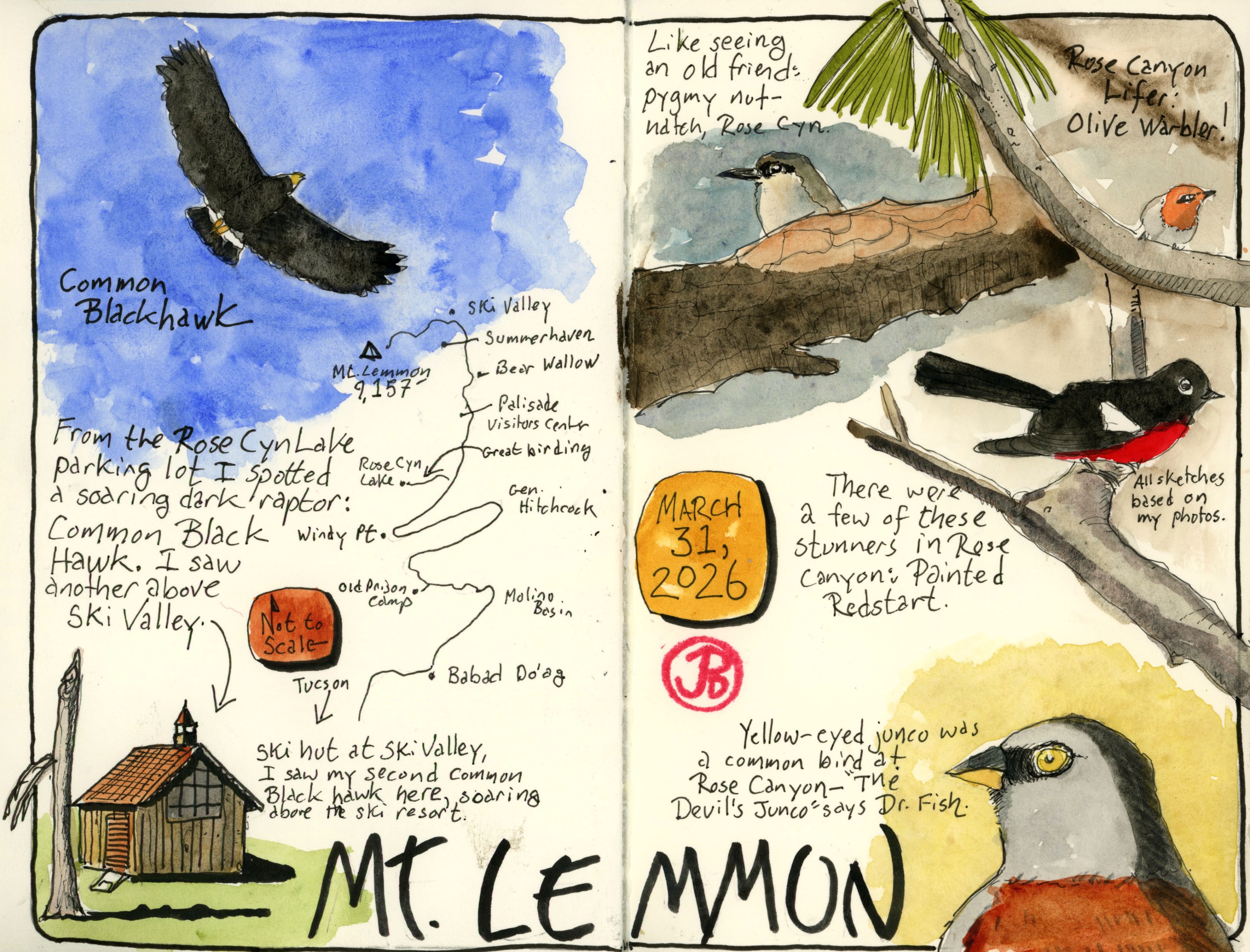
The first species encountered was one I hadn’t seen in a while: yellow-eyed junco. The Devil’s junco.
As I continued down the road past empty campsites and picnic areas, I first heard the greater pewee singing its “Jose Maria” call. Lifer!
I continued on toward the lake looking and listening for the olive. Even this early spring, they didn’t seem to be singing, while many others were in full voice.
At the lake I found the occupants of the car I parked next two: two anglers. But not much on the lake except a few mallards.
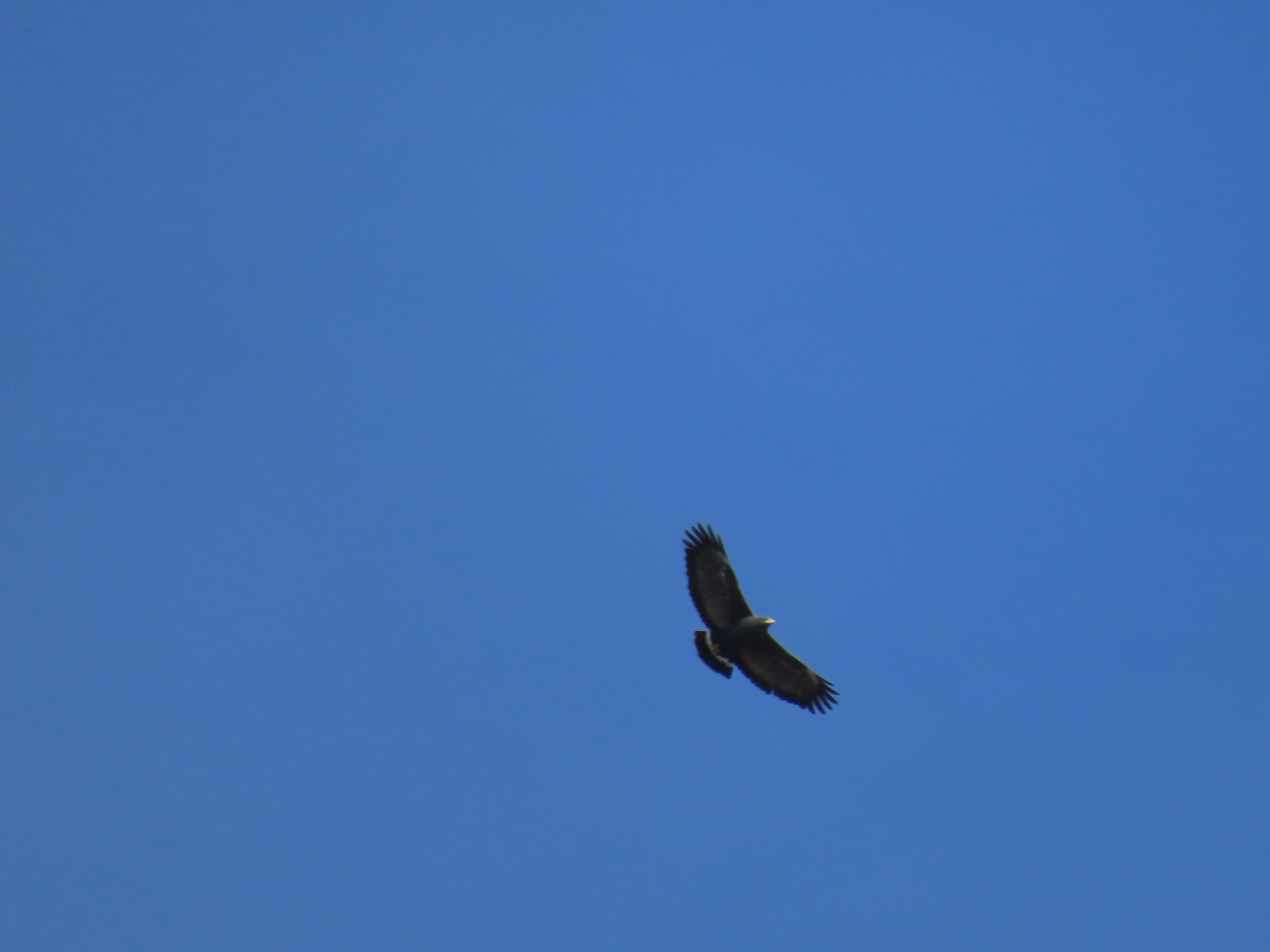
As I walked up the hill towards the lake parking lot, now completely empty, I spotted a dark raptor soaring above the trees.
I put bins on the bird and thought it was either a zone-tailed or a common black hawk. I raised my camera up and got off four shots before the hawk moved over the ridge. I would sort out identification later when I got a better look at the photos.
I retraced my route back towards my car, scanning the ponderosa pines for a black-masked bird with a tawny orange head.
Before long I found a male foraging in a pine to my left. Olive warbler, lifer at last!
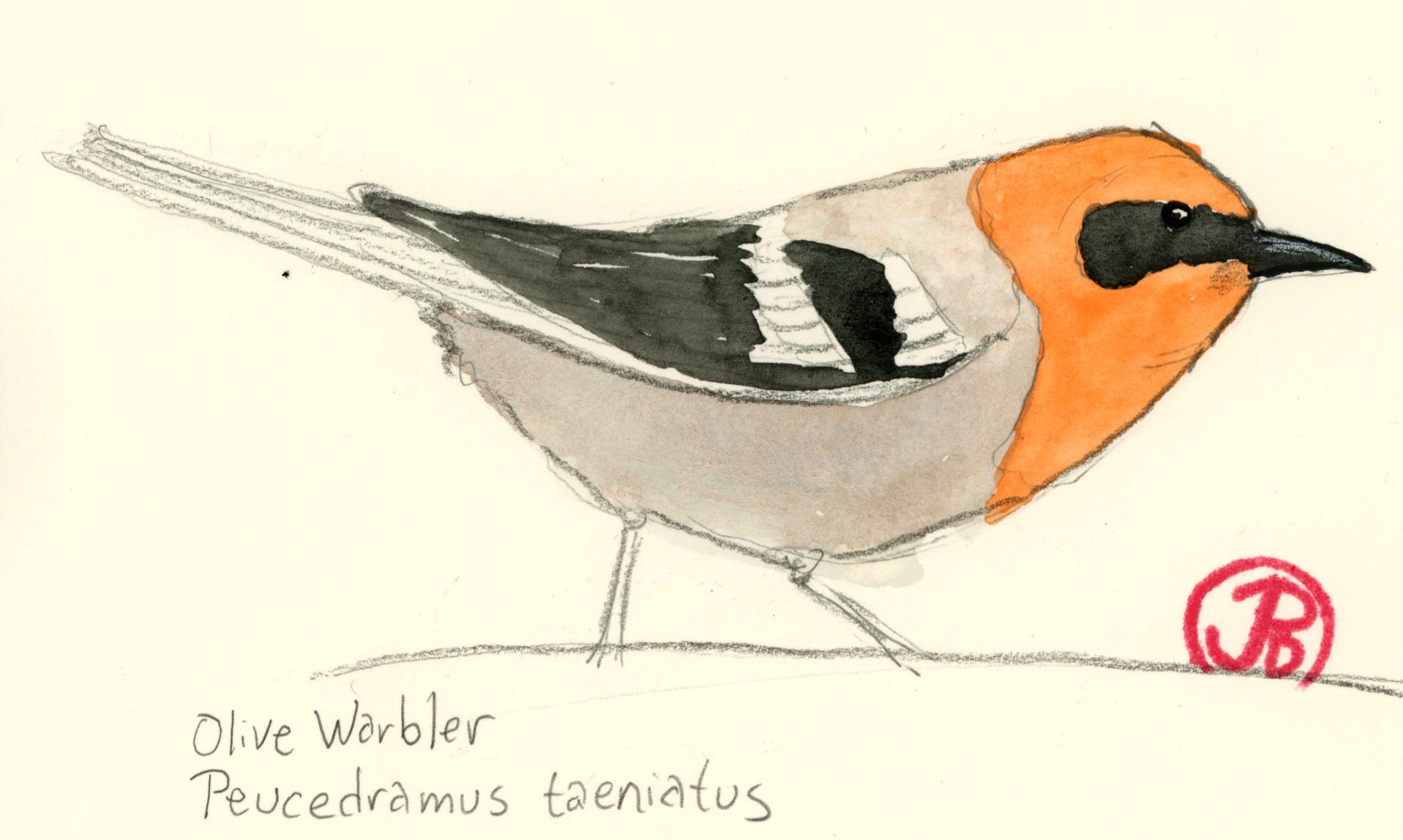
He flew across the road and was soon joined by a female and they foraged together and then moved higher up the pine and out of sight.
I later saw another female on the ground gathering nesting materials. Spring is here in the mountains!
Once back at the car park I headed up towards the summit and Summerhaven. I pulled off to the small ski resort of Ski Valley.
The resort, the most southern ski resort in the United States, had three lifts and a small building capped with a bell tower which I guessed is the ski school.
Off to my right and above the pines circled a large, dark raptor. Was this the same bird I had seen at Rose Canyon? After reviewing photos I identified the bird as a common black hawk.
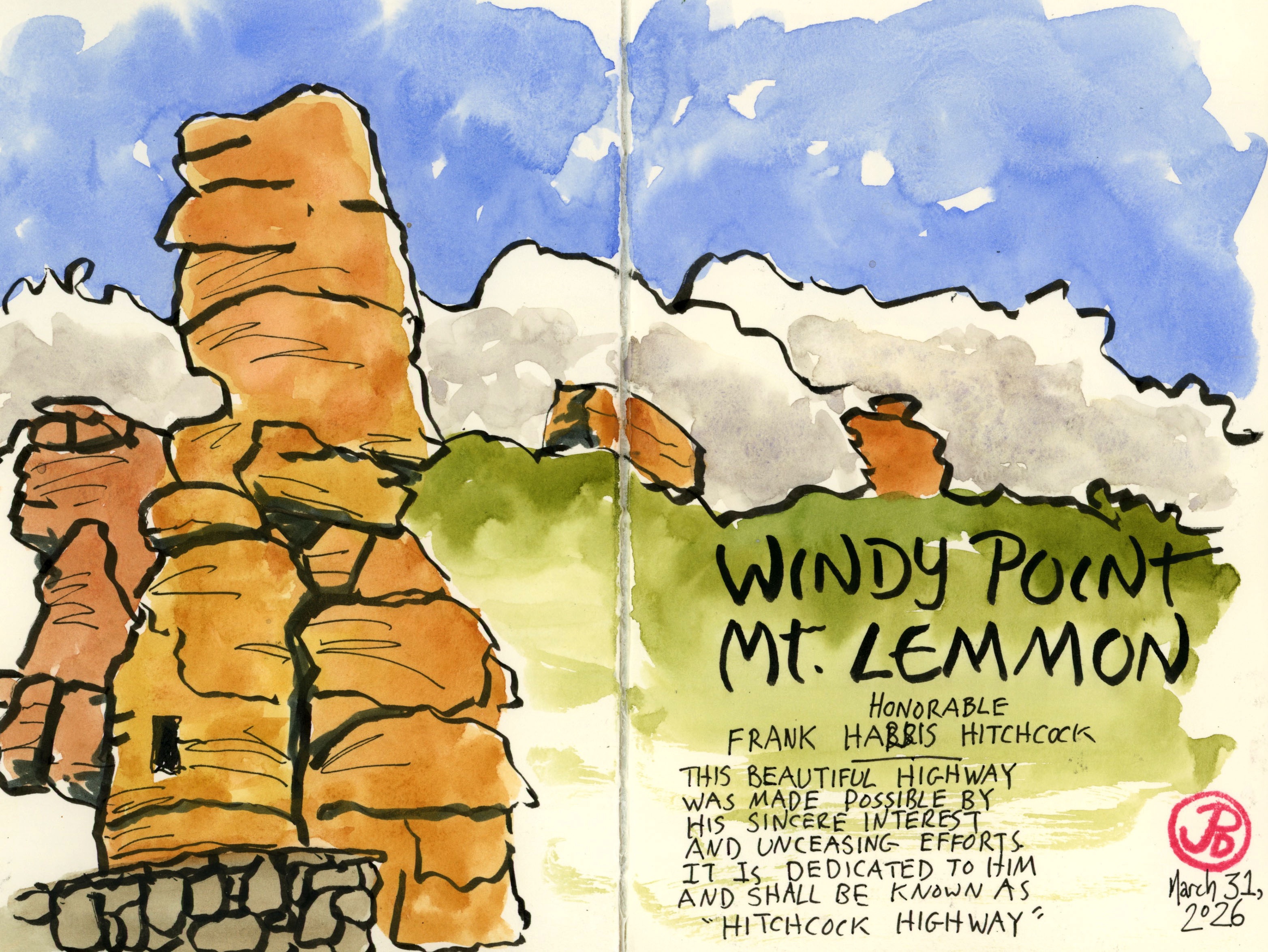
On my return down the mountain I stopped at Windy Point to sketch the otherworldly rocks and to take in the views greater Tucson. It’s amazing to think that I only had to travel about an hour from Tucson to be in a completely different world.