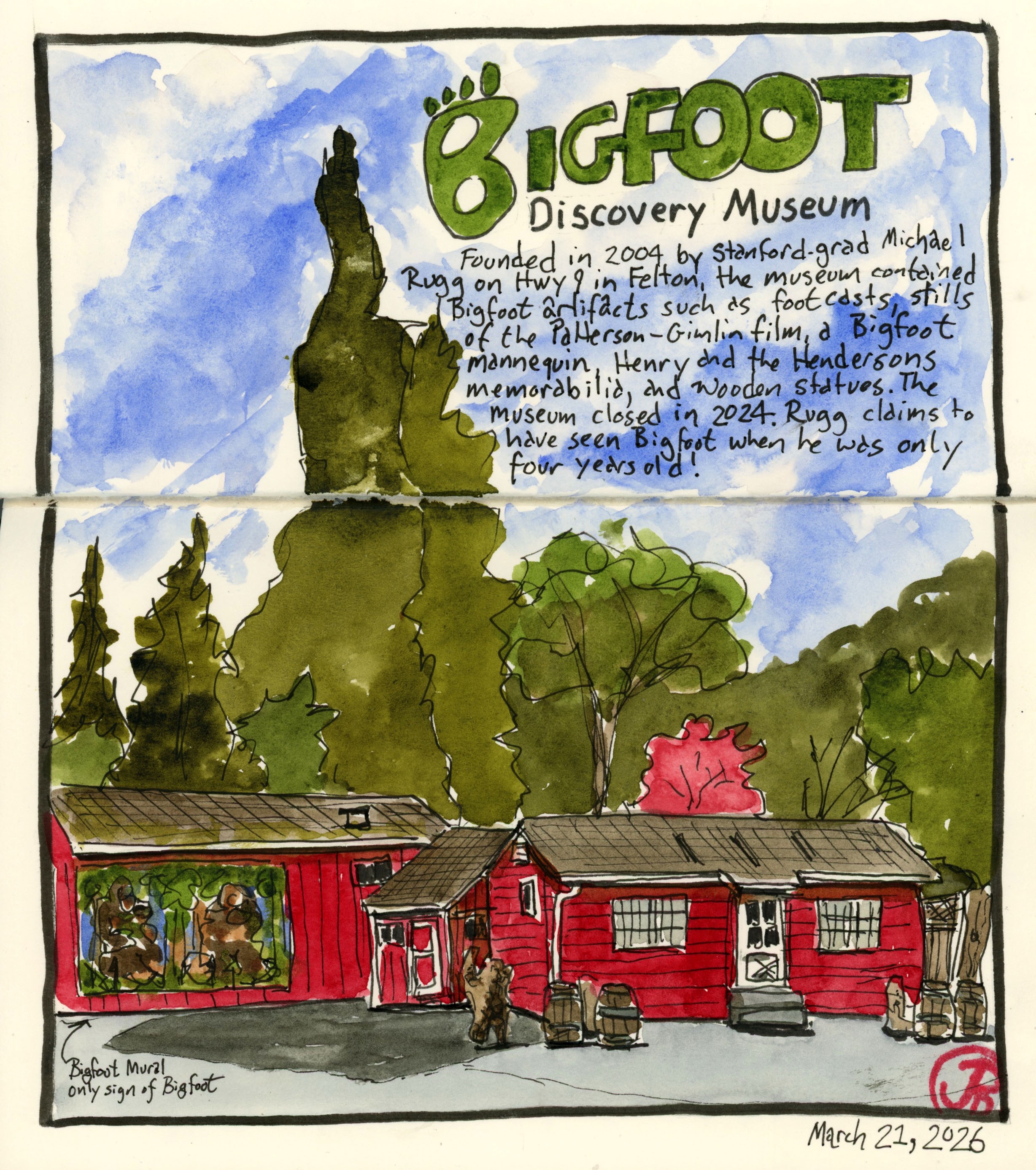
The Bigfoot Discovery Museum

In 2026, the Bigfoot Discovery Museum in Felton, California is about as hard to find as the Sasquatch itself.

I always love curious roadside attractions and it seems when you combine a highway (Highway 9) with coast redwoods, you are bound to find a Bigfoot museum.

The museum was founded by Stanford grad Michael Rugg in 2004. At the age of four, Rugg saw Bigfoot and claimed to have locked eyes with the mysterious being. He later worked in Silicon Valley during the dot com boom and the eventual bust. After the bust he opened the museum.

A friend and I visited the museum, just up the highway from my cabin, about 15 years ago.

The museum contains a curious mix of artifacts including plaster foot casts, Harry and the Hendersons memorabilia, a picture of Chewbacca, supposed Bigfoot scat, and a section about the famous Patterson-Gimlin film.
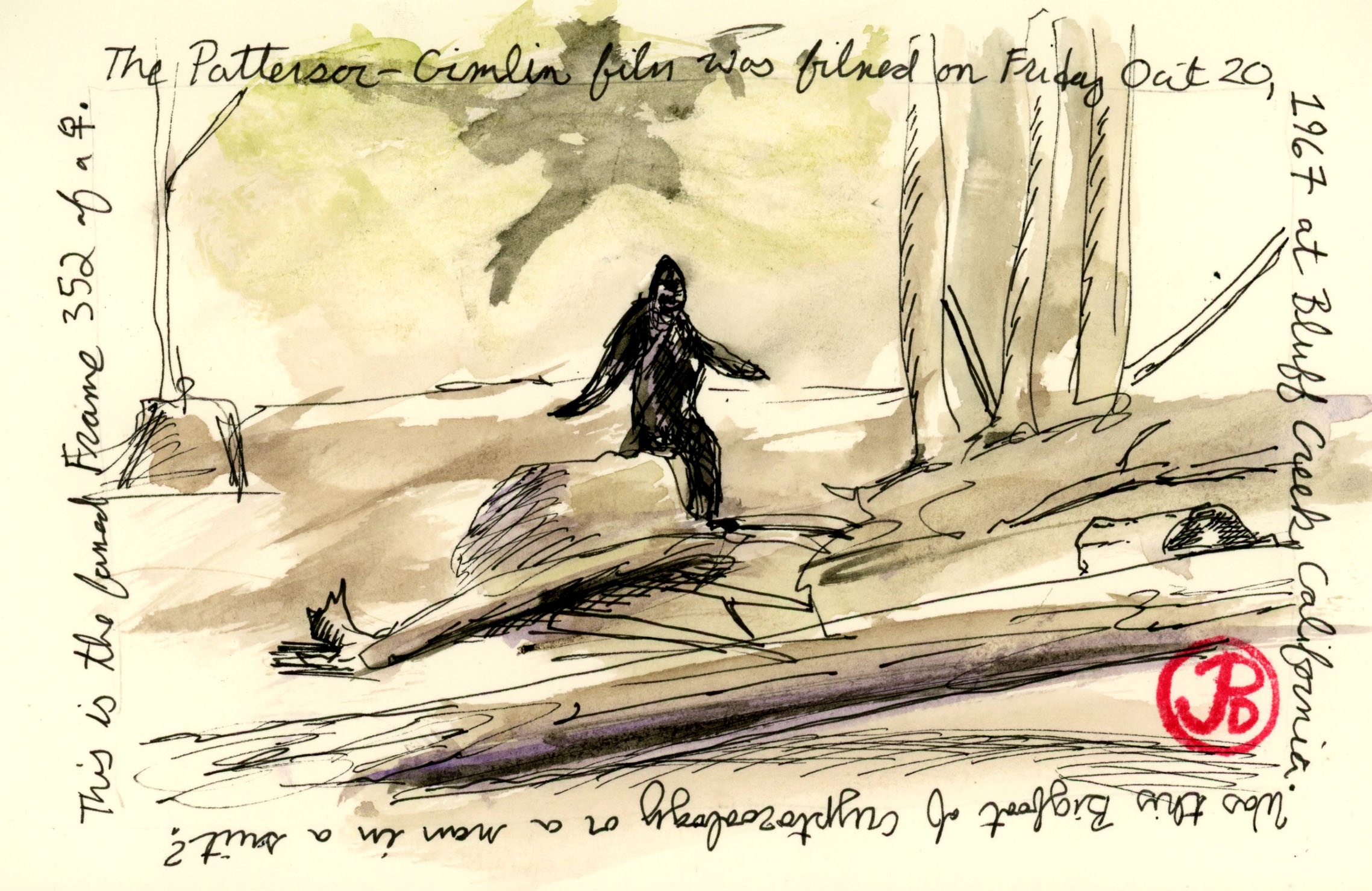
The famous frame 352 of the Patterson-Gimlin Film. Should the fact the it was filmed at Bluff Creek be an inside joke? The jury is still out if this is indeed a hoax.

My friend thought the museum was creepy and we didn’t stay long. In truth you could see the entire small museum in less than 15 minutes.

This museum is very reminiscent of many private museums on highways; they are a mixture of hard science (cryptozoology), cheesy gift shop, and the really ridiculous.

The cheesy, ridiculous side seems to undermine the main purpose of the museum: proving the existence of Bigfoot.

In 2025, there was a fire in a cabin behind the museum but the museum and its collection was spared. Maybe the blaze was set by Sasquatch, to destroy evidence of his existence.

After 20 years in business in the San Lorenzo Valley (not really known as a hotspot for Bigfoot sightings) the museum closed with Rugg’s retirement.
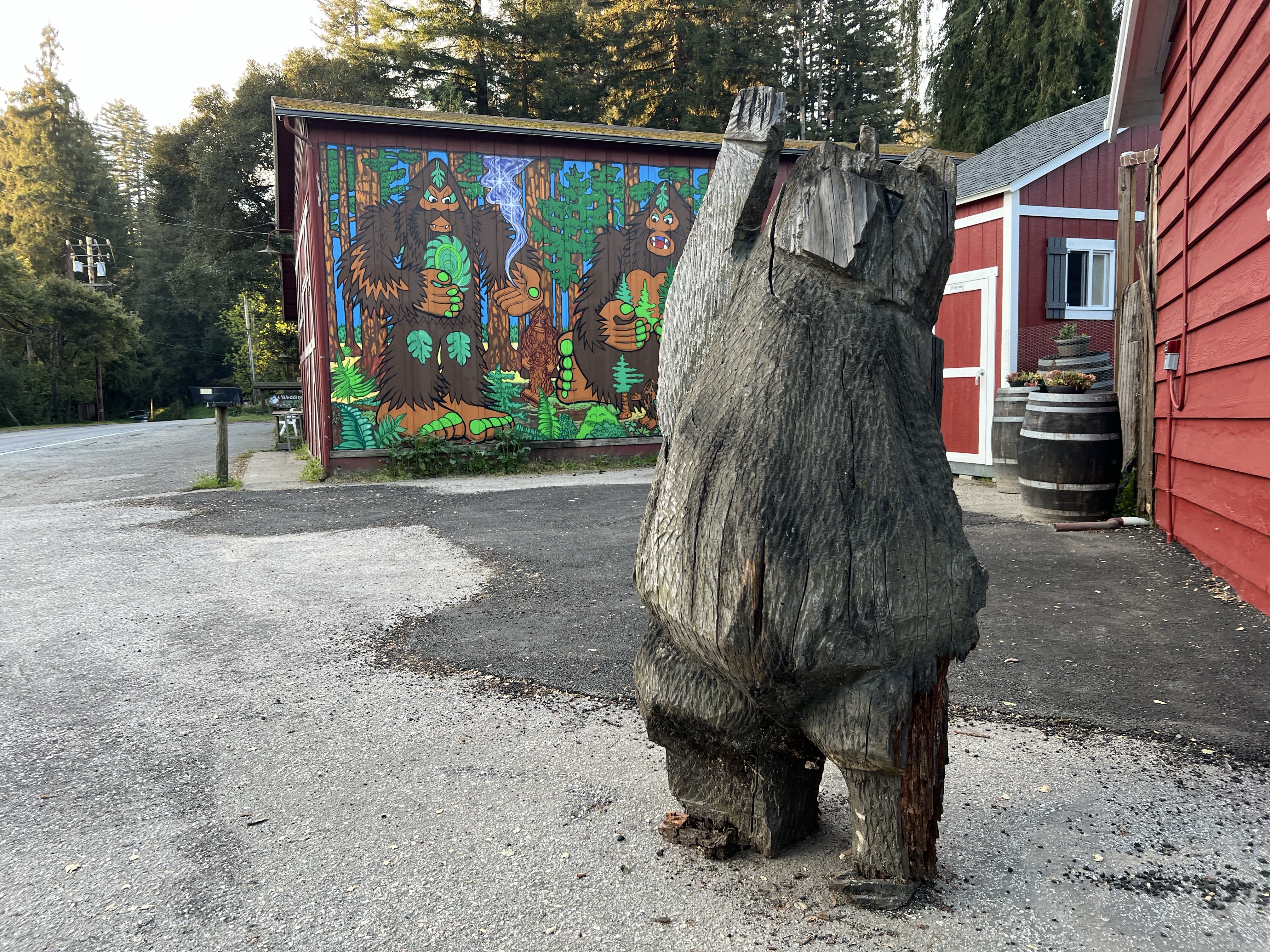
An odd carved bear has replaced the wooden Bigfoot carvings. The statues were definitely cheesy including an adult with a young one on its shoulders.

By the time I sketched the former museum, the only evidence left that this was a building dedicated to the search for hidden life was the mural painted on the side of the red barn.
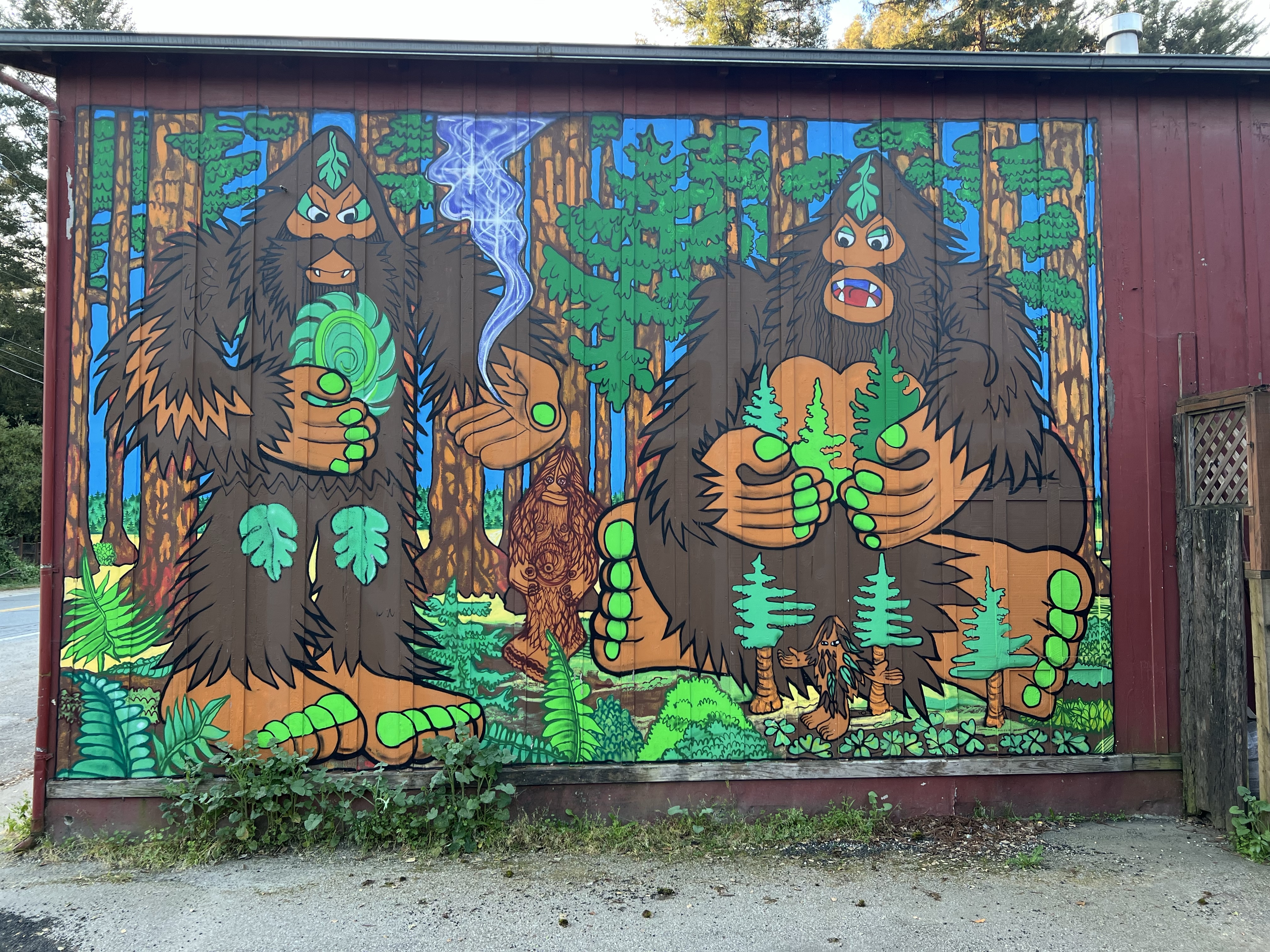
I would firmly put this mural in the cheesy, ridiculous column.
Image

Sasquatch and Mount St. Helens

Pre-1980, pre-eruptions, it seems that Sasquatch or Big Foot, was a tourist cottage industry around the slopes of Mount St. Helens.

Many a story was told around campfires on the shores of Spirit Lake about the time a creature attacked five miners near Ape Cave in the 1920s and how the miners valiantly had fought off the beast’s attacks.

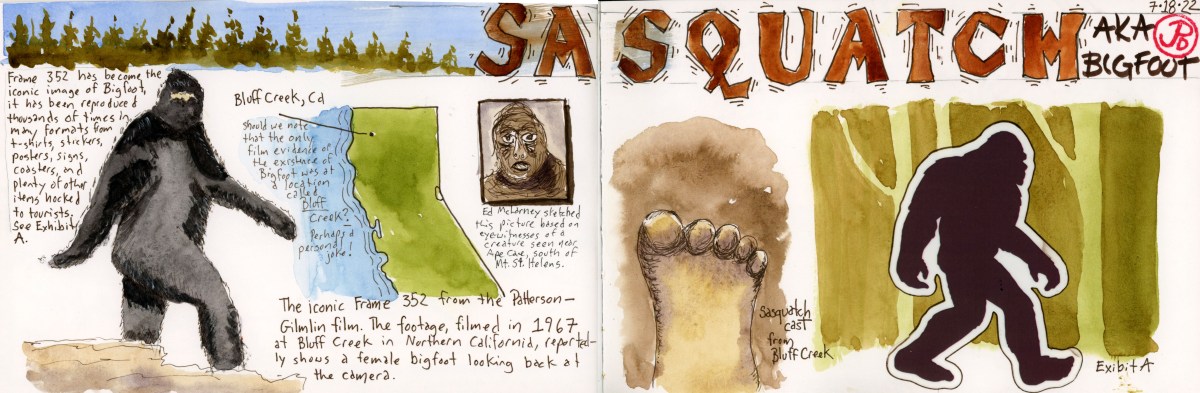
What really kickstarted the Sasquatch craze was film footage reportedly of a female Sasquatch or Bigfoot walking along Bluff Creek in Northern California. The 1967 film is now known as the Patterson-Gimlin film and iconic, Frame 352, shows the creature looking back towards the camera with arms extended away from it’s dark hairy body in it’s simian lope. The famous imagine, included in the featured sketch, is the blueprint for many subsequent representations of Sasquatch. This is the iconic “Big Foot” imagine that is recognized around the world much like the Surgeon’s photo of the Loch Ness Monster. Both images have been claimed to have been faked, but there are those who will always believe.

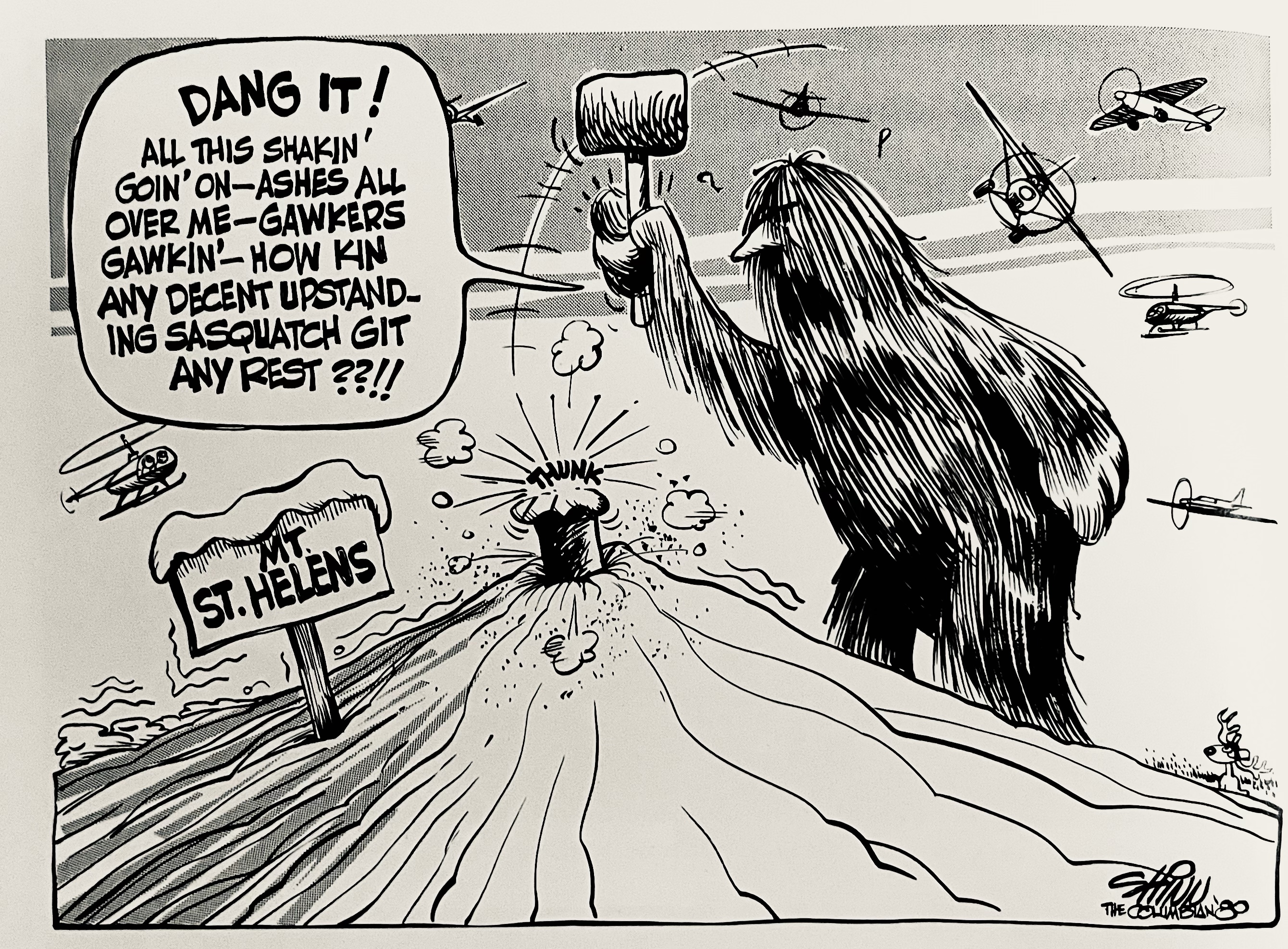
Of course that all changed after the May 18, 1980 eruption of Mount St. Helens where seeing a live volcano was a major draw for the tourist dollar and poor Sasquatch receded into the past. More volcano tourist attractions and museums appeared around the mountain, selling tourist trinkets with imagines with erupting volcanoes, pushed Sasquatch swag off the shelves.

This cartoon, printed in the Columbian in 1980, highlights the conflict between Sasquatch and the now famous volcano.

One such tourist attraction is to be found along the Spirit Lake Highway near Kid Valley. This is the North Fork Survivors Bigfoot & Mt. St. Helens Interpretive Center. The attraction sits across the highway from the Toutle River. This has it all for the Mount St. Helens/ Sasquatch fan.

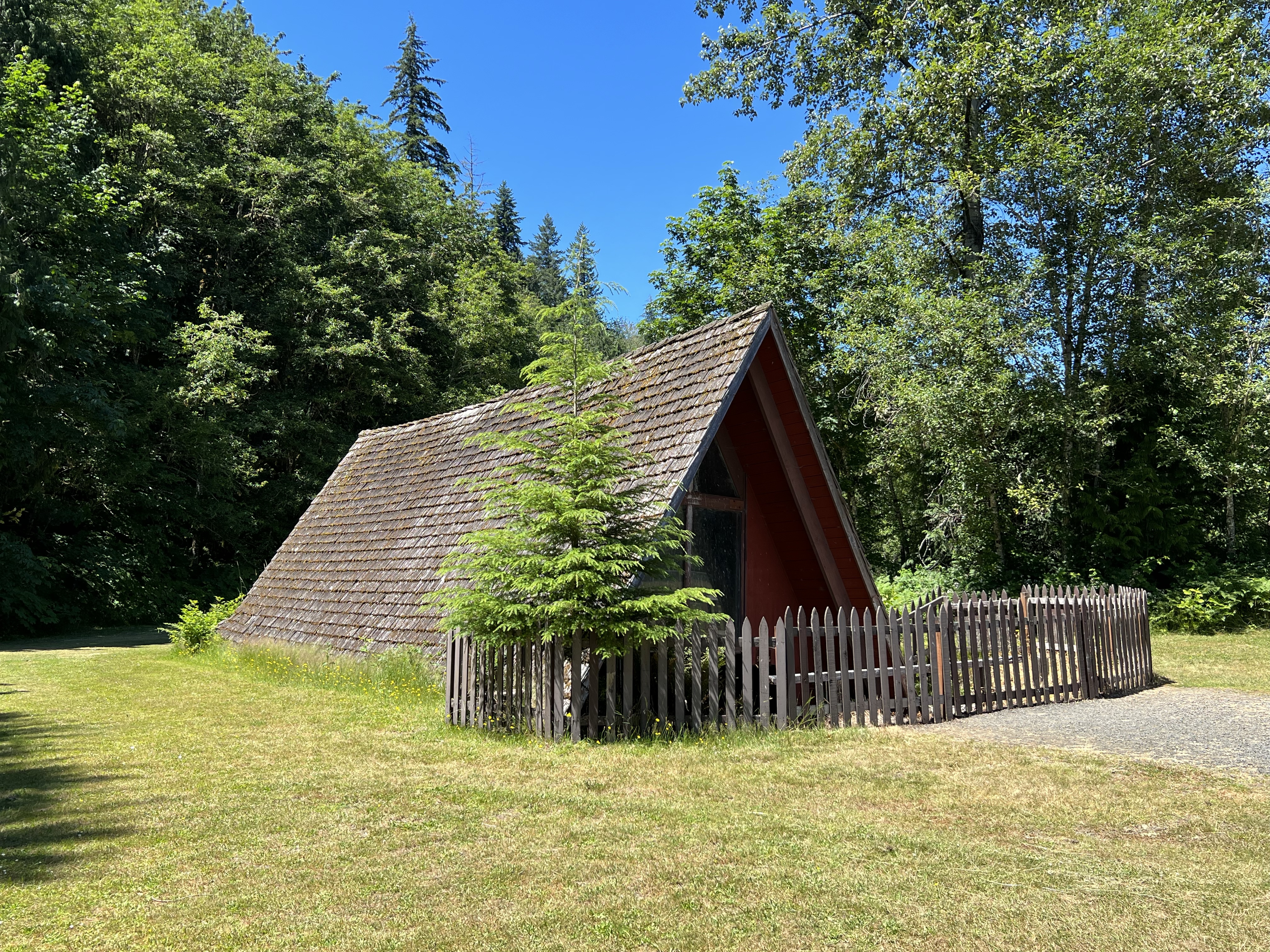
When the volcano erupted it sent mud and melted waters from glaciers and the snowpack racing down the North Fork of the Toutle River, which destroyed everything in it’s path: forest, bridges, and homes. One home that survived is the A-frame house that was half buried by the mud flow. The house is left as it was on May 18, 1980, still furnished but now filled with 200 tons of ash, mud, and silt. You used to be able to explore the interior but it has now been deemed unsafe and is now a nesting site for barn swallows.

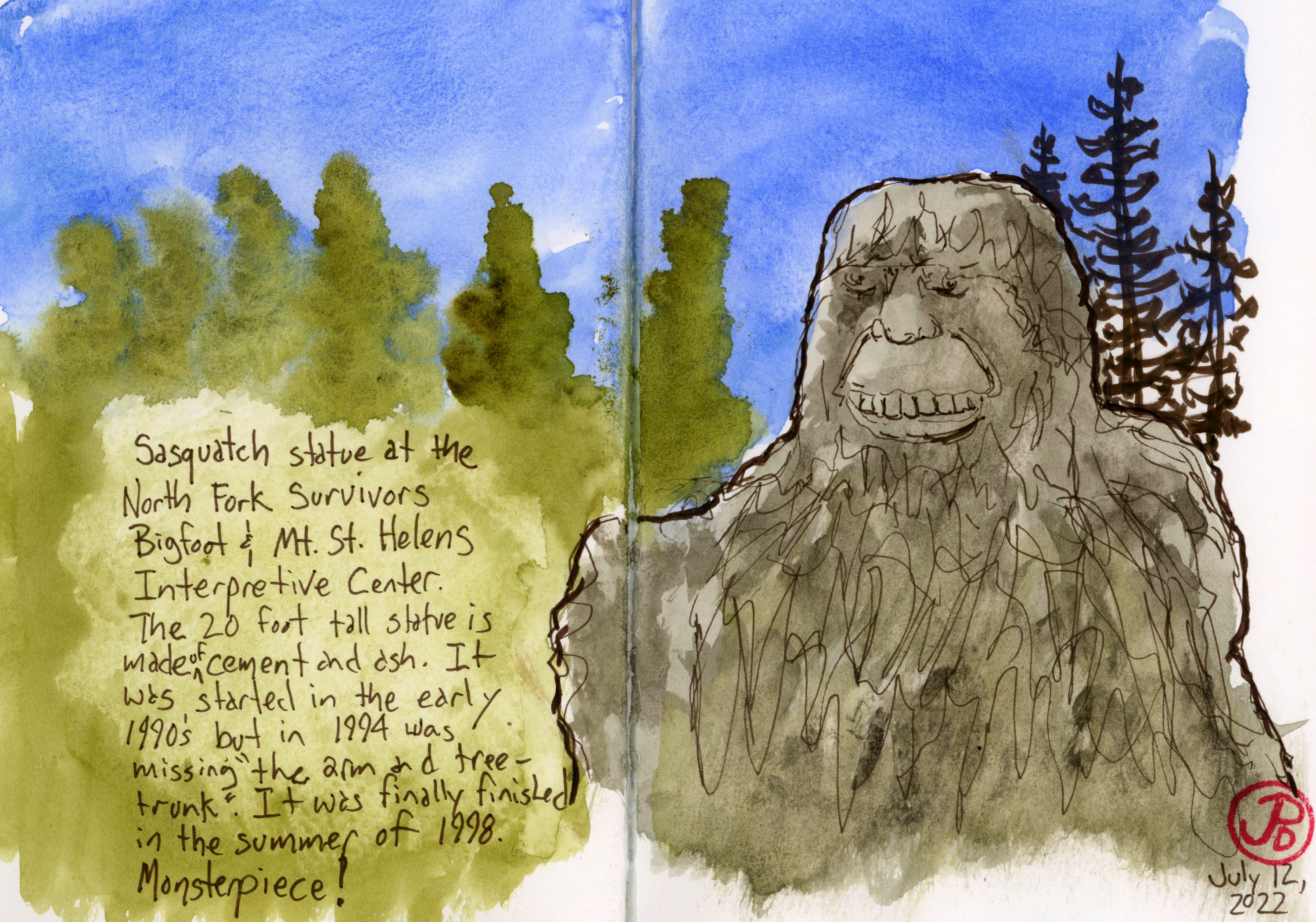
On the other side of the parking lot is the 20 foot statue of Sasquatch, leaning on a branch for support, like someone at a wedding, who has had a tad too much to drink. This is what attracted my sketching eye and I began to render the statue in pencil and ink.

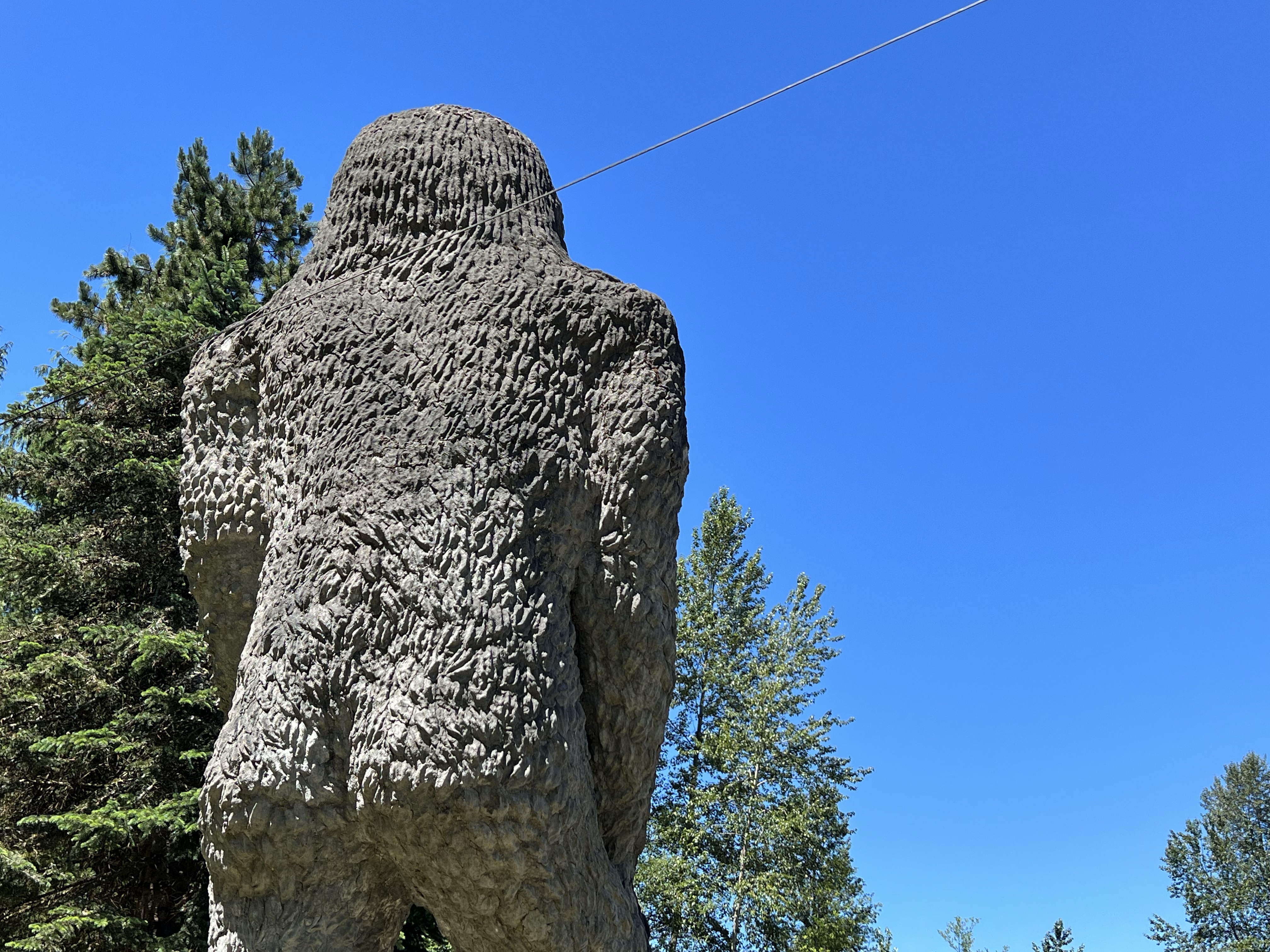
The butt-end view of the Sasquatch statue at North Fork Survivors Bigfoot & Mt. St. Helens Interpretive Center.
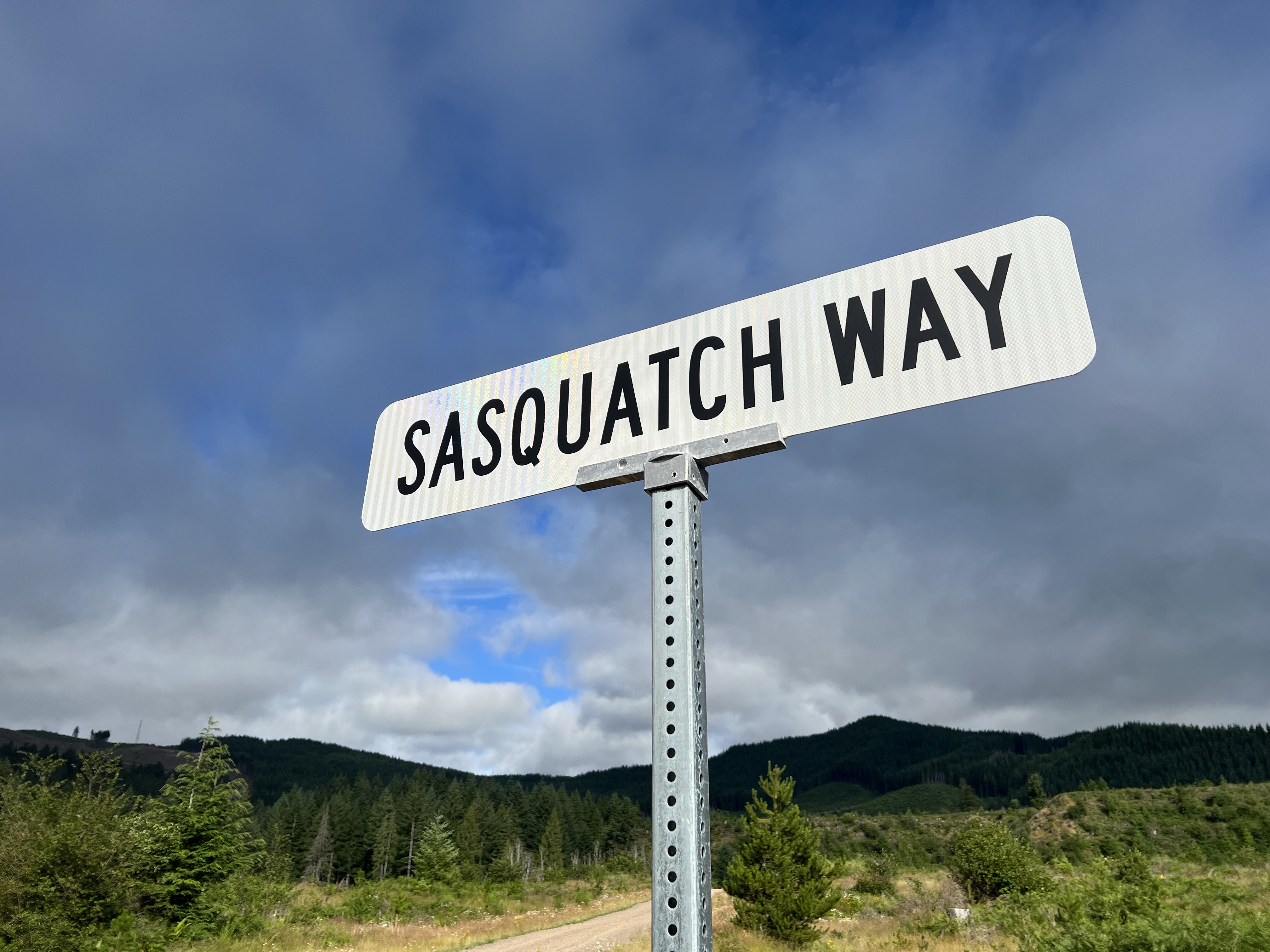
It’s all about Sasquatch around Mount St. Helens. This is a road I found on the south side of the mountain on my way to Windy Ridge. I had to pull over and take a photo.