Because I couldn’t get a sketch in at the Taos Pueblo, I sat on a bench on Taos Plaza to get my sketch on.
I was also waiting for the Kit Carson House to open at 11 AM.
It was a pleasant way to spend half an hour in the historic plaza.
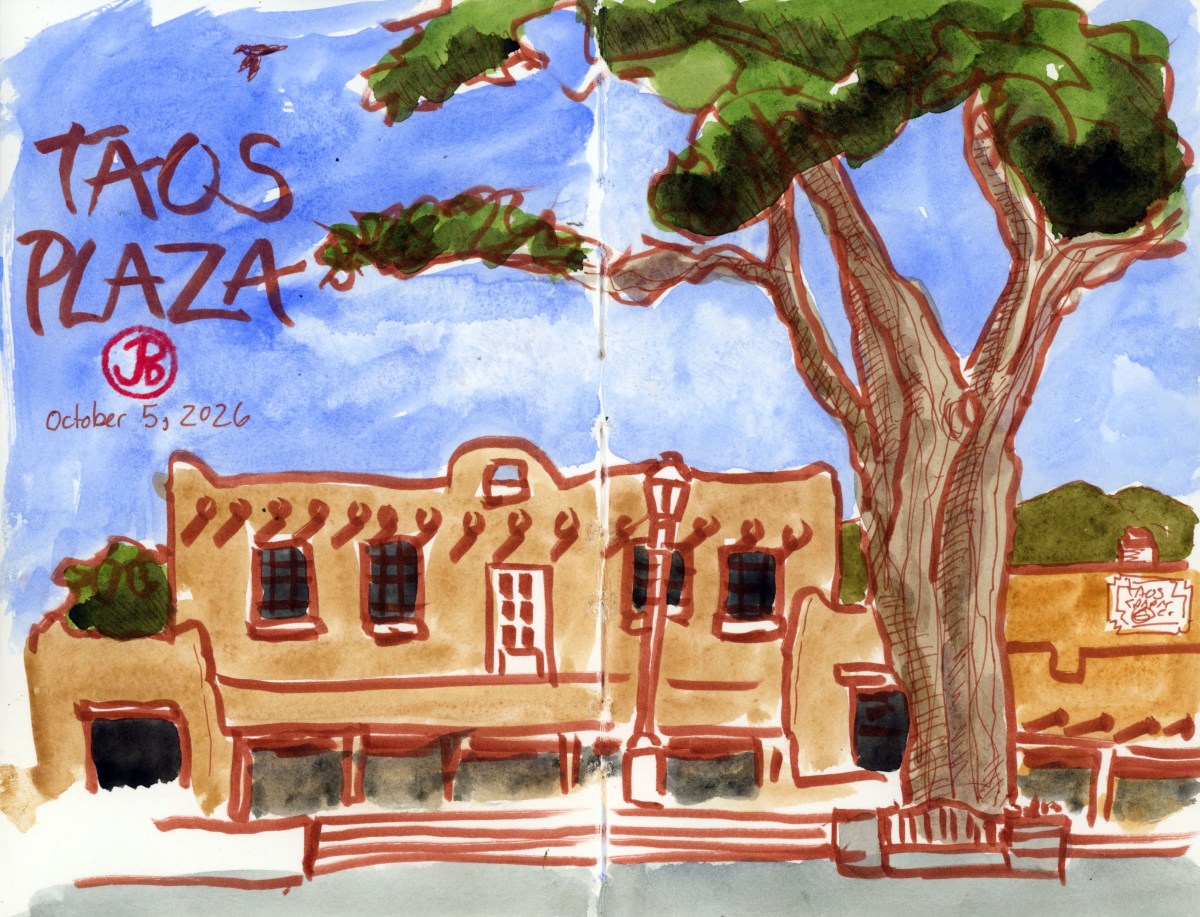
Because I couldn’t get a sketch in at the Taos Pueblo, I sat on a bench on Taos Plaza to get my sketch on.
I was also waiting for the Kit Carson House to open at 11 AM.
It was a pleasant way to spend half an hour in the historic plaza.
While waiting in the admissions line for the Taos Pueblo I saw a sign next to the admissions window that left me crestfallen:
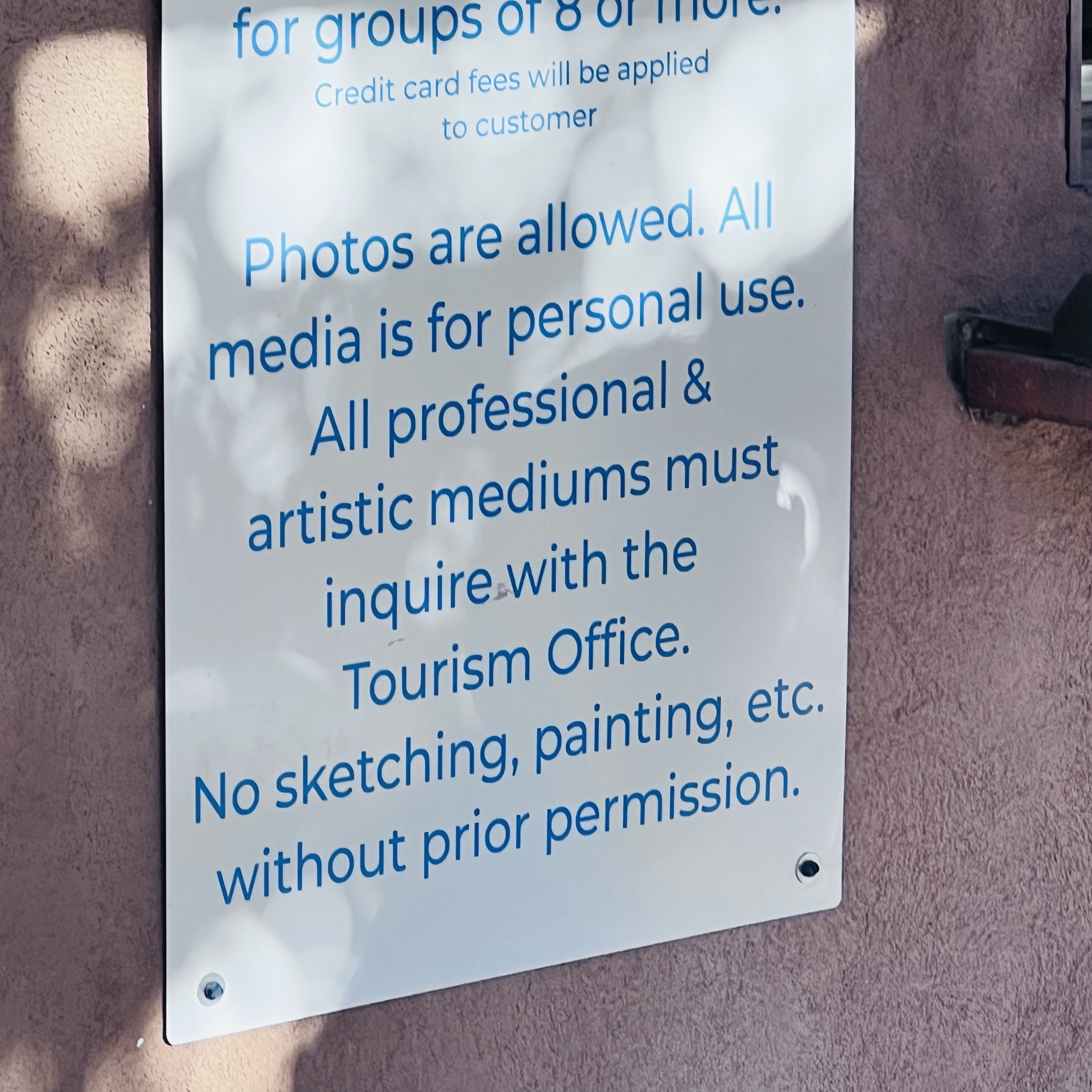
“No sketching, painting, etc. without prior permission”. The one location I really looked forward to sketching was the Taos Pueblo and now, because I didn’t have prior permission, my sketchbook and pens would remain idle in my bag.
I thought it odd that you could take all the photographs with your phone (which I did) but you couldn’t render the Pueblo with paper and pen. The Pueblo is a private and sovereign community but this still doesn’t explain why the cultural paparazzi are allowed to photograph to their heart’s content yet sketching is forbidden.
So I took lots of photographs to sketch from. (I know it’s cheating by Urban Sketchers’ standards).
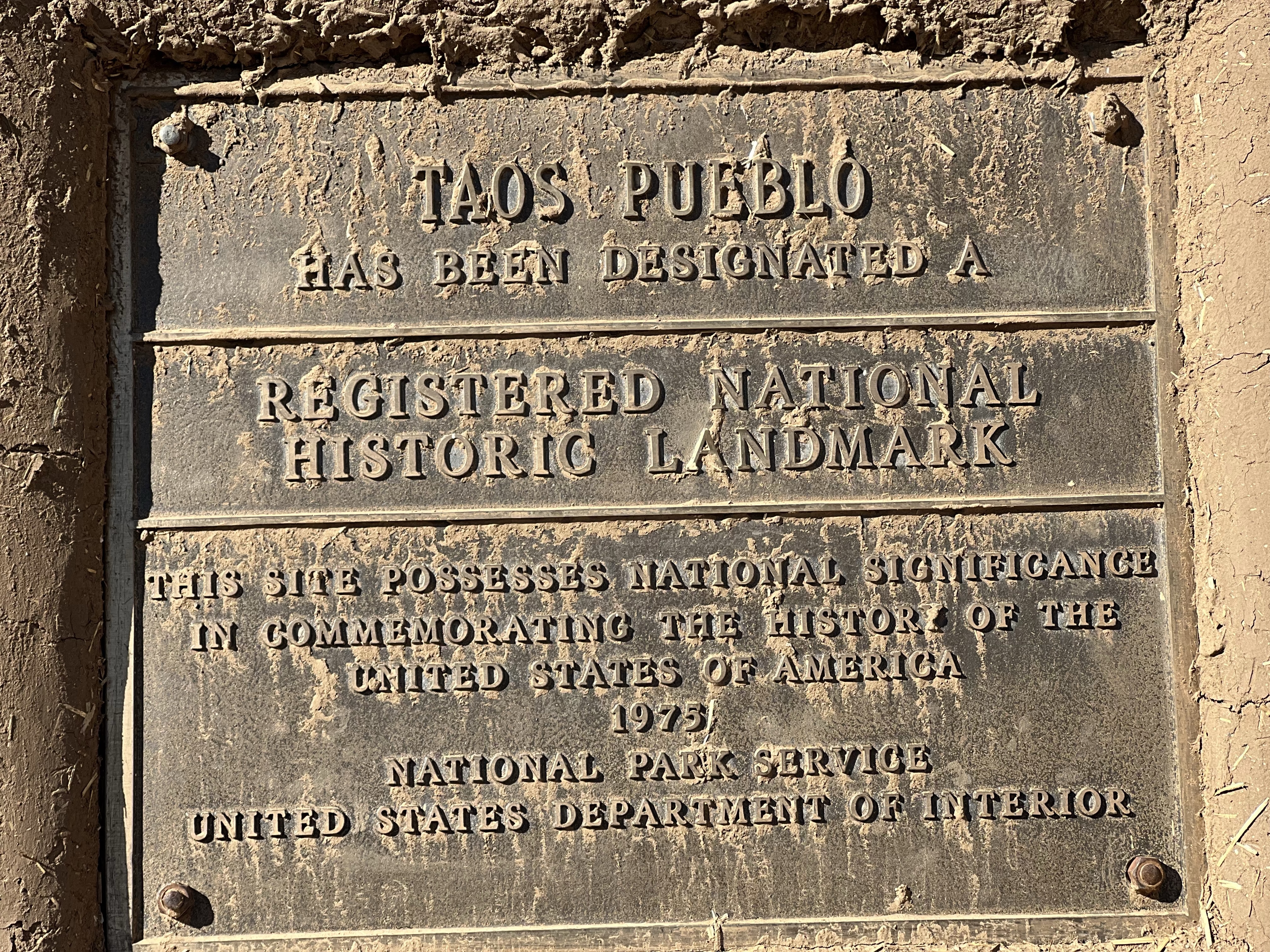
The Pueblo is the oldest continuously habited structures or communities in the United States. It is the only United States Heritage site where people live. As such, visiting the Pueblo feeling like being a voyeur or evesdropper.
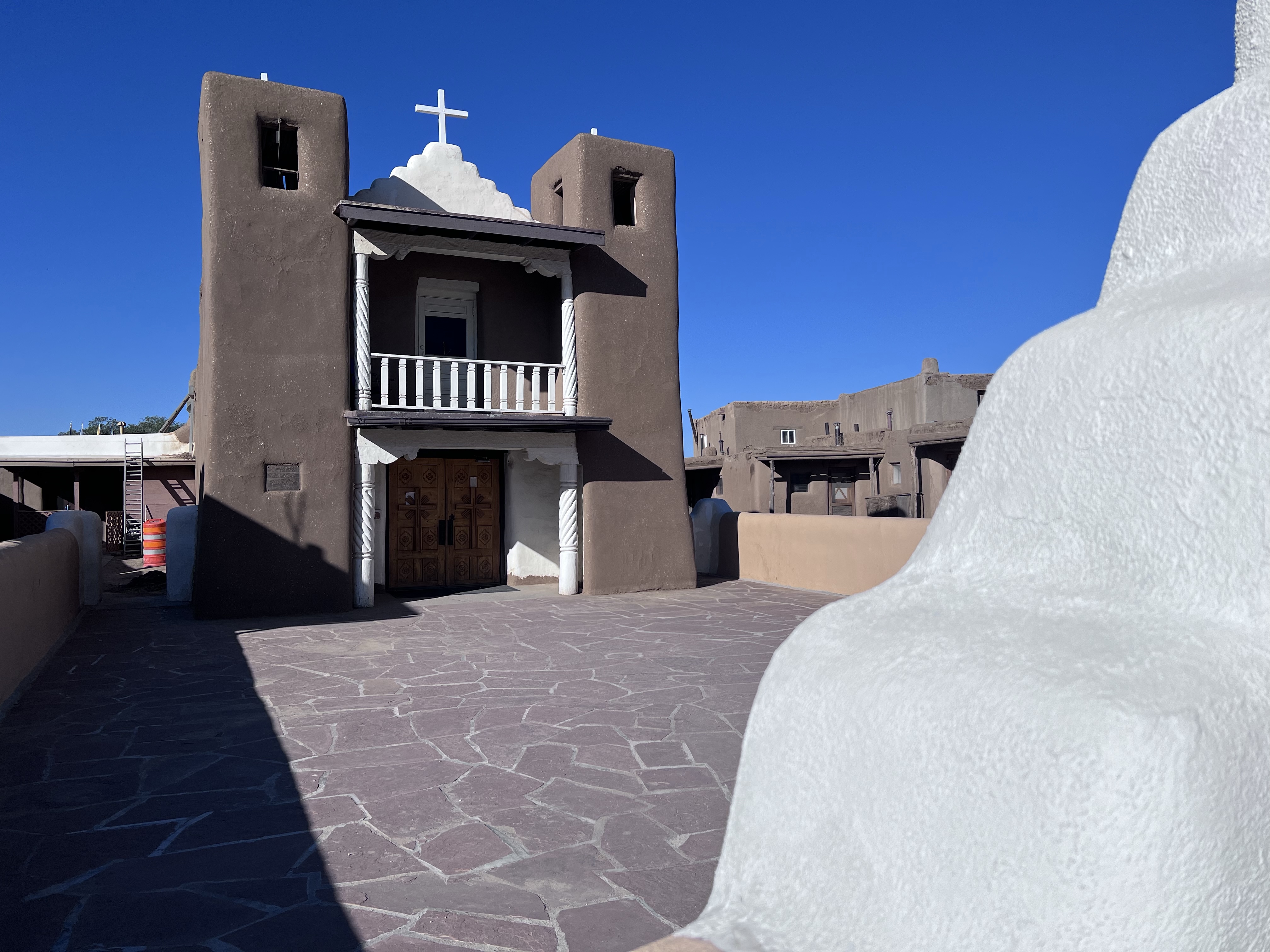
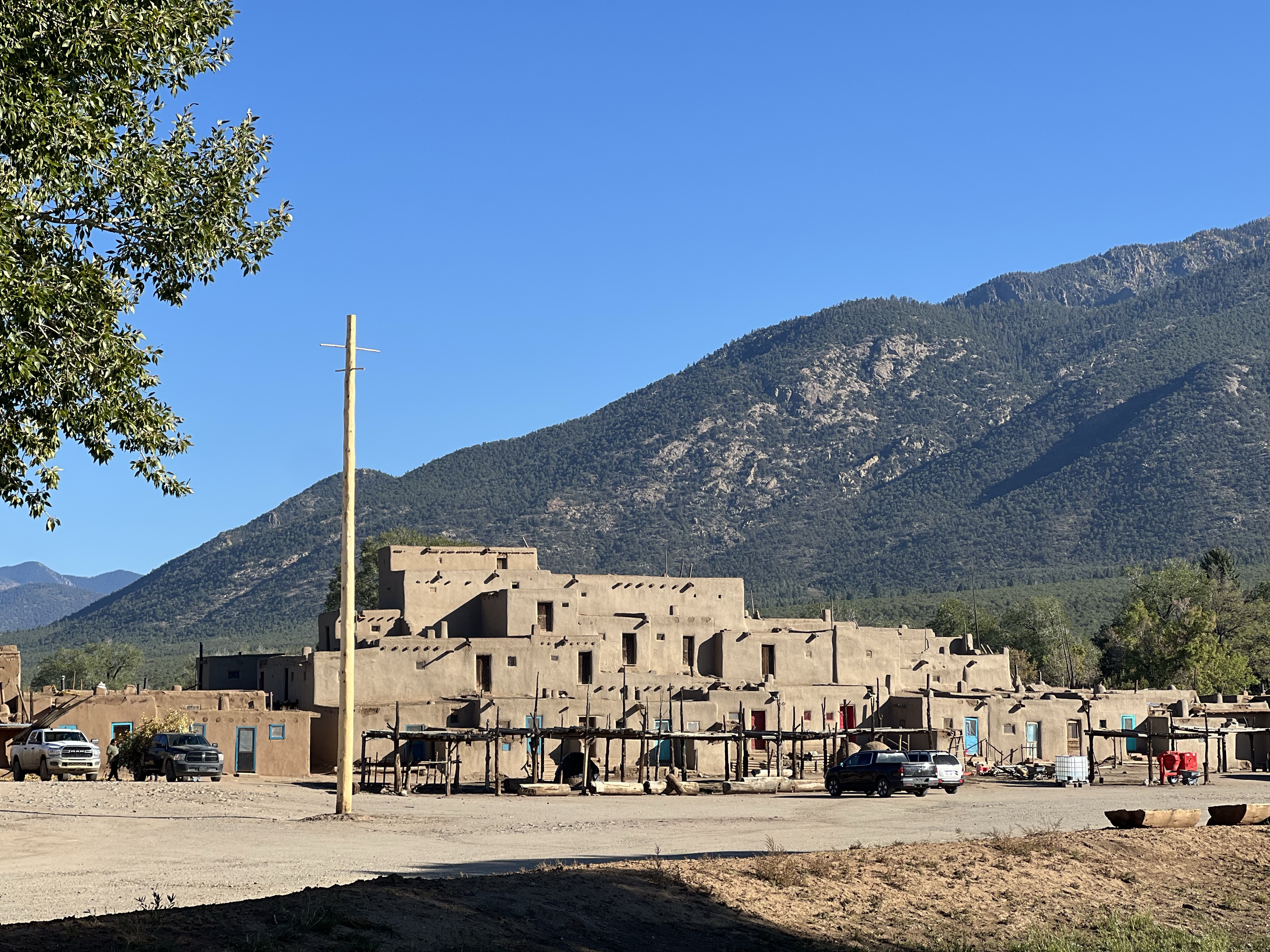
When I arrived, residents were clearing off roofs and making repairs. There was a stark contrast between the ancient north side multistory adobe and modern trucks and cars parked in front.
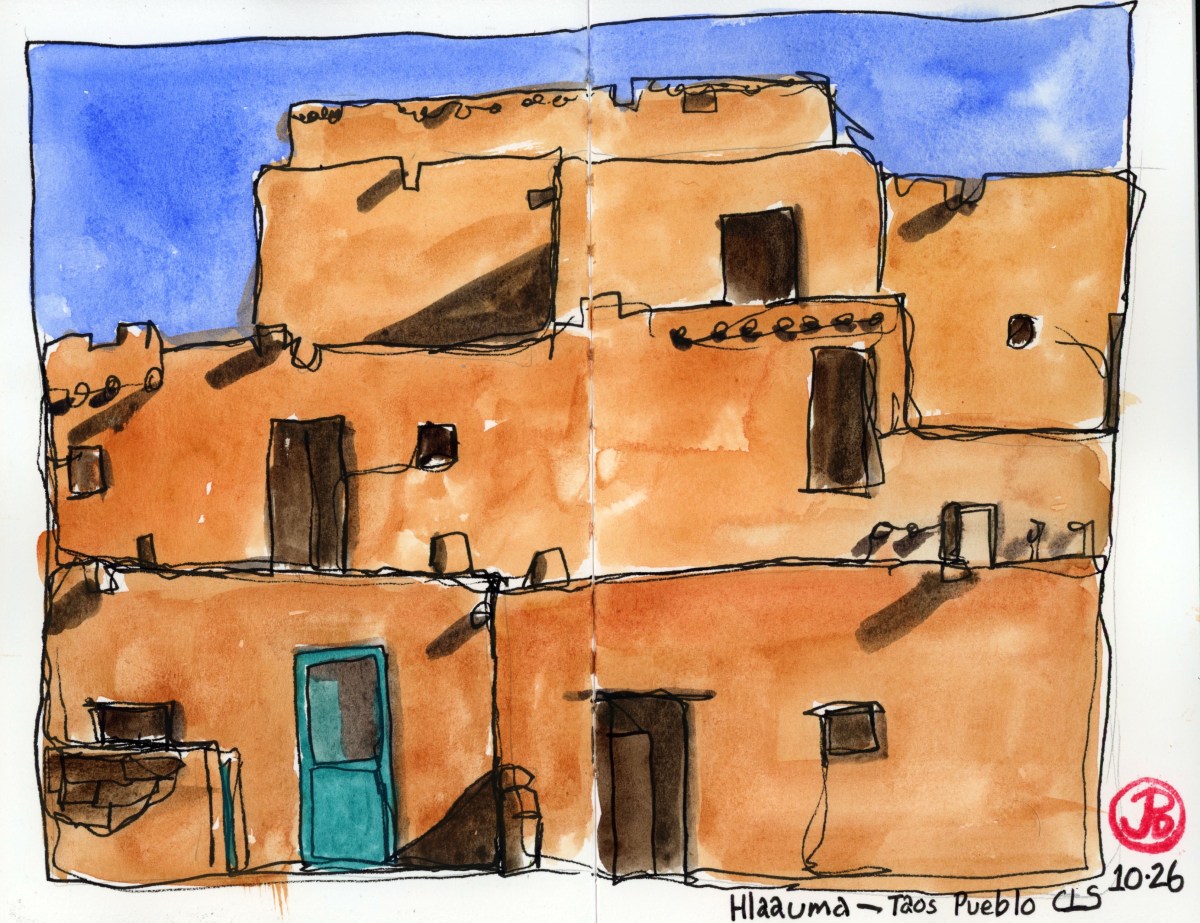
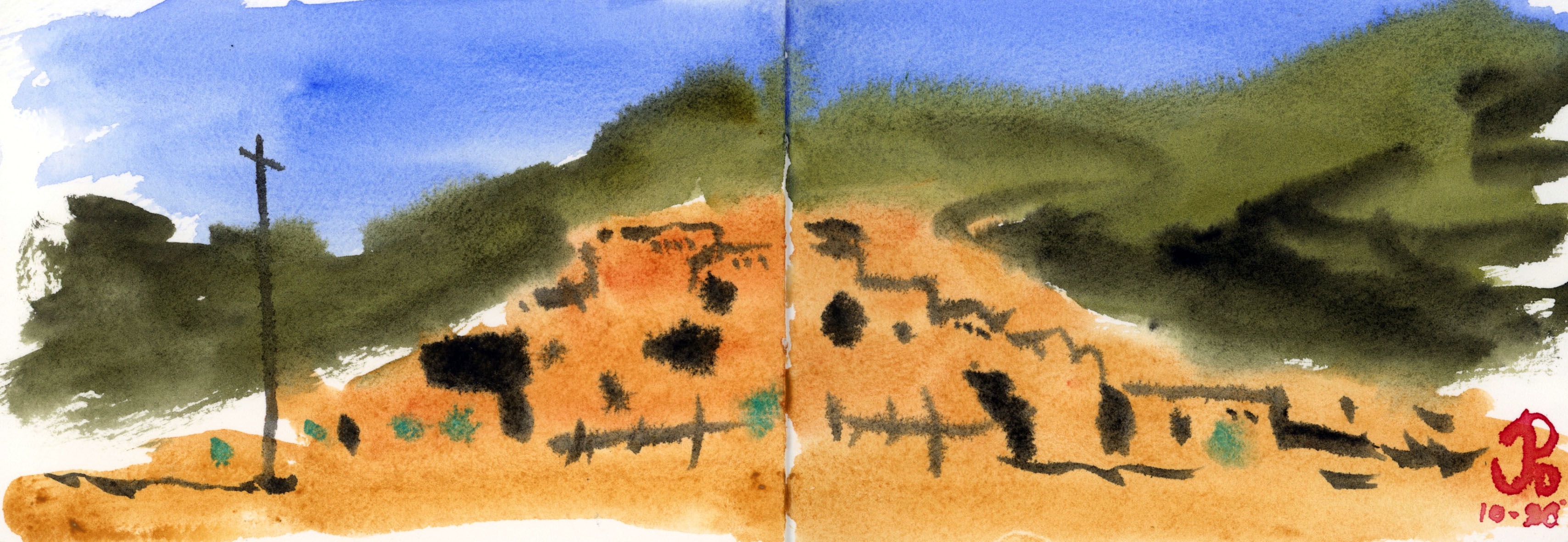
While I was back home I added two post trip sketches based on my paparazzi pictures. The featured sketched is a continuous-line sketch of the north building.
In my 100% cotton panoramic journal I did a gestural painting and let the paint on the paper tell the story:
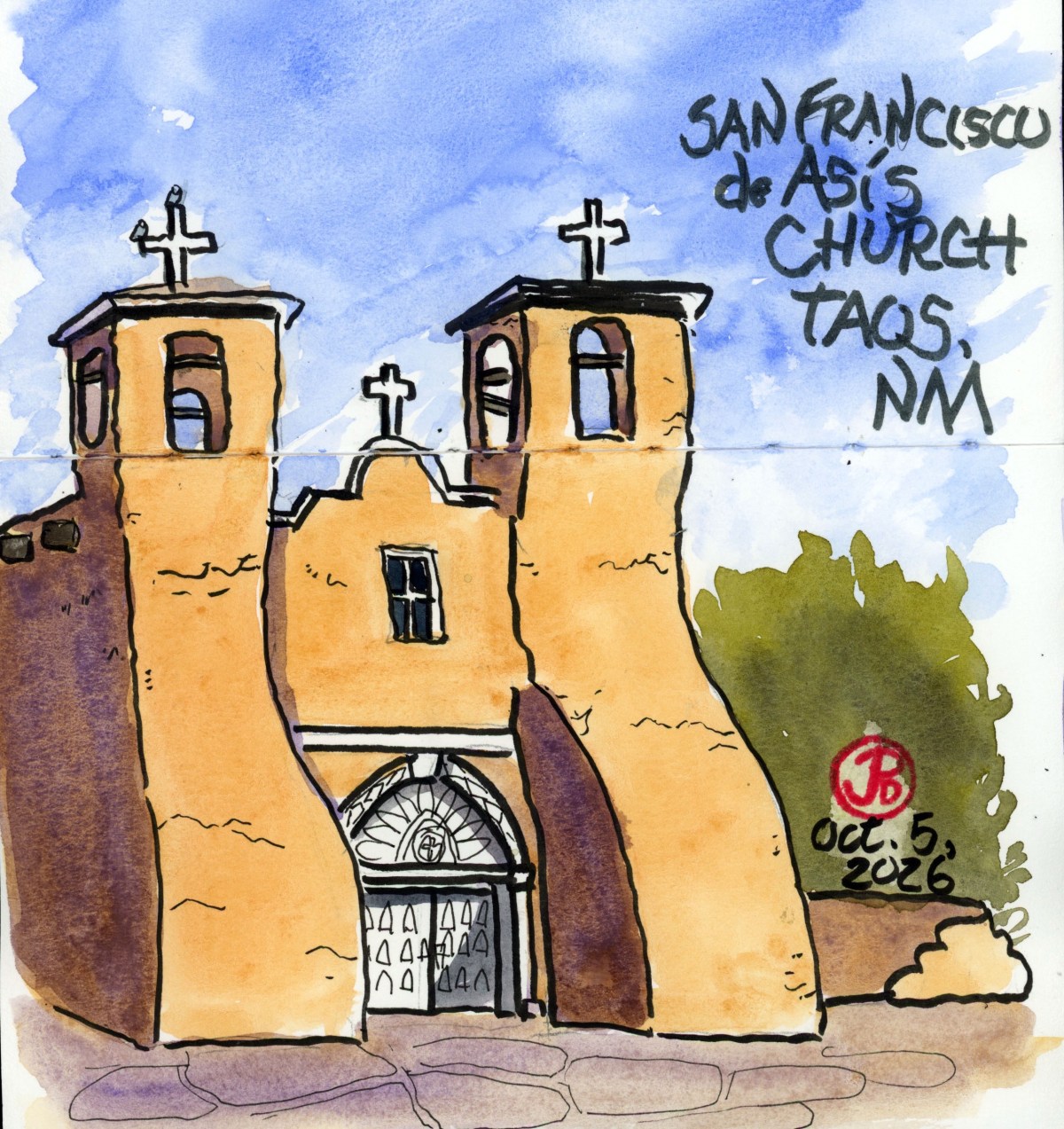
One iconic southwestern church that is on my sketchlist is the San Francisco de Asis Church in Taos. This is not only a paragon of southwestern church architecture and aesthetic but is a paragon for any structure period (the other being Taos Pueblo, featured in another post).
This is reportedly the most photographed church in North America. Its likeness has been captured by Ansel Adams and Georgia O’Keeffe.
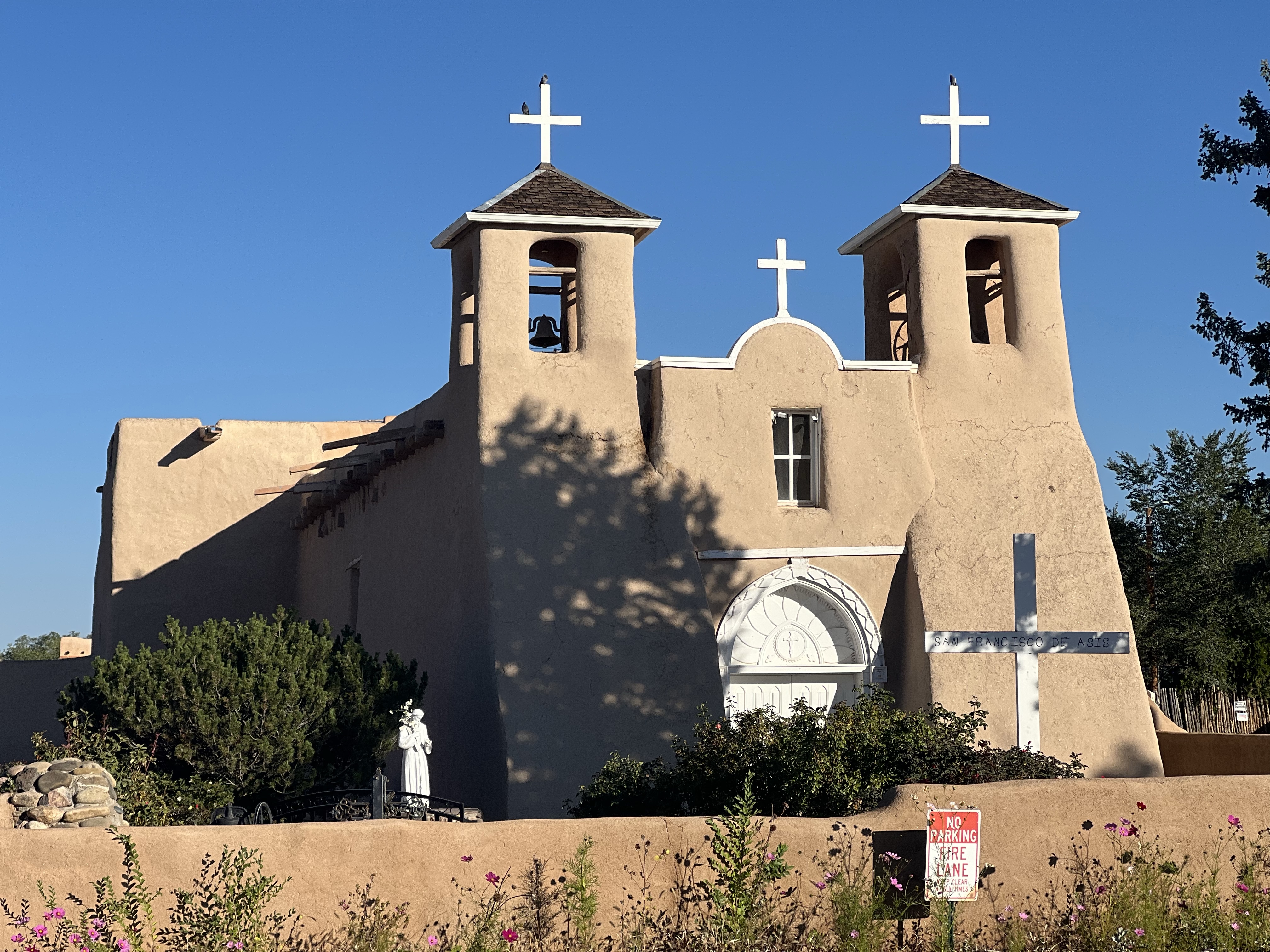
My first stop before I got into Taos was the church. As soon as you pull off the highway you are confronted with the earthen form of the back of the church, captured in O’Keeffe’s famous painting. I did my own on a much smaller scale and with much less talent.
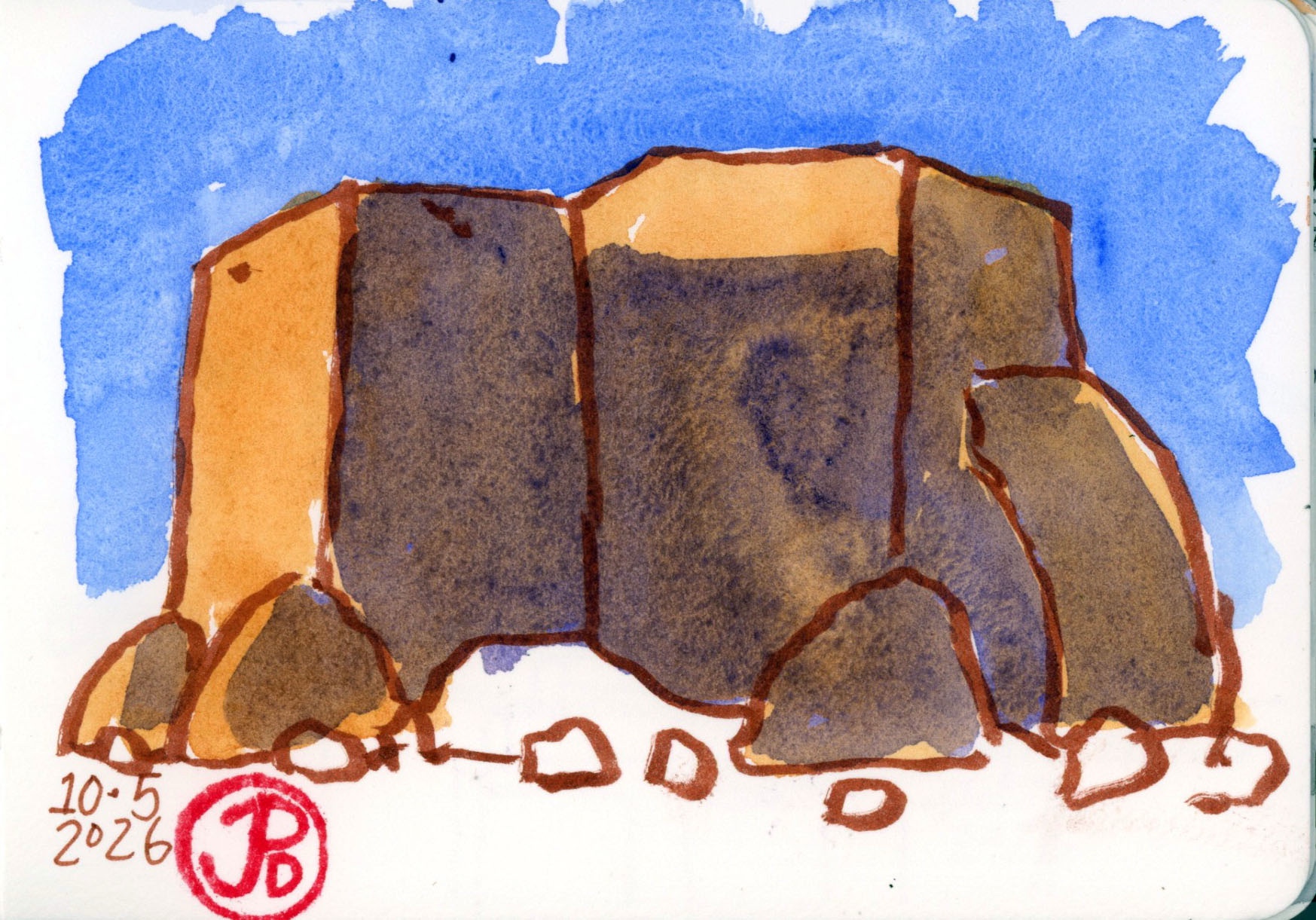
I moved around to the front, found a bench, and sketched the rounded, earthen buttresses and the twin bell towers (featured sketch).
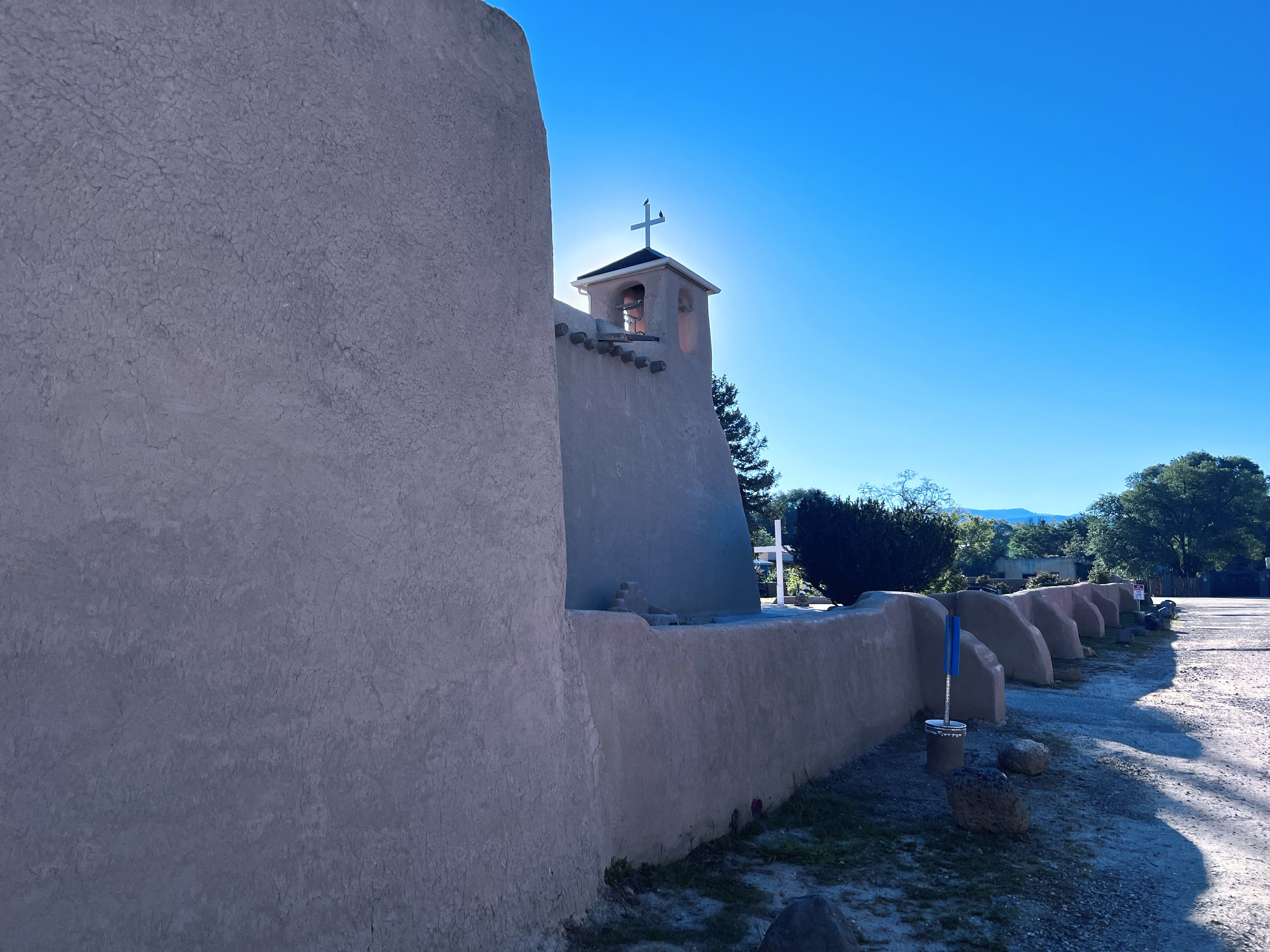
This was a great way to start my Taos morning, sketching a wonderful piece of architecture with the soundtrack of the local birds (flicker and scrub-jay) filling the air.
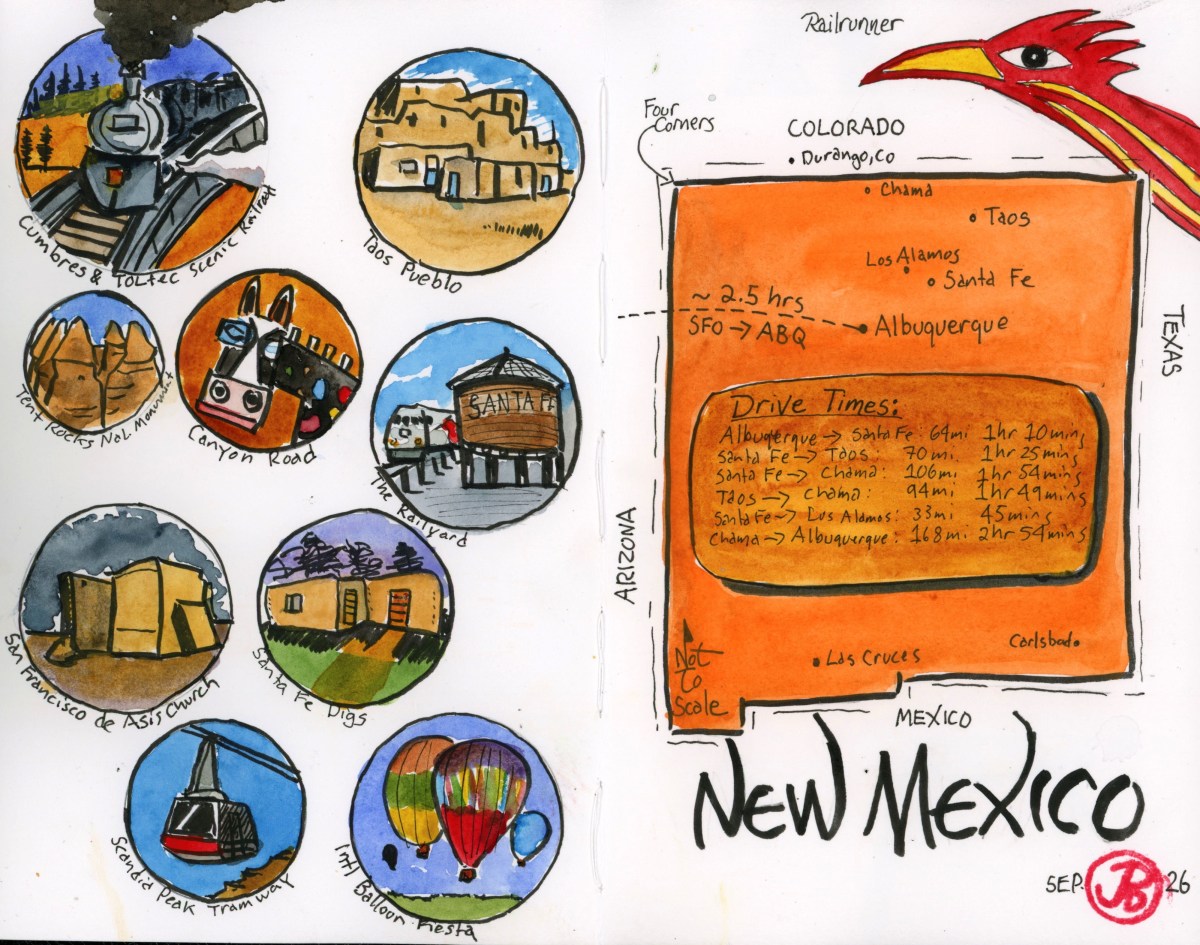
For my early October fall break I decided to spend the week in New Mexico.
The last time I set foot in the state, or lay down in it, was a visit to Four Corners on a road trip with my family. So my last and only visit was fleeting.
As is my usual routine I sketch a map of the state with my intended travel destinations with round vignettes of sight I hoped to see and sketch (featured sketch).
These include the Taos Pueblo, the Cumbres &Toltec Scenic Railroad, the Railyard District in Santa Fe, Canyon Road arts district also in Santa Fe, San Francisco de Asis Church in Taos, my digs in Santa Fe, Tent Rocks National Monument, Scandinavia Peak Tramway, and the Albuquerque Balloon Fiesta.