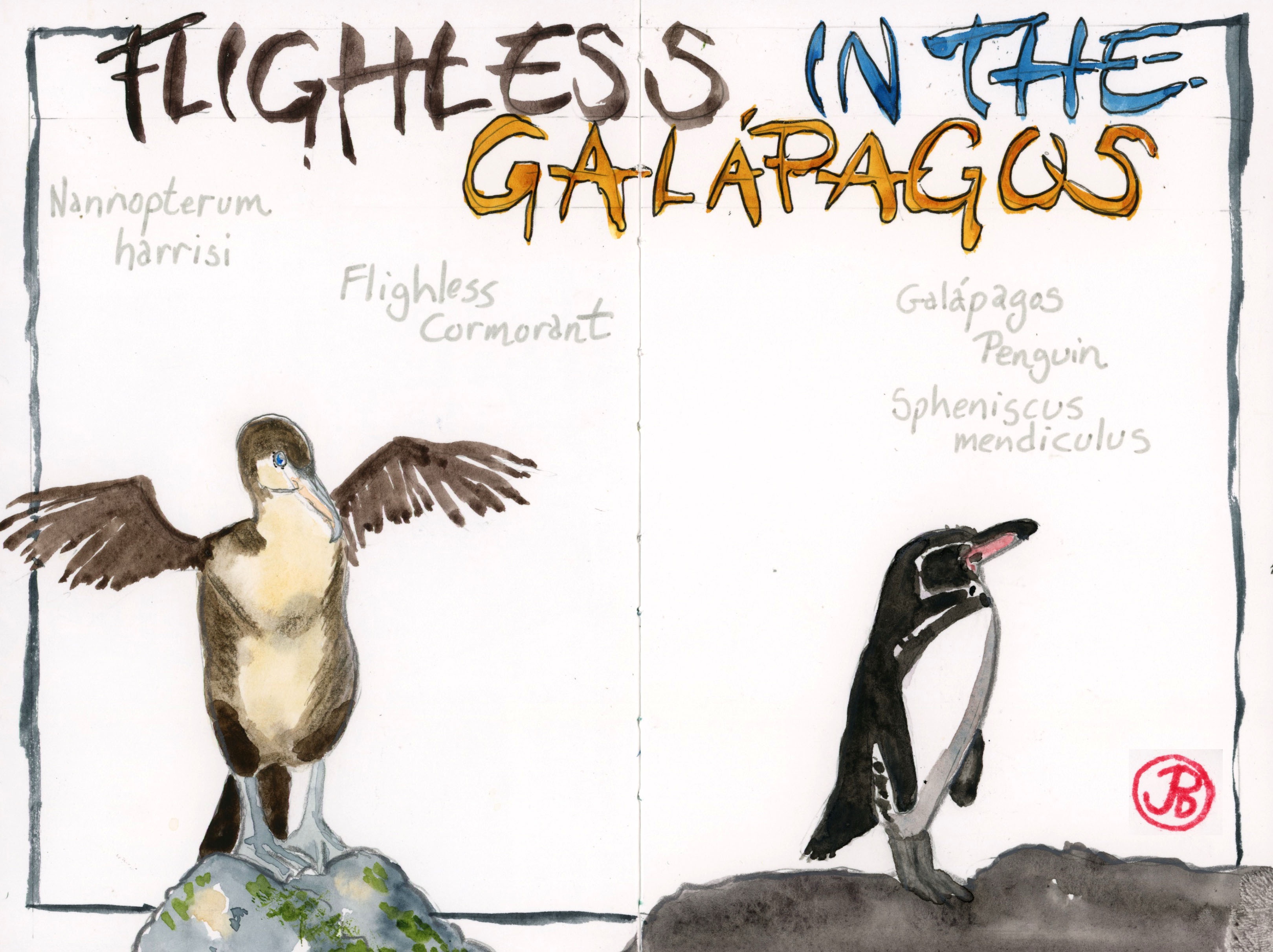
We flew from Quito to get to the Galápagos. But how did birds get to the islands?
We guess that some flew, some swam, and others arrived on rafts of vegetation pushed to the Galápagos by the cold Humboldt Current.
There were two flightless birds I was very much looking forward to seeing and both are found nowhere else in the world. The Galápagos are truly the Enchanted Islands when it comes to endemic species.
I grew up on a street named Cormorant Court so these aquatic fish-hunters have always fascinated me. On the California coast we have three species of flighted cormorants: Brandt’s, double-crested, and pelagic. And the cormorant I really wanted to see is the truly ocean dependent flightless cormorant.
We woke up on near the “seahorse’s mouth” on Isla Isabela. As the night turned to day from the deck of the Nemo III, vertical dark “rocks” turned into roosting flightless cormorants.
After an early breakfast at six, we were boarding the panga by 6:40 to get a closer look at the cormorants.
This is the world’s largest cormorant. I guess you can evolve to be bigger when you don’t need to fly. This is the only flightless cormorant and it is only found around the Galápagos islands of Fernandina and Isabela.

Around the “Seahorse’s Mouth” we had some quality panga time with this amazing endemic, both preening on the rocks and swimming in the bay.

After spending time with the cormorants, we boarded the Nemo III and headed over to Fernandina Island to look for another flightless endemic.
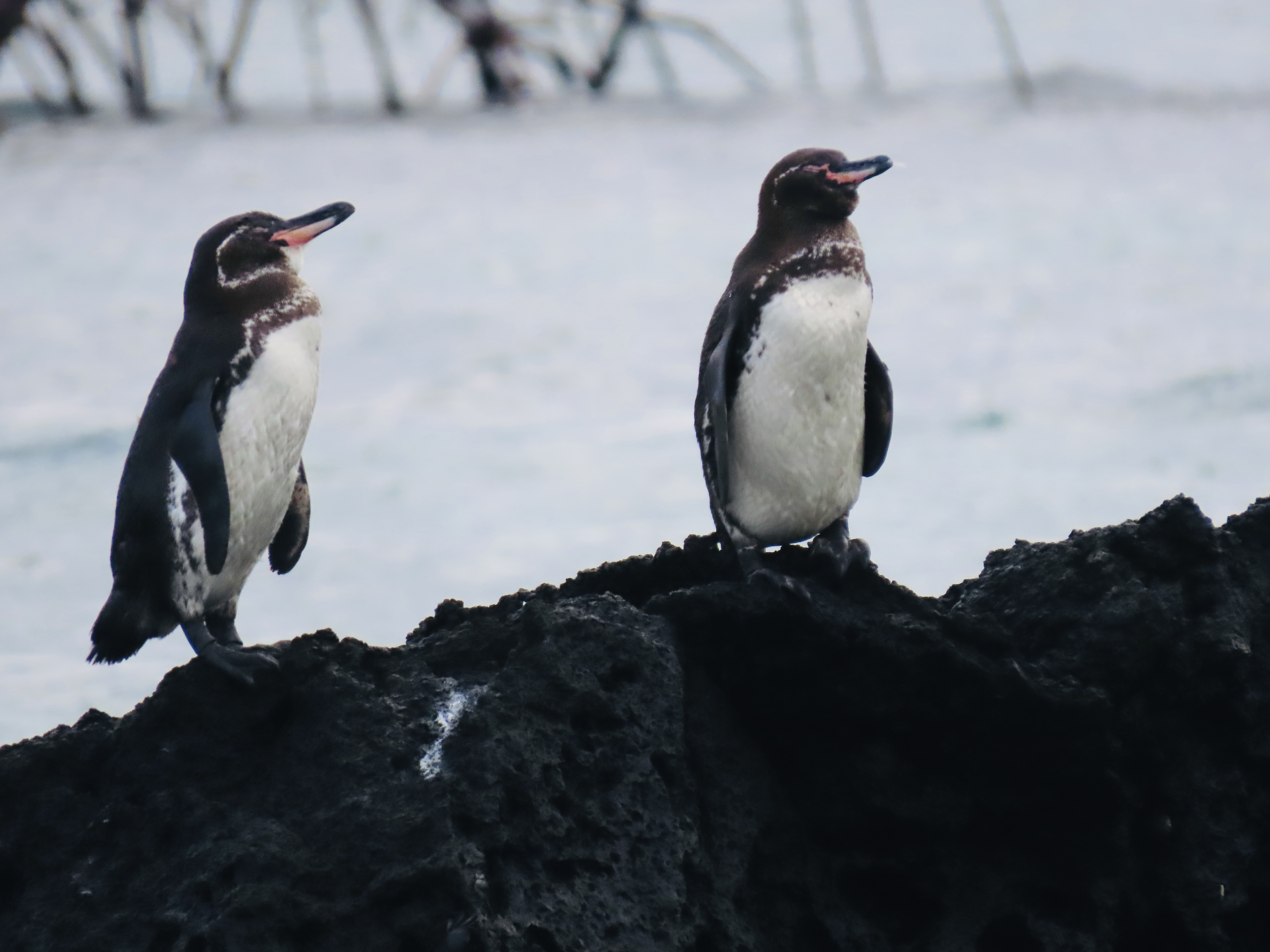
We would be birding from the deck of the catamaran, looking for a vertical black and white rock we were hoping to turn into a Galápagos penguin.
This small penguin is the only penguin found north of the equator (but just barely). It is certainly the most northerly or southerly if in the northern hemisphere, penguin as well as the only tropical penguin.
Before long our guide Willy spotted a lone penguin roosting in the rocks with two brown noddies.
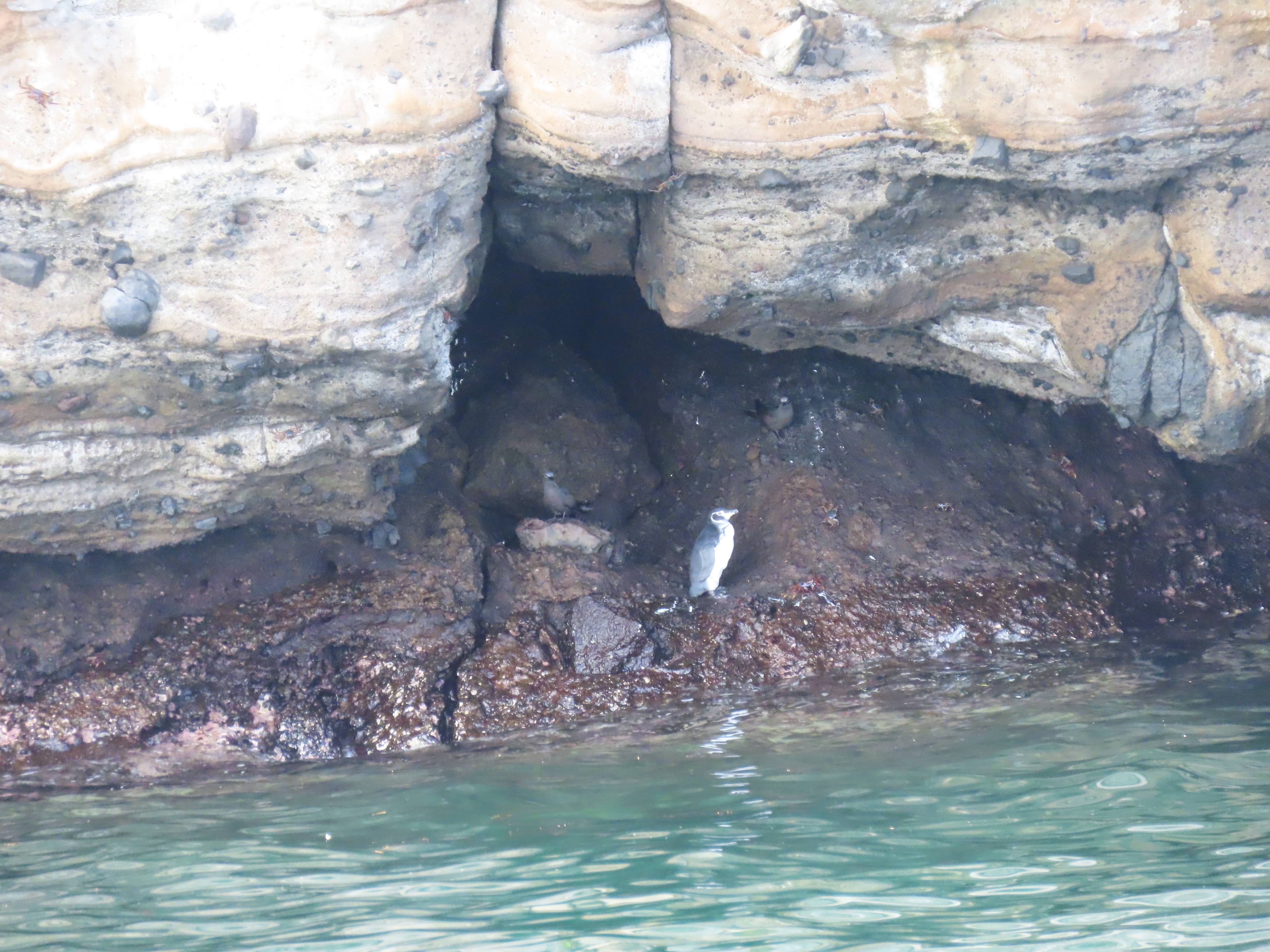
We had much better views on Islabela. Some were roosting and preening while others were swimming and foraging.