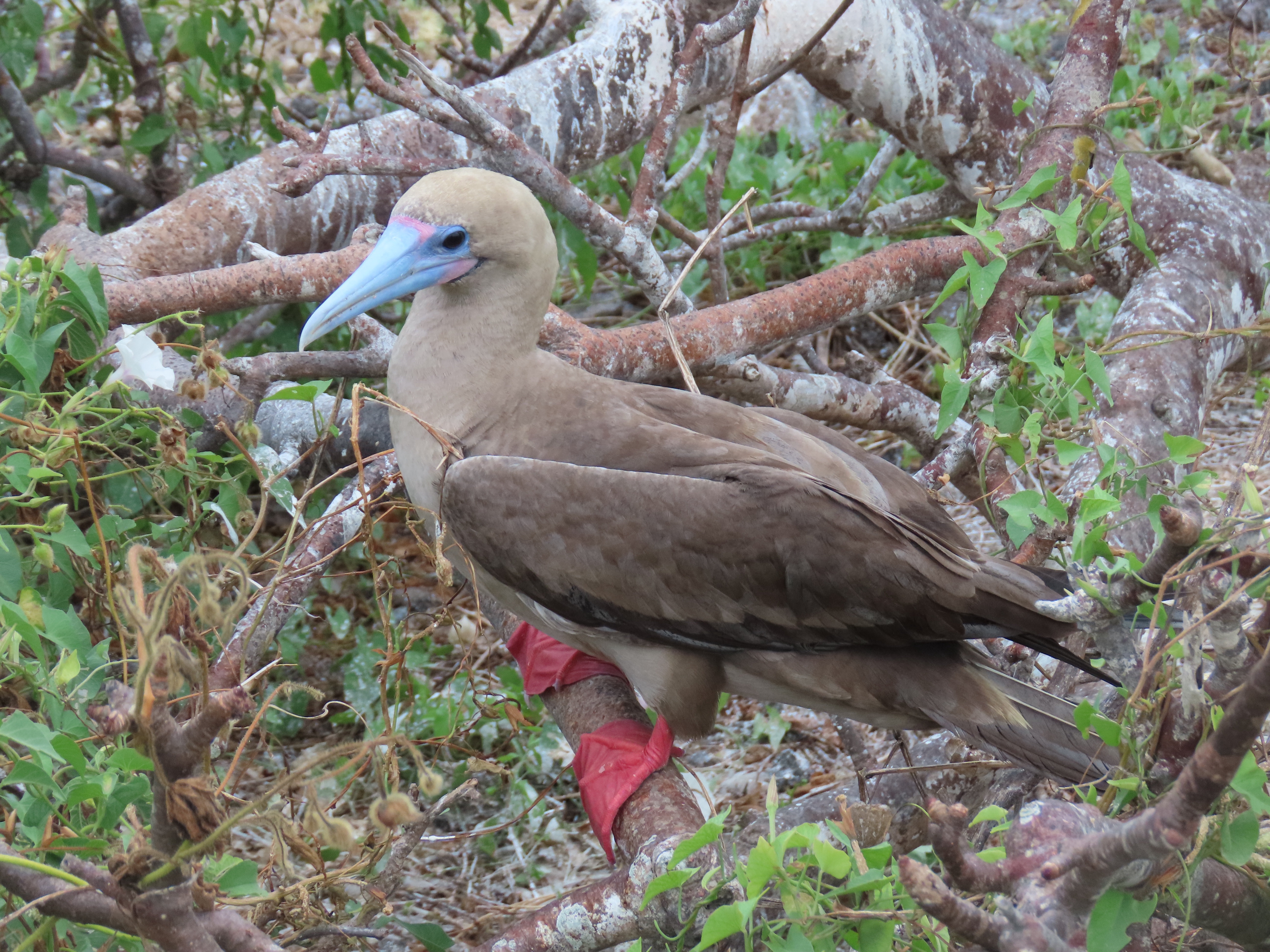
I had seen the red-footed booby before on the coast of California and brown booby is also an infrequent visitor to the coast of the Golden State. But now I was about to see the red-footed really close as well as two other boobies, which would be lifers.
One of these boobies is the poster bird of the Enchanted Islands: the blue-footed booby (Sula nebouxii).
You will find this booby on t-shirts, posters, signs, carved figurines, and other tourist detritus in the gifts shops.
After landing at Baltra and transferring to our catamaran, the Nemo III, our first stop was North Seymour Island.
North Seymour has a large population of blue-footed boobies and swallow-tailed gulls.
At our landing site we were greeted by a sleeping Galápagos sealion and a preening swallow-tailed gull.
What is amazing about the Galápagos is that the wildlife seems to have little fear of humans. We experienced this over and over again.
The word booby is derived from the Spanish word “bobo”, meaning stupid. Perhaps because of the bird’s tame behavior made them easy to catch by hungry sailors.
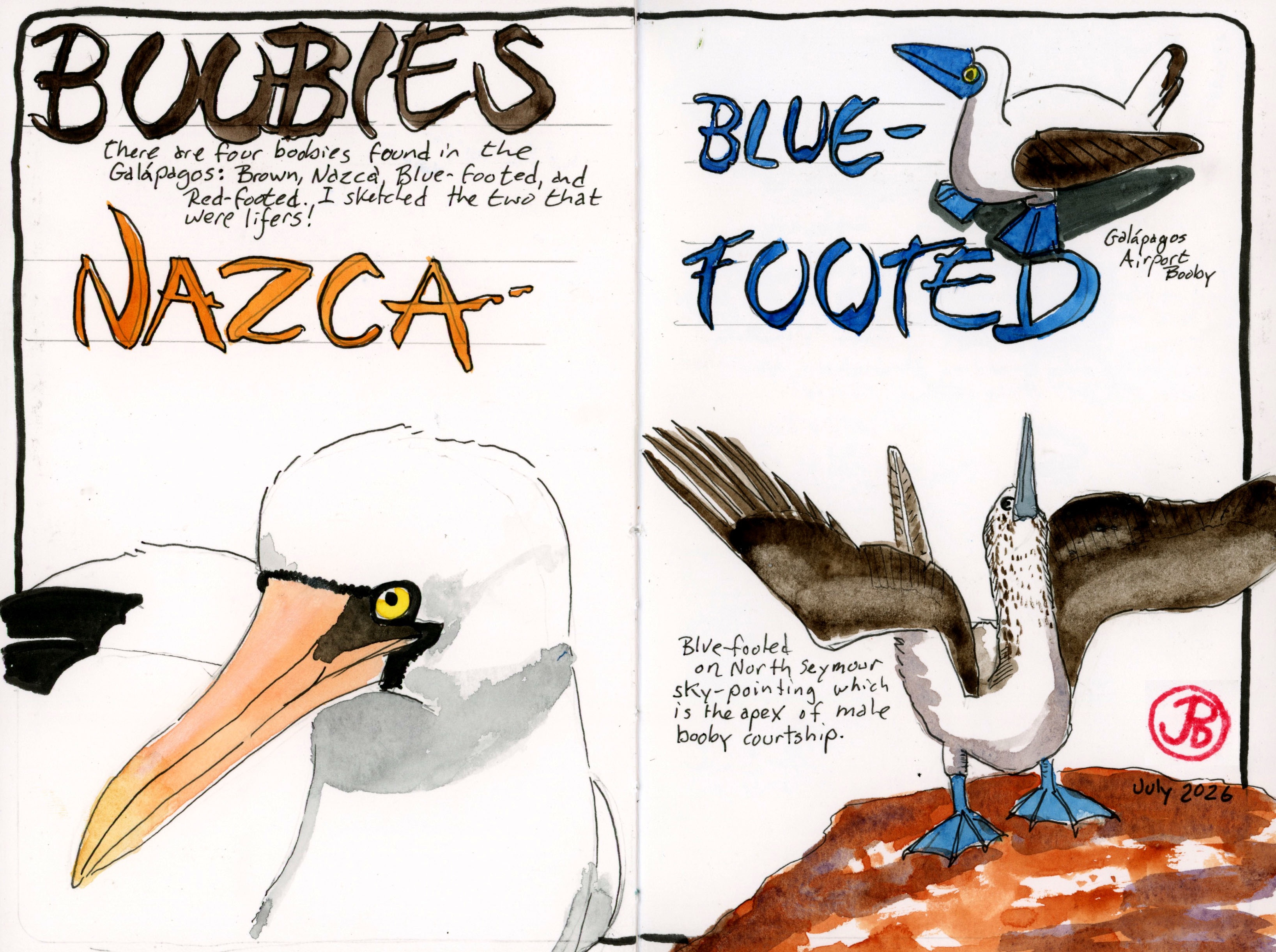
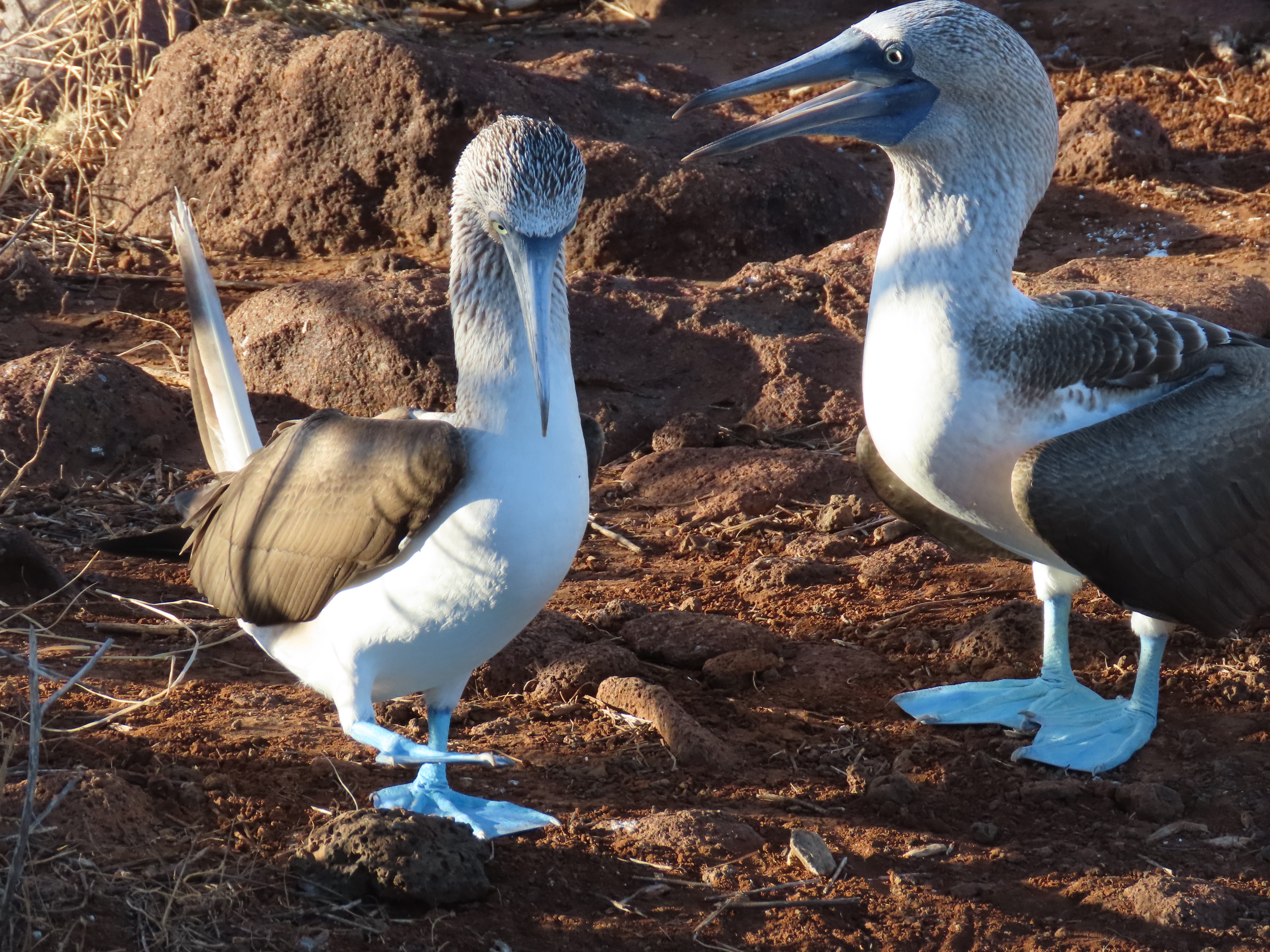
At North Seymour, the blue-footeds were in the middle of the trail in the midst of skypointing and wing displays which are their mating rituals. Watching these boobies made me feel like I was in a BBC nature documentary and Sir David Attenborough would step out from a nearby bush at any moment!
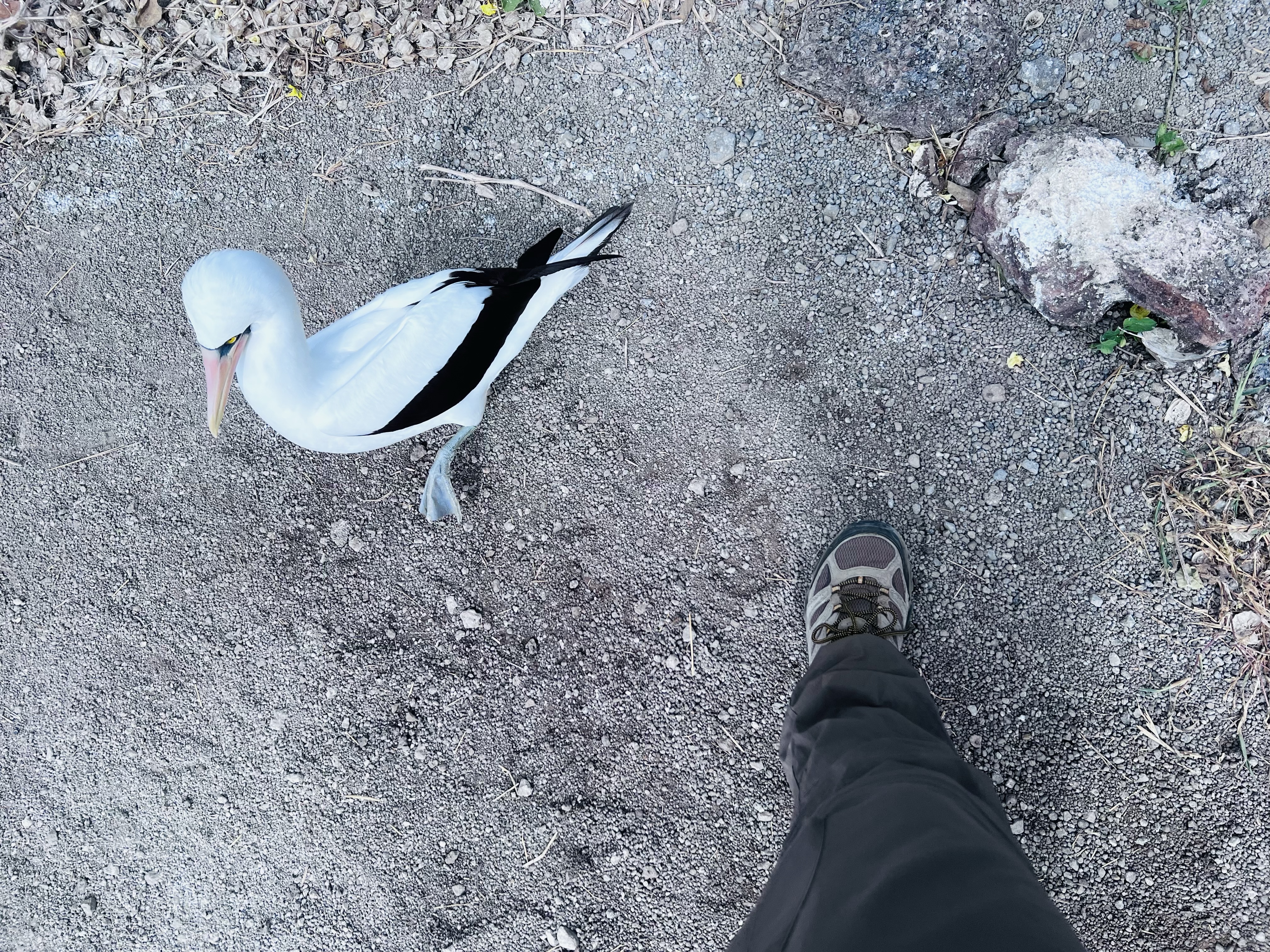
On the following day we had more booby encounters. This time at the island of Genovesa at the Prince Phillip’s Steps. The most common trailside booby was the Nazca booby (Sula granti), another lifer, with red-footeds also in the trees.
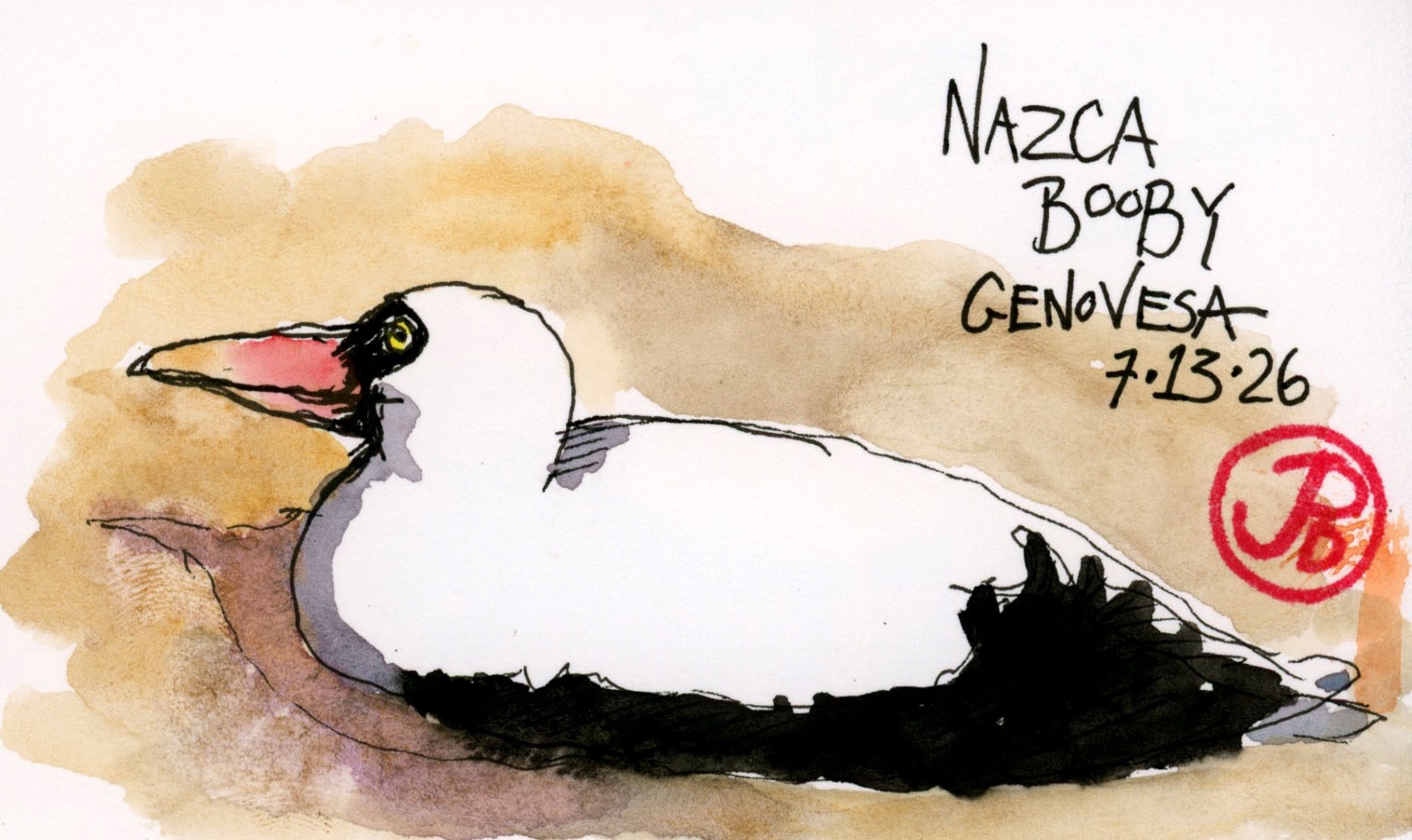
The Nazca is one of the largest boobies of the Galápagos. They are mainly white with a black mask (they were once called masked boobies until they were later split). Out of the three boobies that occurs in the Galápagos, the Nazca flies further out that the blue-footed to forage.
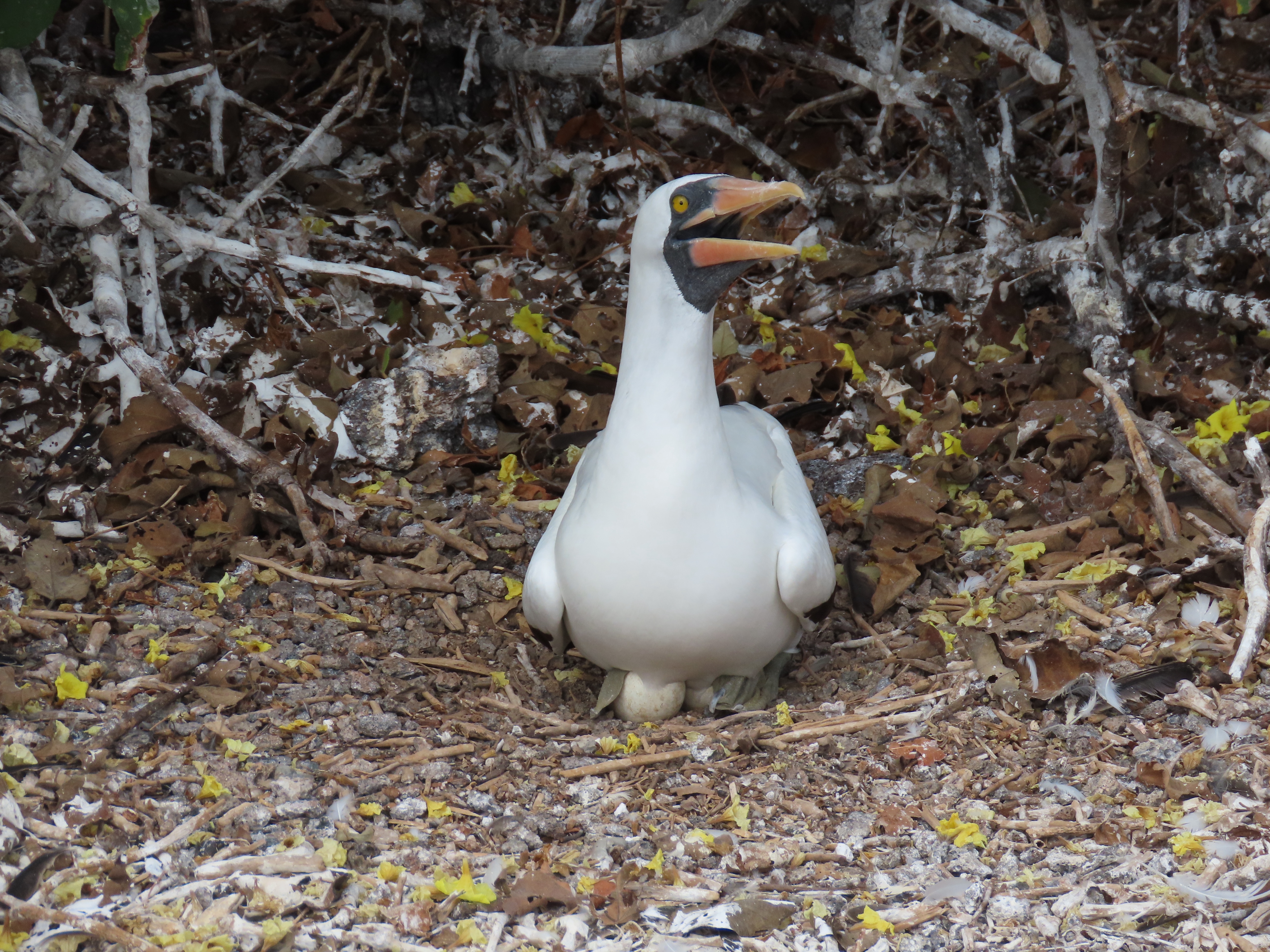
Among the sand and leaf litter, in a circle of non-guano, Nazcas were nesting on the ground. Nazcas always lay two eggs. Usually only one bird survives, the first hatched, which outcompetes its younger sibling.

