Boobies of the Galápagos

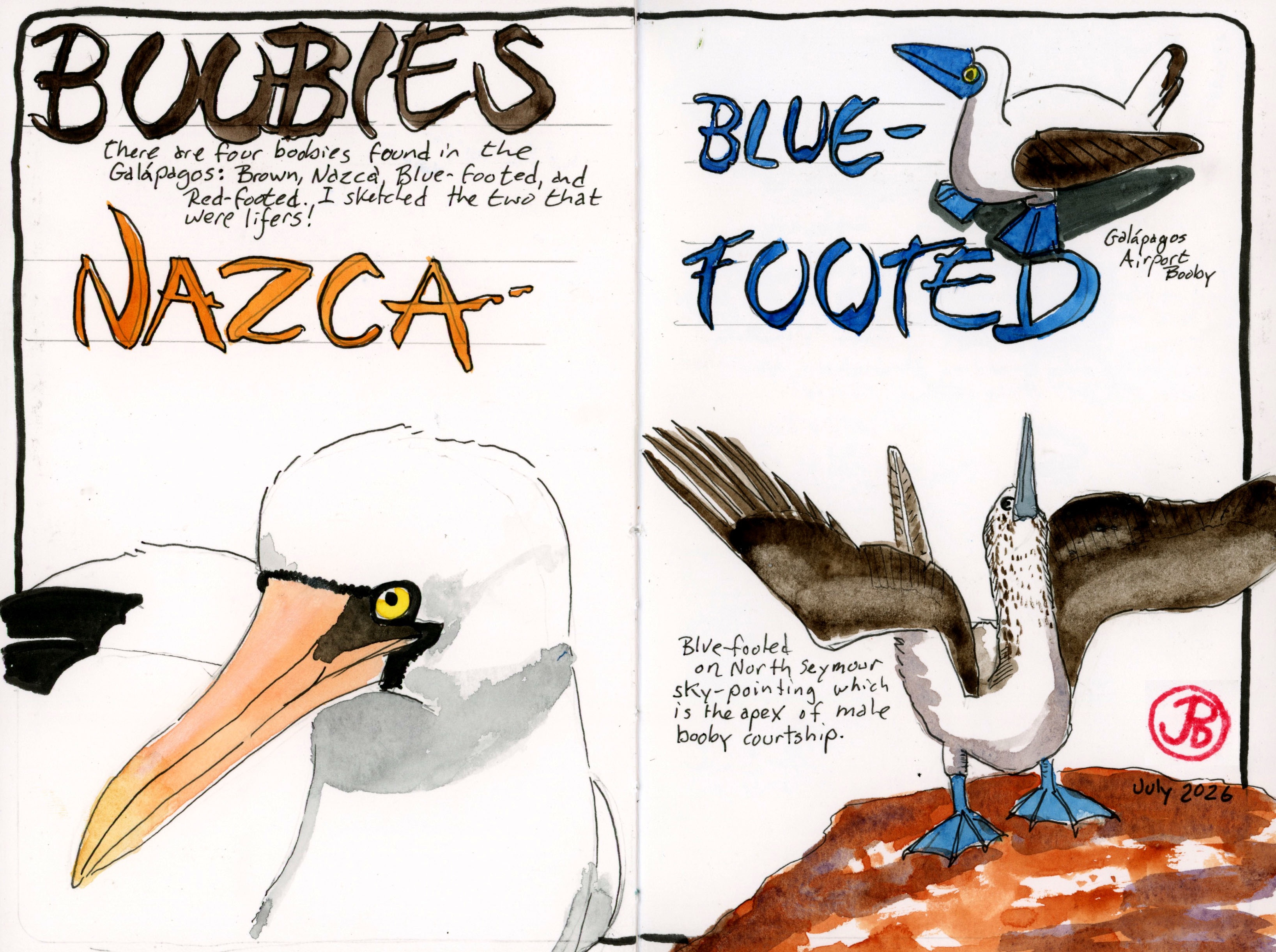
I had seen the red-footed booby before on the coast of California and brown booby is also an infrequent visitor to the coast of the Golden State. But now I was about to see the red-footed really close as well as two other boobies, which would be lifers.
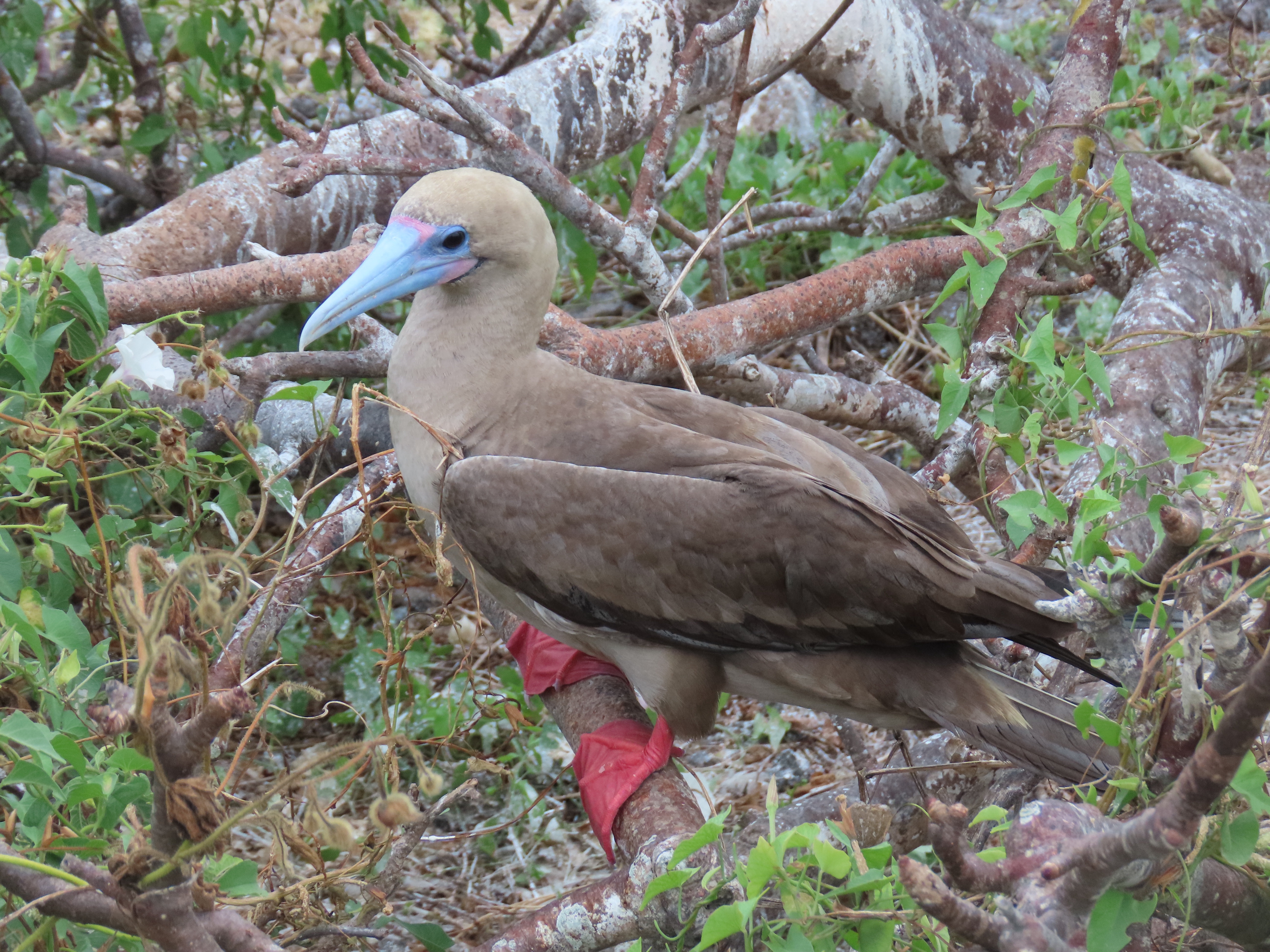
How do you know it’s a red footed? It’s perched in a tree (and it has red feet). This booby is within touching distance her on Genovesa.

One of these boobies is the poster bird of the Enchanted Islands: the blue-footed booby (Sula nebouxii).

You will find this booby on t-shirts, posters, signs, carved figurines, and other tourist detritus in the gifts shops.

After landing at Baltra and transferring to our catamaran, the Nemo III, our first stop was North Seymour Island.

North Seymour has a large population of blue-footed boobies and swallow-tailed gulls.

At our landing site we were greeted by a sleeping Galápagos sealion and a preening swallow-tailed gull.

What is amazing about the Galápagos is that the wildlife seems to have little fear of humans. We experienced this over and over again.
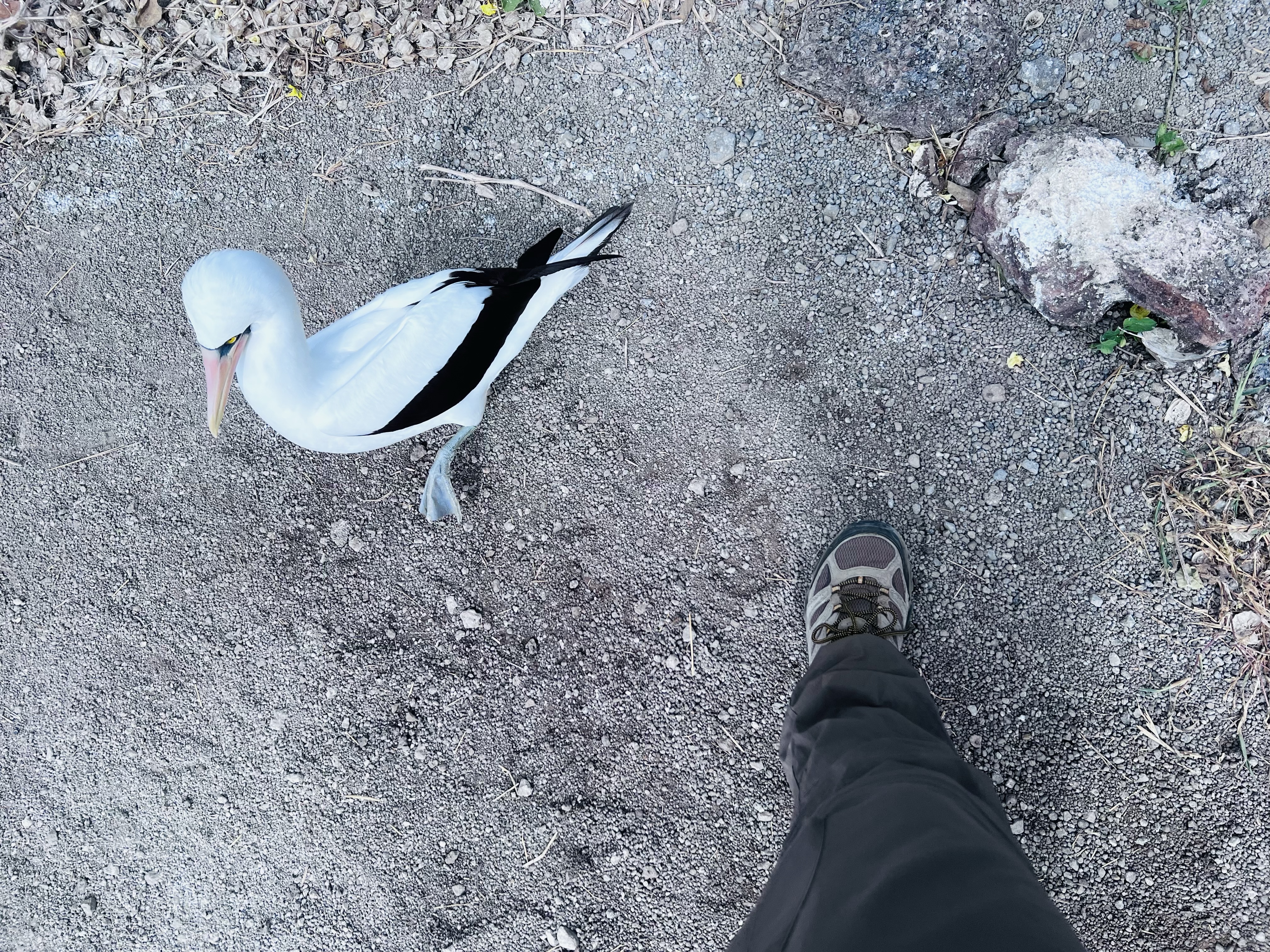
If you’re not careful you can end up stepping on a booby in the Galápagos. In this case a Nazca booby. (Disclaimer: no boobies were stepped on during the making of this post!)

The word booby is derived from the Spanish word “bobo”, meaning stupid. Perhaps because of the bird’s tame behavior made them easy to catch by hungry sailors.

At North Seymour, the blue-footeds were in the middle of the trail in the midst of skypointing and wing displays which are their mating rituals. Watching these boobies made me feel like I was in a BBC nature documentary and Sir David Attenborough would step out from a nearby bush at any moment!
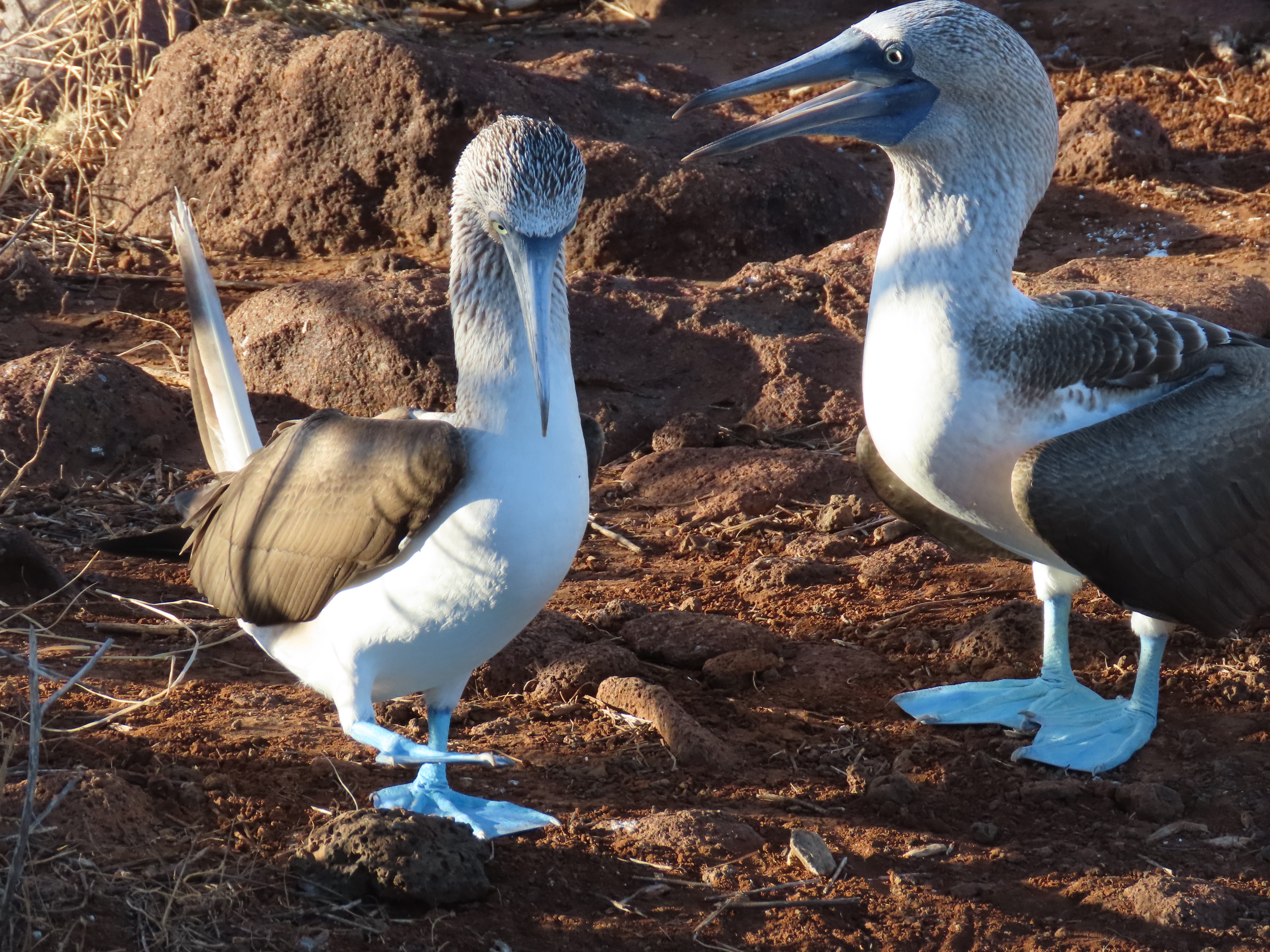
To blue-footeds in mid-trail in mid-courtship.

On the following day we had more booby encounters. This time at the island of Genovesa at the Prince Phillip’s Steps. The most common trailside booby was the Nazca booby (Sula granti), another lifer, with red-footeds also in the trees.
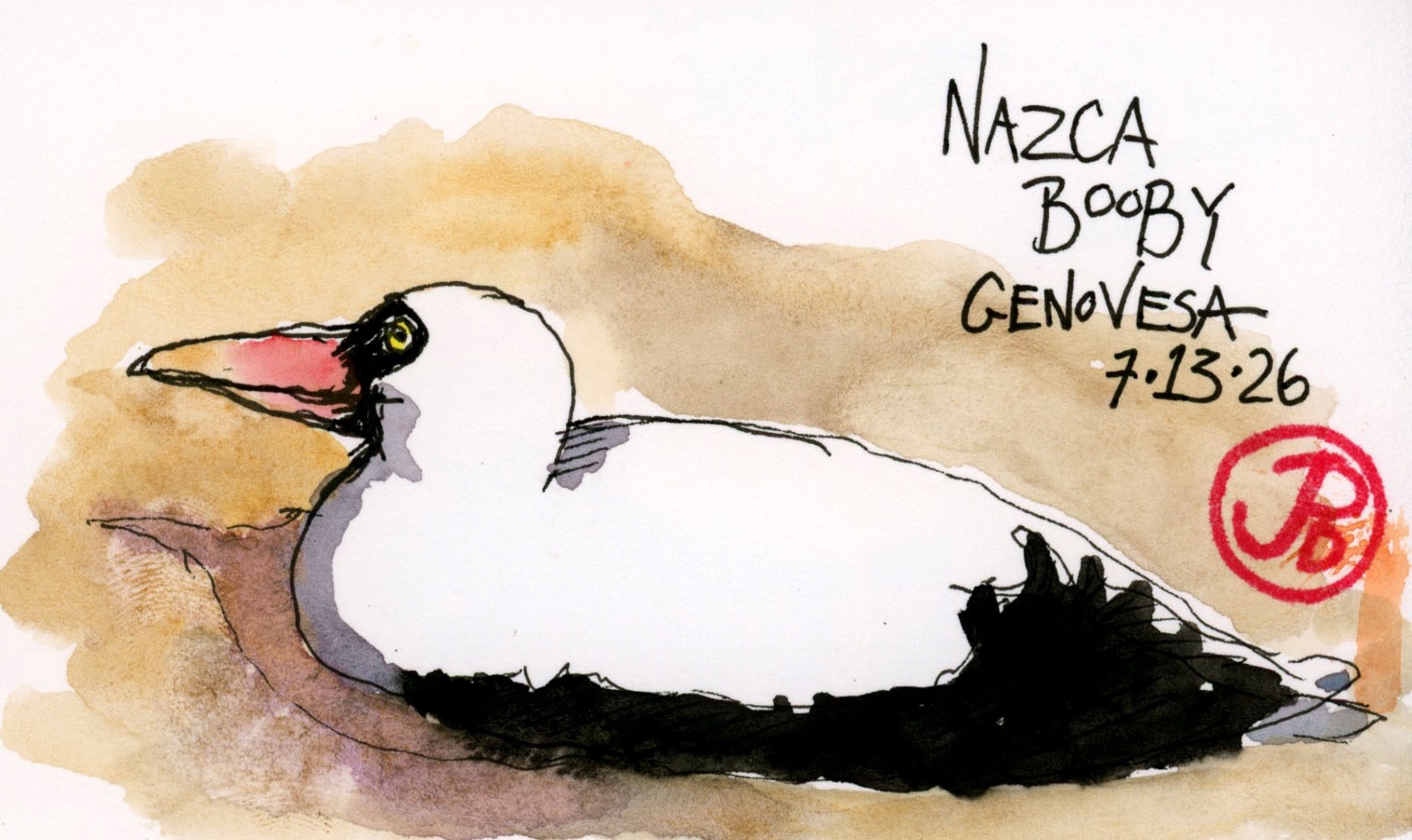
A quick sketch of a Nazca on Genovesa that somehow looks like a muppet of the Fraggle Rock era.

The Nazca is one of the largest boobies of the Galápagos. They are mainly white with a black mask (they were once called masked boobies until they were later split). Out of the three boobies that occurs in the Galápagos, the Nazca flies further out that the blue-footed to forage.
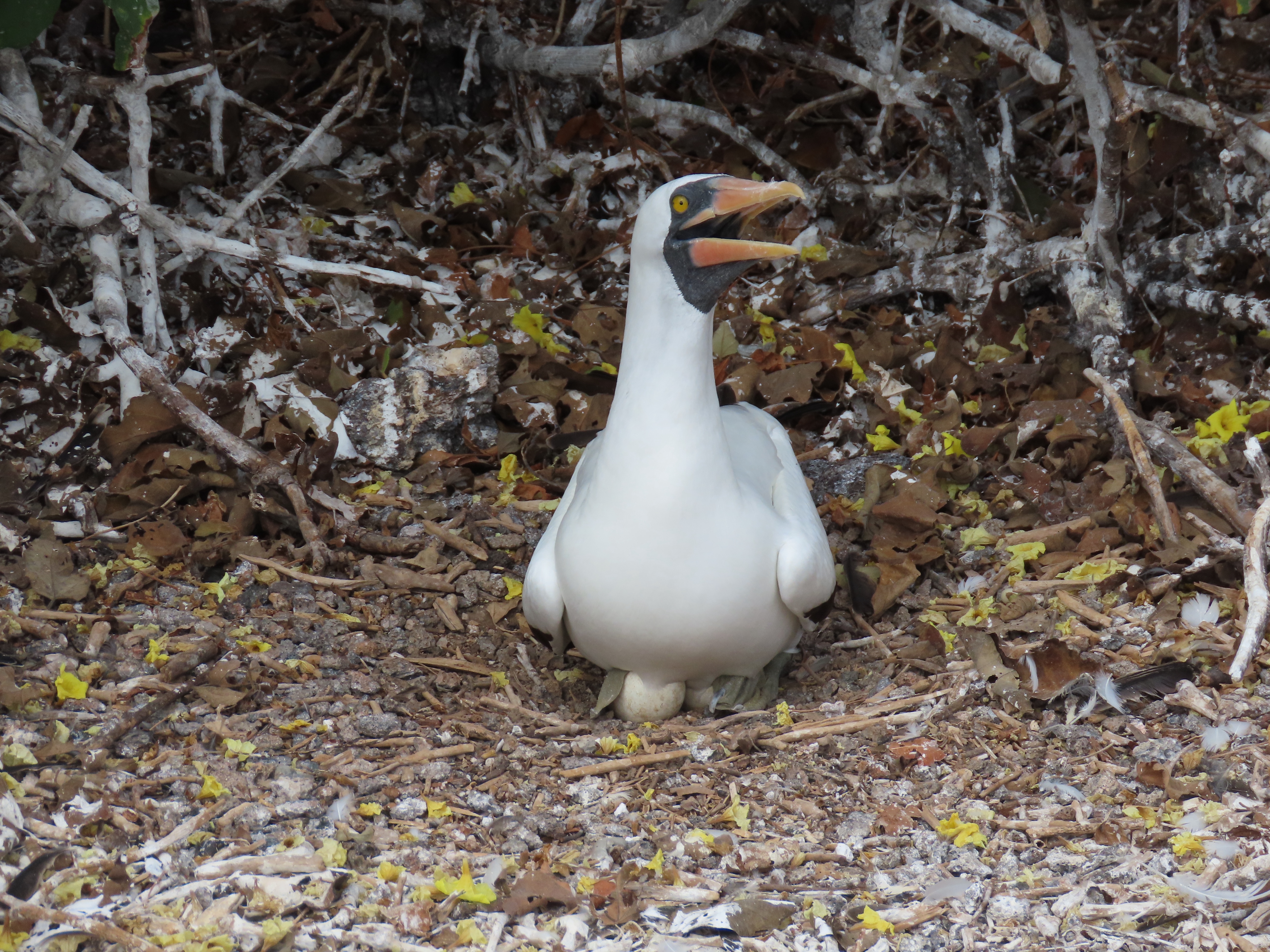
Among the sand and leaf litter, in a circle of non-guano, Nazcas were nesting on the ground. Nazcas always lay two eggs. Usually only one bird survives, the first hatched, which outcompetes its younger sibling.

Image

The Red-Footed Booby of Santa Cruz Wharf

The first red-footed booby (Sula sula) I had ever seen in Santa Cruz County was perched on the pier out to the Concrete Ship at Seacliff Beach. But the booby that has recently been hanging around Santa Cruz Wharf was a much more incredible and close bird.

The booby was first seen towards the end of the wharf on November 3. At the time, local birders assumed the booby was sick because it appeared very lethargic and allowed a very close approach from viewers, including some selfies seeking tourists. A local birder had to put up yellow caution tape to keep the booby admirers at bay.

The red-footed booby is a bird of the tropics and not the foggy coast of Northern California. The common name comes from the Spanish “bobo”, meaning buffoon. This refers to the ease in catching the bird and it’s awkward gait on land. Many of these seabirds experience “island syndrome” and because of their isolation from humans, they show little to no fear of them. (Think of the now extinct dodo). This tropical visitor showed no fear to the humans walking up to it when even a gull would fly away.

On Friday afternoon, I drove out to the end of the wharf. The booby had been reported across from the Dolphin Restaurant, which is one of the last eating establishments at the end of the wharf.

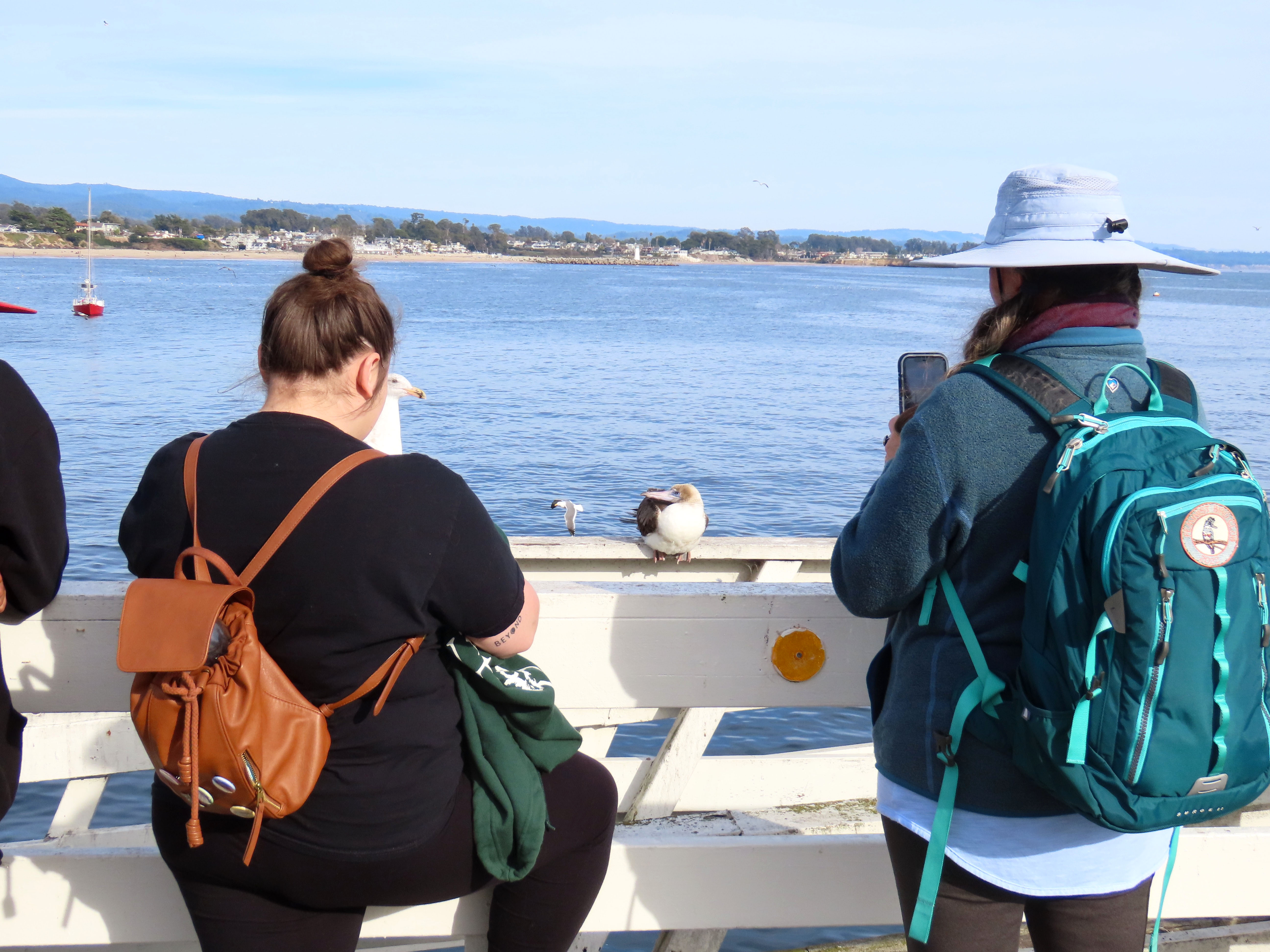
I parked across the street from Stagnaros and looked up and 20 feet away was the red-footed booby perched on the wharf railing! There was also a small audience taking pictures of the wayward rarity.

The red-booby with a few of it’s admirers. They are about six feet away from the booby.

I got out of my car and snapped a few photos and then I took out my sketchbook to get a sketch in. It was easy to sketch the booby because the bird was about six feet away and seemed completely unfazed by the birder paparazzi.

The red-footed booby of Santa Cruz.

It was great to observe the booby up close with the naked eye. It was a little challenging to sketch as it was in constant motion, preening or tucking it bill into it’s feathers for a quick nap or keeping a western gull at bay.

Sula sula and a western gull.

From my observations, the booby was well and thriving. It had been seen fishing with gulls, cormorants, and pelicans in the bay so I assume it was finding plenty of fish. It landed on the wharf rail to preen and rest.

Let’s hope the world’s smallest booby stays with us throughout the winter!

A quick field sketch of the wayward booby. I used my Lamy Safari for this sketch and because the black ink was not waterproof, it bleed into the paint. For the featured sketch, I replaced the ink with Noodlers Black ink which is very waterproof.
Image

The Flight of the Boobies

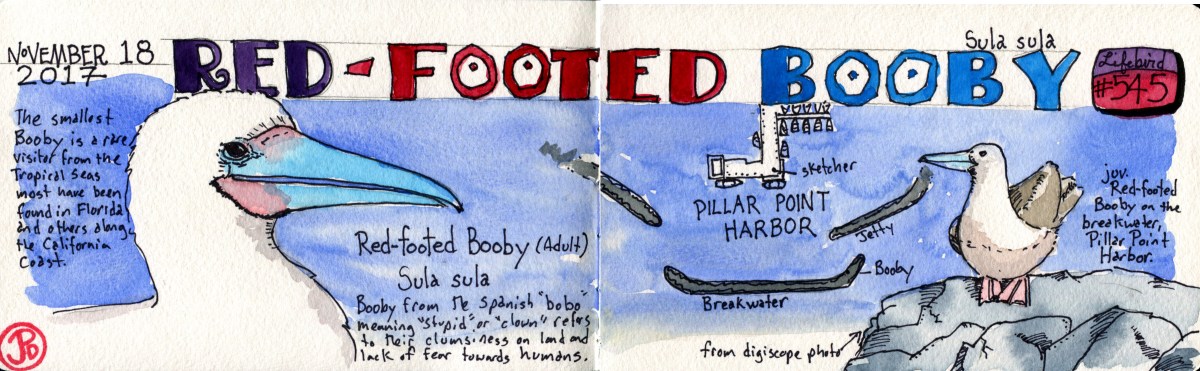
Pillar Point Harbor, on the San Mateo County coast, is a Mecca for avian ratites. I mean the sort of rarites that makes a birder want to jump in their car and drive all night or book a last minute flight to the west coast. A drop-everything-and- go rarity.

A prime example was the Ross’s gull that showed up on Thursday January 12, 2017 and stayed until it was taken by a pair of peregrine falcons on Saturday afternoon. This is a mega rarity and only the second record in the lower 48.

I saw my first booby in Pillar Point. A brown booby had flown into the harbor in January 2003 and perched on the breakwater.

There are six species of boobies. The name comes from the Spanish word bobo, meaning “stupid” or “clown”. This refers to their tame disposition. Because they show little fear towards humans, there were easy to capture and kill for food.

Almost fifteen years later, another booby flew into Pillar Point Harbor. This time it was the smallest species of booby, a native to southern tropical waters , the red-footed booby (Sula sula).

With climate change, will we see more equatorial birds coming into Pillar Point to rest and be seen by birds former and wide? We can only hope to see the silver lining.