“It is a hideous-looking creature, of dirty black colour, stupid and sluggish in its movements”
–Charles Darwin, Voyage of the Beagle
While there is much attention and focus on the endemic avian fauna of the Galápagos we should not forget the unique reptiles of the Enchanted Islands.
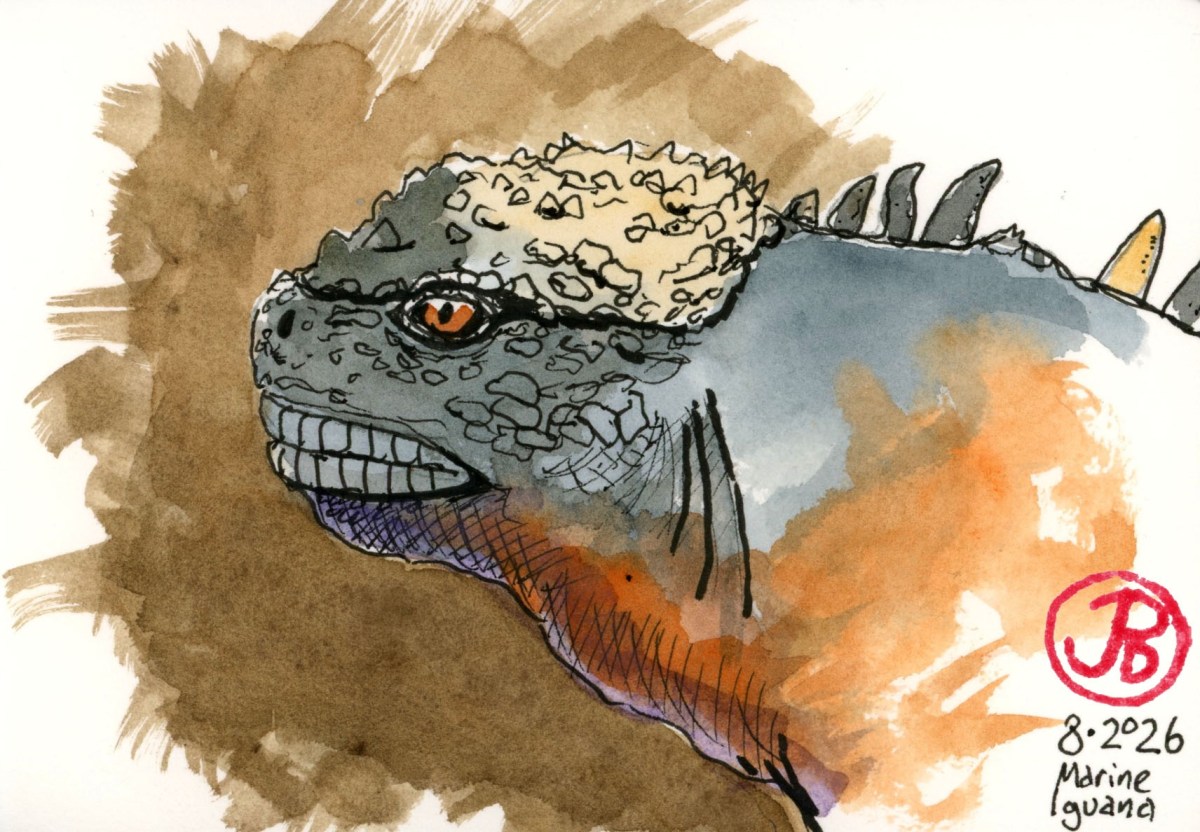
One of the reptiles that I was really looking forward to seeing was the world’s only aquatic lizard: the marine iguana.
Now this is the iguana that, without fail, features in any nature documentary about the Galápagos.
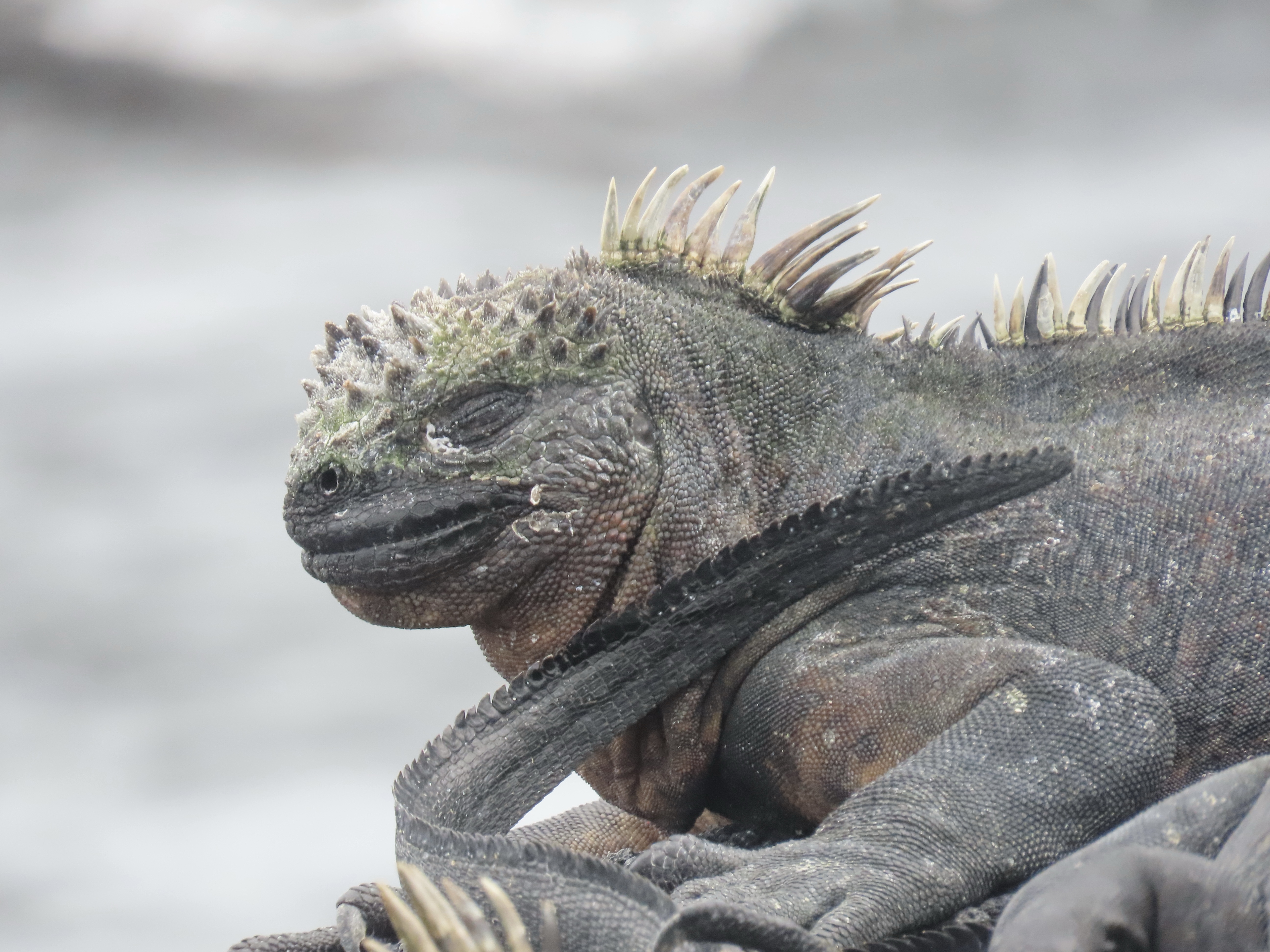
The marine iguana, as the name implies, is at home to the coastal salt waters of the Pacific. They are only found in the Galápagos Islands.
While I have seen a green iguana in Belize swimming across a stream, its distant relative spends much more time in the tides of the Pacific foraging underwater for sea vegetation.
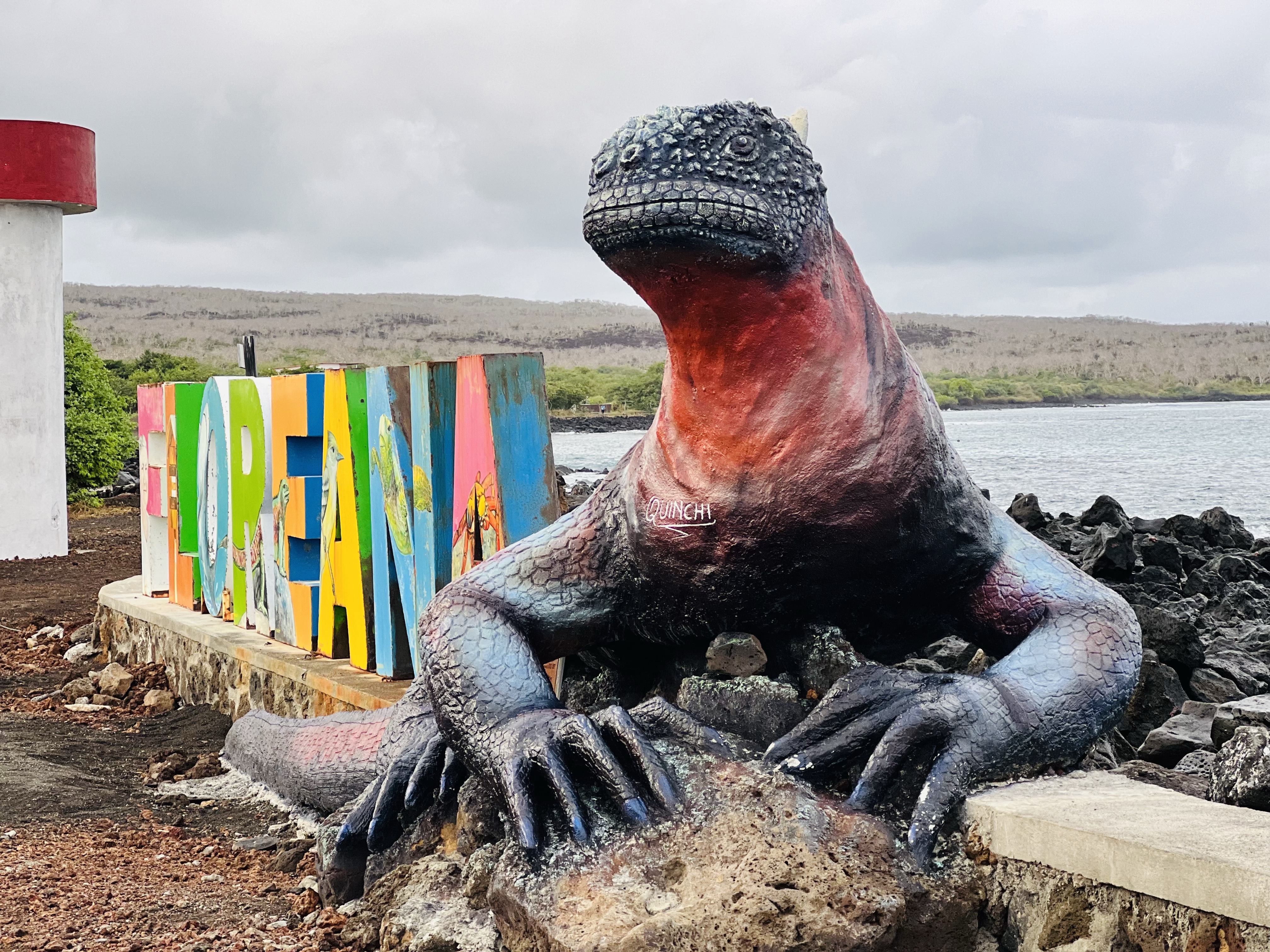
The large marine iguana statue at Floreana.
We had many encounters with marine iguanas on the different islands that we visited. Like the birds of the Galápagos, they show no fear of humans. Our guide told us to be careful and not step on an iguana. They certainly do not move out of the way when approached.
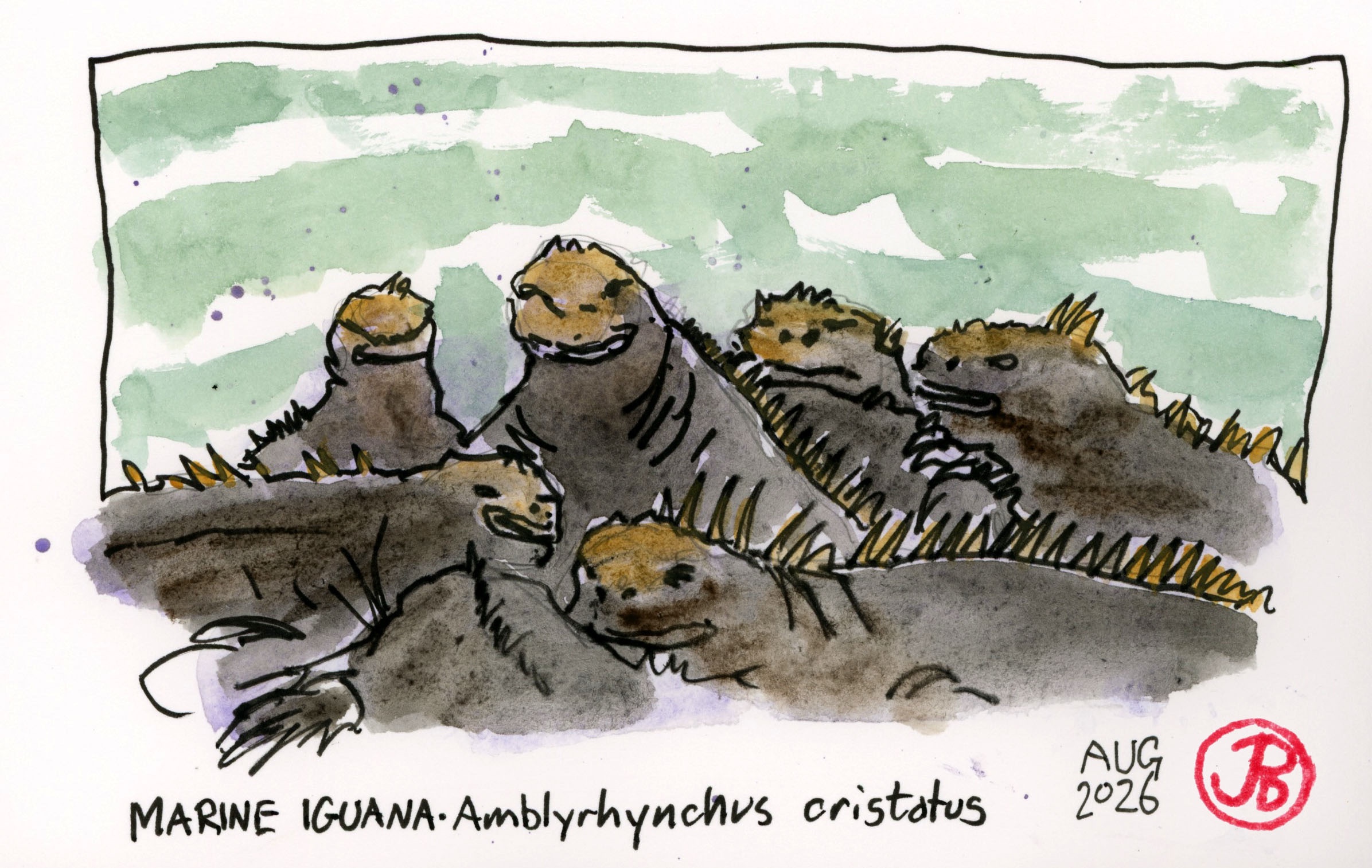
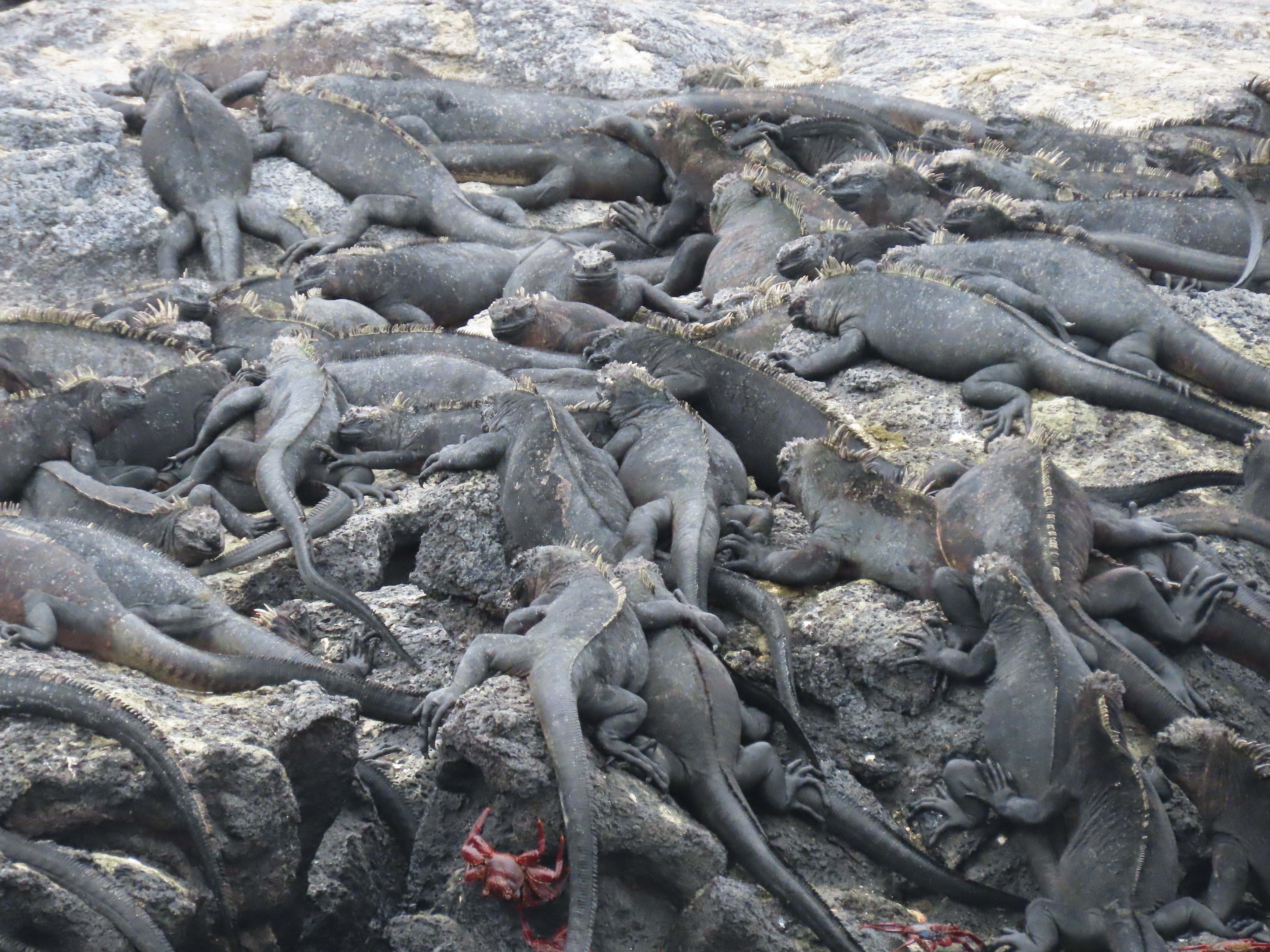
Marine iguanas spent a lot of time out of the water sunning themselves in between foraging for seaweed. A loose sketch from one of my photos of a group of iguanas warming up.The marine iguanas cover the lava. They are cold-blooded and foraging in the cold Humboldt Current of the Galápagos means they need to huddle together to warm up.
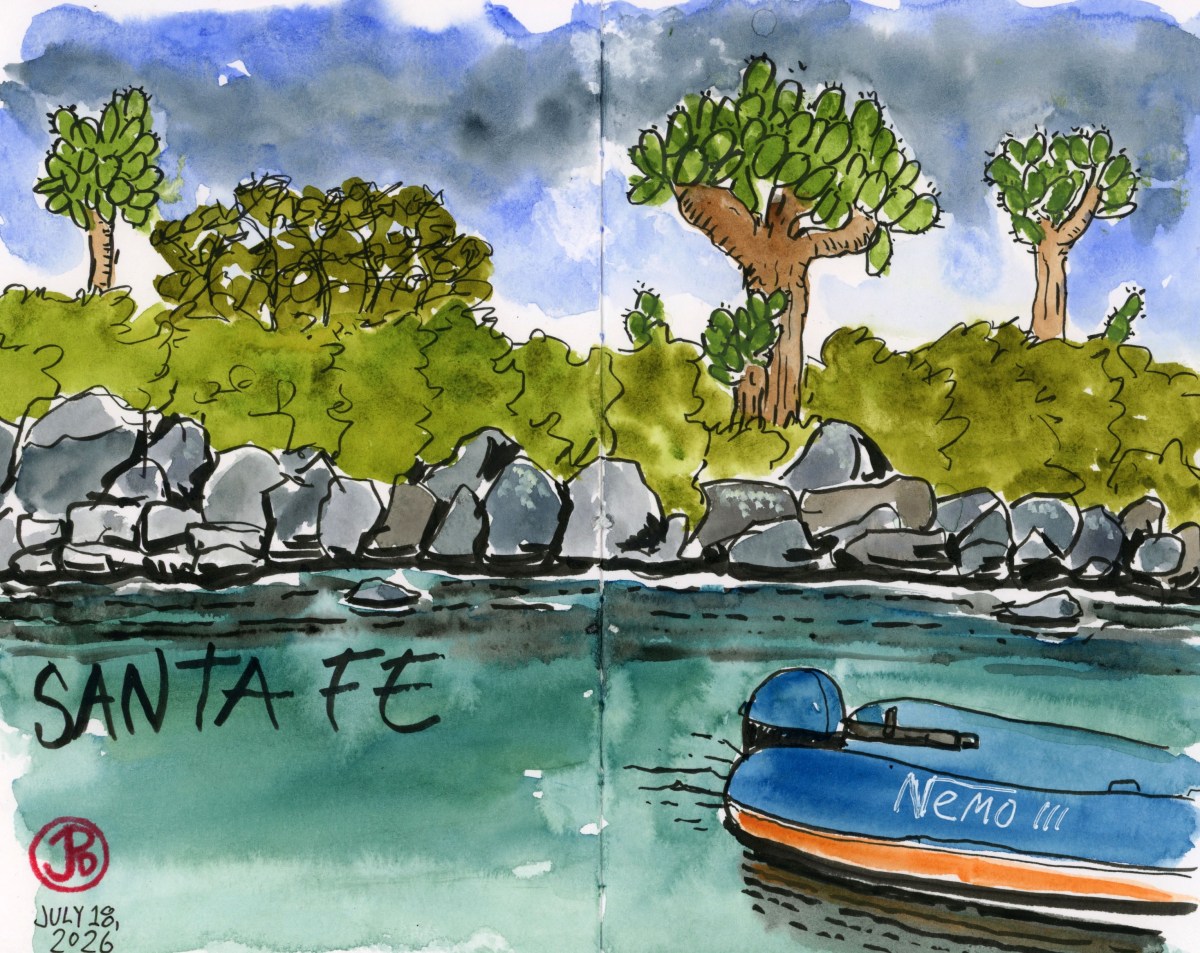
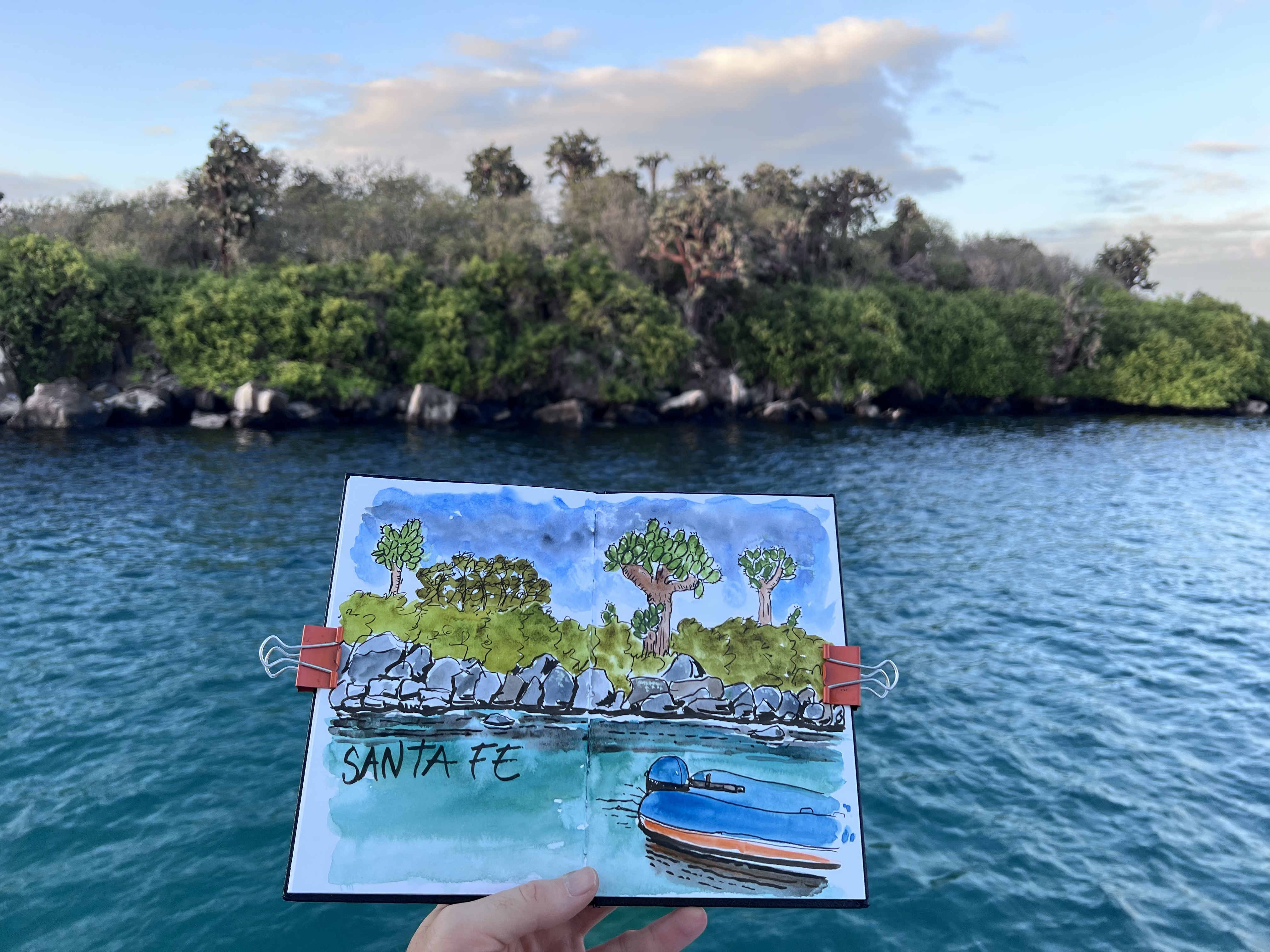
While the Nemo III was anchored off the small Galapagos island of Santa Fe I sat at the stern and panted the landscape before me with the panga in the foreground.
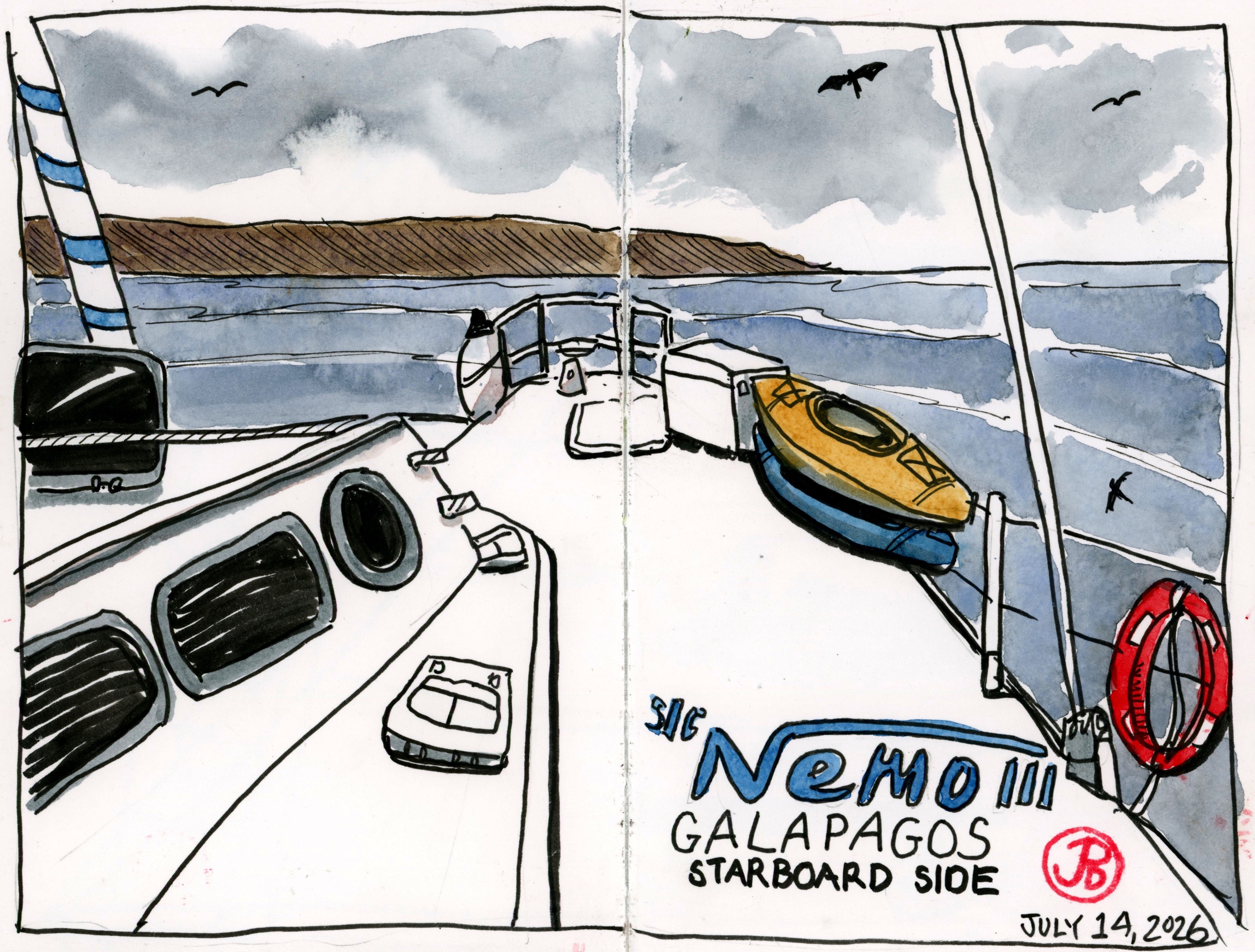
Our vessel for the Galápagos cruise was the catamaran the Nemo III.
It held all thirteen passenger (about half were birders), two guides, and a crew of six. This is like a cruise ship at a smaller scale.
The boat can accommodate 16 passengers in eight cabins. The small galley produced three hearty meals a day which was much appreciated after a day of birding and island exploring.
This catamaran would be our home away from home for eight wonderful days.
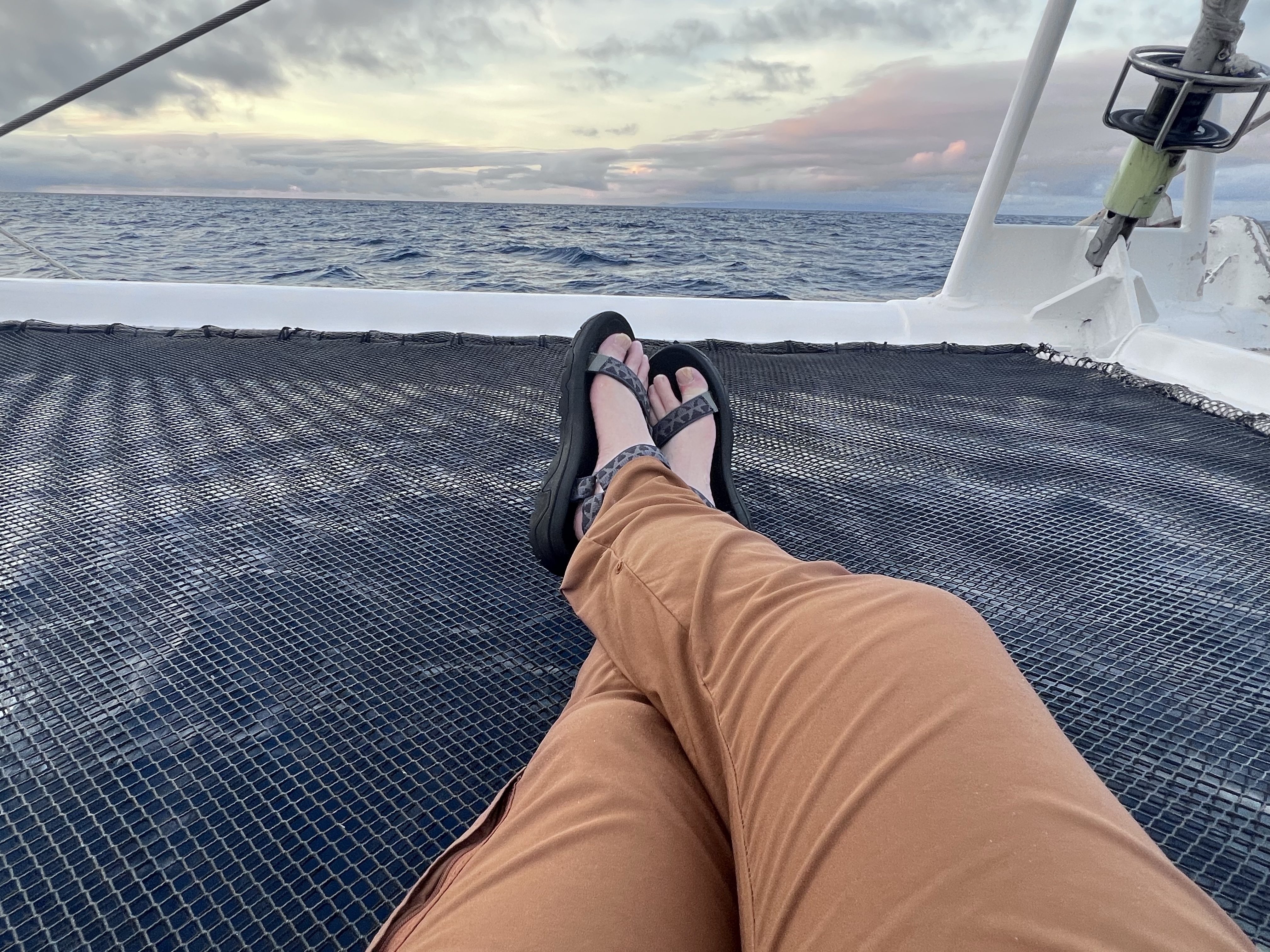
Relaxing on the bow while cruising between the islands of the Galápagos.
Over our ten day cruise visiting nine of the Enchanted Islands I sketched from the Nemo III as well as a few sketches of the catamaran from the shore.
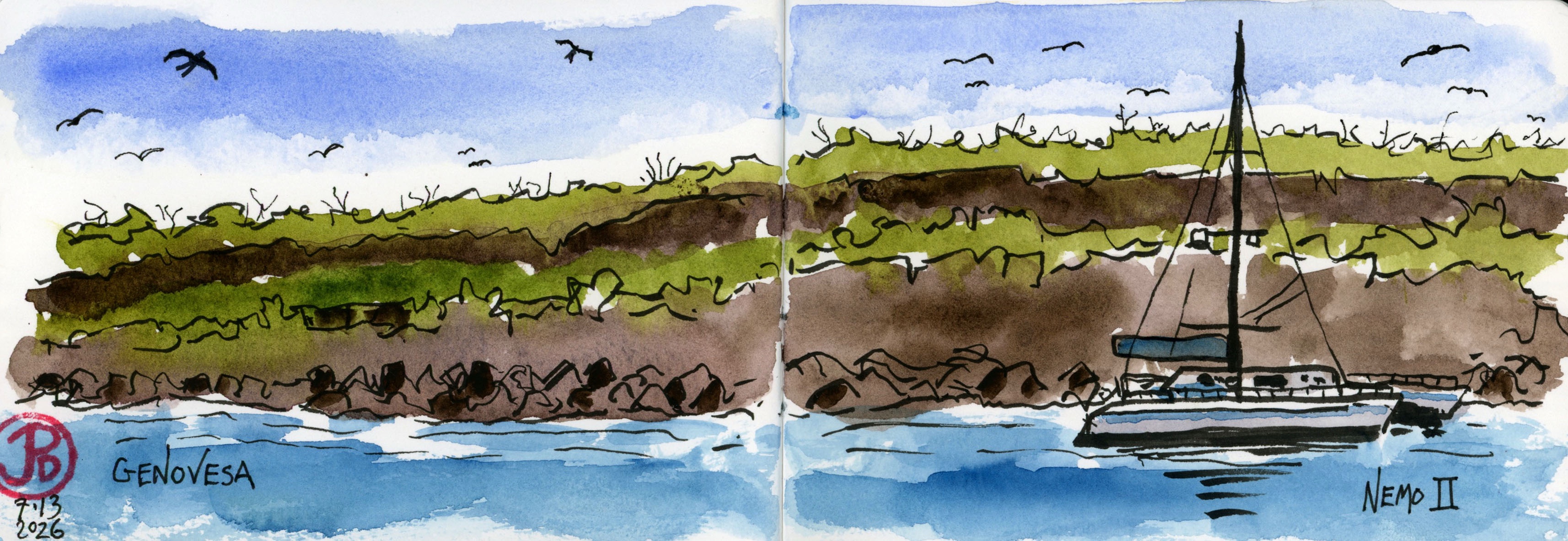
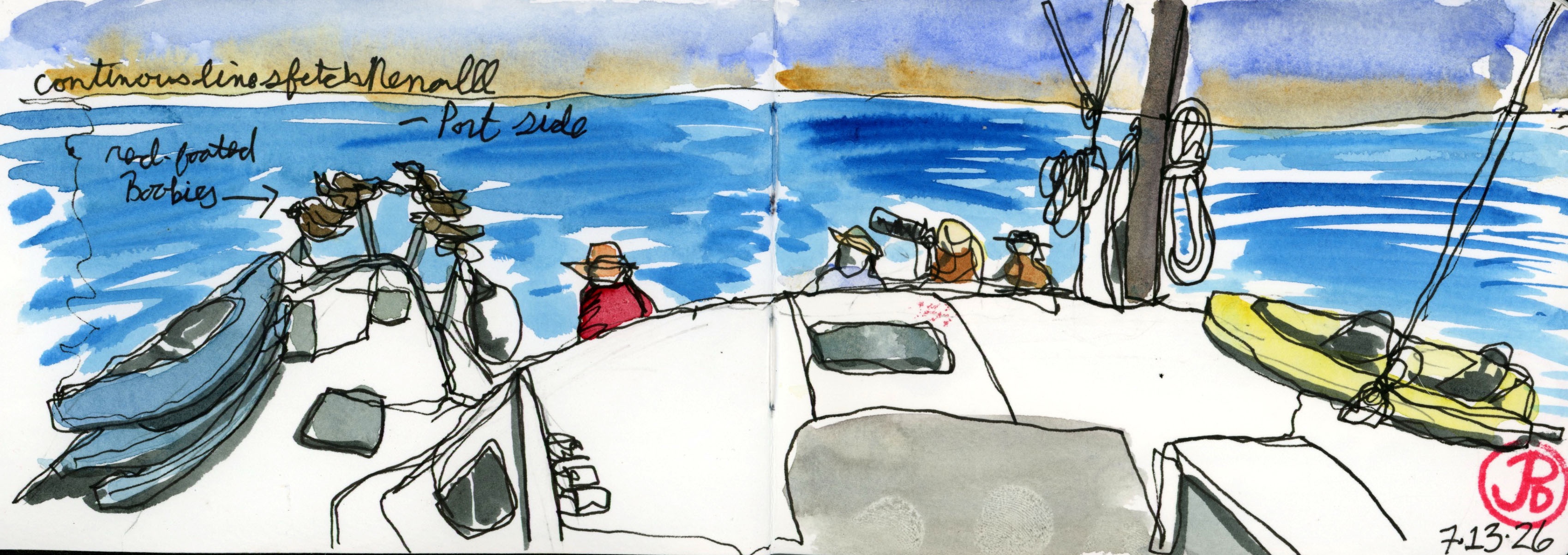
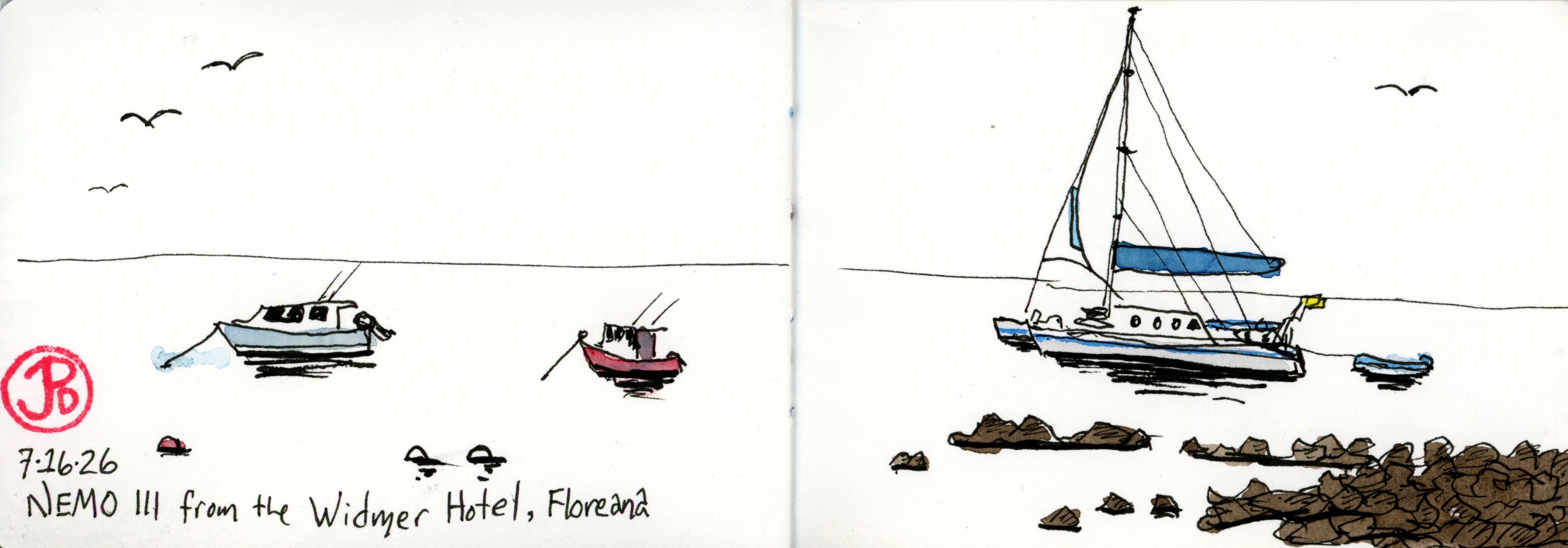
While anchored at Genovesa, I sketched our sister ship, the Nemo II.A continuous line sketch from the port side. Red-footed boobies were getting a free ride on the front railing. A sketch of the Nemo III from shore on Floreana.
I arrived a day early before my Galápagos cruise started so I hired a guide (Andres) for the day and we headed east over the Continental Divide of the Andes Mountains to Guango Lodge.
The logo features one of the top birds on my wishlist.
There were two birds that I really wanted to see in the area and with birding, you are not guaranteed any.
I wanted to add another mountain toucan to my list, on a previous Ecuadorian trip I got plate-billed, and now we walked up the muddy Toucan Trail in our rubber boots looking for a second species.
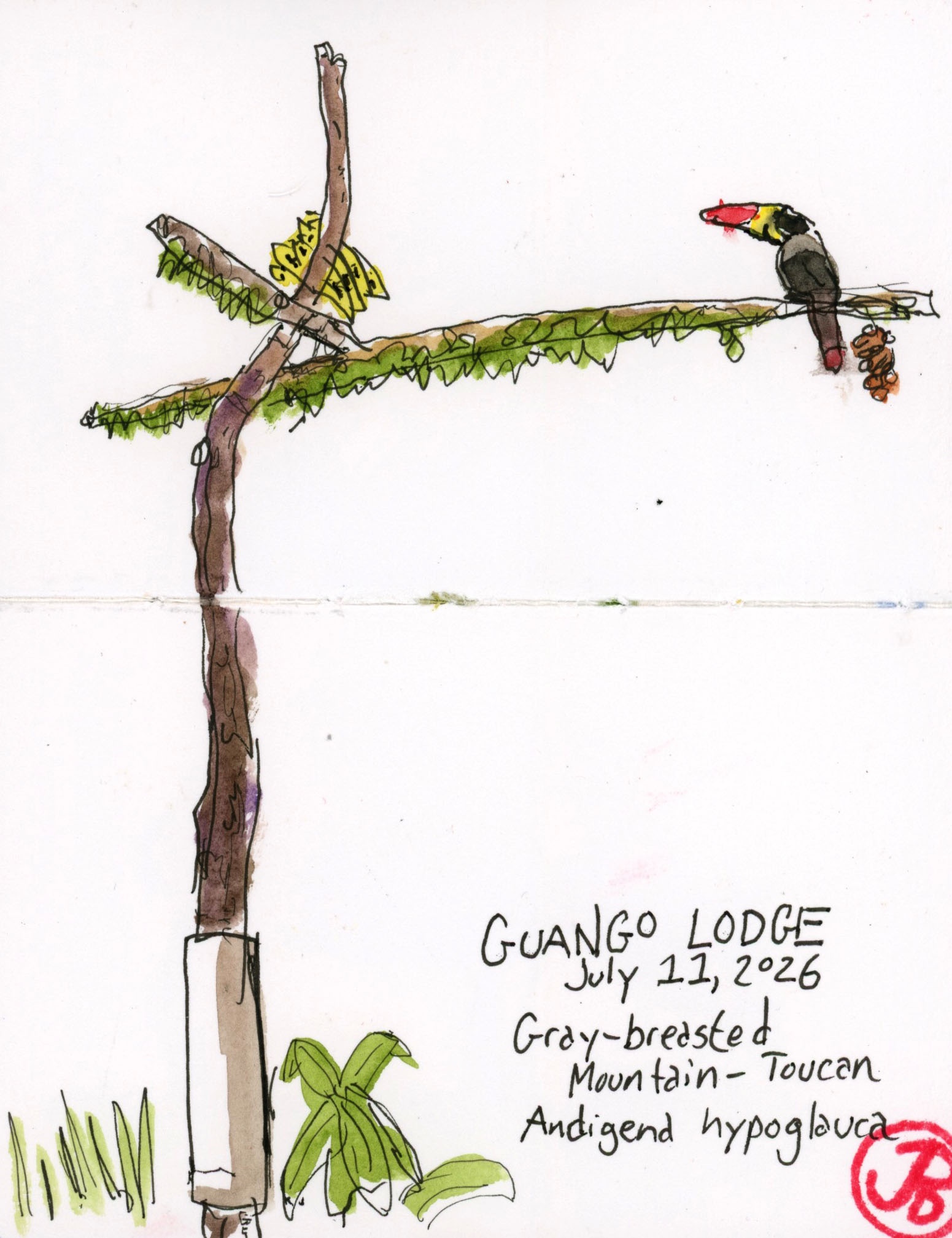
The trail leveled off at a hide where a vertical forked branch was set up. The caretaker, Daniel, came up behind us to add fresh bananas and grapes to the wooden feeder.
The first bird that visited the feeder was the great thrush. No toucans yet.
This would take a little patience and the hide was covered to keep us dry. While we waited I pulled out my small softbound sketchbook and sketched the wooden fruit feeder.
Waiting on a mountain-toucan.
Off to our right we heard the call of the toucan. Now we waited for it to fly into the open and land on the feeding perch. The bird was cautious, making sure it was safe.
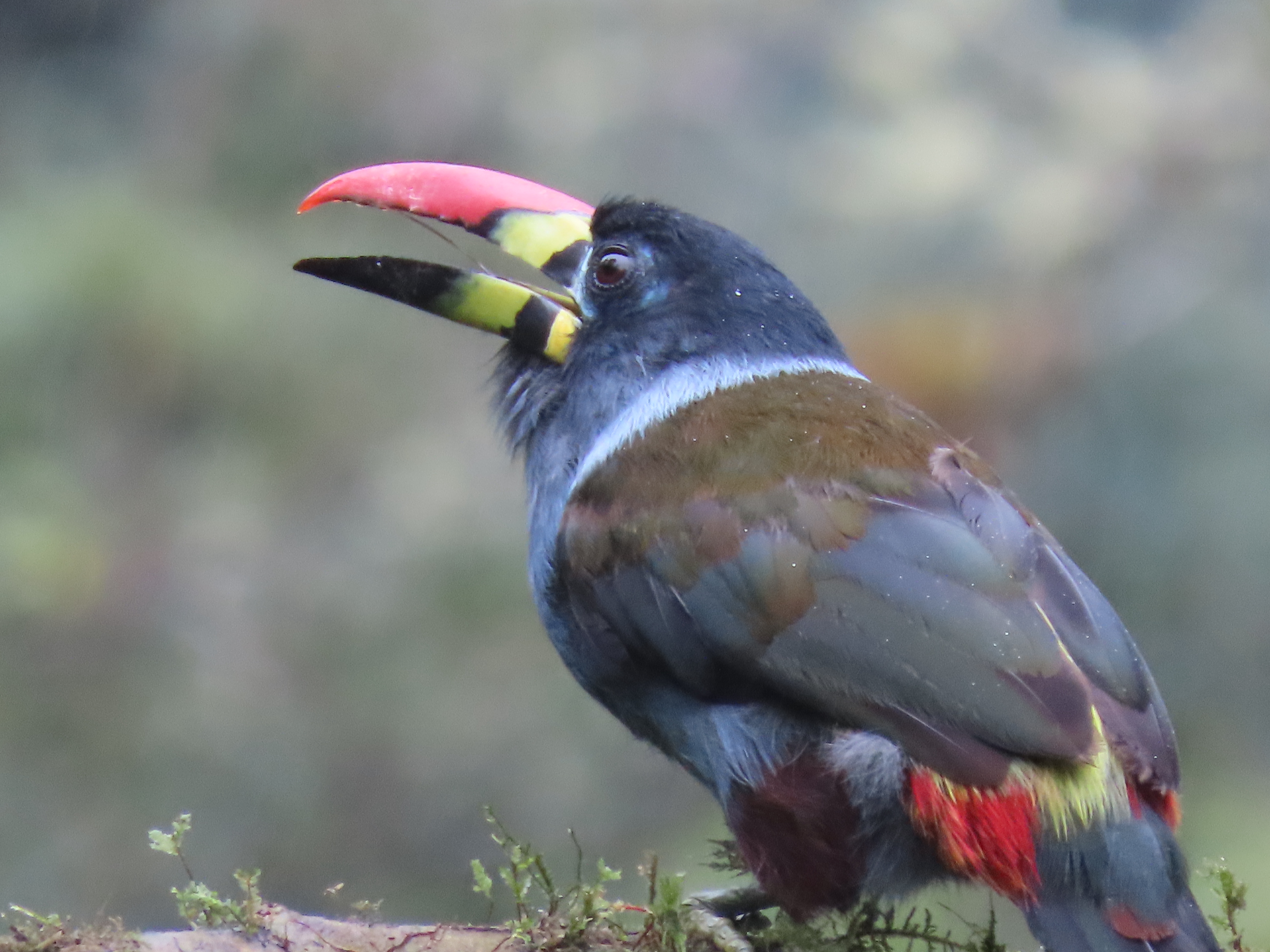
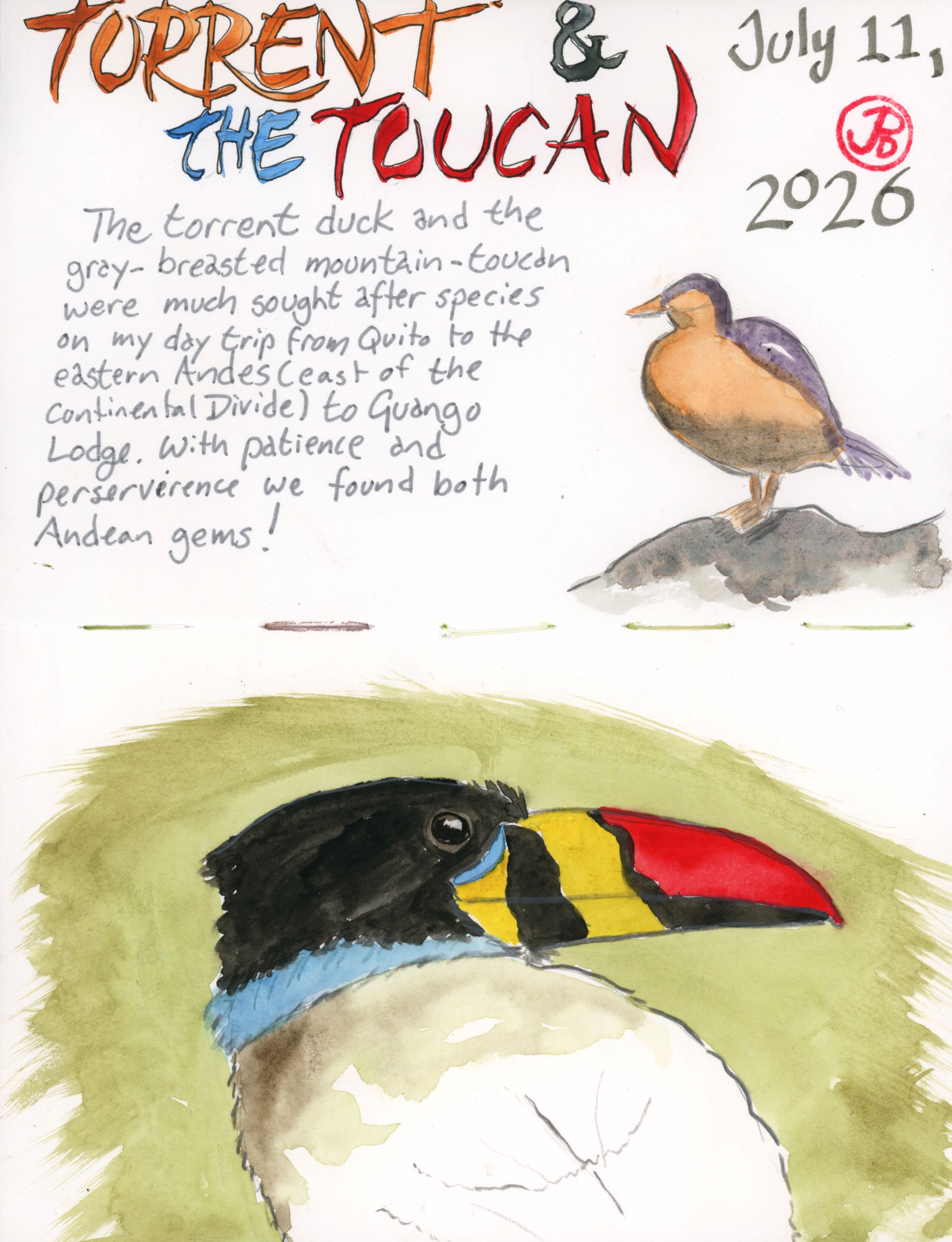
Onto the perch landed the magnificent gray-breasted mountain-toucan. A double hyphen bird of the highest magnitude! Lifer!
After watching the toucan pull grapes at the feeder we headed back to the river to look for another sought after bird.
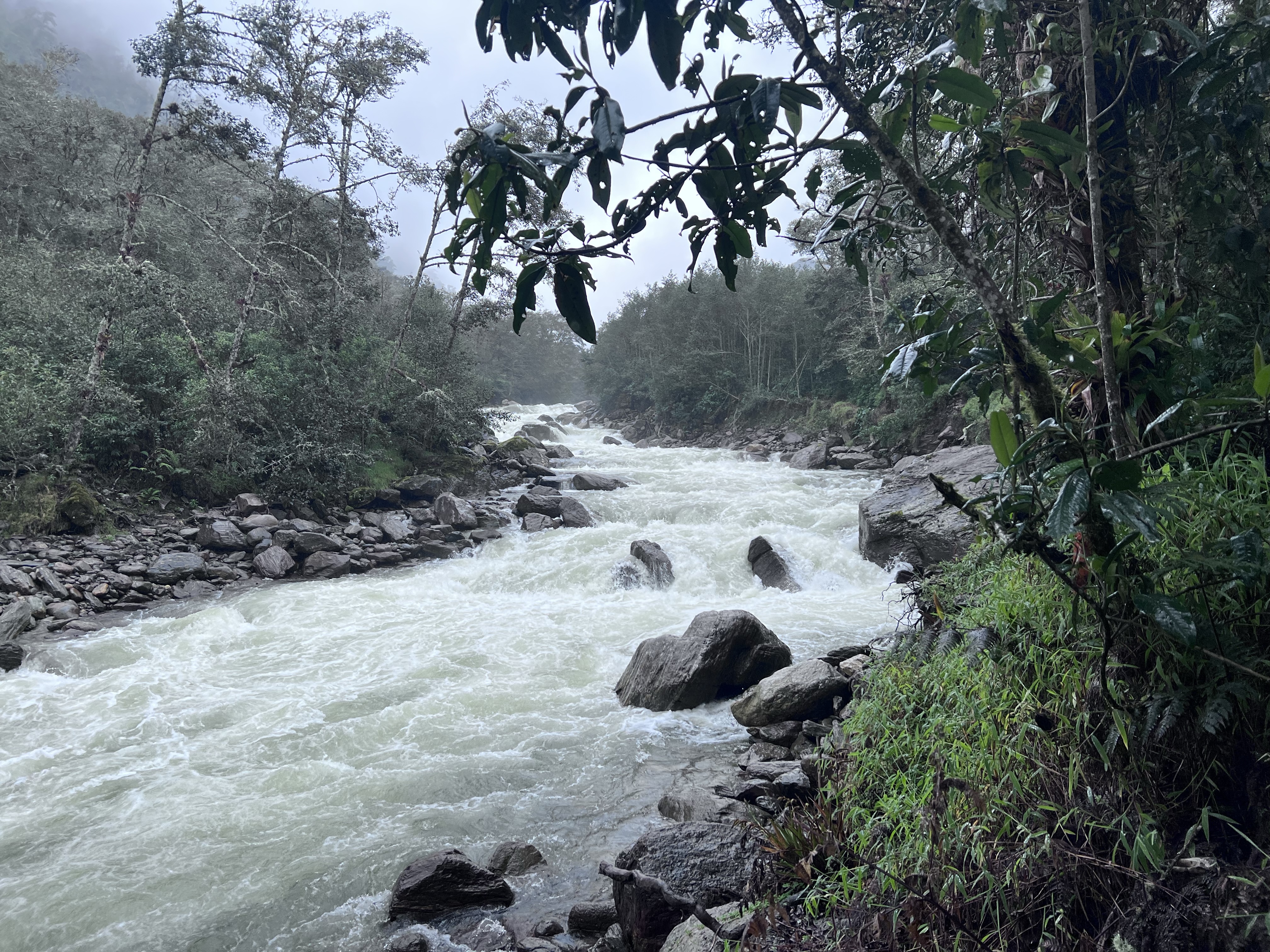
The furious and frothing Rio Quijos cloaked in gray, reminded me of Herzog’s Aguirre, the Wrath of God and Fitzcaraldo. How can a bird possibly survive here among the rapids?
Well one duck not only lives but thrives amongst the Class 6 rapids. And it’s appropriately named the torrent duck.
We walked along the river checking the waters and boulders for this iconic Andean duck.
As we neared the end of the trail I looked downstream and saw a duck bobbing in the frothy rapids. She swam across the river and walked up on a riverside boulder. What an amazingly adapted bird to its turbulent habitat. And what an amazing lifer!
A spread with sketches from my own photos.
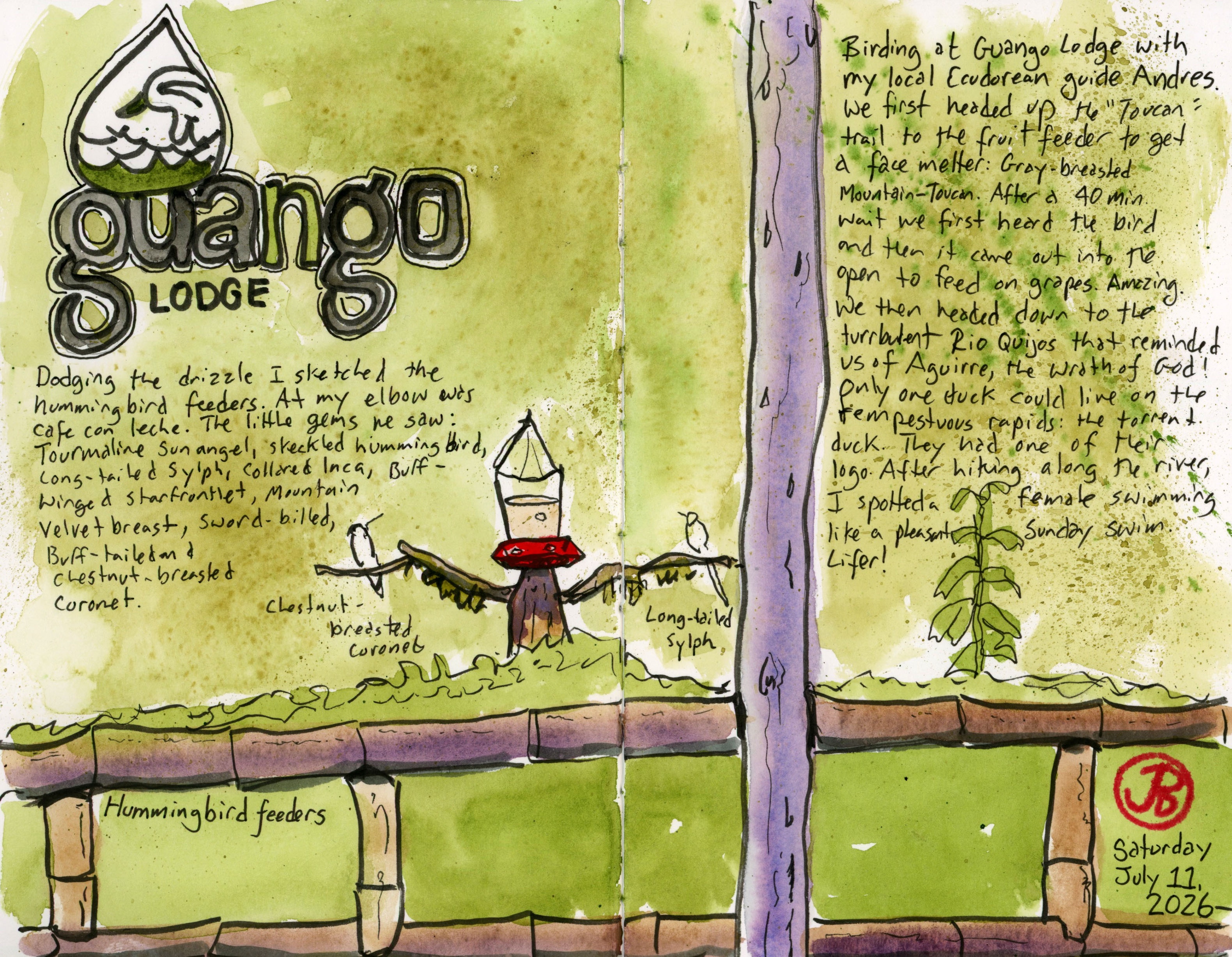
After ticking the toucan and duck we returned to the lodge and sat under a shelter from the permanent mist and drizzle, sipping cafe con leche and looked out at the three hummingbird feeders in front of us.
The feeders were very active and I sketched the scene before me (featured sketch).
Out of the 366 species of hummingbirds in the New World (they are found nowhere else), I have seen a mere 96. I have a lot more hummingbirding to do.
Challenge accepted!
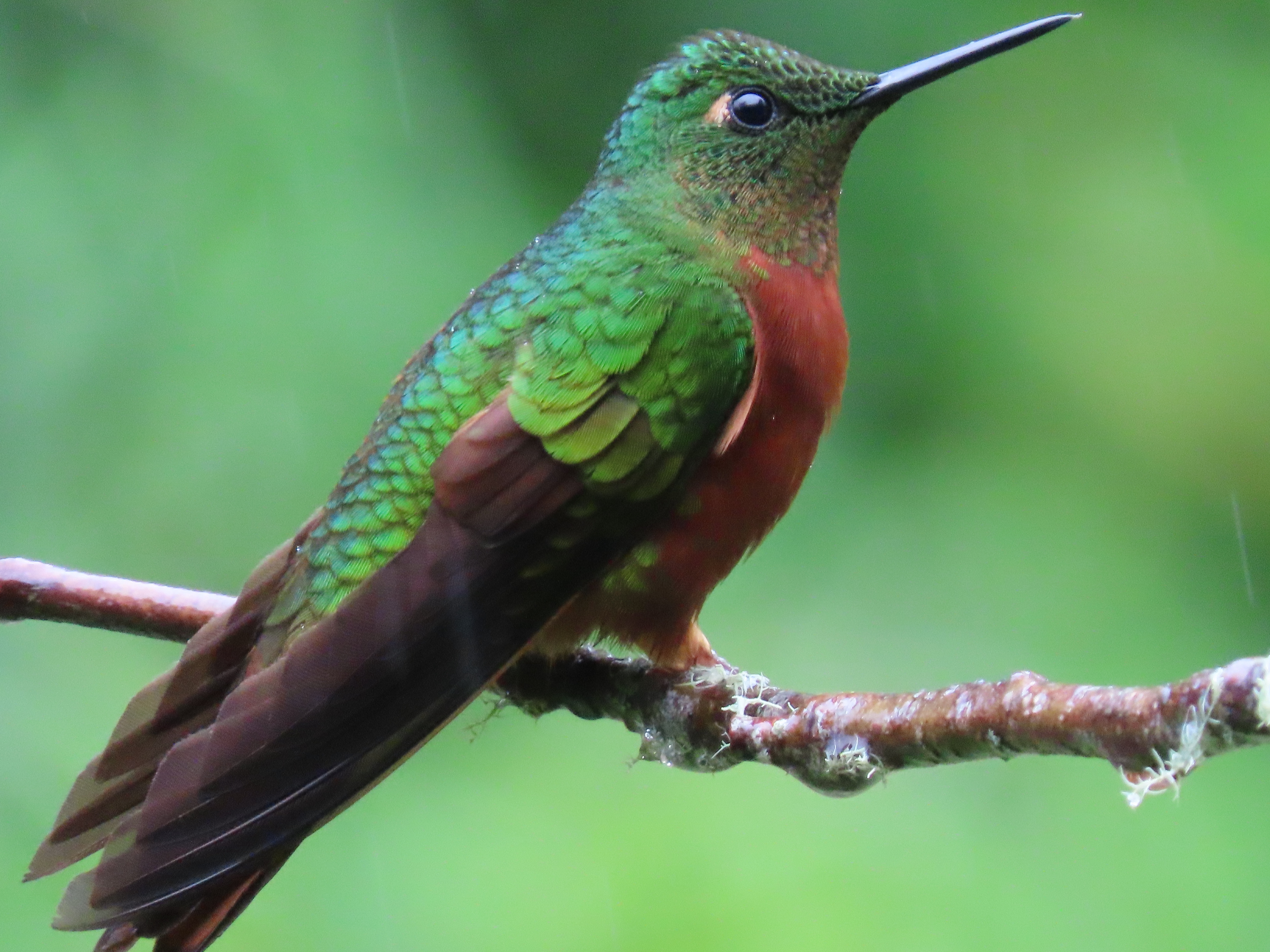
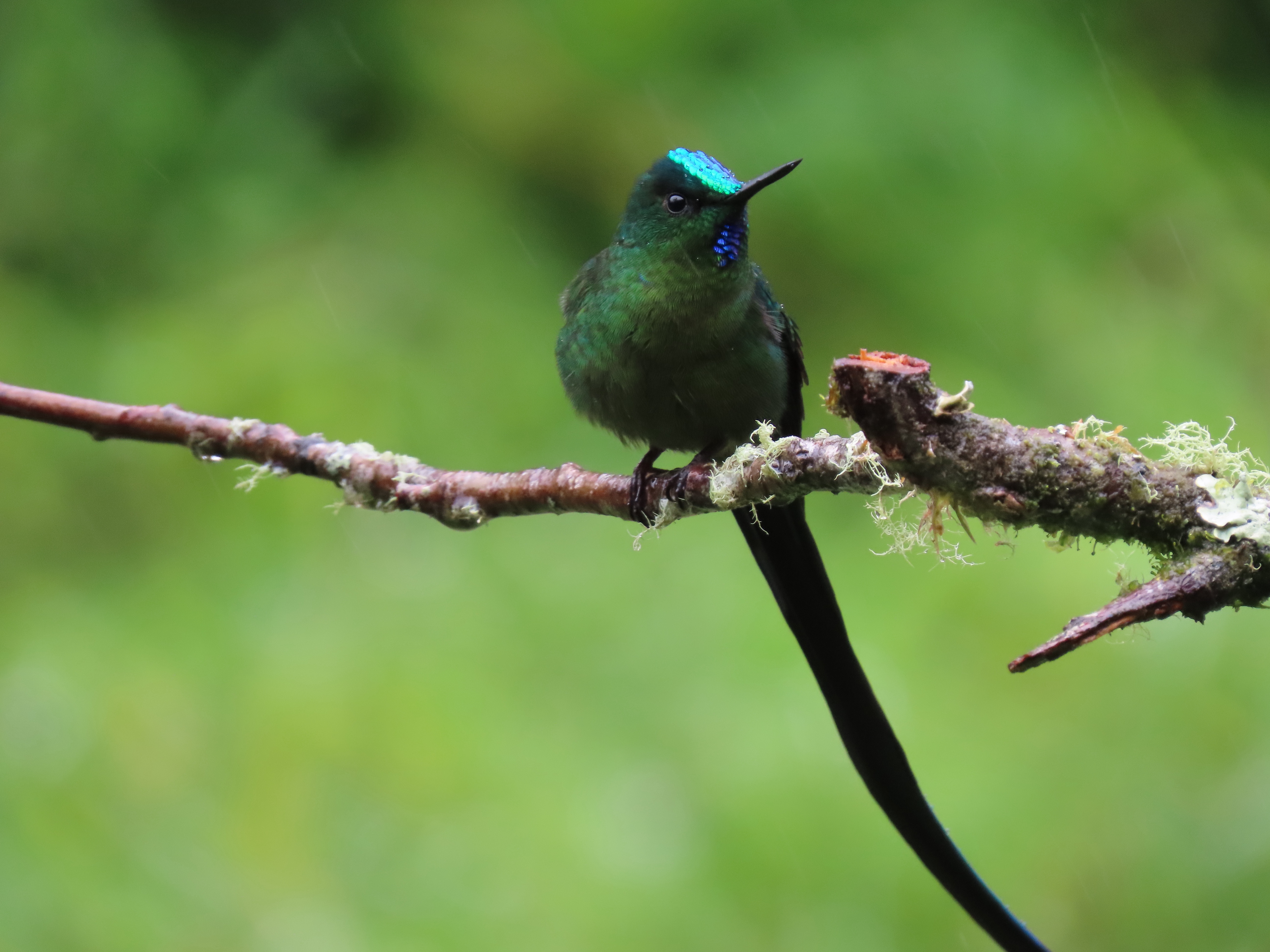
Here are a few photos of some of the visitors to the hummingbird feeders at Guango.