I had grown up going to Natural Bridges State Beach in Santa Cruz. But what of the original Natural Bridge in western Virginia? It was clearly worthy of a visit and a sketch
Only this bridge is much more famous, it was once owned by Thomas Jefferson, surveyed by a young George Washington (apparently), and name-checked in Melville’s masterpiece Moby Dick. (“But soon the fore part of him slowly rose from the water; for an instant his whole marbleized body formed a high arch, like Virginia’s Natural Bridge…”)
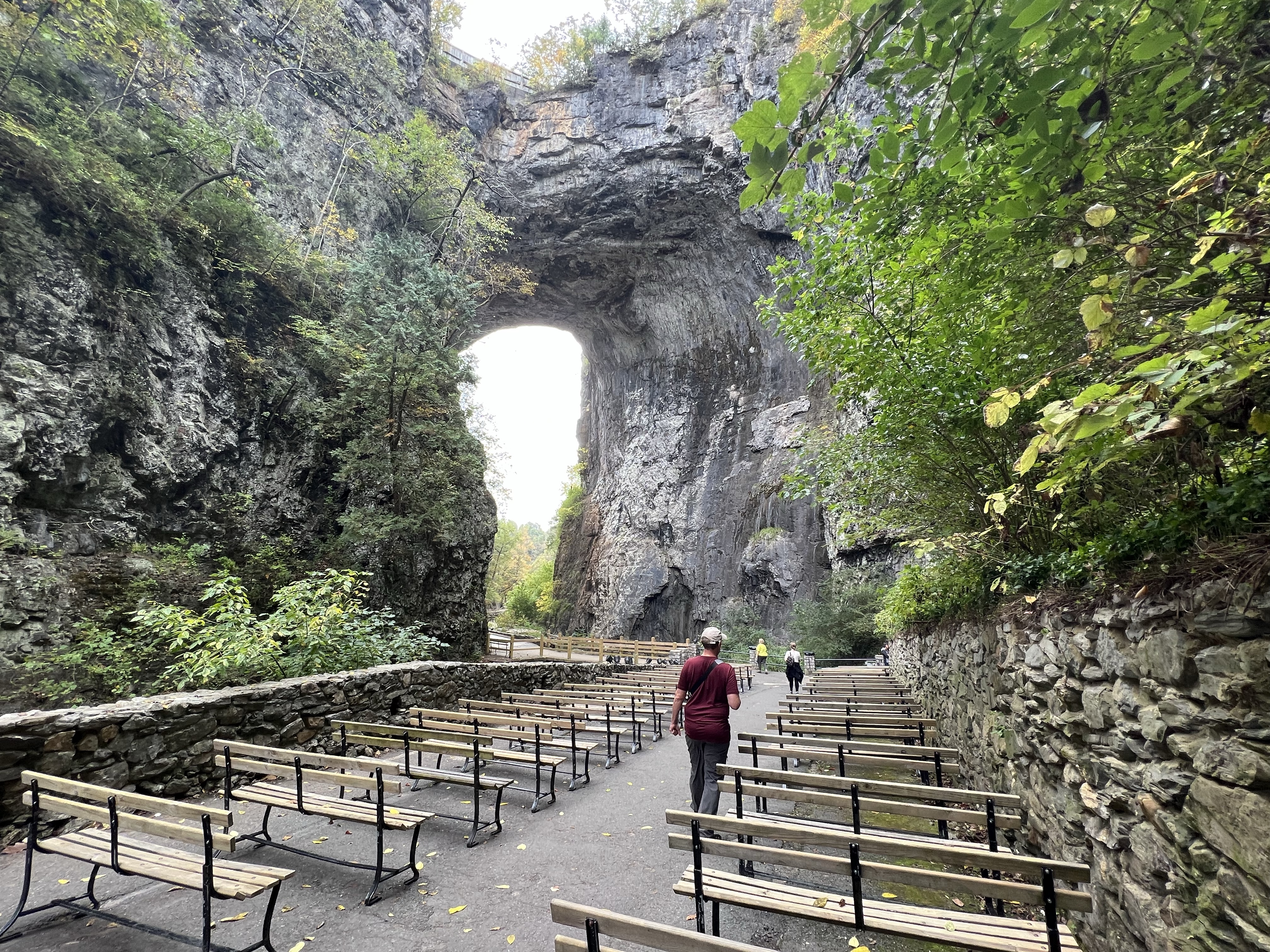
The bridge was formed in a limestone gorge, carved out by Cedar Creek about 470 million years ago. The arch is 215 feet high, higher that the Statue of Liberty.
When Jefferson purchased the land in 1774 he called the landforms, “the most sublime of Nature’s works”.
I love the rowed seating at Natural Bridge, as if your are watching nature’s theater, which you are. These were perfect sketching perches.
A Roanoke location on my sketch list is the Virginia Museum of Transportation.
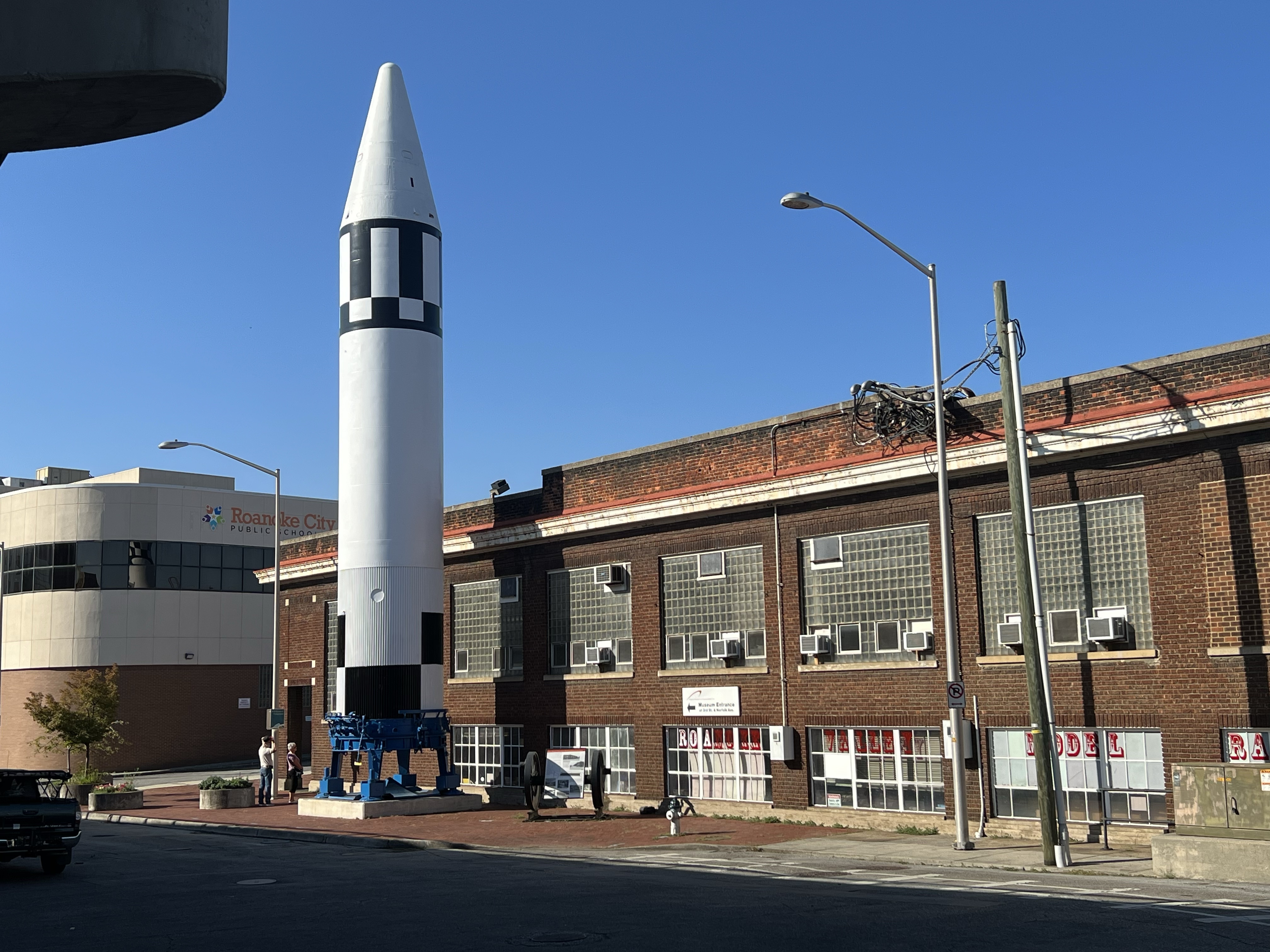
The museum is housed in the old Norfolk and Western Freight Depot and parallels the current high iron of Norfolk Southern.
The city of Roanoke was the epicenter of the Norfolk and Western Railroad where the business offices where located downtown and the eastern shops produced some of the most advanced steam locomotives ever built. While the N & W was a small railroad, compared to giants like Southern and Union Pacific, at it’s height the railroad operated 7,803 miles of rail. The railroad merged with Southern Railroad in 1990 creating a new railroad, Norfolk Southern.
The Virginia Museum of Transportation, housed in the former Norfolk and Western freight depot. The rocket to the left is not for human transportation, it is a Jupiter Missile.
While the museum has a large collection of automobiles, I was here for the locomotives and rolling stock.
And because they were on static display, meaning they weren’t moving anytime soon, they were ideal sketching subjects.
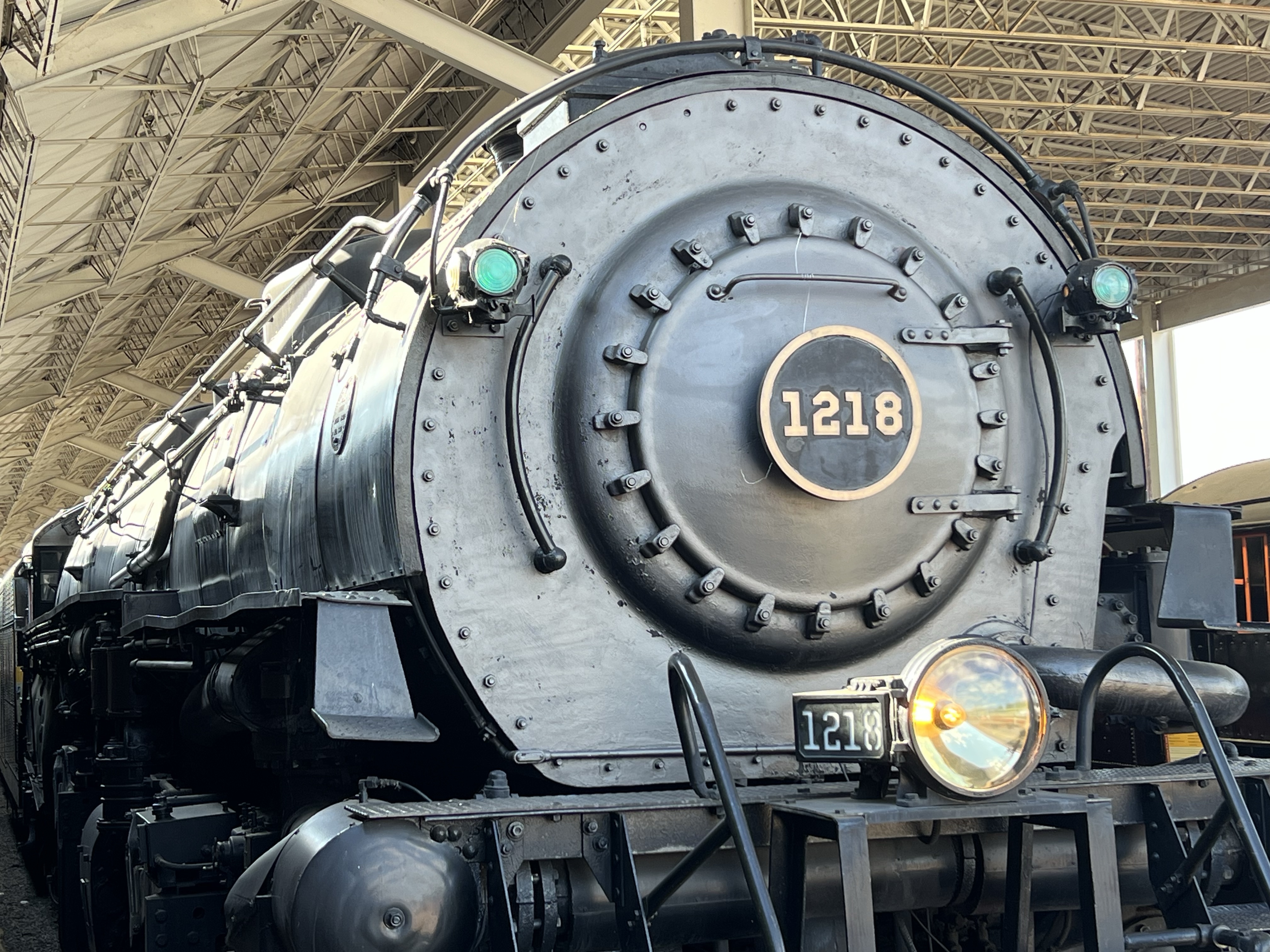
The impressive 2-6-6-4 Class A No. 1218. For a time, this was the most powerful excursion steam locomotive in the world. Big Boy No. 4014 put 1218 firmly in second. 1218 is now retired from active service.
The Norfolk and Western Railroad has three iconic classes of steam locomotives: Class A, J, and Y. All three were built by the railroad at their Roanoke Shops, just east of the museum. All three are now owned by the museum. The Y6 Class No. 2156 is on loan to the National Museum of Transportation in St. Louis, Missouri.
The Norfolk and Western Roanoke Shops still stands, long after the railroad disappeared in a merger with Southern Railroad in 1990. The 70 inch drivers of 1218.
The Class J No. 611 was not at the museum but was off two hours north on excursion service. (More about 611 in future posts).
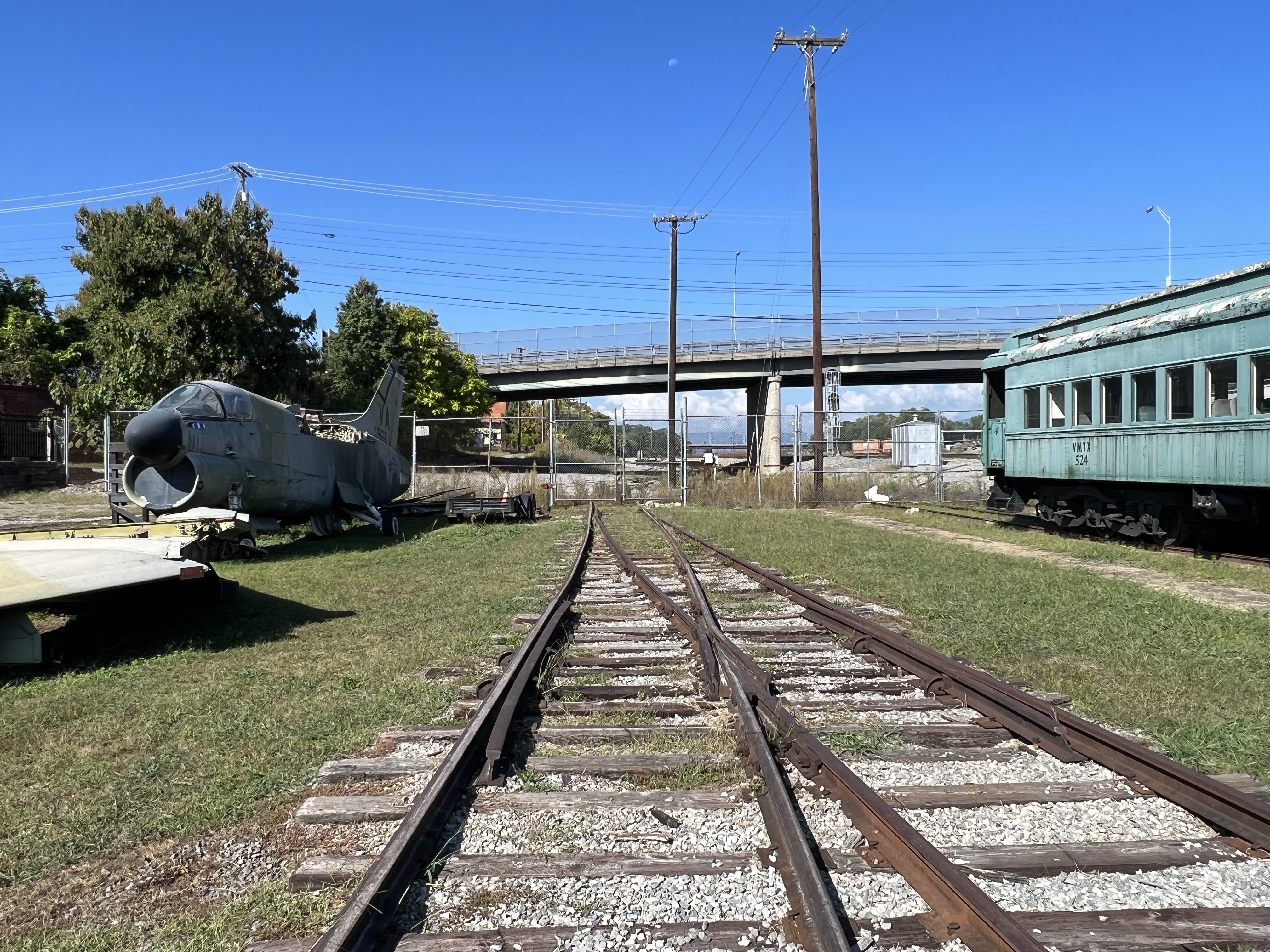
It’s not all about trains at the VMT. Here is a vintage Tucker Sno-Cat. The spur leading east out to the Norfolk Southern mainline. This is track that No. 611 uses to head out for excursions.
A big draw for visitors to the VMT is Norfolk and Western Class J steam locomotive No. 611. But she was not here, hence the void in my spread (featured sketch). There was some wall space devoted to the museum’s most famous occupant. On the wall was a plaque, very similar to a plaque I had seen the week before at the California State Railroad Museum in Sacramento.
The plaque designated No. 611 as a National Historic Mechanical Engineering Landmark. 611 attained this designation in 1984, noting, “The last survivor of US coal-fired passenger locomotives, considered among the most advanced of any 4-8-4.”





 Corvid Sketcher