I left my Caspar cottage at 8:45 and I walked down the road to Jug Handle State Natural Reserve.
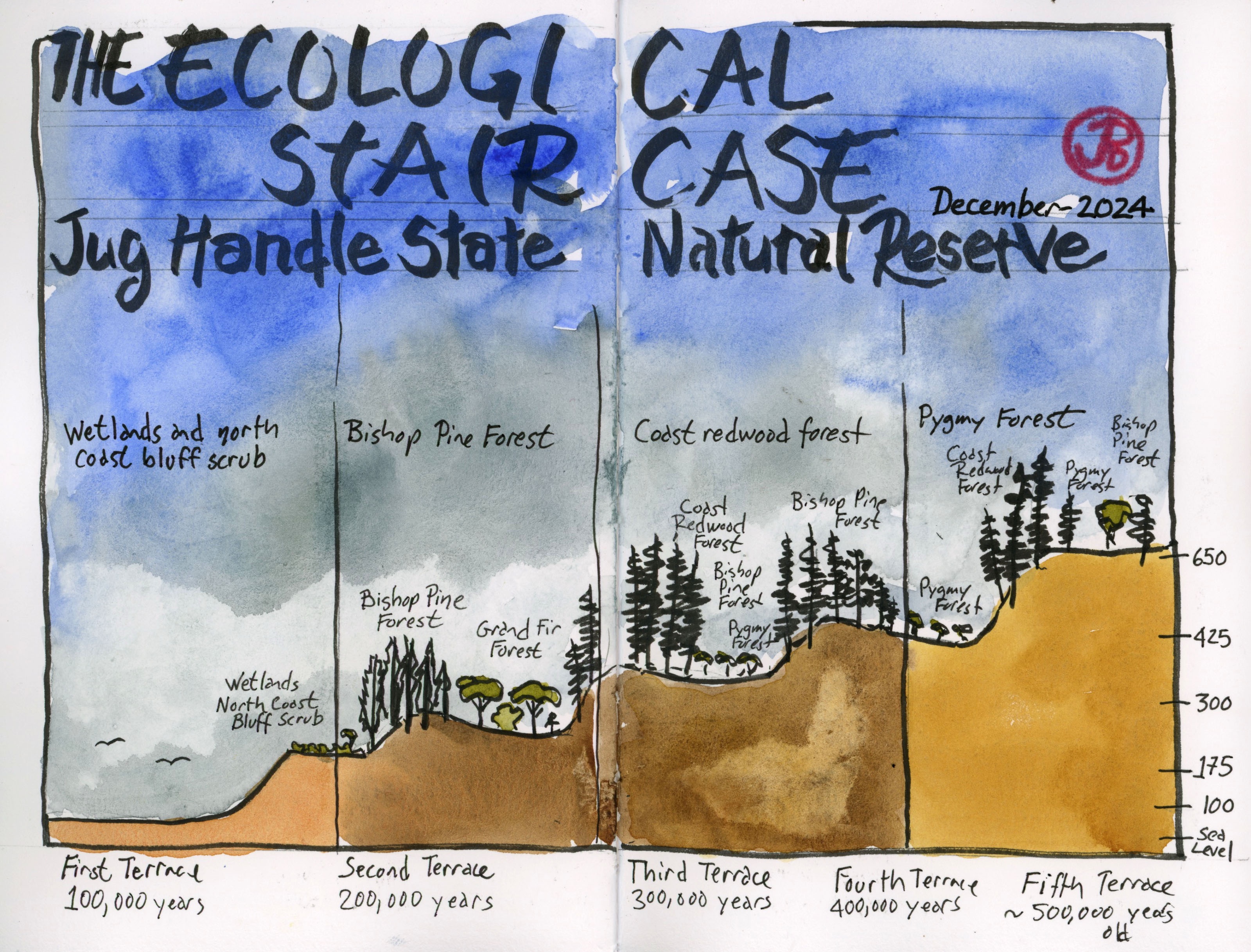
I would he ascending the Biological Staircase of terraces, my final destination would be 2.5 miles from the trailhead on the third terrace. This is the 300,000 year old Pygmy forest!
One reason that the Biological Staircase is so appealing to the naturalist is that you pass through very different habitats, giving you a nice cross section of this rare part of Coastal California.
Weeks before I set off on my journey to the Pygmy forest, I did a sketch of a cross section of the five terraces to help me understand that ecosystems I would be traversing.
The trail was filled with large puddles and portions of the trail became a small stream bed from recent winter rains. This was a wet walk but well worth the mud and the blood and the tears. (Okay just mud, but lots of it.)
I had been on the trail for almost an hour when the tree cover opened up and the morning sun warmed my bones.
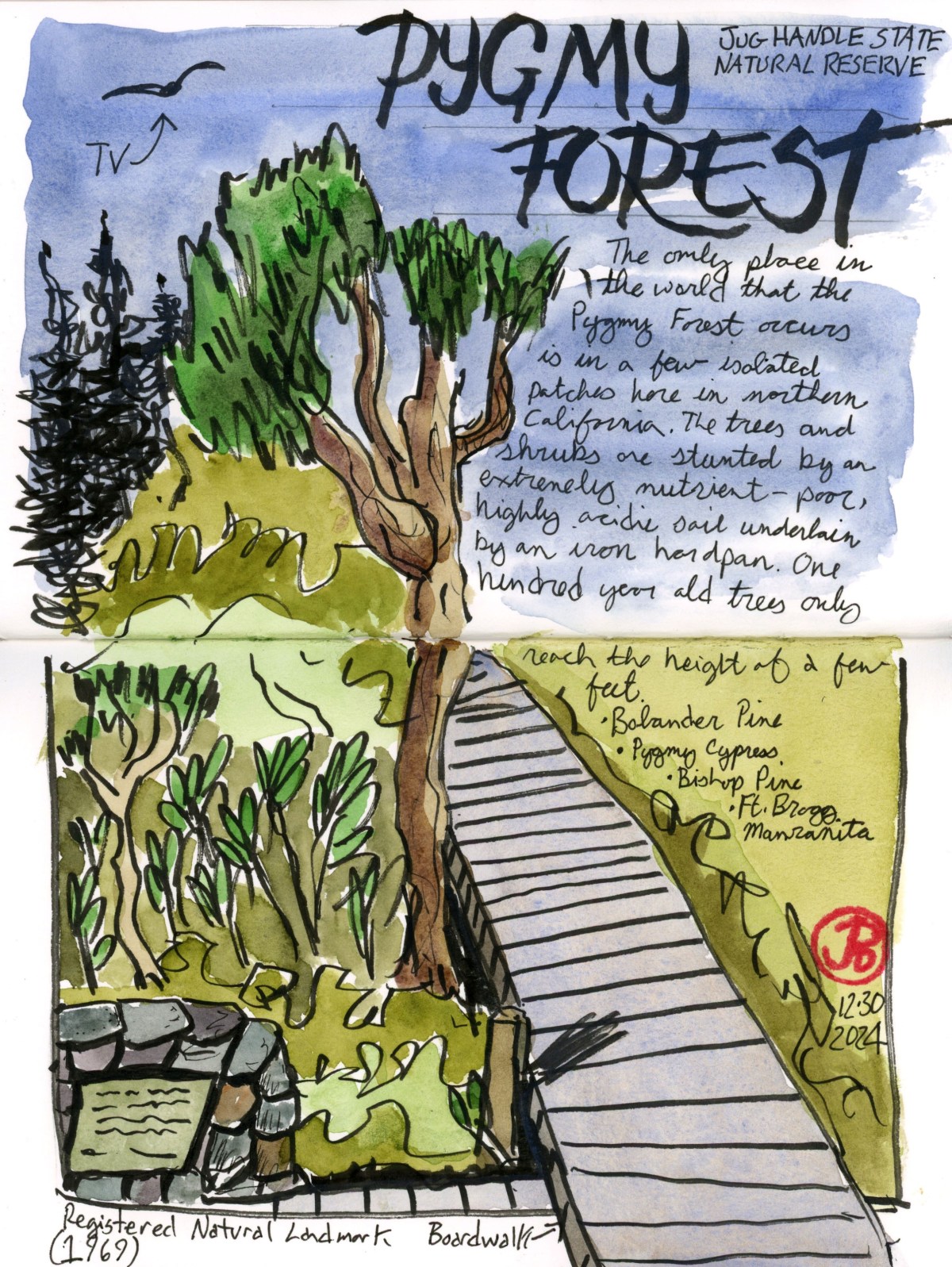
I was now nearing my destination: the Pygmy Forest! A small sign marked the beginning of the boardwalk.
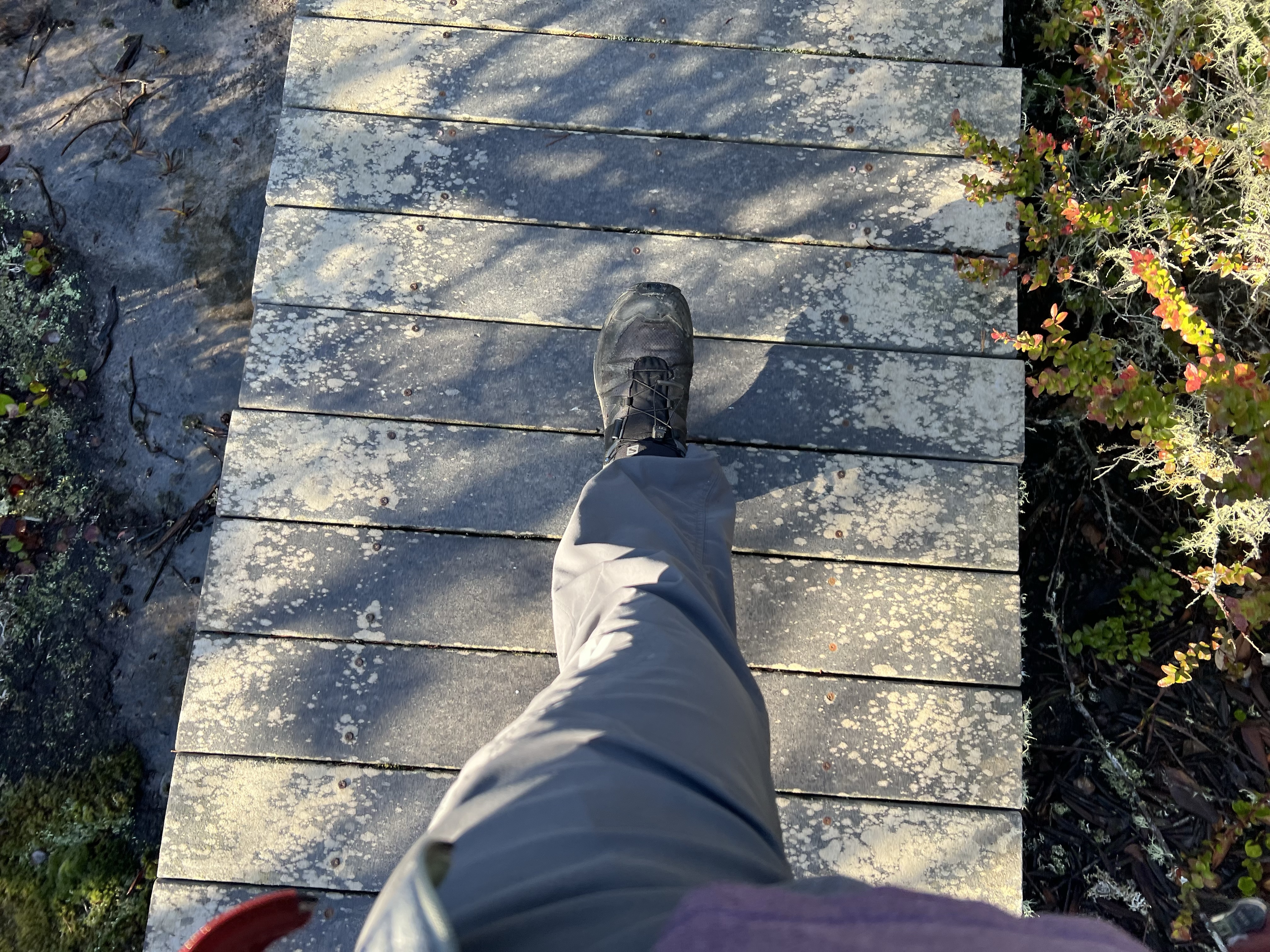
A Pygmy forest occurs when the soil is nutrient poor and plant species are stunted as a result. A Pygmy forest is rare habitat that is only found in a few locations in Northern California. The boardwalk protects the valuable soil from visitor’s damaging footfalls.

Half way through the board walk there was a pull out with benches and a 1968 plaque proclaiming the Pygmy forest as a California Registered Natural Landmark. I rested here, had a snack, and did a sketch of the view. I’ll admit the sketch is a bit loose and wild (featured sketch).
 Corvid Sketcher