Image

Arctic Fox And Svalbard Reindeer

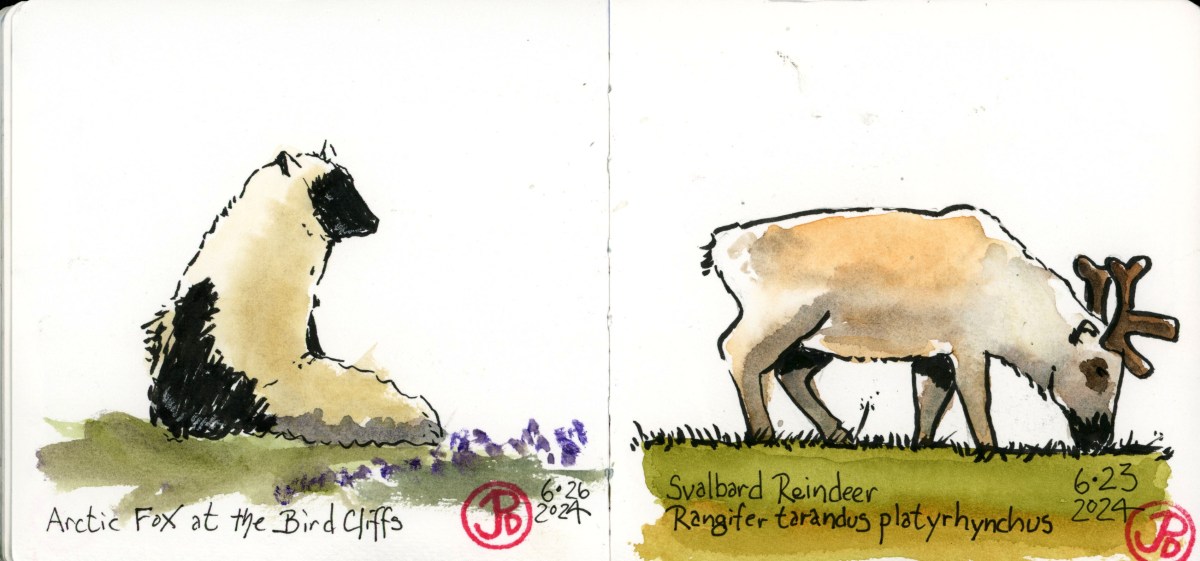
A key arctic mammal that I had missed out on in Iceland last summer was the fox of the north, the Arctic Fox. I know that I would have good chances of seeing this species in Svalbard.

Another mammal that I was also hoping to see was the reindeer subspecies, the Svalbard Reindeer, which is the smallest subspecies or reindeer or caribou.
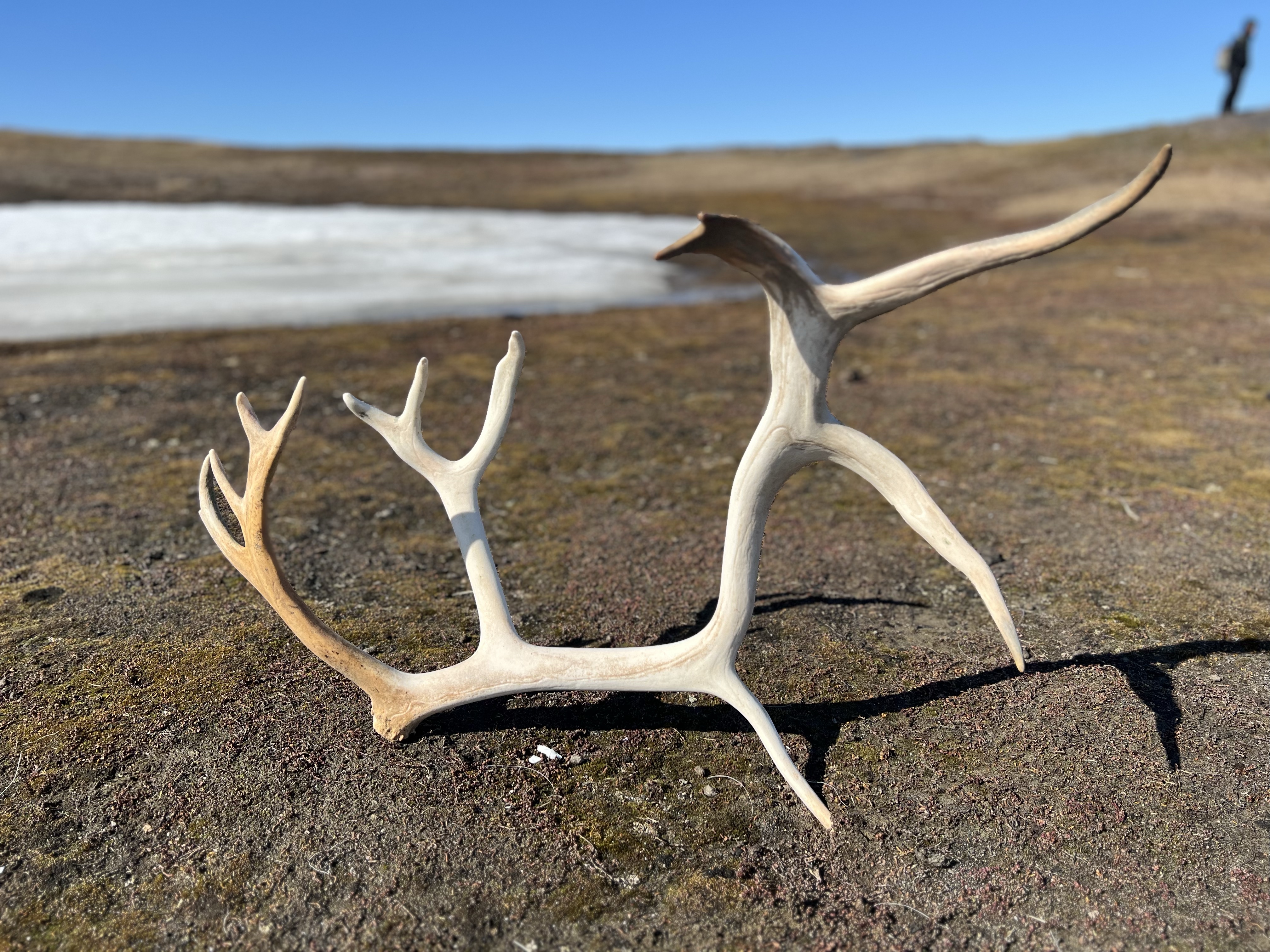
And on a landing to Russebukta, I had the chance to see both. On our landing I chose to join the medium hiking group that was led by our expedition leader Phillipp. It always pays to be near the leader because he has the knowledge of the land and the rifle (poplar bear protection).

We walked by some ponds that yielded some avian Arctic breeders: the stunning king eider, pink-footed geese, purple sandpiper, snow bunting, and red phalarope. I pointed out red phalarope and Phillipp told me that is now known as the gray phalarope, red in breeding season and grey in non-breeding. Of course this is what the phalarope is called in Europe (grey) but is called red in North America. There is is only one name we can agree on, it’s scientific name: Phalaropus fulicarius, which does not change, unlike there varied common name.
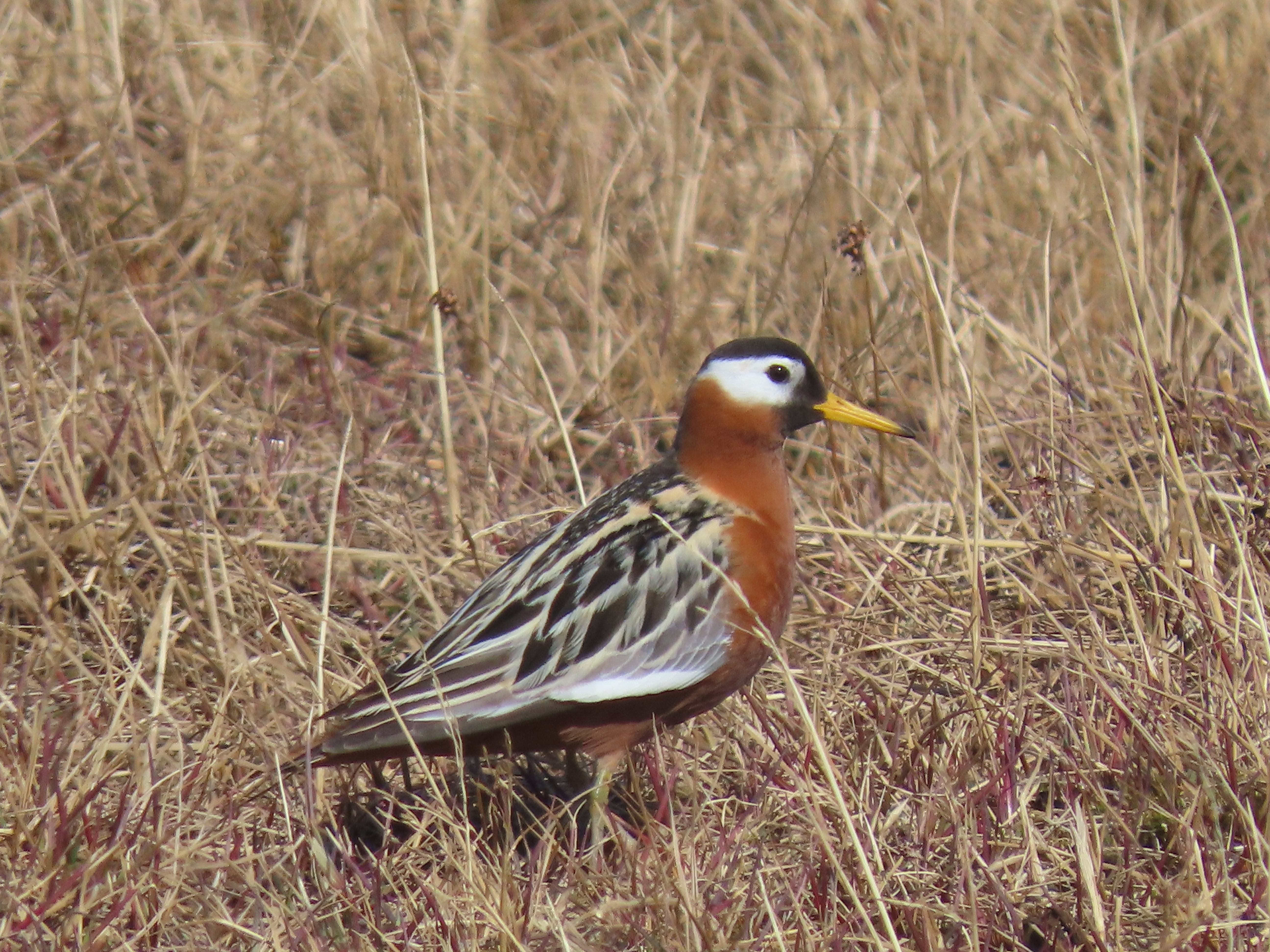
The stunning breeding plumage of the red or gray phalarope.

We crested a rise and on the tundra I saw my first Svalbard reindeer! After taking a few pictures we hiked on. At one stop, we were waiting for the camera horde to catch up, I spotted what I thought was a far off reindeer. But it was moving like a reindeer that had had one too many espressos. What I was looking at was not a reindeer, but an Arctic fox! Our guide noted that it was great to have a birder in the group because we are so good at spotting wildlife, even the mammalian variety.

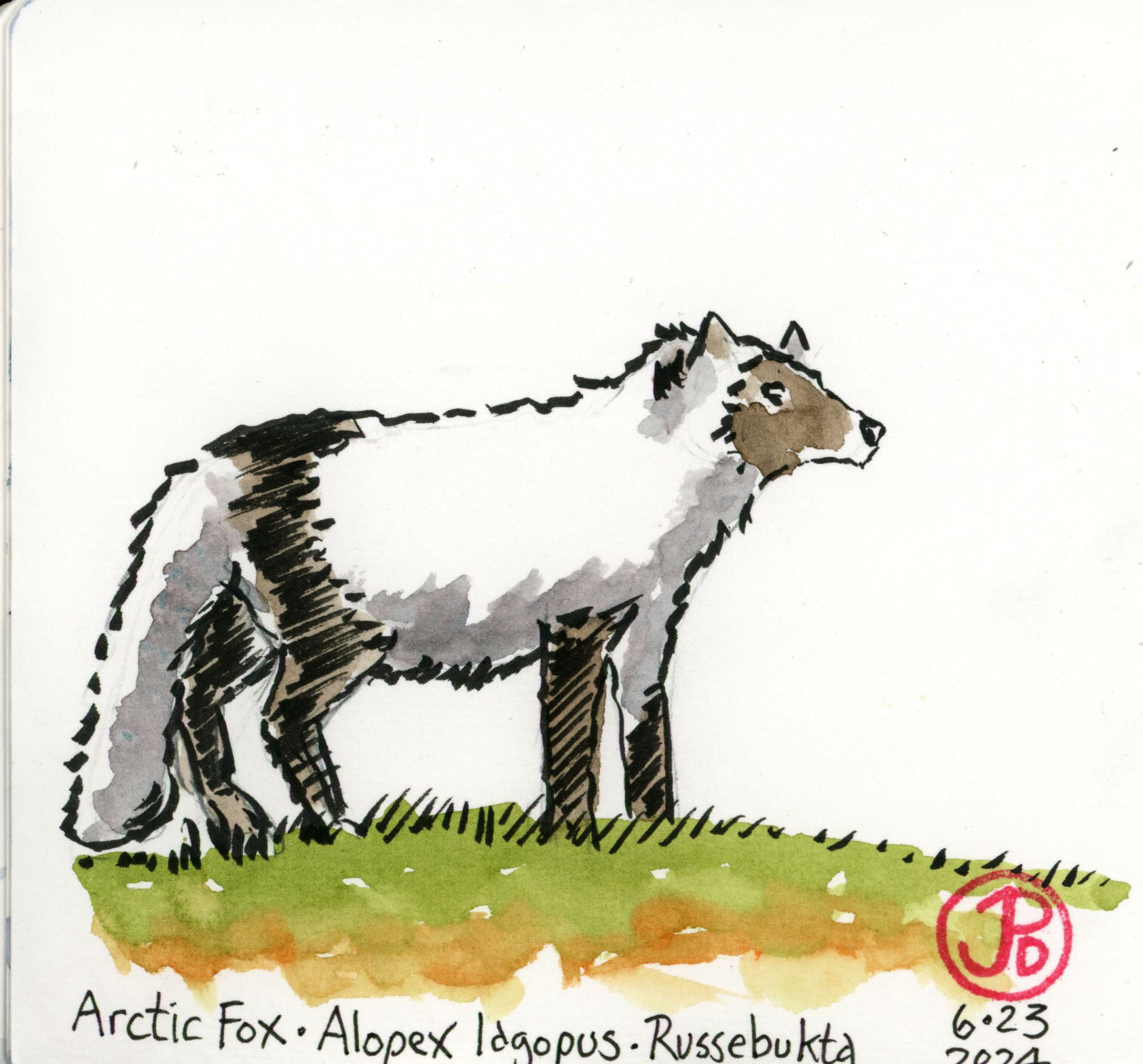
The fox was not clearly visible to the naked eye so we turned back to shore and the Planicus. We were at the crest of a small rise near a line of rock. We were stopped again waiting for our photo stragglers. I looked off to my right and a fox appeared among the rocks, “Arctic Fox!” I exclaimed.
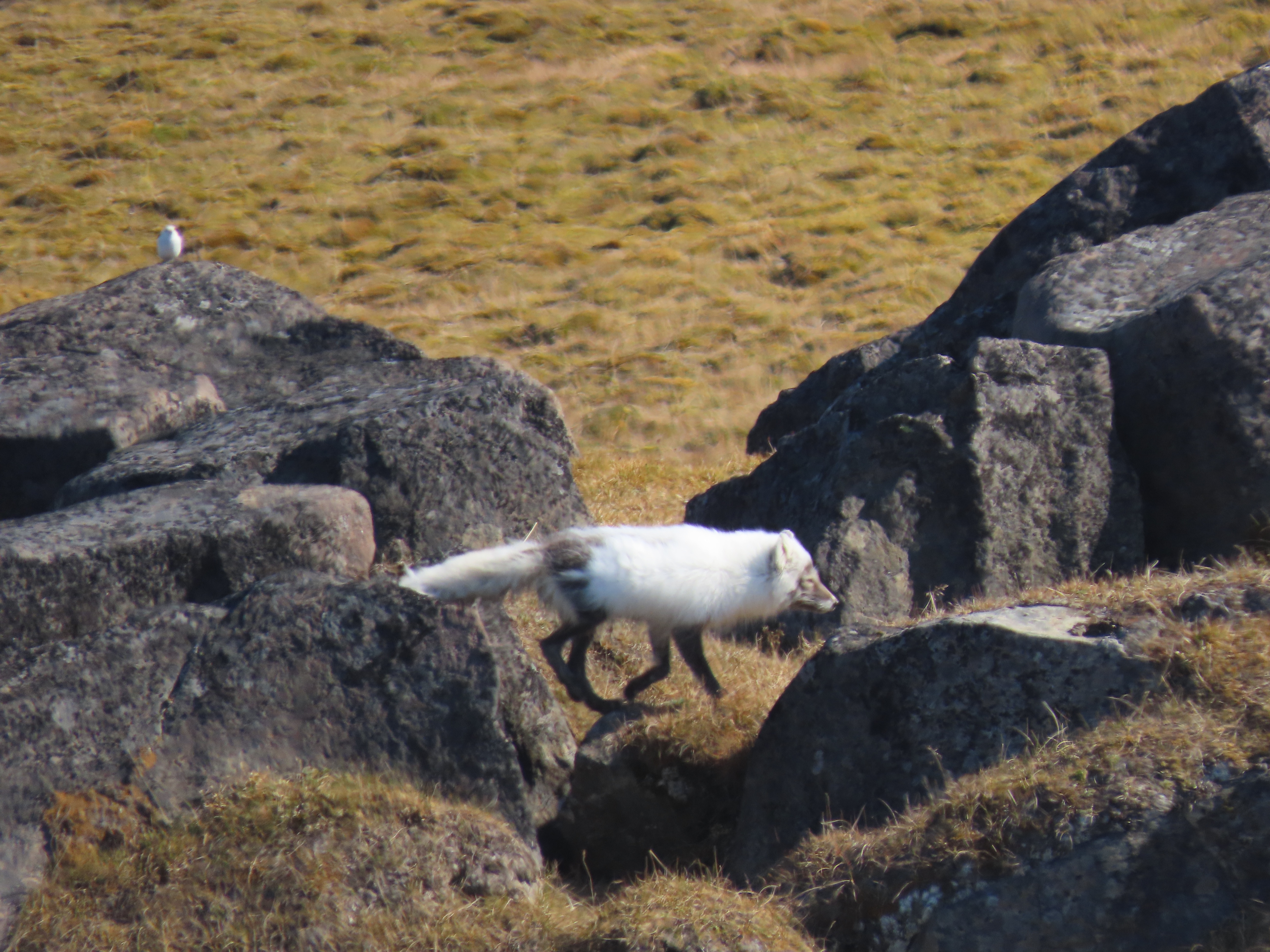
An Arctic fox with most of it’s winter plumage. A snow bunting above for scale.

The fox’s body was white with a darker face and legs. It superficially looked like a wolf in sheep’s clothing!
Image

Polar Ship Fram

Another Norwegian ship on my sketch list is across the car park from the Kon-Tiki Museum. It is a 15 minute ferry ride from Oslo City Center to the Bygoy Peninsula.

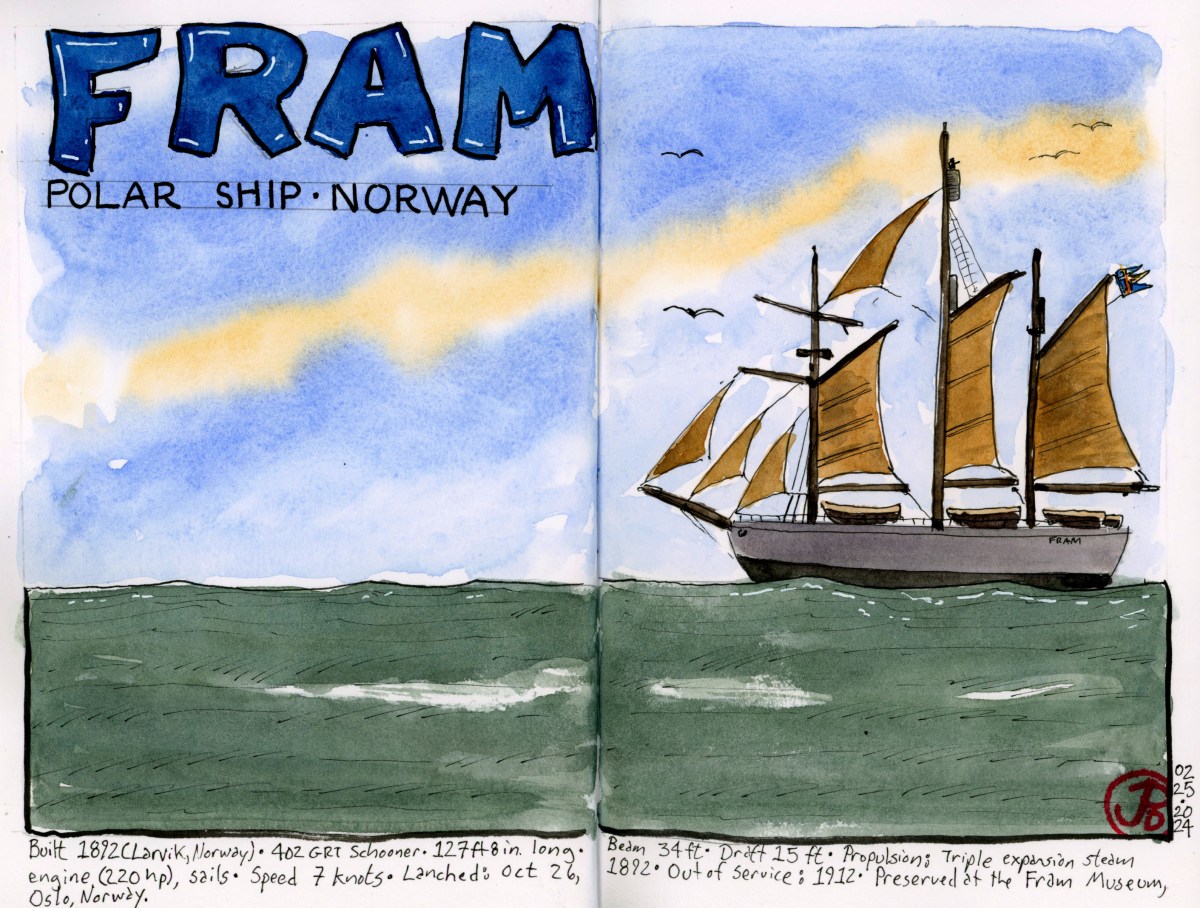
This is the three A-frame buildings that comprises the Fram Museum. Under the largest A-frame is the Polar ship Fram (Norwegian for “forward”).

The Fram is the most rugged, toughest, and most durable wooden ship ever built. It was built to explore the Polar regions.

The Fram was built in Norway as the first ship designed for the rigors of Polar research.

The Fram was used in three important Polar Expeditions. In 1910-12, explorer Roald Amundsen sailed to Antarctica for his South Pole expedition.

One of the ships also on display at the Fram Museum is the Polar Ship Gjoa. This is the first ship that sailed through the entire Northwest Passage, going from the Atlantic to the Pacific Ocean. And I found out that the Gjoa had an interesting San Francisco connection.

More about this in the next post.

Image

The Arctic Toothwalker

High on my Arctic pinniped (fin-footed) wishlist is Odobenus rosmarus: the walrus.

Few animals scream “Arctic” in the same way as the Toco toucan screams “tropics” or “rainforest” or “Guinness”, as the walrus. These animals are the “sexy megafauna” that become the poster animal for the ecosystem. (Okay the toucan isn’t “mega” but its bill sure is). For the Arctic, I would certainly put polar bear at the top of this list, followed closely by the walrus.

This Arctic animal is also keynote species that are the “carnies in the coal mine” for their ecosystems. When the walrus population declines, we know that the Arctic is not healthy.

The walrus’s most prominent feature are its tusks. They are sported by both male and females and are really enlarged canines. Tusks on males can grow to three feet. They use these ivories for male scuffling and pulling their hefty bulk up onto ice.

The walrus is also one of the largest pinnipeds in the world, only exceeded by the Northern and Southern elephant seal. It can be said that it is the second largest pinniped in the Northern Hemisphere. Walrus are sexually dimorphic with males weighing almost two tons and growing to 12 feet in length.