Image

Seabird Cliffs of Látrabjarg

One of the visits that I was really looking forward to on my Icelandic birding trip was to see the seabird colony at Látrabjarg, the most western point in Europe.

In the Land of the Midnight Sun where the sun never truly sets in the summer, the best time to visit the bird colony is in the early evening, when many birds have returned from the sea to their nest burrows after feeding.
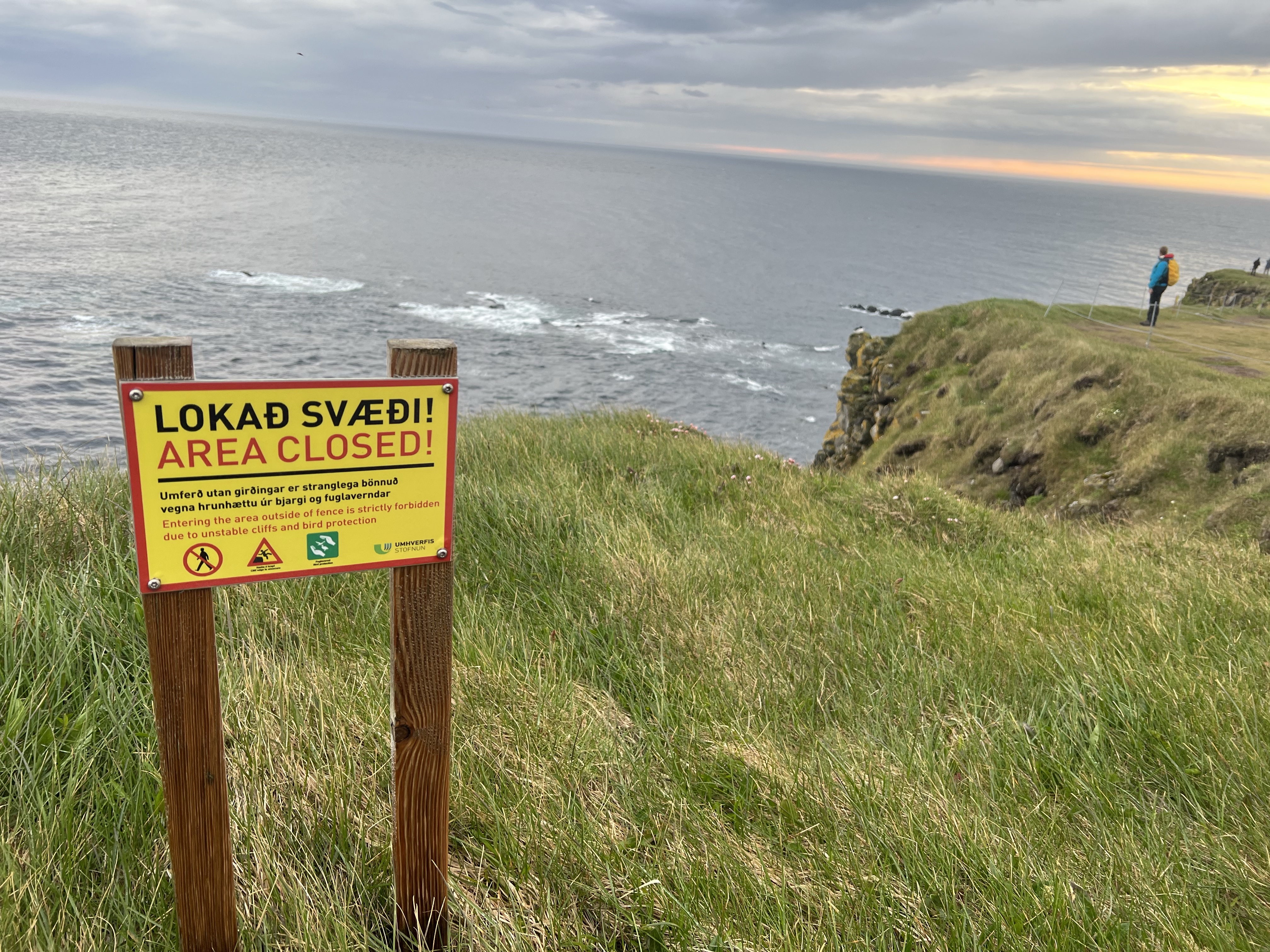
Luckily it is easy to get close to puffins without getting too close to the unstable cliffs.

The cliffs at Látrabjarg are the largest sea bird colonies in Europe. Here puffins, razorbills, kittiwakes, murres, guillemots, and fulmars breed. About ten million birds are present here during the summer breeding season but we were only viewing a small portion of the cliffs that spans about eight and a half miles long with a maximum height of 1,400 feet, nearly the height of Chicago’s Sears Tower (1,451 feet).

The Látrabjarg Cliffs were high on my sketchlist and I was determined to add this natural wonder into my Iceland sketchbook. The problem: rain was forecast for our evening visit. Now rain (or wetness in general) does not go hand in hand with field sketching, especially when using ink or watercolor. So I had to find shelter to start my sketch.
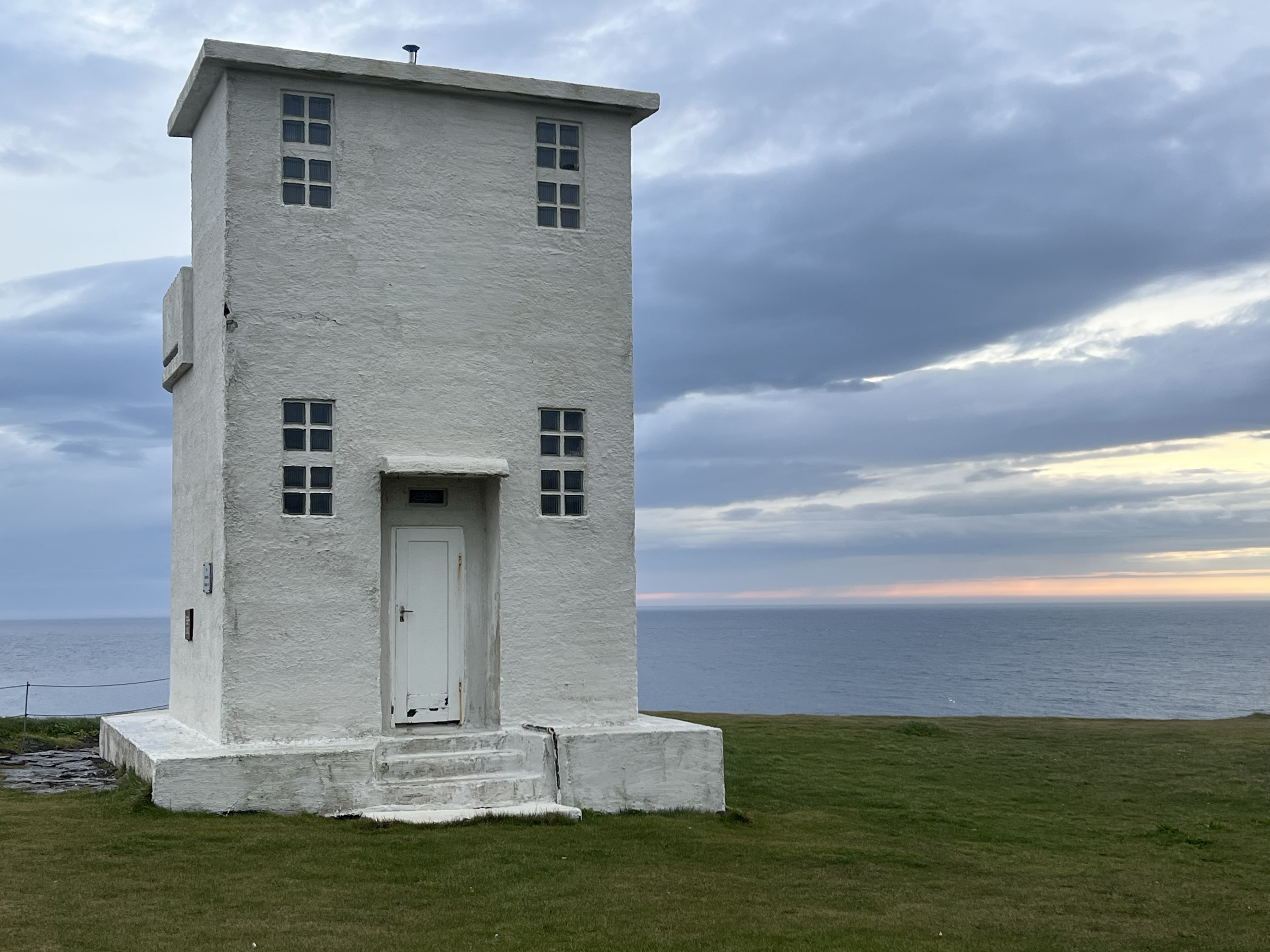
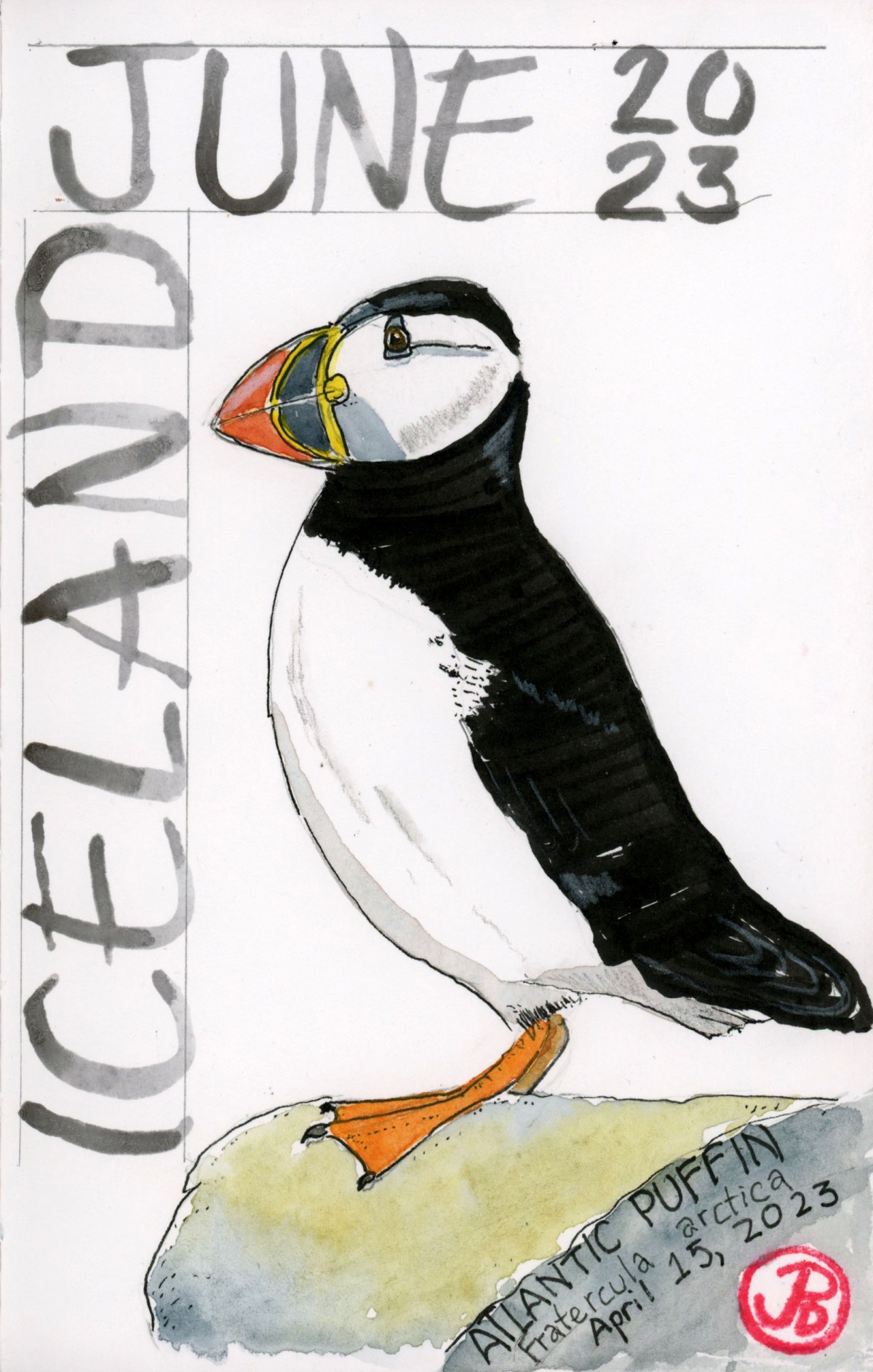
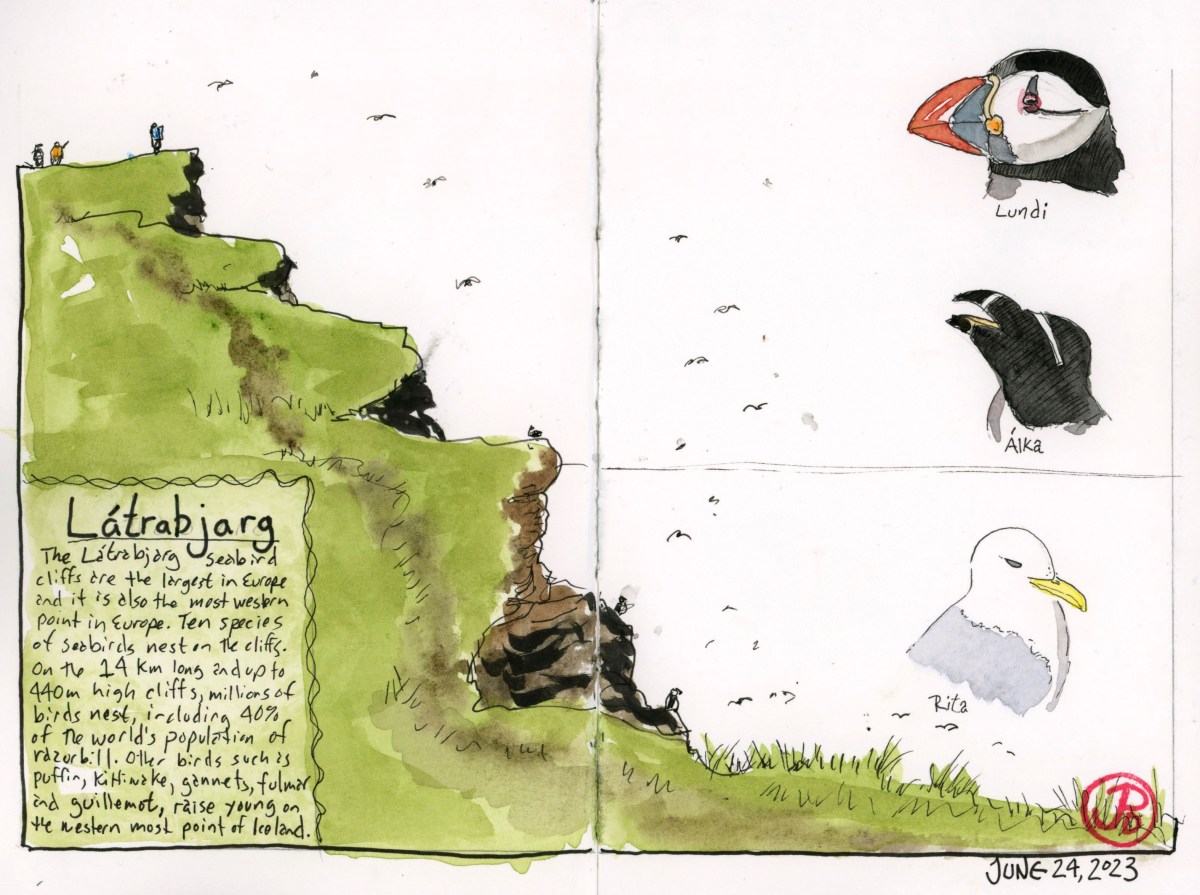
The westernmost lighthouse in Europe provided a weather break so I could get my initial anchor sketch in (featured sketch). In the finished sketch a few telltale ink smudges bear witness to the drizzly weather on our Látrabjarg visit.

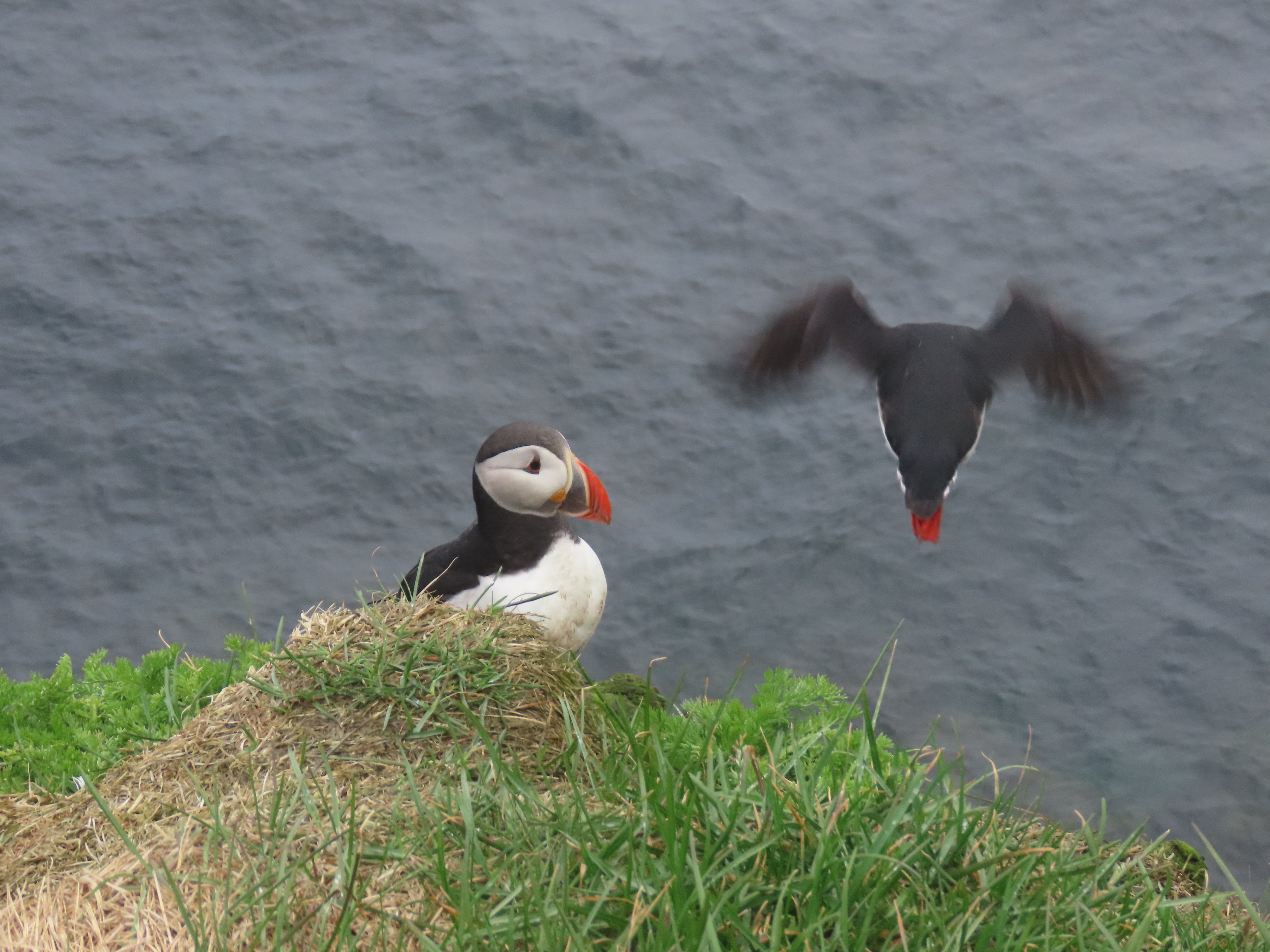
The big draw to visiting these cliffs are the large numbers of seabirds and the close proximity to one of Iceland’s most beloved breeding species: the Atlantic puffin.
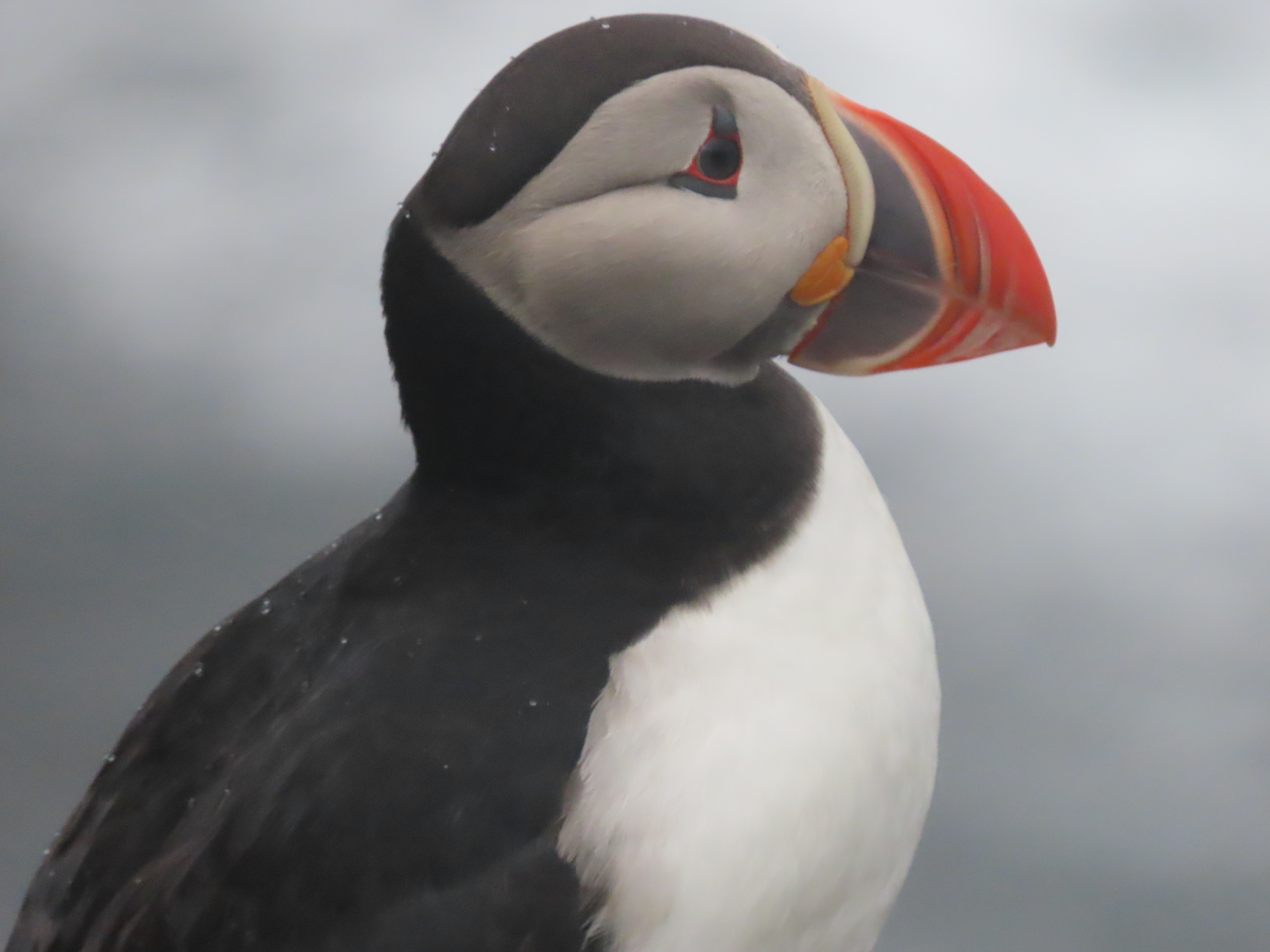
You can get close to puffins, very close at the nesting colony. This one was about six feet away.

Seabirds nest at different levels of the cliff with puffins occupying the tops of the cliffs, followed by razorbills, and towards the bottom, kittiwakes. This is represented by the vertical portraits of the three species on the right side of the sketch. Seven other species of birds also use the cliff for nesting.
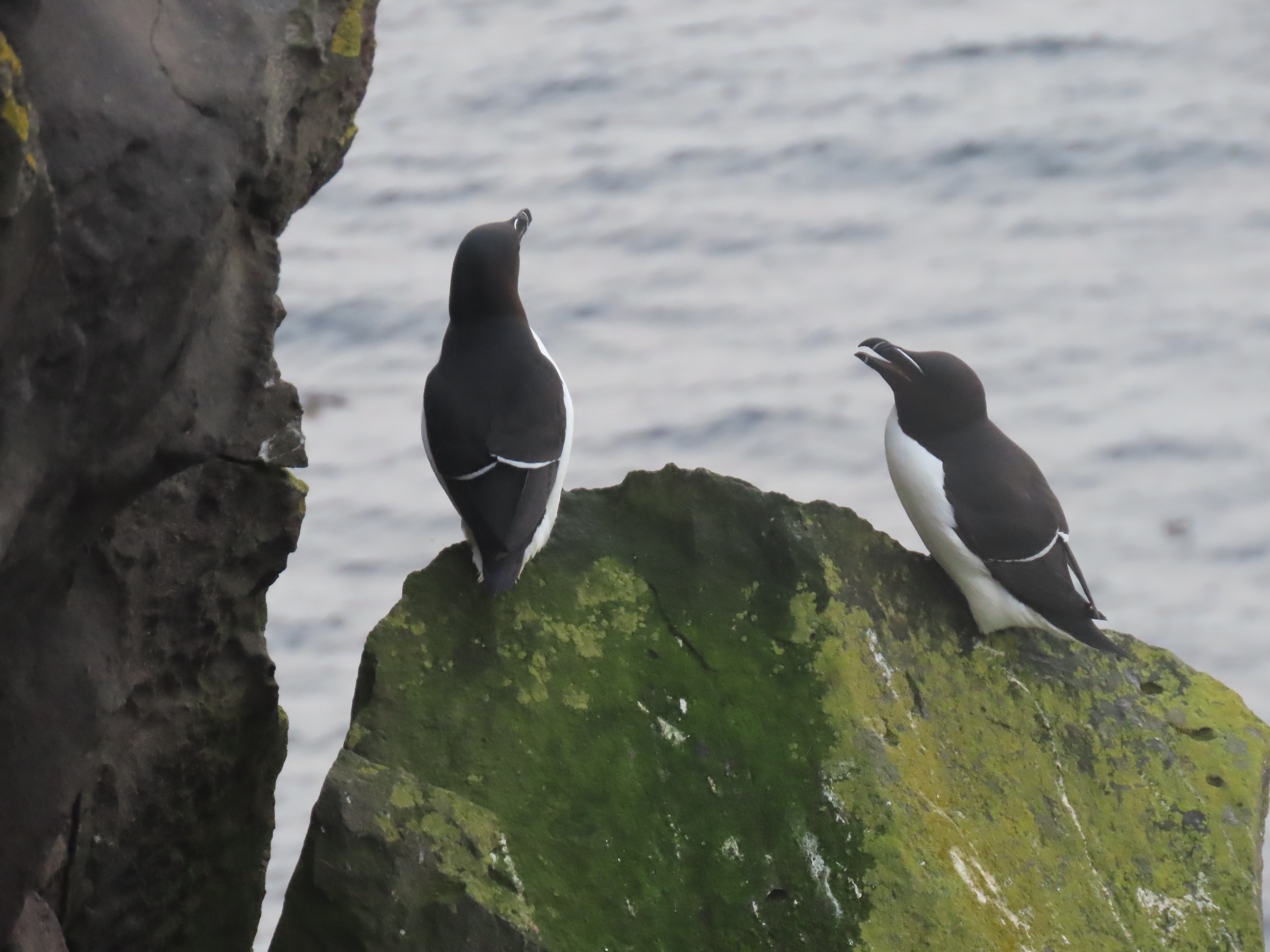
40% of the Razorbill population breeds at the Látrabjarg cliffs.
Image

The Land of Ice and Fire

I was planning where to go on my summer vacation and was leaning toward a domestic trip, but wasn’t sure I wanted to go on a lengthy South American birding tour. My pre-pandemic Peru trip was cancelled and I haven’t travelled with passport since.

I am limited by work for more of the desirable birding tours throughout the year, which limits my travel window to just two months during summer: June and July. (Yes I can hear the sound of the tiny violins).

There was a tour in the Northern Hemisphere that caught my eye: Iceland.

This was the land of puffins, razorbill, and murre. The white-tailed eagle, gyrfalcon, and snow bunting. Home to one of the largest seabird colonies on Earth.

Iceland: the land of fire and ice, home to the midnight sun and Nordic winds. Of the dancing Northern lights and Viking blood.

Sign me up!

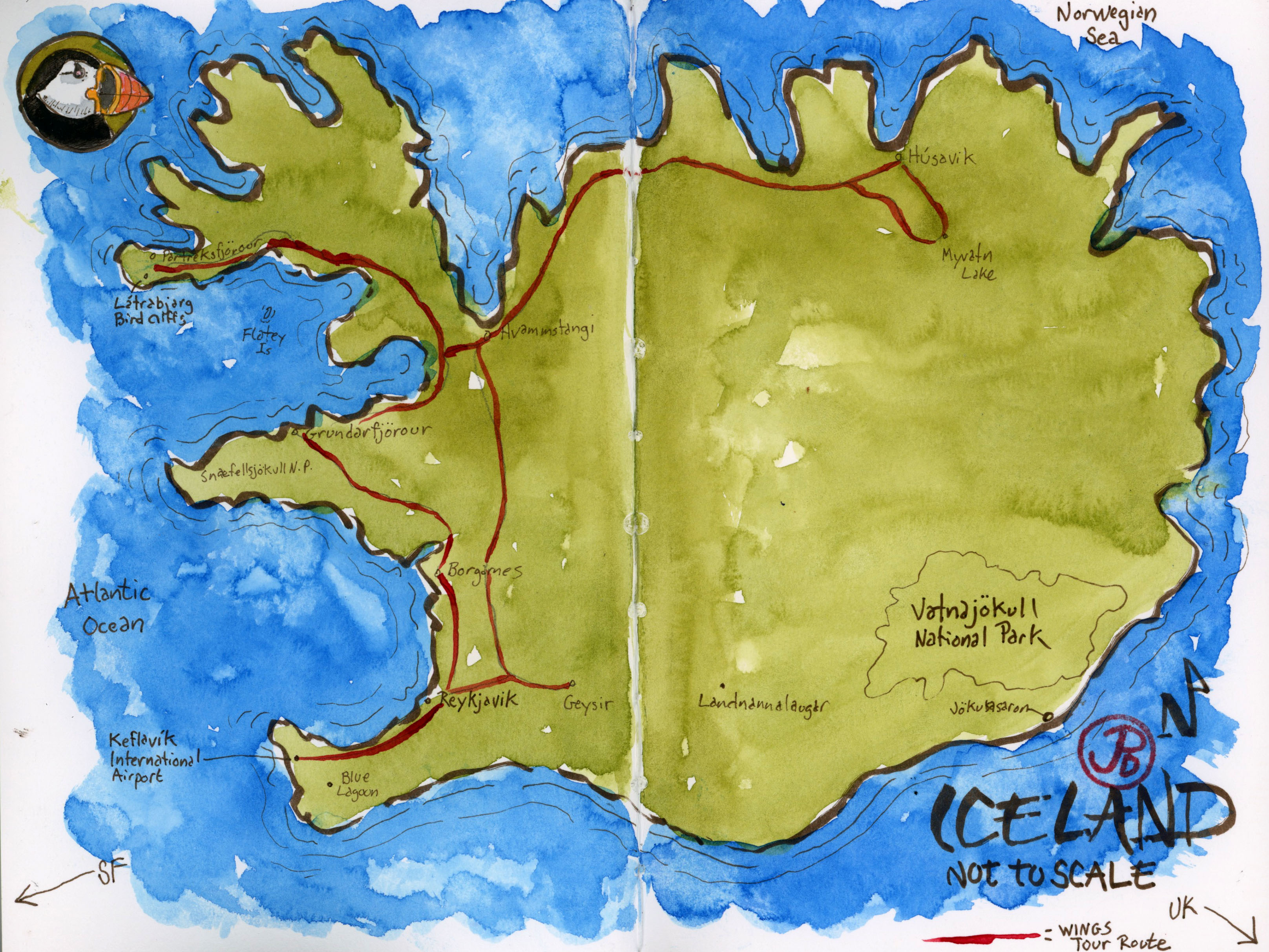
And I did sign up with a ten day tour run by WINGS Birding Tours. Most of the tour will be focused on the western side of Iceland.

While this tour wouldn’t produce a treasure trove of lifers (I estimate between 20-25 lifers), I would have the opportunity to see many birds in breeding plumage because Iceland was their breeding grounds. I looked forward to seeing Harlequin and long-tailed duck, Barrow’s goldeneye, black-legged kittiwake, red-throated and common loons in their breeding finery. One bird I really looked forward to seeing on solid ground is the arctic tern. The only time I had seen this long distant migrant was on the deck of a pelagic tour boat. This tour really is about spending quality time with the amazing avian culture of Iceland!

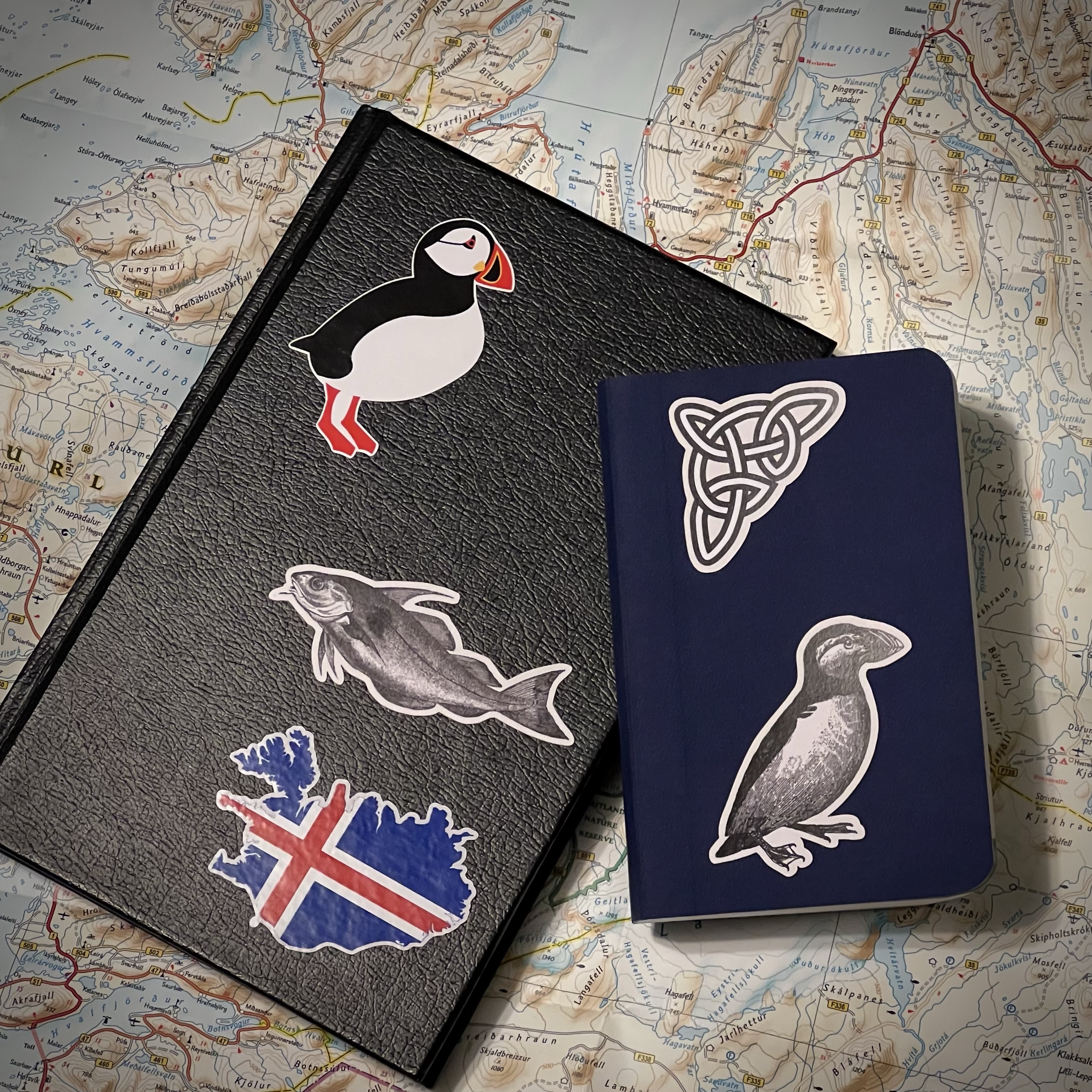
My two Iceland journals. I decorated the covers with stickers in case anyone didn’t know these were Icelandic journals!

Before going on any great saga, I must first obtain a watercolor journal. For Iceland, I chose two Stillman & Birn Beta Series journals. One is hardbound 5.5″ by 8″ journal and a soft bound pocket journal. On the first page I sketched a symbol of Iceland: the Atlantic puffin (featured sketch). Seeing this bird would be a lifer for me. The alcid can be seen in the northeastern part of North America but when I was in Maine in October, all the pelagic puffins were far out at sea (they come ashore in the summer to nest in large breeding colonies).

I like to start my travel journals with a map and drawing the outline of Iceland seemed to be like tracing the undulating lines of a Rorschach test. This map was really not to scale!

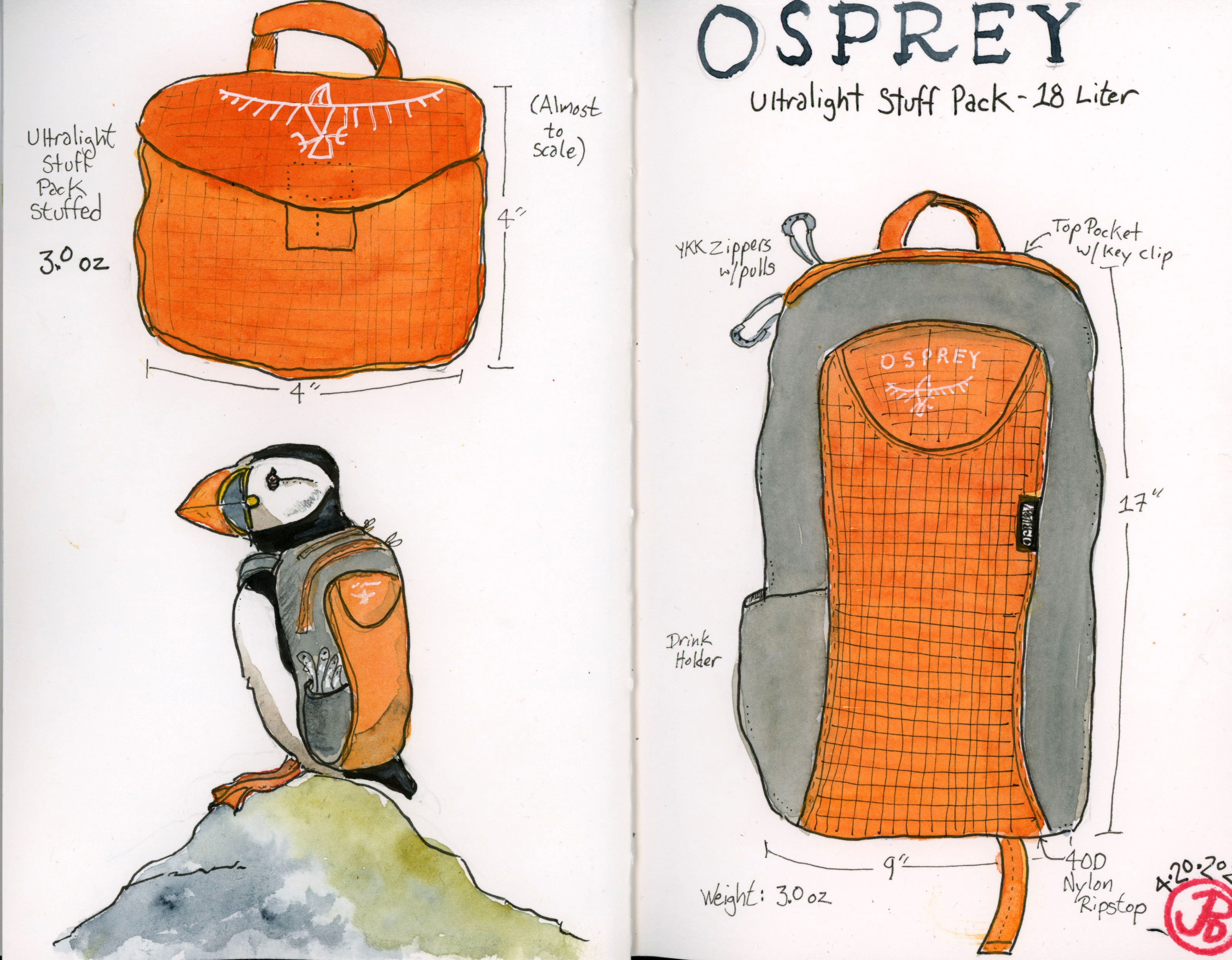
A trip is always an excuse to add some new gear to my travel set up, and then do a spread about it. In this case I wanted a new stuff daypack that could stuff down to almost nothing and then be used as a daypack to carry my sketching kit and rain gear. I chose the Osprey Ultralight Stuff Pack. This stuffs down into a 4″ by 4″ bag yet has a capacity of 18 liters while weighing in at just 3 oz. The pack features zipper pulls, padded straps, a water bottle pocket, and an easy access top pocket with a key clip.

I just couldn’t resist drawing an Osprey on a puffin.