Image

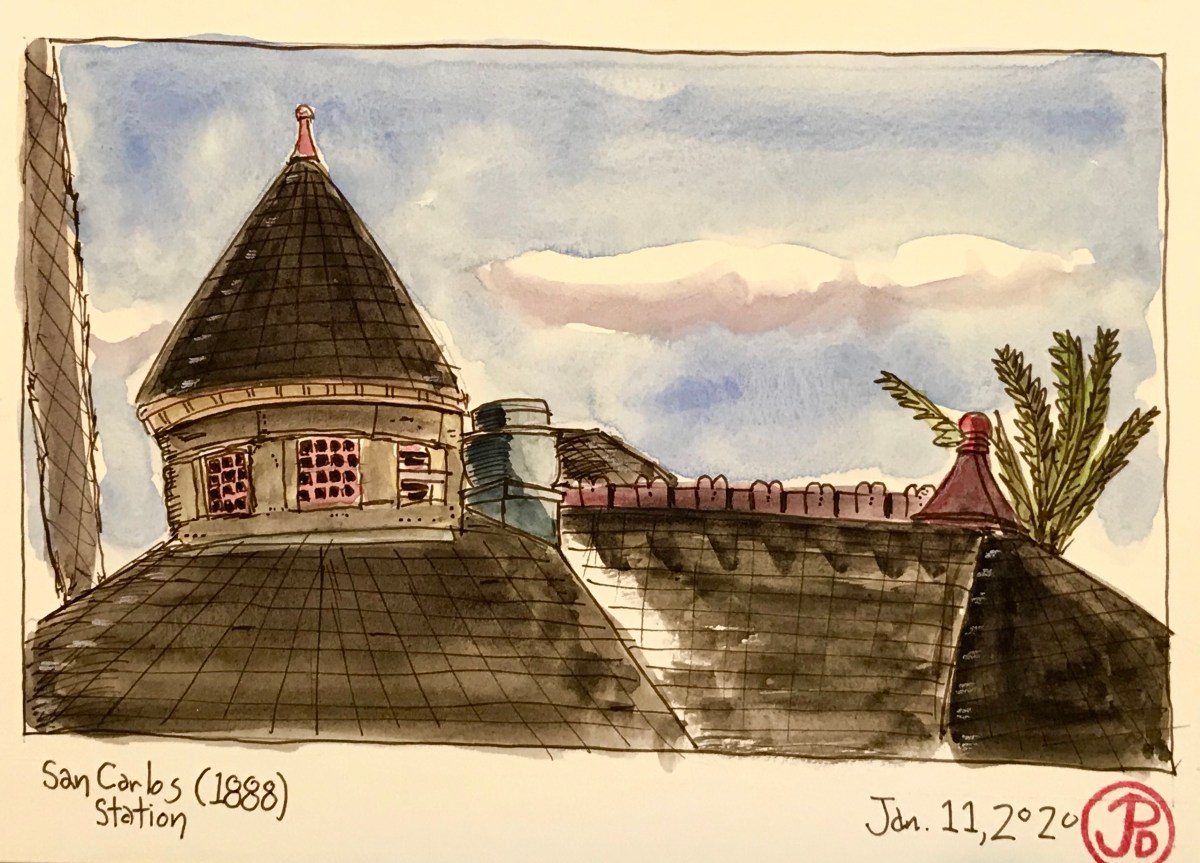
San Carlos Station

If there is any historic station on the line that has been truly marginalized by the march of modernity then it would have to be San Carlos Station.
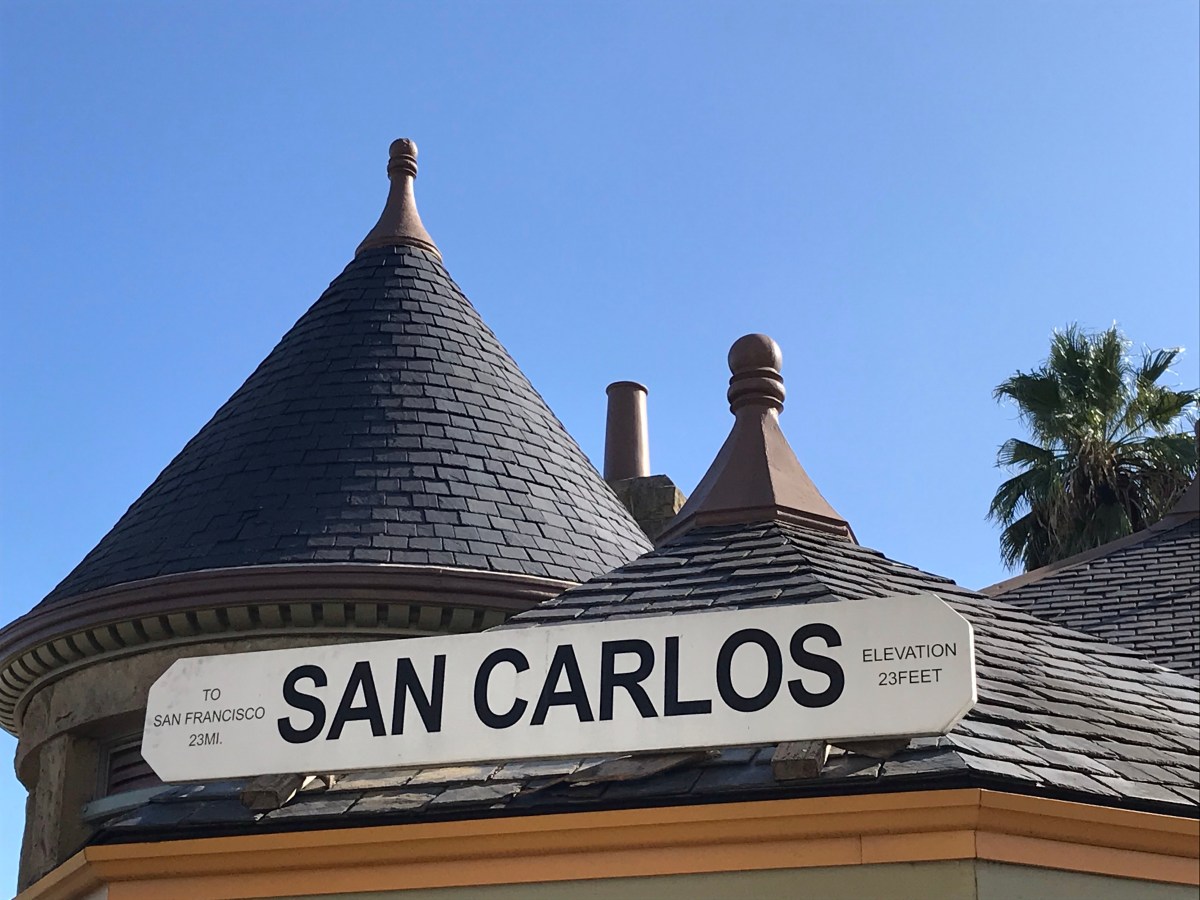
This beautiful and unique station looks like no other on the line. It was built in 1888 and is constructed with Almaden sandstone from Greystone Quarry in the Almaden Valley which echos the building material used at nearby Stanford University. The station is designed in an Richardsonian Romanesque style which is very unique for a railway depot in California. There are rumors that the architect that designed Stanford, Charles Coolidge, also designed San Carlos station.

The railway line has been elevated and the trains now tower above the station. There was a time when this distinctive station was the focus of the growing town of San Carlos but it has been hemmed in with the elevated railway to the east and the newly constructed residential buildings to the north and south.

Sadly this iconic station is in the shadow of all that surrounds it and speaks to the Bay Area in the 21 Century: over populated and addicted to cars.

It was hard to get a clear view of the entirety of the building because I couldn’t back up far enough without backing into the new residential buildings or having the conical tower disappear as I backed under the railway overpass. It felt a bit like the blind men and the elephant. I could only see bits of the station but never the whole thing.

This station also represents what I have seen at Colma, Millbrae, and Hillsdale. They are all buildings that no longer function as a passenger railway depots. In other words they are just empty shells that no longer serve a purpose other than being a bookmark in historical time. They are there for those who read the passages of time and I am one of those.

The San Carlos Station has housed many things: a post office, a church, a library, and lastly, a restaurant. And this restaurant now is closed and the interior is stripped bare. Sad really, that this architectural gem should serve some purpose other than just looking nice.

The San Carlos Station is now surrounded on three sides. The towering new residential building to the left makes a weak attempt to echo the sandstone look of the station.
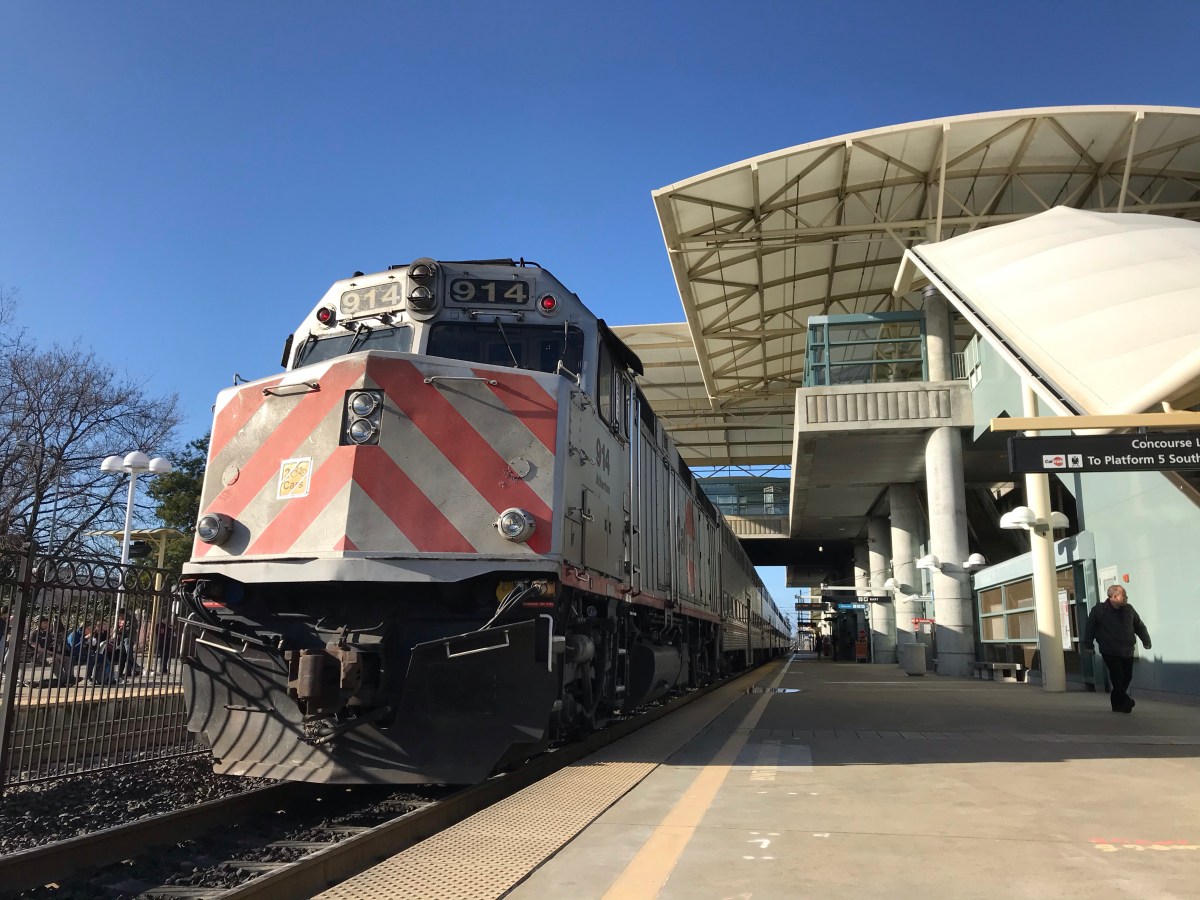
My northbound train heading to San Francisco from Millbrae Transit Center. Don’t let it fool you, this is the end of the train, the diesel engine is pushing the train north. I was going to take BART to Daly City with three sketches in my bag.
Image

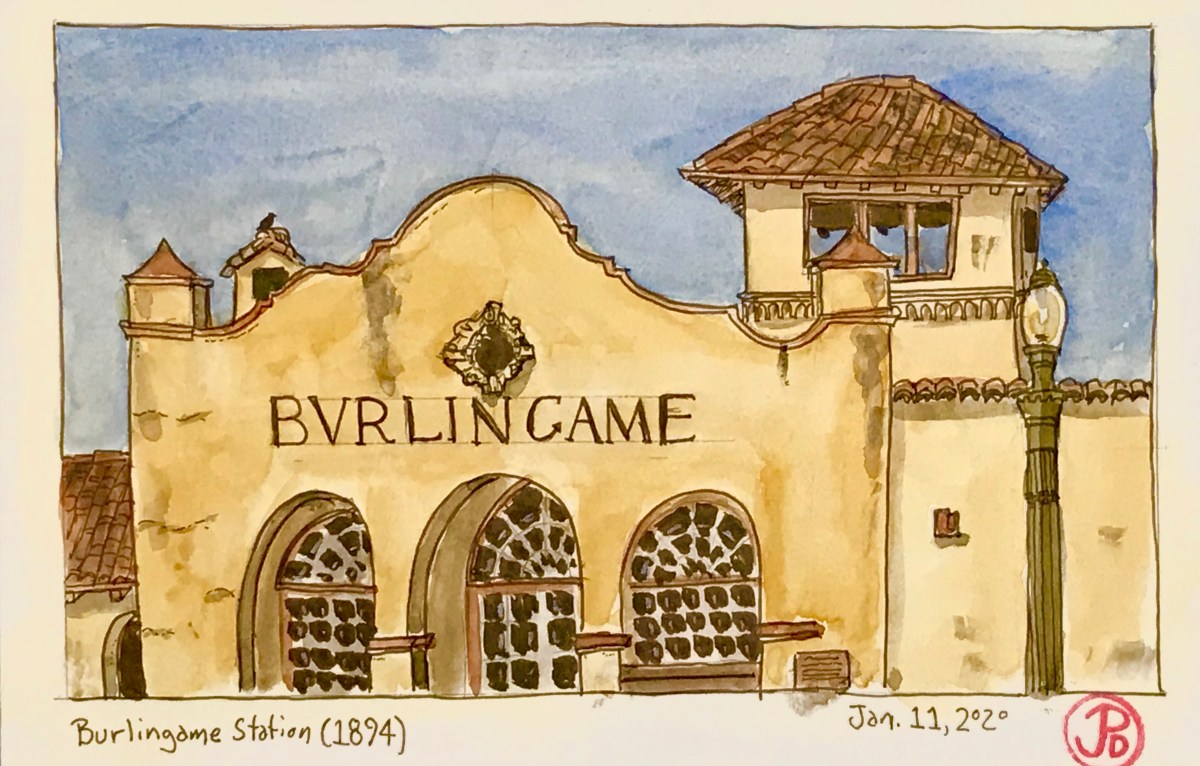
Burlingame: “The Prettiest Station on the Line”

Burlingame Station was the station I looked forward to sketching the most out of all the depots on the line.

It is certainly one of the most architecturally interesting stations anywhere between San Francisco and San Jose. The station is the first permanent example in California of the Mission Revival Style; a look back to the 21 Spanish Missions that line the California Coast from San Diego to Sonoma. It’s style influenced other train stations in California including Santa Barbara, San Luis Obispo, and San Diego. The station building itself was designated a California Historic Landmark on March 29, 1971 (almost five months before I entered this world).

I had field sketched all 21 missions and was fluent in the architectural language of the missions, so the grade of my learning curve was flattened. In Burlingame I saw the tiled roofs, tower, arcades, and arches that defined the California Mission Revival Style. These elements are almost second nature to me because I had drawn many examples of them in the 21 missions. And who doesn’t love to draw an arch?

Burlingame Station was opened for service on October 10, 1894. And it was certainly a busy station in the heyday of rail service along the peninsula corridor. On a weekday in the late 1930s, 33 passages trains passed through Burlingame station each way. This included the Lark, Sunset Limited, Del Monte, Daylight, and Coaster which where all long-distance trains as opposed to the local commuter trains that took passengers from San Francisco to San Jose.

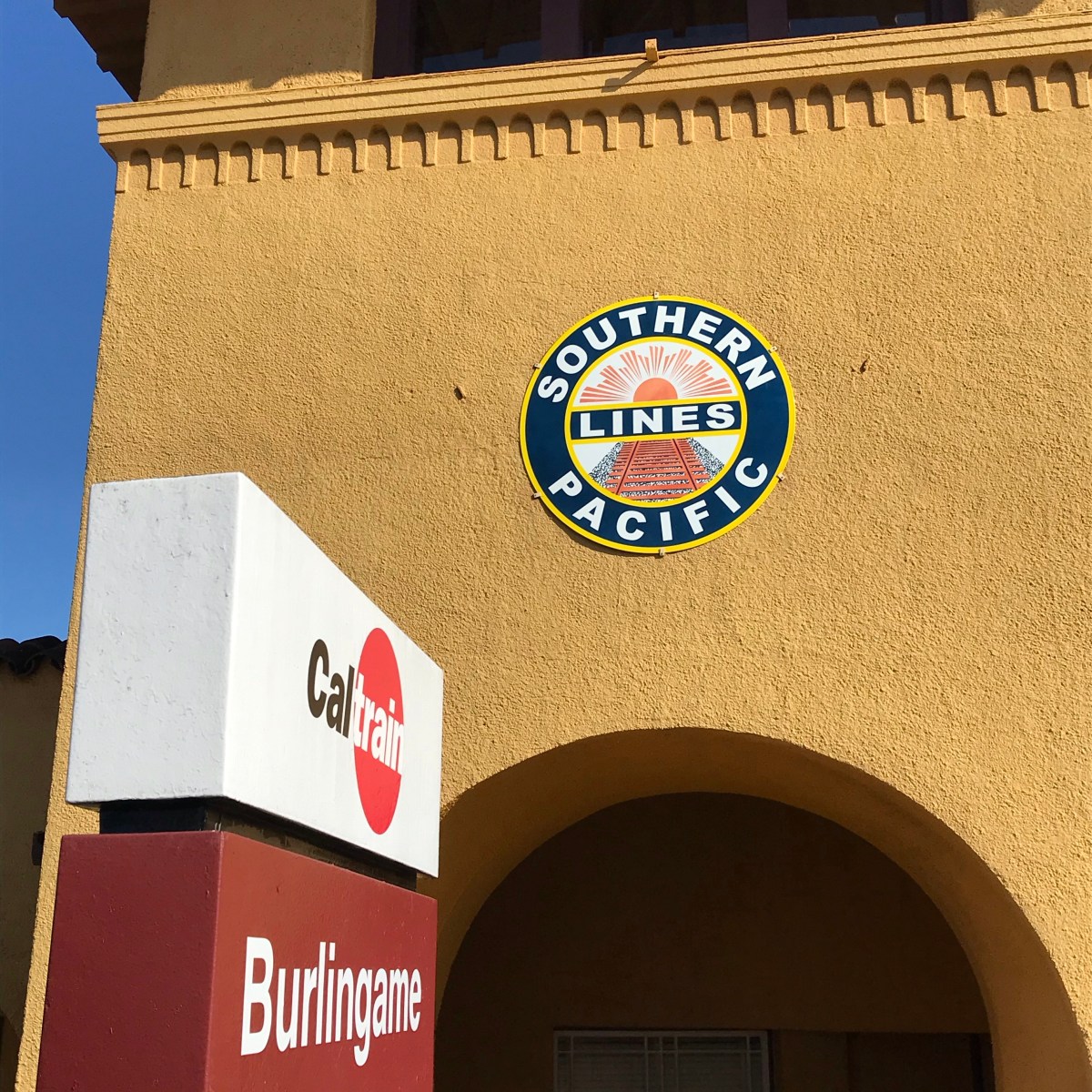
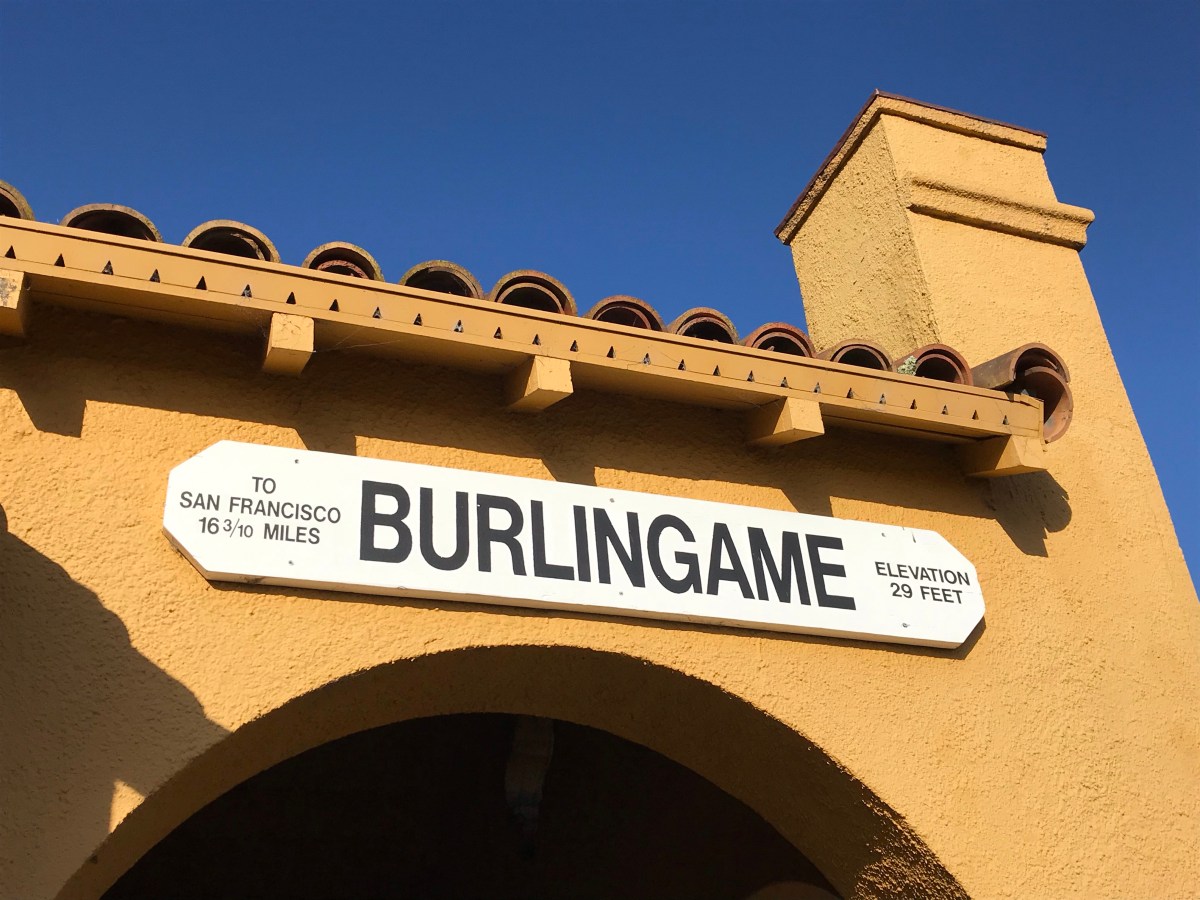
The old and the new. In the foreground is the Burlingame Caltrain sign and on the tower is the round shield of the mighty Southern Pacific Railroad. SP operated from 1865 to 1996.

As a comparison, the current passenger railway traffic through Burlingame is about 92 weekday trains with a weekday ridership of about 65,000 passengers. Burlingame Station is very much an active station with tracks running right in their original position and grade.

On a Saturday morning I took BART to the Millbrae Transit Center and then transferred to a southbound Caltrain. After a short ride, I got off at the train’s second stop, Burlingame. Once the train pulled out of the station, I crossed the tracks and set up my sketching stool on the opposite platform.

While I was sketching a young boy and his father had biked over to watch trains. They reminded me of my own father and told of a little touch of sanity in this insane world. The seven year old boy stood in front of me watching me work. “I draw trains!”, he announced with the candor and fearlessness of youth. I told him I also draw trains and train stations.

He then turned his attention to the train tracks and he looked both north and south along the line for the tell-tale headlights of an approaching train. There were none. Caltrain was operating on a weekend schedule which means less trains. The boy wanted to wait, until eternity if need be, for the next train to coast through Burlingame Station. This also reminded me of my own love of trains and it is always special to see a working train on the line. His father finally shepherded his son back home and he thanked me for sharing my sketch.

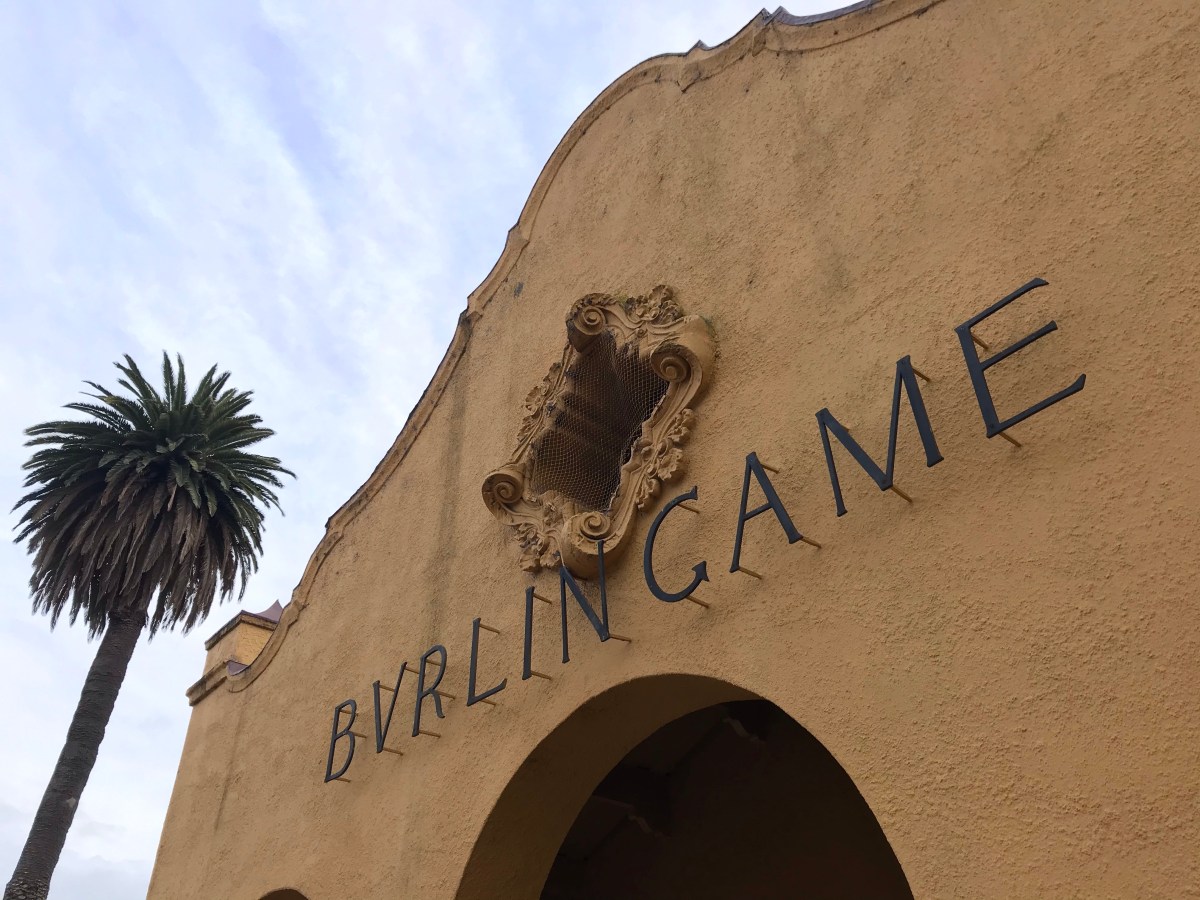
A little accent from Baja California, palm trees and Spanish arches.

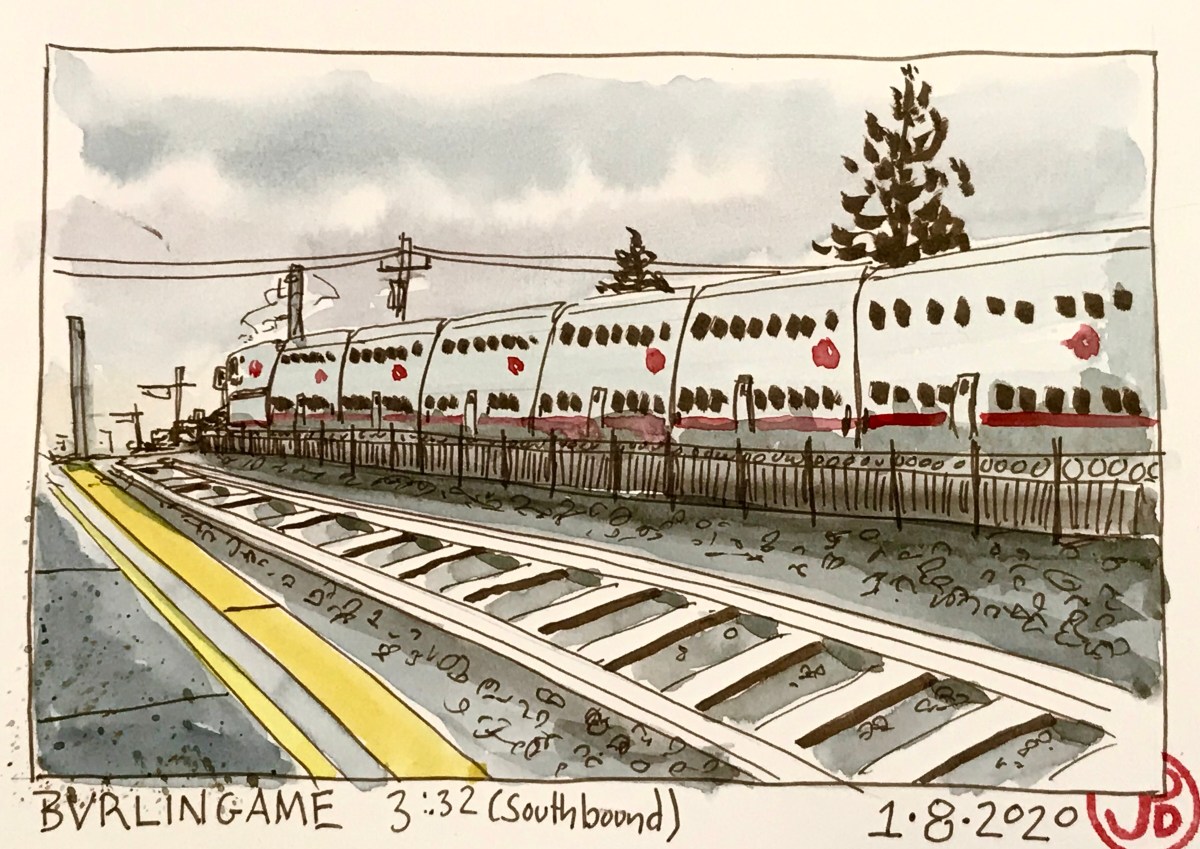
An after work sketch at Burlingame Station. I had less then two minutes to roughly sketch this southbound train before it departed toward San Jose. Once I got the perspective correct, I added other details long after the train had left the platform. I put in the things that where still there: the platform in the foreground, the northbound tracks, trees, and power lines and towers.

Image

The Ghosts of Hillsdale

As I was about to leave the Millbrae Depot, Peter, the docent, told me I should go and draw the Hillsdale Depot sometime before Monday. And it was now Saturday afternoon. “Why the rush?”, I wondered.

The reason he thought I should make haste to the depot was that it was going to be demolished, starting on Monday morning!

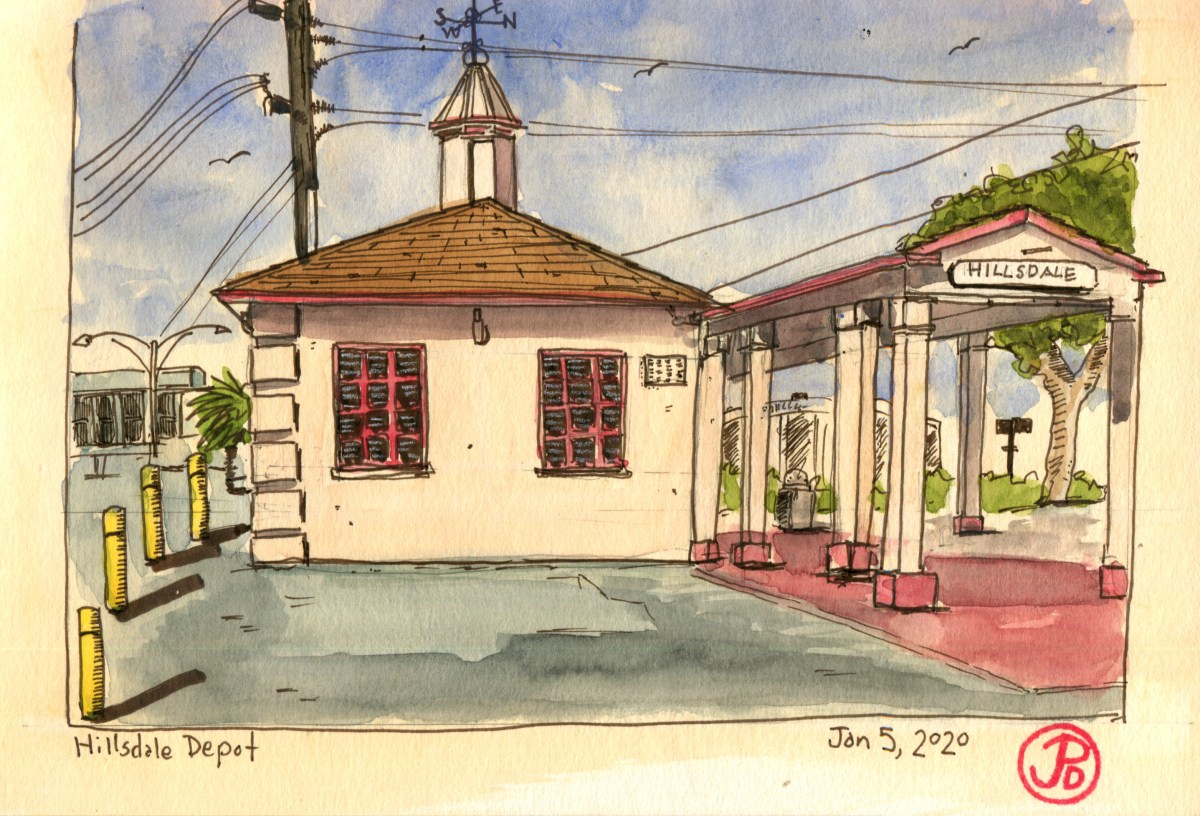
Hillsdale was not on my list of Historic Depots. It was true that it was squarely in San Mateo County, but the depot didn’t meet my criteria for age or architectural merit. The small depot, containing a ticket office and a tiny passenger waiting room, was built sometime in the 1950s. The building has a cupola topped by a weather vane, something I might imagine at Churchill Downs, an architectural reference to Hillsdale’s proximity (about half a mile south) to Bay Meadows Racetrack.

The racetrack was the longest running thoroughbred track in California. It opened in November of 1934 and was in continuous use until it’s last race on August 17, 2008. Many famed horses and jockeys raced here including Seabiscuit and Bill Shoemaker. It was demolished and housing was put in it’s place.

A southbound train on the main line, pulls into Hillsdale Station. The old station, on the left, is no longer near the railway which now has been raised above the station.

At Hillsdale, the mainline no longer passes in front of the platform. The tracks are now to the east and up a rise. The tracks were regraded and raised to cross over Hillsdale Boulevard. The grade separation project eliminates grade crossings (the intersection of automobile roadways and rail) and is part of a major transit development project which will move Hillsdale Station further north, near where the former race track lay. Hence the reason the older depot is now redundant and soon will be a few more spaces in the parking lot.

Engine Number 900 “San Francisco” pulls into Hillsdale Station.

I set up my folding camp chair on the south side of the abandoned station with a late morning winter sun at my back. I began to see the shapes and eventually, the beauty of the small railway station. As Zen sketcher Fredrick Franck noted, “I have learned that what I have not drawn I have never really seen, and that when I start drawing an ordinary thing, I realize how extraordinary it is.”

I also wonder about the memories and ghosts that have passed through or spent time in this station, the people who would have come to meet their loved ones on the platform as a commuter steam engine pulls into Hillsdale. The people who who worked here, perhaps the people met or fell in love here. The crowds returning from a race, either joyous or down on their luck. Or the young man who stopped to get a cup of coffee before boarding a northbound train to the City of Saint Francis.

All are silent now.

Corvidsketcher sketching in the parking lot of Hillsdale Station, the day before the building will be demolished. This may be the last drawing of the station while it is still standing.