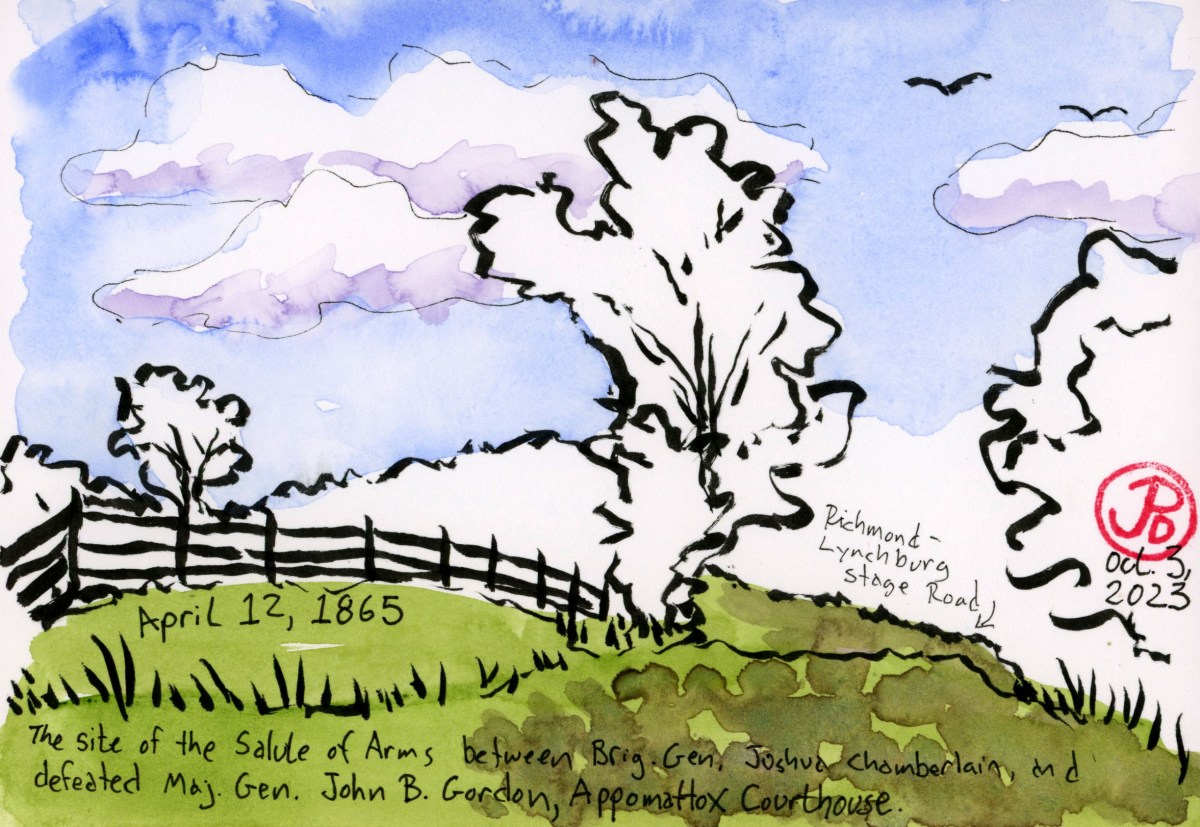
Image

Chamberlain and the Salute of Arms

One of the most touching passages of the Civil War happen on April 12, 1865 as Robert E. Lee’s Army of Northern Virginia surrendered at Appomattox Courthouse.

The setting was northeast of the courthouse and just past the Peers House on the Richmond-Lynchburg Stage Road. This was the offical surrender ceremony a few days after Lee had surrendered to General Ulysses S. Grant at the McLean House.

The event is best related in a passage from James McPherson’s Pulitzer Prize winning history of the Civil War, Battle Cry of Freedom:

The Union officer in charge of the surrender ceremony was Joshua L. Chamberlin, the fighting professor from Bowdoin who won the medal of honor for Little Round Top, had been twice wounded since then, and was now a major general. Leading the southerners as they marched towards two of Chamberlain’s brigades standing at attention was John B. Gordon, one of Lee’s hardest fighters who now commanded Stonewall Jackson’s old corps. First in the line of march behind him was the Stonewall Brigade, five regiments containing 210 ragged survivors of four years of war. As Gordon approached at the head of these men with “his chin drooped to his breast, downhearted and dejected in appearance,” Chamberlain gave a brief order, a bugle call rang out. Instantly the Union soldiers shifted from order arms to carry arms, the salute of honor. Hearing the sound General Gordon looked up in surprise, and with sudden realization turned smartly to Chamberlain, dipped his sword in salute, and ordered his own men to carry arms. These enemies in many a bloody battle ended the war not with shame on one side and exultation on the other but with a soldier’s “mutual salutation and farewell.”
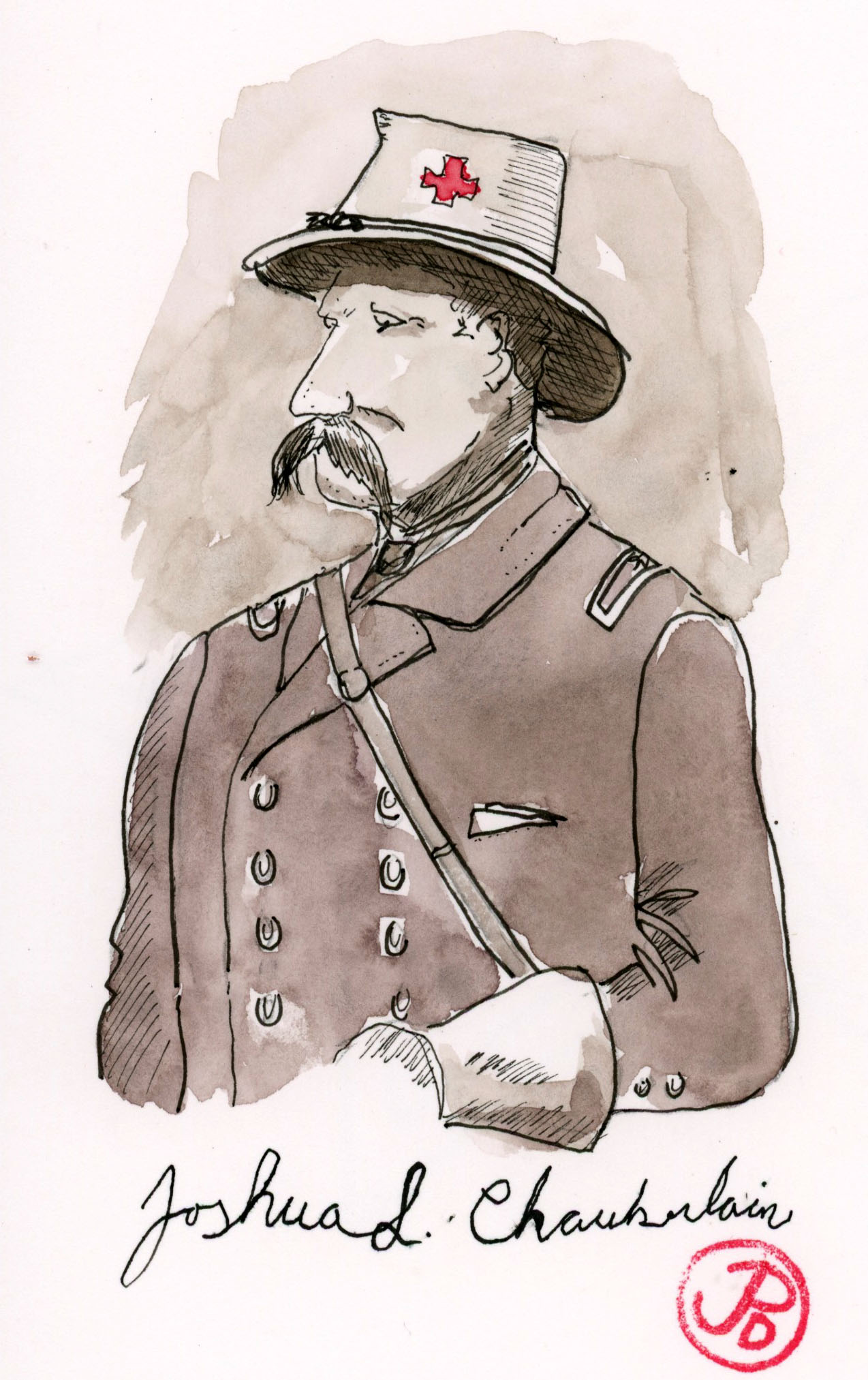
This interaction between the victorious north and the defeated south was the first step in helping to bring a divided and bloodied nation back on the path to becoming the United States again. Did it work? I leave it to you, dear reader, to decide.
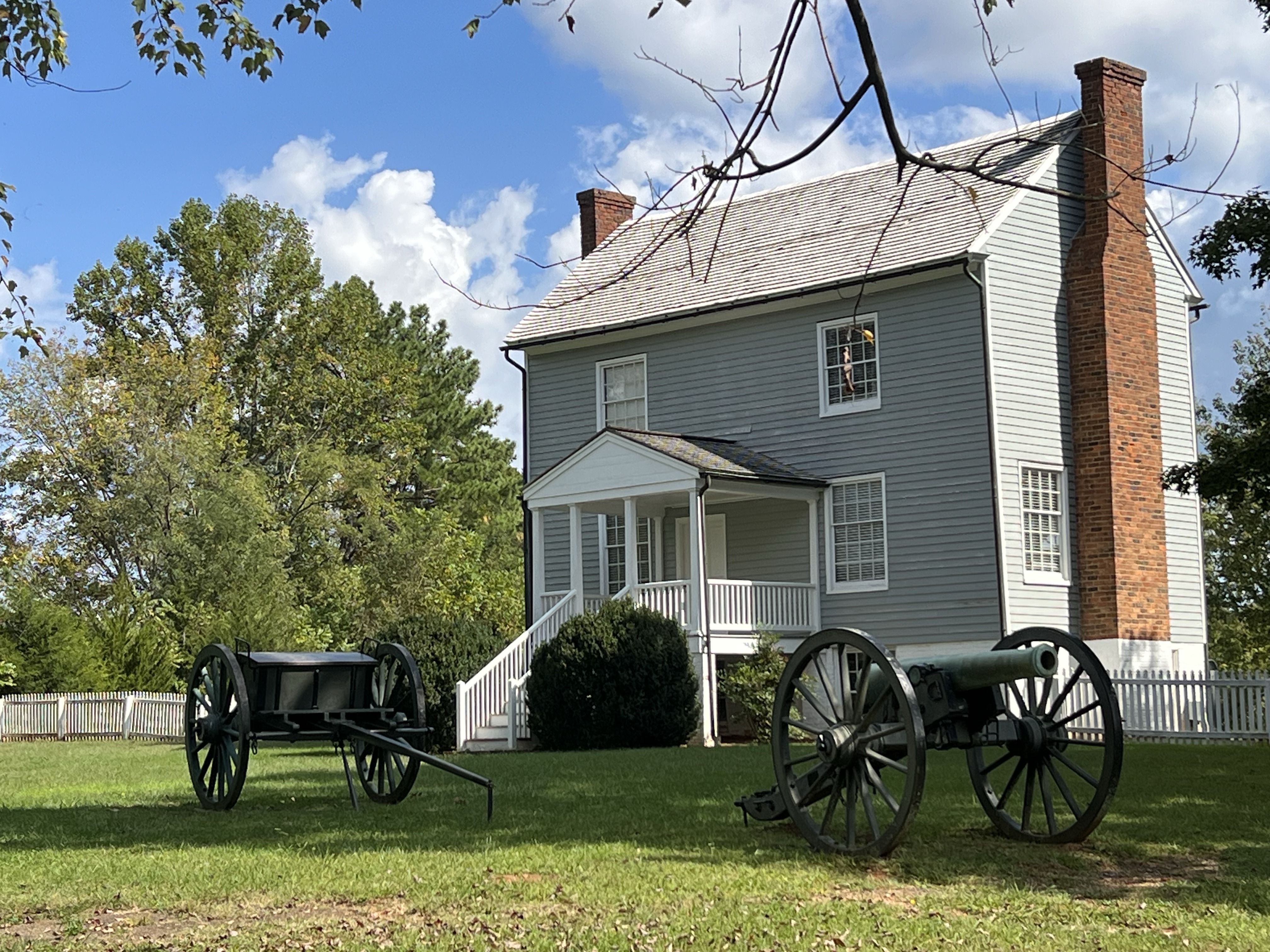
The Peers House at Appomattox Courthouse. The site of the Chamberlain-Gordon encounter is just down the stage road to the left of the Peers House.

On the morning of April 9, 1865, the Army of Northern Virginia was involved in it’s final wartime conflict. The last shots where fired from the front yard of the Peers House. The cannon shot caused some of the last casualties of the war in Virginia.
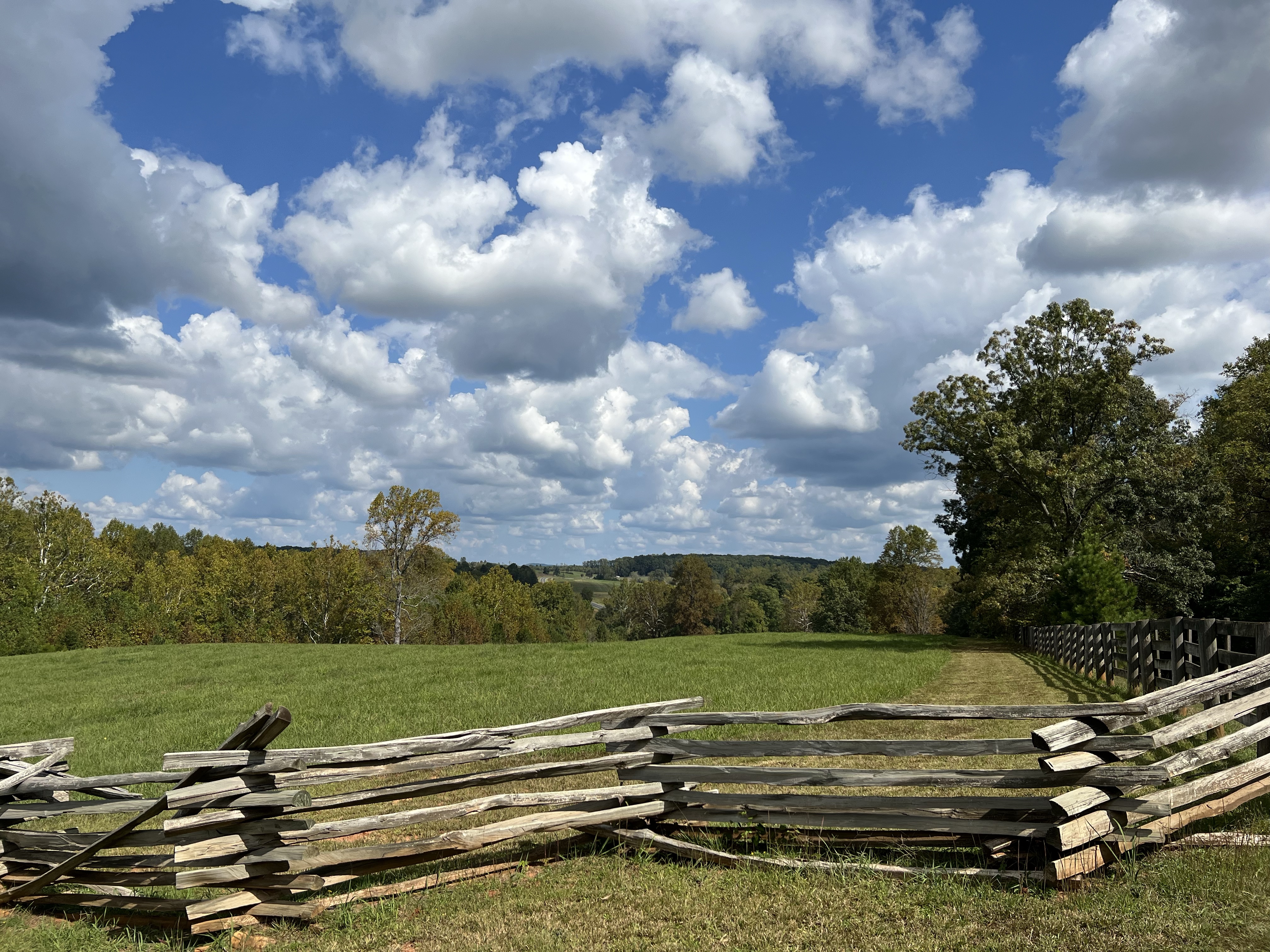
The countryside around Appomattox Courthouse is beautiful. The photo above is taken near the spot of Lee and Grant’s second meeting. The meeting occurred on the morning of April 10 with both men on horseback. While the surrender in McLean’s front parlor pertained to the Army of Northern Virginia, Grant tried to persuade Lee to convince the remaining Confederate forces to surrender. Lee refused telling Grant that the decision was up to the President of the Confederacy, Jefferson Davis.

To the right of this photo and out of frame is the location of Chamberlain’s Salute of Honor. I sketched the view looking down the Richmond-Lynchburg State Road (featured sketch).
Image

Appomattox Courthouse

One Civil War location I have been interested in visiting and sketching for a long time is Appomattox Courthouse in southern Virginia.

This is not the site of a major battle. Civil War lovers come here to visit a house just down the street from the courthouse and pay a visit to the front parlor.

Now how did this small parlor in a small southern Virginia town become a major historical landmark?

This is where the Civil War ended, at least on paper.

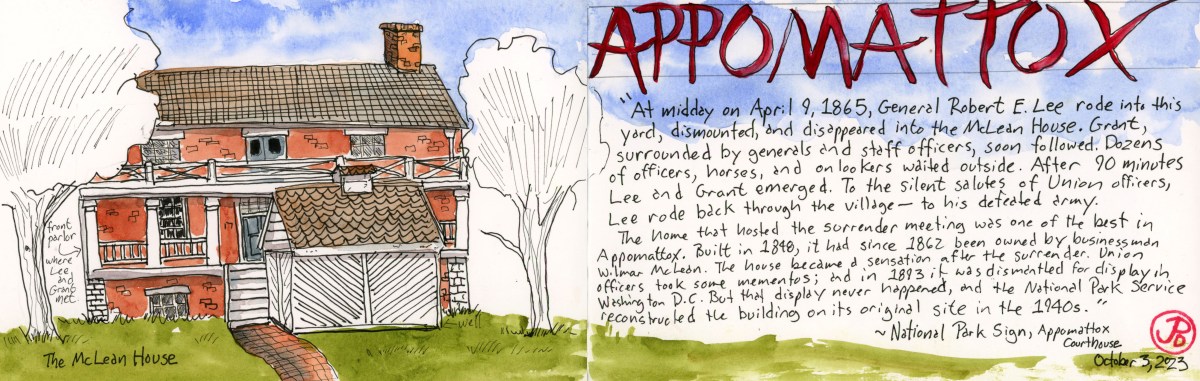
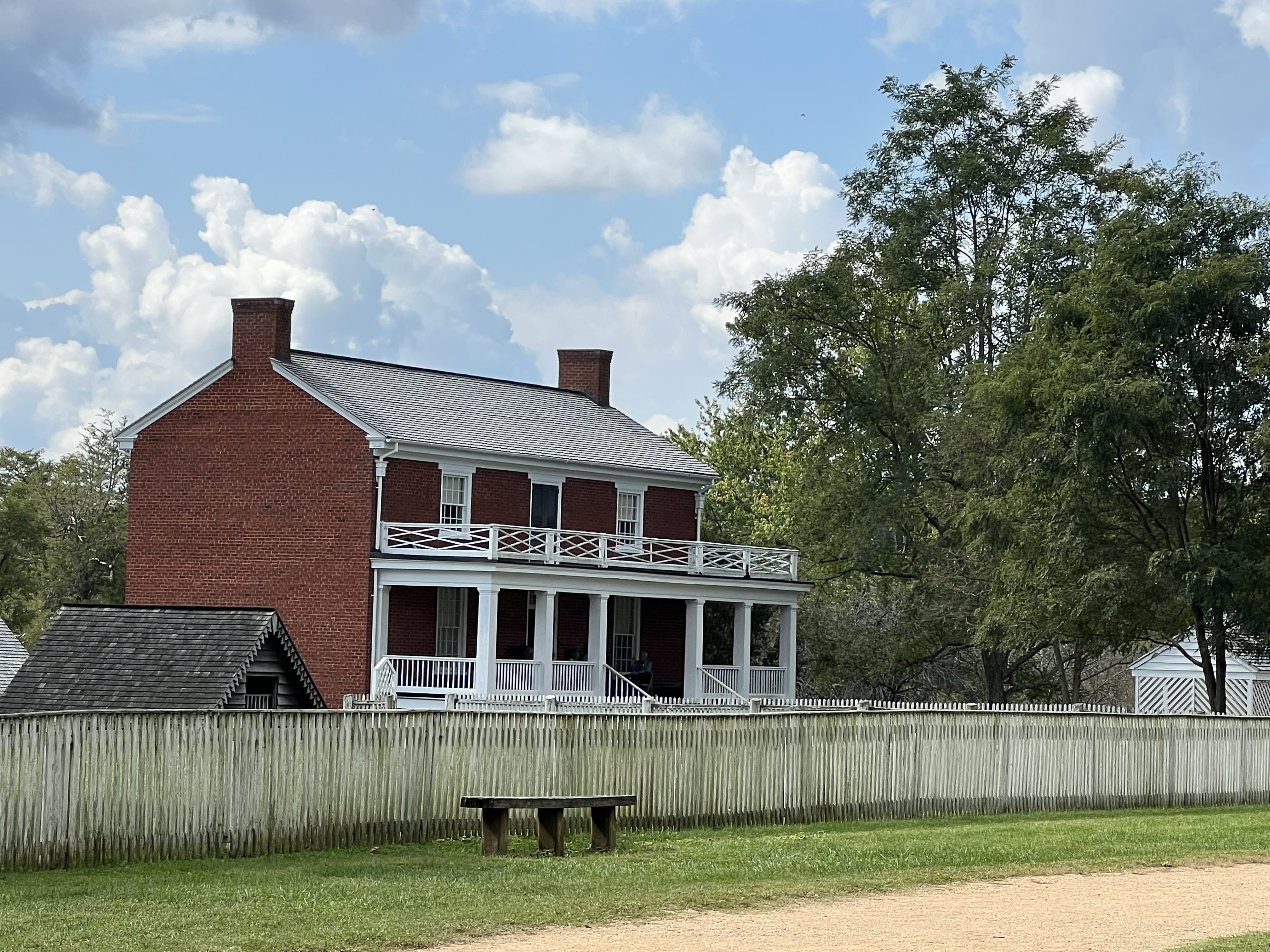
The McLean House.

The Confederate Army of Northern Virginia, commanded by General Robert E. Lee, was surrounded by Union forces near the small town of Appomattox Courthouse. Lee was now out of options and had no choice but to surrender. Lee said, “there is nothing left for me to do but go and see General Grant, and I would rather die a thousand deaths. “

On April 9, 1865, in the early afternoon, Robert E. Lee, entered the village of Appomattox Courthouse. He headed past the courthouse and stopped at the McLean House. Lee dismounted his horse Traveller, and entered the house.

Shortly afterwards General Ulysses S. Grant, General-in-Chief of all the forces of the United States, entered the house.

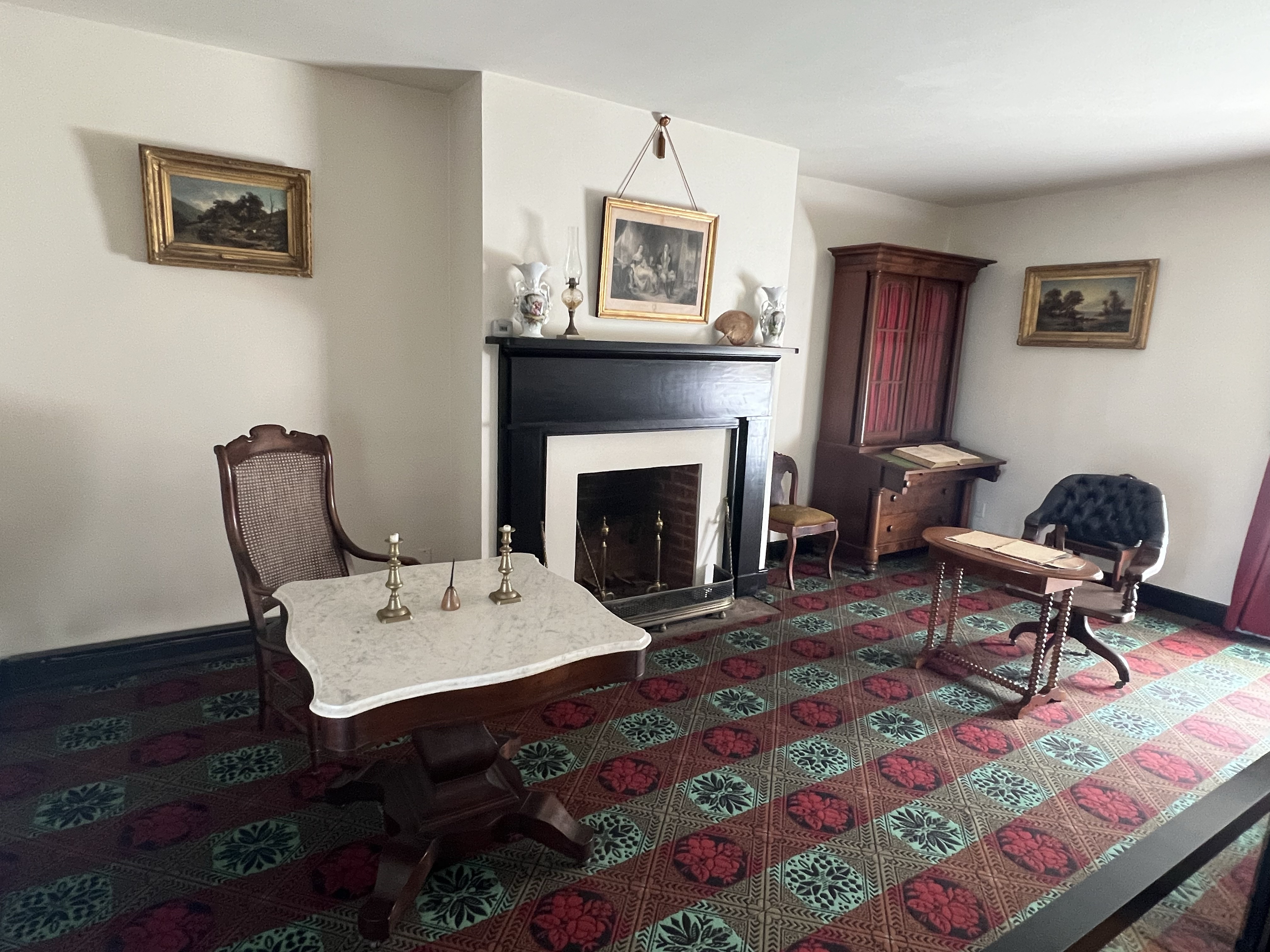
The front parlor where Lee surrendered to Grant.

The two men met in Wilmer McLean’s front parlor while the family was in the upstairs bedrooms. Here the lenient terms of surrender where agreed upon. The Confederate soldiers had to pledge not to take up arms again against the United States, they had to turn in their rifles but could keep their sidearms, and Lee was allowed to go free.

This surrender Appomattox was the beginning of the process of reunification.

Or was it?

Coda: Before he lived in Appomattox Courthouse, Wilmer McLean lived further north in Manassas.

During the the first battle of Manassas (aka Bull Run), McLean’s house was used by Confederate General Beauregard as his headquarters. His house was shelled by Unionist cannons.

It is said of McLean that the Civil War, “began in his front yard and ended in his front parlor”.

Image

Pickett’s Charge

On July 3, 1863, the last day of the Battle of Gettysburg, General Lee put a massive force on a frontal assault, across open ground, towards the Union’s line on Cemetery Ridge. This was to be the decisive battle of the campaign. And it’s outcome would dictate the future direction of the Civil War.

The assault first started at 1:00 PM with a massive artillery bombardment towards the Union line. Some 150 Confederate cannons tenderized the heart of the Union position. With all the cannon fire came a lot of smoke, which made aiming at your intended target problematic. Many rebel shells overshot their target, hence the shells that struck General Meade’s headquarters, which was further east from the heart of the Union line, but apparently not further east enough. The artillery assault did not break or severely weaken the Union center but Lee proceeded with the second part of this plan, the infantry charge.

A stature of Confederate General Robert E. Lee on his horse Traveller, tops the Virginia Monument. This was the first and largest of the Confederate monuments at Gettysburg. It is perhaps one of the few statues of Lee still remaining and one of the very few north of the Mason-Dixon Line. The statue is located close to the location where Pickett’s Charge started and where Lee observed the battle.

At about 3:00 PM, the assault, which came to be known as Pickett’s Charge, began. The 6,000 Union troops positioned on Cemetery Ridge saw a line of Confederate soldiers appear out of the woods a mile away. The line was almost a mile in length. Pickett’s Charge had begun.

Field sketching from the location of the start of Pickett’s Charge looking towards Cemetery Ridge and the “Copse of Trees” which was the destination of the charge. Getting an early start at Gettysburg has it’s advantages, I had the place to myself.

General George Pickett was another interesting figure in the Civil War. His classmates at West Point referred to him as the “goat”. Today that term, when applied to elite athletes, means “Greatest Of All Time” but in Pickett’s time it referred to his academic performance; he was last in his 1846 class at West Point. Pickett cut his teeth during the Mexican War fighting with many of the men he was now fighting against. While the charge now bears his name, Pickett was one of three commanders that led the charge. The charge could have bore any name of those behind it “Longstreet” or “Lee” but for whatever reason, it has gone down in history as “Pickett’s Charge”.

The 12,500 Confederate troops moved over the open ground towards the Emmitsburg Road. They were now open targets for the Union infantry and artillery that waited for them. Union artillery started to blow holes in the rebel line but the charge still moved on as holes in their advancing line was plugged by soldiers marching behind.

One of the Confederate commanders under Pickett was General Lewis Armistead. His story exemplifies the irony of the Civil War as brother fought brother and friend fought friend. Armistead was leading his men to attack one of his dear friends from his US Army days: Major General Winifred Scott Hancock.

Both men became friends while serving in California. In 1861, Armistead resigned from the US Army to join the Confederate Army (Armistead was a native of North Carolina). Hancock’s wife held a going away party for the men who where leaving to fight for the Southern cause and this was the last time that Armistead and Hancock spent together. Before he left, Armistead gave Mrs. Hancock his prayer book. Who know what was going through Armistead’s mind as he advanced toward this good friend with murderous intent. Could he really raise his sword against his friend?

The Confederates continued to move west toward Cemetery Ridge and as they moved closer, their losses grew higher. Still they advanced, filling in the holes caused by death and injury with men at the back. Still they marched towards the Copse of Trees.

A quick field sketch of the part of the Union line on Cemetery Ridge known as the “Bloody Angle”.

The south concentrated there attack on the stone wall the turned in at a 90 degree angle. This location became known as “The Angle” or the “Bloody Angle”. Armistead led his men, his hat on sword point towards The Angle.

The Confederates reached what is know was the High Water Mark, on Cemetery Ridge. The High Water Mark is the farthest the Southern Army ever advanced into the north and it is where they where stopped, dead in their tracks, literally. This was the climax of the Confederate offensive, after this point, the South would be on the defensive for the remainder of the war.

The memorial marker at the spot where General Lewis Armistead fell at the High Water Mark on Cemetery Ridge.

Armistead reached a Union cannon after jumping over the small stone wall that formed The Angle. Armistead and this men were surrounded by Union troops and they were fired upon at point-blank range. The general was mortally wounded and he died without ever seeing his friend Hancock, who was also injured in the battle but he survived his wounds.

Pickett’s Charge had run out of steam and they soon where retreating back to the west. In this failed charge, 6,000 confederate soldiers were killed, wounded, or captured. Half of Pickett’s division was gone. When General Lee saw Pickett, he ordered him to reassemble his division to cover the retreat. General Pickett replied, “General, I have no division.”

Image

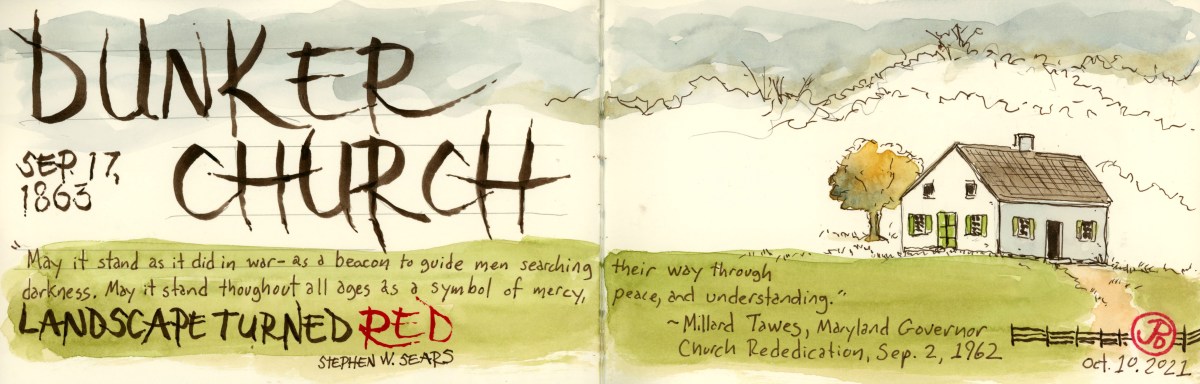
Landscape Turned Red: Dunker Church

The Battle of Antietam, near Sharpsburg, Maryland, is the single bloodiest day in any American War battle. During the Civil War, every causality was an American so the causality rate is understandably higher than in other conflicts. But the brutality of the fight over once day, makes the Battle of Antietam stand out amongst other battles.

About 23,000 where killed in this once day conflict. The Battle of Antietam, named after the creek that flows east of Dunker Church, was a failed campaign, by General Robert E. Lee to invade the north in the border state of Maryland. It was also not the decisive battle that Lincoln wanted and the ever meek General McCellan, let the depleted rebel army escape across the Potomic. McCellan was soon replaced but this victory was enough for Lincoln to introduce the document that had been sitting in a desk drawer: the Emancipation Proclamation.

One of the enduring sights from Antietam is the Dunker Church. It has been called, “one of the most famous churches in American military history”. This simple, one room church was surrounded by the horrors of war on September 17, 1862. When soldiers first came upon this small, plain, and unassuming building, some thought it was a schoolhouse.

The church was granted on a parcel of land by farmer Samuel Mumma and was constructed in 1852. The “Dunkers” were a pacifist German Baptist congregation, which is very ironic considering the bloodshed that surrounded the church on a September day in 1862.

Antietam, the mix of the holy and the profane. Dunker Church and cannon.

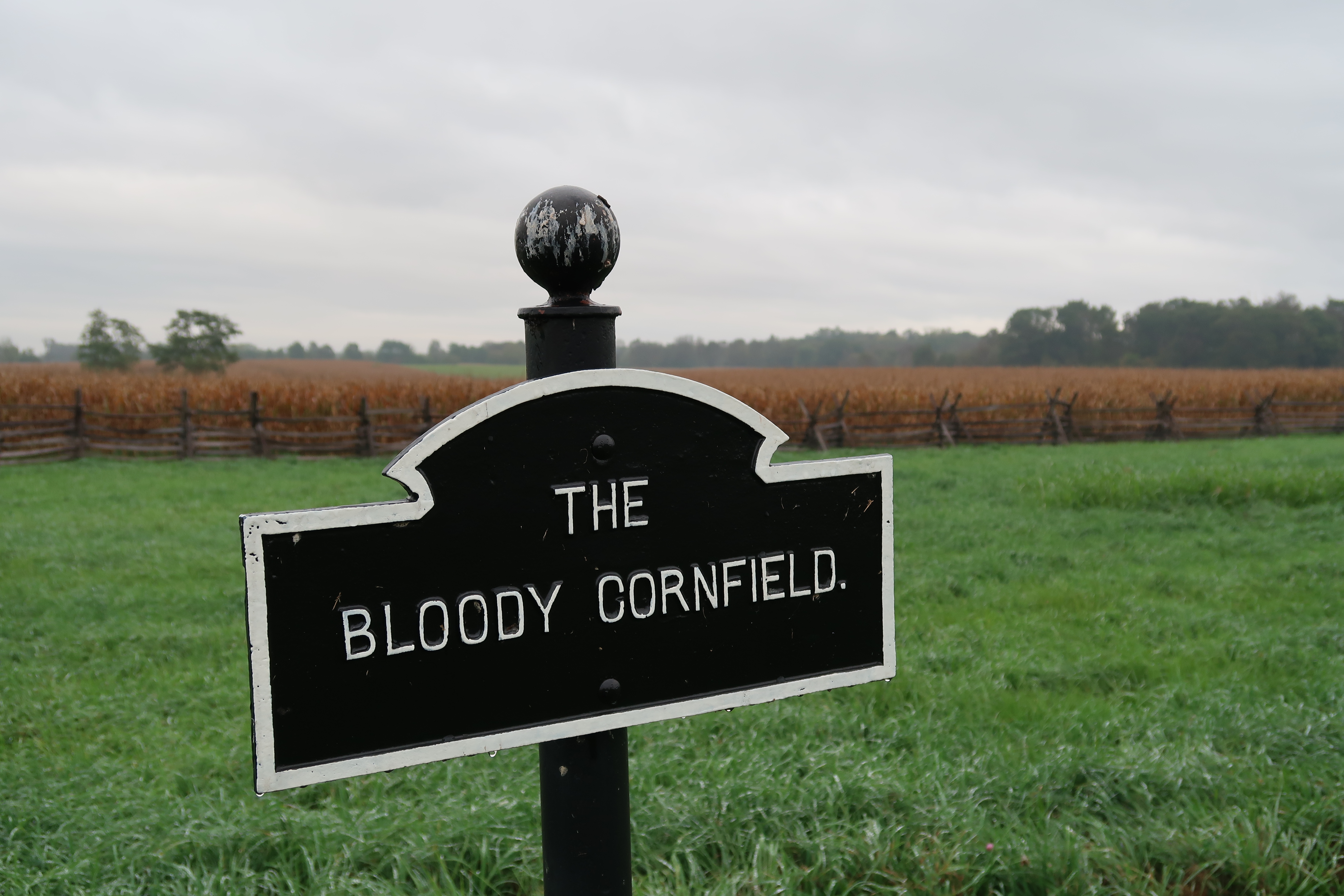
The battle started near the church on the morning of the 17th. Blood runs thought the landscape and place-names of this battlefield. To the northeast of the church was a cornfield, after the battle, it was given the infamous moniker, the Bloody Cornfield. Many men, both north and south, died in a field of life giving corn.

The Dunker Church was the center of the morning’s conflict and today, the visitors center is built near the church. When I visited, on an early October Sunday, there was an artillery demonstration in a field to the east of Dunker Church. So I stuck around because reenactors would be firing a replica Napoleon Cannon.

Civil War reenactments started in 1960, the centennial of the war. It has been a growing hobby, some might say “obsession”, since that time. One of the biggest Civil War reenactments was to celebrate the 135th Anniversary of the Battle of Gettysburg (much more on Gettysburg later). That event included 15,000 participants. It seemed that Civil War reenactments are on the wane these days and younger generations have differing views of the Civil War, its influence and it’s impact. As a result they are not taking up the replica muskets and joining a “battle”.

These reenactors where dressed in the mismatched uniforms of the Confederate Army. Maryland was a border state during the Civil War and Lee counted on support from the locals on his Maryland Campaign. In the end, this didn’t really happen.
Fire In the Hole! The canon demonstration was both loud and powerful. It was haunting to hear the cannon echoing across the rural Maryland landscape. I’m not sure if the neighbors sleeping off Saturday’s revels felt the same.
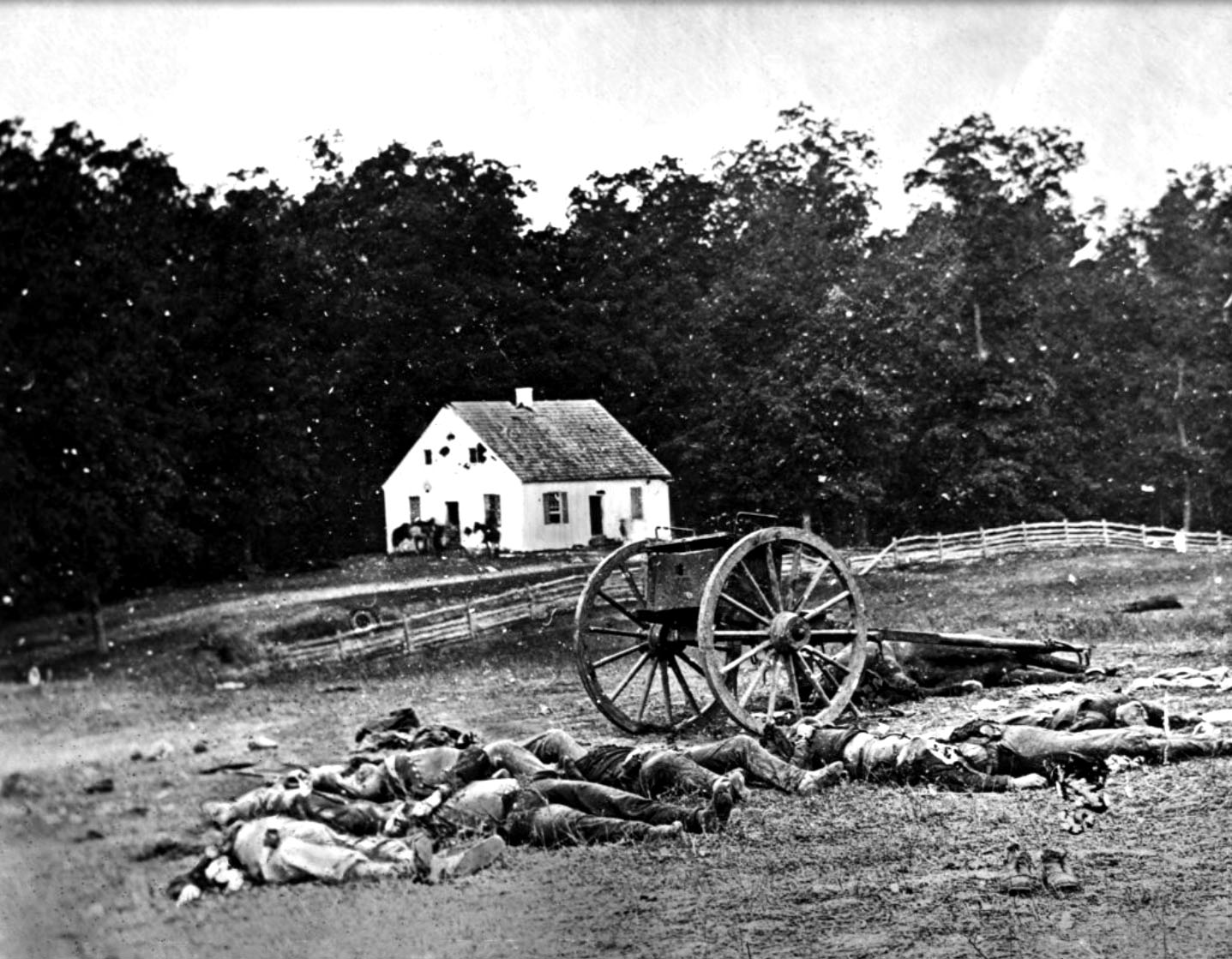
A photography taken just after the battle of Antietam showing Confederate dead in the foreground. In the background, Dunker Church shows damage from artillery fire. This is the photograph where I took inspiration for my featured field sketch.