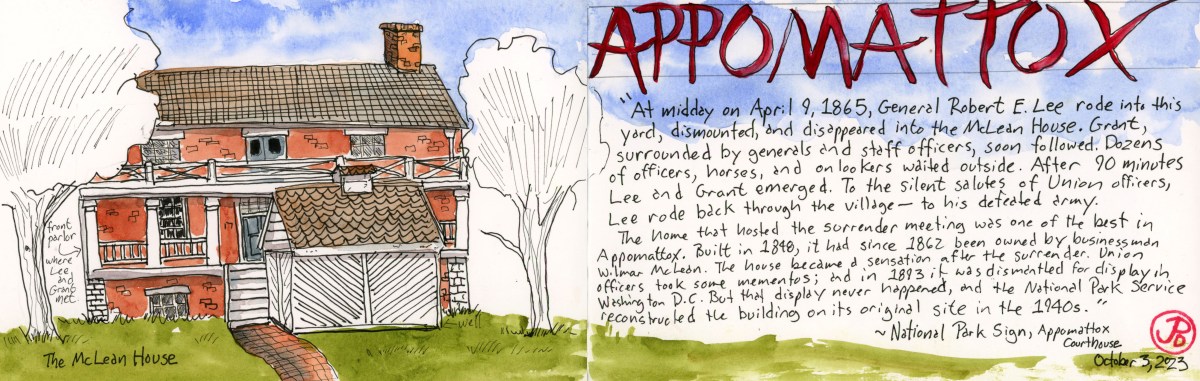
One Civil War location I have been interested in visiting and sketching for a long time is Appomattox Courthouse in southern Virginia.
This is not the site of a major battle. Civil War lovers come here to visit a house just down the street from the courthouse and pay a visit to the front parlor.
Now how did this small parlor in a small southern Virginia town become a major historical landmark?
This is where the Civil War ended, at least on paper.
The Confederate Army of Northern Virginia, commanded by General Robert E. Lee, was surrounded by Union forces near the small town of Appomattox Courthouse. Lee was now out of options and had no choice but to surrender. Lee said, “there is nothing left for me to do but go and see General Grant, and I would rather die a thousand deaths. “
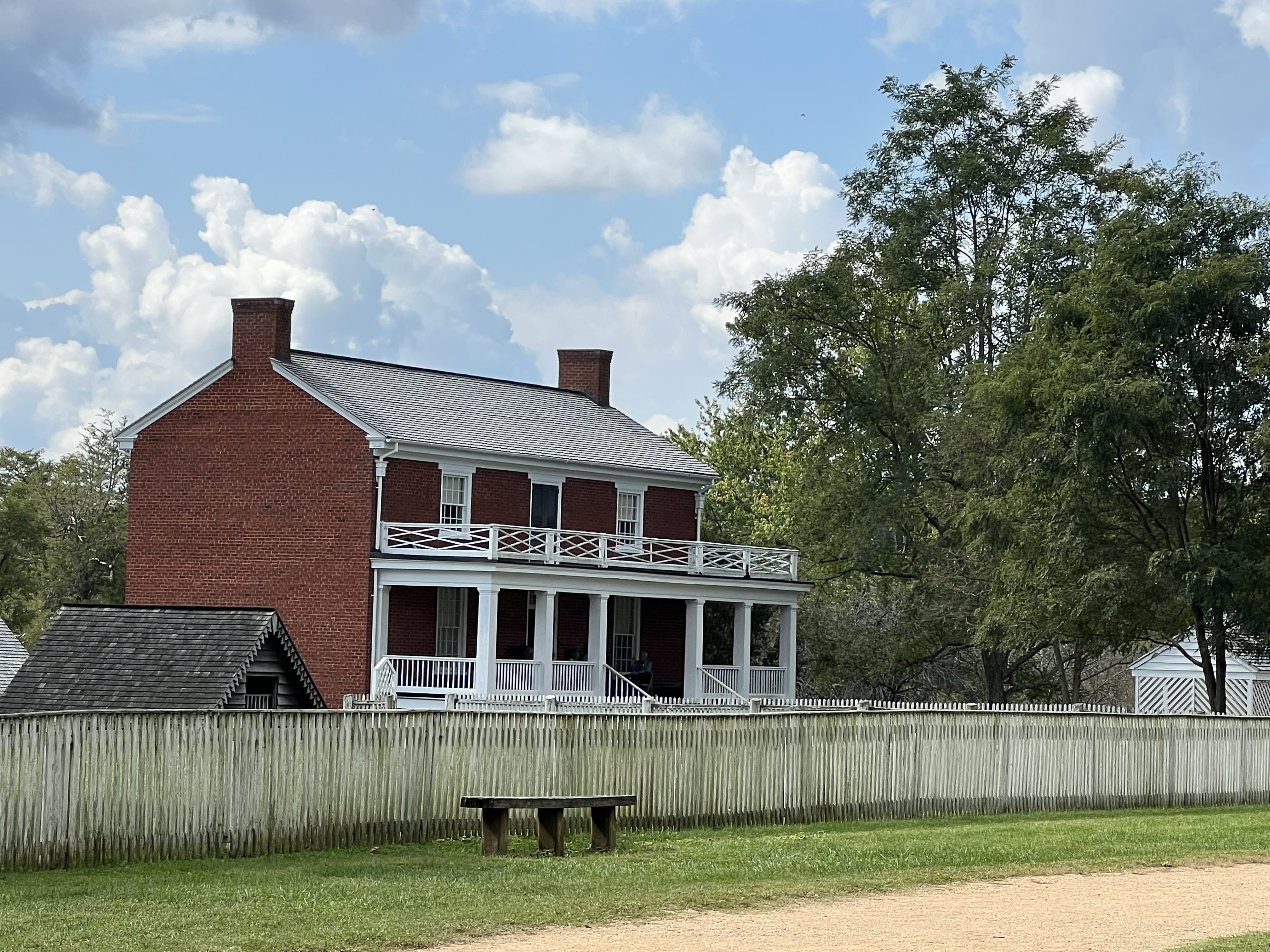
On April 9, 1865, in the early afternoon, Robert E. Lee, entered the village of Appomattox Courthouse. He headed past the courthouse and stopped at the McLean House. Lee dismounted his horse Traveller, and entered the house.
Shortly afterwards General Ulysses S. Grant, General-in-Chief of all the forces of the United States, entered the house.
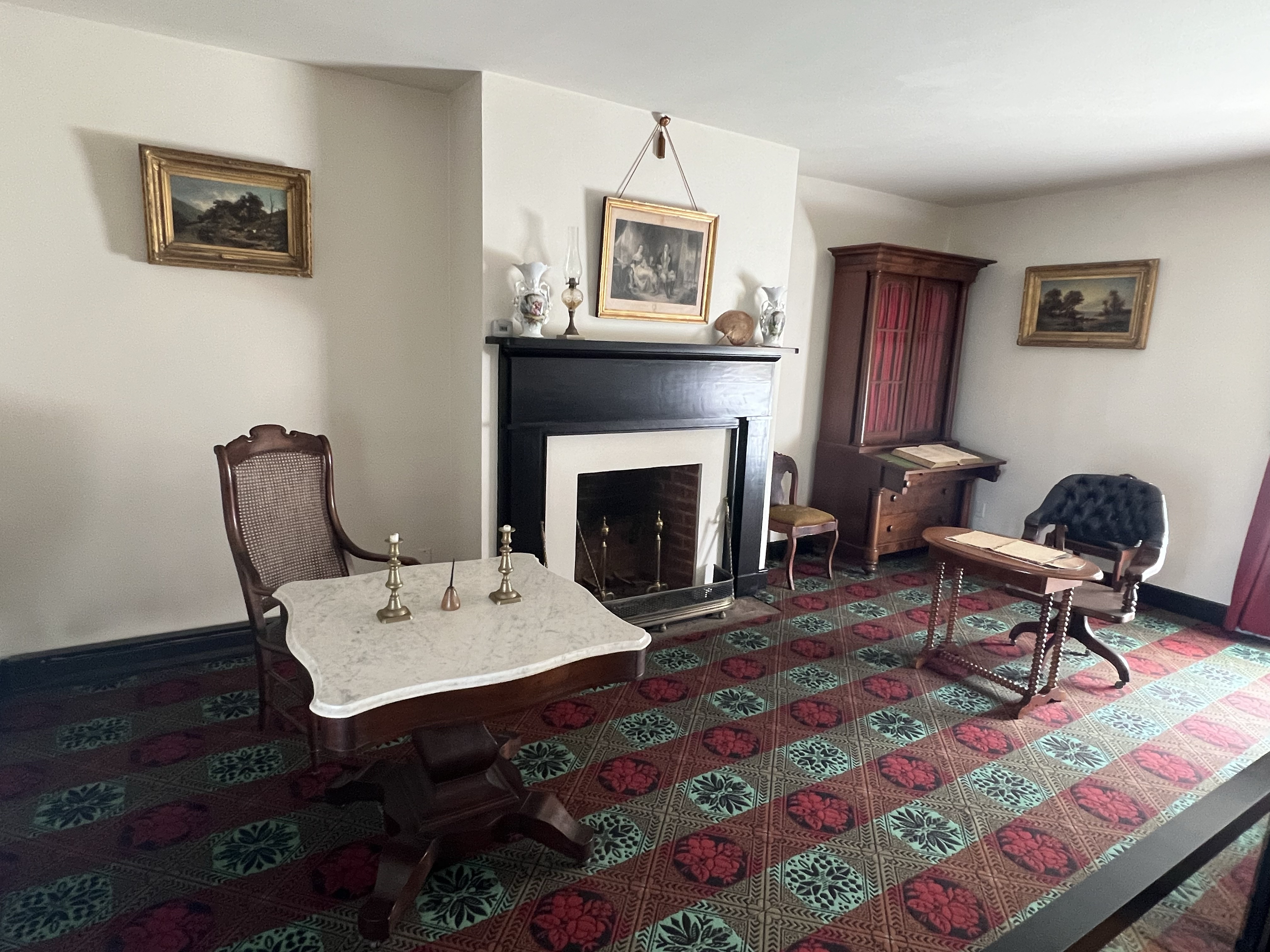
The two men met in Wilmer McLean’s front parlor while the family was in the upstairs bedrooms. Here the lenient terms of surrender where agreed upon. The Confederate soldiers had to pledge not to take up arms again against the United States, they had to turn in their rifles but could keep their sidearms, and Lee was allowed to go free.
This surrender Appomattox was the beginning of the process of reunification.
Or was it?
Coda: Before he lived in Appomattox Courthouse, Wilmer McLean lived further north in Manassas.
During the the first battle of Manassas (aka Bull Run), McLean’s house was used by Confederate General Beauregard as his headquarters. His house was shelled by Unionist cannons.
It is said of McLean that the Civil War, “began in his front yard and ended in his front parlor”.
 Corvid Sketcher