Image

The Great Auks and the Natural History Museum

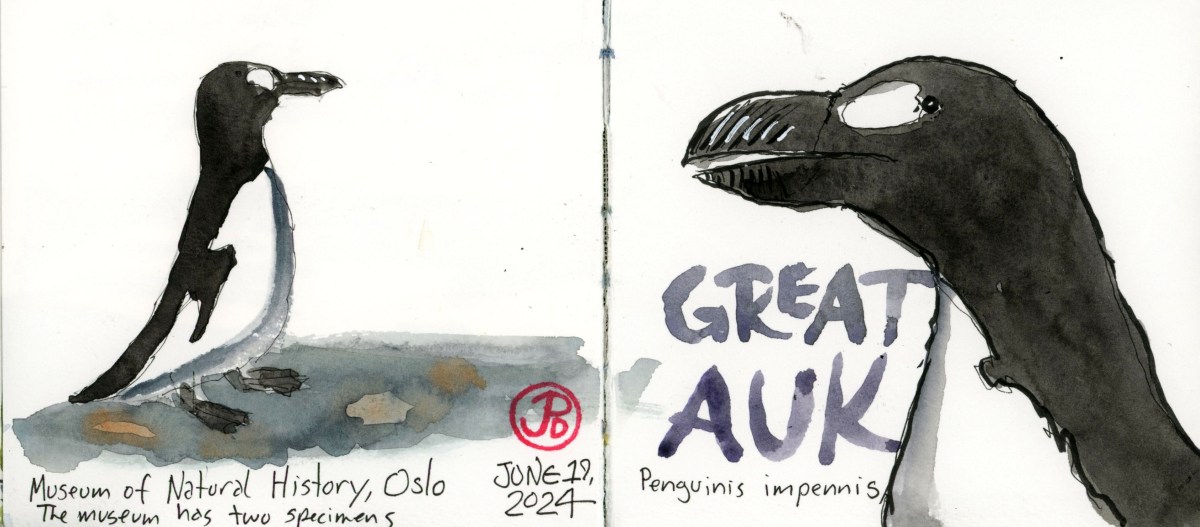
In Iceland last summer I saw the last domain of the now extinct great auk. I have never seen a specimen before and Oslo’s Natural History Museum had two. But the irony is that once 19th Century naturalists knew that the great auk was nearing extinction, there was a mad rush to add a specimen to their museum’s collection thus pushing the auk to full extinction.

The museum had an extensive collection of mounts featuring animals from around the world. One mount caught my attention, it was an animal from Tasmania. This was the extinct Thylacine or Tasmanian Tiger.
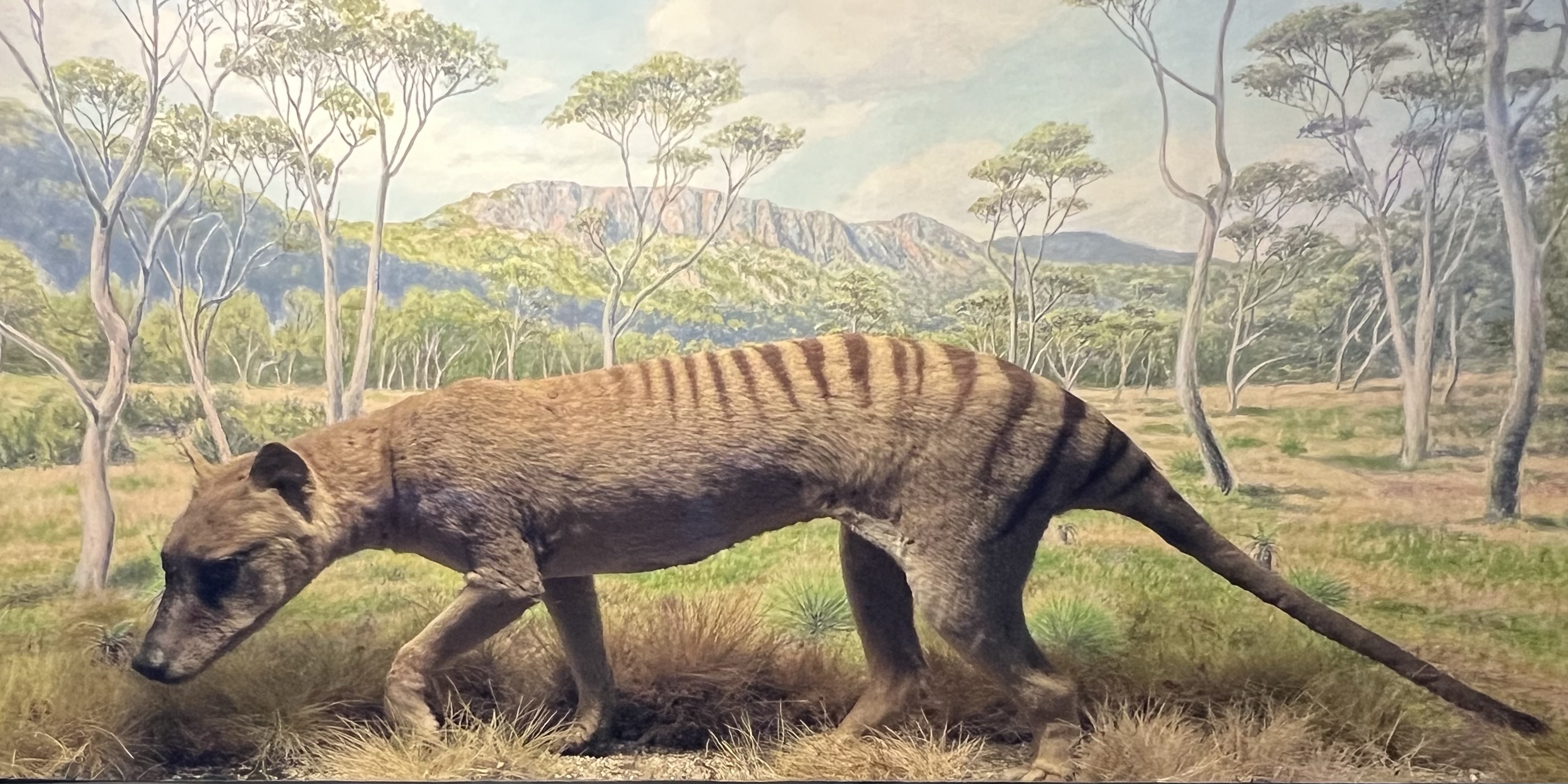
Unfortunately a natural history museum is one of the only places to see extinct animals such as the great auk and thylacine.

Another part of the museum that I was drawn to was the Svalbard section, featuring animals that I was looking forward to seeing.
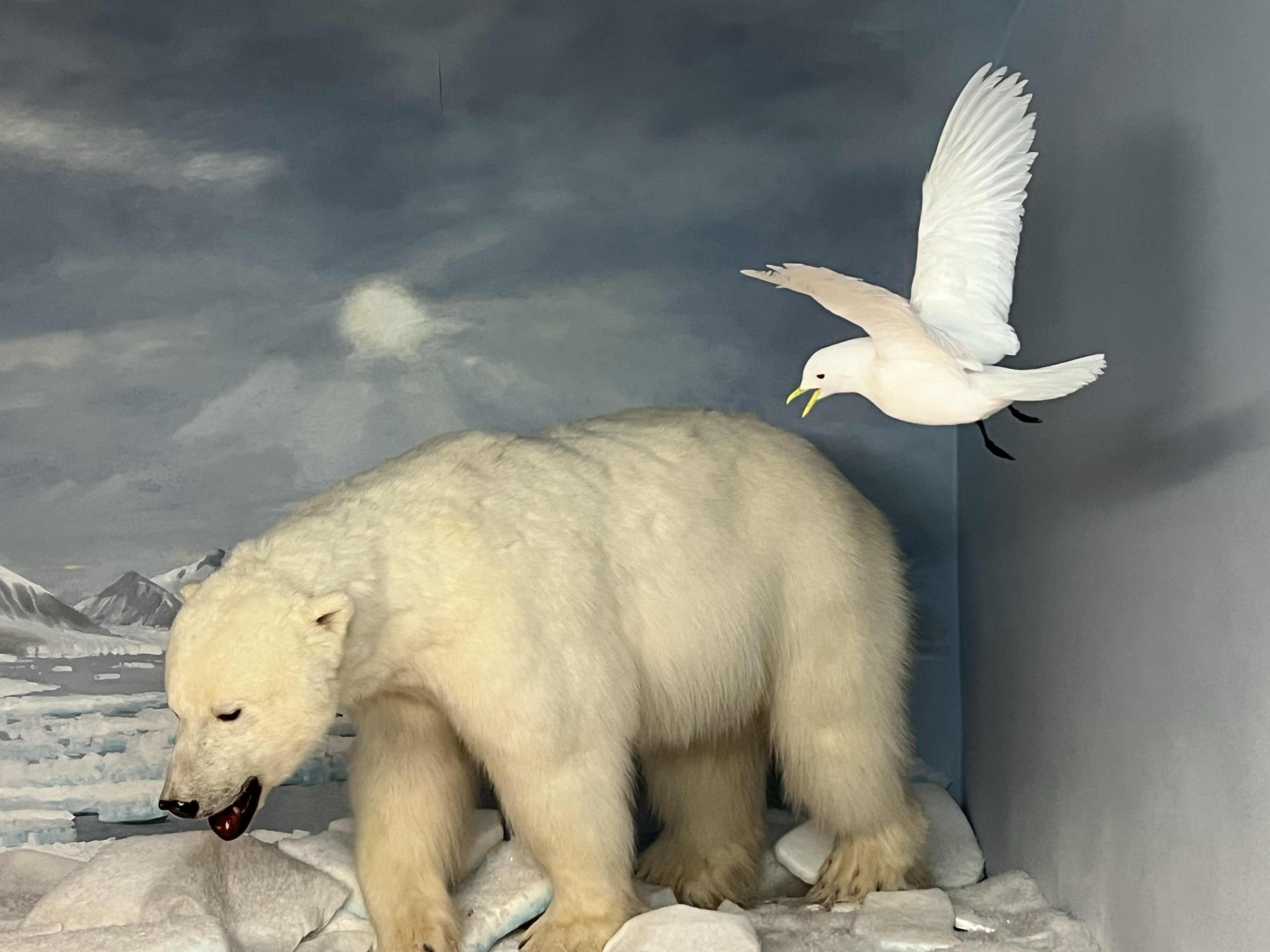
Two species topping my list: ivory gull and polar bear.

I sketched one of the two polar bear mounts in my small sketchbook, and yes the bear’s tongue was really sticking out.
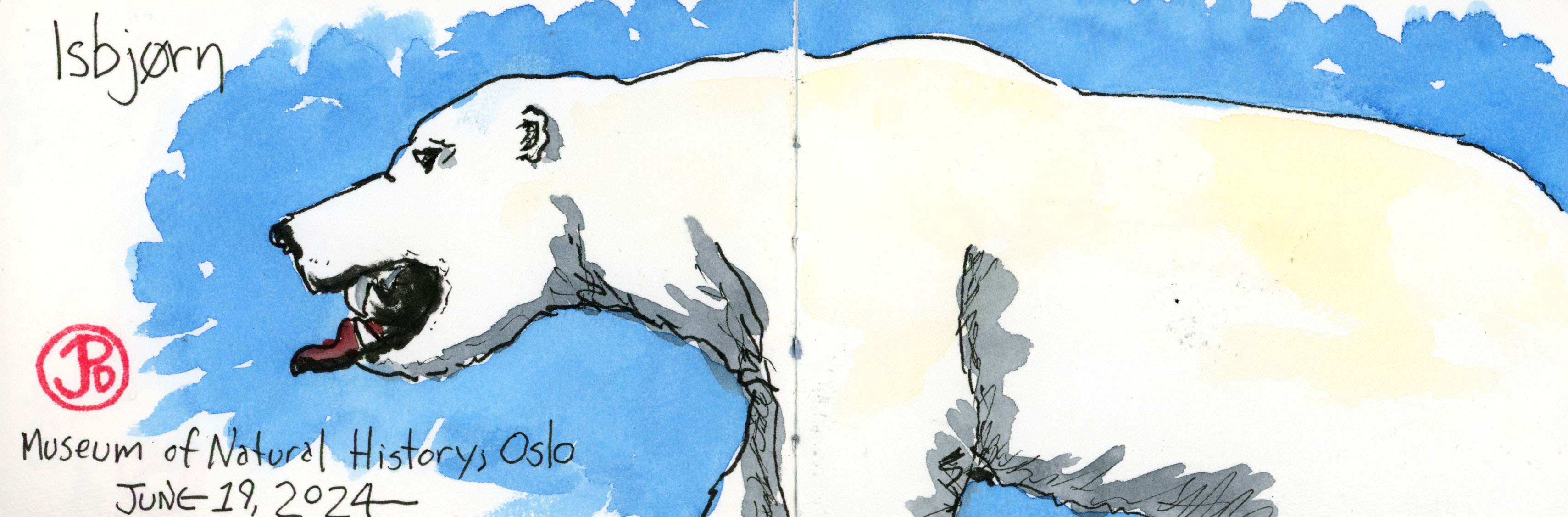
Unfortunately polar bear mounts are all over Scandinavia and I saw many in museums. There was even one in the Longyearbyen Airport baggage claim. Finding a real live bear, outside of a zoo, proved to be a real challenge.
Image

The Last of the Great Auks

One location I wanted to visit was about 20 minutes from Keflavik International Airport but without a car, it seemed a remote possibility that I would see the island where the last great auk lived.

As it turns out, we had some extra time on the last day of my WINGS Iceland tour and our guide thought we would spend some time at the volcanic bit of land closest to Eldey Island.

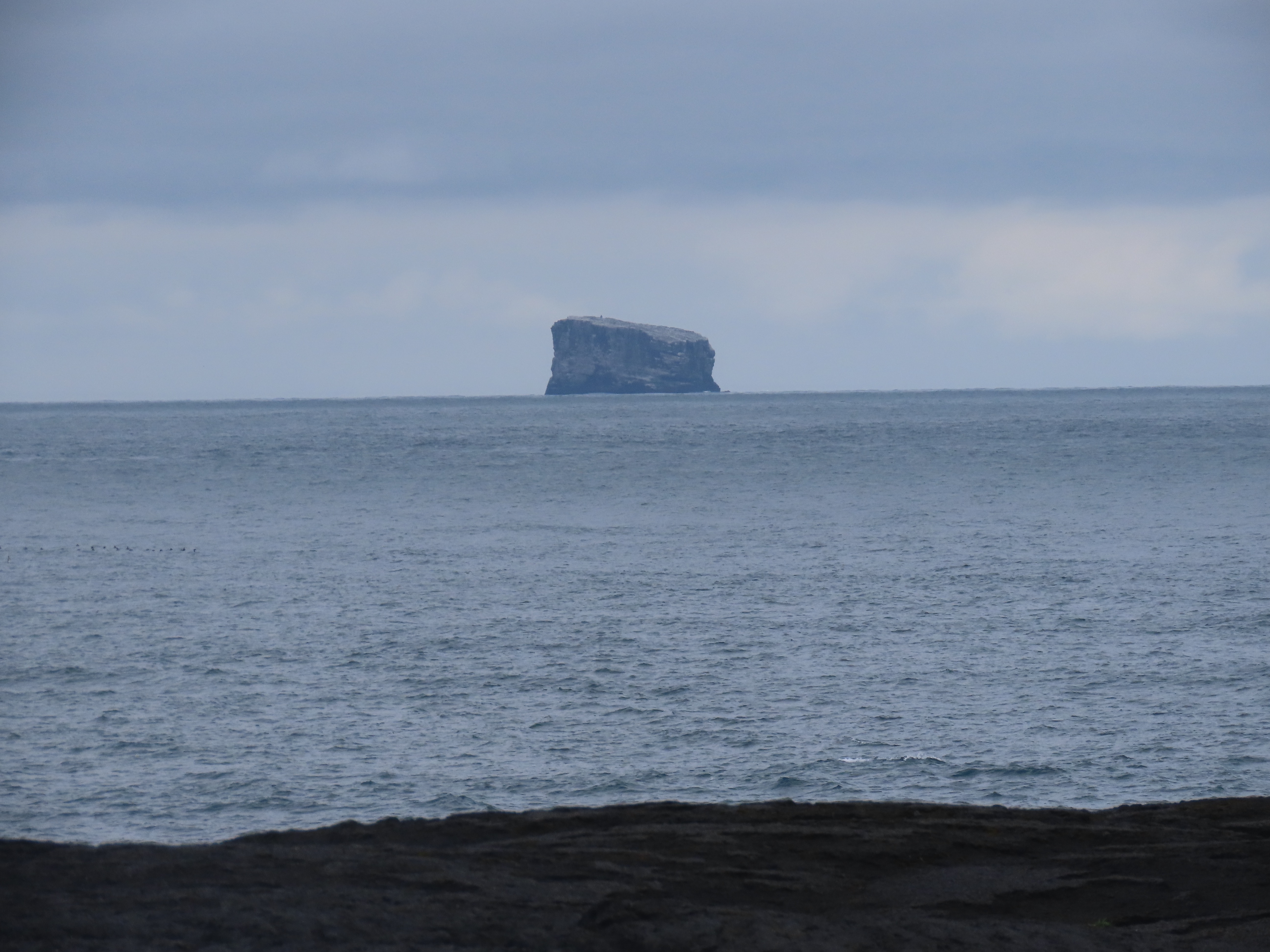
We pulled into the black sand parking lot between a lighthouse and the Atlantic. Near and just off shore are large kittiwake breeding colonies. A little further off shore were lines of murres, razorbills, and puffins. Add to that, there were a movement of Manx shearwaters heading north. And beyond the bird movement, nine miles from shore, is Eldey Island.

Eldey Island, nine miles off the coast of Iceland.

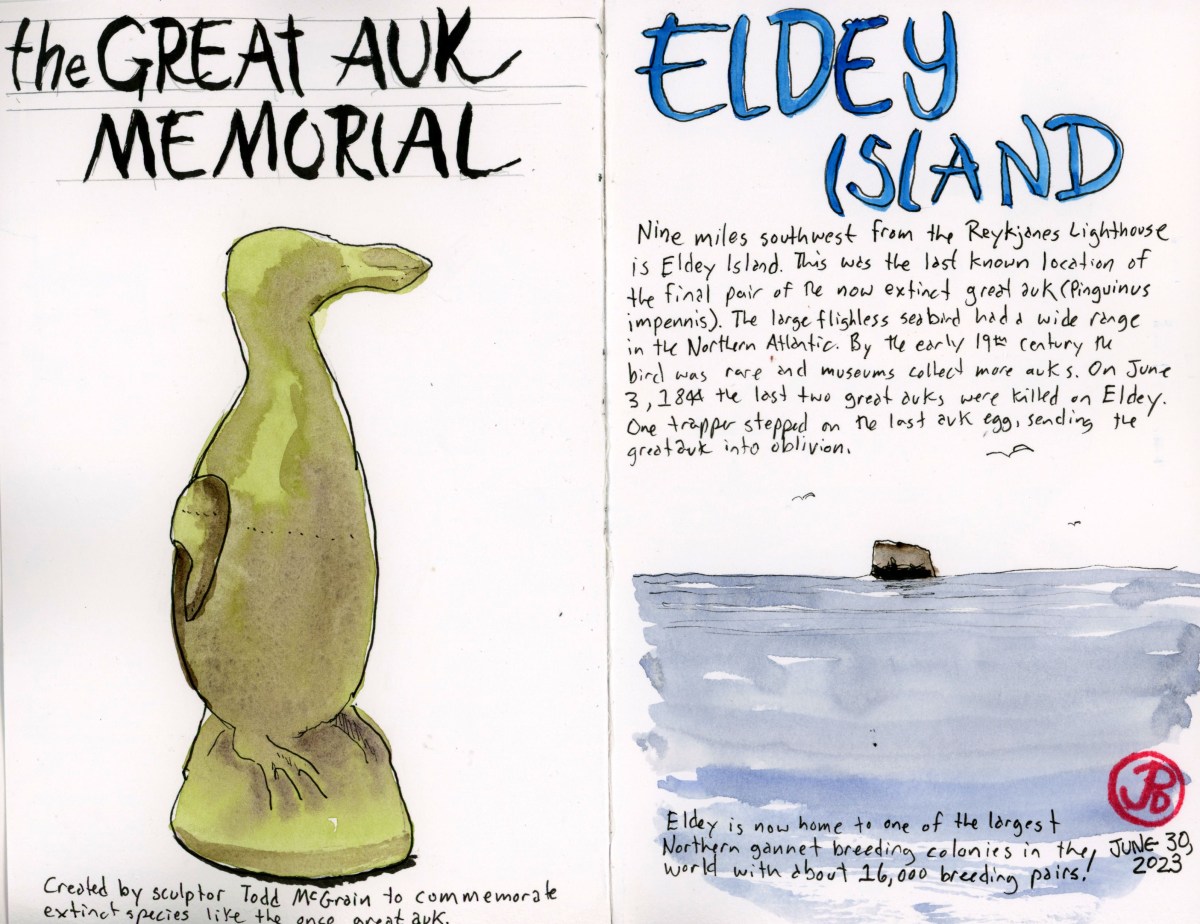
This is the last place the great auk (Pinguinus impennis) occurred on Planet Earth. This large flightless auk once lived on both sides of the northern Atlantic.

By the early 19th century, the auk population had been severely reduced because of predation by humans.

Because the auk was becoming so rare, naturalists wanted to collect the auk before it disappeared from the earth, paradoxically pushing the great auk to extinction.

One of the last bastions of the great auk was Eldey. It was here on June 3, 1844 that the last two great auks were killed and one of the captors stepped back and crushed the last great auk egg sending the large flightless seabird into oblivion.

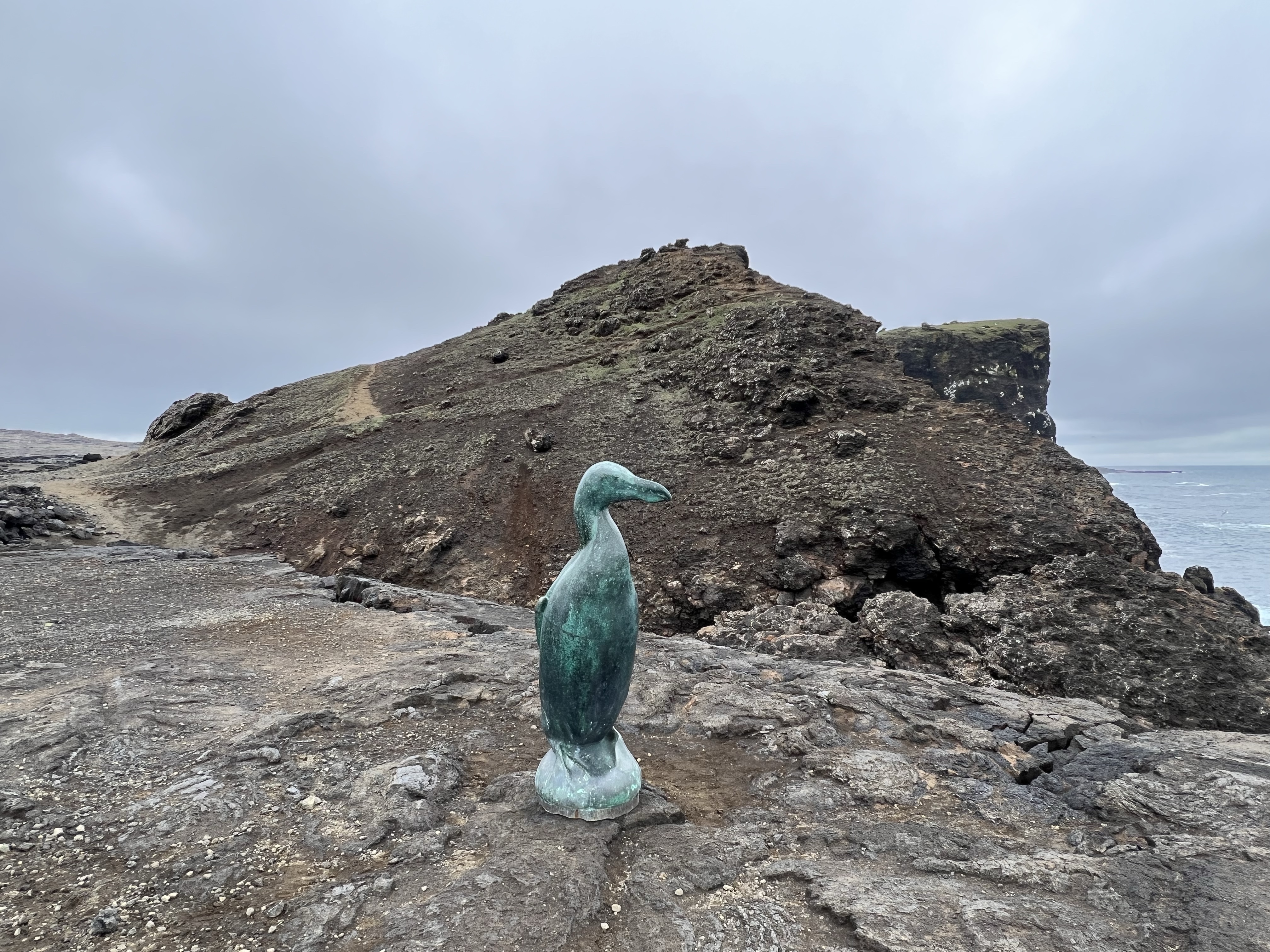
The extinction of the great auk is commemorated by a large sculpture by Todd McGrain, which I sketched (featured sketch).

The white on top of the island are all northern gannets. This is Europe’s largest gannet breeding colony.