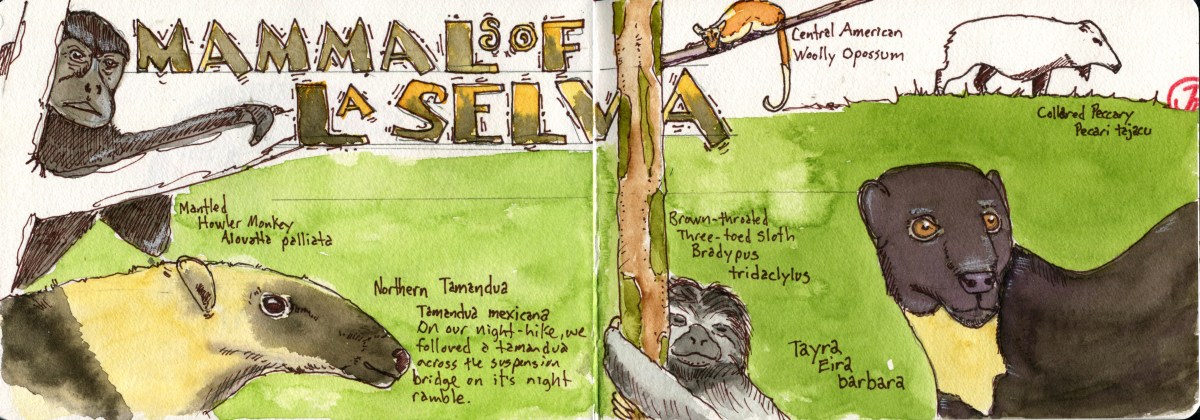
While birds are the main focus on a Costa Rican birding tour (go figure), we had many opportunities to observe mammals at La Selva. Because La Selva has been a protected reserve for over 50 years, some of the mammals seemed downright tame.
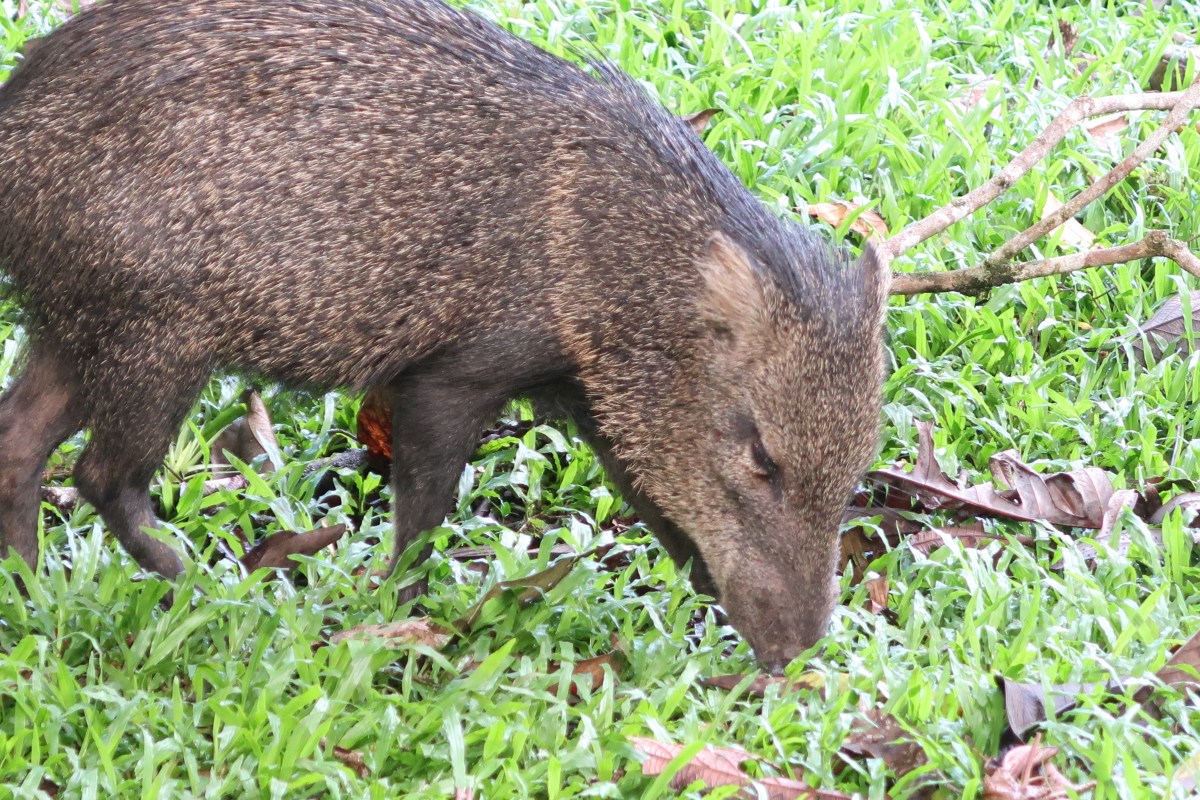
Case in point, the two collared peccaries that wandered about the lawn of the research complex like to off-lead dogs. These members of the pig family, nonchalantly passed within petting distance of our birding group. This sure beat any of the previous views of the animals as they scurried through the underbrush in southeastern Arizona.
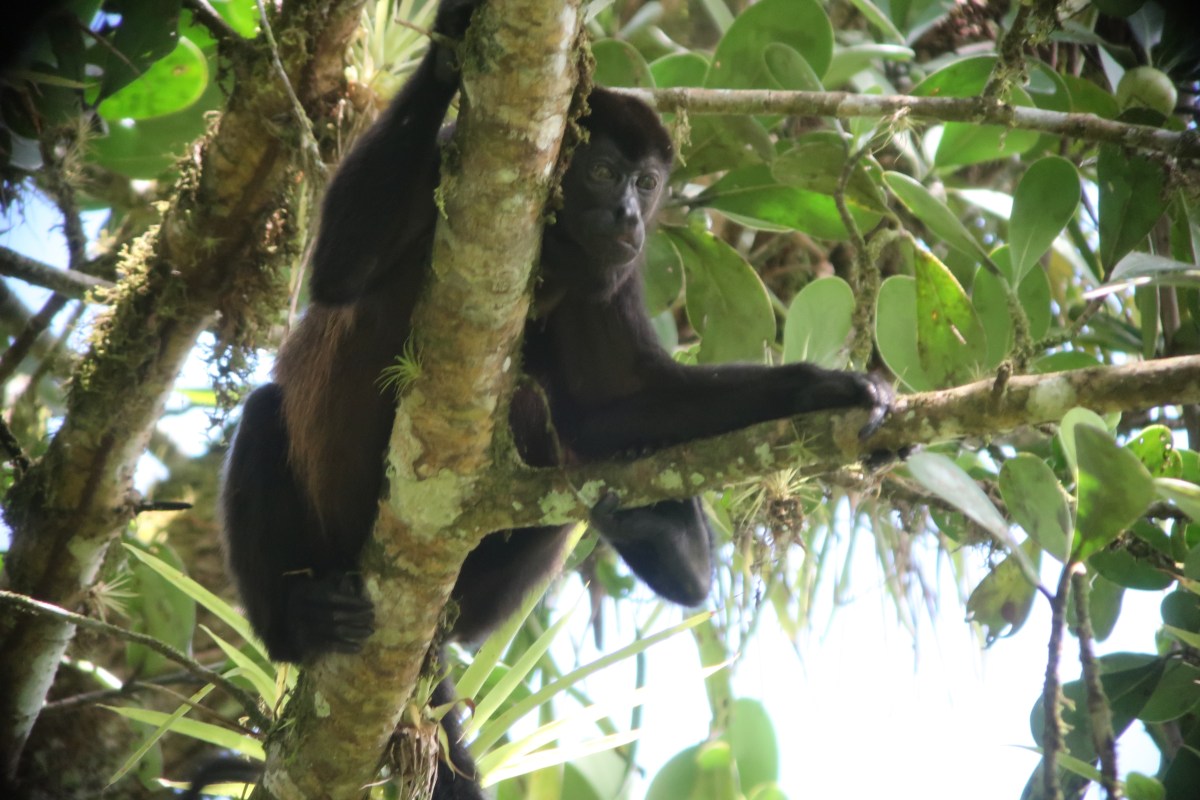
We later passed under a troop of howler monkeys, who were resting (as they do) in the upper branches, digesting their plant-based diets. These new world monkeys are the arboreal cattle of the rainforest, chewing their “cuds” and watching us watch them.
As day turns to night the mammalian activities ramps up. While walking to dinner a tayra (Eira barbara) practically walking into our dinner party. This large member of the weasel family seems to be put together with pieces of other animals. It is the sole member of the genus Eira and their species name means “strange”. It is also known as the “high-woods dog”, a further example that the tayra does not easily fit into any category.
After dinner, a few of us set off for a night hike. As we approached the suspension bridge that cross the Puerto Viejo River , we spotted a mammal in mid-span. Our light revealed that it was a northern tamandua, a species of anteater. The tamandua crossed the bridge and two biologists made way for it as it crossed to other side and ambled off into the forest. Amazing sighting!
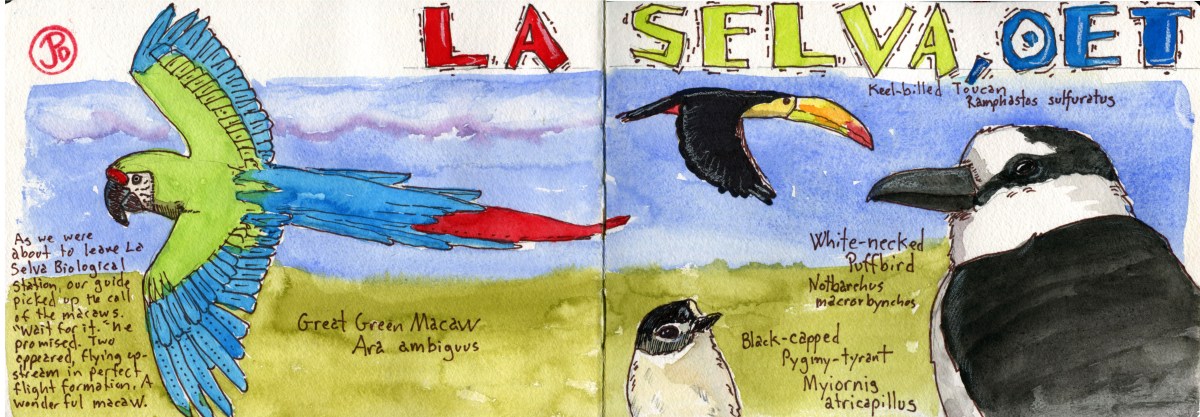
One of the best avian sighings at La Selva was on our last morning at the reserve. We had been hearing the distant calls of the great green macaw but no one had yet seen them in their bins. Downstream we all heard the raucous calls of macaws and our guide urged us, “Wait for it.” and just then two great green macaws appeared over the treetops and they flew in formation, upstream, as the late morning showers started. Great birds!
 Corvid Sketcher