Image

The Railroad of Las Gallinas

Rails are notoriously cagey birds. To see one well, takes lots of patience and a good deal of luck.

When I first started birding the Holy Grail bird was the clapper rail (now called Ridgeway’s rail).

The best place to see them in the Bay Area was historically Palo Alto Baylands. And it helped to be there at high tide, preferably a King tide.

You wait on the boardwalk and look down a channel through the march, a railroad, and get a fleeting glimpse of a rail swimming across.

The idea was that the high waters would flush the rails up making them easier to spot.

I had fleeting views, at low tide.

There are other places of the unbroken marshes that once ringed the San Francisco Bay. That’s why the Ridgeway’s is a gem to see because it is uncommon and elusive and threatened. The rail is on the Red Watch list meaning it is a species of the highest conservation concern. So seeing one is always special.

One of my favorite birding areas Las Gallinas Valley Sanitary District, also happens to be a great place to encounter a Ridgeway’s. You may not always get a good view but you can usually heard them.
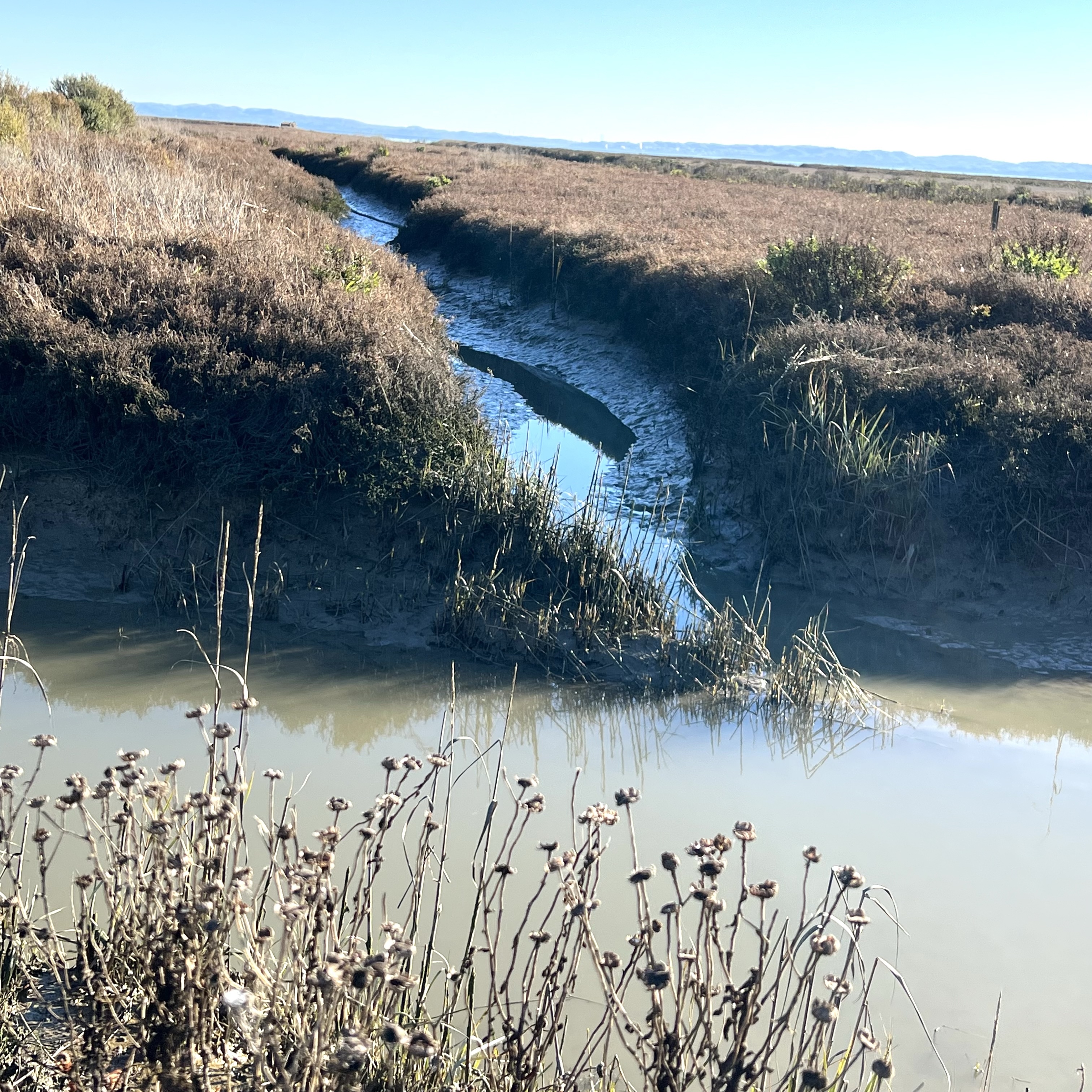
A railroad line at Las Gallinas.

You do have to walk as far east as you can to the marches buffer the bay and Miller Creek adds its water to the bay. To the left is a channel, a railroad, where I have seen rails before.

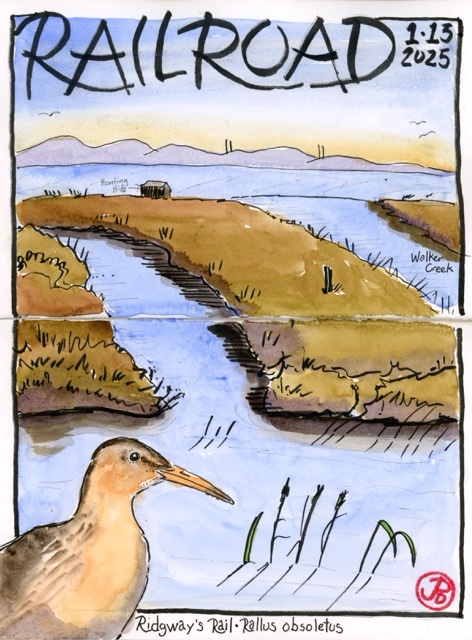
I walked out to the point, at a very high tide, and sketched the view (featured sketch).
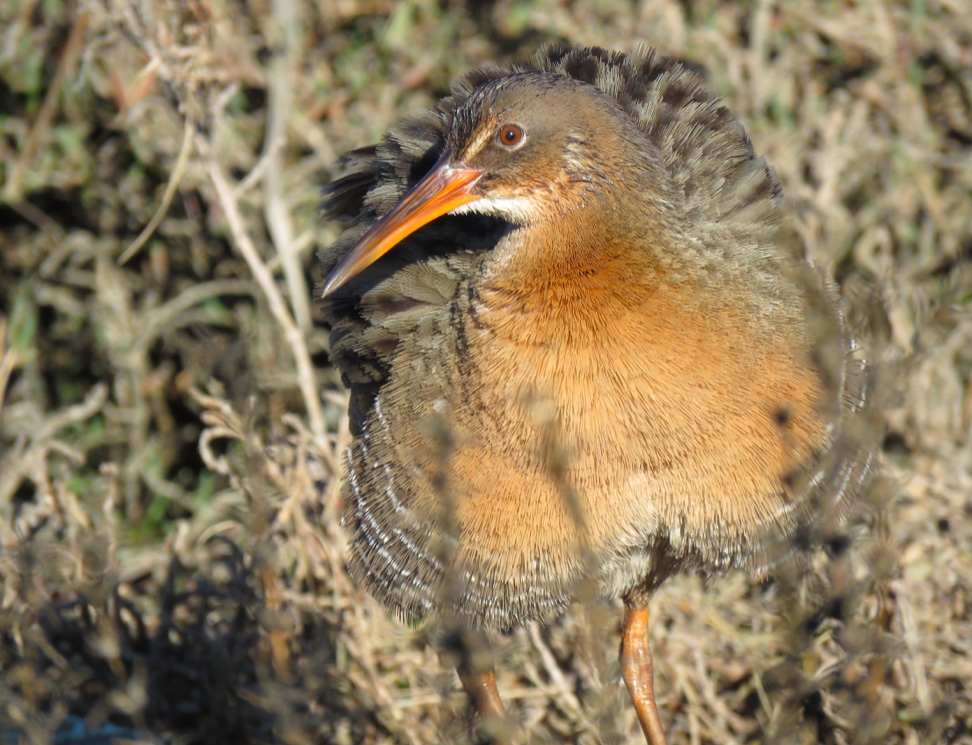
A great view of a Ridgeway’s rail in beautiful light at Bayfront Park. These sights are not too frequent.
Image

Edward Harris’s Sparrow (A Surprise Lifer)

When you are north of 500 lifers, your memory can get a little foggy on what you’ve seen, especially with the class of birds known to birders as Little Brown Birds (LBBs), the sparrows and their relatives. A sometimes tricky group of birds to identify.

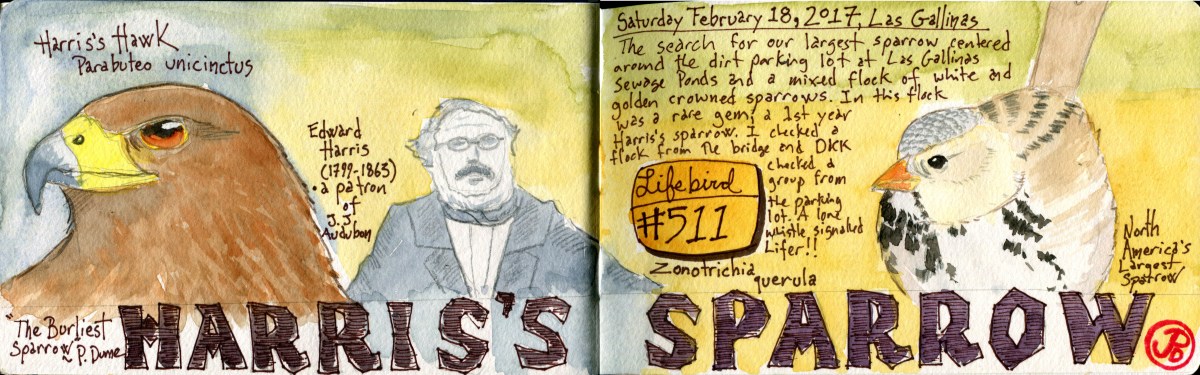
I was not sure how I missed North America’s largest sparrow. When I saw that a Harris’s sparrow had been found at Las Gallinas, on December 24th, in a mixed flock of white and golden crowned sparrows I thought I had added this one to my list years ago. I noticed that it had been refound on Friday and I consulted my records to help jog my memory. That box was not checked. I checked and rechecked and sure enough, that sparrow was not on my list. I knew that, with a break in our extremely wet winter, I would be heading north, to one of my favorite birding destinations: Las Gallinas Sewage Ponds.

I rendezvoused with Dickcissel and we headed up. The ponds were swollen with all the recent rains and it was extremely easy to see birds that are normally shy and elusive because most of their reedy habitat was now underwater. Soras, gallinules, and the constantly singing marsh wrens where putting on a wonderful Saturday morning show. On the west side of Pond 1, a common gallinule rushed out of the water and up into the remaining reeds. A predator was near. Sure enough, a river otter poked it’s head above the water to survey the scene.

We returned to the parking lot area and scanned any sparrow flocks for a large sparrow with a white breast. I was following a flock across the channel and Dickcissel returned to the dirt lot to see what he could find. A whistle alerted me to the fact that the Harris’s had been located and I rushed over to Dickcissel’s position and found lifer # 511, Harris’s sparrow.

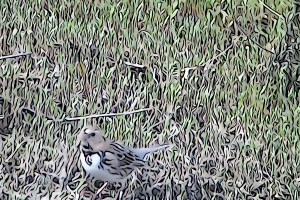
dsc07381

An oddly pixilated digiscope shot of the Harris’s, no Photoshope required.

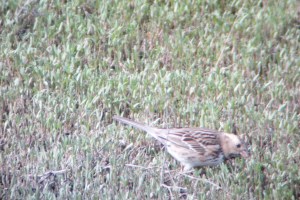
dsc07370

Digiscope of North America’s largest sparrow at Las Gallinas.


Image

Las Gallinas

Las Gallinas Sewage Ponds.

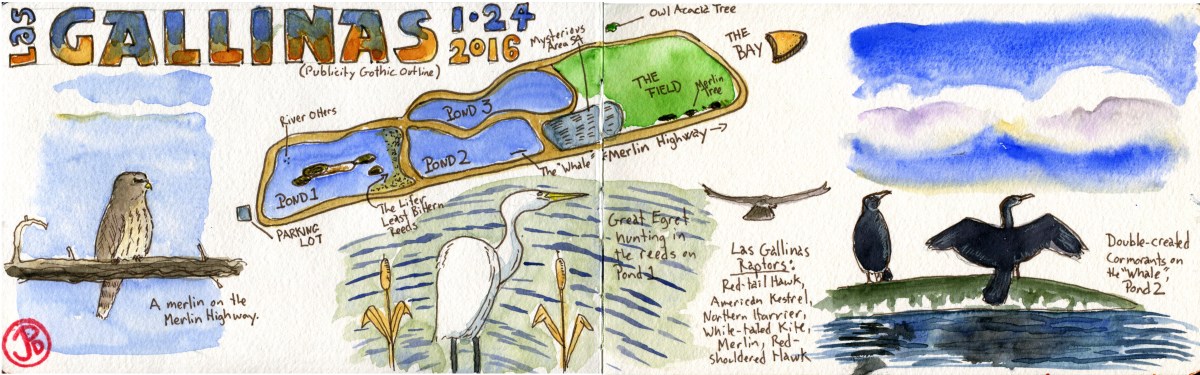
These three ponds in northern Marin County, hold many avian riches. On one side of the trail, you have the ponds with ducks, egrets, pelicans, and cormorants. On the other side you have fields with hawks, falcons, harriers, rails, and owls

The mammalian fauna is also rich with coyotes in the fields and river otters in the waters.

On one Sunday I circled the ponds with binos and sketchbook. A treat was a Merlin perched along the “Merlin Highway”. You rarely see merlins perched in trees, because these small feisty falcons are always   on the move, always moving with a purpose. So a stationary Merlin perched in a tree, scanning the fields for its avian prey, is a temptation that a birder-sketcher cannot pass up!

I then added two more field sketches of a great egret hunting in the reeds and a line of double-crested cormorants drying their feathers in the winter sun. To this I drew a map as a visual journal of my day at Las Gallinas.

Least Bittern

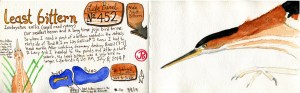
I’ve seen a few life birds in and around the ponds at Las Gallinas. One was a juju bird, that is a bird that I have consistently whiffed on. This bird is  seemingly a mystic ghost that has never filled the lens of my binoculars.  This bird had evaded my life list for years, but a visit to Las Gallinas never let’s me down. This was the secretive and diminutive least bittern. I saw this bird in the reeds on the eastern end of pond one.  Whenever I see a life bird I create a journal spread, and United States life bird No. 452 is the subject of the sketch above.