Image

Polar Explorer and Golden Gate Park

I recently found an interesting connection between a Norwegian Polar explorer, an Oslo maritime museum, and Golden Gate Park in San Francisco.

The Norwegian explorer was Roald Amundsen.
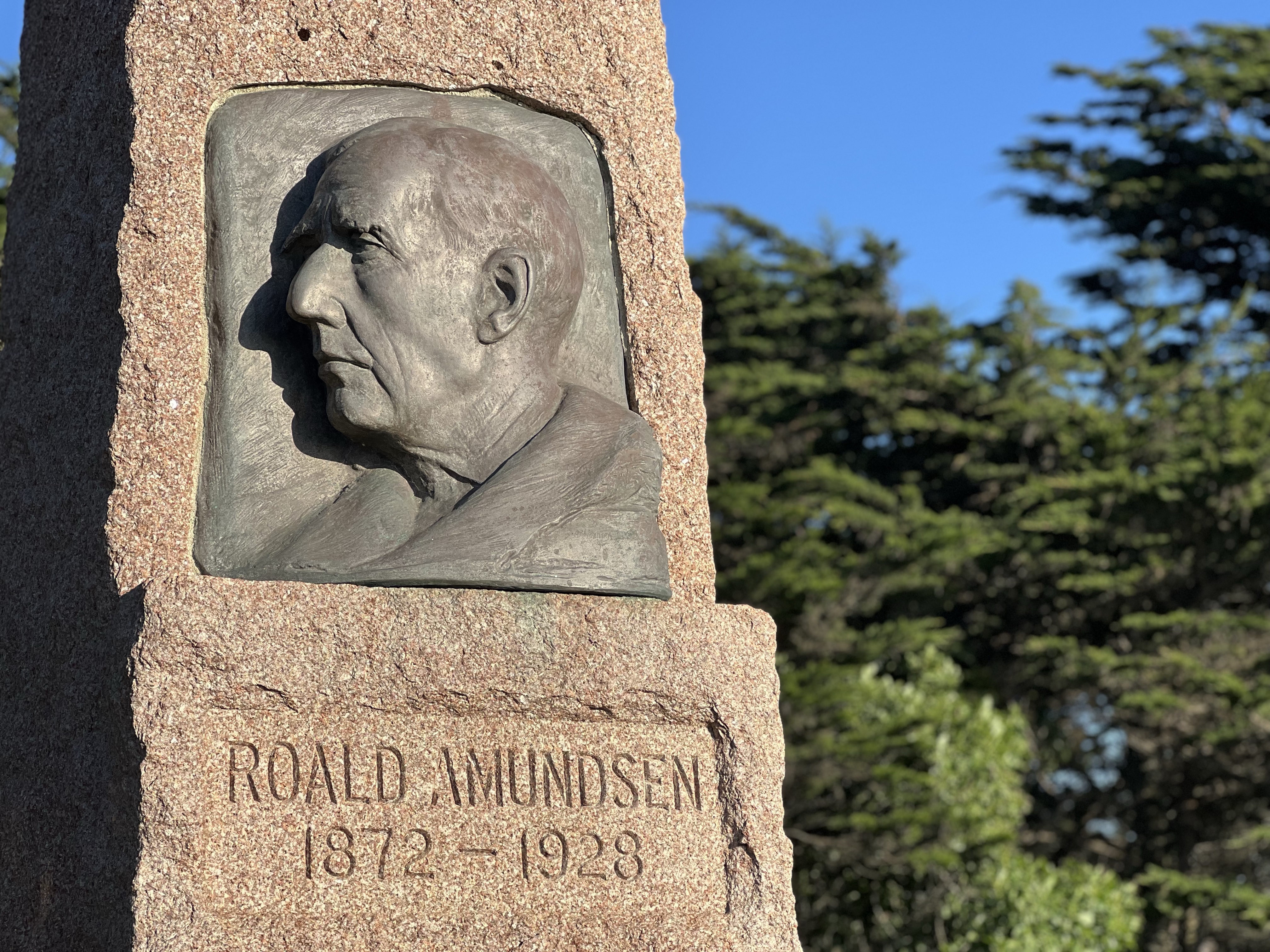
The plaque under the monument reads:

Roald Amundsen, the Norwegian polar explorer, was the first to locate the magnetic North Pole and to navigate the Northwest Passage, the Arctic water route from the Atlantic to the Pacific. He left Norway with a crew of six on June 16, 1903 in a 69-foot-long converted herring boat named Gjoa. Amundsen spent three years on the perilous journey. The Gjoa continued on, sailing through the Bering Straits and anchored off Point Bonita, outside the Golden Gate, on October 19, 1906. The San Francisco Norwegian community purchased the Gjoa from Amundsen and donated the ship to the people of San Francisco in 1909. In 1911, Amundsen became the first explorer to reach the South Pole. The Gjoaremained on this site at the western end of Golden Gate Park until 1972, when it was returned to Norway. The restored ship is now on display at the Maritime Museum in Oslo. 

The Amundsen monument is a bauta, or stone shaft, or Norwegian granite which was donated by Bay Area Norwegians, March 1, 1930.

I headed west to the end of Golden Gate Park to do an afterwork sketch of the monument that sits in the parking lot just north of the Beach Chalet.

I look forward to sketching the ship that was once on display near this location, it’s bow facing the Pacific Ocean. The Gjoa is now on display at the Fram Museum in Oslo.

The Gjoa was at the western edge of Golden Gate Park until 1970. The elements took their toll on the static Polar ship and rot and vandalism tarnished this once proud and pioneering ship. She was donated to Norway and headed back to her homeland.

A sketch from a c1910 postcard view from Ocean Beach looking east towards the Gjoa and the Dutch Windmill. While the Gjoa is gone, the windmill remains.
Image

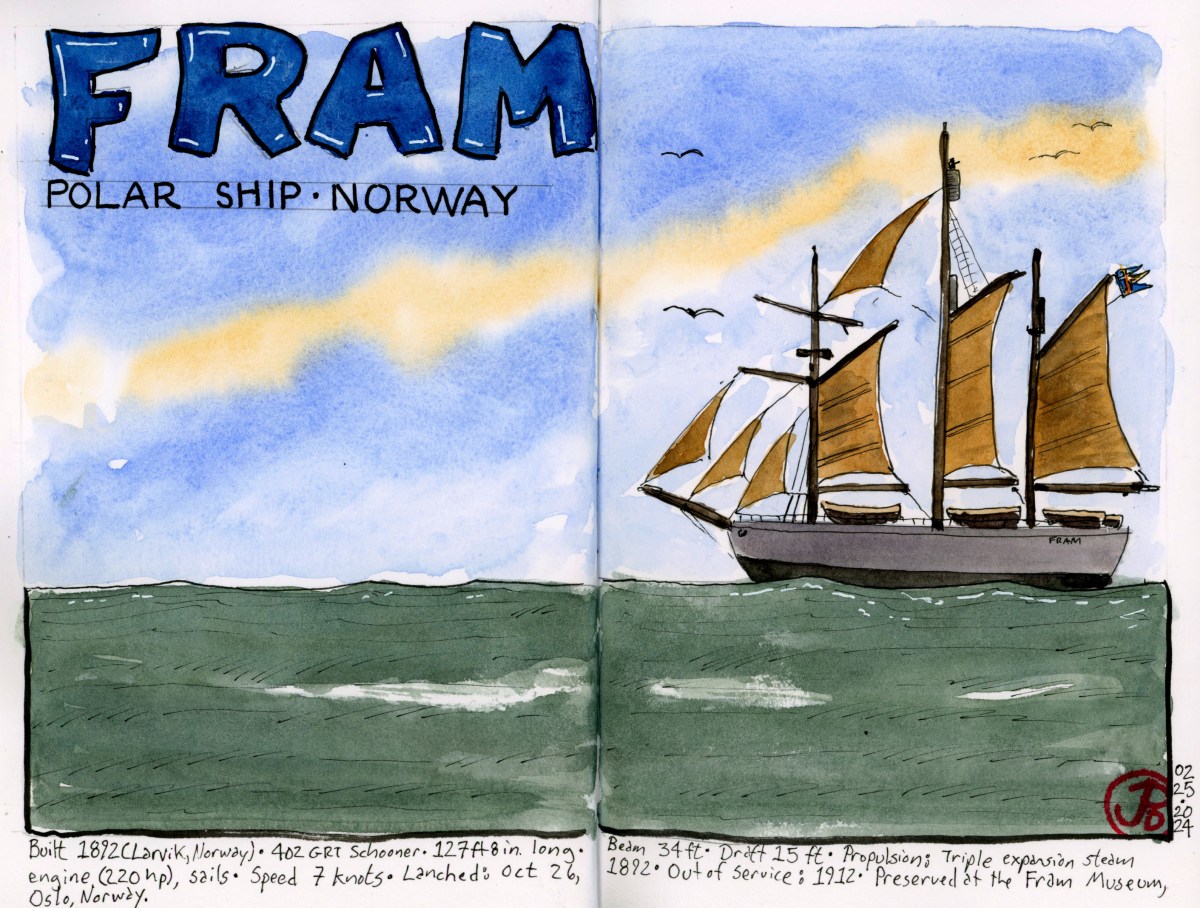
Polar Ship Fram

Another Norwegian ship on my sketch list is across the car park from the Kon-Tiki Museum. It is a 15 minute ferry ride from Oslo City Center to the Bygoy Peninsula.

This is the three A-frame buildings that comprises the Fram Museum. Under the largest A-frame is the Polar ship Fram (Norwegian for “forward”).

The Fram is the most rugged, toughest, and most durable wooden ship ever built. It was built to explore the Polar regions.

The Fram was built in Norway as the first ship designed for the rigors of Polar research.

The Fram was used in three important Polar Expeditions. In 1910-12, explorer Roald Amundsen sailed to Antarctica for his South Pole expedition.

One of the ships also on display at the Fram Museum is the Polar Ship Gjoa. This is the first ship that sailed through the entire Northwest Passage, going from the Atlantic to the Pacific Ocean. And I found out that the Gjoa had an interesting San Francisco connection.

More about this in the next post.

Image

M/V Plancius

Aside from all day pelagic cruises, the last time I was on a cruise of length, more than 24 hours, was when I was much younger (11 years old, according to my mom). This was a cruise (think: Love Boat) from Vancouver, Canada to Alaska.

It was my first experience with a floating city. This ship had every thing you needed and many things you didn’t.

Today the capacity of an average cruise ship is 3,000 passangers with a crew of about 1,000. The largest cruise ship in the world, Icon of the Seas, has a capacity of over 7,000 passengers with a crew of just over 2,000. This ship is 1,197 feet in length, that’s 315 feet longer than the Titanic.

I, on the other hand, would be on a summer cruise on a ship with a paltry capacity of 108 and a crew of 49! This ship was just under 300 feet, a mere 30% of the Titanic’s length.

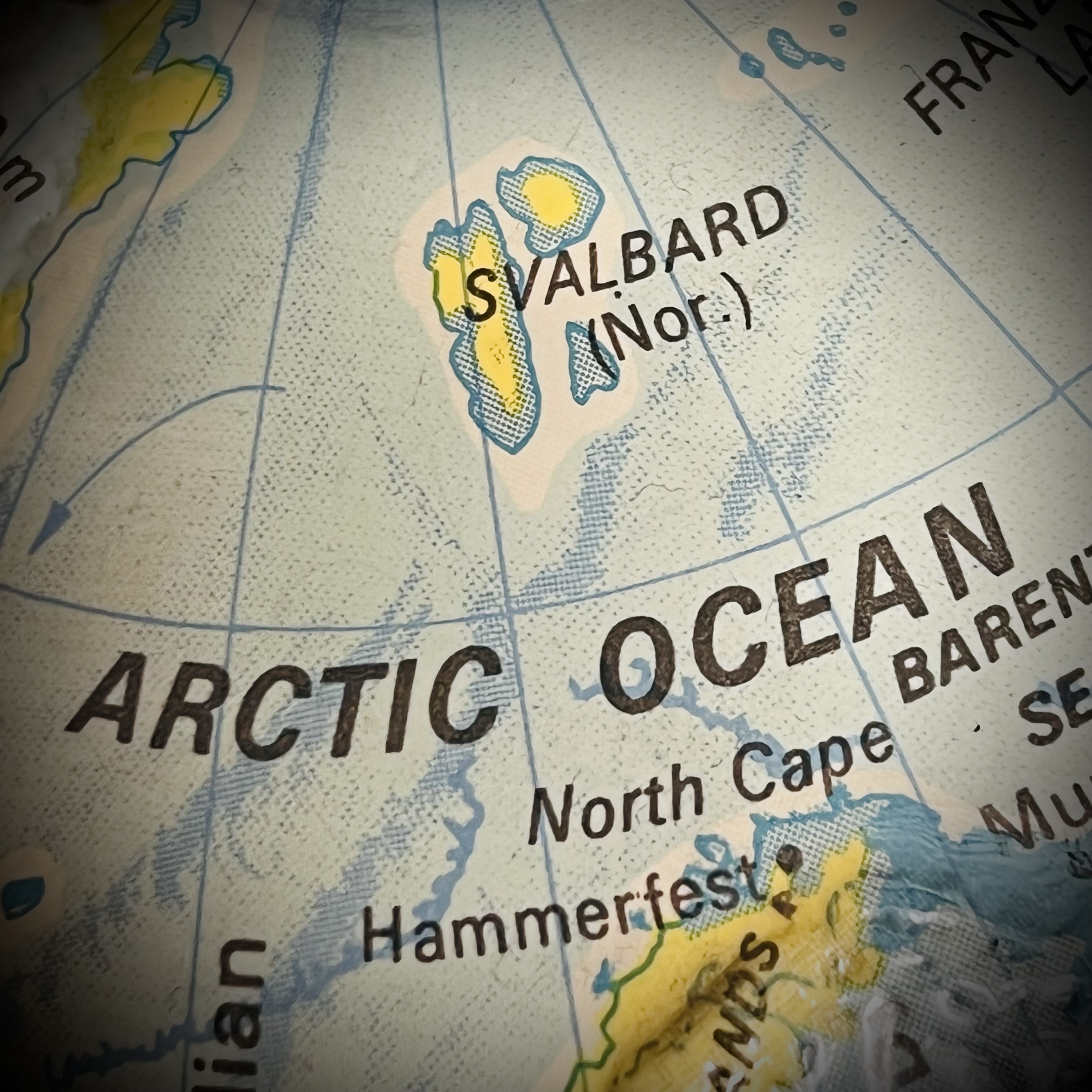
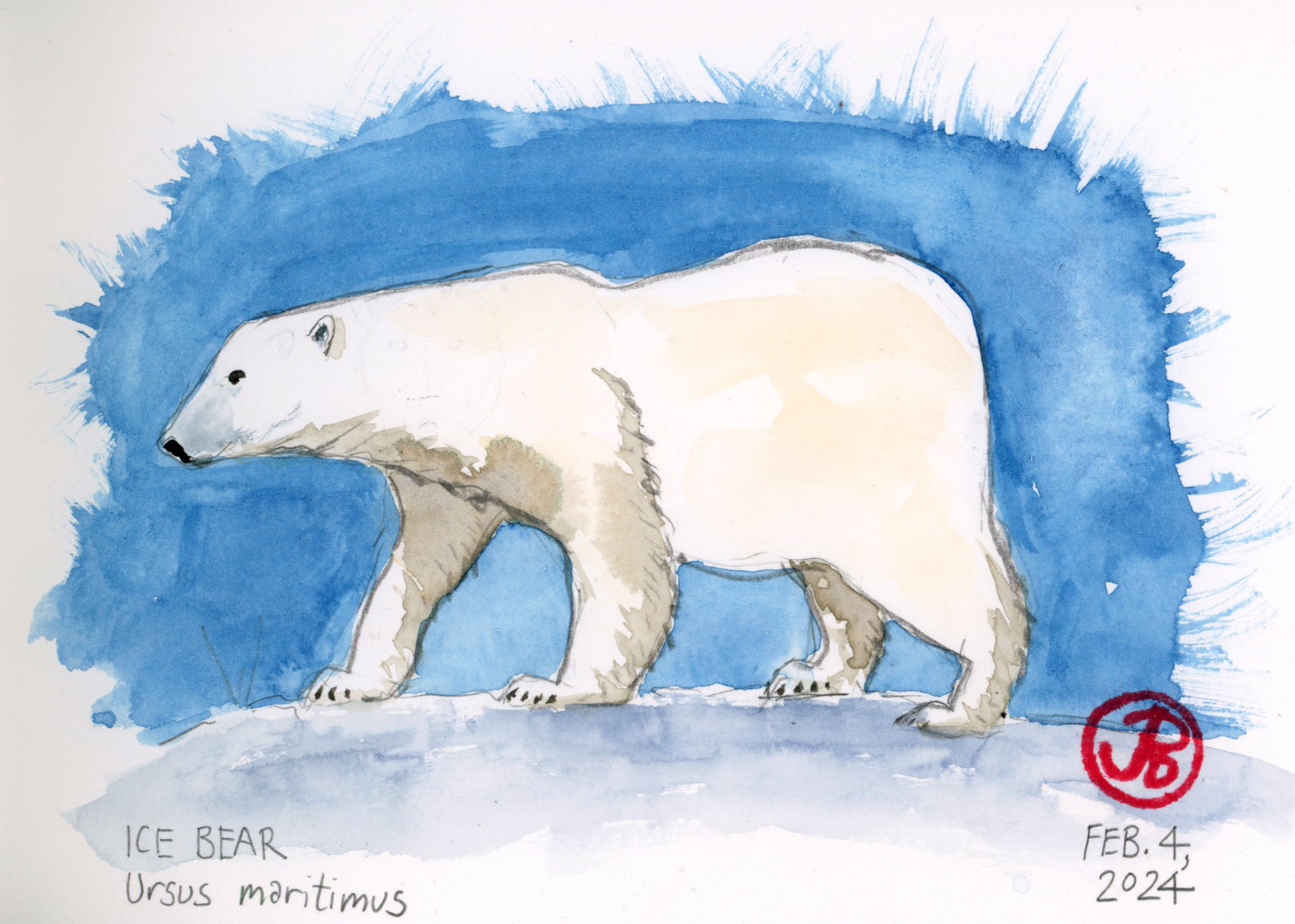
I would not be in the sunny climes of the Bahamas (there’s no ivory gulls or polar bears in the Bahamas!) but cruising 80 degrees North, around the Norwegian island archipelago, Svalbard.

My cruise ship will be the m/v Plancius. (The m/v stands for merchant vessel.)

The Plancius was built in 1976 as a scientific research vessel for the Royal Dutch Navy. She was then named “Hr. Ms. Tydeman” and served the navy until June 2004.

She was purchased by Oceanwide Expeditions and rebuilt to carry passengers in 2009. Rechristened the Plancius in honor of the Dutch astronomy and cartographer she now cruises in the Arctic and Antarctic. In my featured sketch I sketched Plancius, cast as an Arctic explorer, which he wasn’t. Let me go look for my artistic license (I hope it’s not expired!).

I would be sharing my berth with a complete stranger. I knew that he must an adventurer, on a quest to see a melting world.

I look forward to my summer Arctic cruise and the many sketching opportunities in my near future!

Image

The Arctic Toothwalker

High on my Arctic pinniped (fin-footed) wishlist is Odobenus rosmarus: the walrus.

Few animals scream “Arctic” in the same way as the Toco toucan screams “tropics” or “rainforest” or “Guinness”, as the walrus. These animals are the “sexy megafauna” that become the poster animal for the ecosystem. (Okay the toucan isn’t “mega” but its bill sure is). For the Arctic, I would certainly put polar bear at the top of this list, followed closely by the walrus.

This Arctic animal is also keynote species that are the “carnies in the coal mine” for their ecosystems. When the walrus population declines, we know that the Arctic is not healthy.

The walrus’s most prominent feature are its tusks. They are sported by both male and females and are really enlarged canines. Tusks on males can grow to three feet. They use these ivories for male scuffling and pulling their hefty bulk up onto ice.

The walrus is also one of the largest pinnipeds in the world, only exceeded by the Northern and Southern elephant seal. It can be said that it is the second largest pinniped in the Northern Hemisphere. Walrus are sexually dimorphic with males weighing almost two tons and growing to 12 feet in length.

Image

High Arctic Dreams

“I felt a calmness birds can bring to people; and, quieted, I sensed here the outlines of the oldest mysteries: the nature and extent of space, the fall of light from the heavens, the pooling of time in the present, as if it were water.”

― Barry López, Arctic Dreams

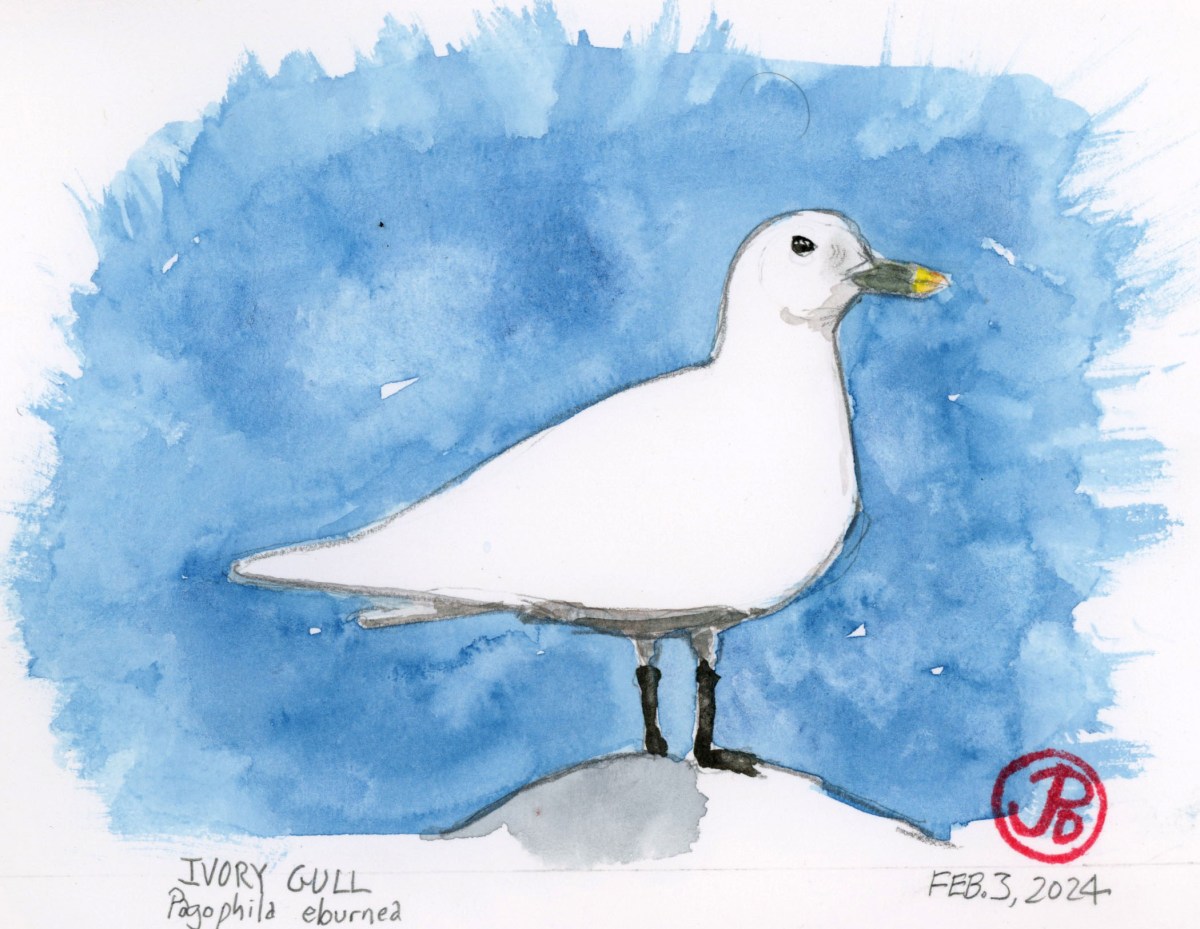
The major avian draw for traveling to the High Arctic is Pagophila eburnea, the “the ice-loving ivory-colored gull”. This would be an incredible lifer and the major totem for any birder visiting the top of the world.

Some cetaceans on my wishlist are the white whale (also known as the beluga whale), minke whale and fin whale.

I was also hoping to see some pinnepeds for the first time. They included: walrus and harp, ringed, and bearded seals.