The Country Music Hall of Fame and Museum

Nashville’s Country Music Hall of Fame and Museum was my first stop on my first full day in Music City. The museum highlights the music that built Nashville: country.

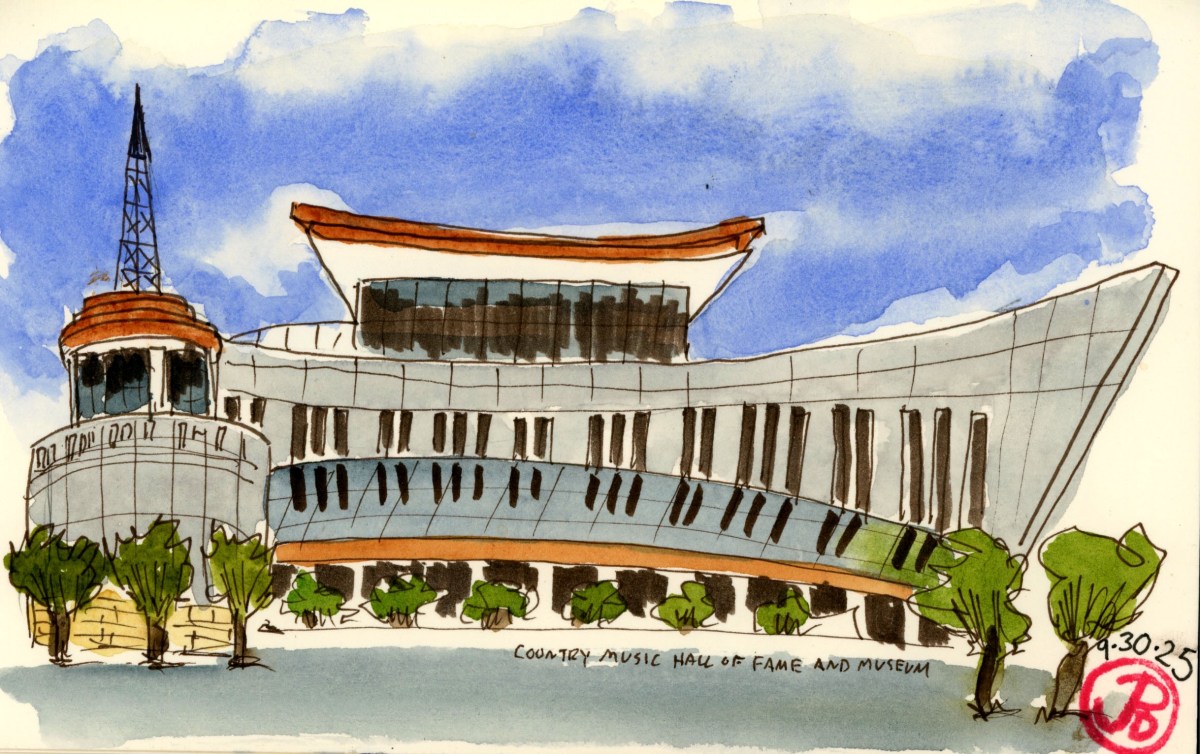
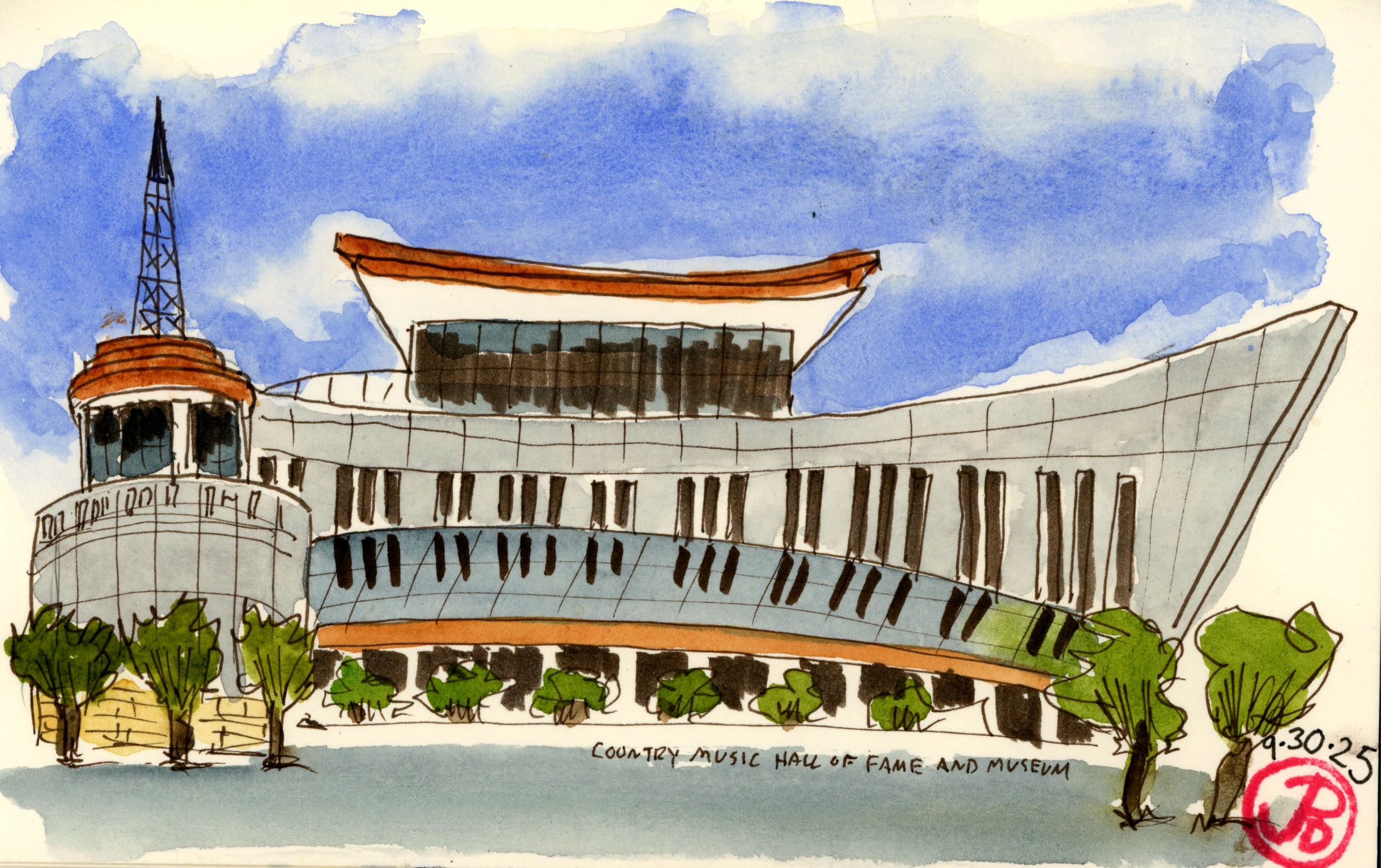
The museum is beautiful both inside and out. I started by sketching the exterior from the park across the street (featured sketch).

The sweep of the concrete wall is interspersed with long narrow windows in twos and threes, imitating the pattern of a keyboard.
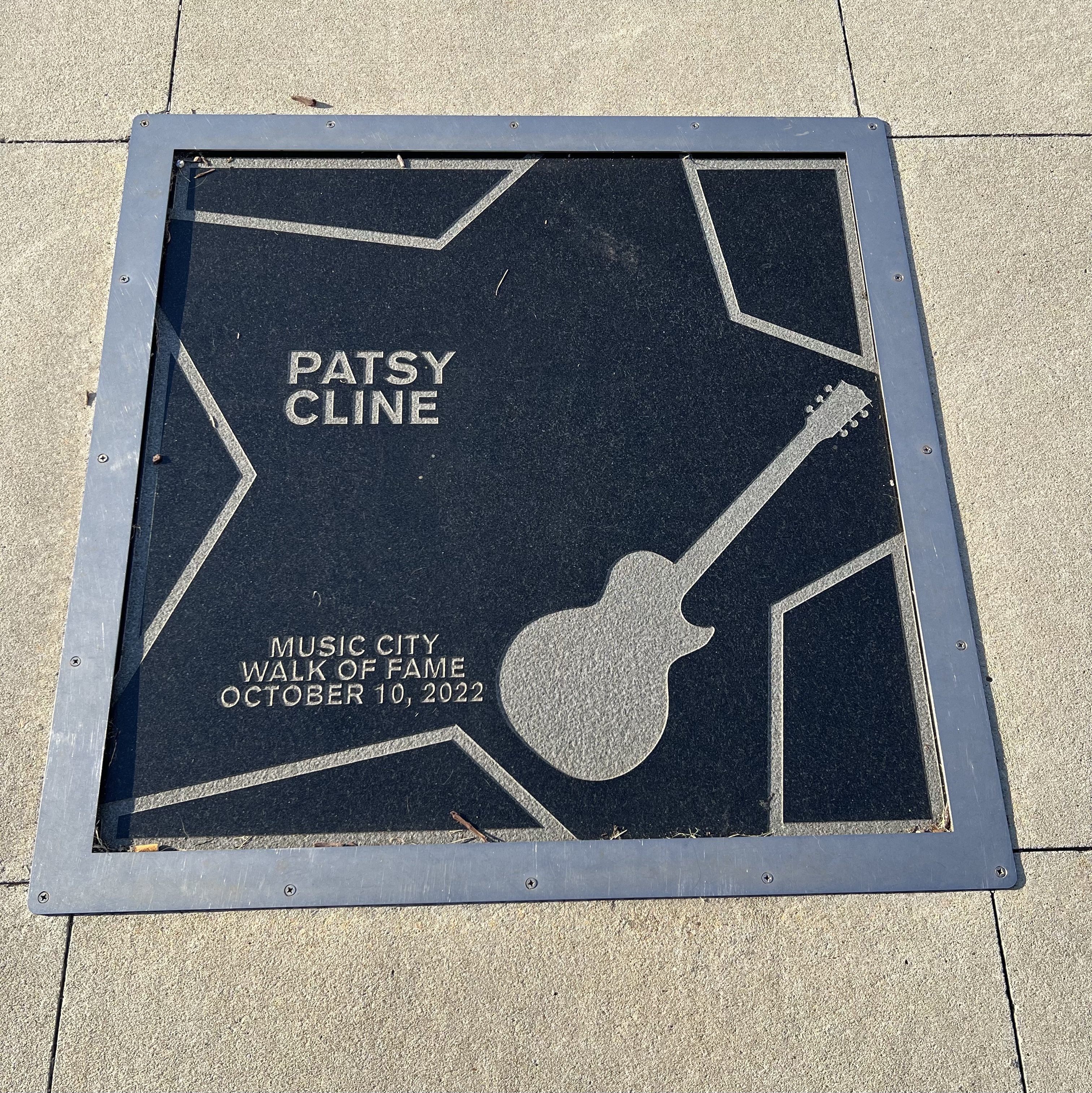
One of my favorite singers on the Music City Walk of Fame, across the street from the Country Music Hall of Fame and Museum.

I have an old school view of country music which can be summed up by a song by Austin’s Asylum Street Spankers, “I’m Starting to Hate Country but I Still Love Cowboy Songs”.

When I was young so much country music crossed into the national consciousness. Kenny Rogers, Willie, and Dolly were all over the airwaves. Popular television shows such as the Waltons and the Dukes of Hazzard were set in the country. The Dukes of Hazzard was narrated by a country outlaw himself, Waylon Jennings, who also sang the theme song, “Good Ole Boys”.

While I’m not of fan of new country, there was plenty in the Country Music Hall of Fame and Museum to hold my attention.
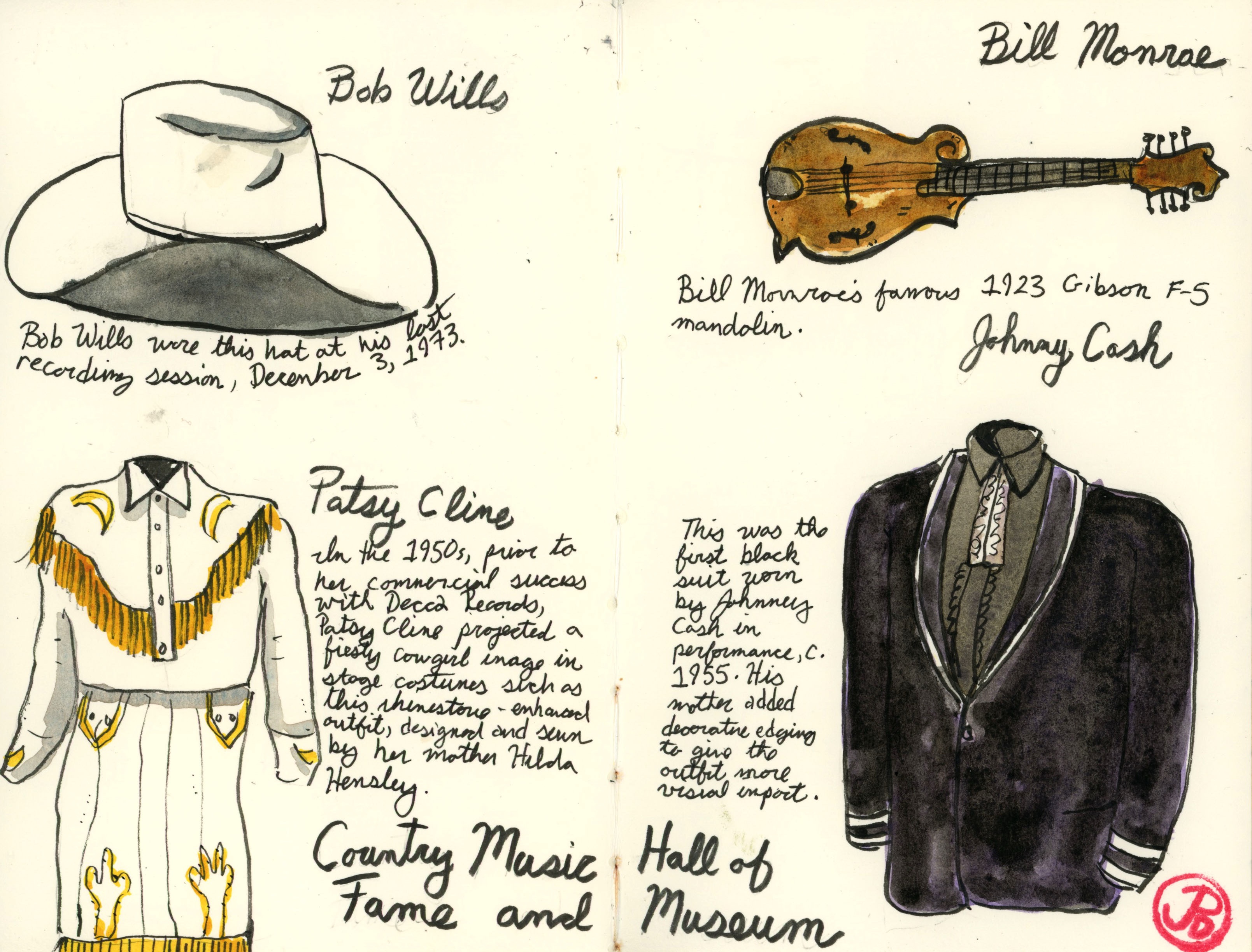
The Museum has an impressive collection of the instruments that were played, the clothes that were worn, and the paper on which classic hits were written.
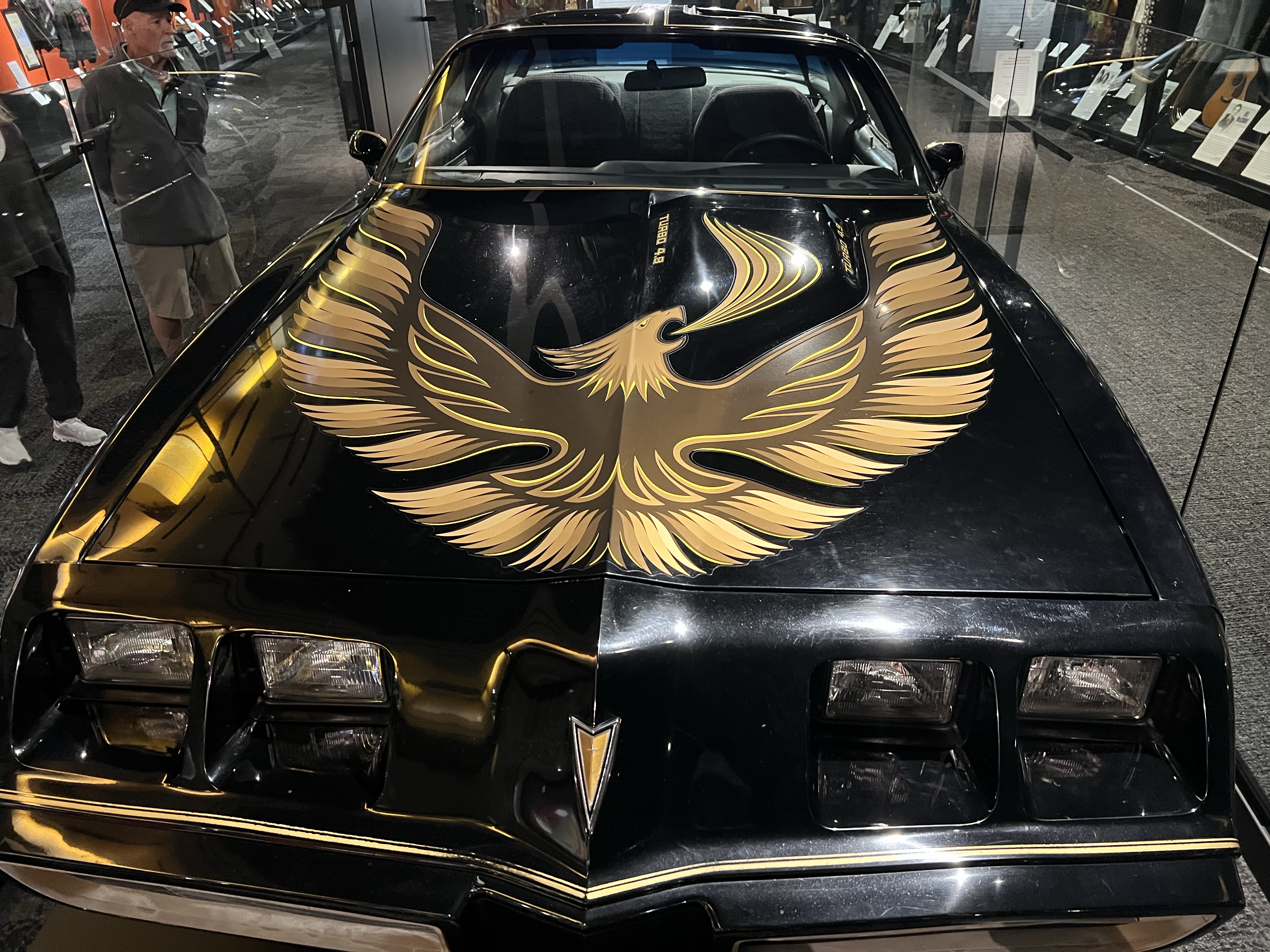
The Pontiac Trans Am featured in The Smokey and the Bandit movies. This was the car I wanted when I grew up, this or the General Lee.
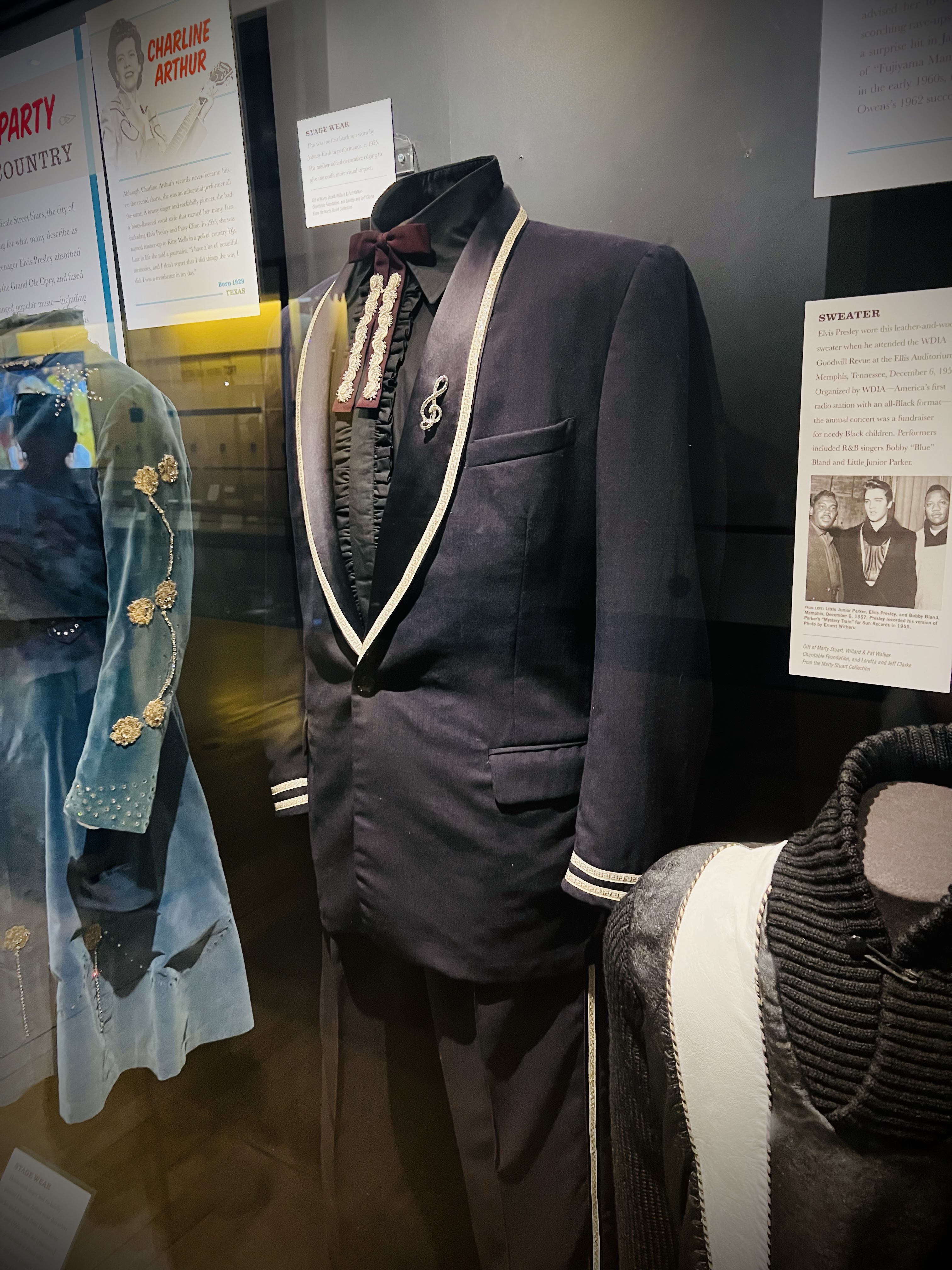
The Man in Black’s, Johnny Cash, first black suit!

Johnny Cash wrote in his autobiography, “the greatest public honor I ever received. . . was being inducted into the Country Music Hall of Fame in 1980. I was the first living person to be so honored. I’ve been given all kinds of awards in my career, before, and after 1980, including some big ones – Grammies, the Kennedy Center Honors, the Rock ‘n’ Roll Hall of Fame – but nothing beats the Country Music Hall of Fame, or ever will.”
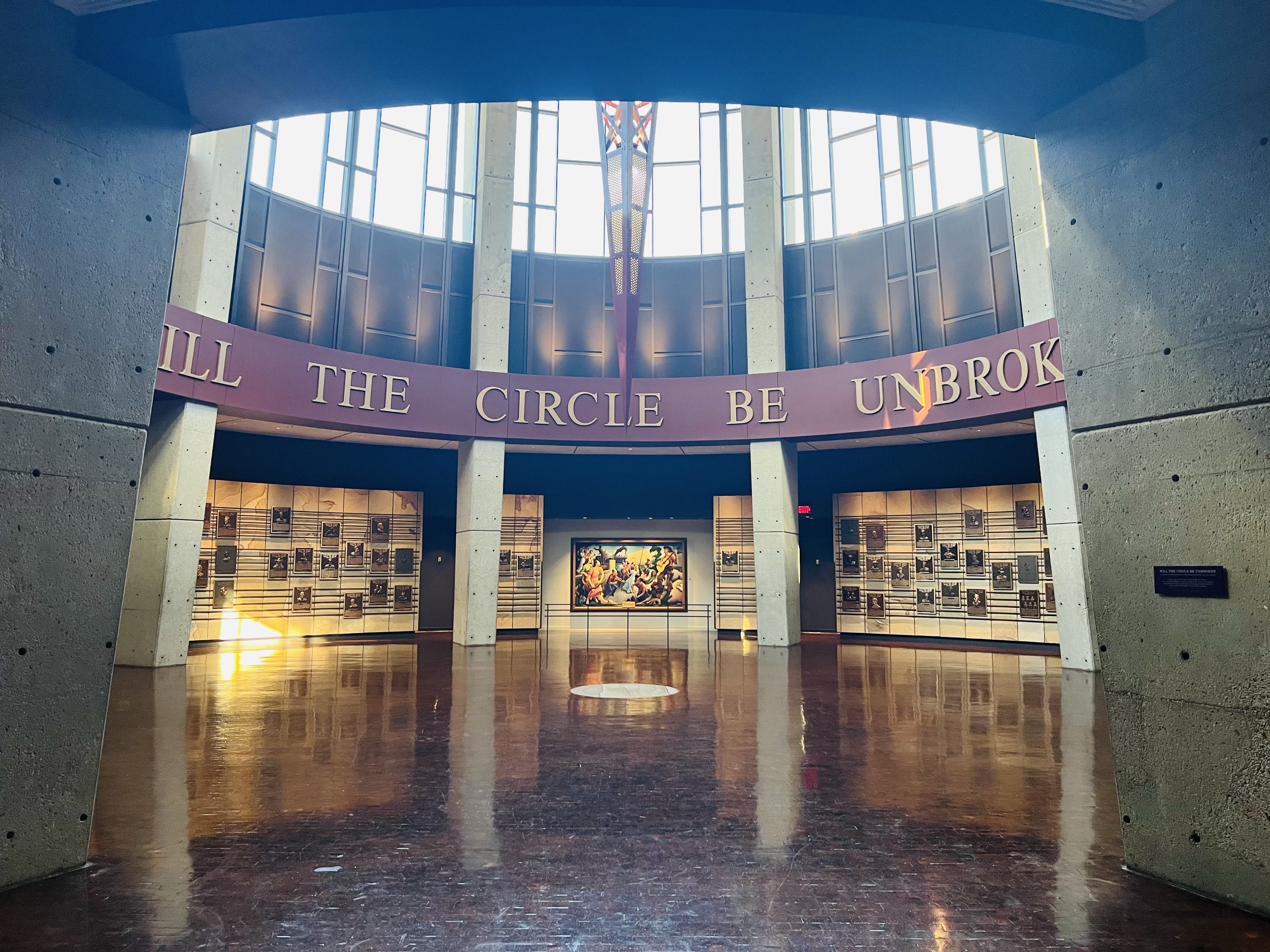
The Country Music Hall of Fame.
Image

Patsy

The northwestern Virginia town of Winchester changed hands during the Civil War 72 times. But my travels to Winchester was not to see a battlefield or a monument but a humble two story house in a working class neighborhood.

The house’s history had nothing to do with the Civil War but was to home one of the world’s best singers: Patsy Cline.

Patsy is one of the most influential singers in county music who transcends musical genres and her music crossed over into popular music with hits like: “Walkin’ After Midnight”, “I Fall to Pieces”, “Crazy”, “She’s Got you”, and “Leavein’ On Your Mind”.

She was born Virginia Patterson Hensley in Winchester, Virginia on September 8, 1932.

It had been raining all morning on my drive from Staunton to South Kent Street in Winchester. I was able to find a parking spot across the street from the humble two story house with a historic plaque out front.

I sketched the house, where Cline lived from ages 16 to 21, in my rain-proof-automobile-blind. I was here too early to get a tour of the inside (I had a Civil War battlefield to sketch before my flight to SFO).

After my sketch was complete I had one other place in Winchester to visit just south of downtown: Shenandoah Memorial Park.

On March 3, 1963, Patsy Cline performed at a benefit with George Jones, Dottie West, Hawksaw Hawkins among others in Kansas City.

On the following day she chose to fly back to Nashville instead of accepting a ride with Dottie West for an 8 hour car ride, saying, “Don’t worry about me, Hoss. When it’s my time to go, it’s my time.”

Patsy Cline’s time was on the evening of Tuesday March 5, 1953, when the Piper PA-24 Comanche she was traveling in crashed in a heavily wooded area near Camden, Tennessee. The time read 6:20 PM on Pasty’s watch, which was recovered after the tragedy. Patsy Cline was 30 years old.

Her final resting place is in Shenandoah Memorial Park.

Perhaps I was expecting a bit more for a memorial to one of the best singers in recording history but her grave, like her childhood home, is humble and simple.

The only way you would know that this was a person of note was the amount of flowers and coins placed on the marker. I had a quiet moment, sung a tune in my head, and then placed a penny at her grave and then drove through the steady rain to Manassas.