Image

Pearl Harbor Aviation Museum

One other sketching stop on Ford Island was the Pearl Harbor Aviation Museum.

I love aircraft and I love sketching them. I did three sketches of aircraft used in World War II, two of which played a part in the attack at Pearl Harbor on December 7, 1941: the Curtiss P-40 Warhawk and the Mitsubishi A6M2, know as the “Zero”.

At the time of the surprise attack on Pearl Harbor the Japanese Imperial Navy’s Zeros dominated with many P-40s being destroyed on airfields around the island. A few Warhawk were able to make it to the air to put up a defense.

On the way to Hanger 79 is one of my favorite fighters, the F-4 Phantom.

I then walked over to Hanger 79, which also houses planes in the museum’s collection.

This hanger was built in 1941 and still bears scars from December 7, 1941 in the form of bullet holes left by strafing Zeros.
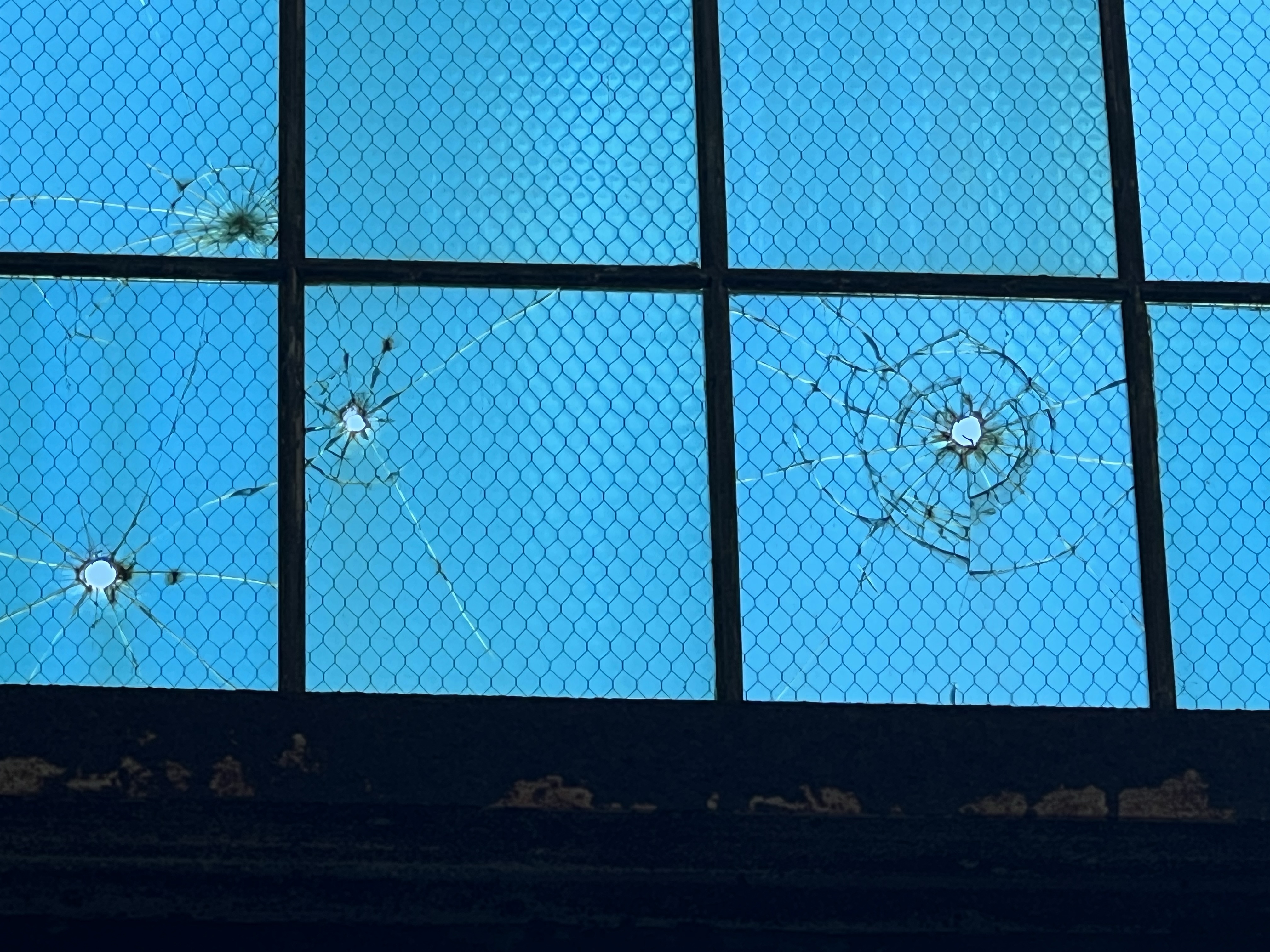
Zeros left their mark on hanger 79.

One plane in Hanger 79 was on my sketch list. This was a B-17E Flying Fortress named the “Swamp Ghost”. This bomber has an intriguing story (featured sketch).

The bomber was damaged and low on fuel after a bombing raid over New Britain in the Papa New Guinea archipelago.

The pilot was forced to land in what he thought was a flat green field but turned out to be a swamp and the plane settled in five feet of water.

The crew survived the forced landing and hiked out of the jungle for six weeks arriving at Port Moresby exhausted and sickened with malaria.

The B-17 sat for half a century, dubbed the “Swamp Ghost” by Aussie pilots.

The plane was eventually recovered, piece by piece, by helicopter. It spent some time in California before returning to its new home on Ford Island for the first time since 1941.

Image

USS Arizona Memorial

There is one site that has the most visitors (70 million per year) out of any other in O’ahu: Pearl Harbor.

I had a 9:00 reservation to visit the USS Arizona Memorial. Before I boarded the boat out to the memorial, I did two sketches from the Visitors Center (one is the featured sketch and the other is below).

The Arizona is a nautical grave. On December 7, 1941 a Japanese bomb passed through four decks igniting an ammunition magazine causing a massive explosion. Sailors were incinerated instantly. This is the biggest loss of life on a single ship in US Navy history killing 1,177 sailors. About 900 sailors are entombed in the sunken battleship.

We queued up ten minutes before our boat took us across the harbor to the memorial.

The boats are run by the US Navy with enlisted men and women in uniform piloting the boat. Each boat are considered launches of the sunken Arizona, carrying the number 39, the hull number of the Arizona “BB-39”.

Before we departed, the park ranger had to remind visitors of proper decorum while at the memorial. My teacher voice was at the ready if there was any guffawing and disrespect at this solemn tomb. Luckily for me I keep said voice under wraps as visitors were respectful.

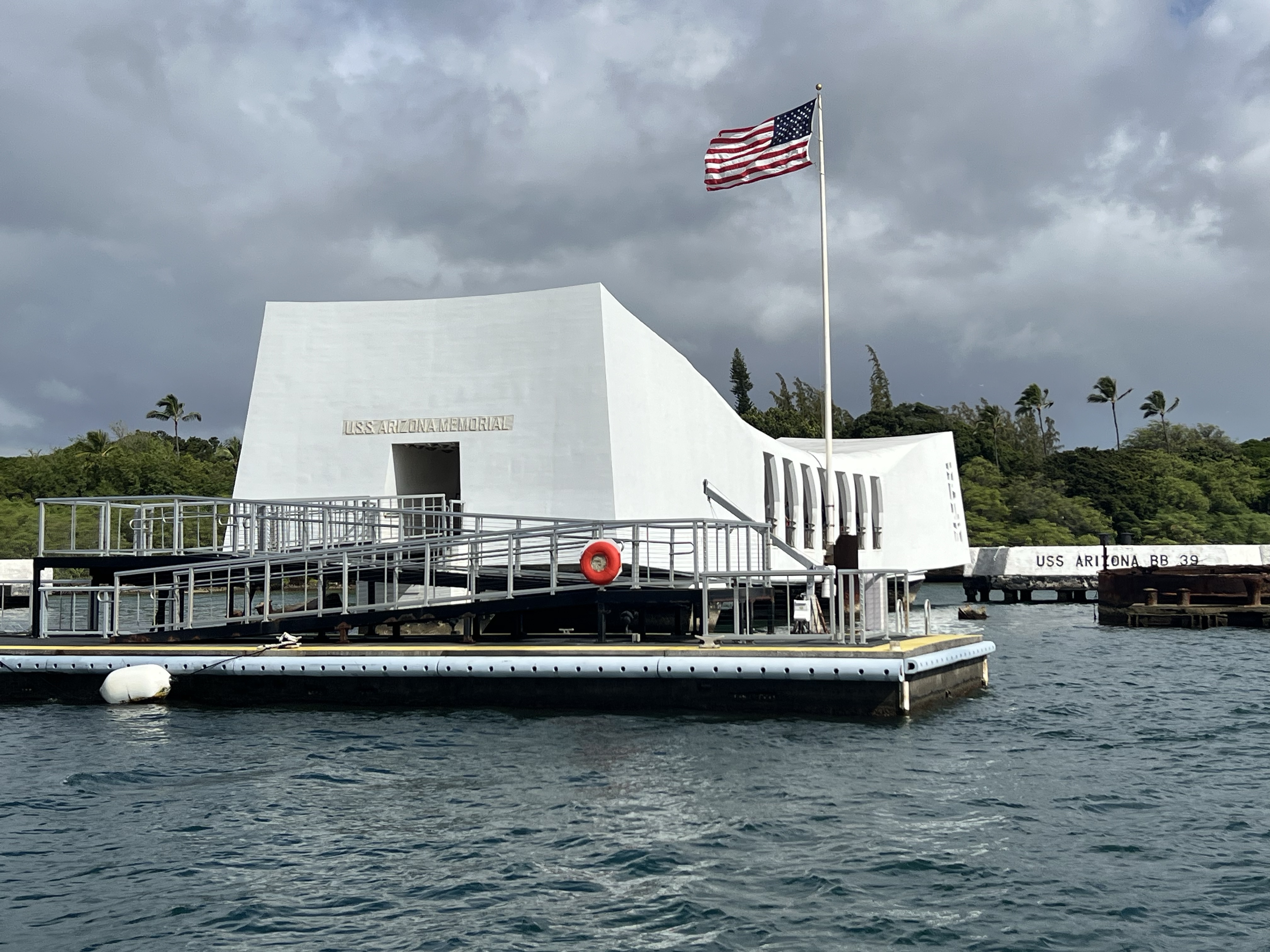
After the short ride we disembarked to the entrance of this solemn but beautiful memorial.

Approaching the beautiful memorial.

As we walked up the gangway a light but persistent warm rain began to fall.

The memorial is built over the sunken hull of the Arizona. You can look off towards the bow and the stern, both of which are marked by white buoys.

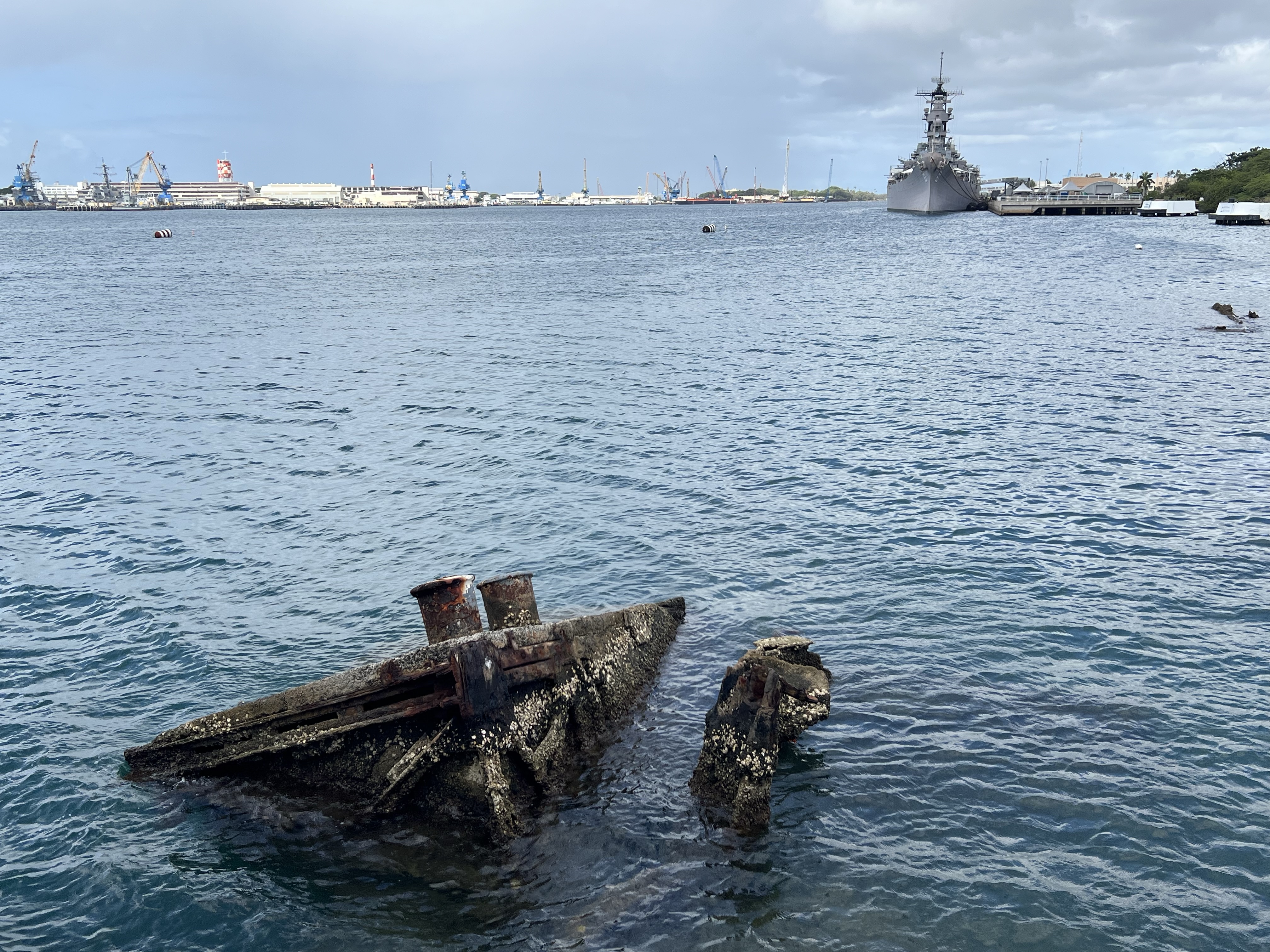
Part of the Arizona in the foreground looking toward the bow and beyond, the USS Missouri. Here is the beginning and the end of America’s involvement in World War II in one image. The surrender documents where signed on the deck of the Missouri in Tokyo Bay on September 2, 1945.
Looking towards the stern of the Arizona with Gun Turret No. 3 breaking the surface.
Beautiful pollution.

About half a gallon of oil from Arizona’s fuel tanks leaks to the surface everyday. When Arizona was lined up at Battleship Row in 1941, she was fully fueled. It is estimated that 79,000 gallons of oil are still aboard the Arizona.

California Coda

Before I left for Pearl Harbor, I visited a cemetery near my mom’s house in Grass Valley.

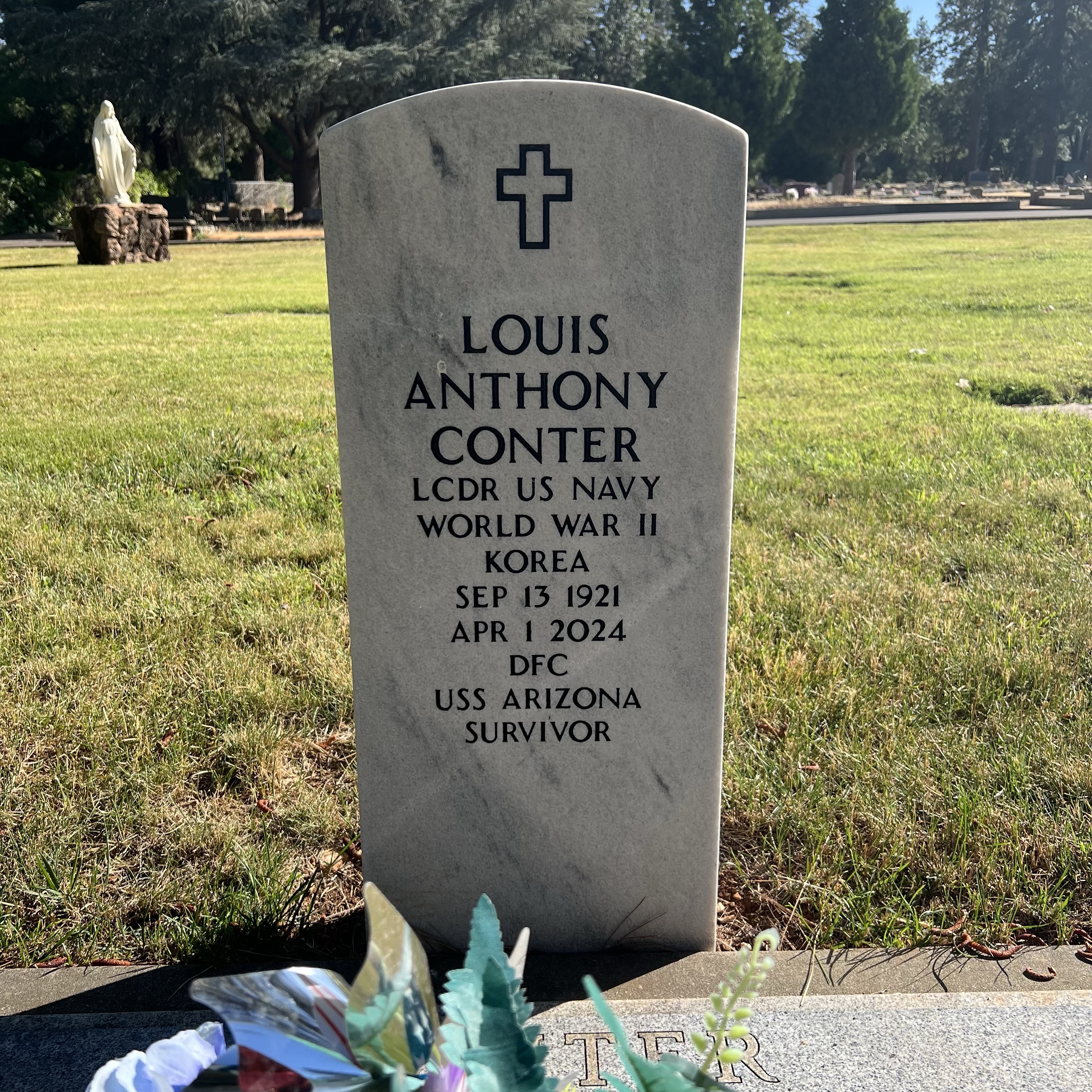
I was looking for the grave of Louis “Lou” Conter at St. Patrick’s Cemetery. After a brief search, I found it.

Why this grave? Conter was the last surviving member of the crew of the USS Arizona, where he was a quartermaster. He passed on April 1, 2024 ay the age of 102.