Tomales Point Tule Elk Reserve

I headed to the most northern point of Point Reyes to see some tule elk.

I arrived at the dirt parking lot at the historic Pierce Ranch at 8 AM on Saturday morning. So early in fact, that the local California quail were out feeding in front of the old dairy buildings yet to be disturbed by the hiking groups and picnickers that would soon be arriving over the next few hours.

I hit the trail trying to put some distance between myself and the chatty group of six young folk looking extremely underdressed for a winter coastal hike.
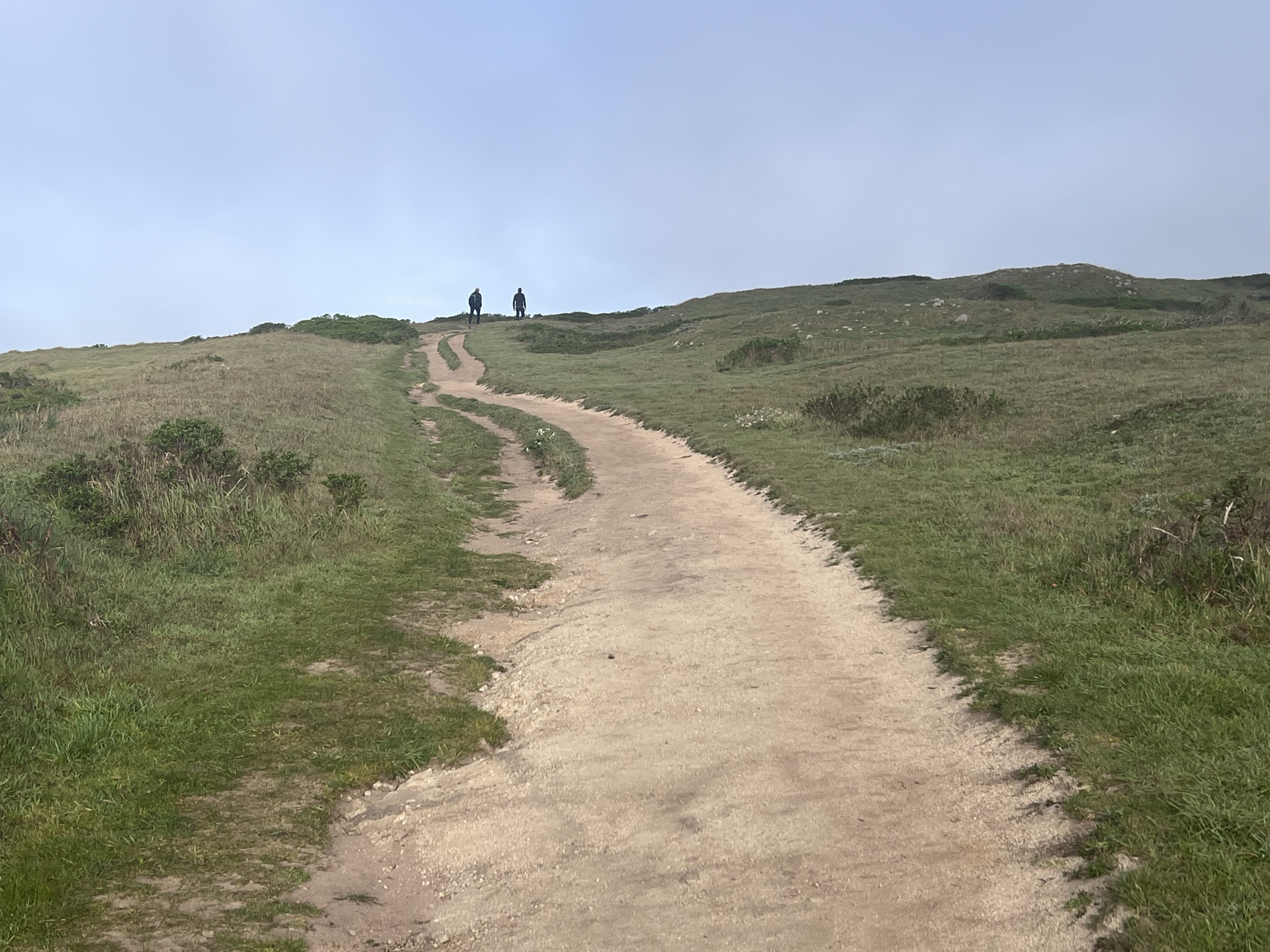
Looking north on the Tomales Point Trail.

I was only on the Tomales Point Trail for a few minutes and I looked back towards the ranch and on the far hillside where a mass of golden brown dots. Tule elk! They were a long way aways but I hoped to get closer looks.

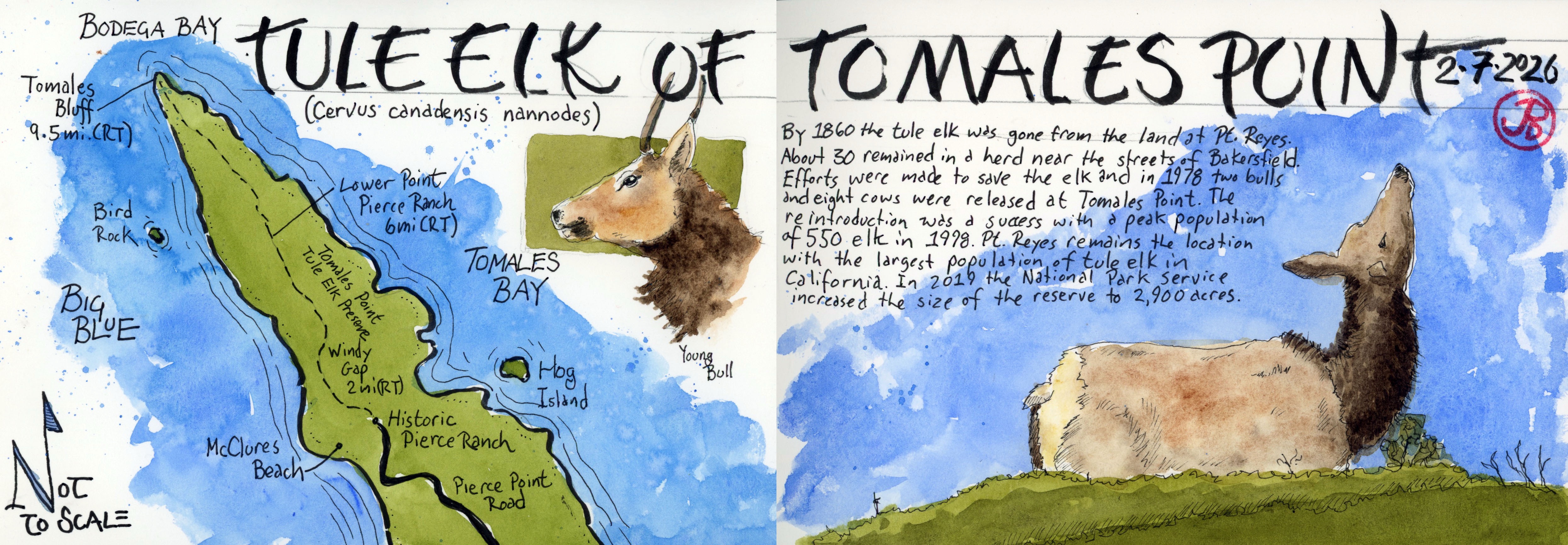
Tule elk (Cervus canadensis nannodes) were once native to this part of California but by 1860 they had disappeared from the land from over hunting and being displaced by cattle. This is the smallest subspecies of elk and are exclusively found in the Golden State.

The elk was thought to be extinct until a small group was discovered on a ranch near Bakersfield. Efforts were made to save the large deer with successful results.

Over one hundred years later in 1978, two bulls and eight cows were released at Tomales Point. The reintroduction of elk to Point Reyes was a success and the population peaked at 550 elk in 1998. The Pt. Reyes herd is the largest population of tule elk in California. One of the best places to see them is the Tomales Point Tule Elk Reserve.

After about an hour on the trail I approached the appropriately named Windy Gap, a great location for spotting elk. Up on the far ridge I could see the antlers of adult males breaking above the grasses and scrubs. They were a ways off but I hoped for closer views as I proceeded north.
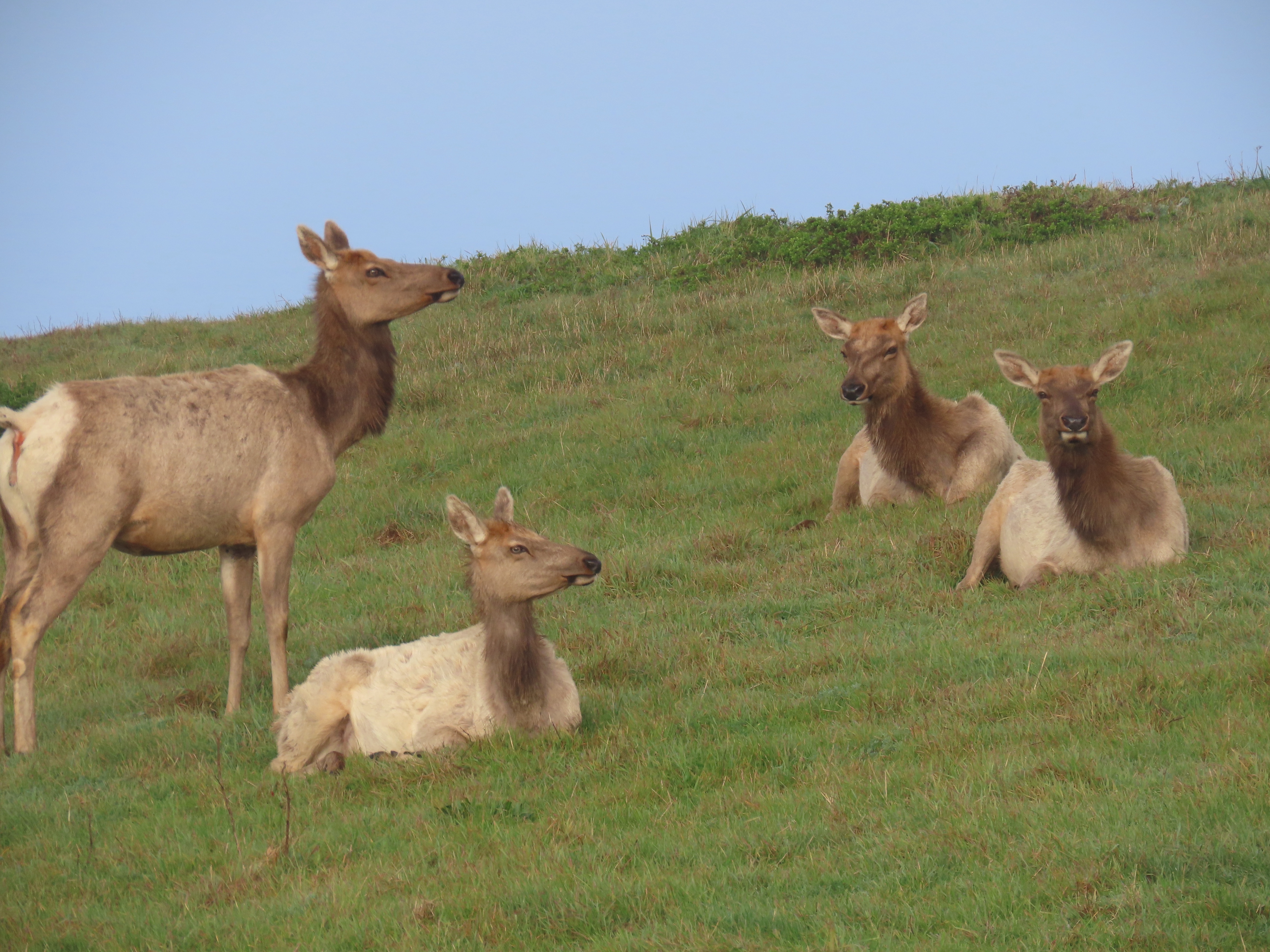
These elk were close to the trail!

After heading up the other side of the gap I came upon a group of twelve cows and calves on the Pacific side. They sized me up with their deep dark eyes and their large ears. Was I harmless or a threat?

While I was not a threat, the chatty-scantily clad youths that were coming up behind me were. The elk stood up and moseyed north. But not before the girl in pink short-shorts and top took a few selfies.
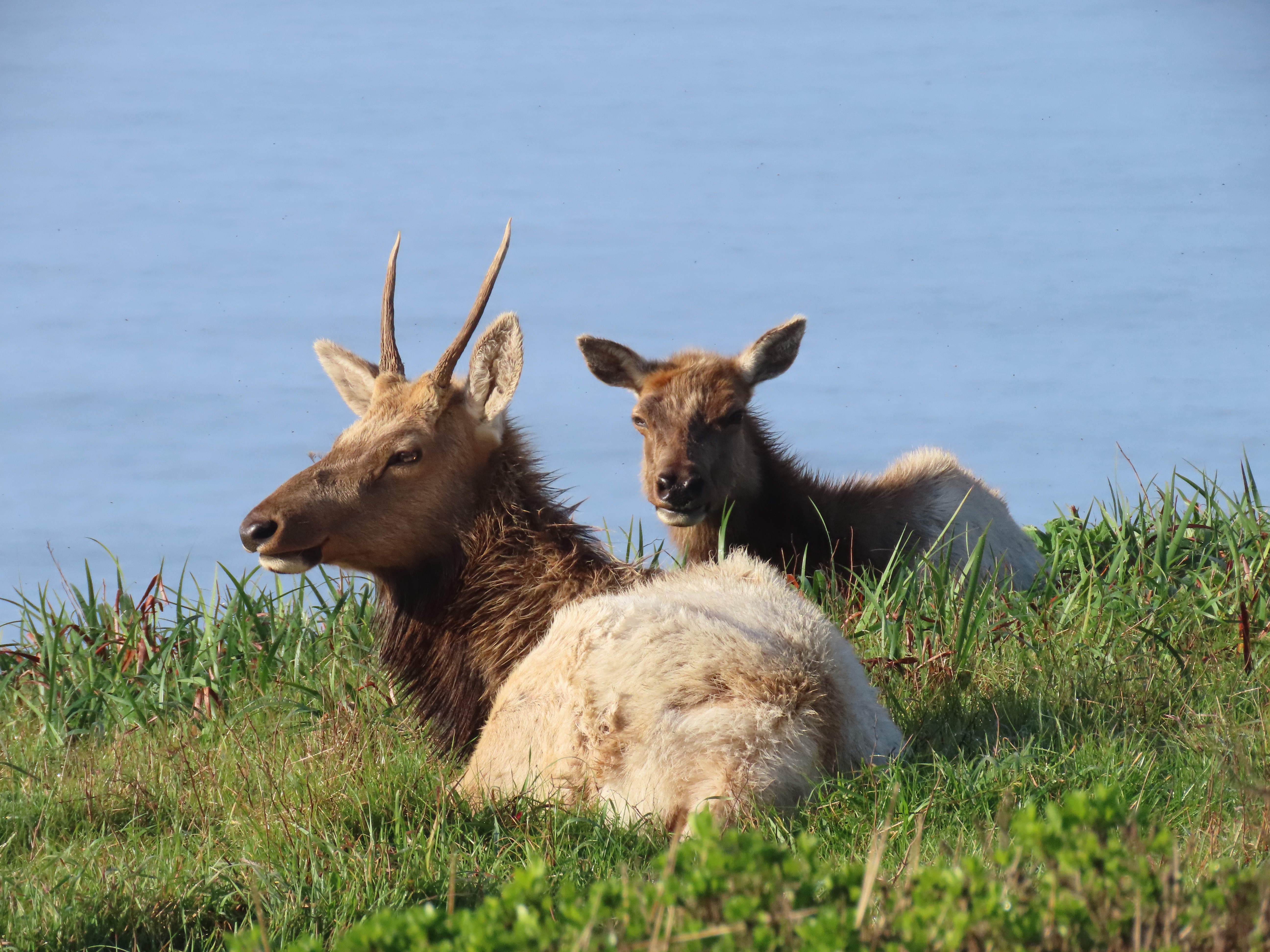
Young bulls and the Pacific.

I headed another 15 minutes north and I came upon a group of young bulls that were resting (elks seem to do a lot of resting) near the trail. At this point in the year the males and females seemed to be in separate groups, until rutting season in the late summer and early fall.
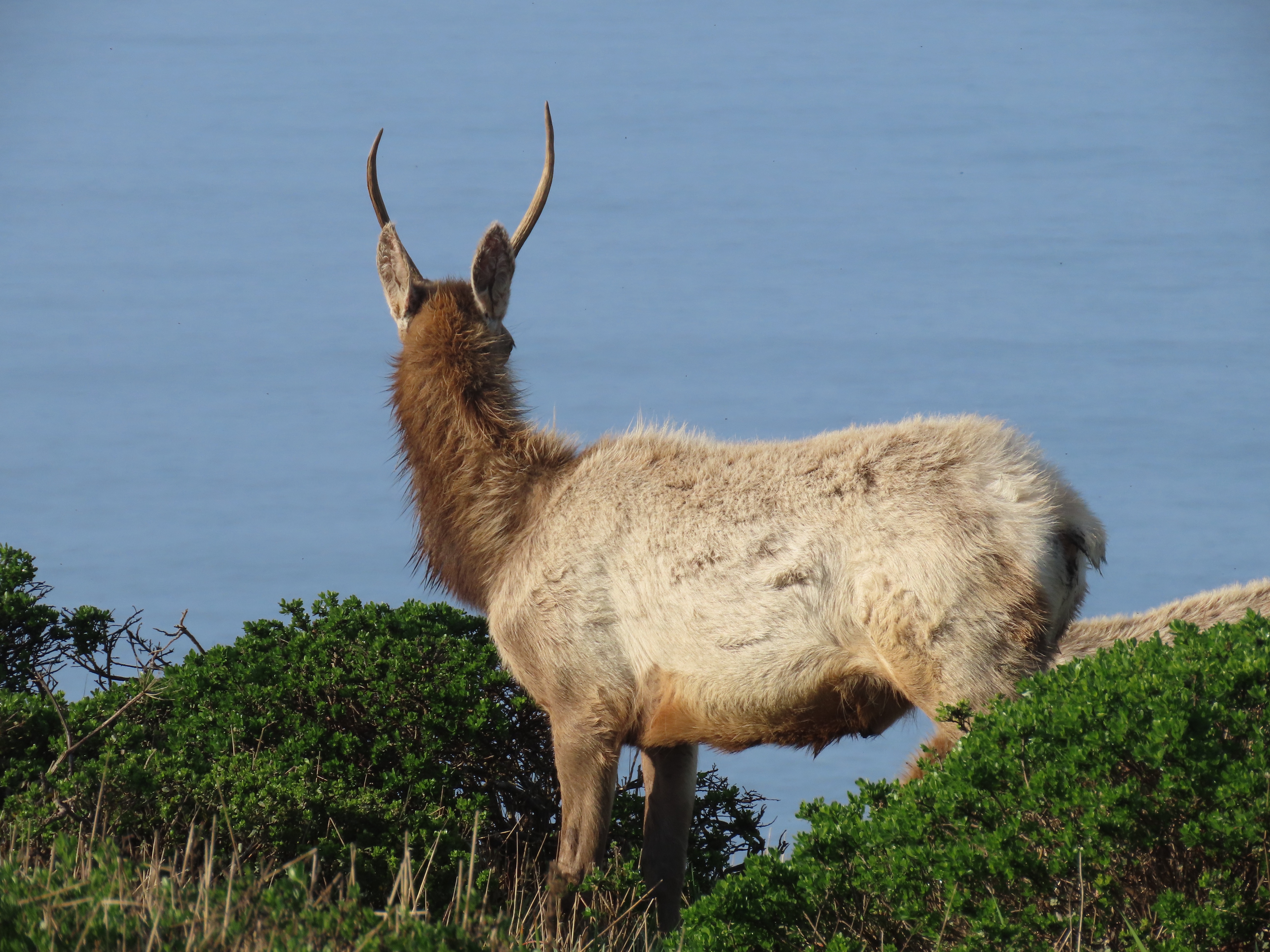
Even though the young bull’s eyes are not on me, his ears clearly are.
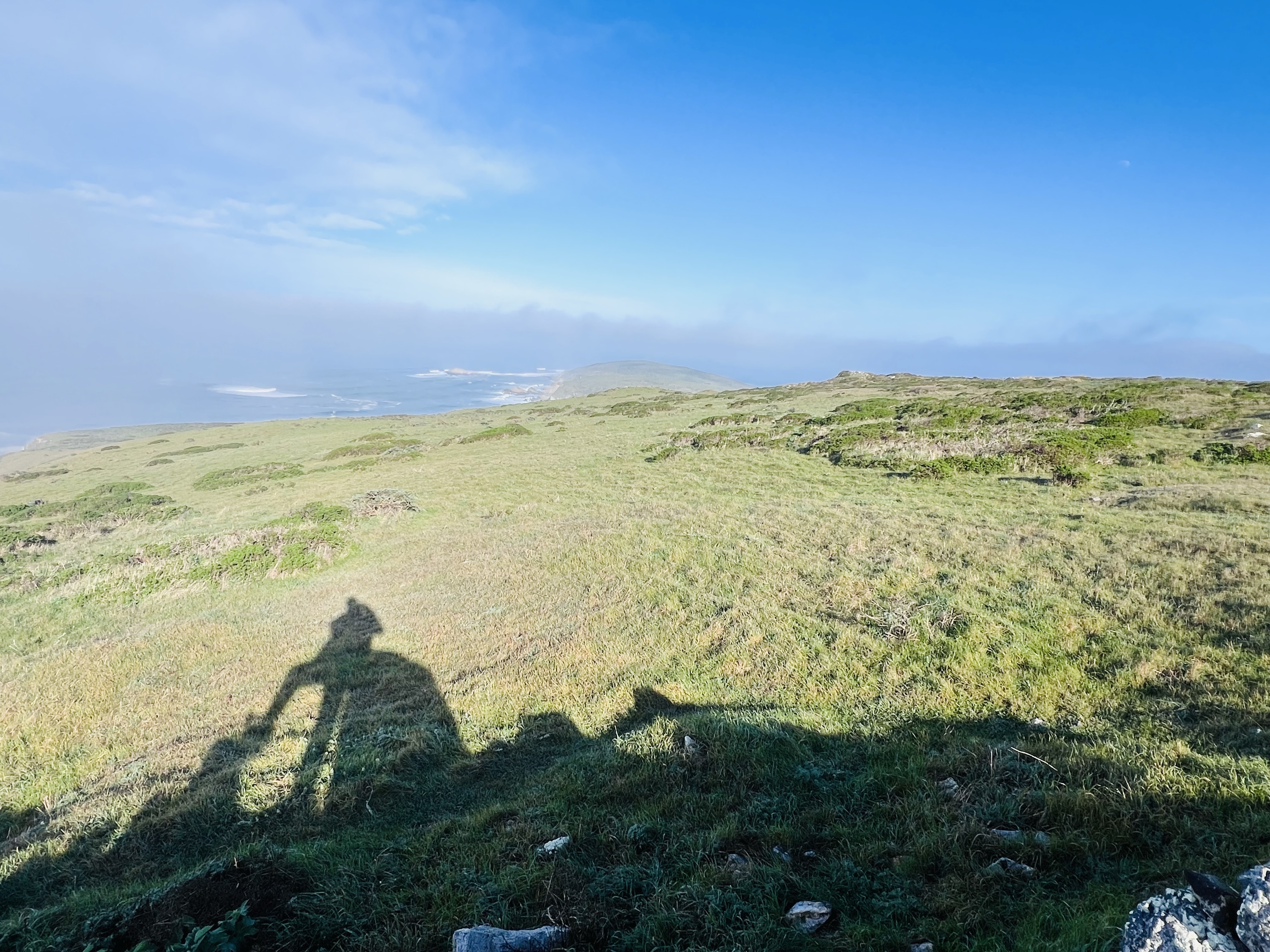
Silhouetted against Tomales Point, looking north. This part of Pt. Reyes is stunningly beautiful.
Image

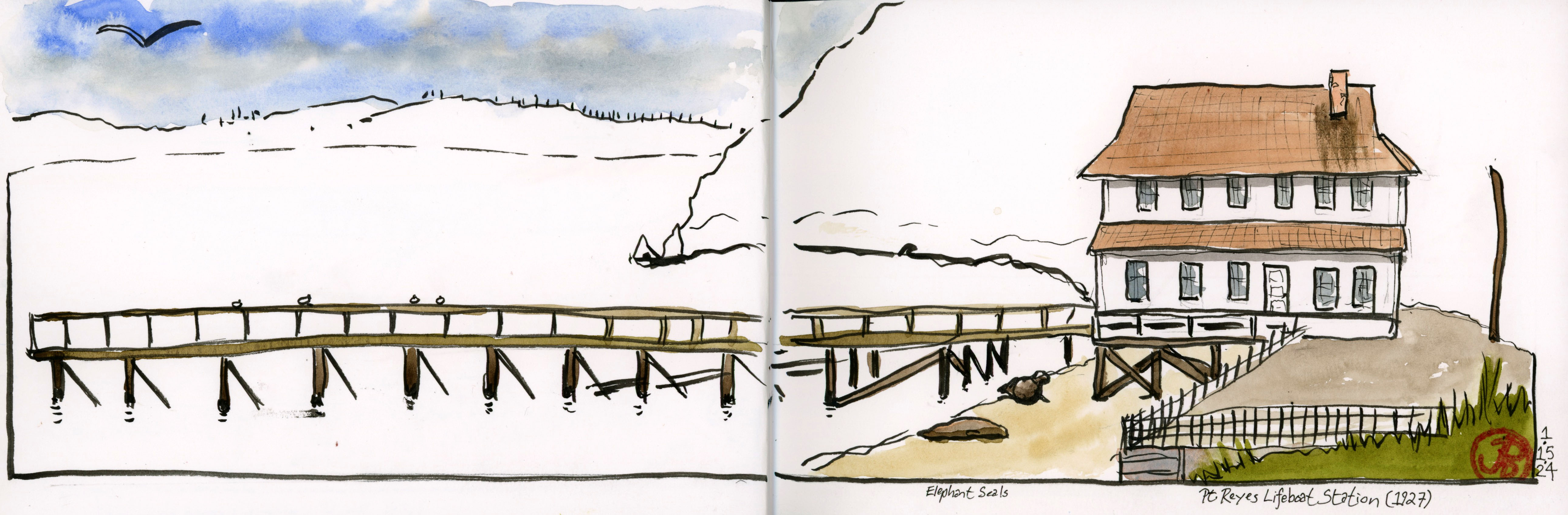
Elephant Seals of Point Reyes Lifeboat Station

It’s always nice to head out to the Pacific Plate, a mere 90 minutes from my humble abode.

On this holiday Monday I was heading out to the outer point of Point Reyes National Seashore. My destination, Chimney Rock and the Point Reyes Lifeboat Station.

The new lifeboat station was built near Chimney Rock in 1927. Lifeboats could be quickly launch on rails into the calm waters of Drakes Bay. And over the years the lifeboat of Chimney Rock saved many a sailor.

With the advent of Coast Guard cutters and helicopters the station became redundant and was decommissioned on December 16, 1969.

The rails that launched lifeboats into Drakes Bay.

For over 150 years, no elephant seals were seen in Point Reyes and then in the early 1970s (after the lifeboat station was decommissioned), they returned to beaches at the Point Reyes Headlands. In 1981, a breeding pair was discovered at Chimney Rock. The seal population at Point Reyes has been growing ever since.

The beach on either side of the station was being used as an elephant seal birthing beach. The seals were mostly female with a few pups and one male beach master (featured sketch).

At the lifeboat station you could get surprisingly close to these large marine mammals.

I pulled out my sketchbook and started to draw the blubbery contours of the beach master. He was very accommodating, spending much of the sketch playing silent statue.

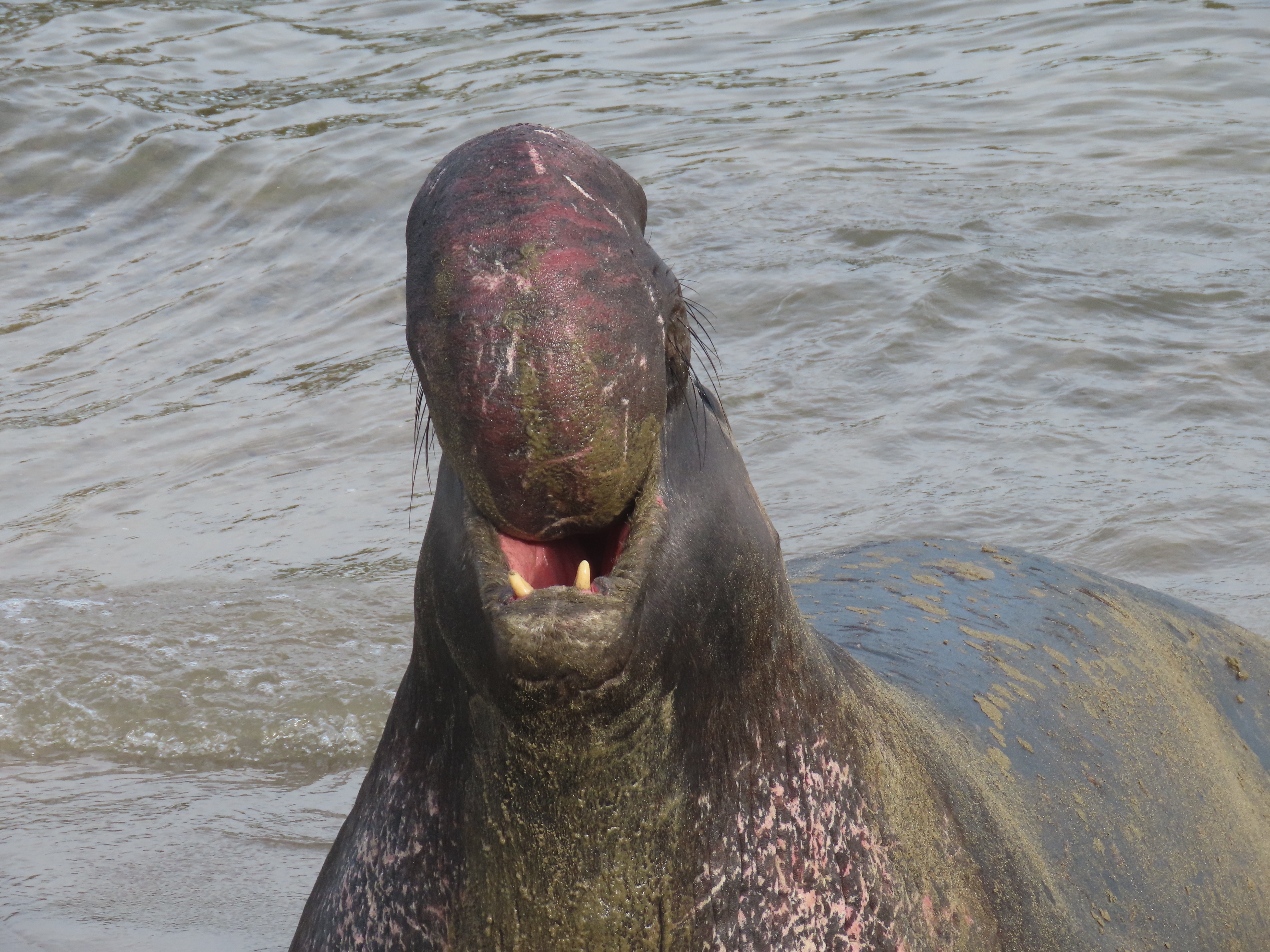
After my sketch he reared up and bellowed, claiming his patch of the earth and his harem.

The beach master in full bellow. Yes I was so close I could almost smell his breath!
Image

Chimney Rock

I headed out on the Chimney Rock Trail at outer Point Reyes. There were just two other cars in the parking lot.

Ravens and turkey vultures were my avian companions as I headed southeast on my way to Chimney Rock. Below, on hidden beaches I could hear the bellowing of elephant seals.

The trail view of the Historic Point Reyes Lifeboat Station with Drakes Bay.

The out-and-back trail is just under two miles and affords great views of Drakes Bay and the Pacific Ocean. On clear days you can see the Farallon Islands.

The Farillions seem much closer on the outer point.

On my return journey I sketched the Point Reyes Headlands from the trail (featured sketch). I liked the lines of the earth from this view and thought adding watercolor to the sketch would dampen its effect so I left it unpainted. With a sketch it is sometimes important to know when to stop.