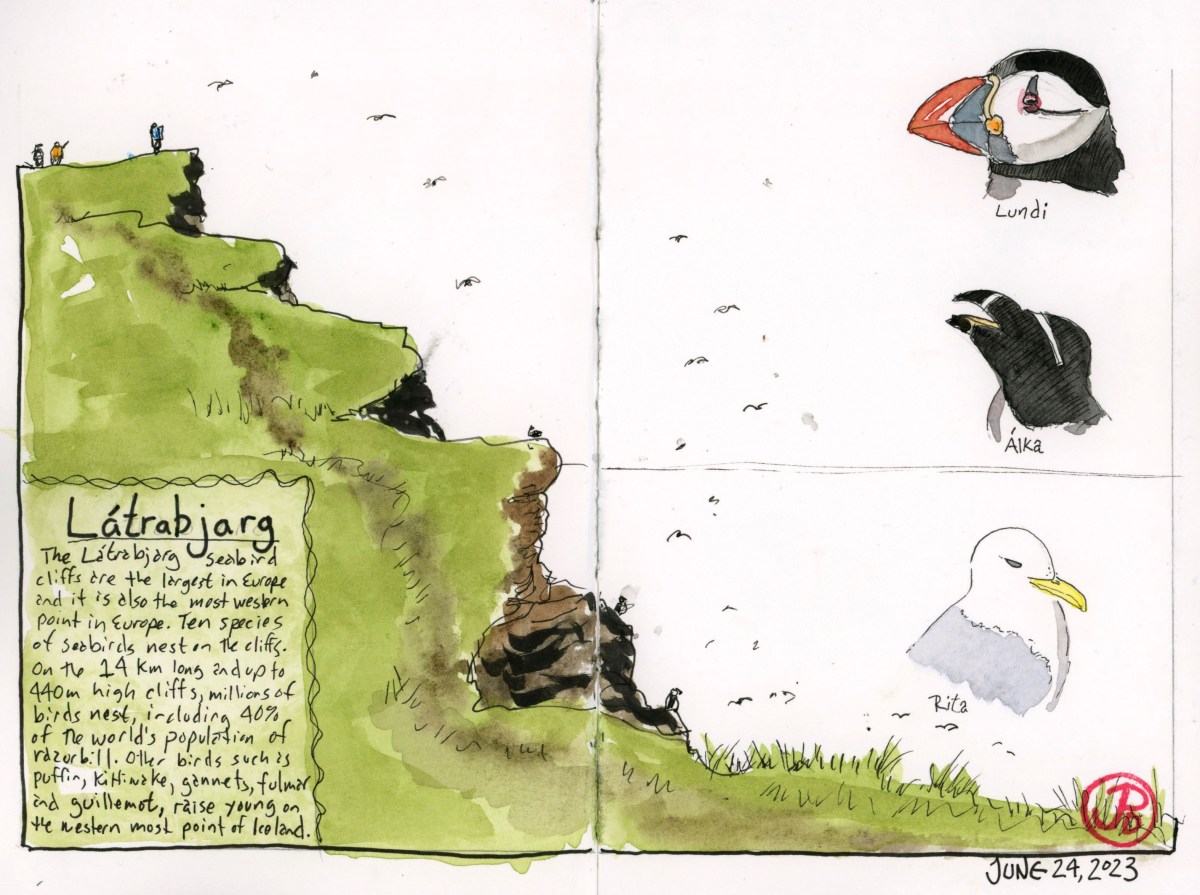
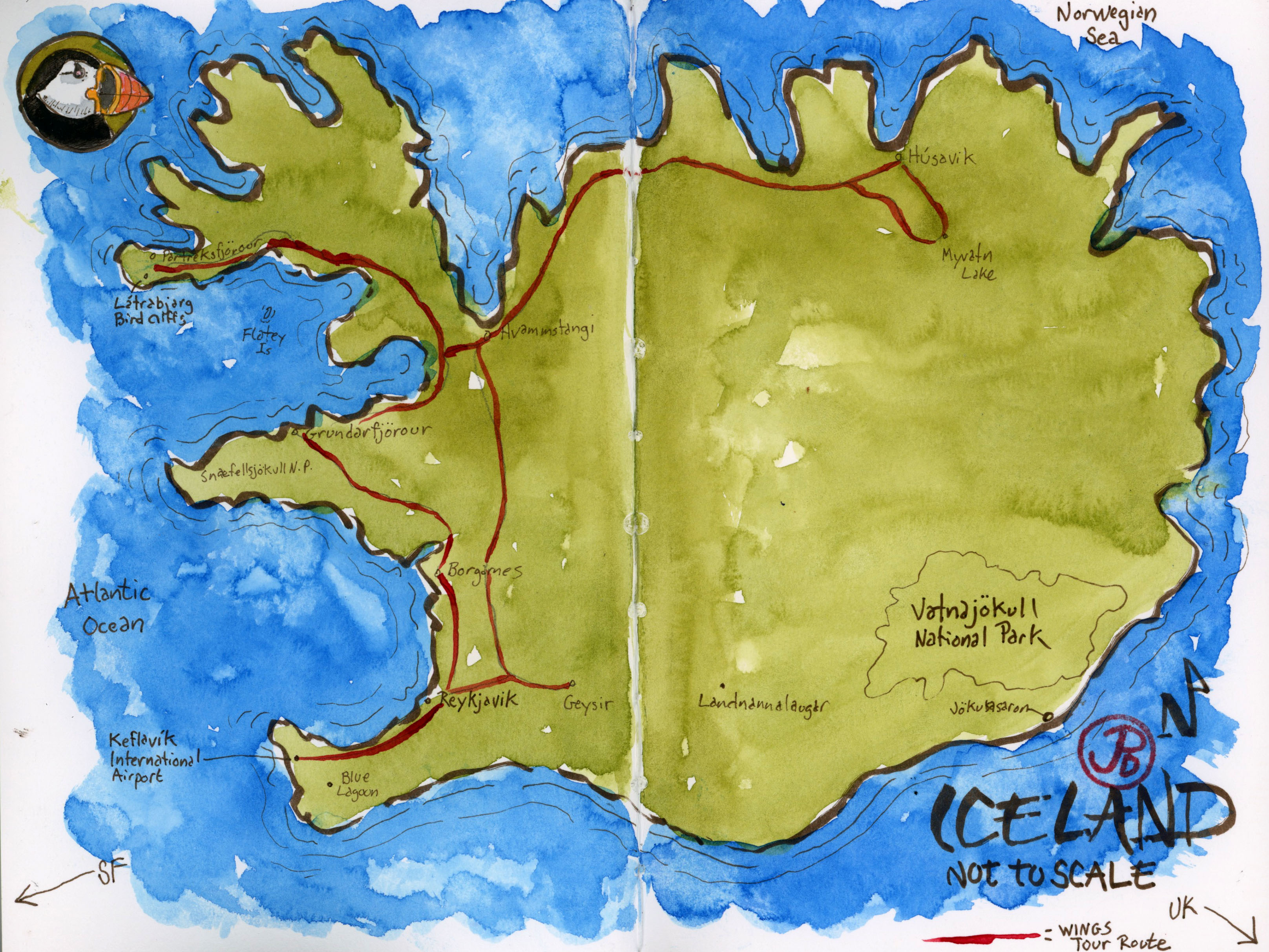
One of the visits that I was really looking forward to on my Icelandic birding trip was to see the seabird colony at Látrabjarg, the most western point in Europe.
In the Land of the Midnight Sun where the sun never truly sets in the summer, the best time to visit the bird colony is in the early evening, when many birds have returned from the sea to their nest burrows after feeding.
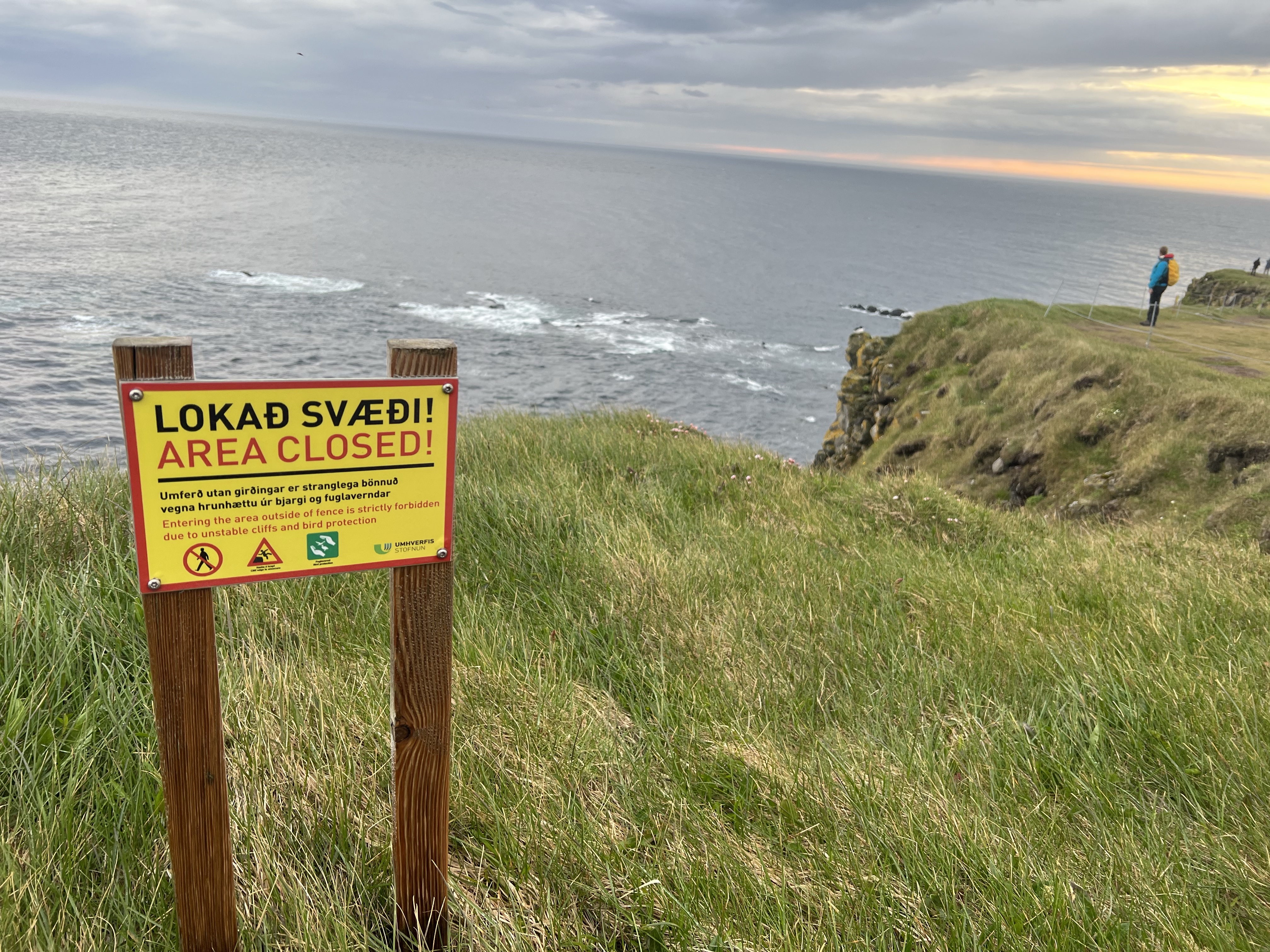
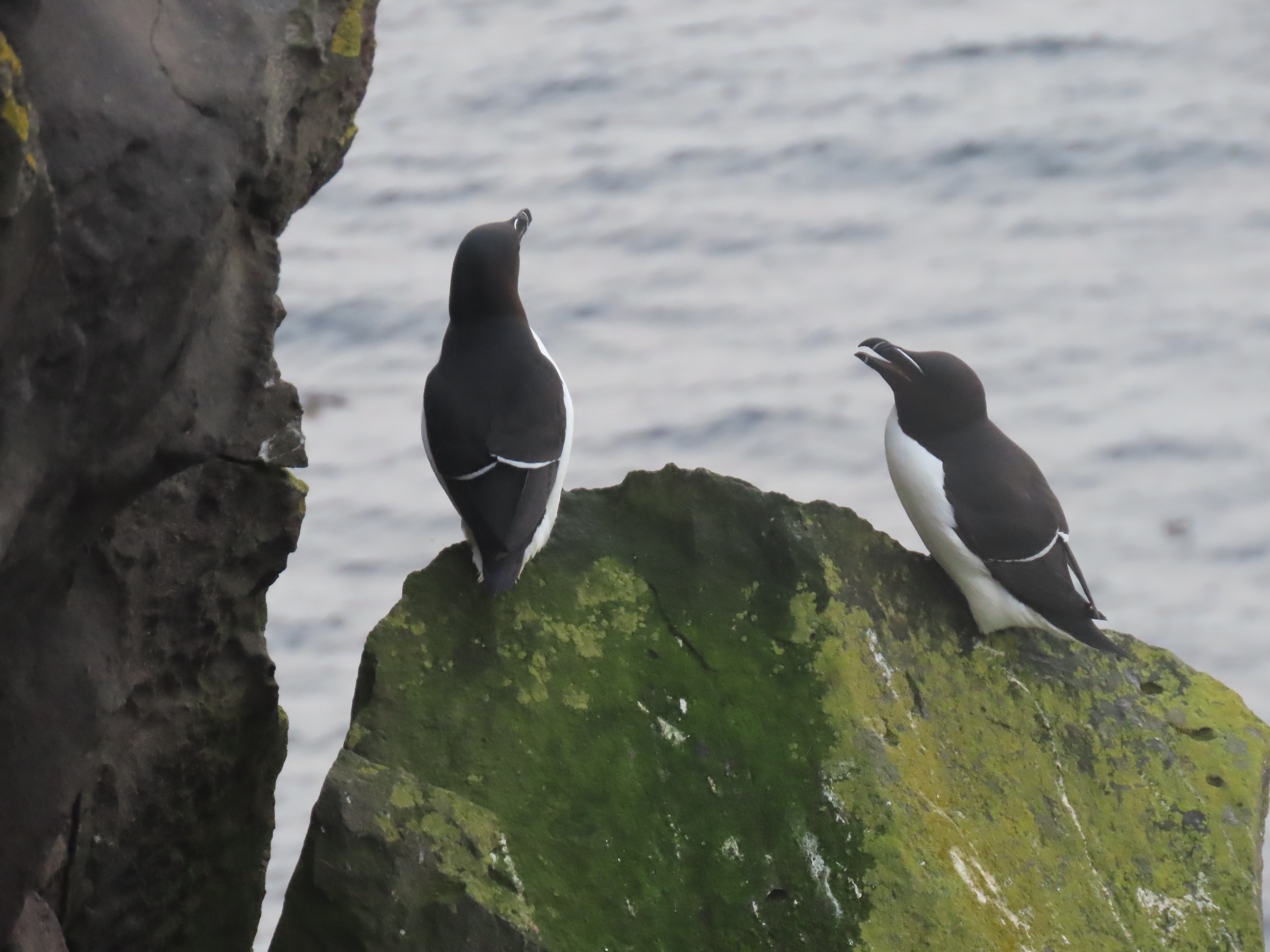
The cliffs at Látrabjarg are the largest sea bird colonies in Europe. Here puffins, razorbills, kittiwakes, murres, guillemots, and fulmars breed. About ten million birds are present here during the summer breeding season but we were only viewing a small portion of the cliffs that spans about eight and a half miles long with a maximum height of 1,400 feet, nearly the height of Chicago’s Sears Tower (1,451 feet).
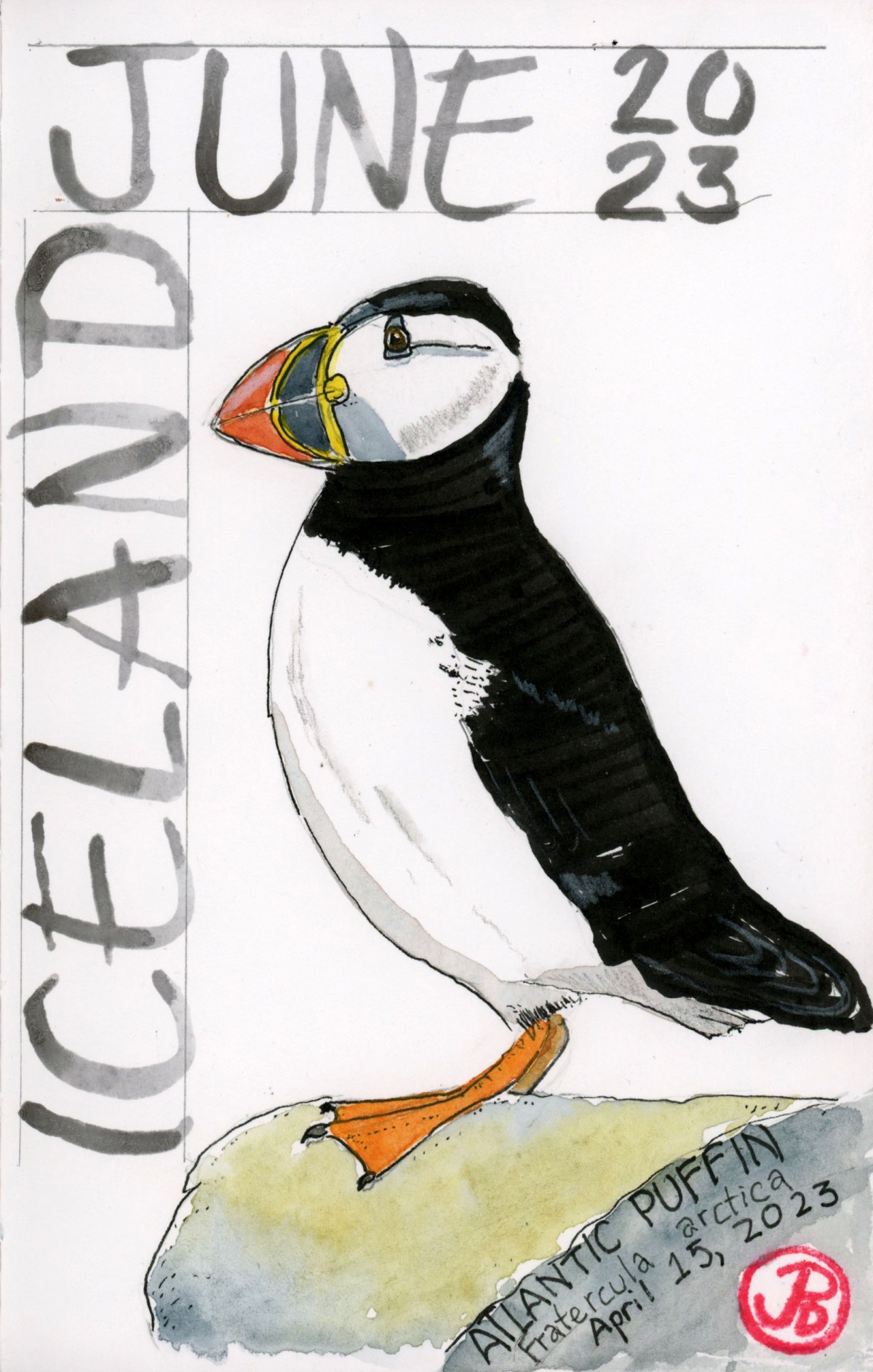
The Látrabjarg Cliffs were high on my sketchlist and I was determined to add this natural wonder into my Iceland sketchbook. The problem: rain was forecast for our evening visit. Now rain (or wetness in general) does not go hand in hand with field sketching, especially when using ink or watercolor. So I had to find shelter to start my sketch.
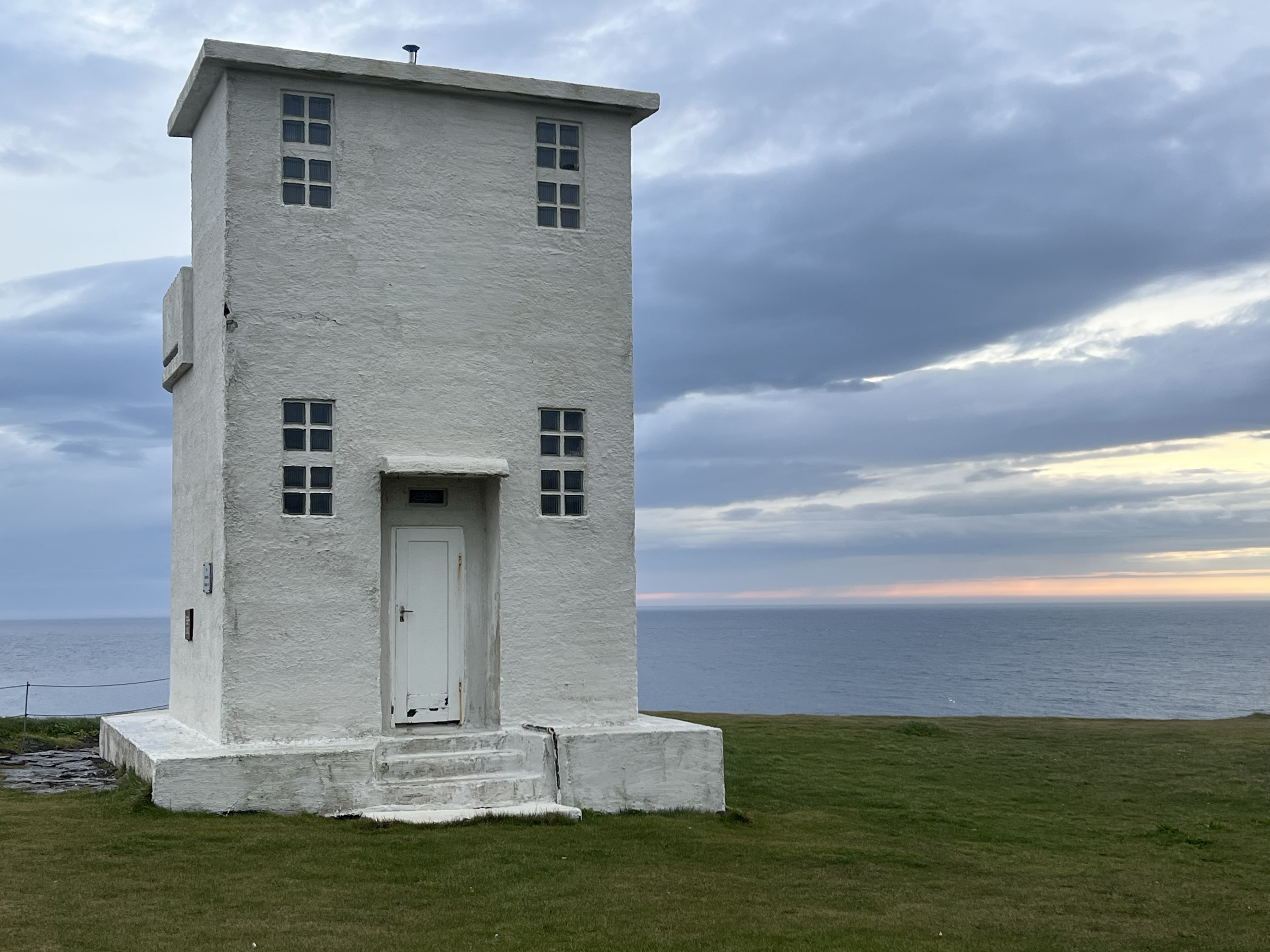
The westernmost lighthouse in Europe provided a weather break so I could get my initial anchor sketch in (featured sketch). In the finished sketch a few telltale ink smudges bear witness to the drizzly weather on our Látrabjarg visit.
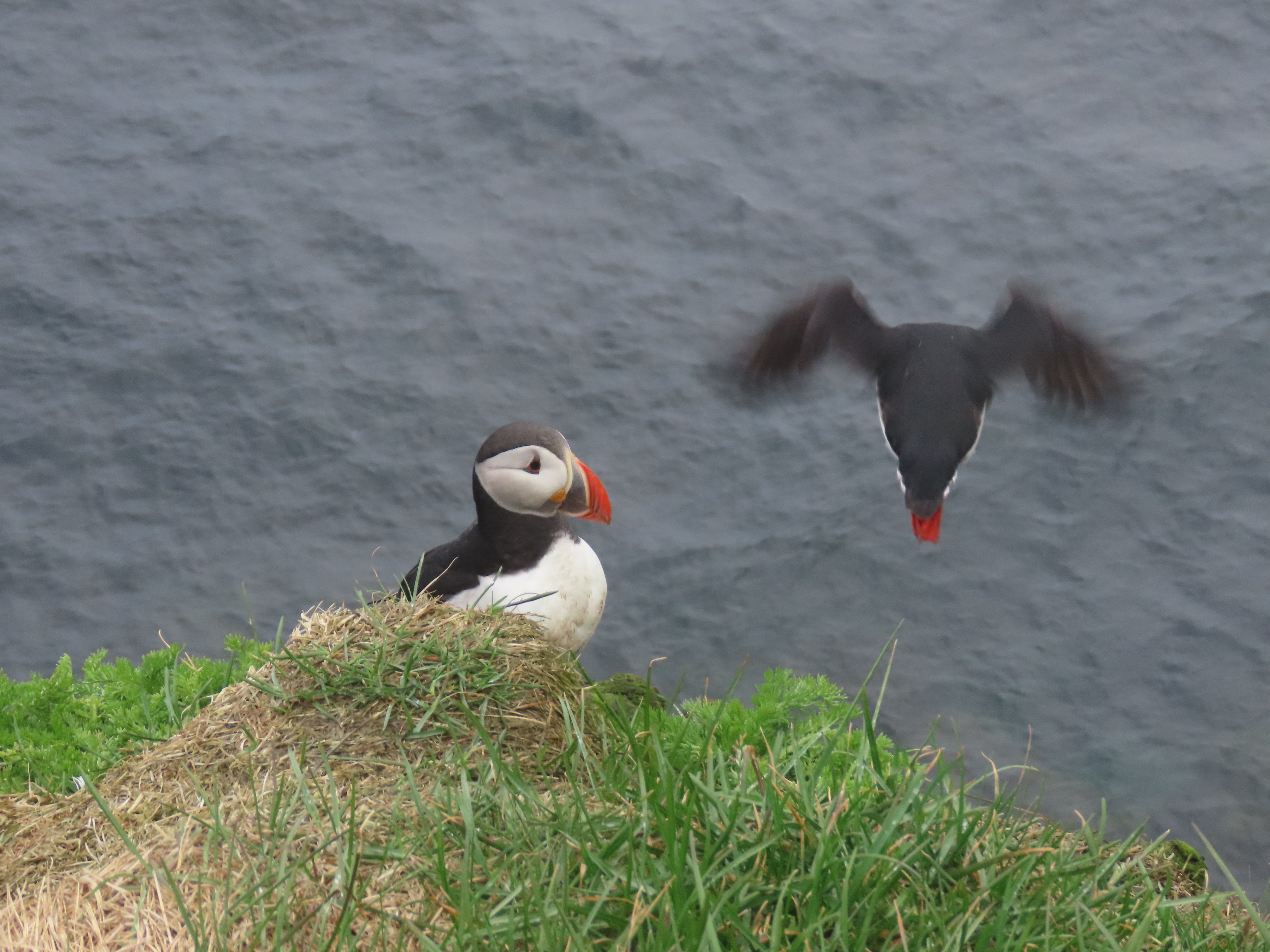
The big draw to visiting these cliffs are the large numbers of seabirds and the close proximity to one of Iceland’s most beloved breeding species: the Atlantic puffin.
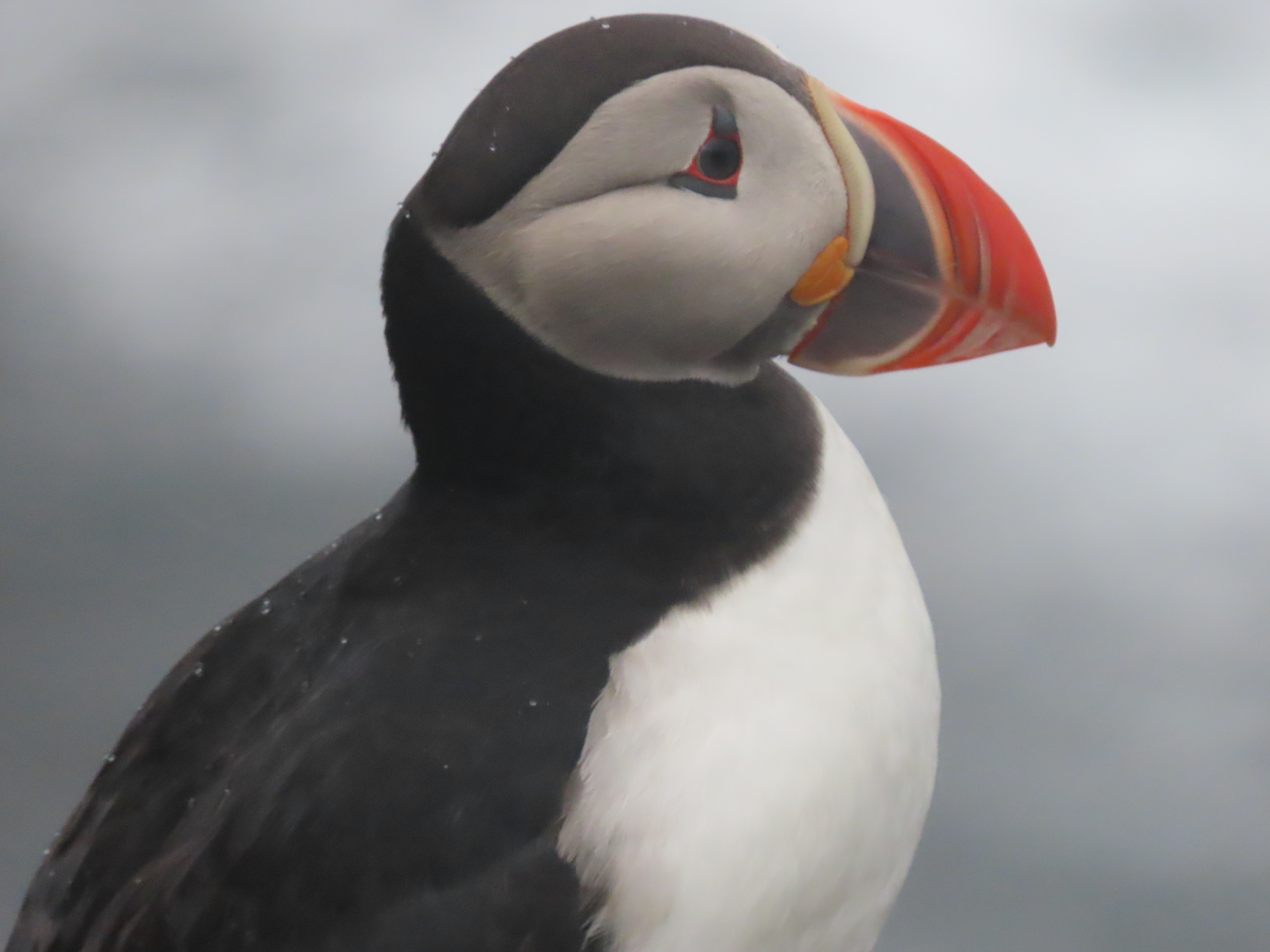
Seabirds nest at different levels of the cliff with puffins occupying the tops of the cliffs, followed by razorbills, and towards the bottom, kittiwakes. This is represented by the vertical portraits of the three species on the right side of the sketch. Seven other species of birds also use the cliff for nesting.

 Corvid Sketcher