Image

In Pursuit of Phantoms

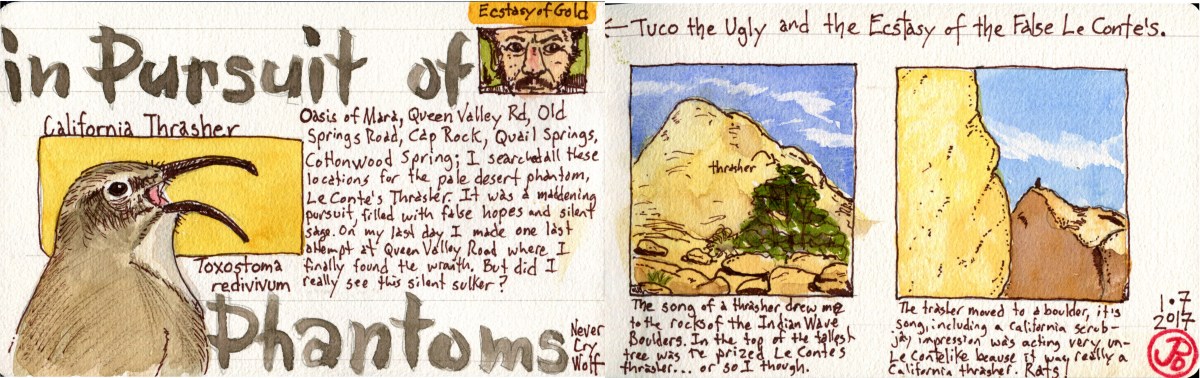
Just west of the Salton Sea, the road begins to rise, just out of Salton City. Slowly you climb up to above sea level and you keep climbing through the Anza-Borrego Desert State Park. My target bird for this little desert detour was the elusive Le Conte’s thrasher. This bird have eluded me all over Joshua Tree National Park and I hoping to add this bird to my life list at the known thrasher hotspot at Old Springs Road Open Space Preserve.

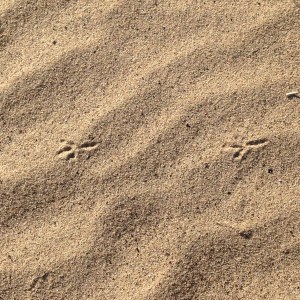
I walked the sand in ever widening circles, hoping to catch the bird that looked like a mouse darting from bush to bush, but the the only evidence of the thrasher were it’s footprints in the desert sands.

With one last day in Joshua Tree I decided to try one last place for Le Conte’s, a location I had tried before, Queen Valley Road. I walked the road, stopping every once in awhile to listen for the thrasher’s song. I was about 300 yards down the road, when I heard the warble of of a far of thrasher off to the left. I maddening ran through the desert brush, like Tuco the Ugly, in the famous “Ecstasy Of Gold” scene in The Good, the Bad, and the Ugly. The song seemed to come from the rock outcrop. I scanned the area for any sign of the thrasher.

I finally spotted the thrasher in the upper branches of a tree, signing it’s heart out and mimicking a scrub-jay, which perched in the tree next to the singing thrasher. I was able to get great looks at the very light, sandy thrasher. Le Conte’s thrasher! I watched the thrasher as it moved around, singing from the highest perches around it’s territory.
img_6311

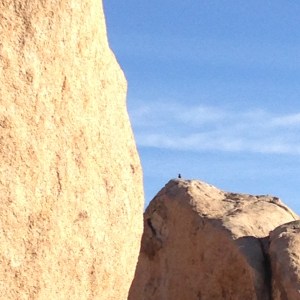
The singing thrasher on top of a boulder.

I then walked off to the Wall Street Mine. On the way out to the mine, doubt started to set in. There was something about the bird that didn’t fit. Would a Le Conte’s sing in the top of the tallest tree around? Is the Le Conte’s know for it’s mimicry in it’s songs? Everything I had read about the bird was that it was elusive and sang a quiet, hushed song. This was not the thrasher I had just seen. In my desire to see a Le Conte’s, I had convinced myself that this thrasher fit the part.
dsc07257

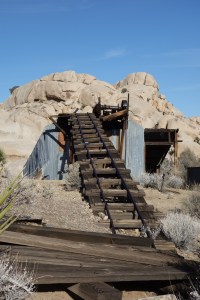
The abandoned Wall Street Mine, Joshua Tree National Park.

On my return from the mine, I refound the thrasher and this time I confirmed that it was not a Le Conte’s but a California thrasher. And I so I left Joshua Tree without finding the elusive silent-sulker of a thrasher.
img_6281

Foot steps in the sand are the closest I came to “seeing” the mysterious, Le Conte’s thrasher.
 

Image

Looking for a Gull I Found a Legend Instead

Salton Sea, California.

From Joshua Tree, I headed two hours south to one of the top birding destination in the nation.

The Salton Sea is really an accident. In 1905, the Colorado River breached it’s banks and headed downhill to the Salton Sink, 200 feet below sea level. It took engineers three years to stanch the flow and in that short time, the Salton Sea was created, the largest lake in California and the 2nd largest inland sea in the country (only bested by the Great Salt Lake).

The Salton Sea was a hopping place back in the 1950’s and 1960’s. Water recreation in the form of boating, water skiing, fishing, and sunbathing was the main draw for folks from the Los Angeles Basin. But this boon was short lived. The lake began to shrink, becoming more polluted by agricultural runoff, and growing saltier than the Pacific Ocean. The communities around the sea become dusty ghost towns.

The main visitors to the sea nowadays are birders and the bird that draws then to this remote part of California is the yellow-footed gull, the only place in the United States where this gull can be found. A bird the size of the common western gull but with a heavier bill and yellow legs. This gull breeds on the Sea of Cortez and some spend the summer and fall at the Salton Sea. A smaller number overwinter and I was hoping to see one of these birds from the Rock Hill Trail at the Sonny Bono National Wildlife Refuge on the sea’s southern shores.

img_6276The sketcher at the famous Salton Sea birding trail: Rock Hill Trail at the Sonny Bono National Wildlife Refuge.
Along the Rock Hill Trail there were many gulls to comb through and the scope was a great help. But try as I might I could not turn a single ring-billed gull into a yellow-footed.

I left Rock Hill Trail and I tried a few other locations  to the seashore, down dirt agricultural roads which were impassable because of New Year’s rain. On one such road (Young) I spotted the bird that stares back at you from the U.S. Fish & Wildlife Service brochure.

dsc07195

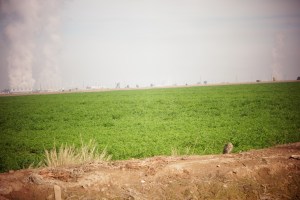
That dirt claude on Young Road, just to the right of center, turned into a burrowing owl, who didn’t give a fig for my search for yellow-footed gull. The plumes of the thermal generation plants can be seen in the distance.

img_6291

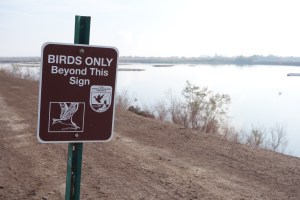
This place is for the birds!

thumb_dsc07181_1024

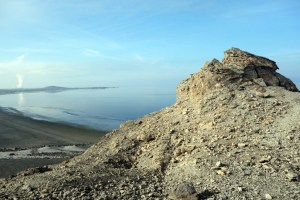
The mystical and surreal Salton Sea from Rock Hill.

I returned to Rock Hill Trail for one last look for my target gull. I went all the way up to Rock Hill and scoped both shorelines and spotted a gull with yellow legs but I couldn’t convince myself with 100% confidence that it was a yellow-footed gull.

 dsc07212

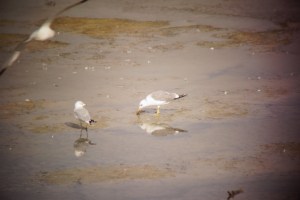
I tried to turn this gull into a yellow-footed gull but it’s size, back color, and dark eye said, “California gull.”

On my return along the Rock Hill Trail I came upon a group of three birders. Two younger birders (a man and woman) and a grandfatherly type, shouldering a tripod and scope. Upon seeing him, I knew immediately who he was, a California birding legend!

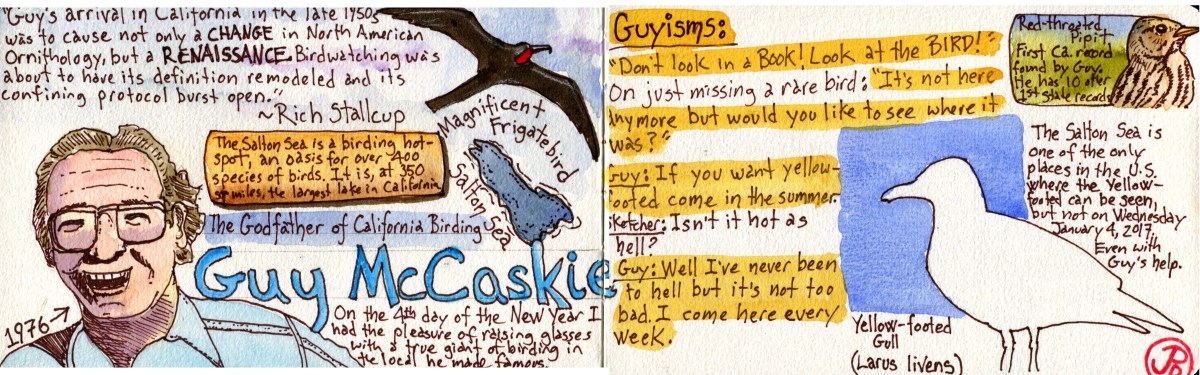
The man with a scope was Guy McCaskie. The late California birding legend, Rich Stallcup describes McCaskie impact on birding on the continent thus:

Guy’s arrival in California in the late 1950s was to cause not only a CHANGE in North American Ornithology, but a RENAISSANCE. Birdwatching was about to have its definition remodeled and its confining protocol burst open.

McCaskie, given the moniker of “The Godfather of California Birding”and  became known for finding migrant traps and chalking up 11 first state records of birds first seen in the Golden State. He also became, and stills is, a mentor to generations of California birders.

We scoped both sides of the trail for any large dark-backed gulls and we found none. If Guy McCaskie couldn’t find any yellow-footeds then there probably none within the reach of our scopes.

So instead of finding a yellow-footed gull, I instead found a living, California birding legend. Not a bad trade off.

Now I was off to the northwest to look for a phantom.