Image

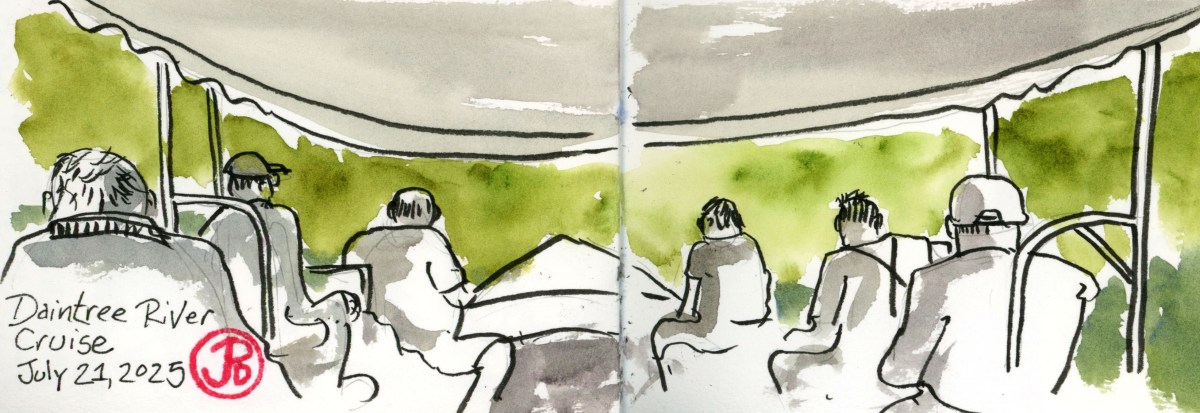
Daintree River Cruise

On day one of my North Queensland birding tour with FNQ Nature Tours I was picked up at my hotel in Cairns at 6:30 AM and met my fellow travelers: three Aussies from Melbourne and two Kiwis and our local guide James.

About forty minutes later we arrived at the banks of the Daintree River.
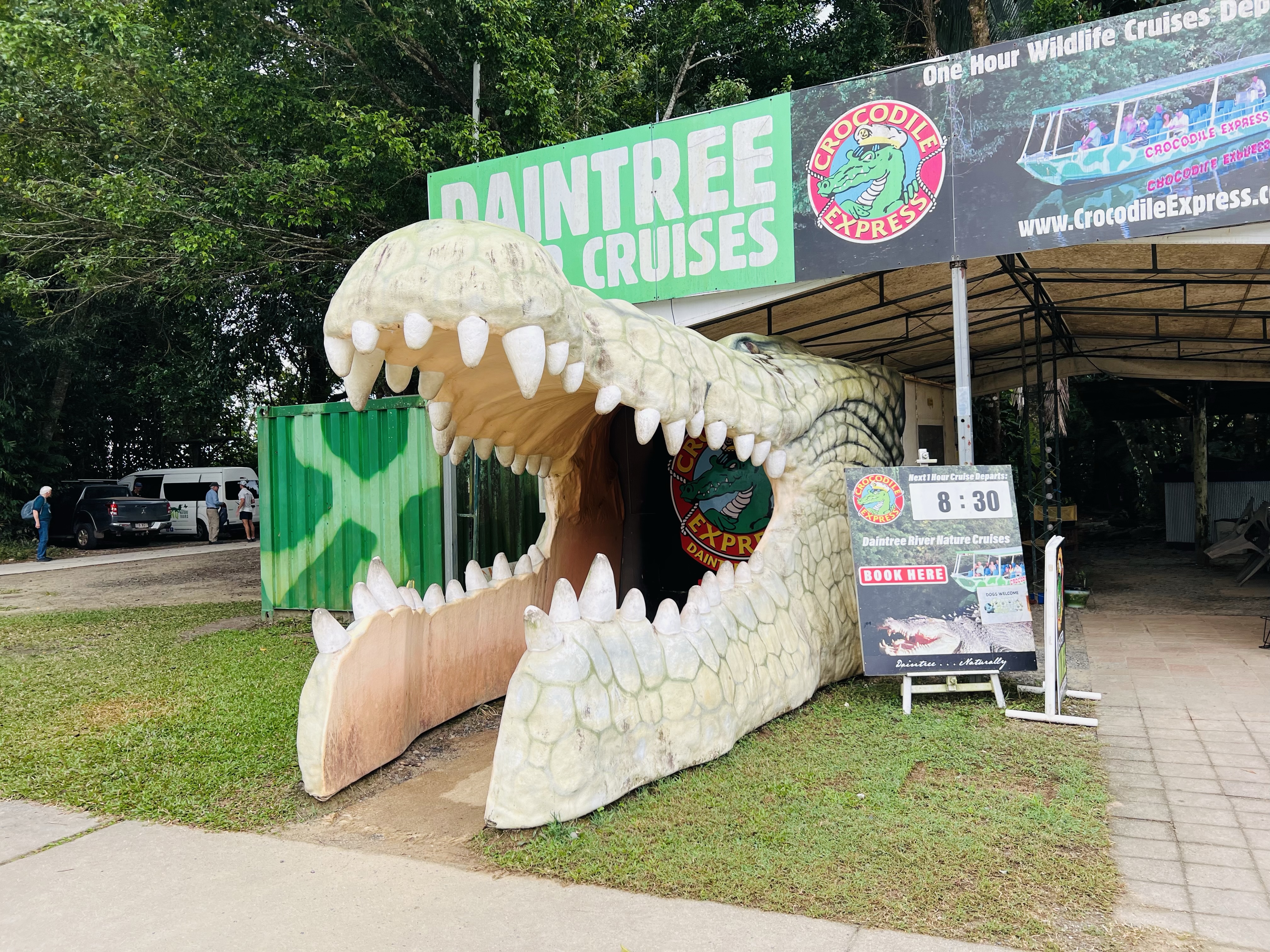
In case you didn’t know, saltwater crocodiles are the big draw on the Daintree.

While we were sure to see crocodiles, our main focus was on the avian life.

We departed from the dock and headed across the Daintree and went up a creek in search of Australia’s smallest kingfisher, the appropriately named little kingfisher.

On the way there, our guide pointed out a small salty resting on the bank.
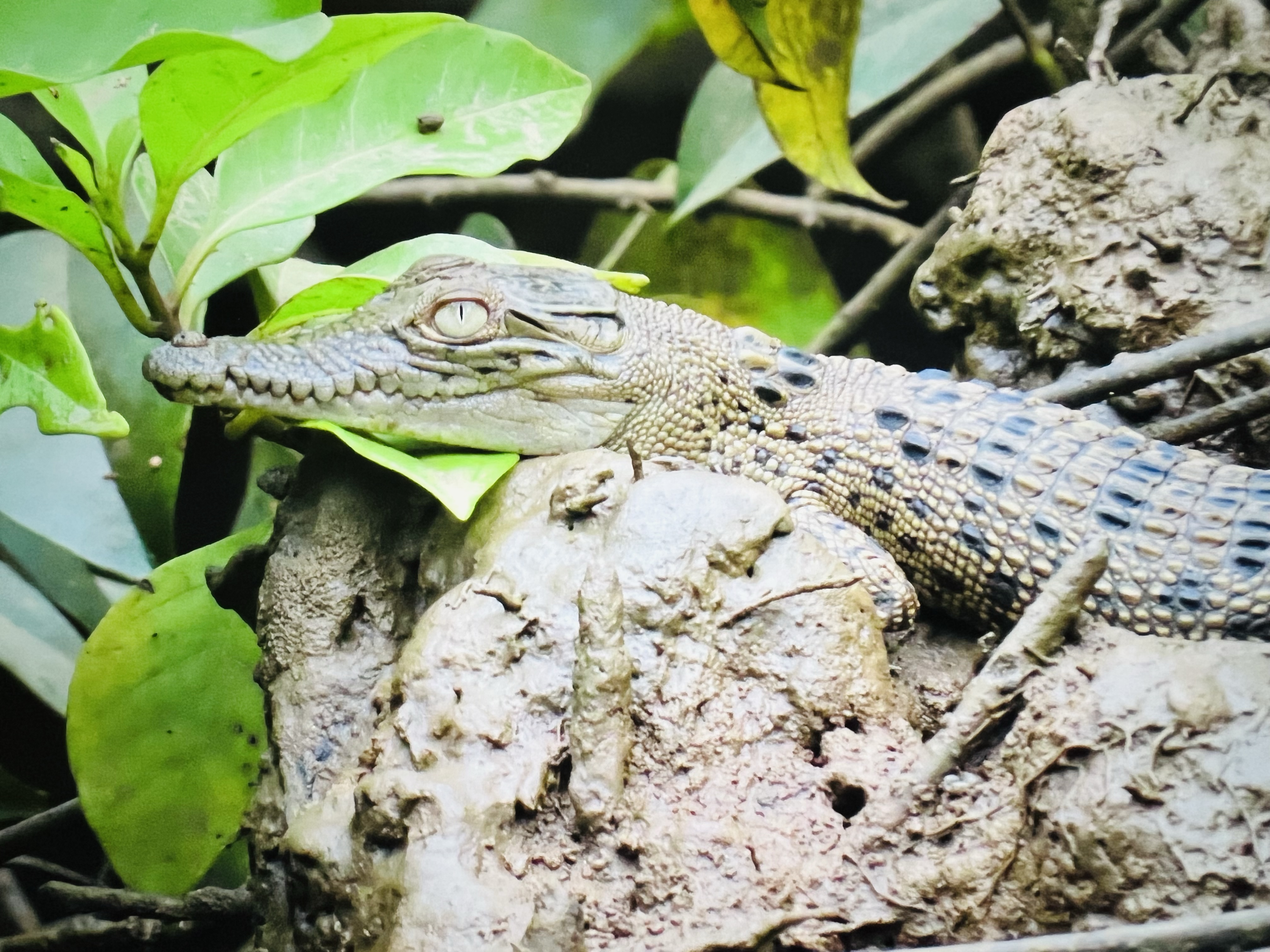
A small salty, perhaps a year old.

We peered down every small tributary and every low hanging branch. While everyone had their bins focused on the tributary on the port side, I peered over to the starboard and there it was, perched on a limb over the creek.

A little kingfisher photographed at the Botanical Garden in Cairns.

After getting more looks at the little kingfisher, we headed back to the Daintree to see bigger crocs.

The king of the crocs on this stretch of the river is a large male with three teeth named “Scarface”.
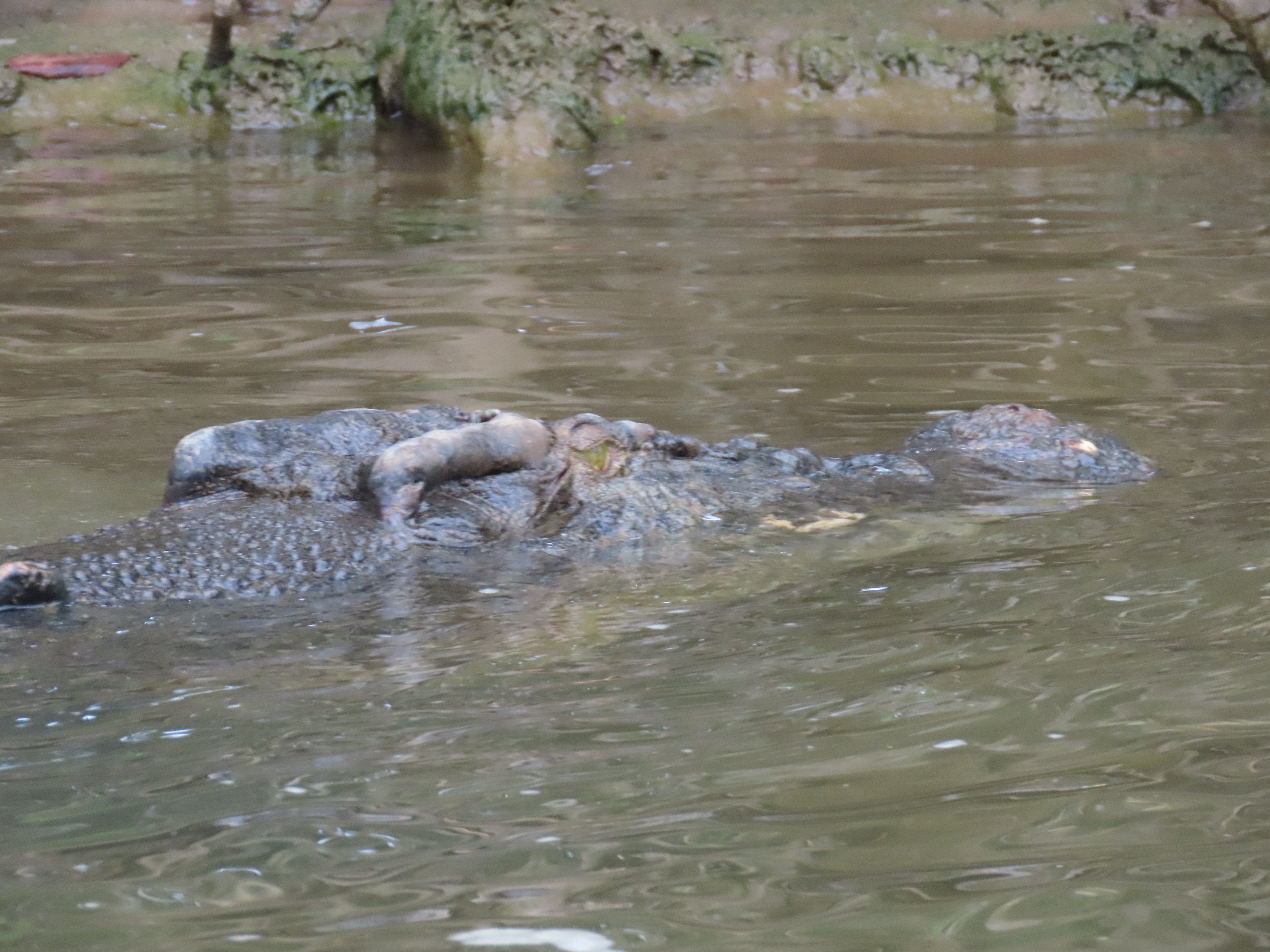
The three-toothed dominant male of the stretch of the river: “Scarface”.

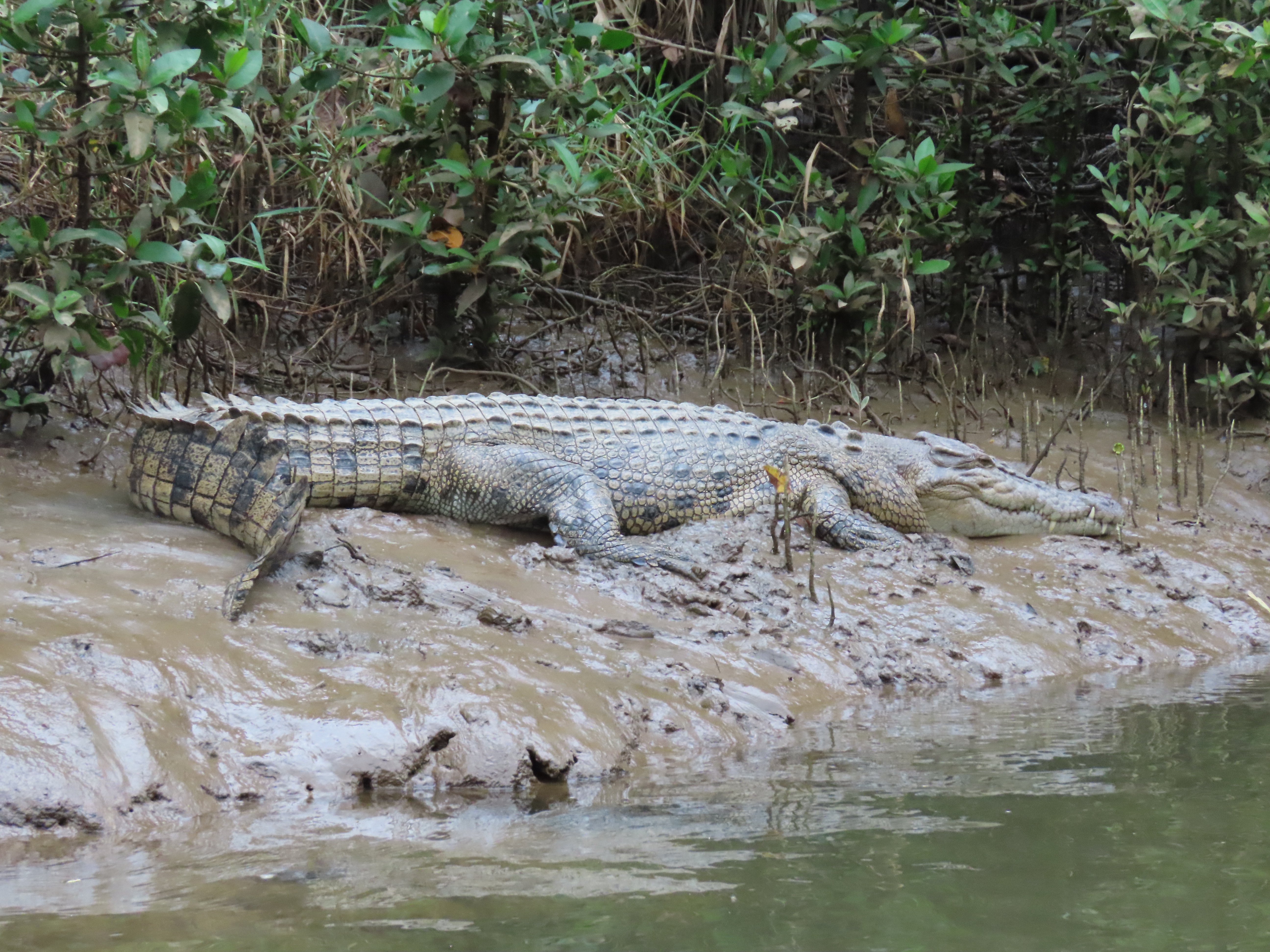
After getting looks at “Scarface”, we headed up another small creek to get a look at a resting female.
Our most interesting sight of the morning, and one our guide had never seen, was an interloping male carrying a bloated feral pig across the Daintree.
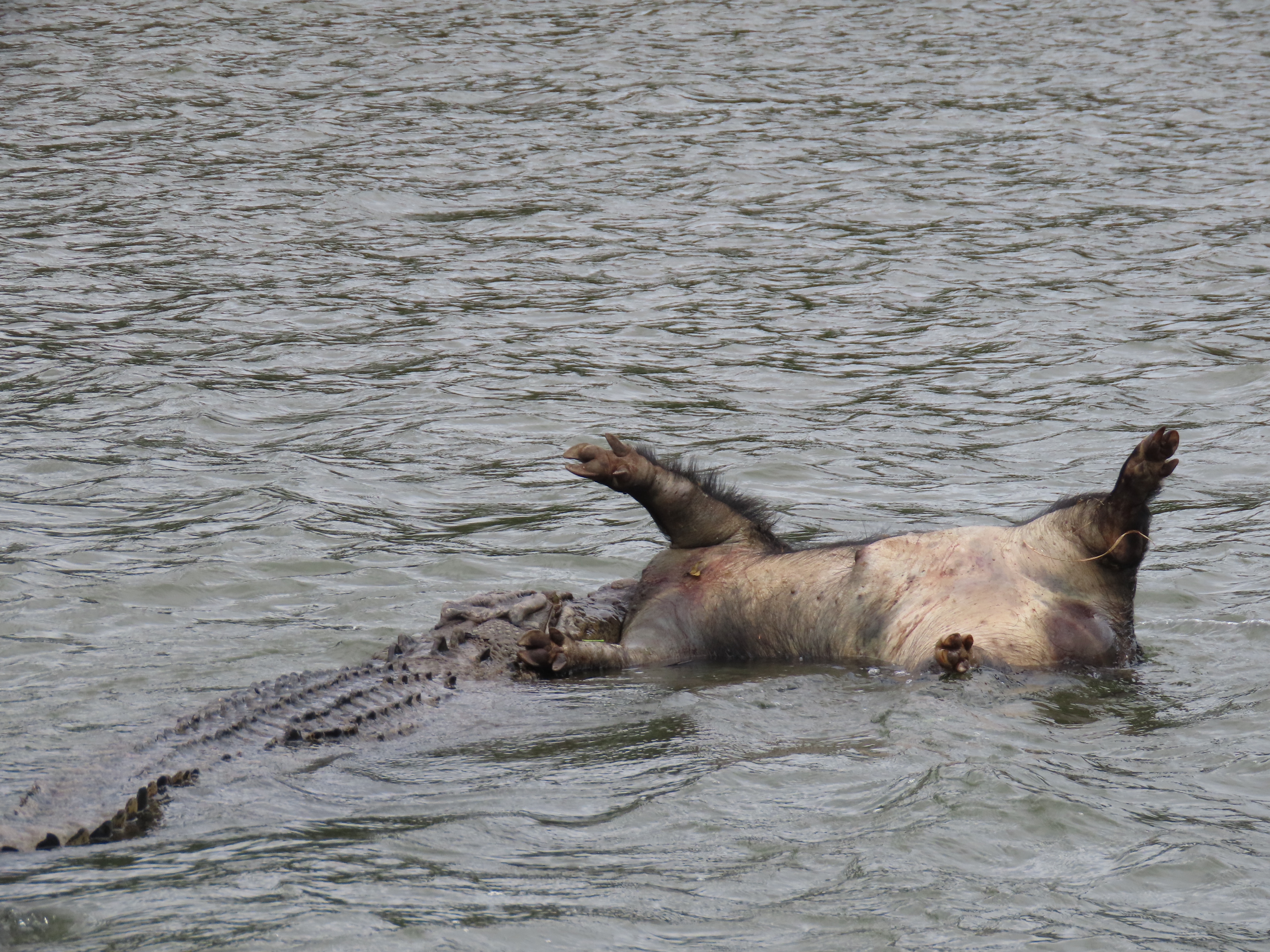
Feral pigs, as in parts of the United States, are a major problem in Australia. They eat and destroy crops and destroy native habitats. The open season for hunting pigs is year round. It is assumed this is how a feral pig made it into the river and into the jaws of a hungry male salty.

Image

You Call That a Croc?

“The saltwater crocodile is the one animal that has the capacity to frighten even Australians. People who would calmly flick a scorpion off their forearm or chuckle fearlessly at a pack of skulking dingos will quake at the sight of a hungry croc.”

-Bill Bryson, In a Sunburned Country

I was looking forward to my encounter with the world’s largest reptile in Queensland on a Daintree River cruise. I just hope it will not be a close encounter!

Australian wildlife has the capacity to kill. Even a cone snail can kill a human! Oz is home to 213 venomous snakes. That is more venomous snakes than anywhere else in the world.

Australia is also home to the Murder bird, a small venomous octopus, the world’s most deadly spider (Sydney funnel-web), stonefish, box jellyfish, the common death adder, the blue bottle, the bull, tiger, and great white shark, and many others.

But as Bill Bryson notes, there is one deadly animal that rises above all others: the saltwater crocodile.

This apex predator sometimes sees humans as prey. In Australia from 1971 to 2013, saltwater creatures crocs killed 106 people. On average there are about 2 fatal attacks per year.

I have seen the American alligator and crocodile in Florida and the Yacare caiman (above) in the Pantanal. I was really looking forward to seeing the largest crocodilian in the world.

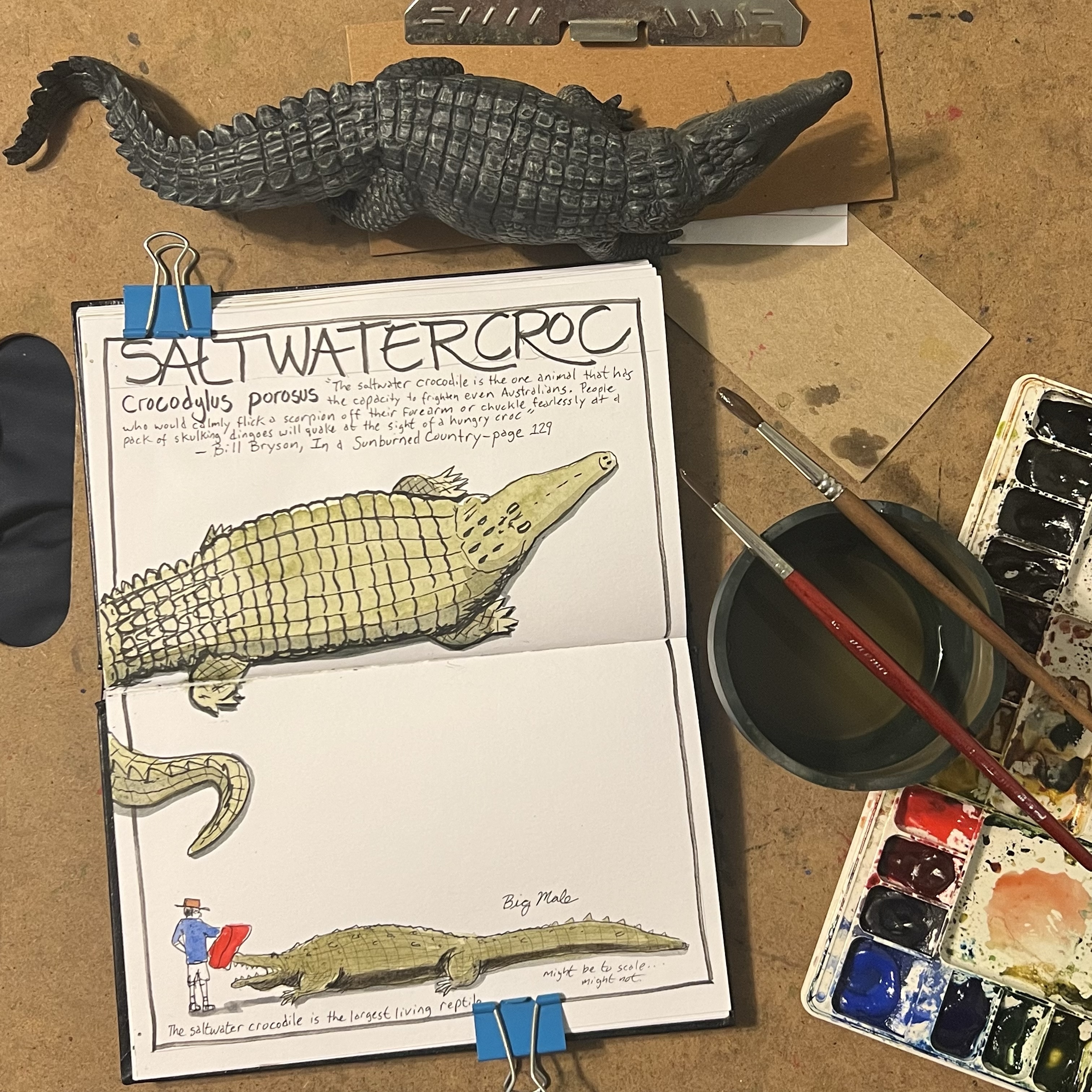
In order to sketch a croc I ordered a model to help me sketch. This way I could sketch it from any angle such as from above.

My saltwater croc model and my sketch in progress.
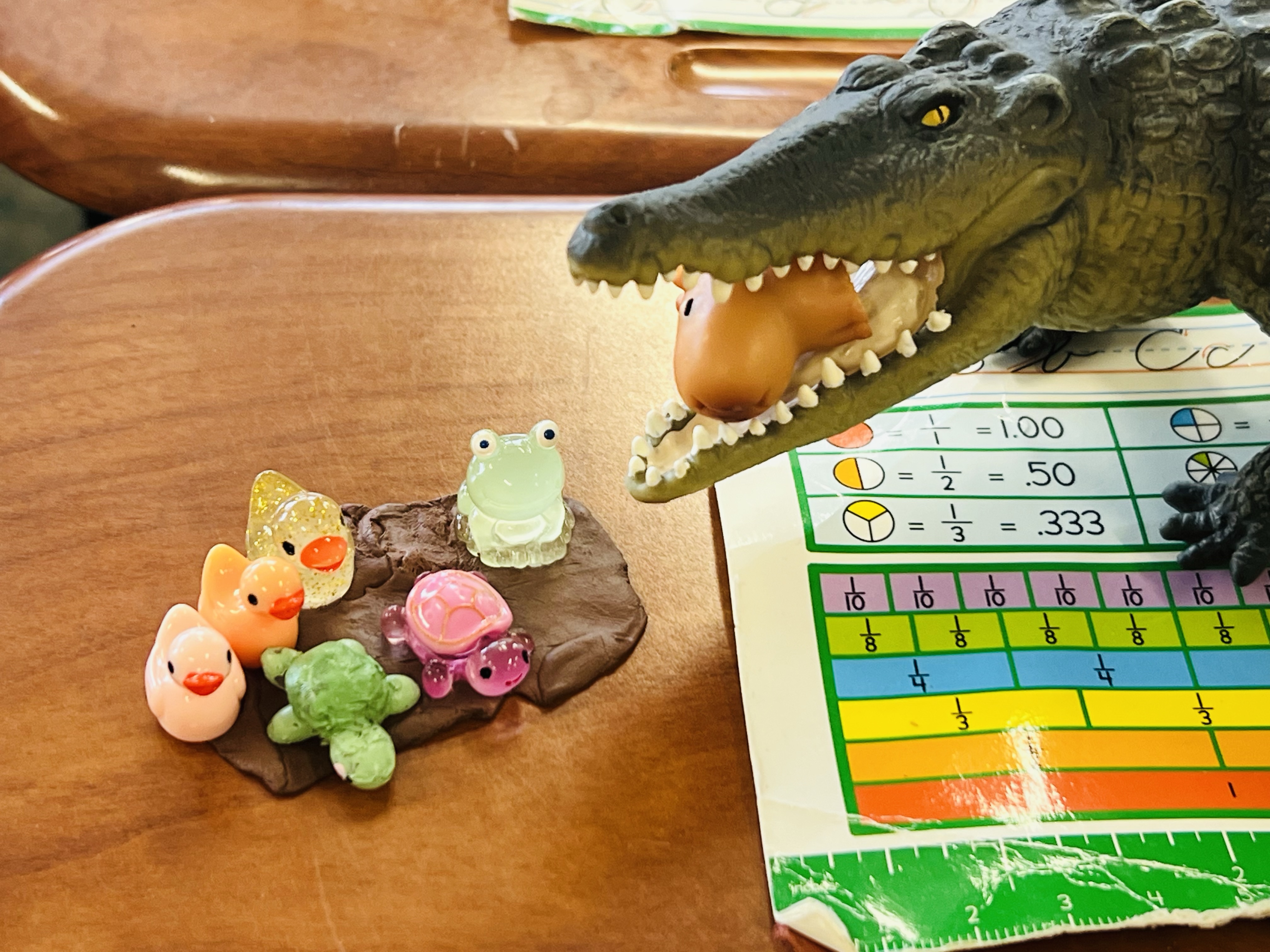
My croc eating my student’s capybara! No plastic was harmed in the making of this photograph.