Manassas/ Bull Run is about 40 minutes to Reagan National Airport so I couldn’t resist the urge to visit the site of the first major land battle of the Civil War.
When I arrived from Winchester, it was still raining.
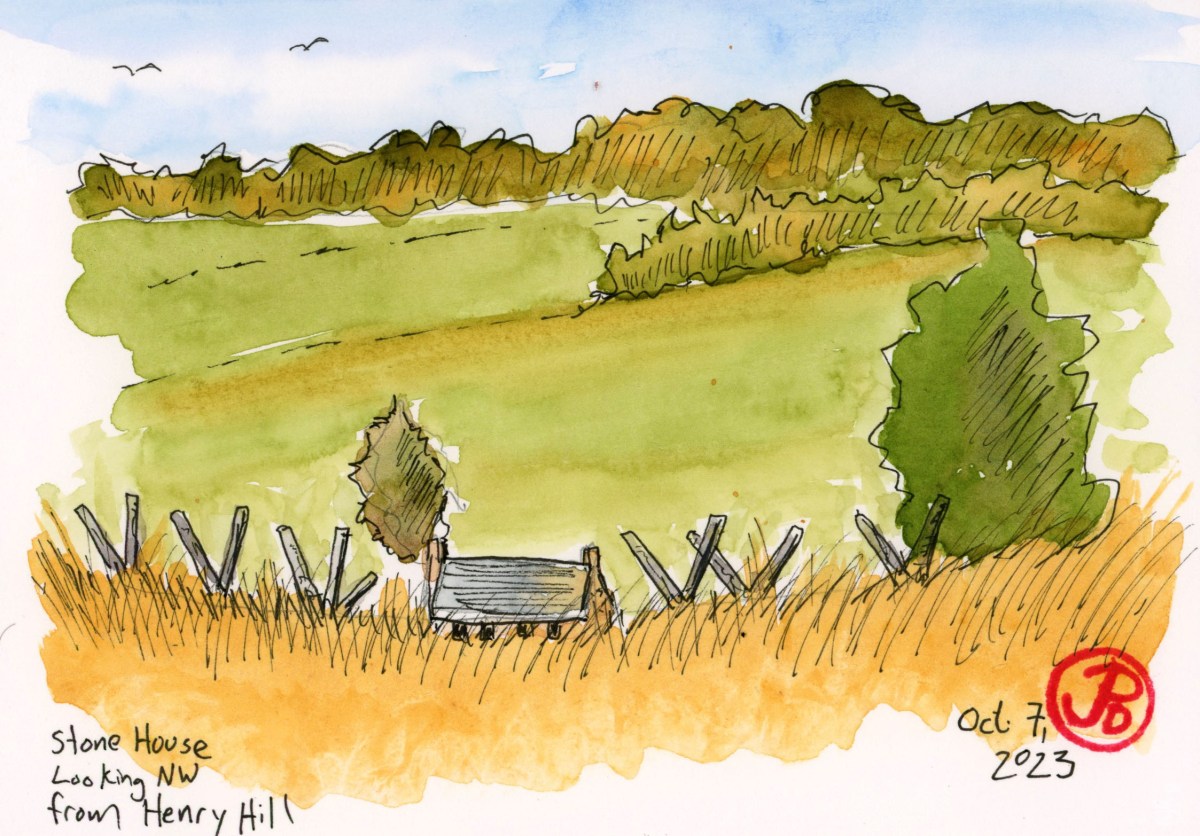
The focal point of the first battle was Henry Hill, named after the widow Judith Henry, who lived on a farmstead during the battle. She refused to leave and was killed in the battle when her house was hit by artillery fire.
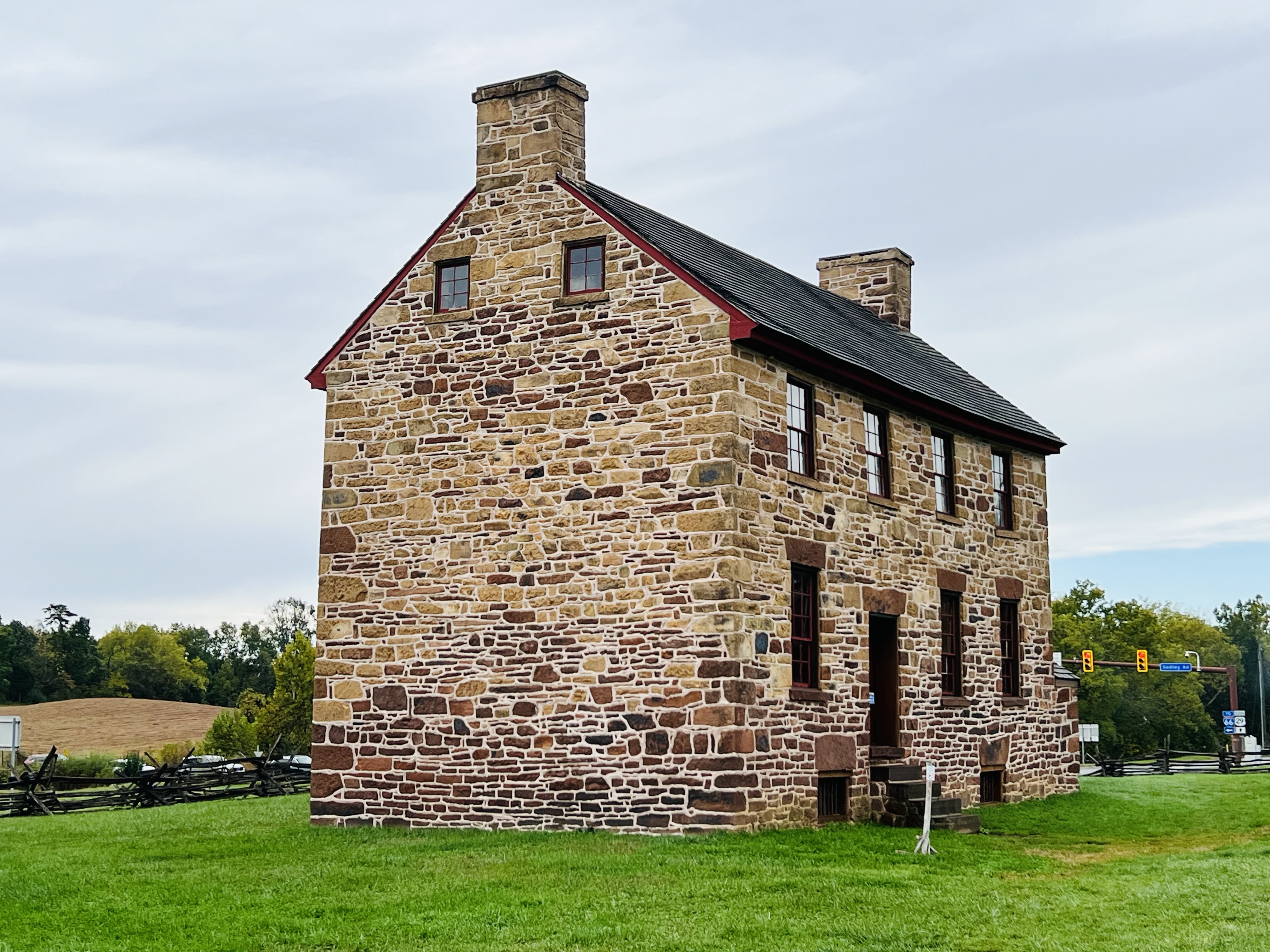
On the crown of Henry Hill is the grave of Judith Henry, perhaps the first civilian killed during the Civil War. The stone house is one the few structures that still stands from the two battles at Manassas. It was used as a field hospital during both battles and upstairs solider carved their names into the wood. The Union cannon position on Henry Hill looking towards the woods where the Rebels charged their position. It was the first time the northerners heard the bone-chilling Rebel Yell.
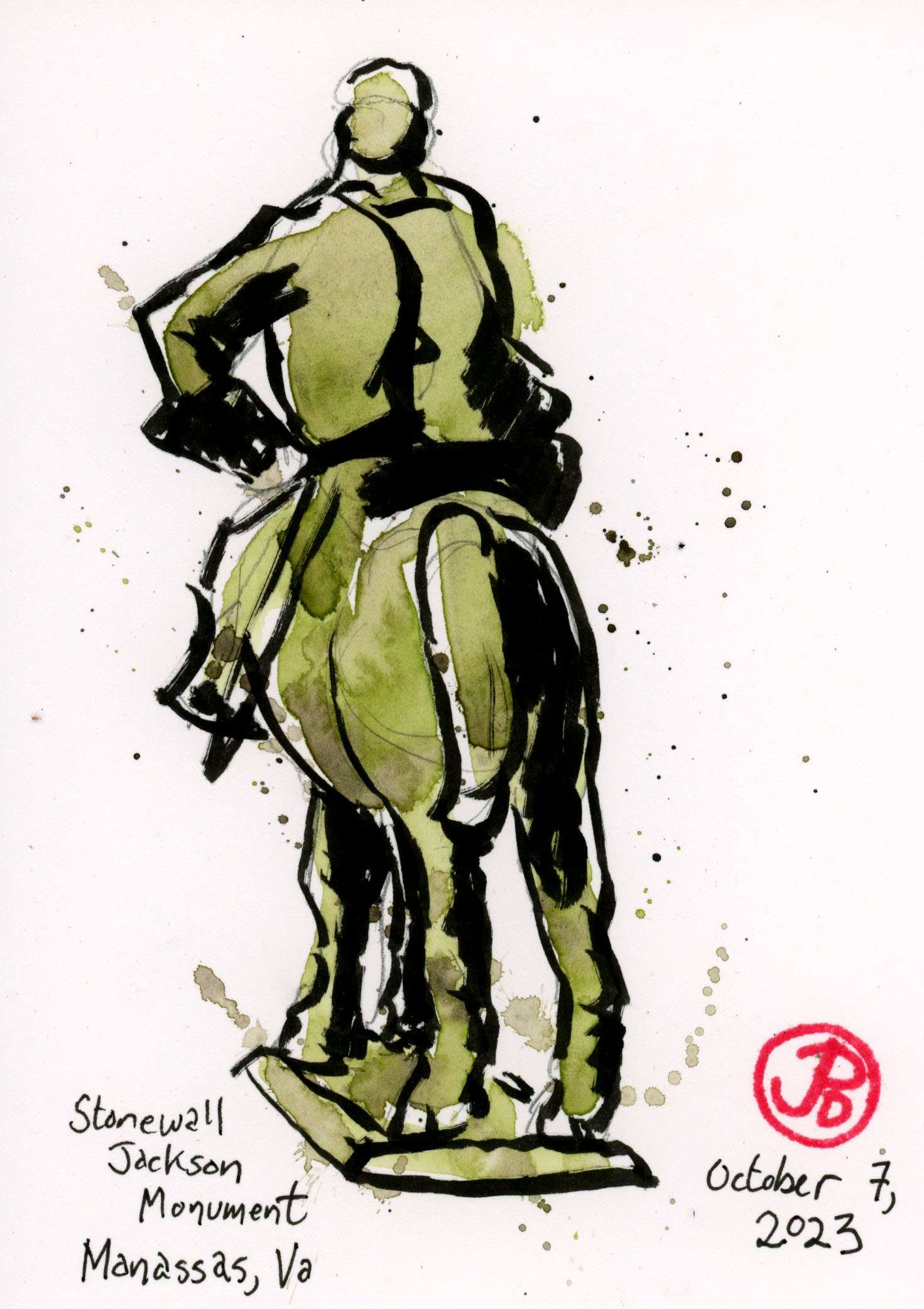
One Confederate commander made his name at the first Battle of Manassas on Henry Hill and his name was Thomas J. Jackson. Jackson held his Virginian troops at the brow of Henry Hill and General Barnard Bee of South Carolina, in a attempt to rally his own troops, supposedly said, “There is Jackson standing like a stone wall! Rally behind the Virginians!” or it could have also been, “Look at Jackson standing there like a damned stone wall!” Whatever Bee really said is lost in history because a Union bullet silenced him forever soon after his remarks. And the Commander is forever known as Stone wall Jackson.
A quick field sketch of the Stonewall Jackson Monument at Manassas.
One Civil War location I have been interested in visiting and sketching for a long time is Appomattox Courthouse in southern Virginia.
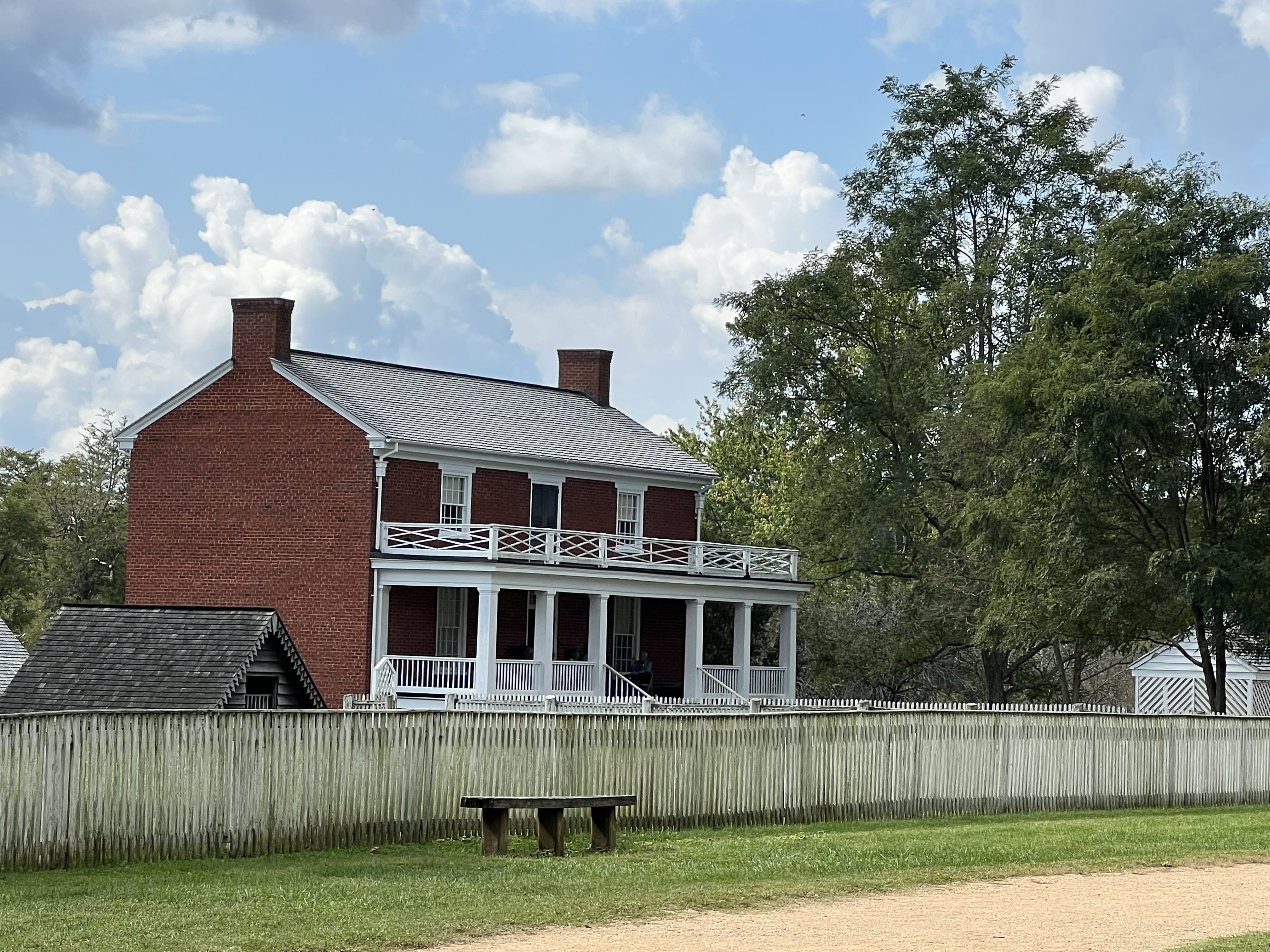
This is not the site of a major battle. Civil War lovers come here to visit a house just down the street from the courthouse and pay a visit to the front parlor.
Now how did this small parlor in a small southern Virginia town become a major historical landmark?
This is where the Civil War ended, at least on paper.
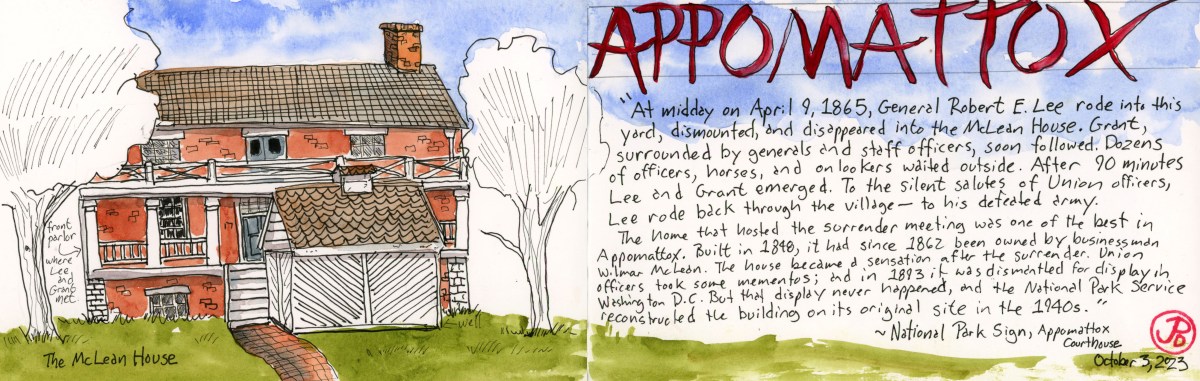
The McLean House.
The Confederate Army of Northern Virginia, commanded by General Robert E. Lee, was surrounded by Union forces near the small town of Appomattox Courthouse. Lee was now out of options and had no choice but to surrender. Lee said, “there is nothing left for me to do but go and see General Grant, and I would rather die a thousand deaths. “
On April 9, 1865, in the early afternoon, Robert E. Lee, entered the village of Appomattox Courthouse. He headed past the courthouse and stopped at the McLean House. Lee dismounted his horse Traveller, and entered the house.
Shortly afterwards General Ulysses S. Grant, General-in-Chief of all the forces of the United States, entered the house.
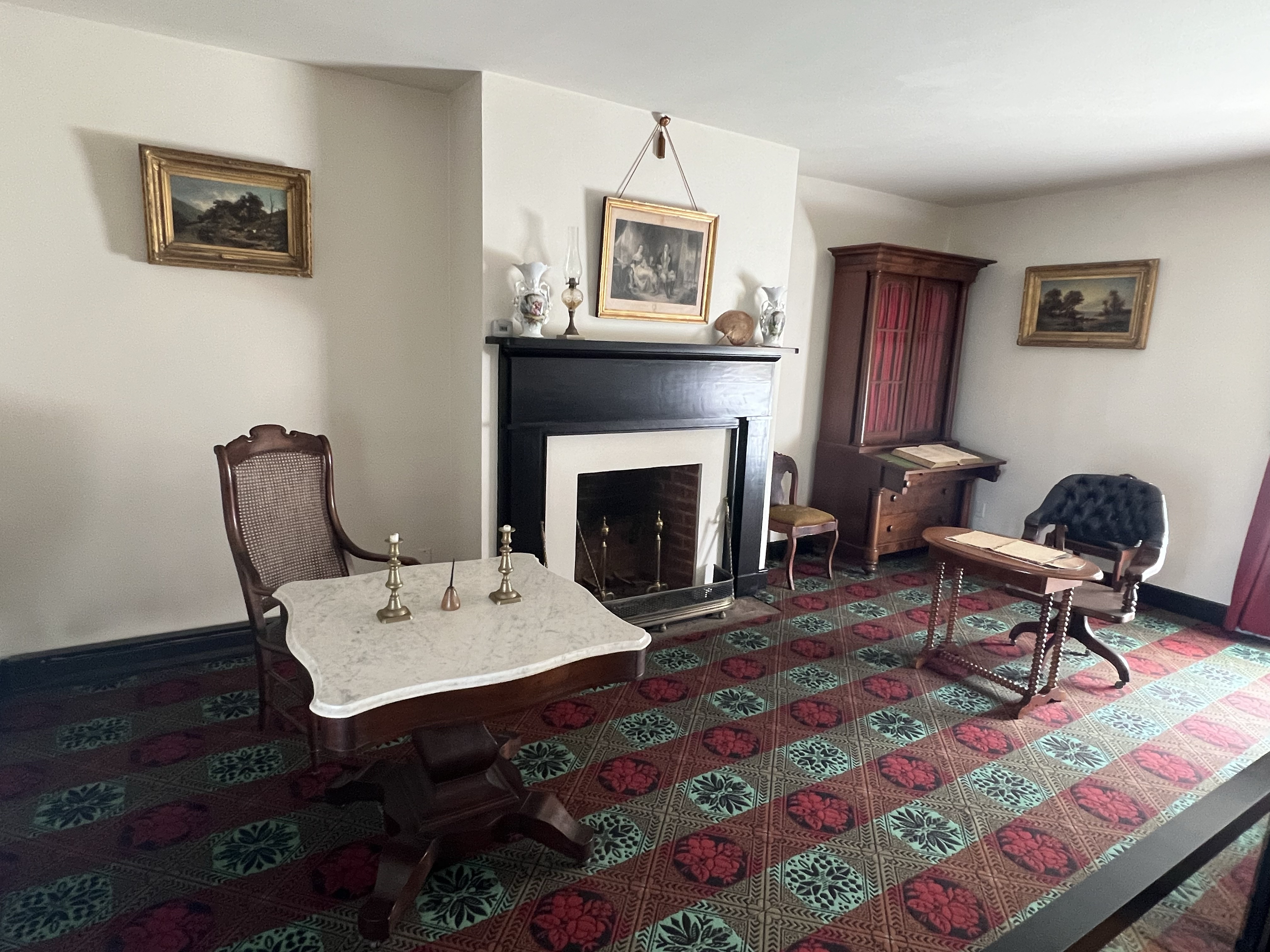
The front parlor where Lee surrendered to Grant.
The two men met in Wilmer McLean’s front parlor while the family was in the upstairs bedrooms. Here the lenient terms of surrender where agreed upon. The Confederate soldiers had to pledge not to take up arms again against the United States, they had to turn in their rifles but could keep their sidearms, and Lee was allowed to go free.
This surrender Appomattox was the beginning of the process of reunification.
Or was it?
Coda: Before he lived in Appomattox Courthouse, Wilmer McLean lived further north in Manassas.
During the the first battle of Manassas (aka Bull Run), McLean’s house was used by Confederate General Beauregard as his headquarters. His house was shelled by Unionist cannons.
It is said of McLean that the Civil War, “began in his front yard and ended in his front parlor”.
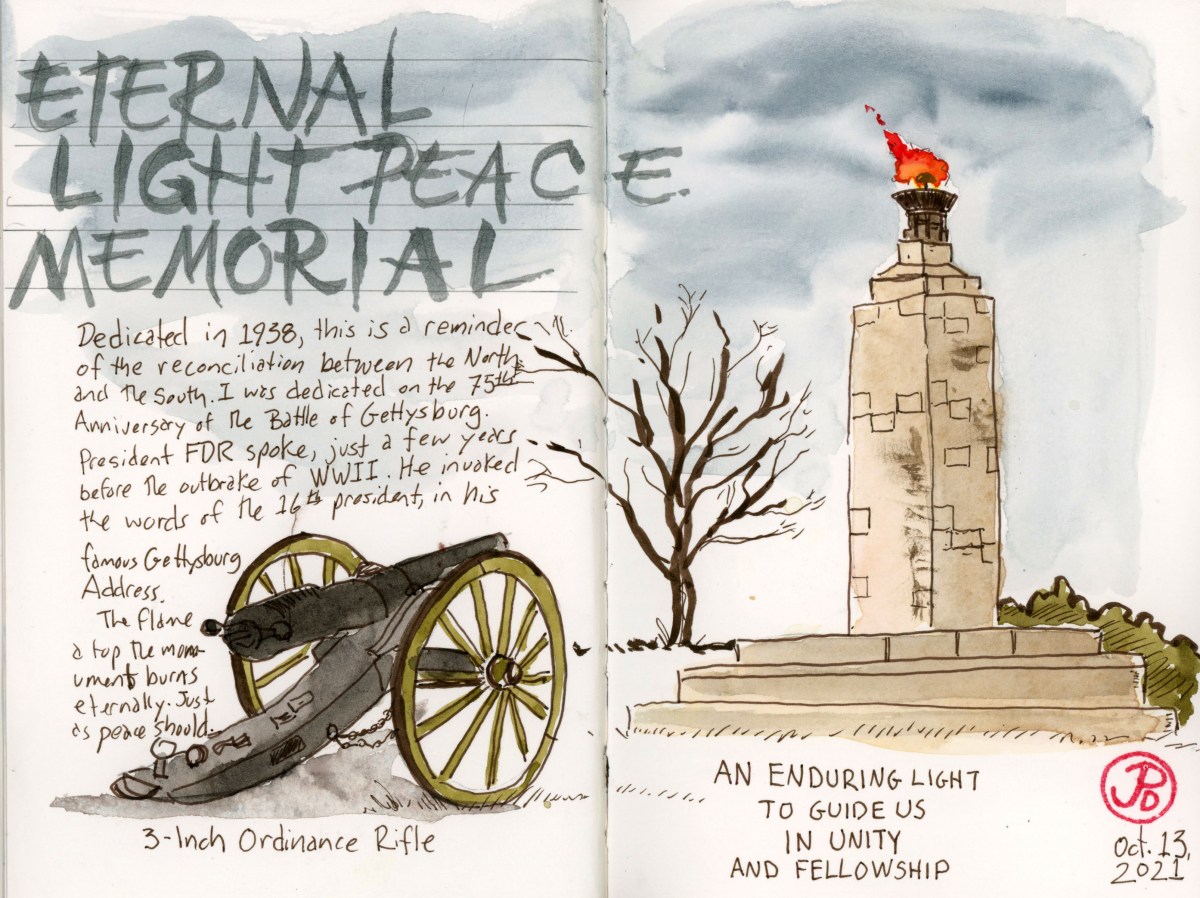
One of my favorite sketches from Gettysburg is of the Eternal Light Peace Memorial, atop Oak Hill, near the place where fighting first started in Gettysburg on July 1.
I like this sketch for two reasons. First because I think it captures what I wanted to sketch in the first place and second, because I like what this monument represents: the coming together of North and South to create a mutual and strong statement about peace. During the 50th Anniversary of the Battle of Gettysburg in 1913, Civil War veterans from the north and the south agreed that there should be monument to the reconciliation of the the two sides. I would take another 25 year to see the completion of the monument.
Despite the Great Depression, funds where raised both from states of the north and south to construct the monument. The shaft is made of Maine granite and Alabama limestone (reminiscent of the fighting on Little Round Top). The 47 and a half foot shaft is crowned by a bronze urn that contains a flame that burns 24 hours a day and 365 days a year. It is said that this eternal flame was the inspiration for flame that burns continuously at President John F. Kennedy’s grave at Arlington National Cemetery.
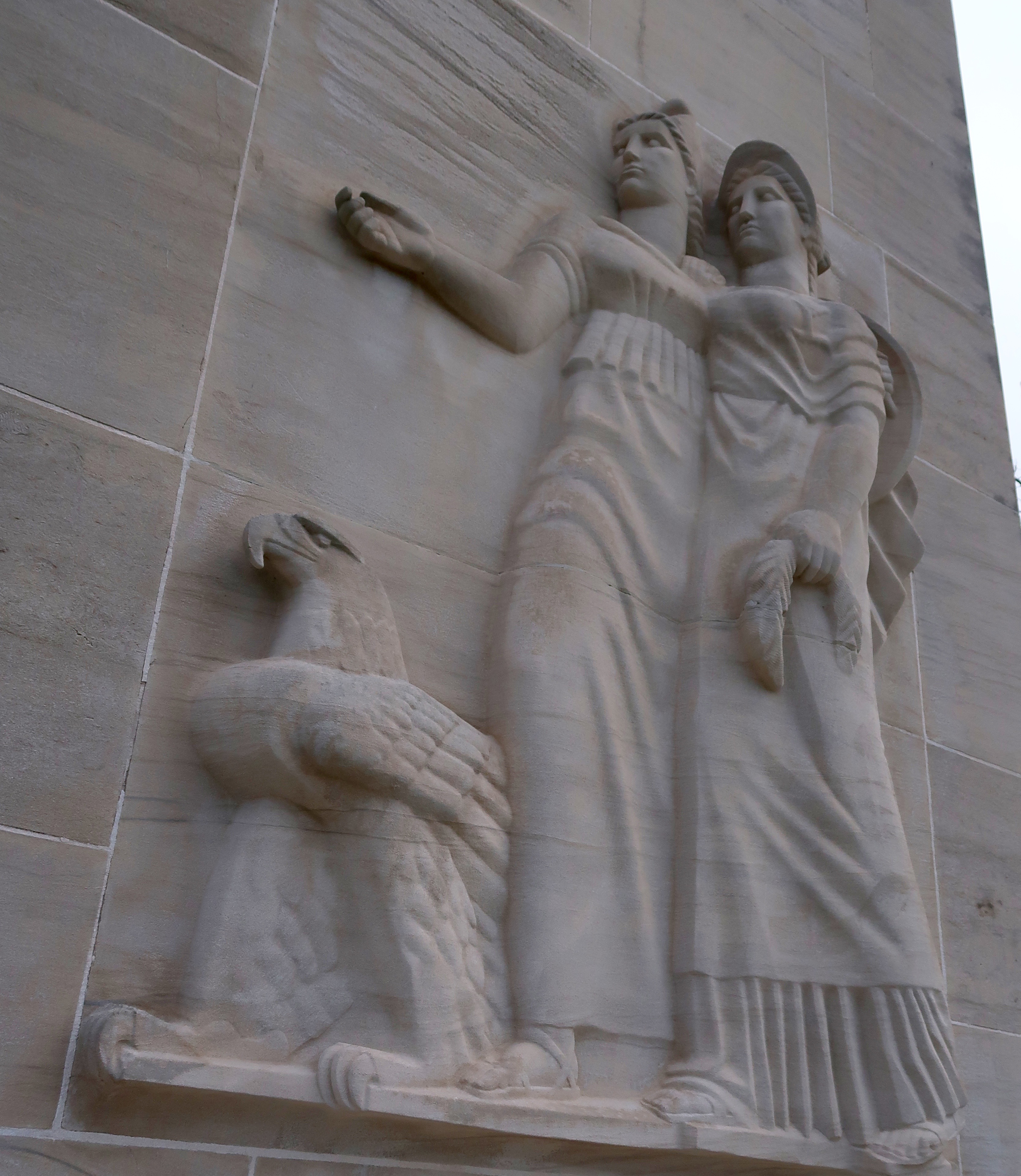
The base-relief sculptures of two woman that fronts the monument, represents peace and goodwill and the eagle represents the nation.
The monument was dedicated on the 75th Anniversary of the battle on July 3rd, 1938. The key note speaker was President Franklin D. Roosevelt. 250,000 people attended the dedication including 1,800 Civil War veterans, all of them in their 90’s or older. This was the last major reunion of Civil War veterans to ever take place.
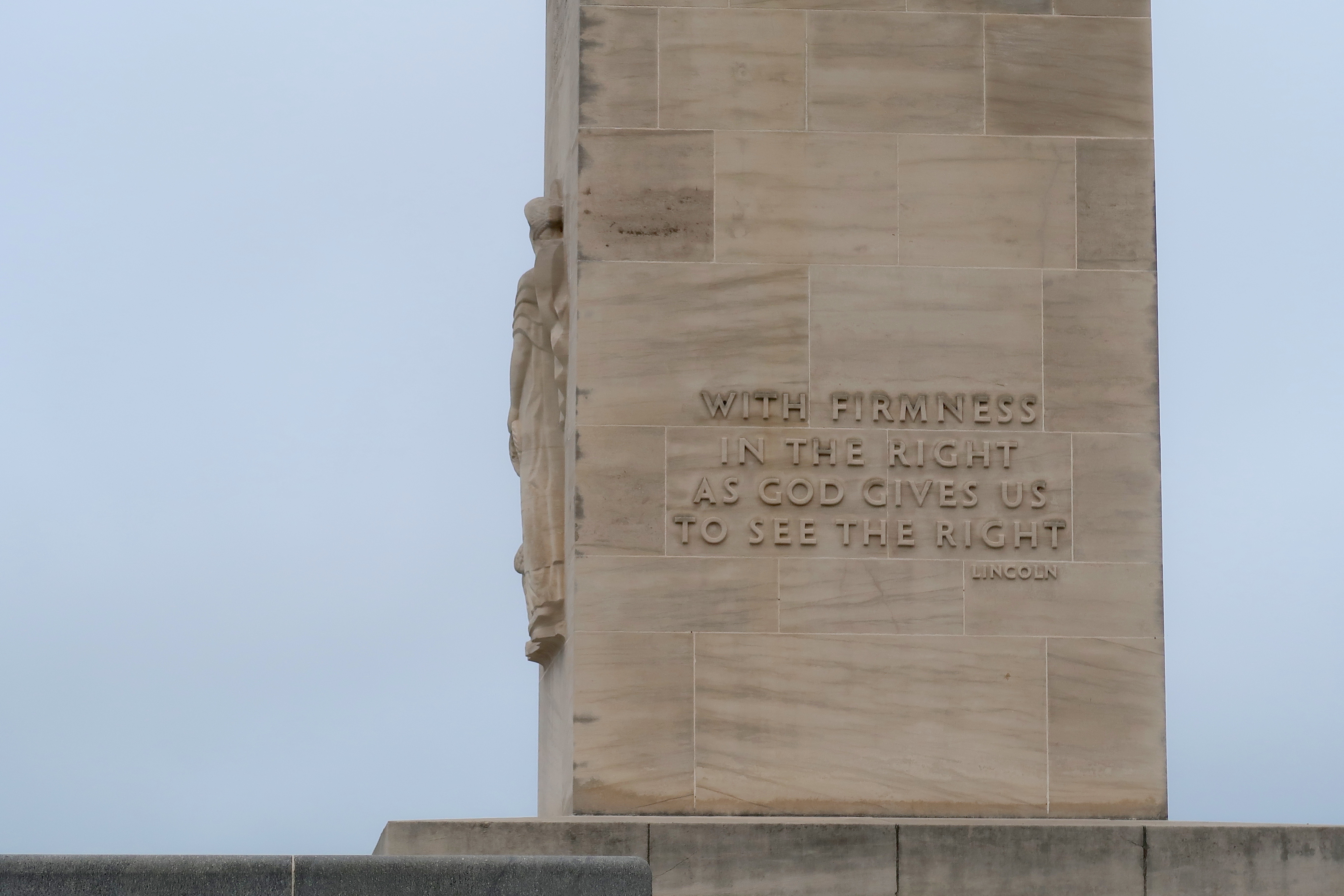
The words of Lincoln are all over the Battlefield of Gettysburg. These are on the side of the Eternal Light Peace Memorial.
I think all the members of congress should visit this monument to peace. The drive from Washington DC is an hour and a half but the journey would be worth their while. Here they would look at and contiplate meaning of this monument to peace, reconciliation, and working for the greater good of the country. This is why it was built, by both North and South and today’s politicians owe it to them and the future of the country to work together.
In my sketch, I added the cannon in the foreground, pointing up toward the monument. Perhaps this was an unconscious message that peace and reconciliation is always under threat. Before January 6, this might seem like an extreme statement but it now seems a possible reality.
This nation will hopefully have only one Civil War.
When the North and the South met in the southern Pennsylvanian town of Gettysburg, many in the town fled. People left their homes, farmers abandoned their fields, and the others took the last train out of town. At the time of the battle, Gettysburg had a population of 2,300.
The armies co-opted buildings, farm fields, orchards, and roads for their own uses. General Lee set up his headquarters northwest of town in a house.
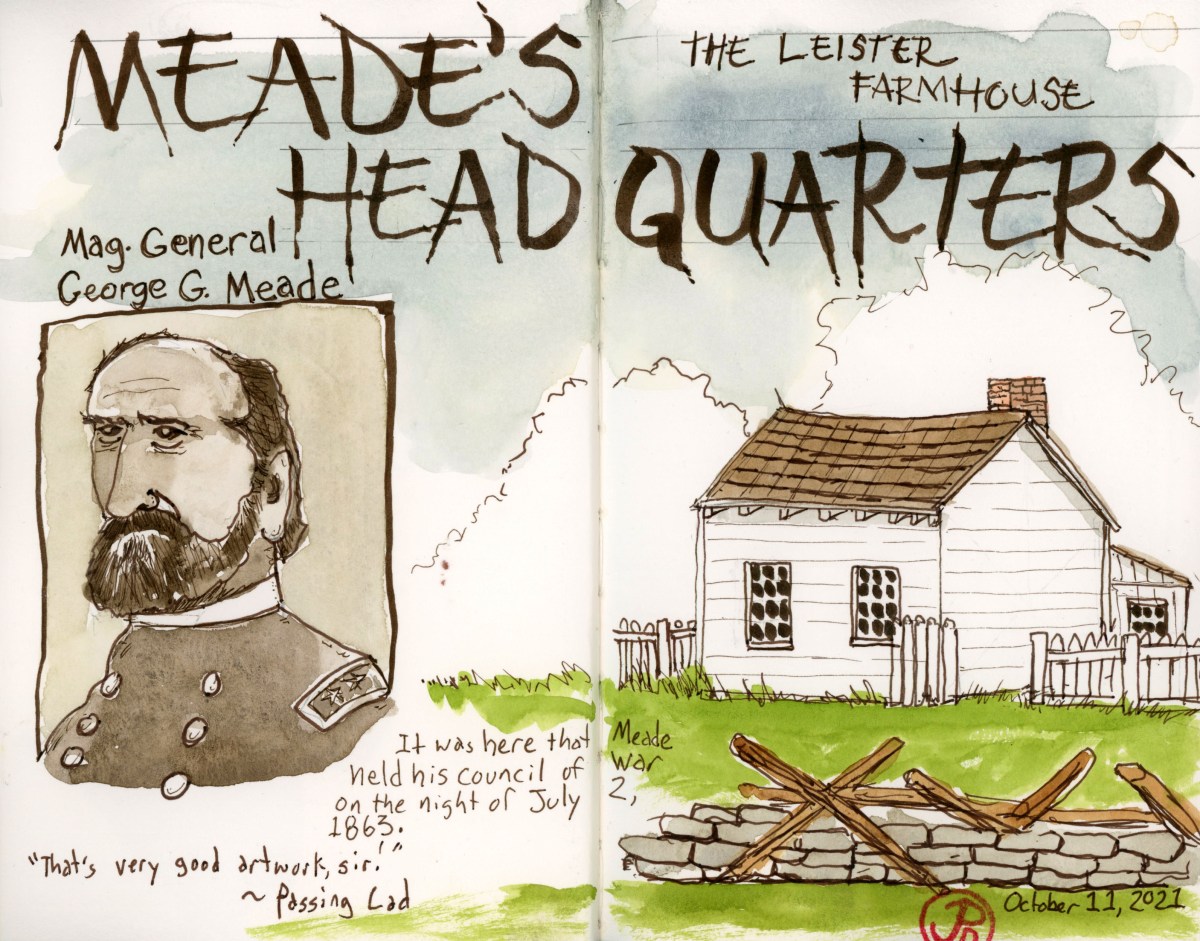
In Gettysburg, east of Cemetery Ridge, General Meade’s headquarters was set up in a small, two room farmhouse. The farmhouse on Taneytown Road, belonged to the Leister family. The widow Lydia Leister and her children had left their home before the battle. The house was perfectly situated behind the center of the Union line on Cemetery Ridge.
Perhaps the house was a little too close to the line because it was damaged during the Confederate artillery assault that preceded Pickett’s Charge.
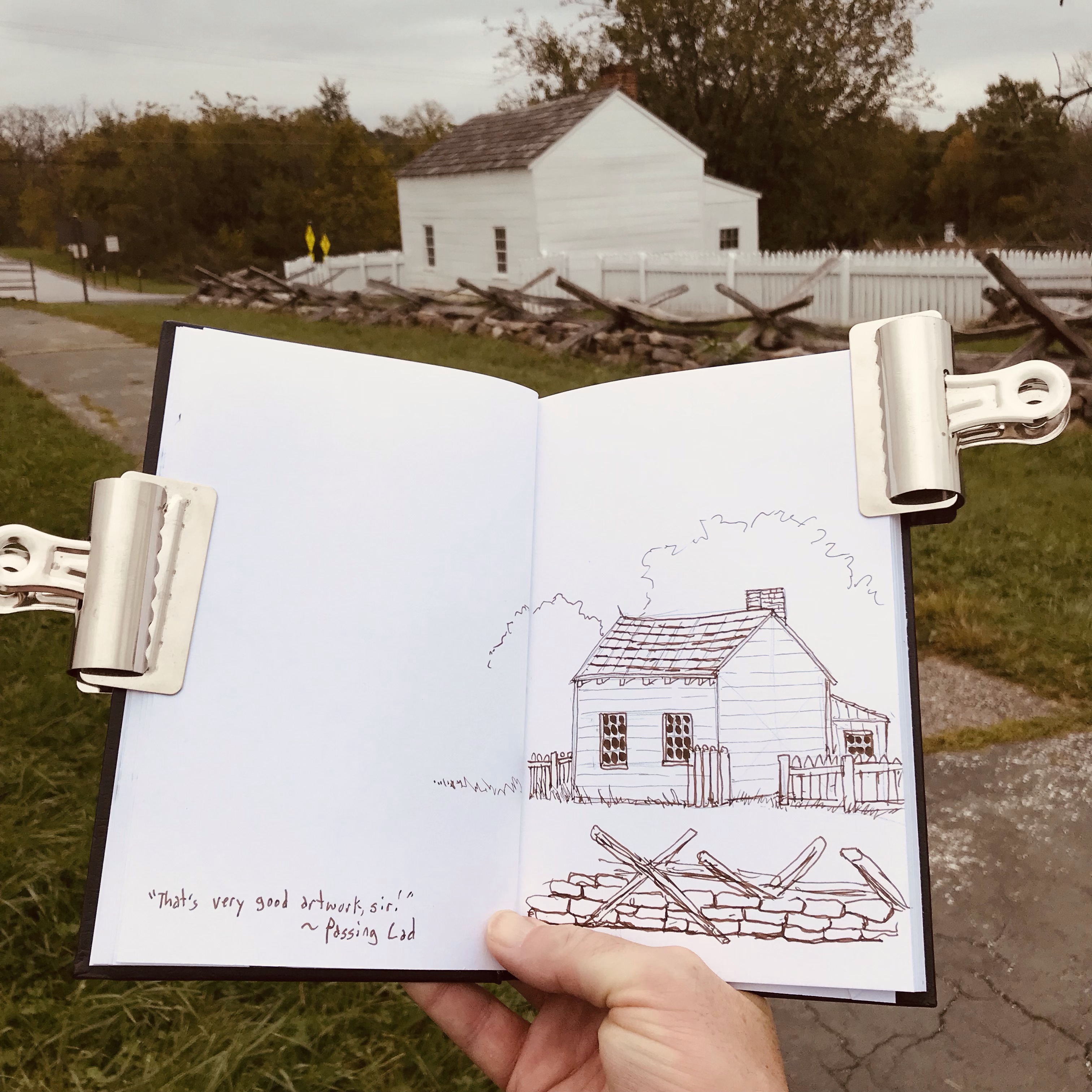
Working on a field sketch at Gettysburg of General Meade’s headquarters. While I was working on the sketch, a group of high schoolers passed by and one commented, “That’s very good artwork, sir.” I thanked the lad and added his comment to the sketch.
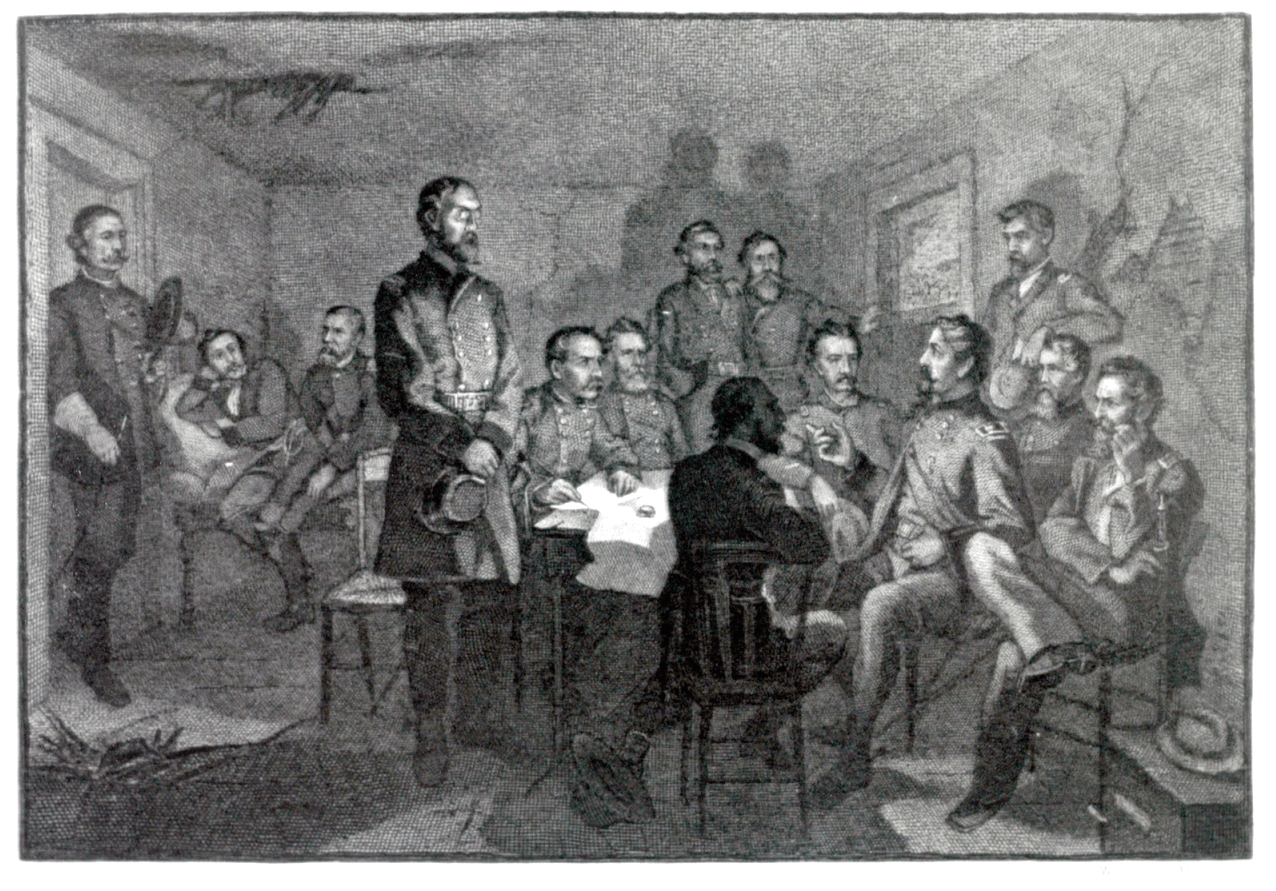
When you see the house today, it is amazing to note that the building is very small. It is even harder to imagine the Meade’s “council of generals” that occurred here in the cramped front room on the evening of July 2, 1863. The room was filled with twelve Union generals. This perhaps was one of the most important meetings of generals, in the entire Civil War because the Union was on the cusp of the turning point of the war but they one more battle to fight, on the last day of fighting on July 3 at Gettysburg.
James Kelly’s illustration of the meeting of generals in the cramped front room of General Meade’s Headquarters. General Meade is stand near the table with his hat in hand.The monument to General George Meade, Commander of the Army of the Potomac. Meade was a native of Pennsylvania, so he was defending his home turf. This bronze statue is just west of his headquarters, facing the assault known as Pickett’s Charge.
When Lydia Leister returned to her farm house after the battle, she found it damaged and there were seventeen dead horses in her yard. Her orchard was destroyed and her horse and cow were gone. She was never really compensated by the government for the damage incurred. This is the sort collateral damage of war that we don’t often hear about in history. The people, the civilians, who suffered because a general chose their town as a desirable place to make a stand and fight.
Amazingly enough, there was only one civilian causualty during the Battle of Gettysburg. On July 3, Jennie Wade was baking bread in her sister’s house on Baltimore Street when a Confederate’s sniper round passed through two doors and hit Wade in the back. She had been baking bread for Union troops.
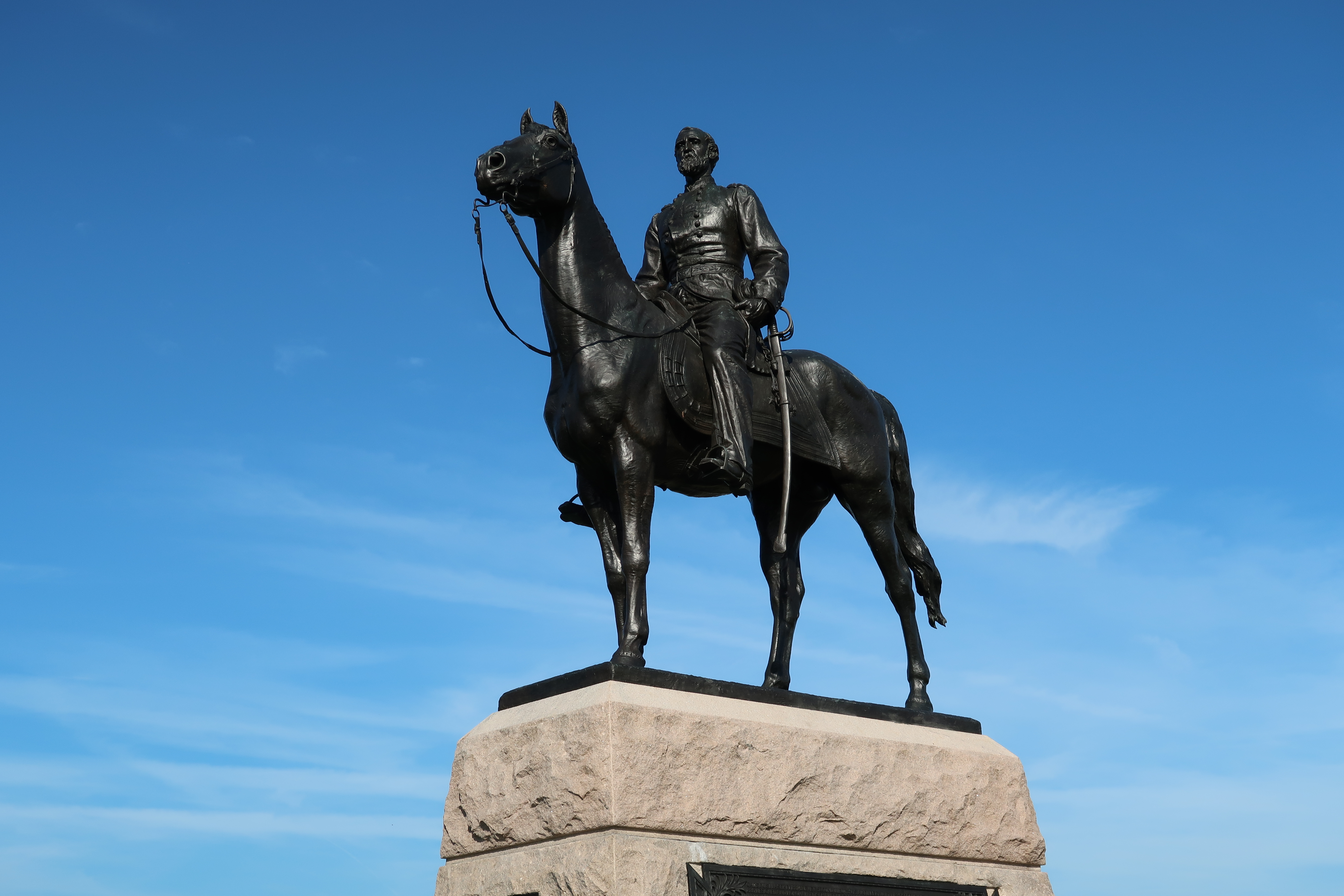
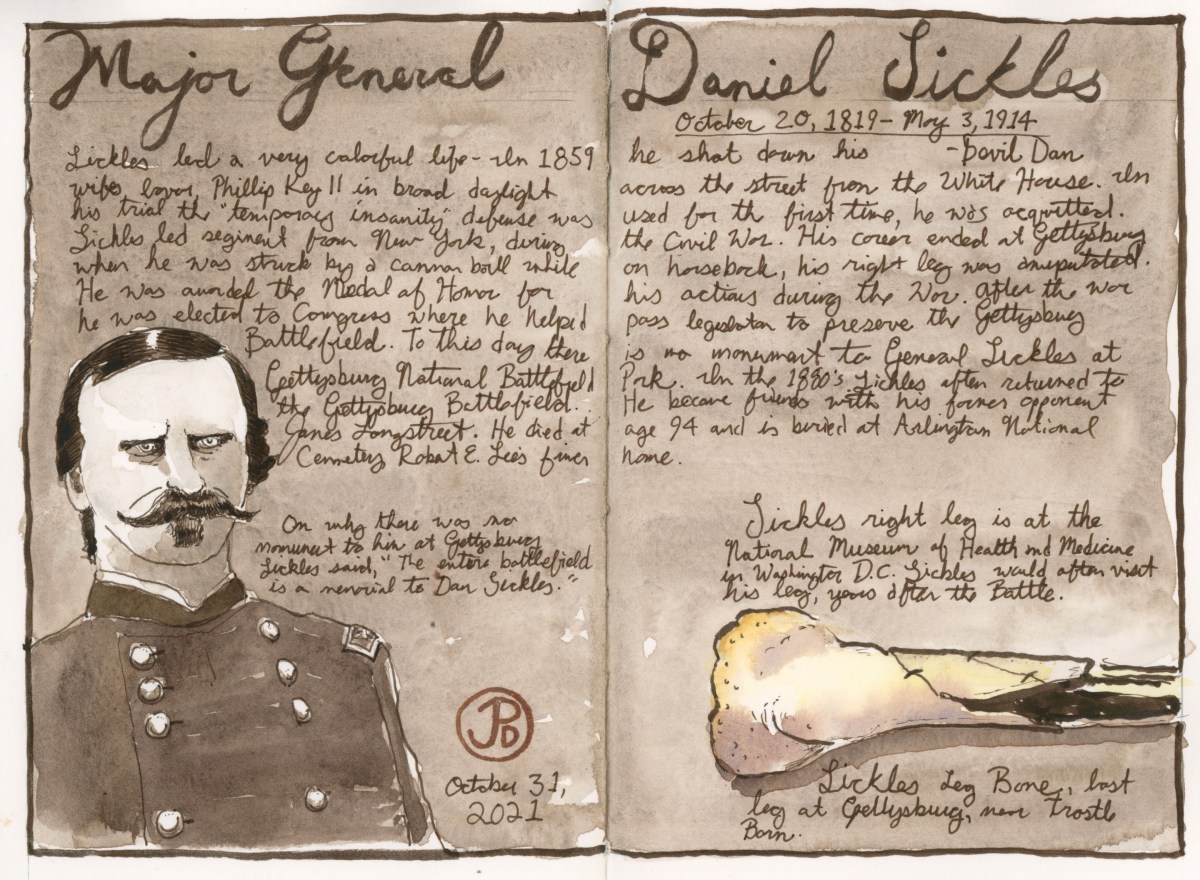
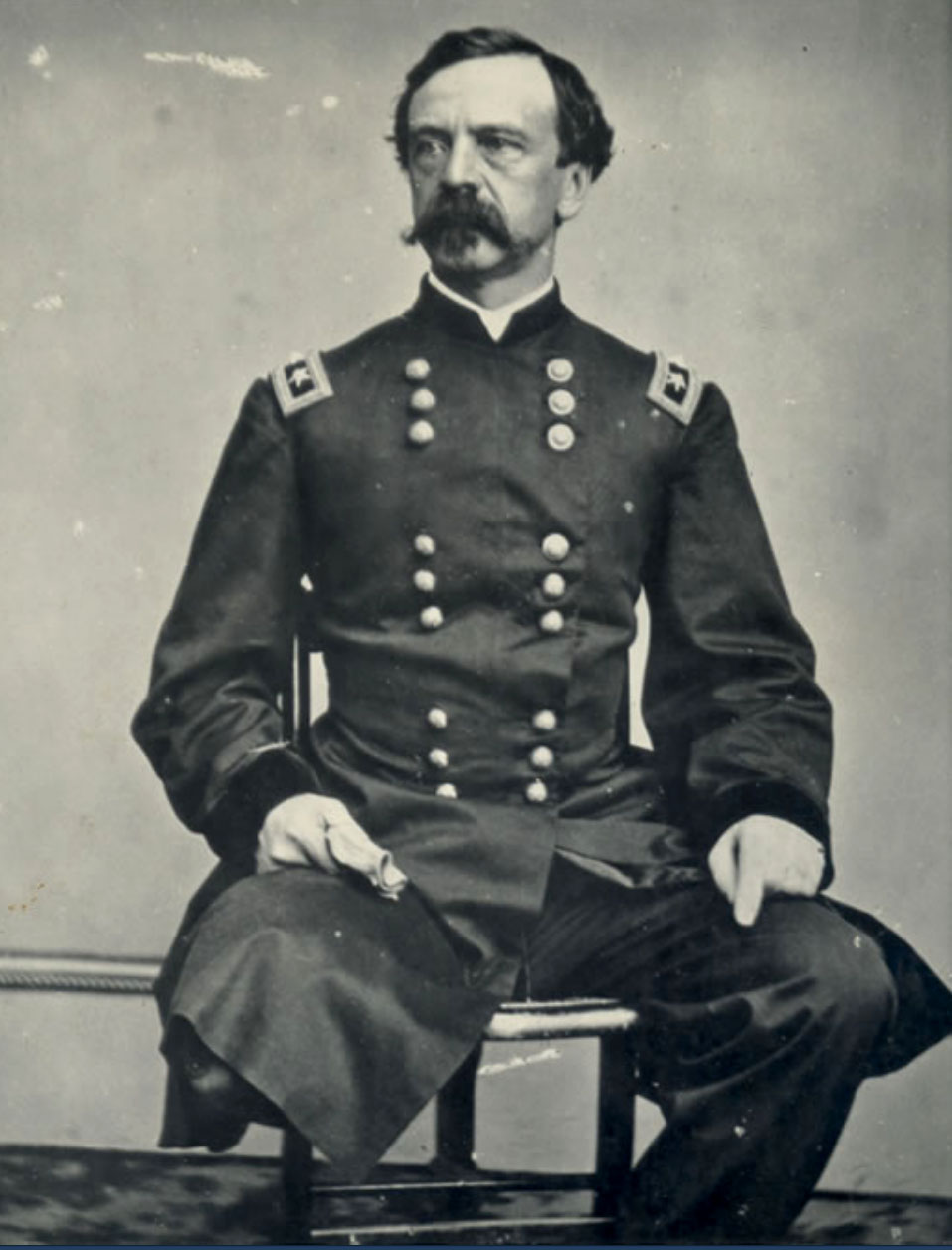
Major General Daniel Sickles led a very colorful life and is one of the more fascinating and flawed figures of the Civil War.
He was born to a well to do family in New York in 1819. Unlike many officers, he did not study at West Point but instead he studied law at the University of the City of New York. In 1847, he was elected to the New York State Assembly. In 1856 he was elected as a Democrat to Congress.
This, so far, seems an ordinary life path. He married Teresa Bagioli in 1853. Both sides of the family disapproved of the marriage, Sickles was 17 years older than his new bride.
His wife began having an affair with Phillip Barton Key II, son of Francis Scott Key. (Full disclosure: Sickles was a serial adulterer). Key was a young prominent lawyer in Washington DC and the district attorney. Sickles found out about the affair and on February 27, 1859, in broad daylight, he confronted Key in Lafayette Park, across the street from the White House.
“Key you scoundrel!” Sickles said, “You have dishonored my bed, you must die!” With that he shot Keys twice and killed him.
The trial that followed was deemed the “Trial of the Century”. Sickles was represented by some of the best lawyers in the land and the defense of “temporary insanity” was used for the first time in Sickles’ trial. He was acquitted of the murder of Key.
Sickles received a commission a New York regiment, rising to the rank of major. By the time of the Battle of Gettysburg, Sickles had risen to the rank of Major General serving under General George Meade. On July 2, he enraged his commanding officer by disobeying orders to hold the Union line on Cemetery Ridge. Instead, he moved his troops forward towards a peach orchard. His position was overtaken by the Confederates causing a nearly 50% reduction of his troops. Sickles brash actions may have actually slowed Lee’s advance on Meade’s left flank.
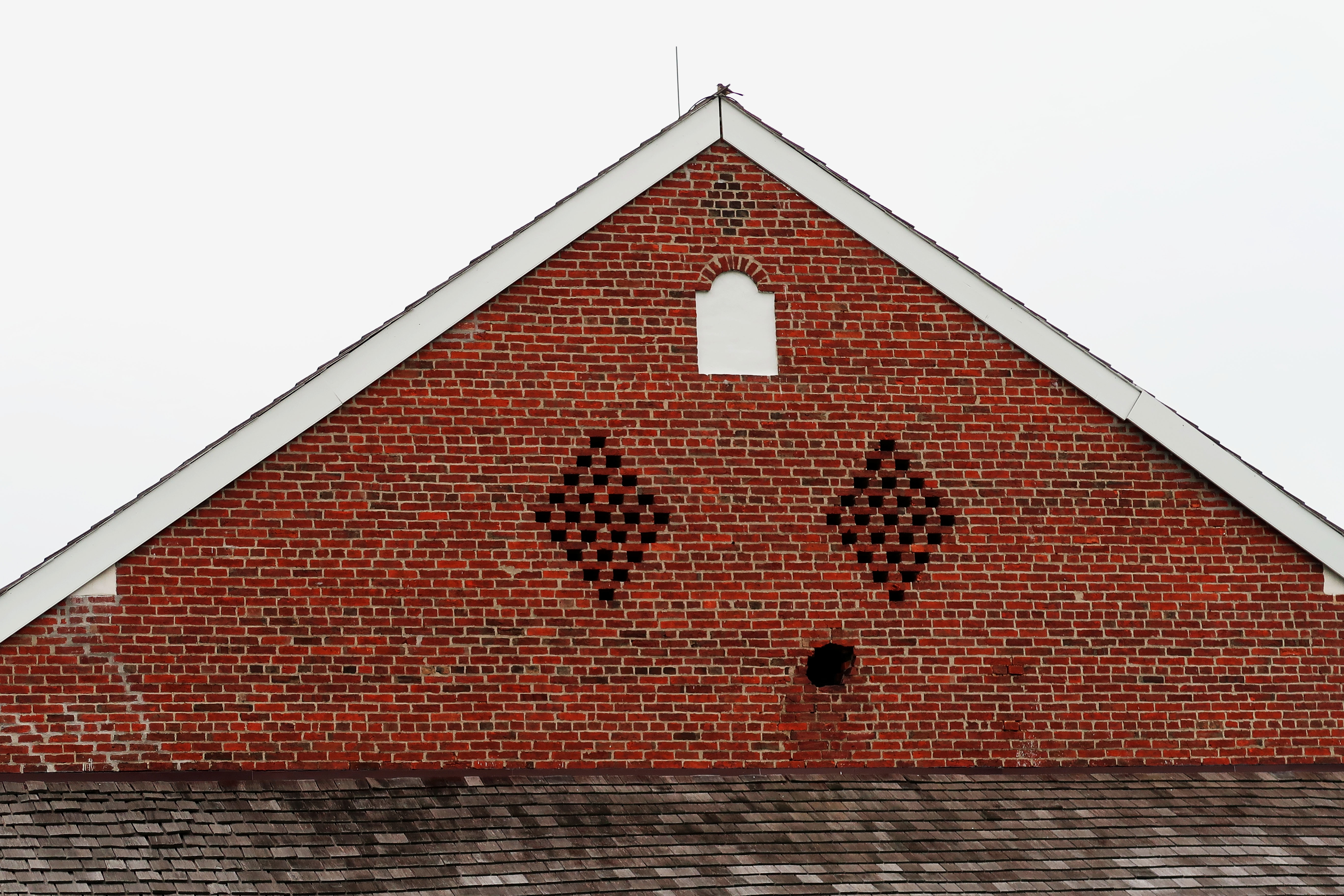
Sickles was sitting on his horse, surveying the action, near the Trostle Barn, when a Confederate 12 pound cannonball hit him on the right leg. He was taken from this horse and a tunicate tightened around his badly mangled leg but Sickles showed his steel as he calmly smoked a cigar and continued to give orders, despite the pain, until he was taken off the battlefield. His right leg was later amputated. This ended Sickles’ field service in the military.
The Trostle Barn, which was Sickles’ headquarters, near where Sickles was wounded. The brick barns still shows scars from the Battle of Gettysburg.
After his wounding, Sickles and his amputated leg, went to Washington. There the general met with Lincoln and his son Tad. Sickles’ leg went to a medical museum where it was put on display. His leg is still on display in what is now called the National Museum of Health and Medicine. Sickles would often visit his leg on the anniversary of his wounding.
An 1865 photograph of Sickles, sans leg, at the Army Medical Museum. Photo by William Bell Woodward.
Sickles also played a part in helping to preserveCivil War history. As a congressman he sponsored legislation to preserve the Gettysburg Battlefield which formed what is today, the Gettysburg National Military Park. The boundaries of the park where based on a map that General Sickles drew up.
Despite being responsible for creating the Gettysburg National Military Park, you will not find a single monument dedicated to General Sickles. When asked about this absence, Sickles replied, “The entire battlefield is a monument to Dan Sickles!”
One of the most sketchable locations on the Gettysburg Battlefield is Devil’s Den.
Some of the most intense fighting on the second day of the Battle of Gettysburg occurred in and around this collection of volcanic rocks. Like the odd house at the end of the cul de sac from my childhood that we deemed “haunted”, Devil’s Den, as legend has it, was believed to be the den of a serpent named “Devil”. This was the haunted grounds of urban legend for the youth of Gettysburg, even before the battle enveloped the town.
At this location, on the afternoon of July 2, Major General Daniel Sickle’s left flank was placed here under the command of Captain John Smith’s artillery battery. HIs position was attacked from the west by Confederates from Texas, Alabama, and Georgia. The Confederates overran the Union’s position and took Devil’s Den. They used this location to position sharpshooters to fired at the Union soldiers on Little Round Top.
The landscape now bears the ghastly and ghoulish names of this bloody encounter. The place names seem to be taken from the macabre works of Poe: the Slaughter Pen, Bloody Run, and the Valley of Death.
Devil’s Den was one of my favorite sketching locations at Gettysburg. I have always loved to sketch and paint the contours, layers, and textures of rocks and Devil’s Den supplied these in spades. I was very intentional with my sketching position. The rock in the foreground of the sketch (featured sketch) is a rock that is not featured or named on any interpretive signs at Devil’s Den. This rock is known as the Waud Rock.
The rock is named after battlefield sketcher, Alfred Waud. Waud followed the Army of the Potomic and sketched almost every battle that the army was engaged in. While many focus on the rise of photography during the Civil War, a sketcher amongst the carnage and danger of a live battle is very intriguing to me. When Waud was at Devil’s Den, he was photographed by Alexander Gardner as he sits on the rock that now bears his name.
While I was sketching the rocks, an elderly visitor came up and had a chat. He thought I was reading a book but I told him I was sketching the Waud Rock. He didn’t seem to be very impressed but I could tell that the reason he had approached me was because he wanted me to know that one of his distant relatives had fought at Little Round Top.
I sketched part of the spread seated on Waud Rock, in Waud’s, exact position, somehow summoning the sprit of this amazing sketcher through my backside.
Gardner’s photograph of Waud on his rock at Devil’s Den.One of the most famous photographs from Gettysburg and perhaps the entire Civil War: a dead Confederate sharpshooter at Devil’s Den. It is now believed that this photo was staged. Yes the soldier is indeed dead but he was moved to this location and a rifle was placed against the rock wall.The same location at Devil’s Den, sans sharpshooter, today.
Along with Dunker Church and the Bloody Lane, another symbol of the Battle of Antietam is what is now known as the “Burnside Bridge”. Before the Battle is was known as the “Rohrbach Bridge”. On September 17, 1862, it was known as the “Lower Bridge”. After the battle it was renamed the “Burnside Bridge” after the Union General whose troops took the three arched, stone bridge that spans Antietam Creek as they drove Confederates back.
So I saw no problem in giving the bridge a new name: “Armstrong Bridge”. Sure it sort of sounds like Burnside. Both are two syllable words, both are compound words. It was only after inking the text that I realized the error. Instead of fretting over it or blaming it on a slight case of jet lag or the local pale ale I was sampling, I decided to embrace my mistake as if it didn’t happen. So I chose to embrace the mantra of Miles Davis who said, “Do no fear mistakes. There are none.” Besides, this just adds to the sketch. At least that’s what I keep telling myself.
The bridge was built in 1836, to connect Sharpsburg to the nearby southerly town of Rohrerville. The bridge was in use for foot, hoof, and later auto traffic until 1966, when the bridge was restored to it’s Civil War Era appearance.
The battle over this crossing over Antietam Creek took place in the late morning. About 500 Confederate troops held the high ground on the westside of the bridge. Burnside’s Ninth Corps assaulted the important creek crossing. The rebels held until Union troops where able to ford the creek south of the bridge, forcing the Confederates to retreat and the North took possession of the stone bridge.
Using an old stone wall as my drawing table, I sketch Rohrbach Bridge, or whatever the bridge is called!The Burnside Bridge seen for the Confederate side of the creek. The large tree on the opposite side of the creek is known as the Burnside Sycamore and is one of those “witness trees” which was alive at the time of the battle. I sketched the bridge to the left of the tree, along the stone wall.
At the end of the most bloody and most costly day in the history of American combat the destruction was astounding. The numbers are grime reminders: 23,000 killed. All this in a single day. Of all the soldiers that were wounded, roughly one out of seven died of their wounds. 2/3 of the 622,000 lives that were lost during the Civil War, died of disease.
One solider from the 9th Pennsylvania described the scene at Antietam as, “No tongue can tell, no mind conceive, no pen portray the horrible sights I witnessed this morning.”
James McPherson in this Civil War masterpiece, Battle Cry of Freedom wrote about Antietam, “The causalities of Antietam numbered four times the total suffered by American soldiers at the Normandy beaches on June 6, 1944. More than twice as many Americans lost their lives in one day at Sharpsburg as fell in combat in the War of 1812, the Mexican War, and the Spanish-American war combined.”
And Antietam was just a warm up for a battle that took place less than a year later, around a small town in Southern Pennsylvania. This three day battle would have the highest death toll out of any battle during the Civil War and was the turning point in the war. This battle was the Battle of Gettysburg.
On July 3, 1863, the last day of the Battle of Gettysburg, General Lee put a massive force on a frontal assault, across open ground, towards the Union’s line on Cemetery Ridge. This was to be the decisive battle of the campaign. And it’s outcome would dictate the future direction of the Civil War.
The assault first started at 1:00 PM with a massive artillery bombardment towards the Union line. Some 150 Confederate cannons tenderized the heart of the Union position. With all the cannon fire came a lot of smoke, which made aiming at your intended target problematic. Many rebel shells overshot their target, hence the shells that struck General Meade’s headquarters, which was further east from the heart of the Union line, but apparently not further east enough. The artillery assault did not break or severely weaken the Union center but Lee proceeded with the second part of this plan, the infantry charge.
A stature of Confederate General Robert E. Lee on his horse Traveller, tops the Virginia Monument. This was the first and largest of the Confederate monuments at Gettysburg. It is perhaps one of the few statues of Lee still remaining and one of the very few north of the Mason-Dixon Line. The statue is located close to the location where Pickett’s Charge started and where Lee observed the battle.
At about 3:00 PM, the assault, which came to be known as Pickett’s Charge, began. The 6,000 Union troops positioned on Cemetery Ridge saw a line of Confederate soldiers appear out of the woods a mile away. The line was almost a mile in length. Pickett’s Charge had begun.
Field sketching from the location of the start of Pickett’s Charge looking towards Cemetery Ridge and the “Copse of Trees” which was the destination of the charge. Getting an early start at Gettysburg has it’s advantages, I had the place to myself.
General George Pickett was another interesting figure in the Civil War. His classmates at West Point referred to him as the “goat”. Today that term, when applied to elite athletes, means “Greatest Of All Time” but in Pickett’s time it referred to his academic performance; he was last in his 1846 class at West Point. Pickett cut his teeth during the Mexican War fighting with many of the men he was now fighting against. While the charge now bears his name, Pickett was one of three commanders that led the charge. The charge could have bore any name of those behind it “Longstreet” or “Lee” but for whatever reason, it has gone down in history as “Pickett’s Charge”.
The 12,500 Confederate troops moved over the open ground towards the Emmitsburg Road. They were now open targets for the Union infantry and artillery that waited for them. Union artillery started to blow holes in the rebel line but the charge still moved on as holes in their advancing line was plugged by soldiers marching behind.
One of the Confederate commanders under Pickett was General Lewis Armistead. His story exemplifies the irony of the Civil War as brother fought brother and friend fought friend. Armistead was leading his men to attack one of his dear friends from his US Army days: Major General Winifred Scott Hancock.
Both men became friends while serving in California. In 1861, Armistead resigned from the US Army to join the Confederate Army (Armistead was a native of North Carolina). Hancock’s wife held a going away party for the men who where leaving to fight for the Southern cause and this was the last time that Armistead and Hancock spent together. Before he left, Armistead gave Mrs. Hancock his prayer book. Who know what was going through Armistead’s mind as he advanced toward this good friend with murderous intent. Could he really raise his sword against his friend?
The Confederates continued to move west toward Cemetery Ridge and as they moved closer, their losses grew higher. Still they advanced, filling in the holes caused by death and injury with men at the back. Still they marched towards the Copse of Trees.
A quick field sketch of the part of the Union line on Cemetery Ridge known as the “Bloody Angle”.
The south concentrated there attack on the stone wall the turned in at a 90 degree angle. This location became known as “The Angle” or the “Bloody Angle”. Armistead led his men, his hat on sword point towards The Angle.
The Confederates reached what is know was the High Water Mark, on Cemetery Ridge. The High Water Mark is the farthest the Southern Army ever advanced into the north and it is where they where stopped, dead in their tracks, literally. This was the climax of the Confederate offensive, after this point, the South would be on the defensive for the remainder of the war.
The memorial marker at the spot where General Lewis Armistead fell at the High Water Mark on Cemetery Ridge.
Armistead reached a Union cannon after jumping over the small stone wall that formed The Angle. Armistead and this men were surrounded by Union troops and they were fired upon at point-blank range. The general was mortally wounded and he died without ever seeing his friend Hancock, who was also injured in the battle but he survived his wounds.
Pickett’s Charge had run out of steam and they soon where retreating back to the west. In this failed charge, 6,000 confederate soldiers were killed, wounded, or captured. Half of Pickett’s division was gone. When General Lee saw Pickett, he ordered him to reassemble his division to cover the retreat. General Pickett replied, “General, I have no division.”
One of the most famous speeches in American History was delivered at the dedication ceremony for the new National Cemetery at Gettysburg on November 19, 1863. This was four months after the turning point of the Civil War, the Battle of Gettysburg.
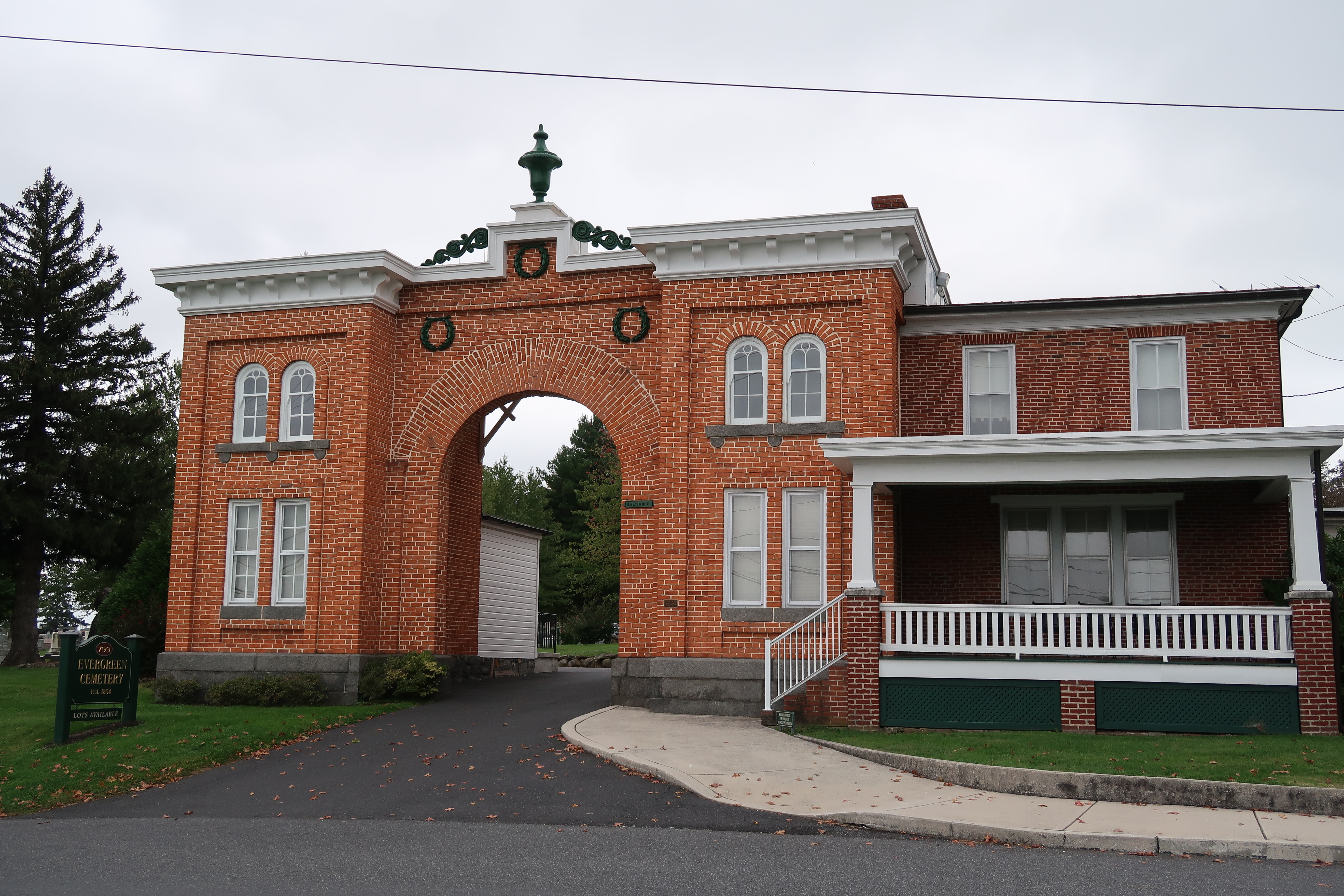
This cemetery was created to be a permanent resting place for the Union soldiers that fell at the Battle of Gettysburg. The new cemetery is bordered by the existing Evergreen Cemetery. This cemetery was founded in 1854 and the only civilian killed during the battle, Jennie Wade, is buried at Evergreen. The front gate was the site of fighting on the first day of the Battle of Gettysburg.
The front gate of the Evergreen Cemetery.
While the there is a monument to the Gettysburg Address on the grounds of the National Cemetery, featuring a bust of Lincoln, the speakers platform where Lincoln delivered the famous words was actually on the grounds of Evergreen Cemetery.
This is an ink sketch I did while seated in the National Cemetery looking towards the location of the speaker’s plateformThe bust of Lincoln at the Gettysburg Address Monument.
The most famous 272 words in American history, delivered my Abraham Lincoln at Gettysburg, November 19, 1863.
Four score and seven years ago our fathers brought forth on this continent, a new nation, conceived in Liberty, and dedicated to the proposition that all men are created equal.
Now we are engaged in a great civil war, testing whether that nation, or any nation so conceived and so dedicated, can long endure. We are met on a great battle-field of that war. We have come to dedicate a portion of that field, as a final resting place for those who here gave their lives that that nation might live. It is altogether fitting and proper that we should do this.
But, in a larger sense, we can not dedicate — we can not consecrate — we can not hallow — this ground. The brave men, living and dead, who struggled here, have consecrated it, far above our poor power to add or detract. The world will little note, nor long remember what we say here, but it can never forget what they did here. It is for us the living, rather, to be dedicated here to the unfinished work which they who fought here have thus far so nobly advanced. It is rather for us to be here dedicated to the great task remaining before us — that from these honored dead we take increased devotion to that cause for which they gave the last full measure of devotion — that we here highly resolve that these dead shall not have died in vain — that this nation, under God, shall have a new birth of freedom — and that government of the people, by the people, for the people, shall not perish from the earth.
Lincoln arrived by train in Gettysburg they day before. While it is untrue that he wrote the speech on the train ride from Washington, he did put the finishing touches on the speech at David Wills house in the center of Gettysburg. Wills was a prominent lawyer who hosted the president during his stay in Gettysburg.
The Gettysburg Train station where president arrived the day before he gave his Gettysburg Address.
Sketching Note: the featured sketch is made up of the first hand written draft of the Gettysburg Address by President Lincoln. I attempted to imitate Lincoln’s script. The silhouette of Lincoln was sketched in the field, a few blocks from my house in San Francisco. It is a mural on the side of Lincoln High School, where my father was a graduate in 1950.
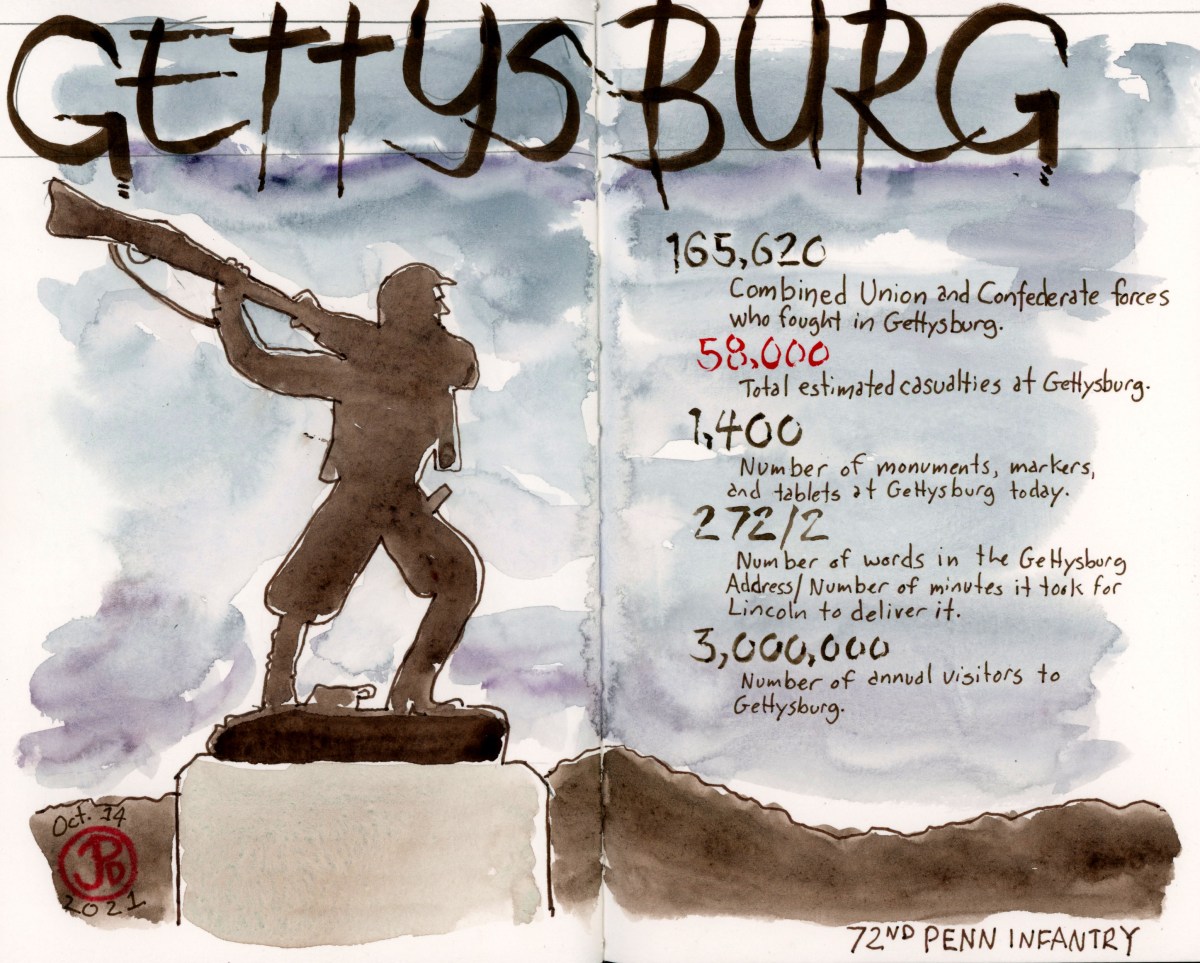
Three million people visit Gettysburg National Military Park every year, making it one of the most visited battlefields in American History.
People come to this battlefield to look over the landscape, read the carved marble words on monuments, and photograph the bronze statues.
There are 1,400 monuments, statues, markers, and tablets spread across the roughly 25 acres of the former battlefield of Gettysburg. The battle was fought over three days on July 1, 2, and 3 of 1863 in, but mostly around the town of Gettysburg.
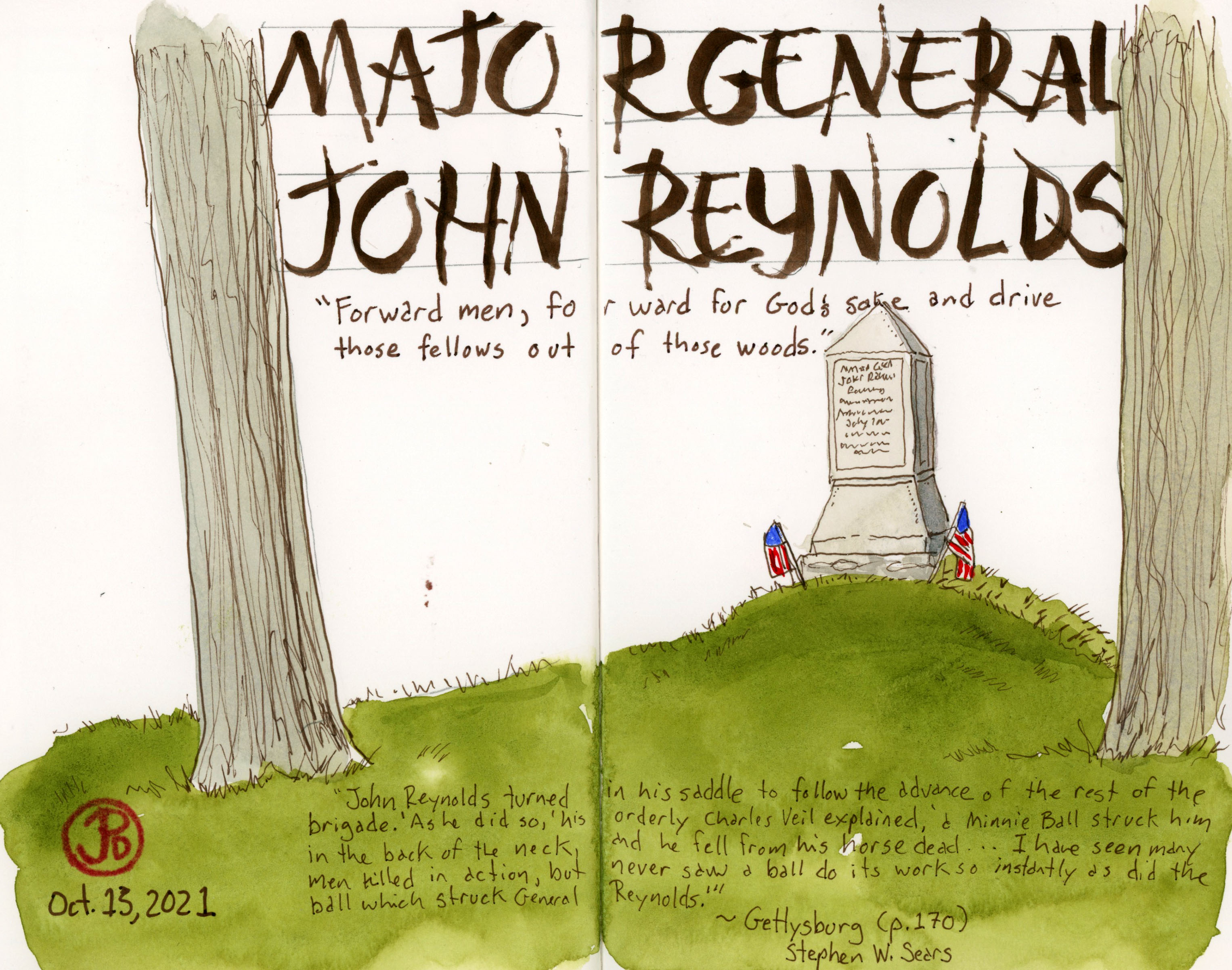
This is one of the many monuments on the Gettysburg Battlefield. This monument marks the spot where General John Reynolds was shot and killed on the morning of July 1, the first day of the battle. Reynolds was they highest ranking officer killed at Gettysburg.
So why did the Battle of Gettysburg happen at Gettysburg? General Lee moved the Army of Northern Virginia through Maryland and up into Pennsylvania in an attempt to cause a battle that would force Lincoln into peace talks. Looking at a map of Gettysburg, we see that all roads lead to this town, from all points on the compass. And there was plenty of coveted high ground to the north and south of Gettysburg.
All roads lead to Gettysburg.
Over the next few posts I will share some of the many sketches I did at Gettysburg (summoning my inner Alfred Waud). I spend three days exploring the rich history of this battlefield and it provided many sketching opportunities.
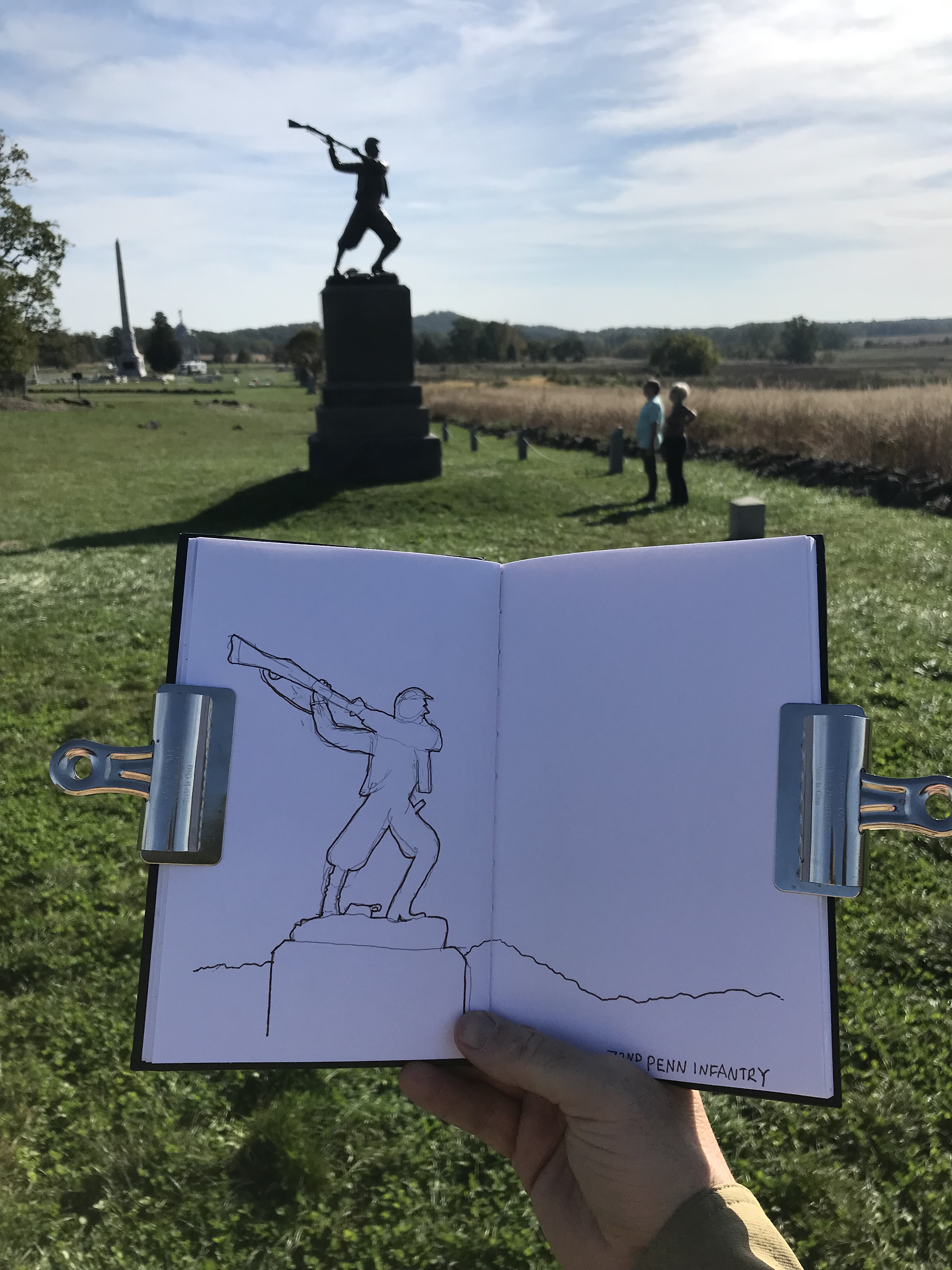
Here I am field sketching the 72nd Pennsylvania Monument at the Highwater Mark, the climax of the Battle of Gettysburg as two people admire what is one of the most iconic statues on the battlefield.This is largest monument at Gettysburg and it’s fitting that it is the Pennsylvania Monument.








 Corvid Sketcher