I waited at the dock for the 9:10 ferry to Bygdoy.
There are three museums that focus on maritime history and I was really looking forward to seeing and sketching a balsa wood raft that was captained by a famous Norwegian.
While I spent some time at the Fram and the Norwegian Martime Museums, I was really here to see the Kon-Tiki!
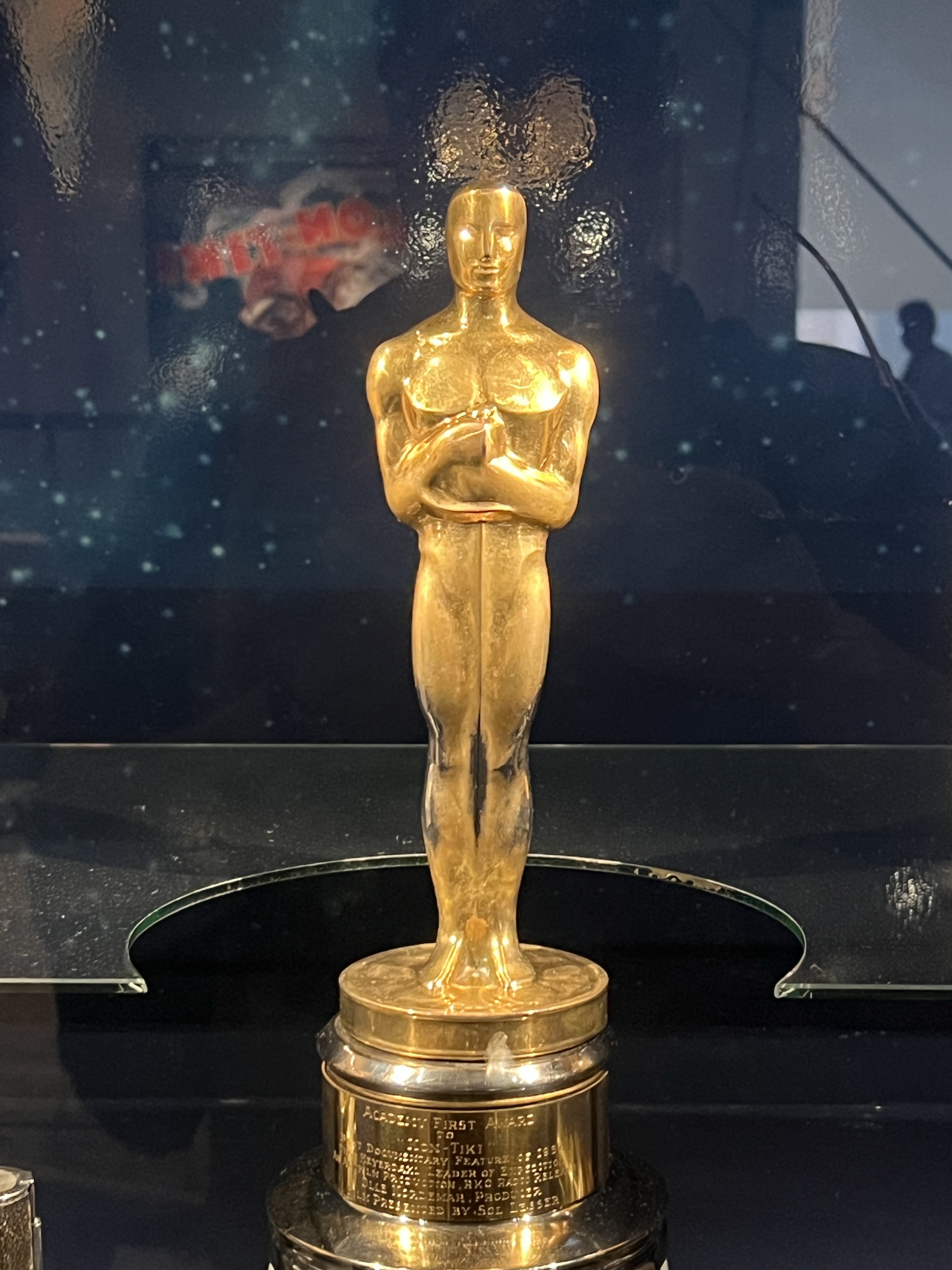
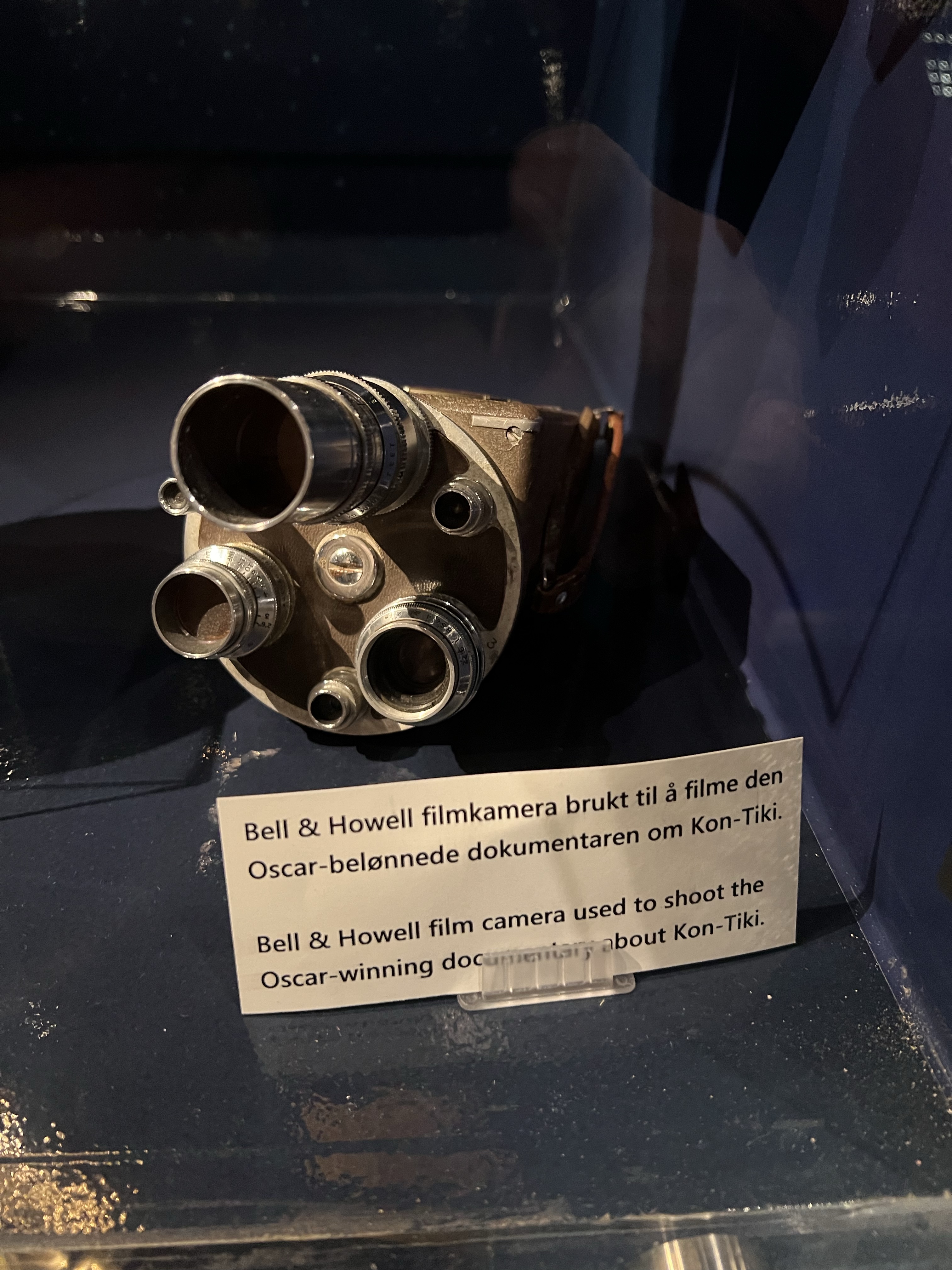
Before my trip I had read Thor Heyerdahl’s book about the adventure, seen two movies about the trip, including the Oscar winning documentary by Heyerdahl. I had done sketches about the raft and its captain and now I was about to see the actual vessel.
The first time I remember reading about the Kon-Tiki was from a Time-Life book called Dangerous Sea Creatures. In the book was an excerpt from Heyerdahl’s massively popular account of the voyage. The passage was about the crews first encounter with a whale shark (this certainly is not a dangerous sea creature!).
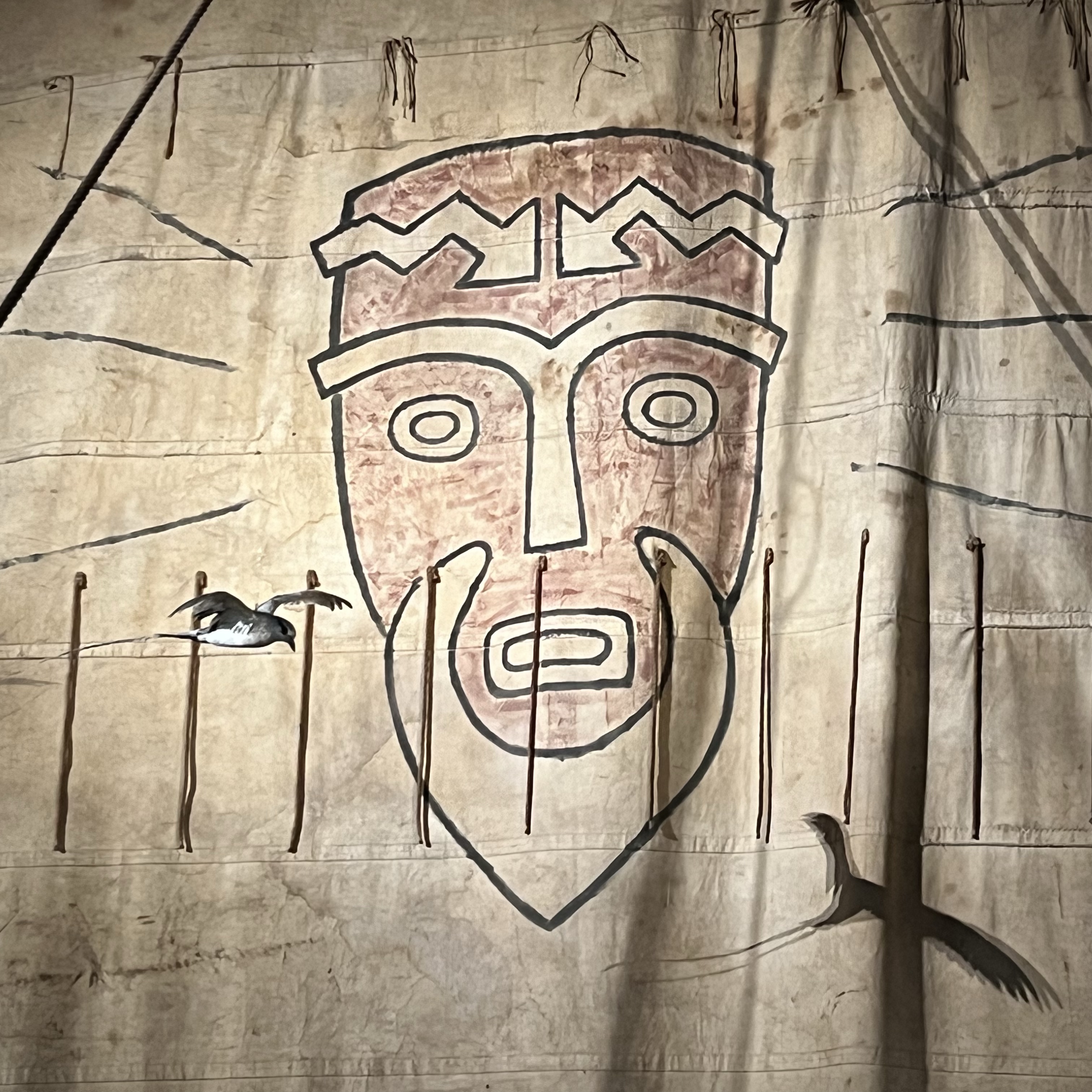
It was amazing to see the famous balsa raft in person that I had read about and which was also featured in the Oscar winning documentary about the voyage. The story of the Kon-Tiki is almost unbelievable had it not been documented. The heroism that the crew engendered on a journey that could very well have ended their lives and at a time when there had very rudimentary forms (ham radio) of communicating with the mainland.
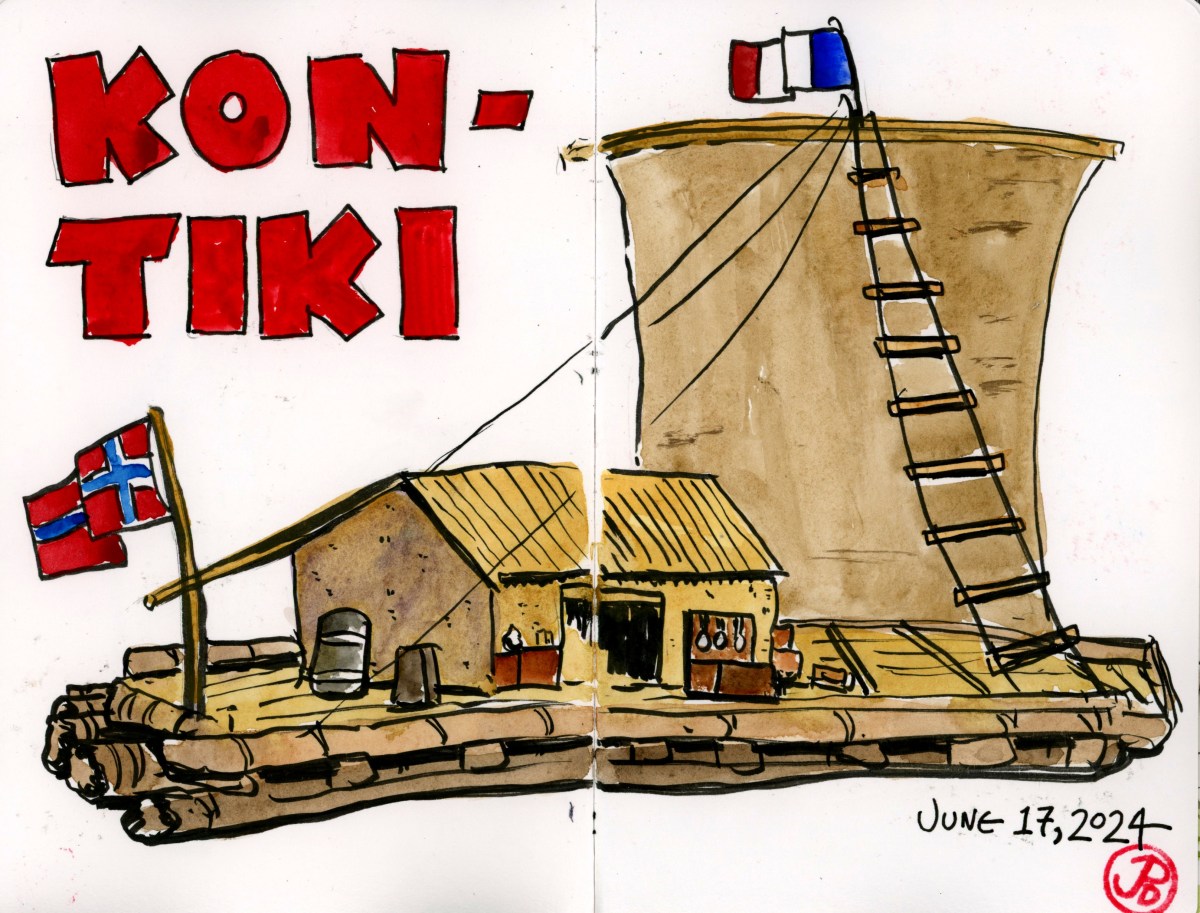
I started a sketch of the Kon-Tiki head on and was not pleased with progress so I aborted the sketch and picked a different perspective. I choose a seat on the starboard side near the stern. With a change of perspective, I was able to add the mythic raft from my childhood to my journal (featured sketch).
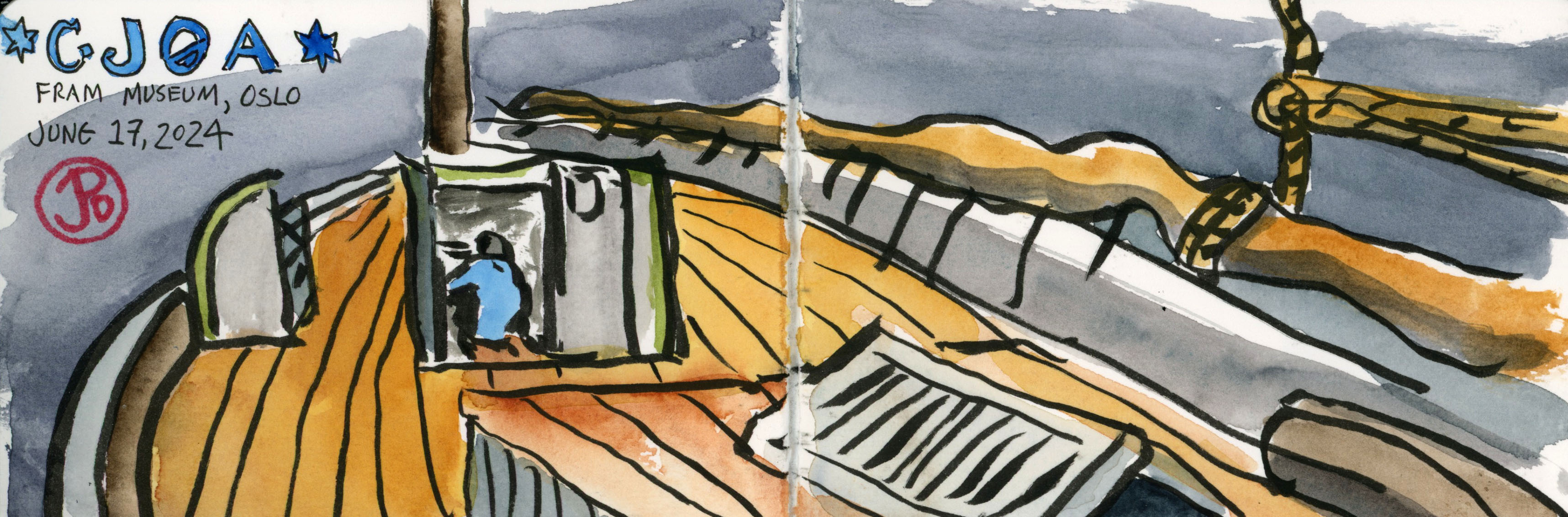
Another ship on the Bygdoy Peninsula was to be found at the Fram Museum. This was the ship that Roald Amundsen sailed through the Northwest Passage named the Gjoa. In 1909, the ship was donated to the city of San Francisco where it was on display at the western edge of Golden Gate Park until 1972. The ship was then given back to Norway where it is now on display in a large A-frame building at the Fram Museum.


 Corvid Sketcher