Image

The Search for the Bendire’s at the Thrasher Spot

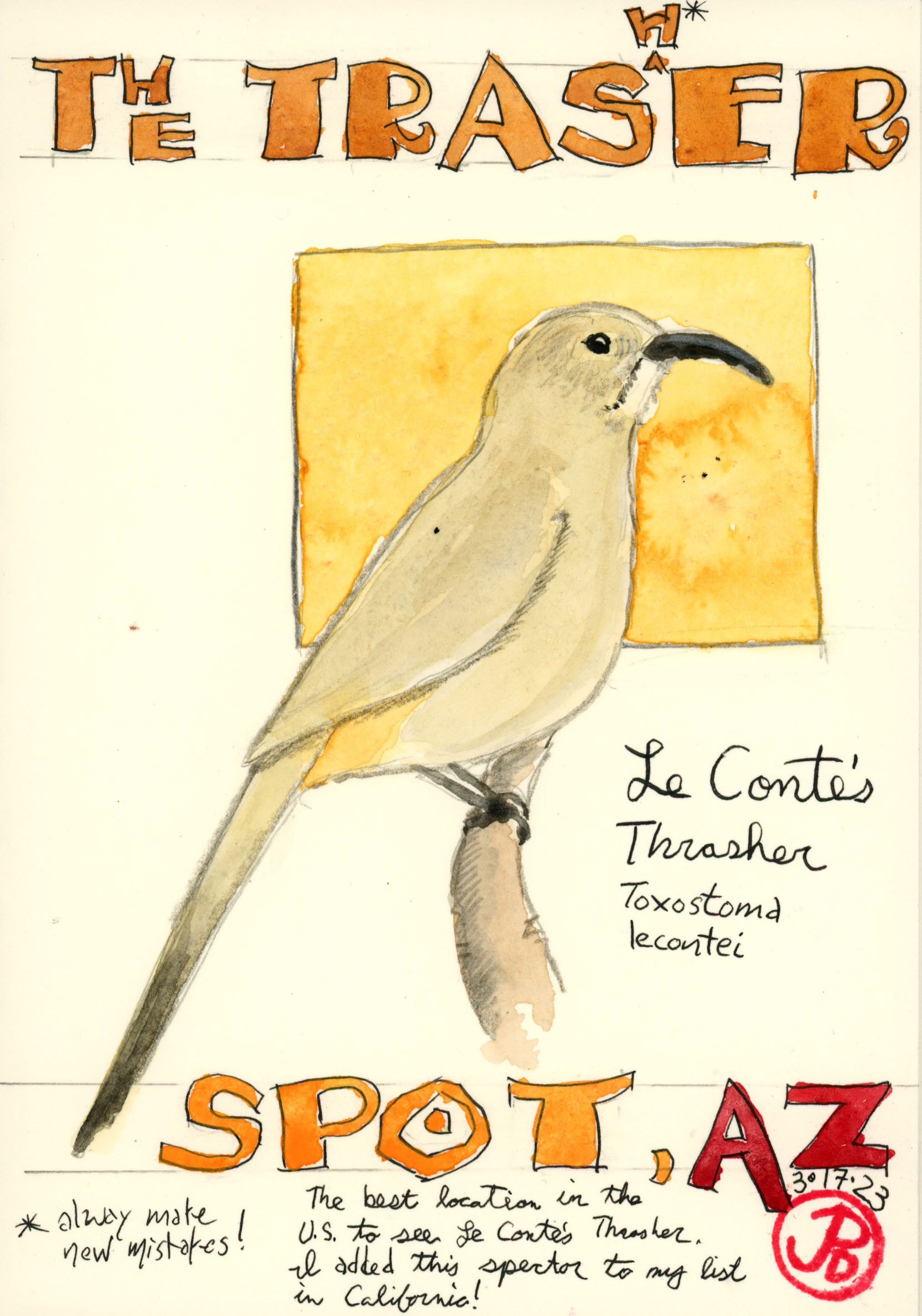
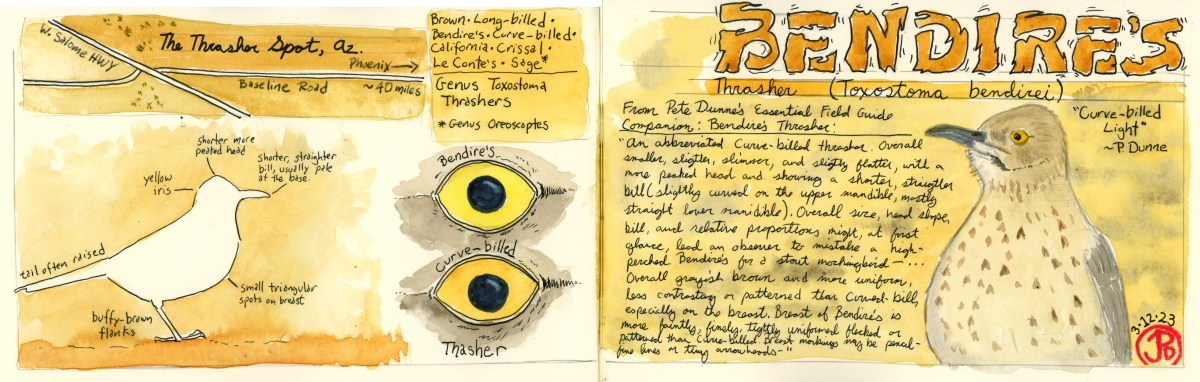
The Trasher Spot in Arizona is famous in the birding world as the location to see four thrashers: sage, crissal, Bendire’s, and Le Conte’s. It is also known as one of the best spots in it’s range to see the notoriously sulky and ghost-like Le Conte’s thrasher.

I had seen the Le Conte’s thrasher, after many, many attempts, just west of the dump in Borrego Springs, California in January of 2019 so this illusive thrasher was not my target bird for this visit, but the Bendire’s thrasher was.
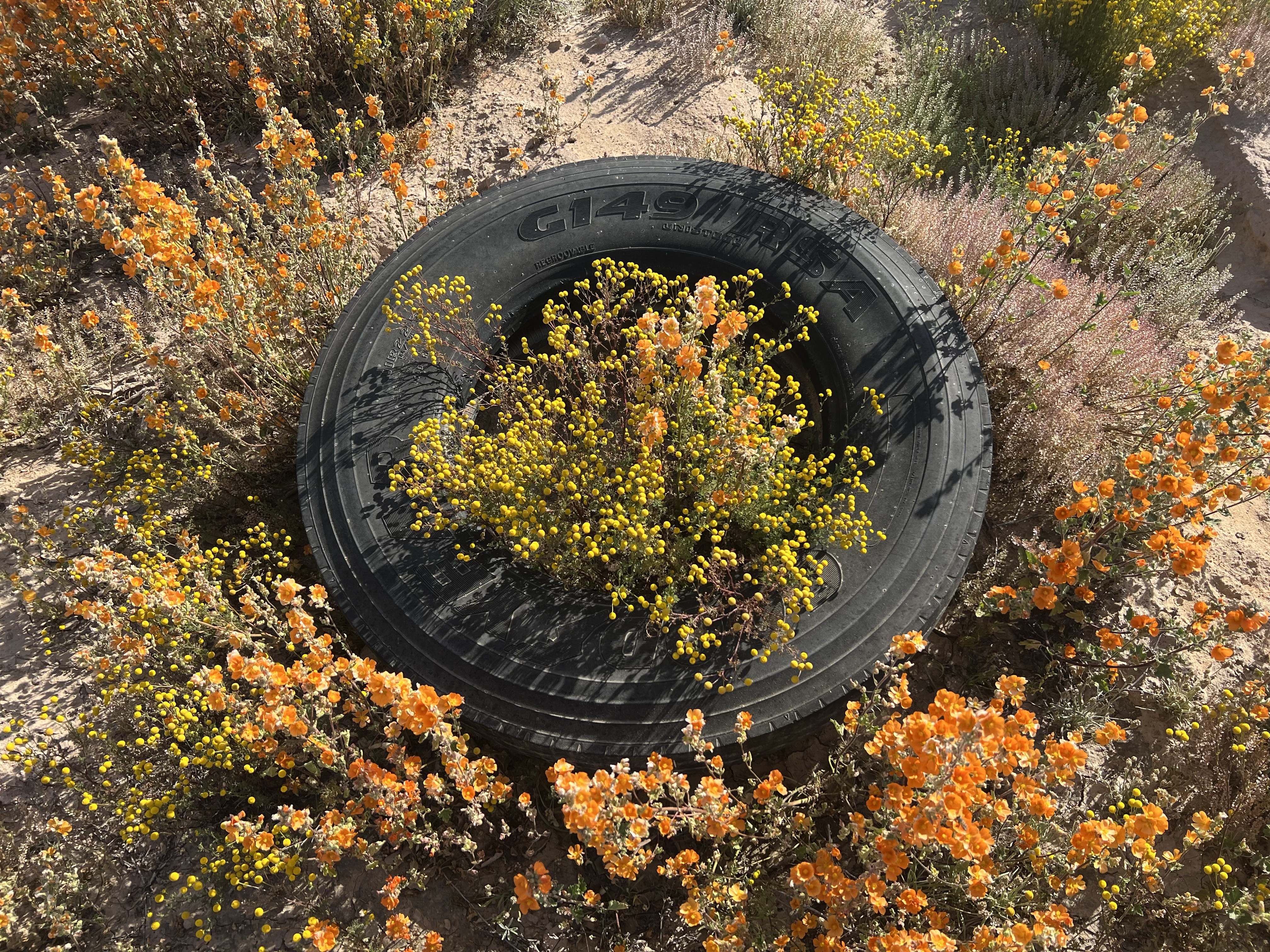
Spring flowers and a tire at the Trasher Spot.

I wandered around the spot and I found no thrasher. A few horned larks and western meadowlarks lifted away as a red-tail circled above. In the taller trees I spotted a bird perched up but as I got a better look it was just a mockingbird. Well that was looking and sounding like a good omen.

Off to my left a bird was perched up on some sagebrush. Could this be the Bendire’s? I needed to get closer to get a positive identification. As I got closer, the bird flew farther away to another sagebrush perch. I circled round to get the bird in some better light. This was a thrasher alright, not a Bendire’s but a sage thrasher.
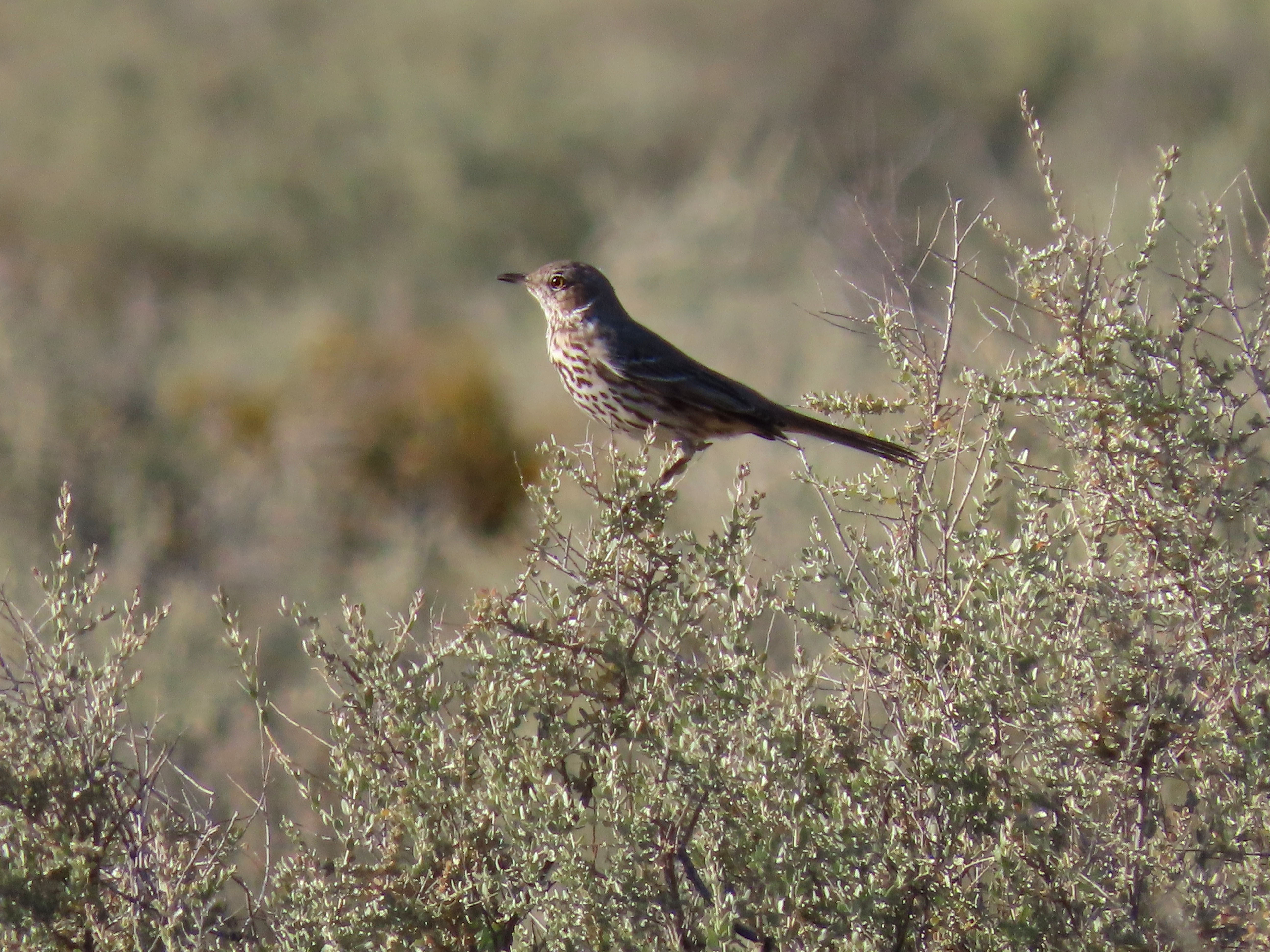
After searching for just over an hour and only seeing one thrasher species, the sage thrasher, I decided to pack it in for the day and return again in the morning, my last full day in Phoenix, to add Bendire’s to my life list and I hoped it was not going to be as hard and laborious as the Le Conte’s thrasher.

I headed west on West Salome Highway, making my way back to Highway 10. When I slowed near the intersection of the impossibly named 339th Avenue, I saw a mimid-type bird perched on the roadside announcing the intersection of 339th Avenue.

I immediately pulled over and cursed myself for packing my bins and camera in the trunk. As I stepped out of the car, the bird dropped down and disappeared from sight before I could identify it. I was not going to give up now!

Now I was armed with the instruments of a birder. The mystery mimid flew across the highway and landed in a tree of sticks. The hunt was on!

I managed to scuttle across the highway without becoming a grill ornament on a pick up truck (the state vehicle of Arizona) and bushwhacked ( they were short bushes) and made my siege on the tree-bush.

All I needed was a brief glimpse. Give me the shorter beak with a pale base, the yellow eye, or the arrow shaped markings on the breast. Then I would close out all the North American thrashers! Oh and a photo would be nice.

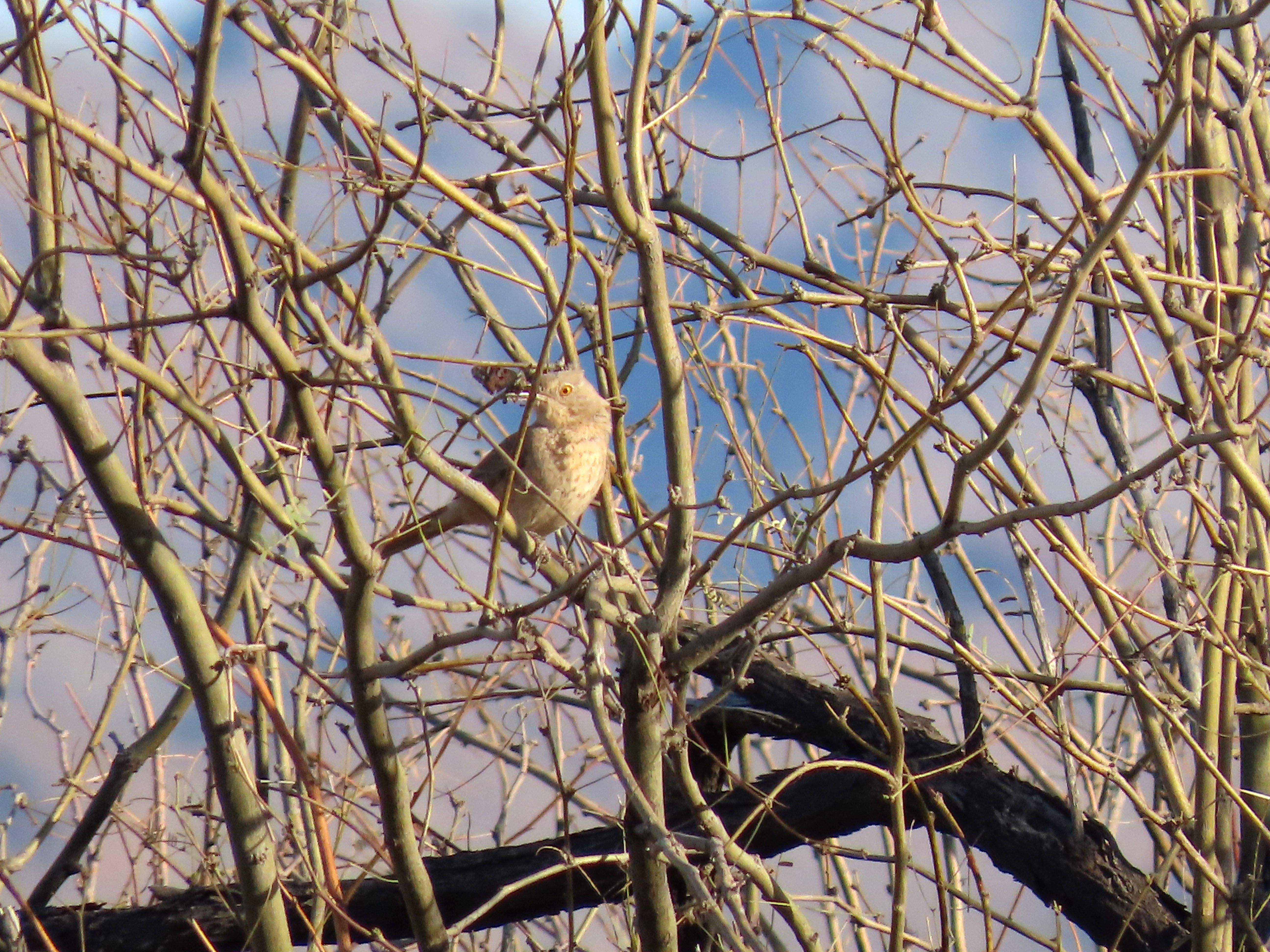
In typical thrasher fashion the bird put a load of branches between itself and myself. But I did get enough pieces of the puzzle that added up to Bendire’s Thrasher. Lifer and the final thrasher on my list! We played a game of hide and seek as I tried to get a photo, the Bendire’s not giving a fig about me and my selfish wants.

This Bendire’s looked a bit odd. It was something about it’s bill. When I put bins on the bird, I noticed it was carrying a butterfly. Was this a snack or a gift?
Image

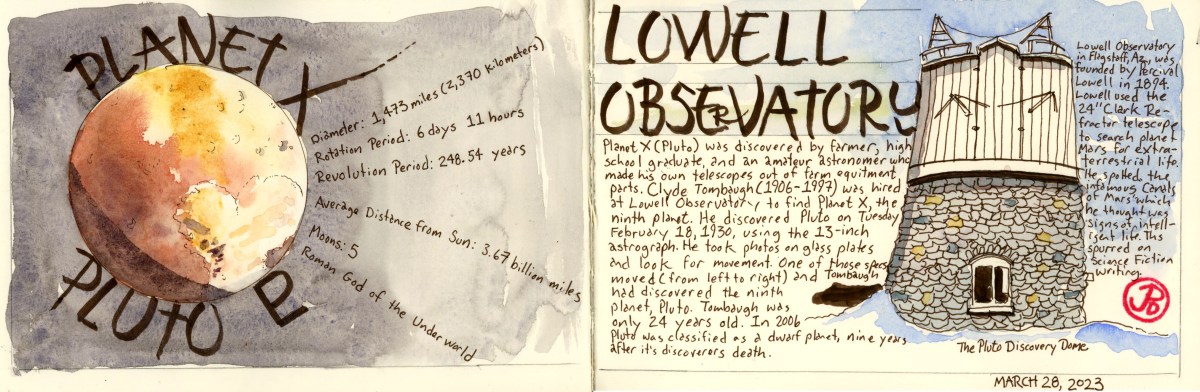
Lowell Observatory

The Lowell Observatory is legendary in the history of astronomy.

It was at this Flagstaff, Arizona observatory that a high school graduate and amateur astronomer discovered Planet X, later named Pluto, the ninth planet in our solar system.

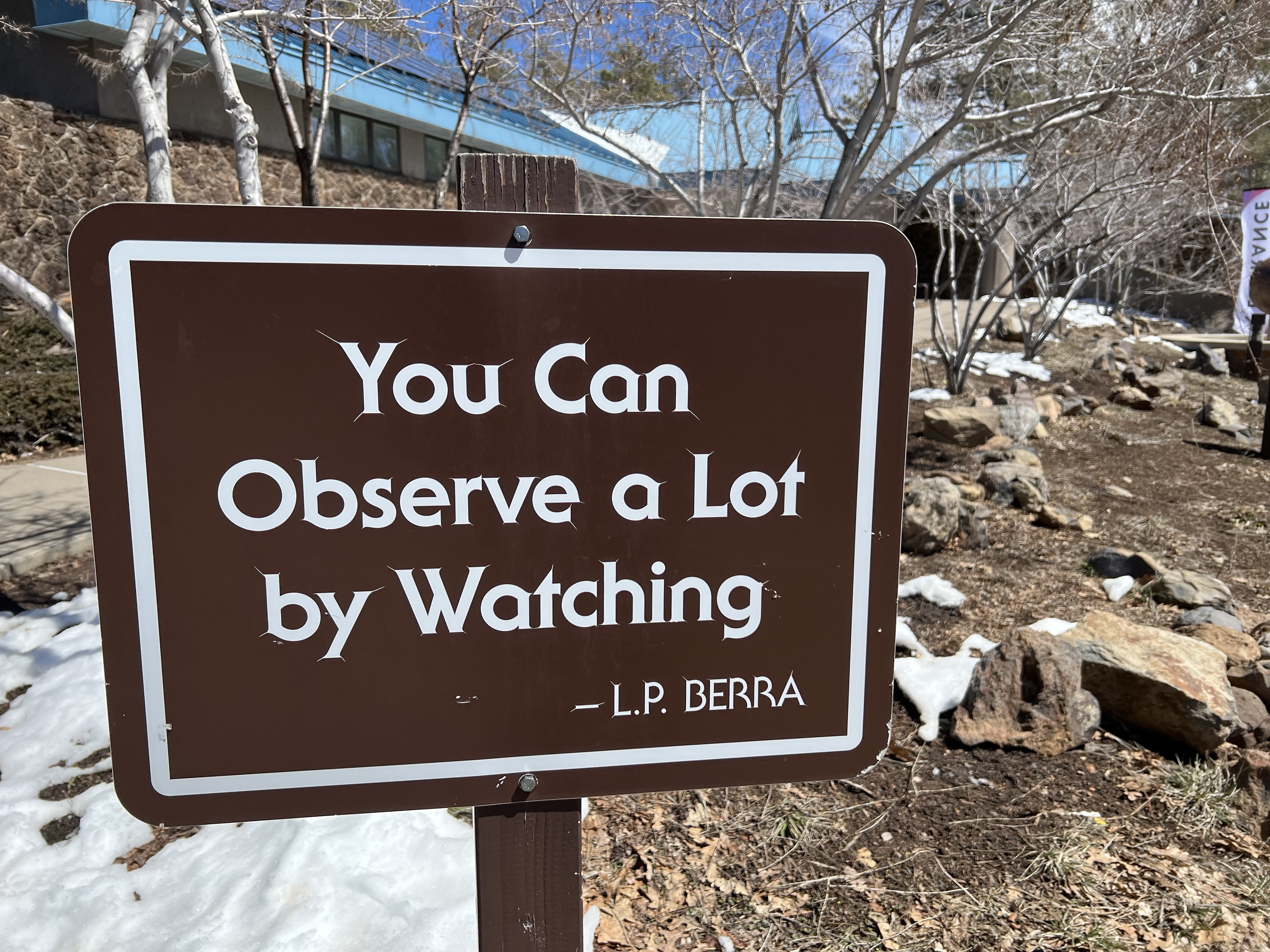
This sign at the entrance to the visitors center holds true for looking to the heavens but it certainty is the mantra for sketching.

The former farmer and the first American to discover a planet was named Clyde Tombaugh. He built his own telescopes from discarded farming machinery parts and made astronomical drawings that he sent off to the Lowell Observatory. They were so impressed with Tombaugh’s drawings that they hired him as an observer in the search for Planet X.

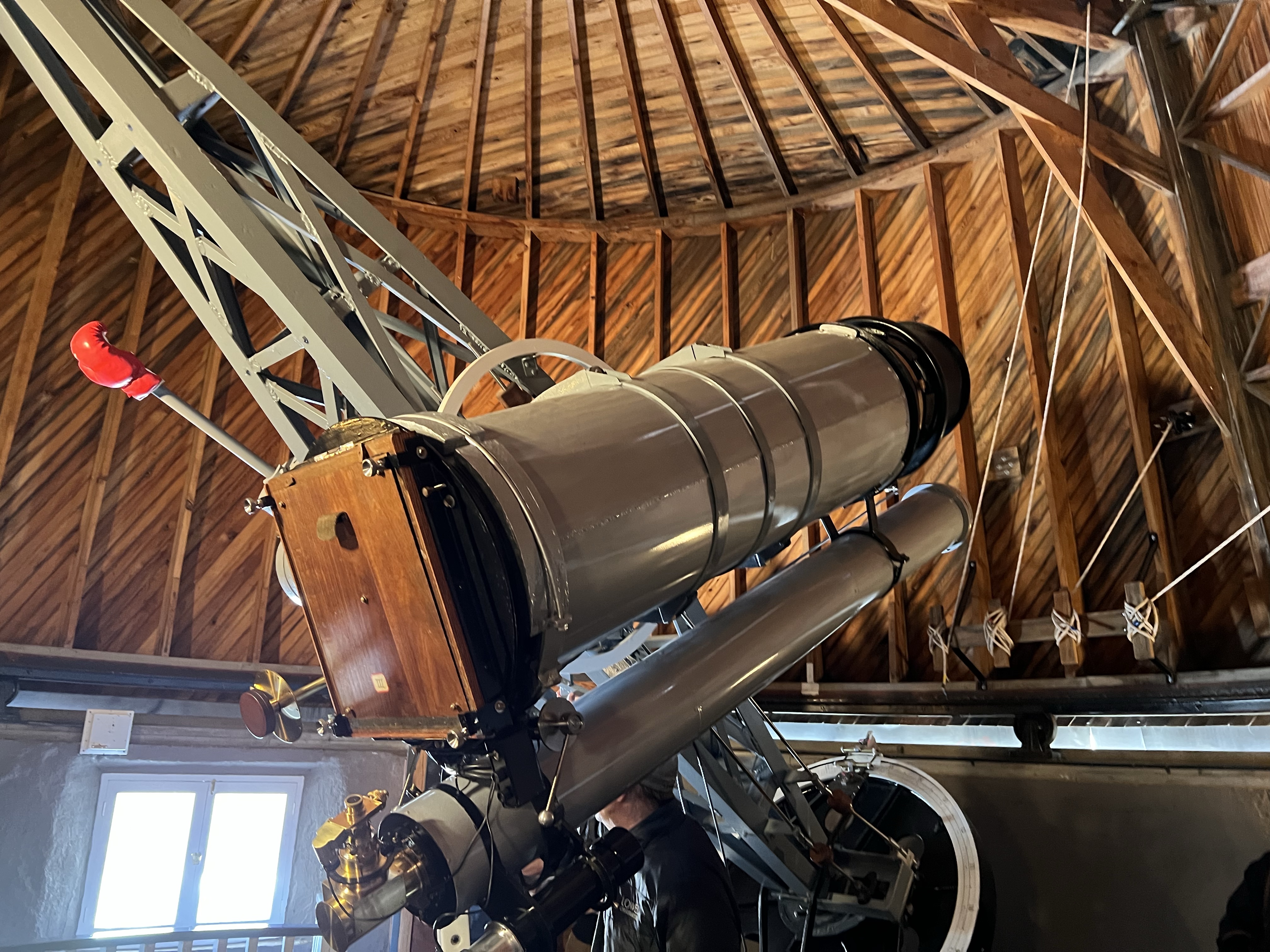
Tombaugh used the 13-inch astrograph to take photographs of the night sky. An astrograph is a telescope that has a photographic plate holder where astronomers can take photographs with exposures than can last up to an hour.

The 13-inch astrograph that Tombaugh used to discover Planet X, later renamed Pluto. The boxing glove was added by a later astronomer after hitting his head on the counterweight.

The method Tombaugh used To discover the ninth planet was as follows: Tombaugh would aim the astrograph to a section of the night’s sky and make a one hour exposure onto a glass plate. Five or six days later he would make the same exposure in the same location and then he would compare the two developed plates. The stars, which are far beyond our solar system, did not move but Tombaugh found a small spec that moved from left to right. This was a planet orbiting our sun. Tombaugh had discovered Planet X!

Tombaugh later went back to school to earn his masters (Can you imagine his professor asking the class on the first day: “What is your experience with astronomy?” Tombaugh replies, “I discovered Pluto.”) He went on to a long career in astronomy and he died in 1997. He was lucky not to live long enough to see his discovery demoted from a planet to a dwarf planet; Which happened almost ten years after his dead.

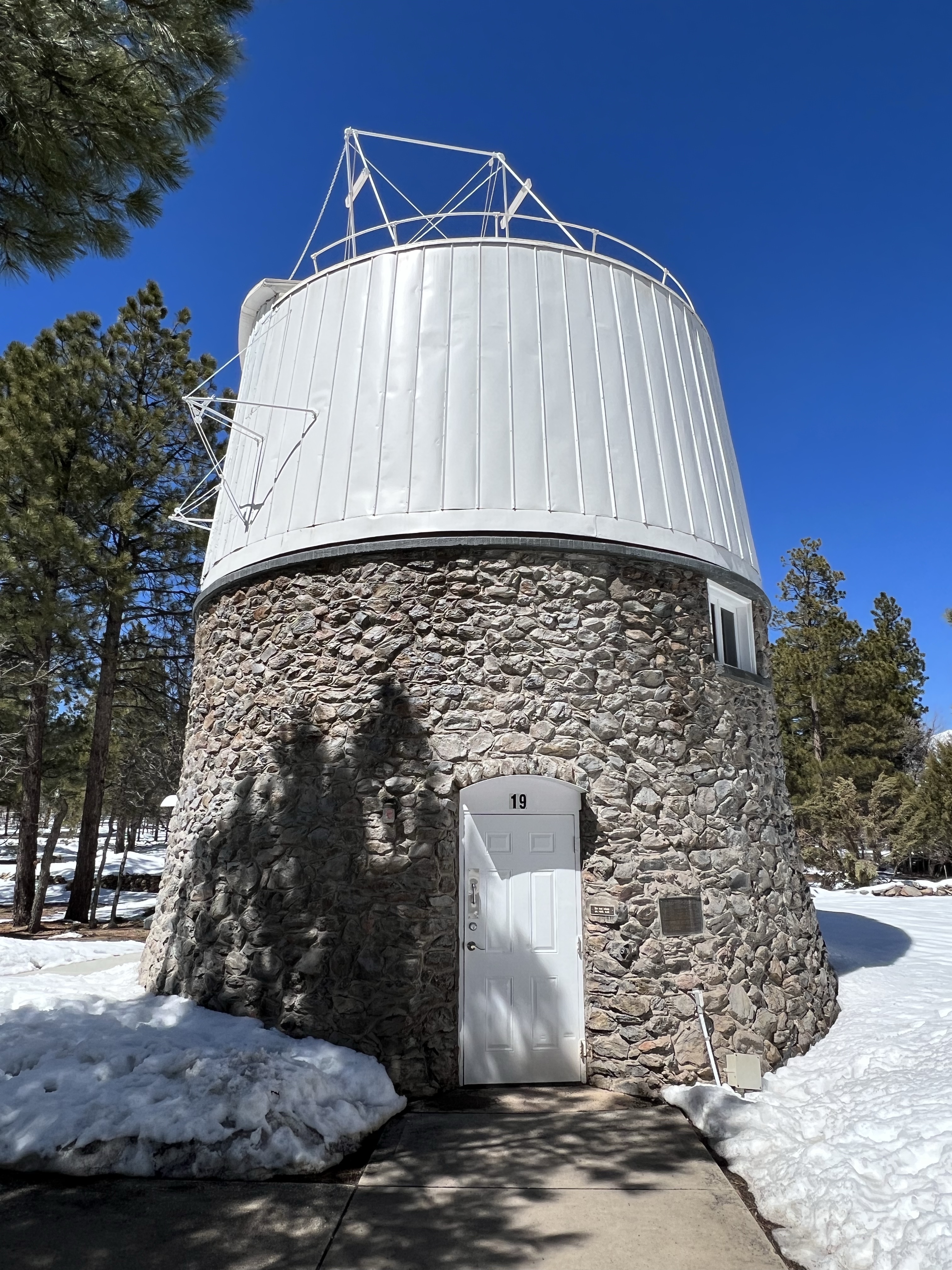
In this observatory, Tombaugh discovered the planet Pluto. Err, I mean the dwarf planet Pluto.

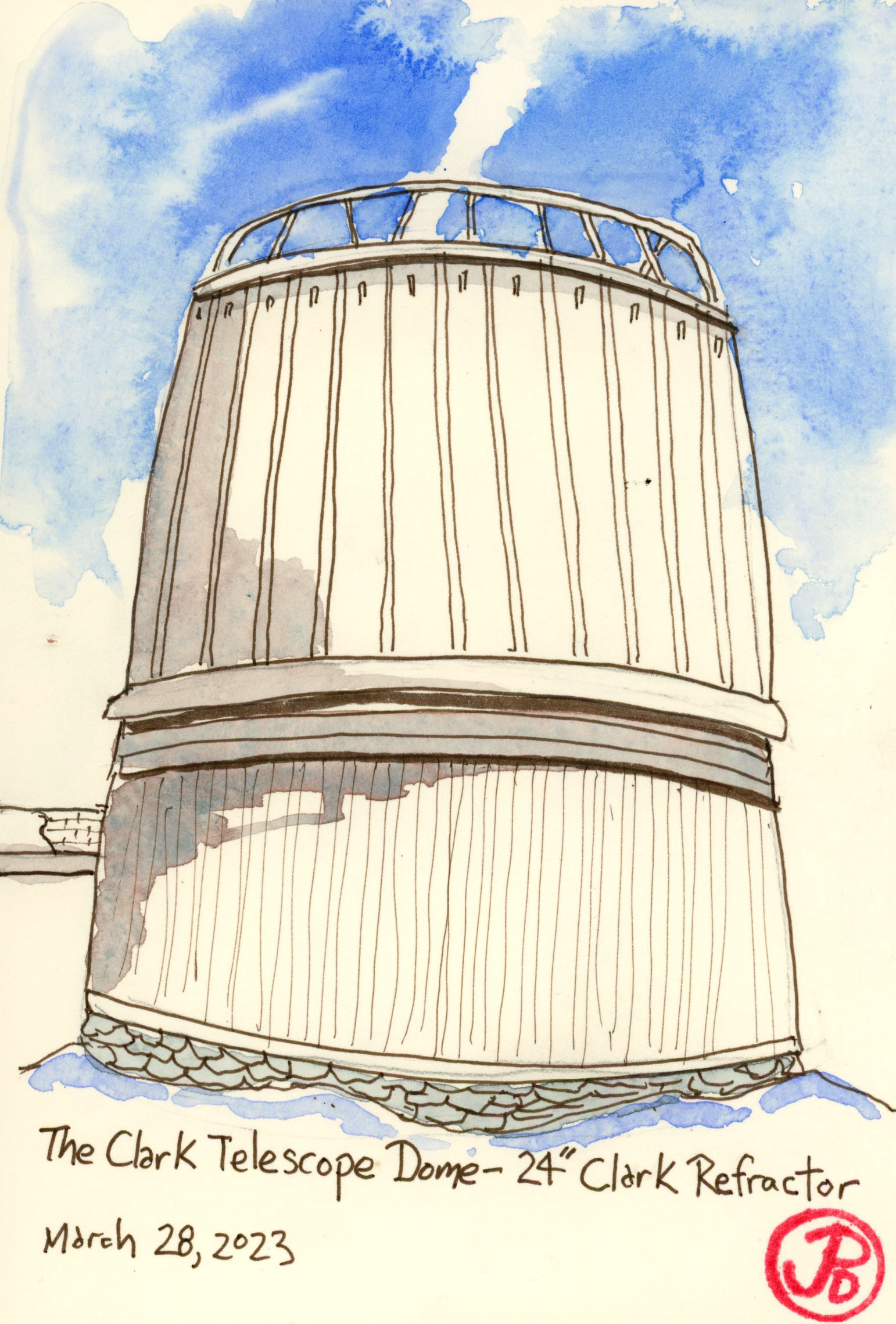
Another historic telescope at Lowell Observatory is the 24-inch Clack Refractor. This is the telescope that Percival Lowell used to explore the planet Mars as well as starting the search for Planet X.

It was with this telescope that Lowell made many of his Mauritian observations that raised some eyebrows in the scientific community. Lowell observed “Mauritian Canals” on the surface and he surmised that these were signs of intelligent life. Lowell thought that the canals were used to carry water from the poles to the desert like equator.

While these speculative observations didn’t help Lowell or the Observatory’s reputation, his theories provided fodder for early Science Fiction writers.

Image

SFO Groundtime

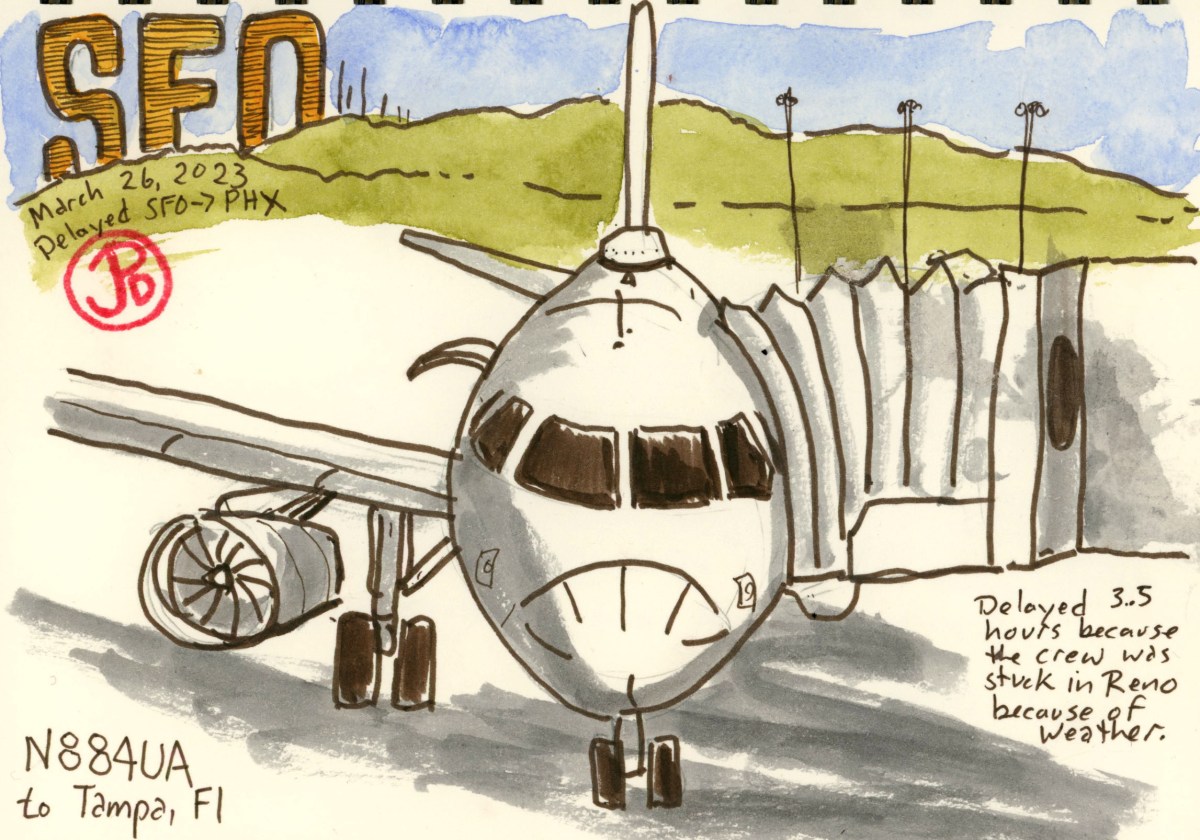
I arrived at SFO at 6 AM on a Sunday morning, plenty of time for my 8:42 flight to Phoenix Sky Harbor. Or so I thought.

I leisurely had breakfast having made it through security in about ten minutes, not bad for a Sunday morning. Plenty of time to catch my flight.

After breaking the fast, I passed by the departure board and my flight was rescheduled for 11:30 AM because of a “ Crew Connection”. I later found out that our crew was delayed in Reno, Nevada due to inclement weather.

Now I had three extra hours to spend (for a flight lasting an hour and a half!) at San Francisco International Airport!

I definitely got some steps in wandering in the terminal-mall that is SFO. I parked in a comfy swivel chair and people watched, which is first class at SFO. I attempted to add a story to those passing by, very much under the influence of Barbara Kingsolver. (My travel read was her first novel The Bean Trees, which is set in Tucson, Arizona.)

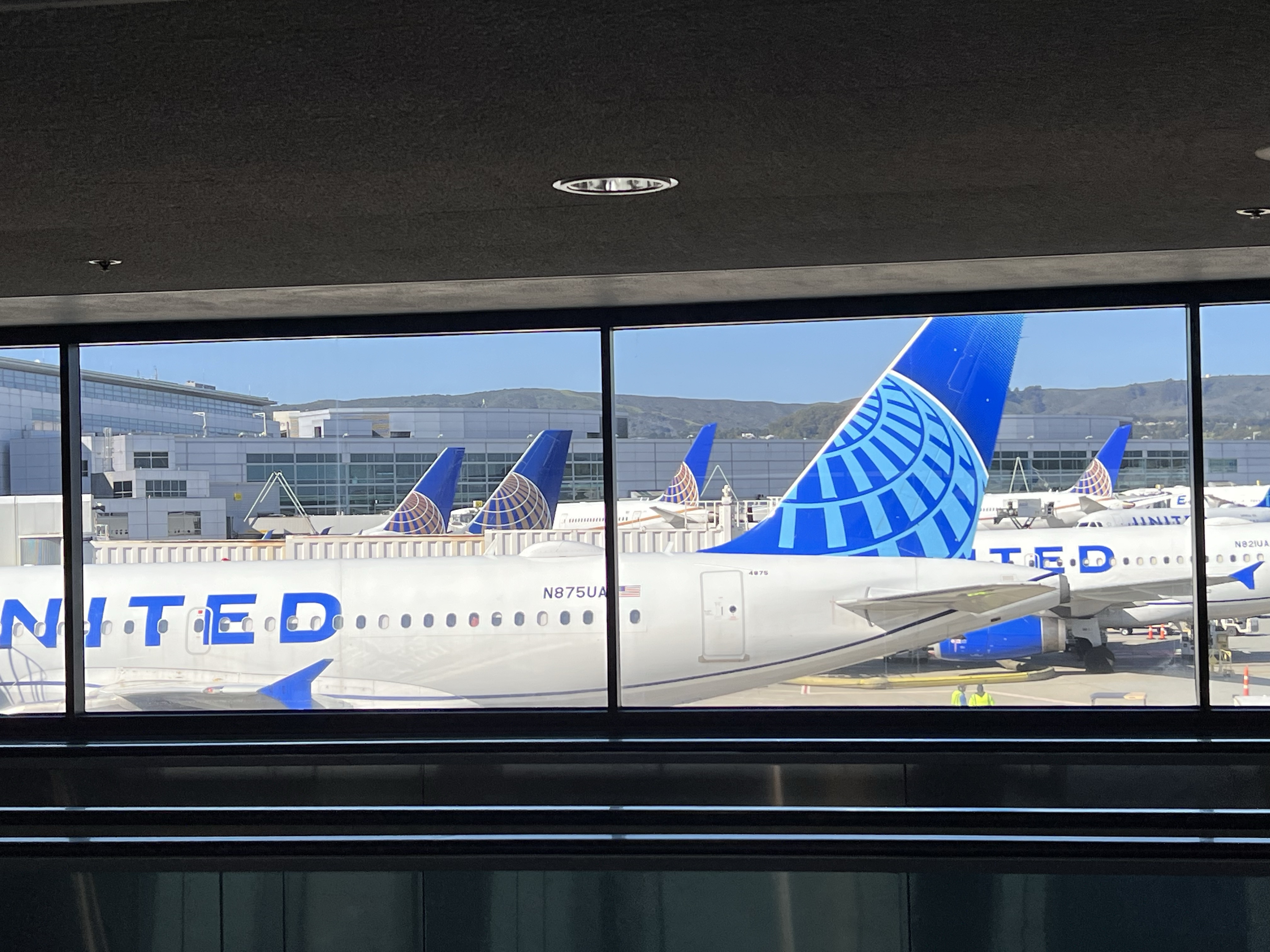
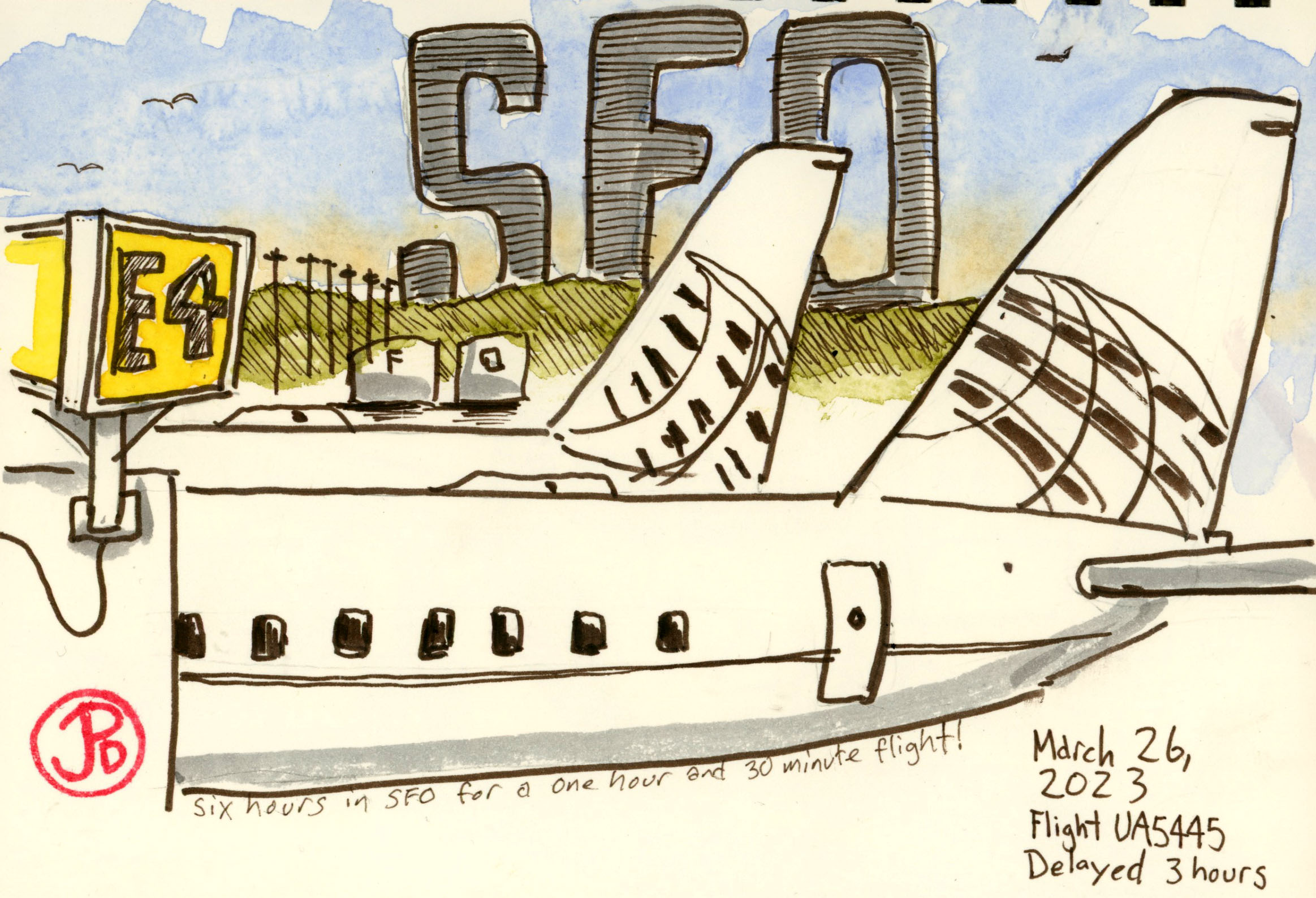
What to do? Sketch of course! Airplanes parked on the tarmac are very obliging sketch subjects. They sit still.
As I was sketching the tails of a line of United planes, an arriving flight pulled in front of my subjects. Good thing I had inked most of my sketch. Planes do move after all. Just not the ways a sketcher may want them to.

I got in two sketches at SFO until I finally boarded my United flight to PHX.

Image

Phoenix, Sedona, Flagstaff

For my one week spring break I decided to keep it close and sketch, bird, and nature loaf in the Grand Canyon State (without visiting the Grand Canyon). And also see one of the best meteor crater strikes on planet earth along with the observatory where Pluto was discovered.

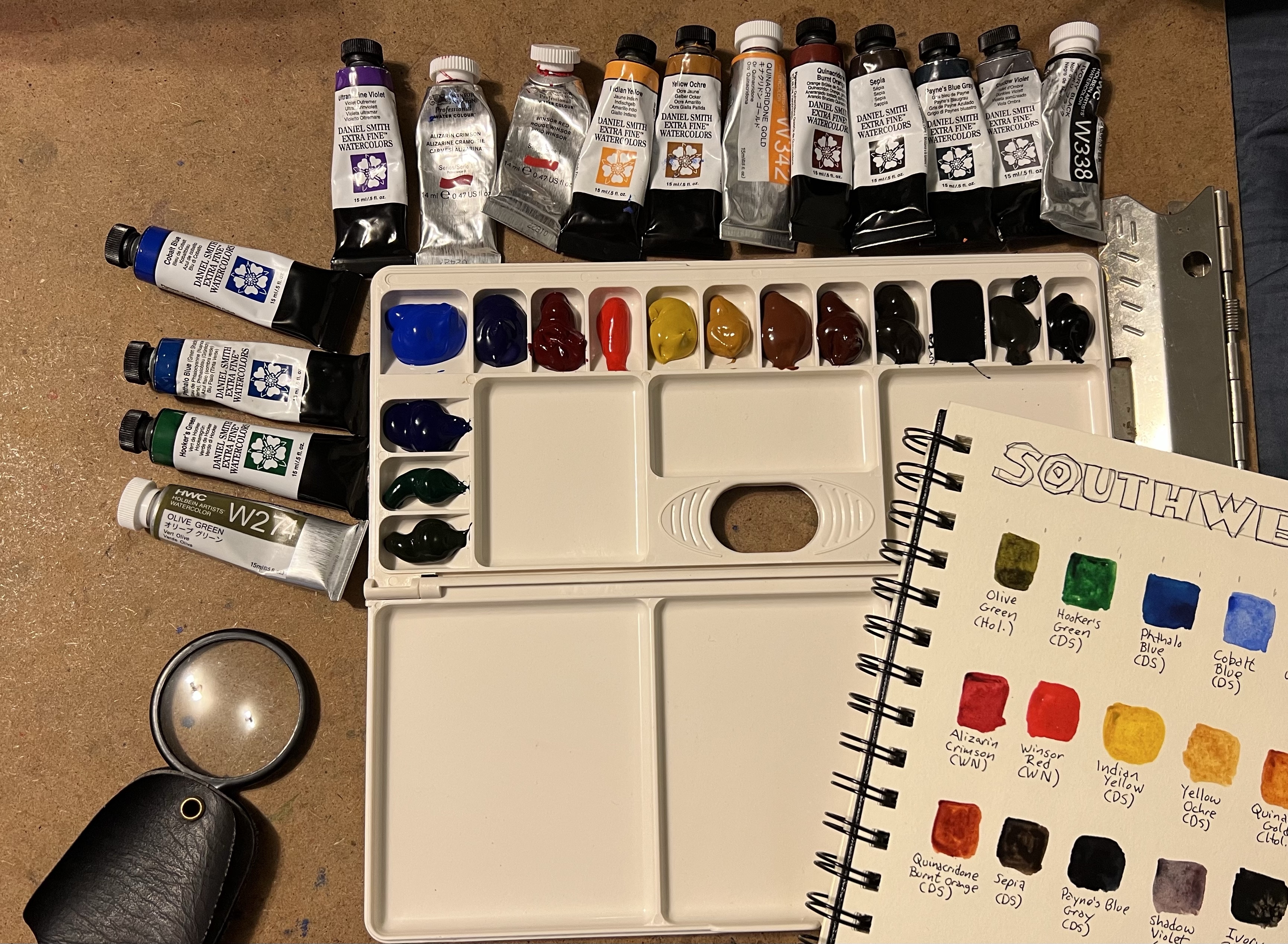
The Southwest is a landscape of red-rust rocks, olive greens, and blue skies. I would need a slightly different palette to capture the landscapes around Sedona, a different palette than I use in coastal California.

I added some more paints such as quinacridone burnt orange by Daniel Smith to add to the desert colors I would be using in attempting to render the Arizona landscapes before me.

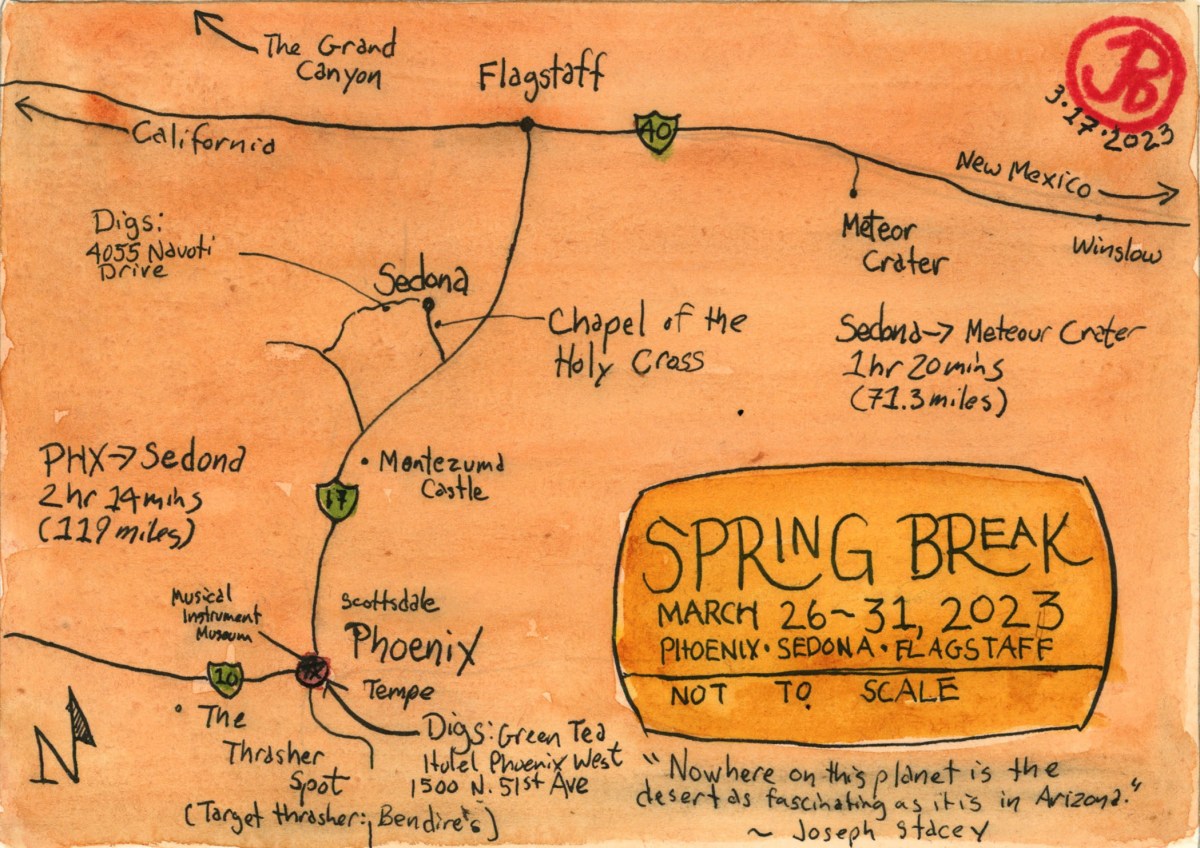
The beginning of any adventure is creating a map. I may or may not stick to the route but it provides the framework for miracles and wonder (featured sketch).

From my digs in Sedona I would be heading north to the colder climes of Flagstaff and then 37 miles east to the Meteor Crater near Winslow. I want to field sketch the crater from its rim. It will be cold, with a high of 45 so I am bringing my October Yellowstone jacket beanie, and gloves.

Once I get the meteor crater in my sketchbook I will head back to Flagstaff to the Lowell Observatory, my sketching target: the Pluto Discovery Dome where the search for Planet X ended as Clyde Tombaugh discovered Pluto on February 18, 1930.

I return to Phoenix and chose to stay west of downtown. The location is near Skyharbor but also about 40 minutes to the famous “Thrasher Spot”. This legendary birding destination is the best place to see the elusive Le Conte’s thrasher (and three other thrasher species). Good thing I have this desert wraith on my life list already. This nemesis bird took a lot of time and legwork to see, but I finally saw a Le Conte’s on January 4, 2019 just west of the landfill at Borrego Springs. But I do not have Bendire’s thrasher and if I see this bird, I will close out all North American thrashers!

Image

Sketching Red Rocks

Red rocks are a big drawn for visitors to Sedona, Arizona. These are not small rocks but mammoths named Bell, Cathedral, Coffeepot, Chimney, Steamboat, and Castle. To name a few.

I wanted to sketch a few of these Sedona features with my desert watercolor palette attempting to capture the rufous rocks. The red is caused by dissolved iron that has drained through sandstone layers for millions of years.

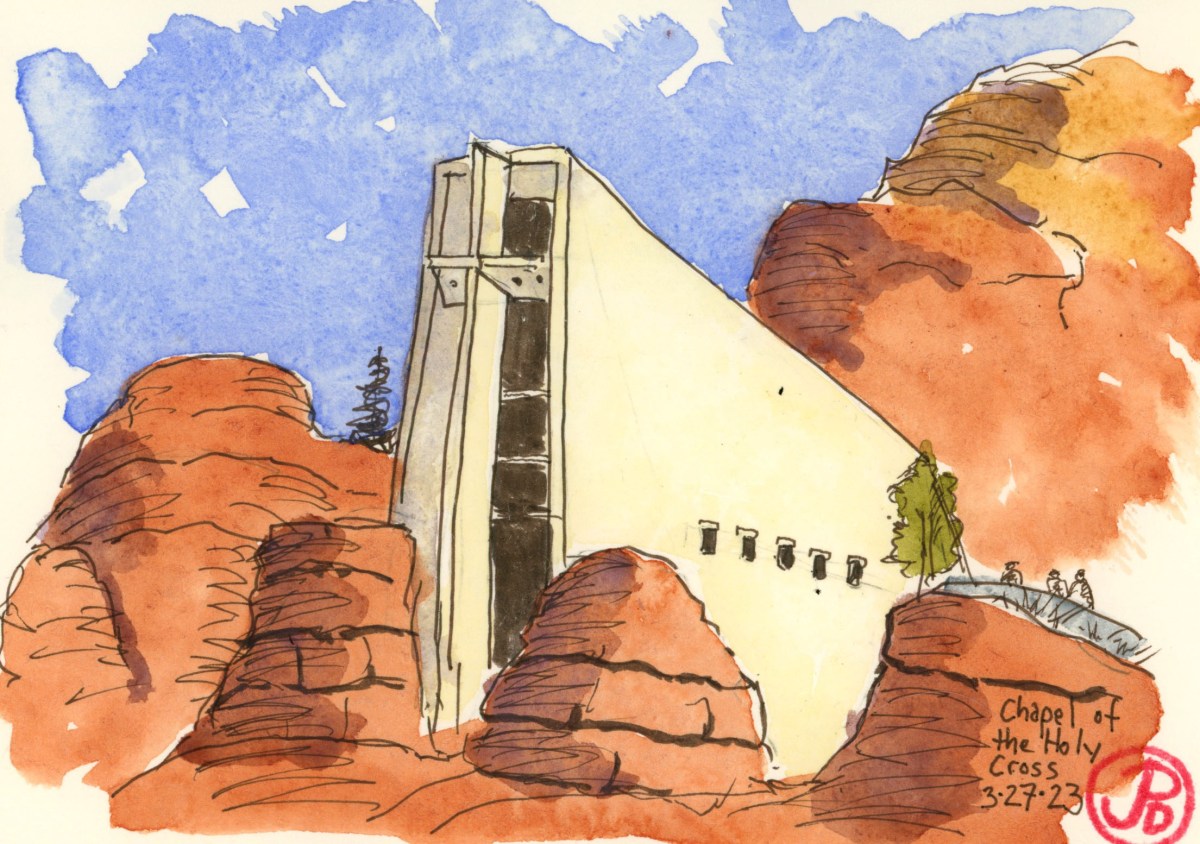
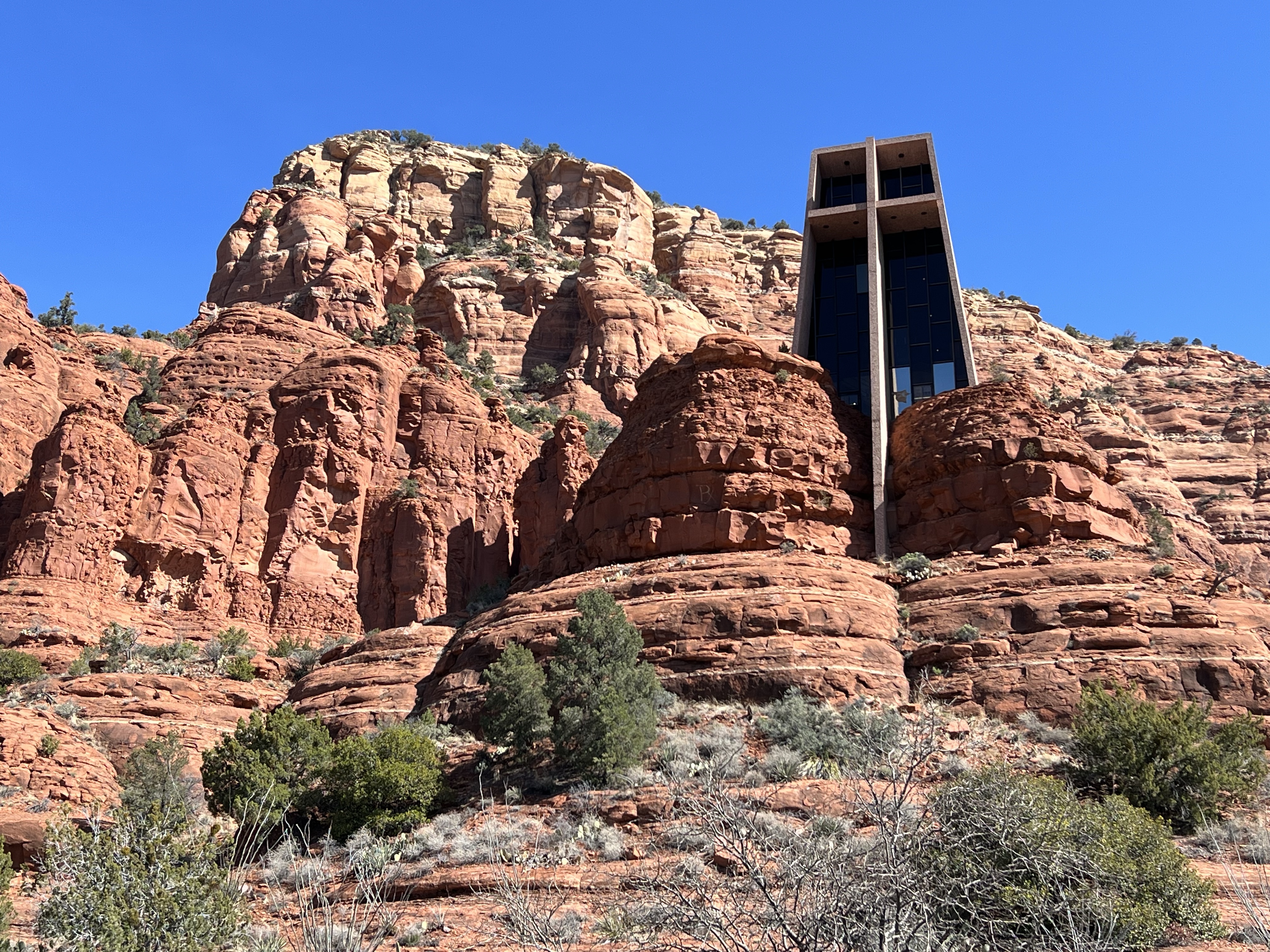
High on my list was to sketch the Chapel of the Holy Cross, a Sedona must see since 1956. The chapel was build to fit into the red rocks like a jigsaw puzzle piece (featured sketch).

The Chapel of the Holy Cross in Sedona.
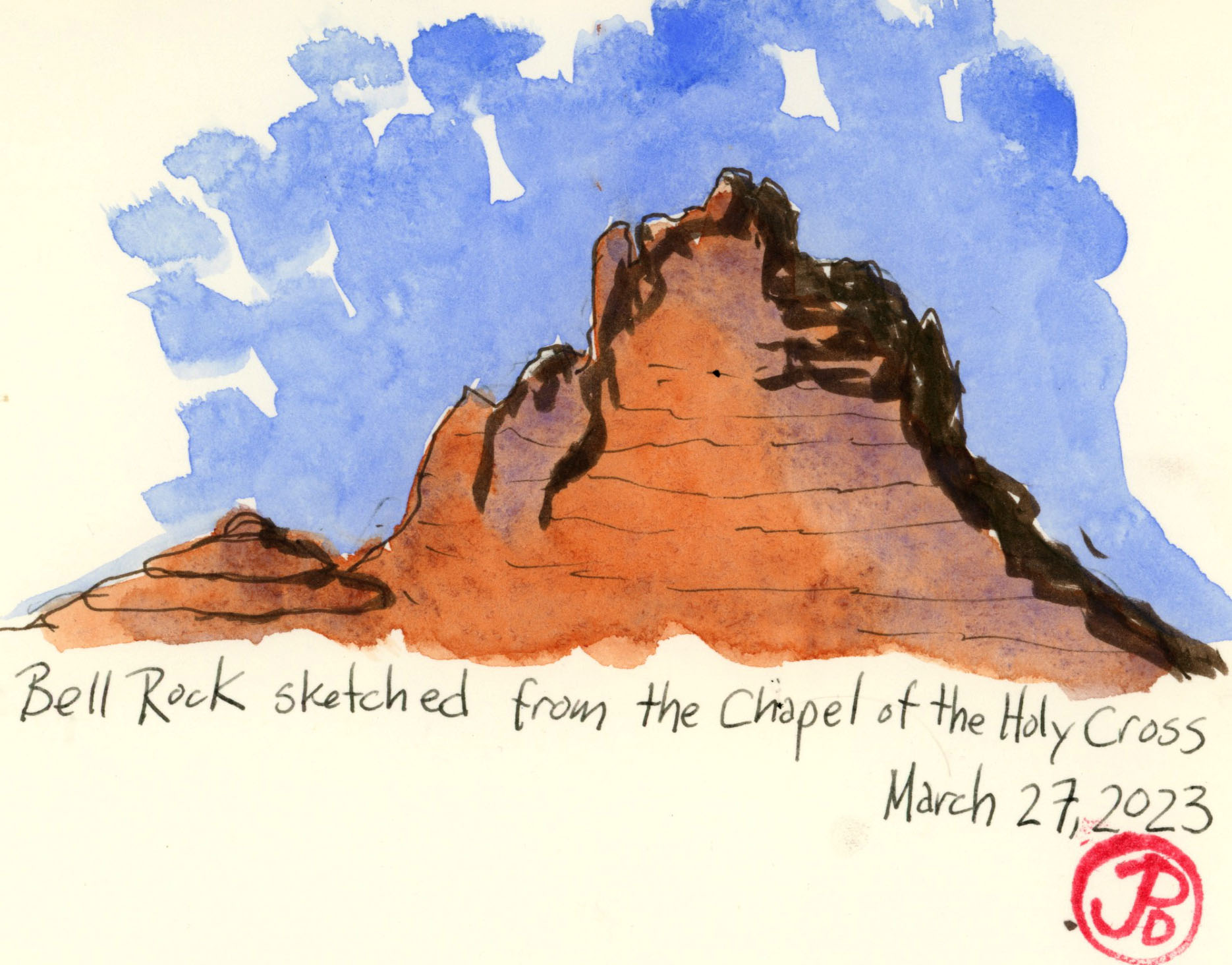
I sketched Bell Rock from the Chapel of the Holy Cross because all the Bell Rock parking lots were full by 8 AM.

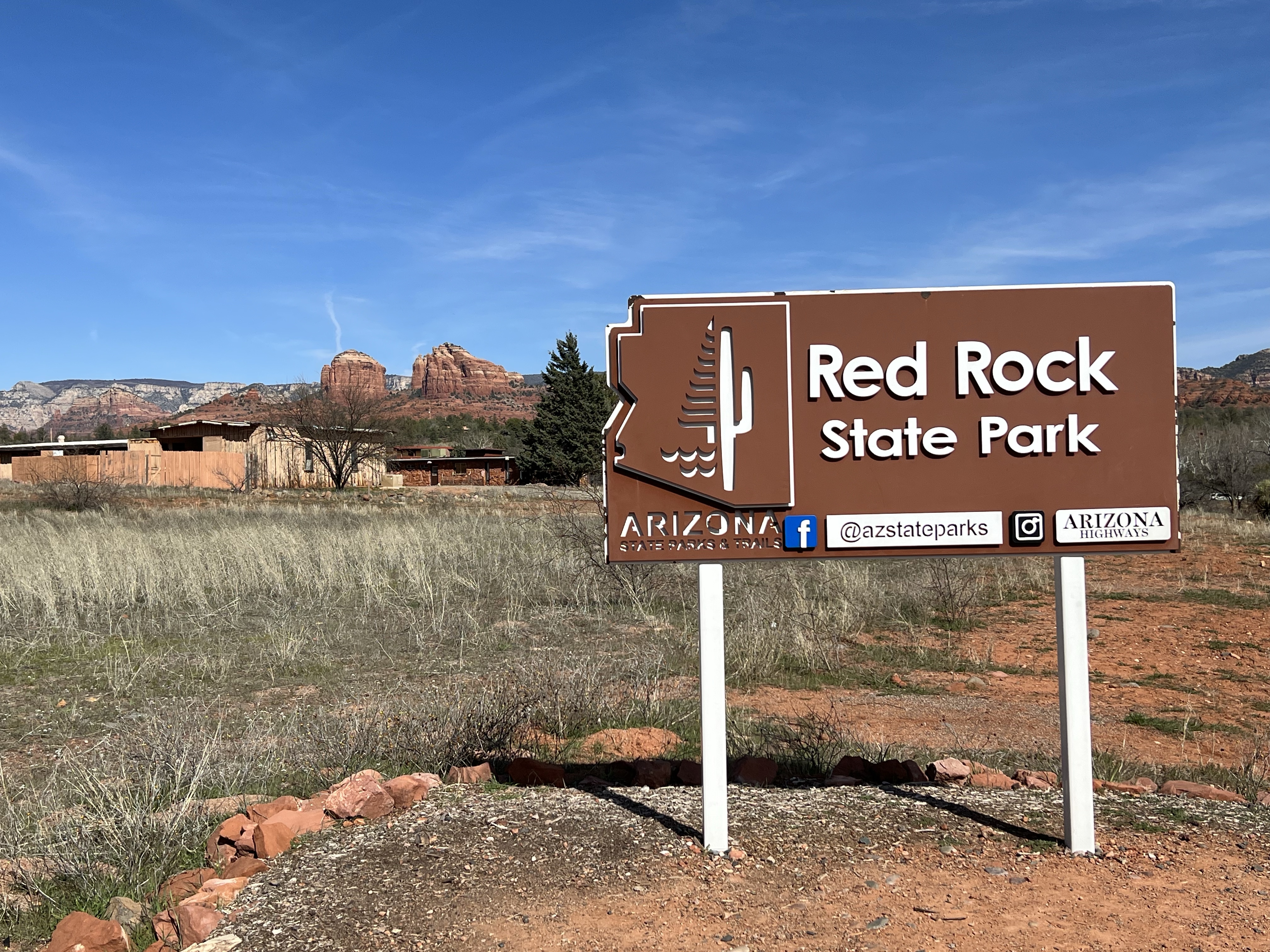
In the afternoon I visited Red Rock State Park and had good light to sketch the iconic Arizona landmark: Cathedral Rock.

Red Rock State Park with Cathedral Rock in the background.
I sketch the iconic Cathedral Rock from the observation deck at Red Rock State Park.
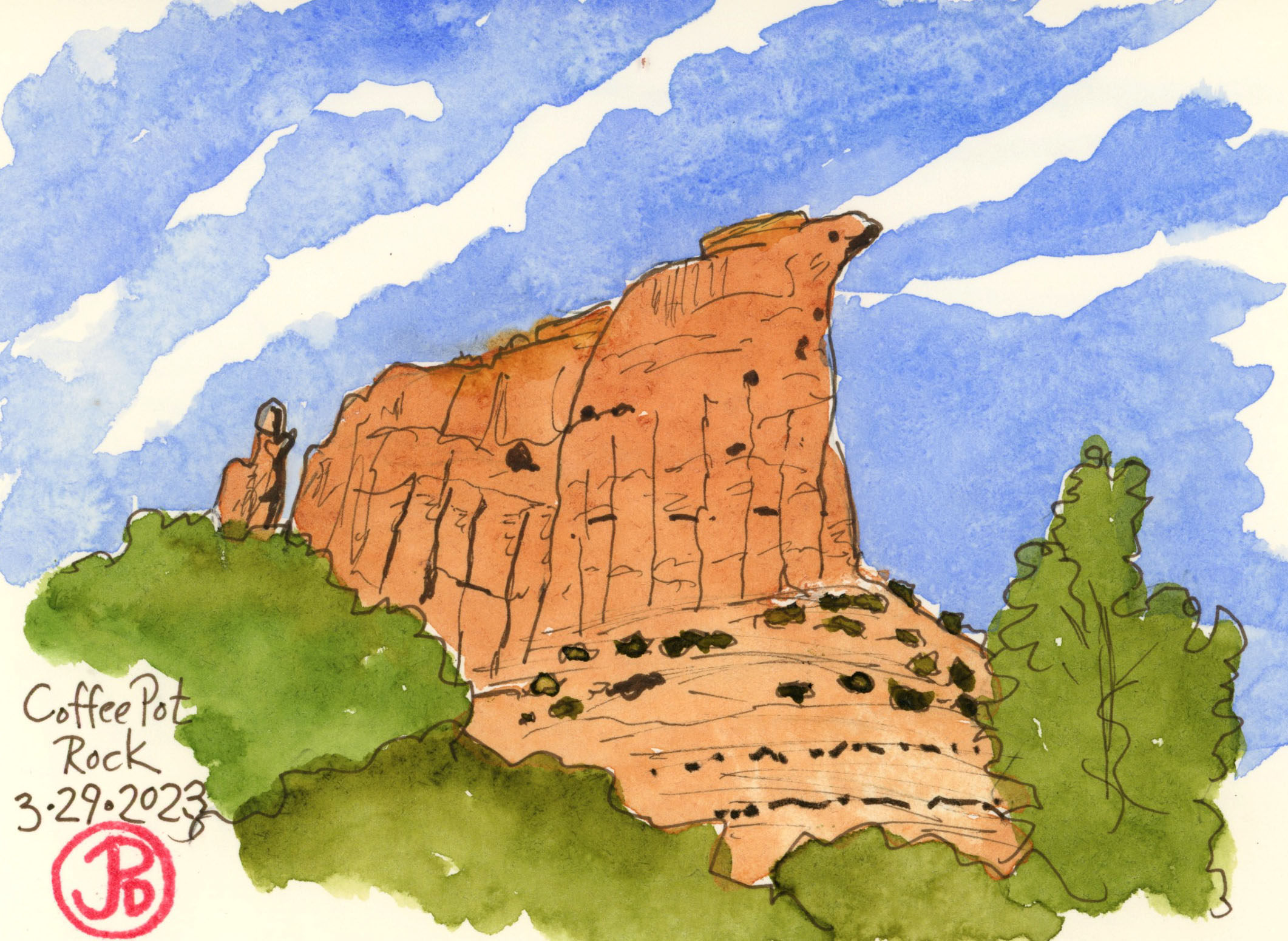
At the base of Coffeepot Rock was a western movie set. Quite a few movies where filmed in and around Sedona. Now at the base is a gated community called “The Coffeepot Rock Cottages”. Cottages indeed!
Image

Merced National Wildlife Refuge

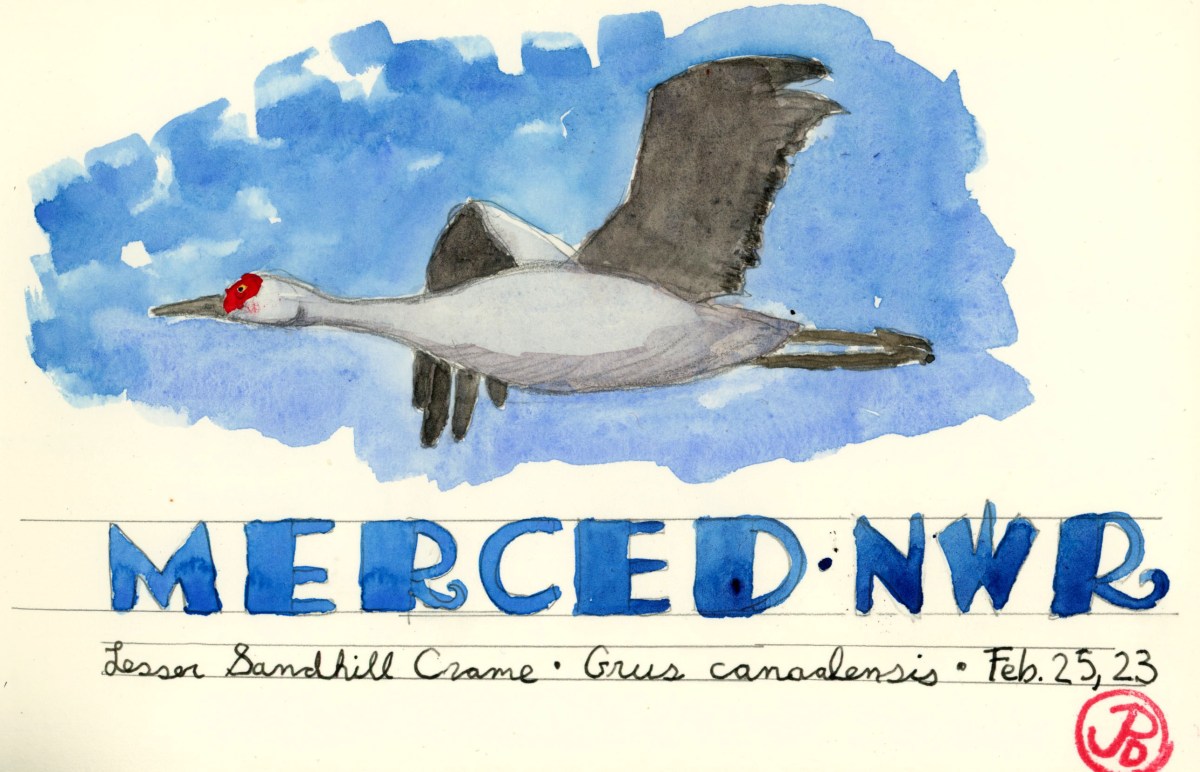
Just 20 miles south of the Central Valley city of Merced is a wildlife refuge that hosts the largest concentration of lesser sandhill cranes on the Pacific Flyway.

On Sunday morning I headed out into the cold Central Valley morning to one of the jewels of California’s wildlife refuges.

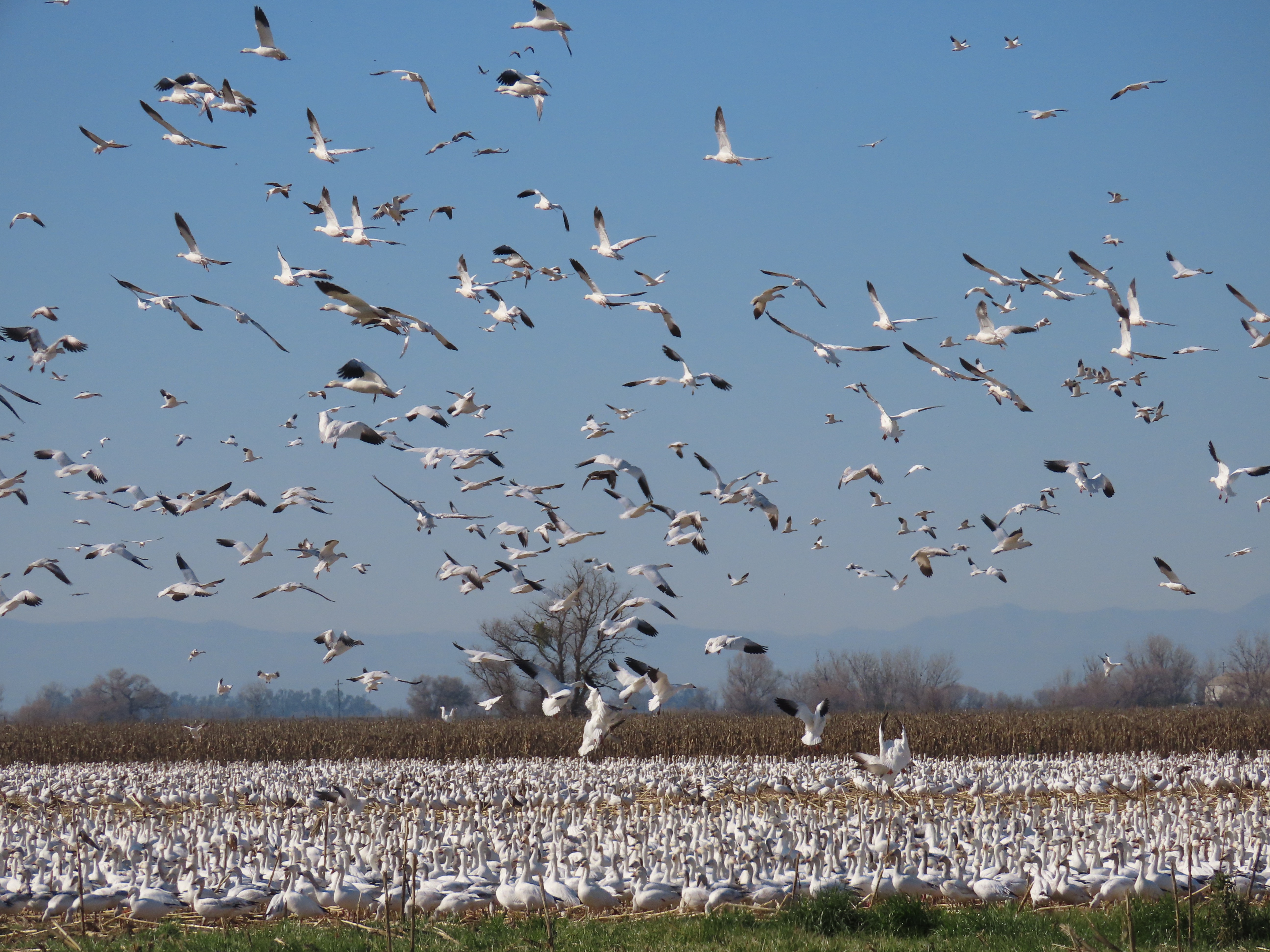
Twenty minutes later, as I neared the Refuge entrance, the field to my left was covered with geese and cranes.

There are a lot of geese, I mean a lot, at Merced National Wildlife Refuge.

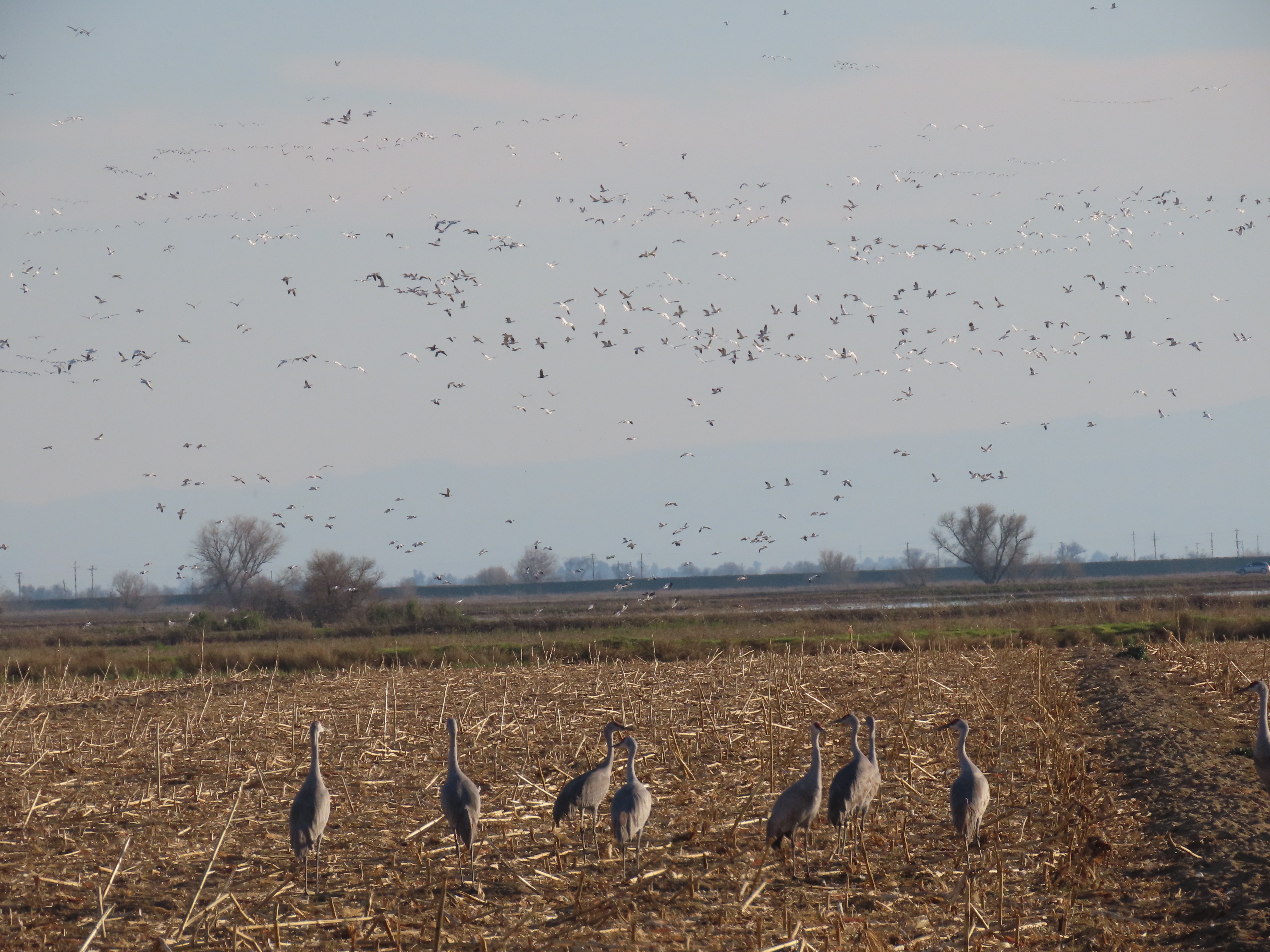
I entered the the Refuge and scoped the flocks from the observation platform. Thousands of Ross’s, snow, and greater white-fronted geese and lesser sandhill cranes. I headed back into my moveable birding blind and started on the five mile auto route.

The rules of the auto route is that you have to remain in your vehicle. Your car acts as a moving blind allowing you to get very close to wildlife without scaring them away.

Lesser sandhill cranes below and lines of geese above.
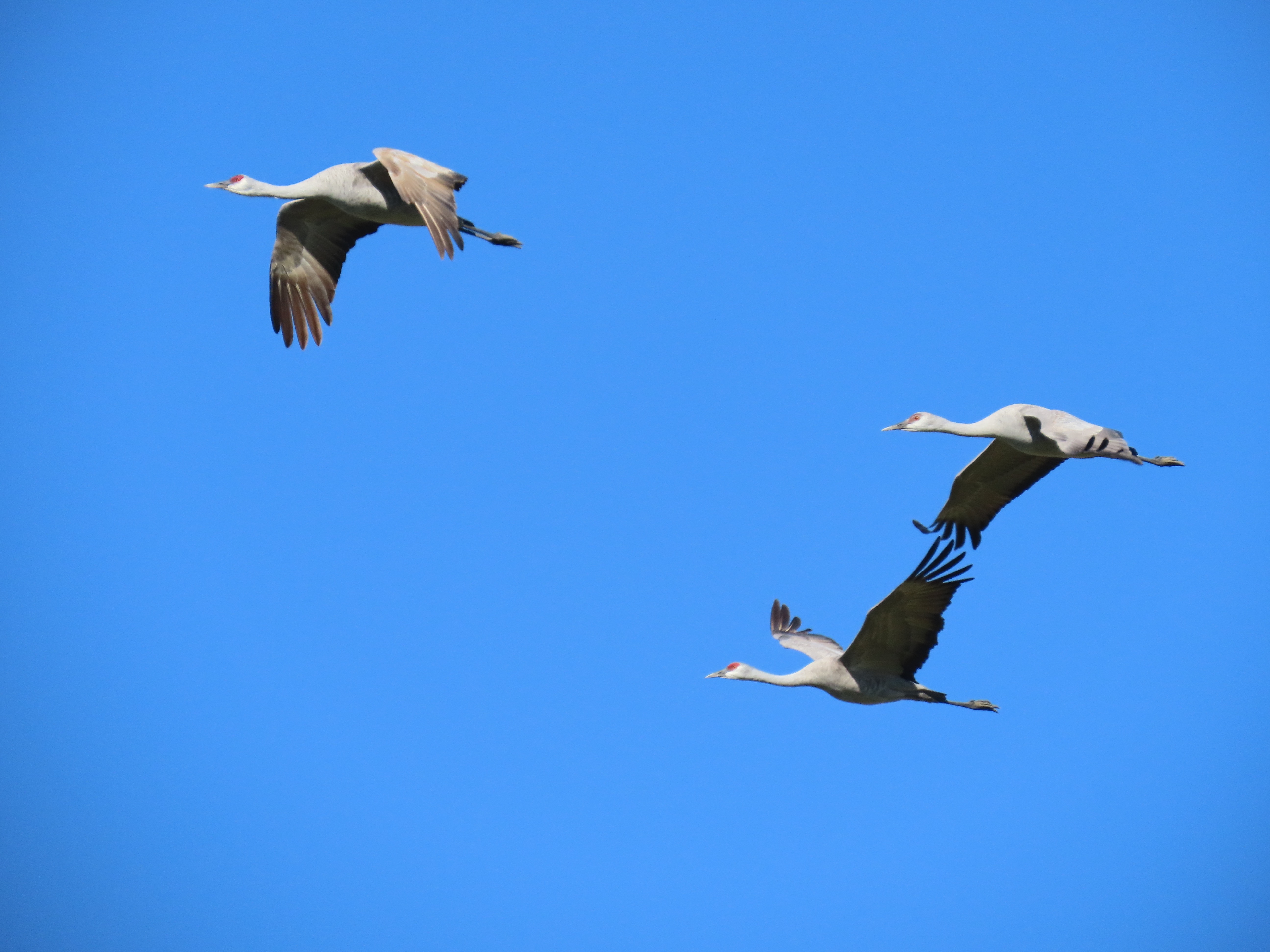
The bugle call of sandhills overhead is a sound I look forward to every winter.

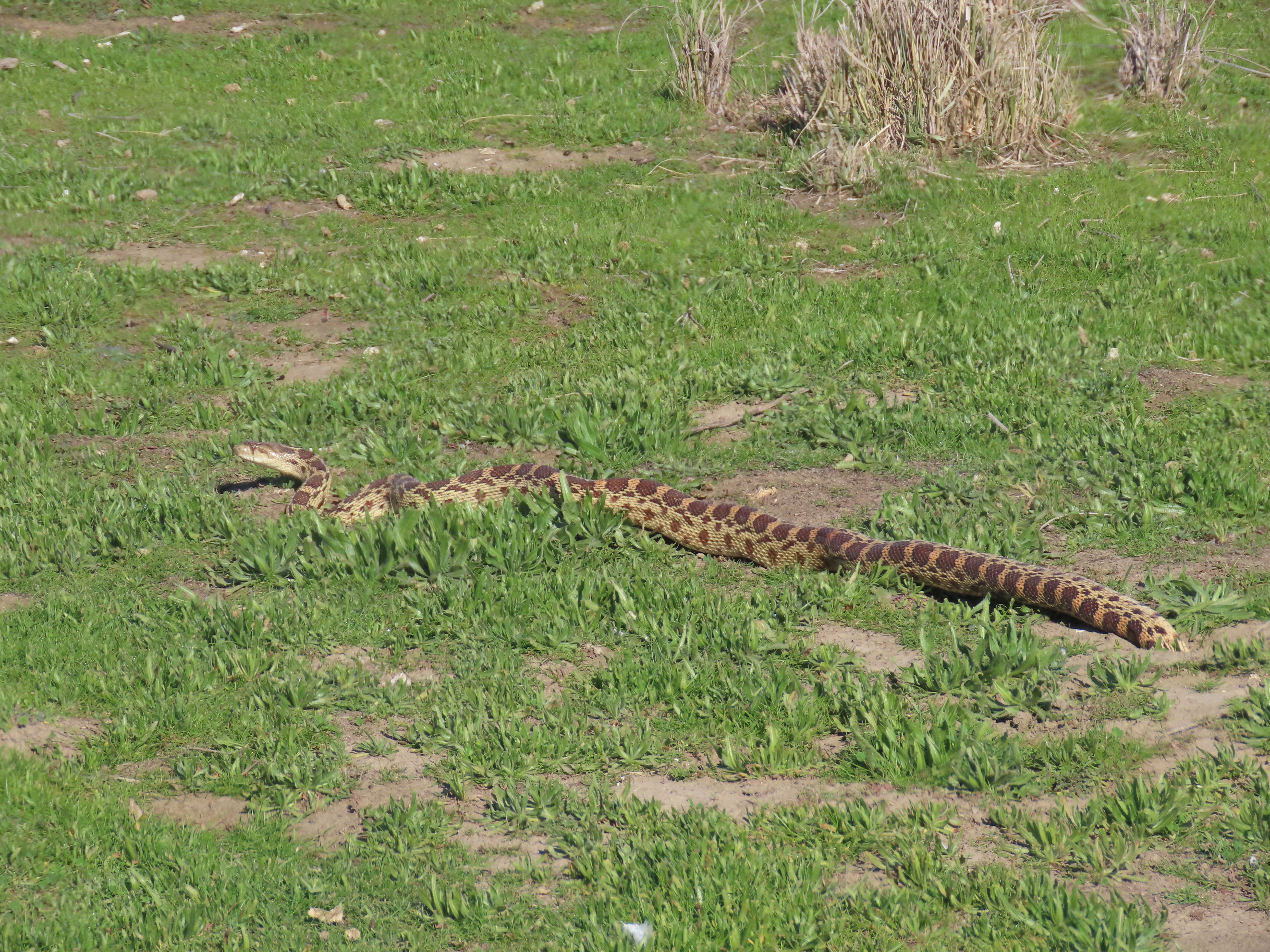
It was not just about observing feathered creatures. I also spotted a coyote trotting across a levy path with a white goose in it’s mouth. It is the circle of life after all. I also observed a scaled creature in the glassland area of a refuge. It was a beautiful four-foot gopher snake hunting in the ground squirrel burrows.

Image

Coda: September 16, 1989, Santa Fe Road

At about 5:30 PM, Steven Stayner was riding his motorcycle home from his job at Pizza Hut heading out of Merced towards Atwater on Santa Fe Road.

At this point Steven was 24, he was married, and had two children. He had also wrecked three cars and amassed over $1,000 in speeding tickets, and his driver’s license was suspended, for the third time. He liked to drive fast and he was now riding fast down Santa Fe Road without a helmet.

He was nearing Richwoods Meats (where he formerly worked) when a car pulled out of a side road and stalled. Steven slammed into the driver side door and was thrown 45 feet over the car causing major head injuries. The driver fled the scene.

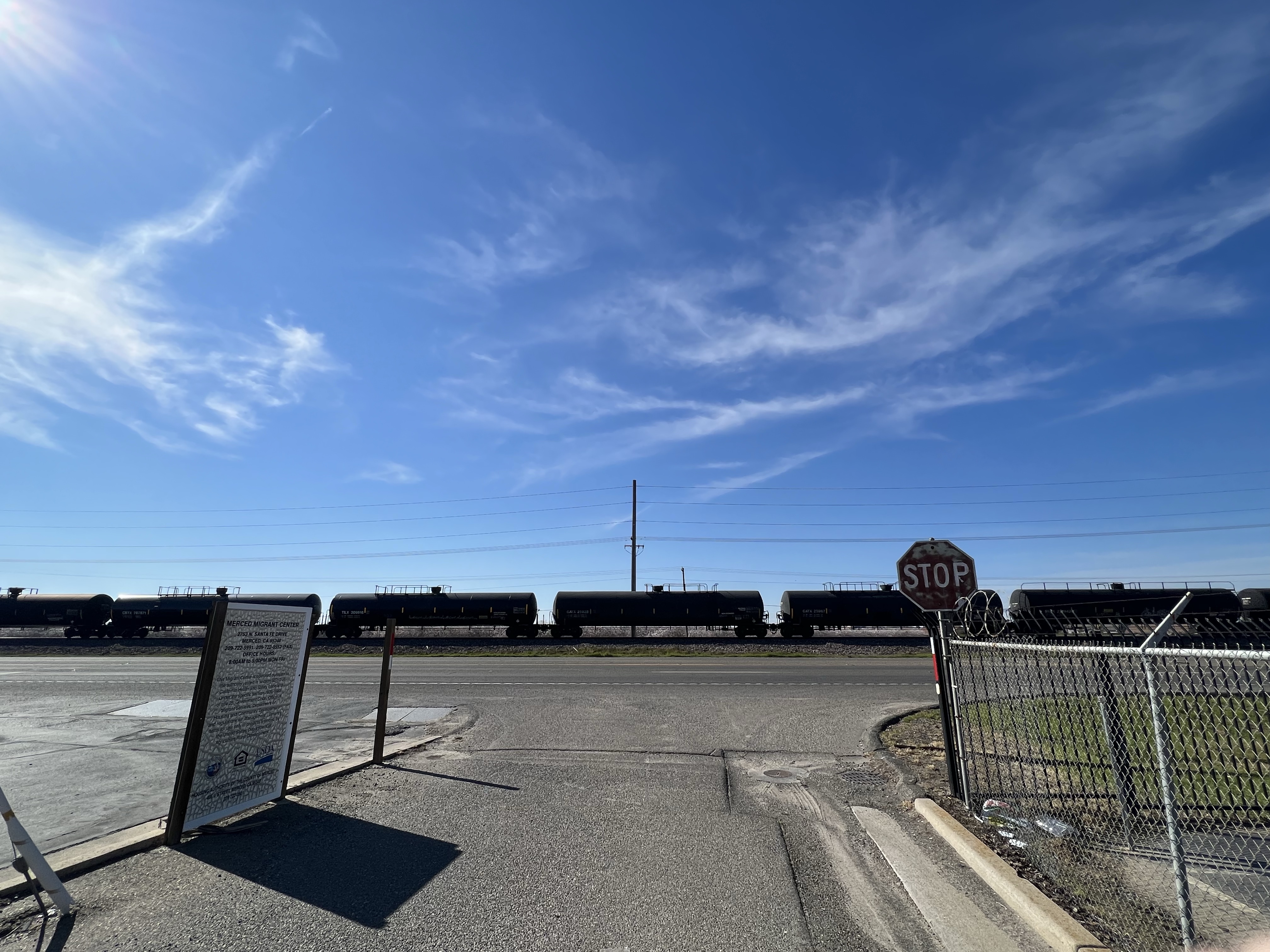
The street with no name looking towards Santa Fe Road with a BNSF freight heading southeast towards Merced. Steven was heading towards Atwater, which is to the right. He was struck and killed at this intersection.

He was taken to a Merced County Medical Center where he was pronounced dead at 5:35 PM.

This was the end of Steven Stayner’s short but troubled life. He had spend 30% of his 24 years away from his family being sexually abused by Kenneth Parnell. When he returned to Merced in 1980, he had trouble readjusting to his new found fame and the structured Stayner household. The added stigma of having been a victim of a pedophile made him an easy target for bullies at Merced High School.

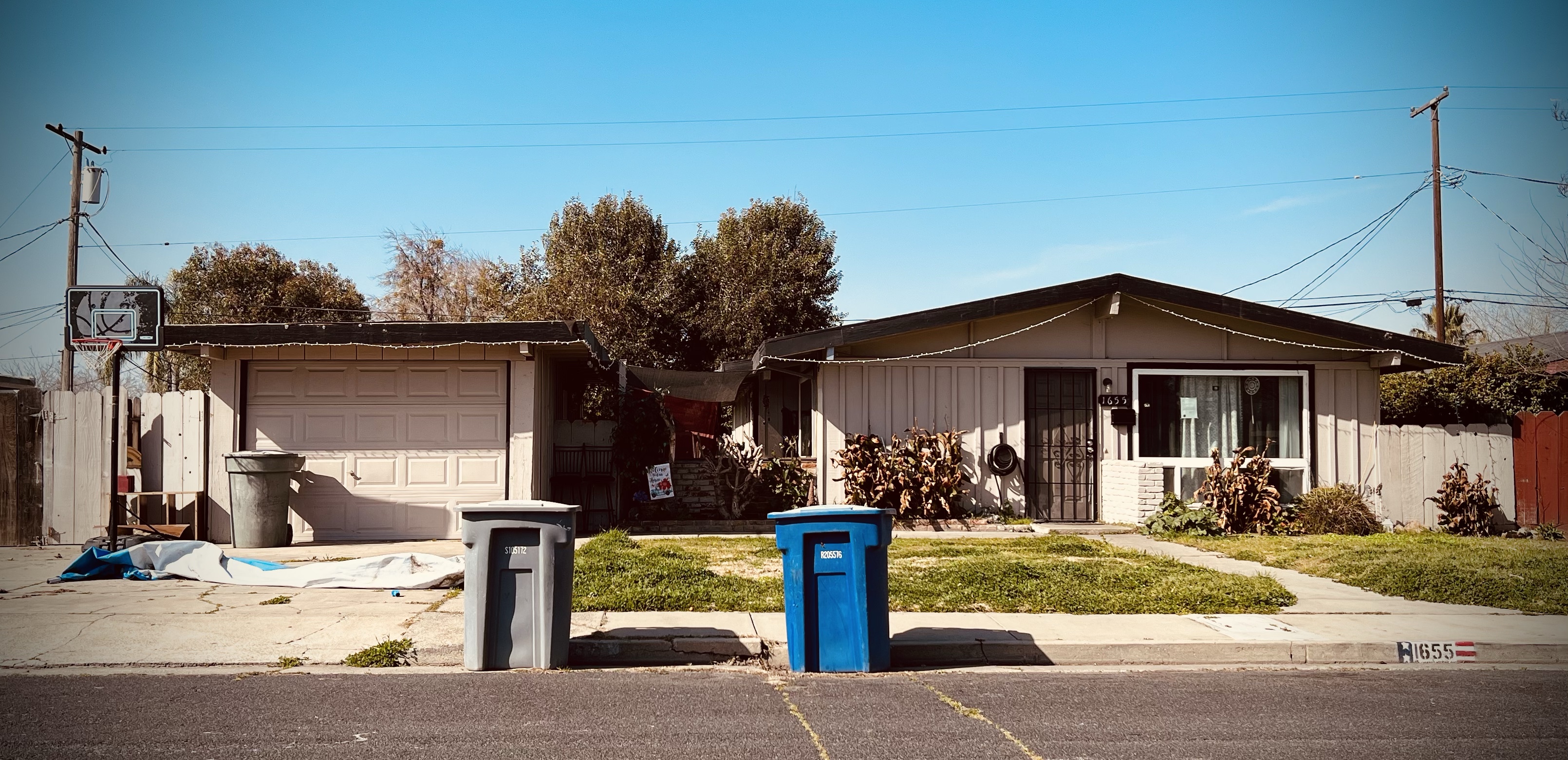
The Stayner home as it looks today. The garage that once held his name is on the left.

What I found astonishing was that after all that Steven had gone through, he did not receive any professional counseling, in fact his parents were against it.

Steven Gregory Stayner’s funeral was held in Merced at the Church of Latter Day Saints’ on September 20, 1989. Five hundred people attended the funeral, including the now fourteen year old Timothy White, who helped Steven Stayner along on his final journey, just as Steven had helped Timothy nine years before.

Timothy White was one of his pallbearers.

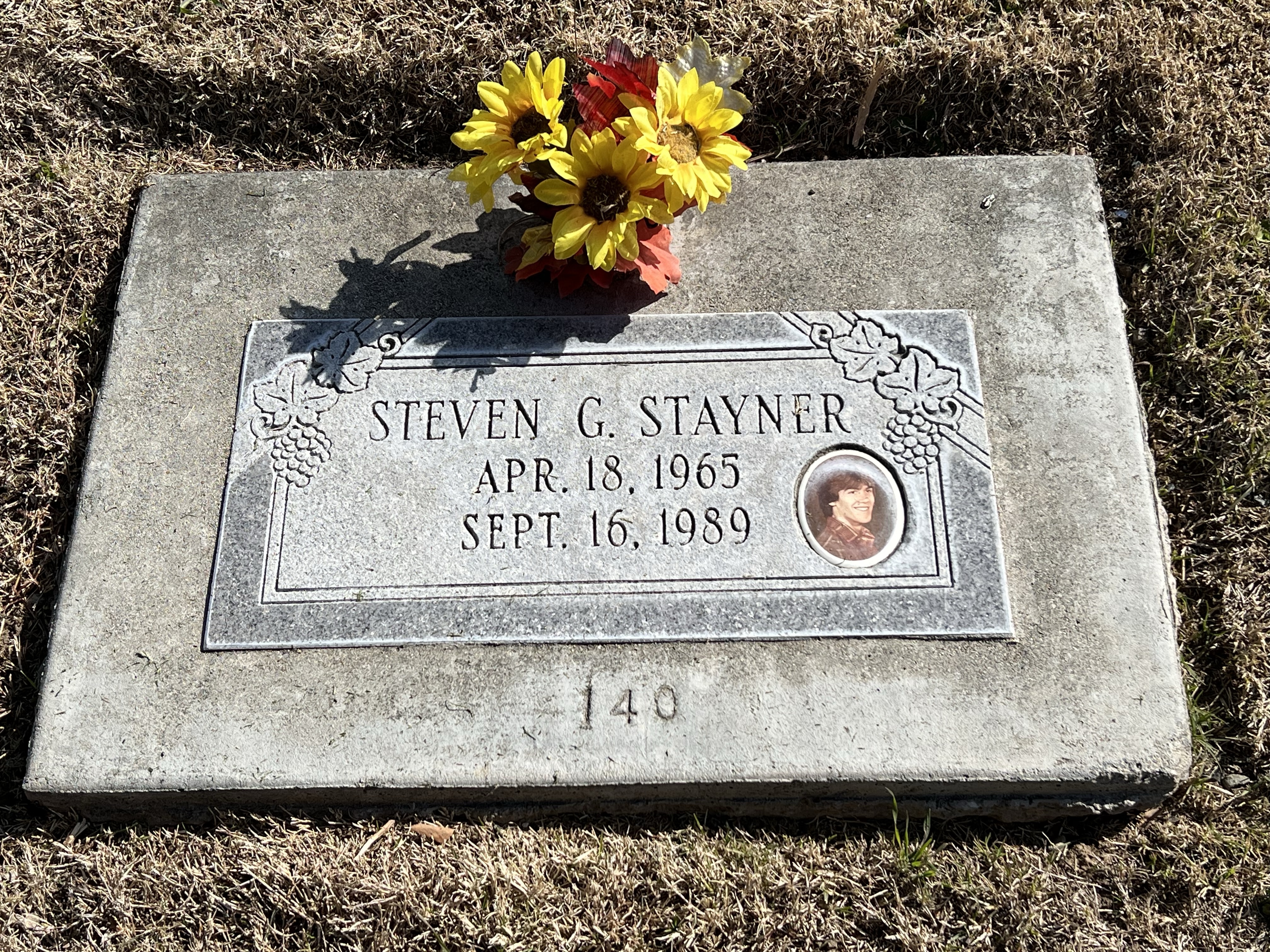
Steven Stayner rests in Merced, just across the highway and UP mainline from his childhood home on Bette Street.

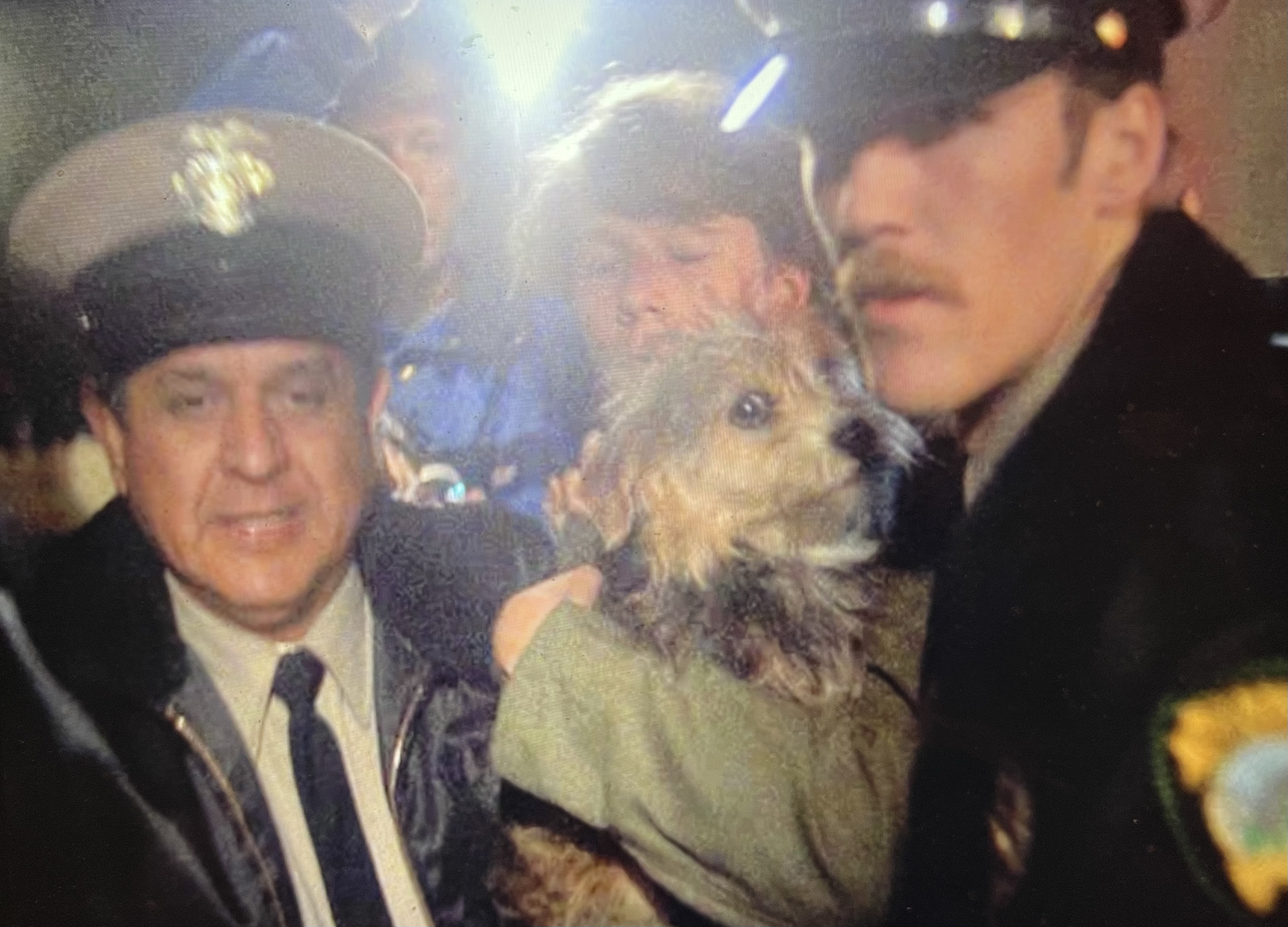
Near the end of Steven’s life, a popular television miniseries was made about his life called I Know My Name is Steven. He made a cameo as a Merced police office in the scene when Steven returns to his home on Bette Street for the first time in over seven years. The series was nominated for four Emmys. Steven died the day before the Emmy ceremony.

A screen shot from the miniseries I Know My Name is Steven. In the center, behind the dog, is the actor Corin Nemec who plays the 14 year old Steven. The officer on the right is the real Steven Stayner.

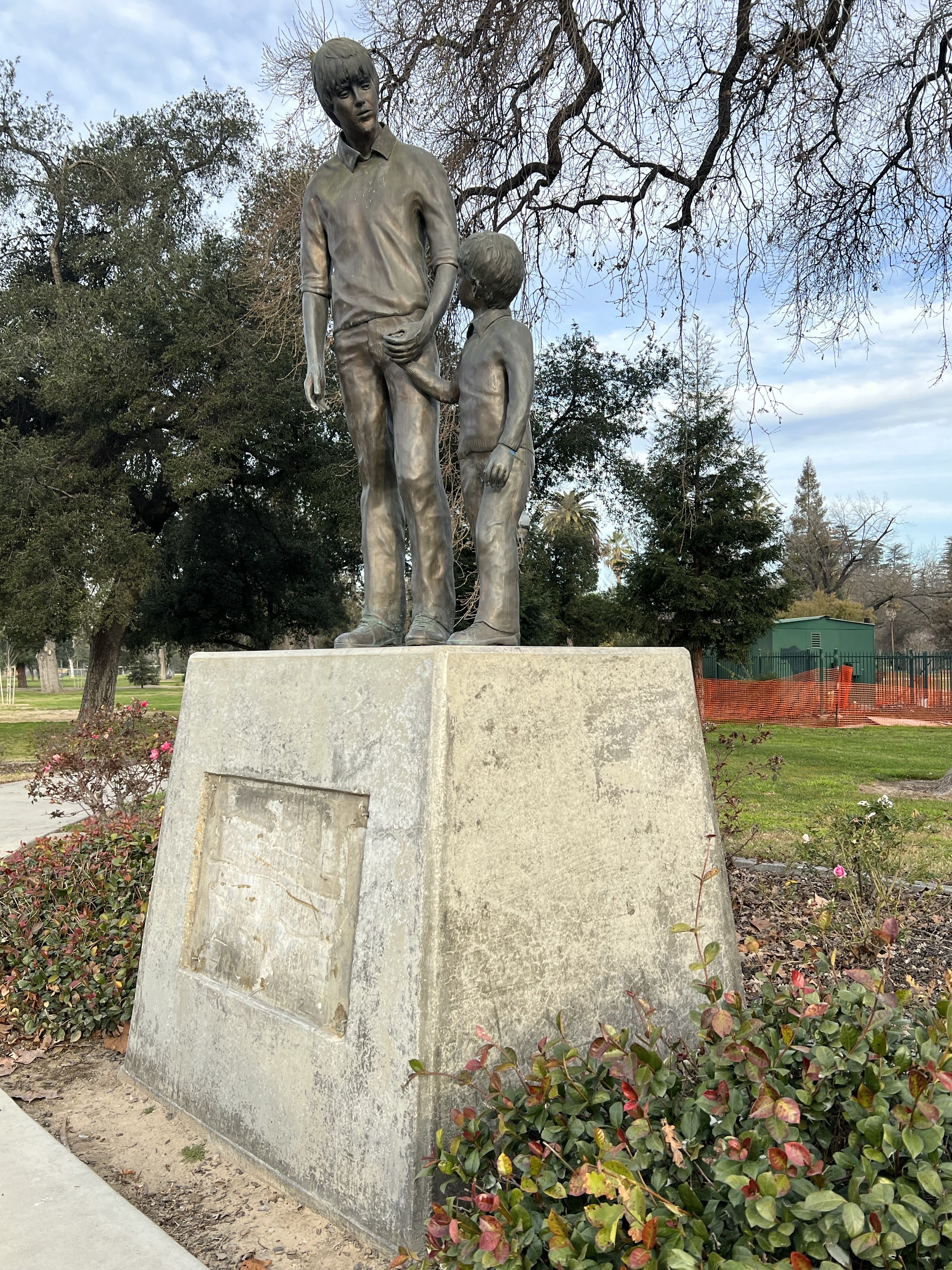
In Merced’s Applegate Park there is a statue commemorating the moment that Steven left the one room cabin in rural Mendocino County and fled for freedom with five year old Timmy White. The statue, named the Steven Stayner Missing Children’s Memorial, was created by Paula Slater and dedicated on August 28, 2010.

Sometime in April 2020, the plaque attached to the base was stolen. Was this an act from a local who wanted to forget about the Stayner family or maybe just a treasure seeker?

What I think the statue represents is the light of courage and positivity in a deep dark experience that Stayner suffered for seven years. In the end he made the right decision that not only saved himself but another young life. I know that the label “hero” is often overused nowadays but this moniker fits the actions of fourteen year old Steven Stayner perfectly.

Image

Freedom: March 1, 1980

On the evening of March 1, 1980, Steven Stayner made one of the biggest decisions of his 14 year old life.

He had to choose to turn his back on the former identity (a forced identity) he had been assuming over the last seven years and four months and help to save a young boy from going through the abuse he had gone through.

It is said that every journey begins with a single step, and their first step out of the one room cabin on Mountain View Road was monumental.

They headed east on Mountain View Road for a quarter of a mile when a car pulled over to give them a ride. The truck was driven by a Mexican laborer and he took the boys down the mountain into the Anderson Valley and then over the hill into the Mendocino County seat of Ukiah.

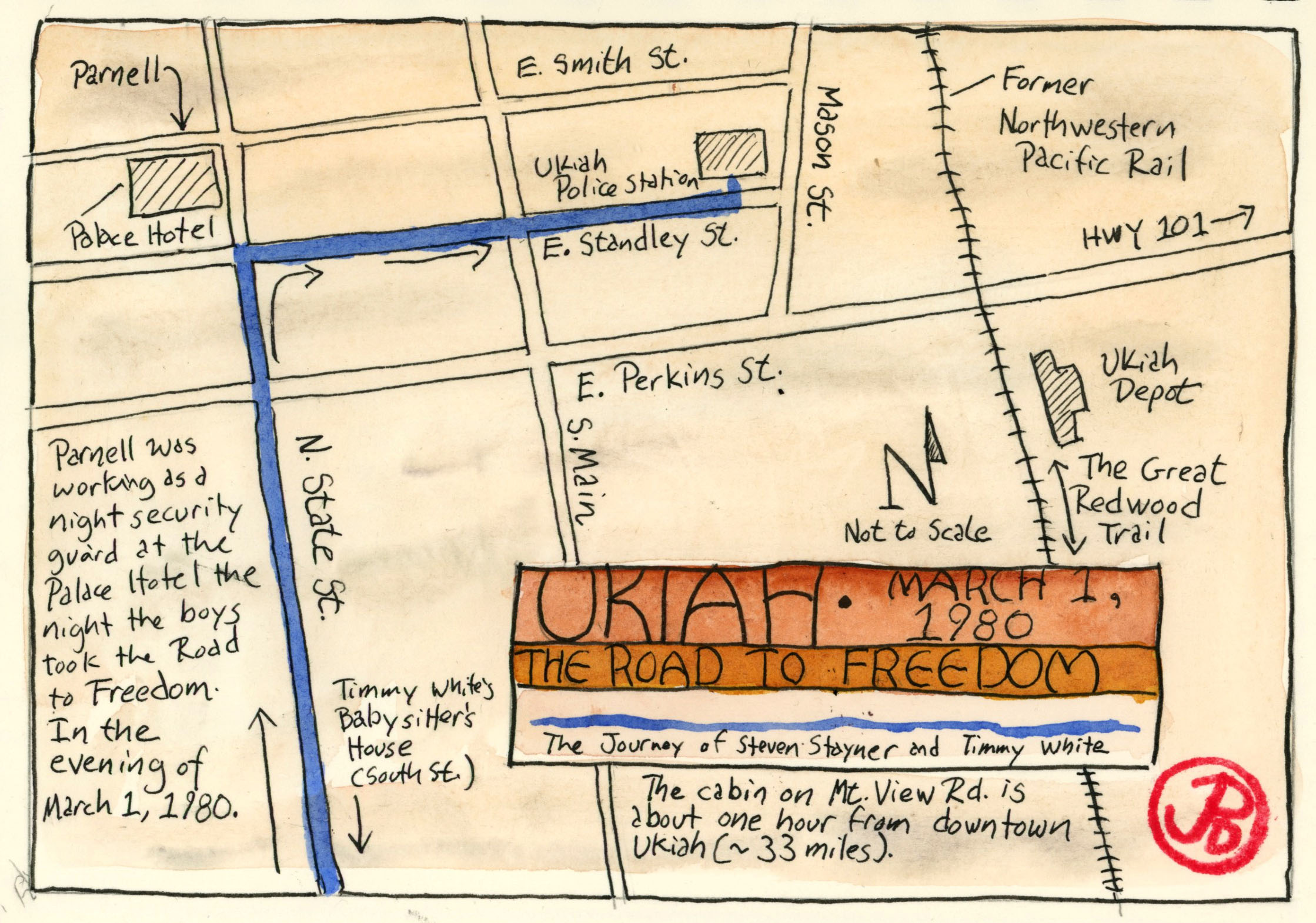
Timmy couldn’t remember where his parents lived so they went to his babysitter’s house instead. No one was home so the boys walked north on South State Street towards the Ukiah Police Station.

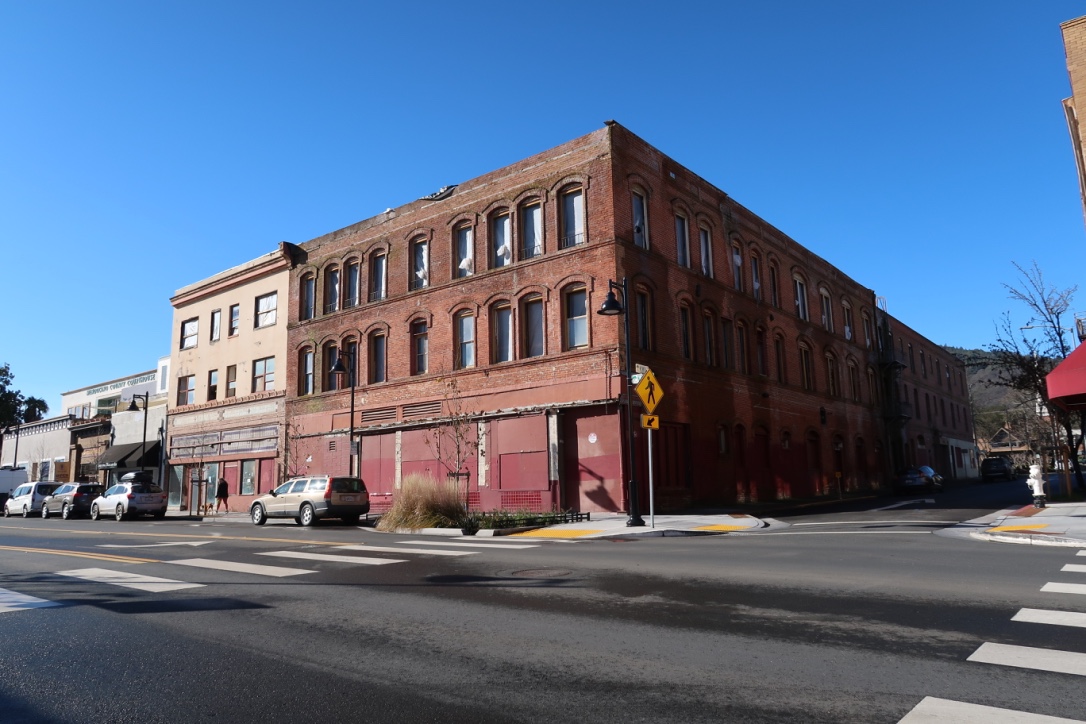
They passed within a block of the Palace Hotel, where Parnell was working as a night security guard. They turned right onto East Standley Street and walked the two blocks to the police station.

The boys passed within a block of the Palace Hotel. Parnell was working as a night security guard at the time of their journey to the Ukiah Police Station. This once majestic hotel is now boarded up and closed.

Steven sent Timmy to the police station alone. He opened the door to the station, got scared, and then turned back and recrossed the street to Steven. This caught the attention of the officer on duty (Offiicer Warner) and the police caught both boys and returned them to the station.

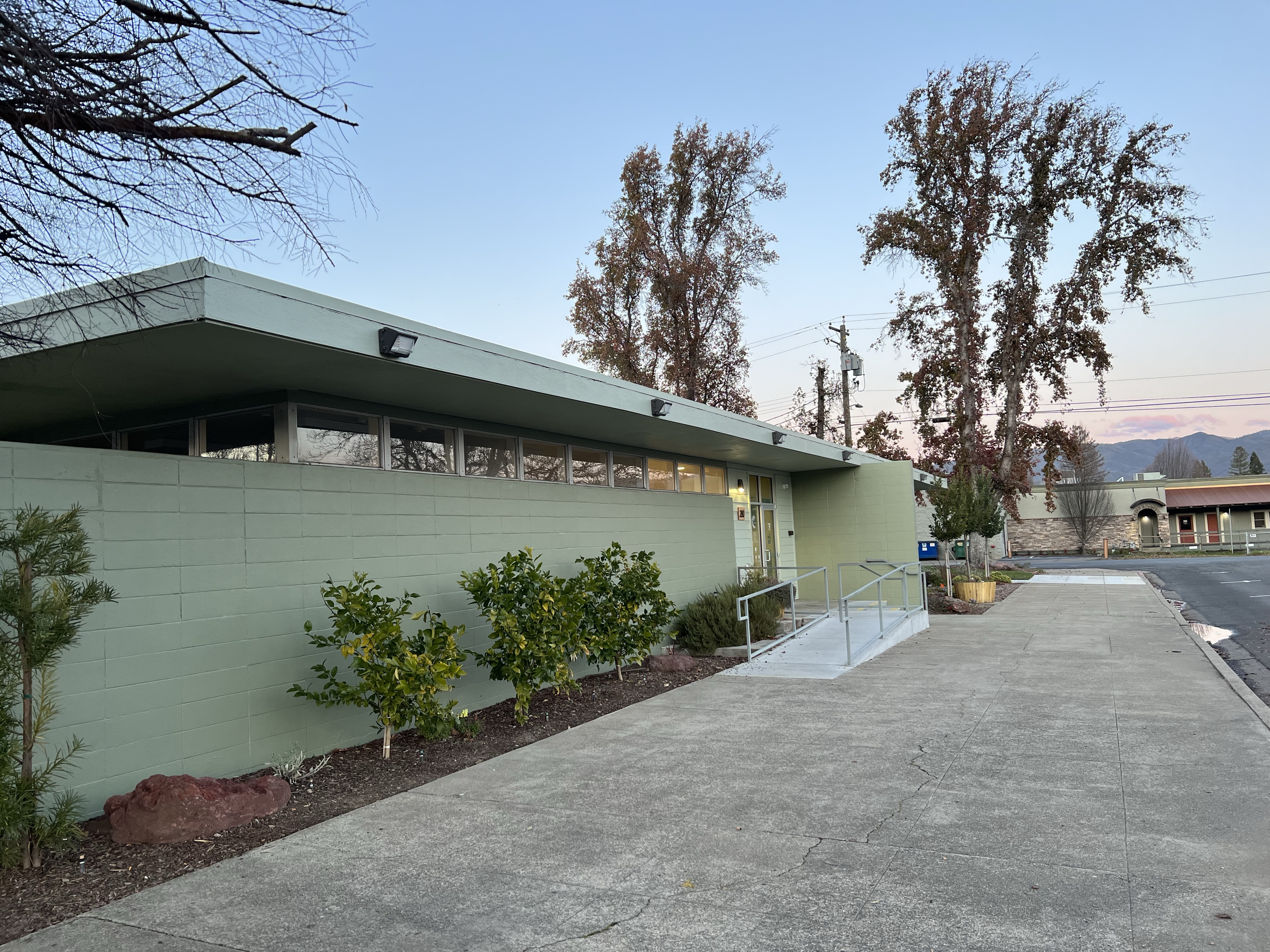
The view of the former police station coming from the direction the two boys traveled, east from State Street.

It was in one of the interrogation rooms at the Ukiah Police Station that Dennis Parnell became Steven Stayner. Uttering the now famous words: “I know my first name is Steven”.

While preparing for Parnell’s trial, a psychiatrist named Robert Wald wrote in his evaluation of Steven about the pivotal moment at the Ukiah Police Station : “It is my absolute belief that with the acknowledgement of his true identity, Steven Stayner freed himself from his state of being kidnapped . From a psychological point of view, he was still in a state of kidnap until he spoke his name, thus ending a psychic capture that lasted two thousand, six hundred forty-four days.”

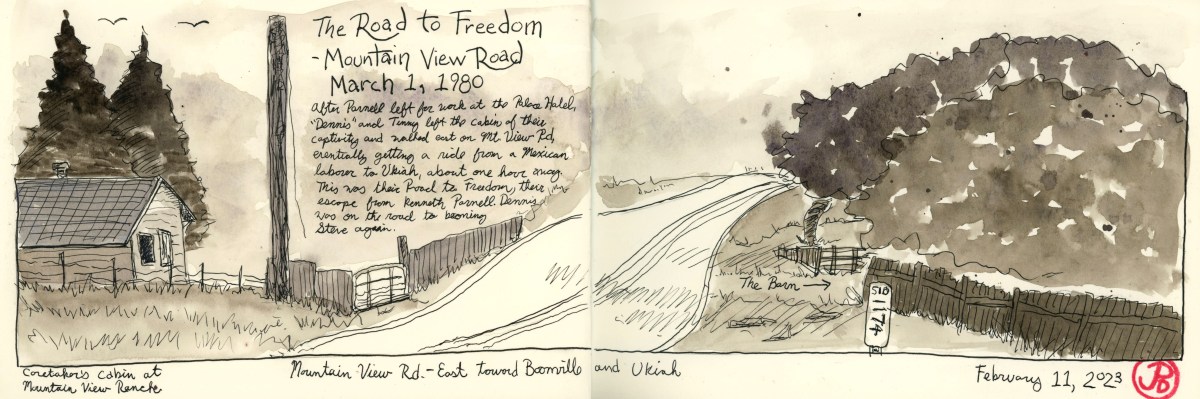
Sketching notes: The featured spread is a field sketch from the shoulder of Mountain View Road of the one room cabin that was the last dwelling Steven shared with Parnell. While I was reading the account of Steven’s travails I thought that this cabin surely no longer existed and if it did, it must be so far off the road on private property making a sketch impossible. With a short search on Google maps, I found that, indeed the cabin still existed and in plain sight 15 yards from the road.

Before me was a bucolic country road and a rustic cabin surrounded by oaks and conifers. The morning was cold but a clear winter’s day. It seemed a perfect start to the day. The only ominous undercurrent was the presence of the cabin and the knowledge of what happen here in 1979 and 1980. It symbolized Steven’s prison as well as the start of his road to freedom.

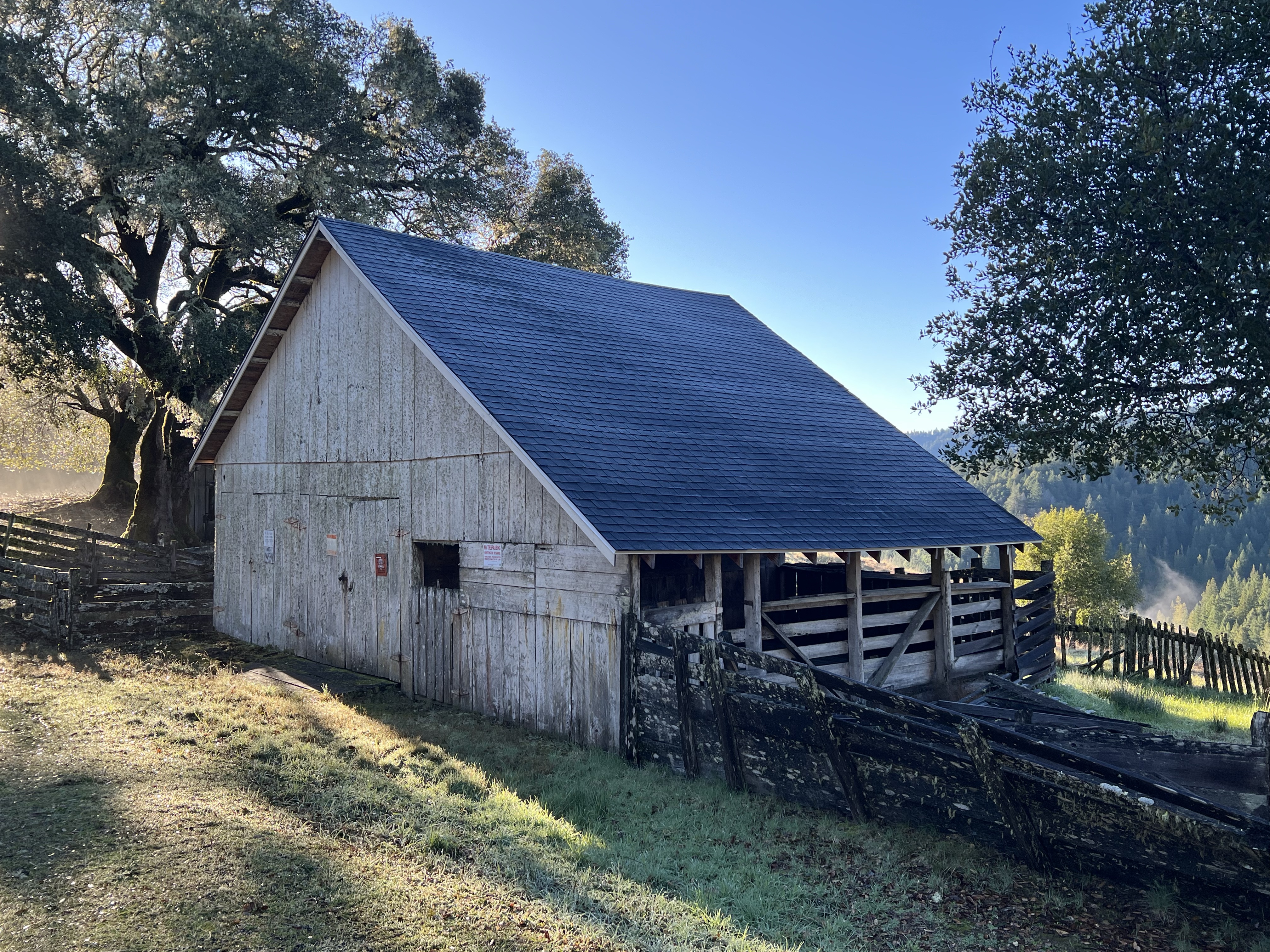
The barn across the road from the cabin on Mt. View Road where Steven spent time and raised animals.
Image

Timmy White

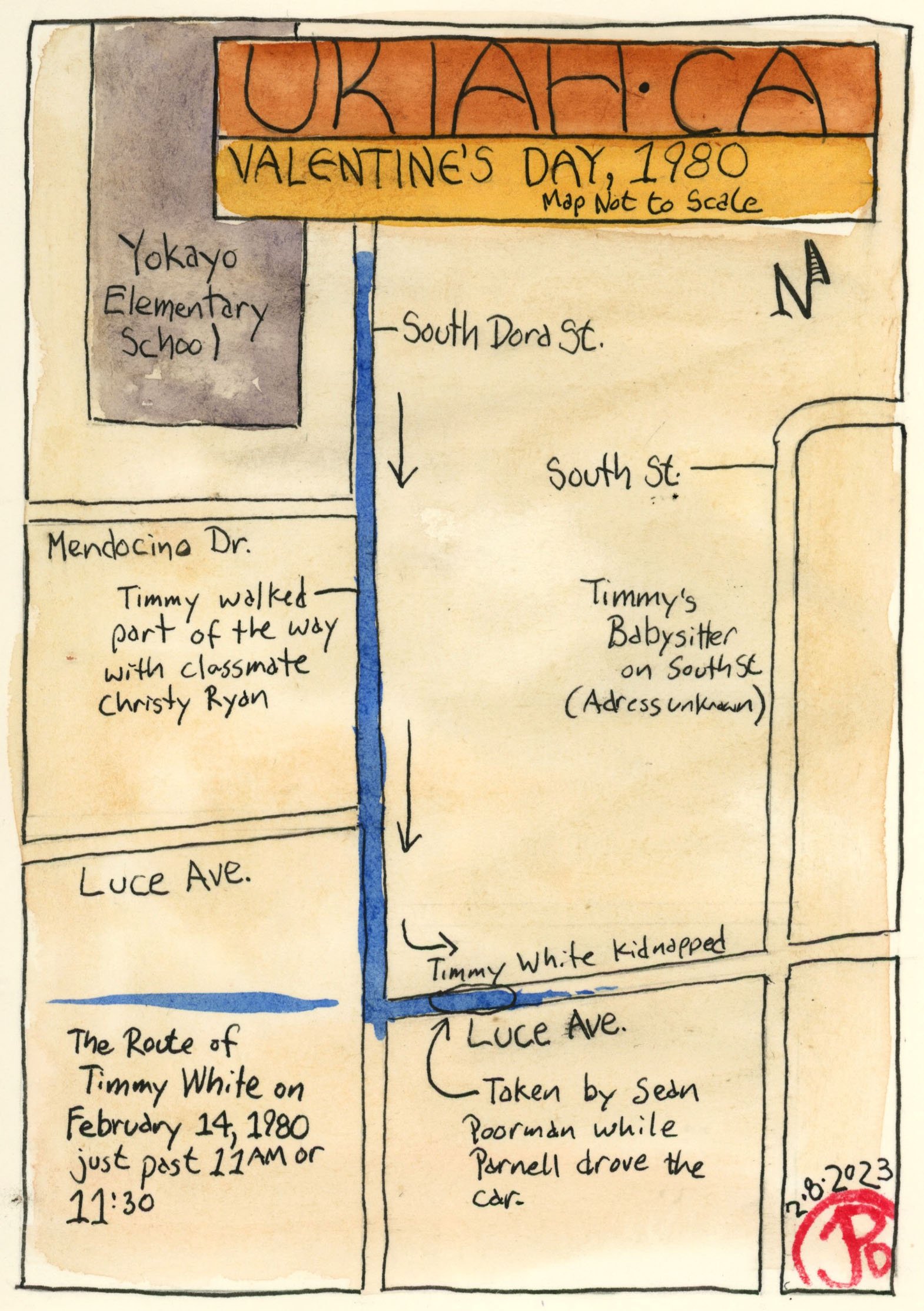
Five year old Timmy White left Yokayo Elementary School in Ukiah, California, on Valentine’s Day, 1980 at about 11:30 AM.

The kindergartener walked south down South Dora Road with a classmate. His destination was his babysitter’s home on South Street. He parted ways with his classmate and crossed the street and turned left down Luce Street.

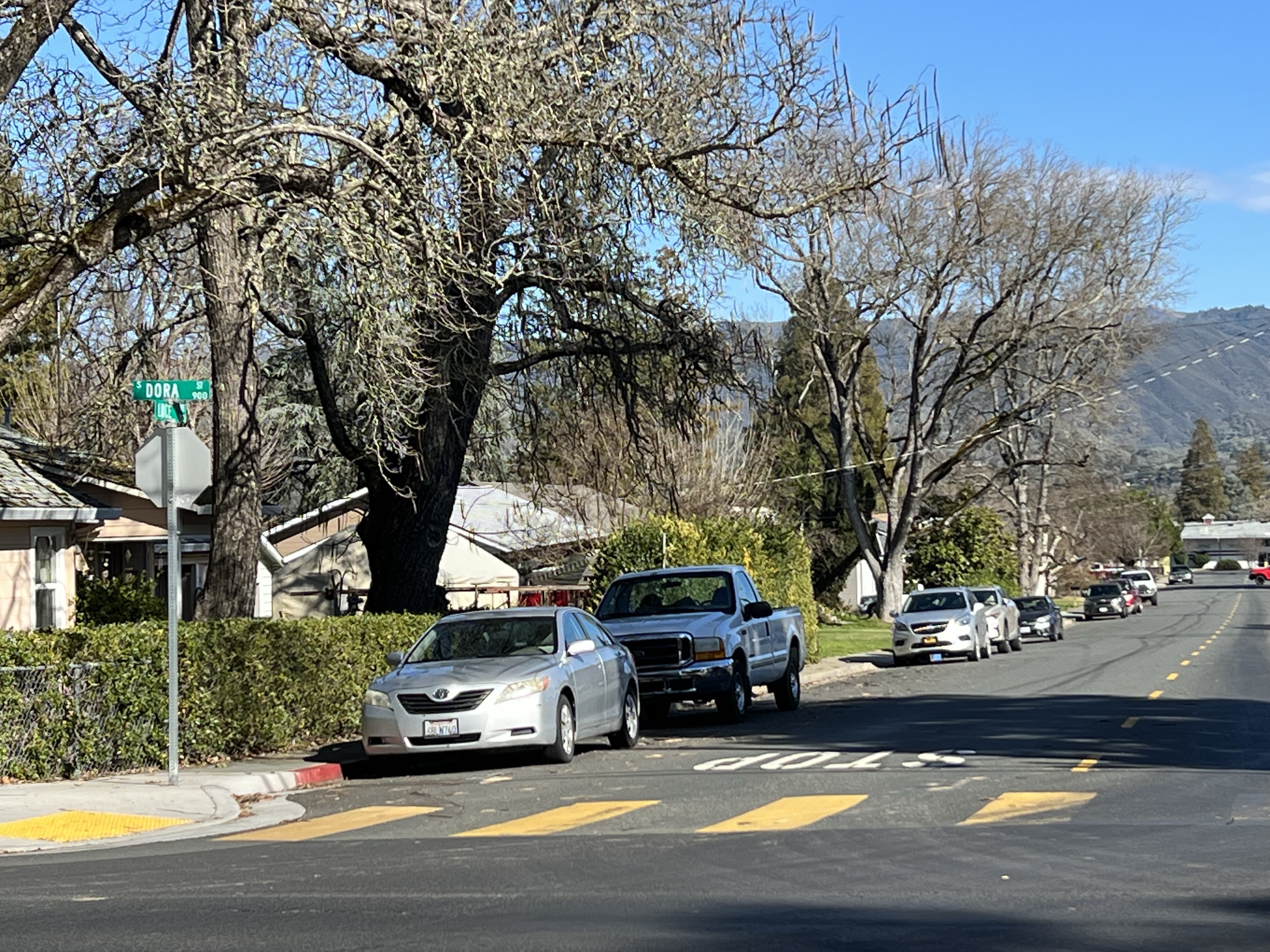
No one witnessed or heard Timmy White’s kidnapping on Luce Street. It was as if he had disappeared into thin air.

The layers of time: while this looks like a quiet residential street in a small town, this is where Timmy White was kidnapped by Kenneth Parnell.

Timmy was the kidnap victim of sex offender Kenneth Parnell who enlisted the help of a teenager named Sean Poorman to assist with the kidnapping.

Timmy was taken to Parnell’s one room cabin at Mountain View Ranch, about an hour away from Ukiah. The cabin did not have electricity or indoor plumbing. Timmy’s first “home” away from home was very Spartan.

The cabin in rural Mendocino County where Timothy White was help captive for two weeks.

Luckily Timmy’s stay with his new “dad” was only two weeks. His savior was another boy that Parnell had kidnapped as he was walking home from school in Merced seven years previously. This was Timmy’s new “brother” Dennis. Dennis acted as Timmy’s protector and never left the five year old alone with Parnell. He was not going to allow what happened to him happen to his new purloined “brother”.

Coda: WhenTimothy White grew up, he relocated to Southern California where he gave presentations to students about the dangers of kidnapping. He became a sheriff with the Los Angeles County Sheriff’s Department. He married and had two children. White died at the age of 35 on April 1, 2010 of a pulmonary embolism.