Nashville’s Recording Studios Part 1: RCA Studio B

There’s something amazing about being in the same space where so many classic songs were first recorded.

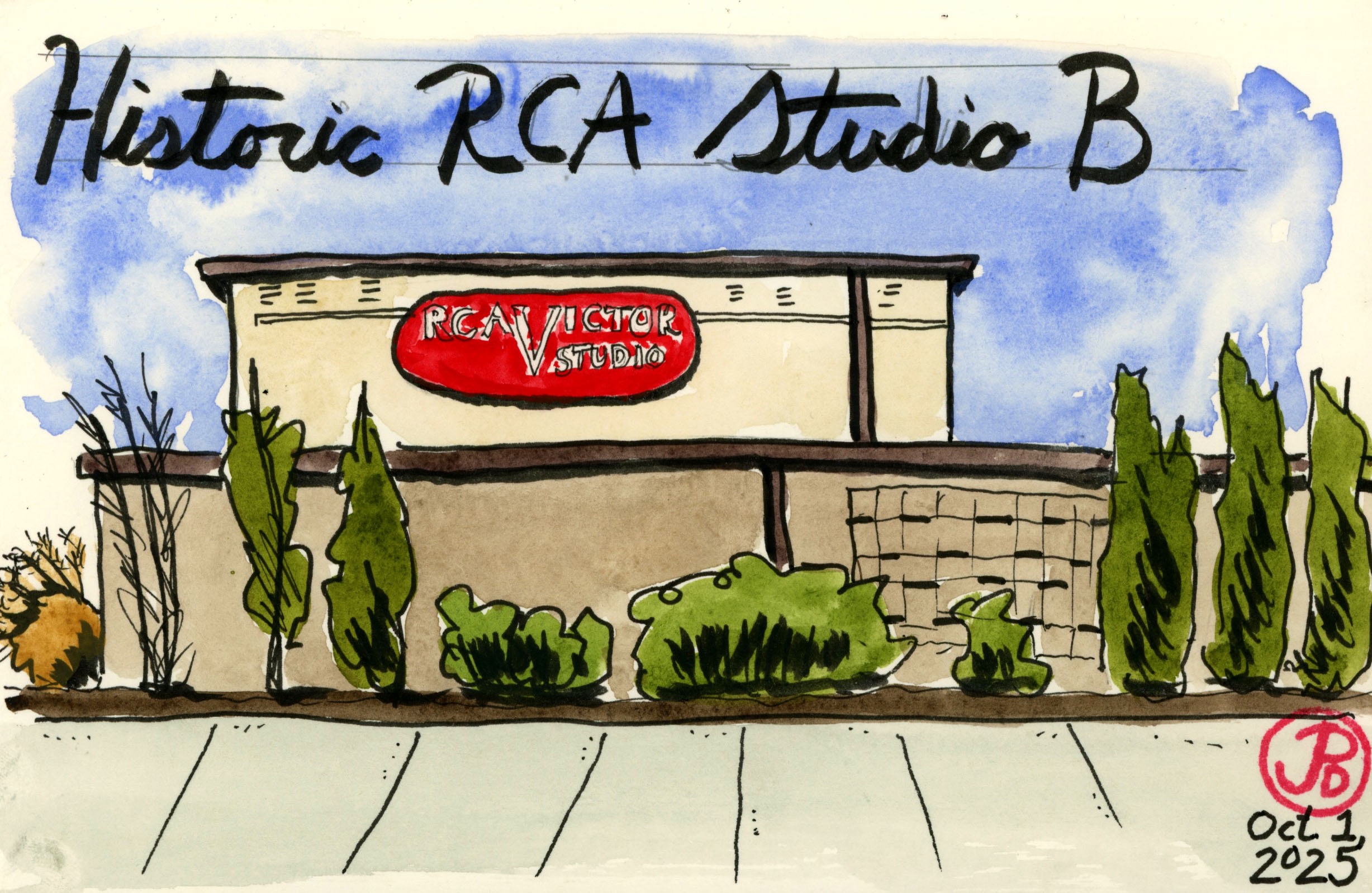
The mothership of all studios in Nashville, if not in the United States, is RCA’s Historic Studio B (1957).
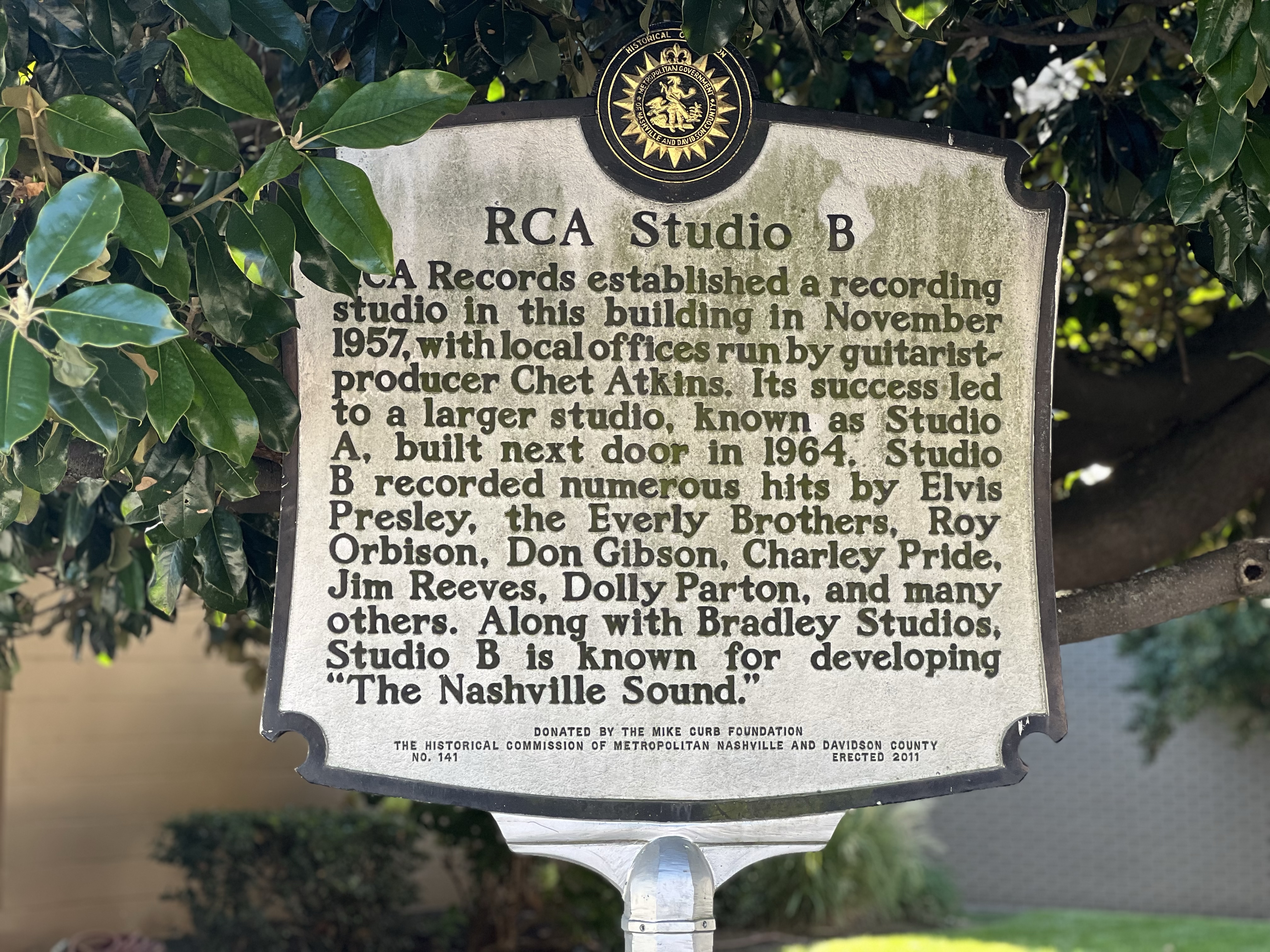
The letter system for studios has nothing to do with which studio was built first but it pertains to the size of the studio. RCA Studio A is larger than B.

The studio’s moniker is “The Birthplace of a Thousand Hits”. All for good reason. This is where the “Nashville Sound” was developed and where the Outlaw movement was launched.

Here is just a short list of some of the monumental songs recorded at Studio B: Elvis’ “Heartbreak Hotel”, the Everly Brothers’ “All I Have to do is Dream”, Don Gibson’s “Oh Lonesome Me”, Dolly’s “I Will Always Live You”, and many more.

The list of legends that recorded here is immense: Waylon Jennings, Willie, Roy Orbison, Dolly, Charley Pride, and of course Elvis.

And Studio B is still used as a recording studio today. One of my favorites is the album Time (The Revelator) by Gillian Welch and David Rawlings which was recorded here in 2001. John Hiatt recorded an Album with Jerry Douglas in 2021.
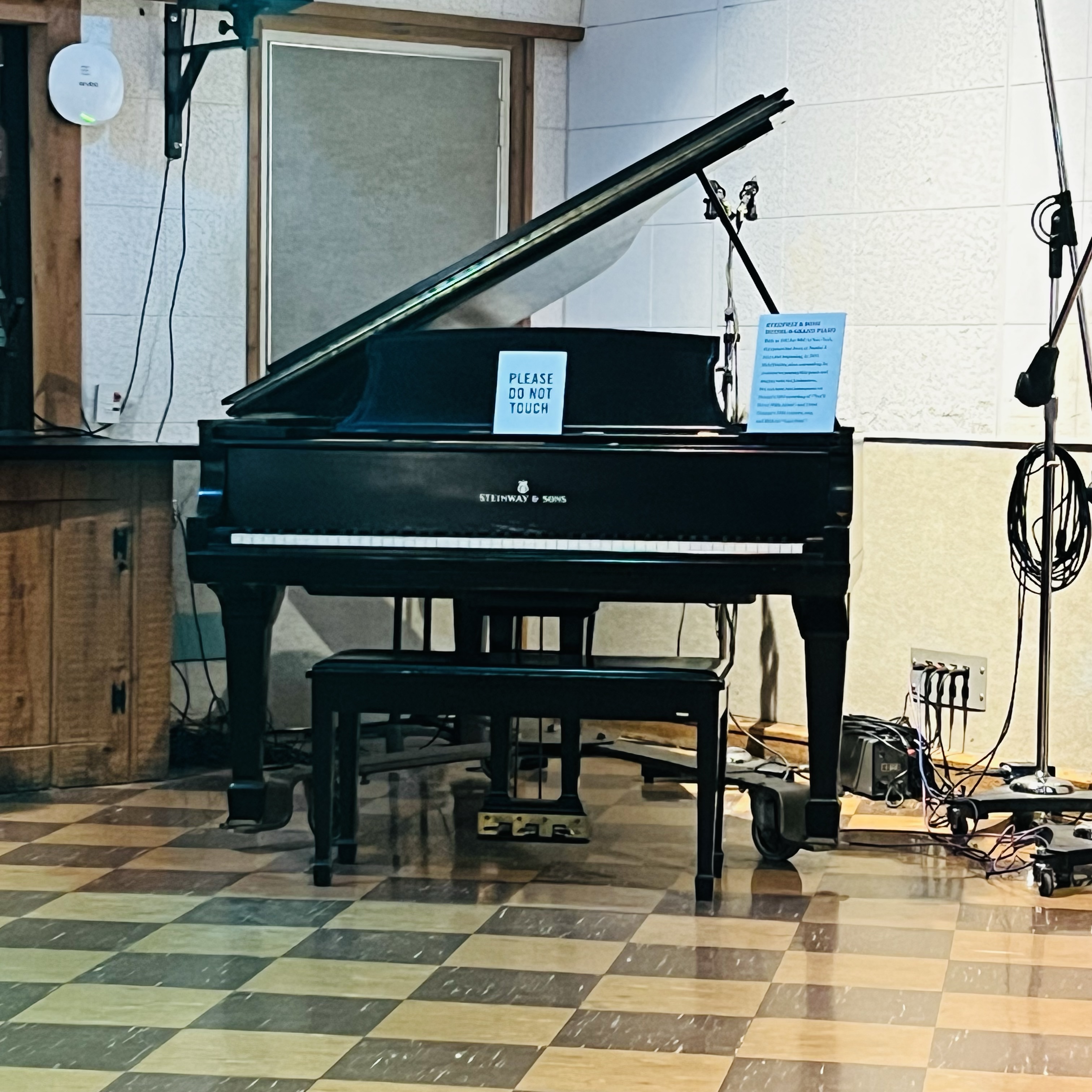
The famous Elvis piano. A well known photo of the King and Steinway was taken here. Many songs were recorded with it.

The only way to visit the studio is to book a tour with the Country Music Hall of Fame and Museum. Studio B is the only studio in Nashville that is open for public tours. The bus leaves from the Museum’s entrance and heads to the studio in Music Row.

The tour bus was full and just by hearing the accents and different languages spoken on the ride over, I realized the truly global reach of Nashville and the music recorded in Music Row.

We first met in the lobby and our guide played some of the many hits recorded here.

We then headed into the checker -boarded floor of the studio. It was amazing to hear some of the hits played in the space where they were originally recorded.

The room where it all happens, Studio B!

The Grand Ole Opry

No visit to Nashville is complete without seeing and listening to the longest running radio show: the Grand Ole Opry. The show turns 100 this year so I knew I really should pay a visit to Music Valley.

The Opry’s most famous venue in Nashville is the Ryman Auditorium but the building was becoming so rundown that the show moved to a new theater in 1974 (more about the Ryman in another post). This new venue has been the home of the Opry ever since.

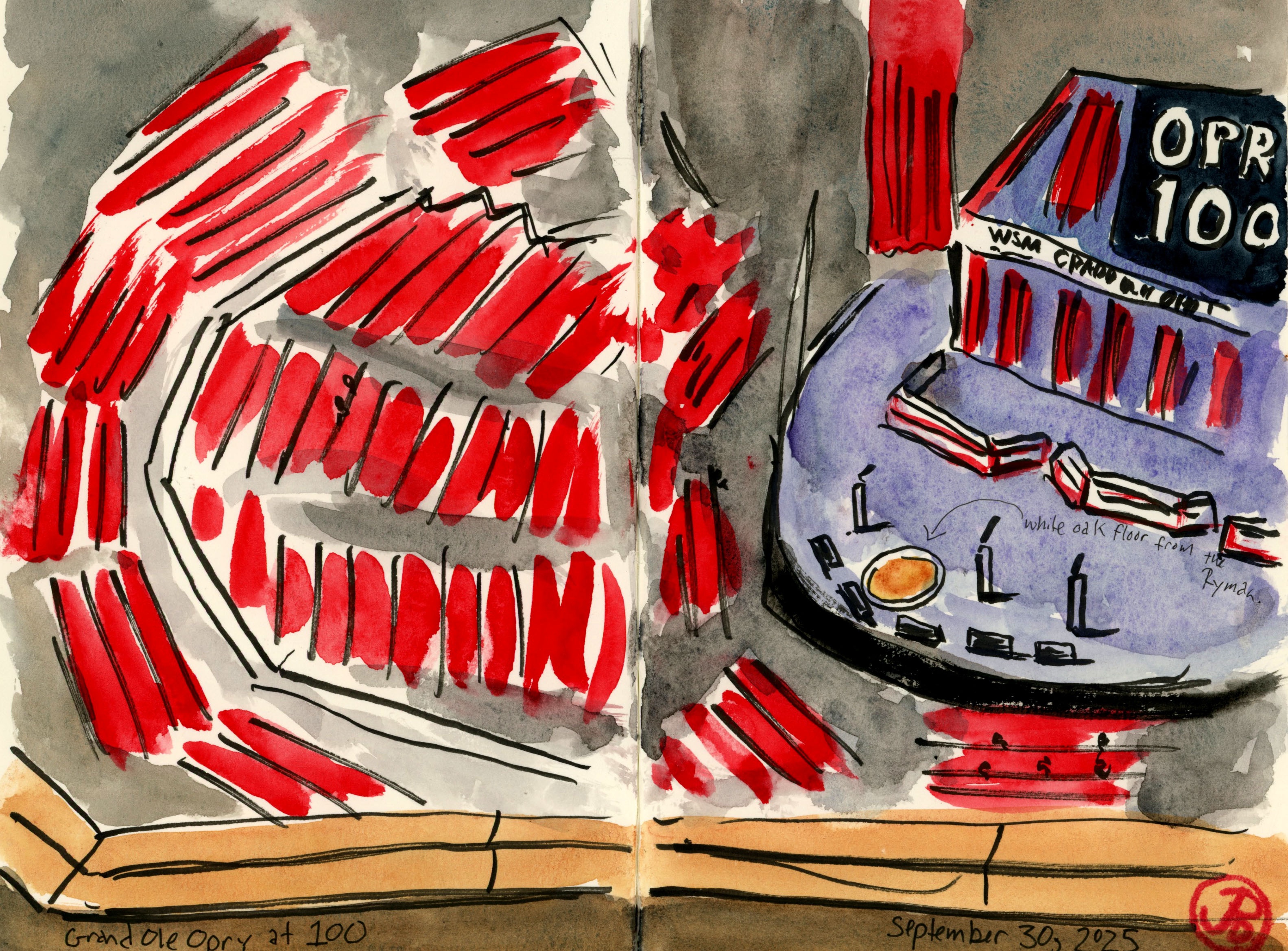
The new venue was designed to resemble the Ryman on the inside. On the center upstage is a circle portion of the original white oak stage from the Ryman, so the show never loses sight of its roots.

This is the Holy Grail of Country Music because of the legendary performers that once graced the white oak floorboards: Bill Monroe, Elvis, Hank Snow, Patsy Cline, Dolly Parton, George Jones, Johnny Cash, Neil Young, Bob Dylan, Charley Pride, and many more.

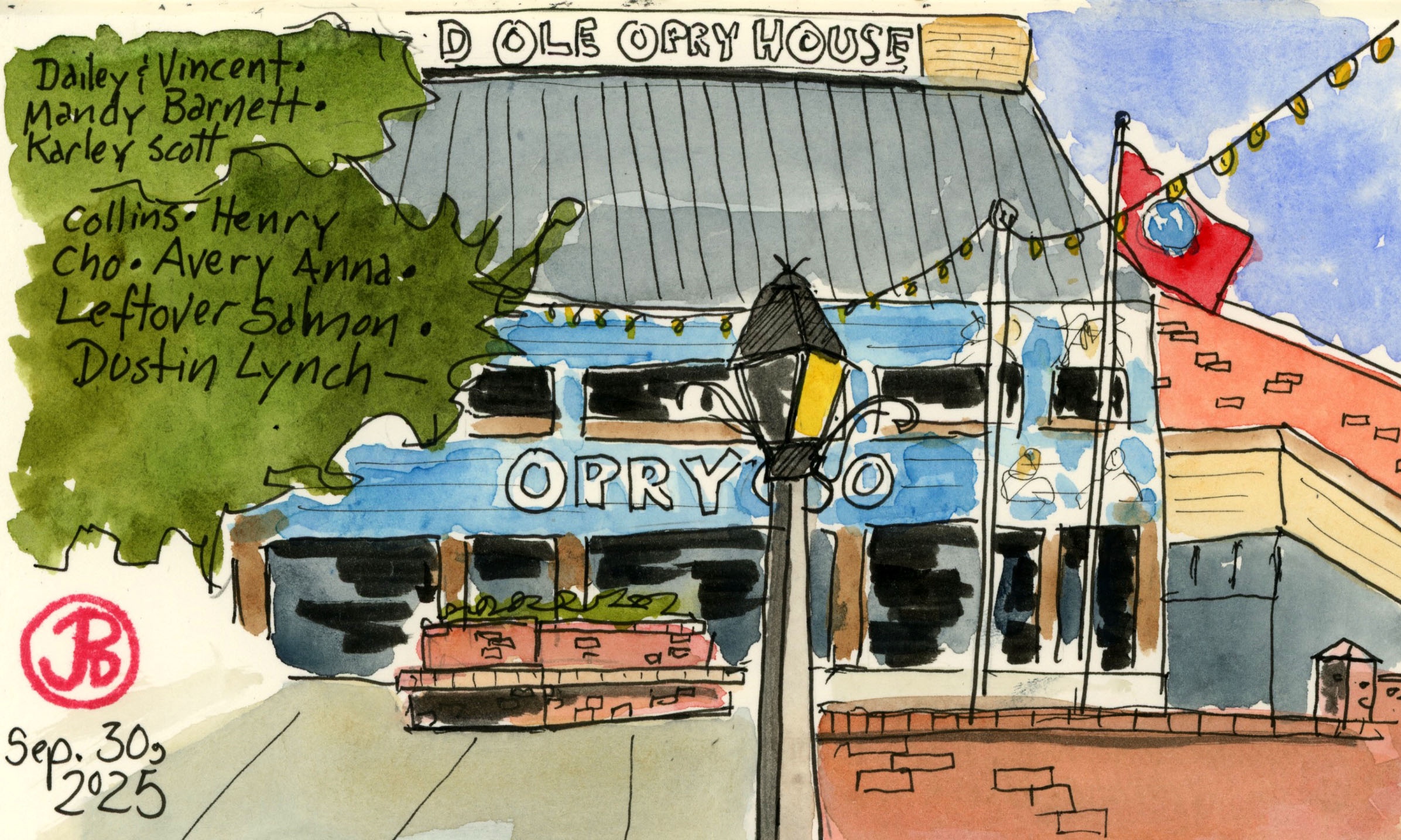
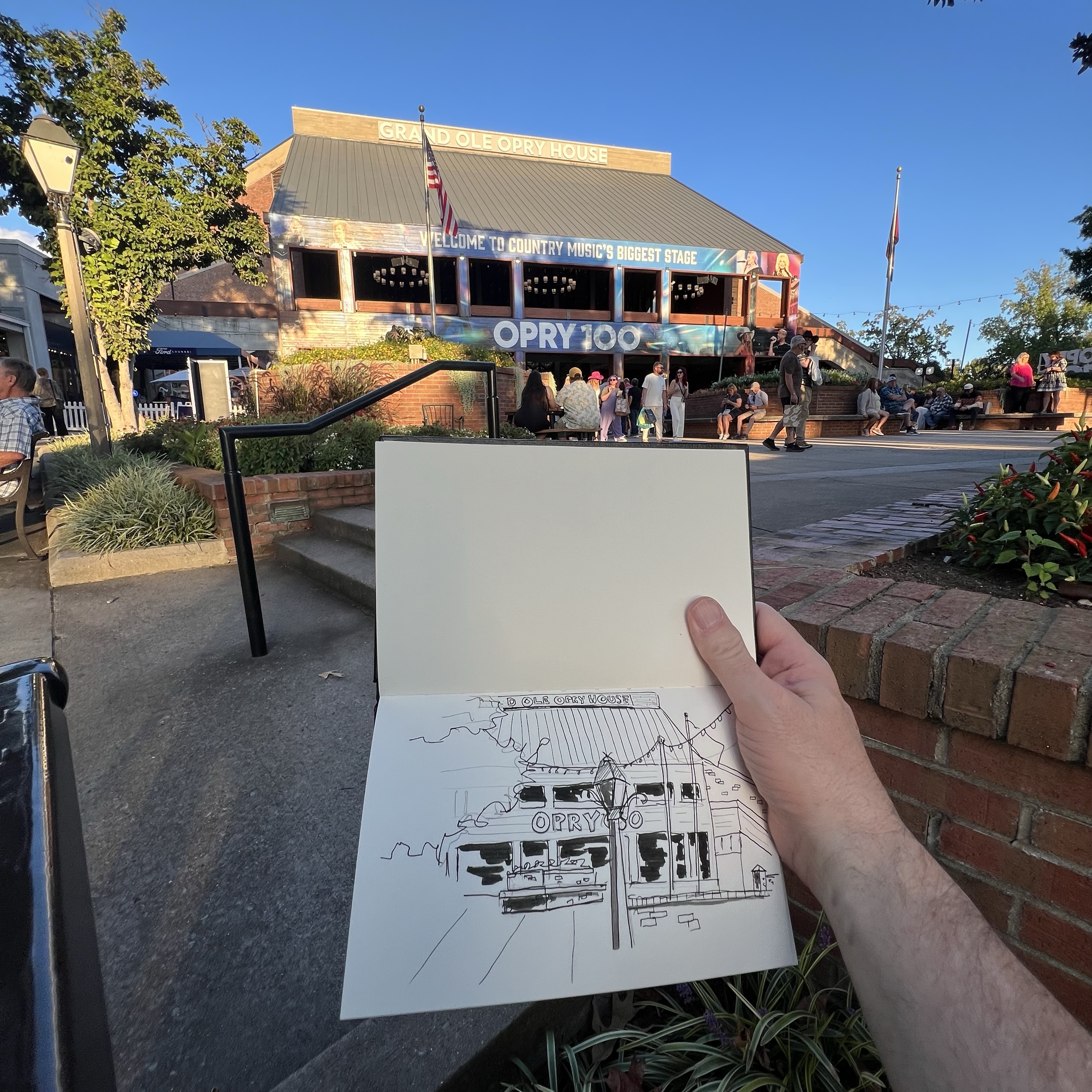
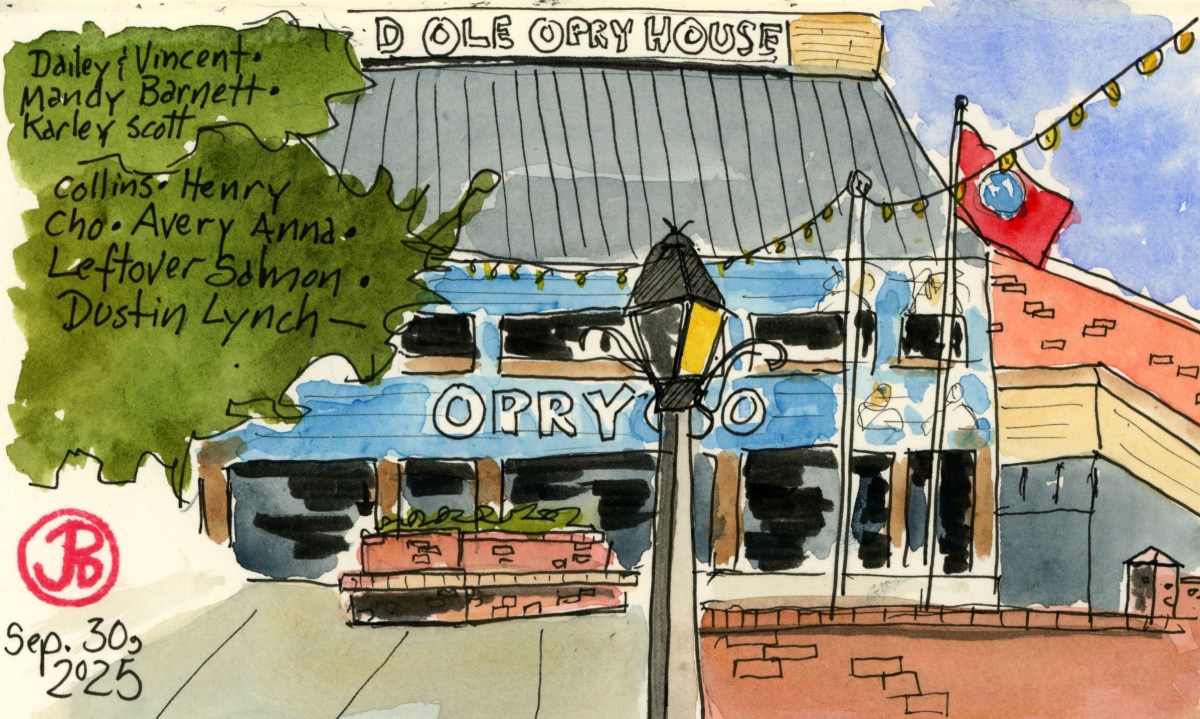
I got to the Opry early on a Tuesday afternoon so I could sketch the building. The building does not hold a candle to the architecture of the Ryman but like the Ryman, the Opry is a product of its time.

The Opry usually broadcasts live shows three days a week. On this Tuesday there were seven acts booked. The Opry is a variety show and one of the acts I recognized was comedian Henry Cho. The other musical act I recognized was the bluegrass jam band Leftover Salmon.

Colorado’s Leftover Salmon performing on the Grand Ole Opry.

Each artists plays three to four songs and then the show moves on to the next act with an MC providing commentary in between acts.

I was really impressed with the high level of musical talent in Music City. Like moths to the flame, Nashville is a beacon for talented musicians from all over the world and a great place to see and hear a sampling of this talent is at the Opry.

A sketch I did of the interior before and during the show.

The Country Music Hall of Fame and Museum

Nashville’s Country Music Hall of Fame and Museum was my first stop on my first full day in Music City. The museum highlights the music that built Nashville: country.

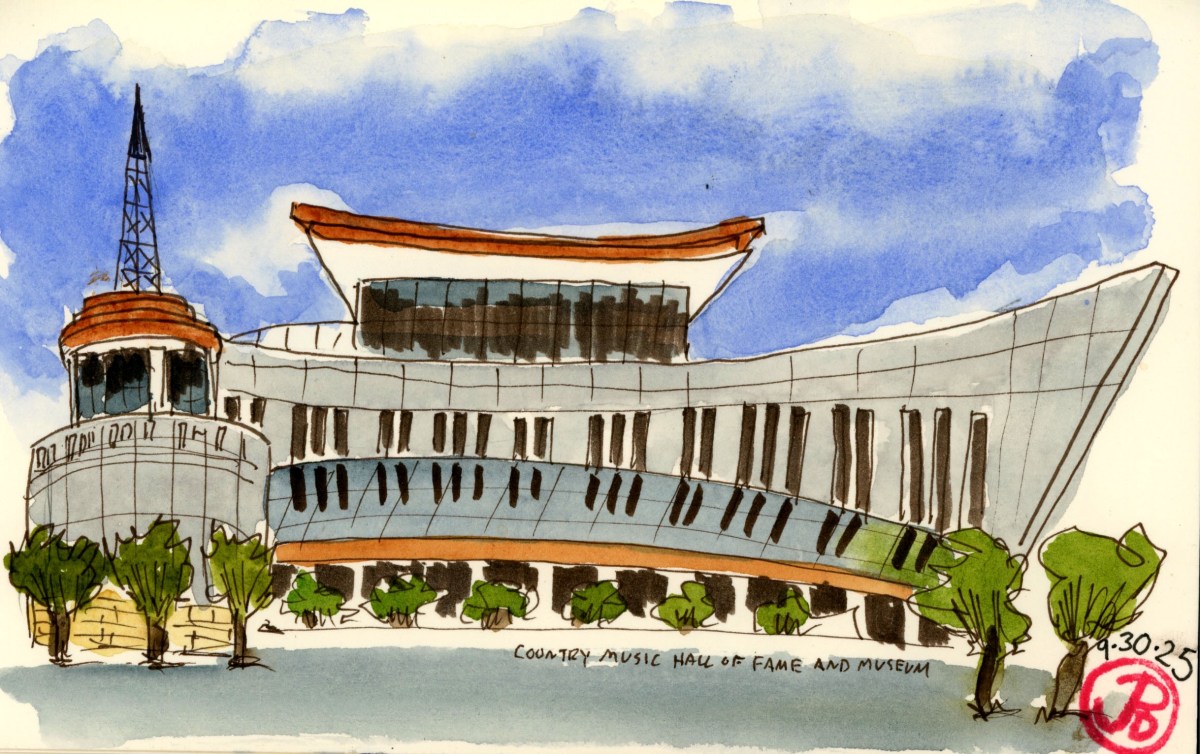
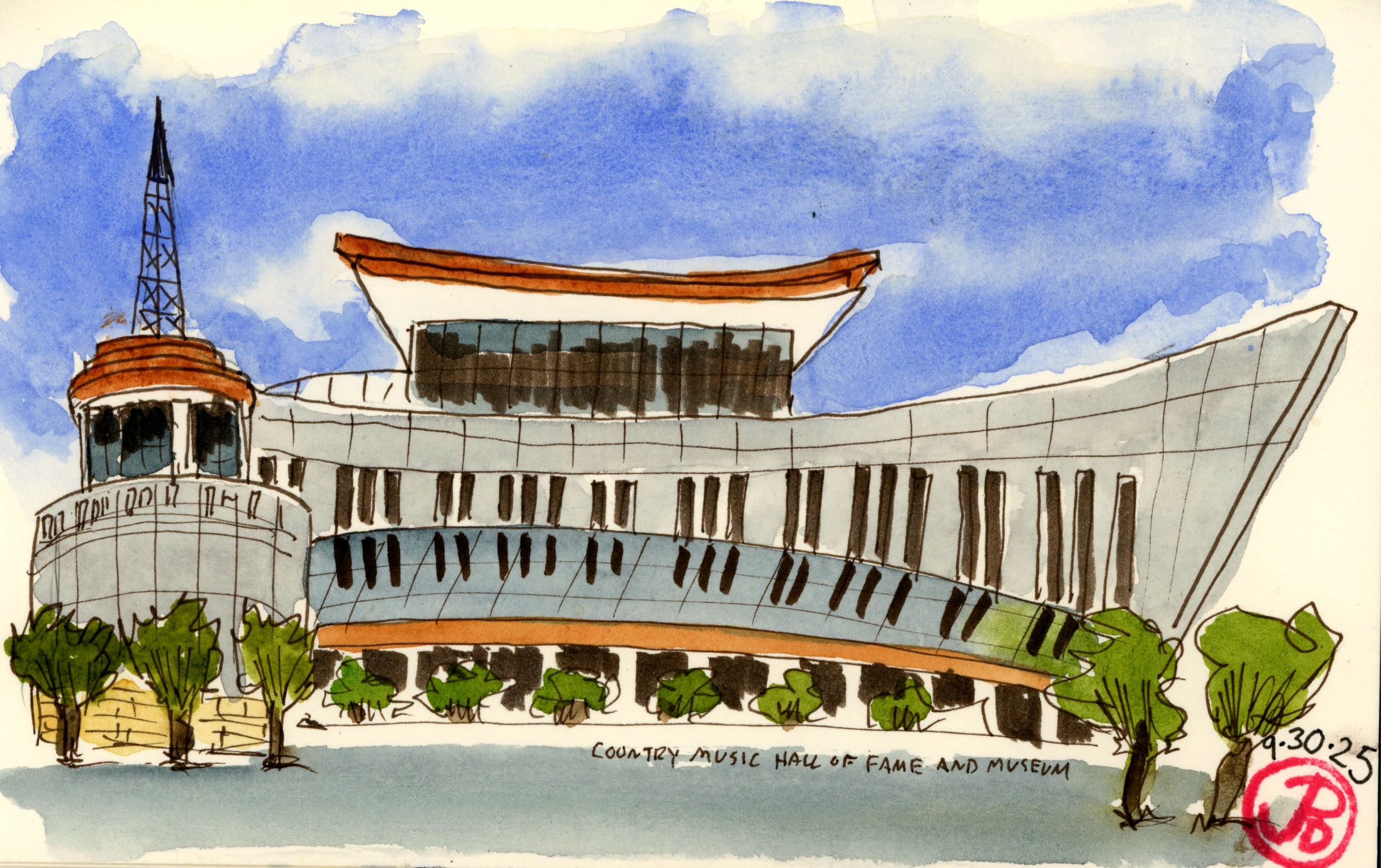
The museum is beautiful both inside and out. I started by sketching the exterior from the park across the street (featured sketch).

The sweep of the concrete wall is interspersed with long narrow windows in twos and threes, imitating the pattern of a keyboard.

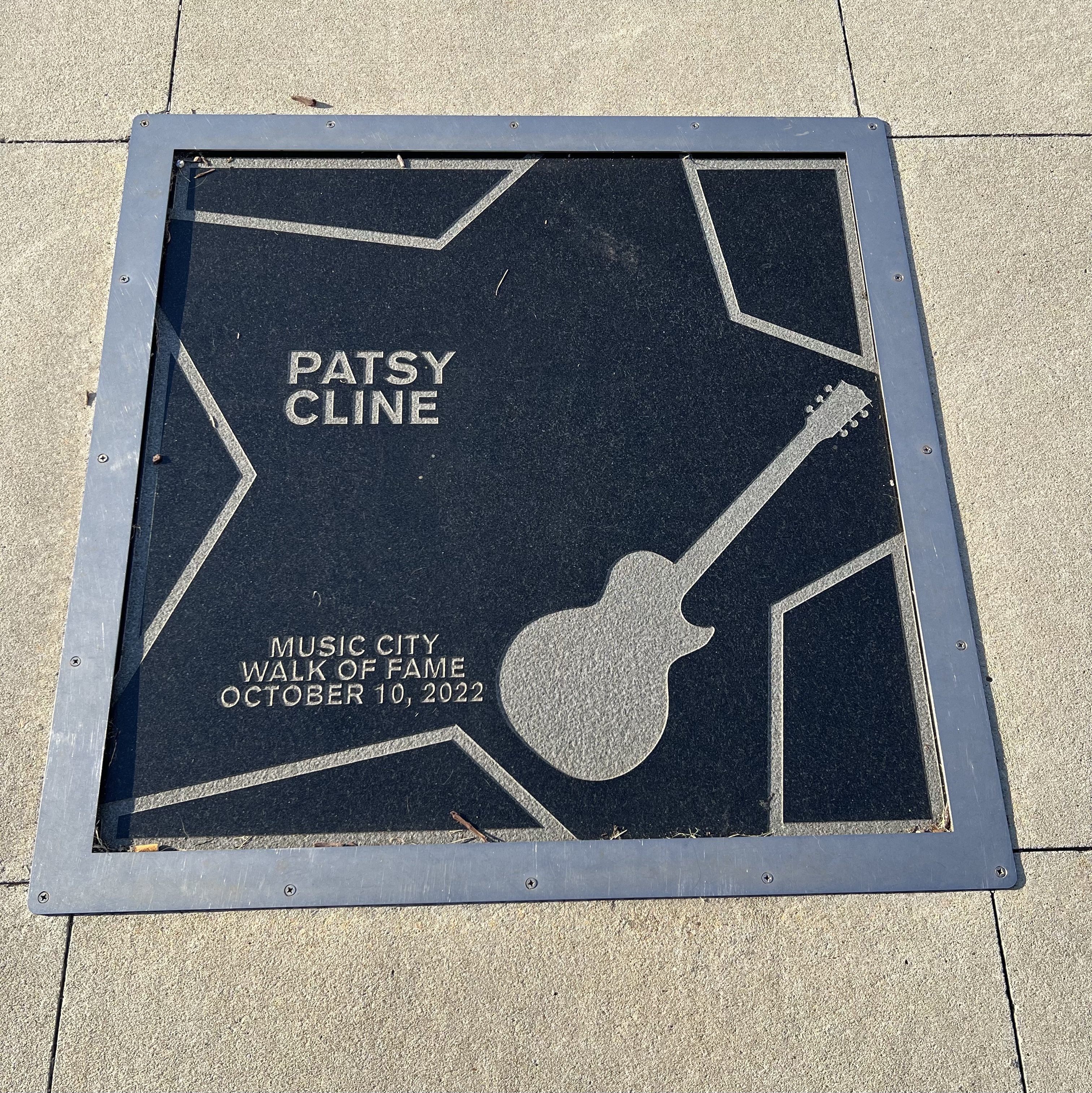
One of my favorite singers on the Music City Walk of Fame, across the street from the Country Music Hall of Fame and Museum.

I have an old school view of country music which can be summed up by a song by Austin’s Asylum Street Spankers, “I’m Starting to Hate Country but I Still Love Cowboy Songs”.

When I was young so much country music crossed into the national consciousness. Kenny Rogers, Willie, and Dolly were all over the airwaves. Popular television shows such as the Waltons and the Dukes of Hazzard were set in the country. The Dukes of Hazzard was narrated by a country outlaw himself, Waylon Jennings, who also sang the theme song, “Good Ole Boys”.

While I’m not of fan of new country, there was plenty in the Country Music Hall of Fame and Museum to hold my attention.

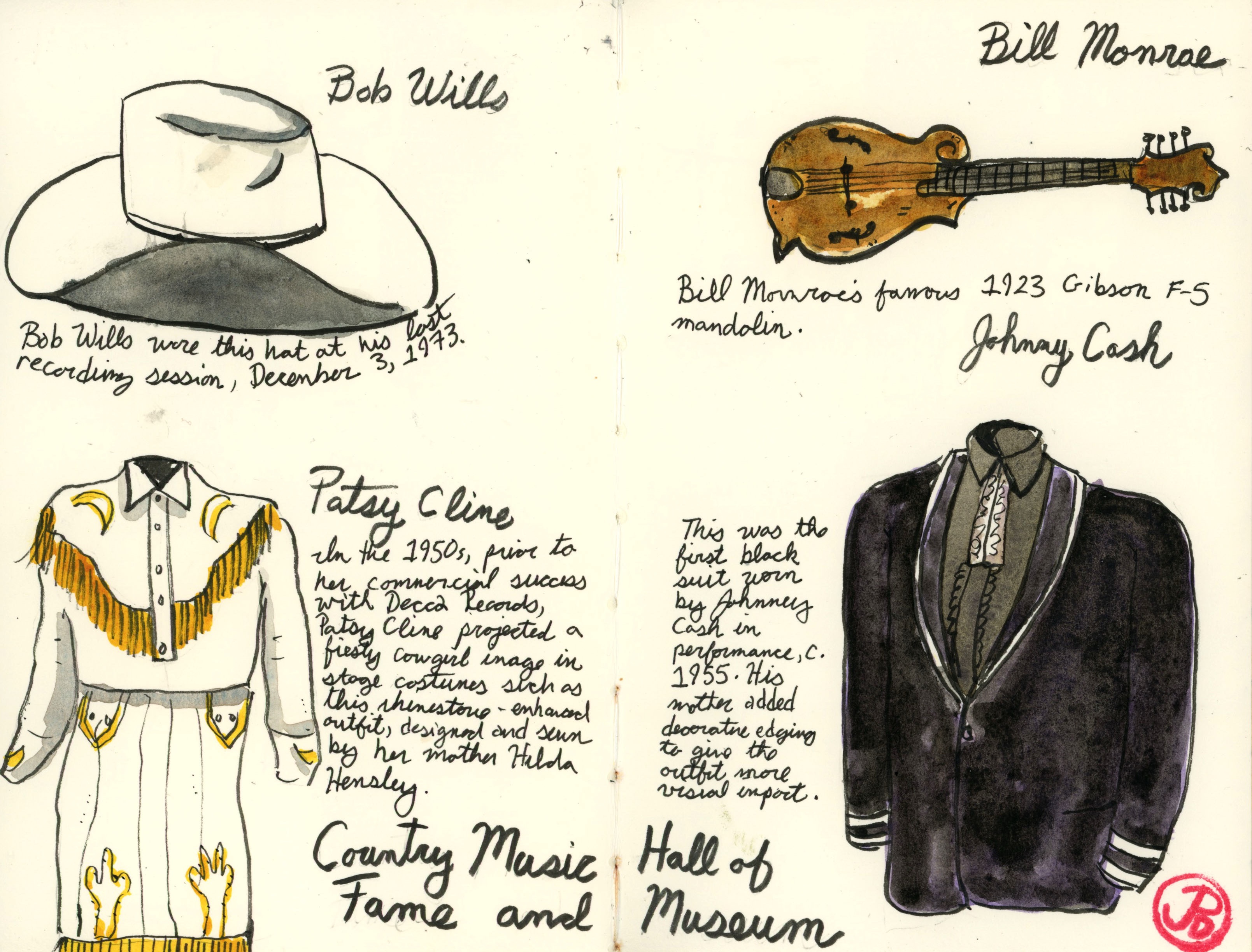
The Museum has an impressive collection of the instruments that were played, the clothes that were worn, and the paper on which classic hits were written.

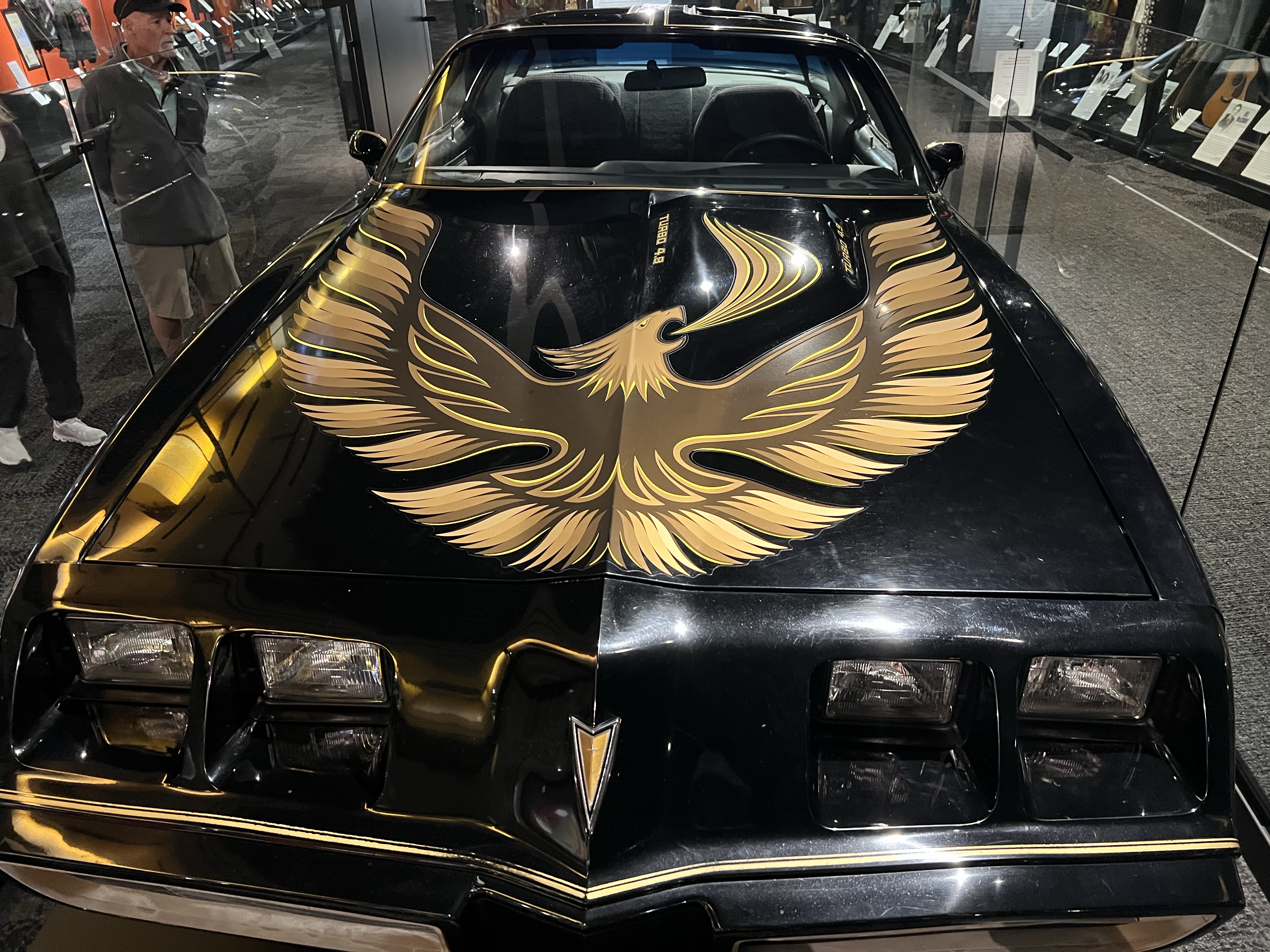
The Pontiac Trans Am featured in The Smokey and the Bandit movies. This was the car I wanted when I grew up, this or the General Lee.
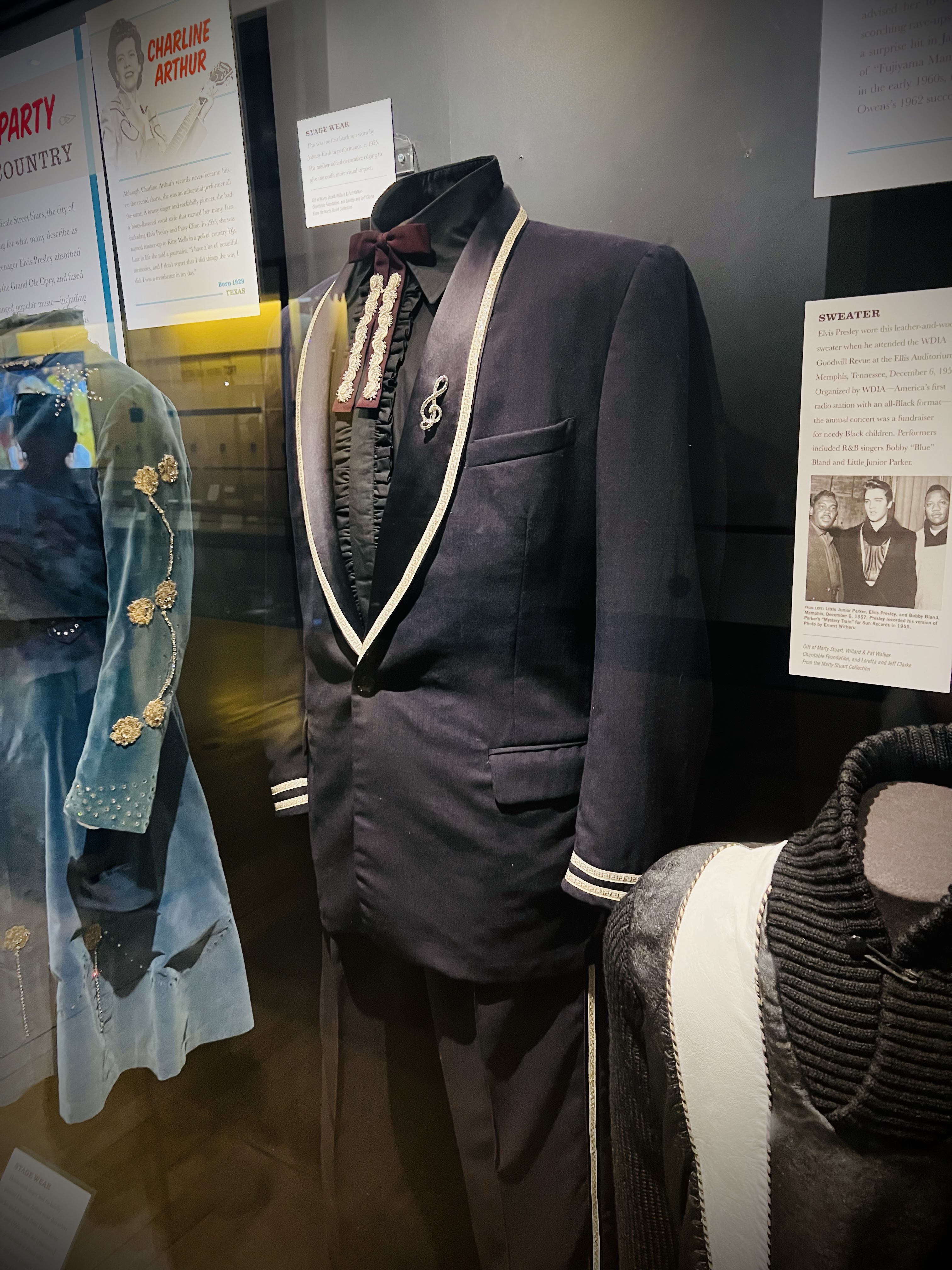
The Man in Black’s, Johnny Cash, first black suit!

Johnny Cash wrote in his autobiography, “the greatest public honor I ever received. . . was being inducted into the Country Music Hall of Fame in 1980. I was the first living person to be so honored. I’ve been given all kinds of awards in my career, before, and after 1980, including some big ones – Grammies, the Kennedy Center Honors, the Rock ‘n’ Roll Hall of Fame – but nothing beats the Country Music Hall of Fame, or ever will.”

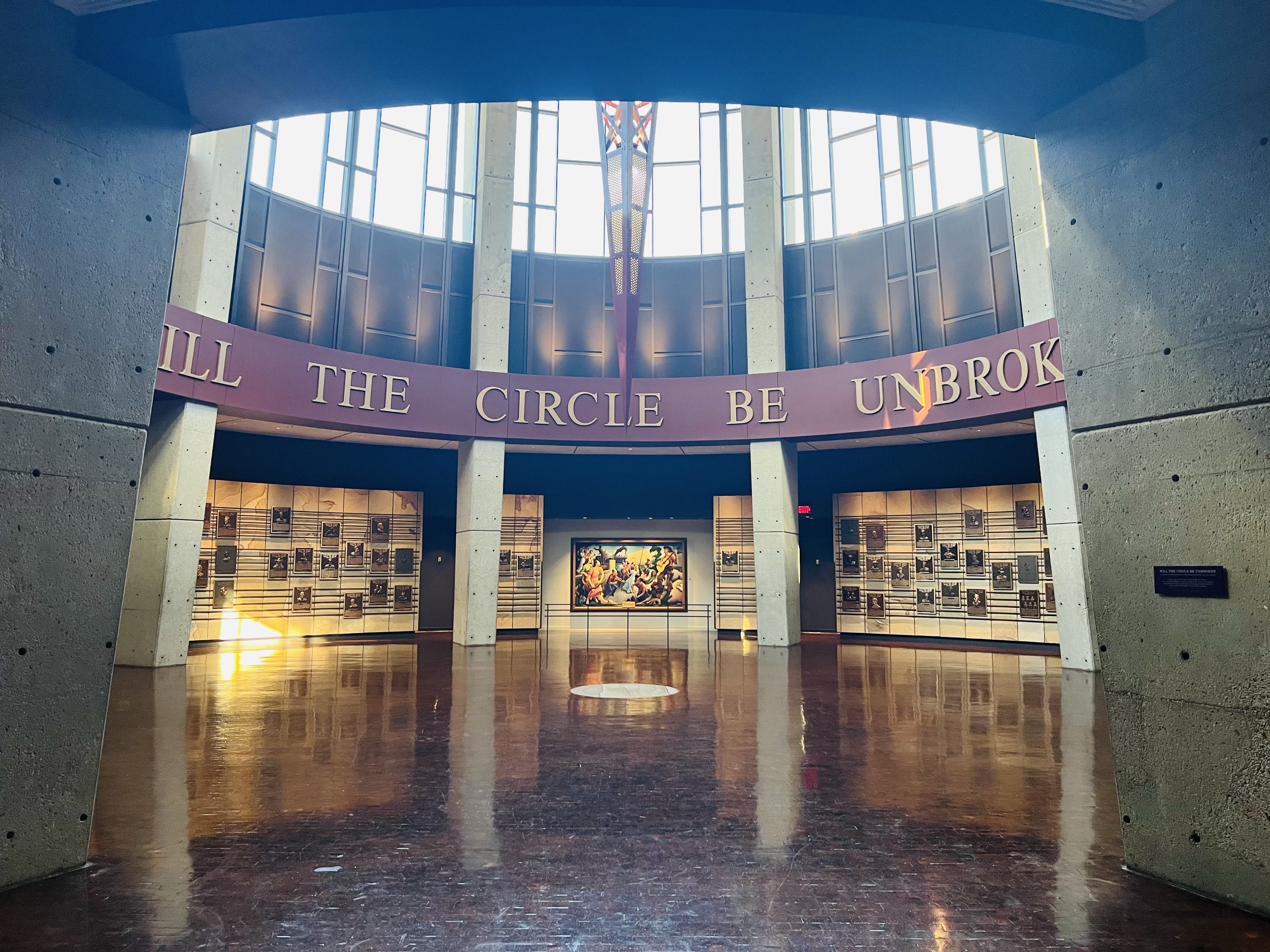
The Country Music Hall of Fame.

Mapping Music City

On my fall break I will keep my wanderings National with a trip to a new state and a new city: Nashville, Tennessee.

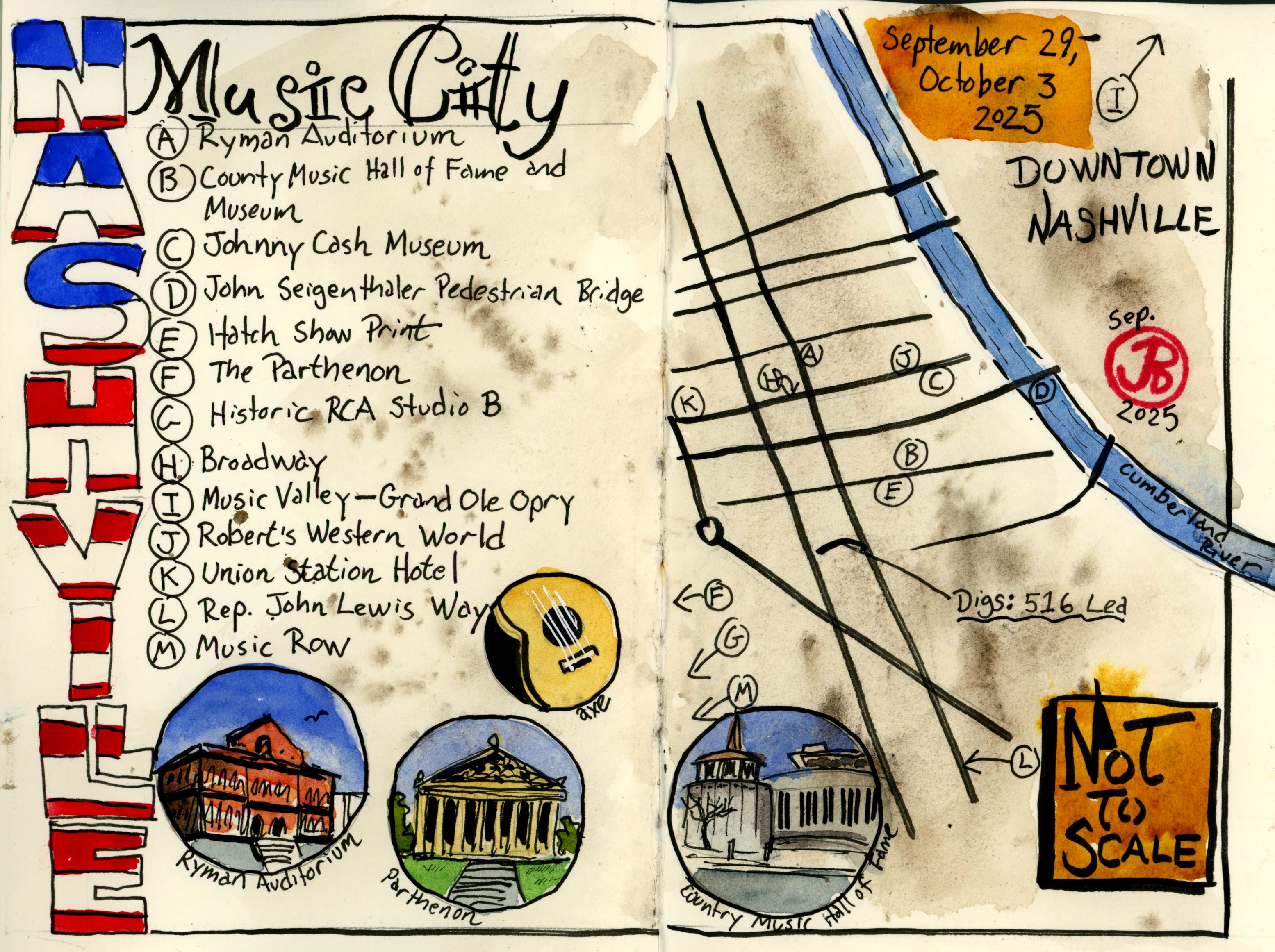
Before any trip I like to map the location before I travel. This helps me locate myself in land and cityscapes.

I drew three pretrip sketches in my Stillman & Birn Delta watercolor journal.

The first map was of downtown Nashville as it relates to my digs on Lea Street. This included various sites I wanted to visit and sketch such as the Ryman Auditorium, the Country Music Hall of Fame and Museum, the Johnny Cash Museum, Hatch Show Print, and the honeytonks of Broadway.

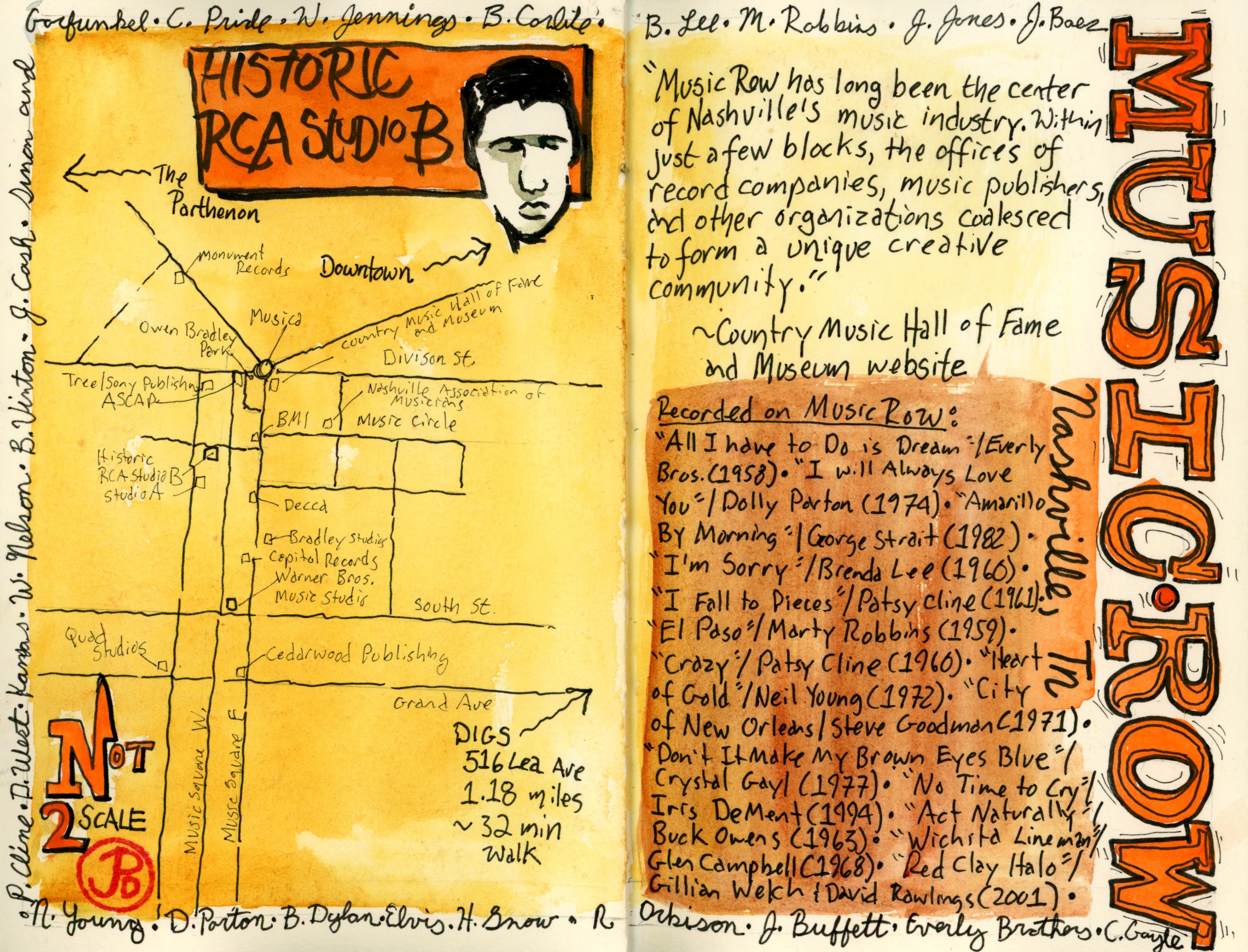
The second map was a spread about the studios, business offices, and publishing house of Music Row, the birthplace of the Nashville sound and where legendary artists such as Elvis, Dolly, Wille, Waylon, Patsy, Johnny, Mr. Young, Mr. Pride and many others recorded hits.

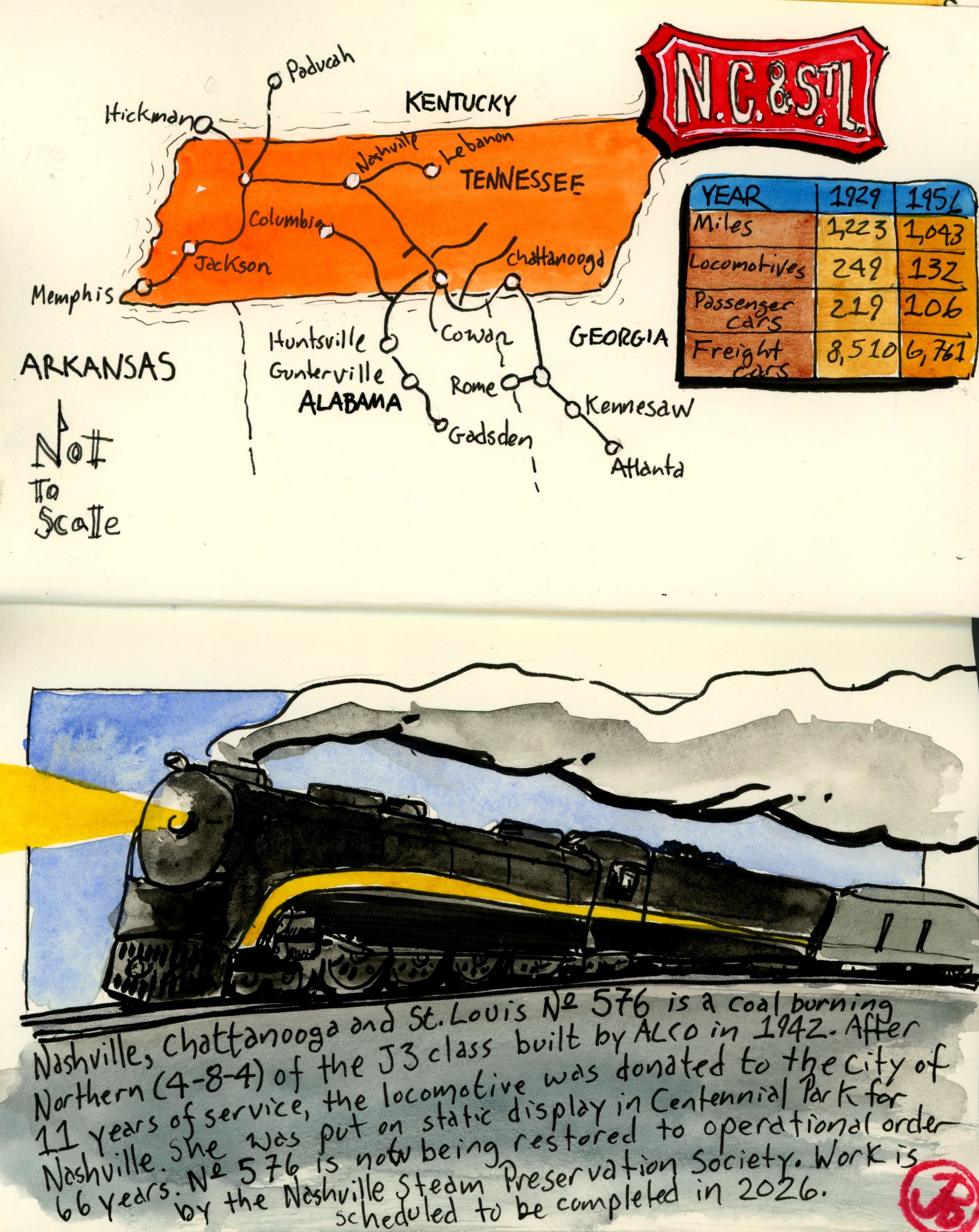
The third map maps the route of the local railroad that I was unfamiliar with, the Nashville, Chattanooga, and St. Louis Railway and its equally famous 4-8-4 steam locomotive No. 576, which is currently being restored to operational service. For many years 576 was on static display in Centennial Park.

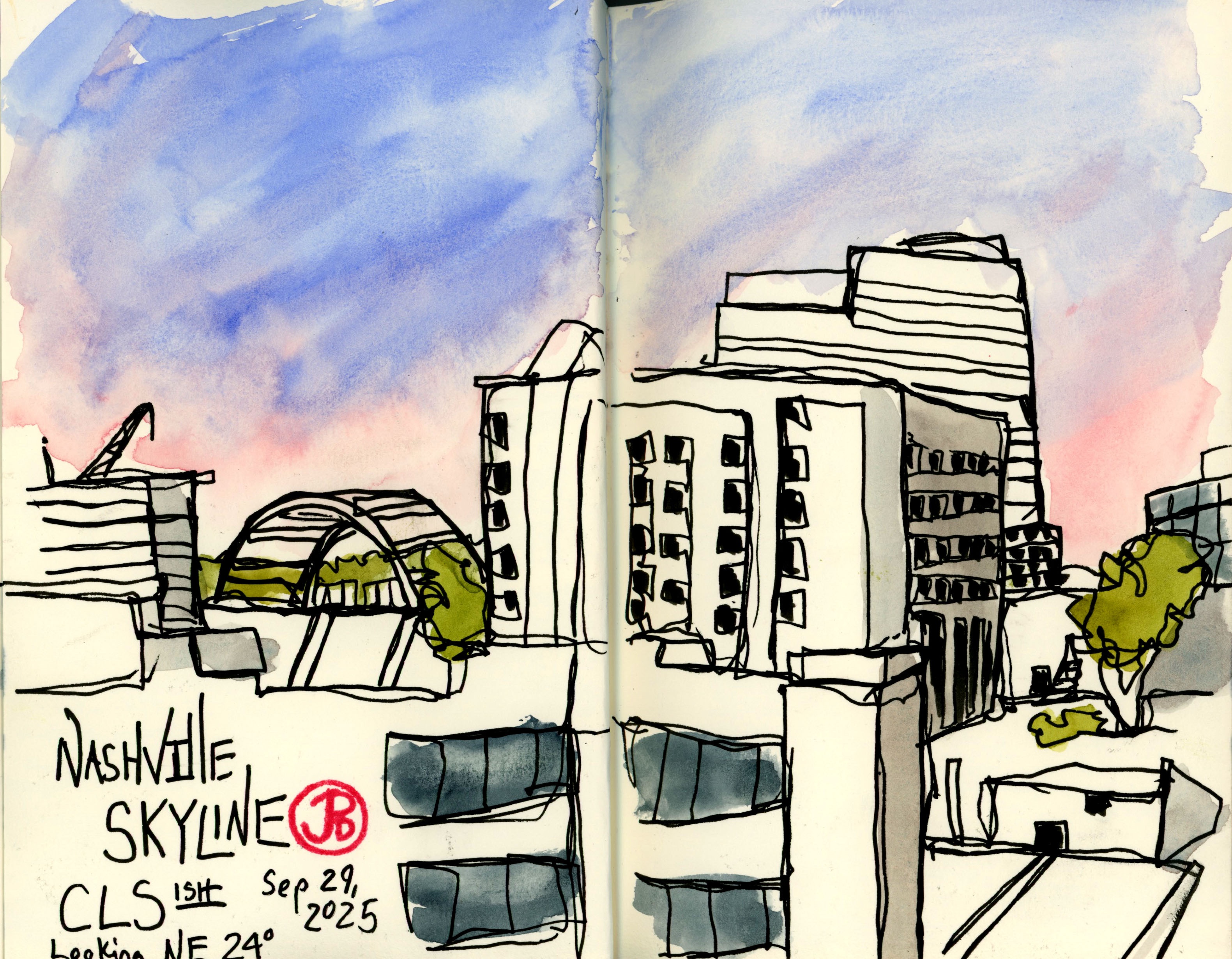
The final sketch is a continuous line sketch from my home base from my eighth floor balcony view of the Nashville skyline.

Image

Sketching from the Gates

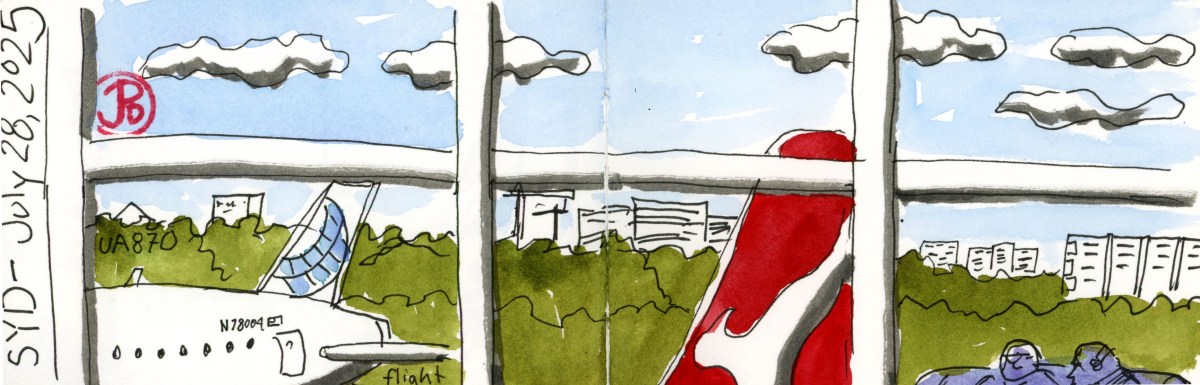
On my Hawaii/Australia adventure I took a total of six flights so it left me with plenty of time to do some airport sketching. A perfect way to spend time while waiting to board. Or a perfect way to spend time if you’re really bored!

I did a total of nine sketches, some of which I have included here.

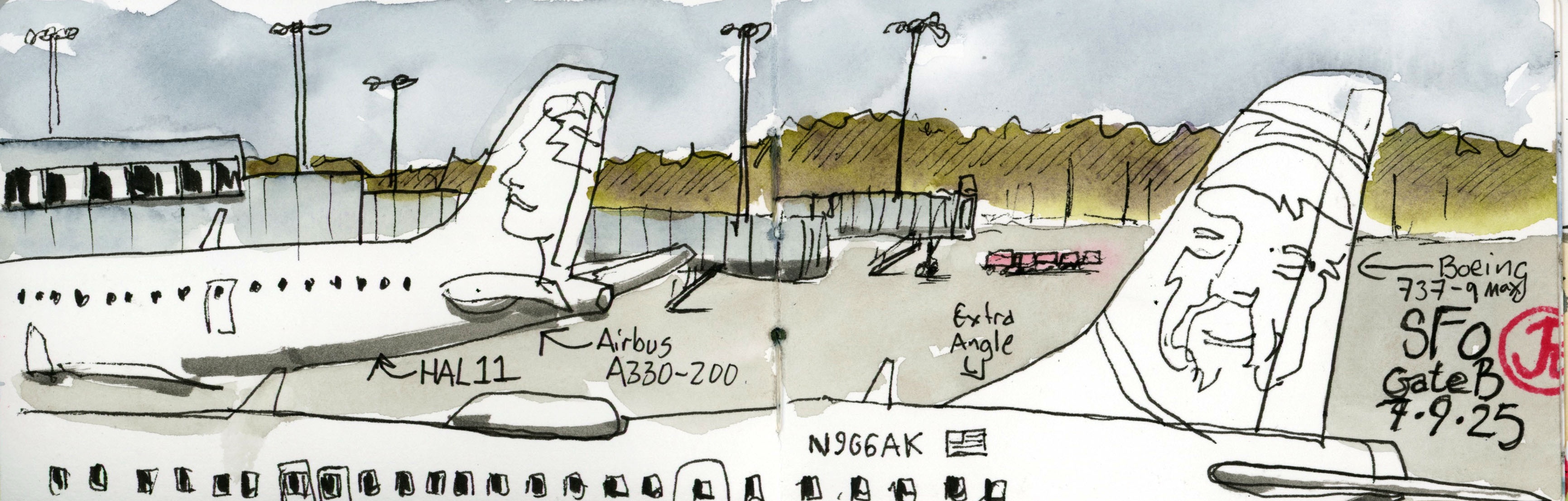
I always enjoy the art in airports. My home airport, SFO, frequently changes what’s on show.

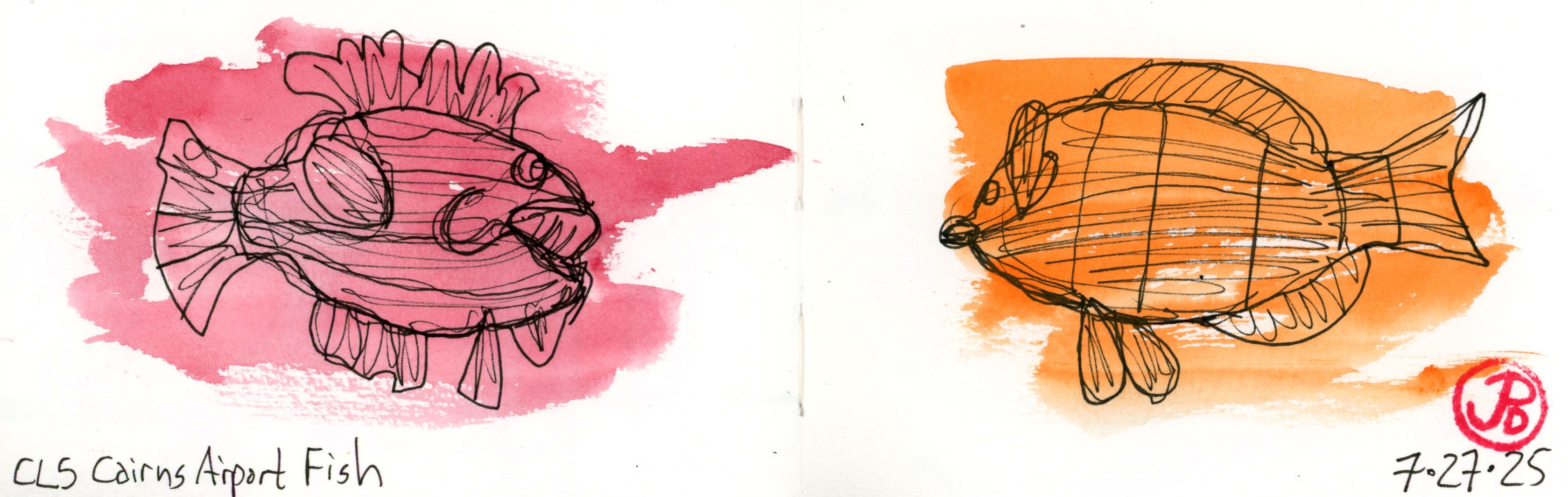
Most of the time I focus on the scene outside the window of planes parked at the gates. But at the airport in Cairns (Gateway to the Great Barrier Reef) I sketched some of the fish sculptures hanging from the ceiling (all rendered in a continuous-line sketch).

Image

Michaelmas Cay

You can’t be in Cairns (pronounced “cans”) without heading out to the natural wonder that is the Great Barrier Reef.

I chose a trip on the Ocean Spirit to Michaelmas Cay, a sandy island on the reef.

While I am a certified SCUBA diver and I love marine life, I was here for the birds.

I checked in and walked out to the dock under a light, warm drizzle. It rains almost everyday in Cairns. I was early so I headed to the breakwater to try to pick up a lifer.

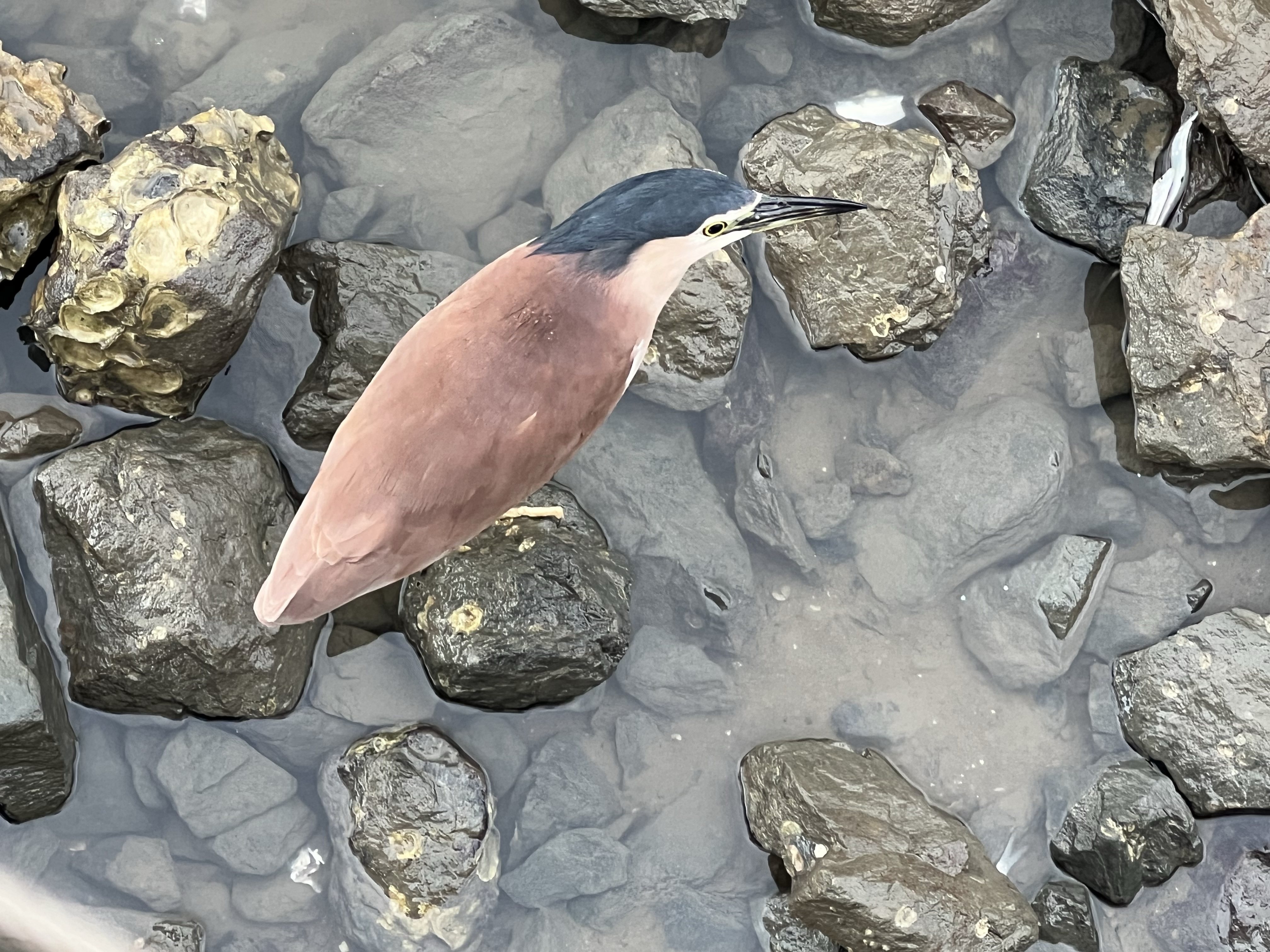
I scanned the nearby trees for roosting birds, I was looking for a night-heron. I found one foraging at the breakwater. I guess no one told it that it was a night-heron, a Nankeen night-heron.

I headed back to the dock and boarded the Ocean Spirit.

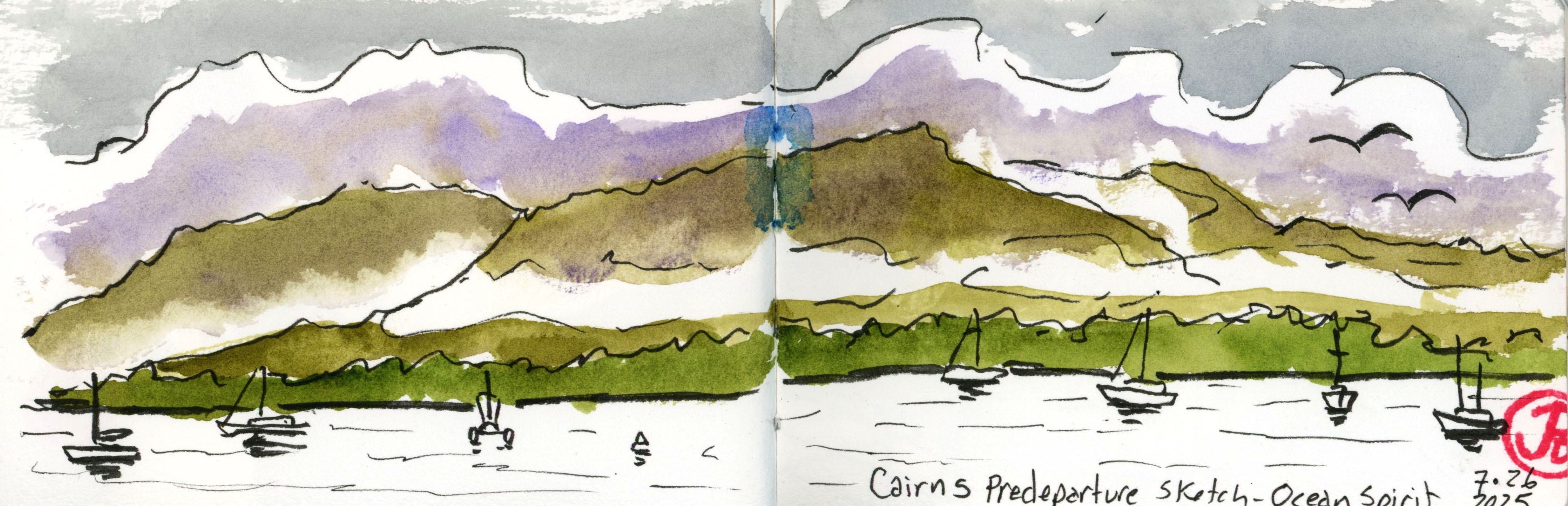
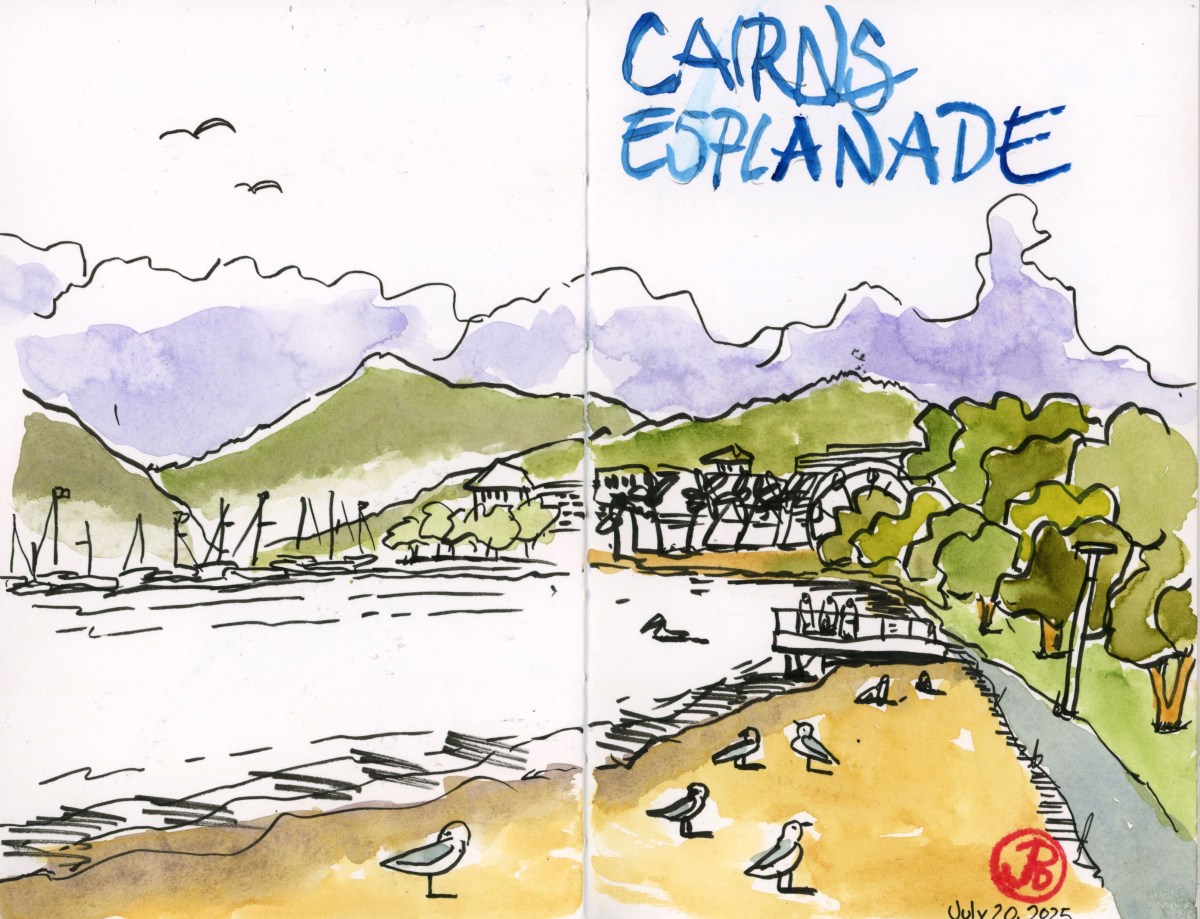
While waiting for the Ocean Spirit to depart I sketched the mountains to the south and the boats moored in the foreground.

During the two hour cruise to the cay, we stopped to look at a few humpback whales.

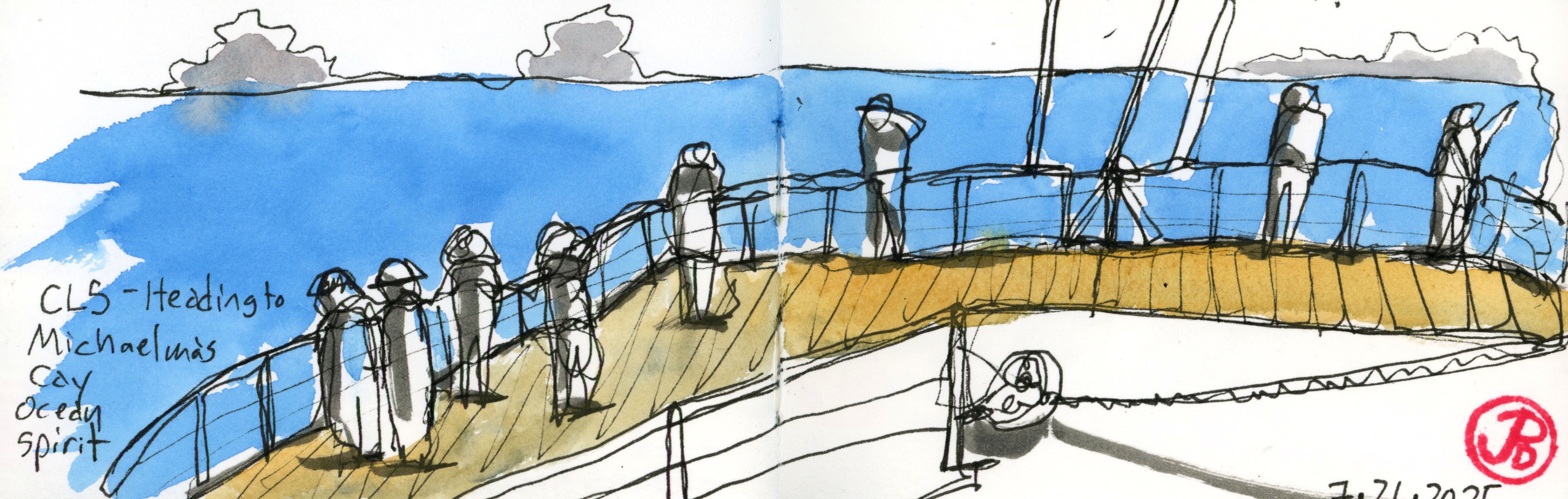
This is a continuous-line sketch of the Ocean Spirit looking towards the bow as we head to the cay.

We arrived at the cay and anchored to the buoy. The launch began to take snorkelers to the sandy cay.

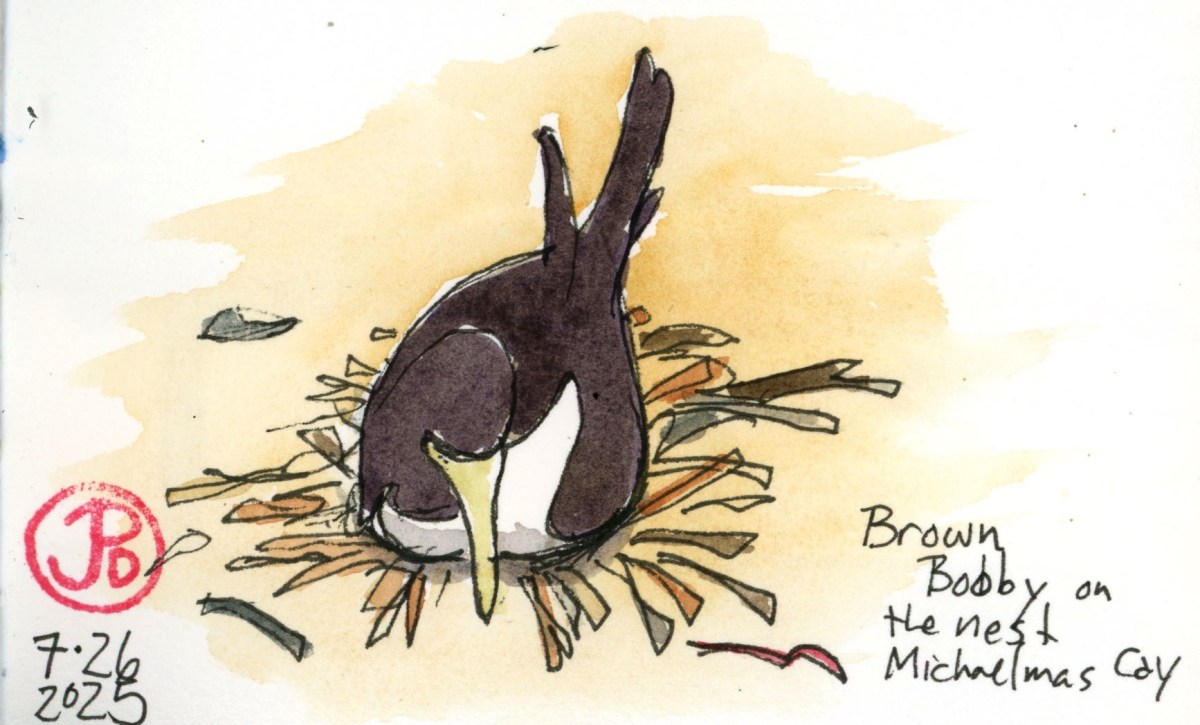
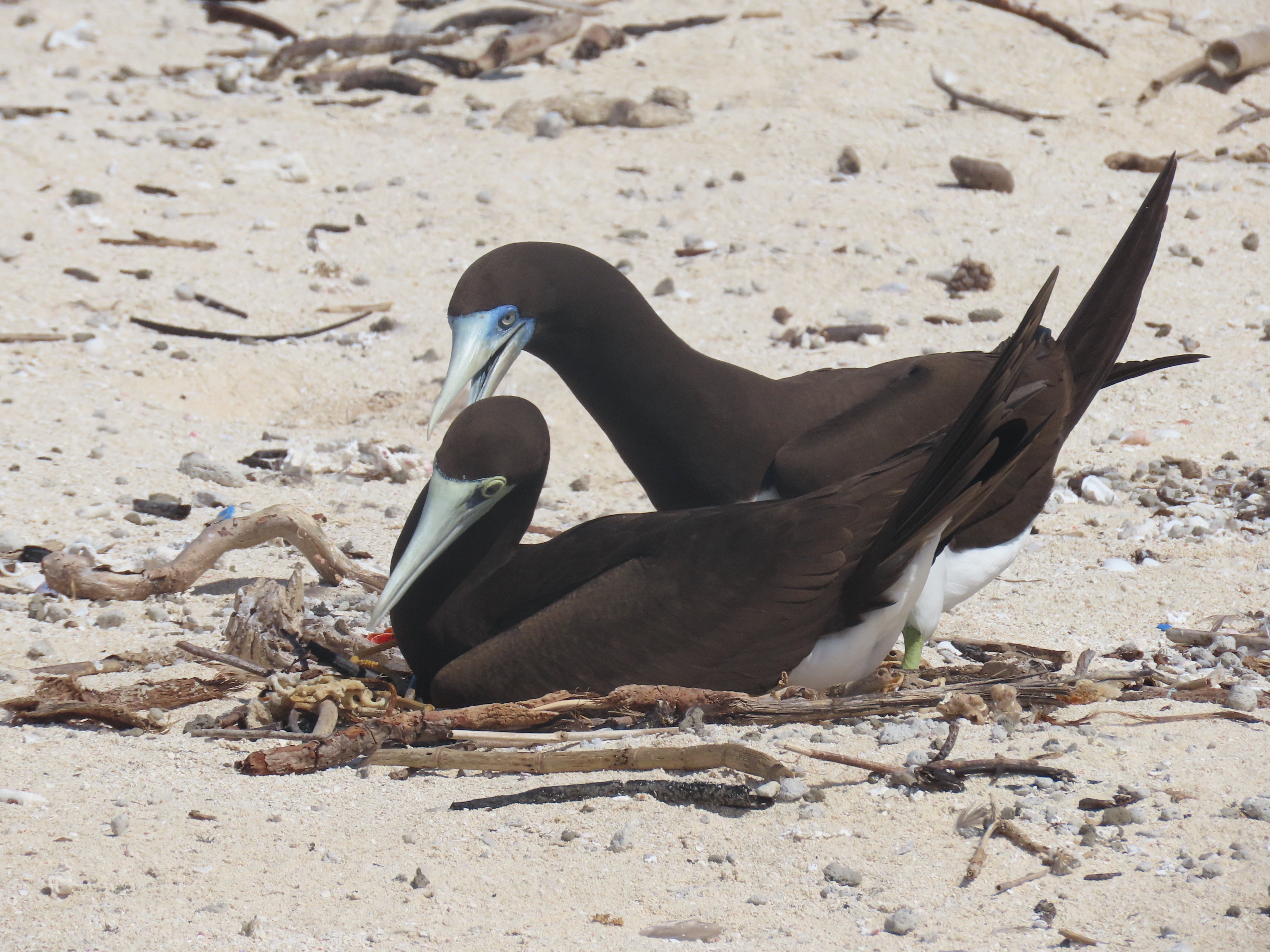
I headed over and walked on the vibrant sands. The cay is a bird sanctuary and various pelagic birds nest and roost here. The most prominent breeding bird at this time of year is the brown booby.

This a semi-regular vagrant to the west coast of California but I had never seen one this close and in it breeding plumage. I sketch one on it sandy nest (featured sketch).

Image

Birding the Esplande

The top birding site in the Australian State of Queensland is the Cairns Esplanade.

The esplanade is a path that runs north to south along the water with parks and trees bordering to the west. This path is popular with joggers, bikers, and dog walkers, as well as birders from around the world.

When the tide is right, many waders feed close in on the exposed tidal flats but there are always birds to be found foraging in the trees.

With the following sketches I highlight a few of the species I encountered on the Esplanade. While none of these species are rare or Esplanade specialties, they are birds that grabbed my attention.

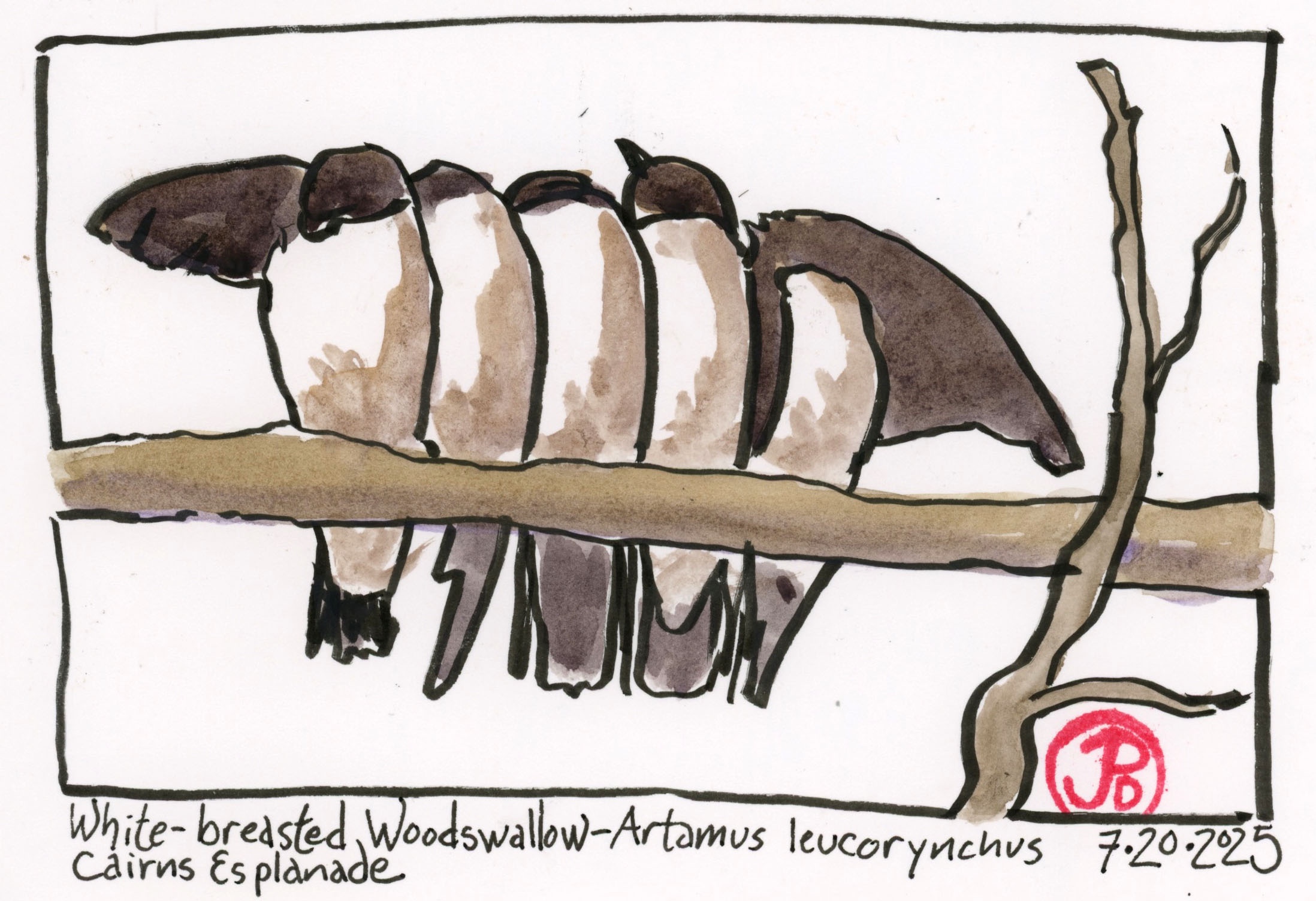
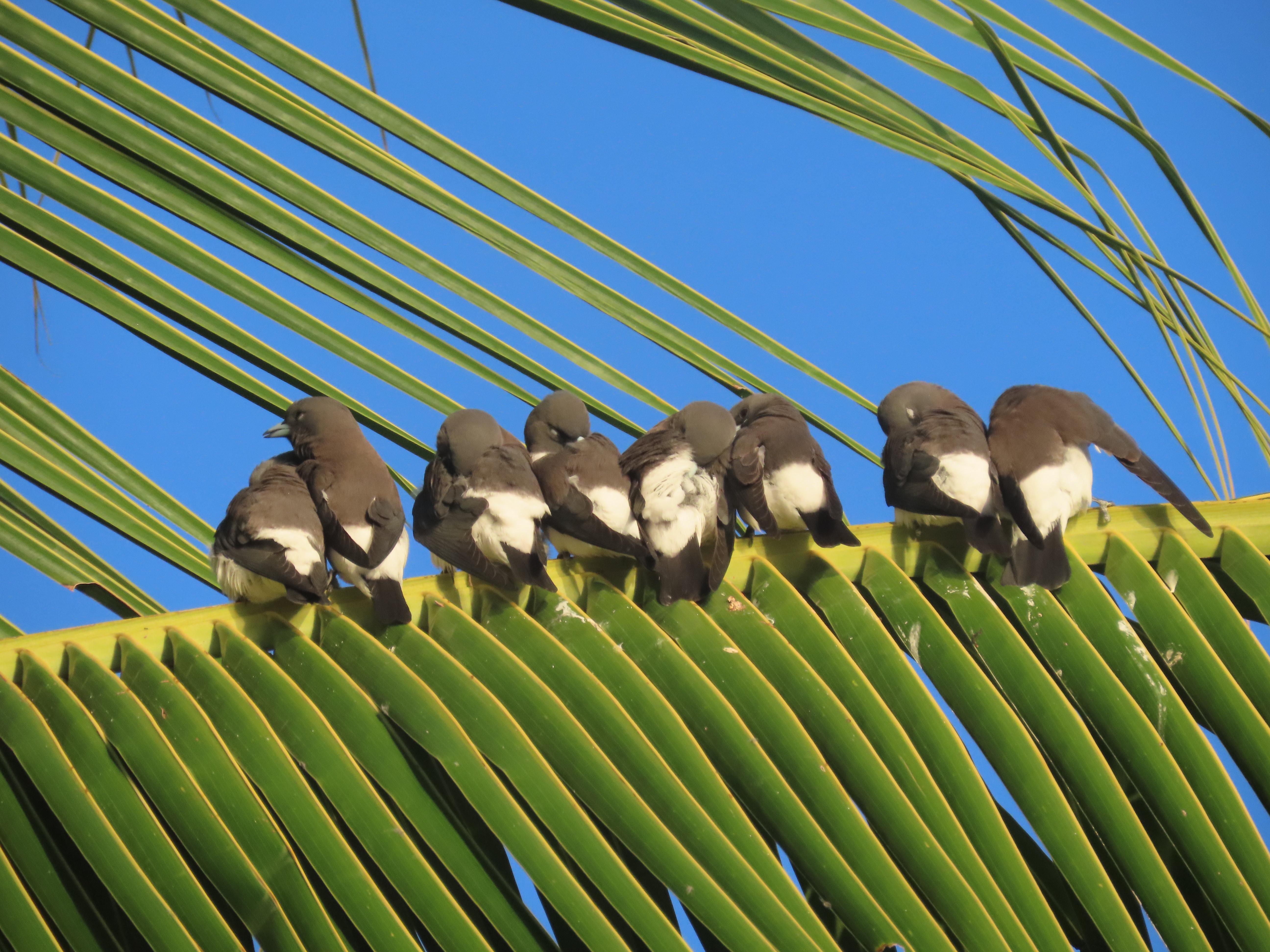
Ever since seeing woodswallows in my Australian bird guide I knew I wanted to see them, primarily because of an interesting behavior. My guide reads, “compulsively social when loafing or roosting, often settling in tight rows on branches to sleep or to preen themselves or each other”. There are six species of woodswallow in Oz, these were white-breasted.

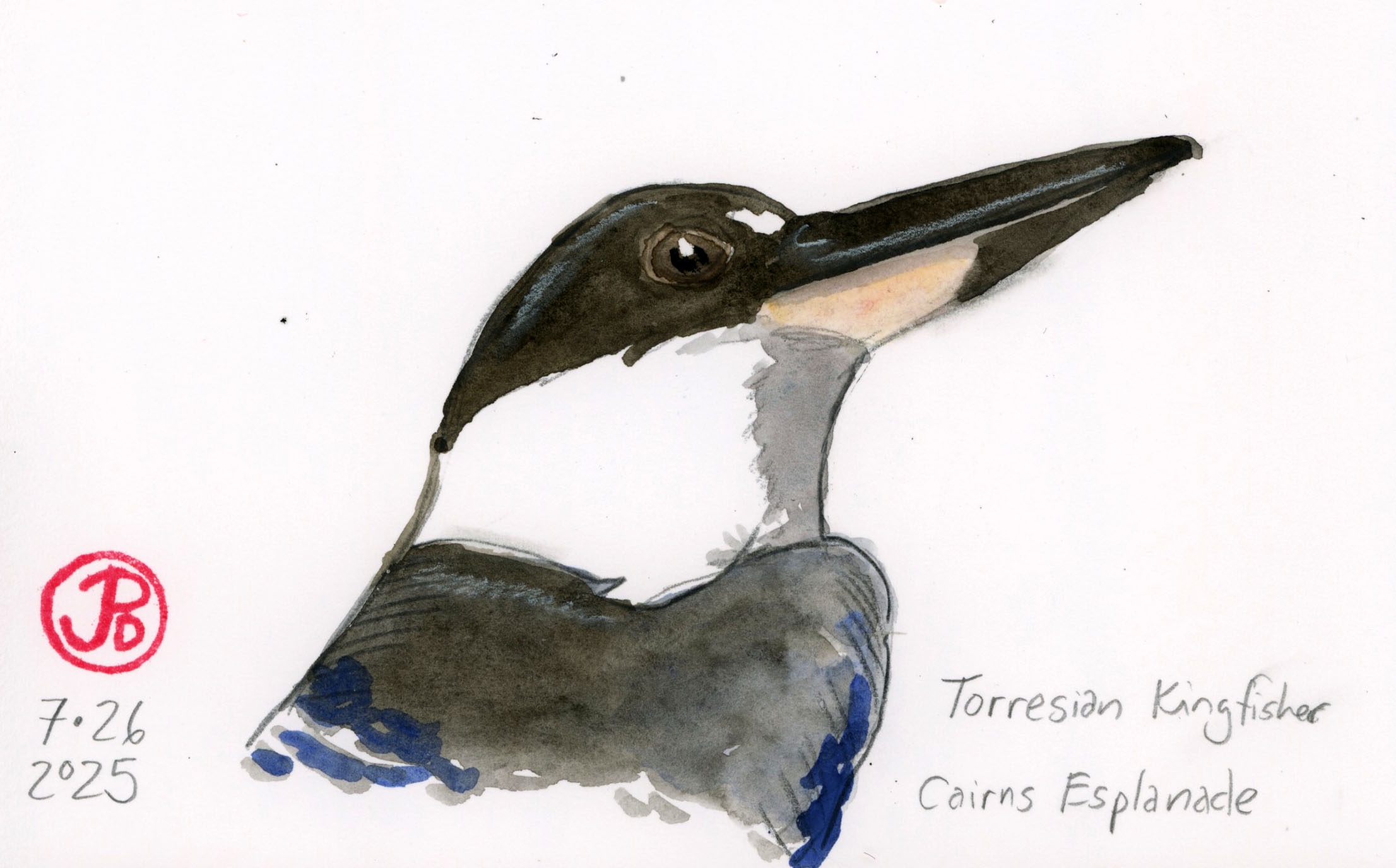
While in Australia I added seven species of kingfisher to my world list including the world’s largest kingfisher, the laughing kookaburra. I added my last species of kingfisher on my final day in Cairns birding the northern Esplanade.

In my bird guide it is known as the collared kingfisher but is now known as the Torrisian kingfisher. Named for the Torres Strait which is the body of water separating Queensland and New Guinea.

I had missed this larger kingfisher on two other visits. The most common kingfisher on the tidal flats and in the trees was the wonderfully named scared kingfisher.

On my last pass I found two Torrisans perched in trees near the water. They were both calling and having me stunning looks in the morning light!

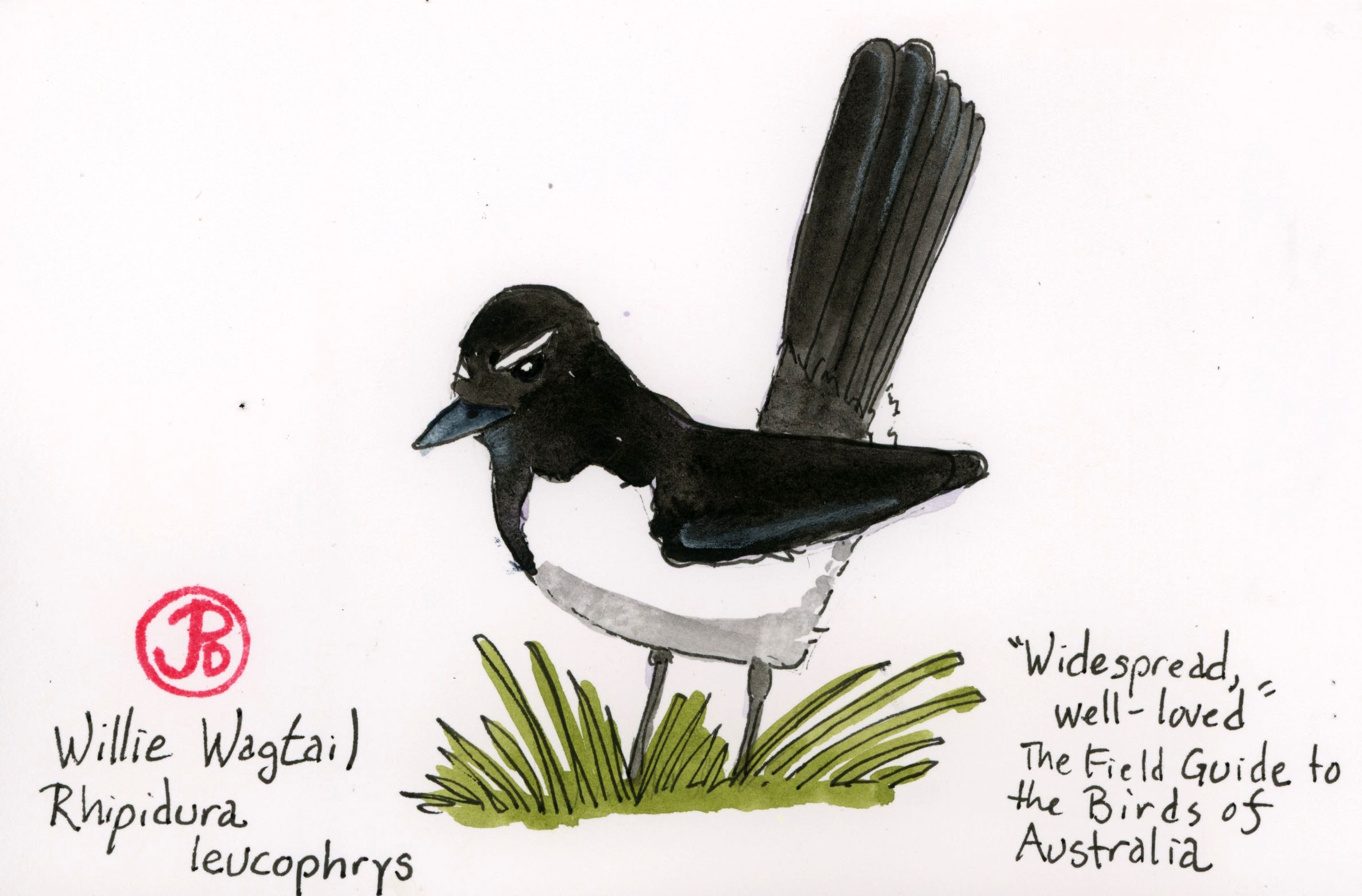
The final bird that I am highlighting is perhaps the most common and as one bird guide notes, “widespread and well-loved”. And I certainly loved my encounters with the Willie wagtail.

The wagtail seems to relish being in the presence of humans. While I was walking across a lawn at the northern end of the esplanade, a Willie wagtail flew up to me and landed close. The bird followed me as I traversed the grass and I realized the wagtail was using me like the cattle egret uses cattle, as a way to scare up bugs from underfoot.

I had experienced this behavior once before, as I was being followed Wunce by a barn, swallow, while I was crossing a soccer pitch.