Image

Rainforest Discovery Center

I headed out early with my guide Alex, to the Rainforest Discovery Center which is just down the famous Pipeline Road and to the left.

When we got out of the truck Alex immediately heard the call of the pheasant cuckoo. As we attempted to located the sulker, the bird shot out of the trees across the road and passed within feet of our heads. That certainly put a smile on the face of the morning!

Our first destination was the observation tower. At 40 meters tall, the tower put us above the rainforest canopy. No stiff necks here, trying to locate an elusive warbler or cotinga. Now we were looking down on them!

There was plenty signs of migration in the blue sky and among the treetops. Swifts and swallows passed by and an eastern kingbird perched up on a bare branch, perhaps a brief pause on its journey north. A long line of brown pelicans crossing over the verdant hills.
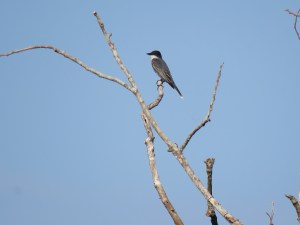
Eastern kingbird, resting on a snag. Taken from the Panama Rainforest Discovery Center’s observation tower.

You know when Alex, who birds this area frequently , gets excited about seeing a bird, then you know that bird is really special. The small accipiter flew into the top of a tree pursued by hummingbirds was the source of Alex’s excitement. This was one of the smallest hawks in the world: a juvenile rufous morph tiny hawk.

The tiny hawk, usually is concealed in the understory, was now sitting out in the open, sunning itself and preening. It’s hummingbird escorts perched nearby, but not too close because hummingbirds are a part of a tiny hawk’s diet. Now why would potential breakfast be perched so close to a known avian predator? The hummingbirds where calling attention to a threat in the area and the tiny hawk loses it’s advantage: it’s ability to ambush unsuspecting prey.

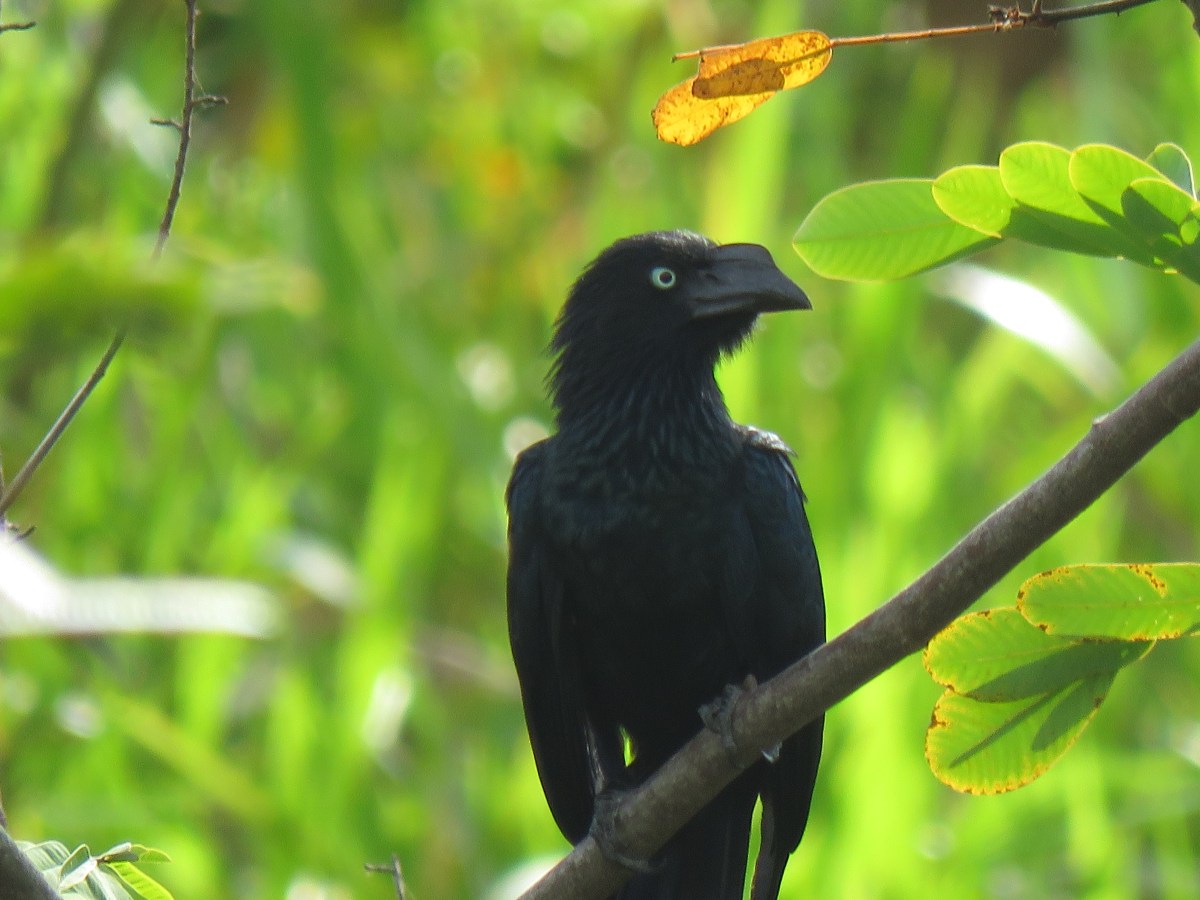
After sometime in the observation tower, we headed out to the Lake Trail that ended at a deck on Lake Calamito. There was a striated heron hunting in front of us and a rufescent tiger-heron devouring a water snake. Near the far shore, a large crocodile was moving on the waters. On the tree above was perched a male snail kite.
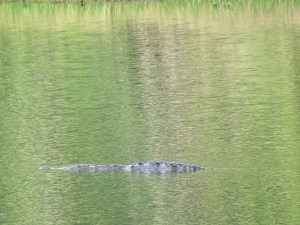
That’s not a log but an American crocidile!
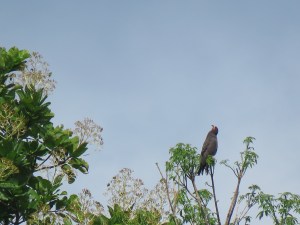
A male snail kite at Lake Calamito. He is looking up over his shoulder at something in the sky. This interesting pose served as the model for my painting.
Image

Army Ant Swarm

“There are few sights in the rain forest as awesome as the foraging columns of army ants”

~Tropical Nature, Forsyth and Miyata

The reason army ant swarms are sought by neotropical birders is that the foraging ants force any small animals in the leaf litter to flush and escape ahead of the advancing ants. This in turn attracts professional ant-followers that perch just above the swarm and reap the rewards of a fleeing feast. If the swarm happens to be near a trail, It provides an outstanding opportunity to see many birds that may be tough to see otherwise. As long as there is a source of food, birds will tolerate humans in close proximity.

I had birded Costa Rica last summer and not once did we encounter an army ant swarm. So it was a great surprise to encounter a swarm on my first full morning in Panama, just down Semaphore Hill from the Canopy Tower on the trail called Plantation Road.

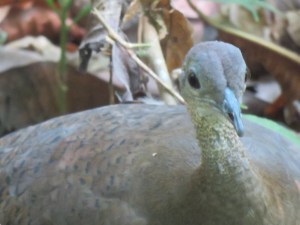
With my guide Domi, we set off on Plantation Road just as two school buses rolled in with middle schoolers from a private school in Panama City. We spent some time searching for a great tinamou whose haunting call gave us the false impression that the bird was just off the trail. We could not locate the bird, a strange sort of jungle chicken, related to rheas and ostrich.

Now that tinamou is close!

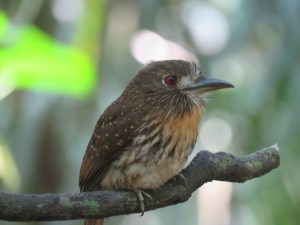
A little further down the trail, I looked off to the left and I saw a great tinamou 15 feet away! Now that was easy. Now why was this elusive chicken-sized sulker tolerating two hominids with optics? The answer was to be found in the sounds of beetles, spiders, and other invertebrates rapidly trying to escape a column of an army ant swarm that was working the edge of the trail. A great tinamou is not a professional ant-following bird but if a swarm passes through it’s territory, it will take advantage. The tinamou was also joined by two white-whiskered puffbirds, cocoa and plain-brown woodcreeper, a pair of gray-headed tanagers, and spotted antbirds.

A male white-whiskered puffbird joining the feast at the army ant swarm.

At my feet, invertebrates were fleeing to seek safely on the path. They were soon followed by army ants that covered the leaf litter but only came as far as the edge of the trail.

What an amazing experience on my fist full day of birding in Panama. It goes to show that in birding, to find an army ant swarm you need to be in the right place at the right time but you also need a good dollop of luck.


Image

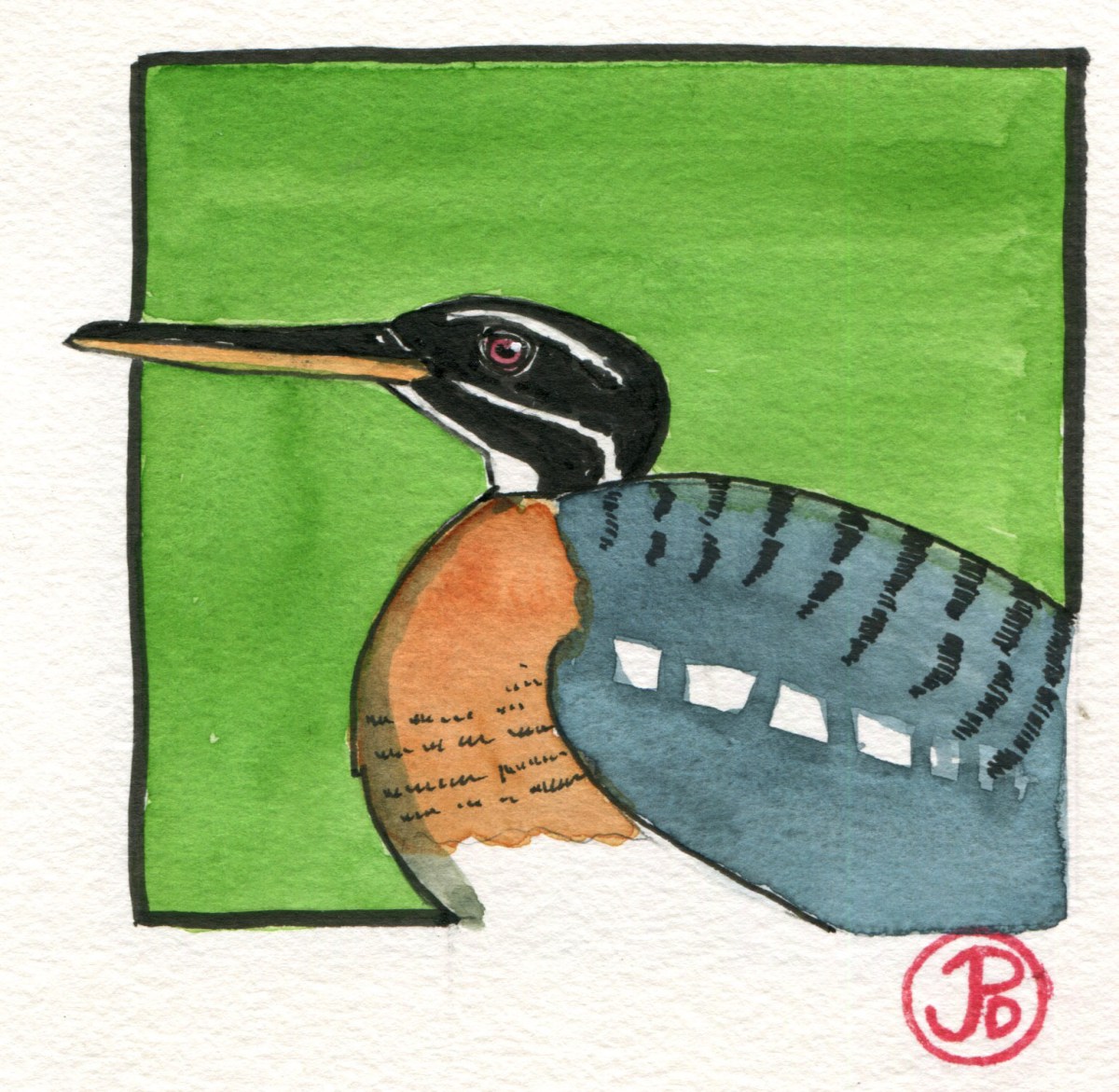
Sunbittern

Out of the 225 species of birds I saw in Panama perhaps none was more unusual and more sought after than the bird that flushed up from the creek bed that paralleled Plantation Road.

Before going on any birding trip, before booking a flight, I order a field guide. Nothing builds anticipation and excitement than thumbing through a field guide and envisioning seeing the many species of birds. The field guide to Panama is thicker than the guild to Costa Rica, reflecting the higher number of species in Panama. In fact more species of birds are to be found on this small isthmus than in all of Central America.

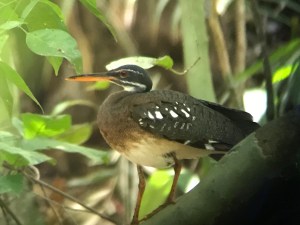
The one bird that really piqued my interest from an early age, was the bird that seemed so odd and so exotic. It is the only member of its family, in its own genus . It’s very name seemed to conjure a mystical creature from the age of the Inca or the Maya. The God of the Sun, Dios del Sol, reincarnated in the form of a neotropic bird called sunbittern (Eurpyga helias). What a name! And what a bird!

My guide, Domi, told the story of some birders seeing a sunbittern for the first time. They exclaimed, “Its a heron, no, it’s a rail, no a crane!” The sunbittern is an odd duck. It’s not a bittern or a heron but a distant relation of the rails. It spreads its wings above its head to reveal large eye spot when it feels threatened, looking like a huge owl.

The sunbittern had been foraging among the pools of the mainly dry creek. The wet season does not begin until the end of April. Luckily for us, the sunbittern flushed up to a branch above the creek where we were able to get great scope views and take in the beauty of this splendid neotropic creature.

Image

Ammo Dump Ponds

On my first day at the Canopy Tower, after a brief attempt at an afternoon siesta, it was time to go birding at a location 15 minutes from the tower with the inviting name of Ammo Dump Ponds.

I spend a fair amount of time at sewage ponds in the States and I know then to be excellent places to see birds and the Ammo Dump Ponds was certainly no exception and a wonderful introduction for my Panama birding experience.

The ponds were located just past the US built town of Gamboa. Across the dirt road from the ponds was the rails of the Panama Canal Railroad which paralleled the famous Panama Canal itself at the narrows known as Culebra Cut. It was hard to keep your eyes from large sea worthy container ships that seemingly passing through the lowland forest. But we turned our eyes towards the ponds and the plentiful bird life.

Wattled jacana.

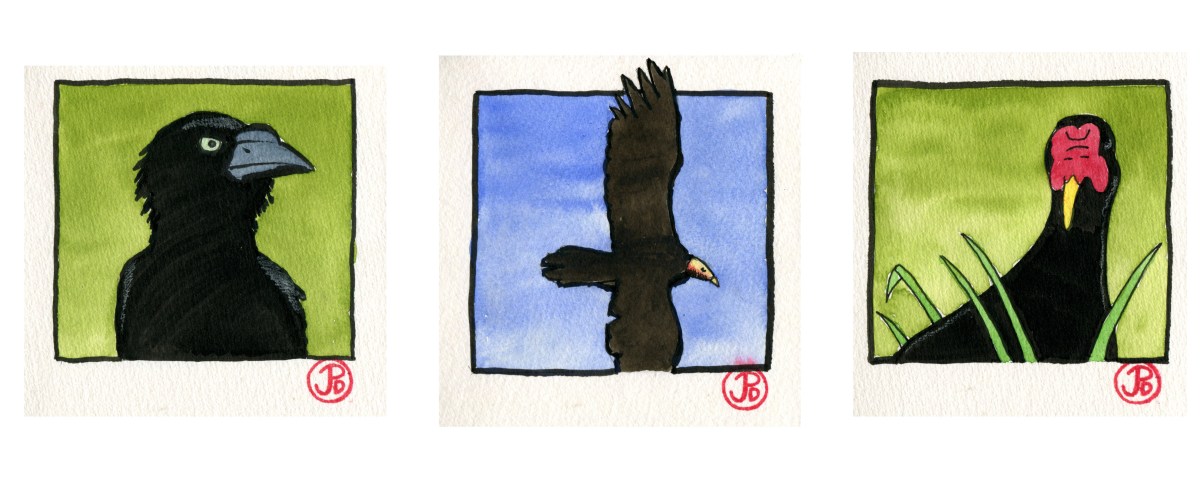
On one pond was wattled jacana, striated heron, and lesser capybara (a life mammal!). All of these animals I was seeing for the first time! We turned to look at the other pond and that’s when I saw a low flying vulture that I did not need optics to tell that this was not your ordinary turkey vulture that was passing 25 yards in front of my eyes. It’s yellow, and not red, head stood out like the North Star. This was a rare bird for this area: lesser yellow-headed vulture! Lifer!

We then looked at the pond across the road from the Ammo Dump and a greater ani flew into the trees in front of us.

IMG_1834

The greater ani, a Dickensian undertaker bird.

A little further to the left and up in the trees revealed a rufescent tiger-heron on the nest. A lifer on the nest!

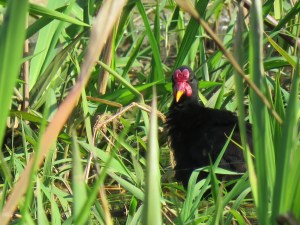
We headed around the other side of the pond to get better views of the tiger-heron and then tried from the elusive and sulky white-throated crake. We had been hearing them and with patience and perseverance we saw the crake through a window in the reeds.

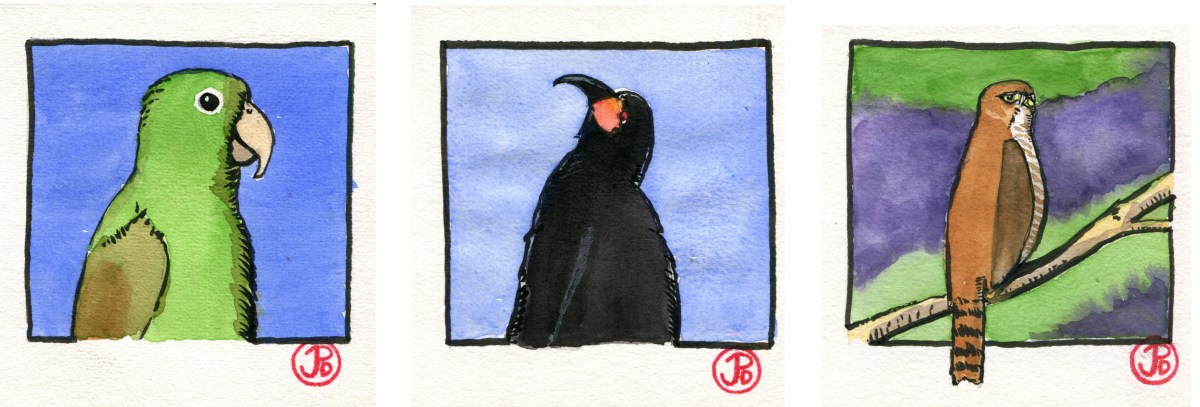
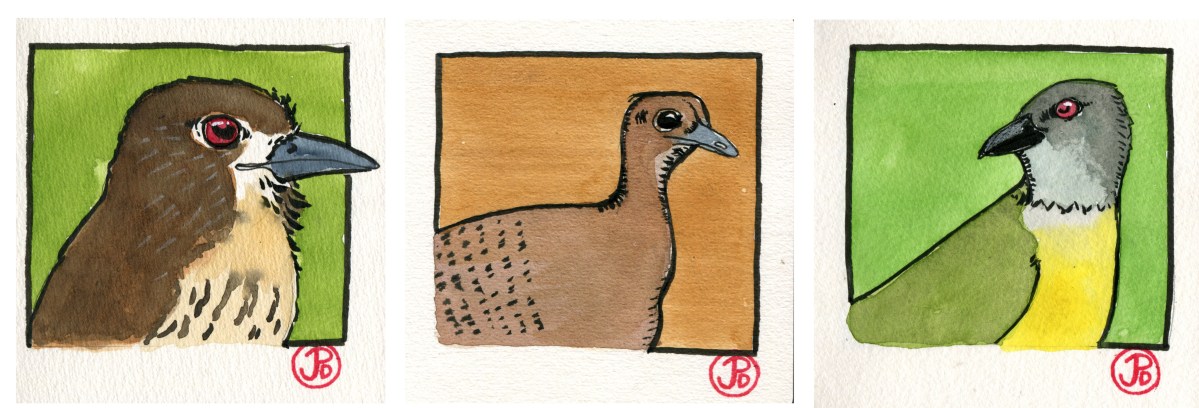
A note about the featured image. Instead of going for a photorealistic illustration for my Panama birds, I opted for a woodcut-black-ink and watercolor style. More pictorial than realism. I present each birding location with a triptych of birds. All illustrations are based on photographs that I took in the field in Panama.

Life birds at Ammo Dump Ponds: rufescent tiger-heron, striated heron, lesser yellow-headed vulture, gray-lined hawk, white-throated crake, wattled jacana, pale-vented pigeon, greater ani, rusty-marginated flycatcher, fork-tailed flycatcher, southern rough-winged swallow, gray-breasted martin, Isthmian wren, blue-black grassquit, variable seedeater, and black-striped sparrow.

Image

Canopy Tower, Panama

I hastily left my bags in my room, unpacked my binoculars, and climbed the spiraling stairs to the Canopy Tower observation deck.

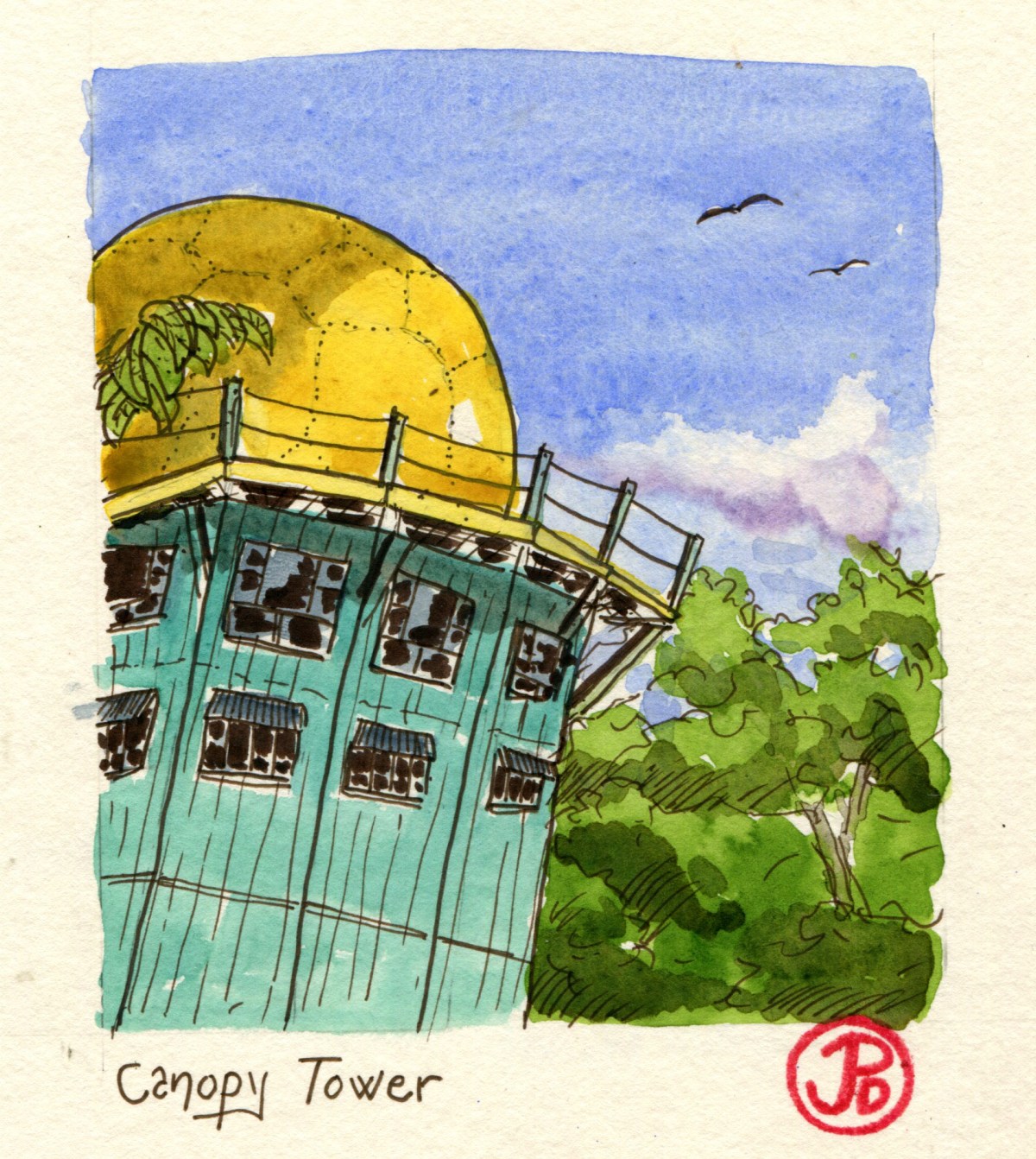
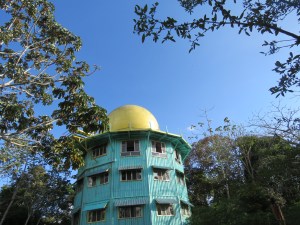
Some have noted that the Canopy Tower looks like a beer can topped with a golf ball. The tower was built in 1965, by the United States Air Force as a radar tower to help defend the Panama Canal. It was transferred to the Panamanian government in 1996 and then developed as a ecolodge in 1997.

The tower is surrounded by Soberania National Park and the 360 degree views from the observation deck are jaw dropping. In the foreground are the upper canopy of the forest featuring toucans, blue coatings, and tanagers. The cecropia tree near the tower was routinely visited by howler monkey and Geoffrey’s tamarin. To the southeast was the Miraflores Locks and beyond, the skyline of Panama City. To the west was the narrows of the canal where container ships seemed to be moving through the forest. This was going to be my home away from home for the next week.

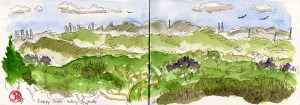
A sketch from the Canopy Tower, looking south, towards Panama City.

As I stood half-awake (I took a red-eye from SFO), I scanned the skies which were full of migrating swallows heading north and the ubiquitous black vultures (didn’t I just spend almost three hours looking for this scavenger in San Mateo County?)

Then I fixed my bins on two white birds flying to the north. White hawks! The birds came together, locked talons and spiraled to the ground, separating as they neared oblivion . Did I just witness that or was it a hallucination of a sleep deprived brain?

The large bird that flew over my head, on a northernly course was no hallucinations. The two toned vulture with the gaudy colored head could be only one bird: king vulture! I hastily took some photos to confirm its existence.

In my first morning in Panama, on the observation deck of the Canopy Tower in the rainforest watching the passing of migrants and watching the local fauna below, I knew I was going to have an amazing time in Panama!

Image

Knots at the Shell Bar

Sunday March 25, 2018 8:30 AM Foster City Shell Bar

On a Sunday morning as winter slowly slips into spring and the northern migration slowly starts in earnest, I headed to a birding hotspot, just south of the San Mateo Bridge known as Foster City Shell Bar. No this is not birding from the deck of a swanky seafood restaurant but a tidal beach composed of shells and sand.

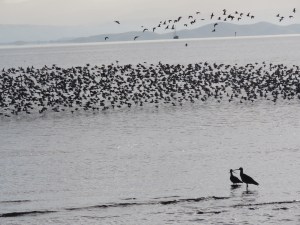
I parked on Beach Front Boulevard and shouldered my scope and headed up toward the walking and biking path on top of the levy. As I reached the top of the levy and looked down, I was greeted with an eyeful of birds! From the narrow width of the shell beach to the water, the ground was covered with shorebirds.

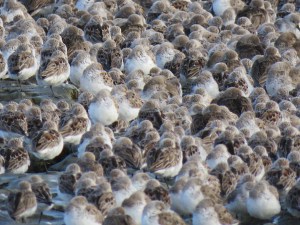
A carpet of sandpipers.

I walked south, to get better lighting and I set up my scope and aimed it up the beach to see which birds populated the mixed flock. The flock was tightly packed and the most numerus species was the tiny western sandpiper. They were all shoulder to shoulder covering the beach in their carpet of grays, rufous, and black flecks.

I scoped the flock with many species in attendance: western sandpiper, black-bellied plover, dunlin, marbled godwit. Many birds where flying in from the south so I was near impossible to keep an accurate count. Wave after wave of marbled godwits were alighting on the beach.

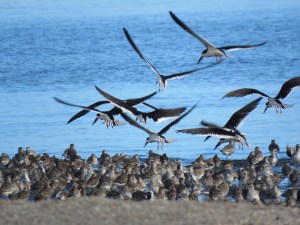
Among the uniformity of the shorebirds in highest number, I looked for the few individuals that stood out. Like the diminutive semipalmated plover which was taking a bath in the bay. As I scanned to the left the large black and white terns stood out, the otherworldly black skimmer. I had a high count of 17 birds.

At one point, the entire mixed flock burst into the air and flew above the water in the tightly bunched group. After a circuitous journey, the mixed mass alighted back on Shell Beach. Time to rescan the flock.

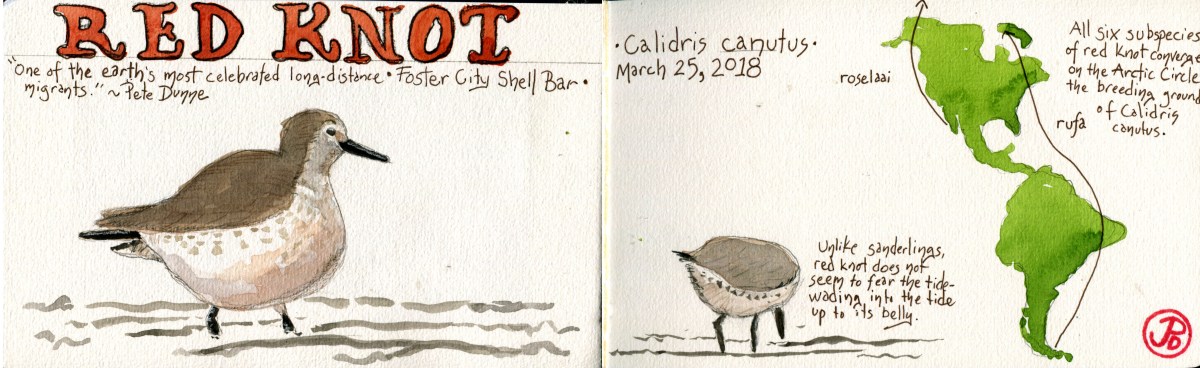
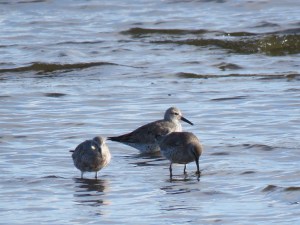
I picked through the birds that were newly redistributed on the beach and I noticed a large sandpiper that was not a dunlin or dowitcher. This small group was feeding in a distinctive way. It was not playing tag with the tide like a sanderling but it was wading out into the surf, the water up to its belly. This sandpiper was picking food off of the surface and plunging its head into the water. I was looking at one of the most famous long-distant migrants: the red knot! Some red knots migrate 9,000 miles every year, from their breeding grounds in the Arctic to their summer grounds on the southern tip of South America.

Three feeding red knots, note the bird in the back is feeding in the “deeper” end.

Red knots use the San Francisco Bay as a staging area to refuel before they make the journey to their breeding grounds in the Arctic Circle. The birds before me where in their rather drab, winter plumage. A few individuals had a hint of red in their bellies. On their breeding grounds, red knots have a rufous-robin red on their faces, breast, and belly. Soon these bird would be gone and I was enjoying my time with them.

Image

County Birding

As I slowly creep towards 600 ABA birds on my life list I have looked for other birding challenges in my home state of California.

California is a great place to bird because it has just over 600 species that have been found here, only Texas ranks higher in species total. It is also one of the most populated states which means more traffic, higher housing prices, and more expensive lattes but is also means more birders in the field, reporting more birds!

My latest challenge has been to increase my species totals by county. Three counties are the focus of my challenges: San Francisco (were I live), San Mateo (where I work), and Santa Cruz (where I relax). The goal for each county is to see 200 species in each county. Which means that previously a bird that is being seen in San Mateo County ( a black vulture, for instance) that I had already seen (in the Everglades, for instance), then I was less likely to chase it. But now I gave myself the challenge that if a rarity showed up in one of my three target counties, I would give chase, even if the bird was already on my ABA life list.

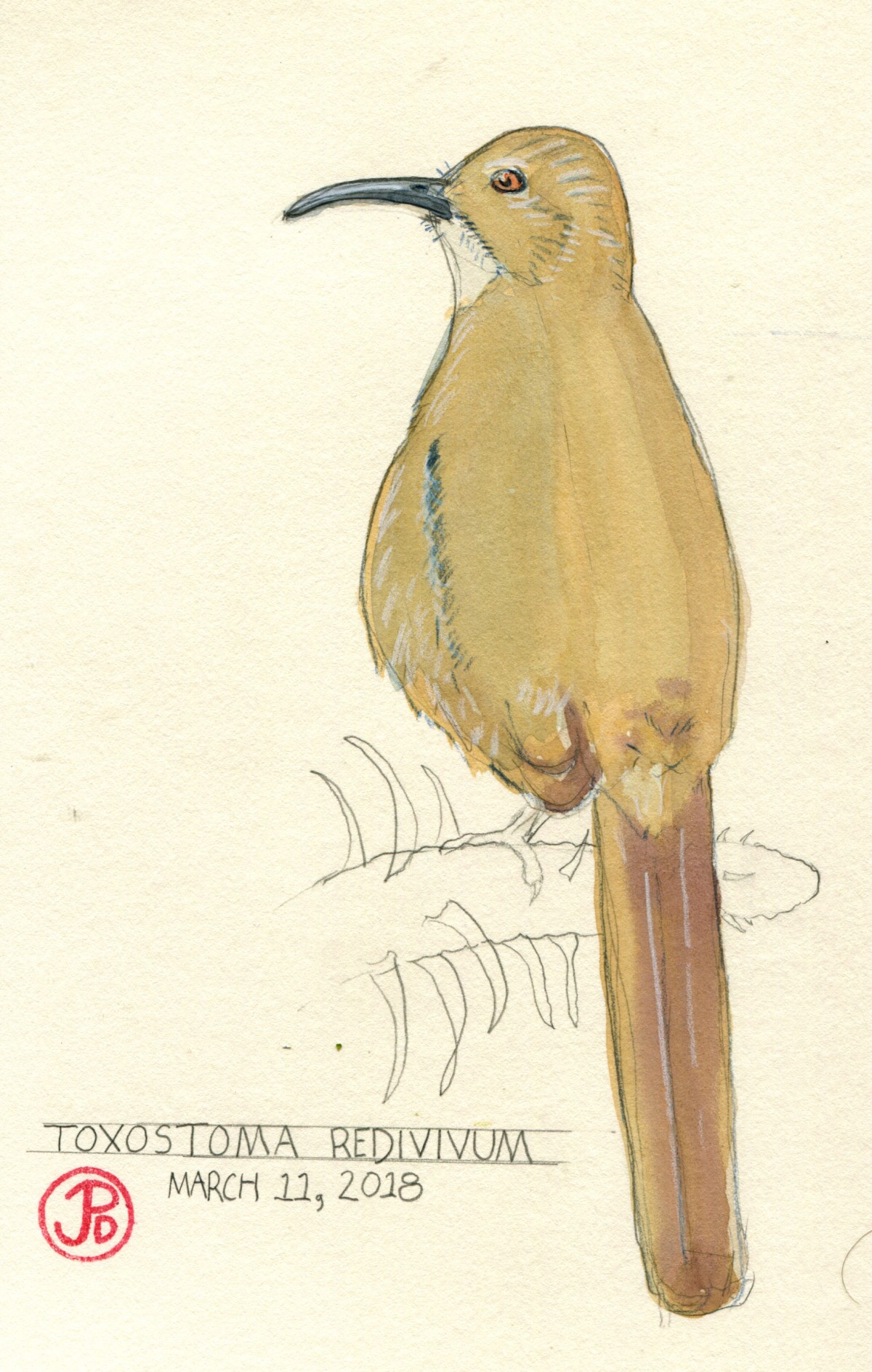
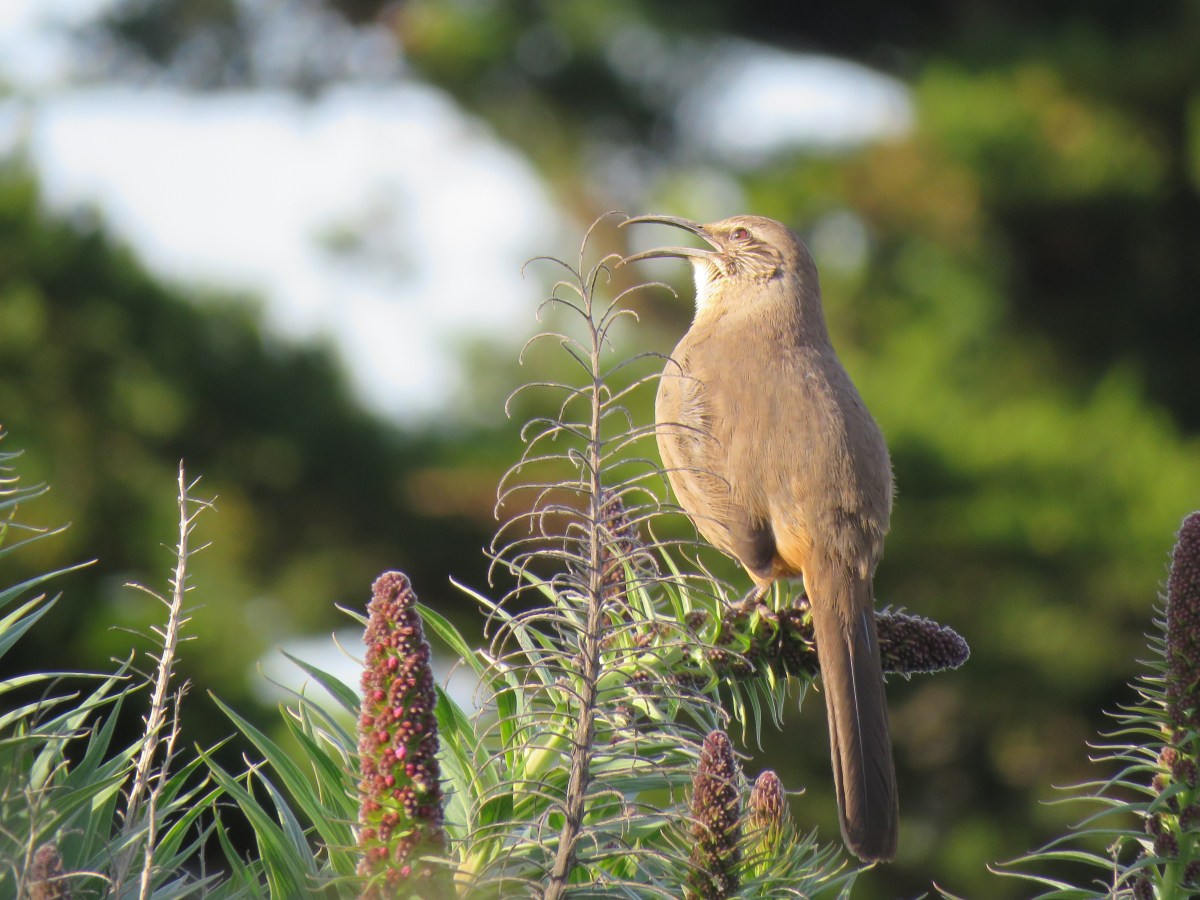
Which brings me to the subject of my featured sketch: the California thrasher (Toxostom redivivum). As the name implies, this mimid is endemic to California and I have seen this sometimes illusive and sulky bird in the North and East Bay Area and in Joshua Tree. In fact in it’s range it is listed as “common and widespread”. Normally if one is reported, I wouldn’t go but when one wintering individual was reported on a hillside off of  Diamond Heights in San Francisco, I grabbed my bins, and headed east! A California thrasher in San Francisco is considered rare for the county. A new bird to add to my City List was only 15 minutes away!

in-pursuit-of-phantoms

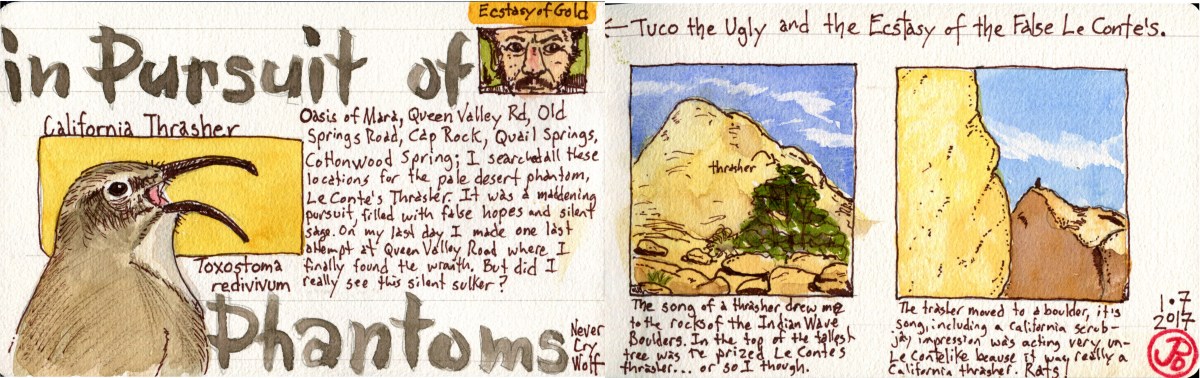
A journal spread about my issues with thrashers, from Joshua tree.

So 15 minutes later I was on the sidewalk on Diamond Heights, peering into the dense bushes on the hillside. Nothing. I looked up to the west and saw a large congress of ravens, circling over Twin Peaks. Before the 1980’s the common raven was not so common in San Francisco. Their population has risen since that time and they are now very common on the west side of San Francisco. Could the same thing be happening to the California thrasher? Too early to tell.

After twenty minutes of searching I was still having no luck. And then off to my left I heard the unmistakable song of California’s coastal thrasher. I ran over and found the bird singing, perched on top of a bush. I had great views of the songster for over five minutes before it finally dove down into the bushes.

A new San Francisco City and County bird!

IMG_0938

Image

Sea Watch: Northern Fulmar

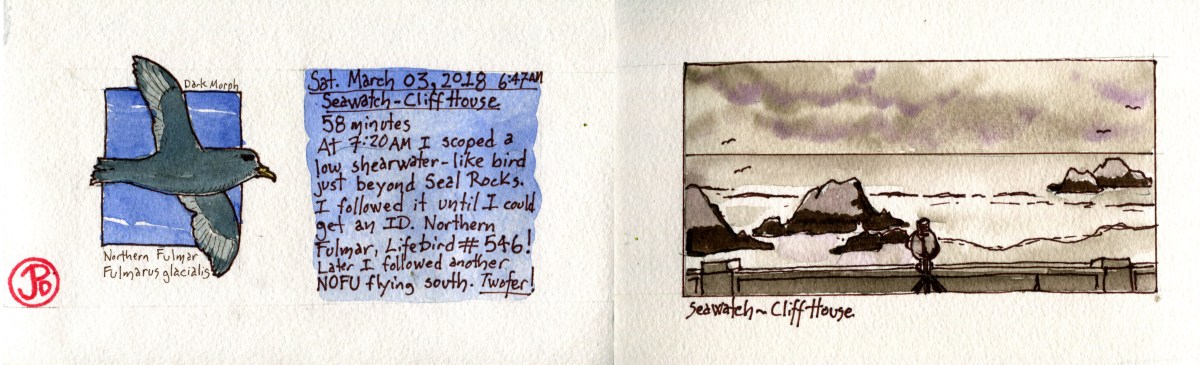
On a Saturday morning in early March, I headed to the platform just below the Cliff House, I set up my tripod and scope to scan the Pacific to the west.

Before I focused my scope on the horizon, looked down at the tideline, sanderlings ebbing and flowing with the tide and a group of willets hung back and rested. I then scanned the rocks, just below my position. It didn’t take long to find the resident black oystercatchers who proclaimed their existence with their raucous calls, a call that carries above the din of the surf. A closer inspection revealed black turnstones and surfbirds working the inshore rocks.

I removed the lens caps from my scope and began to scan the waters beyond Seal Rocks. There was some movement of red-throated loons and cormorants but the bird I was looking for was a true pelagic species. A bird that remained on the outer range of most binoculars but in the winter of 2018, a number of northern fulmars had come closer to shore than in previous winters.

I continued to scan the water looking for something that stood out, something different from the roll of species that normally visited these waters. A 7:20, I caught a bird in my scope that was shearwater-like, flying low to the surface. A dark bird with a large head that was flap-flap gliding near the surface of the waters. This was it! Life bird #546, northern fulmar. toward the end of my sea watch I spotted another fulmar flying off to the south.

Image

The Black Vulture of New Year’s Creek

I found myself, on a Saturday morning, stationed on an abandoned auto bridge in Año Nuevo State Park, not to look at the famed elephant seals, but to pick through every turkey vulture that flew over head. And there were many to pick through.

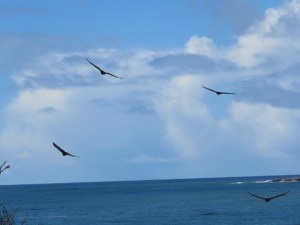
Plenty of turkey vultures. I count four.

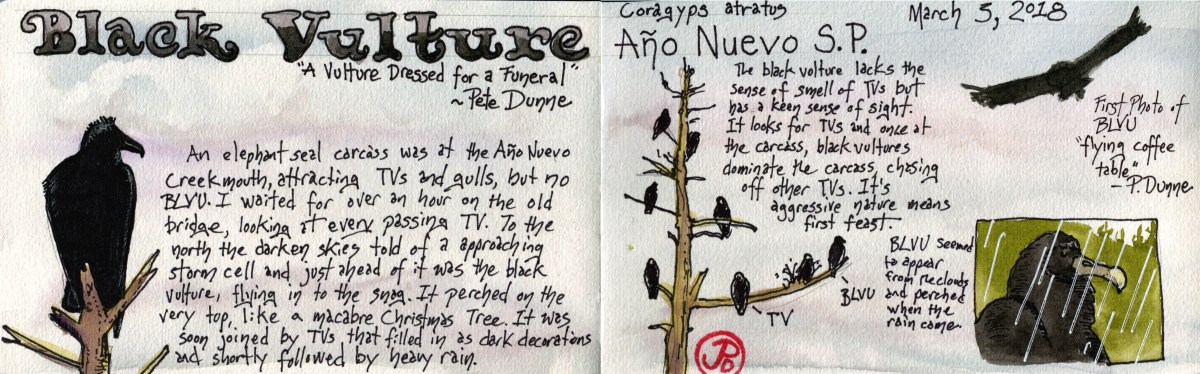
I was here, in-between storm cells, to find the lone black vulture  (Coragyps stratus) that had been haunting the Santa Cruz and San Mateo coast.

I had seem plenty of black vultures in the Everglades and my most recent sighting was in a large kettle with turkey vultures and two impressive king vultures. This kettle was soaring above the rainforest of Costa Rica.

This lone and lost bird had first been seen on February 15 at Swanton Road in Santa Cruz County and then later above Wilder Ranch. In Late February the black had fallen in with a volt of turkey vultures (TVs). You see, the black vulture has great eyesight but their sense of smell pales in comparison to that of the turkey vulture. Black vultures soar high on thermals and look for a kettle of TVs. When the TVs locate a carcass, the black vulture make it’s appearance. It being a more aggressive bird, it will dominate the carcass, preventing the TVs from a place at the table.

After an hour and a half of searching, I was joined by three other birders on the bridge over Año Nuevo Creek. At the creek mouth, was a carcass of an elephant seal. Earlier I had seen four turkey vultures at the seal, joined by gulls and two ravens.

The clouds to the north look darkly ominous. Rain would be upon us in a short time. We saw a far off red-tailed hawk that we tried to turn into the south after scavenger. I looked up to the northeast and the bird seemed to appear out of the approaching black storm clouds. “There’s the bird!” I announced to the birders on the bridge.

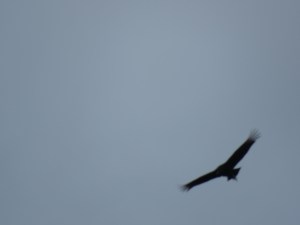
12:58 PM. My first out of focus shot of the black vulture. The shape, the “flying coffee table” as Pete Dunne notes, is distinctive as well as the extremely short tail.

The vulture alighted on the top of the pine snag, a macabre Christmas Tree. It was soon joined by other turkey vultures filling in as ornaments.

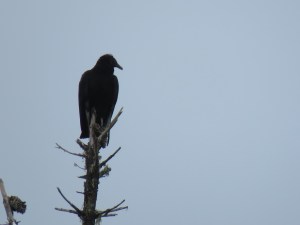
We were able to enjoy the vulture for about 15 minutes before the rain started. Here the black is crowning they pine showing off it’s upright posture.

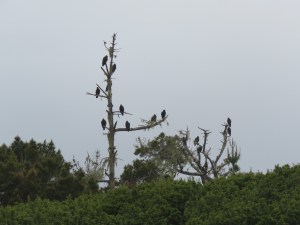
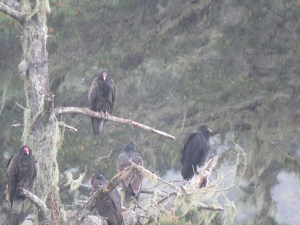
The pine snag full of vultures. The black vulture is on the near horizontal branch on the left, perched at the very end in it’s diagnostic upright posture.

The black vulture in the rain. Perching in the lone pine snag with turkey vultures.

Image

PEFA Goes to School

I have my morning rituals in my early morning work routine. I arrive at least an hour before my students so the campus is peaceful. I plan for the day, make copies, review the day’s math and language arts lessons, correct student work, and do a bit of housekeeping.

There are a few avian routines that are also part of my morning ritual. The first is usually to check the field and backstop for the red-shoulder hawk pair. They are there most mornings, perched on the baseball backstop, helping to rid the field of gophers. I also check the food court for the resident white-crowned sparrows and juncos that scatter to the bushes before my footfalls. When I head out to the teacher’s lounge to make copies, I check the cypress that looms in the back of the school.

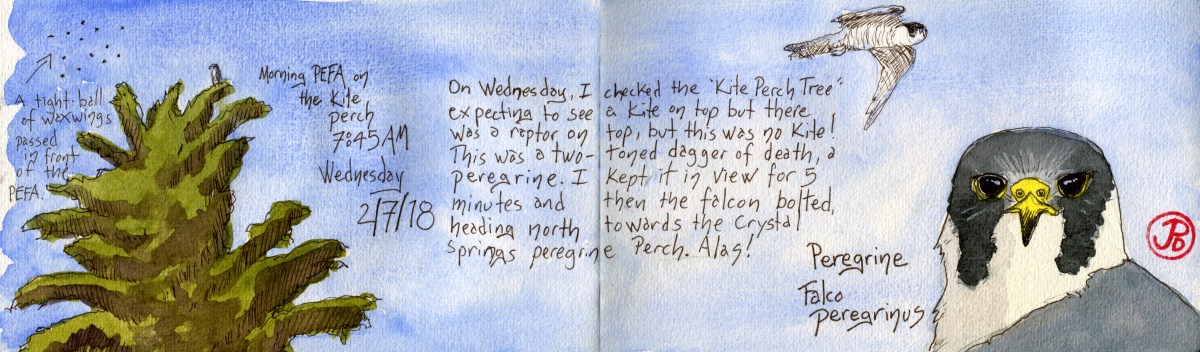
I call this tree the Kite Perch because it is frequently topped by a local white- tailed kite. I sometimes find an American crow but this morning I spotted a bird that stood out. Even without my binoculars, I could identify this raptor, but I wanted it to fly to confirm its existence. I was able to take a few far off phone photos in the beautiful morning light.

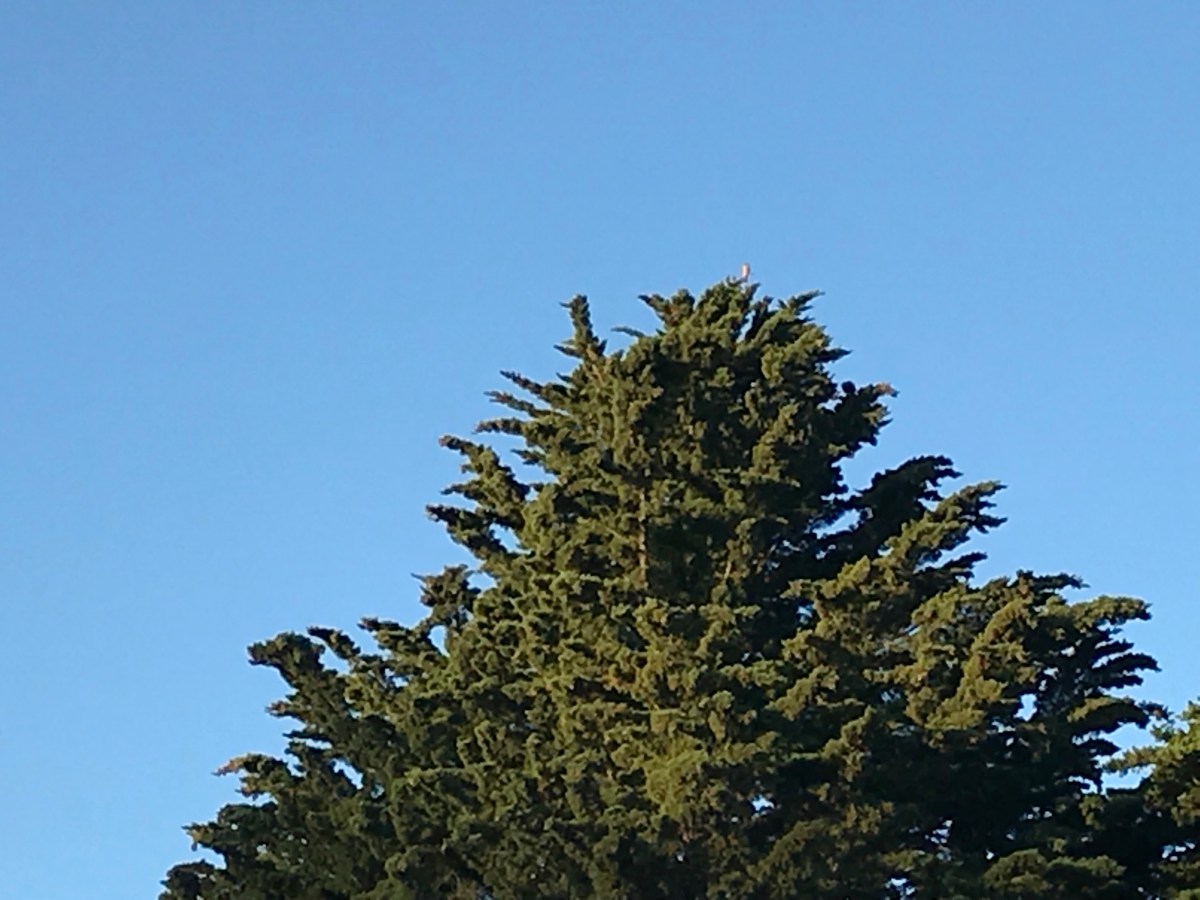
A phone photo of the Kite Perch. That tiny speck christening the top of the cypress is the avian death angel: the peregrine falcon.

After about five minutes the falcon lit out north, it’s powerful wing beats talking the peregrine in a straight line toward the PEFA Perch near Crystal Springs Road.

This was a great way to start the school day. The only downside was that I was not able to share it with my students.