Image

DIY Airplane Fieldguide

I have wanted to buy an airplane field guide to help me identify the different commercial airplanes I see at airports or flying north up the Pacific Coast. Telling an Airbus A380 from a Boeing 747 is an easy identification but what about other aircraft?

Where I grew up in Sunnyvale is on the flight path to Moffett Field Navel Base. By bedroom window faced the many military planes approaching the runway at Moffett.
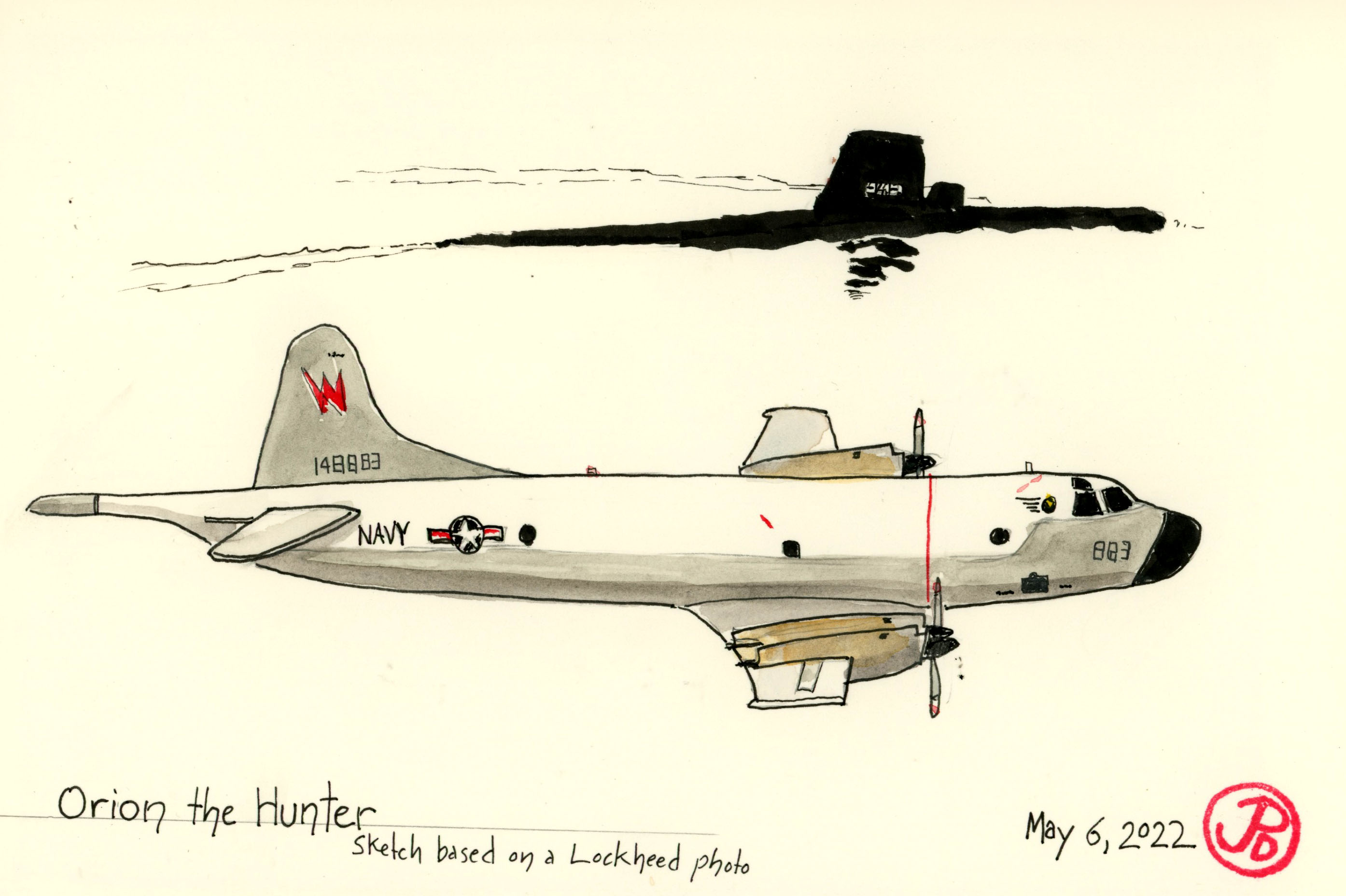
A 2022 sketch of Orion the Hunter.

Like birds, I learned to identify the common Lockheed P-3 Orion, the submarine hunter. But I also could identify other aircraft: C-130 Hercules, C-5 Galaxy, F-16 Falcon, the Blue Angels with their A-4 Skyhawks and later F-18 Hornets as well as other aircraft.

As I hobby I built model airplanes which I hung from the ceiling with dental floss and push pins. Some of my favorites was an F-4 Phantom hand painted in camouflage and a KC-135 refueling a B-52.

These airplanes were easy to identify but when it comes to commercial jets, it is a bit more tricky.

Commercial jets can be broken down to the two major manufacturers: Airbus and Boeing.

Boeing is an American manufacturer founded in 1916. It has produced such iconic passenger planes as the 314 Clipper, the 377 Stratocruiser, the 707, 737, the Triple 7, and the renowned 747.

Airbus on the other hand is a consolidation of different European companies formed in 1970. Iconic aircraft on its roster are: the A220, A320, A330, A350, and the largest passenger plane in the air the A380.

To internalize the simple differences between the two manufacturers I created a short DIY field guide to aircraft, a sort of cheat sheet to use while at the airport (featured sketch).

I guess plane spotting from an airport terminal is a bit like birding in a mount museum, the planes are sitting on the tarmac giving you time for prolonged study. And planes don’t flush easy like spooked birds. Well neither do taxidermy birds!
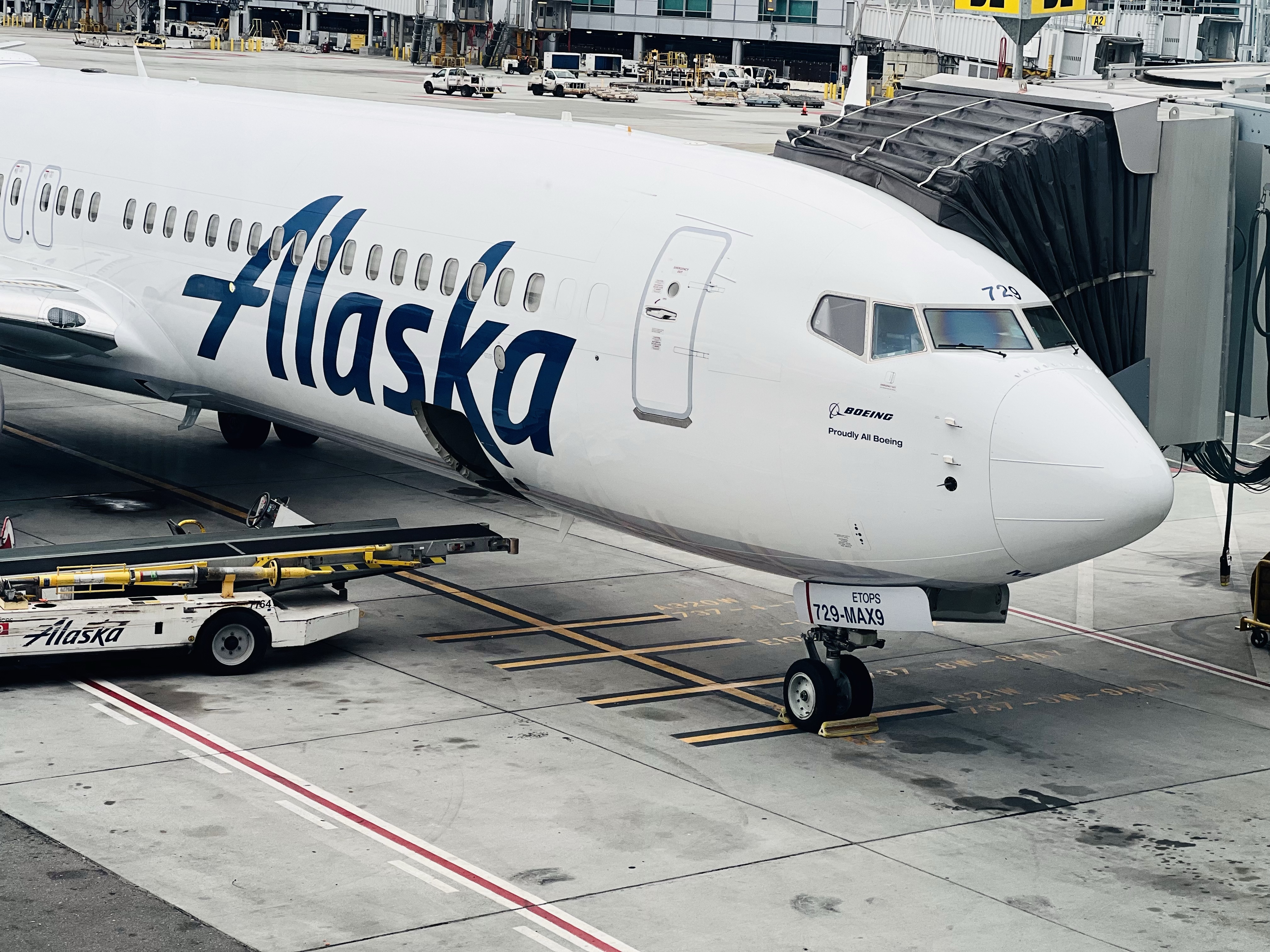
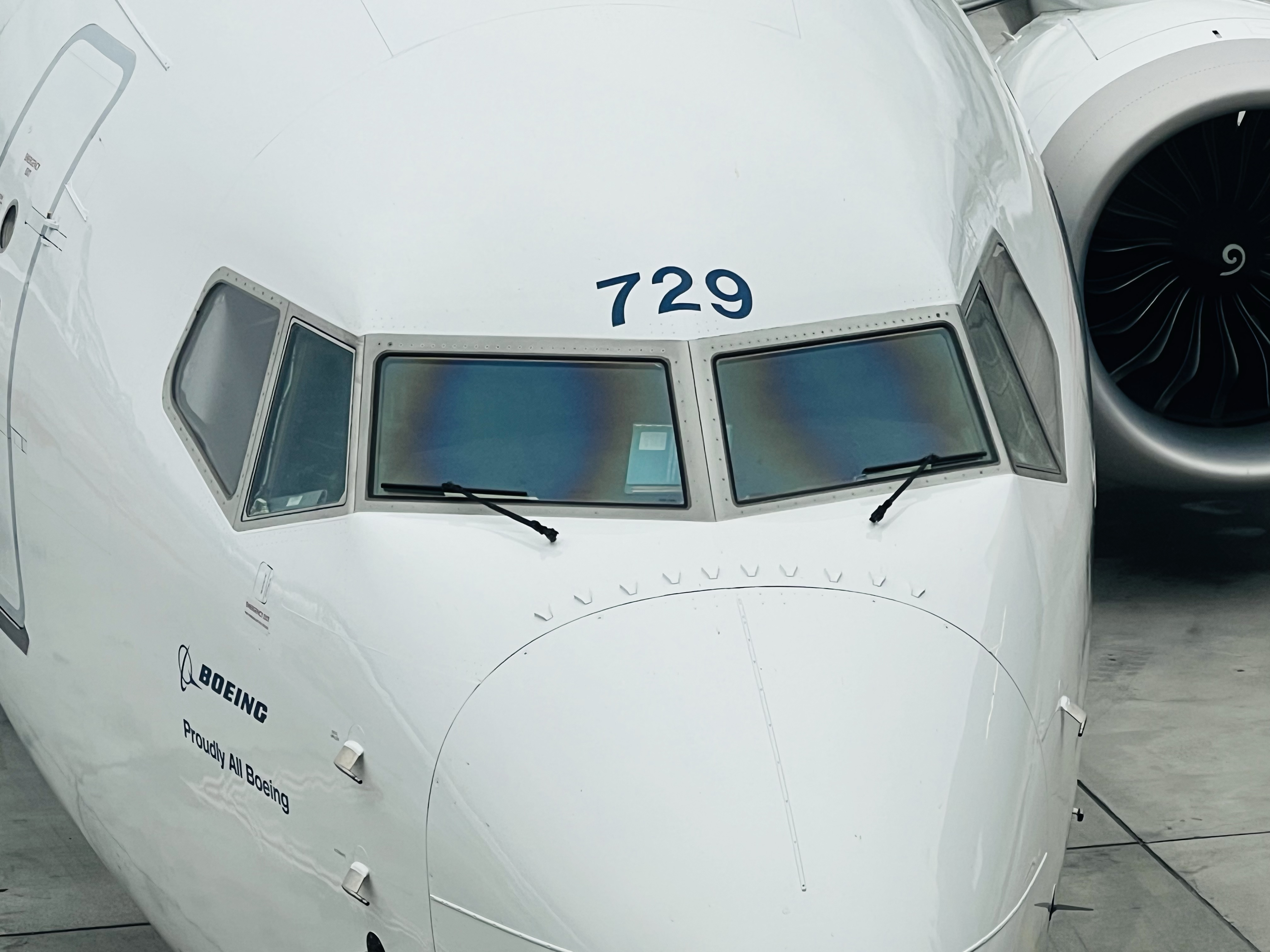
Plane spotting at SFO. This plane has a pointed nose and the side windows form a “V” instead of a straight line. It also helps that it says: “Boeing. Proudly All Boeing” just under the window!
Closer detail of the side windows of a Boeing. I believe this is a Boeing 737-9 MAX.
Could I identify my plane that would take me to Honolulu? Straight side windows with a notch in the top corner. The nose is rounded and less pointy than a Boeing. This is an Airbus A330-200. It also helps that it’s labeled below the windows.
My winged chariot to Hawaii. Another view of the Airbus A330 and the diagnostic cockpit window shape. Not seen in this photo but where the tail meets the fuselage, it is rounded with no extra angle like the Boeing’s tail.

While waiting to board my flight I found a comfy swivel chair and sketched the view before me of the B Gates of Terminal 1 (no pencil required). In the foreground is an Alaska Airlines jet and in the background is a Hawaiian Airlines plane at Gate 11. This was the plane that would be flying me to Honolulu.

I sketched the Alaskan Boeing before it pushed out to the taxiway leading to runways 1 (Left and Right). This left me time to add details to the Hawaiian Airbus and the jumbles of the surrounding scene at SFO.
Image

First Flights Over Aptos

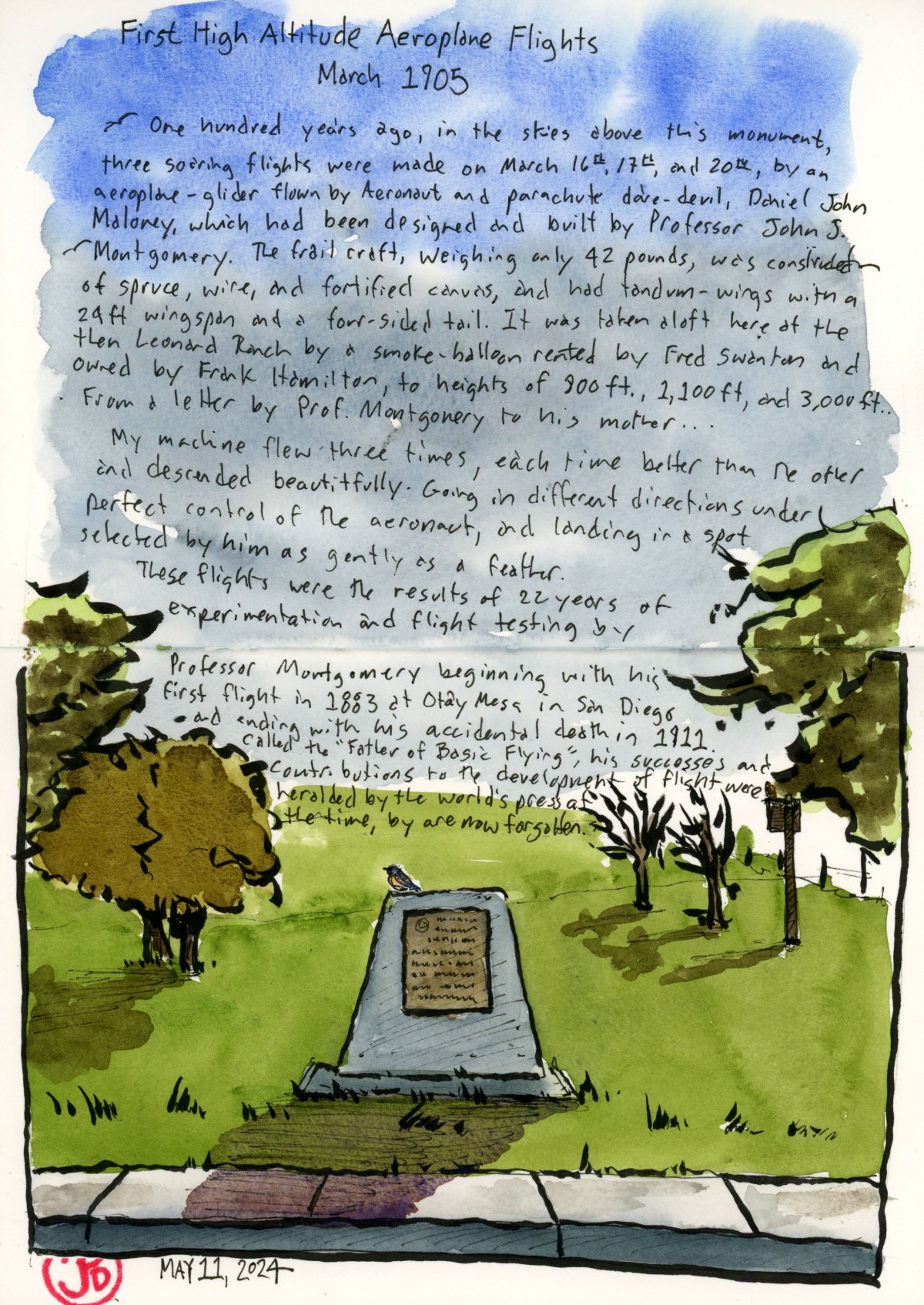
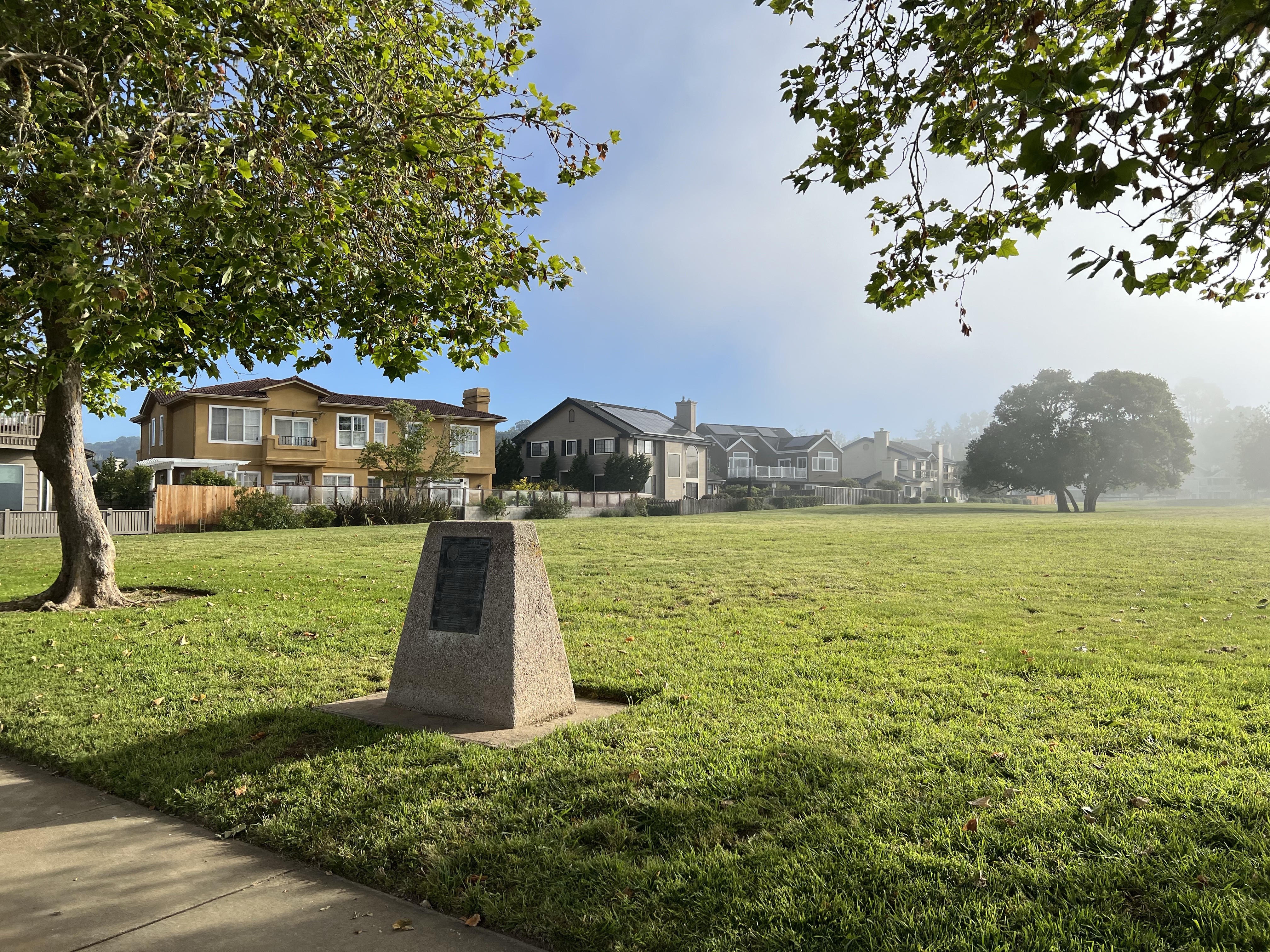
Down a cul-de-sac in a part of residential Aptos I have never explored before there is a monument to aviation at the edge of a green field.

This is what these hidden monuments are for, to reminds us of the anonymous people who have loved, lived, and lost who had come before us. The ones, on whose shoulders we stand, that have changed the world in ways we don’t understand or acknowledge.

The plaque on the monument reads:

One hundred years ago, in the skies above this monument, three soaring flights were made on March 16th, 17th, and 20th, by an aeroplane- glider flown by Aeronaut and parachute dare- devil, Daniel John Maloney, which had been designed and built by Professor John. J. Montgomery.

The frail craft, weighing only 42 pounds, was constructed of spruce, wire, and fortified canvas, and had tandem-wings with a 24 ft. wingspan and a four sided tail. It was taken aloft here at the then Leonard Ranch by a smoke-balloon rented by Fred Swanton and owned by Frank Hamilton, to heights of 800 ft., 1,100 ft., and 3,000 feet. The longest flight lasted over 18 minutes and covered over 2 miles…From a letter by Prof. Montgomery to his mother…

My machine flew three times, each time better than the other and descended beautifully. Going in different directions under perfect control of the aeronaut, and landing in a spot selected by him as gently as a feather.

These flights were the result of 22 years of experimentations and flight testing by Professor Montgomery, beginning with his first glider flight in 1883 at Otay Mesa in San Diego and ending with his accidental death in 1911. Called the “Father of Basic Flying”, his successes and contributions to the development of flight were heralded by the world’s press at the time, but are now largely forgotten.

The plaque was erected in 2005 by E Clampus Vitus El Viceroy Marques de Branciforte Chapter 1797, E Clampus Vitus Capitulus Redivivus Yerba Buena #1, Hiller Aviation Museum San Carlos Ca,. Aptos Chamber of Commerce and Museum Capitola/Aptos Rotary.

Now the monument serves as a perch for western bluebirds and the green field is used by a murder of crows for foraging. Off to the right is an owl box that a pair of red-shouldered hawks use as a hunting perch.

119 years ago, a frail, 42 pound glider soared above this field. Now it has been returned to the true masters of flight: the gulls, corvids, and hawks that effortlessly glide above.

But if you look further above you will see the great grand children of Montgomery’s passions: the modern passenger jet on final approach to SFO and SJO.

Image

Castle Air Museum

From my childhood bedroom window on Cormorant Court, I looked down at the scrub-jays, mourning doves, and house sparrows at the feeder and birdbath in the backyard. These noticings fueled a lifelong passion for birds.

To look skyward, to the east, was the flight path of planes as they approached Moffett Field, a naval base in Sunnyvale. The sound of the P-3 Orion’s turboprops were the sound of my childhood, along with the calls of scrub-jays and mourning doves. I learned to identify planes as I identified birds. I knew a C-5 from a C-130, an A-4 from an F-4. I just loved things than fly!

I built models of airplanes such as the F-4, B-52, and KC-135 and hung them from the ceiling with push pins and dental floss. I shared this hobby with a neighbor two doors down and he now is a pilot for United Airlines.

So there should be no surprise that I left Santa Cruz at 6:40 AM, my destination was Atwater, two hours and ten minutes away. My destination was the Castle Air Museum. This air museum is one of the largest collections of military planes (or any planes) on the West Coast.

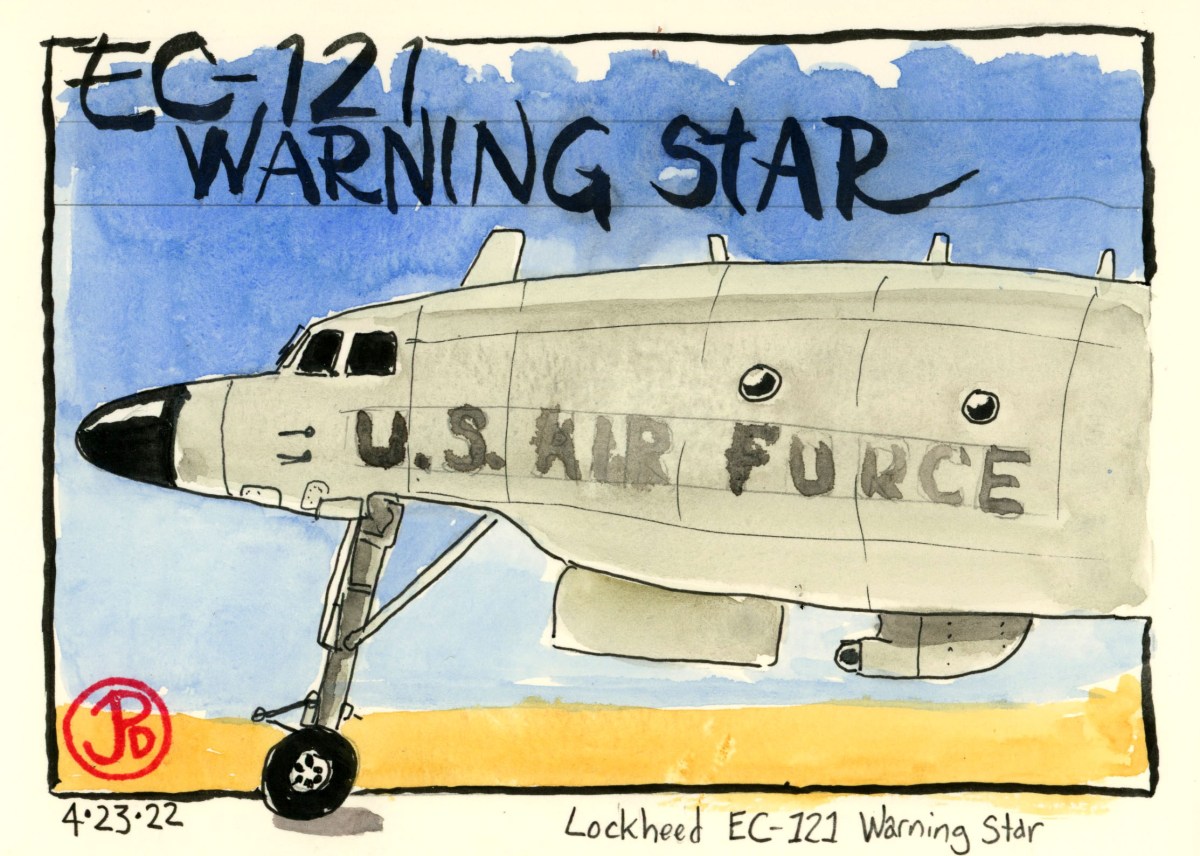
I am always looking for new sketching challenges and Castle’s collection of almost 70 aircraft would fit the bill. In the end, I did ten sketches in just under three hours.

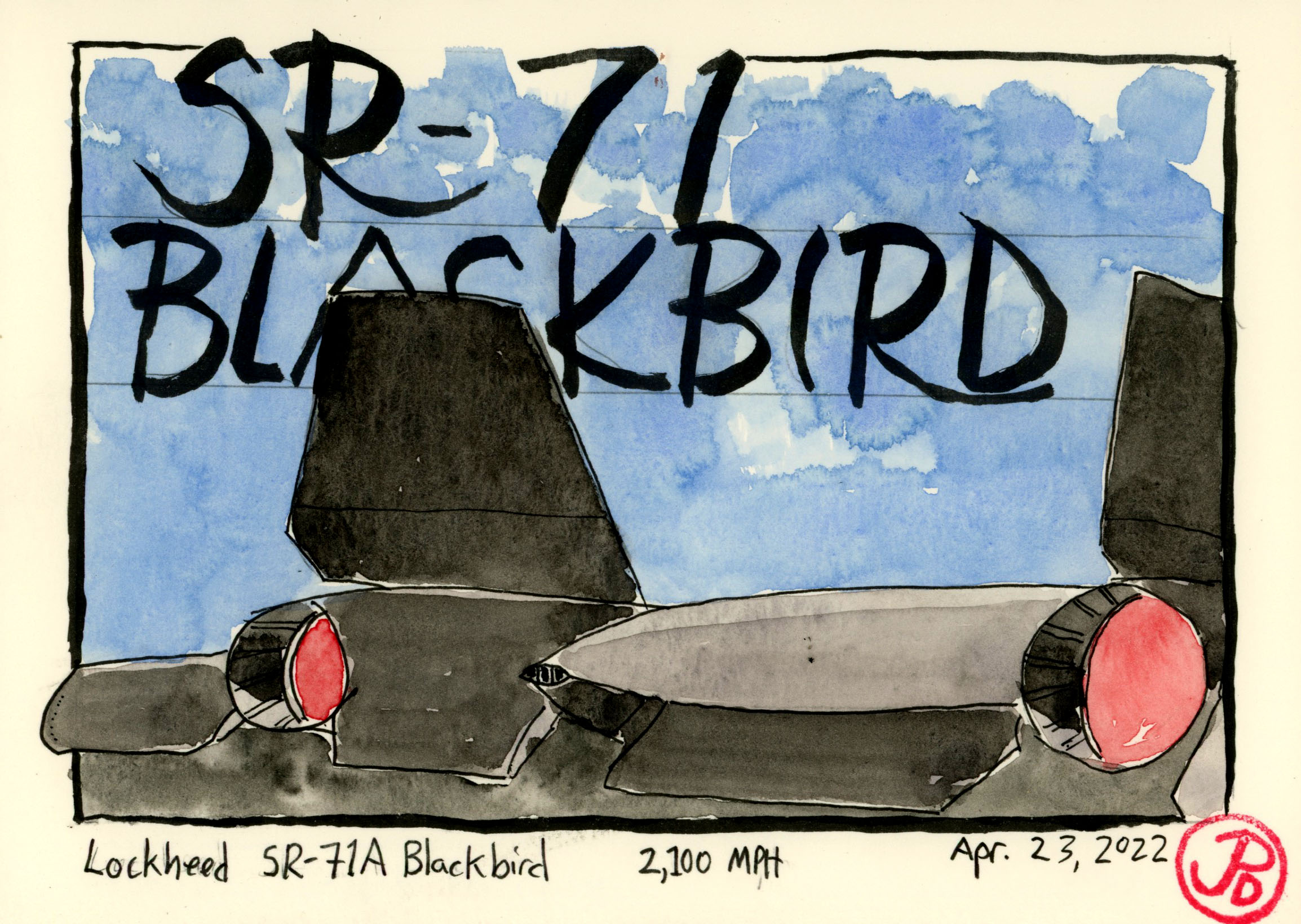
A sketch of the business end of one of the aircraft that mesmerized me as a child, the world’s fastest plane: SR-71 Blackbird. It’s top speed was Mach 3.3, four times as fast as the average cruising speed of a commercial jet. 32 of these high-speed, high-altitude, reconnaissance aircraft where built, 26 still exist and like this Blackbird, are on static display in museums.

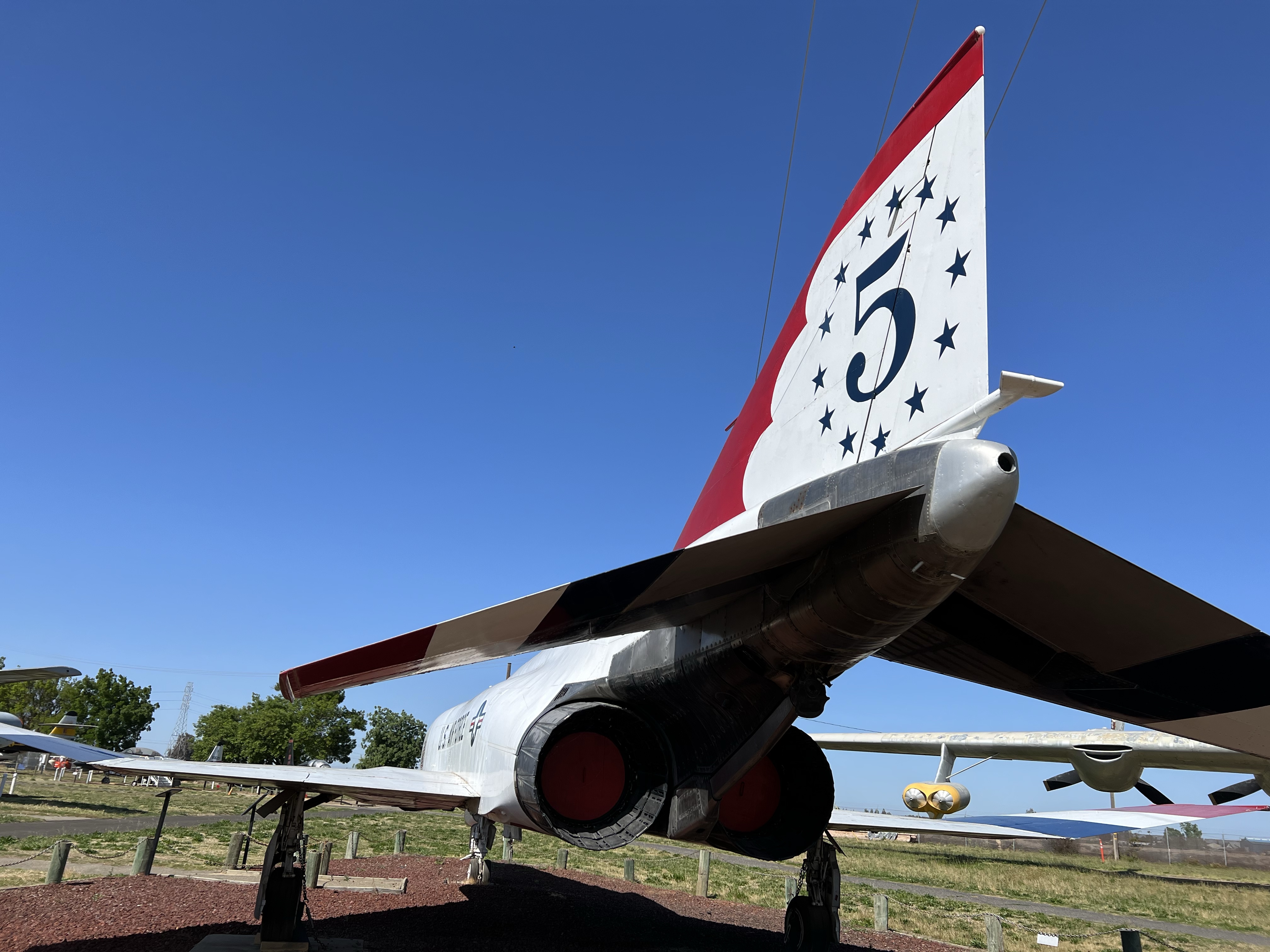
The trip was also a dip into nostalgia as I was sketching an F-4 Phantom, one of the planes I built a model of when I was a kid. As I’ve noted before, you really get to know something when you sketch it.

The business end of an F-4 Phantom. This jet is painted in the livery of the Thunderbirds No. 5, the Air Force Demonstration Squadron. When I was a kid, I built four F-4s in the Blue Angels livery. I would watch the Blue Angles’ performance from my roof.
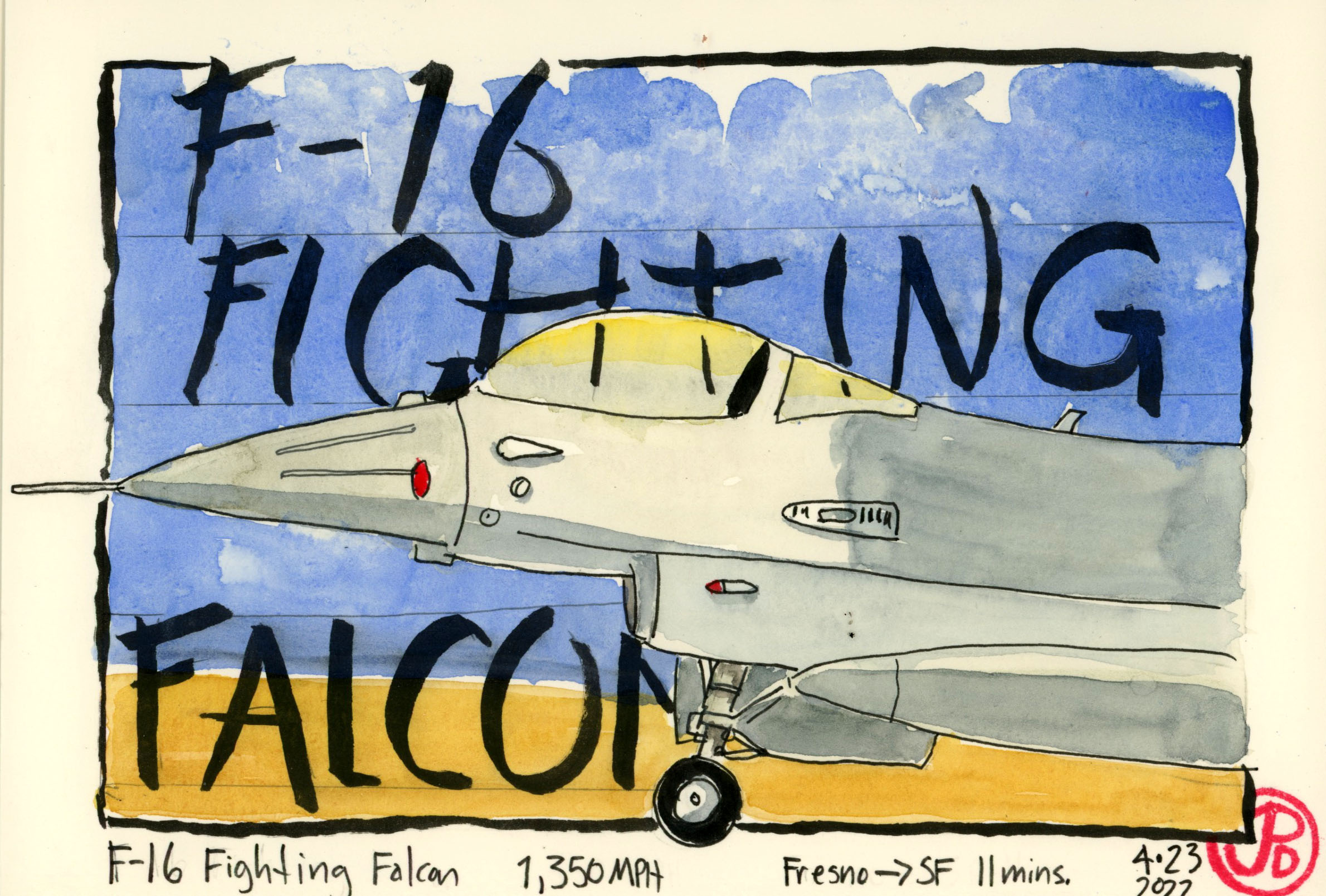
A sketch of an F-16 Fighting Falcon. This plane was part of the National Guard, stationed in Fresno. The F-16 could cover the distance between it’s base in Fresno and San Francisco in 11 minutes!
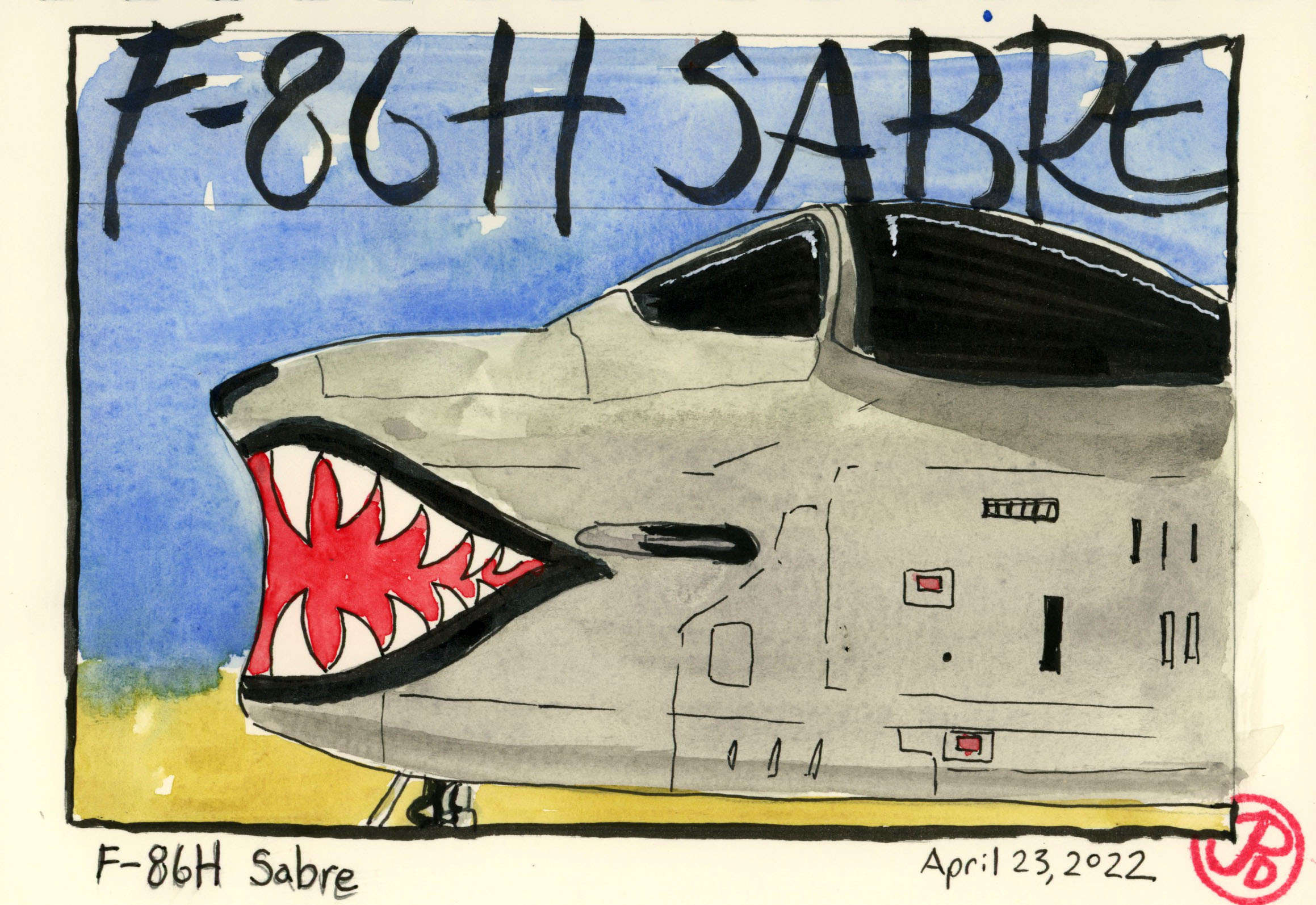
F-86H Sabre, a Korean War swept-wing fighter with a top speed of 600 mph. It’s painted nose is a throw back to the P-40 of World War II.