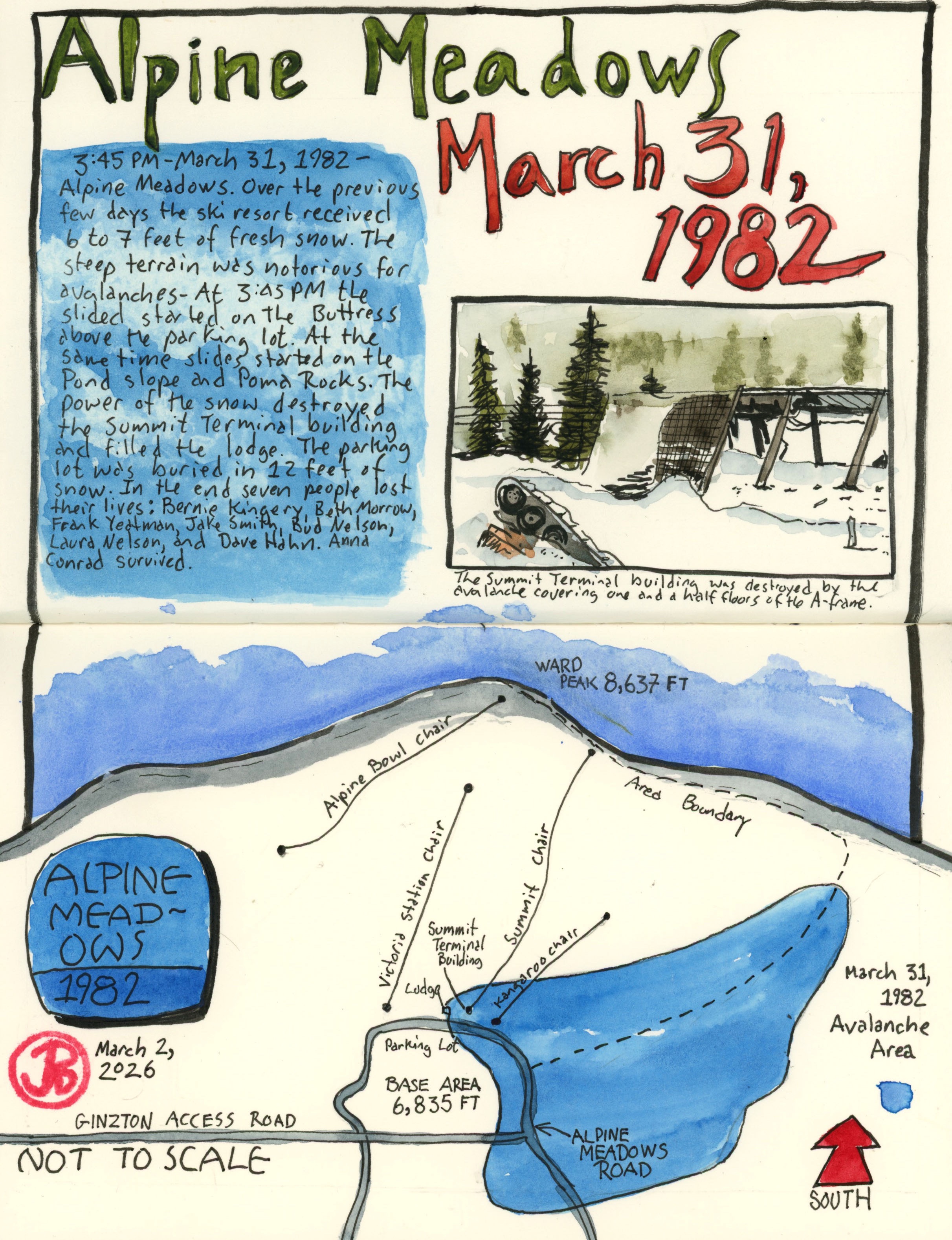
With the recent February 17, 2026 avalanche at Castle Peak that took the lives of nine skiers, it reminds me of another tragic avalanche that gripped the nation in 1982.
I was 11 years old at the time and an avid skier. I remember the news coverage of this event, it was a story of tragedy, strength, and hope.
This was the avalanche at the ski resort at Alpine Meadows on March 31, 1982.
I wouldn’t call this natural occurrence a “natural disaster”, it just becomes a disaster when human lives are caught up in it because avalanches are perfectly natural and are often created by human activity.
An early spring storm brought loads of snow to the Lake Tahoe region; seven to eight feet.
The ski patrol at Alpine Meadow were in charge of avalanche control (as if there is such a thing) and the mountain had an extensive program that used hand thrown dynamite charges, a 75 mm recoilless rifle, and a howitzer cannon to prompt the build up of snow to reach its angle of repose.
The steep slopes at Alpine Meadows, from the peaks down to the base area, is an avalanche machine. The resort is graded a Class A, the highest hazard designation for avalanches and Alpine Meadows is one of the most avalanche prone ski resorts in the country.
The mountain manager knew of the potential dangers and closed the mountain to skiers on Wednesday the 31 and told employees not to show up for work that day.
The only people on site were the mountain manager, Bernie Kingery and assisting him with monitoring the avalanche control was Beth Morrow. A few others were around the resort helping in the effort to clear snow and avalanche control.
In the afternoon of the 31st lift operator Anna Conrad and her boyfriend returned to the Summit Terminal building from Conrad’s cabin. She wanted to pick up her snow pants in the locker room on the second floor.
The Summit Terminal was a three story modified A-frame that housed the ski school, lift operations, trail crew, and the ski patrol office. It was also the nerve center when monitoring avalanche control. As the name implies, the Summit Chairlift (the resorts longest lift) departed from the building and rose up to the top of Ward Peak.
At 3:45 PM, the tons of snow on the ridges that had been building up began to move downhill. Seconds later the avalanche, traveling at almost 200 miles per hour, took out the Summit Terminal and crashed through the lodge and filled the parking lot with 12 feet of snow.
In a blink of an eye the avalanche created a path of destruction that claimed seven lives. This disaster remains the most devastating avalanche at a ski resort in North America.
The news coverage of the event remains in my mind’s eye as the search for survivors in the wreckage of the Summit Terminal building and underneath the snow continued.
As the days after the 31st passed it seemed less and less likely there would be any survivors. Rescue was turning into recovery.
Rescue and recovery effort were hampered by the continued snowstorm and the fears that the snow build up would cause another avalanche.
Miraculously on the fifth day they found a survivor trapped in an air space created by a fallen locker and a bench. This was lift operator Anna Conrad.
In the weeks after the avalanche I remember the interviews shown on the local newscasts that Conrad gave from her hospital bed at Tahoe Forest Hospital in Truckee.
Sketch Notes and References
While researching the events of March 31, 1982, I created a spread with a map of Alpine Meadows and the path of the avalanche. I also sketched the ruins of the Summit Terminal building after the avalanche.
I used two main references in my research of the Alpine Meadows avalanche: the gripping book, A Wall of White by Jennifer Woodlief (2009) and the award winning documentary Buried: The 1982 Alpine Meadows Avalanche (2022) directed by Stephan Siig and Jared Drake.
 Corvid Sketcher