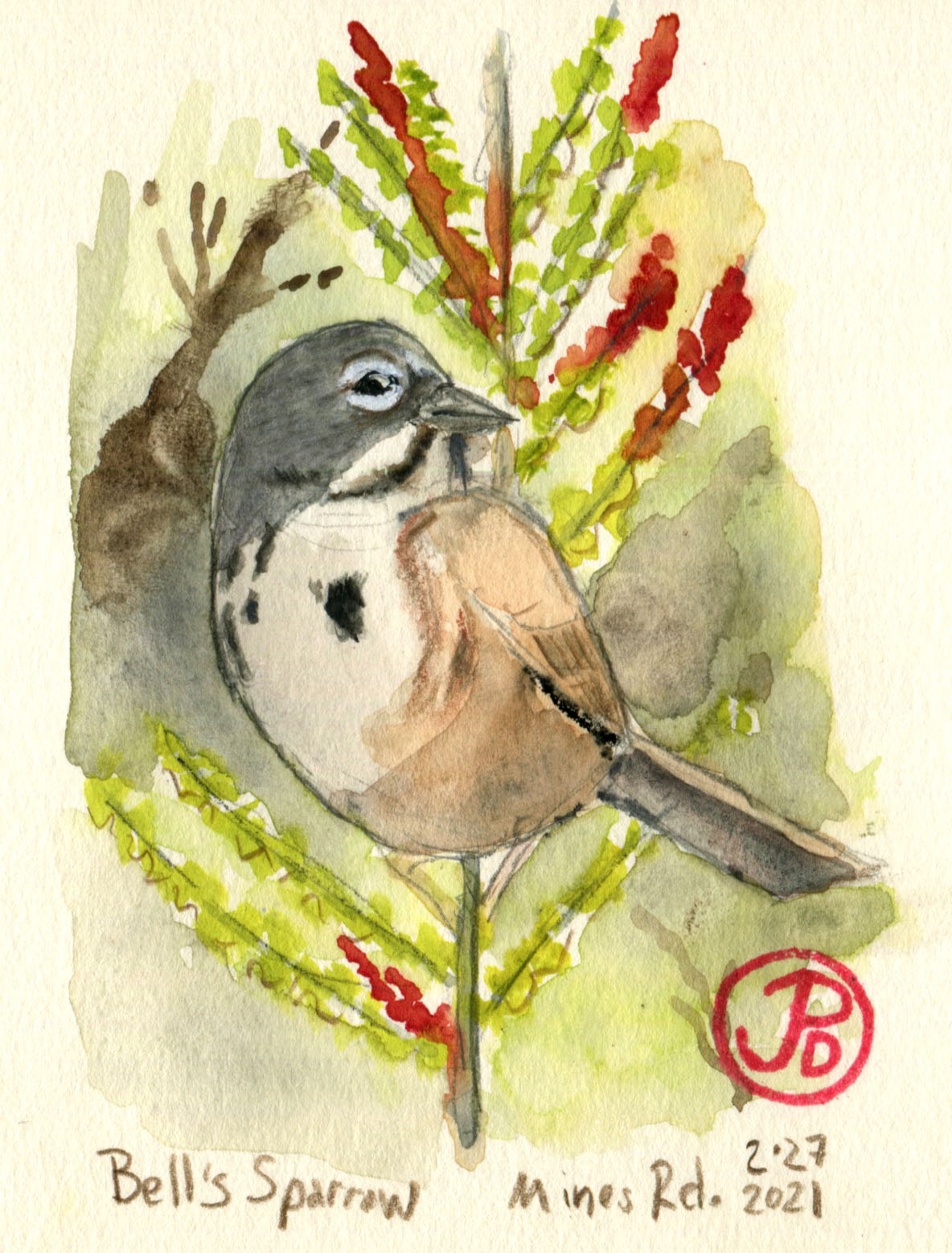
I had first seen a sage sparrow on the morning of April 10, 2003 in the the South Tufa area of Mono Lake. This is the time of year when sparrows are up singings as they defend their breeding territory. This is also the time of year when they are easiest to see.
Then in 2013, the sage sparrow was split into two distinct species. A split is when ornithologists determine that one species is now considered two separate species, usually using DNA analysis. Before these were all considered subspecies of sage sparrow. They were now divided into the sagebrush sparrow and the Bell’s sparrow. Birders do love a good split because it means there are even more birds to add to their life lists!
The bird I had seen in the spring of 2003 was now considered a sagebrush sparrow and now I had to look for a Bell’s. And I knew just where to look!
I picked Grasshopper Sparrow up at 6:15 AM. Our destination was the legendary birding Mecca known as Mines Road and Del Puerto Canyon. This area encompasses three counties: Alameda, Santa Clara, and Stanislaus. Specialty species of this area are: golden eagle, prairie falcon, greater roadrunner, Lewi’s woodpecker, yellow-billed magpie, Lawrence’s goldfinch, canyon wren, phainopepla, lark and rufous-crowned sparrow, and of course Bell’s sparrow.
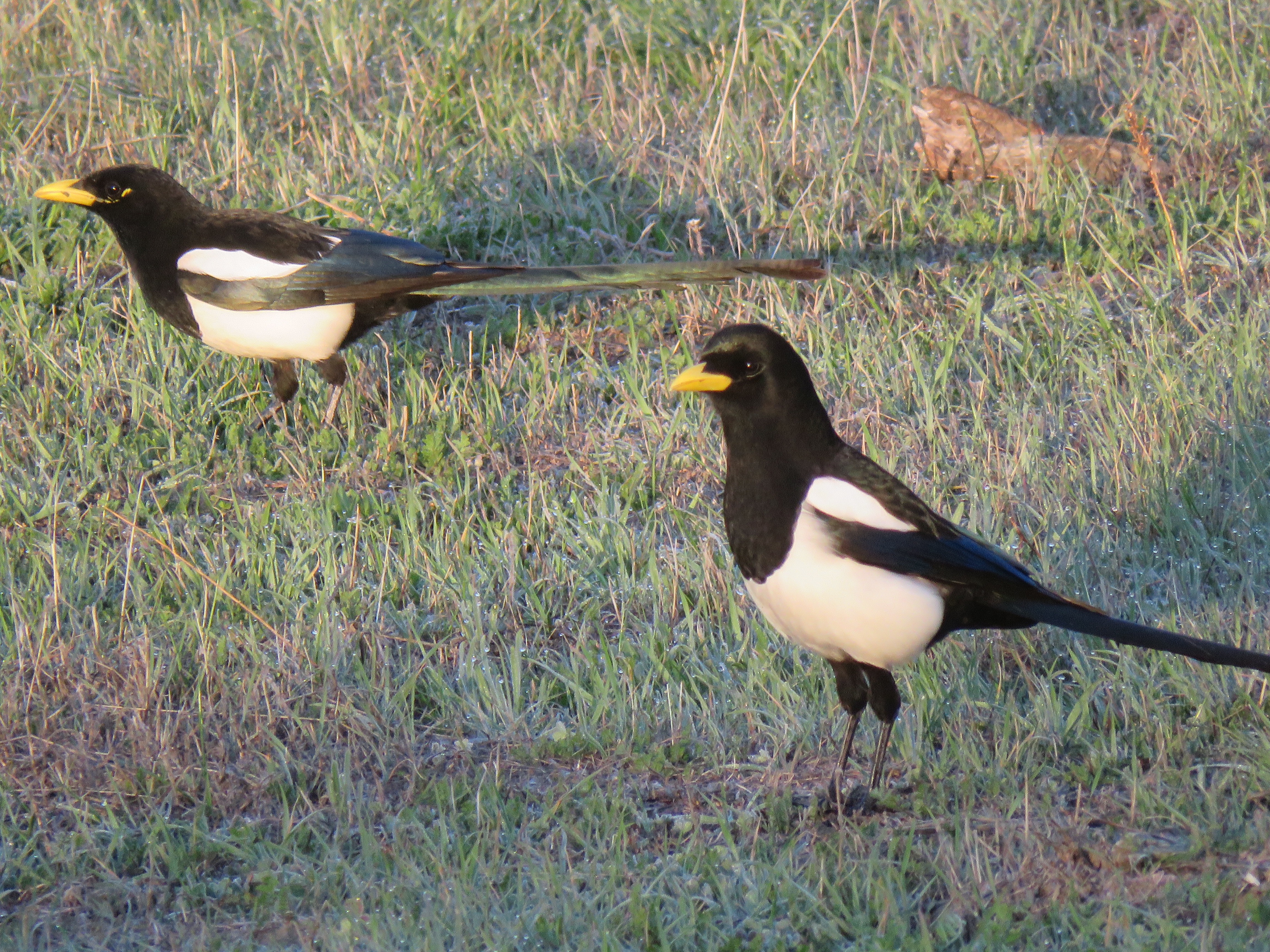
From the wine growing region in Livermore, Mines Road climbs out of the flats and weaves up a canyon dotted with oaks. This is probably the most beautiful area in the Mines Road and Del Puerto Canyon area,
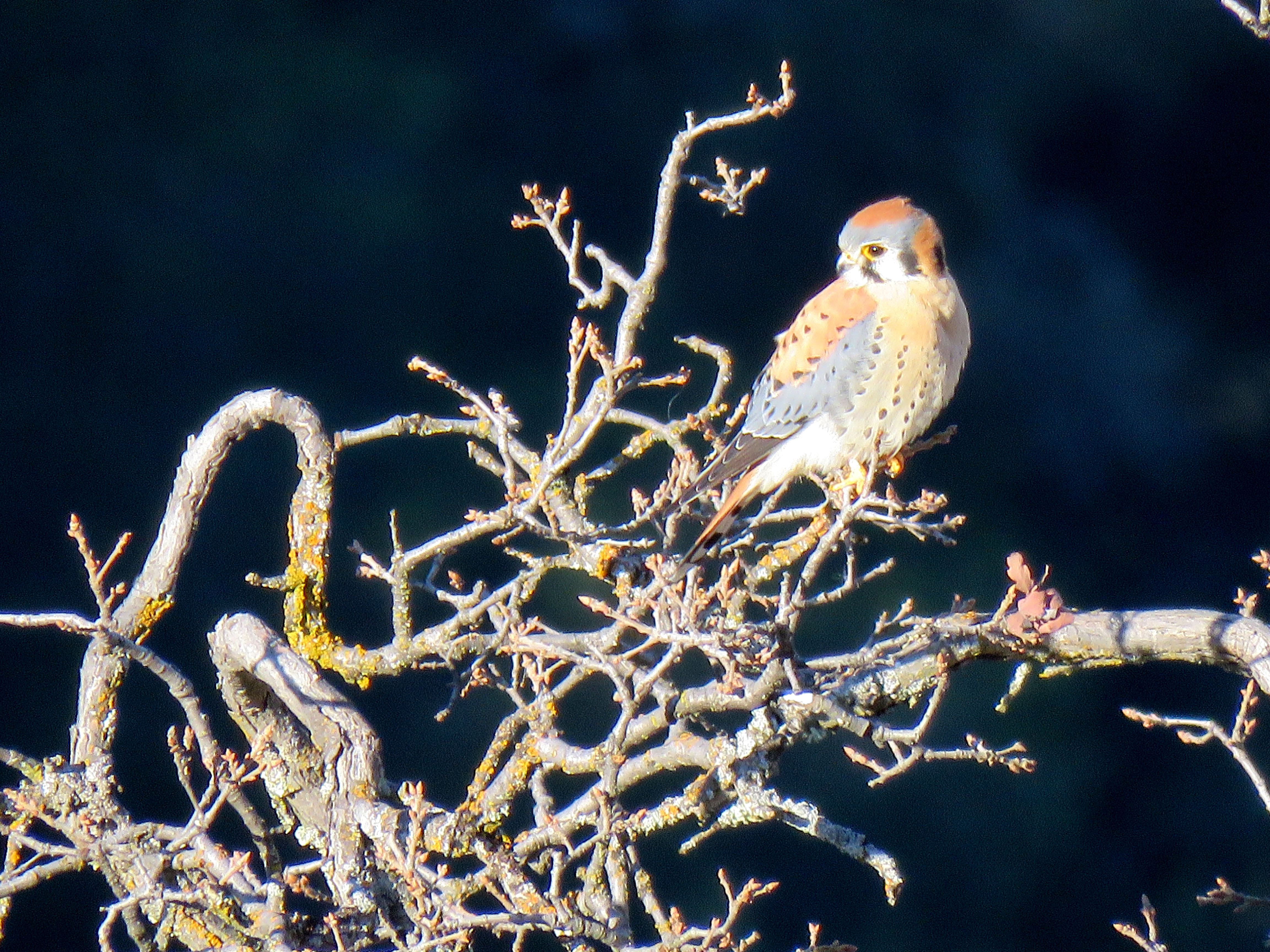

Our destination was a bend in the road, about five miles from the Santa Clara County line. this is where Bell’s had been recently reported. We pulled off Mines Raid near a roadside memorial.
I fired up my Bluetooth speaker and we stood in front of a hillside of chemise. Within two notes of it’s recorded song, a Bell’s sparrow shot up into the top of a bush. ABA lifer!
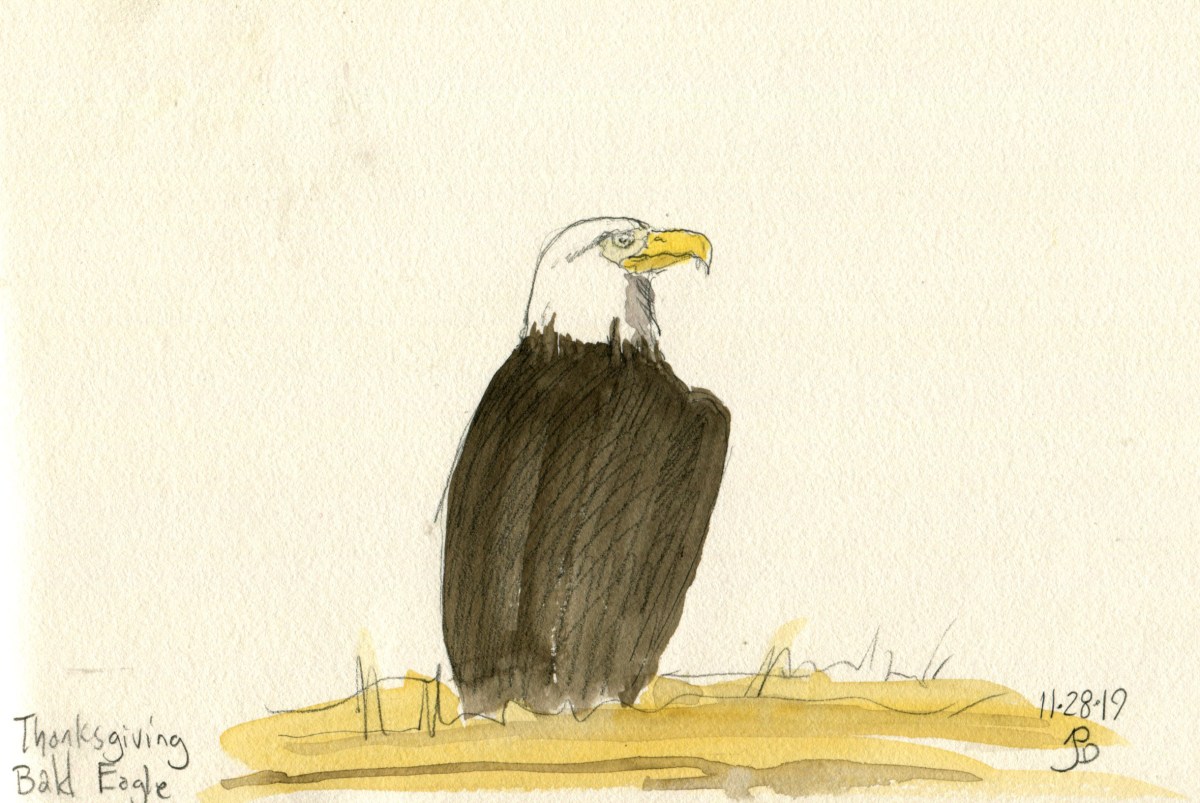


 I headed down Kimball Lane with a wintering wonderland of waterfowl on all sides and thousand of stretched out “V”s in the air. I came to the junction of Jack Slough Road and I turned right. As I headed down the road on this Thanksgiving morning I saw three wild turkeys off in a field to my left. I pulled over to get some photos, but the birds had disappeared into the brush. This was a good day to be skittish if you are a turkey! That’s when I saw my an immature bald eagle fly over. Then an adult appeared, soaring over the powerlines and then coming to rest in a field to the right.

 Corvid Sketcher