Image

Mare Island and the Muddy Puppy

The former Naval base on Mare Island is a sketcher’s paradise. It’s full of cranes, condemned buildings, dry docks, bridges and rusted rails. Plenty of shapes and perspectives to add to my sketchbook.

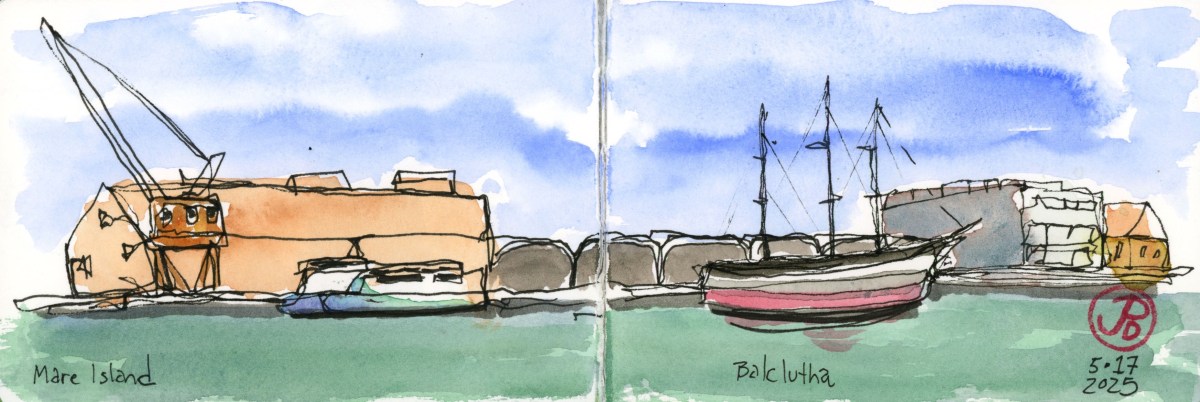
On a recent journey to Vallejo to visit a friend, I headed to the ferry terminal across the Napa River from Mare Island to do a park bench continuous line sketch of the river front with the Balclutha moored to the dock (featured sketch).

The 1886 three master (aka Star of Alaska) is temporarily on display here while the pier at the San Francisco Maritime National Historic Park is rebuilt.

Also moored nearby is a modern bay ferry which I included in the sketch as a bookend to Bay Area maritime history.

Mare Island Mud Puppy

From my sketching position near the Vallejo Ferry Terminal I was looking across the Napa River towards the location of one of the most infamous sinkings in Mare Island history.

On May 15, 1969 the Sturgeon-class nuclear submarine the USS Guitarro was moored to the pier in the Napa River. The sub had been built and launched (July 27, 1968) on Mare Island and now was still under construction.
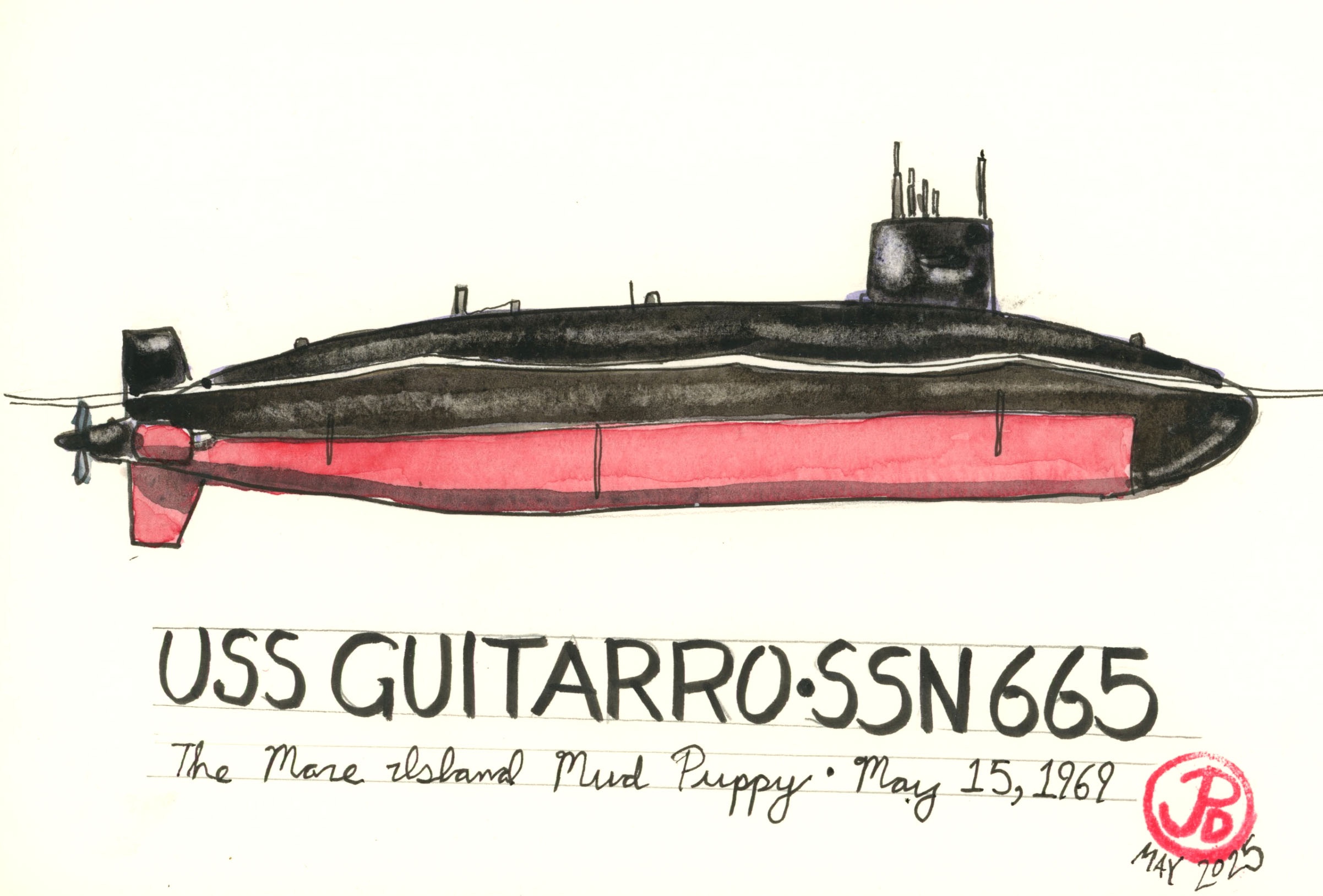
Two construction groups were working on different parts of the sub at the same time. They began adding water to the ballast tanks, unbeknownst to each other. The construction groups were warned that the Guitarro was riding low in the water but did not heed the warnings.

At 20:30 (8:30 PM) the groups, after returning from lunch, noticed the sub taking a downward angle and the Guitarro was taking on water from her forward hatches. At 20:55 the Guitarro sank to the bottom of the river leaving her sail above the waterline thus earning the dubious nickname: “Mare Island Mud Puppy”.

The sub was refloated a few days later and damages were estimated to be between $15 and $22 million. The sinking of the Guitarro put an end to submarine construction and repair at Mare Island. Mare Island Naval Shipyard was once the premier West Coast submarine port. The last sub built at Mare Island was the USS Drum in 1970.

The USS Guitarro was commissioned (32 months late) on September 9, 1972. She was in service until 1992 when she was decommissioned and scrapped at Puget Sound, Washington in 1994.
Image

The Ferryboat Eureka

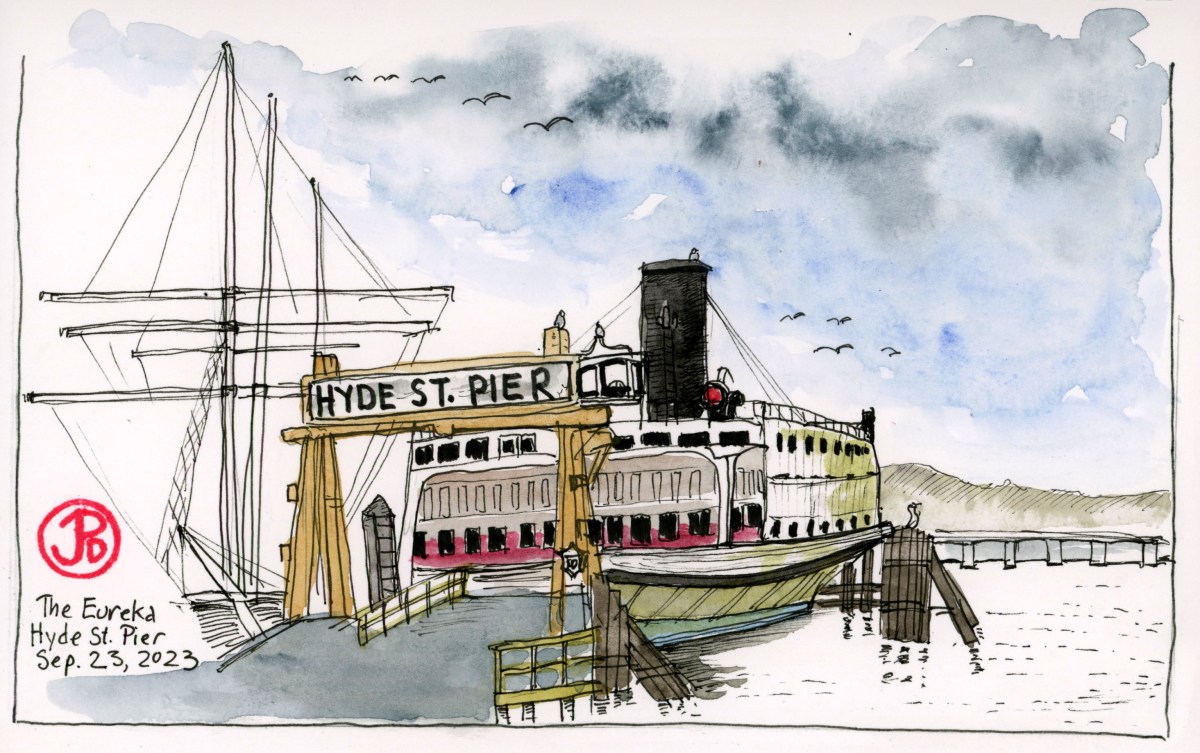
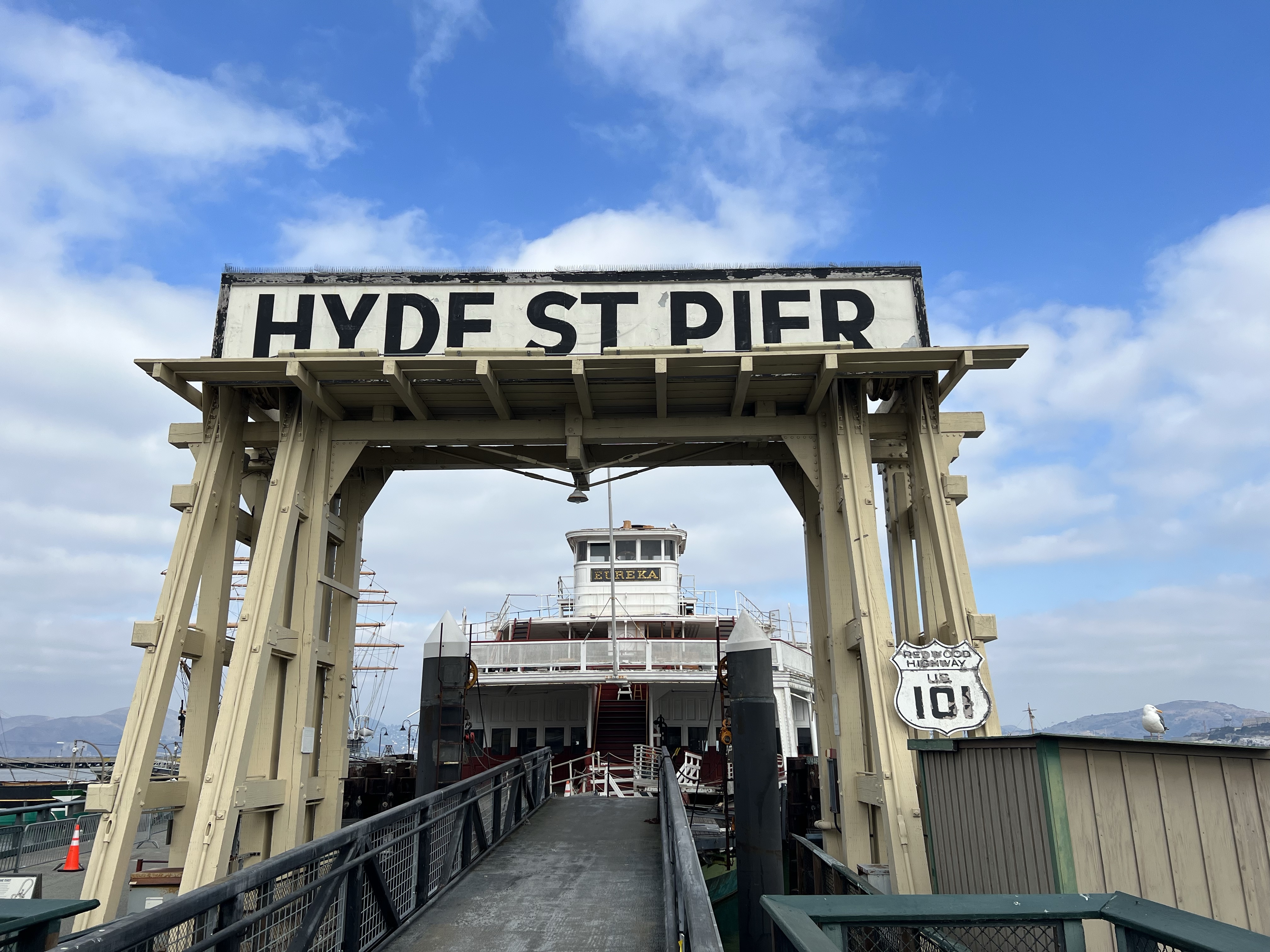
One of the ships docked at the Hyde Street Pier is the former Northwestern Pacific ferry boat Eureka.

In the era before bridges, (the Bay and Golden Gate), the only way to get from San Francisco to Marin or Oakland by rail, was by rail ferry.

The passenger cars would be boarded on the ferry and then, well, ferried, across the Golden Gate to Sausalito or Tiburon where they would be unloaded and continue north on the rails of Northwestern Pacific.

The ferry and the Hyde Street Pier was actually considered part of Highway 101.

The boat was built in 1890 in Tiburon by San Francisco and North Pacific Railroad Company and was originally named the Ukiah, which was as far north as the line reached. The Eureka is a double-ended, wooden hulled ferry-boat that was originally built to hold train cars. Two standard-gauge tracks where built into the main deck.

This 277 foot, 2,564 tonnage boat is the largest wooden-hulled boat afloat in the world.

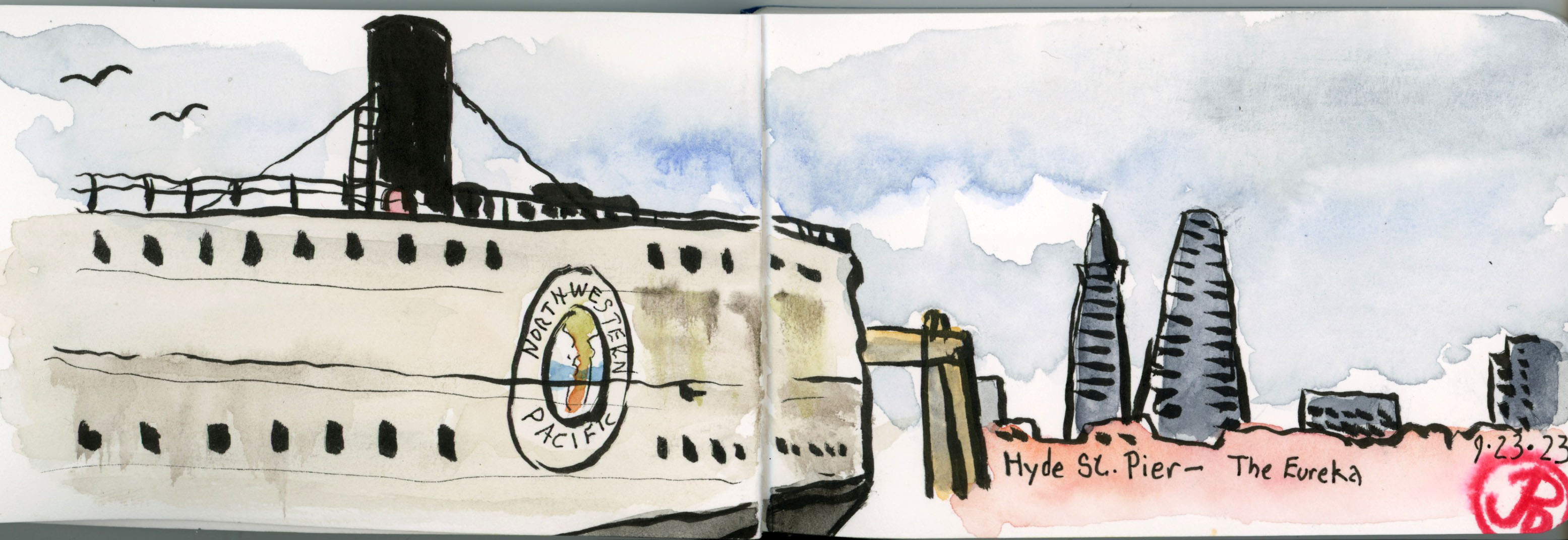
A pen brush field sketch of the Eureka, displaying the Northwestern Pacific circular logo, and the modern San Francisco skyline.

The Ukiah was initially in service to ferry people from San Francisco to Tiburon during the day and then carry freight cars during the night. In 1907 the Northwestern Pacific Railroad took ownership of the Ukiah and it was routed to the Marin port of Sausalito.

During World War I, the ferry was rebuilt and the refurbished ferry was renamed the Eureka, in honor to the northernmost station on the Northwestern Pacific Railroad.

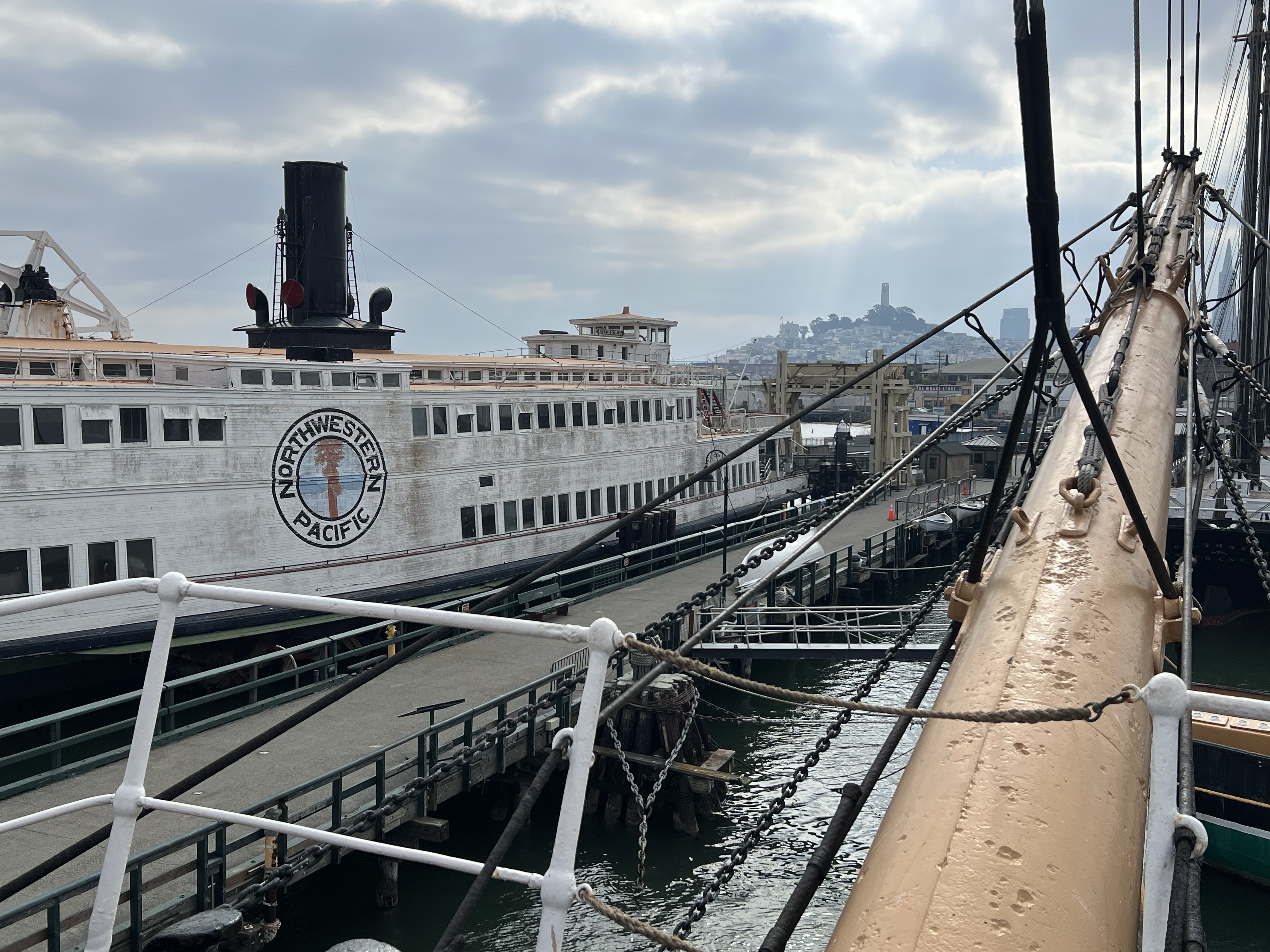
The Eureka from the bow of the Balclutha and Coit Tower echoing the steam stack of the Eureka.

The ferry was later used to ferry automobiles on her main deck and had a capacity of 2, 300 passengers and 120 cars. At this time, the Eureka was the largest and fastest double-ended passenger ferry in existence and because of this, the Eureka was called up for the busiest commuters times from Sausalito to San Francisco. Hyde Street pier was the primary auto terminal to connect San Francisco to points north and east.

When the Golden Gate Bridge was completed in 1937, ferry service passengers dried up and Northwestern Pacific abandoned all ferry service in 1941.

The Eureka found a new life in the 1950s with a new owner, the mighty Southern Pacific. The Eureka now linked passengers on SP’s overland service from Oakland to San Francisco.

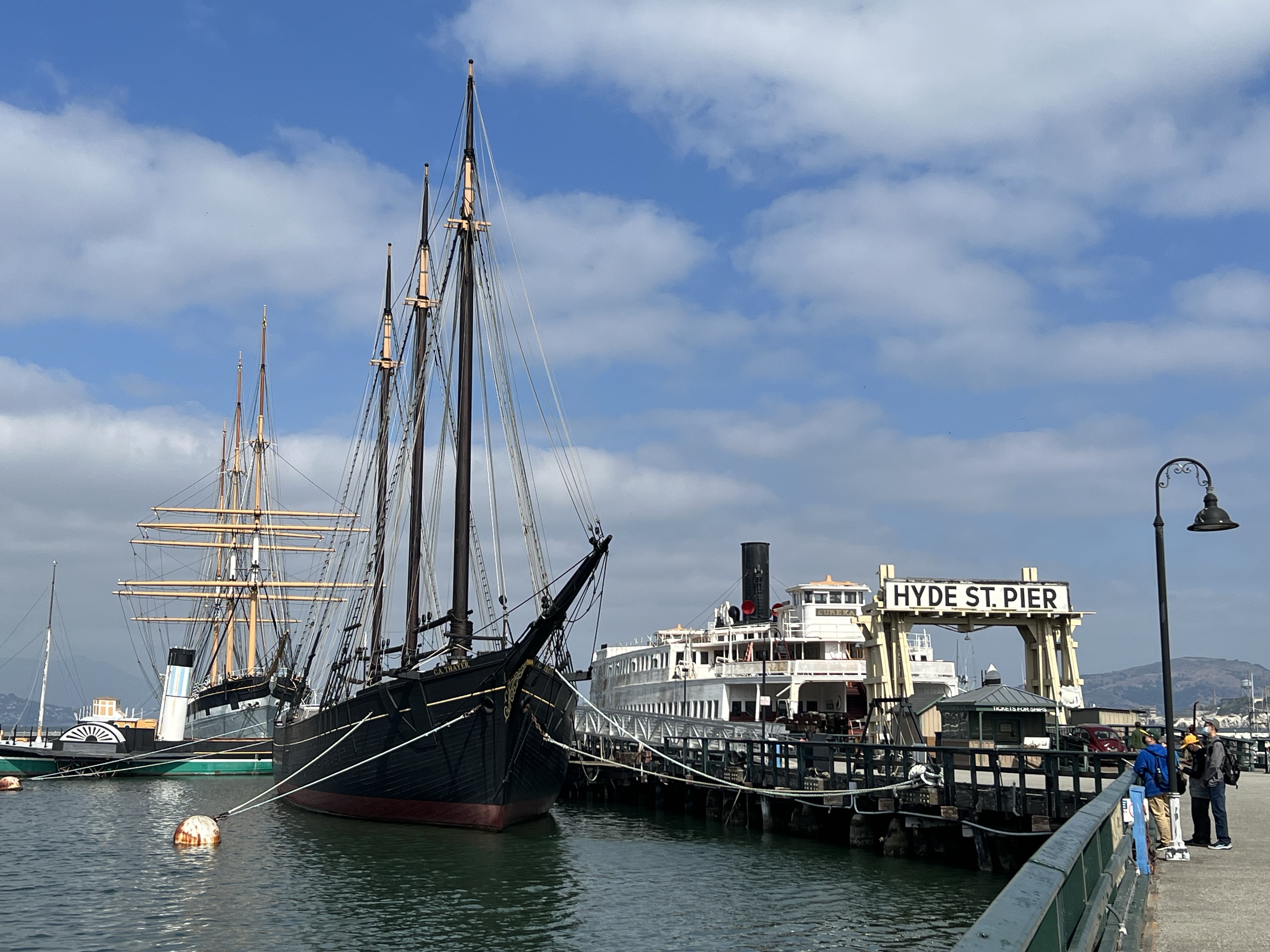
Today the Eureka is docked with the C. A. Thayer (foreground), the Eppleton Hall, and the Balclutha (background).