
Surprisingly a cemetery is full of life.
The wide open spaces with trees and plenty of perches is an ideal habitat for flycatchers and other avian insectivores.
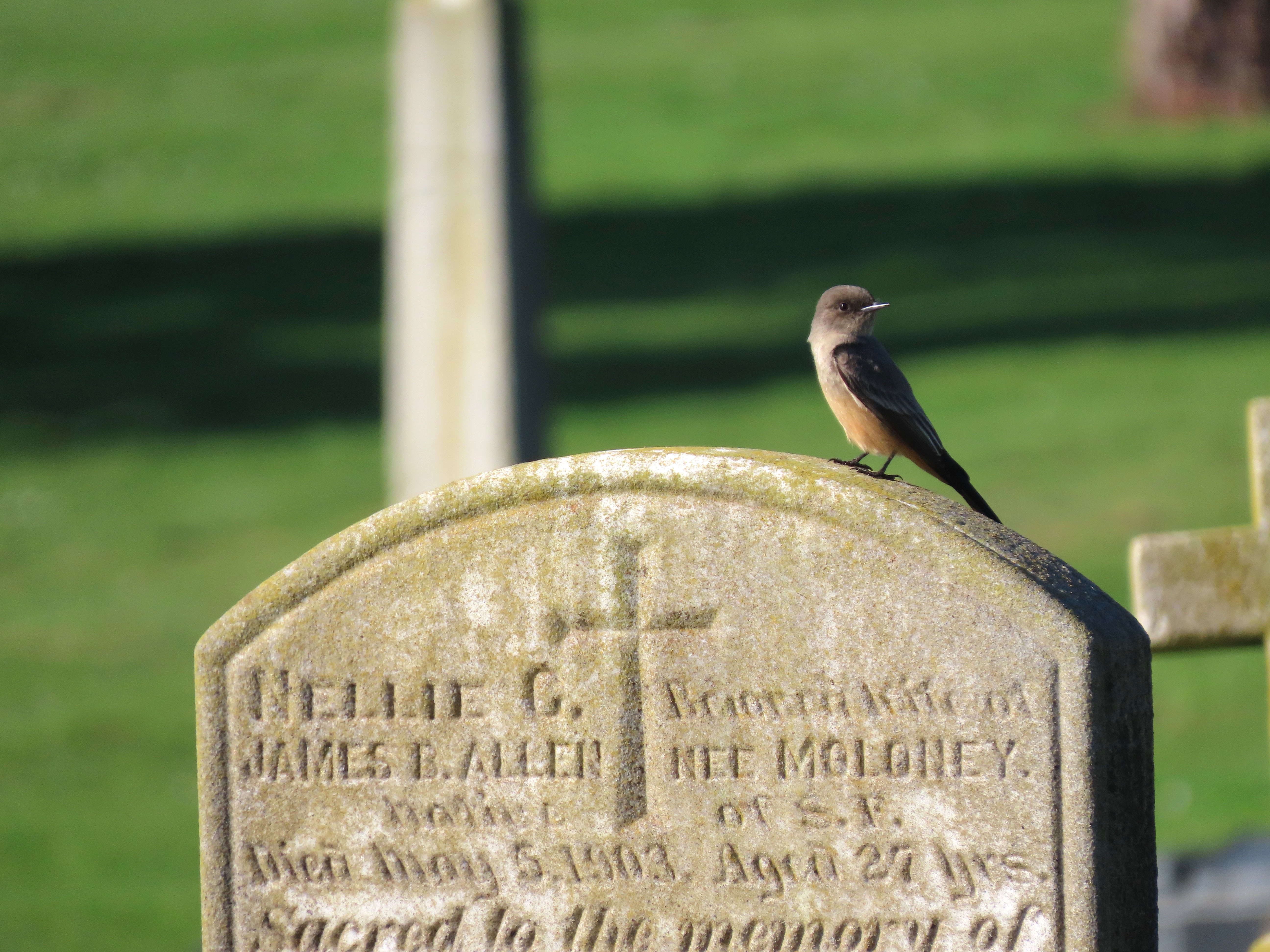
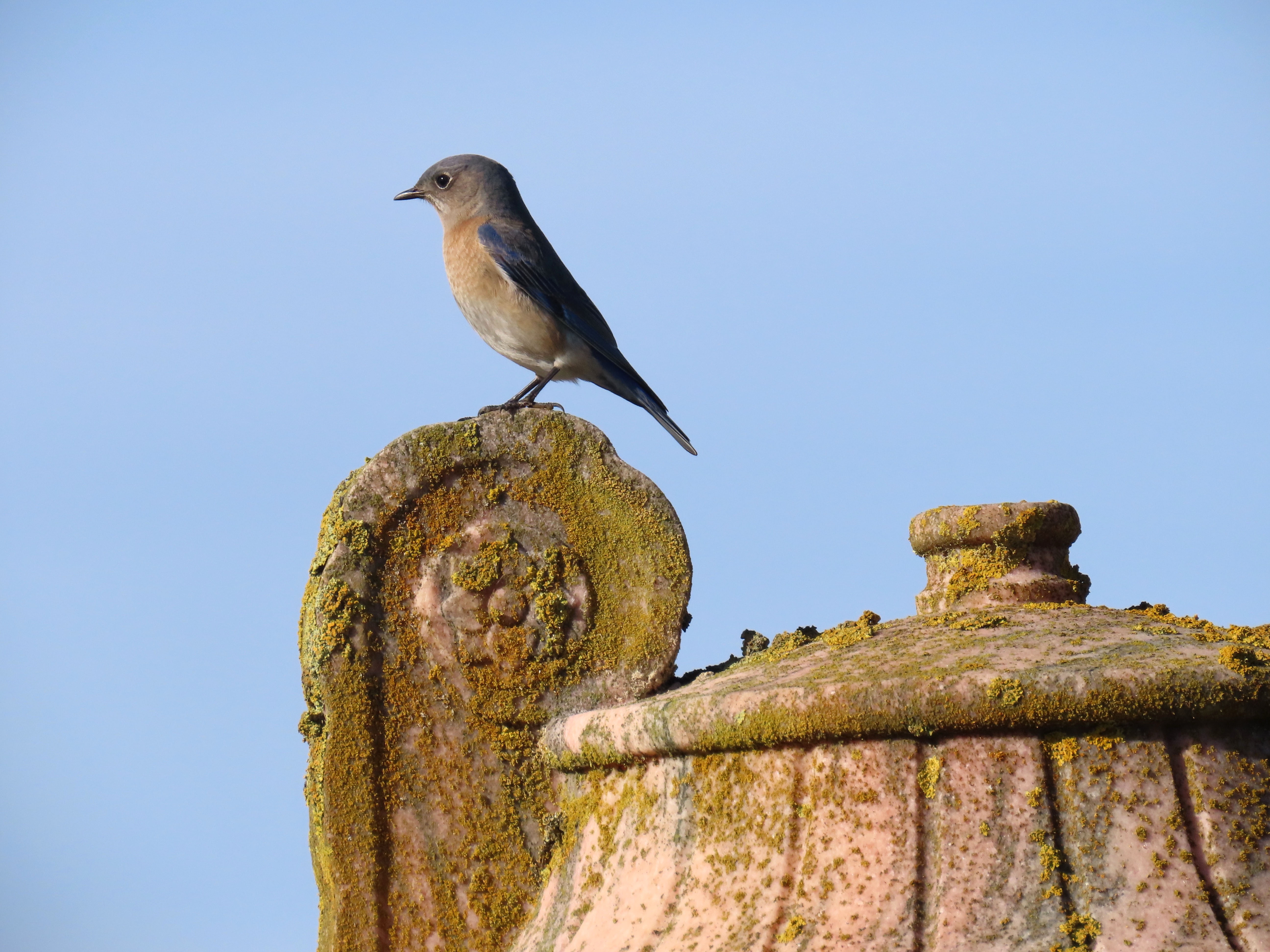
I was heading to Holy Cross Cemetery in Colma (there are more residents below ground than above) to find a vagrant flycatcher.
The flycatcher in question is the stunning vermillion flycatcher (Pyrocephalus obscurus). The normal range of the vermillion in the United States is Arizona, New Mexico, Texas, and Southern California. In the winter, some make their way up the California Coast. And it is one of these wayward birds that I was looking for.
When I drove up to Section G at Holy Cross (featured in the cult classic Harold and Maude) there was a couple standing amongst the tombstones looking in one direction. I bet I knew what they were looking at!
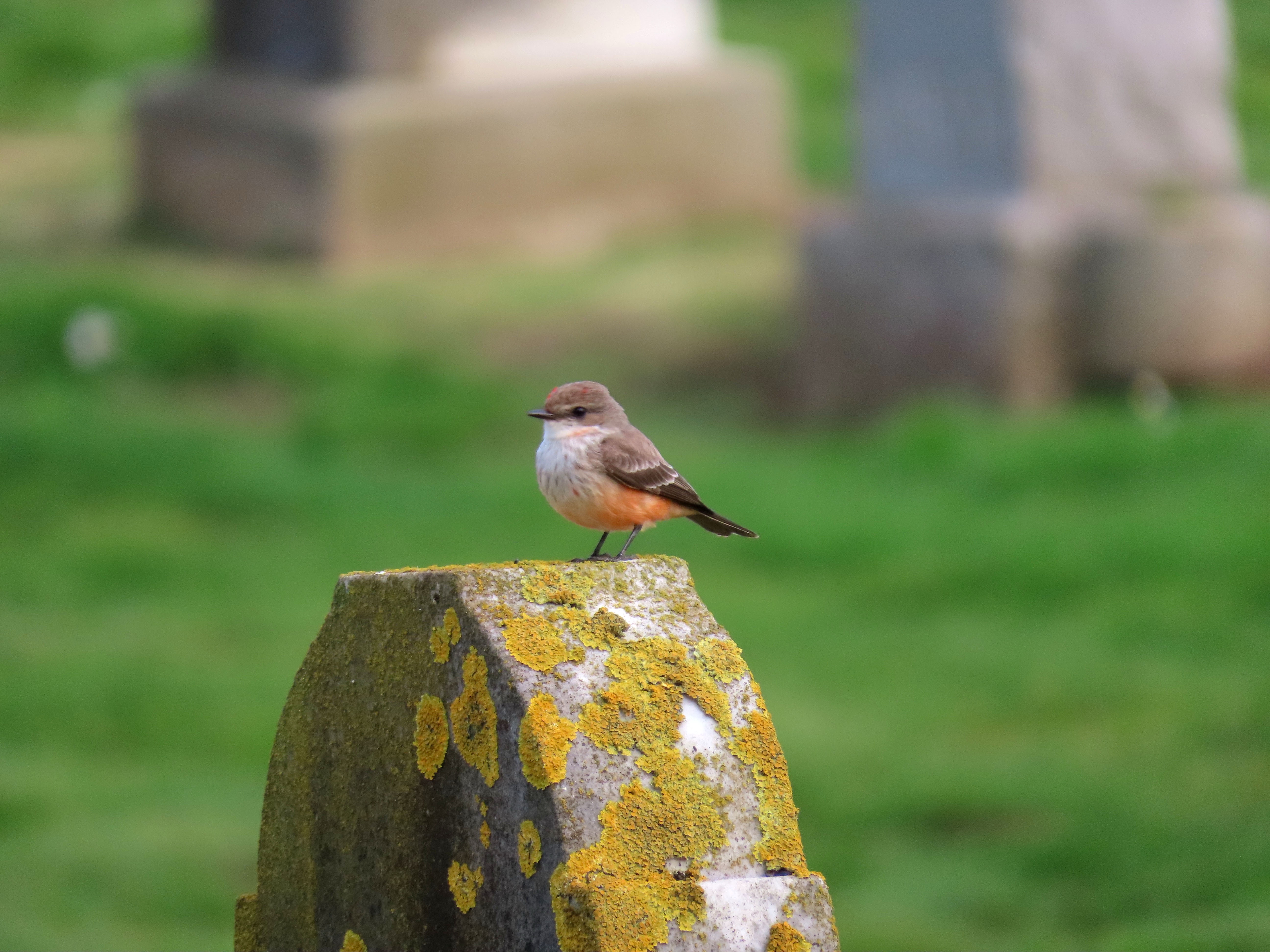
The vermillion was perched on a tombstone and sallied forth to catch a snack on the wing and then land on another hunting perch. It eventually flew up to the top of a pine and disappeared.
I waited for the flycatcher to reappear for about 15 minutes. No luck, so I headed east in Section G. There were plenty of common black phoebes flycatching from the mossy tombstones but no vermillion.
I decided to walk to the eastern edge of Section G which was bordered by 25th Street and then make my way back to where I had first seen the vermillion, I hoped of getting some photo documentation. And that’s when I spotted the flash of yellow!
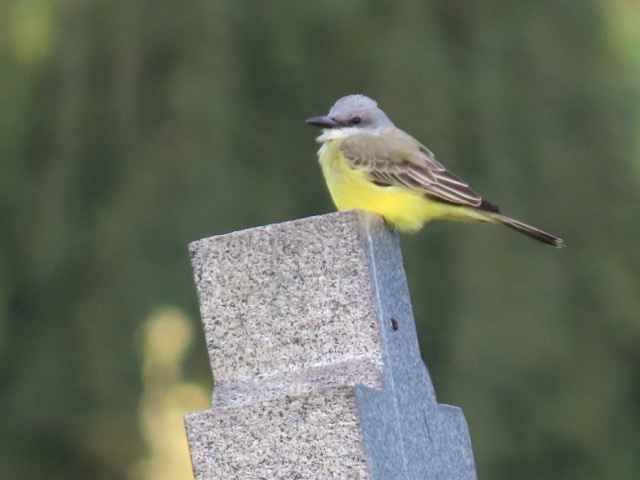
The flash of yellow flew across the street into Section G2 and landed in a tree. I immediately knew what flycatcher it was and I lifted my binoculars to my eyes for confirmation: yes a kingbird.
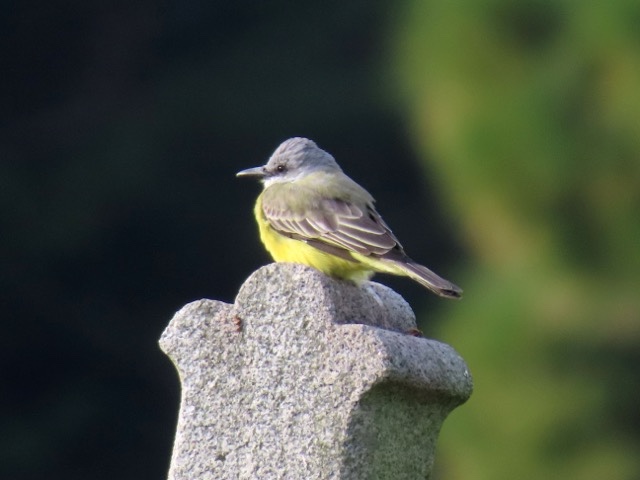
And at this time of year at this location I knew it was a tropical kingbird, also known as a TK because it is so common in Central America.
I enjoyed following the kingbird around Section G, getting some documentation with my camera because a TK is considered a rare bird for this location.





 Corvid Sketcher