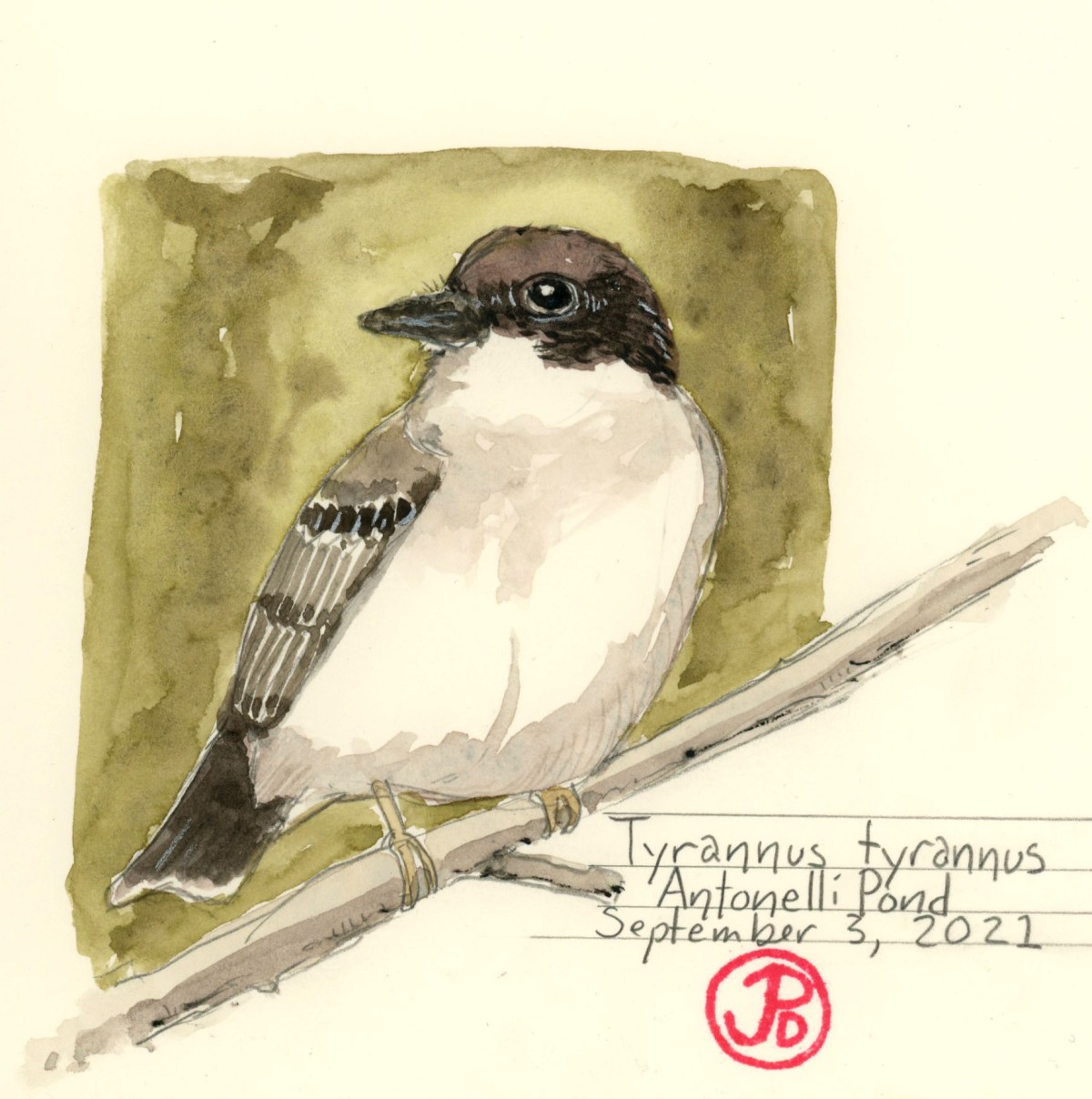
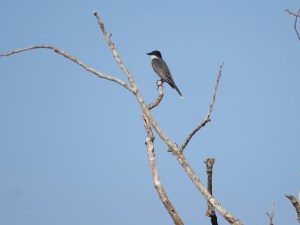
On a Monday, Trrannus tyrannus was first seen in a coffeeberry bush (Rhamnus californica) in the northwest corner of Antonelli Pond in Santa Cruz’s westside. I just hoped this county rarity would stick around until Friday when I could get down the coast to look for it.
The Eastern kingbird, like it’s name implies, breeds on the eastern side of the United States. This kingbird is a neotropical migrant where it spends winters entirely in South America. On their winters grounds, the kingbird travels in flocks and eats berries. (In the north it feeds mainly on insects taken on the wing).
Tyrannus tyrannus, means “tyrant, despot, or king” (take your pick) is named for the kingbird’s aggressive behavior during breeding season. While defending their nesting territory, they will attack birds that are much larger than itself, including hawks, great blue herons, ravens, crows, and even squirrels. There have been reports of kingbirds landing on the back of hawks and vultures, pecking and pulling out feathers. This is the King of Tyrants with a major Napoleon Complex.
So at about five PM I found myself in the northwest corner of Antonnelli Pond reflecting on the long journey this 40 gram bird had made, from the Amazon, eating fruit in flocks to it’s long journey up the Pacific Coast to forage for a few days near a pond in Santa Cruz. So far the coffeeberry bush was sans kingbird.
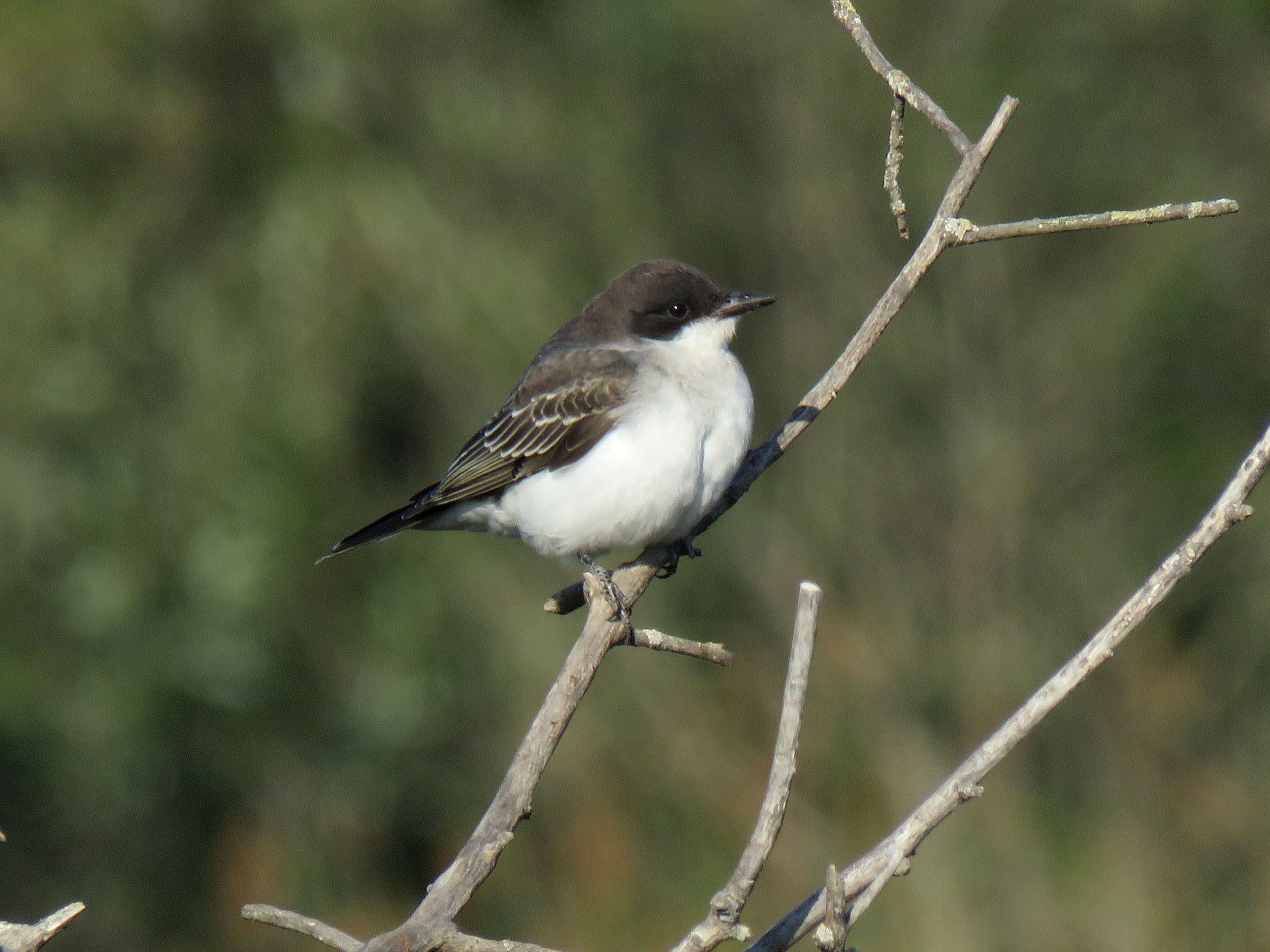
After about a 15 minute wait, a pied bird flew from the north into the bottom of the bush. I attempted to flank the bird to identify it as the wayward tyrant. A bird shot up from the bush, dark above and light below was a fine white border on it’s tail, Bingo! Eastern kingbird! The bird flew to a chain linked fence that bordered the Homeless Garden, where I was able to get a few distant photos.

The kingbird foraged for a bit in the garden and then flew back and landed on top of the coffeeberry bush in perfect late afternoon light, so I had to take a few photographs to confirm it’s misplaced existence. It stayed on it’s perch for a few minutes and it then flew across the pond and my encounter with the wayward (is their such a thing in nature?) eastern kingbird was over.
Often when we are looking for one thing in nature we see so much more. This was the case on Saturday morning, when I returned to Antonelli Pond to look for the eastern kingbird again (and the willow flycatcher that had also been report). While the coffeeberry bush was lacking a kingbird, some movement in the brush in front of me caught my attention.
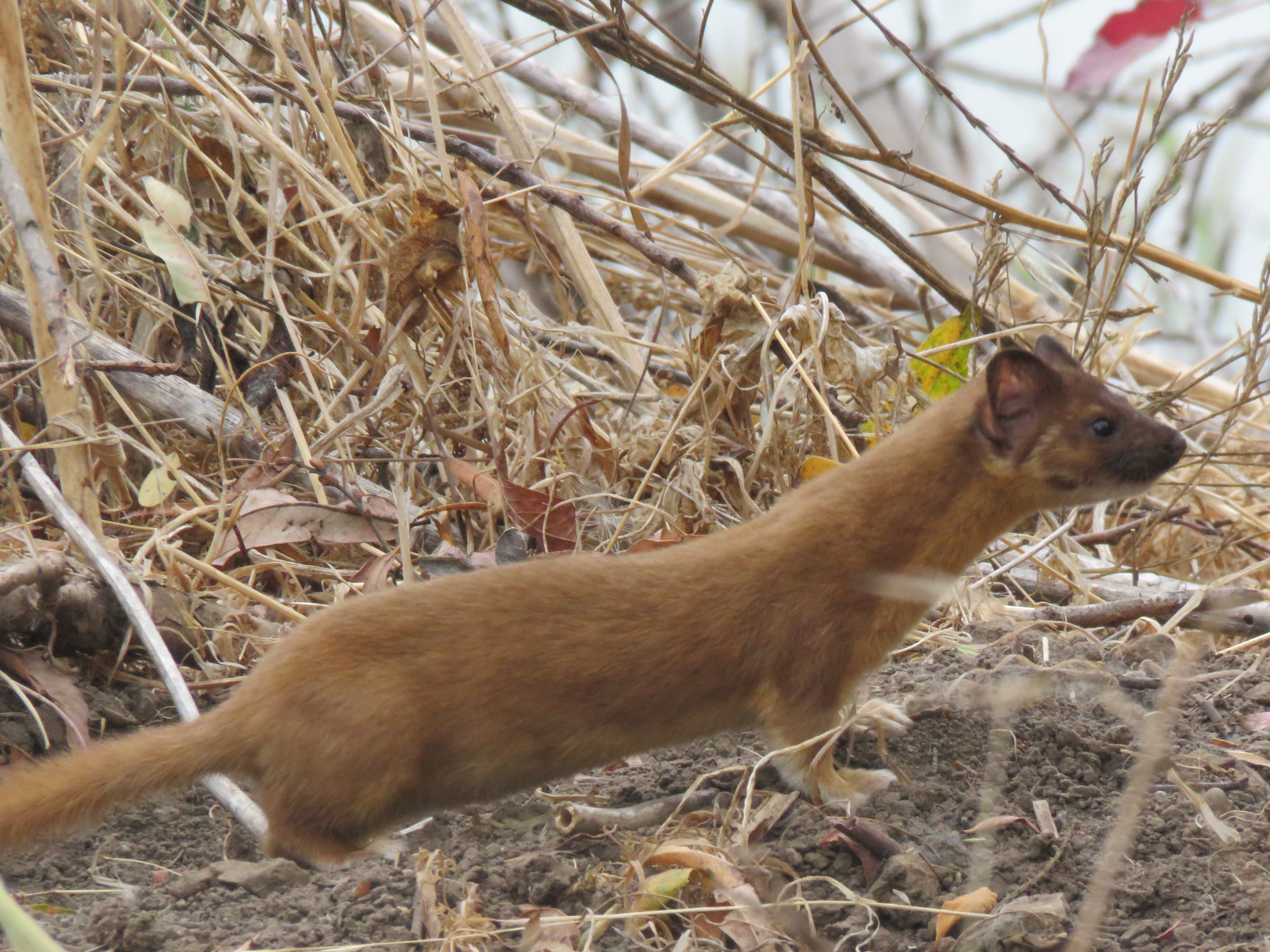
A caught a glimpse of a long mammalian predator. I wanted to entice it out to get a better look so I did my best impersonation of a wounded rodent (I was thinking mouse) and within seconds, it’s snake-like head, ears alert, appeared out of the brush. It was almost licking it’s deadly teeth with delight (I call anthropomorphism on myself!)
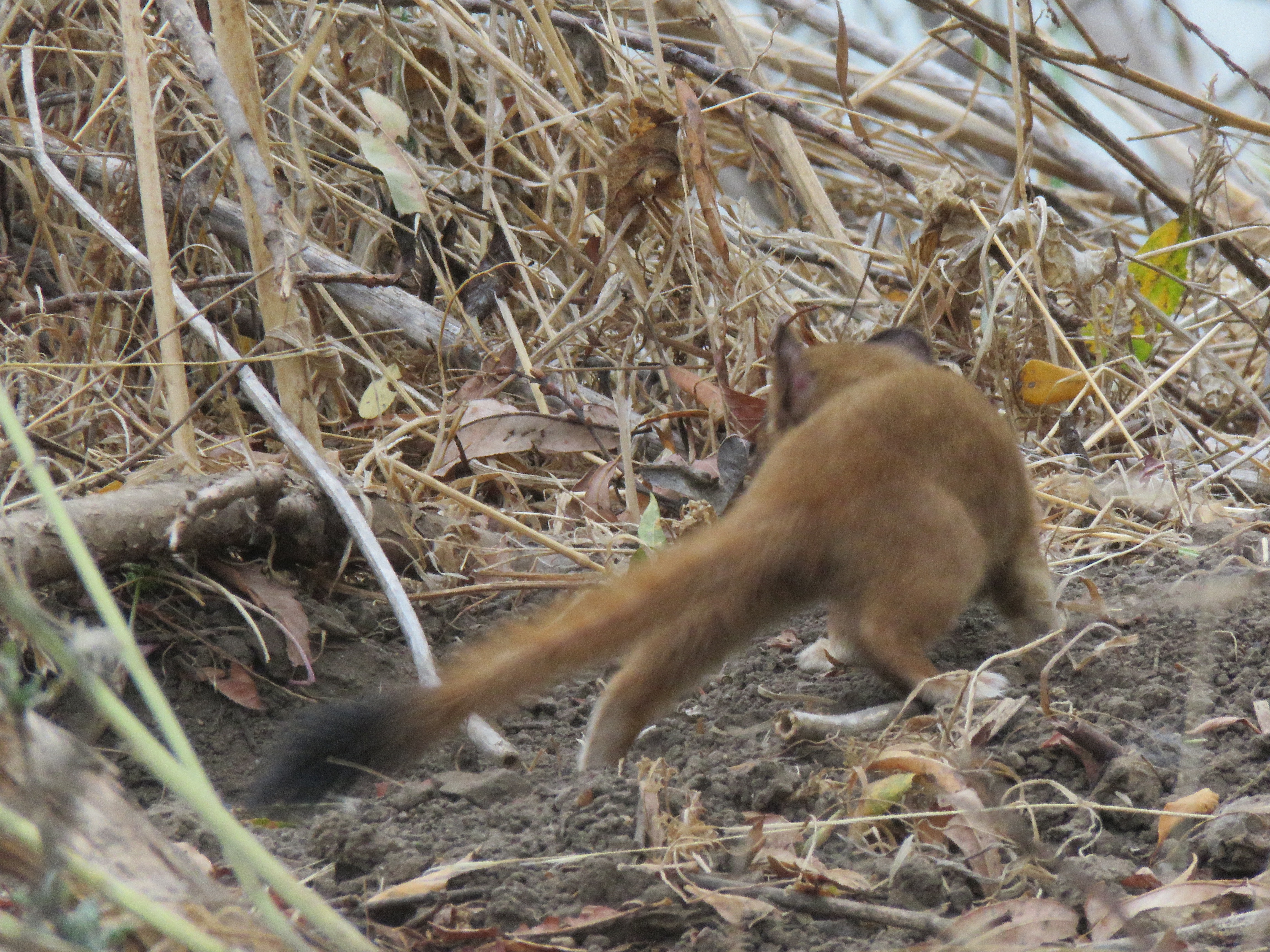
It was a long-tailed weasel (Neogale frenata)! I had seen this predator on two other occasions but both sightings (at Wilder Ranch) were fleeting and I just got a flash of it’s dark-tipped tail as it disappeared into coyote brush.
The long-tailed weasel is an aggressive predator which can take prey twice it’s size such as rabbits and squirrels. On one occasion at Wilder Ranch on the Old Cove Landing Trail, a weasel was hunting bush rabbits and I heard a lagomorphic scream that was hard to forgot. I was not sure if the weasel’s hunt was successful.
 Corvid Sketcher