Who knew that the Northern California town of Eureka had some Civil War and presidential history?
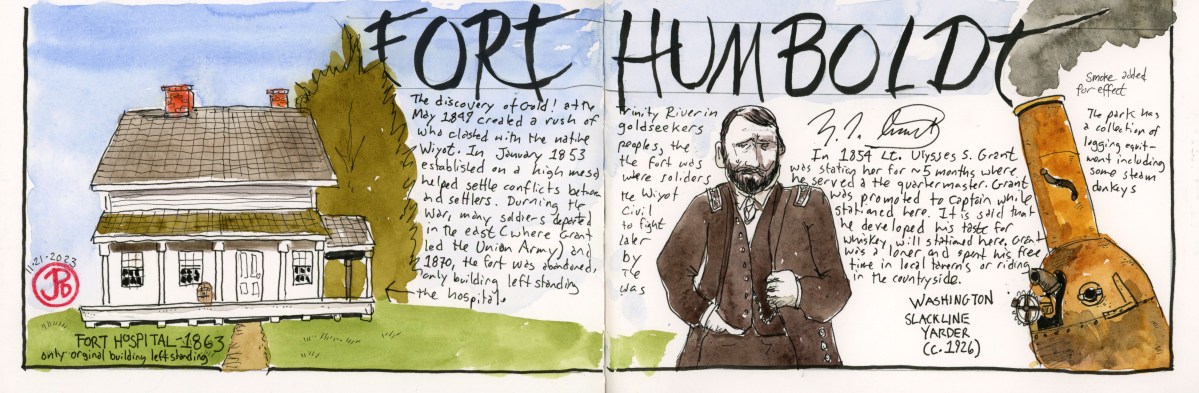
Such is the case when a young captain who served at the fort for five months. He was a loner and spent his free time in local taverns and riding in the countryside. It is said that he developed a taste for whisky while at Fort Humboldt. His name was Ulysses S. Grant.
Of course he went on to become a Civil War hero where he commanded the Union Army. It was Grant that Robert E. Lee surrendered to at Appomattox Courthouse on April 9, 1865.
Grant later served as the 18th president from 1869-1877 serving two terms.
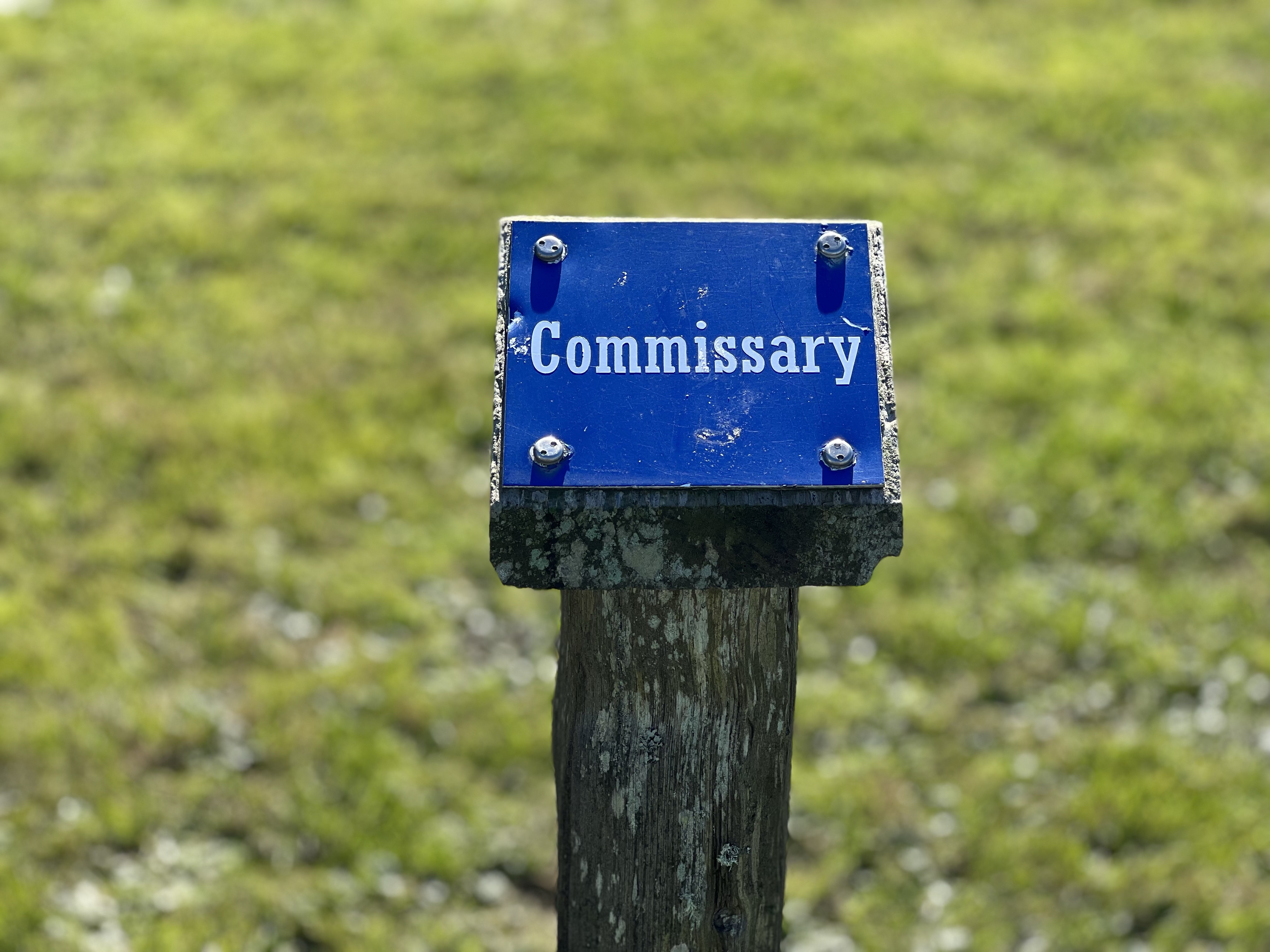
There are not many original buildings left at Fort Humboldt but here is where the commissary once stood. Grant served as the fort’s quartermaster, probably at the commissary.
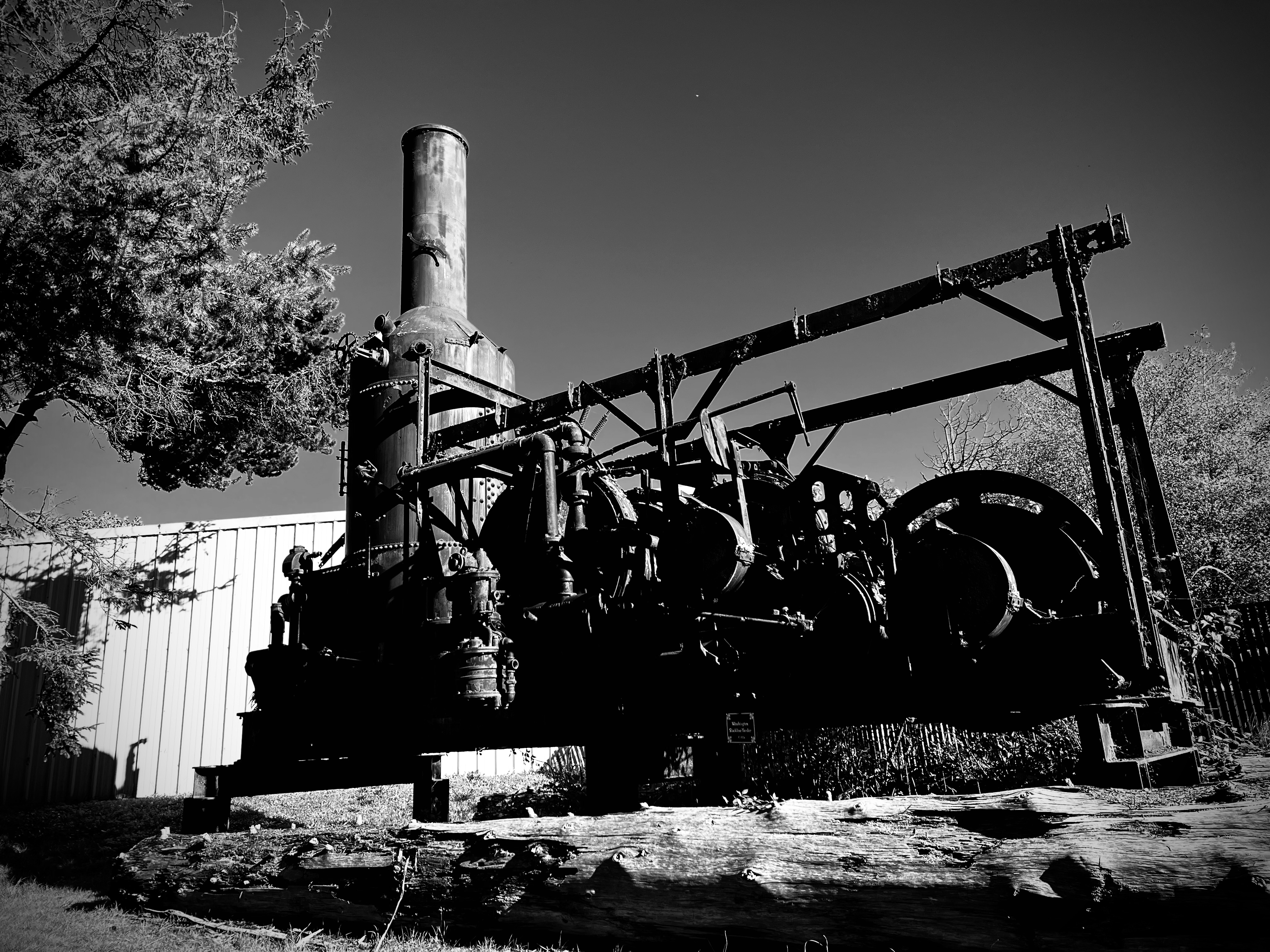
There is not much left of the fort on the bluff above Humboldt Bay and the fort hospital is the only remaining structure of the fort period (from 1853-1870). I pulled up my sketching chair and sketched the hospital building on the left of my spread. On the right is one of the largest steam donkeys ever made.
The state park has some nice relics of the lumber era that put Humboldt County on the economic map.
It was a cold, clear, and crisp morning in Eureka, a perfect day for railroad sketching.
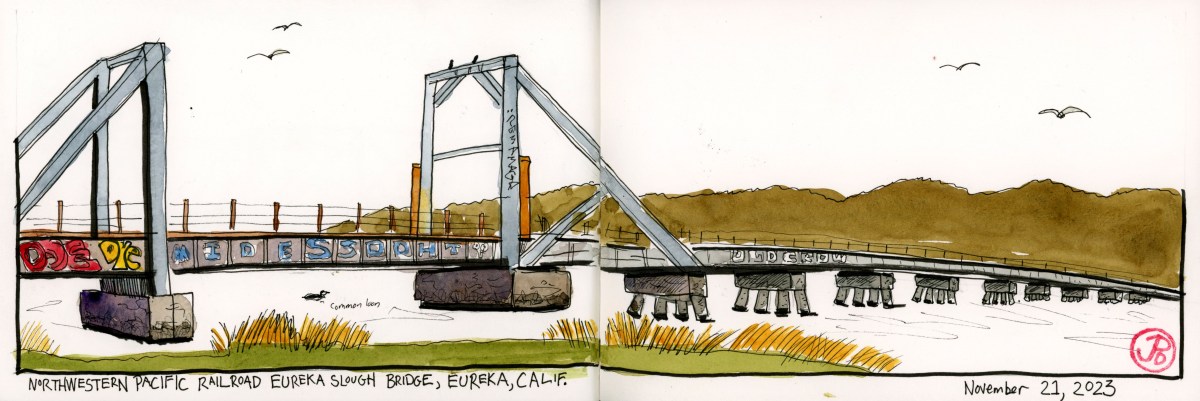
Pre-trip, the Northwestern Pacific bridge over Eureka Slough was high on my sketch list. This bridge has had a major rebuild at least once and now looks to be in good shape
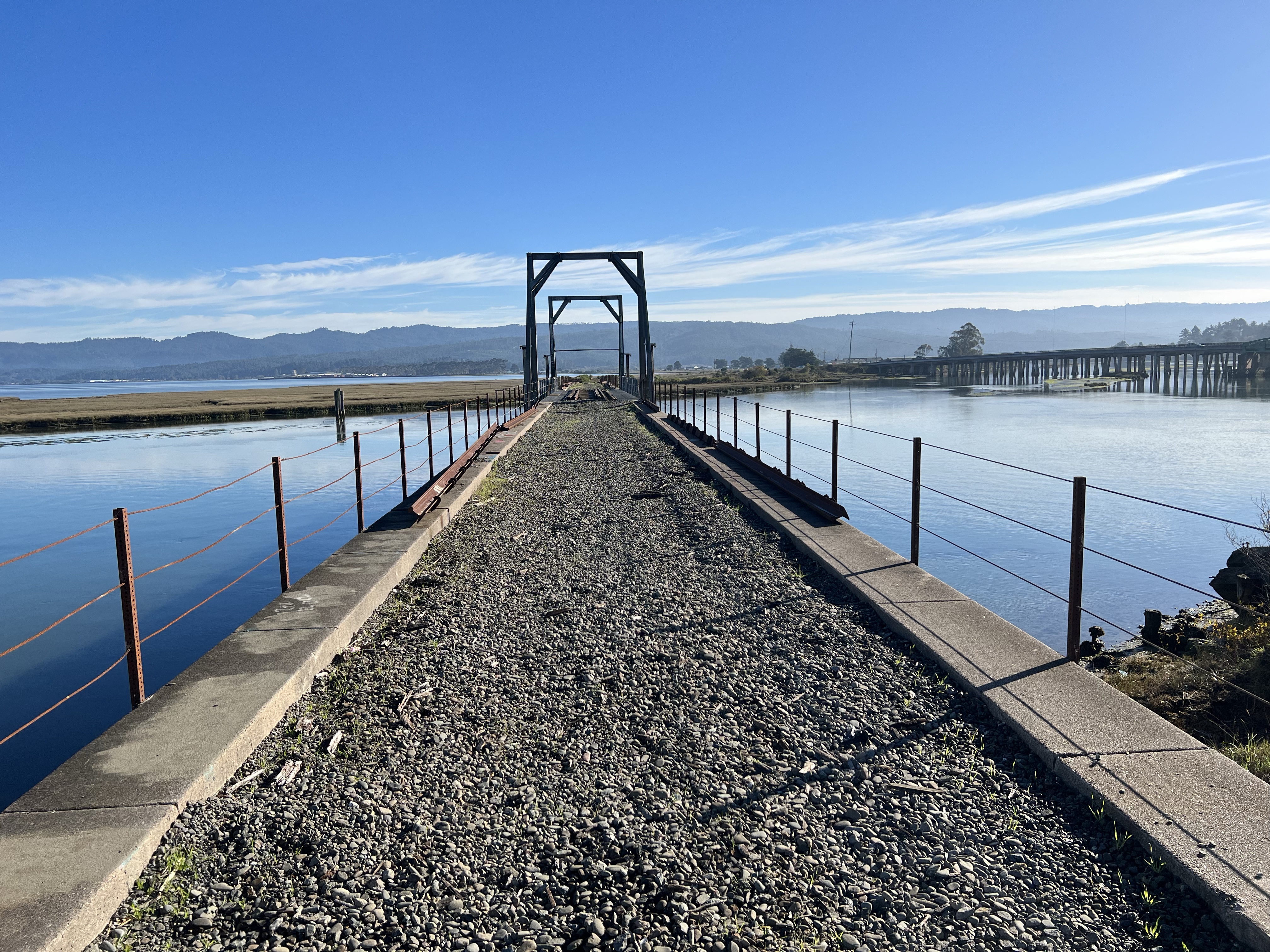
I pulled onto Y Street, any further north and I’d be in Arcata. At the end of the street is the rusted railroad and pedestrian path that follows the shoreline (The Waterfront Trail). I headed right on the trail (north) to where the path comes to the slough and then heads east. Of course the railroad proceeded north by conquering Humboldt Slough with a bridge. And that’s what I was here to sketch.
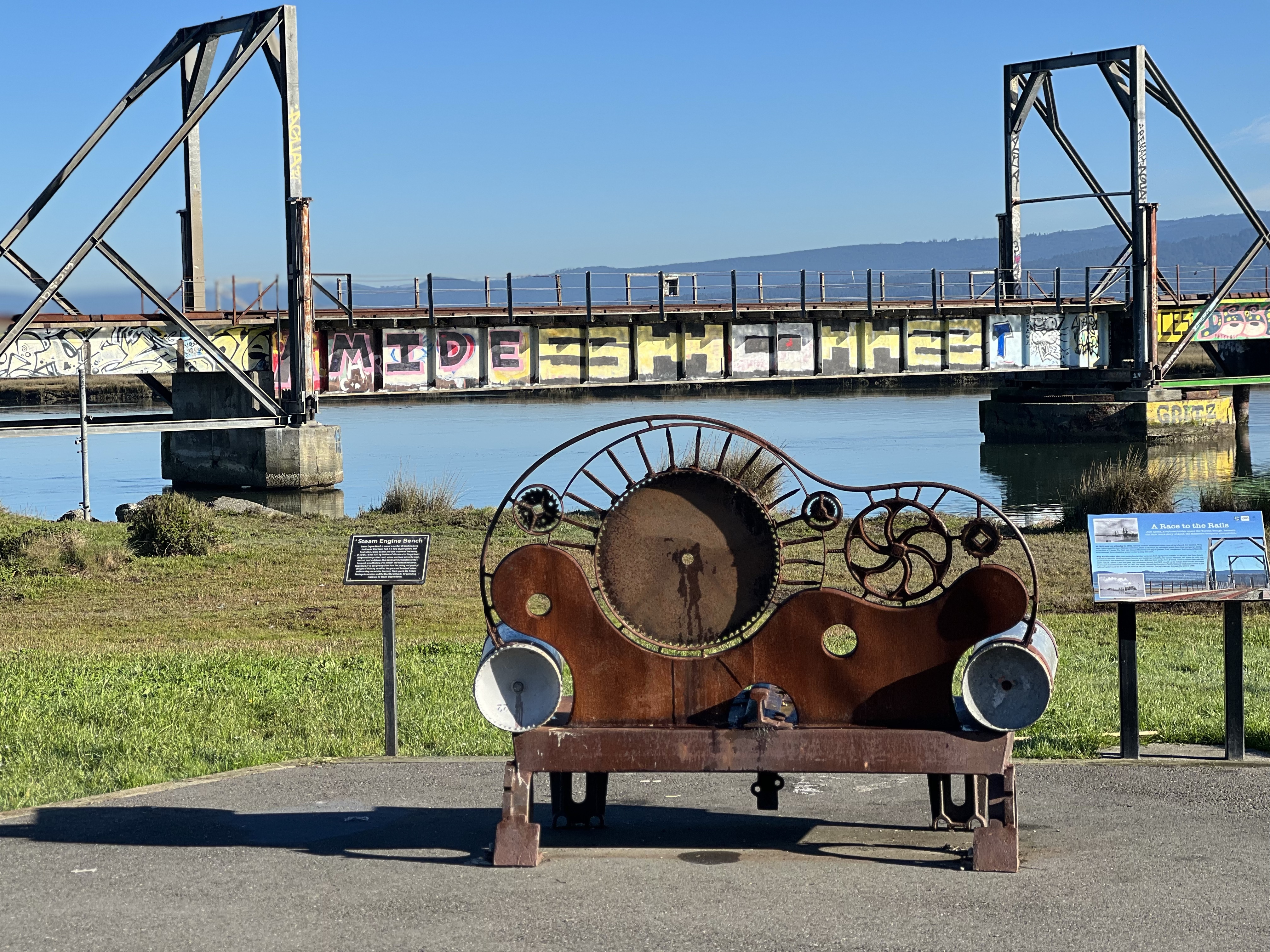
I had thought about bringing along by sketching chair but when you have the Steam Engine Bench with a capital view of the slough and bridge, why bother?
The Steam Engine Bench has to be one of the best sketching seats I have ever sketched from!
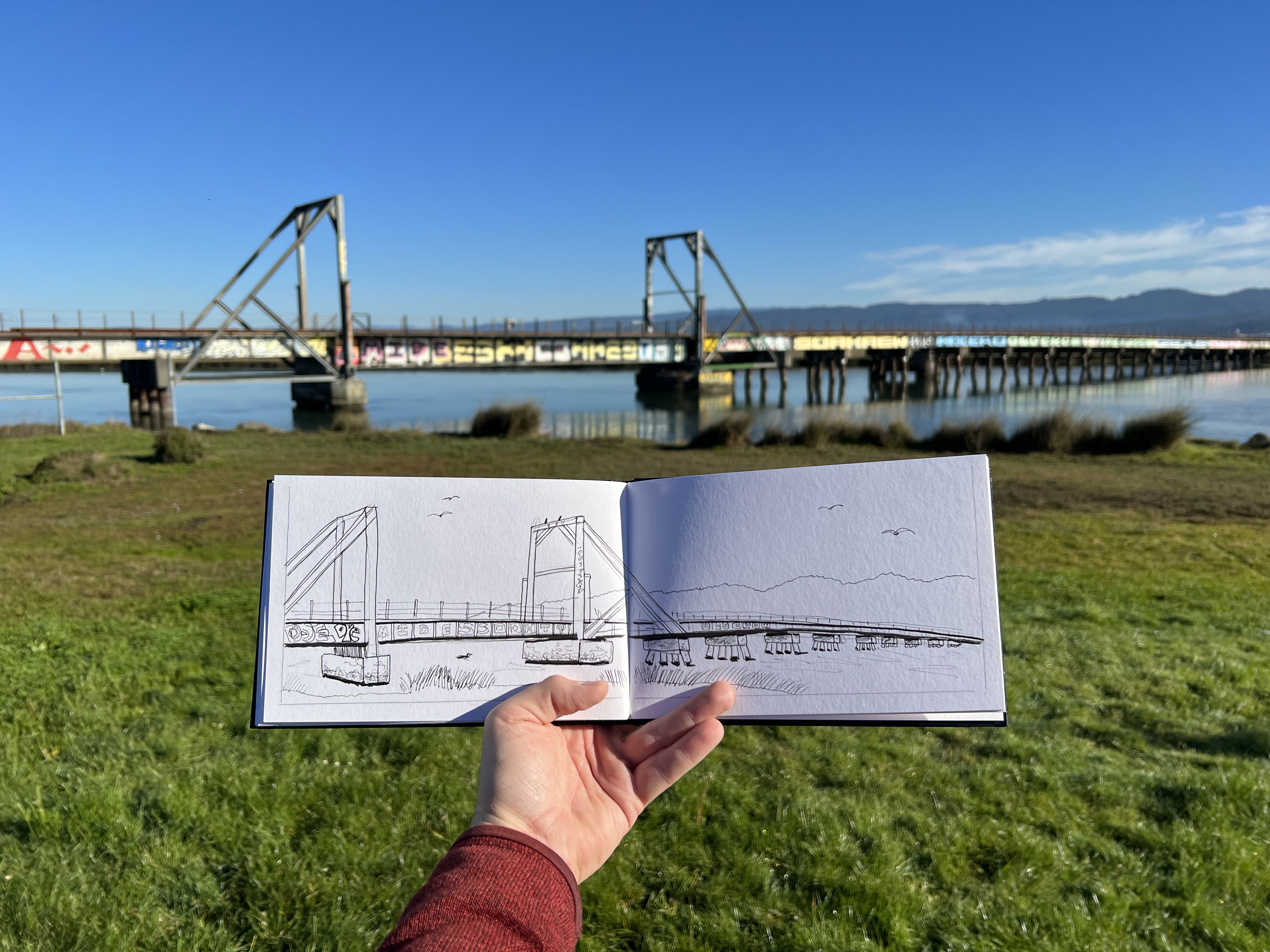
It was a beautiful morning to sketch and my pants absorbed the wet bench. I had to use a lot of sketcher’s shorthand and leave off the vast amount of graffiti that the bridge was covered in. I did keep the words, “OLD CROW” painted into seven panels of the bridge.
The bridge looking north towards Arcata which was as far as Northwestern Pacific ever reached. Sketched from life!
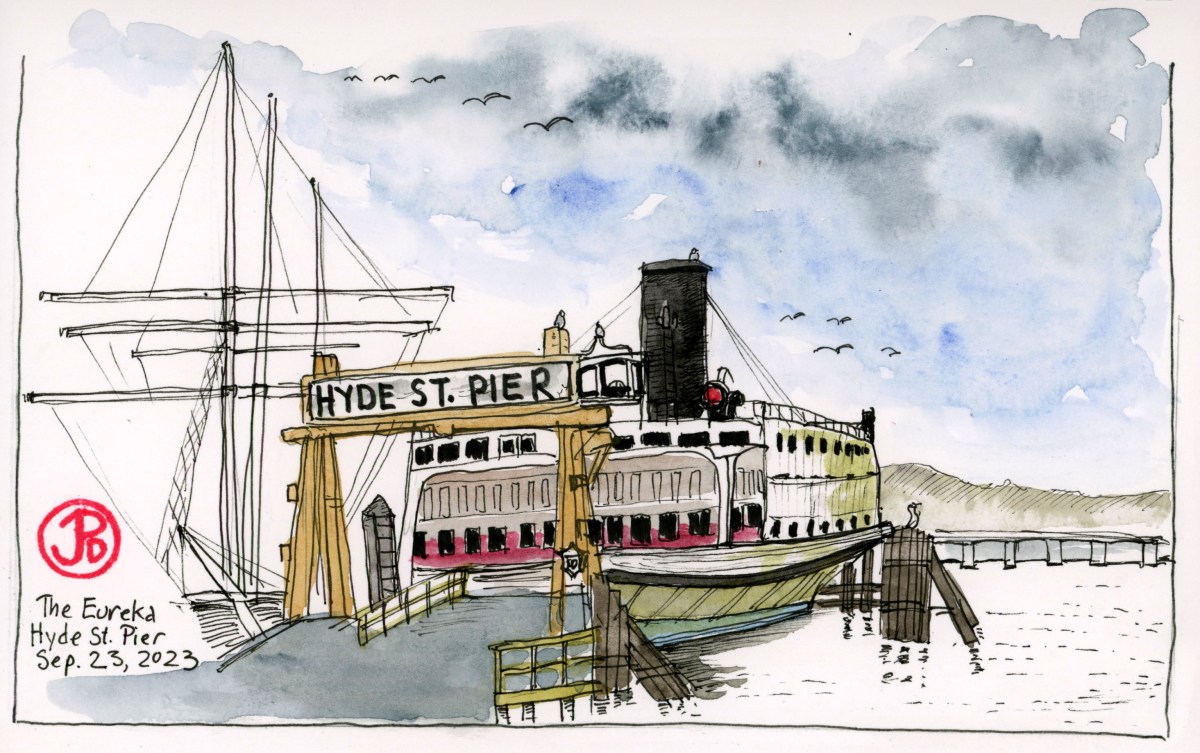
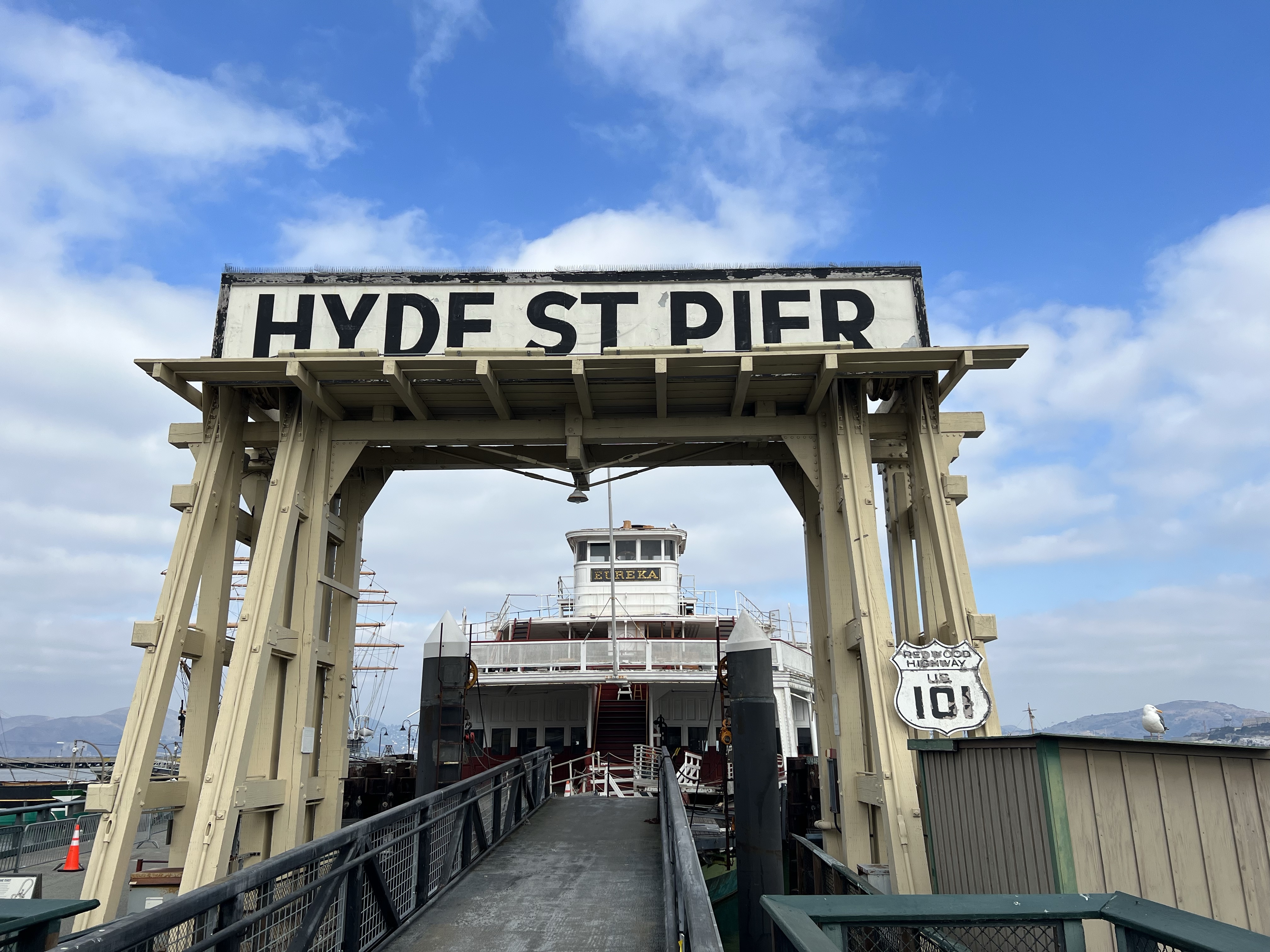
One of the ships docked at the Hyde Street Pier is the former Northwestern Pacific ferry boat Eureka.
In the era before bridges, (the Bay and Golden Gate), the only way to get from San Francisco to Marin or Oakland by rail, was by rail ferry.
The passenger cars would be boarded on the ferry and then, well, ferried, across the Golden Gate to Sausalito or Tiburon where they would be unloaded and continue north on the rails of Northwestern Pacific.
The ferry and the Hyde Street Pier was actually considered part of Highway 101.
The boat was built in 1890 in Tiburon by San Francisco and North Pacific Railroad Company and was originally named the Ukiah, which was as far north as the line reached. The Eureka is a double-ended, wooden hulled ferry-boat that was originally built to hold train cars. Two standard-gauge tracks where built into the main deck.
This 277 foot, 2,564 tonnage boat is the largest wooden-hulled boat afloat in the world.
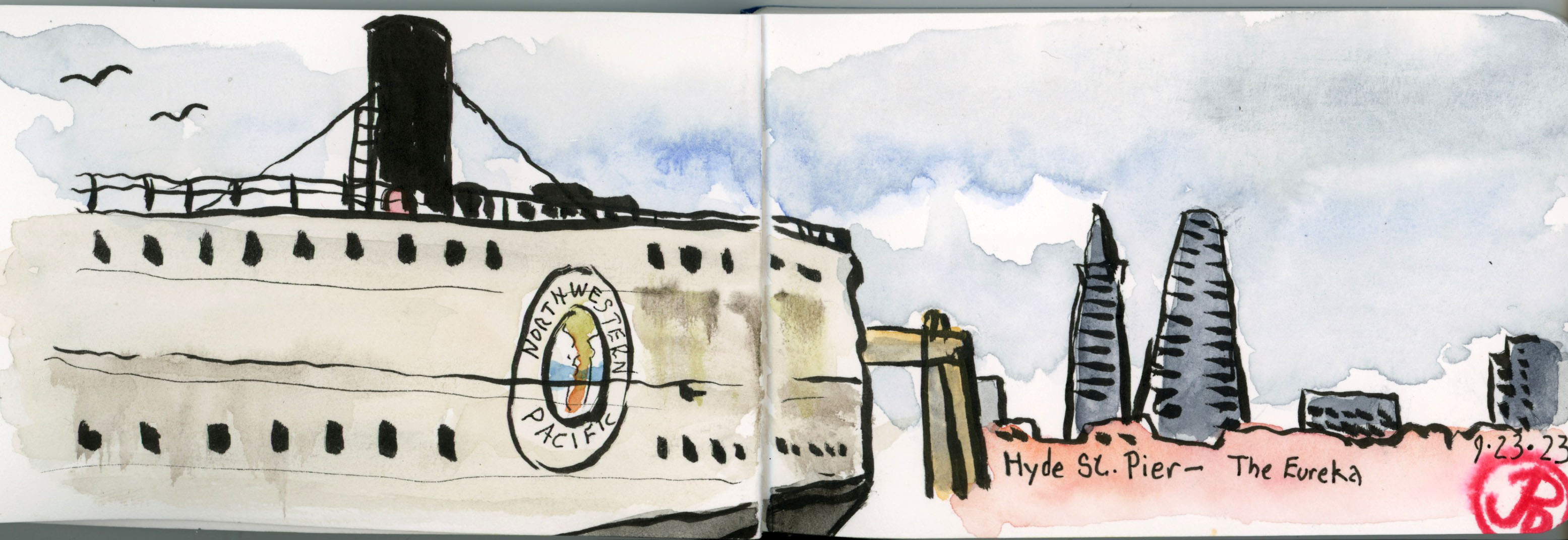
A pen brush field sketch of the Eureka, displaying the Northwestern Pacific circular logo, and the modern San Francisco skyline.
The Ukiah was initially in service to ferry people from San Francisco to Tiburon during the day and then carry freight cars during the night. In 1907 the Northwestern Pacific Railroad took ownership of the Ukiah and it was routed to the Marin port of Sausalito.
During World War I, the ferry was rebuilt and the refurbished ferry was renamed the Eureka, in honor to the northernmost station on the Northwestern Pacific Railroad.
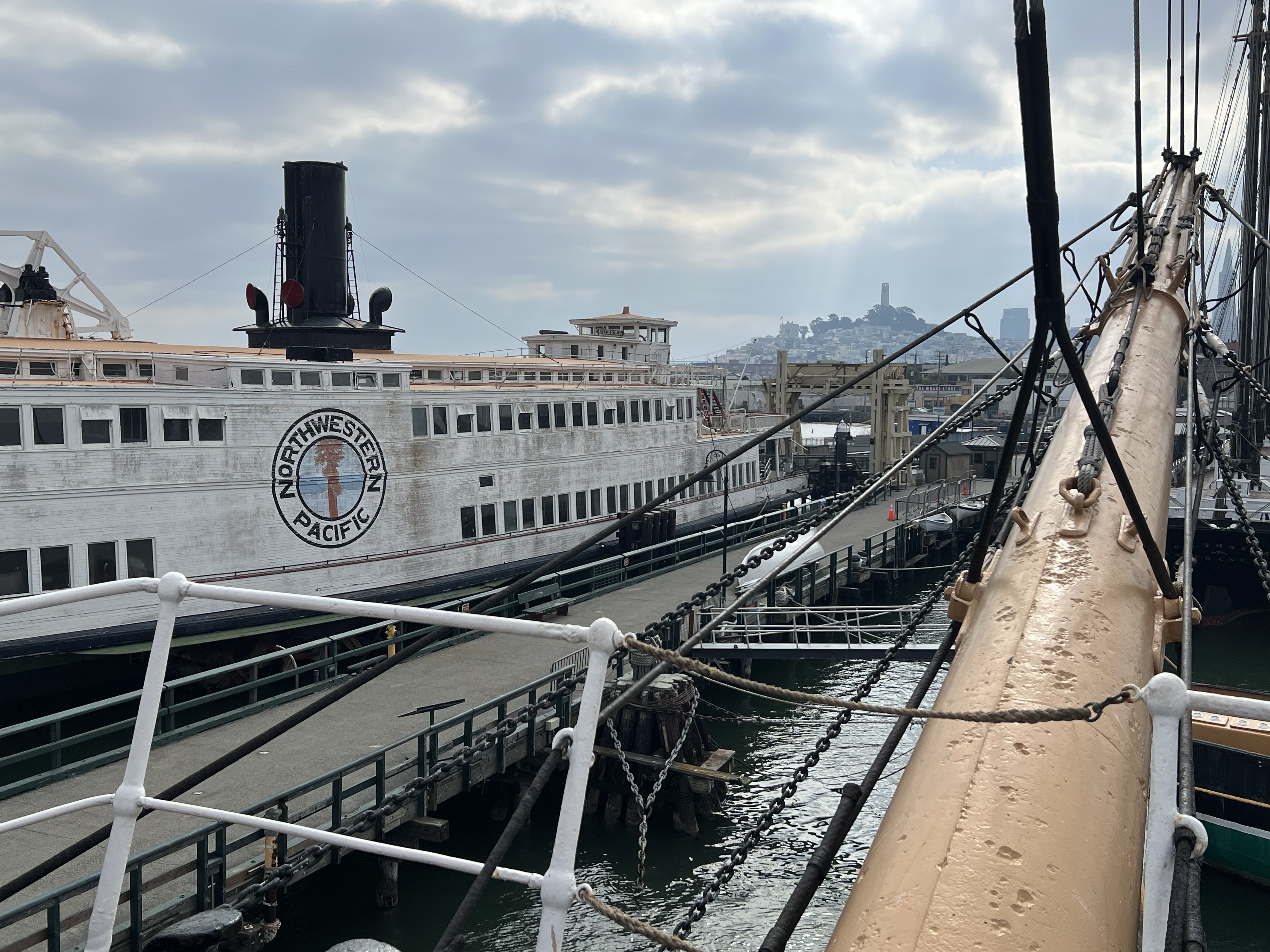
The Eureka from the bow of the Balclutha and Coit Tower echoing the steam stack of the Eureka.
The ferry was later used to ferry automobiles on her main deck and had a capacity of 2, 300 passengers and 120 cars. At this time, the Eureka was the largest and fastest double-ended passenger ferry in existence and because of this, the Eureka was called up for the busiest commuters times from Sausalito to San Francisco. Hyde Street pier was the primary auto terminal to connect San Francisco to points north and east.
When the Golden Gate Bridge was completed in 1937, ferry service passengers dried up and Northwestern Pacific abandoned all ferry service in 1941.
The Eureka found a new life in the 1950s with a new owner, the mighty Southern Pacific. The Eureka now linked passengers on SP’s overland service from Oakland to San Francisco.
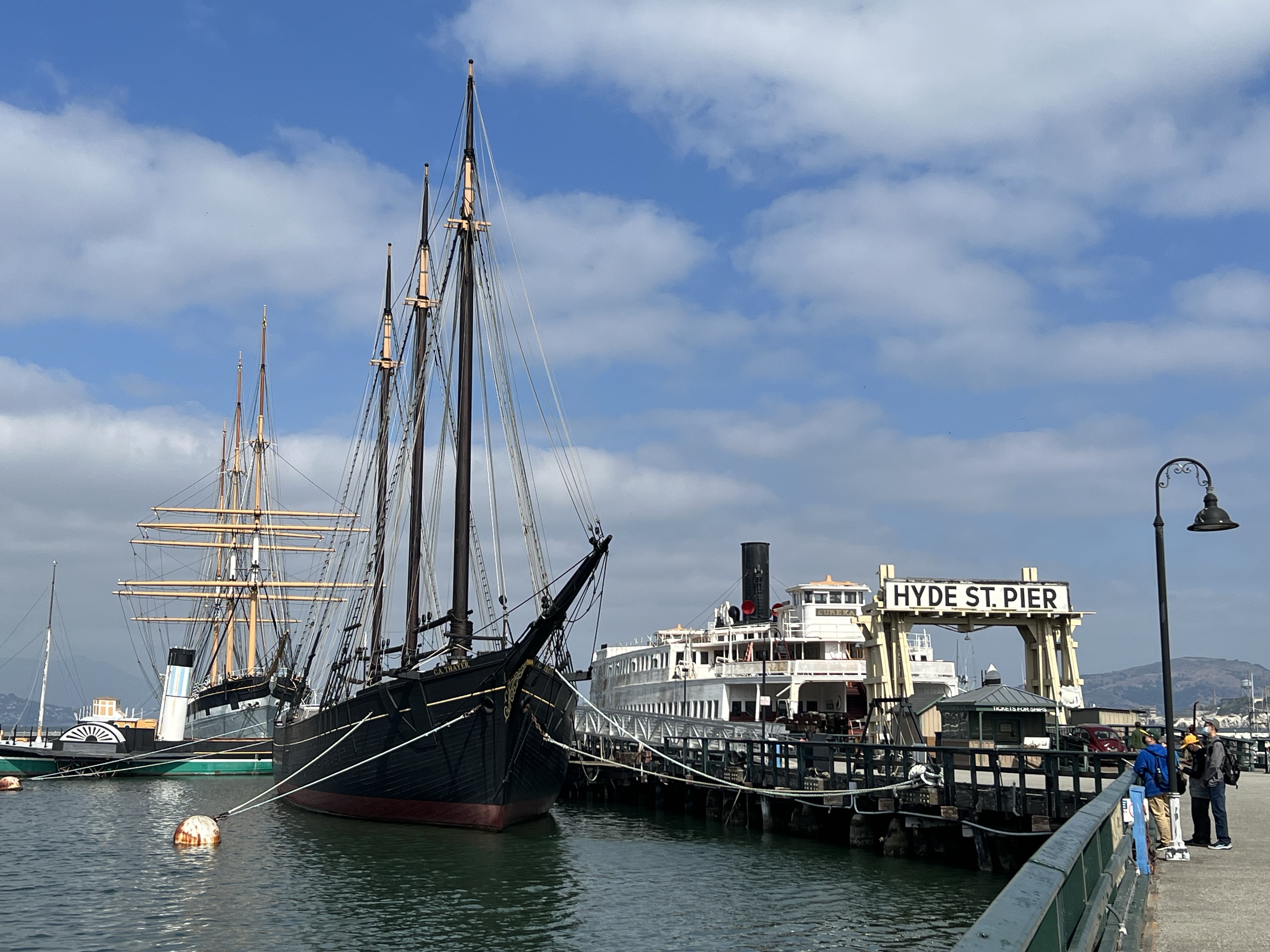
Today the Eureka is docked with the C. A. Thayer (foreground), the Eppleton Hall, and the Balclutha (background).
 Corvid Sketcher