Image

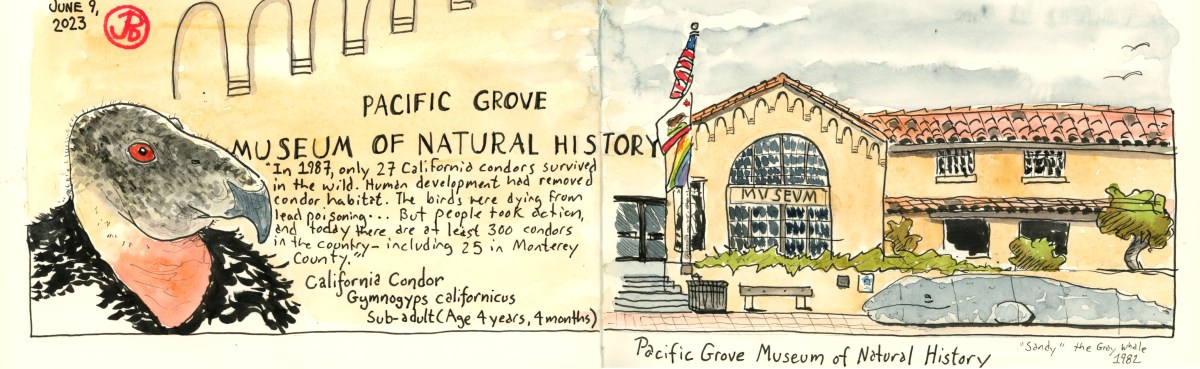
Pacific Grove Museum of Natural History

On my first full day of summer I headed 50 minutes south of Santa Cruz to Pacific Grove on the Monterey Peninsula.

This is a return trip (it had been a while) to the Pacific Grove Museum of Natural History.

I arrived early and sat in the park across the street to sketch the 1932 Spanish Mission Revival museum. To the right was a statue of a female gray whale named “Sandy”, built in 1982.
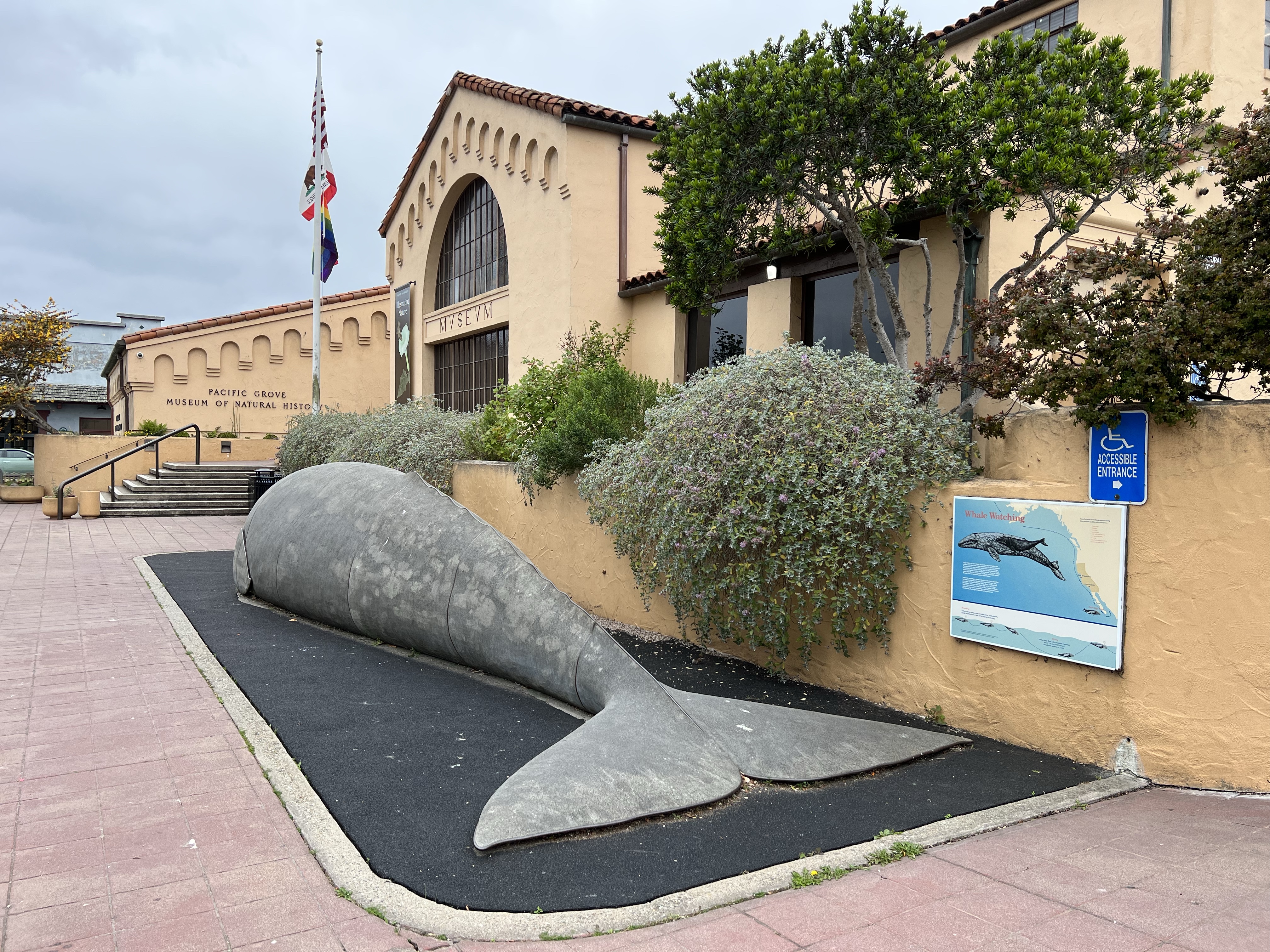
“Sandy” in the foreground and the museum in the background.

The museum opened at ten and after paying my $10 admission I walked into the gallery, greeted by a grizzly bear standing up on it’s hind legs. The grizzly is the extinct State Mammal of California. This specimen came from Alaska.
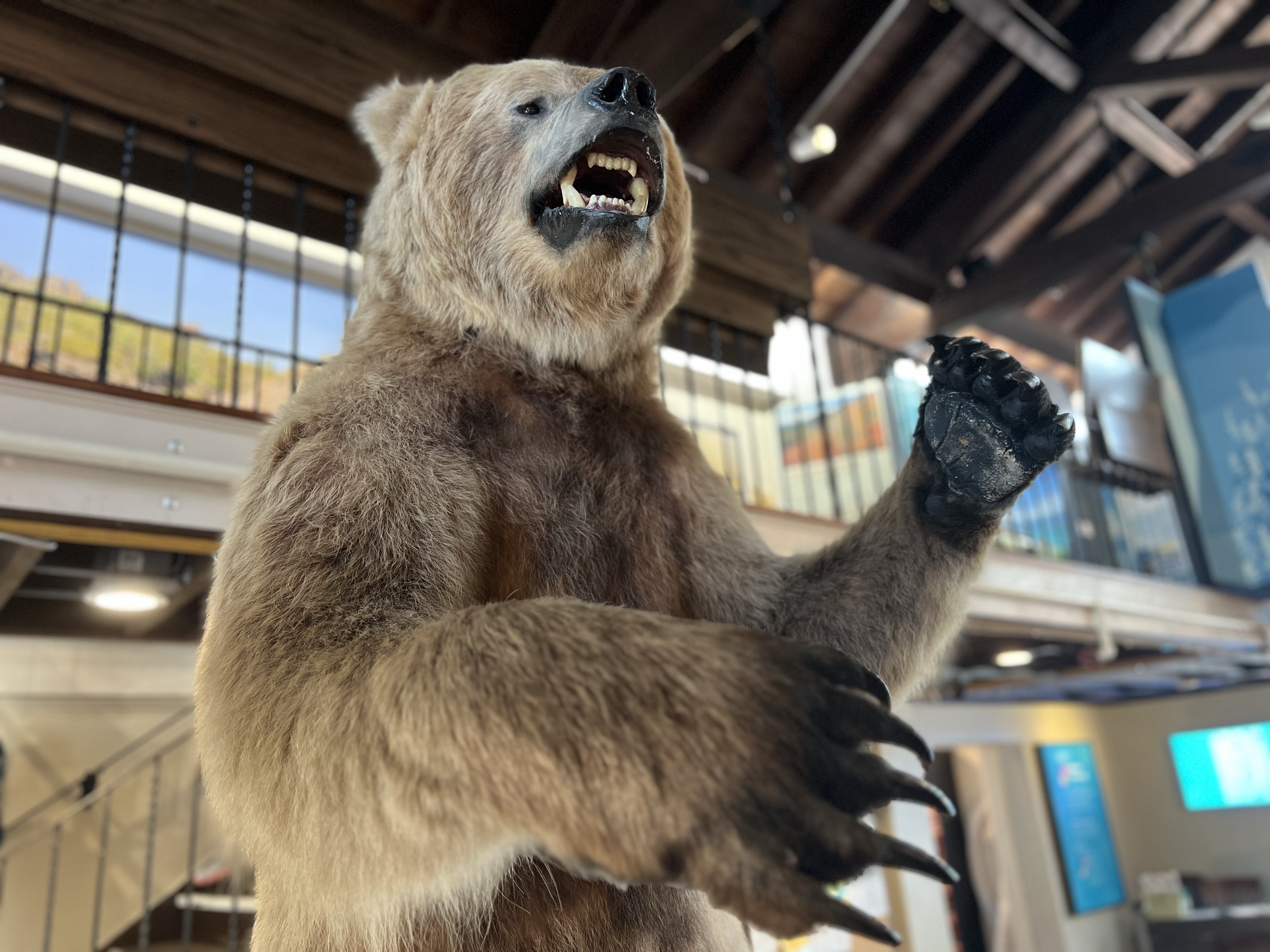
The Pacific Grove Museum of Natural History is full of animals: insects, amphibians, reptiles, fish, mammals, and birds, lots of birds. But all of them are dead. This is a mount museum where the visitor are surrounded by taxidermy. Some very lifelike but others a little comical.
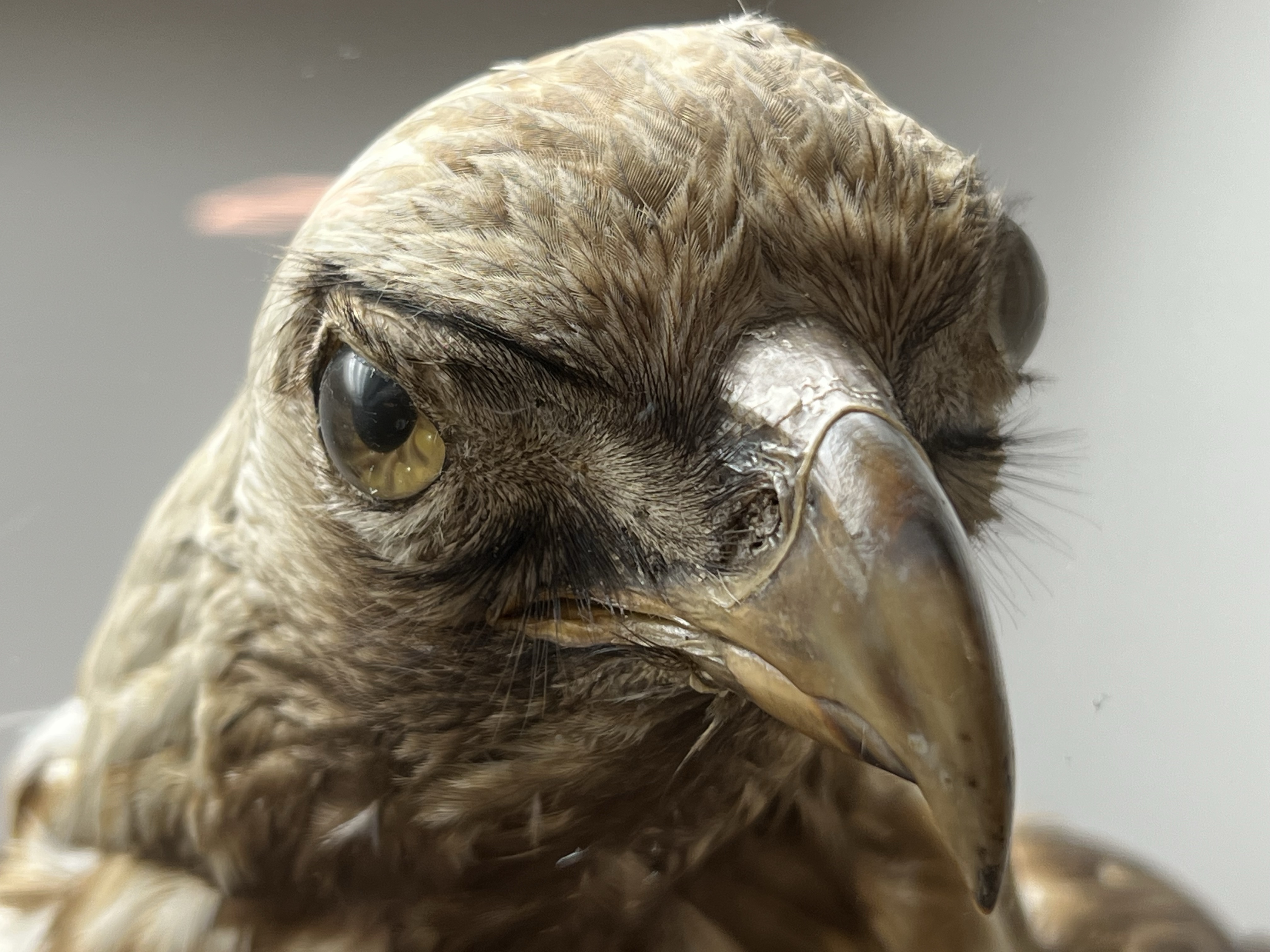
This taxidermy golden eagle looks like someone squeezed it a little too hard.

This is a sketchers paradise because it provides lots of subjects, none of which are moving anytime soon. After sketching the exterior of the museum, I added a California condor from the bird hall. These magnificent and rare birds can be seen a short distance from PG on the coast of Big Sur.
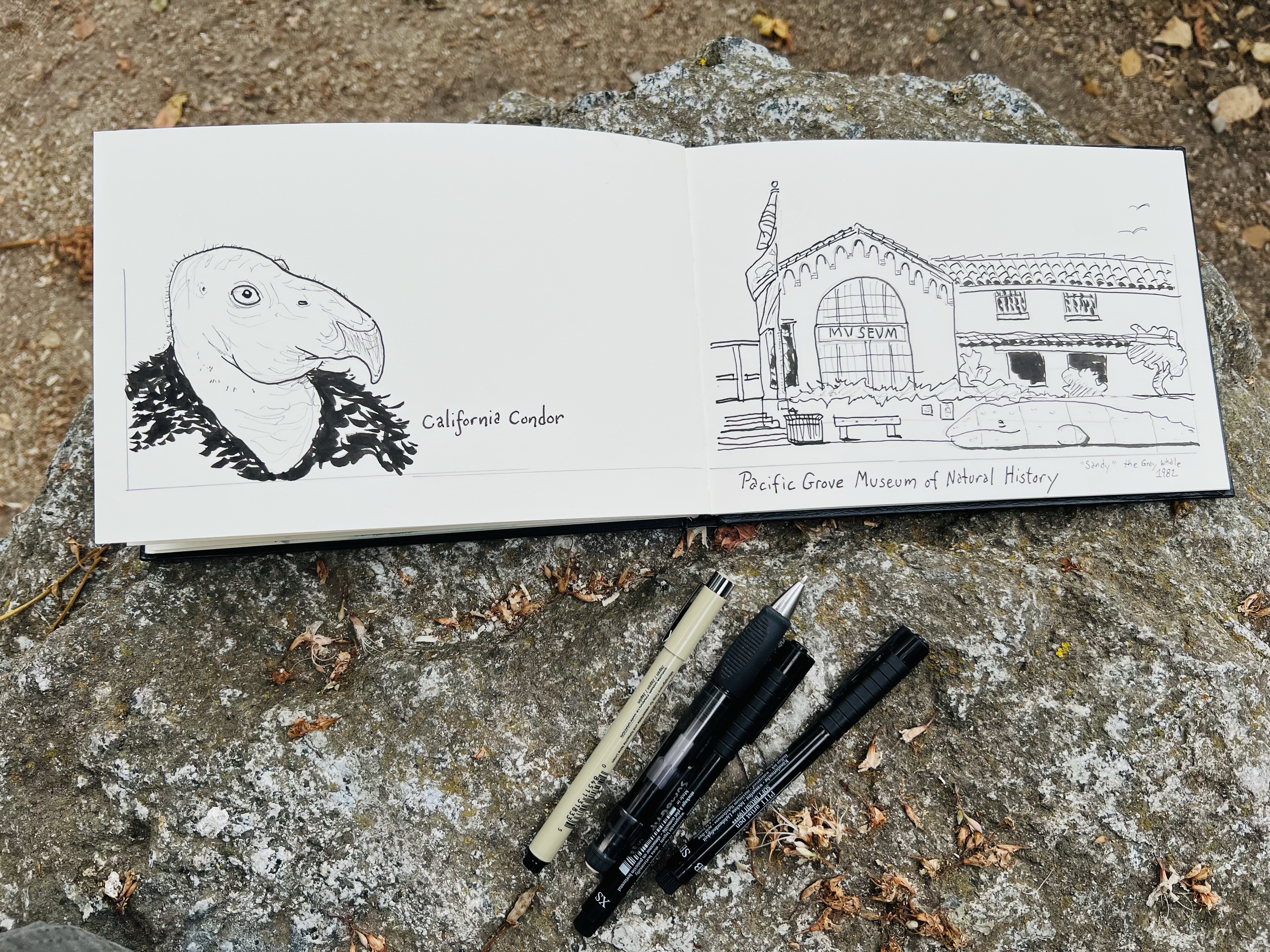
My spread in progress from the Monterey Native Plant Garden in the back of the museum.
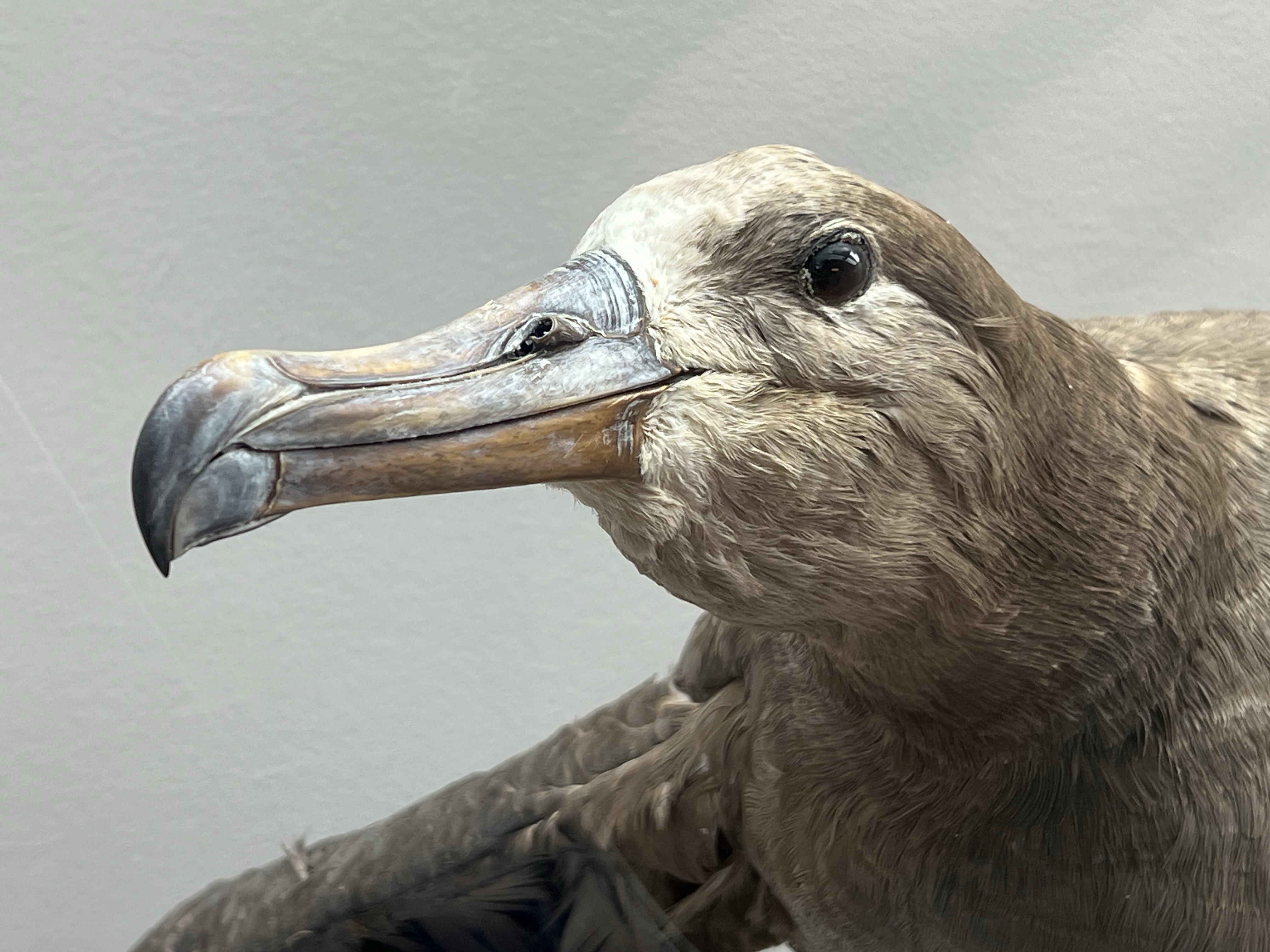
The black-footed albatross can be seen in the Monterey Bay, usually on a pelagic boat trip. A Northern California coast pelagic trip is not the same without a sighting of this iconic species.

One avian mount that I was looking forward to sketching was the extinct passenger pigeon. In Washington I had seen “Martha”, the last passenger pigeon at the Smithsonian Museum of Natural History so I was looking forward to sketching PG’s pigeon.

I looked and looked but I could not find the passenger pigeon. I thought it might be in the pigeon cabinet between band-tailed pigeon and rock dove. Nope. I even asked the lady at the desk and I got a blank stare. You think such a noteworthy mount would be well known to museum staff. Nope. None of the docents knew where it was nor what it was.
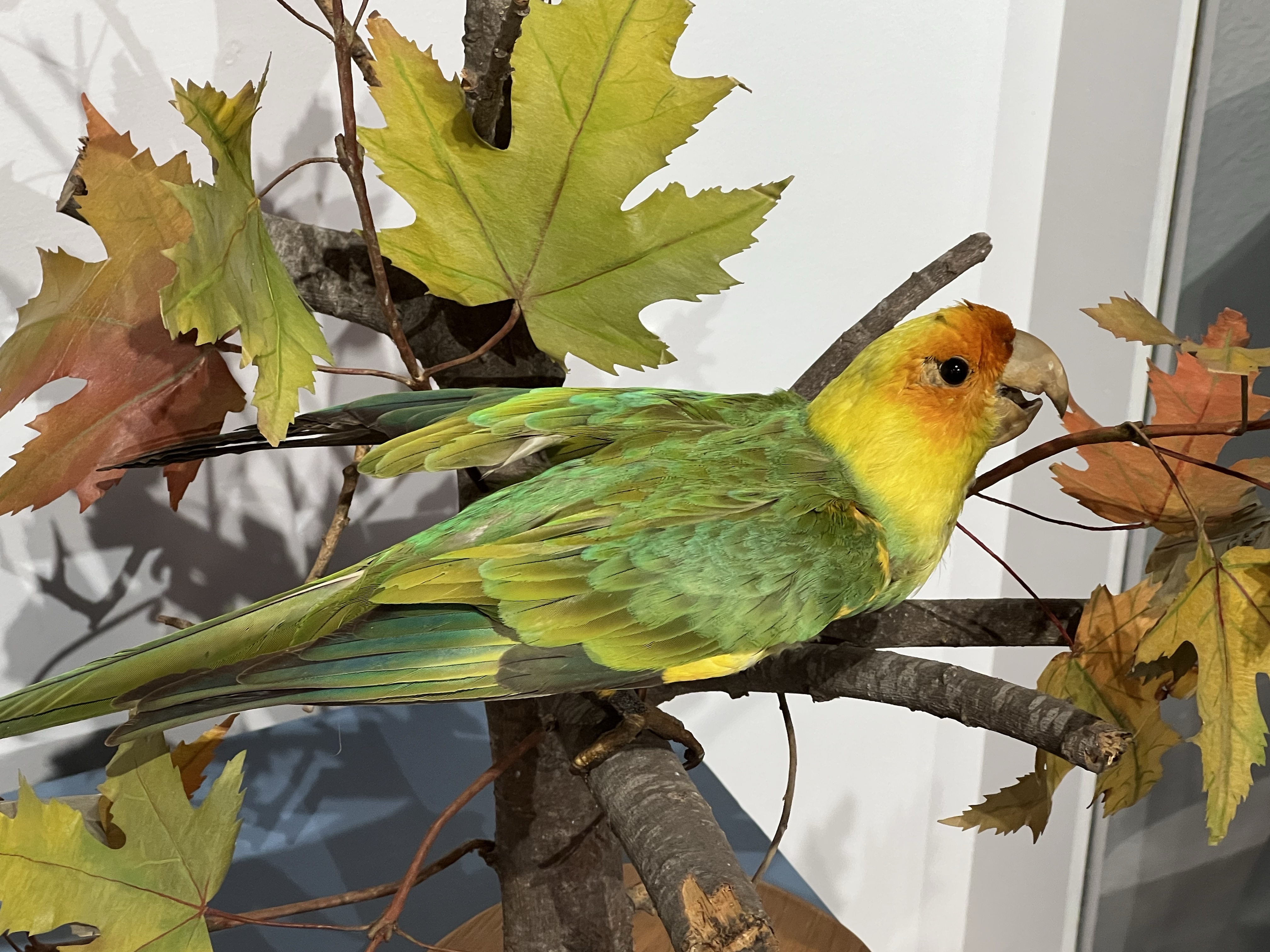
A consolidation was the mount of the Carolina parakeet, long extinct. The last individual died in 1918 at the Cincinnati Zoo.
Image

Mines Road and Del Puerto Canyon

We met in Livermore, under the tall flag pole in the center of town. Dickcissel, Brown Creeper, and I were heading to the southeast on the legendary Bay Area birding route: Mines Road to Del Puerto Canyon.

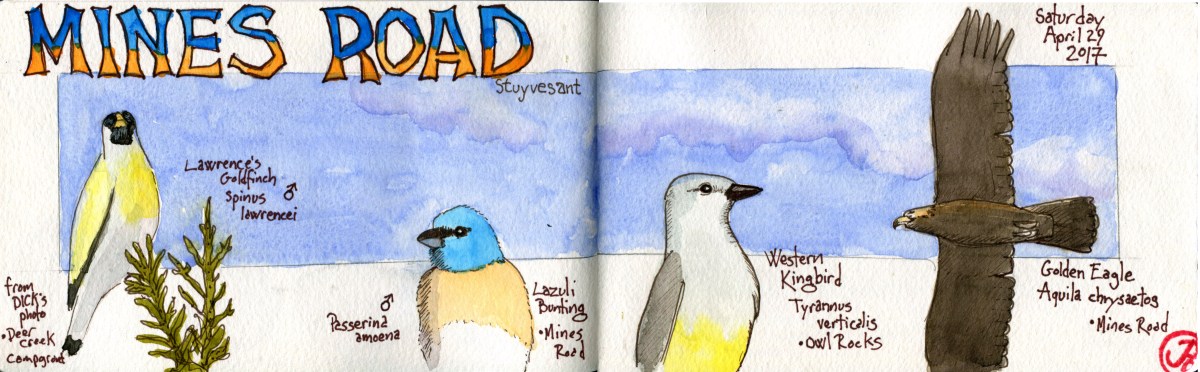
We had a few target birds for the trip: golden eagle, Lawrence’s goldfinch, and Bell’s sparrow. These would all be lifers for BRCR and the Lawrence’s was a sought after near-endemic species in California and Dickcissel had wanted to tick this bird off for a while now. (I had added this bird to my list on June 6, 2002 but have not seen the finch since then.)

It was a beautiful morning and we pulled over from time to time, willing that far off raptor into a golden eagle but there were all red-tail hawks and turkey vultures. The California endemic yellow-billed magpie was a nice consultation.

Mines Road was relativly busy on this Saturday with a bike race and many weekend warriors taking either their covetable sports cars or motorcycles out for a spring spin. We seemed to be the only birders on this stretch of road.

Mines started to climb up into the green oak-studded hills giving us wonderful views in all directions and a wide panorama of the blue cobalt skies. Any large bird soaring caught our attention. At this point we had seen red-tails and turkey vultures, a few accipiters and a female American kestrel.

Between mile 11 and 12, I pulled over. Something seemed about right on this stretch of road. I scanned the skies and a very stable looking raptor caught my attention as it circled to our north. This bird was uniformly dark with “plank-like” wings with large primaries. We all knew what it was but we didn’t utter it’s name. Incredibly the bird flew south giving us an amazing rapturous flyby. “There’s your golden!”

We continued down Mines Road going from Alameda County to the the county of my birth: Santa Clara. Along the way we enjoyed views of California scrub-jay, acorn woodpeckers, California quail, ash-throated flycatcher, some randy cows, and western kingbird. At one pull out we had a scope full of a singing male lazuli bunting. Always a beautiful spring treat!

We then headed east at “The Junction” and stopped at Frank Raines Regional Park for lunch. Here is were we found all the other birders in the area with the same intention of having lunch and doing a bit of birding between bites. I talked with another birder and he noted that it was not too birdy. He had golden eagle and roadrunner but no Lawrence’s goldfinch (LAGO).

After lunch we headed to the Deer Creek Campground which was a noted hotspot for LAGO. This campground was very popular with off-roaders and their noise-polluting vehicles. This was not an ideal place to bird because it was noisy and full of families that incredulously looked on as our binocular-sporting trio wandered through their camp, looking up into trees.

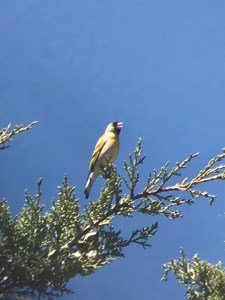
In a tree above a campsite we heard a very finch-like song. We tried to locate the singer but with no luck. Two finches flew off towards the creek and we did not get very good looks. Not good enough to call them LAGOs. The finches soon returned and this time the male perched on top of the tree in full view. He sang giving us great looks. We noted his black cap and face, gray back, and his yellow ‘bra”. Lifer for Dickcissel and Creeper!

Dickcissel’s photo of the male Lawrence’s goldfinch, singing at the top of a tree in the Deer Creek Campground.