While on O’ahu I continued with continuous-line sketching.
I had originally wanted to keep a separate journal and only sketch with this freeing technique but I didn’t follow my own challenge and spread continuous-line sketches throughout my three watercolor journals that I brought with me to Hawaii and Australia.
I grew to love this method in proportion to by own leaning curve. I didn’t want to sketch this way on every sketch but sprinkle it about as the subject seems fit.
What I love about this technique is it is a puzzle; figuring out how to get to one part of the sketch to the other. You simply draw your way there, sometimes doubling or tripling back on already existing pen marks. And of course pencils are never allowed for Continuous-Lines Sketches (CLS).
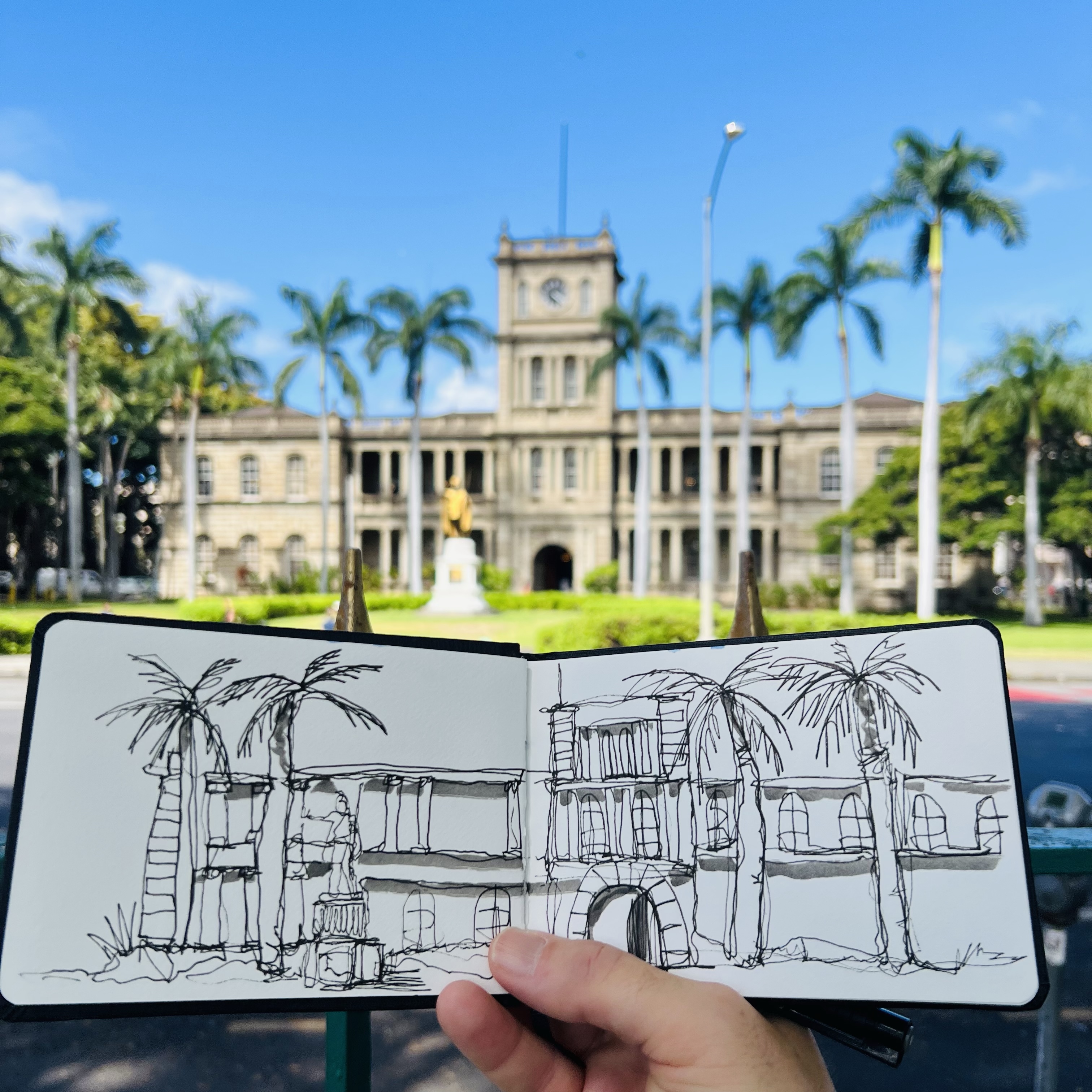
My first CLS was of the famed statue of King Kamehameha in front of the ‘Iolani Palace in downtown Honolulu.
While I initially looked at the complex details of the building I let it rip with a single pen line and I liked the results.The final continuous-line sketch with watercolor washes.
After sketching the palace I caught an Uber up to the Punchbowl Cemetery where the National Memorial Cemetery of the Pacific is located. The cemetery sits in a volcanic crater and many of the victims of the attack of Pearl Harbor are buried here.
I rendered the monument in a single, unbroken one line and I am pleased with the result.
Is this the most precise and accurate sketch of the monument? No, but is has something more, a feeling of spontaneity.
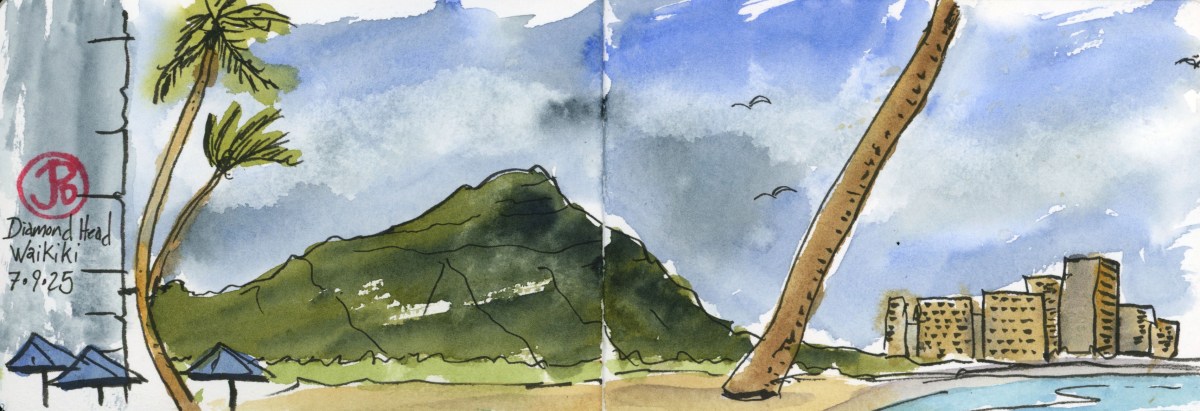
I had to continuously-line sketch the one view that says “Waikiki” more than all others: Diamond Head from Waikiki Beach.
I walked out to a stone jetty, in front of the lifeguard station and let my pen do the dancing. Instead of attempting to draw every palm leaf on every frond, I look for shapes not details (featured sketch).
A great way to end the day was to sit on my hotel room balcony with an adult beverage and my sketchbook while looking over the “Las Vegas” of Hawaii.
One other sketching stop on Ford Island was the Pearl Harbor Aviation Museum.
I love aircraft and I love sketching them. I did three sketches of aircraft used in World War II, two of which played a part in the attack at Pearl Harbor on December 7, 1941: the Curtiss P-40 Warhawk and the Mitsubishi A6M2, know as the “Zero”.
At the time of the surprise attack on Pearl Harbor the Japanese Imperial Navy’s Zeros dominated with many P-40s being destroyed on airfields around the island. A few Warhawk were able to make it to the air to put up a defense.
On the way to Hanger 79 is one of my favorite fighters, the F-4 Phantom.
I then walked over to Hanger 79, which also houses planes in the museum’s collection.
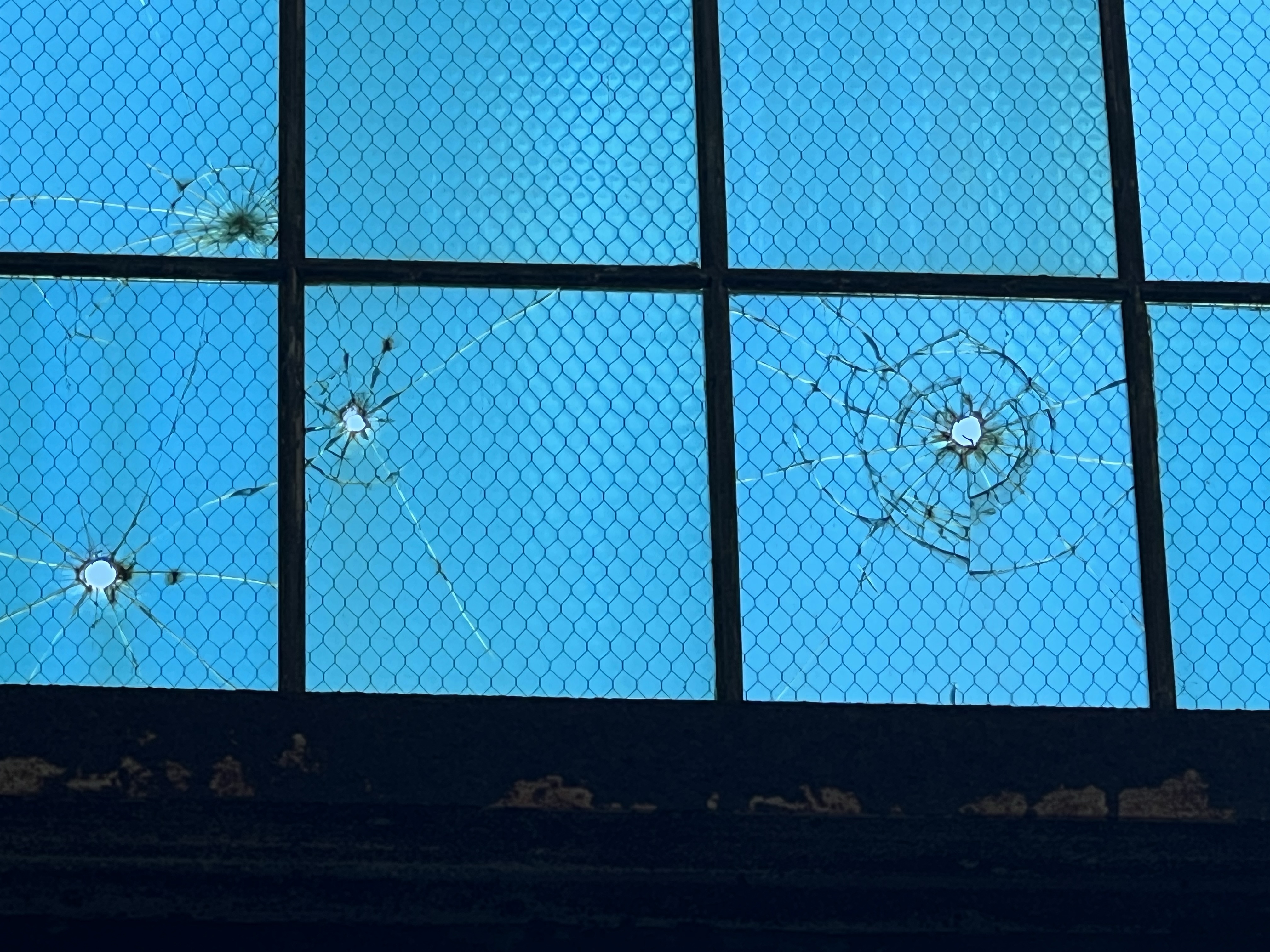
This hanger was built in 1941 and still bears scars from December 7, 1941 in the form of bullet holes left by strafing Zeros.
Zeros left their mark on hanger 79.
One plane in Hanger 79 was on my sketch list. This was a B-17E Flying Fortress named the “Swamp Ghost”. This bomber has an intriguing story (featured sketch).
The bomber was damaged and low on fuel after a bombing raid over New Britain in the Papa New Guinea archipelago.
The pilot was forced to land in what he thought was a flat green field but turned out to be a swamp and the plane settled in five feet of water.
The crew survived the forced landing and hiked out of the jungle for six weeks arriving at Port Moresby exhausted and sickened with malaria.
The B-17 sat for half a century, dubbed the “Swamp Ghost” by Aussie pilots.
The plane was eventually recovered, piece by piece, by helicopter. It spent some time in California before returning to its new home on Ford Island for the first time since 1941.
There is one site that has the most visitors (70 million per year) out of any other in O’ahu: Pearl Harbor.
I had a 9:00 reservation to visit the USS Arizona Memorial. Before I boarded the boat out to the memorial, I did two sketches from the Visitors Center (one is the featured sketch and the other is below).
The Arizona is a nautical grave. On December 7, 1941 a Japanese bomb passed through four decks igniting an ammunition magazine causing a massive explosion. Sailors were incinerated instantly. This is the biggest loss of life on a single ship in US Navy history killing 1,177 sailors. About 900 sailors are entombed in the sunken battleship.
We queued up ten minutes before our boat took us across the harbor to the memorial.
The boats are run by the US Navy with enlisted men and women in uniform piloting the boat. Each boat are considered launches of the sunken Arizona, carrying the number 39, the hull number of the Arizona “BB-39”.
Before we departed, the park ranger had to remind visitors of proper decorum while at the memorial. My teacher voice was at the ready if there was any guffawing and disrespect at this solemn tomb. Luckily for me I keep said voice under wraps as visitors were respectful.
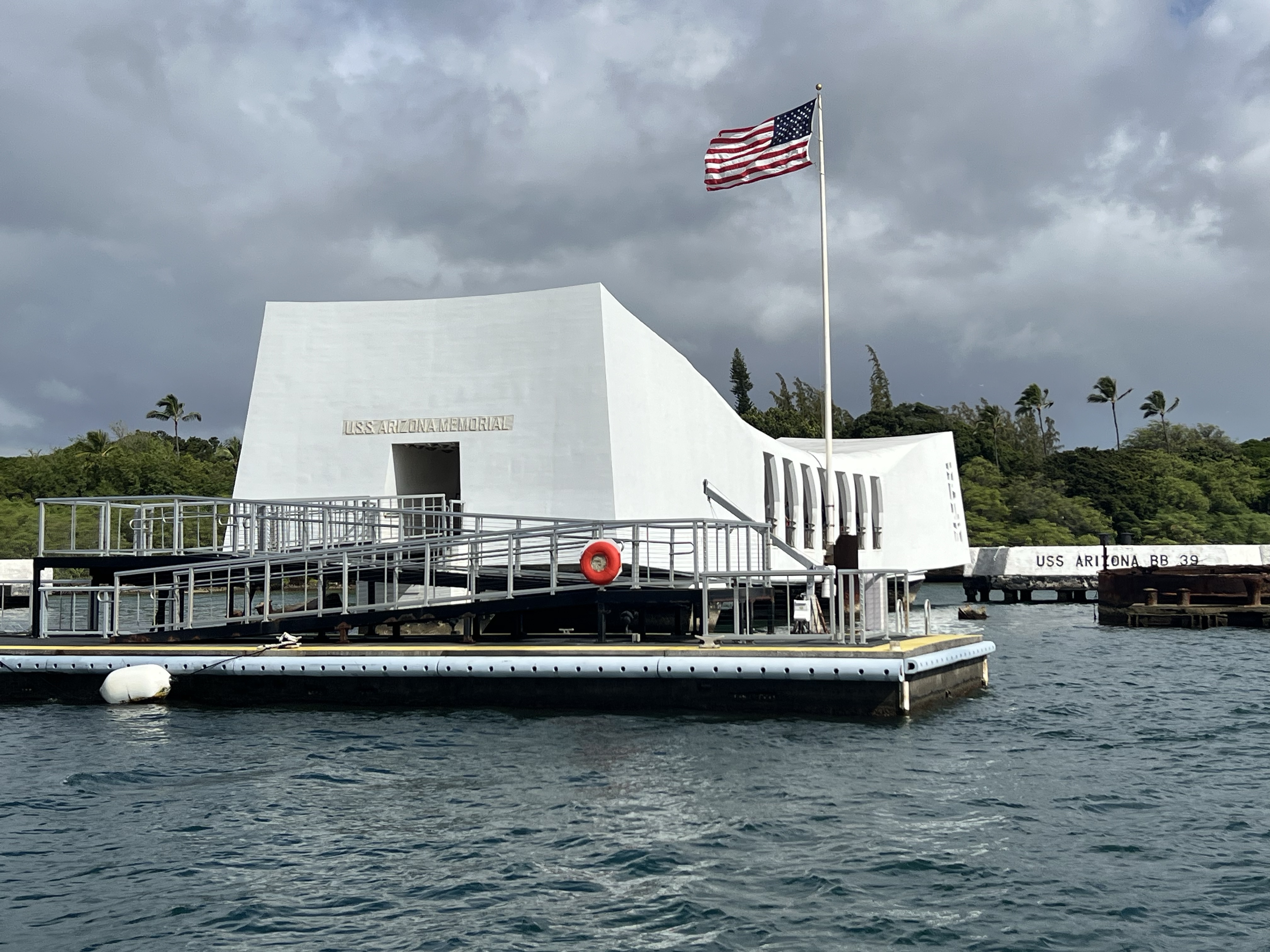
After the short ride we disembarked to the entrance of this solemn but beautiful memorial.
Approaching the beautiful memorial.
As we walked up the gangway a light but persistent warm rain began to fall.
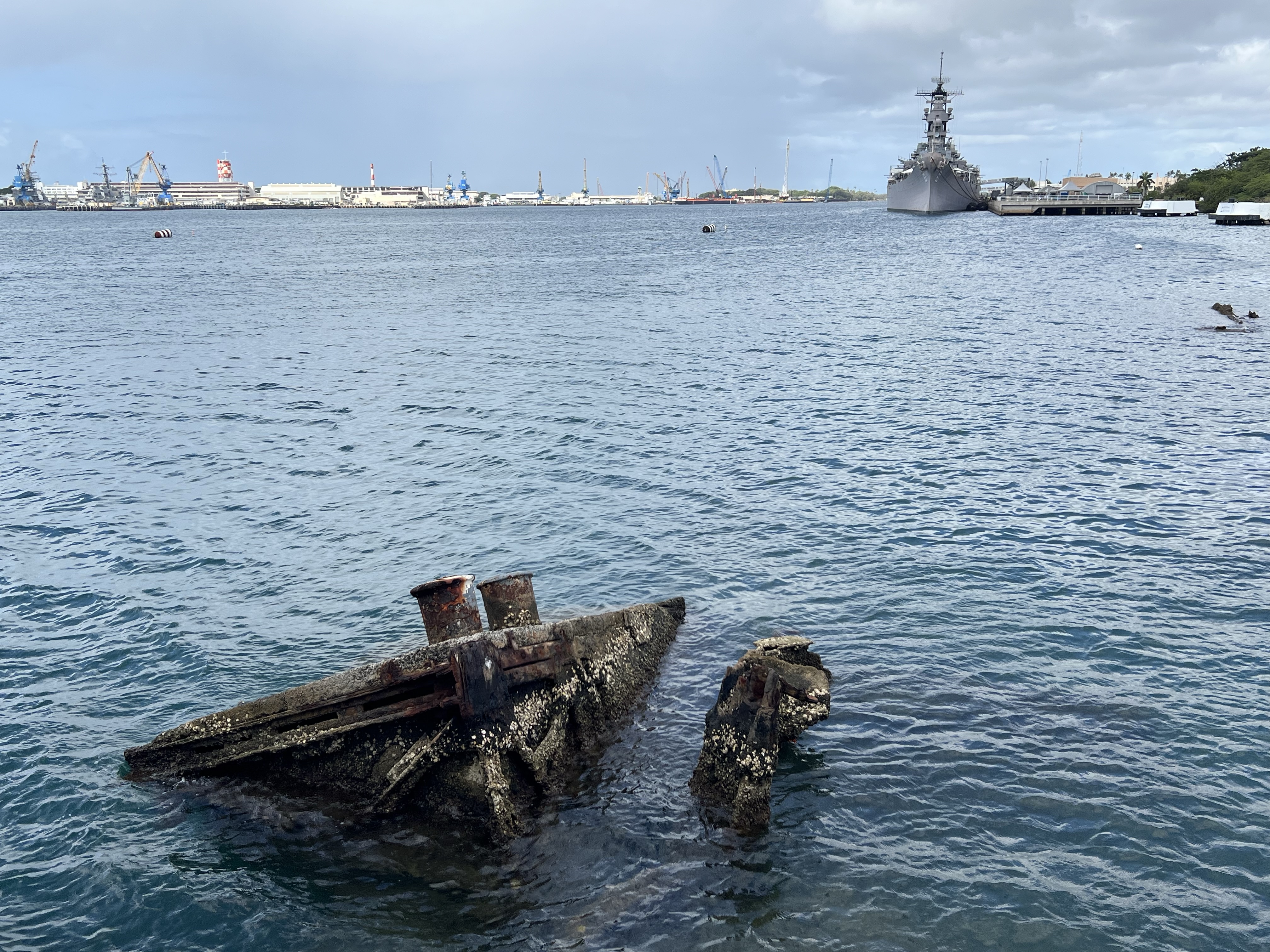
The memorial is built over the sunken hull of the Arizona. You can look off towards the bow and the stern, both of which are marked by white buoys.
Part of the Arizona in the foreground looking toward the bow and beyond, the USS Missouri. Here is the beginning and the end of America’s involvement in World War II in one image. The surrender documents where signed on the deck of the Missouri in Tokyo Bay on September 2, 1945.Looking towards the stern of the Arizona with Gun Turret No. 3 breaking the surface.Beautiful pollution.
About half a gallon of oil from Arizona’s fuel tanks leaks to the surface everyday. When Arizona was lined up at Battleship Row in 1941, she was fully fueled. It is estimated that 79,000 gallons of oil are still aboard the Arizona.
California Coda
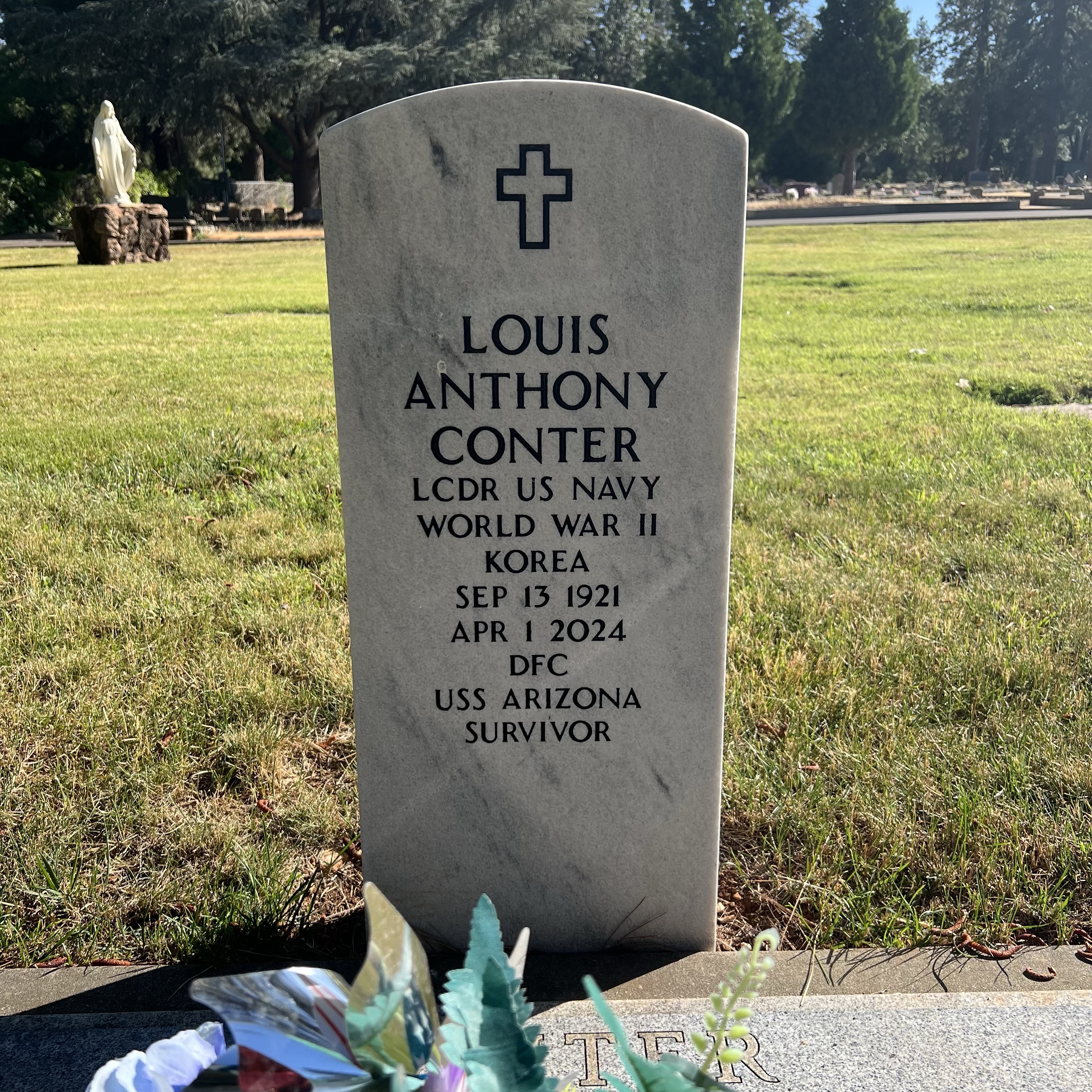
Before I left for Pearl Harbor, I visited a cemetery near my mom’s house in Grass Valley.
I was looking for the grave of Louis “Lou” Conter at St. Patrick’s Cemetery. After a brief search, I found it.
Why this grave? Conter was the last surviving member of the crew of the USS Arizona, where he was a quartermaster. He passed on April 1, 2024 ay the age of 102.
I arrived at my hotel an hour and a half early before check in so I stowed my bag and walked to the Waikiki Beach through Fort Durussy Beach Park.
There were tons of birds in the park, all exotic (common myna, zebra dove, red-headed cardinal, common waxbill, Java sparrow, etc.) introduced to this jungle paradise. But I was looking for one native. An all white bird with a solid black beak and black eyes. It perches and nests on horizontal branches in the park. This is the white tern!
This is not a lifebird, I had a far off and all too brief view of one on a pelagic from Kona on the Big Island. But I was soon to get stunning views of the “Angel” tern!
It is fitting to see this bird in Honolulu as it is the city’s official bird. In the Hawaiian language the bird is known as manu-o-Ku.
Searching for the white tern is pretty easy. Look up into any tree with lots of horizontal branches for a white bird and hope it’s not a feral pigeon!
White tern at the park next to my hotel.
There were lots of terns (or as it should be called the white noddy) to choose from.
I finally made it out to Waikiki Beach with stunning views of Diamond Head. So I had to sketch the view (featured sketch). With some sand in my shoes and a Mai Tai in my gullet!
While the Coqui frog is lionized in its native Puerto Rico as the unofficial National animal, the diminutive frog is the scourge of the Hawaiian Islands!
There are 16 species of Coqui frogs whose common name is onomatopoeically named for their loud mating calls: “Ko-kee”. This small tree frog is about the size of a penny (15-80 mm). But they have a very big voice.
Their calls can reach 100 decibels. To put that in some context, that’s louder than most power tools, dishwashers, food blenders, or a diesel locomotive from 100 feet away. And their calls are slightly less louder than your average rock concert.
On the Hawaiian Islands this frog is an invasive species. It was unintentionally introduced in the late 1980s through imported nursery plants. The frog competes with native species for food (mainly insects) and they have no natural predators (the Indian mongoose does not climb trees) so in some parts of the islands they have reached levels of 2,000 frogs per acre!
The Coqui frog, along with the common myna, finds itself on the IUCN’s list of the 100 of the World’s Worst invasive Alien Species. While they are harmful to native wildlife, they are they harbingers of many a sleepless night.
On the Kona side I had no problems with Coquis and it wasn’t until I was on the windward side and specifically the town of Hilo where I encountered their dubious reputation.
And they are notorious around the Dolphin Bay Hotel. This Hilo mainstay is a wonderful family run hotel just across the Waikuku River from the historic downtown. The staff are friendly and informative and the rooms are a pleasant throwback to another era (it was built in 1968).
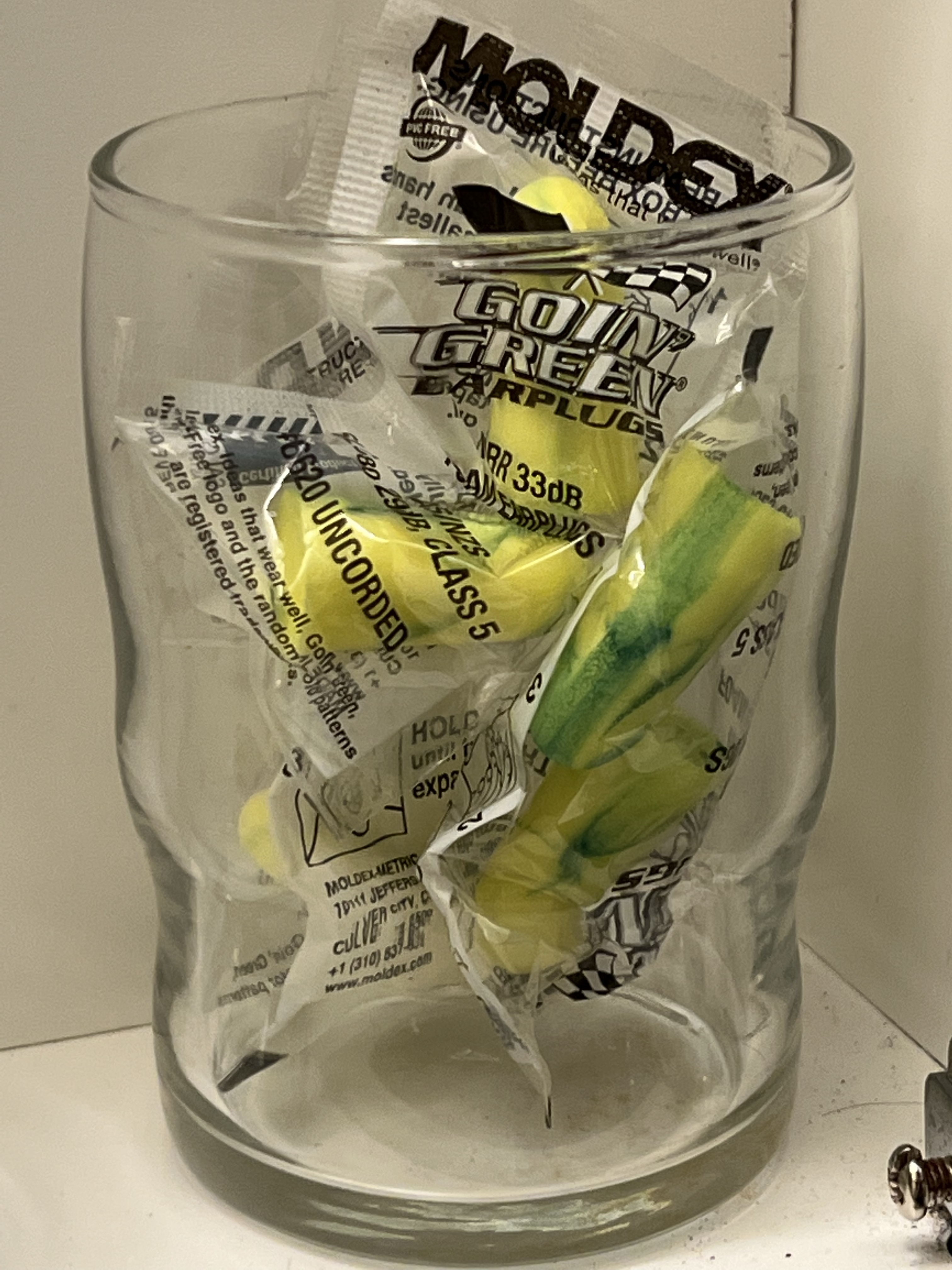
But what is not so pleasant is the incessant chorus of frogs from dusk to dawn. Shutting all the windows and blasting the fan can’t completely cover the frogs! So I used one of the traveler’s best tools: earplugs.
The Dolphin Bay Hotel provides complementary earplugs.
While I got a lot of my target species on the Kona pelagic, I had not added any noddys to my list, either black or brown.
One of the the most beautiful drives I experienced on Hawaii was in Volcanoes National Park along Chain of Craters Road.
It starts off just near the Visitor’s Center in the heart of the park which seems like it’s stuck in a perpetual rain cloud. Indeed the rain forests that flank the road are lush and something out of the Jurassic Period. One expects a T. Rex to cross the road at any moment.
After a few miles heading downslope towards the Pacific, you cross the alien barrens of lava flows.
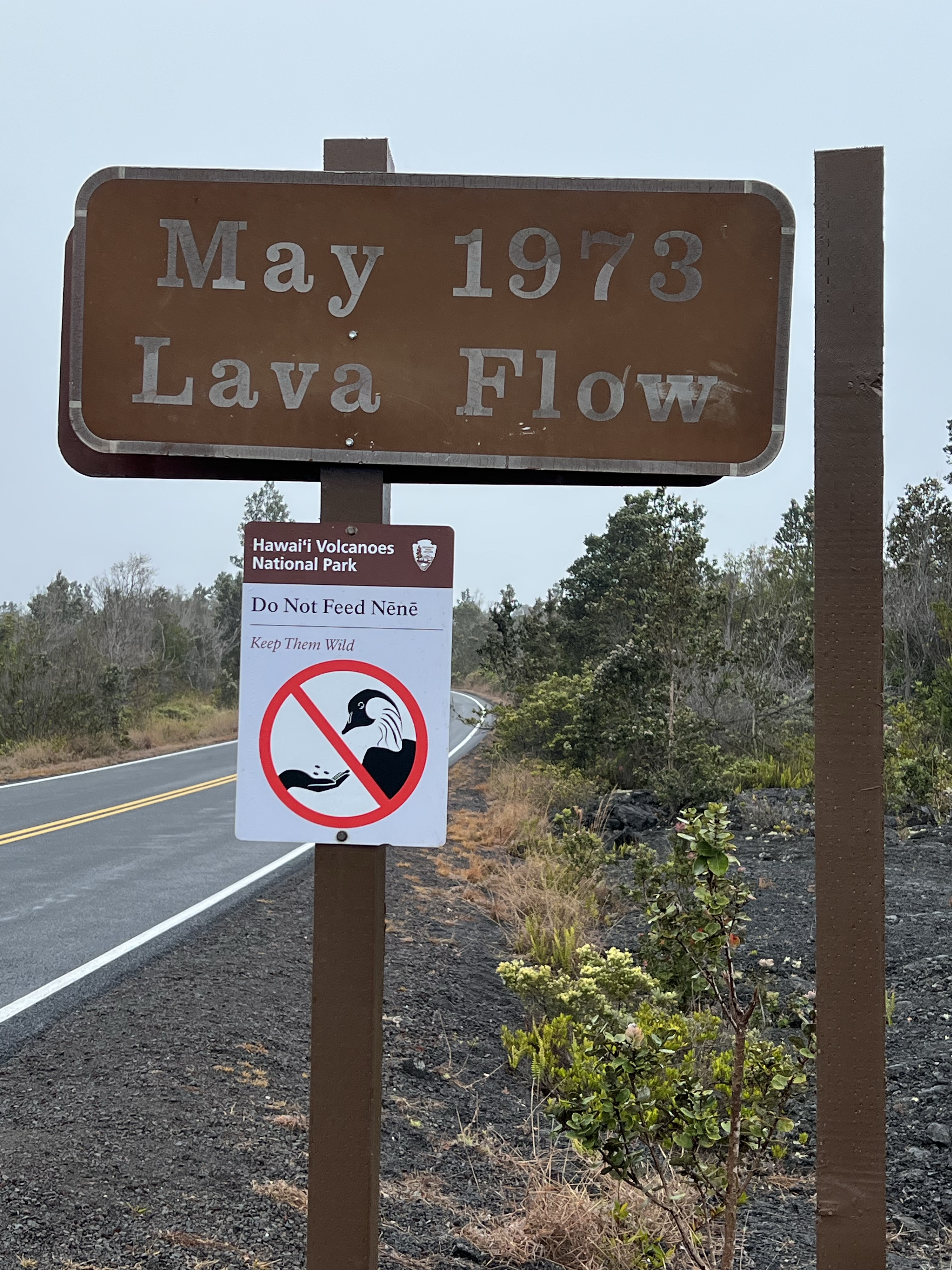
This 1973 lava flow covered the Chain of Craters Road. The Hawaiian goose or nene can be seen here. When I saw one, I made sure I didn’t feed it.
You eventually wind down via a few hairpin turns, altered by lava until you can see the Pacific Ocean, about 40 minutes drive from the Visitor’s Center. When it gets close to the ocean, the road parallels the lava cliffs. Within a mile I would run out of road as the lava flows reclaimed the road and closed it for the foreseeable future.
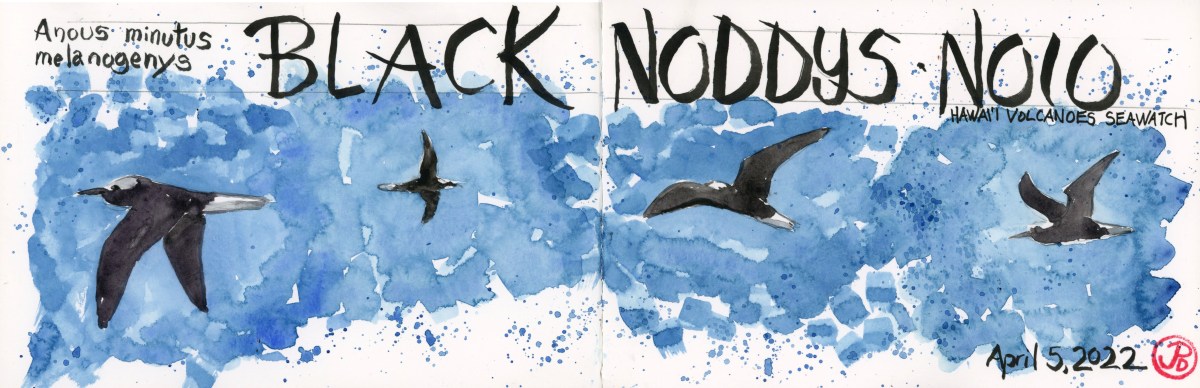
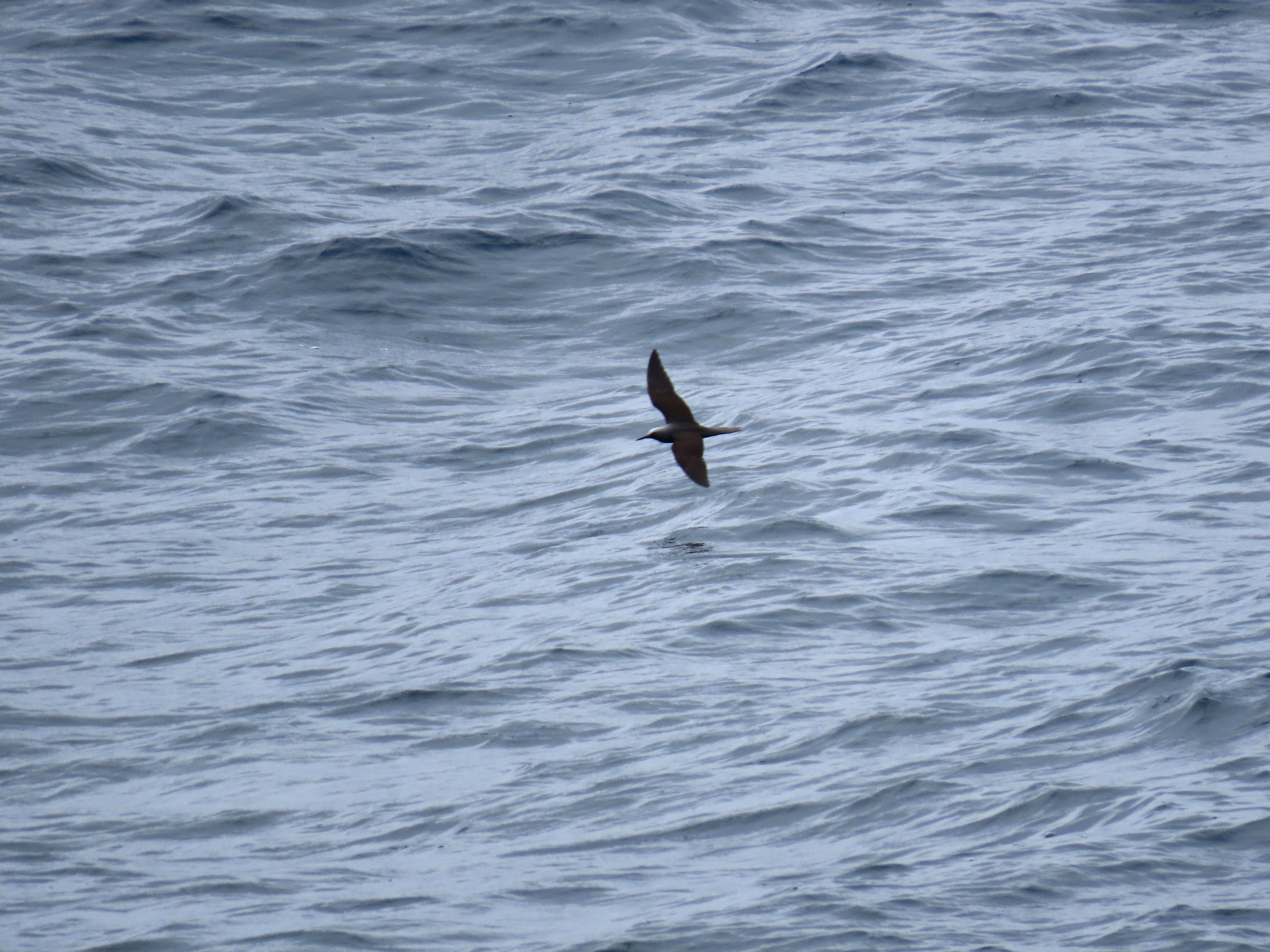
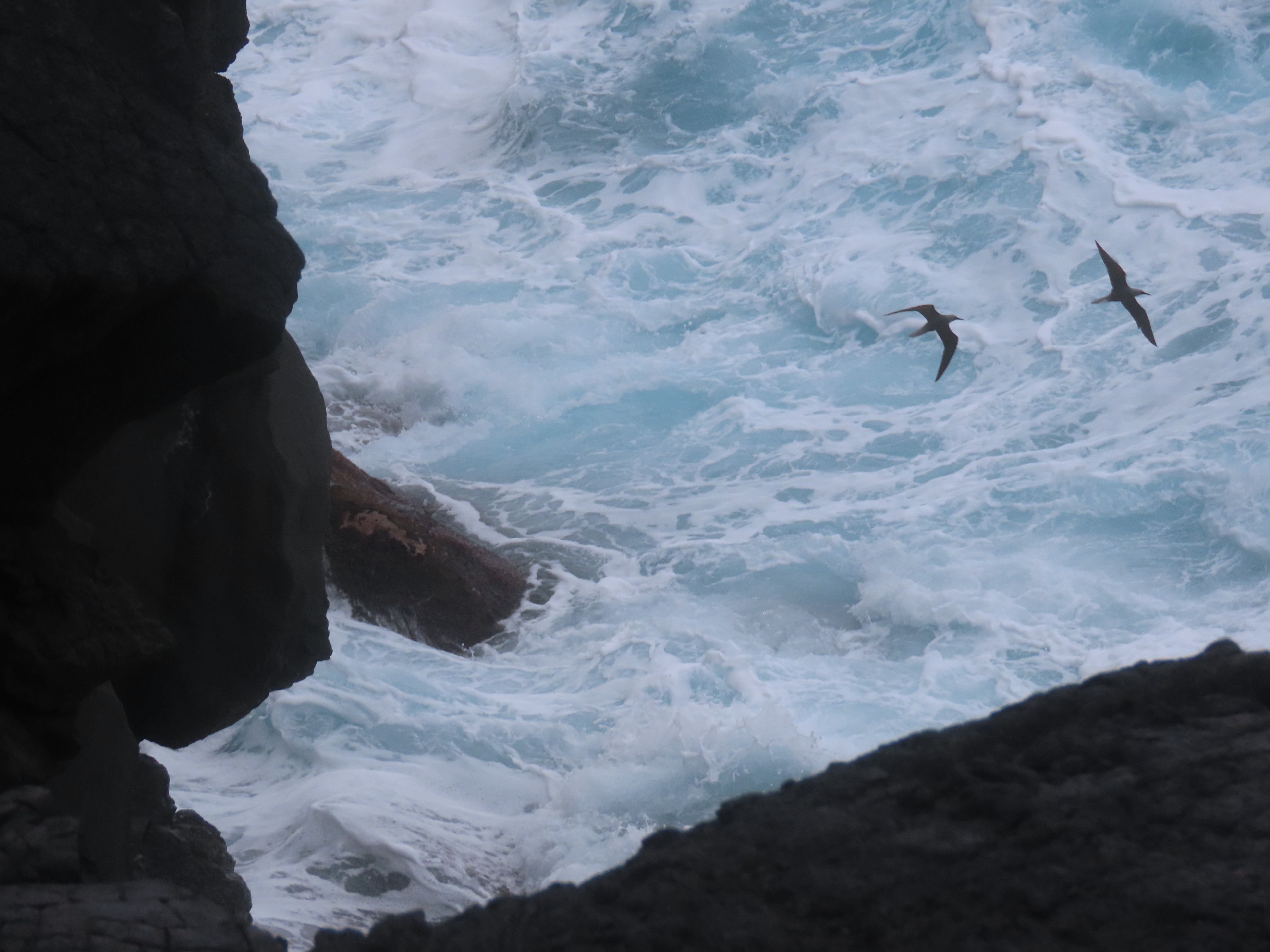
Off to my right and with the naked eye, I spotted black birds skirting above the waves. This could be only one bird: Noio or the Hawaiian black noddy.
I stopped the car and walked to the edge of the cliff to get a better look at the birds through binoculars. The bird’s scientific and common name comes from the noddy’s lack of fear around humans, making them easy to catch. The genus Anous, comes from the Greek, meaning silly, without understanding, and mindless. In English a noddy is a fool or simpleton. It is certainly not easy to catch a good photograph of the noddys as they strafed the waters and disappeared around (or into) cliffs. They are sea cliff nesters and I enjoyed my time with them as they flew to the lava cliffs and foraged in flocks, on the Pacific waters.
A black noddy, photographed from shore.Two noddys flying from the lava cliffs where they nest.
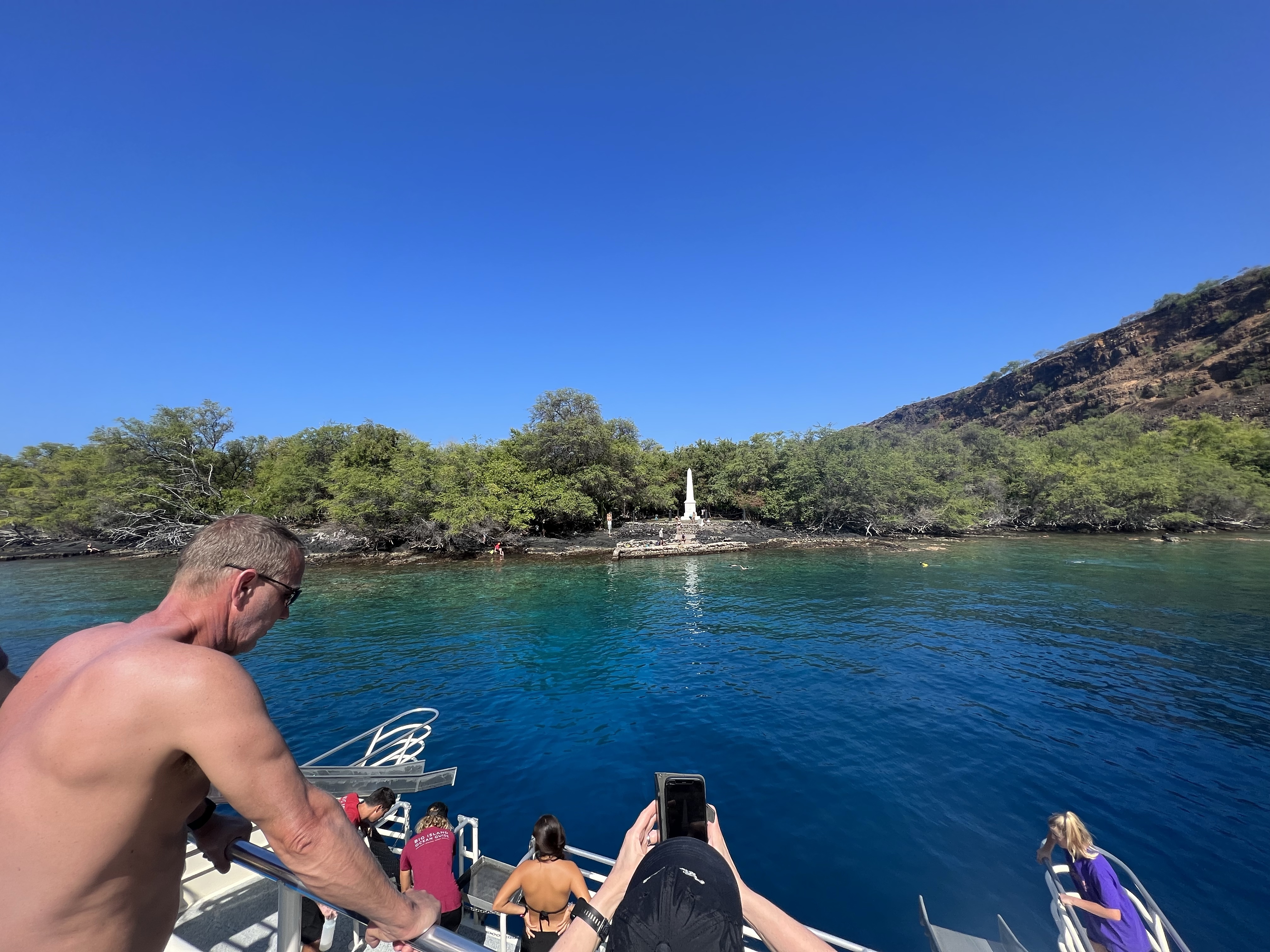
Probably one of the more touristy things I did on the Big Island was taking the Fair Winds II to the amazing snorkel site at Kealakekua Bay and the Captain Cook Memorial.
This marine sanctuary is reported to be the best snorkeling site in the entire state. CNN Travel, Smithsonian Magazine, and Travel and Leisure all include the Big Island on their lists of the top snorkel sites in the world and they all specifically mention Kealakekua Bay because of its mix of technicolor coral, large numbers of fish, turtles, and dolphins and it’s deep history.
It is here in January of 1778 that British Explorer James Cook, “discovered” Hawaii. He named his new discovery, the Sandwich Islands, to honor his patron, the Earl of Sandwich. At first, Cook and his crew were welcomed by the native people but that soon soured. On a later visit on February 14, 1779, Cook and his crew were killed by the Hawaiians.
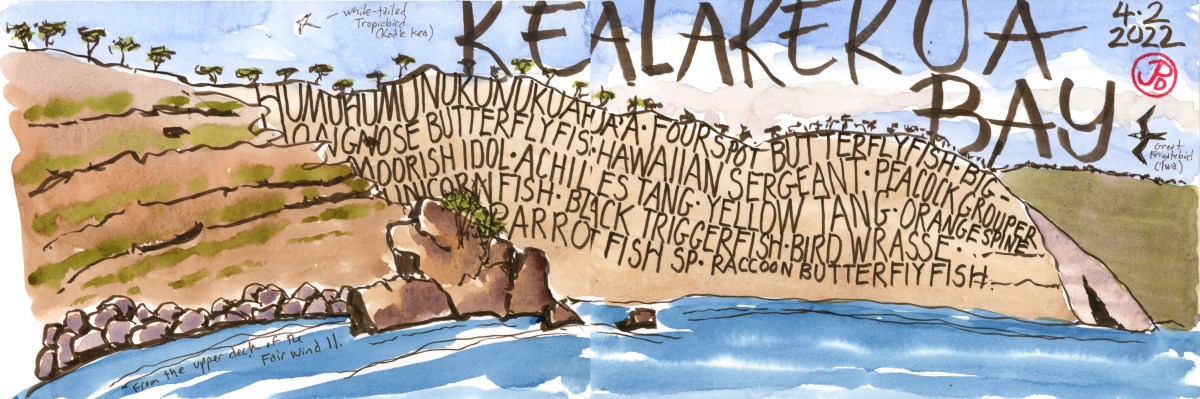
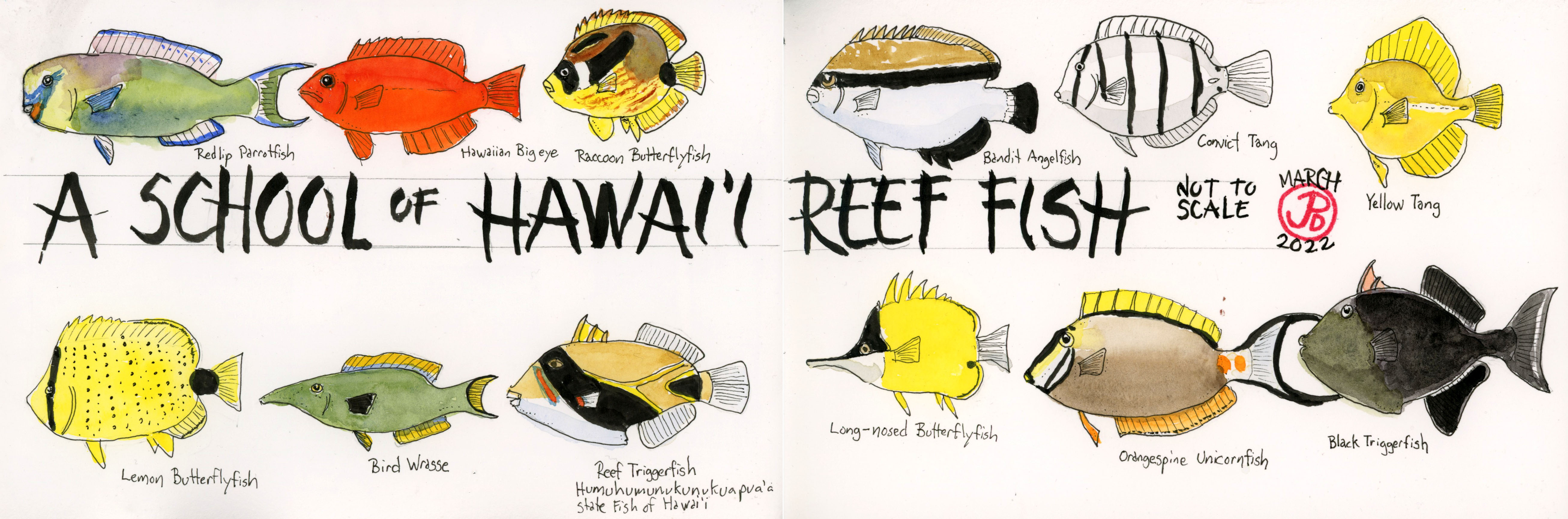
Before I left the mainland for the Big Island, I did a little homework by doing a spread about fish I wanted to see at Kealakekua Bay, by sketching the fish beforehand. Identifying them in the water would be a little easier. I titled the sketch, ” A School of Hawai’i Reef Fish”. I ended up seeing seven out of the twelve fish that I illustrated.
The Fair Winds II is a double-decker catamaran that can handle one hundred people. We were a few short of triple digits as we headed out of Keauhou Harbor, the same harbor I set off from to see manta rays.
The boat ride south was about 45 minutes and Captain Dante, kept his eyes open for marine mammals such as spinner dolphins and humpback whale. Off to our starboard side we saw two humpback whales showing off their flukes as they dove down. After a pause of the cetacean encounter, Cap. Dante throttled up and we headed off to snorkeling paradise.
While we where nearing the bay, I spotted one of the birds on my wishlist flying over the waters to the southwest: a white-tailed tropicbird. This bird was likely flying back to it’s nest site, on the high cliffs that surrounded Kealakekua Bay. While we where in the bay, I spotted many more of these tropicbirds circling above the cliffs.
On the north side of the Kealakekua Bay, near where Cook was killed, there is a 27 foot high obelisk erected to Cook’s memory. The Fair Winds II pulled up just offshore of the monument for the snorkelers to grab a few shots. We then moved just to the south to our mooring.
As I was slathering on another layer of reef-safe sunscreen, I looked up at the cliffs, trying to find more tropicbirds, I spotted a dark bird with a forked tail and long, pointed wings. This was the classic silhouette of a frigatebird, in this case, a great frigatebird. Lifer!!
Now it was time to get wet and see fish. The Fair Winds II has many ways to enter the water: two slides on the bow, a high dive on the second story amidship, or steps off the stern. There was a jam at the stern steps as snorkelers fussed with their fins that I took the fourth option of egress: a big step off the side.
Once the bubbles cleared and I adjusted my mask, the colorful world of Kealakekua Bay came to life. Yellow tangs, Hawaiian sergents, black triggerfish, peacock groupers, parrotfish, and orangespine unicornfish. This was like visiting another planet!
Snorkeling and SCUBA diving (I’ve been certified since 2000) feels like flying. Flying above the hills and mountains of the coral reef. The fish are other “birds”. You cross over one “mountain range” and drop into a sandy valley that has it’s own collection of fish.
I swam toward the shoreline and I came upon a pair of exquisite Moorish idols. I had only seen these fish in the aquarium, and now here they were in their true and wild environment.
I passed over a shallow reef, careful not to kick so I wouldn’t damage the reef on impale myself on a sea urchin. I floated down into the next “valley” of sand and I saw a most desired fish. This was the official State fish of Hawaii and I had memorized it in second grade. It was a humuhumnukunukuapua’a or “fish that grunts like a pig”. This is Rhinecanthus rectangulus or the wedge tail triggerfish. I dove down to get an eye to eye view of the humuhumnukunukuapua’a, the fish was clearly on it’s patch of sand as it didn’t swim far from it’s sandy stronghold. Lifer!!
I had been somehow waiting for this moment since 2nd grade! And I loved it!
Sketching notes: I sketched the cliffs above bay in between snorkels from the top deck of the Fair Winds II. I later added the names of the fish I encountered in the bay on the cliff face.
While most see the Hawaiian Island chain as an unspoiled tropical paradise, the islands have a darker side.
The islands also bears the undesirable moniker of “The Extinct Bird Capital of the World”.
Over 200 years ago, early scientists described and categorized the native avian endemic species of the Hawaiian Islands. Unfortunately now, over half of these endemics are now extinct. Fading away to diseases, competition from introduced species, and habitat loss.
Native Hawaiian species are under assault from so many sources. These threats have all been brought to the islands primarily by humans.
When you first step off the plane, the first bird you see is most likely introduced. Most visitors, who don’t head up into the higher rainforests will not likely ever see a true Hawaiian endemic species. Over 150 avian species have been introduced to the Hawaiian Islands, where they are known as “alien” species.
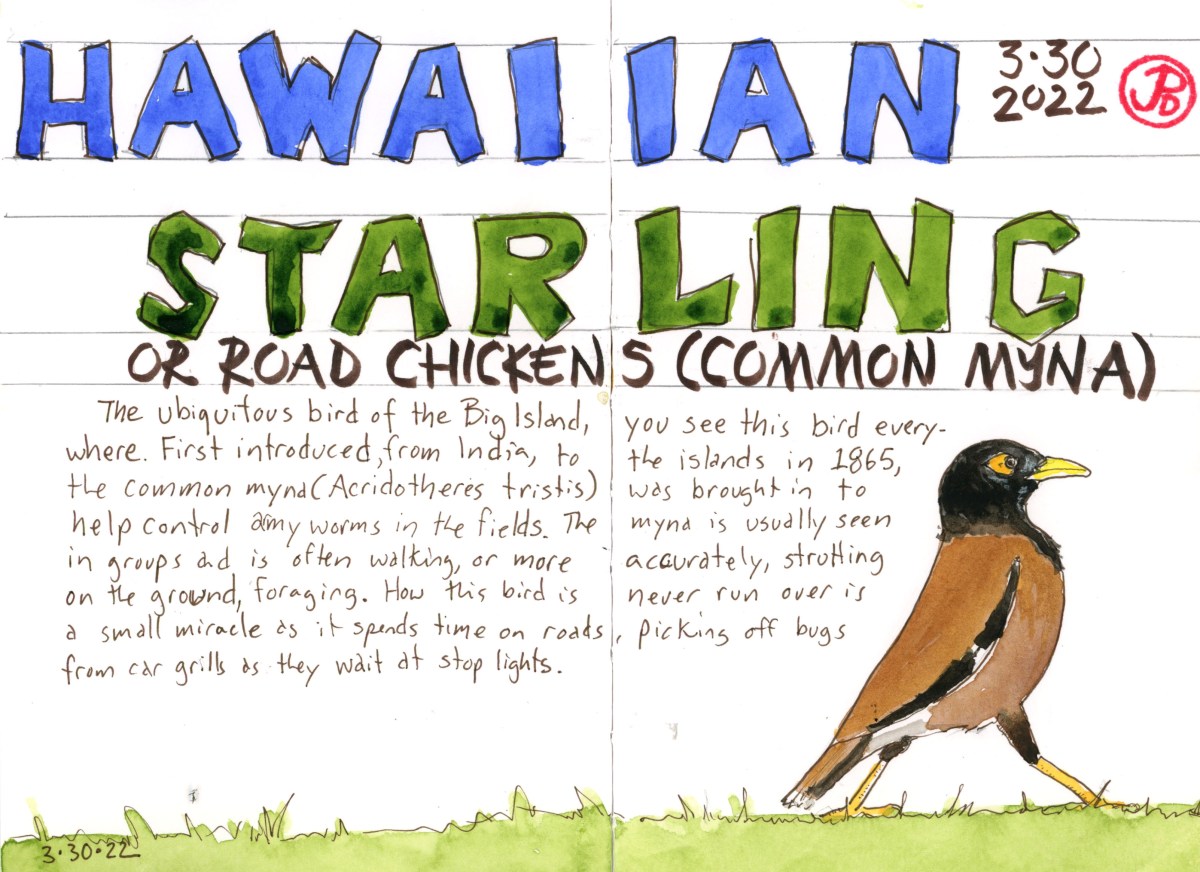
The bird that I encountered most, the bird I jokingly labeled Hawaiian starling, is the common myna. This bird was introduced to Hawaii in 1865 and originally hails from India and Southern Asia. The myna was introduced to the Hawaiian Islands to help control agricultural pests. But now they have a large breeding population that competes with native species for food resources and nesting sites.
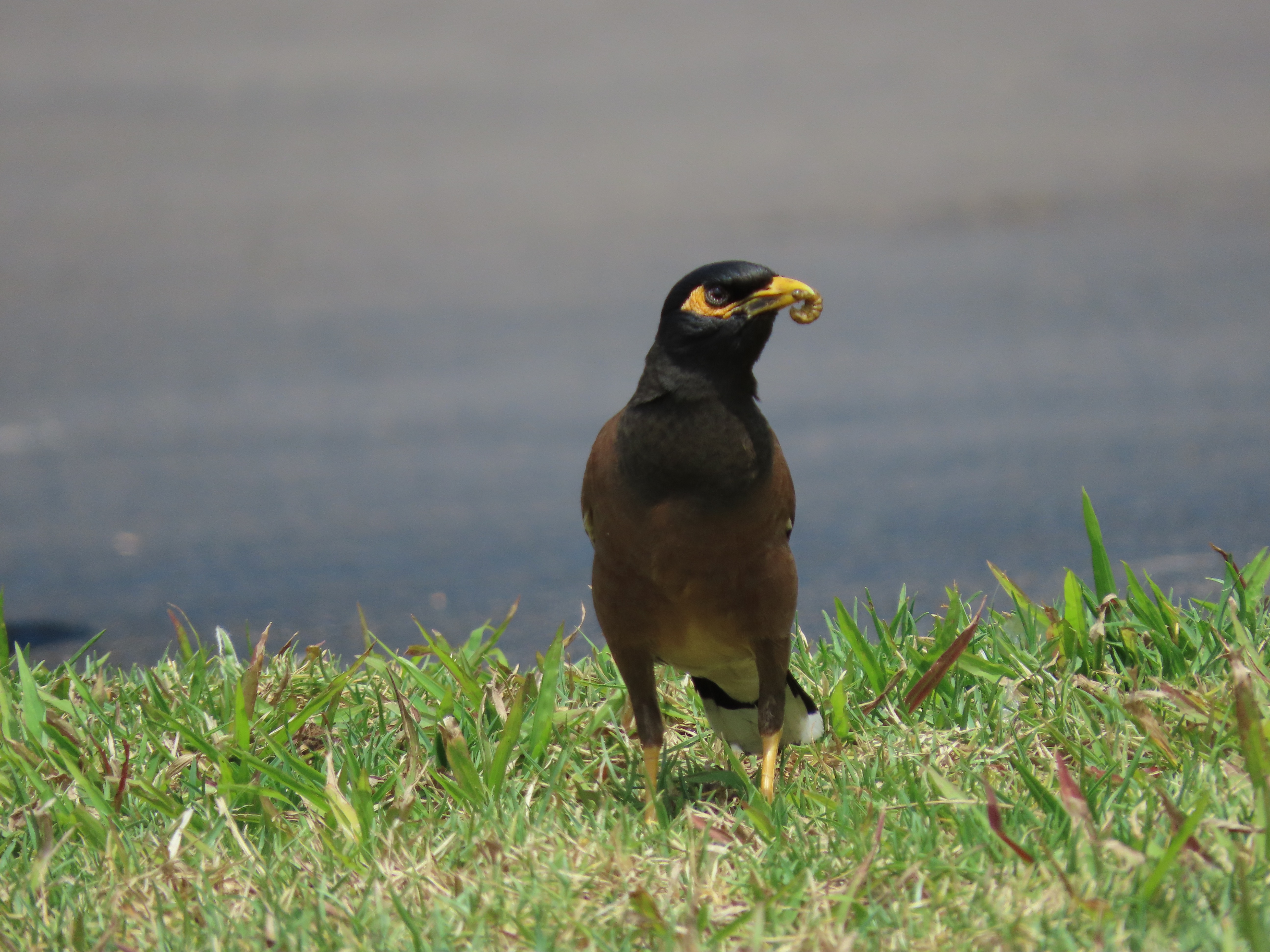
A common myna, doing what it was brought to Hawaii to do: eat bugs.
The myna has also been introduced in Australia, New Zealand, and Madagascar. It is listed on the International Union for Conservation of Nature’s list of the 100 of the World’s Worst Invasive Alien Species. Three out these invasive species are birds and all three: common myna, red-vented bulbul, and European starling can be found in Hawaii.
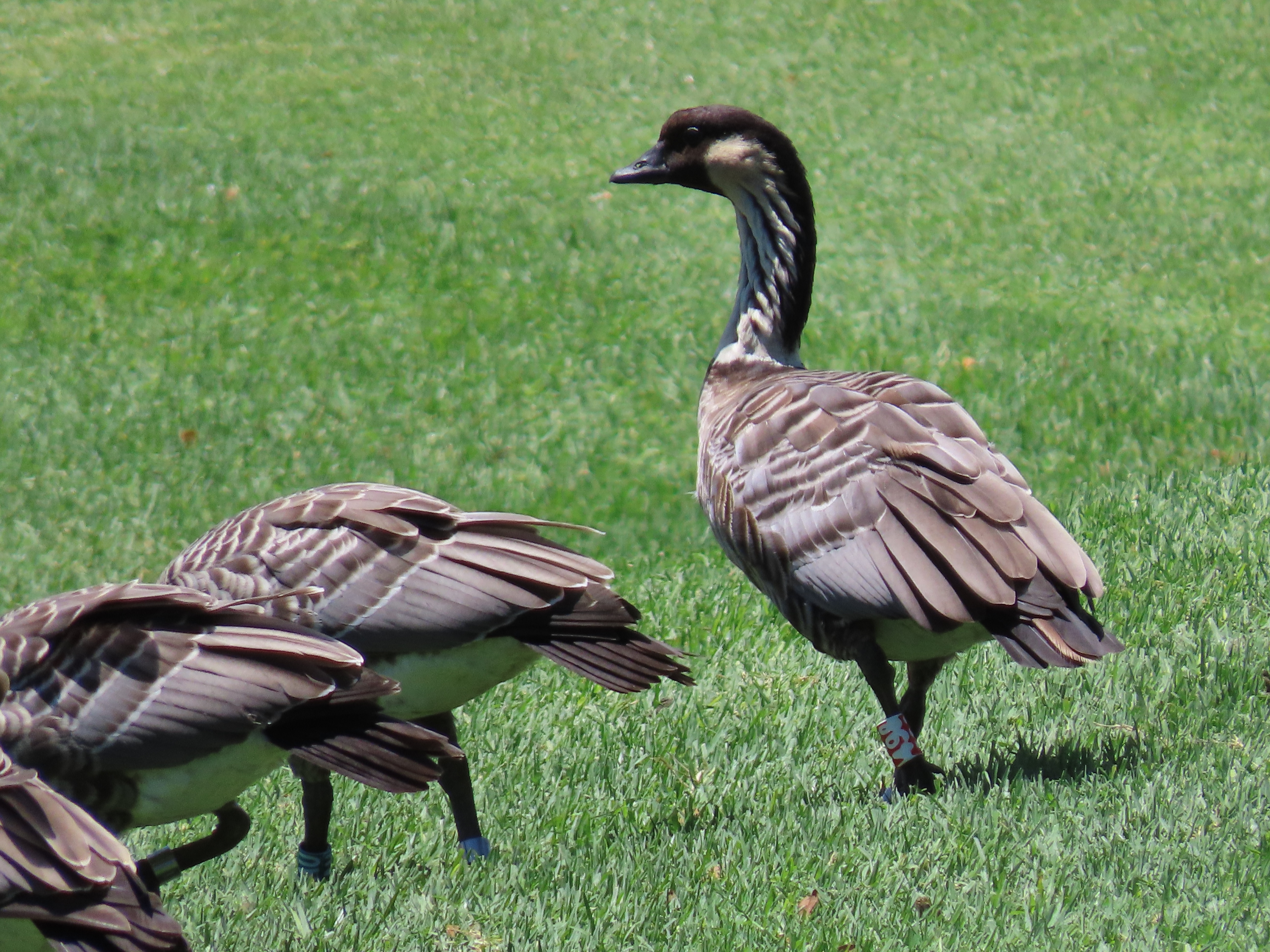
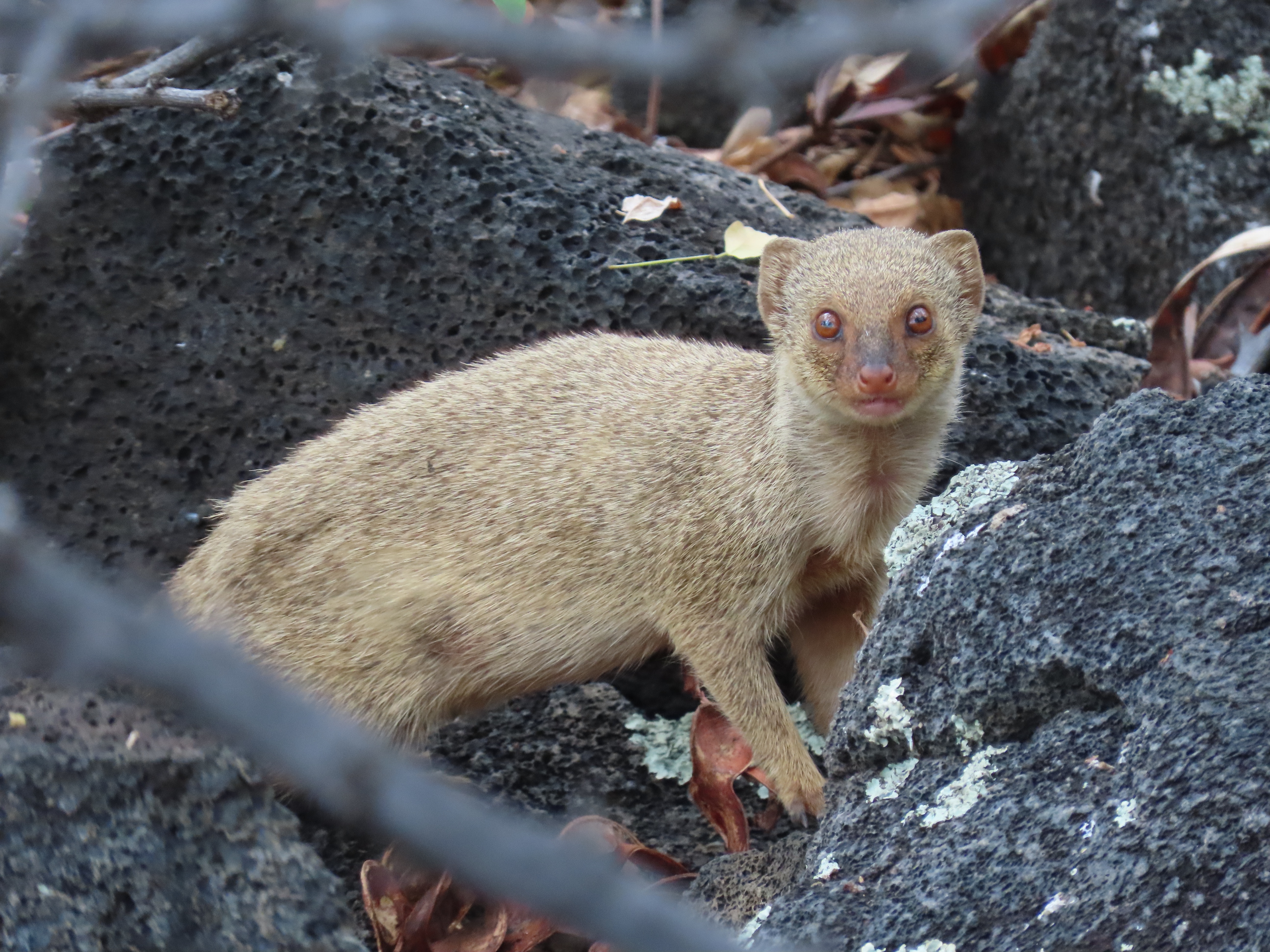
All the invasive species compete with the sometimes less resilient natives species. It is not just avian species that decimate the locals but one of the largest mammalian land predators on the Hawaiian Islands (which is not very large) preys on ground nesting species eggs such as the state bird of Hawaii, the nene or Hawaiian goose.
The one endemic Hawaiian bird that visitors might encounter on the Big Island, especially if you play golf, is the nene or Hawaiian goose. This group was found grazing on a golf course. Note the human intervention, which saved the nene, in the leg bands.
The nene has since been brought back from the brink of extinction by extensive human efforts through protection and captive breeding programs. It would be a sad sign to have your state bird go extinct.
This is the terror to any ground-nesting bird, or any creature that can’t out run, climb, or fly this hyperpredator the Indian mongoose.
The Indian (small Asian) mongoose (Herpestes javanicus) was introduced to Hawaii in 1883 to control rats on sugar cane plantations. This prolific predator is also on the list of the 100 of the World’s Worst Invasive Alien Species. Good thing this mongoose cannot climb trees or more bird species would be affected.
Many of the introduced species have lived and thrived on the Hawaiian Islands for over a 100 years. They are countable on lifelists but many birders want to find the endemic Hawaiians before there disappear from the face of the Earth.
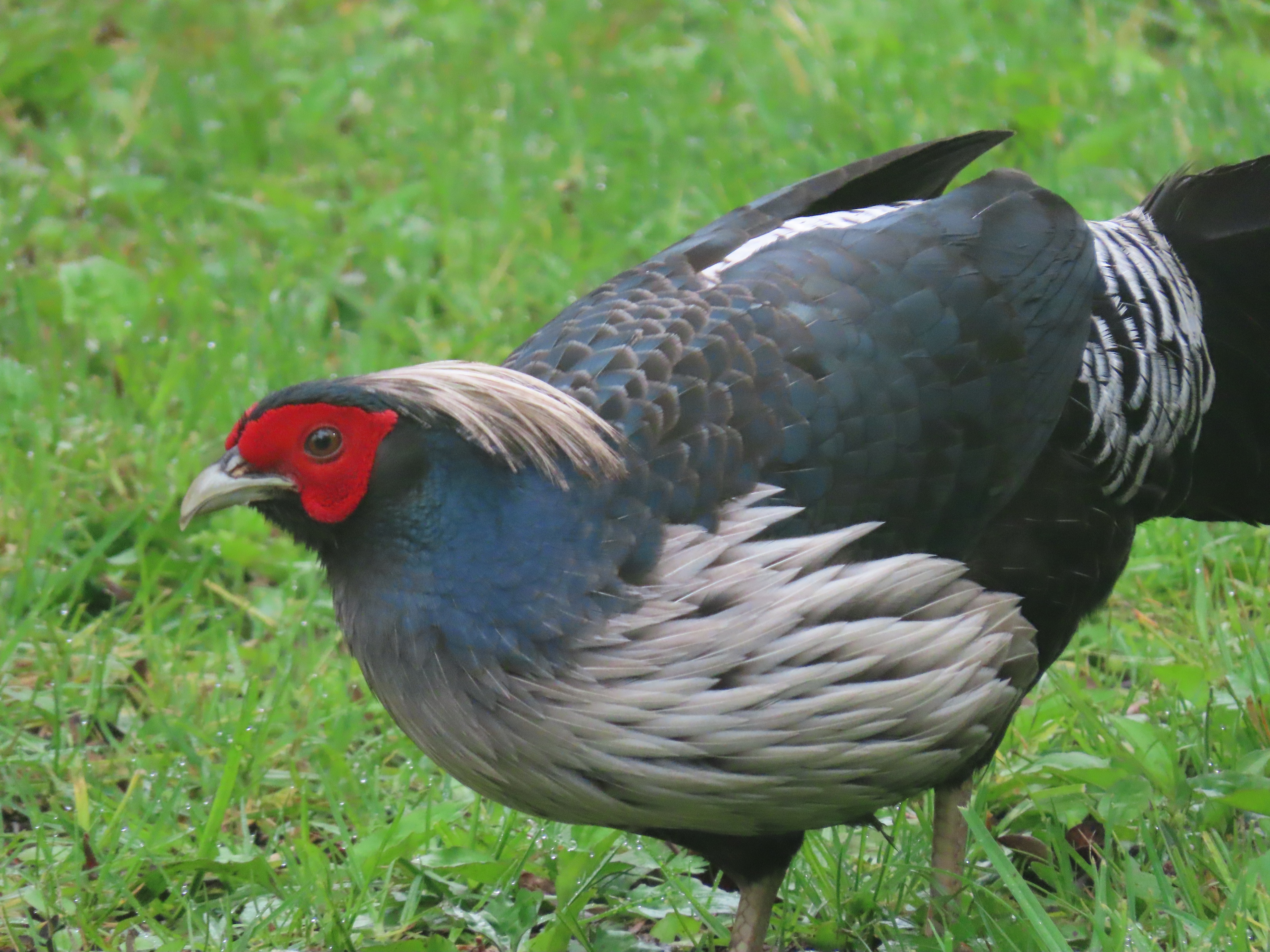
The absolutely stunning male common peafowl (known as a peacock) has been a resident of the Hawaiian Islands for over 150 years. They were first introduced, from India, in 1860.The flawed beauty of the male kaliji pheasant. Flawed because it is an introduced game bird from the Himalayan foothills. It was the most common bird seen in Volcanoes National Park, usurping the common myna for a brief part of my travels.
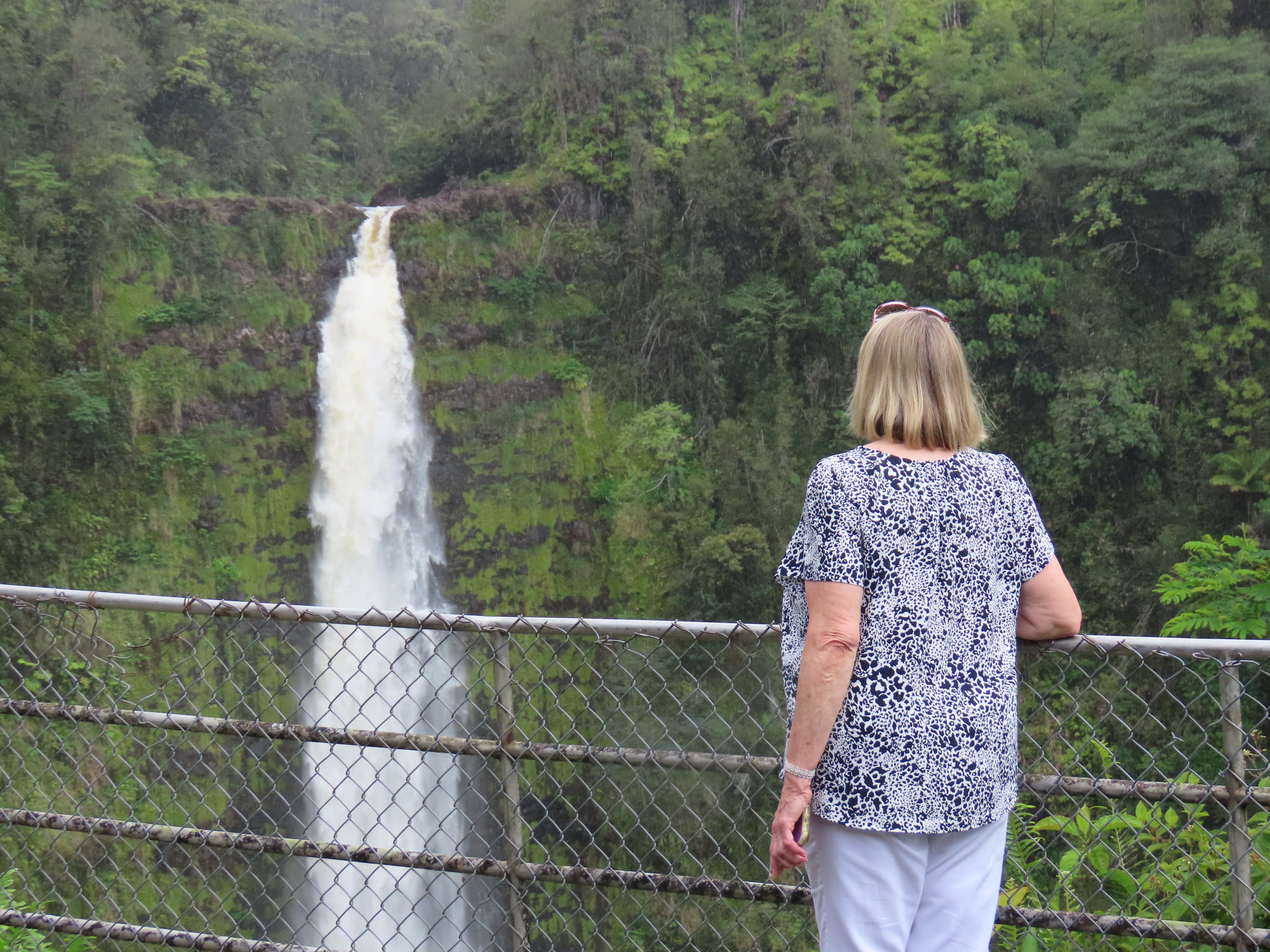
One of my first stops on the rainy and windy windward side of the island was the impressive ‘Akaka Falls.
When I pulled into the nearly full parking lot, the rain had ceased, for now. I might have a short window to get a sketch in.
So I hiked with purpose, passing others with selfie sticks. I kept an eye on the clouds as I moved along the mile long loop trail and they looked like they could squeeze out a mild downpour at any moment. Hopefully not this moment!
Before I got to the waterfall viewing platform, I had already had pre-visualized the sketch. I knew because of the ever changing weather conditions, that I would have to work quickly, so that meant brush pen. I also wanted to simplify the form of the falls adding ink to frame the white of the paper which would represent the water of the waterfall. Short, quick, concise and hopefully not smeared by rain.
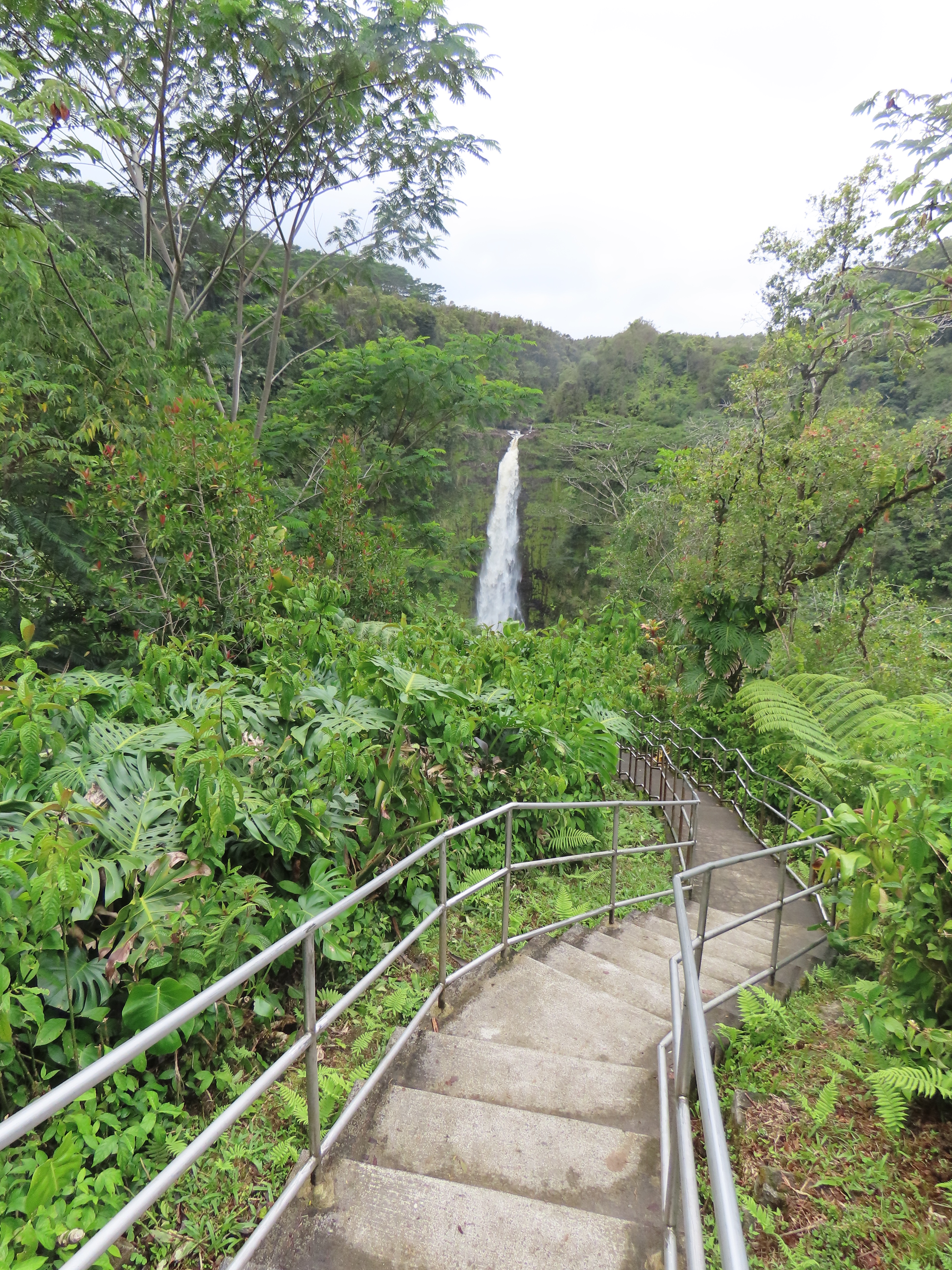
I could hear ‘Akaka Falls first before I saw it. Heading down the paved path, the free-flowing waterfall came into view.
I oriented my sketchbook vertically, uncapped my brush pen, and started sketching. While I was sketching, I had a sense that I was being watched. This often happens when I am sketching at a popular destination. A kindly women remarked, “That’s beautiful! I could never do that!” I though about which of my standard responses I would use and I went with, “Well I don’t watch a lot of television.” And I reassured her that anyone can draw, it just takes willpower and practice. That seemed to stop her in her tracks.
Walking down the path to “Akaka Falls.
“Akaka Fallsisa free-falling falls. In this case, from the top of the falls to the pool below, water falls 442 feet, twice the height that Niagara Falls falls.
This women is thinking, “I bet I could draw this.”
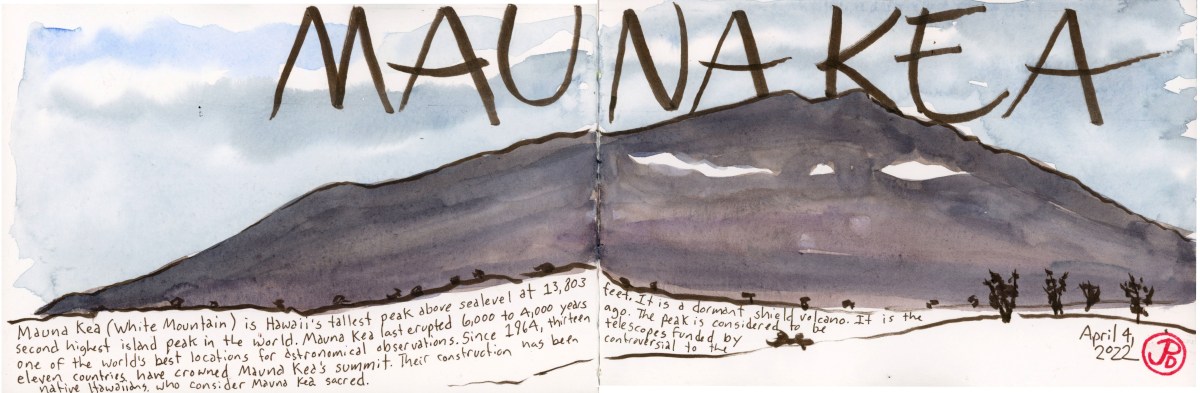
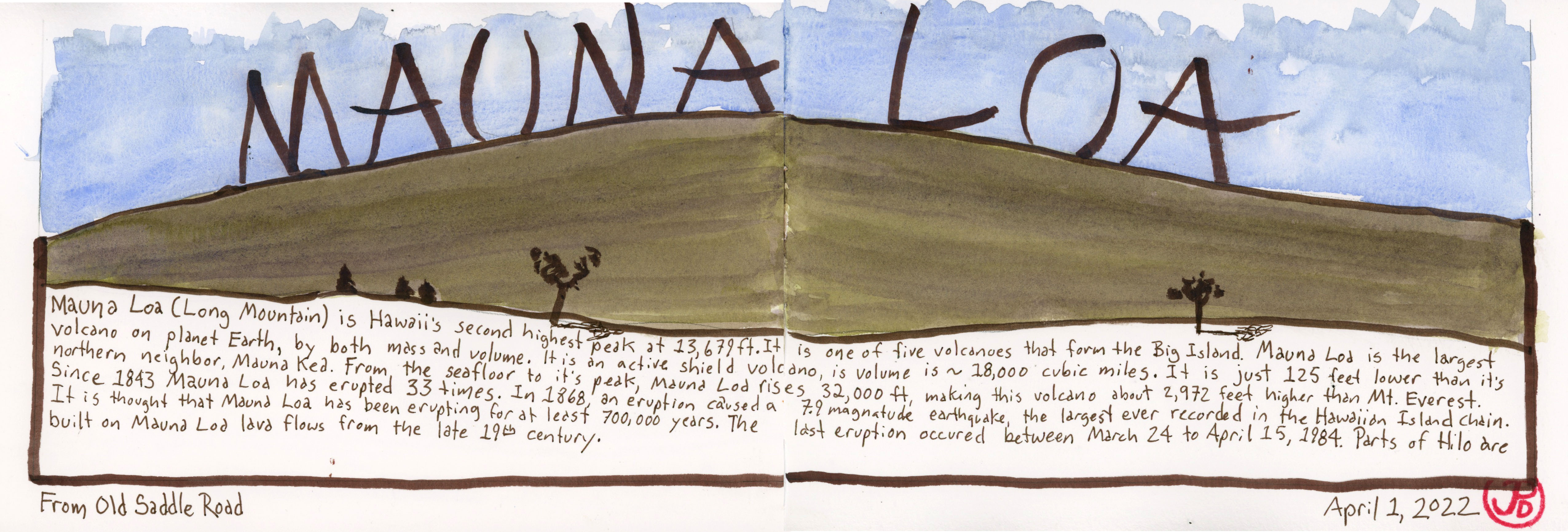
The two volcanoes that dominate the island of Hawai’i are Mauna Kea and Mauna Loa.
Volcanoes are the genesis of the largest island in the Hawaiian Island chain and volcanoes continue to add to the acreage of the younger island in the chain.
The volcano Mauna Loa (meaning Long Mountain) makes up about 50% of the total land mass of the Big Island. And from it’s base on the sea floor to it’s peak, it’s considered the tallest mountain in the world, about 2,972 feet taller than Mt. Everest.
Since 1843 (when records were first kept) Mauna Loa has erupted 33 times. One eruption in 1863 caused a 7.9 earthquake, the largest quake ever recorded in Hawaii.
Perhaps because of it’s vastness, Mauna Loa does not appear as prominent as it’s northern cousin, Mauna Kea. Mauna Loa’s peak appears as a tall rounded hill unlike the tall pointed alpine peak of the Alps which tends to be our quintessential version of a mountain.
At 13,803, Mauna Kea, meaning White Mountain, is the highest mountain, above sea level, in the Hawaiian Island chain. It’s snow covered peak is visible, when not shrouded in clouds, can be seen from many points in the northern parts of the island.
Both volcanoes were on my “to sketch” list and I sketched them with broad pen brush strokes, attempting to capture the overall form, rather than the details.
I find when I’m field sketching with a brush pen I am more likely to sketch because I can work quickly, leaving more time in the day for more sketches. This was my approach with the two sketches of Mauna Loa and Kea.











 Corvid Sketcher