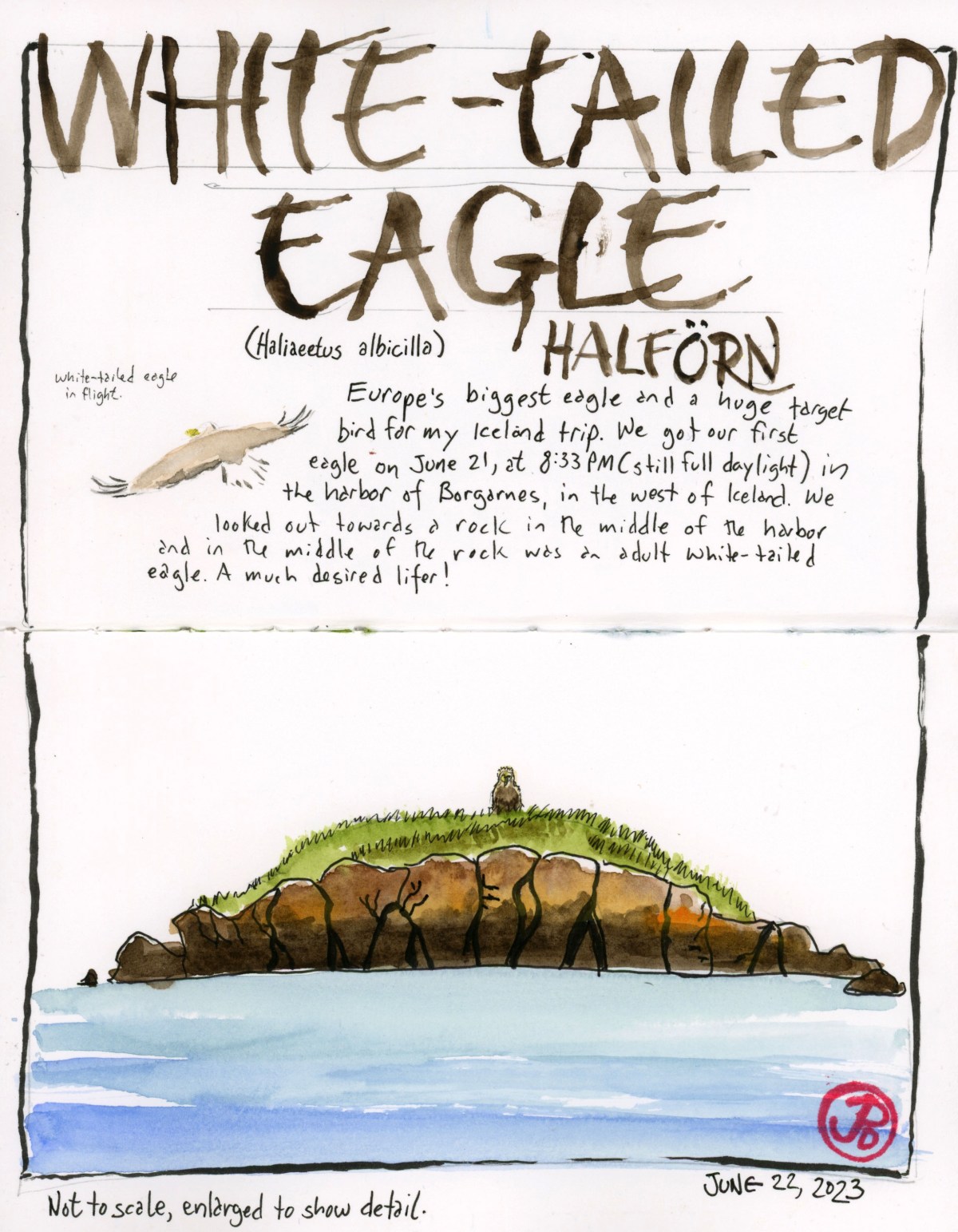
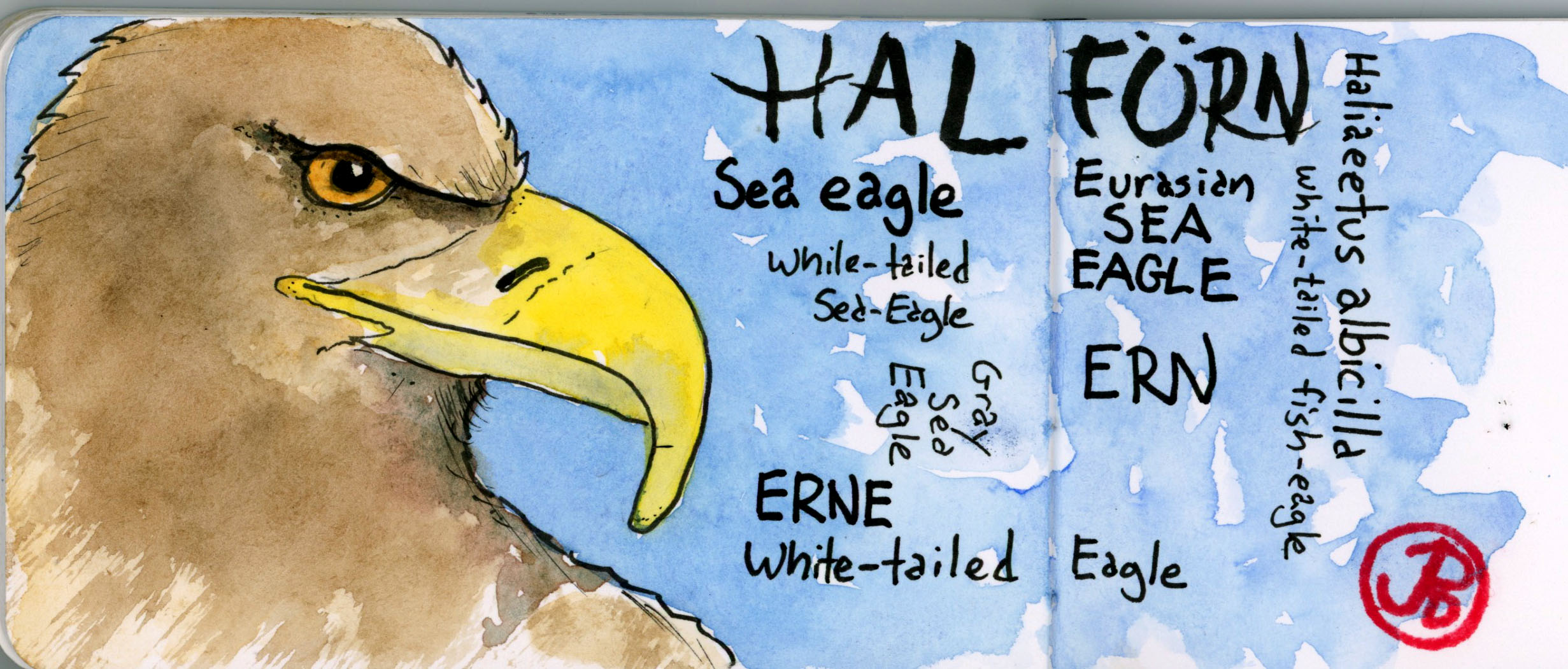
High on my wishlist was Iceland’s and Europe’s largest eagle: the white-tailed eagle.
This eagle is a sea eagle and is slightly larger than the bald or golden eagle found in North America. The white-tailed is both an apex predator and a scavenger and fills a similar niche as the bald eagle in North America.
The eagle has become rare or extinct in parts of its Eurasian range because of human and other causes.
According to a recent BBC article, white-tailed eagles has been hit hard by the avian flu. The eagle has shown declines in Scotland over the past few years. The avian flu has also caused declines in birth rates of seabirds such as gannets and skuas.
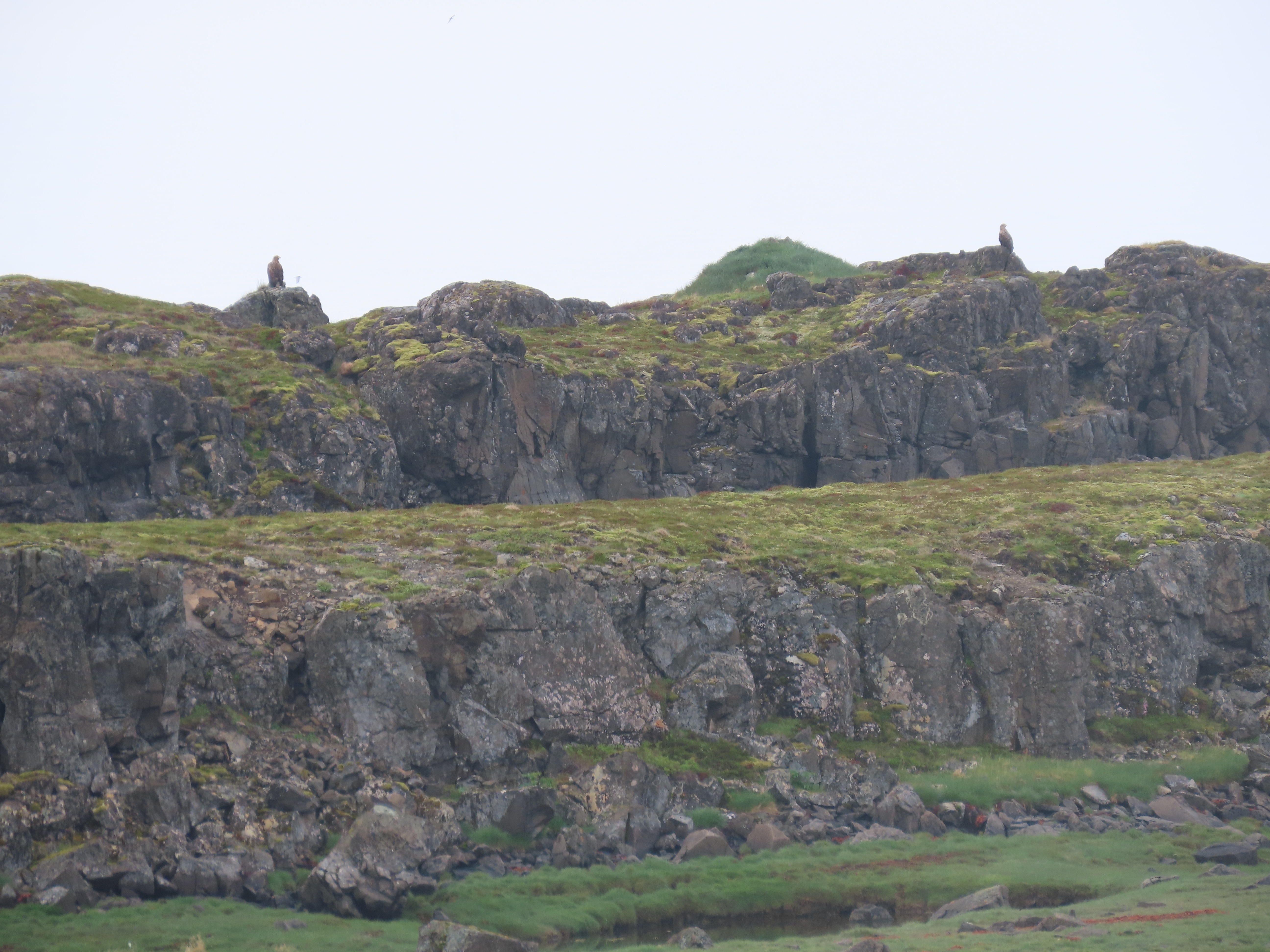
In total we saw seven individuals in the Westfjords of Iceland. Most were far off, best seen through a scope. But there was one that I first I spotted flying parallel to the road, just below us along the shore of a fjord being pursued by two territorial redshanks. It was amazing to see this sea eagle in flight with the naked eye.
Two white-tailed eagles with eaglets (not visible in photo).
South, just across the bay from Reykjavik, is a ship that I wanted to see and sketch.
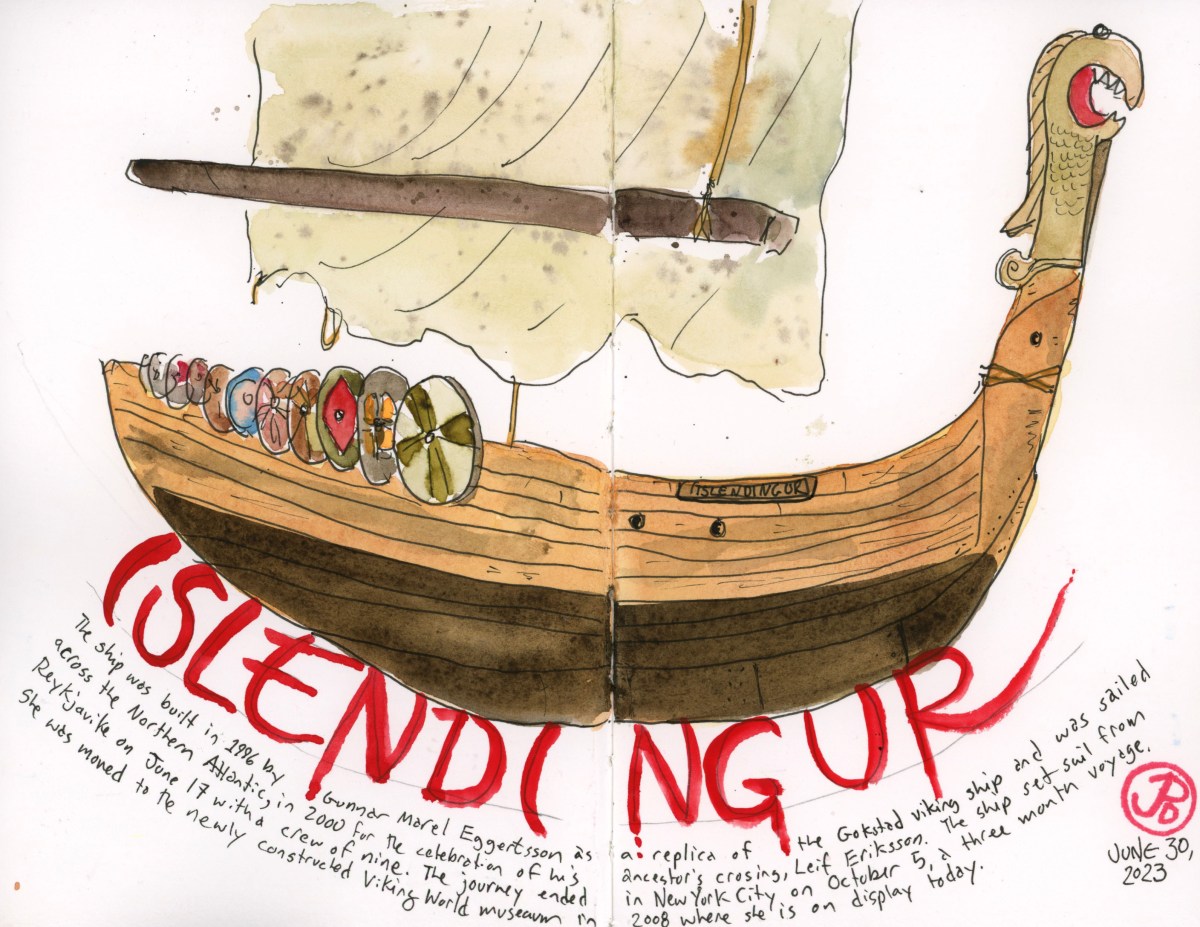
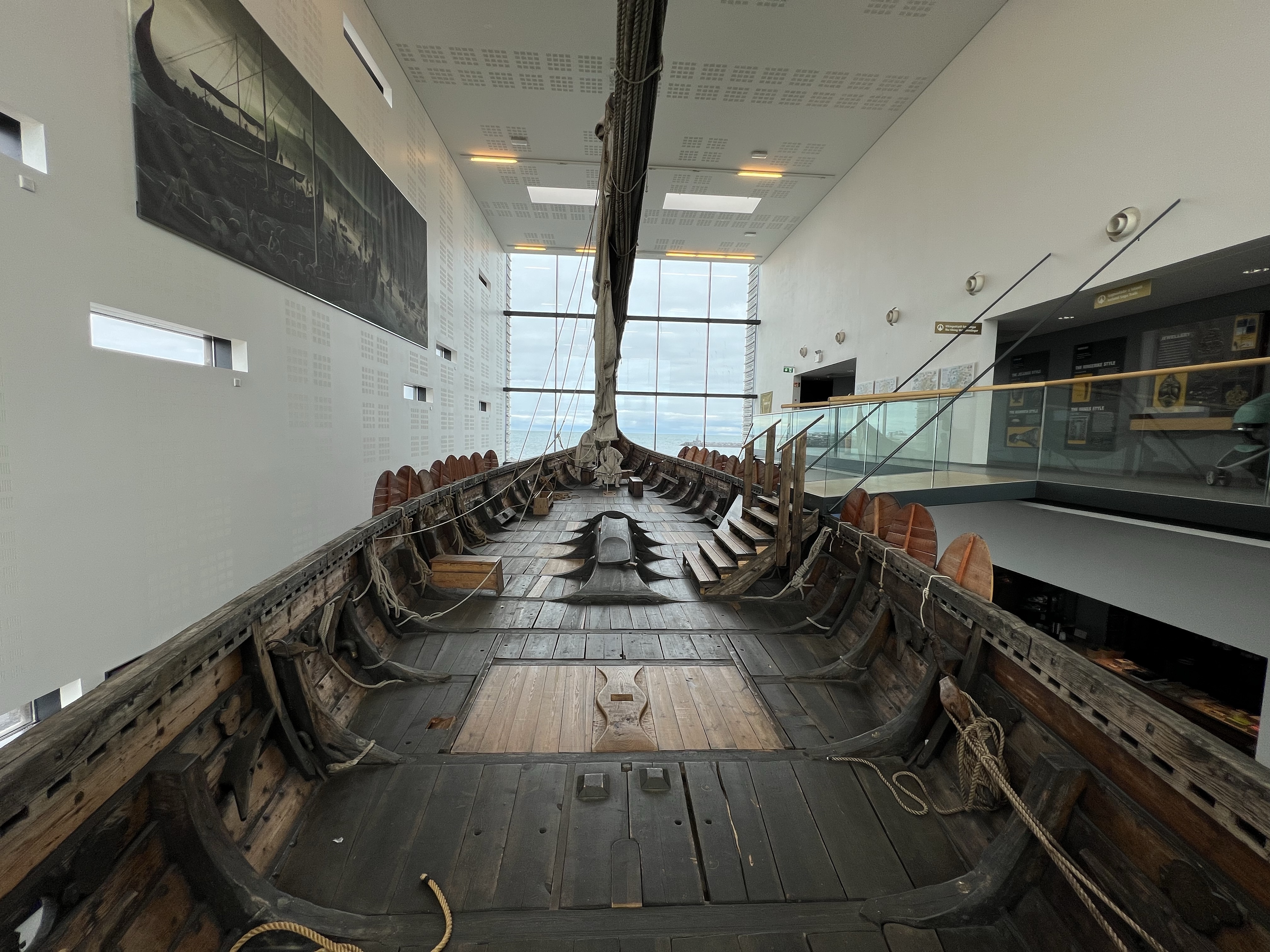
This is the replica of a Viking longship named Islendingur. The longship is now out of the water and preserved indoors at the Viking World Museum in Keflavik.
The Islendingur is a replica of the Gokstad longship. The Gokstad ship is a 9th century ship that was found in a burial mound in Sandar, Norway. It is one of the largest preserved Viking ship in existence and is on display at the Viking Ship Museum in Oslo, Norway. The ship was found on Gokstad Farm in 1880. The oak ship is 78 feet long and almost 17 feet wide. The Islendingur is almost an exact replica of this iconic ship.
In the summer of 2000, to celebrate the millennial anniversary of Lief Erikson’s discovery of North America (500 years before Columbus), the Islendingur set sail, retracing the original route of the famous Norseman. The boat was built and piloted by a descendant of Erikson.
The wooden ship travelled 4,200 miles, stopping at over 24 ports along the way to New York City.
The beautiful form of a Viking longship.
I picked a spot on the starboard side of the longship in the upper gallery and sketched it into my Icelandic sketchbook. I started with the iconic dragon’s figurehead on the bow and sketched the curvaceous oak hull.
On the deck of the Islendingur looking towards the bow. I had the ship all to myself!
One location I wanted to visit was about 20 minutes from Keflavik International Airport but without a car, it seemed a remote possibility that I would see the island where the last great auk lived.
As it turns out, we had some extra time on the last day of my WINGS Iceland tour and our guide thought we would spend some time at the volcanic bit of land closest to Eldey Island.
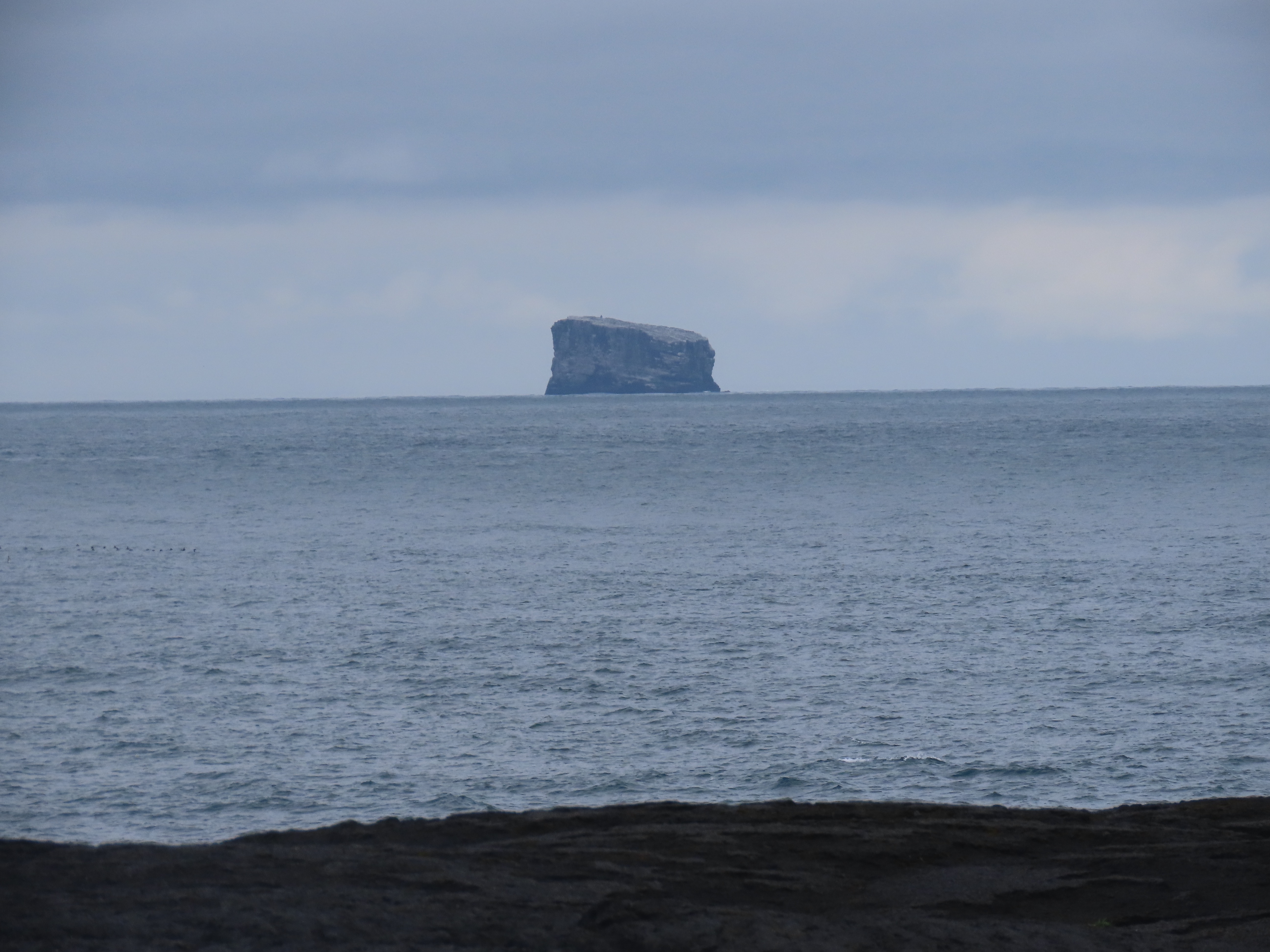
We pulled into the black sand parking lot between a lighthouse and the Atlantic. Near and just off shore are large kittiwake breeding colonies. A little further off shore were lines of murres, razorbills, and puffins. Add to that, there were a movement of Manx shearwaters heading north. And beyond the bird movement, nine miles from shore, is Eldey Island.
Eldey Island, nine miles off the coast of Iceland.
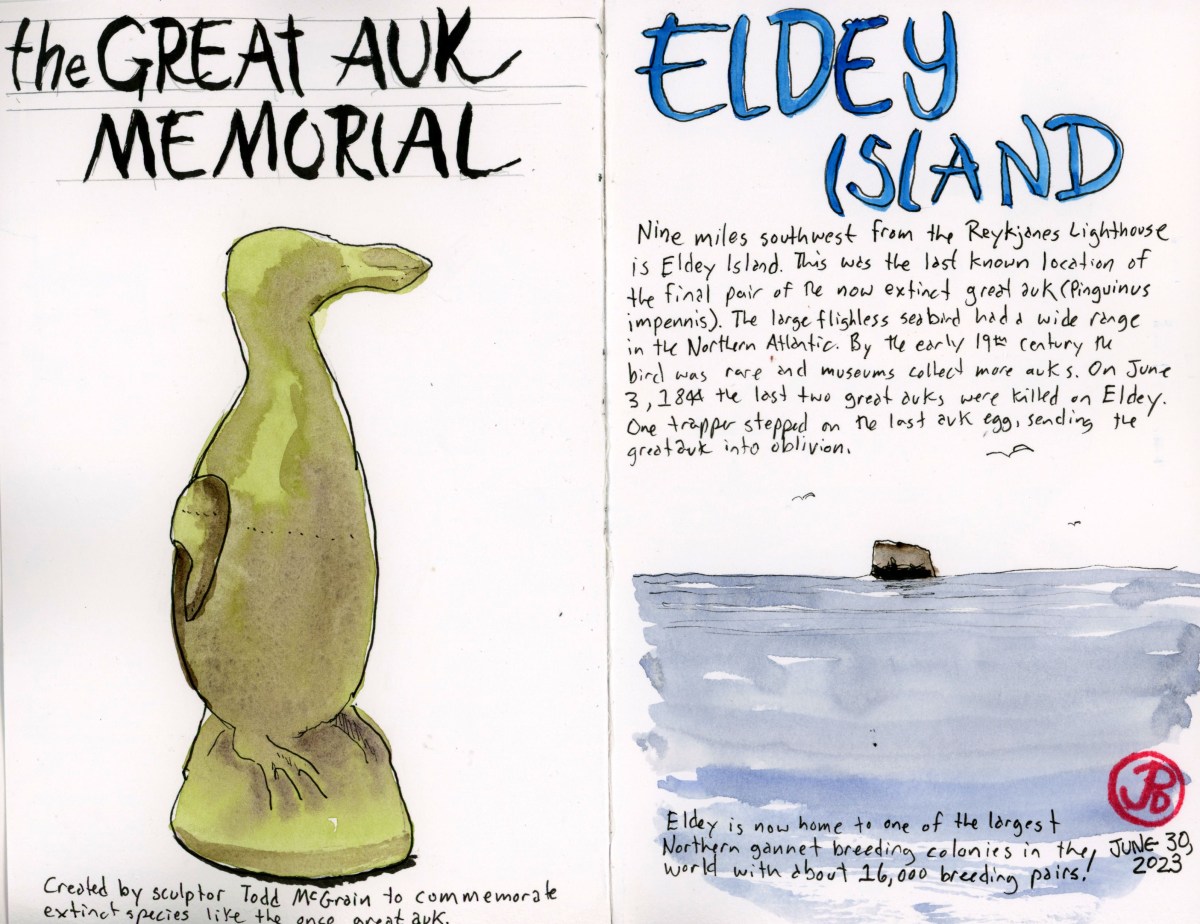
This is the last place the great auk (Pinguinus impennis) occurred on Planet Earth. This large flightless auk once lived on both sides of the northern Atlantic.
By the early 19th century, the auk population had been severely reduced because of predation by humans.
Because the auk was becoming so rare, naturalists wanted to collect the auk before it disappeared from the earth, paradoxically pushing the great auk to extinction.
One of the last bastions of the great auk was Eldey. It was here on June 3, 1844 that the last two great auks were killed and one of the captors stepped back and crushed the last great auk egg sending the large flightless seabird into oblivion.
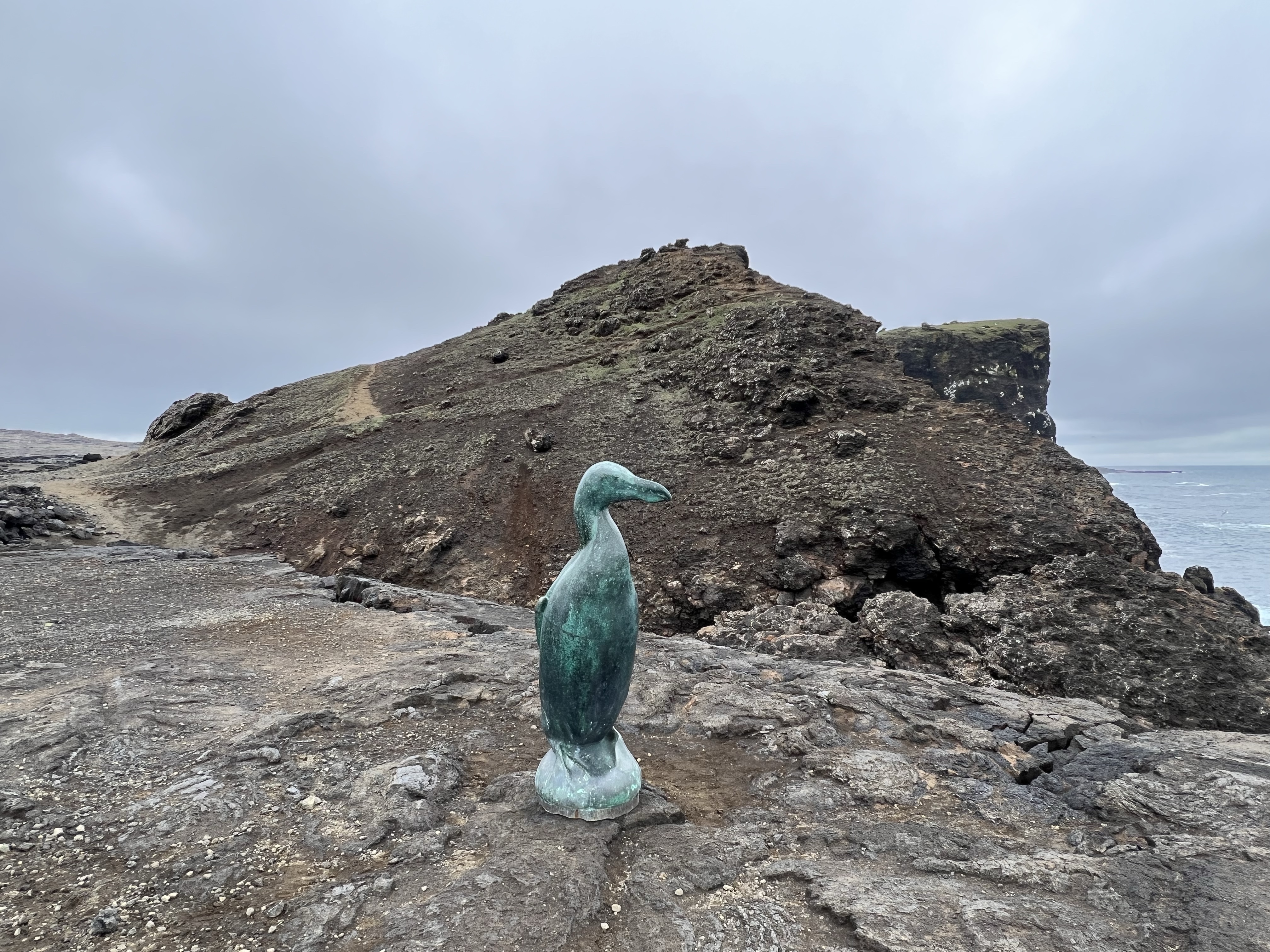
The extinction of the great auk is commemorated by a large sculpture by Todd McGrain, which I sketched (featured sketch).
The white on top of the island are all northern gannets. This is Europe’s largest gannet breeding colony.
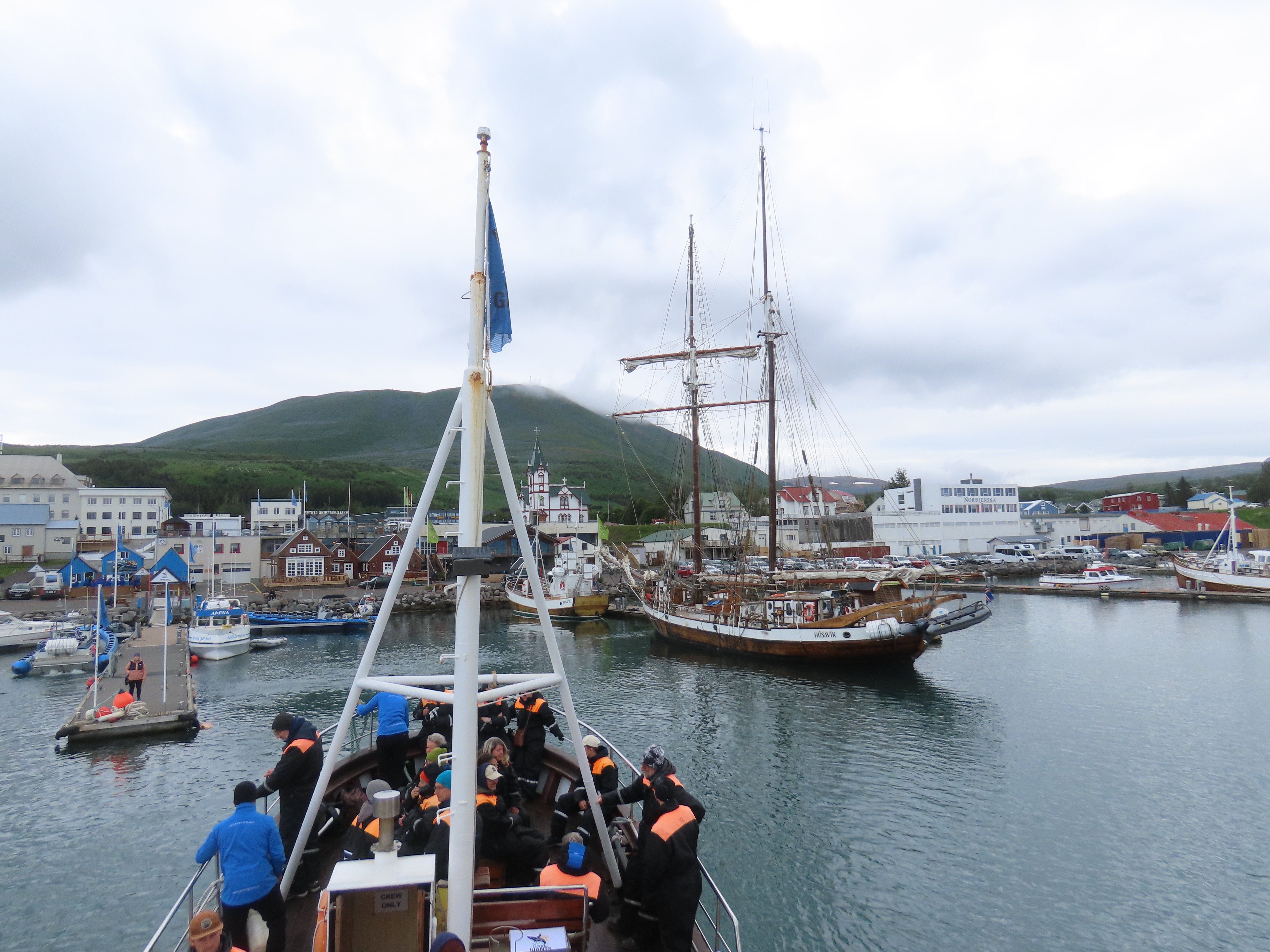
It seems like a no brainer not to visit the island of Iceland without going out on the waters surrounding it. So we left out of the port of Húsavík in northern Iceland on a whale watching trip.
Our ship was the Sylvia, a fishing boat built in 1976. It felt good to to have vessel under my feet that was slightly younger than I am. Our to guides where biologists from Portugal but our captain was purely Icelandic.
We headed out of port under gray skies and light winds. A rain system had passed through the previous night and it looked like a good day for a three hour cruise, a three hour cruise.
As we left port we passed a large cruise ship. Black guillemots where in the harbor and once out of the harbor, gulls, terns, and fulmars circled the boat. Further out and we began to see our first lines of puffins crossing our bow. We had to get a little further out in the fjord to see our first cetaceans.
On the hunt for cetaceans. The crew provided use with dry suits, hence we all appeared to be part of the crew.
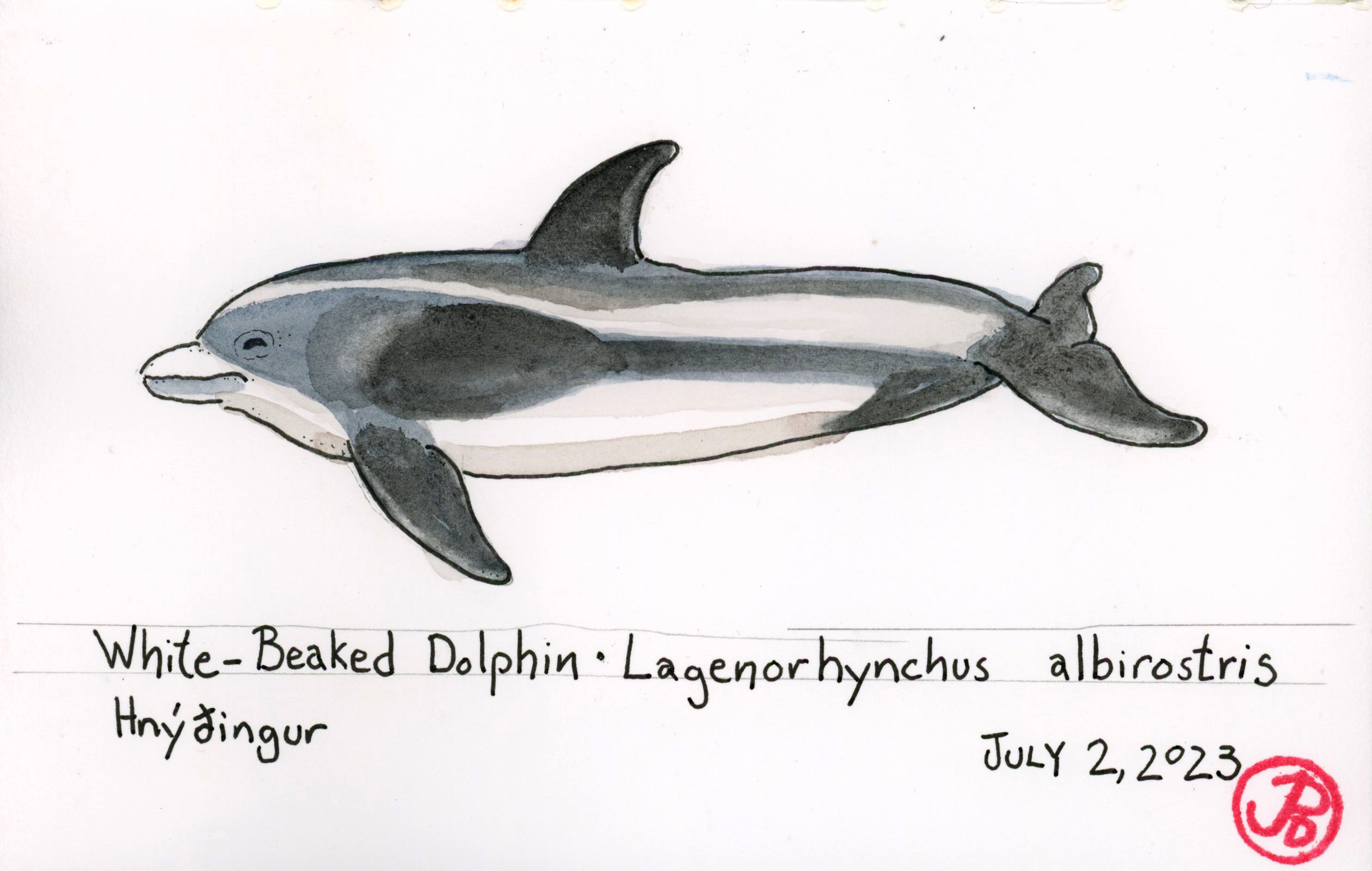
Our first cetacean of the cruise was a lifer for me, a small pod of white-beaked dolphins! Well this was a great start. Let’s see if we could get some whales!
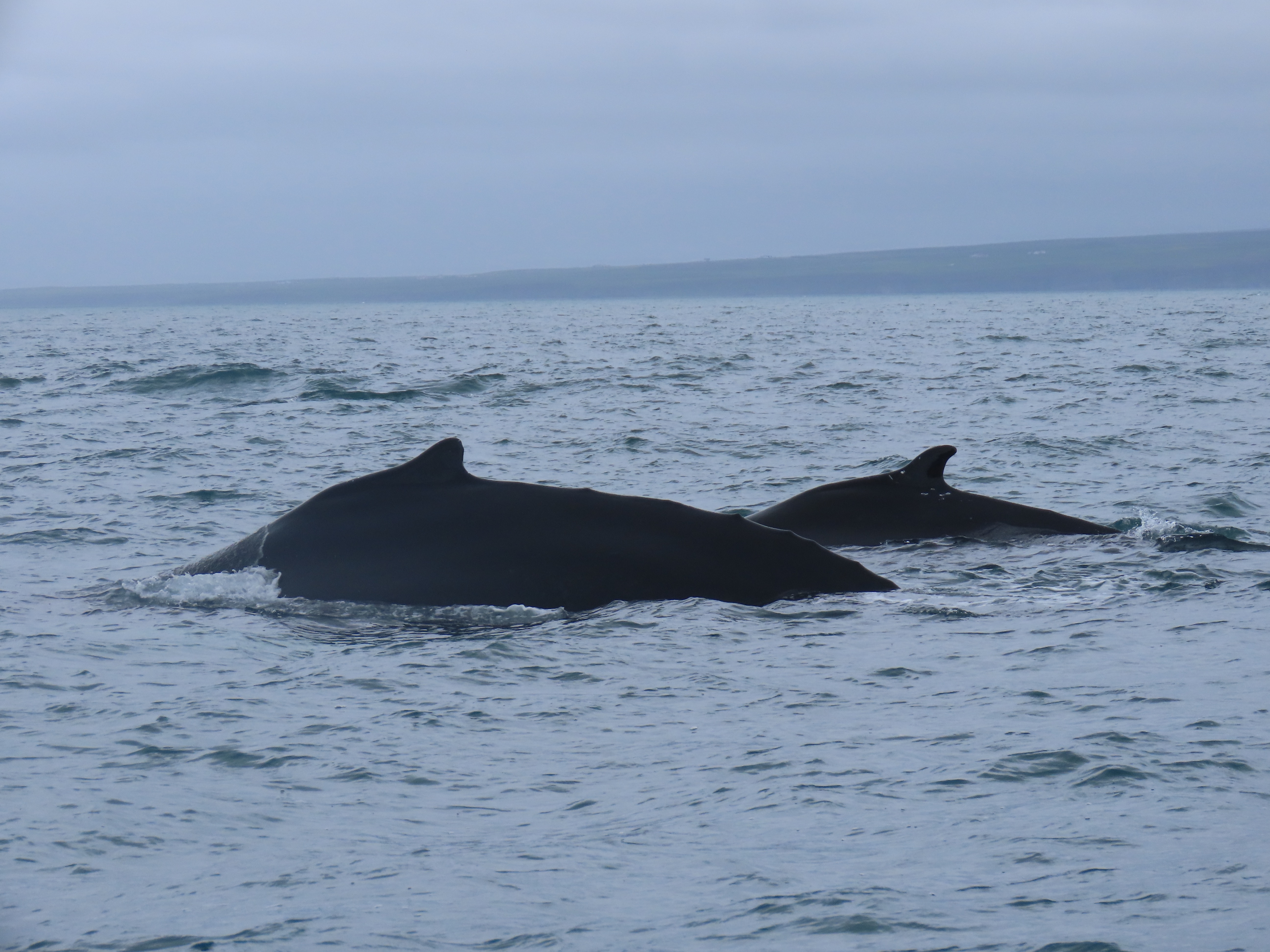
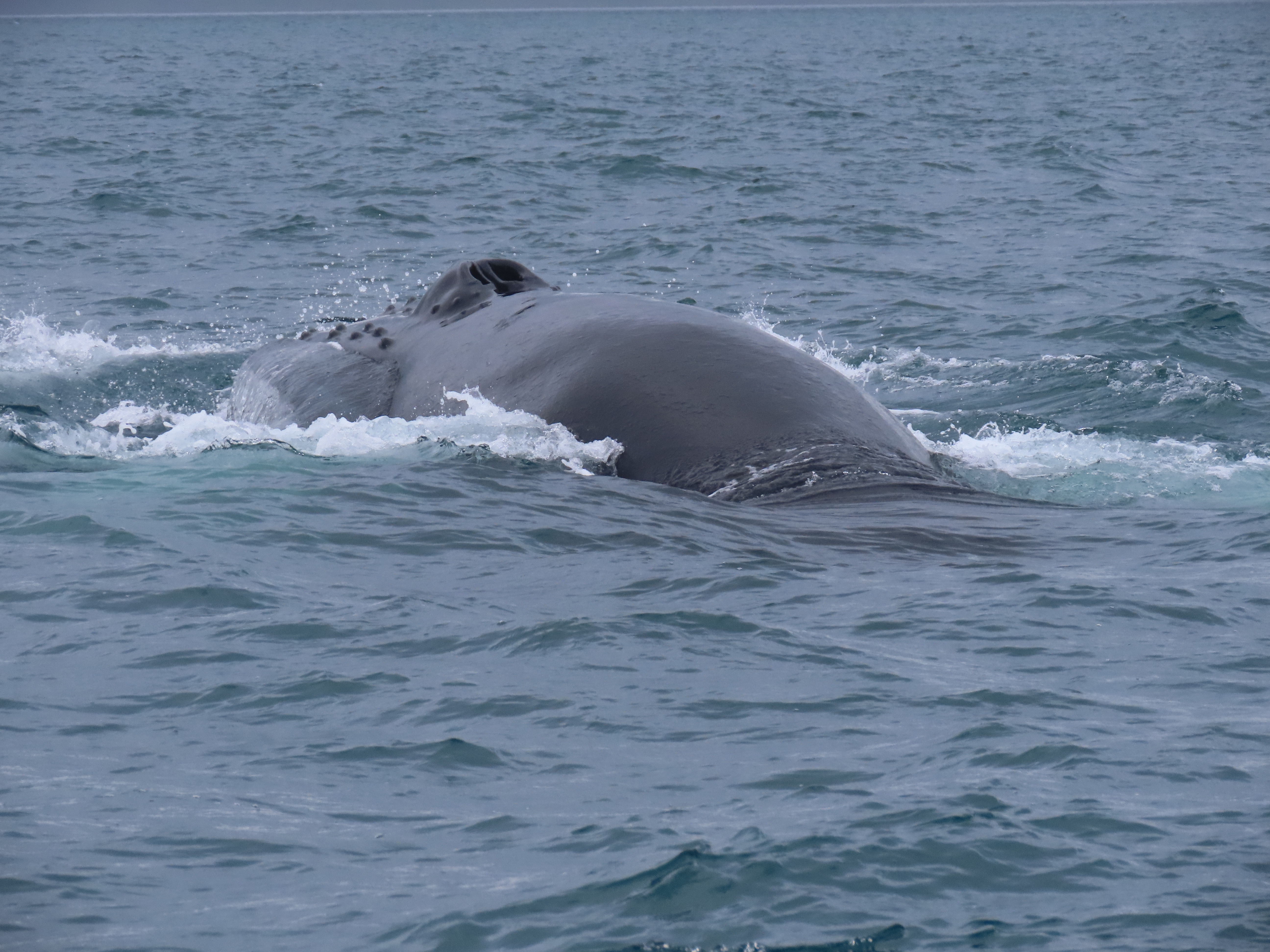
It was not too long before we saw the bushy blow of a whale. We headed towards the blow and we saw the first whale of our trip, a humpback whale. On the rest of the cruise we saw about five other humpbacks, with amazing looks at the whales and their unique flukes.
A real treat was seeing two humpbacks swimming parallel to the Sylvia.What a great look at the humpback’s blowholes as it foraged at the surface.
After seeing about seven different humpbacks we headed back to port. As we neared Húsavík I looked off to the southwest and saw a dark bird with white “wing lights” flying towards. “Skua!”, I shouted. Once the passengers figured out that a skua was not a whale but a pelagic bird, they suddenly lost interest. But I, and my fellow bird nerds enjoyed the great skua flyby!
Coda: There are three nations that still actively whale, one of which is Iceland. Shortly before we set out on our whale watching trip er learned that Iceland had put a three month moratorium on whaling. Hopefully this will lead to a permanent ban.
We birded Snæfellsbær National Park and I did two sketches to commemorate the visit. At least one sketch is semi-bird related.
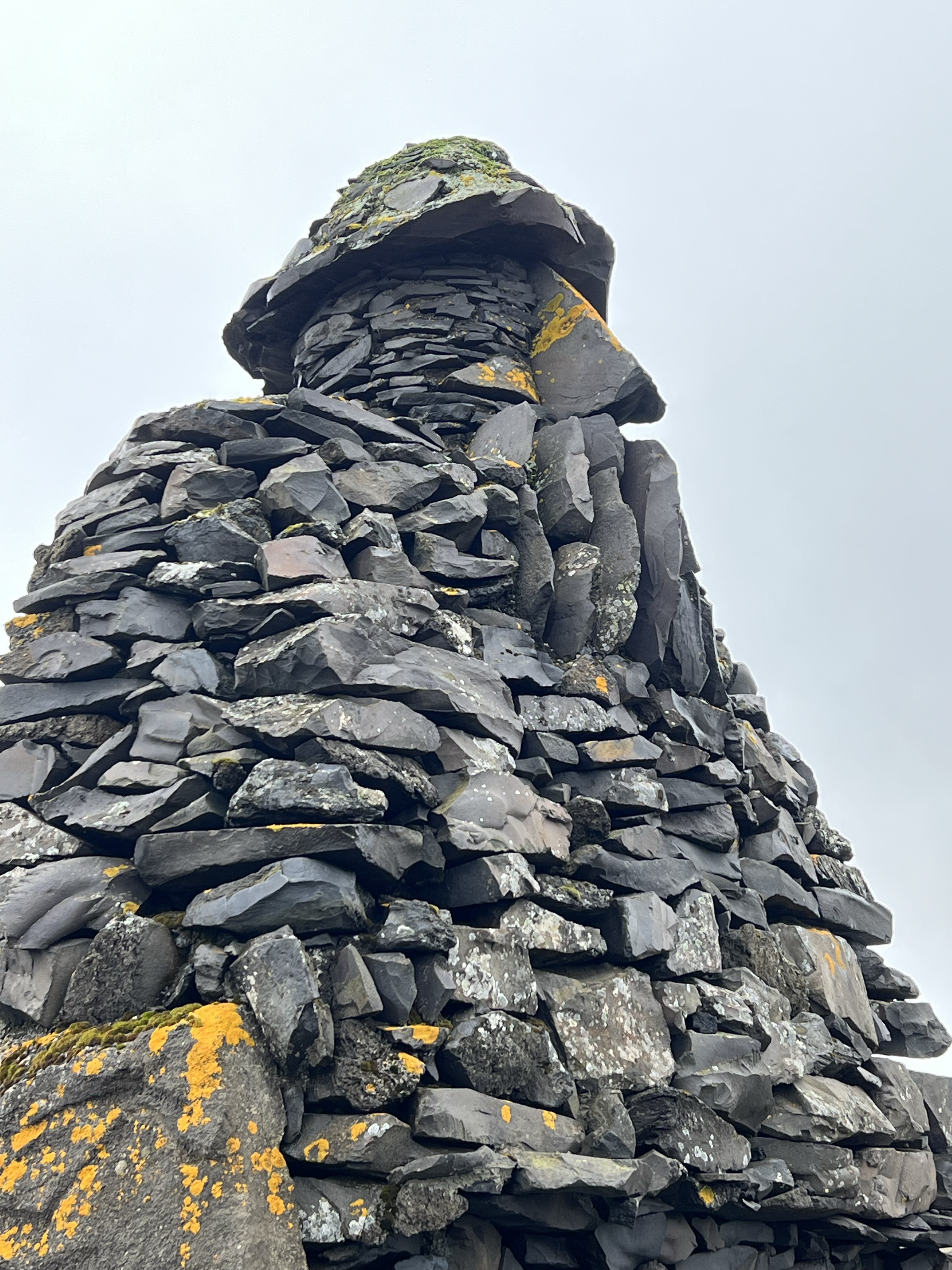
One sketch is of a stone troll that was built as a memorial to a young man who died of exposure up in the Icelandic mountains.
The statue represents the Deity of Mt. Snaefell and was sculpted by Ragnar Kjartansson in 1985.
About 50% of Icelandic people strongly believe in “hidden” people. As the name implies, these are people that exist but are seldom, if ever, seen. A list of the hidden people sounds like a reading of Tolkien’s Lord of the Rings: dwarves, elves, and trolls. (It is no wonder because JRR Tolkien was heavily influenced by the Icelandic Sagas and myths). So the stone troll was very much in keeping with the ethos of the Land of Fire and Ice.
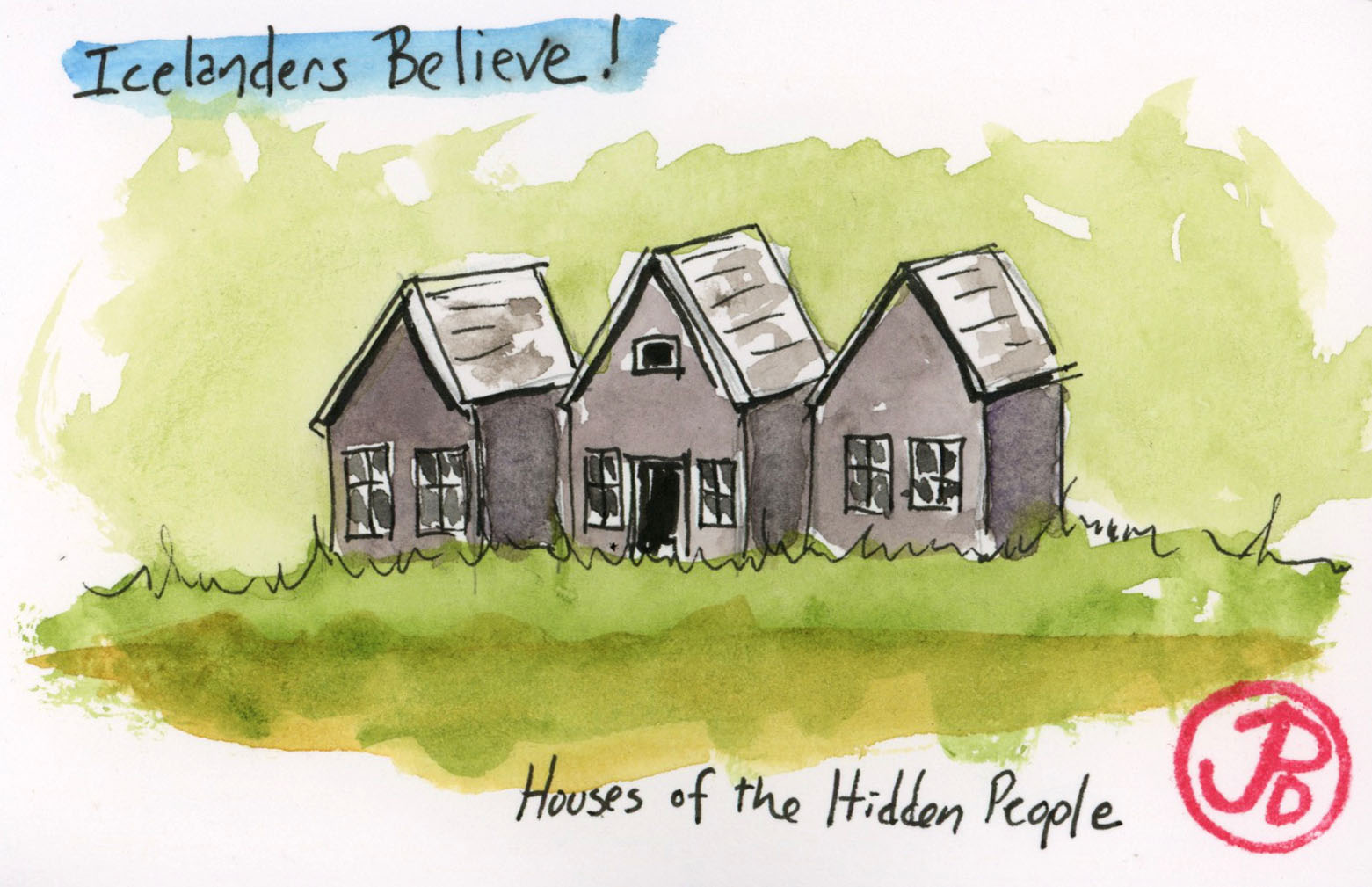
Throughout Iceland it was not uncommon to see small houses build out in the countryside. They were usually in a field usually near a house or road and always with an open front door. These houses are built as a home for the small hidden people. Icelanders believe!
The other sketch is of an unexpected visitor to the Snæfellsbær National Park Visitor Center. The homing pigeon appeared one day and the staff gave him the Icelandic name “Ragnar”. They feed him a bit of seed and he occasionally comes indoors. Hopefully he will avoid the attention of the local Arctic foxes that also visit the visitor’s center.
Ragnar, the wayward homing pigeon that has taken up residence at the visitor’s center. He was very tame and allowed close approach which was the giveaway that Ragnar was not a wild pigeon.
Merino wool is expensive, but it can save you money in the long run.
How can paying $25 for a pair of Merino wool socks save you money? Well, because of the anti microbial properties of Merino, your socks don’t stink after you wear them.
In fact you can wear them two or three more times before washing them meaning you don’t have to bring as much clothing while traveling. Less to pack means you don’t check your bags and considering the exorbitant fees on airlines nowadays, you end up saving!
And if your Merino wool socks happen to be made in Vermont by Darn Tough (like some of mine) you get a lifetime guarantee (your life not the socks!) These socks are built to last. Now that’s money well spent!
Also Merino dries much quicker than other fabrics making sink, shower, or bathtub washing much easier. Washing in the afternoon means dry garments in the morning.
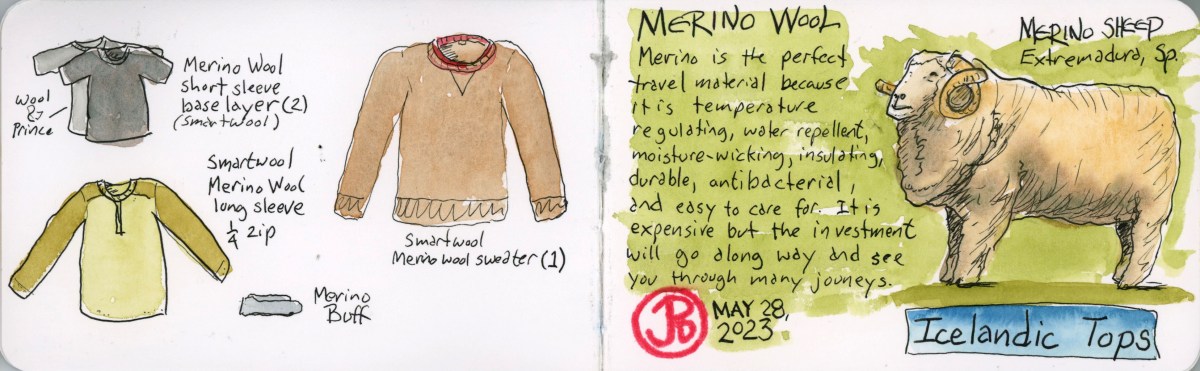
The same is true with any material made from Merino wool. I plan to pack two short sleeve shirts, one long sleeve 1/4 zip shirt, a sweater, and a Merino buff. Merino fits into my less is more packing mantra for my Icelandic saga.
My Smartwool long sleeve 1/4 zip and short sleeve T-shirt and my Wool & Prince short sleeve tee (front).
I may be rocking the same outfit a few days in a row (with no ten years olds pointing it out) but I’m here on vacation not at a fashion show.
The Story of Merino
Merino wool comes from the domestic sheep established in the Extremadura region of Spain. It was at one time illegal to export the sheep or it’s wool outside of Spain. Offenders faced certain death! Eventually these restrictions were loosened and Merino was exported around the world.
Today Merino wool is produced in many places including Australia, China, New Zealand, Argentina, South Africa, the United Kingdom and the United States.
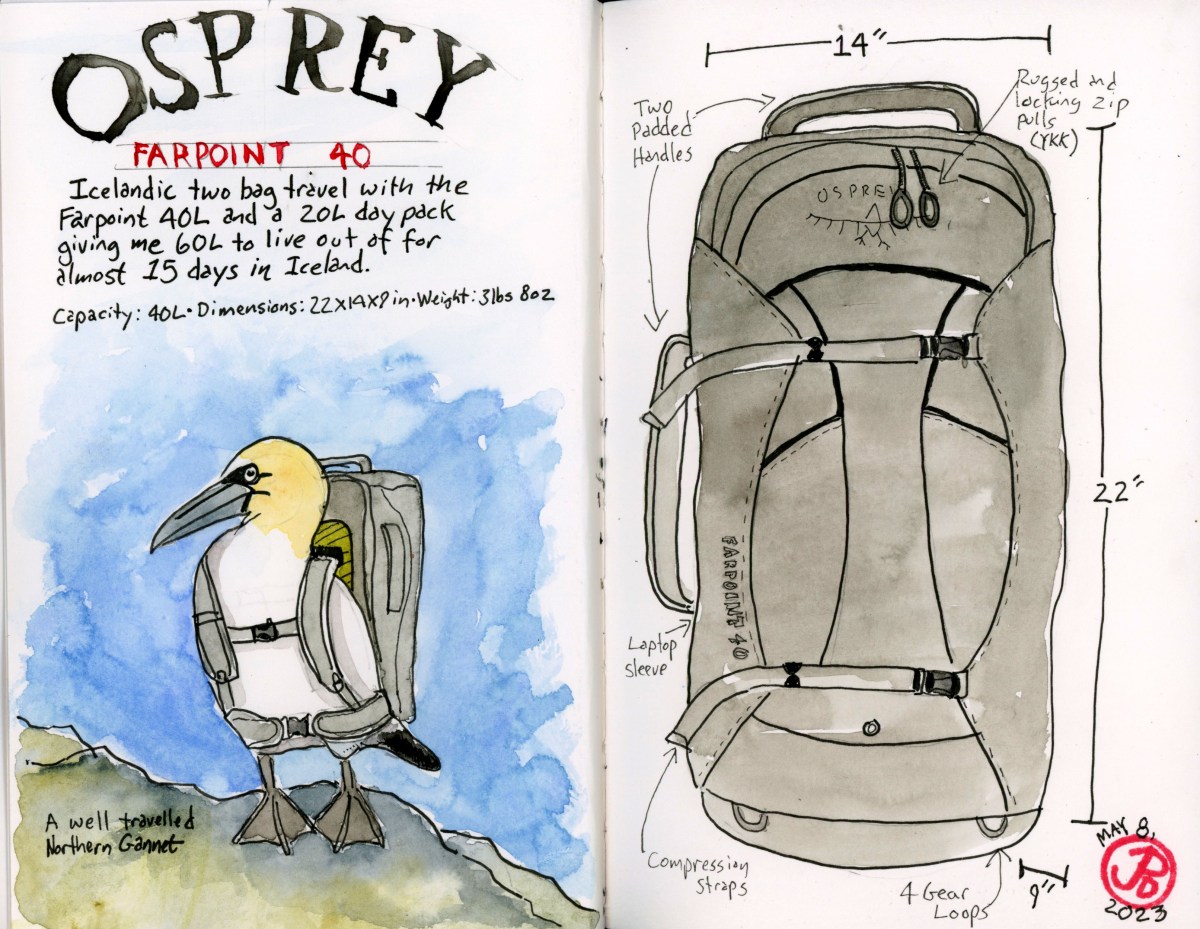
I wanted an Osprey daypack to compliment my suitcase/backpack: the Osprey Farpoint 40. This would give me a total of 60 liters of carrying capacity.
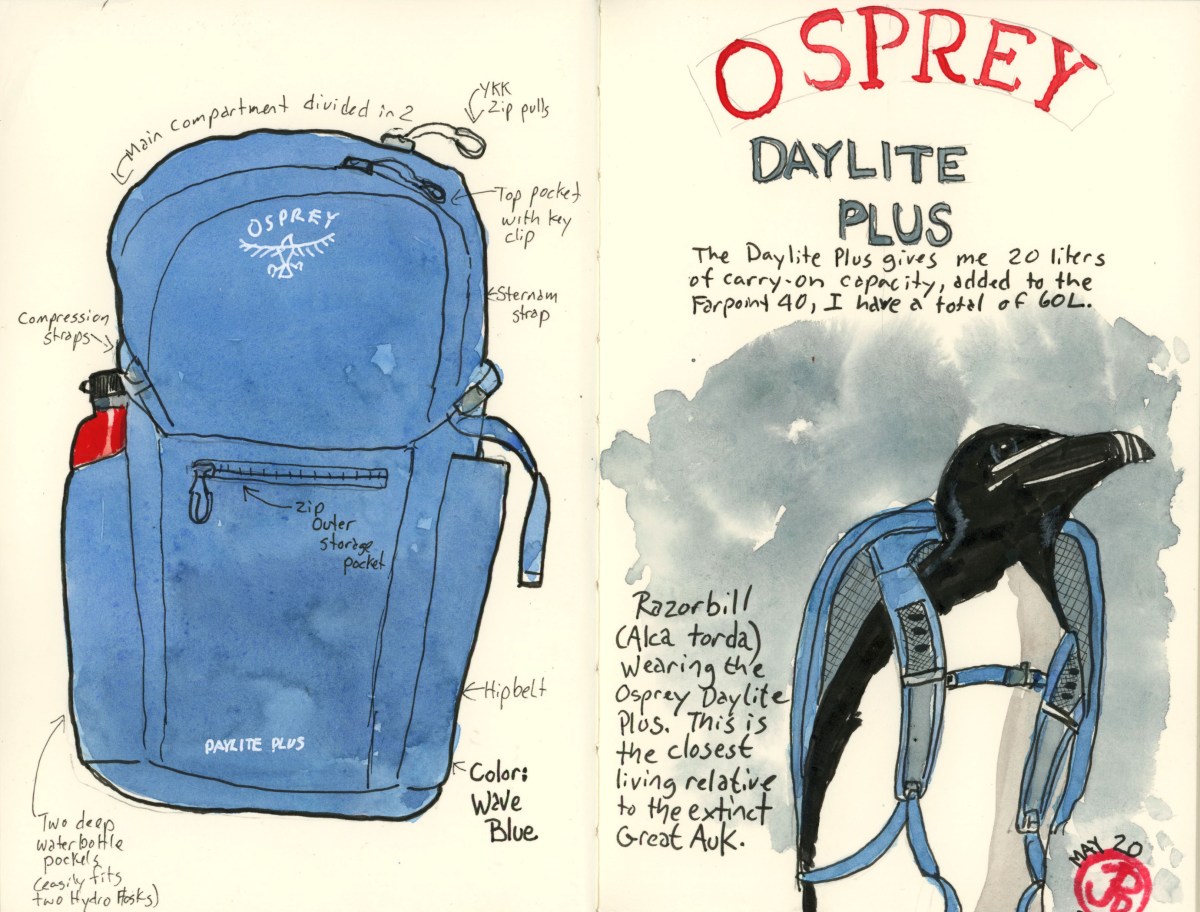
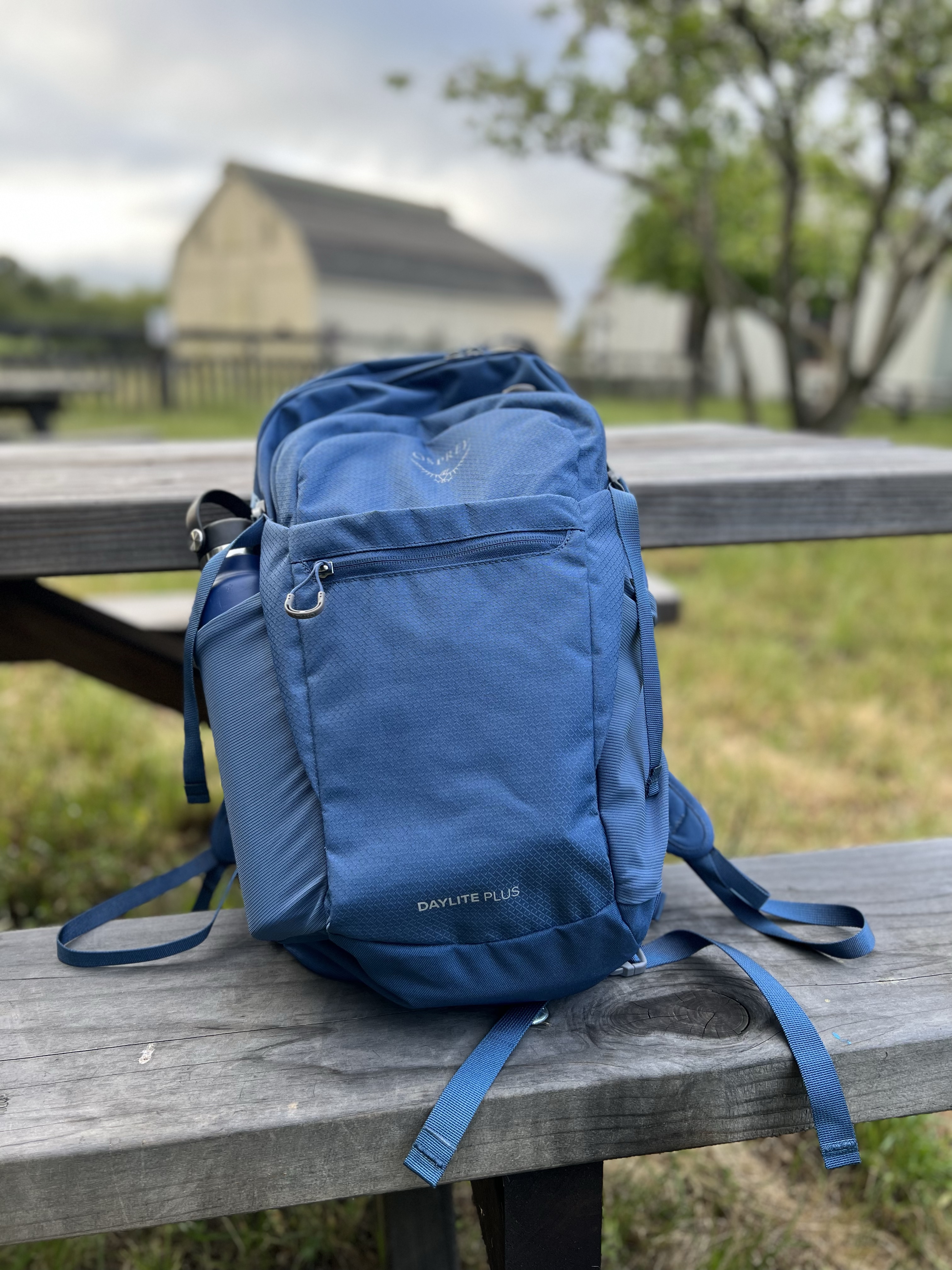
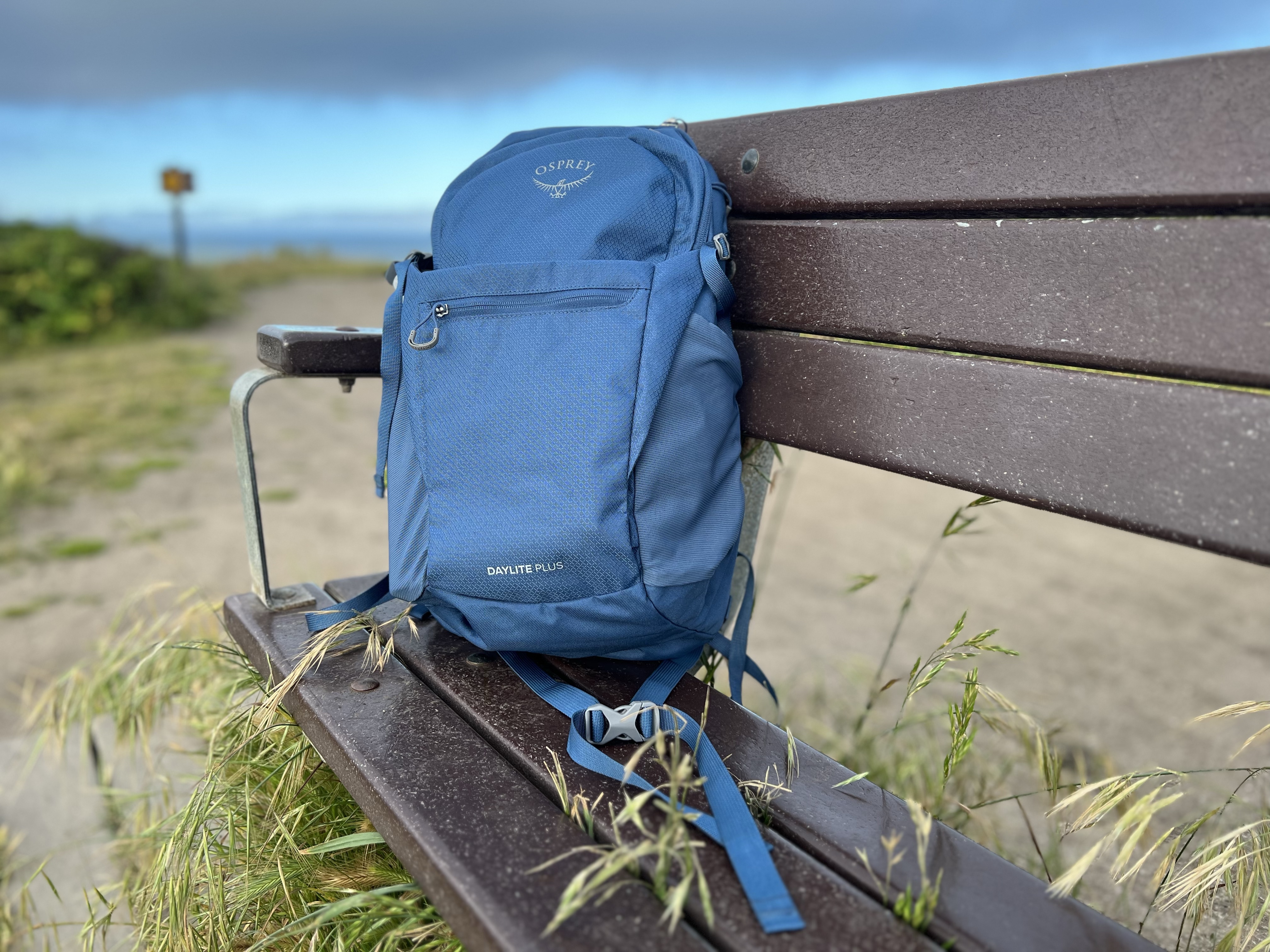
I chose a 20 liter all-rounder, a pack suitable for travel as well as hiking and trekking. This pack needed to be versatile and able to be small enough to slide under an airplane seat but roomy enough to to carry my binoculars, camera, sketching kit, and a water bottle. This is the Osprey Daylite Plus.
When I got the pack home, I loaded it up when above said items and was happy to see that they all fit with room to spare.
I decided to take the pack out on a test hike on the Old Cove Landing Trail at Wilder Ranch State Park on the Santa Cruz County Coast. This is one of my favorite coastal hikes and it is also a great place to bird.
The Daylite Plus in Wave Blue at Wilder Ranch.
The Daylite Plus, loaded up, felt good on my back. I used the sternum straps but I didn’t need to use the waist belt. This pack will do nicely for my Icelandic rambles.
Spring was in the air on the Old Cove Landing Trail. Here are a few highlights.
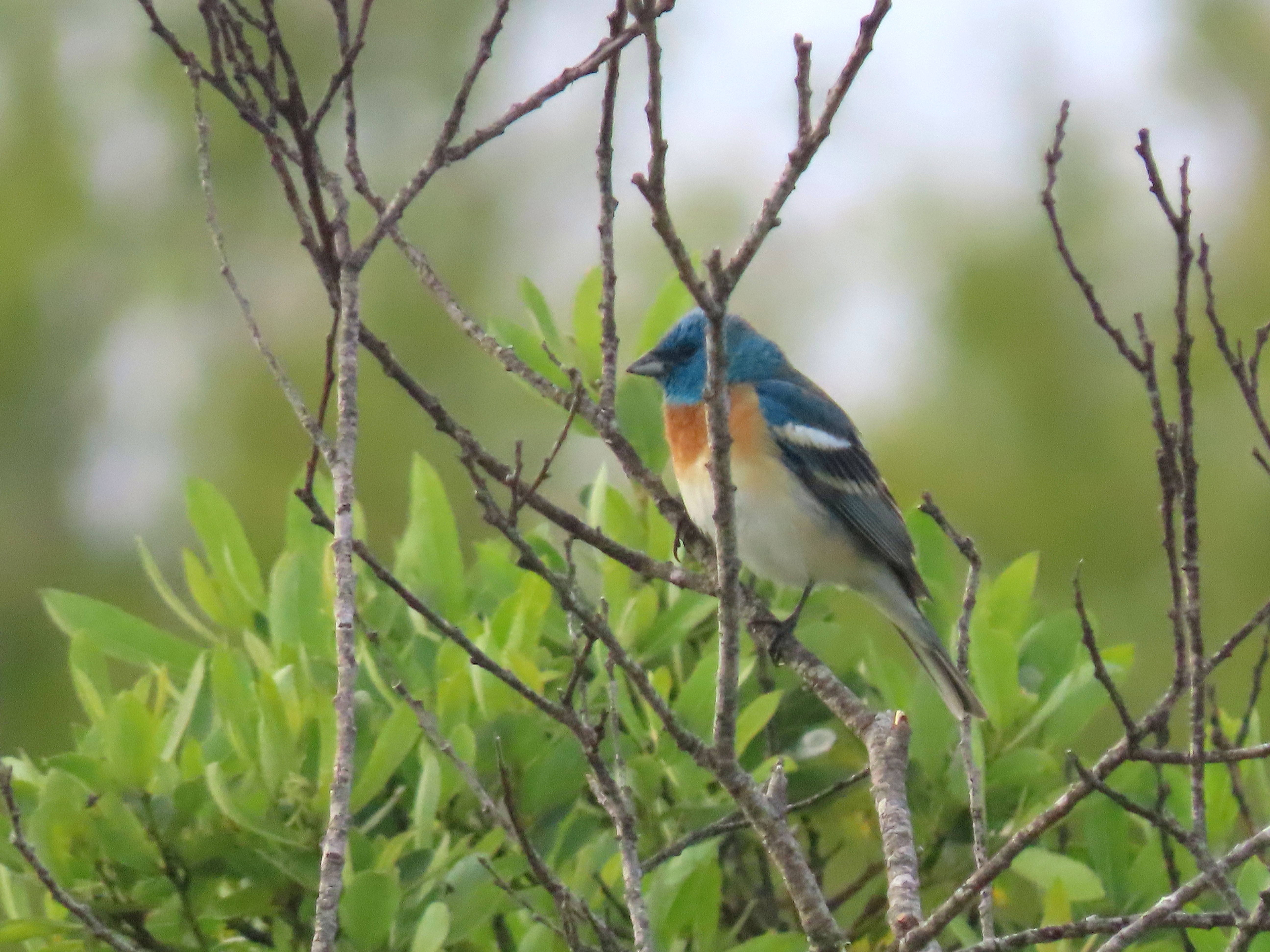
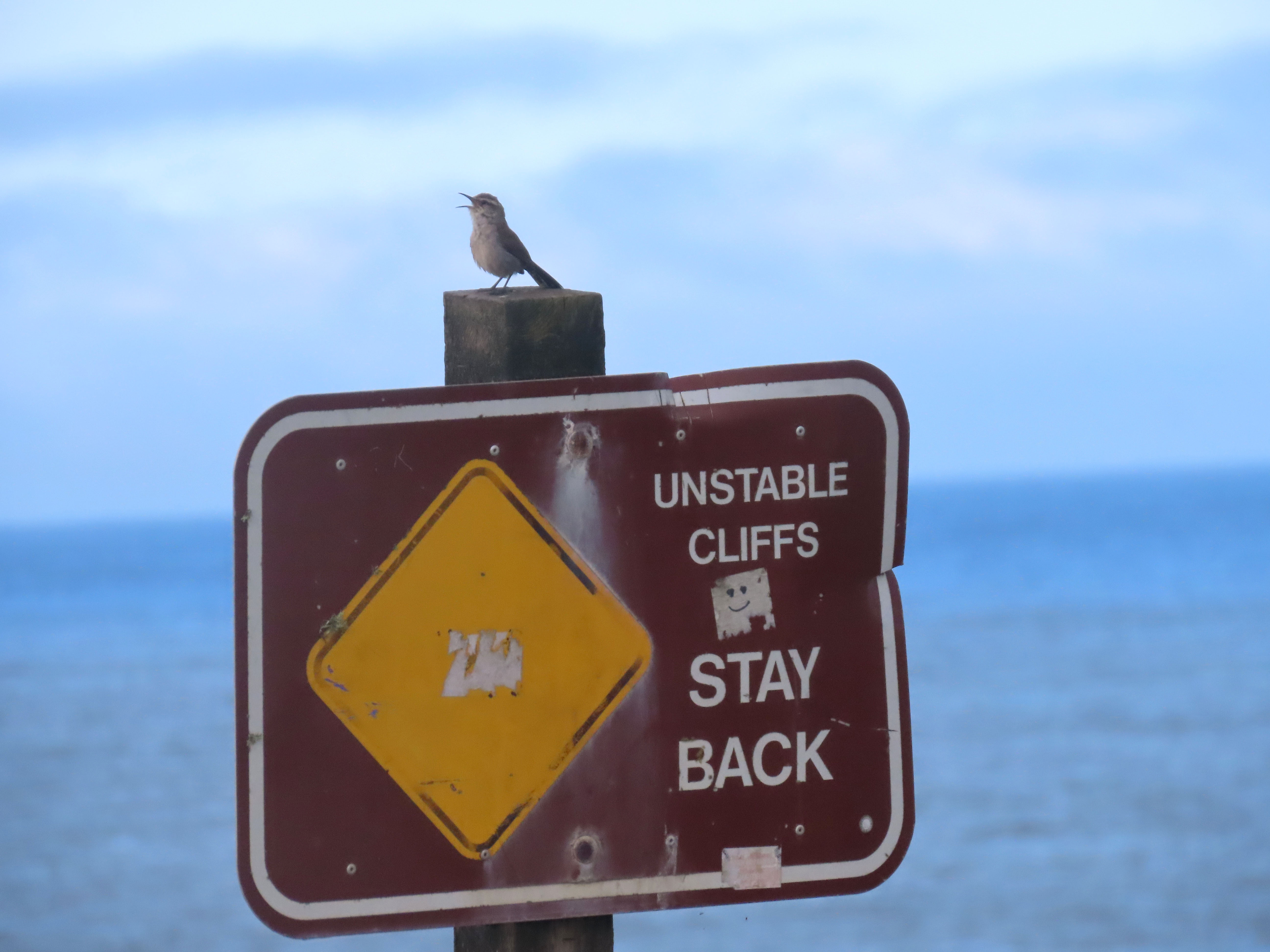
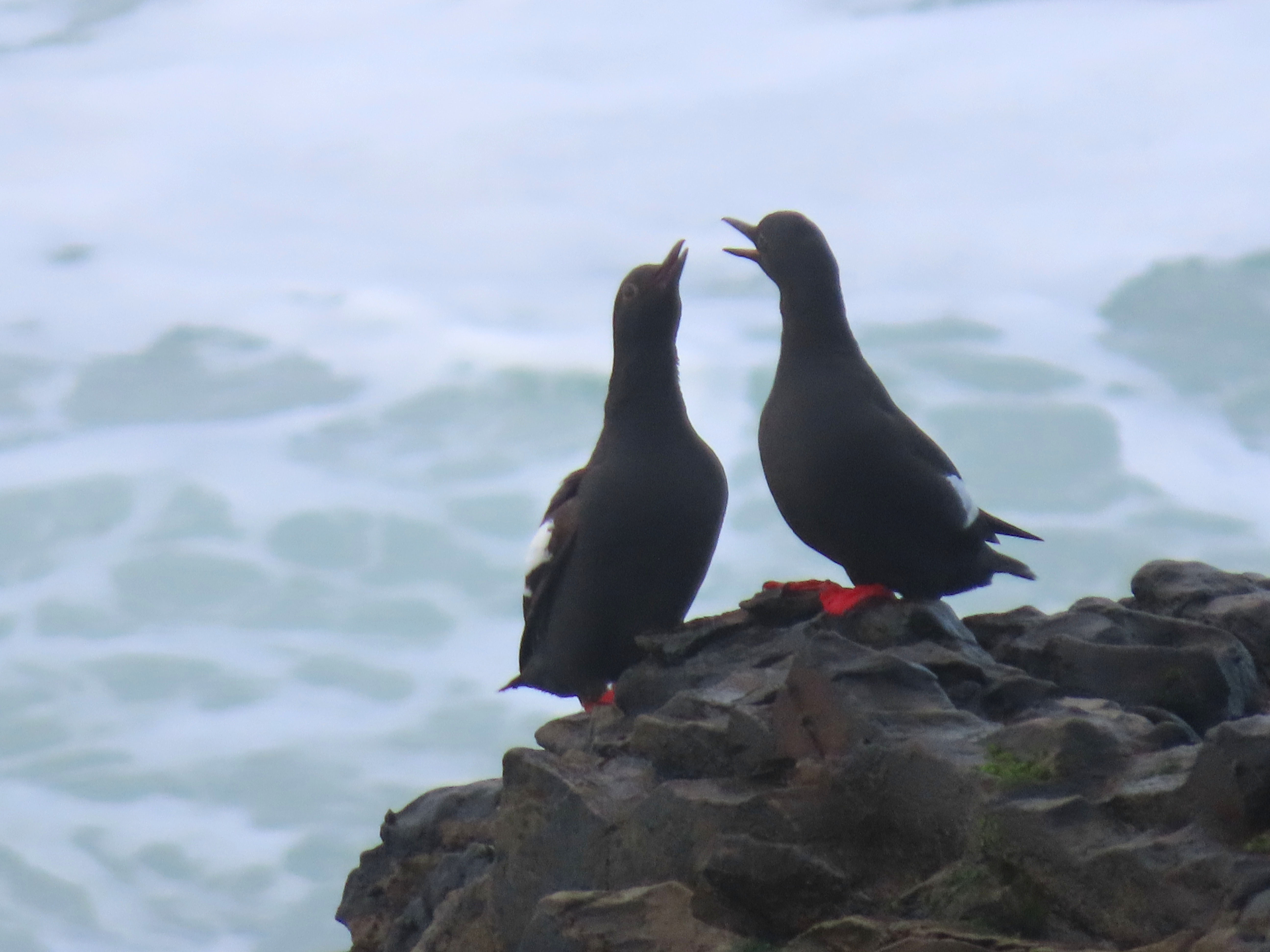
An unexpected surprise was a singing male lazuli bunting. This is one of the most beautiful songbirds of spring.This sign has seen better days but it provides a perfect singing stage for the verbose Bewick’s wren.Two pigeon guillemots greeting each other. I assume this is a mated pair. Another sign of spring.
In 1990, right after high school graduation, I headed over to Europe with my best friend Erik and his older brother Pete on a backpacking, hitchhiking, Eurorail adventure.
I was kitted out with a Eurorail Pass, a youth hostel card, and an REI black and red external framed backpack. This was the type of old school backpack you never see anymore. The pack where you would attach your sleeping bag to the bottom with bungee cords. The type of backpack that makes you look like the Hunchback of Notre Dame, especially when you are wear a poncho to fend off the English rain.
I remember at SFO watching my checked pack get stuck on the roller belt and seeing the buckle of my hip belt rip off. This is the worst part of the pack to lose because you carry the weight of a pack not on your shoulders but your waist. (My dad had to send a replacement buckle to me in England).
Times have changed and materials have improved becoming lighter yet stronger. While I have used a backpack for, well, backpacking, I have favored a carry-on roller bag for airplane travel.
As the European travel guru Rick Steves notes, no one ever returns from a European trip and wishes they brought more. The same applies to my past travel experiences. I always wonder why I brought that shirt or sweater I never ended up using. I’m always fine tuning my travel kit to find the right balance.
Iceland was a time to return to backpacking. Could I do it after 30 years? I was not 18 anymore. But the packs, clothing, and packing accessories are so much better than when I first backpacked Europe three decades ago.
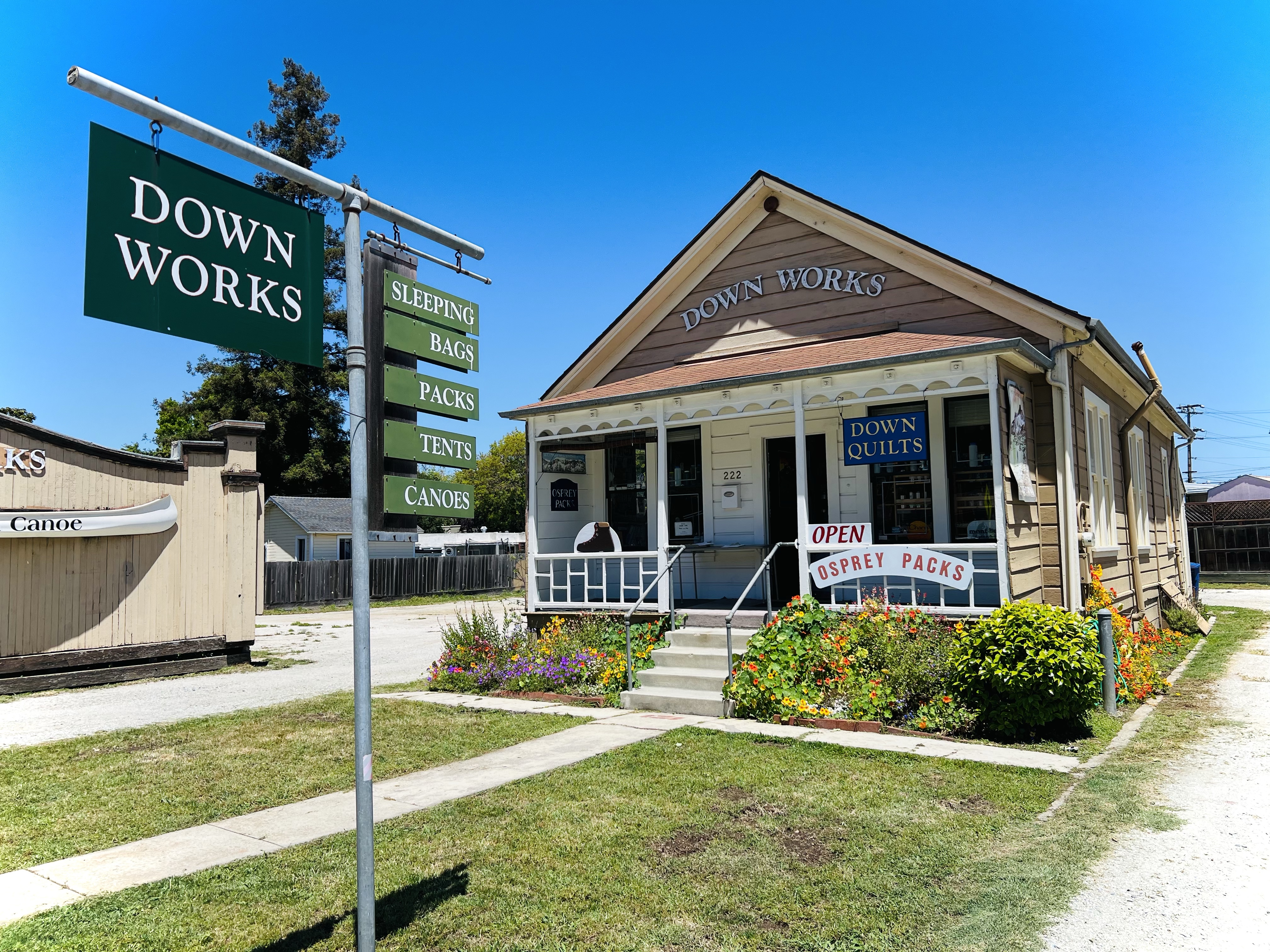
After some research, I decided on an Osprey pack. I have an Osprey daypack and it is one of the most comfortable packs I own. Osprey was founded in 1974 in Santa Cruz (nice local connection) and well, the osprey is a cool bird! The original business was called Santa Cruz Recreational Packs on River Street. The building now is Down Works.
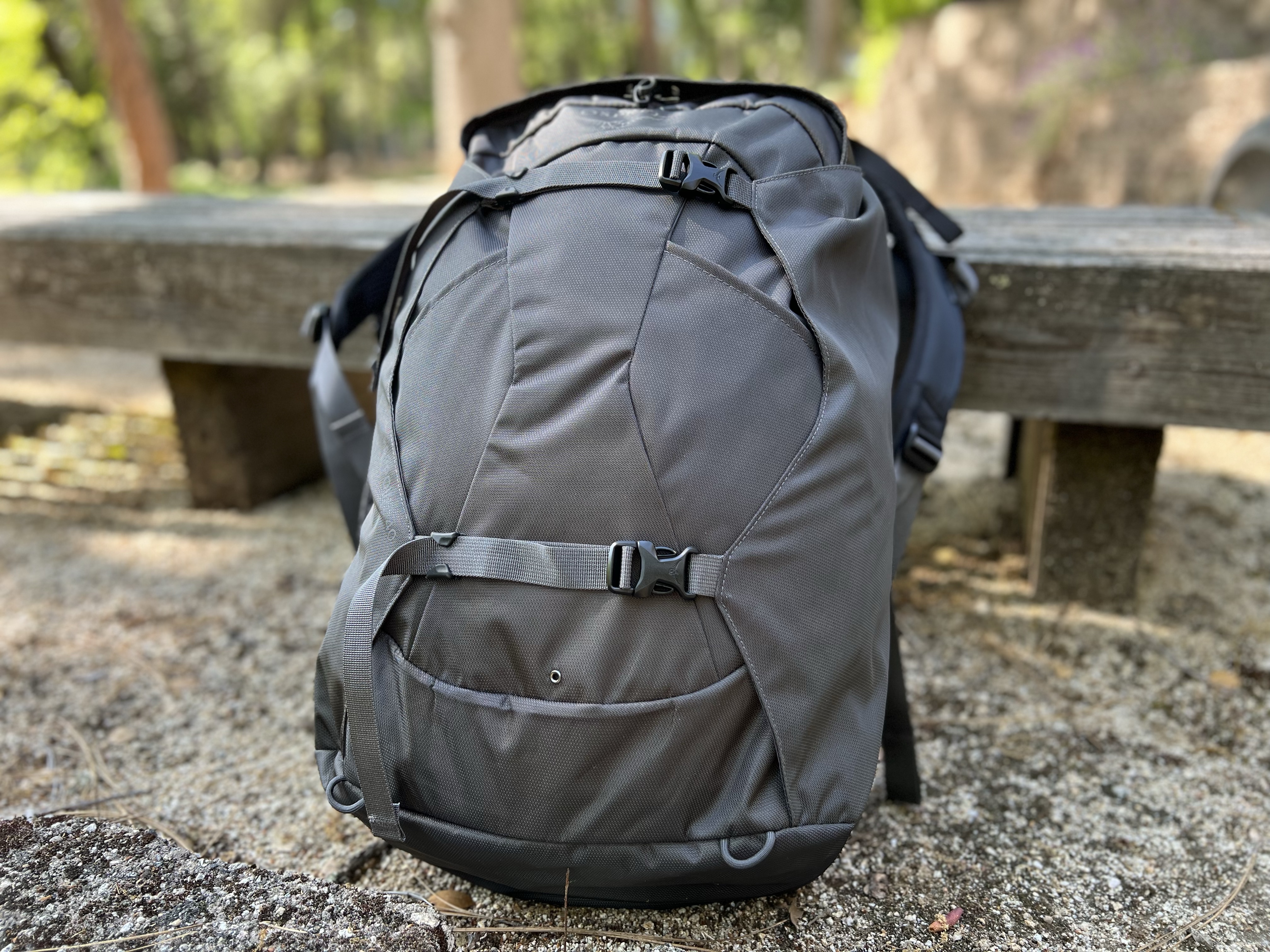
The Osprey pack that I chose was the Farpoint 40 which is the company’s most popular travel backpack. This tics all the specs to fit in an overhead compartment while providing a large main compartment to hold together your life on the road. How is this done?
The Osprey Farpoint 40.
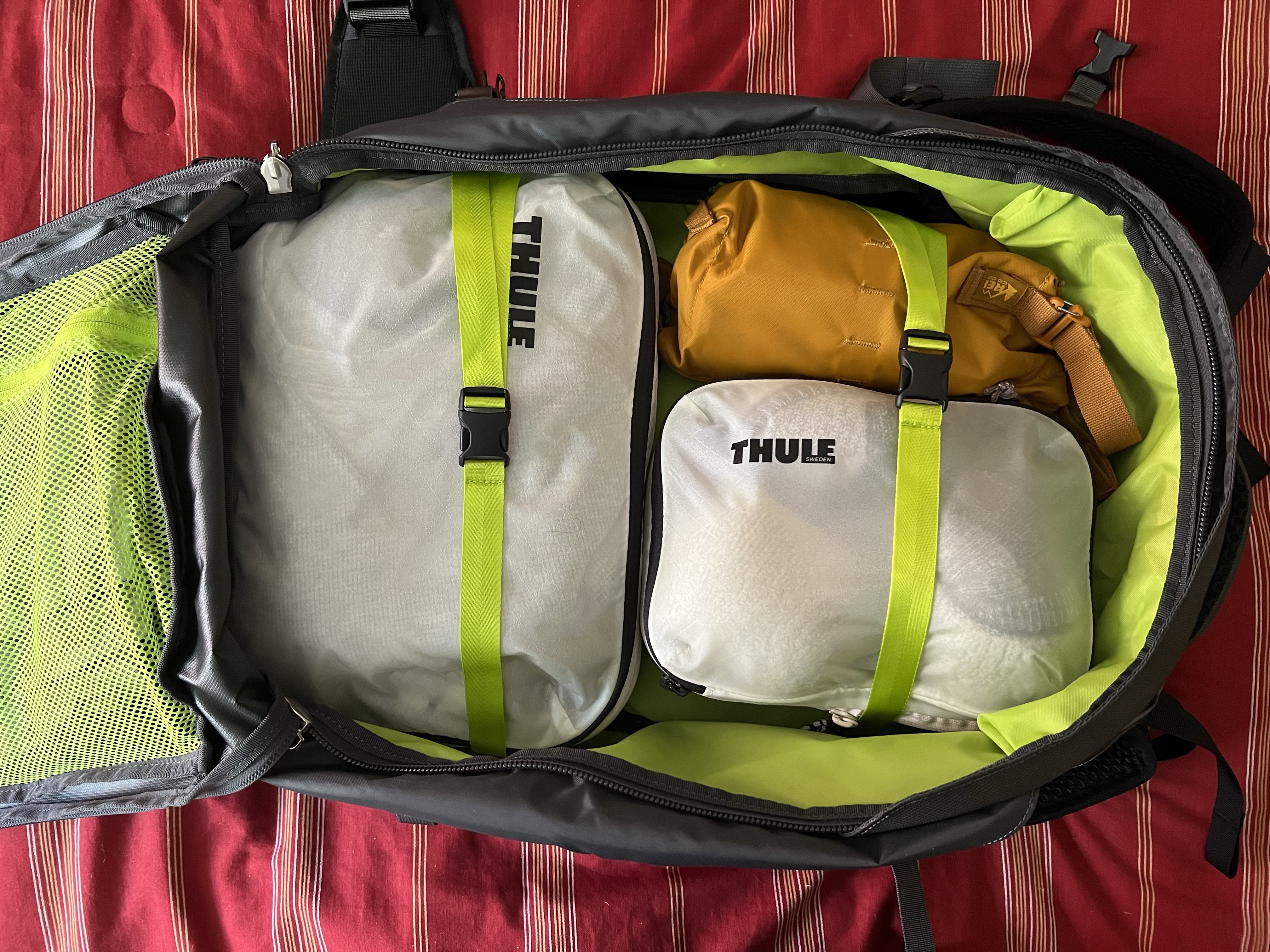
Because the main compartment has no dividers, compression packing cube are essential for organizing items and compressing them to fit. In one medium cube I can fit one pair of pants and six shirts. In a small cube I could fit one pair of thermal underwear, five pairs of socks, and five pairs of underwear.
The main compartment of the Farpoint 40 with two Thule compression packing cubes and an REI dopp kit. The large mesh pocket to the left holds a rain jacket and pants (average rainfall in Iceland ranges from 50 to 100 inches per year).
Now how does this work on a 15 day trip? Most of my clothing is made of synthetic material which means they are quick drying. So every few days I wash clothes in the sink or bathtub and then dry them on my Sea to Summit travel clothesline and they’re dry in the morning. This saves a lot of space in my bag.
And it sure feels great to travel lightly and not be encumbered by a heavy, unwieldy roller bag.
Before going on any birding trip I like to sketch the avifauna I would be seeing. This helps me pre-visualize the birds I hoped to be seeing as well as putting my excitement onto paper.
Iceland straddles the line between North America and Europe and as such contains birds of the North Atlantic and Northern Europe as well as Arctic breeders. Some of these birds can be seen in the northeastern coast of Northern American but many of the European birds would be considered rarities on this side of the Atlantic.
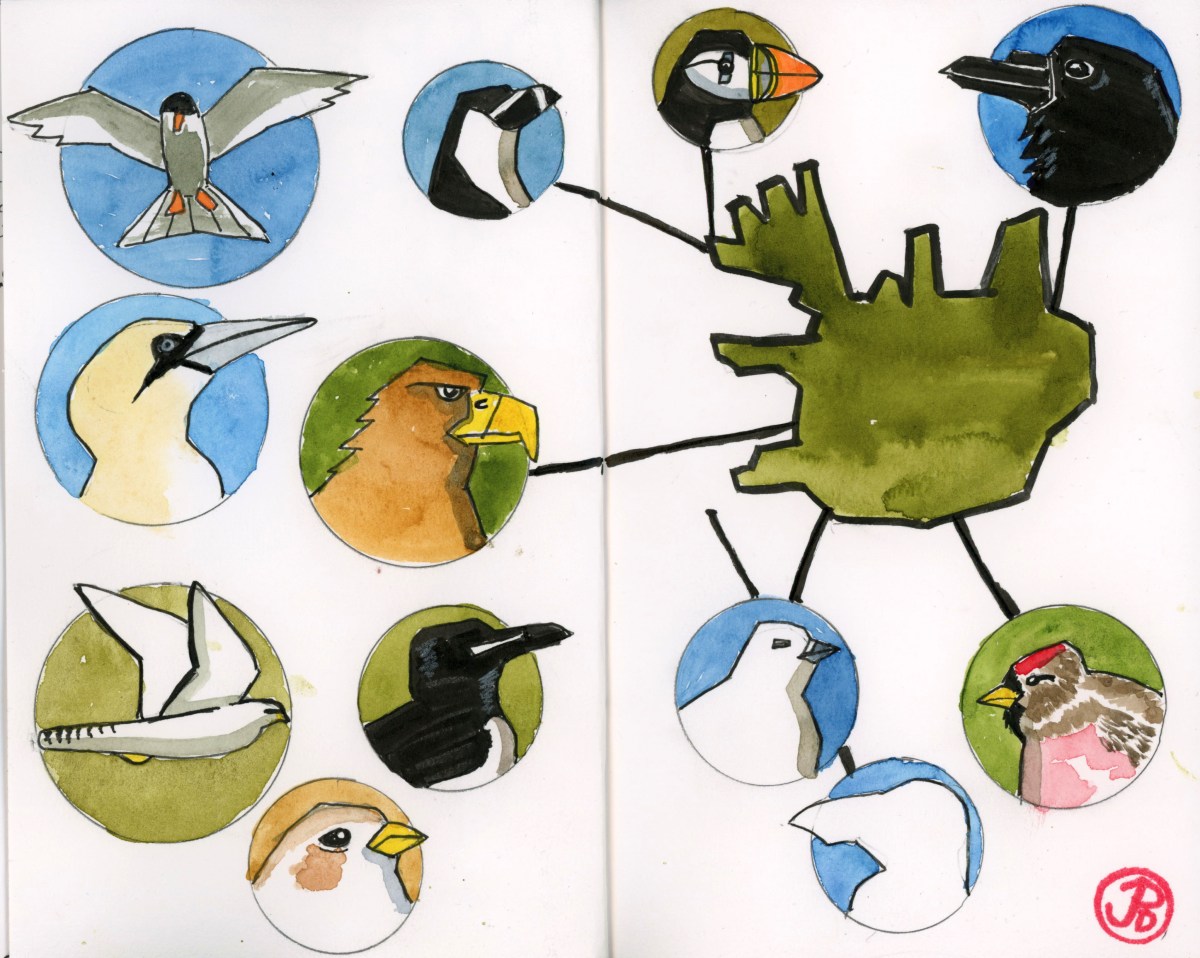
For the featured spread I created circular icons of birds of Iceland; some of them I had seen but others would be lifers. I took inspiration from the beginning animation of the wonderful film Watership Down, where animals were stylized in an aboriginal form. I also created an Icelandic map that is also very stylized. The birds featured are: Arctic tern, northern gannet, gyrfalcon, snow bunting, think-billed murre, white-tailed eagle, razorbill, Atlantic puffin, common raven, rock ptarmigan, common redpoll, and the outline of a bird which I would never see.
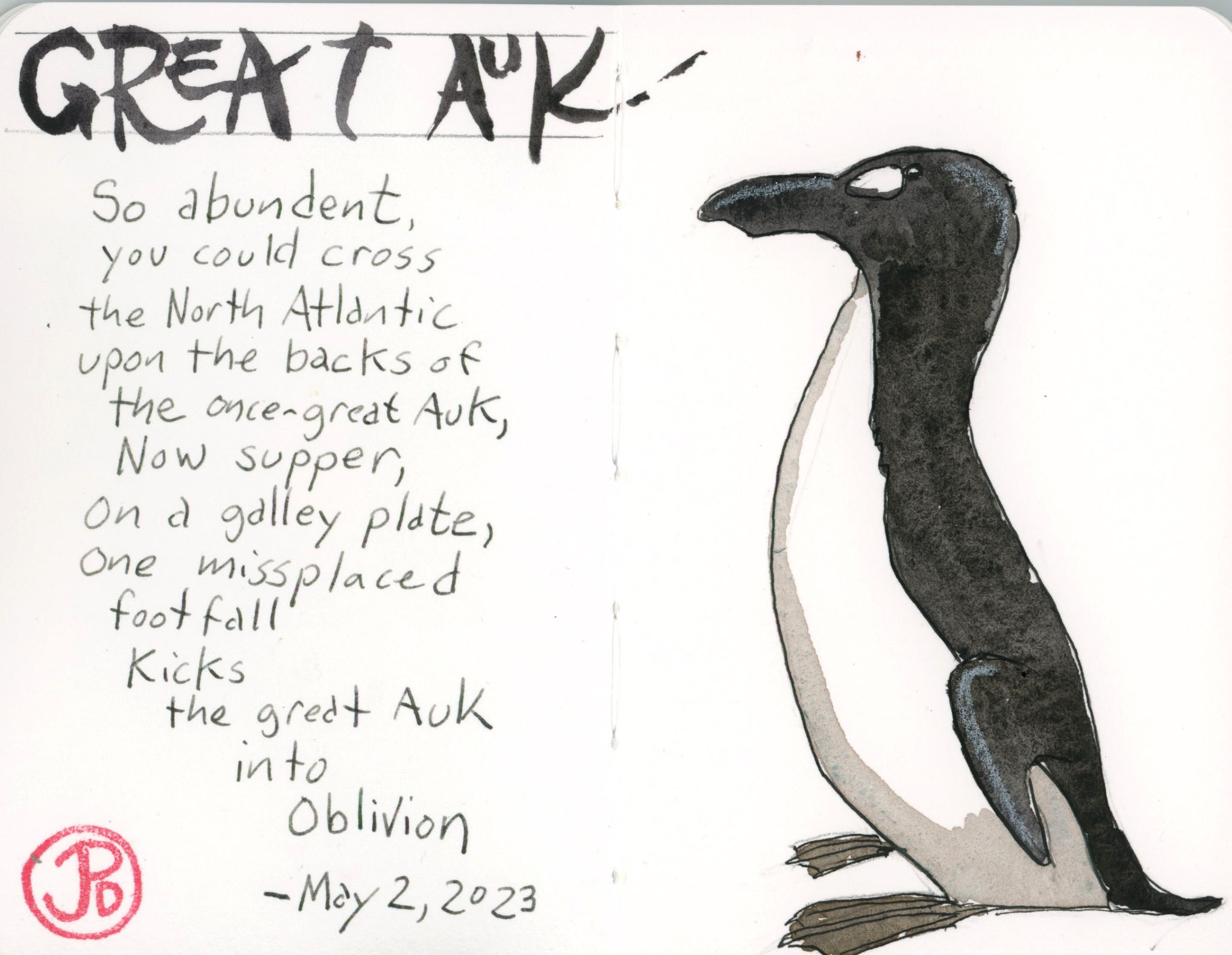
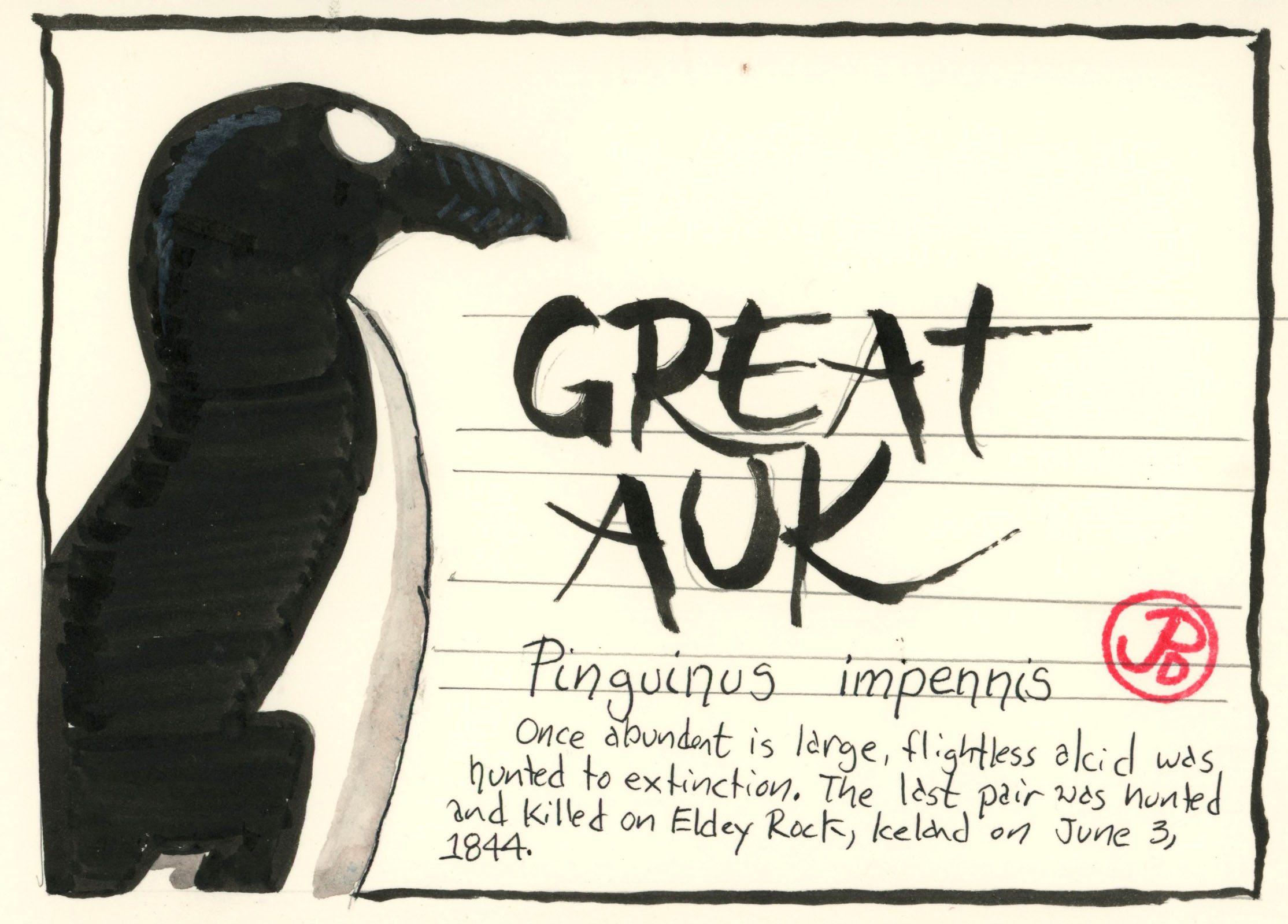
The bird of Iceland that I would never see is the great auk. This large flightless alcid, the largest of the family, was once abundant around the northern Atlantic. This was the penguin of the Northern Hemisphere, although they are not closely related to the two toned flightless birds of the southern hemisphere.
The auk was a breeder to Iceland. The seabird was hunted for both it’s meat and warm down. This aggressive hunting dwindled the populations of a bird that could not fly away from it’s pursuers. It seemed like destiny that the largest alcid would be written into the pages of natural history oblivion.
Ironically enough when the last colony of about 50 auks was discovered in 1835, museums in Europe wanted skins to display which hastened the auk’s ultimate demise.
This happened on Eldey Island, 10 miles off the coast of Iceland’s Reykjanes Peninsula, where the last two existing auks where killed on June 3, 1844. In the struggle the capture the birds, the last great auk egg was stepped on and crushed. This is such a shameful chapter of human’s history in it’s interactions with the natural world. Shame on us that we will never see a great auk again.
I was planning where to go on my summer vacation and was leaning toward a domestic trip, but wasn’t sure I wanted to go on a lengthy South American birding tour. My pre-pandemic Peru trip was cancelled and I haven’t travelled with passport since.
I am limited by work for more of the desirable birding tours throughout the year, which limits my travel window to just two months during summer: June and July. (Yes I can hear the sound of the tiny violins).
There was a tour in the Northern Hemisphere that caught my eye: Iceland.
This was the land of puffins, razorbill, and murre. The white-tailed eagle, gyrfalcon, and snow bunting. Home to one of the largest seabird colonies on Earth.
Iceland: the land of fire and ice, home to the midnight sun and Nordic winds. Of the dancing Northern lights and Viking blood.
Sign me up!
And I did sign up with a ten day tour run by WINGS Birding Tours. Most of the tour will be focused on the western side of Iceland.
While this tour wouldn’t produce a treasure trove of lifers (I estimate between 20-25 lifers), I would have the opportunity to see many birds in breeding plumage because Iceland was their breeding grounds. I looked forward to seeing Harlequin and long-tailed duck, Barrow’s goldeneye, black-legged kittiwake, red-throated and common loons in their breeding finery. One bird I really looked forward to seeing on solid ground is the arctic tern. The only time I had seen this long distant migrant was on the deck of a pelagic tour boat. This tour really is about spending quality time with the amazing avian culture of Iceland!
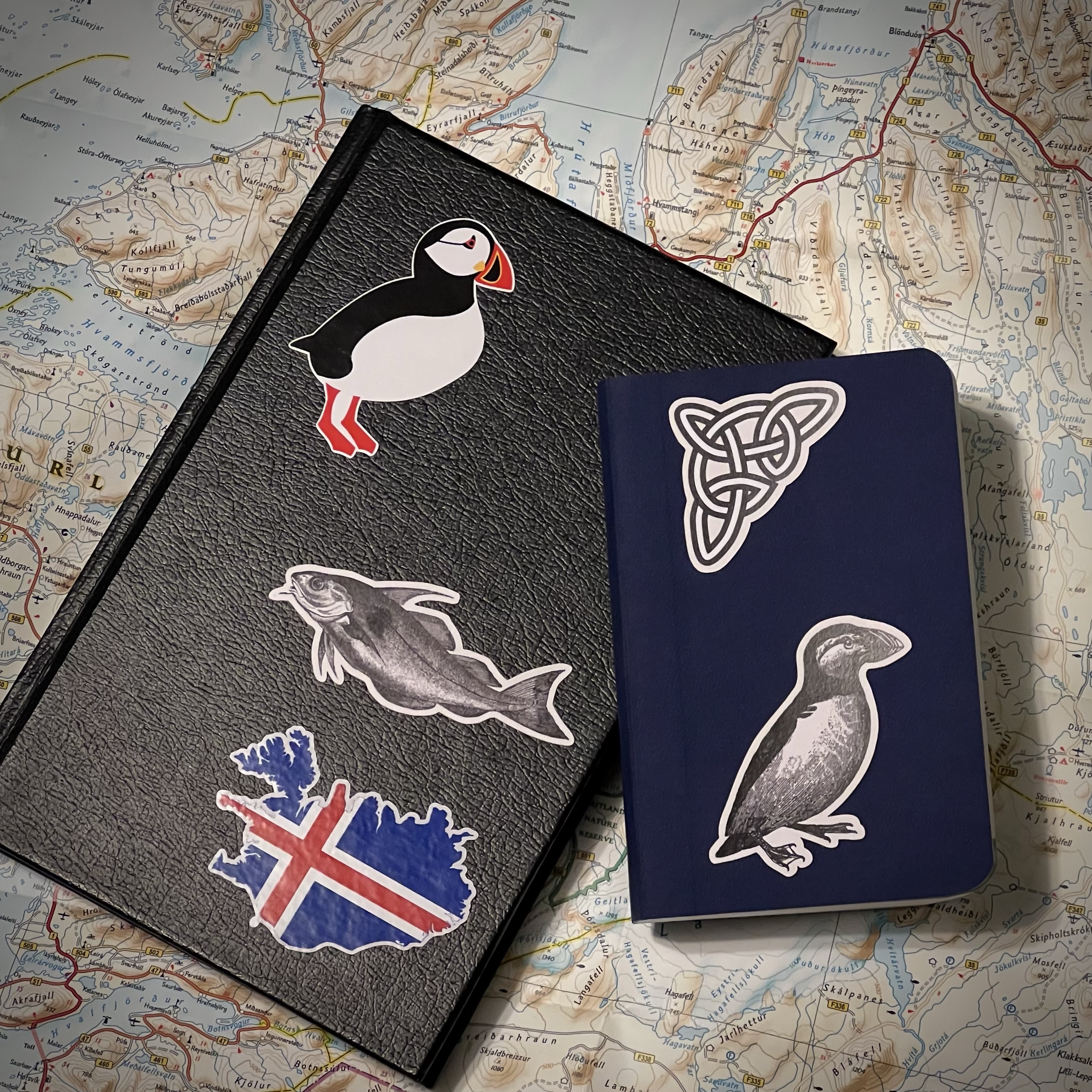
My two Iceland journals. I decorated the covers with stickers in case anyone didn’t know these were Icelandic journals!
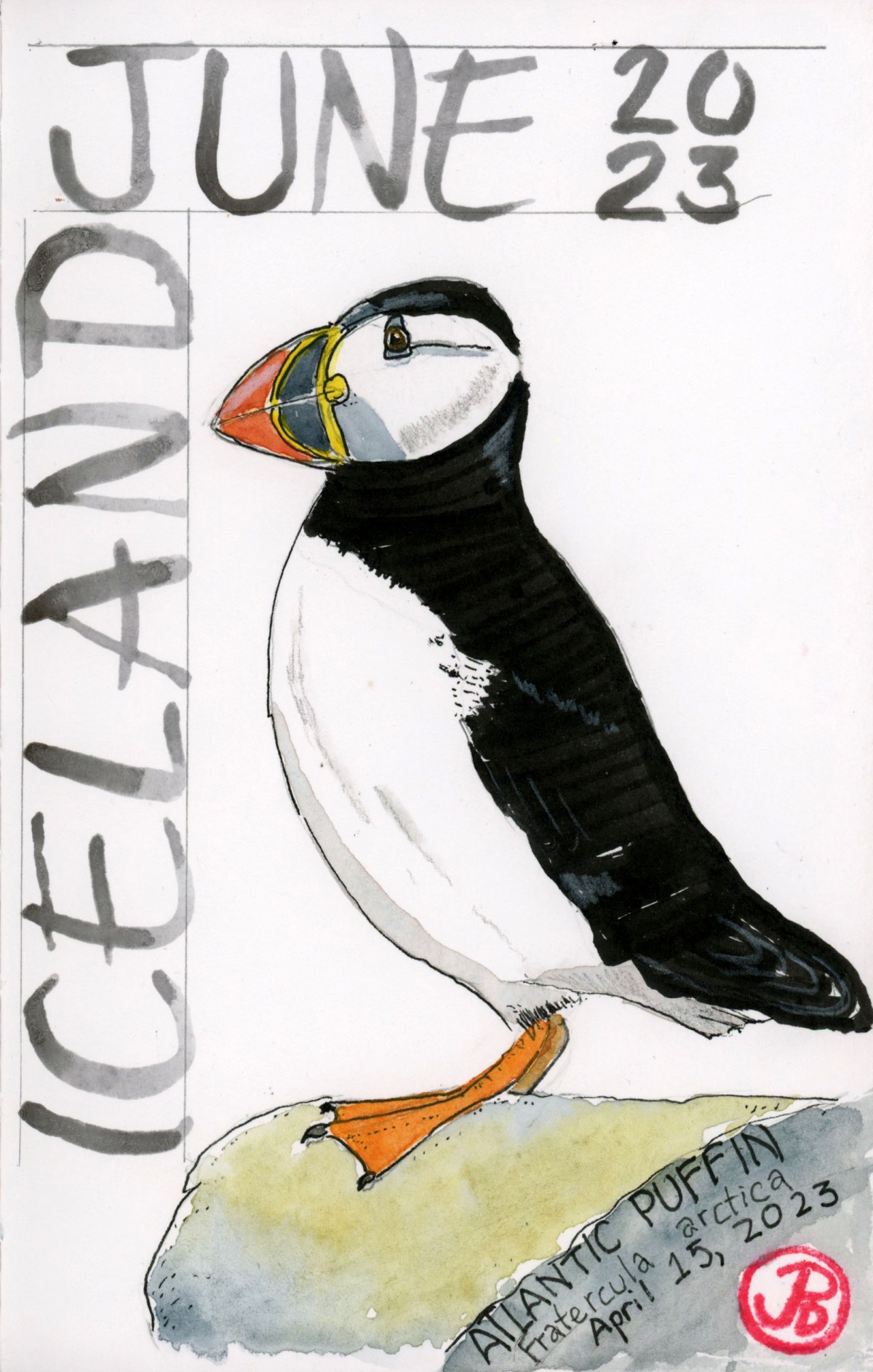
Before going on any great saga, I must first obtain a watercolor journal. For Iceland, I chose two Stillman & Birn Beta Series journals. One is hardbound 5.5″ by 8″ journal and a soft bound pocket journal. On the first page I sketched a symbol of Iceland: the Atlantic puffin (featured sketch). Seeing this bird would be a lifer for me. The alcid can be seen in the northeastern part of North America but when I was in Maine in October, all the pelagic puffins were far out at sea (they come ashore in the summer to nest in large breeding colonies).
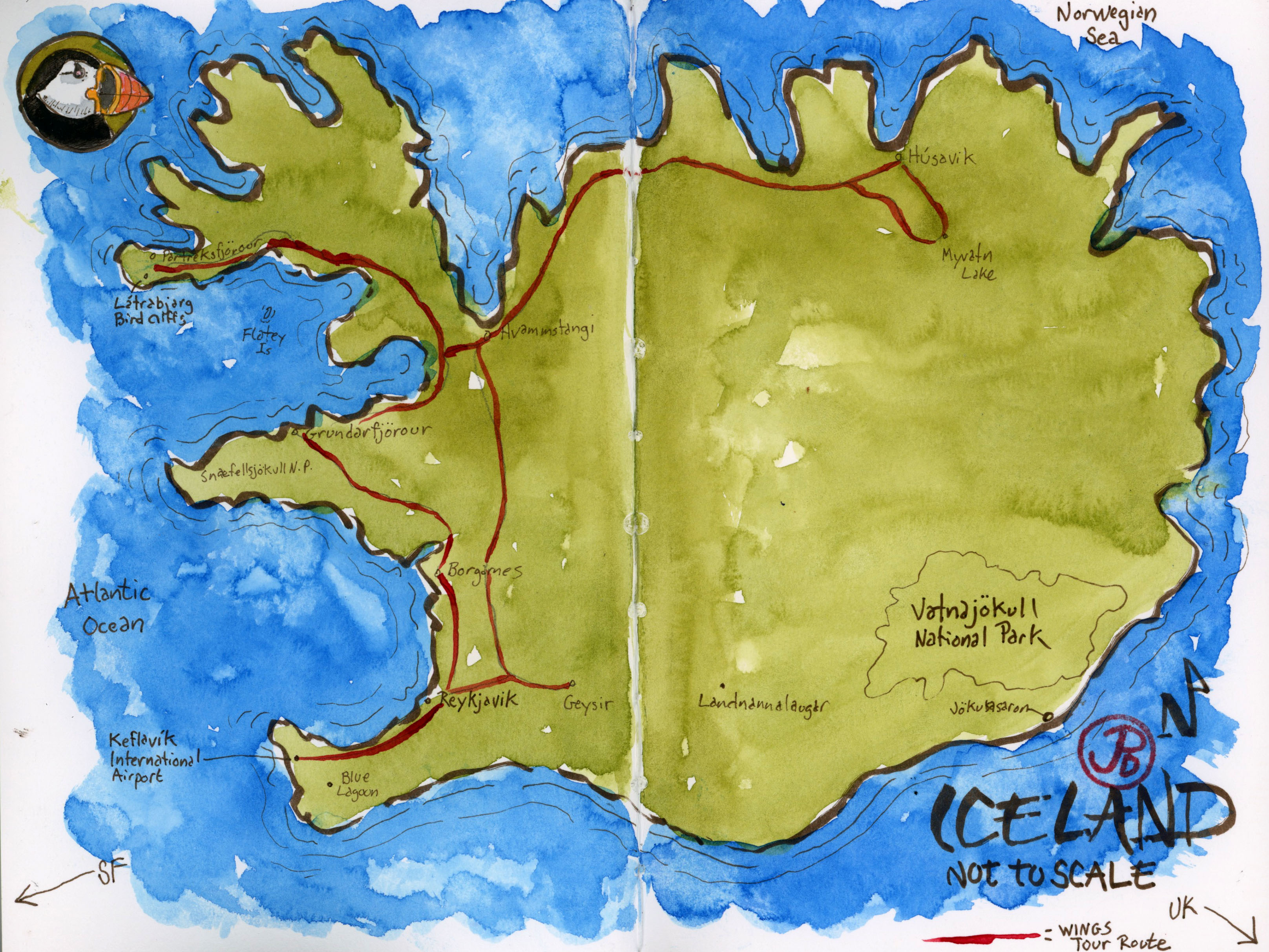
I like to start my travel journals with a map and drawing the outline of Iceland seemed to be like tracing the undulating lines of a Rorschach test. This map was really not to scale!
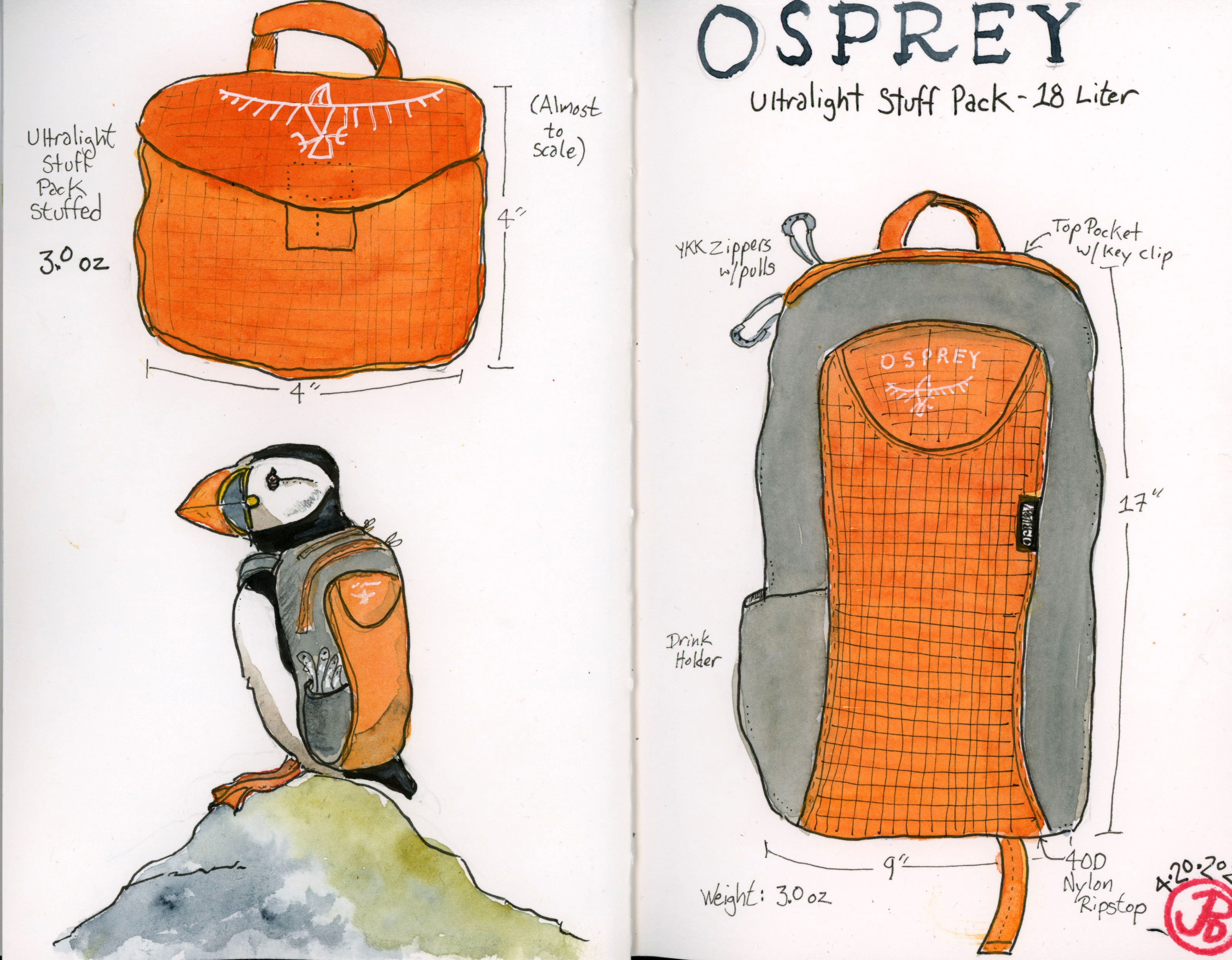
A trip is always an excuse to add some new gear to my travel set up, and then do a spread about it. In this case I wanted a new stuff daypack that could stuff down to almost nothing and then be used as a daypack to carry my sketching kit and rain gear. I chose the Osprey Ultralight Stuff Pack. This stuffs down into a 4″ by 4″ bag yet has a capacity of 18 liters while weighing in at just 3 oz. The pack features zipper pulls, padded straps, a water bottle pocket, and an easy access top pocket with a key clip.
I just couldn’t resist drawing an Osprey on a puffin.







 Corvid Sketcher