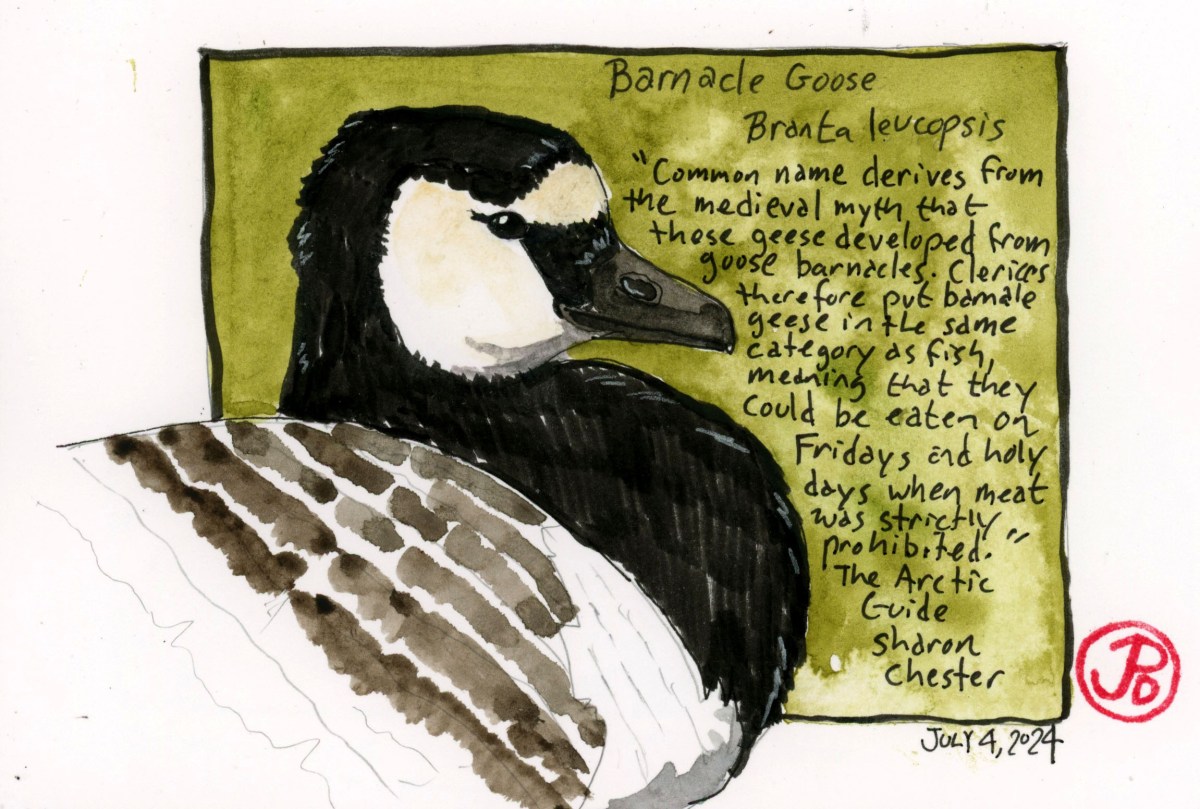
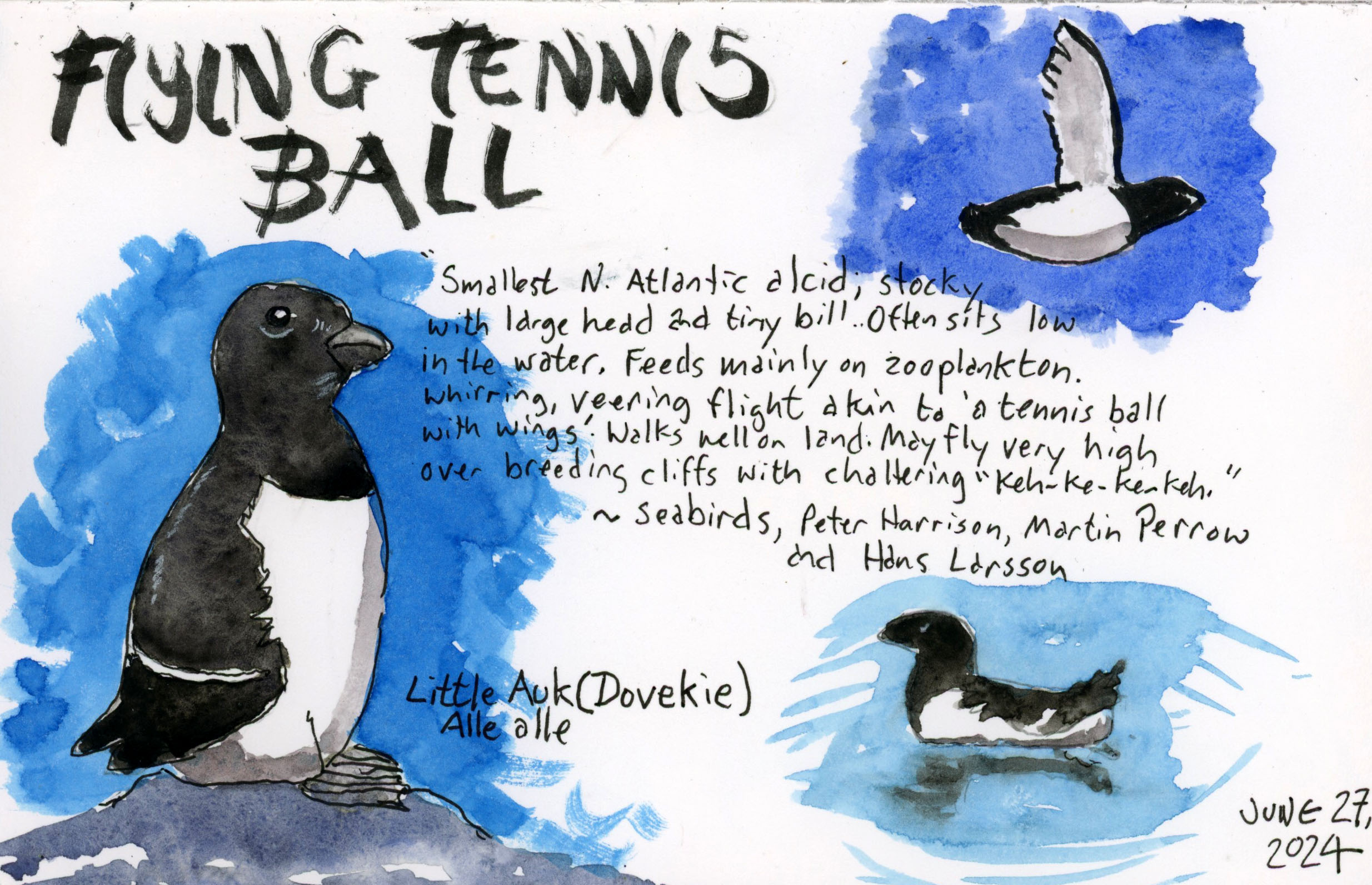
I had three target lifers for my Scandinavian summer adventures: barnacle goose, dovekie (little auk), and ivory gull.
The hardest to get was the ivory gull which was only to be found on the pack ice sometimes in the company of polar bears.
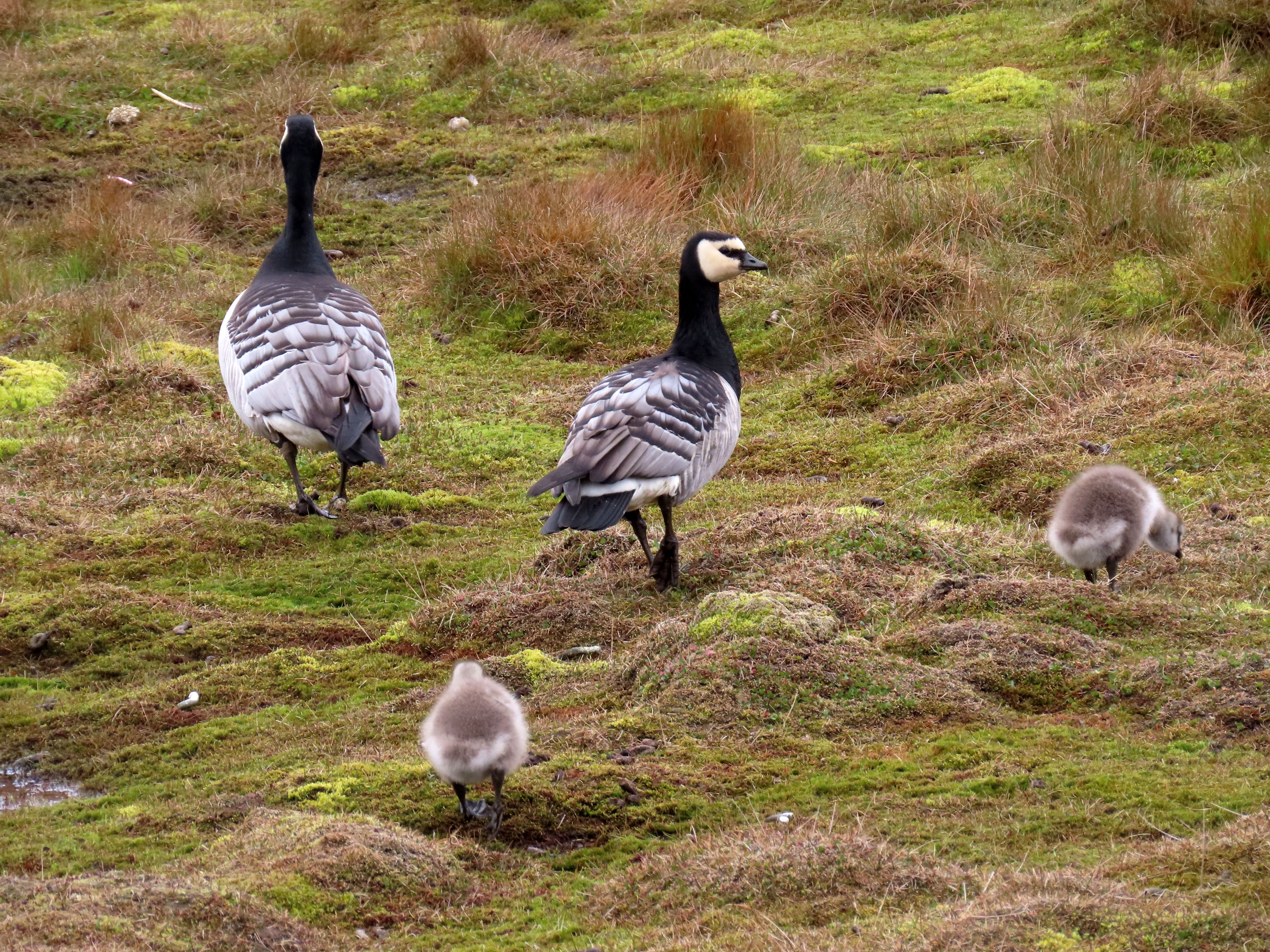
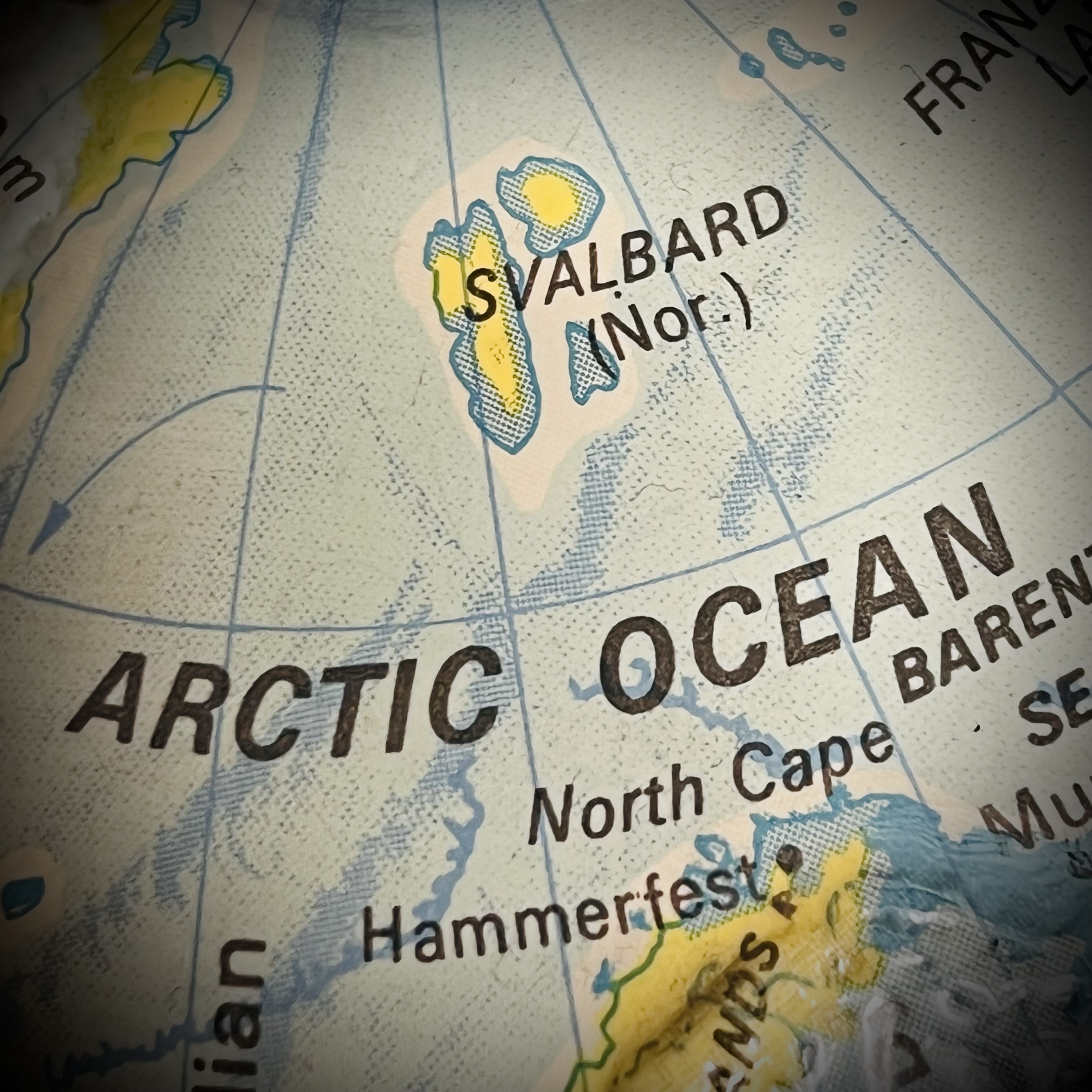
Perhaps the easiest was the barnacle goose and dovekie. I had four geese in the harbor near the Munch Museum in Oslo. I saw many more in Longyearbyen in Svalbard.
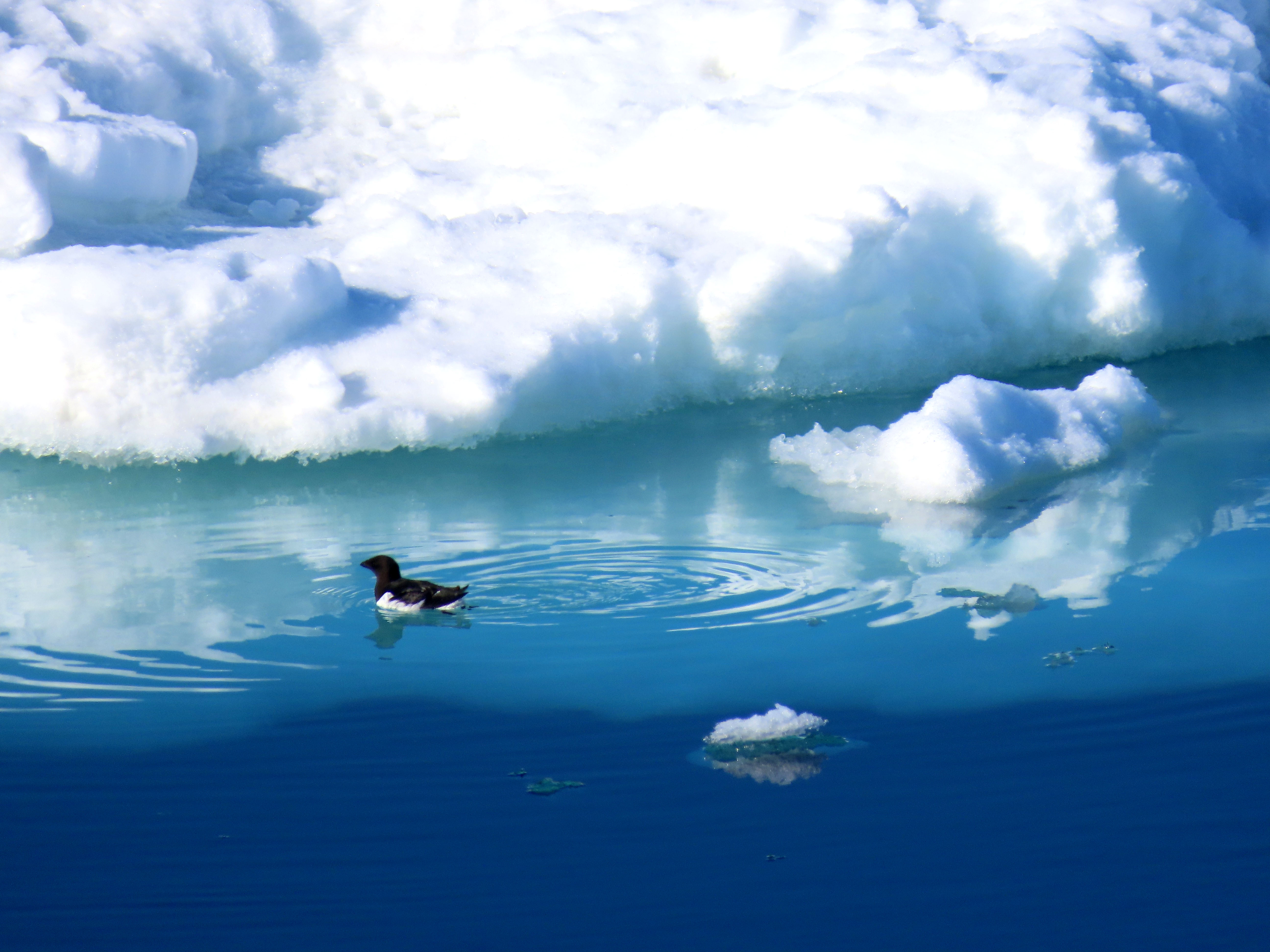
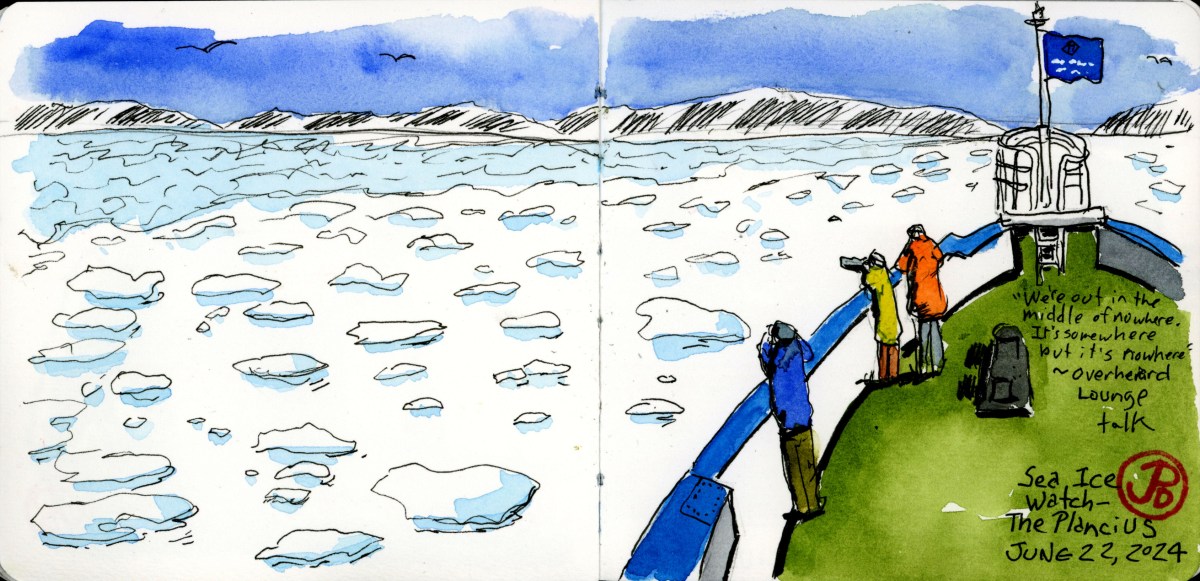
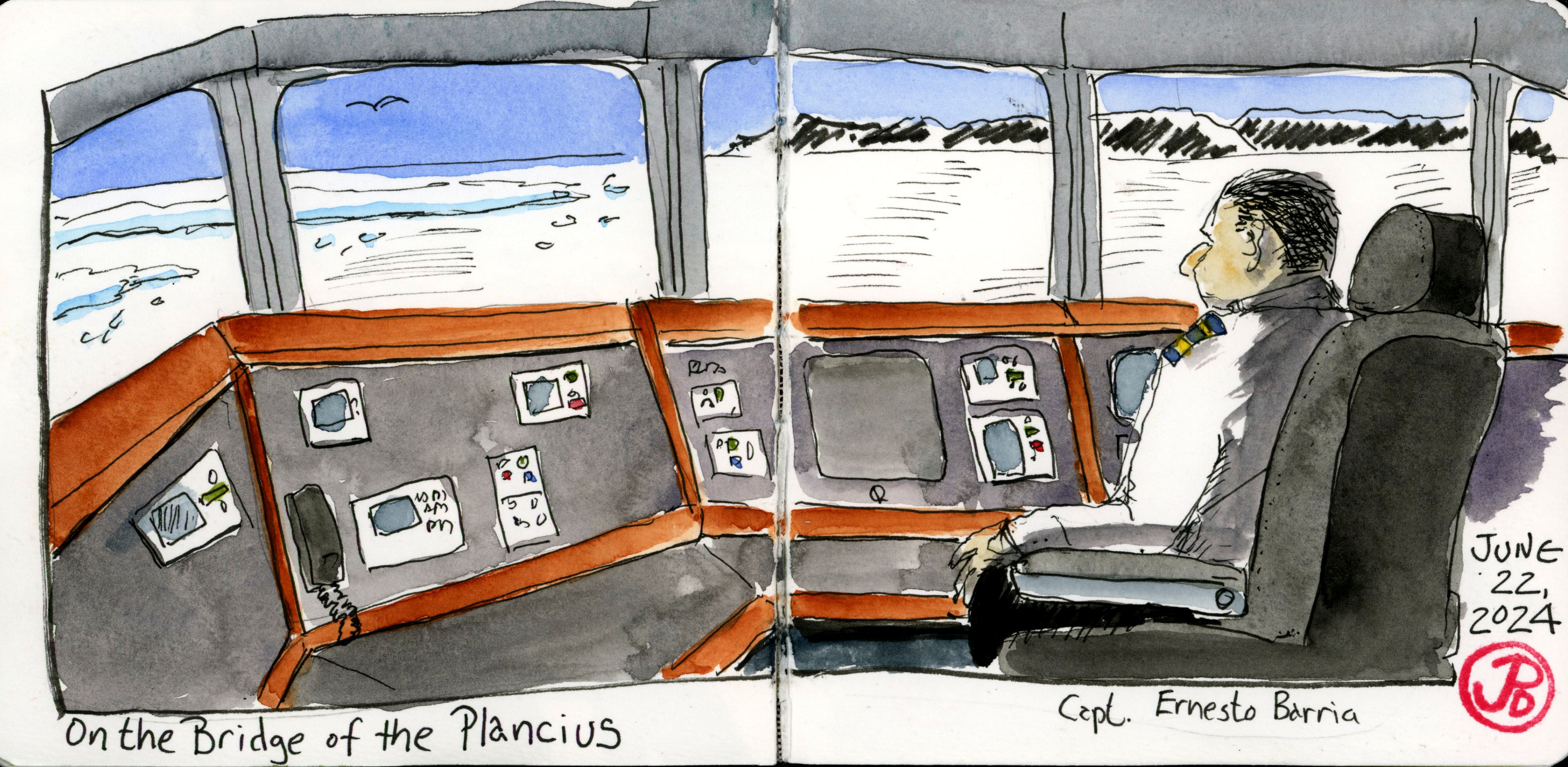
Dovekie or as it’s known in Europe, little auk, was also plentiful around the southern and eastern side of Spitsbergen. I saw many from the decks of the Plancius.
So what’s in a name? Common names vary in different regions and in different languages. For instance Phalaropus fulicarius is known as the red phalarope in North America but on the other side of the Atlantic it is the grey phalarope. Our guide didn’t even know this, falsely claiming that the common name had been changed.
One of the dubious common bird names is barnacle goose. You would think this goose eats barnacles. Nope. The name comes from Medieval times when it was thought that the goose came from goose-necked barnacles. The bird was even considered a fish so it could be eaten on religious holidays such as Lent. Such were the times when folklore trumped scientific learning.




 Corvid Sketcher